


Product Monograph - Iqirvo
RECENT MAJOR LABEL CHANGES
| 7 Warnings and Precautions, Reproductive Health: Female and Male Potential | 2026-09 |
|---|
TABLE OF CONTENTS
Sections or subsections that are not applicable at the time of authorization are not listed.
RECENT MAJOR LABEL CHANGES…………………………………………………………………3
TABLE OF CONTENTS ............................................................................................................... 3
PART I: HEALTH PROFESSIONAL INFORMATION .................................................................. 5
1 INDICATIONS ................................................................................................................... 5
1.1 Pediatrics ............................................................................................................... 5
1.2 Geriatics ................................................................................................................. 5
2 CONTRAINDICATIONS ................................................................................................... 5
4 DOSAGE AND ADMINISTRATION .................................................................................. 5
4.2 Recommended Dose and Dosage Adjustment ................................................... 5
4.4 Administration ....................................................................................................... 6
4.5 Missed Dose .......................................................................................................... 6
5 OVERDOSAGE ................................................................................................................ 6
6 DOSAGE FORMS, STRENGTHS, COMPOSITION AND PACKAGING ......................... 6
7 WARNINGS AND PRECAUTIONS .................................................................................. 6
Hepatic/Biliary/Pancreatic ............................................................................................. 6
Monitoring and Laboratory Tests .................................................................................. 7
Reproductive Health ....................................................................................................... 7
7.1 Special Populations .............................................................................................. 8
7.1.1 Pregnant Women ............................................................................................... 8
7.1.2 Breast-feeding .................................................................................................... 8
7.1.3 Pediatrics ............................................................................................................ 8
7.1.4 Geriatrics ............................................................................................................ 8
8 ADVERSE REACTIONS ................................................................................................... 9
8.1 Adverse Reaction Overview ................................................................................. 9
8.2 Clinical Trial Adverse Reactions .......................................................................... 9
8.3 Less Common Clinical Trial Adverse Reactions with IQIRVO (<5%) ............. 10
9 DRUG INTERACTIONS .................................................................................................. 11
9.2 Drug Interactions Overview ................................................................................ 11
9.4 Drug-Drug Interactions ....................................................................................... 11
9.5 Drug-Food Interactions ....................................................................................... 13
9.6 Drug-Herb Interactions ....................................................................................... 13
9.7 Drug-Laboratory Test Interactions .................................................................... 13
10 CLINICAL PHARMACOLOGY ....................................................................................... 13
10.1 Mechanism of Action ....................................................................................... 13
10.2 Pharmacodynamics ......................................................................................... 14
10.3 Pharmacokinetics ............................................................................................ 14
11 STORAGE, STABILITY AND DISPOSAL ...................................................................... 16
12 SPECIAL HANDLING INSTRUCTIONS ......................................................................... 16
PART II: SCIENTIFIC INFORMATION ....................................................................................... 17
13 PHARMACEUTICAL INFORMATION ............................................................................ 17
14 CLINICAL TRIALS ......................................................................................................... 17
14.1 Clinical Trials by Indication ............................................................................ 17
15 MICROBIOLOGY ............................................................................................................ 21
16 NON-CLINICAL TOXICOLOGY ..................................................................................... 21
PATIENT MEDICATION INFORMATION .................................................................................. 23
PART I: HEALTH PROFESSIONAL INFORMATION
1 INDICATIONS
IQIRVO® (elafibranor) is indicated for the treatment of primary biliary cholangitis (PBC) in combination with ursodeoxycholic acid (UDCA) in adults with an inadequate response to UDCA, or as monotherapy in adults unable to tolerate UDCA.
Marketing authorization with conditions for this indication is based on a randomized, placebo-controlled, phase III study that assessed alkaline phosphatase (ALP) and bilirubin as a composite biochemical surrogate endpoint (see 14 CLINICAL TRIALS).
1.1 Pediatrics
Pediatrics (17 years of age and younger): No data are available to Health Canada; therefore, Health Canada has not authorized an indication for pediatric use.
1.2 Geriatrics
Geriatrics (65 years of age and older): Evidence from clinical studies and experience suggests that use in patients 65 to 75 years old is not associated with differences in safety or effectiveness. There is limited clinical experience in patients older than 75 years.
2 CONTRAINDICATIONS
Elafibranor tablets are contraindicated in patients who are
- Pregnant, or at risk of pregnancy and not using effective contraception (see sections 4 DOSAGE AND ADMINISTRATION and 7: WARNINGS AND PRECAUTIONS).
- Hypersensitive to this drug or to any ingredient in the formulation, including any non-medicinal ingredient, or component of the container. For a complete listing (see 6 DOSAGE FORMS, STRENGTHS, COMPOSITION AND PACKAGING).
- Known to have decompensated cirrhosis.
4 DOSAGE AND ADMINISTRATION
4.1 Dosing considerations
Prior to treatment initiation,
-rule out pregnancy with a pregnancy test and ensure at least 3 weeks of effective non-hormonal contraception (see 7 WARNINGS AND PRECAUTIONS)
-evaluate for muscle pain/myopathy and consider measuring baseline creatinine phosphokinase (CPK, sometimes called “CK”) (see 7 WARNINGS AND PRECAUTIONS).
4.2 Recommended Dose and Dosage Adjustment
The recommended dosage of IQIRVO is 80 mg once daily. There are no requirements for dose adjustment for patients with renal impairment or mild or moderate hepatic impairment.
Health Canada has not authorized an indication for pediatric use.
4.4 Administration
IQIRVO should be taken orally once daily with or without food (see 10 CLINICAL PHARMACOLOGY).
Administer IQIRVO at least 4 hours before or 4 hours after administering a bile acid sequestrant, or at as great an interval as possible. See 9.4 Drug-drug interactions.
4.5 Missed Dose
If a dose of IQIRVO is missed, instruct patients to skip the missed dose and take the subsequent dose at the next scheduled time point. The patient should not take a double dose to make up for the missed dose.
5 OVERDOSAGE
In the event of suspected overdose, patients should be carefully observed, and appropriate symptomatic treatment and supportive care should be initiated.
| For management of a suspected drug overdose, contact your regional poison control centre. |
|---|
6 DOSAGE FORMS, STRENGTHS, COMPOSITION AND PACKAGING
Table 1– Dosage Forms, Strengths, Composition and Packaging
IQIRVO 80 mg film-coated tablets are orange, round, approximately 8 mm diameter, and identified with “ELA 80” on one side.
IQIRVO 80 mg tablets are packaged in 40 mL high-density polyethylene (HDPE) bottle with a polypropylene child-resistant screw cap with integrated desiccant unit. The bottle is then packed into an outer carton.
Each bottle contains 30 film-coated tablets.
7 WARNINGS AND PRECAUTIONS
Hepatic/Biliary/Pancreatic
| Route of Administration | Dosage Form / Strength/Composition | Non-medicinal Ingredients |
| Oral | Tablet 80mg Elafibranor | Anhydrous colloidal silica, Croscarmellose sodium, Iron oxide red, Iron oxide yellow, Macrogol, Magnesium stearate, Microcrystalline cellulose, Polyvinyl alcohol-part hydrolyzed, Povidone, Talc, Titanium dioxide. |
Increases in liver biochemical tests including transaminases and bilirubin increase have been reported in 6% of patients receiving IQIRVO compared to 6% of patients receiving placebo.
Clinical and laboratory assessment of liver function should be done prior to treatment initiation with IQIRVO and thereafter according to routine patient management. If increases in liver biochemical tests and/or liver dysfunction are observed prompt investigation of the cause is recommended and interruption of IQIRVO should be considered.
Biliary Obstruction Avoid IQIRVO use in patients with complete biliary obstruction. If biliary obstruction is suspected, interrupt IQIRVO and treat as clinically indicated [see 8 ADVERSE REACTIONS .
Liver Transplant Elafibranor’s effects are more uncertain in PBC patients with liver transplants, as such patients were excluded from the clinical studies.
Injury
Fractures occurred in 6% (n=7) of IQIRVO-treated patients compared to no placebo-treated patient [see Adverse Reactions]. Consider the risk of fracture in the care of patients treated with IQIRVO and manage bone health according to the standard of care.
Monitoring and Laboratory Tests
Increases in blood creatine phosphokinase (CPK) have been reported in patients receiving IQIRVO (4% in the IQIRVO group compared to 0% in the placebo group) (see 8 ADVERSE REACTIONS). In addition to these reported CPK increases, one case of rhabdomyolysis and likely secondary acute kidney injury occurred in the pivotal phase 3 study in a patient with cirrhosis and ongoing treatment with an HMG-CoA reductase inhibitor.
CPK should be evaluated prior to treatment initiation and thereafter according to routine patient management. Periodic CPK measurements may be considered in patients starting treatment with IQIRVO, especially those on concomitant HMG-CoA reductase inhibitors. Due to the risk of rhabdomyolysis, IQIRVO only should be administered together with HMG CoA reductase inhibitors when strictly indicated. See 9.4 Drug-drug interactions.
Patients on IQIRVO should be advised to report any unexplained muscle symptoms such as pain, soreness, or weakness to their healthcare provider. If increases in CPK or unexplained signs and symptoms of muscle injury are observed, prompt investigation of the cause is recommended, and treatment interruption should be considered.
Hypersensitivity
Hypersensitivity reactions occurred in a clinical trial with IQIRVO at 1.5-times the recommended dosage. Three patients (0.2%) had rash or unspecified allergic reaction that occurred 2 to 30 days after IQIRVO initiation with positive dechallenges and rechallenges. Hypersensitivity reactions resolved after discontinuation of IQIRVO and treatment with steroids and/or antihistamines. If a severe hypersensitivity reaction occurs, permanently discontinue IQIRVO. If a mild or moderate hypersensitivity reaction occurs, interrupt IQIRVO and treat promptly. Monitor the patient until signs and symptoms resolve. If a hypersensitivity reaction recurs after IQIRVO rechallenge, then permanently discontinue IQIRVO.
Reproductive Health: Female and Male Potential (see 7.1.1 Pregnant Women)
- Fertility
No human data on the effect of elafibranor on fertility are available. In animal studies of male and female rats administered elafibranor orally at clinically relevant doses prior to mating, throughout mating, and during gestation, lower fertility index, lower live fetuses and higher post-implantation loss was observed (see Section 16 Reproductive and Developmental Toxicology).
- Pregnancy and risk of pregnancy (see 7.1.1 Pregnant Women)
For females of reproductive potential, verify that the patient is not pregnant prior to initiating IQIRVO. Use of elafibrinor may reduce the effectiveness of hormonal contraceptives containing ethinyl estradiol. Advise females of reproductive potential to avoid use of hormonal contraceptives containing ethinyl estradiol and to use alternative contraception, including progestin-only contraceptives containing levonorgestrel/norgestrel, intrauterine systems, or effective contraceptives during treatment with IQIRVO and for 3 weeks after the last dose (see 9.4 Drug-Drug Interactions).
IQIRVO should be discontinued upon diagnosis of pregnancy. Further pregnancy care should be discussed with the patient’s healthcare provider.
Paternal Exposure
Data on the effect of paternal exposure on pregnancy is very limited.
7.1 Special Populations
7.1.1 Pregnant Women
Based primarily on findings in pregnant animals, elafibranor may cause fetal harm when administered to a pregnant woman. Studies in pregnant animals with elafibranor indicate adverse effects (fetal loss, malformations, stillbirths and/or perinatal deaths) at clinically relevant exposure. In 3 documented human pregnancies, 1 resulted in the birth of a healthy baby at term and 2, in women with associated risk factors, resulted in early spontaneous abortions. Available human data are very limited.
IQIRVO is contraindicated during pregnancy and in females of reproductive potential not using effective contraception because of potential harm to the fetus (see 7 WARNINGS AND PRECAUTIONS).
7.1.2 Breast-feeding
Risk Summary
There are no data available on the presence of elafibranor or its metabolites in human milk, or on effects of the drug on the breastfed infant or the effects on milk production. When elafibranor was administered to female rats through pregnancy and lactation, reduced survival and growth of offspring, occurred at maternal exposures close to patient exposures (see 7.1.1 Pregnant Women). It is unclear whether excretion of elafibranor or its metabolites in milk contributed to the adverse effects on offspring.
IQIRVO is not recommended during breastfeeding and for at least 3 weeks following last dose of IQIRVO because the risk to breastfed child cannot be excluded.
7.1.3 Pediatrics
No data are available to Health Canada; therefore, Health Canada has not authorized an indication for pediatric use.
7.1.4 Geriatrics
No dose adjustment is necessary in patients older than 65 years of age (see 10.3 Pharmacokinetics).
Of the 108 patients treated with IQIRVO in the phase 3 study, the age of patients ranged from 36 to 76 years, with a mean age of 57 years; 22% were 65 and older. There were no notable differences in safety and effectiveness of IQIRVO between these age groups. Because of limited clinical experience with IQIRVO in patients older than 75 years old, closer monitoring of adverse events in patients older than 75 years is recommended.
8 ADVERSE REACTIONS
8.1 Adverse Reaction Overview
The most commonly reported (>10%) adverse drug reactions associated with elafibranor in more than 10% of participants (n=108) were abdominal pain (11%), diarrhea (11%), nausea (11%) and vomiting (11%). These were non-serious and mild to moderate in severity.
The most common adverse drug reaction leading to treatment discontinuation was blood CPK increased (3.7%).
8.2 Clinical Trial Adverse Reactions
In the phase 3 study (GFT505B-319-1, Study 319), 161 patients were randomized in a 2:1 ratio to receive IQIRVO 80 mg (n=108) or placebo (n=53) for at least 52 weeks. At the end of the double-blind period, the median duration of exposure was 63 and 61 weeks in the IQIRVO and placebo groups, respectively (see 15 CLINICAL TRIALS). IQIRVO or placebo was administered in combination with UDCA in 95% of patients and as monotherapy in 5% of patients who were unable to tolerate UDCA.
Table 2 below presents adverse reactions which occurred in ≥ 5 % of IQIRVO-treated patients with PBC. The majority of adverse reactions in Table 2 were non-serious and mild or moderate in severity.
Table 2 Common Adverse Reactions Occurring During the Double-Blind Period in ≥ 5% of Adult Patients with PBC (Study 319)a
| Adverse Reactionb | IQIRVO 80 mg Once Daily N = 108 % (n) | Placebo N = 53 % (n) |
|---|---|---|
| Gastrointestinal disorders | ||
| Diarrhoea | 11% (12) | 9% (5) |
| Abdominal painc | 11% (12) | 6% (3) |
| Nausea | 11% (12) | 6% (3) |
| Vomiting | 11% (12) | 2% (1) |
| Constipation | 8% (9) | 2% (1) |
| Gastroesophageal reflux disease | 6% (7) | 2% (1) |
| Dry mouth | 5% (5) | 2% (1) |
| Injury, poisoning and procedural complications | ||
| Fracturec | 6% (7) | 0 |
| Musculoskeletal and connective tissue disorders | ||
| Arthralgia | 8% (9) | 4% (2) |
| Myalgia c | 7% (8) | 2% (1) |
| Metabolism and nutrition disorders | ||
| Weight increasec | 23% (25) | 21% (11) |
| Weight decreased | 5% (5) | 0 |
| Skin and subcutaneous tissue disorders | ||
| Rashc | 5% (5) | 4% (2) |
a Included 8 patients (5%) who were intolerant to UDCA and initiated treatment as monotherapy: 6 patients (5%) in the IQIRVO arm and 2 patients (4%) in the placebo arm.
b Occurring in greater than or equal to 5% of patients in the IQIRVO treatment arm and at an incidence greater than or equal to 1% higher than in the placebo treatment arm.
c Weight increase, abdominal pain, myalgia, fracture, and rash include other related terms.
8.3 Less Common Clinical Trial Adverse Reactions with IQIRVO (<5%)
Gastrointestinal disorders: gastroenteritis
Hematological: anemia
Investigations: increased blood creatinine
Nervous system disorders: dizziness
Description of Selected Adverse Reactions
Elevated blood creatine phosphokinase, Myalgia, Myopathy, and Rhabdomyolysis
Muscle injury included rhabdomyolysis, CPK elevation with or without myalgia, and myopathy. Rhabdomyolysis and acute kidney injury (AKI) occurred in one IQIRVO-treated patient who had cirrhosis at baseline and was also on a stable dose of an HMG-CoA reductase inhibitor for a year. Median time to development of myalgia was 86 days.
CPK elevation and/or myalgia occurred in patients on IQIRVO monotherapy as well as in patients who were concomitantly treated with an HMG-CoA reductase inhibitor. Four (3.7%) patients in the elafibranor group and no patients in the placebo group had clinically significant blood CPK increase, leading to drug discontinuation. In 2 of the 4 patients, the CPK was >5 x upper limit of normal (ULN). All events were nonserious and mild to moderate in intensity. Two of the patients also experienced associated symptoms of myalgia.
Cholelithiasis and Cholecystitis
New onset of cholelithiasis was detected in 3 (3%) IQIRVO-treated patients compared to no placebo-treated patients. The three IQIRVO-treated patients were taking UDCA concomitantly. An additional patient who had gallstones at baseline developed cholecystitis requiring cholecystectomy.
PBC Patients with Comorbid Metabolic-dysfunction Associated Steatohepatitis (MASH):
PBC clinical trials excluded patients with Metabolic-dysfunction Associated Steatohepatitis (MASH); therefore, adverse cardiac outcomes in patients with both PBC and MASH have not been investigated. In a premarketing study of patients with MASH without PBC, treated with 1.5 times the recommended dose (120mg daily), elafibranor-treated patients more often experienced cardiovascular events [non-fatal myocardial infarction, non-fatal stroke, unstable angina, hospitalization for heart failure, and/or coronary revascularization (bypass or percutaneous coronary intervention)].
9 DRUG INTERACTIONS
9.2 Drug Interactions Overview
Based on in vitro studies, cytochrome P450 (CYP) and glucuronosyltransferase (UGT) enzymes were shown not to play a major role in elafibranor metabolism. Drug-drug interactions (DDI) are expected to be minimal with drugs that significantly alter CYP or UGT activity.
9.4 Drug-Drug Interactions
Effect of IQIRVO on the Pharmacokinetics of other drugs.
Table 3 is based on either drug interaction case reports or studies, or potential interactions due to the expected magnitude and seriousness of the interaction (i.e., those identified as contraindicated).
Table 3- Established or Potential Drug-Drug Interactions
| Proper/Com mon name | Source of Evidence | Effect | Clinical comment |
| Simvastatin | CT | Concomitant administration of repeat doses of elafibranor with simvastatin, resulted in no clinically meaningful change in exposure of simvastatin or its β-Hydroxyacid metabolite. The Cmax of the active metabolite of simvastatin, simvastatin β-hydroxyacid, decreased by 26% and the AUCinf decreased by 32% following concomitant use of a single dose of simvastatin 20 mg and elafibranor 80 mg once daily at steady state. | No dose adjustment is indicated.(See section 7 Warnings and Precautions-Pregnancy & 8.3 Less Common Clinical Trial Adverse Reactions with IQIRVO). |
| Sitagliptin | CT | No clinically significant effects were observed when co-administering elafibranor as a DDI perpetrator with sitagliptin. | No dose adjustment is indicated. |
| Warfarin | CT | Concomitant administration of elafibranor with warfarin resulted in no increase in exposure (AUC, Cmax) of warfarin, and no difference in international normalized ratio (INR) compared to warfarin alone. | No dose adjustment is indicated. |
| Atorvastatin | CT | Concomitant administration of repeat doses of elafibranor with atorvastatin resulted in no increase in exposure (AUC, Cmax) of atorvastatin. Atorvastatin Cmax decreased by 28% and AUCinf decreased by 11% following concomitant use of a single dose of atorvastatin 40 mg and elafibranor 180 mg once daily at steady state. | No dose adjustment is indicated. |
| Indomethacin | CT | Following clinical DDI studies, no effect on the clinical PK of elafibranor was observed with co-administration of indomethacin. | No dose adjustment is indicated. |
| Ethinylestradi ol | CT | Co-administration of elafibranor and a combined oral hormonal contraceptive produced a decrease of ethinyl estradiol (Cmax 20% decrease, AUCinf 35% decrease). | Switch to progestin only products containing levonorgestrel/norgestrel, intrauterine systems, or effective non-hormonal contraceptives during treatment and for at least 3 weeks after last dose. |
Legend: C = Case Study; CT = Clinical Trial; T = Theoretical
Cytochrome P450 (CYP) inhibition and induction:
Based on in vitro data, elafibranor and GFT1007 did not inhibit main CYP enzymes at clinically relevant concentrations. No time-dependent CYP inhibition was observed.
Elafibranor and GFT1007 did not induce CYP1A2 or CYP2B6. Based on clinical studies conducted, IQIRVO may be a mild CYP3A4 inducer.
UGT inhibition:
Based on in vitro data elafibranor and GFT1007 were not expected to inhibit main UGTs (UGT 2B7, UGT2B10, UGT2B15) at clinically relevant concentrations. GFT1007 is not expected to inhibit UGT1A3 and UGT1A9. GFT1007 inhibited UGT1A6 but the clinical relevance of UGT1A6 inhibition is unknown.
Ethinylestradiol/Levonorgestrel (CYP3A4 substrates):
A clinical interaction study demonstrated that co-administration of elafibranor and a combined oral hormonal contraceptive produced a decrease of ethinyl estradiol (Cmax 20% decrease, AUCinf 35% decrease) which may lead to contraceptive failure and/or an increase in breakthrough bleeding, while levonorgestrel exposure remained unaffected.
Transporter systems:
In vitro, elafibranor inhibited the bile salt efflux pump (BSEP).
In vitro, elafibranor was an inhibitor of organic anion transporting polypeptide 1B3 (OATP1B3) and breast cancer resistance protein (BCRP). Based on in vivo studies with simvastatin and atorvastatin coadministration with OATP1B3 substrates was unlikely to have a clinical impact. Clinical consequences expected from the inhibition of BCRP is unknown.
Elafibranor as substrate:
Elafibranor is a substrate of 15-ketoprostaglandin 13-Δ reductase (PTGR1) as well as CYP2J2 and UGT enzymes (e.g., UGT1A3, UGT1A4, and UGT2B7). GFT1007 is a substrate of CYP2C8 and UGT enzymes (e.g., UGT1A6 and UGT2B7).
Elafibranor is a substrate for Multidrug resistance-associated protein 2 (MRP2) and BCRP. The clinical significance of MRP2 or BCRP inhibition is unknown. GFT1007 is not a substrate for BCRP or MRP2.
Neither elafibranor nor GFT1007 is a substrate of P-gp, OATP1B1, OATP1B3, OAT1, OAT3 and OCT2.
Co-administration of IQIRVO with rifampin, an inducer of metabolizing enzymes, may reduce the systemic exposure of elafibranor and its active metabolite via increased metabolism and may result in delayed or suboptimal biochemical response. Monitor the biochemical response (e.g., ALP and bilirubin) when patients initiate rifampin during treatment with IQIRVO.
Bile acid sequestrants may interfere with the action of IQIRVO by reducing its absorption and systemic exposure, which may reduce IQIRVO efficacy. Administer IQIRVO at least 4 hours before or 4 hours after taking a bile acid binding sequestrant, or at as great an interval as possible.
9.5 Drug-Food Interactions
When administered with a high-fat and high-calorie meal, Cmax and AUCT for elafibranor decreased by 50% and 15%, respectively, in comparison to the fasted condition. Further, Cmax for the pharmacologically active metabolite (GFT1007) decreased by 30%, while AUCT was not affected; there was a 30-minute delay in Tmax for elafibranor and a 1-hour delay in Tmax for GFT1007. The pharmacokinetic differences between fed and fasted conditions were deemed to have limited clinical impact. Consequently, elafibranor can be taken with or without food.
9.6 Drug-Herb Interactions
Interactions with herbal products have not been established.
9.7 Drug-Laboratory Test Interactions
Interactions with laboratory tests have not been established.
10 CLINICAL PHARMACOLOGY
10.1 Mechanism of Action
Elafibranor and its main active metabolite GFT1007 are first-in-class, dual, peroxisome proliferator-activated receptor (PPAR)α/δ agonists. PPARα and PPARδ activation modulate complementary pathways involved in PBC pathogenesis.
Activation of PPARα decreases bile acid (BA) synthesis, increases BA detoxification, and modulates BA output, resulting in decreased bile toxicity, and less injury to cholangiocytes and hepatocytes.
Activation of PPARδ also regulates transporters that absorb and secrete bile components, contributing this way to decreased bile toxicity and improving cholestasis.
Elafibranor’s liver-specific activation of PPARα and PPARδ also has anti-inflammatory effects by acting on different pathways of inflammation, nuclear factor kappa B (NF-κB) and B-cell lymphoma 6 (BCL6) pathways, respectively.
10.2 Pharmacodynamics
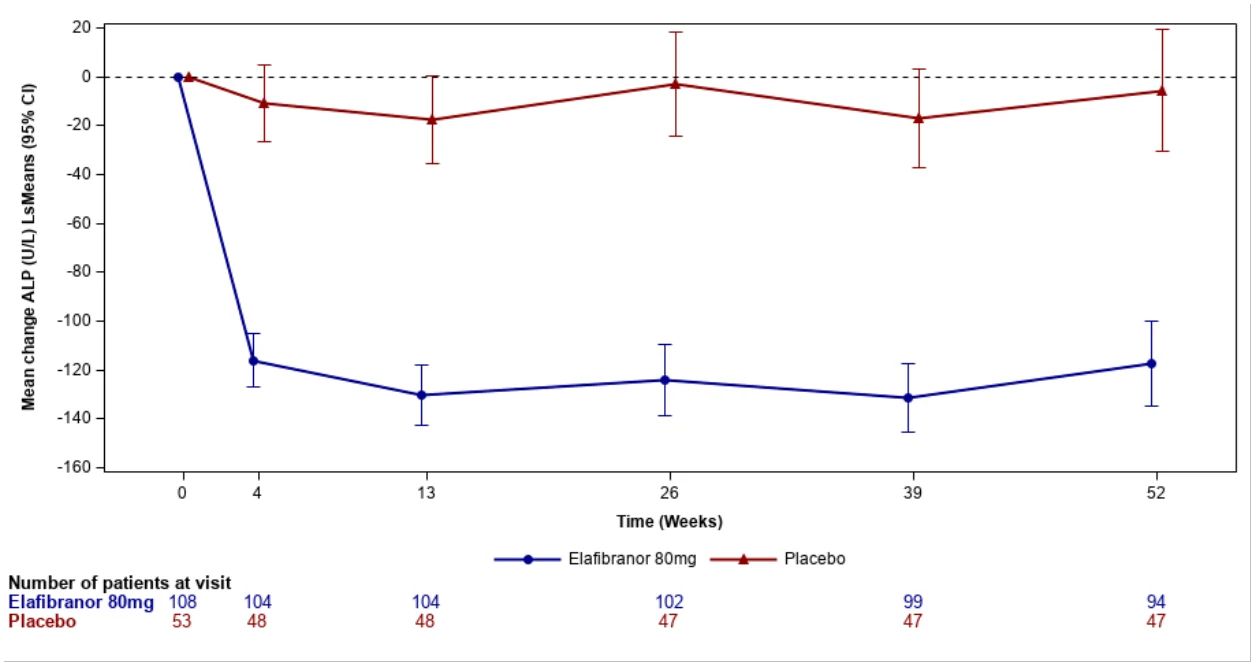
In the phase 3 study, treatment with elafibranor resulted in a marked reduction from baseline in alkaline phosphatase (ALP) as early as 4 weeks which was sustained through week 52. In alignment with the observed biochemical response, greater reductions in biomarkers of BA synthesis including the BA precursor 7 alpha-hydroxy-4-cholesten-3-one (C4) and Fibroblast Growth Factor (FGF-19), a BA synthesis regulator, were observed with elafibranor treatment. Significant decreases in Immunoglobulin M (IgM), Immunoglobulin G (IgG), and anti-inflammatory markers, were observed in patients treated with elafibranor compared to placebo in alignment with the in vitro demonstration of anti-inflammatory properties of elafibranor.
In vitro studies in human macrophages, monocytes and endothelial cells showed the capacity of elafibranor and/or GFT1007 to decrease the secretion of inflammatory markers such as Monocyte Chemoattractant Protein-1 (MCP-1) and Interleukin-6 (IL-6) through combined PPARα and PPARδ activation and parallel PPAR-independent mechanisms.
Anti-fibrotic properties of elafibranor were demonstrated in human primary hepatic stellate cells (hHSCs), pivotal for fibrogenesis in the liver. Elafibranor inhibits Platelet-Derived Growth Factor (PDGF)-stimulated hHSC proliferation in a dose-dependent manner via modulation of PDGFRβ phosphorylation. Additionally, elafibranor inhibits Transforming Growth Factor Beta (TGFβ1)–induced hHSC activation at the gene level, by down-regulating, in a dose-dependent manner, the expression of several fibrosis markers, such as alpha Smooth Muscle Actin (aSMA), Collagen 1 alpha 1 (Col1α1) and Collagen 4 alpha 1 (Col4α1), but without inhibiting the kinase activity of the TGFβ1 receptors.
Cardiac Electrophysiology
In healthy volunteers, up to 300 mg of elafibranor daily did not cause clinically significant QTc interval prolongation.
10.3 Pharmacokinetics
Mean elafibranor and GFT1007 plasma exposures (AUC0-24h) increased linearly with elafibranor daily intake from 40 mg to 300 mg (0.5 to 3.75 times the indicated dose). Following once daily dosing, steady state for elafibranor was achieved by day 14, while steady state for GFT1007 was achieved by day 7. The pharmacokinetics of elafibranor and GFT1007 is time-independent after 16 days of repeated oral administration.
Table 4 – Summary of Elafibranor and GFT1007 Pharmacokinetic Parameters at Steady State in Patients with PBC Following 80 mg once daily
| Cmax,ss (ng/mL) Mean (SD) | AUC0-24,ss (ng·h/mL) Mean (SD) | AUC ratio Day 15/Day 1 Mean (min, max)a | |
|---|---|---|---|
| Elafibranor | 802 (443) | 3758 (1749) | 2.9 (0.86- to 13) |
| GFT1007 | 2058 (459) | 11985 (7149) | 1.3 (0.6- to 3) |
AUC = Area under the concentration-time curve; Cmax = maximal concentration; SD = standard deviation; SS = Steady State;
aDay 15 following repeated elafibranor 80 mg once daily administration in patients with PBC
In healthy subjects after 14 days of once daily 80 mg elafibranor administration, mean Cmax,ss was 495.2 ng/mL, median Tmax was 1.0 hour, and mean AUC0-24,ss was 3320 ng·h/mL. For GFT1007, mean Cmax,ss was 2780 ng/mL, median Tmax was 1.0 hour, and mean AUC0-24,ss was 9305 ng·h/mL.
Absorption: Following repeated once daily dosing of 80 mg in patients with PBC, median peak plasma levels of elafibranor and GFT1007 occur within 1.25 hours. When administered with a high-fat and high-calorie meal, there was a 30-minute delay in Tmax for elafibranor and a 1-hour delay for GFT1007 in fed compared to fasted conditions (see 9.5 Drug-Food Interactions).
Distribution: Plasma protein binding of both elafibranor and GFT1007 is approximately 99.7% (mainly to serum albumin). The mean apparent volume of distribution (Vd/F) of elafibranor in humans is 4731 L, following single dose of elafibranor at 80 mg in fasted conditions.
Metabolism: GFT1007 is the principal active metabolite of elafibranor. In vitro, elafibranor is metabolized by 15-ketoprostaglandin 13-Δ reductase (PTGR1). In vitro neither elafibranor nor GFT1007 show major metabolism by the main cytochrome P450 (CYP) and uridine diphosphate (UDP)-glucuronosyltransferase (UGT) isoforms.
Following oral administration of 14C radiolabeled elafibranor, it was rapidly hydrolyzed to the active metabolite GFT1007. Two major metabolites were identified in plasma, GFT1007 (active metabolite) and glucuronide conjugates (inactive metabolites).
Elimination: Following single 80 mg dose under fasted conditions, mean elimination half-life is 68.2 hours for elafibranor, and 15.4 hours for metabolite GFT1007. Elafibranor mean apparent total clearance (CL/F) was 50.0 L/h after a single 80 mg dose under fasted conditions.
Excretion: Following a single 120 mg oral dose (1.5-times the recommended dose) of 14C-radiolabelled elafibranor in healthy subjects, approximately 77.1% of the dose was recovered in feces, primarily as elafibranor (56.7% of the administered dose) and its major metabolite GFT1007 (6.08% of the administered dose). Approximately 19.3% was recovered in urine, primarily as glucuronide conjugate GFT3351 (11.8% of the administered dose).
Special Populations and Conditions
There was no evidence that age (from 18 to 80 years old), gender, race, Body Mass Index (BMI), and renal status, had any clinically meaningful impact on elafibranor and GFT1007 PK.
Hepatic Insufficiency: The total drug exposure of the parent and active metabolite was not significantly different between patients with normal hepatic function and hepatically impaired patients (Child Pugh A, B and C). No dosing adjustment is required for patients with mild (Child Pugh A) or moderate (Child Pugh B) hepatic impairment. However, the unbound fraction of elafibranor and GFT1007 increased by approximately 3-fold in the severe (Child Pugh C) hepatically impaired patients. IQIRVO is not recommended for patients with severe hepatic impairment (Child-Pugh C).
Patients with Renal Impairment: No dosing adjustment is required for patients with renal impairment. Following a single dose of 120 mg Elafibranor administration (1.5-times the recommended dose), the systemic exposure of Elafibranor was 32% lower and GFT1007 was not significantly different between patients with normal renal function and patients with severe renal impairment (eGFR < 15 mL/min/1.73 m2, Modification of Diet in Renal Disease (MDRD)) but not yet on dialysis. The unbound fraction of Elafibranor was 21% lower and GFT1007 was not significantly different between patients with normal renal function and patients with severe renal impairment.
11 STORAGE, STABILITY AND DISPOSAL
This package is child-resistant. Keep out of reach of children. Store at room temperature 15°C to 30°C.
12 SPECIAL HANDLING INSTRUCTIONS
Not applicable.
PART II: SCIENTIFIC INFORMATION
13 PHARMACEUTICAL INFORMATION
Drug Substance
Proper/ Common name: elafibranor
Chemical name: 2-[2,6-dimethyl-4-[(E)-3-(4-methylsulfanylphenyl)-3-oxoprop-enyl] phenoxy]-2-methylpropanoic acid
Molecular formula and molecular mass: C22H24O4S, 384.49 g/mol
Structural formula:
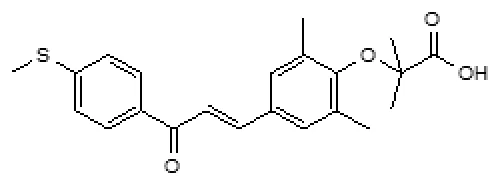
Physicochemical properties: Elafibranor and its main active metabolite GFT1007 are dual peroxisome proliferator-activated receptor (PPAR)α/δ agonists. Elafibranor is practically insoluble in aqueous media at pH in the range 1.2 to 6.8. It is very slightly soluble at pH 7.5. It is soluble in dichloromethane, freely soluble in DMSO and sparingly soluble in 2-propanol and ethanol.
14 CLINICAL TRIALS
14.1 Clinical Trials by Indication
Table 5– Summary of Patient Demographics for the Pivotal Clinical Trial in PBC with an Inadequate Response or Intolerance to UDCA
| Study # | Trial design | Dosage, route of administration and duration | Study subjects (n) | Mean age (Range) | Sex |
| GFT505B-319-1 (ELATIVE) | Phase 3, randomized, double-blind, placebo-controlled study | 80mg tablet or placebo once daily for ≥ 52 weeks | 161 Elafibranor 108 Placebo 53 | 57.1 [36-76] years | Female 96% |
The efficacy of IQIRVO was evaluated in Study GFT505B-319-1 (# NCT04526665, Study 319): a phase 3, randomized, double blind, placebo-controlled study in 161 adults with PBC with an inadequate response to UDCA (95% of patients) or intolerance to UDCA (5% of patients). 161 patients were randomized in a 2:1 ratio to receive elafibranor 80 mg or placebo once daily for at least 52 weeks. When applicable, patients continued their pre-study dose of UDCA throughout the study. Patients were included in the study if their ALP was ≥ 1.67 x ULN and total bilirubin (TB) was ≤ 2 x ULN. Patients were excluded in case of decompensated cirrhosis, concomitant liver disease, other clinically significant medical condition, > 20g pure alcohol per day for women, >30g pure alcohol per day for men, or potential to become pregnant without highly effective contraception. At the end of the double-blind period, the median duration of exposure was 63 and 61 weeks in the IQIRVO and placebo groups, respectively.
Overall, the mean age was 57.1 years, and the mean weight was 70.8 kg. The study population was predominately female (96%) and white (91%). Mean (SD) time since PBC diagnosis was 7.9 [5.9] years for IQIRVO 80 mg and 8.3 [6.8] years for placebo group. 35% (54/154 with available data) had advanced disease (defined as liver stiffness >10kPa and/or bridging fibrosis or cirrhosis on histology when applicable).
The baseline mean ALP concentration was 321.9 U/L, and 39% of patients had a baseline ALP concentration > 3 x ULN. The mean baseline TB concentration was 9.6 µmol/L, and 96% of patients had a baseline TB concentration ≤ULN. The mean baseline liver stiffness measurement (LSM) by transient elastography was 10.1 kPa. The baseline mean PBC Worst Itch Numeric Rating Scale (NRS) score was 3.3 and 41% had moderate-to-severe pruritus at baseline (PBC Worst Itch NRS score ≥ 4); for those with moderate-to-severe pruritus, the baseline mean PBC Worst Itch NRS score was 6.2 for patients in the elafibranor 80 mg group and 6.3 for patients in the placebo group. The majority (95%) of patients received study treatment (IQIRVO or placebo) in combination with UDCA and 5% of patients who were unable to tolerate UDCA received study treatment as monotherapy.
The primary endpoint was cholestasis response at week 52 as defined as the composite endpoint: ALP < 1.67 x ULN and TB ≤ ULN and ALP decrease ≥ 15%. The key secondary endpoints were ALP normalization at week 52 and the change in pruritus from baseline through week 52 and through week 24 based on the PBC Worst Itch NRS score in patients with moderate-to-severe pruritus (PBC Worst Itch NRS score ≥4) at baseline.
Table and Figure 1 show the primary composite endpoint of cholestasis response and the key secondary endpoint of ALP normalization. Consistent biochemical response was observed across subgroups, including those with baseline ALP >3xULN, or <3xULN, or those with advanced or early disease stage.
Table 6– Proportion of PBC Patients Achieving Cholestasis Response and ALP Normalization at Week 52, Intention to Treat Population
IQIRVO 80 mg (N = 108) | Placebo (N = 53) | Treatment Difference (95% CI) [3] | P-value [4] | |||||||
|---|---|---|---|---|---|---|---|---|---|---|
| Primary Endpoint | ||||||||||
| Cholestasis Response [1] | 51% | 4% | 47% (32, 57) | < 0.0001 | ||||||
| Key Secondary Endpoint | ||||||||||
| ALP Normalization [2] | 15% | 0 | 15% (6, 23) | 0.0019 | ||||||
ALP: Alkaline Phosphatase
CI: Confidence Interval
[1] Cholestasis response: ALP <1.67x ULN and TB ≤ULN and ALP decrease from baseline ≥ 15% at week 52. Patients who prematurely stopped the study treatment (intercurrent event 1) or used rescue therapy for PBC (intercurrent event 2) prior to week 52 assessment considered non-responders. In case of missing data at week 52 for patients without an intercurrent event, the closest non-missing assessment from the DB treatment period was taken into account.
[2] Normalization of ALP at week 52 defined as proportion of patients with ALP ≤1.0× ULN. The approach to handle intercurrent events or missing data is the same as for the primary endpoint.
[3] The response rate differences between the treatment groups and 95% CI were calculated using the Newcombe method stratified by randomization strata for cholestasis response and unstratified for ALP normalization.
[4] p-values to compare treatments were from the exact Cochran-Mantel-Haenszel (CMH) test stratified by the randomization strata.
Figure 1. Percentage of patients with a biochemical response (A) and normalization of alkaline phosphatase (B) at Week 52
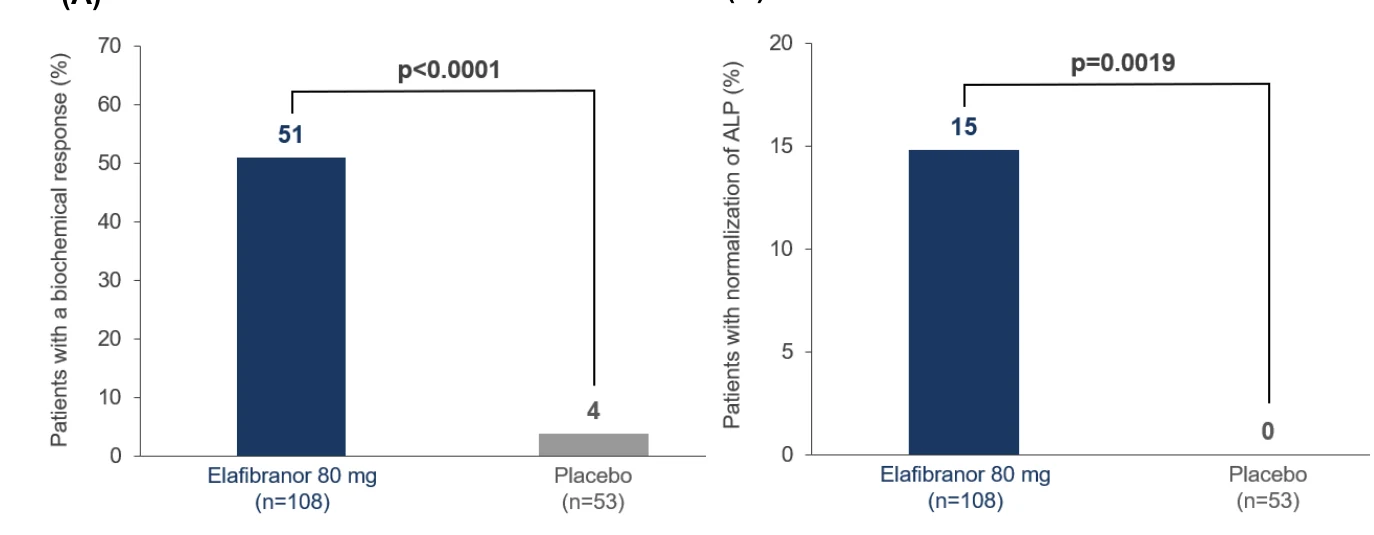
Figure 2 A trend showing a reduction in ALP from baseline was observed as early as week 4 and was maintained over 52 weeks of treatment in the Elafibranor group compared to the placebo group as shown with non-overlapping 95% confidence intervals (Figure 2).
Figure 2. Mean Change from Baseline in ALP Over Time - ITT analysis set
(A)
(B)
Patient-reported outcome
In patients with moderate-to-severe pruritus at baseline (PBC Worst Itch NRS score ≥ 4), the mean change from baseline in PBC Worst Itch NRS score through Week 52 and Week 24 decreased more (by 0.8 and 0.3) in patients randomized to elafibranor compared to placebo: a difference that was not statistically significant (Table 7).
Table 7– Change in PBC Worst Itch Numeric Rating Scale (PBC WI NRS) from Baseline Through Week 52 and Week 24 in Patients with Moderate-to-Severe Baseline Pruritus (PBC WI NRS
IQIRVO 80 mg (N = 44) | Placebo (N = 22) | Treatment Difference (95% CI) | P-value | |||
|---|---|---|---|---|---|---|
| Key Secondary Endpoint: Change Through Week 52 [1] | ||||||
| Least Squares Mean (95% CI) | -1.9 (-2.6, -1.3) | -1.1 (-2.1, -0.2) | -0.8 (-2.0, 0.4) | 0.1970 | ||
| Key Secondary Endpoint: Change Through Week 24 [1] | ||||||
| Least Squares Mean, (95% CI) | -1.6 (-2.2, -1.0) | -1.3 (-2.2, -0.3) | -0.3 (-1.5, 0.8) | 0.5522 | ||
[1] Analysis used the mixed model for repeated measures (MMRM) with treatment, 4-week period and treatment by 4-week period interaction as fixed factors and adjusting for baseline PBC Worst Itch NRS and the stratification factor of ALP >3 x ULN or TB >ULN. An unstructured correlation structure is used.
Treatment effect through week 52 and week 24 is the average treatment effects of NRS score changes from baseline over the first thirteen 4-week periods and first six 4-week periods, respectively. The assessments of PBC Worst Itch NRS scores after patients stopped prematurely the study treatment or took a rescue therapy for pruritus were considered as missing.
15 MICROBIOLOGY
No microbiological information is required for this drug product.
16 NON-CLINICAL TOXICOLOGY
General Toxicology
General toxicology has been assessed in rodent (mouse and rat) and non-rodent (monkey) species after single, and repeated dose oral administration for up to 6 months in rats and 12 months in monkeys respectively.
Elafibranor exhibited a favorable safety profile when administered as single oral doses in acute toxicity studies in rats and mice. In the 6-month rat repeat-dose study, higher liver weights, hepatocellular hypertrophy and/or liver necrosis were observed in rats exposed to ≥3 mg/kg/day of elafibranor. The findings observed in the liver may be attributed to the expected rodent-specific PPARα-related liver toxicity. Therefore the relevance of the liver findings to humans is uncertain. Excluding the liver effects, the NOAEL is 100 mg/kg/day (15.4 times the recommended dose based on the combined unbound AUC for elafibranor and GFT1007 (RHD)).
No adverse effects were observed in the 12-month monkey repeat-dose study up to the maximum tested dose of 50 mg/kg/day (15.7x the RHD)
In addition, up to the highest doses tested, elafibranor did not show any relevant effects on organs and systems previously described as being of a safety concern with PPARγ agonists (weight gain, hemodilution, fluid retention leading to congestive heart failure, bladder cancer).
Safety pharmacology
No safety issues were identified when assessing the potential effects of elafibranor on the cardiovascular, respiratory, and central nervous systems.
Carcinogenicity
Elafibranor was assessed in two carcinogenicity studies in mice and rats, with oral gavage administration for up to two years at 1, 3, 10, or 30 mg/kg/day.
Hepatocellular carcinomas and adenomas were observed in male and/or female mice at the ≥ 1 mg/kg/day dose levels (0.1x the RHD). The no observed effect level (NOEL) for tumours in the mouse was not established.
Hepatocellular adenomas and carcinomas as well as Leydig cell adenomas were observed in male rats at ≥10 mg/kg/day dose level. Hepatocellular carcinomas and adenomas, pancreas acinar cell adenomas as well as thyroid follicular carcinomas were observed in female rats at the 30 mg/kg/day dose level. The NOEL for tumors in the rat was 3 mg/kg/day in males (0.9x the RHD) and 10 mg/kg/day (3.6x the RHD) in females.
The liver tumors in mice and rats may be attributed to the expected rodent-specific PPAR alpha-related liver toxicity and its related consequences. Therefore, the relevance to humans is uncertain.”
Genotoxicity
Elafibranor, its principal active metabolite GFT1007 and the acyl glucuronide metabolite racemic GFT3351 are unlikely to pose a significant genotoxic risk to humans.
Reproductive and Developmental Toxicology
Lower fertility index, lower mean percentage of live concepti, and higher post-implantation loss were observed in the rat fertility and early embryonic development study where both males and females were administered 100 mg/kg/day of Elafibranor. The rat fertility NOAEL was 30 mg/kg/day (5.3 times RHD). Elafibranor has shown evidence of developmental toxicity in both rats and rabbits.
In pregnant rats, elafibranor administration during the period of organogenesis from gestation day (GD) 6 to GD17 resulted in no effect on embryofoetal development at doses up to 300 mg/kg/day (~100-times the RHD). Higher post-implantation loss, total resorptions, lower number of live fetuses, lower number of fetuses per dam, lower fetal body weight, visceral and skeletal variations (short innominate artery and incomplete ossification) but no foetal malformations were observed at the 1000 mg/kg/day dose level (~167 times the RHD).
In pregnant rabbits, elafibranor administration during organogenesis at the high dose of 300 mg/kg/day (3-times the RHD), was associated with marked maternal toxicity, increased embryo-lethality, reduced foetal weight plus foetal malformations. At the mid-dose of 100 mg/kg/day (0.5-times the RHD), despite maternal toxicity, there was no effect on embryofoetal survival, or foetal weight nor foetal malformations. The only finding was foetal ossification variations in the distal limb bones. No adverse effects were seen on embryofoetal development at the low dose of 30 mg/kg/day (i.e., approximately 0.1-times the RHD).
In rat pre- and post-natal study, maternal exposures to elafibranor (at or above 2-times the RHD) was associated with reduced pup survival, blue/black discolouration of the caudal section of some pups, lower pup body weights and developmental delays at all doses. Elafibranor and GFT1007 were not detected in plasma of pups except 2 pups with low levels of plasma GFT1007 maternally exposed at the highest dose level. Thus, there might be a potential for elafibranor to be transferred via lactation.
Juvenile Toxicology
In the juvenile rat toxicity study, treatment-related but non-adverse findings were observed at the 10, 30 and 100 mg/kg/day dose levels. The treatment-related effects were similar to those observed in the adult rat repeat-dose studies. The juvenile NOAEL was 100 mg/kg/day (23 times the RHD) and the juvenile LOAEL was not established.
Special Toxicology
Phototoxic potential
In the in vitro assay using 3T3 fibroblasts, elafibranor, but not GFT1007, showed phototoxic potential. From the follow-up UV-LLNA mice study, it was concluded that there is no in vivo phototoxicity risk associated with elafibranor up to the highest tested dose of 800 mg/kg/day (~46 times the human exposure at 80 mg once daily). Moreover, tissue distribution studies using radiolabeled elafibranor in mice, rats and monkeys showed that there was no accumulation of elafibranor in eyes and skin, which limits its phototoxic potential.