


Product Monograph - Lyvdelzi
RECENT MAJOR LABEL CHANGES
| None at the time of most recent authorization |
|---|
TABLE OF CONTENTS
Sections or subsections that are not applicable at the time of authorization are not listed.
TABLE OF CONTENTS ........................................................................................................................ 2
PART I: HEALTH PROFESSIONAL INFORMATION ................................................................................ 4
1 INDICATIONS ....................................................................................................................... 4
1.1 Pediatrics .............................................................................................................................. 4
1.2 Geriatrics .............................................................................................................................. 4
2 CONTRAINDICATIONS .......................................................................................................... 4
4 DOSAGE AND ADMINISTRATION .......................................................................................... 4
4.1 Dosing Considerations ......................................................................................................... 4
4.2 Recommended Dose and Dosage Adjustment .................................................................... 4
Pediatrics (<18 years of age) ........................................................................................................... 4
Geriatrics (>65 years of age) ........................................................................................................... 4
Renal Impairment ........................................................................................................................... 5
Hepatic Impairment ........................................................................................................................ 5
4.4 Administration ..................................................................................................................... 5
4.5 Missed Dose ......................................................................................................................... 5
5 OVERDOSAGE ...................................................................................................................... 5
6 DOSAGE FORMS, STRENGTHS, COMPOSITION AND PACKAGING ............................................ 6
7 WARNINGS AND PRECAUTIONS ............................................................................................ 6
7.1 Special Populations .............................................................................................................. 7
7.1.1 Pregnant Women .......................................................................................................... 7
7.1.2 Breastfeeding ................................................................................................................ 8
7.1.3 Pediatrics (<18 years of age) ......................................................................................... 8
7.1.4 Geriatrics (≥ 65 years of age) ......................................................................................... 8
7.1.5 Monitoring and Laboratory Tests .................................................................................. 8
8 ADVERSE REACTIONS ........................................................................................................... 8
8.1 Adverse Reaction Overview ................................................................................................. 8
8.2 Clinical Trial Adverse Reactions ........................................................................................... 8
8.3 Less Common Clinical Trial Adverse Reactions (<5%) .......................................................... 9
8.4 Abnormal Laboratory Findings: Hematologic, Clinical Chemistry and Other Quantitative Data .............................................................................................................................................. 9
9 DRUG INTERACTIONS ........................................................................................................... 9
9.2 Drug Interactions Overview ................................................................................................. 9
9.3 Drug-Behavioural Interactions ............................................................................................. 9
9.4 Drug-Drug Interactions ......................................................................................................10
9.5 Drug-Food Interactions ......................................................................................................12
9.6 Drug-Herb Interactions ......................................................................................................12
9.7 Drug-Laboratory Test Interactions .....................................................................................12
10 CLINICAL PHARMACOLOGY ................................................................................................ 12
10.1 Mechanism of Action ...................................................................................................12
10.2 Pharmacodynamics .....................................................................................................12
10.3 Pharmacokinetics ........................................................................................................13
11 STORAGE, STABILITY AND DISPOSAL ................................................................................... 15
12 SPECIAL HANDLING INSTRUCTIONS .................................................................................... 15
PART II: SCIENTIFIC INFORMATION ................................................................................................. 16
13 PHARMACEUTICAL INFORMATION ..................................................................................... 16
14 CLINICAL TRIALS ................................................................................................................. 16
14.1 Clinical Trials by Indications .........................................................................................16
15 MICROBIOLOGY ................................................................................................................. 20
16 NON-CLINICAL TOXICOLOGY ............................................................................................... 21
PATIENT MEDICATION INFORMATION ............................................................................................ 23
PART I: HEALTH PROFESSIONAL INFORMATION
1 INDICATIONS
LYVDELZI (seladelpar) is indicated for the treatment of primary biliary cholangitis (PBC), in combination with ursodeoxycholic acid (UDCA) in adults who have an inadequate response to UDCA alone, or as monotherapy in adults unable to tolerate UDCA.
Marketing authorization with conditions for this indication is based on a randomized, placebo-controlled, phase III study that assessed alkaline phosphatase (ALP) and bilirubin as a composite biochemical surrogate endpoint [see 14 CLINICAL TRIALS]. Continued approval for this indication is contingent upon verification of clinical benefit in a confirmatory trial(s).
1.1 Pediatrics
Pediatrics (<18 years of age): No data are available to Health Canada; therefore, Health Canada has not authorized an indication for pediatric use.
1.2 Geriatrics
Geriatrics (≥ 65 years of age): Evidence from clinical studies and experience suggests that use in patients 65 to 75 years old is not associated with differences in safety or effectiveness. There is limited clinical experience in patients older than 75 years.
2 CONTRAINDICATIONS
LYVDELZI is contraindicated in patients who are hypersensitive to seladelpar or to any ingredient in the formulation or component of the container. For a complete listing, see 6 DOSAGE FORMS, STRENGTHS, COMPOSITION AND PACKAGING.
4 DOSAGE AND ADMINISTRATION
4.1 Dosing Considerations
Obtain baseline liver clinical and laboratory assessments at treatment initiation with LYVDELZI. See 7 WARNINGS AND PRECAUTIONS.
4.2 Recommended Dose and Dosage Adjustment
The recommended dosage of LYVDELZI is 10 mg taken orally once daily with or without food.
Pediatrics (<18 years of age)
The safety and efficacy of LYVDELZI in patients younger than 18 years of age have not been established. Health Canada has not authorized an indication for pediatric use.
Geriatrics (>65 years of age)
No dose adjustment of LYVDELZI is required for elderly patients.
Renal Impairment
No dose adjustment of LYVDELZI is required in patients with mild, moderate, or severe renal impairment (estimated glomerular filtration rate [eGFR] ≥ 15 mL/min). LYVDELZI has not been studied in patients with end stage renal disease (ESRD) on dialysis.
Hepatic Impairment
No dose adjustment of LYVDELZI is required in patients with mild hepatic impairment (Child-Pugh A). The safety and efficacy of LYVDELZI in patients with decompensated cirrhosis have not been established.
Monitor patients with cirrhosis for evidence of decompensation. Consider discontinuing LYVDELZI if the patient progresses to moderate or severe hepatic impairment (Child-Pugh B or C). Use of LYVDELZI is not recommended in patients who have or develop decompensated cirrhosis.
4.4 Administration
The recommended dose of LYVDELZI is one capsule (10 mg) taken orally once daily with or without food.
Administer LYVDELZI at least 4 hours before or 4 hours after taking a bile acid sequestrant, or at as great an interval as possible. See 9.4 Drug-Drug Interactions.
4.5 Missed Dose
If a dose of LYVDELZI is missed, the missed dose should be taken at the next scheduled time point. A double dose should not be taken to make up for the missed dose.
5 OVERDOSAGE
PBC patients who received 5-times the recommended dosage or 20-times the recommended dosage of LYVDELZI experienced an increase in liver transaminases, muscle pain, and/or elevations in creatine phosphokinase, which resolved upon LYVDELZI discontinuation [see 7 WARNINGS AND PRECAUTIONS].
There is no specific treatment for overdose with LYVDELZI. General supportive care of the patient is indicated, as appropriate. If indicated, elimination of unabsorbed drug should be achieved by emesis or gastric lavage. Because seladelpar is highly bound to plasma proteins, hemodialysis should not be considered.
For the most recent information in the management of a suspected drug overdose, contact your regional poison control centre or Health Canada’s toll-free number, 1-844 POISON-X (1-844-764-7669).
6 DOSAGE FORMS, STRENGTHS, COMPOSITION AND PACKAGING
Table 1 – Dosage Forms, Strengths, Composition and Packaging
LYVDELZI capsules are opaque, hard gelatin capsules, size 1, with a light gray opaque body and a dark blue opaque cap, printed with “CBAY”in white ink on the cap and “10” in black ink on the body, containing white to off-white solid.
LYVDELZI 10 mg capsules are packaged in a high-density polyethylene (HDPE) bottle closed with a polypropylene child-resistant cap lined with an induction seal. Each bottle contains 30 capsules.
7 WARNINGS AND PRECAUTIONS
Driving and Operating Machinery
No studies on the effects of LYVDELZI on the ability to drive and use machines have been performed.
Endocrine and Metabolism
Co-administration with other medicinal products
Co-administration of probenecid with LYVDELZI is not recommended. See 9.4 Drug-Drug Interactions.
Hepatic/Biliary
Liver Test Abnormalities
LYVDELZI has been associated with dose-related increases in serum transaminase (aspartate aminotransferase [AST] and alanine aminotransferase [ALT]) levels greater than 3-times upper limit of normal (ULN) in PBC patients receiving 50 mg once daily (5-times higher than the recommended dosage) and 200 mg (20-times higher than the recommended dosage) once daily. Transaminase levels returned to pretreatment levels upon LYVDELZI discontinuation. LYVDELZI 10 mg once daily did not show a similar pattern for increases in transaminase levels [see 5 OVERDOSAGE].
Obtain baseline clinical and laboratory assessments at treatment initiation with LYVDELZI and monitor
| Route of Administration | Dosage Form / Strength/Composition | Non-medicinal Ingredients |
| Oral | Each capsule contains 10 mg of seladelpar (as 14.1 mg seladelpar lysine dihydrate) | Capsule Core: Butylated Hydroxytoluene, Colloidal Silicon Dioxide, Croscarmellose Sodium, Magnesium Stearate, Mannitol, Microcrystalline Cellulose. Capsule Shell: Black Iron Oxide, Gelatin, FD&C Blue #2, Red Iron Oxide, Titanium Dioxide, Yellow Iron Oxide. Black Ink: Black Iron Oxide, Potassium Hydroxide, Propylene Glycol, Shellac. White Ink: Povidone, Propylene Glycol, Shellac, Sodium Hydroxide, Titanium Dioxide. |
thereafter according to routine patient management. Consider temporary interruption of LYVDELZI treatment if the liver tests (ALT, AST, total bilirubin [TB], and/or alkaline phosphatase [ALP]) worsen, or the patient develops signs and symptoms consistent with clinical hepatitis (e.g., jaundice, right upper quadrant pain, eosinophilia). Consider permanent discontinuation if liver tests worsen after restarting LYVDELZI.
Biliary Obstruction
Avoid use of LYVDELZI in patients with complete biliary obstruction. If biliary obstruction is suspected, interrupt LYVDELZI and treat as clinically indicated.
Liver Transplant
LYVDELZI’s effects are uncertain in PBC patients post liver transplant as such patients were excluded from the clinical studies.
Musculoskeletal
Fractures occurred in 3.9% (n=5) of LYVDELZI-treated patients compared to no placebo-treated patients in the RESPONSE trial. Consider the risk of fracture in the care of patients treated with LYVDELZI and manage bone health according to the standard of care. See 8.3 Less Common Clinical Trial Adverse Reactions (<5%).
Reproductive Health: Female and Male Potential
Fertility
There are no data on the effects of LYVDELZI on human male or female fertility.
Seladelpar had no effects on fertility or reproductive function in male and female rats at oral doses of up to 100 mg/kg/day (223-times and 95-times the clinical exposure (based on AUC) in male and female rats, respectively).
7.1 Special Populations
7.1.1 Pregnant Women
There are no adequate and well-controlled studies of LYVDELZI in pregnant women.
There are insufficient data from human pregnancies exposed to LYVDELZI to allow an assessment of a drug-associated risk of major birth defects, miscarriage, or other adverse maternal or fetal outcomes.
In pregnant rabbits, a reduction in fetal body weight and gravid uterine weight was observed at 41-fold the recommended human dose (RHD) based on AUC. No effects were observed at 2-fold the RHD.
In a rat pre- and post-natal development study with maternal dosing during organogenesis and lactation, reduced post-natal growth and pre-weaning survival were observed at 145-fold the RHD. Growth related delays in developmental milestones were also observed at 145-fold the RHD. The no‑observed‑adverse‑effect‑level (NOAEL) was 15-fold the RHD [See 16 NON-CLINICAL TOXICOLOGY].
7.1.2 Breastfeeding
It is not known whether seladelpar or its metabolite is secreted in human or animal milk, the effects on the breastfed infant, or the effects on milk production. Precaution should be exercised because many drugs can be excreted in human milk. A risk to the newborn or infants cannot be excluded.
7.1.3 Pediatrics (<18 years of age)
No data are available to Health Canada; therefore, Health Canada has not authorized an indication for pediatric use
7.1.4 Geriatrics (≥ 65 years of age)
Of the 193 patients treated with LYVDELZI in the pivotal Phase 3 study, the age of patients ranged from 28 to 75 years, with a mean age of 57 years; 22.7% were 65 and older. There were no notable differences in safety and effectiveness of LYVDELZI between age groups. Because of limited clinical experience with LYVDELZI in patients older than 75 years old, closer monitoring of adverse reactions in patients older than 75 years is recommended.
7.1.5 Monitoring and Laboratory Tests
See 7 WARNINGS AND PRECAUTIONS, Liver Test Abnormalities.
8 ADVERSE REACTIONS
8.1 Adverse Reaction Overview
Assessment of adverse reactions is based on data from the pivotal study (CB8025-32048 [RESPONSE]) in which 128 patients with PBC received 10 mg LYVDELZI once daily.
The most commonly reported (>5%) adverse drug reactions associated with seladelpar in adult patients (n=128) were headache (7.8%), abdominal pain (7.0%), nausea (6.3%) and abdominal distension (6.3%). No severe adverse events occurred in >1% of patients treated with LYVDELZI in RESPONSE.
8.2 Clinical Trial Adverse Reactions
Clinical trials are conducted under very specific conditions. The adverse event rates observed in the clinical trials, therefore, may not reflect the rates observed in practice and should not be compared to the rates in the clinical trials of another drug. Adverse event information from clinical trials may be useful in identifying and approximating rates of adverse drug events in real-world use.
In the Phase 3 study (CB8025-32048 [RESPONSE]), 193 patients were randomized (2:1) to receive either LYVDELZI 10 mg (n=128) or placebo (n=65) once daily for 52 weeks. The mean duration of exposure was 50.5 and 48.3 weeks in the LYVDELZI and placebo groups respectively. LYVDELZI or placebo was administered in combination with UDCA in 94% of patients and as monotherapy in 6% of patients who were unable to tolerate UDCA. The overall treatment discontinuation rate due to adverse reactions was 3.1% in the LYVDELZI 10 mg arm and 6.2% in the placebo arm. A total of 118 patients completed 1 year of treatment with LYVDELZI 10 mg.
The most common adverse reactions occurring in ≥ 5% of patients and with greater frequency than placebo in the LYVDELZI treatment arm are shown in Table 2.
Table 2 – Adverse Reactions with an incidence of ≥5% in Adult Patients with PBC in RESPONSEa
| Adverse Reaction | LYVDELZI 10 mg n = 128 n (%) | PLACEBO n = 65 n (%) |
| Nervous System Disorders | ||
| Headache | 10 (7.8) | 2 (3.1) |
| Gastrointestinal Disorders | ||
| Abdominal Pain | 9 (7.0) | 1 (1.5) |
| Nausea | 8 (6.3) | 3 (4.6) |
| Abdominal distension | 8 (6.3) | 2 (3.1) |
a Treatment-Emergent Adverse Reactions regardless of investigator-assessed causality
8.3 Less Common Clinical Trial Adverse Reactions (<5%)
Adverse reactions occurring at a frequency of <5% of patients are presented below.
Musculoskeletal and connective tissue disorders: fracture
Nervous system disorders: dizziness
Skin and subcutaneous tissue disorders: rash
Blood and lymphatic system disorders: anemia
8.4 Abnormal Laboratory Findings: Hematologic, Clinical Chemistry and Other Quantitative Data
Serum Creatinine
Dose dependent increases in serum creatinine have been observed in LYVDELZI-treated patients. In RESPONSE, median increases of up to 6.6% were observed with the 10 mg dose compared with up to 2.2% in patients taking placebo. Reductions in eGFR of at least 25% associated with increases in serum creatinine were observed in 10% (n=12) of LYVDELZI-treated patients, compared to 2% (n=1) of placebo-treated patients. Increases in serum creatinine and declines in eGFR were not progressive and returned towards baseline with ongoing LYVDELZI treatment. None of the patients experienced an eGFR decline of 50% or more. None of the patients required discontinuation of LYVDELZI and there were no clinical findings associated with the observed changes in serum creatinine or eGFR.
9 DRUG INTERACTIONS
9.2 Drug Interactions Overview
Concomitant administration of LYVDELZI with probenecid (an OAT3 and OATP1B inhibitor), cyclosporine (an OATP1B, BCRP and CYP3A inhibitor), strong CYP2C9 inhibitors (e.g. sulphaphenazole), or dual moderate CYP2C9 and moderate-to-strong CYP3A4 inhibitors (e.g. fluconazole, mifepristone, may result in an increase in seladelpar exposure. See Section 9.4 Drug-Drug Interactions and 10.3 Pharmacokinetics.
9.3 Drug-Behavioural Interactions
There have been no adequate, well-controlled studies regarding drug-behavioural interactions.
9.4 Drug-Drug Interactions
Drug interaction information for LYVDELZI with potential concomitant drugs is summarized in Table 3. The drug interactions described are based on the results of studies conducted with LYVDELZI or are potential drug interactions that may occur with LYVDELZI.
Table 3 – Established and Other Potentially Significant Drug Interactions
| Concomitant Drug Class: Drug Name | Source of evidence | Effect on Concentration | Clinical Comment |
|---|---|---|---|
| Concomitant Drug Class: Drug Name | Source of evidence | Effect on Concentration | Clinical Comment |
| Probenecid1 | CT | ↑ seladelpar Seladelpar AUC0-inf increased by 2-fold and Cmax by 4.69-fold following concomitant use of a single 10 mg seladelpar dose with 500 mg probenecid (an OAT3, OATP1B inhibitor) in healthy subjects. | Coadministration of LYVDELZI with probenecid may increase seladelpar exposure. Coadministration of LYVDELZI with probenecid is not recommended. |
| Strong CYP2C9 inhibitors, or dual moderate CYP2C9 and moderate to strong CYP3A4 inhibitors: fluconazole, mifepristone, sulfaphenazole | CT, T | ↑ seladelpar Seladelpar AUC0-inf increased by 2.4-fold and Cmax by 1.4-fold following concomitant use of a single 10 mg seladelpar dose with 400 mg fluconazole (a moderate CYP2C9 and CYP3A4 inhibitor) in healthy subjects. | Concomitant administration of LYVDELZI with drugs that are strong CYP2C9 inhibitors, or dual moderate CYP2C9 and moderate-to-strong CYP3A4 inhibitors, may increase seladelpar exposure. When LYVDELZI is concomitantly administered with drugs that are strong CYP2C9 inhibitors, or dual moderate CYP2C9 and moderate to strong CYP3A4 inhibitors, patients should be monitored for adverse effects. |
| CYP2C9 poor metabolizers using moderate to strong CYP3A4 inhibitors | T | ↑ seladelpar | Concomitant administration of LYVDELZI with a moderate to strong CYP3A4 inhibitor in patients who are CYP2C9 poor metabolizers may increase seladelpar exposure. When LYVDELZI is administered with moderate to strong CYP3A4 inhibitors in patients that are CYP2C9 poor metabolizers, patients should be monitored for adverse effects. |
| Cyclosporine2 | CT | ↑ seladelpar Seladelpar AUC0-inf increased by 2.1-fold and | Concomitant administration of LYVDELZI with cyclosporine may increase seladelpar exposure. When |
| Cmax by 2.9-fold following concomitant use of a single 10 mg seladelpar dose with 600 mg cyclosporine (an OATP1B, BCRP, and CYP3A inhibitor) in healthy subjects. | LYVDELZI is concomitantly administered with cyclosporine, patients should be monitored for adverse effects. | ||
CYP2C9 and strong CYP3A4 inducers: Carbamazepine, rifampin | T | ↓ seladelpar Seladelpar AUC0-inf decreased by approximately 44% and Cmax by 24% following administration of a single 10 mg seladelpar dose after 300 mg carbamazepine (a strong CYP3A and CYP2C9 inducer) twice daily for 8 days in healthy subjects. The carbamazepine dose was escalated from 100 mg twice daily for 3 days followed by 200 mg twice daily for 4 days to 300 mg twice daily. | Coadministration of LYVDELZI with CYP2C9 inducers and strong CYP3A4 inducers may decrease seladelpar exposure. When LYVDELZI is concomitantly administered with CYP2C9 inducers and strong CYP3A4 inducers, patients should be monitored for potential reduction in biochemical response. |
1 Probenecid is an OAT3, OATP1B Inhibitor
2 Cyclosporine is an OATP1B, BCRP and CYP3A Inhibitor
Legend: CT = Clinical Trial; T = Theoretical
Bile acid sequestrants may interfere with the action of seladelpar by reducing its absorption and systemic exposure, which may reduce seladelpar efficacy. Administer LYVDELZI at least 4 hours before or 4 hours after taking a bile acid binding sequestrant, or at as great an interval as possible.
Drugs without Clinically Significant Interactions with LYVDELZI:
Seladelpar exposures were not significantly altered when a single dose of 600 mg quinidine (P-gp inhibitor) was co-administered in healthy subjects.
Seladelpar has no clinically relevant effect on the pharmacokinetics of tolbutamide (a CYP2C9 substrate), midazolam (a CYP3A4 substrate), simvastatin (a CYP3A4 and OATP substrate), atorvastatin (a CYP3A4 and OATP substrate), and rosuvastatin (an OATP and BCRP substrate).
In vitro drug interaction studies
Based on in vitro studies, seladelpar did not significantly affect the pharmacokinetics of concomitant drugs that are substrates of CYP enzymes (1A2, 2B6, 2C8, 2C19, 2D6, 3A4), UGTs, P-gp, MATEs, OCT1, OCT2, OAT1, or OAT3 at clinically relevant concentrations.
Seladelpar is metabolized mainly by CYP2C9, and to a lesser extent by CYP2C8 and CYP3A4, and is a substrate of transporters, OATP1B, BCRP, P-gp, and OAT3 in vitro. Seladelpar is not a substrate of MATE1, MATE2-K, OAT1, OCT1, or OCT2.
9.5 Drug-Food Interactions
There were no clinically significant differences in seladelpar pharmacokinetics in the fed and fasted states; therefore LYVDELZI capsules can be administered without regard to food (see 10 CLINICAL PHARMACOLOGY, 10.3 Pharmacokinetics).
9.6 Drug-Herb Interactions
Interactions with herbal products have not been established.
9.7 Drug-Laboratory Test Interactions
Interactions with laboratory tests have not been established.
10 CLINICAL PHARMACOLOGY
10.1 Mechanism of Action
Seladelpar is a potent and selective peroxisome proliferator-activated receptor delta (PPARδ) agonist, or delpar. PPARδ is a nuclear receptor expressed in the liver and other tissues with broad expression in cells that play a key role in the pathobiology of PBC, including hepatocytes, cholangiocytes, Kupffer cells, and stellate cells. Published literature show that PPARδ activation reduces bile acid synthesis in the liver through Fibroblast Growth Factor 21 (FGF21)-dependent downregulation of CYP7A1, the key enzyme for the synthesis of bile acids from cholesterol, and by decreasing cholesterol synthesis and absorption. These actions result in lower bile acid exposure in the liver and reduced circulating bile acid levels. Studies also show weak selectivity of seladelpar and its M2 metabolite for PPARα. Seladelpar also has positive effects on serum lipids and fibrosis in a CCl4 liver fibrosis mouse model.
Seladelpar decreases proinflammatory cytokine interleukin (IL)-1β in THP-1 macrophages which may promote the anti-inflammatory M2 phenotype in Kupffer cells and macrophages.
Pruritus is a common symptom in patients with PBC, but its origins are not completely understood. Both bile acids and IL-31 are two of many possible pathways involved in pruritus.
10.2 Pharmacodynamics
Pharmacodynamic Markers
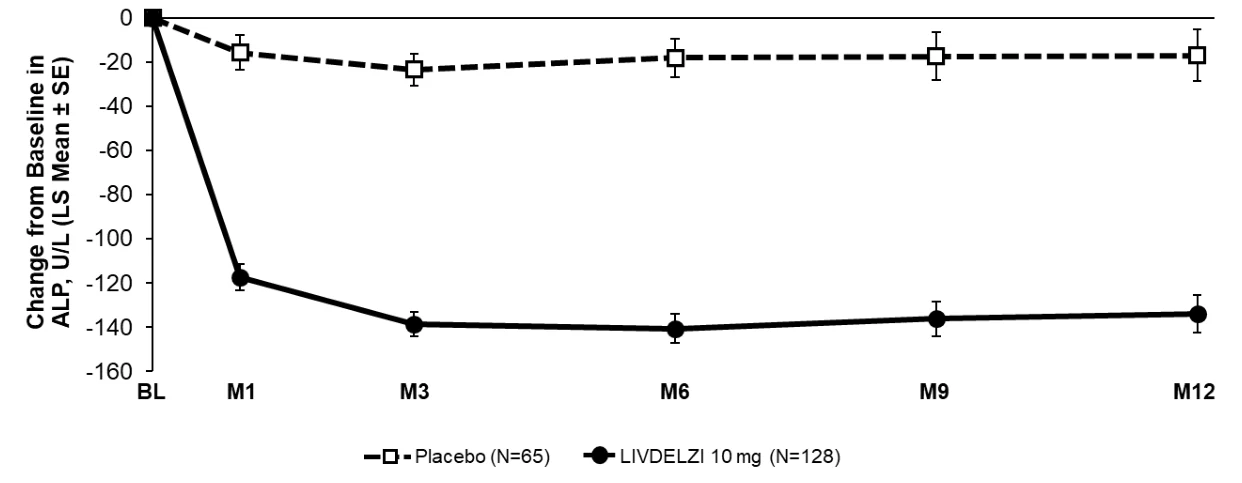
In clinical studies, LYVDELZI treatment resulted in reduction of ALP, a biomarker of cholestasis. ALP reduction was observed within 1 month of treatment initiation, continued to decrease through Month 3, and was sustained through Month 12.
After treatment with LYVDELZI the median serum 7α-hydroxy-4-cholesten-3-one (a bile acid synthesis intermediate) and total bile acids, decreased, reflecting action leading to diminished cholestatic accumulation of total bile acids. LYVDELZI also increased mean serum FGF21 levels; this increase is a known effect of PPARδ activation in hepatocytes that leads to decreased bile acid synthesis.
Treatment with LYVDELZI led to a decrease in the cytokine IL-31 after 6 and 12 months of treatment in patients with moderate-to-severe pruritus.
Cardiac Electrophysiology:
In a randomized, partial-blind, placebo-controlled parallel group ECG assessment performed in healthy subjects, LYVDELZI did not cause clinically significant QTc interval prolongation at 20-times the recommended dose of 10 mg.
10.3 Pharmacokinetics
Absorption
Following oral administration of a single dose of LYVDELZI 10 mg to healthy subjects, the median time to peak concentration (Tmax) was 1.5 hours for seladelpar. Seladelpar systemic exposure increased dose-proportionally from 2 mg (0.2 times the recommended dosage) to 15 mg (1.5 times the recommended dosage) and greater than dose proportionally at higher doses in healthy subjects. For a dose increase from 10 mg to 200 mg (20 times the recommended dosage), mean Cmax and mean AUC for seladelpar increased 70-fold and 27-fold, respectively in healthy subjects.
Following once daily dosing to healthy subjects, seladelpar steady-state was achieved by Day 4 and AUC increase was less than 30%. Seladelpar showed no evidence of meaningful drug accumulation after 21 days of once-daily dosing to healthy subjects. In PBC patients, median (CV) Cmax and AUC for seladelpar was 90.5 (42.5%) ng/mL and 817 (44%) ng*h/mL, respectively at steady state following once daily dosing of 10 mg.
Effects of Food
No clinically significant differences in seladelpar pharmacokinetics were observed following administration of a high-fat, high-calorie meal in healthy subjects.
Co-administration of seladelpar with a high-fat, high-calorie meal prolonged the median Tmax by 2.5 hours relative to fasted conditions and resulted in an approximately 32% and 13% reduction in the Cmax and AUC of seladelpar, respectively. [see 4 DOSAGE AND ADMINISTRATION].
Distribution:
In PBC patients, seladelpar steady state apparent volume of distribution was approximately 110.3 L. Seladelpar plasma protein binding is greater than 99%.
Metabolism:
Seladelpar is primarily metabolized in vitro by CYP2C9 and to a lesser extent by CYP2C8 and CYP3A4, resulting in the three major metabolites: seladelpar sulfoxide (M1), desethyl-seladelpar (M2), and desethyl-seladelpar sulfoxide (M3). The metabolite-to-parent AUC ratios were 0.36, 2.32 and 0.63 for M1, M2 and M3, respectively. Median Tmax for metabolites were 10 hours for M1 and 4 hours for M2 and M3. None of the major metabolites are expected to have clinically relevant pharmacological activity.
Seladelpar plasma exposures (dose-normalized AUC0-inf) were 18% higher in CYP2C9 intermediate metabolizers (*1/*2, *1/*8, *1/*3, *2/*2, N=28) compared to CYP2C9 normal metabolizers (*1/*1,
N=84) after a single dose of seladelpar (1 mg to 15 mg). No conclusions could be made for poor metabolizers, as only two subjects with *2/*3 and no subjects with *3/*3 were identified.
Elimination
Following administration of a single dose of 10 mg seladelpar in healthy subjects, mean ± SD elimination half-life was 6 ± 1.5 hours for seladelpar. In PBC patients, mean ± SD elimination half-life was 6.7 ± 6.1 hours for seladelpar.
In PBC patients, the apparent oral clearance of seladelpar is 12.6 L/h.
Seladelpar is primarily eliminated in urine as metabolites. Following a single oral dose of 10 mg radiolabeled seladelpar in humans, approximately 73.4% of the dose was recovered in urine (less than 0.01% unchanged) and 19.5% in feces (2.02% unchanged) within 216 hours.
Special Populations and Conditions
No clinically significant differences in the pharmacokinetics of seladelpar were observed based on age (19 to 79 years old), weight (45.8 to 127.5 kg), sex, and race (White, Black, or other).
- Pediatrics: The safety and effectiveness of LYVDELZI in patients younger than 18 years of age have not been established.
Hepatic Insufficiency: Following a single oral dose of 10 mg seladelpar, seladelpar AUC increased 1.1-fold in patients with mild (Child-Pugh A), 2.5-fold in moderate (Child-Pugh B), and 2.1-fold in severe (Child-Pugh C) hepatic impairment compared to subjects with normal hepatic function. Seladelpar Cmax increased 1.3-fold in patients with mild (Child-Pugh A), 5.2-fold in moderate (Child-Pugh B), and 5-fold in severe (Child-Pugh C) hepatic impairment.
Compared to PBC patients with mild hepatic impairment (Child-Pugh A) without portal hypertension, seladelpar exposures (Cmax, AUC) were 1.7 to 1.8-fold higher in PBC patients with mild hepatic impairment with portal hypertension, and 1.6 to 1.9-fold higher in PBC patients with moderate hepatic impairment (Child-Pugh B) after a single oral dose of 10 mg seladelpar.
Accumulation ratios were less than 1.2-fold in PBC patients with mild hepatic impairment with portal hypertension and PBC patients with moderate hepatic impairment following 10 mg seladelpar once daily dosing for 28 days.
Renal Insufficiency: In a dedicated clinical study of patients with mild (eGFR ≥ 60 to < 90 mL/min), moderate (eGFR ≥ 30 to < 60 mL/min), and severe (< 30 mL/min and not on dialysis) renal impairment, the AUC0-inf of seladelpar was 48%, 33%, and 3% greater than in patients with normal renal function, respectively, after administration of a single 10 mg dose of seladelpar. The Cmax of seladelpar was similar in patients with renal impairment, compared to patients with normal renal function. These differences in seladelpar AUC0-inf are not considered to be clinically meaningful. The pharmacokinetics of seladelpar have not been studied in patients requiring hemodialysis.
11 STORAGE, STABILITY AND DISPOSAL
Dispense only in original container. Keep the bottle tightly closed. Do not use if seal over bottle opening is broken or missing. Store at 15-25 °C.
12 SPECIAL HANDLING INSTRUCTIONS
There are no special handling instructions.
PART II: SCIENTIFIC INFORMATION
13 PHARMACEUTICAL INFORMATION
Drug Substance
Proper name: seladelpar lysine dihydrate
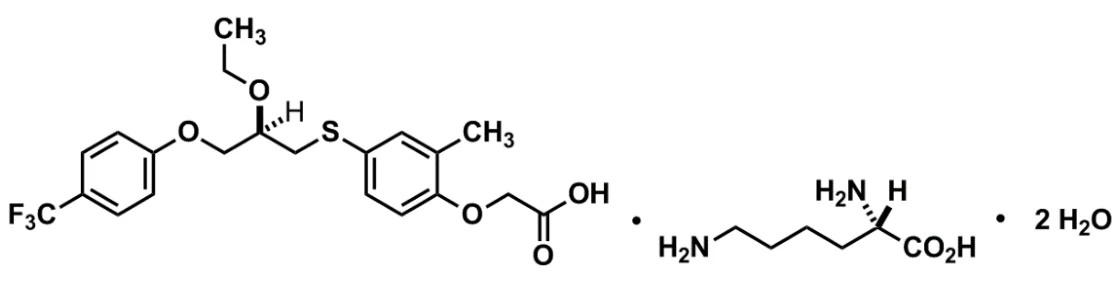
Chemical name: 2-[4-[[(2R)-2-ethoxy-3-[4-(trifluoromethyl)phenoxy]propyl]thio]-2-methylphenoxy]acetic acid, lysine dihydrate
Molecular formula and molecular mass: C21H23F3O5S •C6H14N2O2 •2H2O and 626.7 g/mol
Structural formula:
Physicochemical properties: Seladelpar lysine dihydrate is a white to off-white powder. Its solubility in water is pH dependent. It is slightly soluble at low pH and very soluble at high pH.
14 CLINICAL TRIALS
14.1 Clinical Trials by Indications
Primary Biliary Cholangitis, including pruritus
Table 4 - Trials conducted with LYVDELZI in patients with Primary Biliary Cholangitis
| Trial | Trial design | Treatment Regimen | Dosage, route of administration and duration | Study Participants (n) | Mean age (range) | Sex |
| RESPONSE CB8025-32048 | Phase 3, randomized, double-blind, placebo-controlled | LYVDELZI | 10 mg once daily, Oral, 12 months | 128 | 56.6 [28-75] years | Female 96.1% |
| Placebo | Once daily Oral, 12 months | 65 | 57.0 [33-75] years | Female 92.3% | ||
The efficacy of LYVDELZI was evaluated in RESPONSE, a 52-week, randomized, double-blind, placebo-controlled trial. The trial included 193 adult patients with PBC with an inadequate response or intolerance to UDCA. Patients were included in the trial if their ALP was greater than or equal to 1.67-times the ULN and total bilirubin (TB) was less than or equal to 2-times the ULN. Patients were excluded from the trial if they had other chronic liver diseases, clinically important hepatic decompensation including portal hypertension with complications, history of liver transplantation, or cirrhosis with complications (e.g., Model for End Stage Liver Disease [MELD] score of 12 or greater, known esophageal varices or history of variceal bleeds, history of hepatorenal syndrome).
Patients were randomized (2:1) to receive LYVDELZI 10 mg (N=128) or placebo (N=65) once daily. LYVDELZI or placebo was administered in combination with UDCA in 181 (94%) patients during the trial, or as a monotherapy in 12 (6%) patients who were unable to tolerate UDCA.
Table 5 - Summary of Patient Demographics in RESPONSE
| LYVDELZI (N = 128) | Placebo (N = 65) | Total (N = 193) | ||||||||||
|---|---|---|---|---|---|---|---|---|---|---|---|---|
| Demographic Characteristics | ||||||||||||
| Age (years) | ||||||||||||
| Mean (SD) | 56.6 (9.99) | 57.0 (9.17) | 56.7 (9.70) | |||||||||
| Sex | ||||||||||||
| Male | 5 (3.9) | 5 (7.7) | 10 (5.2) | |||||||||
| Female | 123 (96.1) | 60 (92.3) | 183 (94.8) | |||||||||
| Racea | ||||||||||||
| Indigenous | 3 (2.3) | 3 (4.6) | 6 (3.1) | |||||||||
| Asian | 7 (5.5) | 4 (6.2) | 11 (5.7) | |||||||||
| 2 (1.6) | 2 (3.1) | 4 (2.1) | ||||||||||
| White | 114 (89.1) | 56 (86.2) | 170 (88.1) | |||||||||
| Missing | 2 (1.6) | 0 | 2 (1.0) | |||||||||
| Weight (kg) | ||||||||||||
| Mean (SD) | 71.7 (15.94) | 69.9 (13.94) | 71.1 (15.28) | |||||||||
| Min, Max | 40.6, 127.5 | 44.0, 105.9 | 40.6, 127.5 | |||||||||
a Race and ethnicity were not collected for patients enrolled in France due to prohibition by local regulations.
Table 6 - Summary of Baseline Disease Characteristics and Laboratory Values in RESPONSE
| Baseline Disease Characteristics | |||
|---|---|---|---|
| LYVDELZI (N = 128) | Placebo (N = 65) | Total (N = 193) | |
| Duration of PBCa (years) | |||
| Mean (SD) | 8.2 (6.70) | 8.6 (6.46) | 8.3 (6.60) |
| Min, Max | 0.4, 27.0 | 0.2, 33.0 | 0.2, 33.0 |
| Subjects with Cirrhosis at Baseline (Child-Pugh Class CP-A) | 18 (14.1) | 9 (13.8) | 27 (14.0) |
| Liver Stiffness by FibroScan (kPa), m | |||
| Mean (SD) | 9.8 (6.16) | 8.7 (4.18) | 9.5 (5.56) |
| Min, Max | 3.1, 43.2 | 3.8, 23.0 | 3.1, 43.2 |
| UDCA Intoleranceb,, n (%) | |||
| Yes | 8 (6.3) | 4 (6.2) | 12 (6.2) |
| No | 120 (93.8) | 61 (93.8) | (181) (93.8) |
| Prior Use of Obeticholic acid (OCA) and/or Fibrates, n (%) | |||
| Yes | 20 (15.6) | 13 (20.0) | 33 (17.1) |
| No | 108 (84.4) | 52 (80.0) | 160 (82.9) |
| Baseline Laboratory Values | |||
| ALP (U/L), n; (reference range: 37-116) | |||
| Mean (SD) | 314.6 (122.96) | 313.8 (117.68) | 314.3 (120.90) |
| Min, Max | 182, 786 | 161, 698 | 161, 786 |
| Total Bilirubin (mg/dL), n; (reference range: 0.1-1.10) | |||
| Mean (SD) | 0.769 (0.314) | 0.737 (0.310) | 0.758 (0.312) |
| Min, Max | 0.31, 1.88 | 0.26, 1.95 | 0.26, 1.95 |
| ALT (U/L), n; (reference range: 6-41) | |||
| Mean (SD) | 47.4 (23.47) | 48.2 (22.83) | 47.7 (23.20) |
| Min, Max | 13, 109 | 9, 115 | 9, 115 |
a Duration of PBC (time [in years] from diagnosis date to the informed consent date) was defined as (informed consent date – PBC diagnosis date +1) / 365.2435 b UDCA intolerance was from UDCA usage at baseline. | |||
The primary endpoint was a composite biochemical response at Month 12, defined as achieving ALP less than 1.67-times the ULN, an ALP decrease of greater than or equal to 15% from baseline, and total bilirubin less than or equal to ULN.
The key secondary endpoints were ALP normalization at Month 12 and the change in pruritus from baseline at Month 6 based on the pruritus numerical rating scale (NRS) in patients with moderate-to-severe pruritus (NRS score ≥4) at baseline.
LYVDELZI demonstrated greater improvement on biochemical response and ALP normalization at Month 12 compared to placebo. Responses were observed as early as Month 1 and were sustained through Month 12. Seladelpar treatment led to a significantly higher percentage of patients (62%) achieving the primary efficacy endpoint of composite biochemical response at Month 12 compared with placebo (20%) (p < 0.0001). LYVDELZI significantly reduced pruritus compared to placebo at Month 6 in patients with baseline average pruritus scores ≥ 4 as assessed by the pruritus Numerical Rating Scale (NRS). Biochemical response outcomes in patients receiving LYVDELZI were similar across subgroups defined by age, sex, prior use of OCA/fibrates, ALP, total bilirubin level, pruritus NRS scores, presence of cirrhosis, and in patients administered LYVDELZI as monotherapy up to Month 12. Treatment outcomes of the RESPONSE trial are presented in Table 7.
Table 7 – Biochemical Efficacy Results of LYVDELZI With or Without UDCA in the RESPONSE trial
| LYVDELZI 10 mg (N=128) | Placebo (N=65) | Treatment Difference % (95% CI)d | |||||||
| Primary Endpoint | |||||||||
| Biochemical Response Rate, n (%)a,b [95% CI] | 79 (62) [53, 70] | 13 (20) [10, 30] | 42 (28, 53) p < 0.0001 | ||||||
| Components of Biochemical Response | |||||||||
| ALP less than 1.67-times ULN, n (%) | 84 (66) | 17 (26) | 39 (25, 52) | ||||||
| Decrease in ALP of at least 15%, n (%) | 107 (84) | 21 (32) | 51 (37, 63) | ||||||
| Total bilirubin less than or equal to ULNd, n (%) | 104 (81) | 50 (77) | 4 (-7, 17) | ||||||
| Key Secondary Endpoint | |||||||||
| ALP Normalizationc | |||||||||
| ALP Normalization at Month 12, ≤1.0×ULN (%)b,c [95% CI] | 32 (25) [18, 33] | 0 (0) [0, 0] | 25 (18, 33) p < 0.0001 | ||||||
Patients who discontinued treatment prior to Month 12 or who had missing data were considered as non-responders.
a Biochemical response is defined as ALP less than 1.67-times ULN, an ALP decrease of greater than or equal to 15% from baseline, and TB less than or equal to ULN. The ULN for ALP was defined as 116 U/L. The ULN for TB was defined as 1.1 mg/dL.
b P-values were obtained using the Cochran–Mantel–Haenszel test stratified by baseline ALP level (< 350 U/L versus ≥ 350 U/L) and baseline pruritus Numerical Rating Scale (NRS) (< 4 versus ≥ 4).
c ALP normalization is defined as ALP less than or equal to ULN.
d 95% unstratified Miettinen and Nurminen confidence intervals (CIs) are provided.
Mean Reduction in ALP
Figure 1 shows the mean reductions in ALP over 12 months in LYVDELZI-treated patients compared to placebo-treated patients. Reductions were observed as early as Month 1 and were sustained through Month 12.
Figure 1 - Change from Baseline in ALP over 12 Months in RESPONSE
Pruritus
LYVDELZI significantly reduced pruritus compared to placebo at Month 6 in patients with baseline average pruritus scores ≥ 4 as assessed by the pruritus Numerical Rating Scale (NRS), a key secondary endpoint in the RESPONSE trial (Table 8). Decreases in patient-reported pruritus NRS intensity was observed as early as Month 1 in the LYVDELZI arm compared to the placebo arm, which continued to decrease through Month 6 and was sustained through Month 12.
Table 8 - Change from Baseline in Pruritus NRS at Month 6 in the RESPONSE Trial in PBC Patients with Moderate to Severe Pruritus at Baselinea
| Visit | LYVDELZI 10 mg (N=128) | Placebo (N=65) | LS Mean of Difference (95% CI) |
|---|---|---|---|
| Baseline, n | 49 | 23 | |
| Mean (SD)b | 6.1 (1.42) | 6.6 (1.44) | |
| Month 6c, n | 45 | 20 | |
| LS Mean (SE) | -3.2 (0.28) | -1.7 (0.41) | -1.5 (-2.5, -0.5)d |
a Assessed using the pruritus NRS, which evaluated patients’ daily worst itching intensity on an 11-point rating scale with scores ranging from 0 (“no itching”) to 10 (“worst itching imaginable”). The pruritus NRS was administered daily in a ≥ 14-day run-in period prior to randomization through Month 6. Moderate to severe pruritus was defined as a pruritus NRS score ≥ 4. b Baseline included mean of all daily recorded scores during the run in-period and on Day 1. The pruritus scores for each patient for post-baseline months were calculated by averaging the pruritus NRS scores within the scheduled week each month c Based on LS means from a mixed-effect model for repeated measures (MMRM) for change from baseline at Months 1 (Week 4), 3 (Week 12), and 6 (Week 26) accounting for baseline average pruritus score, baseline ALP level (< 350 U/L versus ALP level ≥ 350 U/L), treatment arm, time (in months), and treatment-by-time interaction. d p < 0.005 vs placebo
15 MICROBIOLOGY
No microbiological information is required for this drug product.
16 NON-CLINICAL TOXICOLOGY
General Toxicology
General toxicology has been assessed in rodent (mouse and rat) and non-rodent (monkey and dog) species after single and repeated dose oral administration, for up to 26-weeks in rats and 52-weeks in monkeys respectively.
In the 26-week rat repeat-dose study, hepatocellular necrosis and progressive cardiomyopathy were observed in male rats exposed to 50 mg/kg/day of seladelpar. The NOAEL is 15 mg/kg/day for males and 80 mg/kg/day for females (25- and 70-fold, respectively, the recommended human dose based on the combined unbound AUC for seladelpar (RHD)).
In the 52-week monkey repeat-dose study, hepatocellular necrosis was observed in monkeys exposed to 5 mg/kg/day of seladelpar. Skeletal muscle necrosis was also observed in males at the 12.5 mg/kg/day dose level. The NOAEL is 1 mg/kg/day for males and 5 mg/kg/day for females (2-fold the RHD and 11-fold the RHD, respectively).
Safety Pharmacology:
Seladelpar does not have adverse effects on the cardiovascular system, nervous system or respiratory system.
Genotoxicity: Seladelpar was not mutagenic or clastogenic based on a bacterial reverse mutation test (AMES), in vitro mouse lymphoma assay and an in vivo mouse micronucleus assay.
Carcinogenicity: In 2-year carcinogenicity studies in mice and rats, treatment-related tumors were observed (hepatocellular carcinomas and adenomas and forestomach squamous cell carcinomas in both species; pancreatic acinar cell adenoma and benign testicular interstitial cell tumors in male rats). The forestomach tumors are likely of no clinical relevance to humans and occurred at doses that were associated with exposures 40-fold the RHD. The hepatocellular tumors, benign pancreatic acinar cell and testis tumors were associated with respective exposures of 5-fold, 65-fold and 65-fold the RHD. The liver, pancreas and testis tumors may be attributed to rodent-specific PPAR alpha-related liver toxicity and its related consequences. Therefore, the relevance to humans is uncertain.
The rat no observed effect level (NOEL) for tumors was 10 mg/kg/day (12-fold the RHD) and 30 mg/kg/day (22-fold the RHD) in males and females, respectively. The mouse NOEL for tumors is not established.
Reproductive and developmental toxicology:
No treatment-related effects on fertility were observed in rats administered 100 mg/kg/day.
In pregnant rabbits, oral administration of seladelpar at 40 mg/kg/day (41-fold the RHD) resulted in reduced gravid uterine weight and reduced fetal body weight. The exposure at the NOAEL of 10 mg/kg/day was 2‑fold the RHD.
In pregnant rats, oral administration of seladelpar at doses of 0, 5, 20 or 100 mg/kg/day during gestation and lactation resulted in a dose dependent reduction in pup body weights during the pre-weaning period at all dose levels, which was associated with slightly reduced pre-weaning survival at 100 mg/kg/day. Growth-related delays in developmental milestones were noted (eye opening and pinna unfolding at ≥ 5 mg/kg/day; hair growth and sexual maturity at 100 mg/kg/day). Growth reductions at 100 mg/kg/day continued into the post weaning maturation period and were considered adverse. The exposure at 100 mg/kg/day was 145-fold the RHD. The exposure at the NOAEL of 20 mg/kg/day was 15-fold the RHD.