


Product Monograph - Livmarli
RECENT MAJOR LABEL CHANGES
| Section | Date |
|---|---|
| 1 Indications and Usage | 01/2026 |
| 2 Contraindications | 01/2026 |
| 4 Dosage And Administration | 01/2026 |
| 7 Warnings and Precautions | 01/2026 |
| 8 Adverse Reactions | 01/2026 |
TABLE OF CONTENTS
RECENT MAJOR LABEL CHANGES ......................................................................................................... 2
TABLE OF CONTENTS ........................................................................................................................... 2
PART I: HEALTH PROFESSIONAL INFORMATION .................................................................................. 4
1 INDICATIONS .......................................................................................................................... 4
1.1 Pediatrics ..............................................................................................................................4
1.2 Geriatrics ..............................................................................................................................4
2 CONTRAINDICATIONS ............................................................................................................. 4
4 DOSAGE AND ADMINISTRATION ............................................................................................. 4
4.1 Dosing Considerations .........................................................................................................4
4.2 Recommended Dose and Dosage Adjustment ....................................................................5
4.3 Administration .....................................................................................................................8
4.4 Missed Dose .........................................................................................................................8
5 OVERDOSAGE ......................................................................................................................... 8
6 DOSAGE FORMS, STRENGTHS, COMPOSITION AND PACKAGING ............................................. 9
7 WARNINGS AND PRECAUTIONS .............................................................................................. 9
7.1 Special Populations ........................................................................................................... 11
7.1.1 Pregnant Women ....................................................................................................... 11
7.1.2 Breast-feeding ............................................................................................................ 11
7.1.3 Pediatrics .................................................................................................................... 11
7.1.4 Geriatrics .................................................................................................................... 11
7.1.5 Hepatic Impairment .................................................................................................... 11
8 ADVERSE REACTIONS ............................................................................................................ 11
8.1 Adverse Reaction Overview .............................................................................................. 11
8.2 Clinical Trial Adverse Reactions ........................................................................................ 12
8.3 Less Common Clinical Trial Adverse Reactions ................................................................. 15
8.4 Abnormal Laboratory Findings: Hematologic, Clinical Chemistry and Other Quantitative Data 15
9 DRUG INTERACTIONS ............................................................................................................ 16
9.4 Drug-Drug Interactions ..................................................................................................... 16
9.5 Drug-Food Interactions ..................................................................................................... 17
9.6 Drug-Herb Interactions ..................................................................................................... 17
9.7 Drug-Laboratory Test Interactions .................................................................................... 18
10 CLINICAL PHARMACOLOGY ................................................................................................... 18
10.1 Mechanism of Action .................................................................................................. 18
10.2 Pharmacodynamics .................................................................................................... 18
10.3 Pharmacokinetics ....................................................................................................... 18
11 STORAGE, STABILITY AND DISPOSAL ..................................................................................... 20
12 SPECIAL HANDLING INSTRUCTIONS ....................................................................................... 20
PART II: SCIENTIFIC INFORMATION ................................................................................................... 21
13 PHARMACEUTICAL INFORMATION ........................................................................................ 21
14 CLINICAL TRIALS.................................................................................................................... 22
14.1 Clinical Trials by Indication ......................................................................................... 22
15 MICROBIOLOGY .................................................................................................................... 28
16 NON-CLINICAL TOXICOLOGY ................................................................................................. 28
PATIENT MEDICATION INFORMATION .............................................................................................. 29
PART I: HEALTH PROFESSIONAL INFORMATION
1 INDICATIONS
LIVMARLI® (maralixibat oral solution and tablets) is indicated for:
- the treatment of cholestatic pruritus in patients aged 12 months or older with Alagille syndrome (ALGS).
- the treatment of cholestatic pruritus in patients aged 12 months or older with progressive familial intrahepatic cholestasis (PFIC).
Limitations of Use:
LIVMARLI may not be effective in a subgroup of PFIC type 2 patients with specific ABCB11 variants resulting in non-functional or complete absence of the bile salt export pump protein.
1.1 Pediatrics
Alagille Syndrome
Pediatrics (12 months to 18 years): Based on the data submitted and reviewed by Health Canada, the safety and efficacy of LIVMARLI in these pediatric patients have been established. Therefore, Health Canada has authorized an indication for pediatric use.
Pediatrics (<12 months): The safety and efficacy of LIVMARLI in these pediatric patients have not been established.
Progressive Familial Intrahepatic Cholestasis
Pediatrics (12 months to 18 years): Based on the data submitted and reviewed by Health Canada, the safety and efficacy of LIVMARLI in these pediatric patients have been established. Therefore, Health Canada has authorized an indication for pediatric use.
Pediatrics (<12 months): The safety and efficacy of LIVMARLI in these pediatric patients have not been established.
1.2 Geriatrics
No data are available to Health Canada. Clinical studies of LIVMARLI did not include patients aged 65 years and over. Therefore, the safety and efficacy in this patient population have not been established.
2 CONTRAINDICATIONS
LIVMARLI is contraindicated in patients with prior or active hepatic decompensation events (e.g., variceal hemorrhage, ascites, hepatic encephalopathy).
LIVMARLI is contraindicated in patients who are hypersensitive to this drug or to any ingredient in the formulation, including any non-medicinal ingredient, or component of the container. For a complete listing, See 6 DOSAGE FORMS, STRENGTHS, COMPOSITION AND PACKAGING.
4 DOSAGE AND ADMINISTRATION
4.1 Dosing Considerations
Hepatic biomarkers
- Baseline values for hepatic biomarkers including serum alanine aminotransferase (ALT), serum aspartate aminotransferase (AST), total and direct bilirubin, and International Normalized Ratio (INR) should be established.
- Serum ALT, serum AST, total and direct bilirubin, and INR, should be monitored during treatment with LIVMARLI.
- Should increases occur in the absence of other causes or expected progression of underlying disease, dose reduction or interruption of LIVMARLI treatment may be considered. Once the liver test abnormalities either return back to baseline values or stabilize at a new baseline value, consider restarting LIVMARLI at the last tolerated dose, and increase the dose as tolerated with close monitoring of hepatic biomarkers.
- If liver abnormalities persist beyond those expected due to underlying disease, permanent discontinuation of LIVMARLI should be considered (See 7 WARNINGS AND PRECAUTIONS, Hepatic/Biliary/Pancreatic, and 8.4 ADVERSE REACTIONS, Abnormal Laboratory Findings, Hepatic Biomarkers).
- The efficacy and safety of LIVMARLI should be monitored when switching from the oral solutions to the tablets.
4.2 Recommended Dose and Dosage Adjustment
Use LIVMARLI Oral Solution 9.5 mg/mL for the treatment of pruritus in ALGS, and use LIVMARLI Oral Solution 19 mg/mL for the treatment of pruritus in PFIC.
Do not use LIVMARLI Oral Solution 9.5 mg/mL for PFIC as this may result in significantly higher propylene glycol levels with the potential for propylene glycol toxicity and overdose.
LIVMARLI tablets can be used for treatment of both ALGS and PFIC in patients weighing 22 kg and above who can swallow tablets Tablets should not be crushed.
Tablets are not interchangeable with the oral solutions based on the dosing by weight guidelines (Tables 1 through 4). Patients may be switched from LIVMARLI oral solution to LIVMARLI tablets to accommodate change of body weight (22 kg and above) and ability to swallow tablets or from LIVMARLI tablets to LIVMARLI oral solution due to patient preference or tolerability. Special attention should be given to the accurate selection of the dose based on the appropriate LIVMARLI dosing table.
Recommended Dose for Alagille Syndrome
The recommended maintenance dosage of LIVMARLI is 380 mcg/kg taken once daily in the morning. LIVMARLI should be initiated at a dose of 190 mcg/kg orally once daily. If tolerated, LIVMARLI may be increased to 380 mcg/kg once daily after one week. The maximum daily dose volume for patients above 70 kg is 3 mL or 28.5 mg per day for LIVMARLI oral solution. For LIVMARLI tablets, the maximum daily dose for patients above 66 kg is 30 mg. Refer to dosing by weight guidelines presented in LIVMARLI Oral Solution
Use LIVMARLI Oral Solution 9.5 mg/mL for the treatment of ALGS.
Table 1 (9.5 mg/mL oral solution) and Table 2 (tablet).
LIVMARLI Oral Solution
Use LIVMARLI Oral Solution 9.5 mg/mL for the treatment of ALGS.
Table 1: 9.5 mg/mL Solution for patients with ALGS: Volume per Dose (mL) by Weight
Patient Weight (kg) | Days 1-7 (190 mcg/kg once daily) | Beginning Day 8 (380 mcg/kg once daily) | ||
|---|---|---|---|---|
| Volume per day (mL) | Dosing dispenser size (mL) | Volume per day (mL) | Dosing dispenser size (mL) | |
| 5 to 6 | 0.1 | 0.5 | 0.2 | 0.5 |
| 7 to 9 | 0.15 | 0.3 | ||
| 10 to 12 | 0.2 | 0.45 | ||
| 13 to 15 | 0.3 | 0.6 | 1 | |
| 16 to 19 | 0.35 | 0.7 | ||
| 20 to 24 | 0.45 | 0.9 | ||
| 25 to 29 | 0.5 | 1 | ||
| 30 to 34 | 0.6 | 1 | 1.25 | 3 |
| 35 to 39 | 0.7 | 1.5 | ||
| 40 to 49 | 0.9 | 1.75 | ||
| 50 to 59 | 1 | 2.25 | ||
| 60 to 69 | 1.25 | 3 | 2.5 | |
| 70 or higher | 1.5 | 3 | ||
LIVMARLI Tablets
Table 2: Dose by Patient Weight for LIVMARLI Tablets: ALGS
| Patient Weight (kg) | Days 1-7 (190 mcg/kg once daily) | Beginning Day 8 (380 mcg/kg once daily) | |||||
|---|---|---|---|---|---|---|---|
| 22 to 32 | See Table 1 for 9.5 mg/mL Oral Solution | 10 mg | |||||
| 33 to 43 | 15 mg | ||||||
| 44 to 65 | 10 mg | 20 mg | |||||
| 66 or higher | 15 mg | 30 mg | |||||
There are limited data currently available regarding the long-term use of maralixibat in patients with Alagille Syndrome. Because Alagille Syndrome is a rare, intractable genetic disease, long-term therapy is expected. Periodic re-assessment, including dosing recalculation as the patient grows, is required.
Recommended Dose for Progressive Familial Intrahepatic Cholestasis
The recommended dosage is 570 mcg/kg twice daily 30 minutes before a meal. The starting dose is 285 mcg/kg orally once daily (QD) in the morning and should be increased to 285 mcg/kg twice daily (BID), 428 mcg/kg twice daily, and then to 570 mcg/kg twice daily, as tolerated. The maximum daily dose volume for patients above 35 kg is 2 ml (38 mg) for LIVMARLI oral solution. For LIVMARLI tablets the maximum daily dose for patients above 44 kg is 40 mg. Refer to the dosing by weight guidelines presented in Table 3 (19 mg/mL oral solution) and Table 4 (tablet).
LIVMARLI Oral Solution
Use LIVMARLI Oral Solution 19 mg/mL for the treatment of pruritus in PFIC.
Table 3: 19 mg/mL Solution for Patients with PFIC: Volume per Dose (mL) by Weight
Patient Weight (kg) | 285 mcg/kg | 428 mcg/kg | 570 mcg/kg | ||||||
|---|---|---|---|---|---|---|---|---|---|
19 mg/mL solution: Volume QD or BID (mL) | Oral syringe size (mL) | 19 mg/mL solution: Volume QD or BID (mL) | Oral syringe size (mL) | 19 mg/mL solution: Volume QD or BID (mL) | Oral syringe size (mL) | ||||
| 5-6 | 0.1 | 0.5 | 0.1 | 0.5 | 0.15 | 0.5 | |||
| 7 | 0.1 | 0.15 | 0.2 | ||||||
| 8 | 0.1 | 0.2 | 0.2 | ||||||
| 9 to 10 | 0.15 | 0.2 | 0.25 | ||||||
| 11 to 12 | 0.15 | 0.25 | 0.3 | ||||||
| 13 to 14 | 0.2 | 0.3 | 0.35 | ||||||
| 15 to 16 | 0.2 | 0.35 | 0.4 | ||||||
| 17 to 19 | 0.25 | 0.4 | 0.5 | ||||||
| 20 to 24 | 0.3 | 0.5 | 0.6 | 1.0 | |||||
| 25 to 29 | 0.4 | 0.6 | 1.0 | 0.8 | |||||
| 30 to 34 | 0.45 | 0.7 | 0.9 | ||||||
| 35+ | 0.6 | 1.0 | 0.8 | 1.0 | |||||
LIVMARLI Tablets
Tablets should be used in patients able to swallow tablets.
Table 4: Dose by Patient Weight for LIVMARLI Tablets: PFIC
Patient Weight (kg) | 285 mcg/kg QD or BID | 428 mcg/kg BID | 570 mcg/kg BID |
|---|---|---|---|
| 22 to 29 | See Table 3 for 19 mg/mL Oral Solution | 10 mg | 15 mg |
| 30 to 43 | 10 mg | 15 mg | 20 mg |
| 44 to 65 | 15 mg | 20 mg | 20 mg |
| 66 or higher | 20 mg | 20 mg | 20 mg |
Geriatrics
The safety and efficacy in patients 65 years of age and older have not been established.
Renal impairment
Maralixibat has not been studied in patients with renal impairment or end-stage renal disease (ESRD) requiring hemodialysis. However, due to the minimal plasma concentrations and negligible renal excretion, no dose adjustment is required for these patients (See 10.3 CLINICAL PHARMACOLOGY, Pharmacokinetics).
Hepatic impairment
LIVMARLI is contraindicated in patients with prior or active hepatic decompensation events.
Maralixibat has not been sufficiently studied in patients with liver impairment. Due to minimal absorption, no dose adjustment is required for patients with hepatic impairment. Close monitoring is, however, advised (See 10.3 CLINICAL PHARMACOLOGY, Pharmacokinetics). Monitor patients with liver impairment for signs of potential propylene glycol toxicity, especially in children < 5 years of age (See 7 WARNINGS AND PRECAUTIONS).
4.3 Administration
Administer LIVMARLI oral solution or tablets 30 minutes before a meal in the morning for once daily dosing, or in the morning and evening for twice daily dosing.
LIVMARLI oral solution is to be administered orally via an oral syringe by a caregiver or the patient.
A calibrated measuring device (0.5 mL, 1 mL or 3 mL oral dosing dispenser) for LIVMARLI oral solution will be provided by the pharmacy to measure and deliver the prescribed dose accurately.
Store unopened LIVMARLI oral solution at 2-30°C (35.6-86°F); do not freeze (See 11 STORAGE, STABILITY AND DISPOSAL). After opening the LIVMARLI bottle, store at 2°C - 30°C - (35.6-86°F), do not freeze, store in the original package to protect from light and discard any remaining LIVMARLI 9.5 mg/mL oral solution after 100 days and LIVMARLI 19 mg/mL oral solution after 130 days.
Both LIVMARLI 9.5 mg and 19 mg/mL oral solution contain propylene glycol (364.5 mg/mL) as an excipient. Store securely to limit accidental ingestion of excess doses of LIVMARLI (See 7 WARNINGS AND PRECAUTIONS).
Store unopened LIVMARLI tablets at 15-30°C (59°-86F) (See 11 STORAGE, STABILITY AND DISPOSAL).
4.4 Missed Dose
For once daily dosing: If a dose is missed, it should be taken as soon as possible within 12 hours of the time it is usually taken, with the original dosing schedule then to be resumed. If a dose is missed by more than 12 hours, the dose can be omitted and the original dosing schedule resumed.
For twice daily dosing: If a dose is missed, it should be taken as soon as possible within 6 hours of the time it is usually taken, and the original dosing schedule should be resumed. If a dose is missed by more than 6 hours, the dose can be omitted and the original dosing schedule resumed.
5 OVERDOSAGE
Single doses of maralixibat up to 500 mg, approximately 13-fold higher than the recommended dose, have been administered in healthy adults and were tolerated without a meaningful increase in adverse effects when compared to lower doses. If an overdose occurs, discontinue LIVMARLI, monitor the patient for any signs and symptoms, and institute general supportive measures if needed.
Both LIVMARLI 9.5 mg and 19 mg/mL oral solution contain propylene glycol (364.5 mg/mL) as an excipient. Overdoses of propylene glycol may manifest with hyperosmolality, central nervous system, cardiovascular and respiratory effects.
For management of a suspected drug overdose, contact your regional poison control centre.
6 DOSAGE FORMS, STRENGTHS, COMPOSITION AND PACKAGING
Table 5: Dosage Forms, Strengths, Composition and Packaging
LIVMARLI®(maralixibat) oral solution is a clear, colorless to yellow liquid supplied in a 30 mL amber plastic bottle. Each mL contains 9.5 mg of maralixibat, equivalent to 10 mg of maralixibat chloride, or 19 mg of maralixibat, equivalent to 20 mg of maralixibat chloride. The pH of the oral solution is 3.8 – 4.8.
LIVMARLI tablets are available in 10 mg, 15 mg, 20 mg and 30 mg strengths of maralixibat (equivalent to 10.5 mg, 15.8 mg, 21 mg, and 31.6 mg maralixibat chloride, respectively).
Livmarli 10 mg tablets are white to off-white round tablets, of 6.35 mm in diameter, and debossed with “MRX” on one side, “10” on the other side. Bottles of 30 tablets.
Livmarli 15 mg tablets are white to off-white oval tablets with dimensions of 4.75 mm x 10.50 mm and debossed with “MRX” on one side, “15” on the other side. Bottles of 30 tablets.
Livmarli 20 mg tablets are white to off-white round tablets of 8.00 mm in diameter and debossed with “MRX” on one side, “20” on the other side. Bottles of 30 tablets.
Livmarli 30 mg tablets are white to off-white round tablets of 9.20 mm in diameter and debossed with “MRX” on one side, “30” on the other side. Bottles of 30 tablets.
7 WARNINGS AND PRECAUTIONS
Gastrointestinal
Diarrhea is a common adverse reaction when taking maralixibat, and may lead to dehydration. Patients should be monitored regularly to ensure adequate hydration during episodes of diarrhea or vomiting while taking LIVMARLI.
Patients with chronic diarrhea requiring intravenous fluid or nutritional intervention were not studied in clinical trials.
| Route of Administration | Dosage Form / Strength/Composition | Non-medicinal Ingredients |
| Oral | Solution, 9.5 mg/ml and 19 mg/mL maralixibat (as maralixibat chloride) | Edetate disodium, grape flavor, propylene glycol (364.5 mg/mL), purified water and sucralose |
| Tablet, 10 mg, 15 mg, 20 mg and 30 mg maralixibat (as maralixibat chloride) | Crospovidone Type A, glyceryl distearate Type I, lactose monohydrate, microcrystalline cellulose, and silicon dioxide | |
Hepatic/Biliary/Pancreatic
LIVMARLI is contraindicated in patients with prior or active hepatic decompensation events. The safety and efficacy of LIVMARLI have not been studied in such patients.
In ALGS and PFIC clinical trials, serum ALT elevations were observed in patients receiving maralixibat treatment. Elevations in serum bilirubin beyond those at baseline were also observed (See 8 ADVERSE REACTIONS). Their clinical significance should be carefully considered, given the underlying liver disease of the patient. Liver function tests should be monitored in patients before and during treatment with maralixibat, so that liver enzyme elevations from baseline can be identified and evaluated.
Treatment with LIVMARLI was associated with an increased incidence of liver enzyme elevations compared to placebo (See 8.4 ADVERSE REACTIONS – Abnormal laboratory findings).
In the whole maralixibat development program, there were 8 possible cases of (drug-induced liver injury) DILI in PFIC patients, and 2 possible cases and 1 probable case of DILI in ALGS patients). All but 1 case were mild or moderate in severity. In the context of severe cholestatic liver disease, assessments of these reports can be challenging.
Evaluate liver enzymes before initiating LIVMARLI and monitor thereafter as needed and clinically required. Patients should be monitored for elevations in liver tests and for the development of adverse reactions related to hepatic injury, or signs of hepatic decompensation.
Liver enzyme elevations should be investigated for potential cases of DILI, and if necessary, and depending on the severity of the findings, LIVMARLI should be either interrupted or the dose reduced. However, LIVMARLI should be discontinued if the findings (liver tests elevation or clinical signs) are persistent or recurrent, or if hepatitis develops when treatment is resumed, or if the patient experience hepatic decompensation.
Vitamin Deficiency
Patients with Alagille syndrome and PFIC may have fat-soluble vitamin (FSV) deficiency at baseline before taking LIVMARLI. Vitamin A, D and E levels should be measured before and during LIVMARLI treatment, and INR values determined to reflect vitamin K effects. If FSV deficiency is diagnosed, supplement these vitamins as appropriate. Consider interruption of LIVMARLI in cases of FSV deficiency that does not respond to vitamins supplementation.
Risk of Propylene Glycol Toxicity (Pediatric Patients Less Than 5 Years of Age)
LIVMARLI oral solution contains propylene glycol. Patients less than 5 years of age are at highest risk for propylene glycol toxicity, and a safe level for propylene glycol exposure with repeated administration has not been established for pediatric patients less than 5 years of age. When LIVMARLI oral solution is administered at the dose (380 mcg/kg once daily) for treatment of cholestatic pruritus in patients with ALGS, the exposure to propylene glycol will be 14.6 mg/kg/day. When LIVMARLI oral solution is administered at the dose (570 mcg/kg twice daily) for treatment of cholestatic pruritus in patients with PFIC, the exposure to propylene glycol will be 21.9 mg/kg/day. The total daily intake of propylene glycol from all sources should be considered for managing the risk of propylene glycol toxicity.
Monitor patients for signs of potential propylene glycol toxicity, including hemolysis, hyperosmolarity with anion gap metabolic acidosis, acute kidney injury, and central nervous system toxicity. Discontinue LIVMARLI oral solution if propylene glycol toxicity is suspected (See 5 OVERDOSAGE).
7.1 Special Populations
7.1.1 Pregnant Women
There is no experience in clinical trials with the use of LIVMARLI in pregnant women.
In animal reproduction studies, no developmental effects were observed (See 16 NON-CLINICAL TOXICOLOGY).
7.1.2 Breast-feeding
No clinically relevant effects on breastfed children are anticipated since the systemic exposure of the breast-feeding woman to maralixibat is negligible.
7.1.3 Pediatrics
Alagille Syndrome
Pediatrics (12 months to 18 years): The safety and effectiveness of LIVMARLI for the treatment of cholestatic pruritus in Alagille syndrome have been established in these patients (See 1.1 INDICATIONS, Pediatrics).
Pediatrics (<12 months): The safety and efficacy of LIVMARLI in these pediatric patients have not been established (See 1.1 INDICATIONS, Pediatrics).
Progressive Familial Intrahepatic Cholestasis
Pediatrics (12 months to 18 years): The safety and effectiveness of LIVMARLI for the treatment of cholestatic pruritus in PFIC have been established in these patients (See 1.1 INDICATIONS, Pediatrics).
Pediatrics (<12 months): The safety and efficacy of LIVMARLI in these pediatric patients have not been established (See 1.1 INDICATIONS, Pediatrics).
7.1.4 Geriatrics
The safety and effectiveness of LIVMARLI for the treatment of pruritus in Alagille syndrome or pruritus in PFIC in adult patients, 65 years of age and older, have not been established.
7.1.5 Hepatic Impairment
LIVMARLI is contraindicated in patients with prior or active hepatic decompensation events (See 2 CONTRAINDICATIONS). Clinical studies of LIVMARLI evaluated patients with Alagille syndrome or PFIC having impaired hepatic function at baseline. However, the efficacy and safety in these patients with clinically significant portal hypertension or hepatic decompensation have not been established (See 4.3 DOSAGE AND ADMINISTRATION, Hepatic Impairment, 7 WARNINGS AND PRECAUTIONS, Hepatic/Biliary/Pancreatic, and 14.1 CLINICAL TRIALS, for Alagille Syndrome, and PFIC).
8 ADVERSE REACTIONS
8.1 Adverse Reaction Overview
ALGS
The most frequently occurring adverse reactions reported in patients with Alagille syndrome 12 months of age and older (N=86) who were treated with maralixibat over a period of up to 5 years in long-term extension trials, included diarrhea (36%) and abdominal pain (35%). Across the Alagille syndrome clinical program, these adverse reactions were generally considered to be of mild to moderate severity and self-limited in nature.
Although 30.2% patients sustained serious adverse events at some time during the long-term extension studies or their parent clinical trials, most were considered related to the underlying disease of Alagille syndrome or transient medical illnesses, e.g., viral infections. Serious gastrointestinal adverse events were reported overall in 9.3%, of which, 5.8% consisted of diarrhea, abdominal pain or vomiting, while 3.5% were related to gastrointestinal bleeding.
There were 16% of patients who experienced at least one adverse event that led to study drug discontinuation. Of these, 8% experienced increased serum alanine transaminase (ALT), and 2% increased blood bilirubin, that led to study drug discontinuation, although these adverse events were not necessarily due to maralixibat exposure since almost all patients had abnormal hepatic biomarkers at baseline in these clinical trials.
PFIC
The 26-week study period was completed by 92.5% of patients (44/47 maralixibat and 42/46 placebo), with 7 discontinuing from the study (4 withdrawal of consent, 1 AE for mild diarrhea, 1 liver transplantation, and 1 disease progression). Patients completing the pivotal trial were eligible to enrol in an open-label extension trial (MRX-503).
The most frequently occurring adverse reactions reported in patients with PFIC treated in the MARCH study included diarrhea and abdominal pain. For all maralixibat-treated participants (N=47), the incidence of diarrhea and abdominal pain were 57.4% and 21.3%, respectively. The majority of diarrhea and abdominal pain events have been mild to moderate in severity, transient in nature, and resolved while treatment was ongoing.
Of the 47 patients treated with maralixibat, 10.6% had a serious adverse event; however, there were no reports of serious adverse reactions of abdominal pain and diarrhea. For all maralixibat-treated patients in the MARCH study, only 1 participant permanently discontinued study for a treatment-related event (mild diarrhea). There was one serious adverse reaction of blood bilirubin increased related to maralixibat. Another case of ALT increased with blood bilirubin increased related to maralixibat leading to maralixibat withdrawal was reported,
Liver enzymes elevation was reported with maralixibat. See 7 WARNINGS AND PRECAUTIONS (Hepatic/Biliary/pancreatic) for risk of hepatotoxicity and drug-induced liver injury. See 8.4 ABNORMAL LABORATORY FINDINGS: HEMATOLOGIC, CLINICAL CHEMISTRY AND OTHER QUANTITATIVE DATA CLINICAL TRIAL FINDINGS for more details.
Bone fractures occurred in 6.4% of patients with LIVMARLI, but not with placebo.
8.2 Clinical Trial Adverse Reactions
Because clinical trials are conducted under widely varying conditions, adverse reaction rates observed in the clinical trials of a drug cannot be directly compared to rates in the clinical trials of another drug and may not reflect the rates observed in practice.
ALGS
In the Alagille syndrome clinical development program, which includes five clinical studies comprising 86 patients, patients received doses of LIVMARLI up to 760 mcg/kg per day with a median duration of exposure of 32.3 months. Generally, the maintenance dose of maralixibat was 380 mcg/kg per day.
The ICONIC study was comprised of an initial 18-week open-label (OL) study phase, followed by a 4-week placebo-controlled randomized drug withdrawal (RDW) study phase in patients with Alagille syndrome that were 12 months of age or older. The study then continued with an OL long-term extension (LTE) phase. Doses of maralixibat were titrated to 380 mcg/kg OD, and then maintained at that level, as tolerated. In the OL LTE, some patients received 380 mcg/kg bid. Overall, mean treatment exposure to maralixibat was 2.6 years in the study.
The most common adverse events by body system were gastrointestinal in nature, with 67.7% of patients experiencing these types of adverse events in the initial 18-week open-label segment of the trial, consisting mainly of diarrhea, abdominal pain or vomiting.
Common adverse events reported during maralixibat treatment in the ICONIC trial are presented in Table 6, below, by study treatment phase.
Table 6: Incidence of Common Adverse Events (>10%) with Maralixibat in the ICONIC Study
| Open-label Study Treatment Phase to Week 18 | ||
|---|---|---|
Maralixibat 380 mcg/kg/d N=31 n (%) | ||
| Number of participants with at least 1 common AE | 22 (71%) | |
| Gastrointestinal disorders | ||
| Abdominal pain* | 13 (42%) | |
| Diarrhea | 13 (42%) | |
| Vomiting | 11 (35%) | |
| General disorders and administration site conditions | ||
| Pyrexia | 6 (19%) | |
| Infections and infestations | ||
| Upper respiratory tract infection | 6 (19%) | |
| Nasopharyngitis | 4 (13%) | |
| Injury, poisoning and procedural complications | ||
| Fall | 4 (13%) | |
| Nervous system disorders | ||
| Headache | 5 (16%) | |
| Randomised Drug Withdrawal Study Phase - Week 18 to 22 | ||
Maralixibat 380 mcg/kg/d (N=13) n (%) | Placebo (N=16) n (%) | |
| Number of participants with at least 1 common AE | 3 (23%) | 7 (44%) |
| General disorders and administration site conditions | ||
| Pyrexia | 0 | 2 (13%) |
| Infections and infestations | ||
| Upper respiratory tract infection | 2 (15%) | 0 |
| Open-label Study Phase - Week >22 | ||
Overall Maralixibat1 (N=29) n (%) | ||
| Number of participants with at least 1 common AE | 27 (93%) | |
| Gastrointestinal disorders | ||
| Abdominal pain* | 11 (38%) | |
| Vomiting | 9 (31%) | |
| Diarrhea | 8 (28%) | |
| General disorders and administration site conditions | ||
| Pyrexia | 14 (48%) | |
| Infections and infestations | ||
| Nasopharyngitis | 9 (31%) | |
| Ear infection | 6 (21%) | |
| Gastroenteritis | 5 (17%) | |
| Upper respiratory tract infection | 4 (14%) | |
| Viral infection | 5 (17%) | |
| Bronchitis | 3 (10%) | |
| Injury, poisoning and procedural complications | ||
| Fall | 3 (10%) | |
| Nervous system disorders | ||
| Headache | 5 (17%) | |
| Respiratory, thoracic and mediastinal disorders | ||
| Cough | 10 (34%) | |
| Oropharyngeal pain | 5 (17%) | |
AE=adverse event; n=number in a given category; N=number of participants; n/a=not applicable;
*Abdominal pain includes: abdominal discomfort, abdominal distension, abdominal pain, abdominal pain lower, abdominal pain upper.
1 Only adverse events occurring while participants received 380 mcg/kg/day or lower are summarized. Participants were counted only once for each System Organ Class and Preferred Term.
PFIC
In the MARCH study, which enrolled 93 patients, 47 patients received doses of LIVMARLI up to 570 mcg/kg BID, with a median duration of exposure of 6 months (range: 0.3-6.7 months).
The most common adverse reactions (≥5%) for PFIC patients treated with LIVMARLI at a rate greater than placebo are presented in Table 7. Diarrhea was the most frequent adverse reaction; the majority of episodes were mild and transient with a median duration of 5.5 days. Nineteen (40.4%) LIVMARLI-treated subjects had diarrhea lasting 7 days or longer. Placebo-treated subjects had a median duration of 3 days of diarrhea and two subjects (4.3%) experienced diarrhea with a duration greater than or equal to 7 days. There were no severe events of diarrhea reported. The majority of abdominal pain events were mild and associated with concurrent diarrhea.
One LIVMARLI-treated patient with an event of mild diarrhea discontinued treatment. Treatment interruptions or dose reductions occurred in 3 (6.4%) LIVMARLI-treated patients due to diarrhea or abdominal pain. No placebo-treated subjects discontinued treatment or had dose reductions or interruptions due to diarrhea.
Table 7: Incidence of common adverse reactions (>5%) with Maralixibat in the MARCH study
Adverse Reaction (Any Grade) | Placebo n=46 | LIVMARLI 570 mcg/kg BID (titrated) n=47 |
| Diarrhea | 9 (19.6%) | 27 (57.4%) |
| Abdominal pain† | 7 (15.2%) | 13 (27.7%) |
| Transaminases increased (ALT or AST) † | 3 (6.5%) | 8 (17%) |
| Hematochezia or rectal hemorrhage | 1 (2.2%) | 4 (8.5%) |
| Bone Fractures† | 0 | 3 (6.4%) |
† Abdominal Pain includes: abdominal pain, abdominal pain upper, abdominal distension
† Transaminases increased includes: ALT (Alanine aminotransferase) increased, AST (Aspartate aminotransferase) increased, Transaminases increased, Hepatic enzyme increased.
† Bone Fractures includes: femur fracture, lower limb fracture, radius fracture, ulna fracture.
8.3 Less Common Clinical Trial Adverse Reactions
Other less common adverse reactions reported in <10% of ALGS patients in ICONIC include the following:
Gastrointestinal disorders: gastritis, nausea, gastrointestinal bleeding
Nervous system disorders: headache, lethargy
There were no adverse reactions reported in <5% of PFIC patients in the MARCH study.
During a long-term open-label extension study in PFIC patients, treatment-related adverse events other than those cited in Table 7, included: Increased blood bilirubin, and one case each of Vitamin E deficiency, INR increased. Gait disturbance, and Throat irritation.
8.4 Abnormal Laboratory Findings: Hematologic, Clinical Chemistry and Other Quantitative Data
Clinical Trial Findings
Hepatic Biomarkers
ALGS
In the ICONIC study, Alagille syndrome patients 12 months of age and older that were enrolled were severely cholestatic, as reflected by elevated mean baseline levels of serum bile acids (sBA) at 283.4 µmol/L, total bilirubin of 6.1 mg/dL , aspartate aminotransferase (AST) of 167.7 U/L, alanine transaminase (ALT) of 181.0 U/L, gamma glutamyl transferase (GGT) at 508.4 U/L, alkaline phosphatase (ALP) of 601.3 U/L, and total cholesterol of 512.1 mg/dL.
Adverse events related to elevations in serum transaminases were reported only during the open-label long-term extension study phase in 4 patients (17%) with increased ALT, of which, 2 (9%) also had increased AST. However, none of these study participants experienced a serious adverse event associated with these elevated transaminases. One adverse event in a single patient (3%) was reported with elevated bilirubin after the randomized drug withdrawal phase of the study, however, was not considered to be related to study drug by the investigator. Nevertheless, this adverse event resulted in withdrawal of study drug for this patient.
PFIC
In the MARCH study, patients were severely cholestatic, as reflected by elevated mean baseline levels of serum bile acids (sBA) at 252.9 µmol/L, total bilirubin of 3.95 mg/dL, aspartate aminotransferase (AST) of 122.6 U/L, alanine transaminase (ALT) of 114.5 U/L, gamma glutamyl transferase (GGT) at 55.5 U/L, and alkaline phosphatase (ALP) of 554.3 U/L.
Adverse events related to elevations in serum transaminases were reported in 8 maralixibat participants (17%) and 3 placebo participants (6.5%). None of the events of elevated transaminases were considered serious, all were mild or moderate and none led to discontinuation of study drug. See 7 WARNINGS AND PRECAUTIONS (Hepatic/Biliary/Pancreatic) for more information regarding transaminases elevation and risks of hepatotoxicity.
8.5 Post-Market Adverse Reactions
The following adverse reactions have been identified during post approval use of LIVMARLI. Because these reactions are reported voluntarily from a population of uncertain size, it is not always possible to reliably estimate their frequency or establish a causal relationship to drug exposure.
Gastrointestinal disorders: hematemesis, liver transplant, post-endoscopy hemorrhage, post-liver biopsy hemorrhage
General disorders and administration site conditions: drug ineffective
Injury, poisoning and procedural complications: off label use
Investigations: gamma-glutamyltransferase increased
Nervous system disorders: intracranial hemorrhage
9 DRUG INTERACTIONS
9.4 Drug-Drug Interactions
Maralixibat is not a substrate of the drug transporters MDR1 (P-gp), BCRP, OATP1B1, OATP1B3, or OATP2B2; therefore, concomitant use of drug products affecting these transporters are not predicted to affect the disposition of maralixibat.
Maralixibat inhibits CYP3A4 in vitro, however clinically relevant effects on the pharmacokinetics of CYP3A4 substrates are unlikely.
In vitro, maralixibat did not induce CYP isoforms 1A2, 2B6, or 3A4, nor inhibit CYP isoforms 1A2, 2B6, 2C8, 2C9, 2C19 or 2D6 at clinically relevant concentrations.
In vitro, maralixibat did not inhibit the transporters MDR1 (P-gp), BCRP, OAT1, OAT3, OATP1B1, OATP1B3, PEPT1, OCT1, OCT2, OCT3, OCTN1, OCTN2, MRP2, MATE1, or MATE2-K at clinically relevant concentrations.
The drugs listed in Table 8 are based on either drug interaction case reports or studies, or potential interactions due to the expected magnitude and seriousness of the interaction.
Table 8: Established or Potential Drug-Drug Interactions
| Drug | Source of Evidence | Effect | Clinical Comment |
| Effect of Maralixibat on Other Drugs | |||
| OATP2B1 substrates (e.g. statins) | T | Maralixibat is an OATP2B1 inhibitor based on in vitro studies. A decrease in the oral absorption of OATP2B1 substrates due to OATP2B1 inhibition in the GI tract cannot be ruled out. In clinical studies coadministration of 4.75 mg maralixibat (once daily in the morning) with daily doses of either simvastatin, or lovastatin in the evening, did not have a clinically relevant effect on the pharmacokinetics of these statins and their metabolites. Coadministration of 4.75 mg maralixibat did not affect pharmacokinetics of atorvastatin. However, the effect of maralixibat on the pharmacokinetics of OATP2B1 substrates at higher doses has not been evaluated in a clinical study. | Consider monitoring the drug effects of OATP2B1 substrates as needed (See 10.3 CLINICAL PHARMACOLOGY, Pharmacokinetics). |
Legend: C = Case Study; CT = Clinical Trial; T = Theoretical
9.5 Drug-Food Interactions
Concomitant administration of a high-fat meal with a single dose (30 mg or 45 mg) of maralixibat oral solution decreased both the rate and extent of absorption. The AUC and Cmax values in the fed state were 64.8% to 85.8% lower relative to administration under fasting conditions.
No dose adjustment for food effects is necessary. Maralixibat is to be taken 30 minutes before a meal.
9.6 Drug-Herb Interactions
Interactions with herbal products have not been established.
9.7 Drug-Laboratory Test Interactions
Interactions with laboratory tests have not been established.
10 CLINICAL PHARMACOLOGY
10.1 Mechanism of Action
Maralixibat is an inhibitor of the ileal bile acid transporter (IBAT), that acts locally in the distal ileum to decrease the reuptake of bile acids and increase the clearance of bile acids through the colon, reducing the concentration of bile acids in the serum.
10.2 Pharmacodynamics
ALGS
In Trial 304, pediatric patients with Alagille syndrome were administered open-label treatment with LIVMARLI (maralixibat) 380 mcg/kg once daily for 13 weeks after an initial 5-week dose-escalation period (See 14 CLINICAL TRIALS). At baseline, serum bile acids were highly variable among patients ranging from 20 to 749 μmol/L and mean (SD) serum bile acid level was 283 (210.6) μmol/L. Serum bile acid levels decreased from baseline in the majority of patients and the reduction in serum bile acids was generally maintained for the treatment period.
PFIC
In Trial 502, pediatric patients with PFIC were administered LIVMARLI 570 mcg/kg or placebo twice daily for up to 22 weeks after an initial 4–6-week dose escalation period. At baseline, serum bile acids concentrations were highly variable among patients ranging from 2 to 549 µmol/L and mean serum bile acid level was 253 µmol/L. Serum bile acid concentrations decreased from baseline in the majority of patients as early as at Week 2; while the concentrations fluctuated, the reduction in serum bile acids was generally maintained for the treatment period (See 14 CLINICAL TRIALS).
10.3 Pharmacokinetics
Due to the low systemic absorption of maralixibat, pharmacokinetic parameters cannot be reliably calculated at the recommended dose. Concentrations of maralixibat in the pediatric Alagille syndrome and PFIC patients were below the limit of quantification (0.25 ng/mL) in the majority of plasma samples. In Trial 304, the highest concentration of maralixibat in pediatric Alagille syndrome patients following treatment with LIVMARLI 380 mcg/kg once daily was 5.93 ng/mL. In Trial 502, the highest concentration of maralixibat in pediatric PFIC patients following treatment with LIVMARLI up to 570 mcg/kg twice daily was 6.13 ng/mL.
Following single dose administration of maralixibat oral solution in healthy adults at doses ranging from 1 mg to 500 mg, plasma concentrations of maralixibat were below the limit of quantification (0.25 ng/mL) at doses less than 20 mg and pharmacokinetic parameters could not be reliably estimated.
Absorption
Maralixibat is minimally absorbed and plasma concentrations are often below the limit of quantification (0.25 ng/mL) after single or multiple administrations at recommended doses. Following single dose administration of 30, 45, and 100 mg maralixibat oral solution under fasting conditions, Cmax and AUCT increased in a dose-dependent manner. No accumulation of maralixibat was observed following repeated oral administration of maralixibat in healthy adults at doses up to 100 mg once daily.
Oral Solution:
Following a single 30 mg dose of maralixibat oral solution under fasting conditions, the median Tmax was 0.75 hours and the mean Cmax and AUCT were 1.65 ng/mL and 3.43 ng.h/mL, respectively.
Following a single 100 mg dose of maralixibat oral solution under fasting conditions, the median Tmax was 1.00 hour and the mean Cmax and AUCT were 4.32 ng/mL and 16.39 ng.h/mL, respectively.
Tablet:
Following a single 100 mg dose (2 x 50 mg) of maralixibat tablet under fasting conditions, the median Tmax was 1.50 hours and the mean Cmax and AUCT were 3.04 ng/mL and 10.78 ng.h/mL, respectively.
After administration of a 100 mg dose, the bioavailability of maralixibat from the tablet formulation was lower than from the oral solution. Given the local site of action in the gastrointestinal tract and the low systemic absorption of maralixibat, differences in Cmax and AUCT are not useful to determine clinical differences.
Effect of food
Concomitant administration of a high-fat meal with a single 30 mg dose of maralixibat oral solution decreased both the rate and extent of absorption. The Cmax and AUCT values in the fed state were 73.2% and 85.8% lower relative to administration under fasting conditions.
No dose adjustment for food effects is necessary. Maralixibat is to be taken 30 minutes before a meal.
Distribution
Maralixibat shows high binding (91%) to human plasma proteins in vitro.
Metabolism
No maralixibat metabolites have been detected in plasma. Three minor metabolites, accounting for <3% of maralixibat-associated fecal radioactivity in total, were identified following oral administration of [14C] maralixibat.
Elimination
Following a single oral dose of 30 mg maralixibat in healthy adults, the mean half-life (t1/2) was 1.6 hours.
Fecal excretion was found to be the major route of elimination. Following a single oral dose of 5 mg [14C]-maralixibat, 73% of the dose was excreted in the feces with 0.066% excreted in the urine. 94% of the fecal excretion was as unchanged maralixibat.
Special Populations and Conditions
Hepatic Insufficiency:
The pharmacokinetics of maralixibat have not been systematically investigated in patients with decompensated liver disease or cirrhosis.
Renal Insufficiency: The pharmacokinetics of maralixibat were not studied in patients with impaired renal function, including those with end-stage renal disease (ESRD) or those on hemodialysis.
11 STORAGE, STABILITY AND DISPOSAL
LIVMARLI Oral Solution
Store unopened LIVMARLI oral solution at 2-30°C (35.6-86°F); do not freeze. Store in the original package to protect from light. After opening the LIVMARLI bottle, store at 2°C-30°C (35.6-86°F), do not freeze, store in the original package to protect from light and discard any remaining LIVMARLI 9.5 mg/mL oral solution after 100 days and LIVMARLI 19 mg/mL oral solution after 130 days. Always store with cap on the bottle.
LIVMARLI Tablets
Store unopened LIVMARLI tablets between 15-30°C (59-86°F). Store in the original package to protect from light.
12 SPECIAL HANDLING INSTRUCTIONS
Oral syringes may be rinsed with water, air dried and reused for 130 days.
PART II: SCIENTIFIC INFORMATION
13 PHARMACEUTICAL INFORMATION
Drug Substance
Proper/Common name: Maralixibat chloride
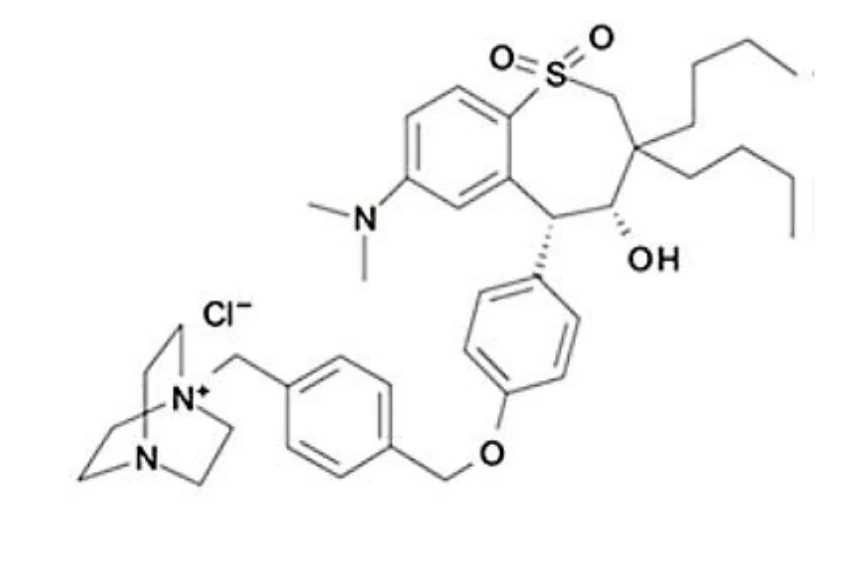
Chemical name: 1-[[4-[[4-[(4R,5R)-3,3-dibutyl-7-(dimethylamino)-2,3,4,5-tetrahydro-4-hydroxy-1,1-dioxido-1-benzothiepin-5-yl]phenoxy]methyl]phenyl]methyl]-4-aza-1-azoniabicyclo[2.2.2]octane chloride.
Molecular formula and molecular mass: C40H56ClN3O4S 710.42 daltons
Structural formula:
Physicochemical properties: Maralixibat (as maralixibat chloride) is a white to light yellow solid, highly water soluble
Both LIVMARLI 9.5 mg and 19 mg/mL oral solution contain propylene glycol (364.5 mg/mL) as an excipient. See 7 WARNINGS AND PRECAUTIONS for information on potential propylene glycol toxicity.
14 CLINICAL TRIALS
14.1 Clinical Trials by Indication
Alagille Syndrome
Table 9: Summary of Patient Demographics for Clinical Trial in Alagille Syndrome
| Study # | Study Design | Dosage, Route of Administration and Duration | Study Subjects (n) | Mean Age (Range) | Sex |
| The ICONIC Study - Trial 304 -(NCT02160782) | Randomized, double-blind, placebo-controlled drug-withdrawal trial | Maralixibat 380 mcg/kg once daily for 43 weeks after an initial 5-week dose-escalation period orally administered | 31 | 5.4 years (1-15) | M: 19 (61.3%) F: 12 (38.7%) |
The efficacy of LIVMARLI was assessed in patients with Alagille syndrome that were 12 months of age or older in the ICONIC trial, which consisted of an 18-week open-label treatment period followed by a 4-week, double-blind, placebo-controlled randomized drug-withdrawal period followed by a subsequent 26-week open-label treatment period, and finally, a long-term open-label extension period.
Thirty-one pediatric patients with Alagille syndrome having cholestasis and pruritus were enrolled, with 90.3% of patients receiving at least one background medication at a stable dose to treat pruritus at study entry. All patients had a JAGGED1 mutation. Patients were administered open-label treatment with LIVMARLI 380 mcg/kg once daily for 13 weeks after an initial 5-week dose-escalation period. Two patients discontinued study treatment during the first 18 weeks of open-label treatment. The 29 patients who completed the open-label treatment phase were then randomized to continue treatment with LIVMARLI (n=13) or receive matching placebo (n=16) during the 4-week drug withdrawal study period from Weeks 19-22. All 29 patients completed this randomized, blinded drug withdrawal period. Subsequently, patients received open-label LIVMARLI for up to an additional 266 weeks.
All patients had cholestatic liver disease at study entry. The baseline mean serum values of hepatic biomarkers observed in 29 patients were sBA 280 mcmol/L, AST 158 U/L, ALT 179 U/L, GGT 498 U/L, and total bilirubin 5.6 mg/dL. Given the young age of most study patients, a single-item observer-reported outcome was used as the primary instrument to measure patients’ pruritus symptoms as observed by their caregiver twice daily, i.e., once in the morning and once in the evening. This Itch Reported Outcome Instrument (ItchRO[Obs]) assessed pruritus symptoms on a 5-point ordinal response scale, with scores ranging from 0 (none observed) to 4 (very severe). Patients were included in the study having an average of the worst daily pruritus score greater than 2.0 (moderate) for each week in the 2 weeks prior to baseline. For randomized patients, the mean baseline weekly average morning ItchRO(Obs) severity score in the overall population was 2.9.
Key efficacy results of the ICONIC trial are presented below, in Table 10. Statistical analyses of secondary endpoints were not adjusted for multiplicity. Therefore, statistical findings are considered nominal.
Table 10: Results of the ICONIC Trial during the Randomized Drug Withdrawal Study Phase
| Key Efficacy Endpoints | LIVMARLI | Placebo | Mean Difference |
| Serum bile acid (μmol/L) | (N =13) | (N=16) | |
| Week 22, LS Mean (95% CI) | 186.5 (115.4, 257.5) | 277.4 (213.4, 341.4) | |
| Change from Week 18 to Week 22, LS Mean (95% CI) | -18.7 (-91.2, 53.7) | 95.2 (30.1, 160.3) | -114.0 (-212.7, -15.2) |
| Pruritus (ItchRO[Obs])* | (N=12) | (N=16) | |
| Week 22, LS Mean (95% CI) | 1.4 (0.9, 1.9) | 2.8 (2.4, 3.3) | |
| Change from Week 18 to Week 22, LS Mean (95% CI) | 0.2 (-0.3, 0.7) | 1.7 (1.3, 2.1) | -1.5 (-2.1, -0.8) |
* weekly average morning ItchRO (Obs) severity score ; CI = confidence interval; LS = least squares; N = number of patients
At the end of the initial 18-week open-label study phase, the change in the mean (95% CI) weekly average morning ItchRO(Obs) severity score from baseline in the intent-to-treat (ITT) population was -1.70 (-2.05, -1.36), with maralixibat treatment. In general, patients administered LIVMARLI for 22 weeks maintained pruritus reduction whereas those in the placebo group who were withdrawn from LIVMARLI after Week 18 returned to baseline pruritus scores by Week 22. At Week 48, during the second open-label phase of the trial when all participants were again administered maralixibat, an improvement was observed in the mean (95% CI) weekly average morning ItchRO(Obs) severity score at -1.62 (-2.12, -1.12) from baseline. Overall, a decrease from baseline in mean weekly average morning ItchRO(Obs) severity scores was observed in the ITT population with maralixibat treatment at each evaluable analysis visit during the entire observation period up to Week 240, demonstrating consistent and sustained improvement in pruritus, see Figure 1, below. These observer-rated pruritus scores were further supported by similar results for patient-rated pruritus scores in study participants 5 years of age and older who were able to self-report their itching severity.
Figure 1: Weekly Average Morning ItchRO(Obs) Severity Score Change from Baseline by Randomized Treatment Group Over Time, through Week 48, All Patients
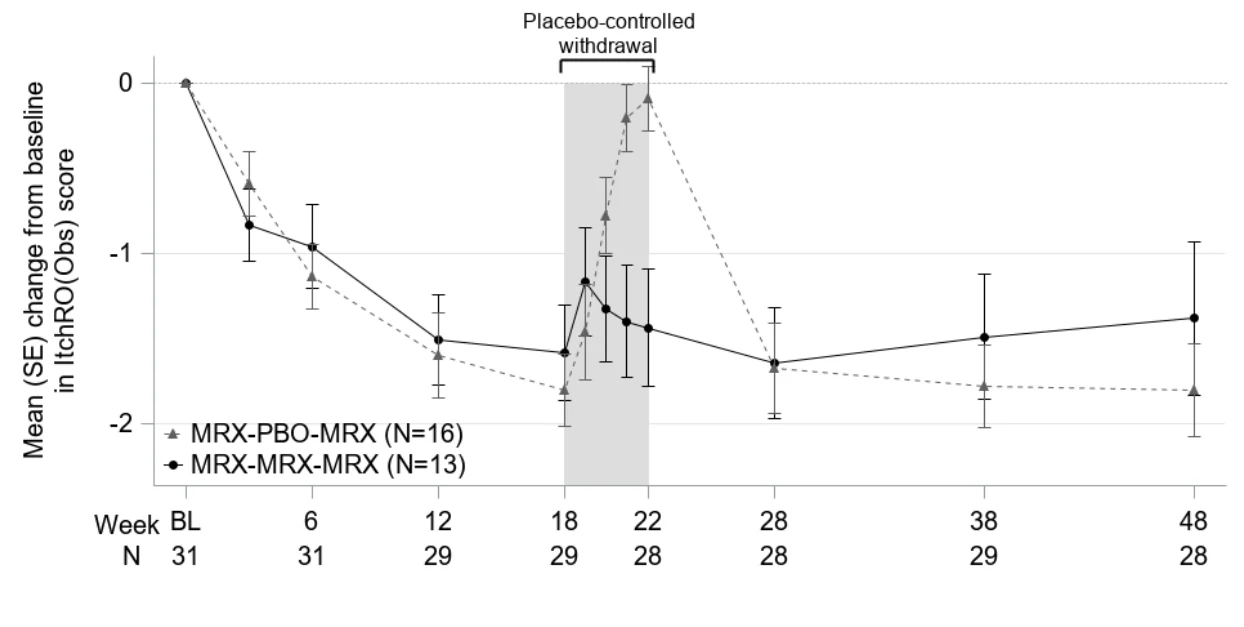
MRX = maralixibat; PBO = placebo; SE = standard error; BL = baseline
A mean (95% CI) reduction in sBA from baseline of -88 (-133, -42) and -96 (-162, -31) μmol/L was observed at Week 18 and Week 48, respectively, when study patients were administered maralixibat. At the end of the 4-week placebo-controlled period, a difference between maralixibat and placebo in least squares mean (95% CI) change in sBA of -114 (-213, -15) µmol/L was demonstrated from Week 18 to Week 22, in favour of maralixibat treatment. When the placebo group once again resumed treatment with maralixibat following the randomized drug withdrawal study period, sBA returned to levels previously observed with maralixibat treatment, see Figure 2, below.
Figure 2: Mean (± SE) Change from Baseline sBA, through to Week 48, All Patients with Alagille Syndrome
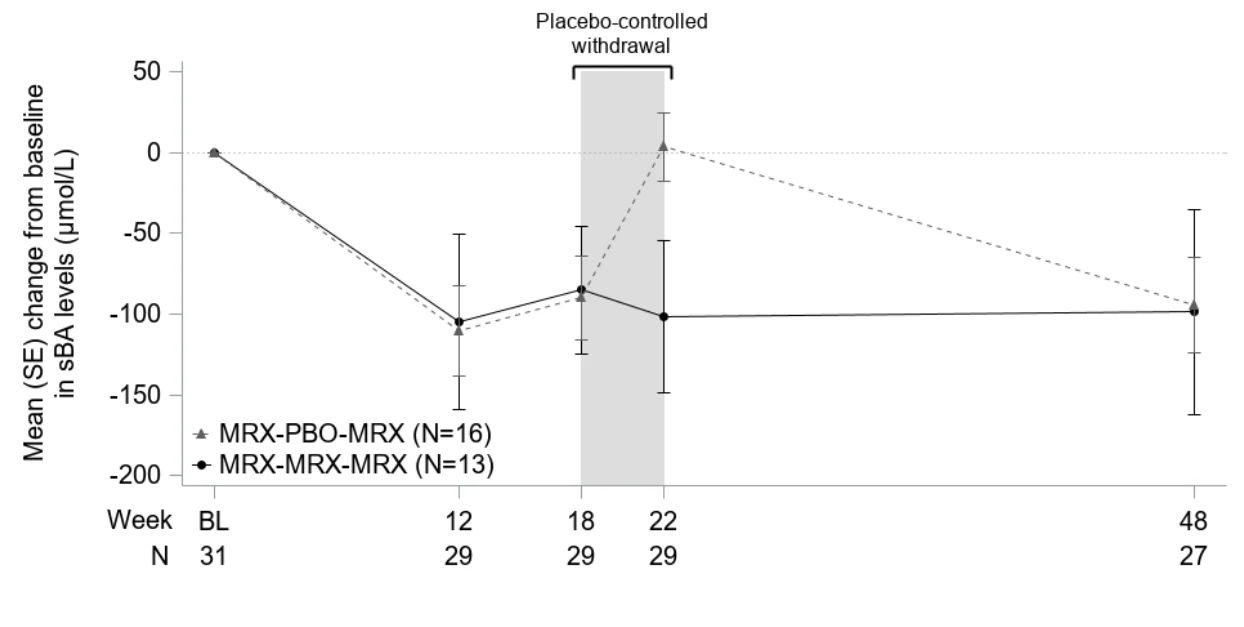
MRX = maralixibat; PBO = placebo; SE = standard error; BL = baseline
Progressive Familial Intrahepatic Cholestasis
Table 11: Summary of Patient Demographics assessed for efficacy in the pivotal Clinical Trial in PFIC patients
| Study # | Study Design | Dosage, Route of Administration and Duration | Study Subjects (n) | Mean Age (Range) | Sex |
The MARCH Study (MRX-502) | Randomized, placebo-controlled trial | LIVMARLI 570 mcg/kg or placebo twice daily for 26 weeks with an initial 4-6-week dose-escalation period starting with 142 mcg/kg twice daily Orally administered | Total: 64 Maralixibat: 33 Placebo: 31 | 4.6 years (1-15) | M: 30 F: 34 |
The efficacy of LIVMARLI was assessed in a 26-week randomized, double-blind placebo-controlled clinical trial (MARCH Study). Sixty-four patients age 1 year to 18 years with a genetically confirmed diagnosis of biallelic variants of PFIC were included in the efficacy assessment. These were 31 patients with non-truncated PFIC2 and 33 patients with PFIC1 (n=13), PFIC3 (n=9), PFIC4 (n=7), or PFIC6 (n=4).
Twenty-nine other patients with BPSE3 (truncating PFIC2), prior surgical diversion, or heterozygous mutation, or with unknown variants were enrolled, but were only assessed for safety, not for efficacy.
Patients had persistent pruritus (> 6 months), abnormal tests for liver function and/or evidence of progressive liver disease, and an average pruritus score on the ItchRO[Obs] scale ≥ 1.5 in the 4 weeks prior to baseline.
Patients with decompensated cirrhosis, ALT > 15× ULN or total bilirubin >15× ULN at screening, history or presence of any condition known to interfere with the absorption, distribution, metabolism or excretion of drugs, including bile salt metabolism in the intestine, and chronic diarrhoea requiring intravenous fluid or nutritional intervention were excluded.
Most patients were on stable ursodeoxycholic acid (89.1%) or rifampicin (51.6%) therapy at baseline. The baseline mean (standard deviation [SD]) of liver test parameters were as follows: serum bile acid levels 263 (143) μmol/L, AST 113 (82) U/L, ALT 107 (87) U/L, and TB 69.8 (70.1) µmol/L, direct bilirubin 50.6 (52.4) µmol/L. The mean (SD) of the average baseline morning ItchRO[Obs] pruritus severity score was 2.8 (0.86).
The primary efficacy endpoint was the change in pruritus as measured by the change from baseline to week 15-26 in average morning ItchRO(Obs) severity score. The ItchRO(Obs) score relies on a scale from 0 (none) to 4 (very severe pruritus) to rate the child’s itch-related symptoms by the child’s care giver (rubbing, scratching, skin damage, sleep disturbance, or irritability). The score used for the primary endpoint relied on the averaged morning itch score (ItchRO(Obs)) over three 4-periods: weeks 15-18, 19-22, and 23-26.
A secondary efficacy endpoint was used to assess the change in total serum bile acid (sBA) level from baseline to average of week 18, 22 and 26.
The results showed that LIVMARLI was statistically significantly superior to placebo in improving pruritus and in decreasing total sBA plasma levels. See Table 12.
Table 12 – Results of Key Endpoints at 26 weeks in Subjects with PFIC in Study MRX-502
LIVMARLI N = 33 | PLACEBO N = 31 | Treatment difference (95% CI), | |
|---|---|---|---|
| Average morning ItchRO(Obs) a | |||
| Baseline mean score | 2.85 | 2.73 | |
| Change from baseline to average Weeks 15–26 | -1.81 | -0.61 | -1.20 b ( -1.73, -0.67) P<0.0001 |
| Serum bile acid Levels: (μmol/L) a | |||
| Baseline mean level | 254.33 | 272.30 | |
| Change from baseline to average of week 18, 22, and 26 | -157.49 | +2.91 | -160.40 b (-220.84, -99.97) P<0.0001 |
a Based on mixed model for repeated measures (MMRM) with change from baseline as the dependent variable and fixed categorical effects of treatment group, PFIC type, analysis visit and treatment-by-visit interaction as well as the continuous fixed covariates of baseline score and baseline score-by-visit interaction.
b Statistically significant under multiplicity control for LIVMARLI vs Placebo comparison (p < 0.05).
Figure 3: Observed weekly average of the morning daily pruritus score over time in PFIC patients (Study MRX-502)
BL=Baseline; Wk=Week. Observed values are displayed. Statistics shown are averages of time periods weeks 15-18, 19-22, and 23-26 using an equally weighted average of the 3 individual visit-specific estimates obtained from a mixed model for repeated measures (MMRM) with change from baseline as the dependent variable and fixed categorical effects of treatment group, PFIC type, analysis visit and treatment-by-visit interaction as well as the continuous fixed covariates of baseline score and baseline score-by-visit interaction. The least-squares mean estimate and 95% confidence interval are presented.
Figure 4: Observed average serum bile acids (sBA) levels over time in patients with PFIC (Study MRX-502)
BL=Baseline; Wk=Week. Observed values are displayed. Statistics shown are averages of weeks 18, 22, and 26 using an equally weighted average of the 3 individual visit-specific estimates obtained from a mixed model for repeated measures (MMRM) with change from baseline as the dependent variable and fixed categorical effects of treatment group, PFIC type, analysis visit and treatment-by-visit interaction as well as the continuous fixed covariates of baseline score and baseline score-by-visit interaction. The least-squares mean estimate and 95% confidence interval are presented.
The results suggested that the proportion of patients with average morning ItchRO(Obs) score ≤1 OR change from baseline of ≤-1.0 (responders for pruritus for week 15-26) was 63.6% with LIVMARLI and 25.8% with placebo. The percentage of sBA responders for week 18/22/26 (sBA level of <102 µmol/L if baseline sBA level was ≥102 µmol/L, OR ≥75% reduction from baseline) was 45.5% for LIVMARLI and 6.5% for placebo participants. However, statistical significance could not be confirmed.
15 MICROBIOLOGY
No microbiological information is required for this drug product.
16 NON-CLINICAL TOXICOLOGY
General Toxicology: The most significant toxicological effect observed in rodents is the reversible prolongation of coagulation times. Prolongation of coagulation times was observed primarily in male rats and was reversible. Emesis was the primary toxicity observed in the dog at doses above 200 mg/kg.
These toxicological findings occur at high doses, with large safety margins to therapeutic doses in humans.
Carcinogenicity: Maralixibat chloride was not tumorigenic in a 2-year oral carcinogenicity study in rats with administration of up to 100 mg/kg/day (approximately 65 times the maximum recommended dose based on AUC). In a 26-week oral carcinogenicity study in TgRasH2 mice with doses of up to 25 (males) or 75 (females) mg/kg/day, no drug-related tumors were observed following oral administration of maralixibat chloride.
Mutagenesis: Maralixibat chloride was negative in in vitro (bacterial reverse mutation, chromosomal aberration in mammalian cells) and in vivo (mouse bone marrow micronucleus) assays.
Reproductive and Developmental Toxicology: No effects on fertility were observed in female rats treated orally with up to 2000 mg/kg/day or in male rats treated orally with up to 750 mg/kg/day. No effects on embryo-fetal development were observed in pregnant rats treated orally with up to 1000 mg/kg/day (approximately 400 times the maximum recommended dose based on AUC [area under the plasma concentration-time curve]) or in pregnant rabbits treated orally with up to 250 mg/kg/day (approximately 150 times the maximum recommended dose based on AUC) during the period of organogenesis. No effects on postnatal development were observed in a pre- and postnatal development study, in which female rats were treated orally with up to 750 mg/kg/day during organogenesis through lactation. Maternal systemic exposure to maralixibat at the maximum dose tested was approximately 400 times the maximum recommended dose based on AUC.
Juvenile Toxicity: No clear adverse effects were seen in juvenile rats administered maralixibat at doses of 50, 100 and 250 mg/kg/day for 14 days (Post Natal Day [PND] 7 to 21) in both males and females. or for 43 days (PND 21 through PND 63) at doses of 50, 100 and 200 mg/kg/day in the males and 250, 500 and 1,000 mg/kg/day in the females.