


Product Monograph - Jakavi
RECENT MAJOR LABEL CHANGES
| 1 INDICATIONS | 05/2022 |
|---|---|
| 1 INDICATIONS, 1.1 Pediatrics | 05/2022 |
| 3 SERIOUS WARNINGS AND PRECAUTIONS BOX | 05/2022 |
| 4 DOSAGE AND ADMINISTRATION, 4.2 Recommended Dose and Dosage Adjustment | 05/2022 |
| 4 DOSAGE AND ADMINISTRATION, 4.5 Missed Dose | 05/2022 |
| 7 WARNING AND PRECAUTIONS, Carcinogenesis and Mutagenesis | 04/2023 |
| 7 WARNING AND PRECAUTIONS, Cardiovascular | 04/2023 |
| 7 WARNINGS AND PRECAUTIONS, 7.1.3 Pediatrics | 05/2022 |
TABLE OF CONTENTS
Sections or subsections that are not applicable at the time of authorization are not listed.
RECENT MAJOR LABEL CHANGES ........................................................................................... 2
TABLE OF CONTENTS ............................................................................................................. 2
PART I: HEALTH PROFESSIONAL INFORMATION ...................................................................... 4
1 INDICATIONS ................................................................................................... 4
1.1 Pediatrics .............................................................................................................. 4
1.2 Geriatrics .............................................................................................................. 4
2 CONTRAINDICATIONS ...................................................................................... 5
3 SERIOUS WARNINGS AND PRECAUTIONS BOX ................................................. 5
4 DOSAGE AND ADMINISTRATION ...................................................................... 5
4.1 Dosing Considerations .......................................................................................... 5
4.2 Recommended Dose and Dosage Adjustment ..................................................... 5
4.4 Administration .................................................................................................... 12
4.5 Missed Dose ....................................................................................................... 12
5 OVERDOSAGE ................................................................................................ 12
6 DOSAGE FORMS, STRENGTHS, COMPOSITION AND PACKAGING .................... 12
7 WARNINGS AND PRECAUTIONS ..................................................................... 13
7.1 Special Populations ............................................................................................. 18
7.1.1 Pregnant Women ............................................................................................... 18
7.1.2 Breast-feeding .................................................................................................... 18
7.1.3 Pediatrics ............................................................................................................ 19
7.1.4 Geriatrics ............................................................................................................ 19
8 ADVERSE REACTIONS ..................................................................................... 20
8.1 Adverse Reaction Overview ................................................................................ 20
8.2 Clinical Trial Adverse Reactions .......................................................................... 23
8.4 Abnormal Laboratory Findings: Hematologic, Clinical Chemistry and Other Quantitative Data ............................................................................................... 36
8.5 Post-Market Adverse Reactions ......................................................................... 42
9 DRUG INTERACTIONS ..................................................................................... 43
9.2 Drug Interactions Overview ................................................................................ 43
9.4 Drug-Drug Interactions ....................................................................................... 43
9.5 Drug-Food Interactions ....................................................................................... 46
9.6 Drug-Herb Interactions ....................................................................................... 46
9.7 Drug-Laboratory Test Interactions ...................................................................... 46
10 CLINICAL PHARMACOLOGY ............................................................................ 46
10.1 Mechanism of Action .......................................................................................... 46
10.2 Pharmacodynamics ............................................................................................ 47
10.3 Pharmacokinetics ............................................................................................... 47
11 STORAGE, STABILITY AND DISPOSAL .............................................................. 49
12 SPECIAL HANDLING INSTRUCTIONS ................................................................ 50
PART II: SCIENTIFIC INFORMATION ....................................................................................... 51
13 PHARMACEUTICAL INFORMATION ................................................................. 51
14 CLINICAL TRIALS ............................................................................................. 52
14.1 Clinical Trials by Indication ................................................................................. 52
15 MICROBIOLOGY ............................................................................................. 65
16 NON-CLINICAL TOXICOLOGY .......................................................................... 65
PATIENT MEDICATION INFORMATION .................................................................................. 68
PART I: HEALTH PROFESSIONAL INFORMATION
1 INDICATIONS
JAKAVI® (ruxolitinib) is indicated for:
- the treatment of splenomegaly and/or its associated symptoms in adult patients with primary myelofibrosis (MF) (also known as chronic idiopathic myelofibrosis [MF]), post-polycythemia vera myelofibrosis or post-essential thrombocythemia myelofibrosis.
- the control of hematocrit in adult patients with polycythemia vera (PV) resistant to or intolerant of a cytoreductive agent.
- the treatment of steroid refractory or dependent acute graft-versus-host disease (GVHD) in adult and pediatric patients 12 years and older.
- the treatment of chronic graft-versus-host disease (GVHD) in adults and pediatric patients aged 12 years and older who have inadequate response to corticosteroids or other systemic therapies.
1.1 Pediatrics
Pediatrics (< 18 years of age): Safety and efficacy of JAKAVI in pediatric patients with MF or PV have not been established. Therefore, Health Canada has not authorized an indication for pediatric use.
Pediatrics (12 to < 18 years of age):
Acute Graft-Versus-Host Disease
In pediatric patients 12 years of age and older with steroid-refractory or dependent acute GVHD, the safety and efficacy of JAKAVI are supported by evidence from adequate and well-controlled clinical studies of JAKAVI in adults and additional pharmacokinetic and safety data in pediatric patients (see 14 CLINICAL TRIALS).
Chronic Graft-Versus-Host Disease
In pediatric patients 12 years of age and older with chronic GVHD, the safety and efficacy of JAKAVI are supported by evidence from the randomized phase 3 REACH3 study (see 14 CLINICAL TRIALS).
The safety and efficacy of JAKAVI have not been established in patients with acute or chronic GVHD less than 12 years of age.
1.2 Geriatrics
Geriatrics (≥ 65 years of age): No overall differences in safety or effectiveness of JAKAVI were observed between elderly and younger patients with MF or PV.
Clinical studies of JAKAVI in patients with acute GVHD did not include sufficient numbers of patients aged 65 and over to determine whether they respond differently from younger patients.
No overall differences in safety or effectiveness of JAKAVI were observed between elderly and younger patients with chronic GVHD.
2 CONTRAINDICATIONS
- Patients with known hypersensitivity to ruxolitinib or to any ingredient in the formulation of JAKAVI or component of the container. For a complete listing, see the 6 DOSAGE FORMS, STRENGTHS, COMPOSITION AND PACKAGING.
- Patients who have or have had progressive multifocal leukoencephalopathy (PML) (see 7 WARNINGS AND PRECAUTIONS).
3 SERIOUS WARNINGS AND PRECAUTIONS BOX
Serious Warnings and Precautions
Serious bacterial, mycobacterial, fungal and viral infections including viral reactivation and other opportunistic infections (in some cases life-threatening or fatal) have been reported in patients treated with JAKAVI. Reported infections included: Tuberculosis, Herpes Zoster, JC Virus, Hepatitis B and Pneumonia. Patients should be carefully assessed and monitored for the risk of developing serious infections (see 7 WARNINGS and PRECAUTIONS, 8 ADVERSE REACTIONS). |
|---|
4 DOSAGE AND ADMINISTRATION
4.1 Dosing Considerations
The following safety issues should be considered when developing a dosage regimen in an individual patient:
- Platelet count
- Absolute neutrophil count
- Renal impairment
- Hepatic impairment
- Concomitant strong CYP3A4 inhibitors
- Concomitant moderate CYP3A4 and CYP2C9 inhibitors
- Doses may be titrated based on safety and efficacy
- Active and latent tuberculosis
4.2 Recommended Dose and Dosage Adjustment
Myelofibrosis and Polycythemia Vera
The recommended starting dose of JAKAVI in MF and PV is based on platelet count (Table 1). A complete blood count and platelet count must be performed before initiating therapy, every 2 to 4 weeks until doses are stabilized, and then as clinically indicated.
Table 1 JAKAVI starting doses for patients with MF or PV
| Platelet Count | Starting Dose | ||||
| Myelofibrosis | Polycythemia vera | ||||
| Greater than 200,000/mm3 | 20 mg orally twice daily | 10 mg orally twice daily | |||
| 100,000 to 200,000/mm3 | 15 mg orally twice daily | 10 mg orally twice daily | |||
| 75,000 to <100,000/mm3 | 10 mg orally twice daily | 5 mg orally twice daily | |||
| 50,000 to <75,000/mm3 | 5 mg orally twice daily | 5 mg orally twice daily | |||
Prior to initiating treatment with JAKAVI, the Absolute Neutrophil Count (ANC) of patients should be >1000/mm3.
Dose modifications based on safety
Treatment interruptions: Treatment with JAKAVI should be interrupted if:
- platelet counts less than 50,000/mm3.
- absolute neutrophil counts less than 500/mm3.
- hemoglobin less than 8g/dL (only for PV patients).
After recovery of cell blood counts above these levels, dosing may be restarted at 5 mg twice daily and gradually increased based on careful monitoring of blood cell counts.
Interrupt treatment for bleeding requiring intervention regardless of current platelet count. Once the bleeding event has resolved, consider resuming treatment at the prior dose if the underlying cause of bleeding has been controlled. If the bleeding event has resolved but the underlying cause persists, consider resuming treatment with JAKAVI at a lower dose.
Dose reductions: Dose reductions in MF should be considered if the platelet counts decrease as outlined in Table 2, with the goal of avoiding dose interruptions for thrombocytopenia.
Table 2 Dosing recommendations for thrombocytopenia in MF
| Platelet Count | Dose at Time of Platelet Decline | |||||
25 mg twice daily | 20 mg twice daily | 15 mg twice daily | 10 mg twice daily | 5 mg twice daily | ||
| New Dose | New Dose | New Dose | New Dose | New Dose | ||
| 100,000 to less than 125,000/mm3 | 20 mg twice daily | 15 mg twice daily | No Change | No Change | No Change | |
| 75,000 to less than 100,000/mm3 | 10 mg twice daily | 10 mg twice daily | 10 mg twice daily | No Change | No Change | |
| 50,000 to less than 75,000/mm3 | 5 mg twice daily | 5 mg twice daily | 5 mg twice daily | 5 mg twice daily | No Change | |
| Less than 50,000/mm3 | Hold | Hold | Hold | Hold | Hold |
For PV patients, dose reduction should also be considered if hemoglobin decreases below 12g/dL and is recommended if hemoglobin decreases below 10g/dL.
Dose modifications based on efficacy
In MF and PV, if efficacy is considered insufficient, doses may be increased by a maximum of 5 mg twice daily. The maximum dose of JAKAVI is 25 mg twice daily. The dose should not be increased if the blood counts are not adequate. The platelet counts should be greater than 125,000/mm3 at the time of dose increase and should never have been below 100,000/mm3. The ANC levels should be greater than 750/mm3.
The starting dose should not be increased within the first four weeks of treatment for patients with MF and eight weeks of treatment for patients with PV and thereafter no more frequently than at 2-week intervals.
Treatment of MF or PV may be continued as long as the benefit-risk balance remains positive. However, the treatment of patients with MF should be discontinued after 6 months if there has been no reduction in spleen size or improvement in symptoms since initiation of therapy. In patients with PV, the treatment should be discontinued after 16 months if there has been no clinical benefit since initiation of therapy.
Acute Graft-Versus-Host Disease
The recommended starting dose of JAKAVI in acute GVHD is 5 mg given orally twice daily. Consider increasing the dose to 10 mg twice daily after at least 3 days of treatment if the ANC and platelet counts are not decreased by 50% or more relative to the first day of dosing with JAKAVI.
Consider tapering JAKAVI in patients with response who have discontinued therapeutic doses of corticosteroids. Taper JAKAVI by one dose level approximately every 8 weeks (10 mg twice daily to 5 mg twice daily to 5 mg once daily). If acute GVHD signs or symptoms recur during or after the taper of JAKAVI, consider retreatment.
Dose modifications based on safety
Monitor complete blood counts (CBC), including platelet count and ANC, and bilirubin prior to initiating therapy, every 2 to 4 weeks until doses are stabilized, and then as indicated clinically.
The management of adverse reactions may require dose reduction, temporary interruption or treatment discontinuation. One dose level reduction step is recommended (10 mg twice daily to 5 mg twice daily or 5 mg twice daily to 5 mg once daily). In patients who are unable to tolerate JAKAVI at a dose of 5 mg once daily, treatment should be interrupted. Dose modifications for adverse reactions are provided in Table 3.
Table 3 Recommended dose modifications for adverse reactions in patients with acute GVHD
Chronic Graft-Versus-Host Disease
The recommended starting dose of JAKAVI in chronic GVHD is 10 mg given orally twice daily.
In chronic GVHD, tapering of JAKAVI may be considered in patients with a response and after having discontinued corticosteroids. A 50% dose reduction of JAKAVI every two months is recommended. If signs or symptoms of chronic GVHD reoccur during or after the taper of JAKAVI, re-escalation of treatment should be considered.
Dose modifications based on safety
Monitor complete blood counts (CBC), including platelet count and ANC, and bilirubin prior to initiating therapy, every 2 to 4 weeks until doses are stabilized, and then as indicated clinically.
The management of adverse reactions may require dose reduction, temporary interruption or treatment discontinuation. One dose level reduction step is recommended (10 mg twice daily to 5 mg twice daily or 5 mg twice daily to 5 mg once daily). In patients who are unable to tolerate JAKAVI at a dose of 5 mg once daily, treatment should be interrupted. Dose modifications for adverse reactions are provided in Table 4.
| Laboratory Parameter | Dosing Recommendation |
|---|---|
| Platelet count <20,000/mm3 | Reduce JAKAVI by one dose level. If platelet count ≥20.000/mm3 within seven days, dose may be increased to initial dose level, otherwise maintain reduced dose. |
| Platelet count <15,000/mm3 | Hold JAKAVI until platelet count ≥20,000/mm3, then resume at one dose level lower. |
| Absolute neutrophil count (ANC) ≥500/mm3 to <750/mm3 | Reduce JAKAVI by one dose level. Resume at initial dose level if ANC >1,000/mm3. |
| ANC <500/mm3 | Hold JAKAVI for up to 14 days until ANC >500/mm3, then resume at one dose level lower. If ANC >1,000/mm3, dosing may resume at initial dose level. |
| Total bilirubin elevation, no liver GVHD | 3.0 to 5.0 x ULN: Continue JAKAVI at one dose level lower until ≤3.0 x ULN. If resolved within 14 days, then increase by one dose level. If not resolved within 14 days, then maintain the decreased dose level. |
| >5.0 to 10.0 x ULN: Hold JAKAVI for up to 14 days until total bilirubin ≤3.0 x ULN. If total bilirubin ≤3.0 x ULN dosing may resume at current dose. If not ≤3.0 x ULN after 14 days, resume at one dose level lower. | |
>10.0 x ULN: Hold JAKAVI for up to 14 days until total bilirubin ≤3.0 x ULN, then resume at one dose level lower. If not resolved within 14 days, discontinue JAKAVI. | |
| Total bilirubin elevation, liver GVHD | >3.0 x ULN: Continue JAKAVI at one dose level lower until total bilirubin ≤3.0 x ULN. |
Table 4 Dosing recommendations for patients with thrombocytopenia, neutropenia, or elevated total bilirubin in patients with chronic GVHD
| Laboratory Parameter | Dosing Recommendation |
|---|---|
| Platelet count <20,000/mm3 | Reduce JAKAVI by one dose level. If platelet count ≥20.000/mm3 within seven days, dose may be increased to initial dose level, otherwise maintain reduced dose. |
| Platelet count <15,000/mm3 | Hold JAKAVI until platelet count ≥20,000/mm3, then resume at one lower dose level. |
| Absolute neutrophil count (ANC) ≥500/mm3 to <750/mm3 | Reduce JAKAVI by one dose level. Resume at initial dose level if ANC >1,000/mm3. |
| ANC <500/mm3 | Hold JAKAVI until ANC >500/mm3, then resume at one lower dose level. If ANC >1,000/mm3, dosing may resume at initial dose level. |
| Total bilirubin elevation, no liver GVHD | 3.0 to 5.0 x ULN: Continue JAKAVI at one lower dose level until ≤3.0 x ULN. |
| >5.0 to 10.0 x ULN: Hold JAKAVI up to 14 days until total bilirubin ≤3.0 x ULN. If total bilirubin ≤3.0 x ULN dosing may resume at current dose. If not ≤3.0 x ULN after 14 days, resume at one lower dose level. | |
| >10.0 x ULN: Hold JAKAVI until total bilirubin ≤3.0 x ULN, then resume at one lower dose level. | |
| Total bilirubin elevation, liver GVHD | >3.0 x ULN: Continue JAKAVI at one lower dose level until total bilirubin ≤3.0 x ULN. |
Dose modifications for drug-drug interactions
Concomitant use of strong CYP3A4 inhibitors or moderate CYP2C9 and CYP3A4 inhibitors (e.g., fluconazole)
When JAKAVI is co-administered with strong CYP3A4 inhibitors or moderate inhibitors of CYP2C9 and CYP3A4 (including a dual enzyme inhibitor as a single agent, such as fluconazole) in MF, PV, and GVHD patients, modify the dose of JAKAVI according to Table 5.
More frequent monitoring (e.g., twice a week) of hematology parameters and of clinical signs and symptoms of JAKAVI related adverse reactions is recommended upon initiation of a strong CYP3A4 inhibitor or moderate CYP2C9 and CYP3A4 inhibitors. If the platelet count decreases to less than 100,000/mm3, the concomitant use should be avoided when on JAKAVI treatment.
Table 5 Dose modifications for concomitant use with strong CYP3A4 inhibitors or dual moderate inhibitors of CYP2C9 and CYP3A4
| Concomitant medication | Recommended JAKAVI Dose Modification |
|---|---|
| Starting dose for patients with MF and PV | |
| Dual moderate CYP2C9 and CYP3A4 inhibitors, including fluconazole doses of less than or equal to 200 mg | Decrease dose by approximately 50% (round up to the closest available tablet strength) |
| Fluconazole doses of greater than 200 mg daily | Avoid concomitant use with JAKAVI | |
|---|---|---|
| Strong CYP3A4 inhibitors | Decrease dose by approximately 50% (round up to the closest available tablet strength) | |
| Starting dose for patients with acute or chronic GVHD | ||
| Dual moderate CYP2C9 and CYP3A4 inhibitors, including fluconazole doses of less than or equal to 200 mg | Decrease dose by approximately 50% (round up to the closest available tablet strength) | |
| Fluconazole doses of greater than 200 mg daily | Avoid concomitant use with JAKAVI | |
| Strong CYP3A4 inhibitors | Monitor blood counts more frequently for toxicity and modify the JAKAVI dosage for adverse reactions if they occur (see 4 DOSAGE AND ADMINISTRATION). | |
Dosing in special populations
Pediatrics
The safety and efficacy of JAKAVI in pediatric patients with MF and PV have not been established.
The dose of JAKAVI in pediatric patients with acute or chronic GVHD aged 12 years and older is the same as in adults. The safety and efficacy of JAKAVI have not been established in patients with acute or chronic GVHD less than 12 years of age.
Geriatrics (≥ 65 years of age)
No additional dose adjustments are recommended for elderly patients.
Renal impairment
In patients with MF, PV or GVHD with moderate (creatinine clearance [CrCl] 30-50 mL/min) or severe (CrCl <30 mL/min) renal impairment, modify the dose according to Table 6.
Patients diagnosed with moderate or severe renal impairment while receiving JAKAVI should be carefully monitored and may need to have their doses titrated to avoid adverse drug reactions.
There are limited data to determine the best dosing options for patients with end-stage renal disease (ESRD) on hemodialysis. JAKAVI is to be administered after hemodialysis has been completed and only on the day of hemodialysis. JAKAVI should not be given more frequently than once a day. Dose modification should be made with careful monitoring of safety and efficacy of individual patients. No data is available for dosing patients who are undergoing peritoneal dialysis or continuous venous hemofiltration (see 10 CLINICAL PHARMACOLOGY).
Table 6 Dose modifications for renal impairment
| Renal Impairment Status | Platelet Count | Recommended JAKAVI Dose Modification |
|---|
| Patients with MF | ||
|---|---|---|
| Moderate or severe renal impairment | Greater than 200,000/mm3 | Decrease dose by approximately 50% (round up to the closest available tablet strength) |
| 100,000 to 200,000/mm3 | ||
| Less than 100,000/mm3 | JAKAVI should be avoided | |
| ESRD on hemodialysis | Greater than 200,000/mm3 | 20 mg once after dialysis session |
| 100,000 to 200,000/mm3 | 15 mg once after dialysis session | |
| Patients with PV | ||
| Moderate or severe renal impairment | Greater than 200,000/mm3 | Decrease dose by approximately 50% (round up to the closest available tablet strength) |
| 100,000 to 200,000/mm3 | ||
| Less than 100,000/mm3 | JAKAVI should be avoided | |
| ESRD on hemodialysis | Any | 10 mg once after dialysis session |
| Patients with acute GVHD | ||
| Moderate or severe renal impairment | Any | 5 mg once daily |
| ESRD on hemodialysis | Any | 5 mg once after dialysis session |
| Patients with chronic GVHD | ||
| Moderate or severe renal impairment | Any | 5 mg twice daily |
| ESRD on hemodialysis | Any | 10 mg once after dialysis session |
Hepatic impairment
In MF, PV, or GVHD patients with mild, moderate or severe hepatic impairment, modify the dose according to Table 7.
Table 7 Dose modifications for hepatic impairment
| Hepatic Impairment Status | Platelet Count | Recommended JAKAVI Dose Modification | ||||
|---|---|---|---|---|---|---|
| Patients with MF and PV | ||||||
| Mild, moderate or severe hepatic impairment (Child-Pugh Class A, B, C) | Greater than 200, 000/mm3 | Decrease dose by approximately 50% (round up to the closest available tablet strength) | ||||
| 100,000 to 200,000/ mm3 | Decrease dose by approximately 50% (round up to the closest available tablet strength) | |||||
| Less than 100,000/mm3 | JAKAVI should be avoided | |||||
| Patients with acute GVHD | ||||||
| Mild, moderate or severe hepatic impairment based on NCI criteria without liver GVHD | Any | No dose adjustment | ||||
| Stage 4 liver acute GVHD | Any | 5 mg once daily | ||||
| GVHD liver involvement and an increase of total bilirubin to > 3 x ULN | Any | Monitor more frequently for toxicity and a dose reduction by one dose level may be considered | |
|---|---|---|---|
| Patients with chronic GVHD | |||
| Mild, moderate or severe hepatic impairment based on NCI criteria without liver GVHD | Any | No dose adjustment | |
| Score 3 liver chronic GVHD | Any | Monitor more frequently for toxicity and a dose reduction by one dose level may be considered | |
| GVHD liver involvement and an increase of total bilirubin to > 3 x ULN | Any | Monitor more frequently for toxicity and a dose reduction by one dose level may be considered | |
4.4 Administration
JAKAVI is dosed orally and can be administered with or without food. Patients should be instructed to swallow the tablet whole. The tablets should NOT be cut, broken, dissolved, crushed or chewed.
4.5 Missed Dose
If a dose is missed, the patient should not take an additional dose, but should take the next usual prescribed dose.
5 OVERDOSAGE
There is no known antidote for overdoses with JAKAVI. Single doses up to 200 mg have been given with acceptable acute tolerability. Higher than recommended repeat doses are associated with increased myelosuppression including leukopenia, anemia and thrombocytopenia. Appropriate supportive treatment should be given.
Hemodialysis is not expected to enhance the elimination of ruxolitinib.
| For management of a suspected drug overdose, contact your regional poison control centre. |
|---|
6 DOSAGE FORMS, STRENGTHS, COMPOSITION AND PACKAGING
Table 8 Dosage Forms, Strengths, Composition and Packaging
| Route of Administration | Dosage Form / Strength/ Composition | Non-medicinal Ingredients |
| Oral | Tablet 5 mg, 10 mg, 15 mg | Hydroxypropylcellulose, lactose monohydrate, magnesium stearate, |
JAKAVI (ruxolitinib tablets) 5 mg tablets:
Round curved white to almost white tablets with “NVR” debossed on one side and “L5” debossed on the other side.
JAKAVI (ruxolitinib tablets) 10 mg tablets:
Round curved white to almost white tablets with “NVR” debossed on one side and “L10” debossed on the other side.
JAKAVI (ruxolitinib tablets) 15 mg tablets:
Ovaloid curved white to almost white tablet with “NVR” debossed on one side and “L15” debossed on the other side.
JAKAVI (ruxolitinib tablets) 20 mg tablets:
Elongated curved white to almost white tablet with “NVR” debossed on one side and “L20” debossed on the other side.
Availability
JAKAVI (ruxolitinib tablets) 5 mg, 10 mg, 15 mg and 20 mg tablets are supplied in blister packaging (4x14 tablets).
7 WARNINGS AND PRECAUTIONS
Please see 3 SERIOUS WARNINGS AND PRECAUTIONS BOX.
General
Withdrawal Effects in Patients with Myelofibrosis
Following interruption or discontinuation of JAKAVI, symptoms of MF may return over a period of approximately 1 week. There have been cases of MF patients discontinuing JAKAVI who sustained more severe events, particularly in the presence of acute intercurrent illness. It has
| Route of Administration | Dosage Form / Strength/ Composition | Non-medicinal Ingredients | ||
and 20 mg Each tablet contains 5 mg, 10 mg, 15 mg or 20 mg ruxolitinib free base (as ruxolitinib phosphate) | microcrystalline cellulose, colloidal silicon dioxide, sodium starch glycolate (Type A), povidone. Each 5 mg tablet contains 71.45 mg of lactose monohydrate Each 10 mg tablet contains 142.90 mg of lactose monohydrate Each 15 mg tablet contains 214.35 mg of lactose monohydrate Each 20 mg tablet contains 285.80 mg of lactose monohydrate | |||
not been established whether abrupt discontinuation of JAKAVI contributed to these events. Unless abrupt discontinuation is required, gradual tapering of the dose of JAKAVI may be considered, although the utility of the tapering is unproven.
Carcinogenesis and Mutagenesis
Non-Melanoma Skin Cancer
Non-melanoma skin cancers (NMSCs), including basal cell-, squamous cell-, and Merkel cell-carcinoma have been reported in patients treated with JAKAVI. Most of these MF and PV patients had histories of extended treatment with hydroxyurea and prior NMSC or pre-malignant skin lesions. A causal relationship to JAKAVI has not been established. Patients should minimize exposure to risk factors for skin cancer such as exposure to sunlight and other UV emitting sources while on JAKAVI. Periodic skin examination is recommended for patients who are at increased risk for skin cancer.
Ruxolitinib was not carcinogenic in animal carcinogenicity studies (see 16 NON-CLINICAL TOXICOLOGY). Ruxolitinib did not test positive for mutagenicity or clastogenicity in the standard panel of genotoxicity assays (see 16 NON-CLINICAL TOXICOLOGY).
Secondary Malignancies
In another JAK inhibitor, it was observed that there was an increased risk of lymphoma and other malignancies excluding NMSC compared to those treated with TNF blockers, in patients with rheumatoid arthritis, a condition for which JAKAVI is not indicated. Patients who are current or past smokers are at additional increased risk of secondary malignancies.
A causal relationship to JAKAVI is unclear. However, based on the safety signal observed in another JAK inhibitor, evaluate the benefits and risks for the individual patient prior to initiating or continuing therapy with JAKAVI, particularly in patients with a known malignancy (other than a successfully treated NMSC), patients who develop a malignancy, geriatric patients, and patients who are current or past smokers.
Cardiovascular
Heart Rate Decrease and PR Interval Prolongation
JAKAVI causes a decrease in heart rate and a prolongation of the PR interval (see 7 WARNINGS AND PRECAUTIONS, Monitoring and Laboratory Tests; 8.2 Clinical Trial Adverse Reactions, Electrocardiography). Caution should be observed in patients with a low heart rate at baseline (< 60 beats per minute), a history of syncope or arrhythmia, sick sinus syndrome, sinoatrial block, atrioventricular (AV) block, ischemic heart disease, or congestive heart failure. Concomitant medications that result in a decrease in heart rate and/or PR interval prolongation should be avoided to the extent possible during treatment with JAKAVI (see 9 DRUG INTERACTIONS).
Lipid Abnormalities/ Elevations
Treatment with JAKAVI has been associated with increases in lipid parameters including total cholesterol, low-density lipoprotein (LDL) cholesterol, and triglycerides. Lipid monitoring and treatment of dyslipidemia according to clinical guidelines is recommended (see 7 WARNINGS AND PRECAUTIONS, Monitoring and Laboratory Tests).
Thrombosis
Another JAK-inhibitor has increased the risk of thrombosis, including deep venous thrombosis (DVT), pulmonary embolism (PE), and arterial thrombosis (compared to those treated with TNF blockers) in patients with rheumatoid arthritis, a condition for which JAKAVI is not indicated. In patients with MF and PV treated with JAKAVI in clinical trials, the rates of thromboembolic events were similar in JAKAVI and control treated patients. In patients with chronic GVHD, DVT was reported in the randomized phase in 3 (1.8%) patients treated with JAKAVI and 1 (0.6%) patient treated with the control (Best Available Therapy). PE was reported in 3 (1.8%) patients treated with JAKAVI and 3 (1.9%) patients treated with the control. Patients with symptoms of thrombosis should be promptly evaluated and treated appropriately.
Major Adverse Cardiovascular Events (MACE)
In another JAK inhibitor, it was observed that there was an increased risk of MACE, including cardiovascular death, myocardial infarction, and stroke (compared to those treated with TNF blockers) in patients with rheumatoid arthritis, a condition for which JAKAVI is not indicated. There has been no evidence that JAKAVI can cause MACE. However, based on this safety signal observed in another JAK inhibitor, evaluate the benefits and risks for the individual patient prior to initiating or continuing therapy with JAKAVI particularly in geriatric patients, patients who are current or past smokers, and patients with other cardiovascular risk factors. Patients should be informed about the symptoms of serious cardiovascular events and the steps to take if they occur.
Hematologic
Decrease in Blood Cell Count
Treatment with JAKAVI can cause hematological adverse reactions, including thrombocytopenia, anemia and neutropenia. A complete blood count must be performed before initiating therapy with JAKAVI and during therapy (see 7 WARNINGS AND PRECAUTIONS, Monitoring and Laboratory Tests, and 4 DOSAGE AND ADMINISTRATION).
MF patients with low platelet counts (<200,000/mm3) at the start of therapy are more likely to develop thrombocytopenia during treatment.
Thrombocytopenia is usually managed by reducing the dose or temporarily withholding JAKAVI. However, platelet transfusions may be required as clinically indicated (see 4 DOSAGE AND ADMINISTRATION, and 8 ADVERSE REACTIONS).
Patients developing anemia may require blood transfusions. Dose modifications or interruption for patients developing anemia may also need to be considered.
Neutropenia (Absolute Neutrophil Count (ANC) <500/mm3) is managed by temporarily withholding JAKAVI (see 4 DOSAGE AND ADMINISTRATION, and 8 ADVERSE REACTIONS).
Hemorrhage
Bleeding (in some cases fatal) have been reported in patients treated with JAKAVI (see 8 ADVERSE REACTIONS and 8.5 Post-Market Adverse Reactions). Platelet counts should be monitored.
Immune
Infections
Serious bacterial, mycobacterial, fungal, viral and other opportunistic infections including pneumonia (in some cases fatal) have been reported in patients treated with JAKAVI.
Patients should be carefully assessed for the risk of developing serious bacterial, mycobacterial, fungal or viral infections. JAKAVI therapy should not be started until active serious infections have resolved. Physicians should carefully observe patients receiving JAKAVI for signs and symptoms of infections and initiate appropriate treatment promptly (see 8 ADVERSE REACTIONS and 16 NON-CLINICAL TOXICOLOGY).
The risk of visual disorders, including loss of vision, secondary to an eye infection may be a consequence of ruxolitinib-related infections. Physicians should carefully monitor patients receiving JAKAVI for eye infections in order to reduce the misdiagnosis of eye infections and to ensure patients receive the appropriate treatment.
Hepatitis B
Hepatitis B viral load (HBV-DNA titre) increases, with and without associated elevations in alanine aminotransferase and aspartate aminotransferase, have been reported in patients with chronic HBV infections taking JAKAVI. The effect of JAKAVI on viral replication in patients with chronic HBV infection is unknown. Patients with chronic HBV infection should be treated and monitored according to clinical guidelines.
Tuberculosis
Tuberculosis infection, including fatal cases, has been reported in patients receiving JAKAVI. Before starting treatment, patients should be evaluated for active and inactive (‘latent’) tuberculosis (see 7 WARNINGS AND PRECAUTIONS, Monitoring and Laboratory tests). JAKAVI therapy should not be administered to patients with tuberculosis infection. Patients receiving JAKAVI should be observed for signs and symptoms of active tuberculosis.
Herpes Zoster
Physicians should educate patients about early signs and symptoms of herpes zoster, advising that treatment should be sought as early as possible.
Progressive Multifocal Leukoencephalopathy
Progressive multifocal leukoencephalopathy (PML) has been reported with JAKAVI treatment. PML can cause severe disability and death. Relationship between the risk of PML and JAKAVI treatment is not known. Physicians should be particularly alert to symptoms suggestive of PML that patients may not notice (e.g., cognitive, neurological or psychiatric symptoms or signs). Patients should be monitored for any of these new or worsening symptoms or signs, and if such symptoms/signs occur, referral to a neurologist and appropriate diagnostic measures for PML should be considered. JAKAVI treatment should be withheld if PML is suspected and discontinued if PML is confirmed.
Monitoring and Laboratory Tests
Blood cell counts: A blood cell count must be performed before initiating therapy with JAKAVI.
Complete blood counts should be monitored every 2-4 weeks until doses are stabilized, and then as clinically indicated (see 4 DOSAGE AND ADMINISTRATION).
Lipid monitoring: Lipid monitoring should be performed before initiating therapy with JAKAVI, then 4 weeks after starting therapy and regularly thereafter.
Liver and renal function tests: Liver and renal function tests should be performed prior to starting treatment with JAKAVI and periodically thereafter (see 4 DOSAGE AND ADMINISTRATION).
Cardiac safety monitoring: Patients receiving JAKAVI should be monitored for pulse rate and blood pressure. ECG evaluations should be performed at baseline and periodically during treatment with JAKAVI to monitor for decreased heart rate and PR interval prolongation (see 7 WARNINGS AND PRECAUTIONS, Cardiovascular; 8.2 Clinical Trial Adverse Reactions, Electrocardiography; 9 DRUG INTERACTIONS).
Tuberculosis test: A tuberculosis skin test and/or Interferon-gamma release assay should be performed before initiating therapy with JAKAVI to detect tuberculosis infection. However, these tests must be interpreted with caution in severely ill or immunocompromised patients given the possibility of a false negative result.
Reproductive Health: Female and Male Potential
- Fertility: There are no data on the effect of ruxolitinib on human fertility (see 16 NON-CLINICAL TOXICOLOGY).
Teratogenic Risk: There are no adequate and well-controlled studies of JAKAVI in pregnant women. Ruxolitinib was embryotoxic and fetotoxic in rats and rabbits (increases in post-implantation loss and reduced fetal weights; see 16 NON-CLINICAL TOXICOLOGY). The potential risk of teratogenicity for humans is unknown. The use of JAKAVI during pregnancy is not recommended.
Women of childbearing potential should be advised of the potential risk to the developing fetus if JAKAVI is taken at any stage of a pregnancy and to take appropriate precautions (methods that result in <1% pregnancy rates) to avoid becoming pregnant during treatment.
It is not known if ruxolitinib or its metabolites are present in semen. Male patients must take appropriate precautions to avoid fathering a child during JAKAVI treatment.
In case pregnancy occurs, risk/benefit evaluations must be carried out on an individual basis with careful counseling regarding potential risk to the fetus using the most recent data available.
Sensitivity/Resistance
JAKAVI contains lactose. Patients with rare hereditary problems of galactose intolerance, severe lactase deficiency or glucose-galactose malabsorption should not take this medicinal product.
7.1 Special Populations
7.1.1 Pregnant Women
There are no adequate and well-controlled studies of JAKAVI in pregnant women. Ruxolitinib was embryotoxic and fetotoxic in rats and rabbits (increases in post-implantation loss and reduced fetal weights; see 16 NON-CLINICAL TOXICOLOGY).
The potential risk of teratogenicity for humans is unknown. The use of JAKAVI during pregnancy is not recommended.
7.1.2 Breast-feeding
It is not known if ruxolitinib is excreted in human milk. There are no data on the effects of ruxolitinib on the breast-fed child or the effects of ruxolitinib on milk production.
In lactating rats, ruxolitinib and/or its metabolites were excreted into the milk with a concentration that was 13-fold higher than the maternal plasma concentration.
Because of the potential for serious adverse reactions in nursing infants from JAKAVI, a decision should be made whether to discontinue nursing or to discontinue the drug, taking into account the importance of the drug to the mother. It is recommended that women should not breast-feed during treatment with JAKAVI and for two weeks after the final dose.
7.1.3 Pediatrics
Pediatrics (< 18 years of age): Safety and efficacy of JAKAVI in pediatric patients with MF or PV have not been established. Therefore, Health Canada has not authorized an indication for pediatric use.
Pediatrics (≥ 12 to < 18 years of age):
The safety and efficacy of JAKAVI in pediatric patients (12 years of age and older) with acute GVHD are supported by evidence from adequate and well-controlled studies in adults and additional pharmacokinetic and safety data in a small number of pediatric patients (N=5).
The safety and efficacy of JAKAVI were evaluated in 4 adolescent patients with chronic GVHD in the randomized phase 3 REACH3 study.
Warnings applicable to adults are also relevant to pediatric use.
The safety and efficacy of JAKAVI have not been established in patients less than 12 years of age with acute or chronic GVHD.
7.1.4 Geriatrics
Geriatrics (≥ 65 years of age):
No overall differences in safety or effectiveness of JAKAVI were observed between elderly and younger patients with MF or PV.
Clinical studies of JAKAVI in patients with acute GVHD did not include sufficient numbers of patients age 65 and over to determine whether they respond differently from younger patients.
No overall differences in safety or effectiveness of JAKAVI were observed between elderly and younger patients with chronic GVHD.
8 ADVERSE REACTIONS
8.1 Adverse Reaction Overview
Myelofibrosis
For the primary safety analysis in patients with MF, the median duration of exposure to JAKAVI was 10.8 months. The most frequently reported hematological adverse drug reactions (ADRs) (any CTCAE Grade, N=301 patients from ruxolitinib arms of COMFORT-I and COMFORT-II) included anemia (82%), thrombocytopenia (70%) and neutropenia (16%). Anemia, thrombocytopenia and neutropenia are dose related effects.
The three most frequent non-hematological ADRs were bruising (21%), dizziness (15%) and headache (14%).
In pooled Phase III MF clinical studies, discontinuation due to adverse events, regardless of causality was observed in 10% of the JAKAVI-treated patients. The most common reason for discontinuation was thrombocytopenia (1%). Dose reductions for thrombocytopenia occurred in 41% of the JAKAVI -treated patients.
In the randomized, placebo controlled study (COMFORT-I), 61% of JAKAVI-treated patients and 38% of patients receiving placebo received red blood cell transfusions during randomized treatment. In the COMFORT-II study, the rate of packed red blood cell transfusions was 53% in the JAKAVI arm and 41% in the best available therapy arm (BAT).
The safety of JAKAVI in patients with MF was evaluated using long term follow-up data from the two Phase 3 studies COMFORT-I and COMFORT-II including data from patients initially randomised to JAKAVI (N=301) and patients who received JAKAVI after crossing over from control treatments (N=156). The median exposure, upon which the ADR frequency categories for MF patients are based, was 30.5 months (range 0.3 to 68.1 months).
The most frequently reported ADRs were anemia (84%) and thrombocytopenia (81%).
Hematological ADRs (any CTCAE Grade), included anemia (84%), thrombocytopenia (81%) and neutropenia (21%).The most frequent non-hematological ADRs were bruising (33%), dizziness (22%) and urinary tract infections (21%).
The most frequent non-hematological laboratory abnormalities were increased ALT (41%), increased AST (32%) and HTA (hypertriglyceridemia) (25%). However, no CTCAE grade 3 or 4 HTA and increased AST or grade 4 increased ALT were observed.
Discontinuation due to adverse events, regardless of causality, was observed in 30% of patients treated with JAKAVI.
Polycythemia vera
For the primary safety analysis in patients with PV at week 32 for RESPONSE, the most frequently reported hematological ADRs (N=110 patients from JAKAVI arm of RESPONSE) included anemia (44%) and thrombocytopenia (25%).
The four most frequent non-hematologic ADRs reported at a higher frequency in the JAKAVI group than in the BAT group were diarrhea (15%), muscle spasm (12%), dizziness (12%) and dyspnea (10%) respectively.
Discontinuation for adverse events, regardless of causality, was observed in 4% of patients treated with JAKAVI and 2% of patients treated with best available therapy. The most frequent adverse events leading to dose adjustment in the JAKAVI group were anemia and thrombocytopenia.
The safety of JAKAVI in patients with PV was evaluated using long-term follow-up data from the two phase 3 studies RESPONSE and RESPONSE 2 including data from patients initially randomised to JAKAVI (N=184) and patients who received JAKAVI after crossing over from control treatments (N=156). The median exposure, upon which the AR frequency categories for PV patients are based, was 41.7 months (range 0.03 to 59.7 months).
The most frequently reported ADRs were anemia (62%) and increased ALT (45%).
Hematological ADRs included anemia (62%) and thrombocytopenia (25%).
The most frequent non-hematological ADRs were weight gain (20%), dizziness (19%), and headache (18%).
Discontinuation for adverse events, regardless of causality, was observed in 19.4% of patients treated with JAKAVI.
Acute Graft-Versus-Host Disease
The safety of JAKAVI in patients with acute GVHD was evaluated in an open-label, multi-centre, single arm phase 2 study (REACH1) that included 71 adults (ages 18-73 years). All patients received corticosteroids alone or in combination with other immunosuppressive agents as first-line therapy for acute GVHD. The median duration of treatment of JAKAVI was 6.6 weeks (range 0.6 to 115.9 weeks).
The most commonly reported overall ADRs were anemia (87%), thrombocytopenia (84%), and neutropenia (65%).
Hematological laboratory abnormalities identified as ADRs included anemia (87%), thrombocytopenia (84%) and neutropenia (65%). The most common non-hematological ADRs were nausea (32%), sepsis (23%) and hypertension (23%).
The most common non-hematological laboratory abnormalities identified as ADRs were increased ALT (51%), increased AST (51%). The majority were of grade 1 and 2 in severity.
Serious adverse events, regardless of causality, occurred in 83% of patients. The most frequently reported serious adverse events (in at least 5 patients) were sepsis, pyrexia, respiratory failure, and lung infection and pneumonia. There were 4 cases of sepsis with fatal outcome.
Adverse events, regardless of causality, resulting in treatment discontinuation occurred in 32% of patients. The most common adverse reaction leading to treatment discontinuation was sepsis (6%).
The safety of JAKAVI in patients with acute GVHD was also evaluated in a randomized, open-label Phase 3 study (REACH2), with ruxolitinib vs. Best Available Therapy (BAT) added to the patient’s immunosuppressive regimen in adults and adolescents (≥12 years old) with grade II-IV steroid-refractory (SR)-acute GVHD. JAKAVI was administered orally at a starting dose of 10 mg twice daily. The median exposure was 8.9 weeks (range 0.3 to 66.1 weeks), and was based on patients who were initially randomized to receive JAKAVI (N=152) and those who crossed over from BAT (N=49) to receive JAKAVI after Day 28 of treatment. The safety data below were based on the randomized phase data up to Day 28.
The most commonly reported overall ADRs up to Day 28 were thrombocytopenia (78%), anemia (60%), and neutropenia (44%).
The most common non-hematological ADRs were cytomegalovirus (CMV) infection (28%), sepsis (13%), hypertension (11%) and UTI (10%).
The most common non-hematological laboratory abnormalities identified as ADRs were increased ALT (41%), increased AST (30%) and hypercholesterolemia (37%). The majority were of grade 1 and 2 in severity.
Serious adverse events up to Day 28, regardless of causality occurred in 38% of patients. The most frequently reported serious adverse events (> 2%) were sepsis, diarrhea, CMV infection, respiratory failure, and septic shock. There were 7 cases of sepsis with fatal outcome.
Discontinuation due to adverse events, regardless of causality, was observed in 11% of patients treated with JAKAVI. The most common adverse reaction leading to treatment discontinuation up to Day 28 was anemia (2%) and thrombocytopenia (2%).
Chronic GVHD
The safety of JAKAVI in patients with chronic GVHD was evaluated in the open-label, multi-centre, phase 3 REACH3 study. The median duration of exposure to JAKAVI was 41.4 weeks (range 0.7 to 127.3 weeks), and was based on patients who were initially randomized to receive JAKAVI (N=165) and those who crossed over from Best Available Treatment (BAT; N=61) to receive JAKAVI after the end of six cycles of treatment.
The ADR frequency categories in Table 17 and the text below were based on the randomized phase 3 data up to Cycle 7 Day 1 with a median exposure of 25.6 weeks (range 0.7 to 25.6 weeks) in order to compare to BAT.
The most frequently reported overall ADRs were anemia (68%), hypercholesterolemia (53%), increased AST (48%) and increased ALT (40%).
Hematological laboratory abnormalities identified as ADRs included anemia (68%), thrombocytopenia (36%) and neutropenia (27%).
The most frequent non-hematological ADRs were hypertension (16%), headache (9%) and UTI (9%).
The most frequent non-hematological laboratory abnormalities identified as ADRs were hypercholesterolemia (53%), increased AST (48%), increased ALT (40%), and increased creatinine (39%). The majority were Grade 1 and 2 in severity.
Serious adverse events occurred in 33% of patients. The most frequently reported serious adverse events (incidence > 2%) included pneumonia, pyrexia and lower respiratory tract infection. There were 17 reported serious adverse events with a fatal outcome, of which 8 were related to study treatment.
Adverse reactions resulting in treatment discontinuation occurred in 16% of patients. The most common adverse reaction leading to treatment discontinuation was pneumonia (5%).
8.2 Clinical Trial Adverse Reactions
Clinical trials are conducted under very specific conditions. The adverse reaction rates observed in the clinical trials, therefore, may not reflect the rates observed in practice and should not be compared to the rates in the clinical trials of another drug. Adverse reaction information from clinical trials may be useful in identifying and approximating rates of adverse drug reactions in real-world use.
Myelofibrosis
At the time of the original marketing authorization application, JAKAVI had been administered to 617 patients with different disease settings. The safety profile of JAKAVI in patients with myelofibrosis was derived from 589 patients treated in two pivotal phase III studies and one phase II supporting study.
At the time of the primary analysis for the randomized period of the two pivotal studies COMFORT-I and COMFORT-II, 301 patients had a median duration of exposure to JAKAVI of 10.8 months (range 2 weeks to 19.5 months). The majority of patients (68.4%) were treated for at least 9 months. Of the 301 patients, 111 (36.9%) had a baseline platelet count between 100,000/mm3 and 200,000/mm3, and 190 (63.1%) had a baseline platelet count >200,000/mm3.
COMFORT-I was a randomized, double-blind, placebo-controlled phase III study in patients with Primary Myelofibrosis (MF), Post-Polycythemia vera-Myelofibrosis (PPV-MF) or Post-Essential Thrombocythemia-Myelofibrosis (PET-MF). Three hundred and nine (309) patients were randomized to this study. Patients were randomized to receive JAKAVI (155 patients) or matching placebo tablets (151 patients).
COMFORT-II was a randomized, open-label, efficacy and safety phase III study of JAKAVI tablets compared to best available therapy (BAT) in patients with PMF, PPV-MF or PET-MF. Two hundred and nineteen (219) patients were randomized to this study. Patients were stratified at baseline by prognostic risk category and randomized 2:1 to receive either JAKAVI (146 patients) or BAT (73 patients).
Tabulated summary of adverse drug reactions from clinical trials
Adverse drug reactions (ADRs) from clinical trials (Tables 9 - 17) are listed by MedDRA system organ class. Within each system organ class, the ADRs are ranked by frequency, with the most frequent reactions first.
Table 9 Adverse drug reactions (≥1%) in patients with MF (randomized clinical studies)
| System Organ Class/MedDRA Preferred term1 | COMFORT-I | COMFORT-II | ||||||||||||||||||
|---|---|---|---|---|---|---|---|---|---|---|---|---|---|---|---|---|---|---|---|---|
| JAKAVI N=155 | Placebo N=151 | JAKAVI N=146 | Best available therapy N=73 | |||||||||||||||||
| % | % | % | % | % | % | % | % | |||||||||||||
| All Grades | ≥ Grade 3 | All Grades | ≥ Grade 3 | All Grades | ≥ Grade 3 | All Grades | ≥ Grade 3 | |||||||||||||
| Any ADR | 64 | 7 | 38 | 5 | 57 | 11 | 33 | 6 | ||||||||||||
| Blood and lymphatic system disorders | ||||||||||||||||||||
| Any bleeding2 | 37 | 5 | 26 | 3 | 27 | 5 | 18 | 3 | ||||||||||||
| Bruising3 | 27 | 1 | 15 | 0 | 15 | 0 | 6 | 0 | ||||||||||||
| Other bleeding4 | 13 | 3 | 9 | 1 | 14 | 2 | 14 | 3 | ||||||||||||
| Gastrointestinal bleeding5 | 4 | 1 | 4 | 2 | 6 | 1 | 1 | 0 | ||||||||||||
| Intracranial bleeding6 | 1 | 1 | 1 | 1 | 1 | 1 | 0 | 0 | ||||||||||||
| Cardiac disorders | ||||||||||||||||||||
Angina pectoris/ unstable angina | 0 | 0 | 0 | 0 | 4 | 0 | 1 | 0 | ||||||||||||
Bradycardia/ sinus bradycardia | 3 | 0 | 1 | 0 | 3 | 0 | 0 | 0 | ||||||||||||
| Palpitation | 3 | 0 | 1 | 0 | 5 | 0 | 1 | 0 | ||||||||||||
| Gastrointestinal disorders | ||||||||||||||||||||
| Flatulence | 5 | 0 | 1 | 0 | 1 | 0 | 0 | 0 | ||||||||||||
| General disorders and administration site conditions | ||||||||||||||||||||
| Pyrexia | 12 | 1 | 8 | 1 | 15 | 2 | 10 | 0 | ||||||||||||
| Infections and infestations | ||||||||||||||||||||
| Pneumonia | 11 | 7 | 8 | 6 | 6 | 2 | 9 | 6 | ||||||||||||
| Urinary Tract infections7 | 10 | 0 | 5 | 1 | 15 | 2 | 7 | 0 | ||||||||||||
| Herpes zoster8 | 2 | 0 | 1 | 1 | 7 | 1 | 0 | 0 | ||||||||||||
| Tuberculosis | 0 | 0 | 0 | 0 | 1 | 1 | 0 | 0 |
|---|---|---|---|---|---|---|---|---|
| Metabolism and nutrition disorders | ||||||||
| Weight gain9 | 9 | 1 | 1 | 1 | 11 | 2 | 1 | 1 |
| Nervous system disorders | ||||||||
| Dizziness10 | 19 | 1 | 8 | 0 | 10 | 0 | 10 | 3 |
| Headache | 16 | 0 | 6 | 0 | 2 | 1 | 6 | 0 |
ADRs were identified as AEs causally related to Jakavi considering frequency, severity and other criteria.
1The frequency of most preferred terms displayed in this table is based on a group of similar preferred terms. These are annotated to each term. 2 This includes all Preferred Terms noted below under 3, 4, 5 and 6. 3 This includes the Preferred Terms of contusion, hematoma, ecchymosis, petechiae, increased tendency to bruise, periorbital hematoma, purpura, injection site hematoma and vessel puncture site hematoma. 4This includes the Preferred Terms of epistaxis, hematuria, post procedural hemorrhage, retinal hemorrhage, conjunctival hemorrhage, hemoptysis, disseminated intravascular coagulation, genital hemorrhage, hemorrhage, hemorrhagic anemia, intrabdominal hemorrhage, mouth hemorrhage, muscle hemorrhage, retroperitoneal hematoma, retroperitoneal hemorrhage, splenic hemorrhage, blood urine present, gingival bleeding, intra-abdominal hematoma, peritoneal hemorrhage, splenic hematoma. 5 This includes the Preferred Terms of gastrointestinal hemorrhage, melaena, hemorrhoidal hemorrhage, rectal hemorrhage, hematochezia, oesophageal varices hemorrhage, upper gastrointestinal hemorrhage and gastric varices hemorrhage. 6 This includes the Preferred Terms of cerebral hemorrhage and subdural hematoma. 7 This includes the Preferred Terms of urinary tract infection, cystitis, urosepsis, urinary tract infection bacterial, pyuria, bacteria urine, kidney infection, bacteria urine identified and nitrite urine present. 8 This includes the Preferred Terms of herpes zoster, postherpetic neuralgia, herpes virus infection and trigeminal neuralgia. 9 This includes the Preferred Terms of weight increased and abnormal weight gain. 10 This includes the Preferred Terms of dizziness, vertigo, balance disorder, dizziness postural and Meniere’s. In addition a Grade 1 labyrinthitis was observed in 1 patient in Study 352 (JAKAVI arm). In COMFORT-I, the ADR frequencies are based on median exposure of 7.8 months (range 2.6 to 13.6 months) in JAKAVI arm, and 7.1 months (range 1.1 to 13.4 months) in Placebo arm. In COMFORT-II, the ADR frequencies are based on median exposure of 11.8 months (range 0.5 to 17.3 months) in JAKAVI arm, and 10.4 months (range 0.03 to 15.4 months) in BAT arm. | ||||||||
Upon discontinuation, some patients have experienced a rapid return of MF symptoms such as fatigue, bone pain, fever, pruritus, night sweats, symptomatic splenomegaly and weight loss. In clinical studies the total symptom score for MF symptoms gradually returned to baseline values within 7 days after dose discontinuation.
Description of selected adverse drug reactions
Infections
In phase III MF clinical studies, Grade 3 or 4 urinary tract infection was reported for 1.0% of patients, herpes zoster (any Grade) in 4.3% and tuberculosis (any Grade) in 1.0%. In addition, urosepsis was reported in 1.0% of patients and kidney infection was reported in 1 patient.
Bleeding
In the phase III pivotal MF studies, bleeding events (including intracranial and gastrointestinal, bruising and other bleeding events) were reported in 32.6% of patients exposed to JAKAVI and 23.2% of patients exposed to the reference treatments (placebo or best available therapy).
The frequency of Grade 3 or 4 events was similar for patients treated with JAKAVI or reference treatments (4.7% versus 3.1%). Most of the patients with bleeding events during the treatment reported bruising (65.3%). Bruising events were more frequently reported in patients taking JAKAVI compared with the reference treatments (21.3% versus 11.6%). Intracranial bleeding was reported in 1% of patients exposed to JAKAVI and 0.9% exposed to reference treatments. Gastrointestinal bleeding was reported in 5.0% of patients exposed to JAKAVI compared to 3.1% exposed to reference treatments. Other bleeding events (including events such as epistaxis, post procedural hemorrhage and haematuria) were reported in 13.3% of patients treated with JAKAVI and 10.3% treated with reference treatments.
Increased systolic blood pressure
In the phase III pivotal clinical MF studies, an increase in systolic blood pressure of 20 mmHg or more from baseline was recorded in 31.5% of patients on at least one visit compared with 19.5% of the control treated patients. In COMFORT I, the mean increase from baseline in systolic BP was 0-2 mmHg in the JAKAVI arm versus a decrease of 2-5 mmHg in the placebo arm. In COMFORT II, mean values showed little difference between the JAKAVI treated and the control treated patients.
Electrocardiography
In the phase III MF clinical trials, steady-state treatment with JAKAVI was associated with statistically significant decreases from baseline in heart rate and statistically significant increases from baseline in the PR interval (see 7 WARNINGS AND PRECAUTIONS, Cardiovascular & Monitoring and Laboratory Tests; 9 DRUG INTERACTIONS). In the placebo-controlled trial, the placebo-adjusted mean changes from baseline in these parameters were statistically significant and ranged from -6 to -8 bpm for heart rate and from 6 to 9 ms for the PR interval from weeks 4 to 24. Among subjects with normal PR values at baseline, the proportion who developed PR values >200 ms during treatment was 12.3% for JAKAVI, 4.9% for placebo, and 4.7% for best available therapy.
Statistically significant QTc prolongation was not observed in the placebo-controlled phase III trial. In the phase III trial versus best available therapy, statistically significant QTc increases from baseline of mean 4-5 ms were observed at weeks 4 and 24.
The table below provides data for MF patients (COMFORT-I and COMFORT-II) with adverse drug reactions in clinical studies with long term follow-up to week 256.
Table 10 Adverse drug reactions in patients with MF in long term follow-up clinical studies (COMFORT-I and COMFORT-II; up to Week 256)
| System Organ Class/ MedDRA Preferred term | JAKAVI N=301 | Cross-over patients N=156 | JAKAVI total N=457 | ||||||||||||||||||||
| n (%) All Grades | n (%) ≥ Grade 3 | n (%) All Grades | n (%) ≥ Grade 3 | n (%) All Grades | n (%) ≥ Grade 3 | ||||||||||||||||||
| Any ADR | 247 (82) | 80 (27) | 118 (76) | 35 (22) | 365 (80) | 115 (25) | |||||||||||||||||
| Blood and lymphatic system disorders | |||||||||||||||||||||||
| Bleeding1 | 149 (50) | 29 (10) | 76 (49) | 13 (8) | 225 (49) | 42 (9) | |||||||||||||||||
| Bruising1 | 102 (34) | 2 (1) | 50 (32) | 1 (1) | 152 (33) | 3 (1) | |||||||||||||||||
| Other bleeding1 | 72 (24) | 14 (5) | 39 (25) | 4 (3) | 111 (24) | 18 (4) | |||||||||||||||||
| Gastrointestinal bleeding1 | 30 (10) | 11 (4) | 16 (10) | 7 (5) | 46 (10) | 18 (4) | |||||||||||||||||
| Intracranial haemorrhage1 | 4 (1) | 4 (1) | 2 (1) | 2 (1) | 6 (1) | 6 (1) | |||||||||||||||||
| Cardiac disorders | |||||||||||||||||||||||
| Palpitations2 | 21 (7) | 0 | 8 (5) | 0 | 29 (6) | 0 | |||||||||||||||||
| Bradycardia/Sinus bradycardia2 | 14 (5) | 0 | 4 (3) | 1 (1) | 18 (4) | 1 (0.2) | |||||||||||||||||
| Angina pectoris/Angina unstable2 | 9 (3) | 0 | 5 (3) | 1 (1) | 14 (3) | 1 (0.2) | |||||||||||||||||
| Gastrointestinal disorders | |||||||||||||||||||||||
| Flatulence2 | 14 (5) | 0 | 4 (3) | 0 | 18 (4) | 0 | |||||||||||||||||
| General disorders and administration site conditions | |||||||||||||||||||||||
| Pyrexia2 | 79 (26) | 6 (2) | 28 (18) | 2 (1) | 107 (23) | 8 (2) | |||||||||||||||||
| Infections and infestations | |||||||||||||||||||||||
| Urinary tract infections1 | 71 (24) | 10 (3) | 27 (17) | 7 (5) | 98 (21) | 17 (3) | |||||||||||||||||
| Pneumonia1 | 63 (20) | 40 (13) | 27 (17) | 13 (8) | 90 (19) | 53 (12) | |||||||||||||||||
| Herpes zoster1 | 32 (11) | 1 (0.3) | 21 (14) | 3 (2) | 53 (12) | 4 (1) | |||||||||||||||||
| Tuberculosis1 | 3 (1) | 3 (1) | 1 (1) | 0 | 4 (1) | 3 (1) | |||||||||||||||||
| Metabolism and nutrition disorders | |||||||||||||||||||||||
| Weight gain1 | 46 (15) | 5 (2) | 14 (9) | 0 | 60 (13) | 5 (1) | |||||||||||||||||
| Nervous system disorders | |||||||||||||||||||||||
| Dizziness1 | 73 (24) | 4 (1) | 27 (17) | 0 | 100 (22) | 4 (1) | |||||||||||||||||
| Headache2 | 63 (21) | 4 (1) | 25 (16) | 0 | 88 (19) | 4 (1) | |||||||||||||||||
ADRs were identified as AEs causally related to Jakavi considering frequency, severity and other criteria. 1 ADR is defined by several related MedDRA Preferred Terms. 2 ADR is defined by the single MedDRA Preferred Term or combination of given Preferred Terms. The ADR frequencies are based on median exposure of 30.5 months (range 0.3 to 68.1 months). | |||||||||||||||||||||||
Polycythemia Vera
At the time of the primary analysis the safety of JAKAVI was assessed in 240 patients with PV treated with JAKAVI during a pivotal phase III study (N=206) and a supporting phase II study (N=34). The phase III study (RESPONSE study) was an open-label, randomized, controlled study. Patients were randomized to receive either 10 mg JAKAVI twice a day or Best Available Therapy (BAT). During the randomized period, 110 patients received JAKAVI and 111 patients received BAT. After 32 weeks of treatment, 96 patients from the BAT arm crossed-over to receive JAKAVI, which created an imbalance in drug exposure between the two arms. Consequently, the adverse drug reactions listed below are derived from the randomized study period (up to the week 32 visit) during which the exposures to JAKAVI and BAT were equivalent (median duration of exposure = 7.8 months in both arms). The mean age of patients was around 60 years.
Among patients randomized to JAKAVI, the median duration of exposure was 18.6 months (for the period up the cut-off date for the primary analysis of the pivotal study). An analysis of safety including data from the cross-over study period (median exposure 11.4 months) and a supportive phase II study (median exposure 48.1 months) was also performed. The cumulative frequency of AEs in JAKAVI-treated patients increased but no new safety findings emerged. When adjusted for exposure, the AE rates were generally comparable with those observed during the randomized study period.
Long term safety was evaluated using data from 367 patients with PV treated with JAKAVI in two phase 3 studies (RESPONSE and RESPONSE 2) including data from patients initially randomized to JAKAVI (N=184; exposure 0.03 to 43.5 months, median exposure 18.9 months) and patients who received JAKAVI after crossing over from control treatments (N=149; exposure: 0.2 to 33.5 months, median exposure 12.0 months): With longer exposure, the cumulative frequency of AEs increased but no new safety findings emerged.
Tabulated summary of adverse drug reactions from clinical trial
Table 11 Adverse drug reactions (≥3%) reported at a higher frequency (>1%) in the JAKAVI group compared to the BAT group up to Week 32 in the RESPONSE study
| System Organ Class/MedDRA Preferred Term | JAKAVI N=110 | Best available therapy N=111 | |||||||||
|---|---|---|---|---|---|---|---|---|---|---|---|
| n (%) | n (%) | n (%) | n (%) | ||||||||
| All Grades | ≥ Grade 3 | All Grades | ≥ Grade 3 | ||||||||
| Ear and labyrinth disorders | |||||||||||
| Tinnitus | 6 (6) | 2 (2) | 3 (3) | 0 (0) | |||||||
| Gastrointestinal disorders | |||||||||||
| Diarrhea | 16 (15) | 0 (0) | 8 (7) | 1 (1) | |||||||
| Constipation | 9 (8) | 0 (0) | 3 (3) | 0 (0) | |||||||
| Nausea | 7 (6) | 0 (0) | 4 (4) | 0 (0) | |||||||
| Infections and infestations | |||||||||||
| Herpes zoster | 7 (6) | 0 (0) | 0 (0) | 0 (0) | ||
|---|---|---|---|---|---|---|
| Urinary tract infection | 5 (5) | 1 (1) | 0 (0) | 0 (0) | ||
| Investigations | ||||||
| Weight increased | 6 (5) | 0 (0) | 1 (1) | 0 (0) | ||
| Musculoskeletal and connective tissue disorders | ||||||
| Muscle spasms | 13 (12) | 1 (1) | 5 (5) | 0 (0) | ||
| Back pain | 6 (5) | 1 (1) | 4 (4) | 0 (0) | ||
| Nervous system disorders | ||||||
| Dizziness | 13 (12) | 0 (0) | 11 (10) | 0 (0) | ||
| Hypoaesthesia | 4 (4) | 0 (0) | 1 (1) | 0 (0) | ||
| Psychiatric disorders | ||||||
| Anxiety | 4 (4) | 0 (0) | 1 (1) | 0 (0) | ||
| Respiratory, thoracic and mediastinal disorders | ||||||
| Dyspnea | 11 (10) | 3 (3) | 2 (2) | 0 (0) | ||
| Cough | 9 (8) | 0 (0) | 6 (5) | 0 (0) | ||
| Epistaxis | 7 (6) | 0 (0) | 3 (3) | 0 (0) | ||
| Oropharyngeal pain | 4 4) | 0 (0) | 1 (1) | 0 (0) | ||
| Vascular disorders | ||||||
| Haematoma | 6 (5) | 0 (0) | 3 (3) | 0 (0) | ||
| Hypertension | 5 (5) | 1 (1) | 3 (3) | 1 (1) | ||
ADRs were identified as AEs causally related to Jakavi considering frequency, severity, known ADRs from Jakavi and other criteria. A subject with multiple occurrences of an ADR is counted only once in that ADR category. ADRs were counted at the most severe Grade | ||||||
Table 12 Adverse drug reactions in patients with PV up to Week 28 in the RESPONSE 2 study
| Adverse drug reactions and CTCAE grade | RESPONSE 2 | ||||
|---|---|---|---|---|---|
| Ruxolitinib N=74 | BAT N=75 | ||||
| % | % | ||||
| Blood and lymphatic system disorders | |||||
| Anemia2 | |||||
CTCAE3 grade 4 (<6.5g/dL) | 0 | 0 | |||
CTCAE grade 3 (<8.0–6.5g/dL) | 0 | 0 | |||
| Any CTCAE grade | 37 | 21 | |||
| Thrombocytopenia2 | |||||
CTCAE grade 4 (<25,000/mm3) | 0 | 1 | |||
CTCAE grade 3 (50,000 – 25,000/mm3) | 0 | 1 | |||
| Any CTCAE grade | 5 | 25 | |||
| Gastrointestinal disorders | |||||
| Constipation1 | 10 | 5 |
|---|---|---|
| Hepatobiliary disorders | ||
| Increased alanine aminotransferase2 | ||
CTCAE grade 3 (> 5x – 20 x ULN) | 0 | 0 |
| Any CTCAE grade | 22 | 7 |
Increased aspartate aminotransferase2 Any CTCAE grade | 34 | 16 |
| Infections and infestations | ||
| Urinary tract infections1 | 7 | 0 |
| Herpes zoster1 | 1 | 0 |
| Metabolism and nutrition disorders | ||
| Weight gain1 | 10 | 1 |
Hypercholesterolemia2 Any CTCAE grade | 7 | 0 |
Hypertriglyceridemia2 Any CTCAE grade | 10 | 1 |
| Nervous system disorders | ||
| Dizziness1 | 7 | 8 |
| Vascular disorders | ||
| Hypertension | 10 | 4 |
ADRs were identified as AEs causally related to Jakavi considering frequency, severity, known ADRs from Jakavi and other criteria. 1 Frequency is based on adverse event data. 2 Frequency is based on laboratory values. -A subject with multiple occurrences of an ADR is counted only once in that ADR category. -ADRs reported are on treatment or up to 28 days post treatment end date. 3 Common Terminology Criteria for Adverse Events (CTCAE) Version 3.0; Grade 1=mild, Grade 2= moderate, Grade 3=severe, grade 4=life-threatening or disabling | ||
Description of selected adverse drug reactions
Infections
Over the randomized period in the pivotal Phase III study, one (0.9%) Grade 3-4 urinary tract infection was observed in patients with PV. The rate of herpes zoster was higher in the JAKAVI arm (6.4%) than in BAT arm (0.0%). There was one report of Grade 3 and 4 post herpetic neuralgia amongst the PV patients.
At the most recent cut off, over the randomized period in the RESPONSE (32 weeks) and RESPONSE-2 (28 weeks) studies in PV, one (0.5%) Grade 3 to 4 urinary tract infection was observed. The rate of herpes zoster was reported in PV (4.3%) patients. There was one report of Grade 3 and 4 post herpetic neuralgia amongst the PV patients.
Electrocardiography
In the pivotal phase III PV study, at week 32, the mean change from baseline in heart rate was -
5.84 vs +1.94 beat/min, in JAKAVI vs BAT arm respectively. Notably abnormal vital signs were comparable (< 5% difference) in both arms, except for low heart rate that was reported in 7.3% vs 1.8% of patients in JAKAVI vs BAT arm, respectively.
The table below provides data for PV patients with adverse drug reactions in clinical studies RESPONSE and RESPONSE-2 with long term follow-up to week 256 and week 156, respectively.
Table 13 Adverse drug reactions in patients with PV in long term follow-up clinical studies (RESPONSE study; Week 256)
| System Organ Class/ MedDRA Preferred Term | JAKAVI N=110 | Cross-over patients N=98 | JAKAVI Total N=208 | ||||||||||||||||||
| n (%) All Grades | n (%) ≥ Grade 3 | n (%) All Grades | n (%) ≥ Grade 3 | n (%) All Grades | n (%) ≥ Grade 3 | ||||||||||||||||
| Ear and labyrinth disorders | |||||||||||||||||||||
| Tinnitus | 9 (8) | 2 (2) | 5 (5) | 0 | 14 (7) | 2 (1) | |||||||||||||||
| Gastrointestinal disorders | |||||||||||||||||||||
| Diarrhoea | 30 (27) | 1 (1) | 12 (12) | 0 | 42 (20) | 1 (0.5) | |||||||||||||||
| Constipation | 14 (13) | 1 (1) | 15 (15) | 0 | 29 (14) | 1 (0.5) | |||||||||||||||
| Nausea | 15 (14) | 1 (1) | 7 (7) | 0 | 22 (11) | 1 (0.5) | |||||||||||||||
| Infections and infestations | |||||||||||||||||||||
| Herpes zoster | 20 (18) | 2 (2) | 13 (14) | 2 (2) | 33 (16) | 4 (2) | |||||||||||||||
| Urinary tract infection | 11 (10) | 3 (3) | 9 (9) | 3 (3) | 20 (10) | 6 (3) | |||||||||||||||
| Investigations | |||||||||||||||||||||
| Weight increased | 26 (24) | 3 (3) | 14 (14) | 2 (2) | 40 (19) | 5 (2) | |||||||||||||||
| Musculoskeletal and connective tissue disorders | |||||||||||||||||||||
| Back pain | 17 (16). | 1 (1) | 18 (18) | 1 (1) | 35 (17) | 2 (1) | |||||||||||||||
| Muscle spasms | 22 (20) | 1 (1) | 11 (11) | 0 | 33 (16) | 1 (0.5) | |||||||||||||||
| Nervous system disorders | |||||||||||||||||||||
| Dizziness | 17 (16) | 0 | 20 (20) | 0 | 37 (18) | 0 | |||||||||||||||
| Hypoaesthesia | 6 (6) | 0 | 7 (7) | 0 | 13 (6) | 0 | |||||||||||||||
| Psychiatric disorders | |||||||||||||||||||||
| Anxiety | 4 (4) | 0 | 1 (1) | 0 | 5 (2) | 0 | |||||||||||||||
| Respiratory, thoracic and mediastinal disorders | |||||||||||||||||||||
| Cough | 20 (18) | 0 | 12 (12) | 0 | 32 (15) | 0 | |||||||||||||||
| Dyspnoea | 19 (17) | 4 (4) | 11 (11) | 0 | 30 (14) | 4 (2) | |||||||||||||||
| Epistaxis | 9 (8) | 0 | 8 (8) | 2 (2) | 17 (8) | 2 (1) | |||||||||||||||
| Oropharyngeal pain | 5 (4.5) | 0 | 3 (3) | 0 | 8 (4) | 0 | |||||||||||||||
| Vascular disorders | |||||||||||||||||||||
| Hypertension | 17 (16) | 2 (2) | 15 (15) | 3 (3) | 32 (15) | 5 (2) | |||||||||||||||
| System Organ Class/ MedDRA Preferred Term | JAKAVI N=110 | Cross-over patients N=98 | JAKAVI Total N=208 | ||||||||||||
| n (%) All Grades | n (%) ≥ Grade 3 | n (%) All Grades | n (%) ≥ Grade 3 | n (%) All Grades | n (%) ≥ Grade 3 | ||||||||||
| Haematoma | 11 (10) | 0 | 6 (6) | 0 | 17 (8) | 0 | |||||||||
ADRs were identified as AEs causally related to Jakavi considering frequency, severity, known ADRs from Jakavi and other criteria. All ADRs are defined by the single MedDRA Preferred Term. The ADR frequencies are based on median exposure of 51.1 months (range 0.3 to 59.7 months). | |||||||||||||||
Table 14 Adverse drug reactions in patients with PV in long term follow-up clinical studies (RESPONSE 2; Week 156)
| Adverse drug reactions and CTCAE grade | JAKAVI (Total N=132) | ||||
|---|---|---|---|---|---|
| n (%) | |||||
| All Grades | |||||
| Blood and lymphatic system disorders | |||||
| Anemia2 | |||||
| CTCAE grade 4 (<6.5g/dL) | 0 | ||||
| CTCAE grade 3 (<8.0–6.5g/dL) | 2 (2) | ||||
| Any CTCAE grade | 78 (59) | ||||
| Thrombocytopenia2 | |||||
| CTCAE grade 4 (<25,000/mm3) | 1 (1) | ||||
| CTCAE grade 3 (50,000 – 25,000/mm3) | 0 | ||||
| Any CTCAE grade | 14 (11) | ||||
| Gastrointestinal disorders | |||||
| Constipation3 | 20 (15) | ||||
| Hepatobiliary disorders | |||||
| Increased alanine aminotransferase2 | |||||
| CTCAE grade 3 (> 5x - 20 x ULN) | 1 (1) | ||||
| Any CTCAE grade | 56 (42) | ||||
| Increased aspartate aminotransferase2 | |||||
| Any CTCAE grade | 62 (47) | ||||
| Infections and infestations | |||||
| Herpes zoster1 | 17 (13) | ||||
| Urinary tract infections1 | 12(9) | ||||
| Metabolism and nutrition disorders | |||||
| Weight gain1 | 29 (22) | ||||
Hypercholesterolemia2 Any CTCAE grade | 18 (14) | ||||
Hypertriglyceridemia2 Any CTCAE grade | 41 (31) |
|---|---|
| Nervous system disorders | |
| Dizziness1 | 17 (13) |
| Vascular disorders | |
| Hypertension1 | 23 (17) |
ADRs were identified as AEs causally related to Jakavi considering frequency, severity, known ADRs from Jakavi and other criteria. 1 Frequency is based on adverse event data combining several related MedDRA Preferred Terms. 2 Frequency is based on laboratory values. 3 Frequency is based on adverse event data of the single MedDRA Preferred Term. The ADR frequencies are based on median exposure of 37.3 months (range 0.03 to 47.9 months). | |
Acute Graft-Versus-Host Disease
The safety of JAKAVI in patients with acute GVHD was evaluated in a Phase 2, open-label, single-arm, multicentre study of JAKAVI for treatment of patients with steroid-refractory acute GVHD Grades II to IV (REACH 1) that included 71 adults (18-73 years, median 58 years). The median duration of treatment of JAKAVI was 6.6 weeks (range 0.6 to 115.9 weeks).
Table 15 Adverse drug reactions in patients with acute GVHD (REACH 1)
| Adverse drug reactions | Acute GVHD (REACH1) (N=71) | |
|---|---|---|
| All grades n (%) | CTCAE1 Grade ≥3 n (%) | |
| Gastrointestinal disorders | ||
| Nausea | 23 (32) | 4 (6) |
| Infections and infestations | ||
| Sepsis | 16 (23) | 15 (21)2 |
| CMV infections | 14 (20) | 6 (9) |
| Urinary tract infections | 10 (14) | 6 (9) |
| Nervous system disorders | ||
| Headache | 15 (21) | 3 (4) |
| Vascular disorders | ||
| Adverse drug reactions | Acute GVHD (REACH1) (N=71) | |
|---|---|---|
| All grades n (%) | CTCAE1 Grade ≥3 n (%) | |
| Hypertension | 16 (23) | 10 (14) |
ADRs were identified as AEs causally related to Jakavi considering frequency, severity, known ADRs from Jakavi and other criteria. 1 CTCAE Version 4.03. 2 Includes n=4 (5.6%) fatal cases. The ADR frequencies are based on median exposure of 6.6 weeks (range 0.6 to 115.9 weeks). | ||
Chronic Graft-Versus-Host Disease
The safety of JAKAVI was assessed in patients with chronic GVHD treated with JAKAVI during a pivotal open-label, multi-centre, phase III study (REACH 3). Patients were randomized to receive either 10 mg JAKAVI twice daily or Best Available Therapy (BAT). During the randomized period, 165 patients received JAKAVI and 158 patients received BAT. After at least 6 Cycles of treatment, 61 patients from the BAT arm crossed-over to receive JAKAVI, which created an imbalance in drug exposure between the two arms. Consequently, the adverse drug reactions listed below are derived from the randomized study period (up to Cycle 7 Day 1) during which the exposures to JAKAVI and BAT were similar (median duration of exposure 25.6 weeks in Jakavi and 24.0 weeks in BAT arm). The median age of patients was 49 years (range 12 to 76 years).
Table 16 Adverse drug reactions in patients with chronic GVHD up to Cycle 7 Day 1 in REACH3
| Adverse drug reactions | JAKAVI) (N=165) | Best Available Therapy (BAT) N=158 | ||
|---|---|---|---|---|
| All grades n (%) | CTCAE1 Grade ≥3 n (%) | All grades n (%) | CTCAE1 Grade ≥3 n (%) | |
| Gastrointestinal disorders | ||||
| Constipation | 12 (7) | 0 | 8 (5) | 0 |
| Infections and infestations | ||||
| Urinary tract infections | 14 (9) | 2 (1) | 9 (6) | 2 (1) |
| Adverse drug reactions | JAKAVI) (N=165) | Best Available Therapy (BAT) N=158 | ||
|---|---|---|---|---|
| All grades n (%) | CTCAE1 Grade ≥3 n (%) | All grades n (%) | CTCAE1 Grade ≥3 n (%) | |
| BK virus infections | 9 (6) | 1 (1) | 2 (1) | 0 |
| Metabolism and nutrition disorders | ||||
| Weight gain | 8 (5) | 0 | 4 (3) | 0 |
| Nervous system disorders | ||||
| Headache | 14 (9) | 2 (1) | 12 (8) | 1 (1) |
| Vascular disorders | ||||
| Hypertension | 27 (16) | 9 (6) | 20 (13) | 11 (7) |
ADRs were identified as AEs causally related to Jakavi considering frequency, severity, known ADRs from Jakavi and other criteria. 1 CTCAE Version 4.03. The ADR frequencies are based on median exposure of 25.6 weeks (range 0.7 to 25.6 weeks) in the Jakavi treatment arm, and 24.0 weeks (range 0.6 to 25.6) in the BAT arm. | ||||
8.4 Abnormal Laboratory Findings: Hematologic, Clinical Chemistry and Other Quantitative Data
Myelofibrosis
Table 17 New or worsened hematological abnormalities (laboratory data) in patients with MF
| Laboratory parameter | COMFORT-I | COMFORT-II | |||||||||||||||||||||||
|---|---|---|---|---|---|---|---|---|---|---|---|---|---|---|---|---|---|---|---|---|---|---|---|---|---|
| JAKAVI N=155 | Placebo N=151 | JAKAVI N=146 | Best available therapy N=73 | ||||||||||||||||||||||
| % | % | % | % | % | % | % | % | ||||||||||||||||||
| All Grades | ≥ Grade 3 | All Grades | ≥ Grade 3 | All Grades | ≥ Grade 3 | All Grades | ≥ Grade 3 | ||||||||||||||||||
| Anemia | 83 | 45 | 44 | 16 | 82 | 40 | 49 | 21 | |||||||||||||||||
| Neutropenia | 19 | 7 | 4 | 3 | 12 | 6 | 8 | 1 | |||||||||||||||||
| Pancytopenia1 | 9.7 | N/A | 1.3 | N/A | 7 | N/A | 2.7 | N/A | |||||||||||||||||
| Thrombocytopenia | 71 | 14 | 21 | 2 | 69 | 9 | 29 | 7 | |||||||||||||||||
| New or worsened lab abnormality compared to baseline (defined as the worst post-baseline laboratory value with CTCAE Grade ≥1 or Grade higher than baseline respectively), which was assessed as ADR for JAKAVI. | |||||||||||||||||||||||||
| 1 Pancytopenia is defined as hemoglobin level < 100 g/l, platelet count <100 x 109 /l, and neutrophils count <1.5 x 10⁹ /l (or low WBC count of grade 2 if neutrophils count is missing), simultaneously in the same lab assessment |
|---|
Table 18 New or worsened biochemistry abnormalities (non-hematological laboratory data) in patients with MF
| Laboratory parameter | COMFORT-I | COMFORT-II | |||||||||||||||||
|---|---|---|---|---|---|---|---|---|---|---|---|---|---|---|---|---|---|---|---|
| JAKAVI N=155 | Placebo N=151 | JAKAVI N=146 | Best available therapy N=73 | ||||||||||||||||
| % | % | % | % | % | % | % | % | ||||||||||||
| All Grades | ≥ Grade 3 | All Grades | ≥ Grade 3 | All Grades | ≥ Grade 3 | All Grades | ≥ Grade 3 | ||||||||||||
| Hepatobiliary disorders | |||||||||||||||||||
Increased alanine Aminotransferase1 | 28 | 1 | 9 | 0 | 25 | 1 | 7 | 0 | |||||||||||
| Increased aspartate aminotransferase | 19 | 0 | 7 | 0 | 20 | 0 | 4 | 0 | |||||||||||
| Metabolism and nutrition disorders | |||||||||||||||||||
| Hypercholesterolemia | 17 | 0 | 1 | 0 | 16 | 0 | 7 | 0 | |||||||||||
New or worsened lab abnormality compared to baseline (defined as the worst post-baseline laboratory value with CTCAE Grade ≥1 or Grade higher than baseline respectively), which was assessed as ADR for JAKAVI. 1 In phase III clinical studies no CTCAE Grade 4 increased alanine aminotransferase was observed. | |||||||||||||||||||
Anemia
In phase III MF clinical studies, median time to onset of first CTCAE Grade 2 or higher anemia was 1.5 months. One patient (0.3%) discontinued treatment because of anemia.
In patients receiving JAKAVI, mean decreases in hemoglobin level reached a nadir of approximately 1.5 to 2.0 g/dL below baseline after 8 to 12 weeks of therapy and then gradually improved to reach a new steady state that was approximately 1.0 g/dL below baseline. This pattern was observed in patients regardless of whether they had received transfusion during therapy. Female MF patients may be at higher risk of anemia than male MF patients.
Thrombocytopenia
In the Phase III MF clinical studies, in patients who developed Grade 3 or 4 thrombocytopenia, the median time to onset was approximately 8 weeks. Thrombocytopenia was generally reversible with dose reduction or dose interruption. The median time to recovery of platelet counts above 50,000/mm3 was 14 days. During the randomized period, platelet transfusions were administered to 4.7% of patients receiving JAKAVI and to 4.0% of patients receiving control regimens.
Discontinuation of treatment because of thrombocytopenia occurred in 0.7% of patients receiving JAKAVI and 0.9% of patients receiving control regimens. Patients with a platelet count of 100,000/mm3 to 200,000/mm3 before starting JAKAVI had a higher frequency of thrombocytopenia compared to patients with platelet count >200,000/mm3 (64.2% versus 35.4%).
Neutropenia
In the phase III MF clinical studies, in patients who developed Grade 3 or 4 neutropenia, the median time of onset was 12 weeks. During the randomized period of the studies, dose holding or reductions due to neutropenia were reported in 1.3% of patients and 0.3% of patients discontinued treatment because of neutropenia.
Laboratory results based on long term data are presented in Table 19 below.
Table 19 New or worsened hematology and biochemistry abnormalities (from long-term laboratory data, week 256) in patients with MF
| Laboratory parameter | COMFORT-I and COMFORT-II | ||||||||||
|---|---|---|---|---|---|---|---|---|---|---|---|
| JAKAVI N=457 | |||||||||||
| n (%) | n (%) | n (%) | |||||||||
| All Grades | Grade 3 | Grade 4 | |||||||||
| Hematology | |||||||||||
| Anemia | 383 (84) | 159 (35) | 63 (14) | ||||||||
| Thrombocytopenia | 368 (81) | 76 (17) | 27 (6) | ||||||||
| Neutropenia | 95 (21) | 26 (6) | 19 (4) | ||||||||
| Pancytopenia1 | 39 (9) | NA | NA | ||||||||
| Biochemistry | |||||||||||
| Hepatobiliary disorders | |||||||||||
| Increased alanine aminotransferase | 186 (41) | 6 (1) | 0 | ||||||||
| Increased aspartate aminotransferase | 144 (32) | 0 | 0 | ||||||||
| Metabolism and nutrition disorders | |||||||||||
| Hypercholesterolemia | 106 (23) | 1 (0.2) | 0 | ||||||||
New or worsened lab abnormality compared to baseline (defined as the worst post-baseline laboratory value with CTCAE Grade ≥1 or Grade higher than baseline respectively), which was assessed as ADR for JAKAVI. 1Pancytopenia is defined as hemoglobin level < 100 g/l, platelet count <100 x 109 /l, and neutrophils count <1.5 x 10⁹ /l (or low WBC count of grade 2 if neutrophils count is missing), simultaneously in the same lab assessment. NA – Not applicable, since CTCAE grades are not defined for pancytopenia. | |||||||||||
Polycythemia Vera
Table 20 New or worsened hematological abnormalities in patients with PV up to week 32 in the RESPONSE Study
| Laboratory parameter | JAKAVI N=110 | BAT N=111 | ||||||||
|---|---|---|---|---|---|---|---|---|---|---|
| % | % | % | % | |||||||
| All Grades | ≥ Grade 3 | All Grades | ≥ Grade 3 | |||||||
| Anemia | 44 | 2 | 31 | 0 | ||||||
| Thrombocytopenia | 25 | 5 | 19 | 4 | ||||||
| New or worsened lab abnormality compared to baseline (defined as the worst post-baseline laboratory value with CTCAE Grade ≥1 or Grade higher than baseline respectively), which was assessed as ADR for JAKAVI. | ||||||||||
Table 21 New or worsened biochemistry abnormalities in patients with PV (at least 20% in all Grades of JAKAVI) up to Week 32
| Laboratory parameter | JAKAVI N=110 | BAT N=111 | ||||||||
|---|---|---|---|---|---|---|---|---|---|---|
All Grades (%) | ≥Grade 3 (%) | All Grades (%) | ≥Grade 3 (%) | |||||||
| Hypercholesterolemia | 30 | 0 | 6 | 0 | ||||||
| Increased Gamma Glutamyl Transferase | 29 | 4 | 22 | 4 | ||||||
| Decreased Bicarbonate | 28 | 0 | 31 | 0 | ||||||
| Increased Lipase | 28 | 5 | 17 | 3 | ||||||
| Increased Alanine Aminotransferase | 23 | 1 | 11 | 0 | ||||||
| Decreased Glucose | 23 | 0 | 23 | 0 | ||||||
| Increased Aspartate Aminotransferase | 21 | 0 | 17 | 1 | ||||||
| New or worsened lab abnormality compared to baseline (defined as the worst post-baseline laboratory value with CTCAE Grade ≥1 or Grade higher than baseline respectively), which was assessed as ADR for JAKAVI. | ||||||||||
Anemia
Over the randomized period in the pivotal study (RESPONSE Trial), anemia was more frequent in the JAKAVI arm (43.6%) compared to the BAT arm (30.6%). The CTCAE Grade 3 and 4 events were reported in 1.8% of the patients in the JAKAVI arm and in 0% of the patients in the BAT arm. Female PV patients may be at higher risk of anemia than male PV patients.
At the most recent cut off, over the randomized period in the RESPONSE (32 weeks) and RESPONSE 2 (28 weeks) studies, anemia was reported in patients with PV (40.8%). The frequency of the CTCAE Grade 3 and 4 events was 1.1% in patients with PV.
Thrombocytopenia
Over the randomized period in the pivotal study, the rate of patients experiencing thrombocytopenia was higher in the JAKAVI arm (24.5%) compared to the BAT arm (18.9%). The frequency of severe (i.e. of CTCAE Grade 3 and 4) thrombocytopenia was 5.4% in the JAKAVI arm and 3.6% in the BAT arm.
At the most recent cut off, over the randomized period in the RESPONSE (32 weeks) and RESPONSE 2 (28 weeks) studies, the rate of patients experiencing thrombocytopenia was 16.8%. The frequency of severe (i.e. of CTCAE Grade 3 and 4) thrombocytopenia was reported in 3.3% patients.
Neutropenia
During the randomized period in the pivotal study in patients with PV, neutropenia was observed in 2 patients in the JAKAVI arm (1.8%) of which one patient developed CTCAE Grade 4 neutropenia.
At the most recent cut-off, during the randomized period in the RESPONSE (32 weeks) and RESPONSE 2 (28 weeks) studies in PV, neutropenia was observed in 3 patients (1.6%), of which one patient developed CTCAE Grade 4 neutropenia.
During the long term follow-up, 2 patients reported CTCAE grade 4 neutropenia.
Laboratory results based on long term data are presented in Table 22 below
Table 22 New or worsened hematology and biochemistry abnormalities in patients with PV (from long-term data, RESPONSE week 256)
| Laboratory parameter | JAKAVI N=208 | |||||||||
|---|---|---|---|---|---|---|---|---|---|---|
| n (%) | n (%) | n (%) | ||||||||
| All Grades | Grade 3 | Grade 4 | ||||||||
| Hematology | ||||||||||
| Anemia | 132 (64) | 6 (3) | 2 (1) | |||||||
| Thrombocytopenia | 71 (34) | 6 (3) | 2 (1) | |||||||
| Neutropenia | 16 (8) | 1 (1) | 2 (1) | |||||||
| Biochemistry | ||||||||||
| Hypercholesterolaemia | 100 (48) | 0 | 0 | |||||||
| Increased Gamma Glutamyl Transferase | 115 (55) | 18 (9) | 1 (1) | |||||||
| Decreased Bicarbonate | 96 (46) | 0 | 0 | |||||||
| Increased Lipase | 80 (39) | 20 (10) | 2 (1) | |||||||
| Increased Alanine Aminotransferase | 98 (47) | 5 (2) | 0 | |||||||
| Decreased Glucose | 104 (50) | 7 (3) | 1 (1) | |||||||
| Increased Aspartate Aminotransferase | 83 40) | 0 | 1 (1) | |||||||
| New or worsened lab abnormality compared to baseline (defined as the worst post-baseline laboratory value with CTCAE Grade ≥1 or Grade higher than baseline respectively), which was assessed as ADR for JAKAVI. | ||||||||||
Acute Graft-Versus-Host Disease
Table 23 New or worsened hematological laboratory abnormalities in patients with Acute GVHD (REACH 1)
| Laboratory parameter | JAKAVI N=71 | |||||
|---|---|---|---|---|---|---|
| % | % | |||||
| All Grades | CTCAE2 Grade 3 / 4 | |||||
| Anemia | 87 | 52 / NA3 | ||||
| Thrombocytopenia | 84 | 24 / 49 | ||||
| Neutropenia | 65 | 29 / 16 | ||||
| Pancytopenia1 | 24 | NA | ||||
New or worsened lab abnormality compared to baseline (defined as the worst post-baseline laboratory value with CTCAE Grade ≥1 or Grade higher than baseline respectively), which was assessed as ADR for JAKAVI. 1 Pancytopenia is defined as hemoglobin level <100 g/L, platelet count <100 x 109/L, and neutrophils count <1.5 x 10⁹/L (or low WBC of grade 2 if neutrophil count is missing), simultaneously in the same laboratory assessment. No CTCAE grades defined. 2 CTCAE Version 4.03 3 Not applicable per CTCAE Version 4.03 | ||||||
Table 24 New or worsened biochemistry laboratory abnormalities in patients with Acute GVHD (REACH 1)
| Laboratory parameter | JAKAVI N=71 | |||||
|---|---|---|---|---|---|---|
| % | % | |||||
| All Grades | CTCAE2 Grade 3 / 4 | |||||
| Hypercholesterolemia1 | 1 | 0/1 | ||||
| Elevated Alanine Aminotransferase (ALT) | 51 | 10 / 0 | ||||
| Elevated Aspartate Aminotransferase (AST) | 51 | 6 / 0 | ||||
New or worsened lab abnormality compared to baseline (defined as the worst post-baseline laboratory value with CTCAE Grade ≥1 or Grade higher than baseline respectively), which was assessed as ADR for JAKAVI. 1 Frequency for REACH 1 is based on AE data rather than laboratory values, because the cholesterol laboratory parameter was not collected in the study. 2 CTCAE Version 4.03 | ||||||
Chronic Graft-Versus-Host Disease
Table 25 New or worsened hematological laboratory abnormalities in patients with Chronic GVHD up to Cycle 7 Day 1 (REACH 3)
| Laboratory parameter | JAKAVI N=165 | Best Available Therapy (BAT) (N = 158) | ||||
|---|---|---|---|---|---|---|
| % | % | % | % | |||
| All Grades | CTCAE1 Grade 3 / 4 | All Grades | CTCAE1 Grade 3 / 4 | |
| Anemia | 68 | 14 / NA2 | 49 | 10 / NA2 |
|---|---|---|---|---|
| Thrombocytopenia | 36 | 8 / 10 | 39 | 8 / 8 |
| Neutropenia | 27 | 7 / 6 | 24 | 4 / 7 |
New or worsened lab abnormality compared to baseline (defined as the worst post-baseline laboratory value with CTCAE Grade ≥1 or Grade higher than baseline respectively), which was assessed as ADR for JAKAVI. 1 CTCAE Version 4.03 2 Not applicable per CTCAE Version 4.03 | ||||
Table 26 New or worsened biochemistry laboratory abnormalities in patients with chronic GVHD up to Cycle 7 Day 1 (REACH 3)
| Laboratory parameter | JAKAVI N=165 | Best Available Therapy (BAT) (N = 158) | |||||||||
|---|---|---|---|---|---|---|---|---|---|---|---|
| % | % | % | % | ||||||||
| All Grades | CTCAE2 Grade 3 / 4 | All Grades | CTCAE2 Grade 3 / 4 | ||||||||
| Hypercholesterolemia1 | 53 | 8 / 1 | 39 | 3 / 1 | |||||||
| Elevated lipase | 32 | 11 / 1 | 24 | 6 / 0 | |||||||
| Elevated amylase | 30 | 5 / 2 | 18 | 3 / 1 | |||||||
| Elevated Alanine Aminotransferase (ALT) | 40 | 4 / 1 | 39 | 10 / 1 | |||||||
| Elevated Aspartate Aminotransferase (AST) | 48 | 4 / 1 | 35 | 4 / 1 | |||||||
| Elevated blood creatine phosphokinase (CPK) | 24 | 0 / 1 | 8 | 1 / 0 | |||||||
| Elevated blood creatinine | 39 | 1 / 0 | 23 | 1 / 1 | |||||||
New or worsened lab abnormality compared to baseline (defined as the worst post-baseline laboratory value with CTCAE Grade ≥1 or Grade higher than baseline respectively), which was assessed as ADR for JAKAVI. 1 Frequency for REACH 3 is based on laboratory values. 2 CTCAE Version 4.03 | |||||||||||
8.5 Post-Market Adverse Reactions
The following adverse reactions have been derived from spontaneous case reports, literature cases and clinical studies. The criteria for including these adverse reactions are based on the seriousness. Because these reactions are reported voluntarily from a population of uncertain size, it is not always possible to reliably estimate their frequency or establish a causal relationship to drug exposure.
- Infections and Infestations: Tuberculosis (including fatal tuberculosis and fatal miliary tuberculosis), progressive multifocal leukoencephalopathy (PML), pneumonia (including fatal pneumonia), sepsis (including fatal sepsis) and endocarditis (including fatal endocarditis), opportunistic fungal infections (including fatal cases) and viral reactivation.
- Bleeding: Cerebral hemorrhage (including fatal case), gastrointestinal bleeding (including fatal cases).
- Vascular disorders: Venous thrombosis (deep vein thrombosis, pulmonary embolism).
9 DRUG INTERACTIONS
9.2 Drug Interactions Overview
Strong CYP3A4 inhibitors: Co-administration of JAKAVI with strong CYP3A4 inhibitors increases ruxolitinib plasma concentrations and may result in increased risk of adverse reactions. Dosage of JAKAVI may need to be modified (see 4.2 Recommended Dose and Dosage Adjustment).
Moderate CYP3A4 and CYP2C9 inhibitors: Co-administration of JAKAVI with moderate inhibitors of CYP3A4 and CYP2C9 increases ruxolitinib plasma concentrations and may result in increased risk of adverse reactions. Modify JAKAVI dose as recommended (see 4.2 Recommended Dose and Dosage Adjustment).
Drugs that decrease heart rate and/or prolong PR interval: JAKAVI results in a decrease in heart rate and an increase in the PR interval (see 7 WARNINGS AND PRECAUTIONS, Cardiovascular & Monitoring and Laboratory Tests; 8.2 Clinical Trial Adverse Reactions, Electrocardiography). Avoid concomitant use of drugs that decrease heart rate and/or prolong the PR interval with JAKAVI.
9.4 Drug-Drug Interactions
The drugs listed in this table are based on either drug interaction case reports or studies, or potential interactions due to the expected magnitude and seriousness of the interaction (i.e., those identified as contraindicated).
Table 27 Established or potential drug-drug interactions
| [Proper/Common name] | Source of Evidence | Effect | Clinical comment |
|---|---|---|---|
| Strong CYP3A4 inhibitors | CT | In healthy subjects receiving ketoconazole (strong CYP3A4 inhibitor) at 200 mg twice daily for four days, the AUC of ruxolitinib increased by 91% and the half-life was prolonged from 3.7 to 6.0 hours. | Patients with MF and PV: For co-administration of JAKAVI with strong CYP3A4 inhibitors, total daily dose of JAKAVI should be reduced to approximately 50%, rounding up to the nearest dosage strength. Patients with MF, PV or GVHD: Closely monitor for cytopenias and adjust dose if adverse reactions occur. |
| Moderate CYP3A4 inhibitors | CT | In healthy subjects receiving erythromycin (moderate CYP3A4 inhibitor) at 500 mg twice daily for four days, there was a 27% increase in the AUC of ruxolitinib. | For co-administration with a moderate CYP3A4 inhibitor, closely monitor patients for cytopenias. |
| Concomitant moderate CYP2C9 and CYP3A4 inhibitors | CT | In healthy subjects receiving fluconazole (dual CYP2C9 and CYP3A4 inhibitor), as a single 400 mg dose followed by 200 mg once daily for seven days, there was a 232% increase in the AUC of ruxolitinib. | For co-administration of JAKAVI with medicinal products which are moderate inhibitors of CYP2C9 and CYP3A4, daily dose of JAKAVI should be reduced by 50%. Closely monitor patients for cytopenias when initiating therapy with concomitant moderate inhibitors of CYP3A4 and CYP2C9. Avoid concomitant use of JAKAVI with fluconazole doses of greater than 200 mg daily. |
| [Proper/Common name] | Source of Evidence | Effect | Clinical comment |
|---|---|---|---|
| Drugs that decrease heart rate and/or prolong the PR interval (e.g., antiarrhythmics, beta blockers, non-dihydropyridine calcium channel blockers, digitalis glycosides, cholinesterase inhibitors, sphingosine-1 phosphate receptor modulators, HIV protease inhibitors) | CT | JAKAVI results in a decrease in heart rate and an increase in the PR interval. | Avoid concomitant use of JAKAVI with medicinal products that decrease heart rate and/or prolong PR interval. |
Legend: CT = Clinical Trial
Pharmacokinetic interactions
Clinical studies
Effect of CYP3A4 inducers on ruxolitinib: In healthy subjects receiving rifampin (strong CYP3A4 inducer) at 600 mg once daily for ten days, the AUC of ruxolitinib following a single dose decreased by 71% and the half-life decreased from 3.3 to 1.7 hours. The relative exposure of the active metabolites to parent compound doubled as a result of rifampin co-administration. The overall pharmacodynamic marker pSTAT3 inhibition was reduced by only 10%, which may be explained by the increased exposure of the active metabolites as well as decreased exposure of the parent compound.
Effect of ruxolitinib on CYP3A4 substrates: A study in healthy subjects indicated that JAKAVI had no clinically significant pharmacokinetic interaction with midazolam (CYP3A4 substrate).
Effect of ruxolitinib on oral contraceptives: A study in healthy subjects indicated that JAKAVI does not affect the pharmacokinetics of an oral contraceptive containing ethinylestradiol and levonorgestrel. Therefore contraceptive efficacy of this combination is not expected to be compromised by co-administration with ruxolitinib.
In vitro studies
At clinically relevant concentrations, ruxolitinib and its metabolite (M18) does not inhibit CYP1A2, CYP2B6, CYP2C8, CYP2C9, CYP2C19, or CYP2D6. Ruxolitinib is not an inducer of CYP1A2 or CYP2B6 at clinically relevant concentrations.
Ruxolitinib and its M18 metabolite are not inhibitors of the efflux (P-gp and BCRP) and update transporters (OATP1B1, OATP1B3, OAT1, OAT3, OCT1 and OCT2) at clinically relevant concentrations.
Pharmacodynamic interactions
Hematopoietic growth factors: The concurrent use of haematopoietic growth factors and JAKAVI has not been studied. It is not known whether Janus Kinase (JAK) inhibition by JAKAVI reduces the efficacy of the haematopoietic growth factors or whether the haematopoietic growth factors affect the efficacy of JAKAVI.
Cytoreductive therapies: The concomitant use of cytoreductive therapies and JAKAVI has not been studied. The safety and efficacy of this co-administration is not known.
9.5 Drug-Food Interactions
Interactions with food have not been established.
9.6 Drug-Herb Interactions
Interactions with herbal products have not been established.
9.7 Drug-Laboratory Test Interactions
Interactions with laboratory tests have not been established.
10 CLINICAL PHARMACOLOGY
10.1 Mechanism of Action
Ruxolitinib is a selective inhibitor of the Janus Kinases (JAKs) JAK1 (IC50 3.3 nM) and JAK2 (IC50 2.8 nM). These mediate the signaling of a number of cytokines and growth factors that are important for hematopoiesis and immune function. JAK signaling involves recruitment of STATs (signal transducers and activators of transcription) to cytokine receptors, activation, and subsequent localization of STATs to the nucleus leading to modulation of gene expression. Dysregulation of the JAK-STAT pathway has been associated with several cancers and increased proliferation and survival of malignant cells.
Myelofibrosis and Polycythemia Vera
MF and PV are myeloproliferative neoplasms (MPN) known to be associated with dysregulated JAK1 and JAK2 signaling. The basis for the dysregulation is believed to include high levels of circulating cytokines that activate the JAK-STAT pathway, gain-of function mutations such as JAK2V617F, and silencing of negative regulatory mechanisms. MF patients exhibit dysregulated JAK signaling regardless of JAK2V617F mutation status. Activating mutations in JAK2 (such as JAK2V617F or other exon 12 mutations) are found in >95% of PV patients.
Ruxolitinib inhibits JAK-STAT signaling and cell proliferation of cytokine-dependent cellular models of hematological malignancies, as well as of Ba/F3 cells rendered cytokine-independent by expressing the JAK2V617F mutated protein, with IC50’s ranging from 80-320 nM.
In the cytokine-dependent, JAK wild-type INA-6 multiple myeloma xenograft mouse model, treatment with ruxolitinib resulted in a dose-dependent suppression of phosphorylated STAT3 and tumour growth. In a mouse model of JAK2V617F-positive MPN, oral administration of ruxolitinib prevented splenomegaly, preferentially decreased JAK2V617F mutant cells in the spleen, decreased circulating inflammatory cytokines (e.g., TNF-alpha, IL-6) and resulted in significantly prolonged survival in the mice at doses that did not cause myelosuppressive effects.
Acute and Chronic Graft-Versus-Host Disease
JAK-STAT signaling pathways play a role in regulating the development, proliferation, and activation of several immune cell types important for GVHD pathogenesis. In a mouse model of acute GVHD, oral administration of ruxolitinib was associated with decreased expression of inflammatory cytokines in colon homogenates and reduced immune-cell infiltration in the colon.
10.2 Pharmacodynamics
Ruxolitinib inhibits cytokine-induced STAT3 phosphorylation in whole blood from healthy subjects as well as MF and PV patients. Ruxolitinib resulted in maximal inhibition of STAT3 phosphorylation 2 hours after dosing which returned to near baseline by 8 hours in both healthy subjects and MF patients, indicating no accumulation of either parent or active metabolites.
Cardiac Electrophysiology
In a double-blind, placebo-controlled, crossover ECG study in healthy subjects (N=49), there was no indication of a QTc prolonging effect of ruxolitinib at single doses of 25 mg and 200 mg.
10.3 Pharmacokinetics
Absorption: Ruxolitinib is a Class 1 molecule under the Biopharmaceutical Classification System, with high permeability, high solubility and rapid dissolution characteristics. In clinical studies, ruxolitinib is rapidly absorbed after oral administration with maximal plasma concentration (Cmax) achieved approximately 1 hour post-dose. Based on a mass balance study in humans, oral absorption of ruxolitinib was 95% or greater. Dose proportionality was demonstrated in the single and multiple dose studies. Mean ruxolitinib Cmax and total exposure (AUC) increased proportionally over a single dose range of 5-200 mg.
Effect of food: There was no clinically relevant change in the pharmacokinetics of ruxolitinib upon administration with a high-fat meal. The mean Cmax was moderately decreased (24%) while the mean AUC was nearly unchanged (4% increase) upon dosing with a high-fat meal.
Distribution: The mean volume of distribution at steady-state is 72 L in patients with MF with an inter-subject variability of 29.4% and 75 L in patients with PV with an associated inter-subject variability of 22.6%. At clinically relevant concentrations of ruxolitinib, binding to plasma proteins in vitro is approximately 97%, mostly to albumin. A whole body autoradiography study in rats has shown that ruxolitinib does not penetrate the blood-brain barrier.
Metabolism: In vitro studies indicate that CYP3A4 and CYP2C9 are the major enzymes responsible for metabolism of ruxolitinib. Parent compound is the predominant entity in humans representing approximately 60% of the drug-related material in circulation. Two major and active metabolites were identified in plasma of healthy subjects representing 25% and 11% of parent AUC. These metabolites have one half to one fifth of the parent JAK-related pharmacological activity. The sum total of all active metabolites contribute to 18% of the overall pharmacodynamics of ruxolitinib.
Elimination: Following a single oral dose of [14C]-labeled ruxolitinib in healthy adult subjects, elimination was predominately through metabolism with 74% of radioactivity excreted in urine and 22% excretion via feces. Unchanged drug accounted for less than 1% of the excreted total radioactivity. The mean elimination half-life of ruxolitinib is approximately 3 hours.
In patients with MF, clearance was 17.7 L/h in women and 22.1 L/h in men, with 39% inter-subject variability. In patients with PV, clearance was 12.7 L/h with a 42% inter-subject variability. For GVHD, clearance was 11.4 L/h in patients with acute GVHD and 9.5 L/h in patients with chronic GVHD, with 53% inter-subject variability.
Special Populations and Conditions
- Pediatrics: The safety and effectiveness of JAKAVI in pediatric patients have not been established in MF or PV. The JAKAVI dose in pediatric patients with acute or chronic GVHD aged 12 years and older is the same as in adults. The safety and efficacy of JAKAVI have not been established in patients with GVHD less than 12 years of age.
- Geriatrics: No additional dose adjustments are recommended for elderly patients. Based on population pharmacokinetic evaluations, no relationship was apparent between oral clearance and age of patients.
- Sex: In patients with MF, clearance was lower in women compared to men. In patients with PV or acute or chronic GVHD, no relationship was apparent between oral clearance and gender.
- Pregnancy and Breast-feeding: There are no adequate and well-controlled studies of JAKAVI in pregnant women. The potential risk of teratogenicity for humans is unknown. It is not known whether JAKAVI is excreted in human milk.
- Ethnic Origin: Based on population pharmacokinetic analyses, race (White, Asian) does not have a clinically significant effect on the exposure of ruxolitinib.
Hepatic Insufficiency: Following a single ruxolitinib dose of 25 mg in patients with
- varying degrees of hepatic impairment, the pharmacokinetics and pharmacodynamics of ruxolitinib were assessed. The mean AUC for ruxolitinib was increased in patients with mild [Child-Pugh A (N=8)], moderate [Child-Pugh B (N=8)] and severe hepatic impairment [Child-Pugh C (N=8)] by 87%, 28% and 65%, respectively, compared to patients with normal hepatic function and indicating no clear relationship to the degree of hepatic impairment based on Child-Pugh scores. The terminal elimination half-life was prolonged in patients with hepatic impairment compared to healthy controls (4.1-5.0 hours versus 2.8 hours). A dose reduction is recommended for MF and PV patients with hepatic impairment (see 4 DOSAGE AND ADMINISTRATION). Mild, moderate or severe hepatic impairment in patients with GVHD (based on NCI criteria without liver GVHD) was not found to have a clinically significant impact on the exposure of ruxolitinib.
- Renal Insufficiency: Following a single ruxolitinib dose of 25 mg, the Cmax and AUC of the parent compound was similar in subjects with mild [CrCl 44-74 mL/min (N=8)], moderate [CrCl 35-47 mL/min (N=8)], or severe [CrCl 7-28 mL/min (N=8)] renal impairment and in those with normal renal function (CrCl 79-122 mL/min in 8 healthy subjects). However, relative AUC values of ruxolitinib metabolites tended to increase with increasing severity of renal impairment, and most markedly in the subjects with end stage renal disease requiring hemodialysis (HD). The relative AUC values of the metabolites corresponded to 61% of the parent compound AUC in healthy normal subjects and increased to 79%, 117% and 173% in subjects with mild, moderate or severe renal impairment, respectively. It increased further to 346% in subjects with ESRD who received HD before dose and to 297% in subjects with ESRD who received HD after dose. The overall pharmacological activity (ruxolitinib + metabolites) was 117% for subjects with normal renal function, 123%, 134%, 153%, 212%, and 192% in subjects with mild, moderate, severe renal impairment, ESRD who received HD before dose, and ESRD who received HD after dose, respectively. Based on the overall pharmacological activity (ruxolitinib + metabolites) and potential metabolite accumulation in patients with renal impairment, dose modification is conservatively proposed for patients with moderate and severe renal impairment and ESRD (see 4 DOSAGE AND ADMINISTRATION).
11 STORAGE, STABILITY AND DISPOSAL
Store between 15 - 25oC.
JAKAVI must be kept out of the reach and sight of children.
Special precautions for disposal
Any unused product or waste material should be disposed of in accordance with local requirements.
12 SPECIAL HANDLING INSTRUCTIONS
No special handling requirements.
PART II: SCIENTIFIC INFORMATION
13 PHARMACEUTICAL INFORMATION
Drug Substance
Proper name: Ruxolitinib phosphate
Chemical name: (R)-3-(4-(7H-pyrrolo[2,3-d]pyrimidin-4-yl)-1H-pyrazol-1-yl)-3-cyclopentylpropanenitrile phosphate
1H-Pyrazole-1-propanenitrile,β-cyclopentyl-4-(7H-pyrrolo[2,3-d]pyrimidin-4-yl)-,(βR)-, phosphate (1:1)
Molecular formula and molecular mass: Salt form on anhydrous basis: C17H18N6.H3PO4
Salt form on anhydrous basis: 404.36
Free base form: 306.37
Salt/base ratio on anhydrous basis: 1.320
Structural formula:
Physicochemical properties:
Physical Description: White to almost white powder
Solubility: Ruxolitinib phosphate is highly soluble in water. Ruxolitinib phosphate solubility in aqueous medium is pH dependent. Ruxolitinib phosphate is soluble in apolar organic solvents at 25°C and 50°C.
pH: The pH value of a saturated solution of ruxolitinib phosphate in water (46 mg/mL) was measured potentiometrically at room temperature and was determined to be 2.5.
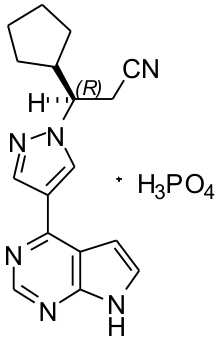
pKa: 4.3 and 11.8
Partition Coefficient: Ruxolitinib phosphate in octanol/aqueous buffers exhibits a partition coefficient of less than 1 in the octanol/pH 1.0 buffer system and becomes more hydrophobic at pH 7.4 (the physiological pH of blood serum).
Melting point: 194 - 198°C (as determined by differential scanning calorimetry).
14 CLINICAL TRIALS
14.1 Clinical Trials by Indication
Myelofibrosis
The clinical efficacy of JAKAVI in patients with Myelofibrosis (Primary Myelofibrosis [MF], Post-Polycythemia Vera Myelofibrosis [PPV-MF] or Post Essential Thrombocythemia-Myelofibrosis [PET-MF]), has been demonstrated based on the two Phase III Studies (COMFORT I and COMFORT II).
Table 28 Summary of clinical trial design and patient demographics for MF (Intent To Treat [ITT])
| Study | Trial design | Dosage, route of administration and duration | Study subjects (N=number) | Mean age (Range) | Sex |
| COMFORT-I | Phase 3 double-blind, randomized, placebo-controlled study of the JAK inhibitor ruxolitinib in adult patients with MF, including PMF, PPV-MF, or PET-MF. | Ruxolitinib and the placebo were administered orally: Starting dose based on baseline platelet count: -between 100,000 and 200,000/mm3 15 mg b.i.d.
20 mg b.i.d. | Total number of patients: 309 Ruxolitinib: 155 Placebo: 154 | Ruxolitinib: 45% ≤ 65 years 55% > 65 years Mean: 67 Range: 43, 91 Placebo: 34% ≤ 65 years 66% > 65 years Mean: 69 Range: 40, 86 | Ruxolitinib: M: 51% F: 49% Placebo: M: 57% F: 42% |
| COMFORT-II | Phase 3 open-label, randomized study of the JAK inhibitor ruxolitinib versus best available therapy (BAT) in adult patients with MF, including PMF, PPV-MF, or PET-MF. | Ruxolitinib and BAT were administered orally: Starting dose based on baseline platelet count: between 100,000 and 200,000/mm3 15 mg b.i.d.
20 mg b.i.d. | Total number of patients: 219 Ruxolitinib: 146 BAT: 73 | Ruxolitinib: 47% ≤ 65 years 53% > 65 years Mean: 65 Range: 35, 83 BAT: 49% ≤ 65 years 51% > 65 years Mean: 65 Range: 35, 85 | Ruxolitinib: M: 57% F: 43% BAT: M: 58% F: 43% |
In both studies, patients had palpable splenomegaly at least 5 cm below the costal margin and risk category of intermediate 2 (2 prognostic factors) or high risk (3 or more prognostic factors) based on the International Prognostic Scoring System (IPSS). The prognostic factors that comprise the IPSS criteria consist of age > 65 years, presence of constitutional symptoms (weight loss, fever, night sweats), anemia (hemoglobin < 10 g/dL), leukocytosis (history of WBC > 25 X 109/L) and circulating blasts ≥ 1%.
The starting dose of JAKAVI was based on platelet count. Patients with a platelet count between 100,000 and 200,000/mm3 were started on JAKAVI 15 mg twice daily and patients with a platelet count > 200,000/mm3 were started on JAKAVI 20 mg twice daily. Patients with platelet counts ≤100,000/mm3 were not eligible in COMFORT studies but 69 patients were enrolled in EXPAND study, a Phase Ib, open label, dose-finding study in patients with PMF, PPV-MF or PET-MF. In COMFORT studies, doses were then individualized based upon tolerability and efficacy.
COMFORT-I was a double-blind, randomized, placebo-controlled study in 309 patients who were refractory to or were not candidates for available therapy. Patients were dosed with JAKAVI or matching placebo. The primary efficacy endpoint was the proportion of subjects achieving ≥ 35% reduction from baseline in spleen volume at week 24 as measured by Magnetic Resonance Imaging (MRI) or Computerized Axial Tomography (CAT).
Secondary endpoints included duration of maintenance of a ≥ 35% reduction from baseline in spleen volume, proportion of patients who had ≥ 50% reduction in total symptom score from baseline to week 24 as measured by the modified Myelofibrosis Symptom Assessment Form (MFSAF) v2.0 diary, change in total symptom score from baseline to week 24 as measured by the modified MFSAF v2.0 diary and overall survival.
COMFORT-II was an open-label, randomized study in 219 patients. Patients were randomized 2:1 to JAKAVI versus best available therapy. Best available therapy was selected by the investigator on a patient-by-patient basis. In the best available therapy arm, 47% of patients received hydroxyurea and 16% of patients received glucocorticoids. The primary efficacy endpoint was the proportion of patients achieving ≥ 35% reduction from baseline in spleen volume at week 48 as measured by MRI or CT.
A secondary endpoint in COMFORT-II was the proportion of patients achieving a ≥ 35% reduction of spleen volume measured by MRI or CT from baseline to week 24. Duration of maintenance of a ≥ 35% reduction from baseline in responding patients was also a secondary endpoint.
In COMFORT-I, patient baseline demographics and disease characteristics were comparable between the treatment arms. The median age was 68 years with 61% of patients older than 65 years and 54% male. Fifty percent (50%) of patients had primary MF, 31% had post-polycythemia myelofibrosis and 18% had PET-MF based on investigator assessment. Twenty-one percent (21%) of patients had red blood transfusions within 8 weeks of enrollment in the study.
The median platelet count was 251,000/mm3. Seventy-six percent (76%) of patients had the mutation encoding the V617F substitution present in the JAK protein. Patients had a median palpable spleen length of 16 cm. At baseline 37.4% of the patients in the JAKAVI arm had Grade 1 anemia, 31.6% Grade 2 and 4.5% Grade 3, while in the placebo arm 35.8% had Grade 1, 35.1% Grade 2, 4.6% Grade 3, and 0.7% Grade 4. Grade 1 thrombocytopenia was found in 12.9 % of patients in the JAKAVI arm and 13.2% in the placebo arm.
In COMFORT-II, patient baseline demographics and disease characteristics were comparable between the treatment arms. The median age was 66 years with 52% of patients older than 65 years and 57% male. Fifty-three percent (53%) of the subjects had primary MF, 31% had PPV-MF, and 16% PET-MF based on investigator assessment. Nineteen percent (19%) of patients were considered transfusion dependent at baseline. Patients had a median palpable spleen length of 15 cm.
At baseline 34.2% of the patients in the JAKAVI arm had Grade 1 anemia, 28.8% Grade 2, and 7.5% Grade 3, while in the BAT arm 37% had Grade 1, 27.4% Grade 2, 13.7% Grade 3, and 1.4% Grade 4. Thrombocytopenia of Grade 1 was found in 8.2% of patients in the JAKAVI arm, and 9.6% in the BAT arm.
Efficacy analyses of the primary endpoint in COMFORT-I and COMFORT-II are presented in Table 29 below. A significantly larger proportion of patients in the JAKAVI group achieved a ≥ 35% reduction in spleen volume from baseline in both studies compared to placebo in COMFORT-I and best available therapy in COMFORT-II.
Table 29 Percent of patients with ≥ 35% reduction from baseline in spleen volume at week 24 in COMFORT-I and at week 48 in COMFORT-II (ITT analysis)
| COMFORT-I | COMFORT-II | |||||||
|---|---|---|---|---|---|---|---|---|
| JAKAVI (N=155) | Placebo (N=153) | JAKAVI (N=144) | Best Available Therapy (N=72) | |||||
| Time Points | week 24 | week 48 | ||||||
| COMFORT-I | COMFORT-II | ||||||||||||
|---|---|---|---|---|---|---|---|---|---|---|---|---|---|
| JAKAVI (N=155) | Placebo (N=153) | JAKAVI (N=144) | Best Available Therapy (N=72) | ||||||||||
| Number (%) of Subjects with Spleen Volume Reduced by ≥35% | 65 (41.9) | 1 (0.7) | 41 (28.5) | 0 | |||||||||
| 95% Confidence Intervals | 34.1, 50.1 | 0, 3.6 | 21.3, 36.6 | 0.0, 5.0 | |||||||||
| P-value | < 0.0001* | < 0.0001* | |||||||||||
| (*)Exact Cochrane-Mantel-Haenszel test | |||||||||||||
In COMFORT-I, 41.9% of patients in the JAKAVI group achieved a ≥ 35% reduction in spleen volume from baseline compared with 0.7% in the placebo group at week 24. In an exploratory analysis, a similar proportion of patients in the JAKAVI group achieved a ≥ 50% reduction in palpable spleen length.
In COMFORT-II, 28.5% of patients in the JAKAVI group achieved a ≥ 35% reduction in spleen volume from baseline compared with none (0%) in the best available therapy group at week 48. A secondary endpoint was the proportion of patients achieving a ≥ 35% reduction of spleen volume at week 24. A significantly larger proportion of patients in the JAKAVI group 46 (31.9%) achieved a ≥ 35% reduction in spleen volume from baseline compared to no (0%) patients in the best available therapy group (p-value < 0.0001).
A significantly higher proportion of patients in the JAKAVI group achieved ≥ 35% reduction from baseline in spleen volume regardless of the presence or absence of the JAK2V617F mutation or the disease subtype (primary MF, PPV-MF, PET-MF).
Figure 1 shows a waterfall plot of the percent change from baseline in spleen volume at week 24 in COMFORT-I. Among the 139 patients in the JAKAVI group who had both baseline and Week 24 spleen volume evaluations, all but two patients had some level of reduction in spleen volume at week 24, with a median reduction of 33%. Among the 106 patients in the placebo group who had both baseline and week 24 spleen volume evaluations, there was a median increase of 8.5%.
Figure 1 Waterfall plot of percent change from baseline in spleen volume at week 24 (observed cases) COMFORT- I
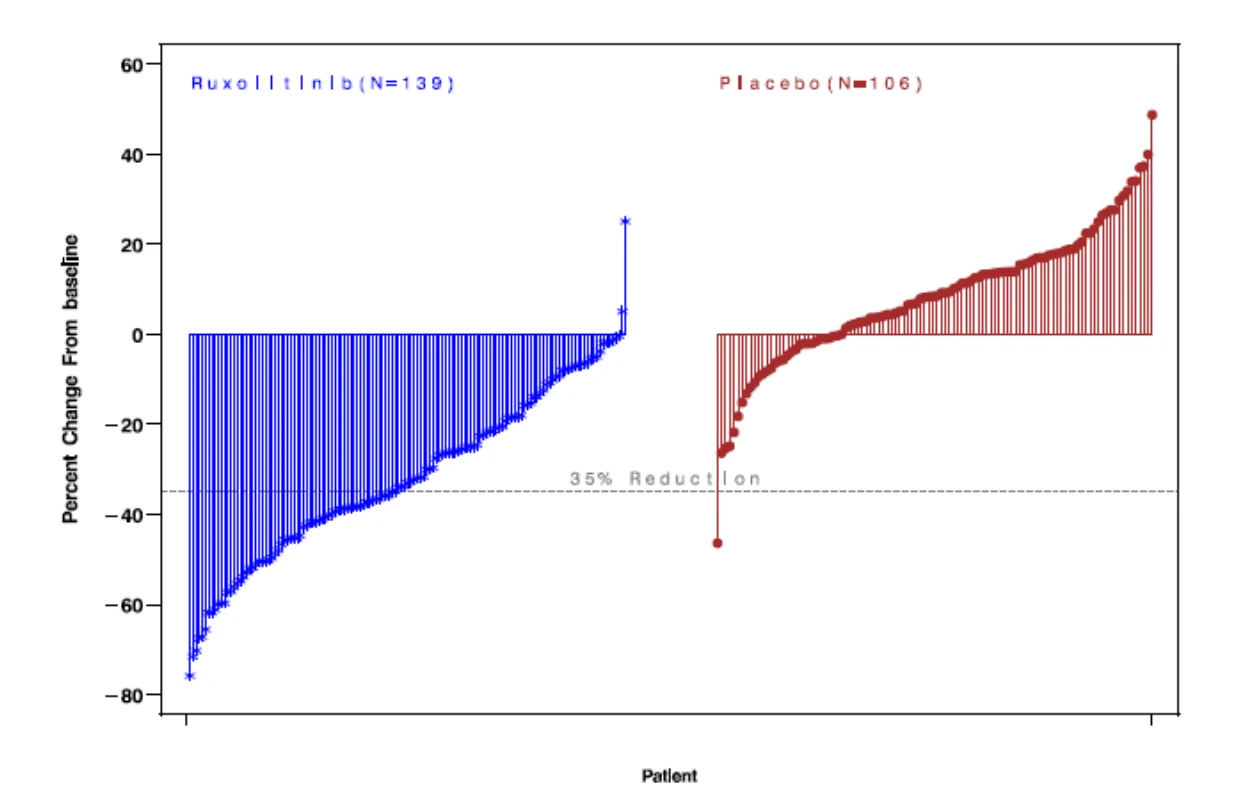
Figure 2 shows a waterfall plot of the percent change from baseline in spleen volume at week 48 in COMFORT-II. Among the 98 patients in the JAKAVI group who had both baseline and week 48 spleen volume evaluations, the median reduction in spleen volume at week 48 was 28%. Among the 34 patients in the Best Available Therapy group who had both baseline and week 48 spleen volume evaluations, there was a median increase of 8.5%.
Figure 2 Waterfall plot of percent change from baseline in spleen volume at week 48 in COMFORT-II
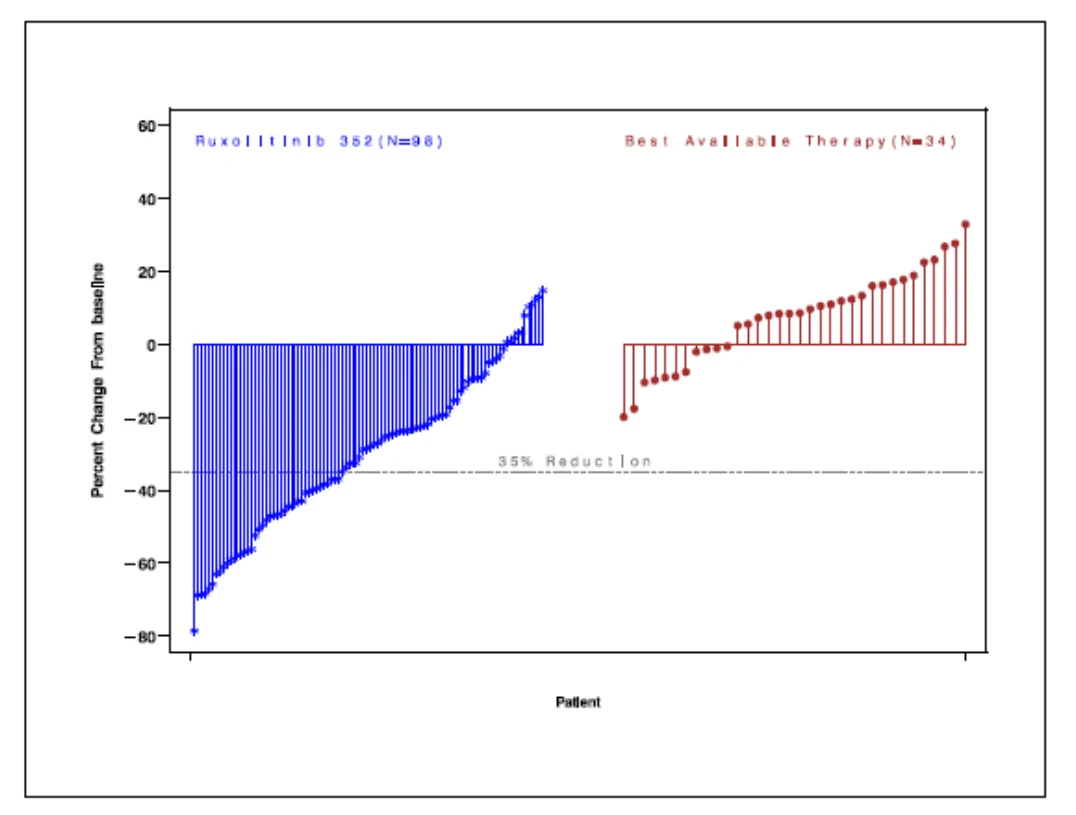
JAKAVI improves MF-associated symptoms in patients with PMF, PPV-MF and PET-MF. In COMFORT-I symptoms of MF were captured using the modified MFSAF diary v2.0 as an electronic diary, which subjects completed daily. The modified MFSAF is a daily diary capturing the core symptoms of MF (abdominal discomfort, pain under left ribs, night sweats, itching, bone/muscle pain and early satiety). Symptom scores ranged from 0 to 10 with 0 representing symptoms “absent” and 10 representing “worst imaginable” symptoms. These scores were added to create the daily total score, which has a maximum of 60. A significantly larger proportion of subjects in the JAKAVI group achieved a ≥ 50% improvement from Baseline in the week 24 total symptom score compared with the placebo group (45.9% and 5.3%, respectively, p < 0.0001 using the Chi-Squared test).
In an exploratory analysis, an improvement in overall quality of life was measured by a validated instrument, the EORTC QLQ-C30 in both COMFORT-I and COMFORT-II. At week 24 in COMFORT-I the mean change for the global health status/quality of life score was +12.3 and -3.4 (p<0.0001) for JAKAVI and placebo, respectively.
In COMFORT-I, at the updated final analysis, conducted after a median follow–up of 5.2 years, a total of 69 (44.5%) and 82 (53.2%) patients died in the ruxolitinib and placebo arms, respectively (HR 0.69; 95% CI: 0.50-0.96, p=0.025).
In COMFORT-II, at the updated final analysis, conducted after a median follow–up of 4.7 years, a total of 94 patients died overall, 59 (40.4%) and 35 (47.9%) patients died in the ruxolitinib and Best available therapy (BAT) arms, respectively (HR 0.67; 95% CI: 0.44-1.02, p=0.062).
Polycythemia vera
The clinical efficacy of JAKAVI in patients with PV has been demonstrated based on a Phase III study (RESPONSE).
Table 30 Summary of clinical study design and patient demographics for PV (ITT)
| Study | Trial design | Dosage and route of administration | Study subjects (N=number) | Mean age (Range) | Sex |
RESPONSE (Study B2301) | Phase 3, open-label, randomized, controlled study comparing the efficacy and safety of the JAK inhibitor ruxolitinib to Best Available Therapy (BAT) in adult patients with PV who were resistant to or intolerant of hydroxyurea. The patients randomized to the BAT could crossover to ruxolitinib at week 32 if they failed to meet the primary endpoint, and after week 32 if they did not achieve HCT control (absence of phlebotomy eligibility) or had a spleen volume progression. | Ruxolitinib was administered orally at a starting dose of 10 mg twice daily (doses were then adjusted in individual patients based on tolerability and efficacy) BAT was selected on a patient-by-patient basis and included hydroxyurea (60% of patients), interferon/pegylated interferon (12% of patients), anagrelide (7% of patients), pipobroman (2% of patients) and observation (15% of patients) | Total number of patients: 222 Ruxolitinib: 110 BAT: 112 | Ruxolitinib: Median age: 62 years Mean: 61 years (34-90 years) BAT: Median age: 60 years Mean: 59 years (33-84 years) | Ruxolitinib: M: 60% F: 40% BAT: M: 71% F: 29% |
The study was conducted in 222 patients with PV who were resistant to or intolerant of hydroxyurea as per the modified European Leukemia Net (ELN) international working group consensus.
Baseline demographics and disease characteristics were comparable between the two treatments groups. The median age was 60 years (range 33 to 90 years). The proportion of patients with the JAK2V617 mutation was 94.5% (104) in the JAKAVI group and 95.5% (107) in the BAT group respectively. For patients in the JAKAVI group and the BAT group, the median time since the diagnosis of PV was 8.2 years and 9.3 years respectively and they had previously received hydroxyurea for a median duration of approximately 3 years in both groups. Most patients (> 80%) had received at least two phlebotomies in the last 24 weeks prior to screening. All patients had splenomegaly (≥450 mm3) at study entry and their hematocrit was to be normalized to levels between 40-45% within 14 days before the day 1 visit. All randomized subjects in the study received concomitant low dose aspirin (75-150 mg/day) unless medically contraindicated. In this case, other prophylactic antithrombotic agents may have been used.
The primary endpoint was the proportion of patients achieving both the absence of phlebotomy eligibility (hematocrit (HCT) control) and ≥ 35% reduction in spleen volume from baseline at week 32. Hematocrit control was defined as the absence of phlebotomy eligibility beginning at the week 8 and continuing through week 32, with no more than one phlebotomy eligibility occurring post-randomization and prior to week 8. Phlebotomy eligibility was defined as a confirmed HCT > 45% that is at least 3 percentage points higher than the HCT obtained at baseline or a confirmed HCT > 48%, whichever is lower. Key secondary endpoints included the proportion of patients who achieved the primary endpoint and who remained free from progression at week 48, and the proportion of patients achieving complete hematological remission at Week 32 with complete hematological remission defined as achieving hematocrit control, platelet count less than or equal to 400 X 109/L, and white blood cell count less than or equal to 10 X 109 /L.
A higher proportion of patients in the JAKAVI group achieved the primary composite endpoint and each of its individual components. Significantly more patients in the JAKAVI group (23%) compared to the BAT group (0.9%) achieved the primary composite endpoint (p<0.0001). Hematocrit control was achieved in 60% of patients in the JAKAVI group compared to 18.75% in the BAT group and ≥ 35% reduction in spleen volume was achieved in 40% of patients in the JAKAVI group compared to 0.9% in the BAT group (Figure 3).
Both key secondary endpoints were also met: The proportion of patients achieving a complete hematologic remission at week 32 was 23.6% in the JAKAVI group compared to 8.0% in the BAT group (p=0.0013), and the proportion of patients achieving a durable primary response at week 48 was 20% in the JAKAVI group and 0.9% in the BAT group (p<0.0001), which represent 91.3% (N=21/n=23) of patients in the JAKAVI group who achieved the primary endpoint at week 32 and maintained it at week 48.
Figure 3 Patients achieving the primary endpoint and components of the primary endpoint at Week 32
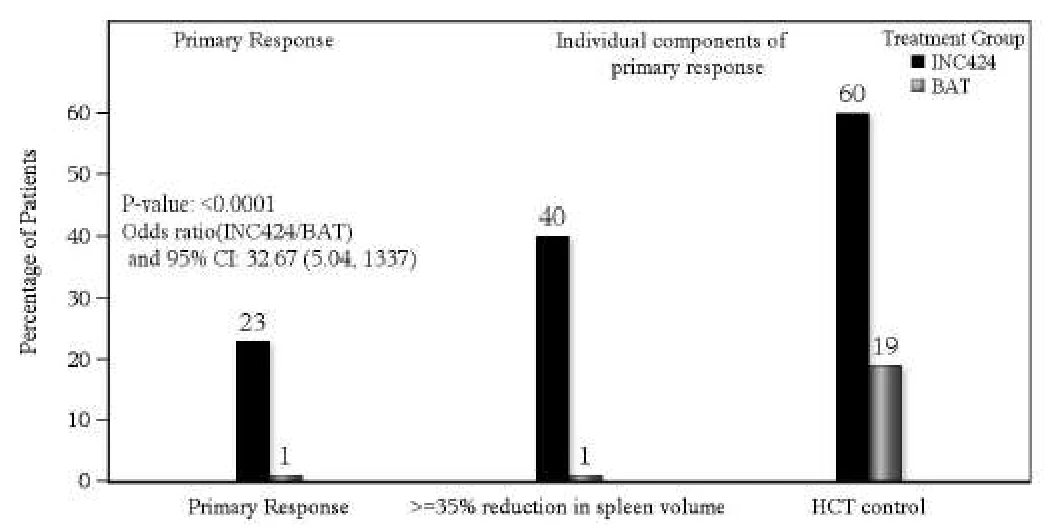
Additional analyses from the RESPONSE study to assess durability of response were conducted at Week 80 only in the JAKAVI arm and week 256 following randomization. Out of 25 patients who had achieved primary response at week 32, 3 patients had progressed by week 80 and 6 patients by week 256. The probability to have maintained a response from week 32 up to week 80 and week 256 was 92% and 74%, respectively. In this arm, 83% (n=91) of patients were still on treatment at the time of the Week 80 data cut-off. Of patients (n=25) who achieved a primary response at Week 32, 80% (n=20) maintained their response for at least 48 weeks after the initial response.
RESPONSE 2 is a randomized, open label, active-controlled phase IIIb study. The primary endpoint was defined as the proportion of patients achieving HCT control (absence of phlebotomy eligibility) at Week 28. The study met its primary objective with a higher proportion of patients who were resistant to or intolerant of hydroxyurea but without palpable splenomegaly in the JAKAVI arm (62.2%, n=46) compared to the BAT arm (18.7%, n=14) achieving the primary endpoint of HCT control (p<0.0001).
Acute Graft-Versus-Host Disease
The clinical efficacy of JAKAVI in acute GVHD was evaluated in an open-label, multi-centre, single arm study (REACH1) of patients with steroid-refractory acute GVHD Grades II to IV (Mount Sinai Acute GVHD International Consortium [MAGIC] criteria) occurring after allogeneic hematopoietic stem cell transplantation.
There were 49 patients with acute GVHD refractory to steroids alone. The median age was 57 years (range 18-72 years), 47% were male, 92% were Caucasian, and 14% were Hispanic. At baseline, acute GVHD was Grade II in 27%, Grade III in 55%, and Grade IV in 18%; 84% had visceral GVHD; the median MAGIC biomarker score was 0.47 (range 0.10-0.92); and the median ST2 level was 334 mcg/L (range 55-1286 mcg/L). The median duration of prior corticosteroid exposure at baseline was 15 days (range 3 – 106 days).
Table 31 Summary of clinical study design and patient demographics for acute GVHD (efficacy evaluable population)
| Study | Trial design | Dosage and route of administration | Study subjects (N=number) | Mean age (Range) | Sex |
|---|---|---|---|---|---|
REACH1 (271) | Randomized, multi-centre, open-label, Phase 2 study investigated the efficacy and safety of ruxolitinib in patients with grade II-IV steroid- refractory acute GVHD (as per MAGIC guidelines) after alloSCT. | Ruxolitinib was administered orally at a starting dose of 5 mg twice daily. The dose could possibly be increased to 10 mg twice daily after 3 days in the absence of toxicity. | The number of patients with acute GVHD refractory to steroid alone : 49 | 57 (rang 18 to 72) years | M: 47% F: 53% |
The primary endpoint in REACH 1 study was the overall response rate (ORR) on Day 28, defined as the proportion of patients in each arm with a complete response (CR), Very good Partial Response (VGPR) or a partial response (PR) (as per investigator assessment using the Centre for International Blood and Marrow Transplant Research [CIBMTR] criteria). The ORR results are presented in Table 32. Day-28 ORR was 100% for Grade II GVHD, 40.7% for Grade III GVHD, and 44.4% for Grade IV GVHD.
Table 32 Overall response rate at Day 28 in patients with steroid-refractory acute GVHD (REACH1)
Refractory to Steroid Alone (N=49) | |||
|---|---|---|---|
| Overall Response | 28 (57.1%) | ||
| OR (95% CI) | (42.2, 71.2) | ||
| Complete Response | 15 (30.6%) | ||
| Very Good Partial Response | 2 (4.1%) | ||
| Partial Response | 11 (22.4%) | ||
| Complete response (CR): score of 0 for GvHD grading in all evaluable organs without additional therapy for an earlier progression, mixed response or no response. Very good partial response (VGPR): Skin: no rash, or residual erythematous rash involving < 25% of the body surface, without bullae; Liver: total serum bilirubin < 2 mg/dL, or < 25% of baseline concentration; Gut: tolerating food, predominantly formed stools, no over GI bleeding or abdominal cramping, no more than occasional nausea or vomiting. Partial response (PR): improvement in 1 stage in 1 or more organs involved with GvHD symptoms without progression in others, without additional therapy for an earlier progression, mixed response or no response. | |||
The key secondary endpoint was six-month duration of response (DOR), defined as the time from first response until GVHD progression or death assessed when all participants who were still on study completed the Day 180 visit. The median DOR, calculated from Day-28 response to progression, new salvage therapy for acute GVHD or death from any cause (with progression being defined as worsening by one stage in any organ without improvement in other organs in comparison to prior response assessment) was 16 days (95% CI 9, 83). Also, for the Day-28 responders, the median time from Day-28 response to either death or need for new therapy for acute GVHD (additional salvage therapy or increase in steroids) was 173 days (95% CI 66, NE).
Chronic Graft-Versus-Host Disease
The clinical efficacy of JAKAVI in chronic GVHD was evaluated in an open-label, multi-centre, phase III study versus best available therapy (BAT) (REACH 3) in patients with moderate-to-severe corticosteroid-refractory chronic GVHD (according to 2014 NIH Consensus Criteria) occurring after allogeneic stem cell transplantation. Patients who received two or more systemic therapies (BAT) for chronic GVHD in addition to corticosteroids ± calcineurin inhibitors (CNI) for chronic GVHD were excluded.
A total of 329 patients were randomized 1:1 to receive JAKAVI 10 mg twice daily (N=165) or BAT (N=164). BAT was selected by the investigator prior to randomization. The BAT options are listed in Table 33. On or after Cycle 7 Day 1, patients randomized to BAT could cross over to JAKAVI if they had disease progression, mixed response, unchanged response, chronic GVHD flare, or toxicity to BAT. Prophylactic treatment medications for chronic GVHD initiated prior to randomization (systemic corticosteroids, CNI, and topical or inhaled corticosteroid therapy) were permitted to be continued per institutional guidelines.
The median age was 49 years (range 12-76 years), 61% were male, 75% were Caucasian, and 43% had moderate SR-chronic GVHD severity at study entry. The most common prior chronic GVHD/SR-chronic GVHD therapy was steroid only (46%) or combination of steroid + CNI (42%). The study included 12 adolescent patients 12 to <18 years of age (N=4 in the JAKAVI arm and N=8 in the BAT arm).
Testing of primary endpoint and key secondary endpoint followed a hierarchical testing procedure with stratified Cochrane-Mantel-Haenszel test for the primary endpoint and log-rank test for the secondary endpoint.
Table 33 Summary of clinical trial design and patient demographics for chronic GVHD (ITT)
| Study | Trial design | Dosage and route of administration | Study subjects (N=number) | Mean age (Range) | Gender |
| REACH3 | Randomized, Phase III, open-label, multi-centre study investigated the efficacy and safety of ruxolitinib vs. BAT added to the patient’s immunosuppressive | Ruxolitinib was administered orally at a starting dose of 10 mg twice daily. BAT was selected by the investigator on a patient-by-patient basis | Total number of patients: 329 Ruxolitinib: 165 BAT: 164 | Ruxolitinib: Median age: 49 years Mean: 46 years (13-73 years) | Ruxolitinib: M: 66% F: 34% BAT: M: 56% F: 44% |
regimen of corticosteroids ± calcineurin inhibitor (CNI) in adults and adolescents (≥ 12 years old) with corticosteroid-refractory chronic Graft vs Host Disease (SR-chronic GVHD). Patients were stratified by severity of chronic GVHD at the time of randomization. Corticosteroid refractoriness was determined when patients had lack of response or disease progression after 7 days, or had disease persistence for 4 weeks or failed corticosteroid taper twice. Patients randomized to the BAT arm were allowed to cross over to the ruxolitinib arm after the Cycle 7 Day 1 visit (week 24) | and included extracorporeal photopheresis (ECP), low dose methotrexate (MTX), mycophenolate mofetil (MMF), mTOR inhibitors (everolimus or sirolimus), infliximab, rituximab, pentostatin, imatinib, or ibrutinib. In addition to ruxolitinib or BAT, patients could have received standard allogeneic stem cell transplantation supportive care including anti-infective medications and transfusion support as well as standard acute GVHD prophylaxis and treatment medications initiated before randomization including systemic corticosteroids and calcineurin inhibitors (CNIs) such as cyclosporine or tacrolimus. Topical or inhaled corticosteroid therapies were allowed to be continued per institutional guidelines. | BAT: Median age: 50 years Mean: 47 years (12-76 years) |
The primary endpoint was the ORR on Cycle 7 Day 1, defined as the proportion of patients in each arm with a complete (CR) or a partial (PR) response without the requirement of additional systemic therapies for an earlier progression, mixed response or non-response based on investigator assessment per NIH criteria.
REACH3 met its primary objective. ORR at Cycle 7 Day 1 was higher in the JAKAVI arm (49.7%) compared to the BAT arm (25.6%). There was a statistically significant difference between the treatment arms (stratified Cochrane-Mantel-Haenszel test p<0.0001, one-sided, OR: 2.99; 95% CI: 1.86, 4.80). Results are presented below.
Table 34 Overall Response Rate at Cycle 7 Day 1 in REACH3 – Primary Analysis (FAS)
JAKAVI N = 165 | BAT N = 164 | ||||||||||||
|---|---|---|---|---|---|---|---|---|---|---|---|---|---|
| n (%) | 95% CI | n (%) | 95% CI | ||||||||||
| Overall Response | 82 (49.7) | 41.8, 57.6 | 42 (25.6) | 19.1, 33.0 | |||||||||
| OR (95% CI) | 2.99 (1.86, 4.80) | ||||||||||||
| p-value | p < 0.0001* | ||||||||||||
| Complete Response | 11 (6.7) | 5 (3.0) | |||||||||||
| Partial Response | 71 (43.0) | 37 (22.6) | |||||||||||
(*)Stratified Cochrane-Mantel-Haenszel test Complete response (CR): complete resolution of all signs and symptoms of cGvHD in all evaluable organs without initiation or addition of new systemic therapy. Partial response (PR): improvement in at least one organ without progression in other organs, without initiation or addition of new systemic therapies. | |||||||||||||
The key secondary endpoint was Failure-Free Survival (FFS) at Cycle 7 Day 1. FFS, a composite time-to-event endpoint, incorporated the earliest of the following events: i) relapse or recurrence of underlying disease or death due to underlying disease, ii) non-relapse mortality, or iii) addition or initiation of another systemic therapy for chronic GVHD.
FFS demonstrated a statistically significant superiority of JAKAVI versus BAT (HR: 0.370 [95% CI: 0.268, 0.510]; p<0.0001), with a 63% decreased risk. The 6-months FFS probability (95% CI) was 74.9% (67.5%, 80.9%) and 44.5% (36.5%, 52.1%) for the JAKAVI and BAT arms, respectively. The majority of FFS events were ‘addition or initiation of another systemic therapy for chronic GVHD’.
The secondary endpoint of best overall response (BOR), defined as the proportion of patients who achieved ORR (CR or PR) at any time point up to Cycle 7 Day 1, was also evaluated. The BOR was higher in the JAKAVI arm (76.4%) than in the BAT arm (60.4%). The estimated probability of maintaining BOR at 12 months was higher in the JAKAVI arm compared to the BAT arm (68.5% [95% CI: 58.9, 76.3] vs 40.3% [95% CI: 30.3, 50.2]).
The median duration of response for the BOR endpoint, calculated from first response to disease progression (including a mixed response) according to NIH response criteria, death, or new systemic therapies for chronic GVHD was 14.9 months for the JAKAVI arm (95% CI: 8.3, 20.7) and 3.7 months (95% CI: 2.5, 5.3) for the BAT arm. The median time from first response to death or addition of a new systemic therapy for chronic GVHD was not reached for the JAKAVI arm and was 6.4 months (95% CI: 4.9, 13.3) for the BAT arm.
The ORR results were supported by an exploratory analysis of patient-reported symptom severity using the modified Lee Symptom Scale. A ≥ 7-point reduction from baseline in the chronic GVHD total symptom score, considered to be clinically meaningful, at Cycle 7 Day 1 was reported in 24% of patients in the JAKAVI arm and 10% of patients in the BAT arm.
15 MICROBIOLOGY
No microbiological information is required for this drug product.
16 NON-CLINICAL TOXICOLOGY
General Toxicology
Single oral dose toxicity
Ruxolitinib was well tolerated following single oral doses of up to 100 mg/kg in rats and 40 mg/kg in dogs. Mild lethargy and emesis were respectively observed at a dose of 100mg/kg in rats (exposure approximately equal or 6.4-fold the exposure at the maximum human recommended dose based on AUC in males and females, respectively) or 40 mg/kg in dogs (exposure approximately 7.9-fold the exposure at the maximum human recommended dose based on AUC). In the rat study assessing CNS function, darkened mucous membranes and skin were noted at an exposure approximately 0.10-fold or 3.8-fold the exposure at the maximum human recommended dose (based on AUC, in males and females, respectively).
Repeated oral dose toxicity
Repeated oral dose studies with ruxolitinib of up to 4 weeks in mice, 6 months in rats, and 12 months in the dog were conducted.
Target organs associated with the pharmacological action of ruxolitinib in repeat dose studies include bone marrow, peripheral blood and lymphoid tissues at an exposure approximately 3-fold or 0.7-fold the exposure at the maximum human recommended dose based on AUC in rats and dogs, respectively. Findings were reversible or demonstrated a tendency for reversibility. Specific findings included, decreases in lymphocytes, eosinophils, reticulocytes, red blood cell, hemoglobin and hematocrit as well as hypocellularity of the bone marrow and lymphoid organs (spleen, thymus, lymph nodes). Dogs (6 and 12 month studies) developed bacterial, parasitic and viral infections that are generally associated with immunosuppression (at an exposure approximately equal to the exposure at the maximum human recommended dose based on AUC).
Other findings include gastrointestinal inflammation (4 week dog study; at an exposure approximately 5-fold the exposure at the maximum human recommended dose based on AUC), prostatic atrophy (6 month dog study; at an exposure approximately 1.9-fold the exposure at the maximum human recommended dose based on AUC), heart fibrosis (13 week female rat study; at an exposure approximately 9.5-fold the exposure at the maximum human recommended dose based on AUC), adrenal cortical atrophy (6 month rat study; at an exposure approximately 0.14-fold the exposure at the maximum human recommended dose based on AUC), hyperplasia of non-glandular stomach (4 week mouse study; at an exposure approximately 6.5-fold the exposure at the maximum human recommended dose based on AUC), increases of ALP and GGT (13 week female rat study; at an exposure approximately 9.6-fold the exposure at the maximum human recommended dose based on AUC), and decreases in phosphorous and calcium levels (dog ≥5mg/kg/day; at an exposure approximately 1.6-fold the exposure at the maximum human recommended dose based on AUC).
Carcinogenicity
In a 6-month carcinogenicity study in the Tg.RasH2 transgenic mouse model, no significant increase in neoplastic lesions was observed at Cmax and AUC exposures that exceeded (8-fold) those observed in clinical studies. Non-neoplastic intranasal inflammation was observed in the treated mouse model at an exposure approximately 8-fold the exposure at the maximum human recommended dose based on AUC. Together, ruxolitinib was not carcinogenic in the Tg.rasH2 transgenic mouse model nor in a 2-year study in rats.
Genotoxicity
Ruxolitinib did not test positive for mutagenicity in a bacterial mutagenicity assay (Ames test) or clastogenicity in an in vitro chromosomal aberration assay (cultured human peripheral blood lymphocytes) or in vivo rat bone marrow micronucleus assay.
Reproductive and Developmental Toxicology
In a fertility study, ruxolitinib was administered to male rats prior to and throughout mating and to female rats prior to mating and up to the implantation day (gestation day 7). No effects were noted on reproductive performance or fertility in male or female rats; however, increased post-implantation loss was observed in female rats.
In embryo-fetal developmental toxicity studies, ruxolitinib was administered orally to pregnant rats or rabbits during the period of organogenesis. Ruxolitinib was not teratogenic but was associated with maternal toxicity, embryolethality (increases in post implantation loss resulting in decreased litter sizes) and fetotoxicity (decreased fetus weights) in rats and rabbits.
In a pre- and post-natal development study in rats, pregnant animals were dosed with ruxolitinib from implantation through lactation. There were no adverse findings in pups for fertility indices of for maternal or embryofetal survival, growth, and developmental parameters.
All of the reproductive toxicities observed in animal studies occurred at exposures that are significantly less than those observed in the clinical populations (at an exposure approximately 0.07 to 0.34-fold the maximum human recommended dose based on AUC).
Juvenile Toxicity
Administration of ruxolitinib to juvenile rats resulted in effects on growth and bone measures. Ruxolitinib was administered daily by oral gavage at doses from 1.5 to 75 mg/kg/day from days
7 (the human equivalent of a newborn) to 63 post-partum (pp), 15 mg/kg/day from days 14 (the human equivalent of 1 year of age) to 63 pp and 5, 15 and 60 mg/kg/day from days 21 (the human equivalent of 2 to 3 years of age) to 63 pp. Doses ≥30 mg/kg/day (1,200 ng*h/mL based on unbound AUC) resulted in fractures and early termination of the groups when treatment started on day 7 pp. Reduced bone growth was observed at doses ≥5 mg/kg/day (≥150 ng*h/mL based on unbound AUC) when treatment started on day 7 pp and at ≥15 mg/kg/day (≥150 ng*h/mL based on unbound AUC) when treatment started on day 14 pp or day 21 pp. Based on unbound AUC, fractures and reduced bone growth occurred at exposures 13- and 1.5- fold the exposure in adult patients at the maximum recommended dose of 25 mg BID, respectively. The effects were generally more severe when administration was initiated earlier in the postnatal period. Other than the effects on bone development, the toxicity profile in juvenile rats was comparable to that observed in adult rats.
Special Toxicology
Phototoxicity
Ruxolitinib absorbs light in the range of 290 to 700 nm, with a peak at 310 nm. In studies performed on guinea pigs, ruxolitinib did not show any photoallergic or phototoxic potential when applied either topically or dermally at concentrations ≤ 1.5%. Repeated daily topical administration with or without simulated sunlight in hairless mice for a period of 13 weeks did not result in adverse findings. No phototoxicity or photoallergy or irritancy studies have been performed via the oral route of administration.