


Product Monograph - Ojjaara
Recent Major Label Changes
| None at the time of most recent authorization | Not applicable |
|---|
Table of Contents
Certain sections or subsections that are not applicable at the time of the preparation of the most recent authorized product monograph are not listed.
Table of Contents ................................................................................................................... 2
Part 1: Healthcare Professional Information ........................................................................... 4
- 1.
Indications ....................................................................................................................... 4
1.1. Pediatrics ............................................................................................................. 4
1.2. Geriatrics ............................................................................................................. 4
- 2. Contraindications ............................................................................................................ 4
- 3. Serious Warnings and Precautions Box ............................................................................ 4
- 4.
Dosage and Administration ............................................................................................. 4
4.1. Dosing Considerations ......................................................................................... 4
4.2. Recommended Dose and Dosage Adjustment ..................................................... 4
4.4. Administration .................................................................................................... 6
4.5. Missed Dose ........................................................................................................ 6
- 5. Overdose ......................................................................................................................... 6
- 6. Dosage Forms, Strengths, Composition, and Packaging ................................................... 7
- 7.
Warnings and Precautions ............................................................................................... 7
Carcinogenesis and Genotoxicity ..................................................................................... 7
Cardiovascular ................................................................................................................. 8
Reproductive Health ........................................................................................................ 9
7.1. Special Populations ........................................................................................... 10
7.1.1. Pregnancy .................................................................................................. 10
7.1.2. Breastfeeding ................................................................................................ 10
7.1.3. Pediatrics ................................................................................................... 10
7.1.4. Geriatrics ................................................................................................... 10
- 8.
Adverse Reactions ......................................................................................................... 10
8.1. Adverse Reaction Overview ............................................................................... 10
8.2. Clinical Trial Adverse Reactions ......................................................................... 12
8.3. Less Common Clinical Trial Adverse Reactions ................................................... 16
8.4. Abnormal Laboratory Findings: Hematologic, Clinical Chemistry, and Other Quantitative Data .......................................................................................................... 16
8.5. Post-Market Adverse Reactions ......................................................................... 17
- 9.
Drug Interactions ........................................................................................................... 17
9.1. Serious Drug Interactions .................................................................................. 17
9.2. Drug Interactions Overview ............................................................................... 17
9.3. Drug-Behaviour Interactions .............................................................................. 18
9.4. Drug-Drug Interactions ...................................................................................... 18
9.5. Drug-Food Interactions ...................................................................................... 21
9.6. Drug-Herb Interactions ...................................................................................... 21
9.7. Drug-Laboratory Test Interactions ..................................................................... 21
- 10.
Clinical Pharmacology ................................................................................................... 21
10.1. Mechanism of Action ......................................................................................... 21
10.2. Pharmacodynamics ........................................................................................... 21
10.3. Pharmacokinetics .............................................................................................. 22
- 11. Storage, Stability, and Disposal ...................................................................................... 23
- 12. Special Handling Instructions ......................................................................................... 23
PART 2: Scientific Information .............................................................................................. 24
- 13. Pharmaceutical Information .......................................................................................... 24
- 14.
Clinical Trials .................................................................................................................. 24
14.1. Clinical Trials by Indication ................................................................................ 24
MOMENTUM (JAK inhibitor pretreated) ........................................................................ 25
SIMPLIFY-1 (JAK inhibitor naïve) .................................................................................... 28
- 15. Microbiology ................................................................................................................. 31
- 16. Non-Clinical Toxicology .................................................................................................. 31
Patient Medication Information ........................................................................................... 33
Part 1: Healthcare Professional Information
1. Indications
OJJAARA (momelotinib) is indicated for:
- the treatment of splenomegaly and/or disease-related symptoms, in adult patients with intermediate or high-risk primary myelofibrosis (MF), post polycythemia vera myelofibrosis or post essential thrombocythemia MF who have moderate to severe anemia.
1.1. Pediatrics
Pediatrics (<18 years of age): The safety and efficacy of OJJAARA in children and adolescents less than 18 years of age have not been established; therefore, Health Canada has not authorized an indication for pediatric use.
1.2. Geriatrics
Geriatrics (>65 years of age): No overall differences in safety or effectiveness of OJJAARA have been observed between patients aged 65 years and older and younger patients.
2. Contraindications
OJJAARA is contraindicated in patients who are hypersensitive to this drug or to any ingredient in the formulation, including any non-medicinal ingredient, or component of the container. For a complete listing, see 6 Dosage Forms, Strengths, Composition, and Packaging.
3. Serious Warnings and Precautions Box
Serious bacterial and viral Infections (in some cases fatal), have been reported in patients treated with OJJAARA (see 7 Warnings and Precautions). OJJAARA should not be initiated in patients with active infections. Monitor patients receiving OJJAARA for signs and symptoms of infection and initiate appropriate treatment promptly.
4. Dosage and Administration
4.1. Dosing Considerations
Dose modifications should be considered for patients with hematologic and nonhematologic toxicities (see 4.2 Recommended Dose and Dosage Adjustment).
4.2. Recommended Dose and Dosage Adjustment
The recommended dosage of OJJAARA is 200 mg taken orally once daily. OJJAARA should not be used in combination with other JAK inhibitors.
Testing requirement prior to initiating treatment and Monitoring during Treatment
Complete blood cell count (CBC) with platelets and liver function tests must be performed before initiating treatment with OJJAARA, periodically during treatment, and as clinically indicated.
Prior to initiating treatment with OJJAARA, the Absolute Neutrophil Count (ANC) of patients should be ≥ 0.75 x 10⁹/L and platelet count ≥ 25 × 109/L.
Dosage Adjustment
Dose modifications should be considered for hematologic and nonhematologic toxicities (Table 1). Discontinue OJJAARA in patients unable to tolerate 100 mg once daily.
Table 1 – Dose modification for adverse reactions
| Hematologic toxicities | |
|---|---|
| Thrombocytopenia | Dose Modificationa |
| Baseline Platelet Count | Platelet Count |
| ≥100 × 109/L | |
20 × 109/L to <50 × 109/L | Reduce daily dose by 50 mg from the last given dose |
| <20 × 109/L | Interrupt treatment until platelets recover to 50 × 109/L Restart OJJAARA at a daily dose of 50 mg below the last given doseb |
≥50 × 109/L to <100 × 109/L | |
| <20 × 109/L | Interrupt treatment until platelets recover to 50 × 109/L Restart OJJAARA at a daily dose of 50 mg below the last given doseb |
25 x 109/L to <50 × 109/L | |
| <20 × 109/L | Interrupt treatment until platelets recover to baseline Restart OJJAARA at a daily dose of 50 mg below the last given doseb |
| Neutropenia | Dose Modificationa |
Absolute neutrophil count (ANC) <0.5 × 10⁹/L | Interrupt treatment until ANC ≥0.75 × 10⁹/L Restart OJJAARA at a daily dose of 50 mg below the last given doseb |
| Non-Hematologic toxicities | |
Hepatotoxicity (unless other apparent causes) | Dose Modificationa |
| ALT and/or AST >5 × ULN (or >5 × baseline, if baseline is abnormal) and/or total bilirubin >2 × ULN (or >2 × baseline, if baseline is abnormal) | Interrupt treatment until AST and ALT ≤2 × ULN or baselinec and total bilirubin ≤1.5 × ULN or baselined Restart OJJAARA at a daily dose of 50 mg below the last given doseb If reoccurrence of ALT or AST elevations >5 × ULN, permanently discontinue OJJAARA |
| Other Non-Hematologic | Dose Modificationa |
Grade 3 or highere Grade 2 or higherc bleeding | Interrupt treatment until the toxicity resolves to Grade ≤ 1 (or baseline) Restart OJJAARA at a daily dose of 50 mg below the last given doseb |
ANC = absolute neutrophil count; ALT = alanine transaminase; AST = aspartate transaminase; ULN = upper limit of normal.
a Reinitiate or escalate treatment up to starting dosage as clinically appropriate.
b May reinitiate treatment at 100 mg if previously dosed at 100 mg.
c If baseline >2 × ULN.
d If baseline >1.5 × ULN.
e Graded using the National Cancer Institute Common Terminology Criteria for Adverse Events per (CTCAE)
Geriatrics
No dose adjustment is required for patients who are aged 65 years and older (see 10.3 Pharmacokinetics).
Pediatrics
The safety and efficacy of OJJAARA in children and adolescents less than 18 years of age have not been established.
Renal Impairment
No dose adjustment is required for patients with renal impairment (estimated glomerular filtration rate [eGFR] >15 mL/min/1.73 m2) (see 10.3 Pharmacokinetics). OJJAARA has not been studied in patients with end-stage renal disease.
Hepatic Impairment
No dose adjustment is recommended for patients with mild or moderate hepatic impairment (Child-Pugh Class A or B). The recommended starting dose of OJJAARA is 150 mg once daily in patients with severe hepatic impairment (Child-Pugh Class C) (see 10.3 Pharmacokinetics).
Drug-drug Interactions
For dosage adjustments with established or potential drug-drug interactions see 9.2 Drug Interactions Overview.
4.4. Administration
OJJAARA is dosed orally once a day at a regularly scheduled time. OJJAARA can be administered with or without food. Patients should be instructed to swallow the tablet whole. The tablets should not be cut, broken, dissolved, crushed or chewed.
4.5. Missed Dose
If a dose of OJJAARA is missed, the next scheduled dose should be taken the following day. Two doses should not be taken at the same time to make up for the missed dose.
5. Overdose
There is no known antidote for overdose with OJJAARA. If overdose is suspected, the patient should be monitored for any signs or symptoms of adverse reactions or effects, and appropriate standard of care measures should be instituted immediately. Further management should be as clinically indicated or as recommended by the regional poison centre, where available.
Hemodialysis is not expected to enhance the elimination of momelotinib.
For the most recent information in the management of a suspected drug overdose, contact your regional poison control centre or Health Canada’s toll-free number, 1-844 POISON-X (1-844-764-
7669).
- 6. Dosage Forms, Strengths, Composition, and Packaging
Table 2 – Dosage Forms, Strengths, Composition and Packaging
Description
OJJAARA (momelotinib tablet) 100 mg tablets: 100 mg brown round film-coated tablets, with an underlined “M” debossed on one side and “100” on the other side.
OJJAARA (momelotinib tablet) 150 mg tablets: 150 mg brown triangle shaped film-coated tablets, with an underlined “M” debossed on one side and “150” on the other side.
OJJAARA (momelotinib tablet) 200 mg tablets: 200 mg brown capsule shaped film-coated tablets, with an underlined “M” debossed on one side and “200” on the other side.
7. Warnings and Precautions
Carcinogenesis and Genotoxicity
Secondary Malignancies
Another JAK-inhibitor increased the risk of lymphoma and other malignancies excluding non-melanoma skin cancer (NMSC) (compared to those treated with TNF blockers) in patients with rheumatoid arthritis, a condition for which OJJAARA is not indicated. Patients who are current or past smokers are at an increased risk of secondary malignancies.
Secondary malignancies have been reported in patients receiving JAK inhibitors, including OJJAARA. However, a causal association has not been established. Consider the benefits and risks for the individual patient prior to initiating or continuing therapy with OJJAARA, particularly in patients with a known malignancy (other than a successfully treated NMSC), patients who develop a malignancy, and patients who are current or past smokers.
| Route of Administration | Dosage Form / Strength/Composition | Non-medicinal Ingredients |
| oral | Tablet 100 mg, 150 mg, and 200 mg Each tablet contains momelotinib hydrochloride equivalent to 100 mg, 150 mg, or 200 mg momelotinib, respectively, as the active ingredient | lactose monohydrate, magnesium stearate, microcrystalline cellulose, polyethylene glycol, polyvinyl alcohol, propyl gallate, red iron oxide, silicon dioxide, sodium starch glycolate, talc, titanium dioxide, and yellow iron oxide. |
Cardiovascular
Thrombosis
Another JAK-inhibitor increased the risk of thrombosis, including deep venous thrombosis (DVT), pulmonary embolism (PE), and arterial thrombosis (compared to those treated with TNF blockers) in patients with rheumatoid arthritis, a condition for which OJJAARA is not indicated.
In patients with myelofibrosis treated with OJJAARA in clinical trials, events of DVT and PE have been reported at similar rates as control-treated patients. A causal association between OJJAARA and thrombosis has not been established. Prior to initiating or continuing therapy with OJJAARA, the benefits and risks for the individual patient should be considered particularly in patients with cardiovascular risk factors. Patients with symptoms of thrombosis should be promptly evaluated and treated appropriately.
Major Adverse Cardiovascular Events (MACE)
Another JAK inhibitor increased the risk of MACE, including cardiovascular death, myocardial infarction, and stroke (compared to those treated with TNF blockers) in patients with rheumatoid arthritis, a condition for which OJJAARA is not indicated.
Events of MACE have been reported in patients receiving OJJAARA, however, a causal relationship has not been established. Evaluate the benefits and risks for the individual patient prior to initiating or continuing therapy with OJJAARA particularly in geriatric patients, patients who are current or past smokers, and patients with cardiovascular risk factors. Patients should be informed about the symptoms of serious cardiovascular events and the steps to take if they occur.
Driving and operating machinery
There have been no studies to investigate the effect of momelotinib on driving performance or the ability to operate machinery. However, patients who experience dizziness or blurred vision after taking OJJAARA should observe caution when driving or using machines (see 8 Adverse Reactions).
Hematologic
Thrombocytopenia and neutropenia New onset of severe (Grade ≥3) thrombocytopenia and neutropenia was observed in patients treated with OJJAARA (see 8 Adverse Reactions). A complete blood count, including platelet and neutrophil counts, should be obtained before initiating treatment with OJJAARA, periodically during treatment, and as clinically indicated. Interrupt treatment or reduce the dose as required (see 4 Dosage and Administration ).
Hepatic/Biliary/Pancreatic
Hepatotoxicity
Reversible drug-induced liver injury, presented most commonly as new or worsening elevations in hepatic enzyme, has been reported in patients with myelofibrosis treated with OJJAARA in clinical trials.
Delay starting therapy in patients with uncontrolled acute and chronic liver disease, until apparent causes have been investigated and treated. Refer to dosing in patients with severe hepatic impairment (4.2 Recommended Dose and Dosage Adjustment, Hepatic Impairment).
Liver function tests should be obtained before initiating treatment with OJJAARA, periodically during treatment, and as clinically indicated. If increases in alanine transaminase (ALT) or aspartate transaminase (AST) or bilirubin related to treatment are suspected, dose interruption or reduction may be required (4.2 Recommended Dose and Dosage Adjustment, Dosage Adjustment).
Immune
Infections Serious (in some cases fatal) bacterial and viral infections (including COVID-19), have been reported in patients treated with OJJAARA (see 8 Adverse Reactions). OJJAARA should not be initiated until active infections have resolved. Physicians should monitor patients receiving OJJAARA for signs and symptoms of infection and initiate appropriate treatment promptly.
Hepatitis B reactivation
Hepatitis B viral load (HBV-DNA titer) increases, with or without associated elevations in ALT or AST, have been reported in patients with chronic hepatitis B virus (HBV) infection taking JAK inhibitors, including OJJAARA. The effect of OJJAARA on viral replication in patients with chronic HBV infection is unknown. Patients with chronic HBV infection who receive OJJAARA should have their chronic HBV infection treated and monitored according to clinical HBV guidelines.
Monitoring and Laboratory Tests
Blood cell counts: A blood cell count must be performed before initiating therapy with OJJAARA. Complete blood counts should be monitored periodically during treatment and as clinically indicated (see 4 Dosage and Administration).
Liver function test: Liver function test should be performed prior to initiating treatment with OJJAARA, periodically during treatment, and as clinically indicated (see 4 Dosage and Administration).
Reproductive Health
- Fertility
There are no data on the effects of momelotinib on human male or female fertility. In animal studies, momelotinib impaired fertility in male and female rats (see 16 Non-Clinical Toxicology).
- Teratogenic Risk
There are no adequate and well-controlled studies of OJJAARA in pregnant women. Momelotinib was embryotoxic and fetotoxic in rats and rabbits (abortions, embryonic death, and fetal anomalies) (see 16 Non-Clinical Toxicology). The potential risk of teratogenicity for humans is unknown. The use of OJJAARA during pregnancy is not recommended.
Women of childbearing potential should be advised of the potential risk to the developing fetus if OJJAARA is taken at any stage of a pregnancy and to take appropriate precautions (methods that result in <1% pregnancy rates) to avoid becoming pregnant during treatment and for at least 1 week after the last dose of momelotinib. Women using hormonal contraceptives should add a barrier method during treatment and for at least 1 week after the last dose of OJJAARA (see 9.2 Drug Interactions Overview).
In case pregnancy occurs, risk/benefit evaluations must be carried out on an individual basis with careful counseling regarding potential risk to the fetus using the most recent data available.
Sensitivity/Resistance
Lactose monohydrate: OJJAARA contains lactose monohydrate. Patients with rare hereditary problems of galactose intolerance, total lactase deficiency or glucose-galactose malabsorption should not take this medicinal product.
7.1. Special Populations
7.1.1. Pregnancy
There are no adequate and well-controlled studies of OJJAARA in pregnant women. The administration of momelotinib to rats and rabbits during organogenesis caused maternal toxicity and was associated with increased embryonic death, reduced fetal weight, and increased incidence of fetal anomalies (see 16 Non-Clinical Toxicology).
The potential risk of teratogenicity for humans is unknown. The use of OJJAARA during pregnancy is not recommended. Women of childbearing age should use highly effective contraception during therapy and for at least 1 week after the last dose of momelotinib. Women using hormonal contraceptives should add a barrier method during treatment and for at least 1 week after the last dose of OJJAARA (see 9.2 Drug Interactions Overview).
7.1.2. Breastfeeding
It is not known if momelotinib is excreted in human milk. There are no data on the effects of momelotinib on the breast-fed child or the effects of momelotinib on milk production.
Momelotinib was present in rat pups following nursing from treated dams with adverse effects in the offspring, which adversely affected pup survival (see 16 Non-Clinical Toxicology). A risk to the breast-fed child cannot be excluded.
Because many drugs are excreted in human milk and because of the potential for adverse reactions in breastfed infants, a decision should be made whether to discontinue nursing or to discontinue the drug. It is recommended that women should not breastfeed during treatment with momelotinib and for at least 1 week after the last dose of momelotinib.
7.1.3. Pediatrics
Pediatrics (<18 years of age): No data are available to Health Canada; therefore, Health Canada has not authorized an indication for pediatric use.
7.1.4. Geriatrics
Geriatrics (>65 years of age): Of the 448 patients who were randomized to receive OJJAARA in clinical trials, 64.5% were 65 years or older. No overall differences in safety or effectiveness of OJJAARA have been observed between patients aged 65 years and older and younger adult patients. No dosage adjustment is required for OJJAARA based on age.
8. Adverse Reactions
8.1. Adverse Reaction Overview
The safety of OJJAARA was evaluated in 448 patients (i.e., pooled safety population) from three randomized, active-controlled, multicentre studies in adults with myelofibrosis (MOMENTUM, SIMPLIFY-1, and SIMPLIFY-2) (See 14 Clinical Trials). Among patients treated with OJJAARA 200 mg daily in the randomized treatment period of the clinical trials (n=448), the median duration of exposure was 23.9 weeks (range: 0.3, 26.7 weeks), with 46.2% of the subjects completing 24 weeks of treatment. The average daily dose was 187.5 mg.
Around 94% of the patients treated with OJJAARA experienced at least one adverse drug event. The most common adverse reactions (≥15%) were fatigue (25%), diarrhea (23%), thrombocytopenia (21%), nausea (17%), bacterial infection (17%), abdominal pain (17%), and dizziness (17%).
Thrombocytopenia was the most commonly reported severe (≥ Grade 3) adverse reaction (12%), as well as the adverse reaction most frequently leading to dosage reduction/treatment interruption (8%) or discontinuation of OJJAARA (2.5%).
Serious adverse reactions occurred in 29% of the patients treated with OJJAARA during the randomized treatment period of phase 3 clinical trials. The most reported (≥ 2.0%) serious adverse reactions were bacterial infection (6.0%), hemorrhage (3.0%), pneumonia (3.0%) and arrhythmia (2.0%).
Fatal adverse reactions were reported in 6.5% of the pooled safety population. The most common fatal adverse reactions were related to infections and infestations, including COVID-19 related events (1.4%) and pneumonia (0.2%).
Description of selected adverse reactions
Infections
In the three randomized clinical studies, among 448 patients treated with OJJAARA, 40% experienced an infection, the median time to onset was 54 days. The most common infections (≥2%) were urinary tract infection (6%), upper respiratory tract infection (5%), pneumonia (3.6%), nasopharyngitis (2.9%), COVID-19 (2.7%), cystitis (2.7%), bronchitis (2.5%), and oral herpes (2.5%). The majority of infections were mild or moderate, while 10% (47/448) of patients experienced a severe infection (≥ Grade 3). The proportion of patients discontinuing treatment due to an infection was 2%. Serious infections occurred in 9.8% of patients and 2.2% were fatal.
Thrombocytopenia
In the pooled safety population, 21% of patients treated with OJJAARA experienced thrombocytopenia (Grade ≥1), 12% of patients experienced severe (≥ Grade 3) thrombocytopenia and 0.7% events were considered serious. The proportion of patients discontinuing treatment due to thrombocytopenia was 2.5%. The median time to onset was 28 days.
Elevated liver enzymes
In the three randomized clinical trials, laboratory values showed new or worsening elevations of ALT and AST (all grades) in 20% (88/448) and 20% (90/448), respectively, of patients treated with OJJAARA. Grade ≥ 3 transaminase elevations occurred in 1.3% of patients. Reversible drug-induced liver injury has been reported in patients with myelofibrosis treated with OJJAARA in clinical trials. The median time to onset for adverse reactions related to elevated liver enzymes was 42 days.
Peripheral neuropathy
In the pooled safety population, 8.7% of patients treated with OJJAARA experienced peripheral neuropathy. The majority of cases were mild or moderate, while only one of the 39 cases was severe (≥
Grade 3), and no case was fatal. The proportion of patients discontinuing treatment due to peripheral neuropathy was 0.7%. The median time to onset for peripheral neuropathy was 64 days.
8.2. Clinical Trial Adverse Reactions
Clinical trials are conducted under very specific conditions. Therefore, the frequencies of adverse reaction rates observed in the clinical trials, may not reflect the rates observed in clinical practice and should not be compared to frequencies reported in clinical trials of another drug.
MOMENTUM
Patients in the MOMENTUM trial had been previously treated with a JAK inhibitor and were randomly assigned 2:1 to receive double-blind OJJAARA 200 mg orally once daily (n = 130) or danazol 300 mg orally twice daily (n = 65) for 24 weeks, after which they were eligible to receive open-label OJJAARA in an extended treatment phase. Among patients who received OJJAARA, 72% were exposed for 24 weeks or longer and 52% were exposed for 48 weeks or longer (See 14 Clinical Trials).
Serious adverse reactions occurred in 35% of patients who received OJJAARA during the randomized treatment period of the MOMENTUM trial; the most common serious adverse reactions (≥2%) included bacterial infection (8%), viral infection (5%), hemorrhage (4%), acute kidney injury (3%), pneumonia (3%), pyrexia (3%), thrombosis (3%), syncope (2%), thrombocytopenia (2%), and renal and urinary tract infection (2%). Fatal adverse reactions occurred in 12% of patients who received OJJAARA; the most common (≥2%) fatal adverse reaction was viral infection (5%).
Permanent discontinuation of OJJAARA due to an adverse reaction occurred in 18% of patients during the randomized treatment period. Adverse reactions that resulted in permanent discontinuation (≥2%) included viral infection (2%) and thrombocytopenia (2%). Dosage reduction or treatment interruption due to an adverse reaction occurred in 34% of patients. Adverse reactions requiring dosage reduction and/or treatment interruption (≥2%) included thrombocytopenia (13%), bacterial infection (2%), diarrhea (2%), and neutropenia (2%).
Among the 130 patients treated with OJJAARA, the most common adverse reactions (≥20%) during the randomized treatment period were thrombocytopenia, diarrhea, hemorrhage, and fatigue (Table 3).
Table 3 – Adverse Drug Reactions Occurring in ≥5% of Patients Receiving OJJAARA during Randomized Treatment in MOMENTUM
| Adverse Reactiona | OJJAARA n = 130 | Danazolb n = 65 | ||
All Gradesc n (%) | Grade ≥3 n (%) | All Grades n (%) | Grade ≥3 n (%) | |
| Thrombocytopeniad | 36 (28) | 28 (22) | 11 (17) | 8 (12) |
| Diarrhea | 29 (22) | 0 (0) | 6 (9) | 1 (2) |
| Hemorrhagee | 28 (22) | 3 (2) | 12 (18) | 5 (8) |
| Fatiguef | 27 (21) | 2 (2) | 13 (20) | 3 (5) |
| Nausea | 21 (16) | 3 (2) | 6 (9) | 2 (3) |
| Bacterial infectiong,s | 19 (15) | 11 (8) | 12 (18) | 5 (8) |
| Abdominal painh | 17 (13) | 1 (1) | 12 (18) | 2 (3) |
| Viral infectioni,s | 15 (12) | 7 (5) | 2 (3) | 0 (0) |
| Pruritus | 14 (11) | 2 (2) | 7 (11) | 0 (0) |
| Elevated liver enzymesj | 13 (10) | 2 (2) | 6 (9) | 2 (3) |
| Pyrexiak | 13 (10) | 2 (2) | 5 (8) | 0 (0) |
| Coughl | 11 (8) | 0 (0) | 3 (5) | 0 (0) |
| Paresthesiam | 11 (8) | 1 (1) | 1 (2) | 0 (0) |
| Dizzinessn | 10 (8) | 2 (2) | 1 (2) | 0 (0) |
| Vomitingo | 10 (8) | 1 (1) | 0 (0) | 0 (0) |
| Rashp | 8 (6) | 0 (0) | 7 (11) | 0 (0) |
| Renal and urinary tract infectionq,s | 8 (6) | 3 (2) | 7 (11) | 3 (5) |
| Arrhythmiar | 7 (5) | 1 (1) | 4 (6) | 1 (2) |
| Neutropenia | 7 (5) | 6 (5) | 2 (3) | 2 (3) |
a The frequency of most ADRs displayed in this table is based on a group of similar preferred terms. These are annotated to each term
b Study was not designed to evaluate meaningful comparisons of the incidence of adverse reactions across treatment groups.
c Adverse reactions graded using CTCAE v.5.
d Thrombocytopenia includes thrombocytopenia, platelet count decreased
e Hemorrhage includes bone contusion, contusion, ecchymosis, epistaxis, extravasation blood, gastrointestinal hemorrhage, gingival bleeding, hematemesis, hematochezia, hematoma, hematuria, hemoperitoneum, hemorrhagic diathesis, melena, oesophageal varices hemorrhage, purpura, rectal hemorrhage, splenic hematoma
f Fatigue includes asthenia, fatigue, lethargy, malaise
g Bacterial infection includes biliary sepsis, cellulitis, cholecystitis, cholecystitis acute, clostridium difficile colitis, clostridium difficile infection, cystitis, hordeolum, joint abscess, listeria sepsis, nasal vestibulitis, rash pustular, tooth abscess, urinary tract infection, urinary tract infection enterococcal
h Abdominal pain includes abdominal discomfort, abdominal pain, abdominal pain upper
i Viral infection includes COVID-19, COVID-19 pneumonia, herpes zoster, skin papilloma
j Elevated liver enzymes includes alanine aminotransferase increased, blood bilirubin increased, hyperbilirubinemia
k Pyrexia includes pyrexia, febrile neutropenia
l Cough includes cough, productive cough
m Paresthesia includes paresthesia, hypoesthesia
n Dizziness includes dizziness, presyncope, vertigo
o Vomiting includes vomiting, hematemesis
p Rash includes rash, rash pustular, rash maculo-papular, scrotal dermatitis, dermatitis, urticaria, acne q Renal and urinary tract infection includes cystitis, urinary tract infection, urinary tract infection enterococcal r Arrhythmia includes arrhythmia, sinus arrhythmia, atrial fibrillation, tachycardia, supraventricular extrasystoles s Excludes opportunistic infections.
SIMPLIFY-1
Patients in the SIMPLIFY-1 trial were JAK inhibitor naïve and randomly assigned 1:1 to receive double-blind OJJAARA 200 mg orally once daily (n = 215) or ruxolitinib 5 to 20 mg orally twice daily (n = 217). Upon completion of the double-blind treatment phase, all patients were eligible to receive OJJAARA during the open-label phase. The safety of OJJAARA was evaluated in the sub-population of patients with MF who were anemic (Hgb <10 g/dL) at study entry. SIMPLIFY-1 enrolled 180 anemic patients, 85 of them received OJJAARA and 95 subjects were dosed with ruxolitinib. Among the anemic patients who received OJJAARA, 78% were exposed for 24 weeks or longer and 61% were exposed for 48 weeks or longer (See 14 Clinical Trials).
Serious adverse reactions occurred in 28% of the anemic patients who received OJJAARA during the randomized treatment period of the SIMPLIFY-1 trial; the most common serious adverse reactions (≥2%) included bacterial infection (7%), pneumonia (6%), heart failure (4%) arrhythmia (2%), and respiratory failure (2%). A fatal adverse reaction (bacterial infection) occurred in 1 patient who received OJJAARA.
Permanent discontinuation of OJJAARA due to an adverse reaction occurred in 19% of the anemic patients during the randomized treatment period of the SIMPLIFY-1 trial. Adverse reactions that resulted in permanent discontinuation of OJJAARA (≥2%) included bacterial infection (2%), dizziness (2%), fatigue (2%), hypotension (2%), and thrombocytopenia (2%). Dosage reductions or treatment interruptions of OJJAARA due to an adverse reaction occurred in 21% of patients. Adverse reactions requiring dosage reduction and/or treatment interruption (≥2%) were thrombocytopenia (8%), pneumonia (4%), bacterial infection (2%), abdominal pain (2%), elevated liver enzymes (2%), and hypotension (2%). Among the 85 anemic patients (Hgb <10 g/dL) treated with OJJAARA during the randomized treatment period of SIMPLIFY-1, the most common adverse reactions (≥20%) were dizziness, fatigue, bacterial infection, hemorrhage, thrombocytopenia, diarrhea, and nausea (Table 4).
Table 4 – Adverse Drug Reactions Occurring in ≥5% of Patients Receiving OJJAARA during Randomized Treatment in SIMPLIFY-1
| Adverse Reactionsa | OJJAARA n = 85 Baseline Hgb <10 g/dL | Ruxolitinibb n = 95 Baseline Hgb <10 g/dL | ||
|---|---|---|---|---|
All Gradesc n (%) | Grade ≥3 n (%) | All Grades n (%) | Grade ≥3 n (%) | |
| Dizzinessd | 20 (24) | 1 (1) | 14 (15) | 2 (2) |
| Fatiguee | 19 (22) | 0 (0) | 24 (25) | 1 (1) |
| Bacterial infectionf,r | 18 (21) | 7 (8) | 11 (12) | 2 (2) |
| Hemorrhageg | 18 (21) | 1 (1) | 17 (18) | 2 (2) |
| Thrombocytopenia | 18 (21) | 9 (11) | 32 (34) | 6 (6) |
| Diarrhea | 17 (20) | 1 (1) | 19 (20) | 1 (1) |
| Nausea | 17 (20) | 0 (0) | 3 (3) | 1 (1) |
| Abdominal painh | 15 (18) | 1 (1) | 13 (14) | 1 (1) |
| Coughi | 12 (14) | 0 (0) | 10 (11) | 0 (0) |
| Hypotension | 12 (14) | 2 (2) | 0 (0) | 0 (0) |
| Pain in extremity | 10 (12) | 0 (0) | 5 (5) | 0 (0) |
| Pyrexiaj | 10 (12) | 1 (1) | 10 (11) | 0 (0) |
| Rashk | 10 (12) | 0 (0) | 3 (3) | 0 (0) |
| Renal and urinary tract infectionl,r | 10 (12) | 1 (1) | 4 (4) | 0 (0) |
| Peripheral neuropathym | 10 (12) | 0 (0) | 5 (5) | 0 (0) |
| Elevated liver enzymesn | 9 (11) | 3 (4) | 9 (9) | 0 (0) |
| Headache | 9 (11) | 0 (0) | 15 (16) | 0 (0) |
| Peripheral edema | 9 (11) | 0 (0) | 8 (8) | 0 (0) |
| Arrhythmiao | 7 (8) | 2 (2) | 2 (2) | 1 (1) |
| Paresthesia | 7 (8) | 0 (0) | 3 (3) | 0 (0) |
| Pneumoniap | 7 (8) | 7 (8) | 5 (5) | 3 (3) |
| Vomiting | 7 (8) | 0 (0) | 5 (5) | 0 (0) |
| Back pain | 6 (7) | 1 (1) | 2 (2) | 0 (0) |
| Viral infectionq,r | 5 (6) | 0 (0) | 12 (13) | 2 (2) |
| Vitamin B1 deficiency | 5 (6) | 0 (0) | 7 (7) | 0 (0) |
a The frequency of most ADRs displayed in this table is based on a group of similar preferred terms. These are annotated to each term
b The SIMPLIFY-1 study was not designed to evaluate meaningful comparisons of the incidence of adverse reactions across treatment groups.
c Adverse reactions graded using CTCAE v.4.03.
d Dizziness includes balance disorder, dizziness, presyncope, vertigo
e Fatigue includes asthenia, fatigue, lethargy, malaise
f Bacterial infection includes anal abscess, cellulitis, cystitis, escherichia sepsis, periodontitis, pneumonia bacterial, scrotal abscess, sepsis, skin infection, urinary tract infection
g Hemorrhage includes contusion, ecchymosis, epistaxis, hematoma, hemoptysis, hemorrhoidal hemorrhage, petechiae, rectal hemorrhage, retinal hemorrhage
h Abdominal pain includes abdominal discomfort, abdominal pain, abdominal pain upper
i Cough includes cough, hemoptysis, productive cough
j Pyrexia includes febrile neutropenia, pyrexia
k Rash includes blister, dermatitis contact, rash, rash macular, rash maculo-papular
l Renal and urinary tract infection includes cystitis, urinary tract infection
m Peripheral neuropathy includes peripheral sensory neuropathy, peripheral motor neuropathy, neuropathy peripheral, peripheral sensorimotor neuropathy, neuralgia, and polyneuropathy
n Elevated liver enzymes includes alanine aminotransferase increased, transaminases increased, aspartate aminotransferase increased
o Arrhythmia includes atrial fibrillation, extrasystoles, supraventricular tachycardia
p Pneumonia includes pneumonia, pneumonia aspiration, pneumonia bacterial
q Viral infection includes genital herpes zoster, herpes zoster, influenza, oral herpes
r Excludes opportunistic infections.
8.3. Less Common Clinical Trial Adverse Reactions
Clinically relevant adverse reactions occurring in <5% of anemic patients in the MOMENTUM and SIMPLIFY-1 studies include:
Eye Disorders: Blurred vision (3.3%).
Infections and Infestations: Fungal infection (excludes opportunistic infections) (2.8%).
Musculoskeletal and Connective Tissue Disorders: Arthralgia (4.7%)
Nervous System Disorders: Peripheral neuropathy, neuropathy peripheral, peripheral sensory neuropathy, polyneuropathy* (3.8%), syncope (2.8%).
Vascular Disorders: Flushing (2.8%).
*MOMENTUM only
8.4. Abnormal Laboratory Findings: Hematologic, Clinical Chemistry, and Other Quantitative Data
Table 5 - New or worsened laboratory abnormalities from baseline to worst postbaseline reported in patients with hemoglobin < 10 g/dL during the 24 week randomized treatment period in MOMENTUM and SIMPLIFY-1.
| Laboratory Parameter | MOMENTUM | SIMPLIFY-1 | ||||||
|---|---|---|---|---|---|---|---|---|
| Laboratory Parameter | MOMENTUM | SIMPLIFY-1 | ||||||
| OJJAARA (N=130) | Danazol (N=65) | OJJAARA (N=85) | Ruxolitinib (N=95) | |||||
| OJJAARA (N=130) | Danazol (N=65) | OJJAARA (N=85) | Ruxolitinib (N=95) | |||||
| Any Grade | Grade 3/4 | Any Grade | Grade 3/4 | Any Grade | Grade 3/4 | Any Grade | Grade 3/4 | |
| Any Grade | Grade 3/4 | Any Grade | Grade 3/4 | Any Grade | Grade 3/4 | Any Grade | Grade 3/4 | |
| n (%) | ||||||||
| n (%) | ||||||||
| Hematology | ||||||||
| Hemoglobin - Decreased | 15 (11.5) | 13 (10.0) | 10 (5.4) | 10 (15.4) | 13 (15.3) | 13 (15.3) | 44 (46.3) | 44 (46.3) |
| Lymphocytes – Decreased | 42 (32.3) | 14 (10.8) | 33 (50.8) | 21 (32.3) | 18 (21.2) | 6 (7.1) | 25 (26.3) | 10 (10.5) |
| Leukocytes - Decreased | 18 (13.8) | 6 (4.6) | 9 (13.8) | 4 (6.2) | 21 (24.7) | 4 (4.7) | 31 (32.6) | 10 (10.5) |
| Platelets - Decreased | 62 (47.7) | 29 (22.3) | 15 (23.1) | 9 (13.8) | 34 (40.0) | 11 (12.9) | 50 (52.6) | 7 (7.4) |
| Neutrophils - Decreased | 29 (22.3) | 13 (10.0) | 9 (13.8) | 4 (6.2) | 20 (23.5) | 3 (3.5) | 28 (29.5) | 6 (6.3) |
| Liver Function | ||||||||
| AST - Increased | 24 (18.5) | 0 | 23 (35.4) | 0 | 24 (28.2) | 0 | 28 (29.5) | 0 |
| ALT - Increased | 19 (14.6) | 1 (0.8) | 13 (20.0) | 1 (1.5) | 24 (28.2) | 1 (1.2) | 30 (31.6) | 0 |
| GGT - Increased | 20 (15.4) | 1 (0.8) | 12 (18.5) | 1 (1.5) | 26 (30.6) | 3 (3.5) | 24 (25.3) | 2 (2.1) |
| Clinical Chemistry | ||||||||
| Creatinine - Increased | 47 (36.2) | 1 (0.8) | 33 (50.8) | 1 (1.5) | 21 (24.7) | 0 | 9 (9.5) | 1 (1.1) |
| Calcium - Decreased | 18 (13.8) | 0 | 25 (38.5) | 1 (1.5) | 4 (4.7) | 1 (1.2) | 7 (7.4) | 0 |
8.5. Post-Market Adverse Reactions
As these post-marketing events were reported from a population of unknown size, the frequency is unknown.
Immune system disorders: Hypersensitivity
Skin and Subcutaneous Tissue Disorders: Rash and Toxic Epidermal Necrolysis (TEN) including cases requiring hospitalization, Erythema multiforme
9. Drug Interactions
9.1. Serious Drug Interactions
At the time of authorization, no serious drug interactions were identified.
9.2. Drug Interactions Overview
Momelotinib is metabolized by multiple cytochrome P450 (CYP) in vitro, with the predominant contribution from CYP3A4, and with a lesser contribution from CYP2C8, CYP2C9, CYP2C19, and CYP1A2.
Coadministration of OJJAARA with a strong CYP3A4 inducer may decrease momelotinib plasma concentrations and consequently lead to a risk of reduced efficacy of OJJAARA.
Coadministration of OJJAARA with an Organic Anion Transporting Polypeptide (OATP)1B1/1B3 inhibitor may increase momelotinib plasma concentrations, which may increase the risk of adverse reactions related with OJJAARA.
Momelotinib is an inhibitor of Breast Cancer Resistance Protein (BCRP) and may increase the exposure of drugs that are sensitive BCRP substrates.
9.3. Drug-Behaviour Interactions
At the time of authorization, drug-behavioural interactions have not been established.
9.4. Drug-Drug Interactions
The drugs listed in this table are based on either drug interaction case reports or studies, or potential interactions due to the expected magnitude and seriousness of the interaction (i.e., those identified as contraindicated).
Table 6 – Established or Potential Drug-Drug Interactions
| [Proper/Common name] | Source of Evidence | Effect | Clinical comment |
| Effect of other drugs on OJJAARA | |||
Strong CYP3A4 inducers (e.g., carbamazepine, phenobarbital, phenytoin, and St John’s wort [Hypericum perforatum]) | CT | Coadministration of multiple doses of rifampin (strong CYP3A4 inducer; 600 mg once daily) following a single dose of momelotinib 200 mg reduced momelotinib Cmax by 29.4% and AUCinf by 46.1% when compared with a single dose of momelotinib 200 mg plus a single‑dose of rifampin. | Concomitant use of OJJAARA with strong CYP3A4 inducers may decrease momelotinib exposure and consequently lead to a risk for reduced efficacy. Additional monitoring is recommended with concomitant use of momelotinib and strong CYP3A4 inducers. |
OATP inhibitors (e.g. cyclosporin) | CT | Coadministration of a single-dose of rifampin (OATP1B1/1B3 inhibitor; 600 mg) with a single-dose of momelotinib 200 mg increased momelotinib Cmax by 40.4% and AUCinf by 57.1% when compared to a single dose of momelotinib 200 mg. | Concomitant use of OJJAARA with OATP1B1/1B3 inhibitors may increase momelotinib exposure which may increase the risk of adverse reactions. Additional monitoring is advised with concomitant use of momelotinib and OATP1B1/1B3 inhibitors. Dose modifications of OJJAARA should be considered, based on adverse reactions. |
| Effect of OJJAARA on other drugs | |||
BCRP substrates (e.g., rosuvastatin and sulfasalazine) | CT | Coadministration of a single dose of rosuvastatin (BCRP substrate; 10 mg) with multiple doses of momelotinib 200 mg increased rosuvastatin Cmax by 3.2-fold and AUCinf by 2.7-fold. Tmax and t1/2 of rosuvastatin remained unchanged. | Concomitant use of OJJAARA with BCRP substrates may increase exposure of BCRP substrates which may increase the risk of adverse reactions of these drugs. Patients should be monitored for adverse reactions with co-administration of sensitive BCRP substrates. Dose modifications of BCRP substrates should be considered, based on adverse reactions. Whenever possible, alternative medications to the BCRP substrate should be considered. |
| Hormonal contraceptives | T | Multiple doses of momelotinib had no influence on the exposure of midazolam, a sensitive CYP3A substrate. However, a risk for induction of other pregnane X receptor (PXR) regulated enzymes apart from CYP3A4 cannot be completely excluded and the effectiveness of concomitant administration of hormonal contraceptives may be reduced. | Women using hormonal contraceptives should add a barrier method during treatment and for at least 1 week after the last dose of OJJAARA. |
Legend: C = Case Study; CT = Clinical Trial; T = Theoretical
Gastric Acid-Reducing Agents In healthy volunteers, co-administration of a single dose of 200 mg momelotinib with 20 mg of omeprazole under fasted conditions, after repeated dosing of omeprazole 20 mg once daily for 5 days, decreased AUCinf by approximately 33% and Cmax by 36% compared with administration of momelotinib alone. These changes in exposure were not clinically meaningful.
9.5. Drug-Food Interactions
Following low-fat and high-fat meals in healthy volunteers, the Cmax of momelotinib was 38% and 28% higher, respectively, and the AUCinf was 16% and 28% higher, respectively, as compared with those under fasted conditions. Tmax was delayed by about 1.5 h to 2.0 h. These changes in exposure were not clinically meaningful.
9.6. Drug-Herb Interactions
Interactions with herbal products have not been established.
9.7. Drug-Laboratory Test Interactions
Interactions with laboratory tests have not been established.
10. Clinical Pharmacology
10.1. Mechanism of Action
Momelotinib and its major human circulating metabolite (M21), are inhibitors of wild type Janus Kinase 1 and 2 (JAK1/JAK2) and mutant JAK2V617F, which contribute to signaling of a number of cytokines and growth factors that are important for hematopoiesis and immune function. JAK1 and JAK2 recruit and activate STAT (signal transducer and activator of transcription) proteins that control gene transcription impacting inflammation, hematopoiesis, and immune regulation. Myelofibrosis is a myeloproliferative neoplasm associated with constitutive activation and dysregulated JAK signaling that contributes to elevated inflammation and hyperactivation of activin A receptor type 1 (ACVR1), also known as activin receptor-like kinase 2 (ALK-2). Momelotinib and M21 additionally inhibit ACVR1, which further down regulates liver hepcidin expression resulting in increased iron availability and red blood cell production. Momelotinib and M21 potentially inhibit additional kinases, such as other JAK family members, inhibitor of κB kinase (IKK), interleukin-1 receptor-associated kinase 1 (IRAK1), and others.
10.2. Pharmacodynamics
Momelotinib inhibits cytokine-induced STAT3 phosphorylation in whole blood from patients with myelofibrosis. Maximal inhibition of STAT3 phosphorylation occurred 2 hours after momelotinib dosing with inhibition persisting for at least 6 hours. An acute and sustained reduction of circulating hepcidin was observed for the duration of the 24‑week study, associated with increased iron levels and hemoglobin, following administration of momelotinib to patients with myelofibrosis (see 10 Clinical Pharmacology).
Cardiovascular effects At a dose of 4 times the highest recommended starting dosage of 200 mg, momelotinib did not prolong the QT interval to any clinically relevant extent.
10.3. Pharmacokinetics
Table 7 – Summary of OJJAARA Steady-State Pharmacokinetic Parameters in patients with myelofibrosis following administration of 200 mg momelotinib
| Cmax (CV%) | Tmax1 | t½ (h) 2 | AUCtau (CV%) | |
| Mean | 479 ng/mL (61%) | 1.8 h | 4.5 – 7.4 h | 3,288 ng•h/mL (60%) |
CV% = coefficient of variation.
1Tmax given as median, 2 t1/2 given as range
Absorption
Momelotinib is rapidly absorbed after oral administration with the maximal plasma concentration (Cmax) achieved within 3 hours post-dose. Momelotinib exposure (i.e., Cmax and AUC) increases dose proportionally from 100 mg to 300 mg (0.5 to 1.5 times the maximum recommended dosage), but less than dose‑proportional at doses from 400 mg to 800 mg (2 to 4 times the maximum recommended dosage). At the dose of 200 mg once daily at steady state, the mean (%CV) momelotinib Cmax is 479 ng/mL (61%) and AUC is 3,288 ng•h/mL (60%) in patients with myelofibrosis.
Food effect
Following low-fat and high-fat meals in healthy volunteers, the Cmax of momelotinib was 38% and 28% higher, respectively, and the AUC was 16% and 28% higher, respectively, as compared with those under fasted conditions. Tmax was delayed by about 1.5 h to 2.0 h. These changes in exposure were not clinically meaningful.
Distribution
Plasma protein binding of momelotinib is approximately 91% in human. The mean apparent volume of distribution of momelotinib at steady-state was 984 L in patients with myelofibrosis receiving momelotinib 200 mg once daily suggesting extensive tissue distribution.
Metabolism
Momelotinib is metabolised by multiple cytochrome P450 (CYP) enzymes, including; CYP3A4 (36%), CYP2C8 (19%), CYP2C19 (19%), CYP2C9 (17%) and CYP1A2 (9%). M21 is an active human metabolite that has approximately 40% of the pharmacological activity of the parent. M21 is formed by CYP followed by aldehyde oxidase metabolism of momelotinib. The mean M21 to momelotinib ratio for AUC ranged from 1.4 to 2.1.
Elimination
Following an oral dose of momelotinib 200 mg, the mean terminal half-life (t½) of momelotinib was approximately 4 to 8 hours; the half-life of M21 was similar. The apparent total clearance (CL/F) of momelotinib was 103 L/h in patients with myelofibrosis.
Momelotinib is mainly eliminated through metabolism and then excreted to feces. Following a single oral dose of [14C]-labelled momelotinib in healthy male subjects, 69% of radioactivity was excreted in the feces (13% of dose as unchanged momelotinib), and 28% in the urine (<1% of dose as unchanged momelotinib). Approximately 12% of the administered dose was excreted in urine as M21.
Special populations and conditions
- Pediatrics: Momelotinib pharmacokinetics in children and adolescents less than 18 years of age have not been evaluated.
- Geriatrics: No clinically meaningful effect on the pharmacokinetics of momelotinib was observed based on age (28 to 92 years). Therefore, no dose adjustment based on age is recommended for elderly subjects.
- Gender: Gender does not have a clinically meaningful effect on the pharmacokinetics of momelotinib based on a population pharmacokinetic analysis.
- Pregnancy and Breast-feeding: There are no adequate and well-controlled studies of OJJAARA in pregnant women. It is not known whether OJJAARA is excreted in human milk (see 7.1.1 Pregnancy and 7.1.2 Breastfeeding).
- Ethnic Origin: Race does not have a clinically meaningful effect on the pharmacokinetics of momelotinib based on a population pharmacokinetic analysis.
- Hepatic Insufficiency: Momelotinib AUC increased by 8% and 97% in subjects with moderate (Child-Pugh Turcotte Score 7 to 9, Class B) and severe (Child-Pugh-Turcotte Score 10 to 15, Class C) hepatic impairment, respectively, compared to subjects with normal hepatic function. Dose modification is recommended for patients with severe hepatic impairment (see 4.2 Recommended Dose and Dosage Adjustment).
- Renal Insufficiency: Momelotinib AUC decreased by 13% in subjects with moderate renal impairment (estimated glomerular filtration rate [eGFR] 30-59 mL/min/1.73 m2) and AUC decreased by 16% in subjects with severe renal impairment (eGFR 15-29 mL/min/1.73 m2) compared to subjects with normal renal function (eGFR ≥90 mL/min/1.73 m2). The active metabolite, M21, AUC increased by 20% and 41%, respectively, in subjects with moderate and severe renal impairment compared to subjects with normal renal function. There are no data in patients with end-stage renal disease (ESRD) receiving dialysis.
- Obesity: Weight does not have a clinically meaningful effect on the pharmacokinetics of momelotinib based on population pharmacokinetic analysis.
- Storage, Stability, and Disposal
Store between 15°C to 30°C in the original bottle to protect from moisture. Do not remove the desiccant.
Keep this medicine out of reach and sight of children.
12. Special Handling Instructions
There are no special requirements for use or handling of this product.
PART 2: Scientific Information
13. Pharmaceutical Information
Drug Substance
Non-proprietary name of the drug substance(s): momelotinib hydrochloride
Chemical name: N-(Cyanomethyl)-4-(2-{[4-(morpholin-4-yl)phenyl]amino}pyrimidin-4-yl)benzamide dihydrochloride monohydrate
Molecular formula and molecular mass: C23H22N6O2●2HCl●H2O and it has a molecular weight of 505.40.
Structural formula:
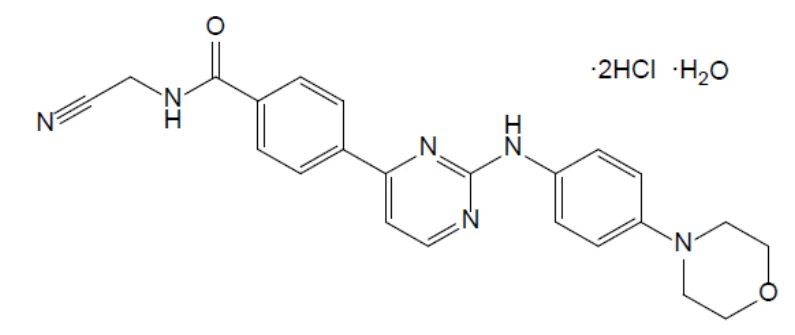
Physicochemical properties: Momelotinib dihydrochloride monohydrate is a light yellow to brown to reddish-brown solid and is slightly soluble in water and insoluble in aqueous buffers across a pH range of 2.1 to 9. Momelotinib free base has a molecular formula of C23H22N6O2 and a molecular weight of 414.47.
14. Clinical Trials
14.1. Clinical Trials by Indication
The efficacy of OJJAARA in the treatment of patients with MF, including primary MF, post-PV MF or post-ET MF, was established in the MOMENTUM trial and in a subpopulation of adults with anemia in the SIMPLIFY-1 trial. All patients received a starting dose of OJJAARA 200 mg once daily.
MOMENTUM (JAK inhibitor pretreated)
Table 8 – Summary of trial design and patient demographics for MOMENTUM
| Study # | Study design | Dosage, route of administration and duration | Study subjects (n) | Mean age (Range) | Sex |
MOMENTUM (NCT04173494) | Phase 3 double-blind, 2:1 randomized, active controlled | OJJAARA 200 mg once daily, orally, for 24 weeks Danazol 300 mg twice daily, orally, for 24 weeks | OJJAARA: 130 Danazol: 65 | OJJAARA 69.9 years (range 38 to 86 years) Danazol 71.5 years (range 54 to 86 years) | OJJAARA: Male: 60.8% Female: 39.2% Danazol Male: 67.7% Female: 32.3% |
MOMENTUM Study Design and Baseline Characteristics
MOMENTUM was a double-blind, 2:1 randomized, active-controlled Phase 3 trial in 195 symptomatic and anemic adults with MF who had previously received an approved JAK inhibitor therapy.
Eligible patients were required to have enlarged spleen at baseline, Myelofibrosis Symptom Assessment Form [MFSAF] Total Symptom Score [TSS] ≥ 10 units, hemoglobin (Hgb) values <10 g/dL and a minimum baseline platelet count of 25 × 109/L. Subjects with active uncontrolled infection were excluded from the study.
Patients were dosed orally with OJJAARA 200 mg once daily or danazol 300 mg twice daily for 24 weeks, then switched to open-label treatment with OJJAARA. Randomization was stratified by baseline MFSAF v4.0 Total Symptom Score (<22 vs. ≥22), baseline palpable spleen length below the left costal margin (<12 vs. ≥12 cm), and baseline red blood cell or whole blood units transfused in the 8-week period before randomization (0, 1-4, ≥5 units).
The co-primary efficacy endpoints were proportion of subjects achieving ≥ 50% reduction from baseline in MFSAF v4.0 TSS at week 24 and proportion of patients with Transfusion Independence (TI) at week 24. The main secondary endpoint was the proportion of subjects who had ≥ 25% reduction from baseline in spleen volume at week 24, as measured by Magnetic Resonance Imaging (MRI) or computed tomography (CT) scan. Other endpoints included were transfusion independence, percentage of patients with no transfusions, and MFSAF v4.0 Total Symptom Score change from baseline.
Symptoms were measured using the MFSAF v4.0 diary. The MFSAF v4.0 patient diary, completed throughout the randomized treatment period, captured the core symptoms of MF: fatigue, night sweats, pruritus, abdominal discomfort, pain under ribs on left side, early satiety, and bone pain. For each item, symptom scores, ranging from 0 (absent) to 10 (worst imaginable), were added to create a daily Total Symptom Score (maximum score of 70). At baseline, the mean MFSAF v4.0 Total Symptom Score (MFSAF v4.0 TSS) was 28 in the OJJAARA group and 26 in the danazol group.
Overall, recruited patients had received prior JAK inhibitor therapy for a median duration of 99 weeks.
The median age was 71 years (range 38 to 86 years) with 79% of patients aged 65 years and older. Most patients were white (81%) and 63% were male. Sixty-four percent (64%) of patients had primary
MF, 19% had post-PV MF, and 17% had post-ET MF. Five percent (5%) of patients had intermediate-1 risk, 57% had intermediate-2 risk, and 35% had high-risk disease as defined by the Dynamic International Prognostic Scoring System (DIPSS) or International Prognostic Scoring System (IPSS) for MF. Within the 8 weeks prior to treatment, 79% of patients had red blood cell (RBC) transfusions. At baseline, 13% and 15% of patients were transfusion independent (defined as no red blood cell transfusions in the 12 weeks before the first dose and Hgb ≥8 g/dL) in the OJJAARA and danazol groups, respectively. The baseline median Hgb was 8 g/dL and the median platelet count was 96 × 109/ L (range 24 × 109/L to 733 × 109/L). The baseline median palpable spleen length was 11.0 cm below the left costal margin; the median central spleen volume [measured by magnetic resonance imaging (MRI) or computed tomography (CT)] was 2,105 cm3 (range 610 cm3 to 9,717 cm3).
MOMENTUM Study Results
Efficacy results are summarized in Table 9.
Table 9 – Percent of Patients Achieving Symptom Reduction, Transfusion Independence, and Spleen Volume Reduction at Week 24 in MOMENTUM
OJJAARA n = 130 | Danazol n = 65 | p-value | ||||||
|---|---|---|---|---|---|---|---|---|
| n (%) | n (%) | |||||||
| Patients with MFSAF v4.0 TSS Reduction of 50% or greater | 32 (25) | 6 (9) | 0.0095 | |||||
| Treatment Differencea (95% CI) | 16% (6, 26) | |||||||
| Patients with Transfusion Independenceb | 39 (30) | 13 (20) | 0.0116 | |||||
| Non-inferiority Differencec (95% CI) | 14% (2, 25) | |||||||
| Patients with Spleen Volume Reduction by 25% or greater | 51 (39) | 4(6) | < 0.0001 | |||||
| Treatment Difference (95% CI) | 33% (23, 44) | |||||||
| Patients with No Transfusiond | 46 (35) | 11 (17) | 0.0012 | |||||
| Treatment Difference (95% CI) | 17% (8, 26) | |||||||
CI = confidence interval
a Superiority based on a stratified Cochran-Mantel-Haenszel test.
b Defined as no transfusions and all Hgb values ≥8 g/dL in the 12 weeks prior to Week 24.
c Non-inferiority difference between OJJAARA response rate and 80% of danazol response rate; 1-sided p-value.
d Percentage of patients with zero red blood cell or whole blood units transfused during the 24-week treatment period.
At Week 24, a significantly higher percentage of patients treated with OJJAARA achieved a MFSAF v4.0 TSS reduction of 50% or greater from baseline (primary endpoints) and a spleen volume reduction by 25% or greater from baseline (spleen volume response, secondary endpoint), compared to danazol. A numerically higher percent of patients treated with OJJAARA (30%) achieved TI compared with danazol (20%), at Week 24.
Figure 1 shows the percentage of patients treated with OJJAARA and danazol who achieved a 50% or greater reduction from baseline for each individual symptom in the MFSAF v4.0.
Figure 1 – Percent of Patients Achieving a 50% or Greater Reduction from Baseline in Individual MFSAF v.4.0 Symptom Scores at Week 24a in MOMENTUM
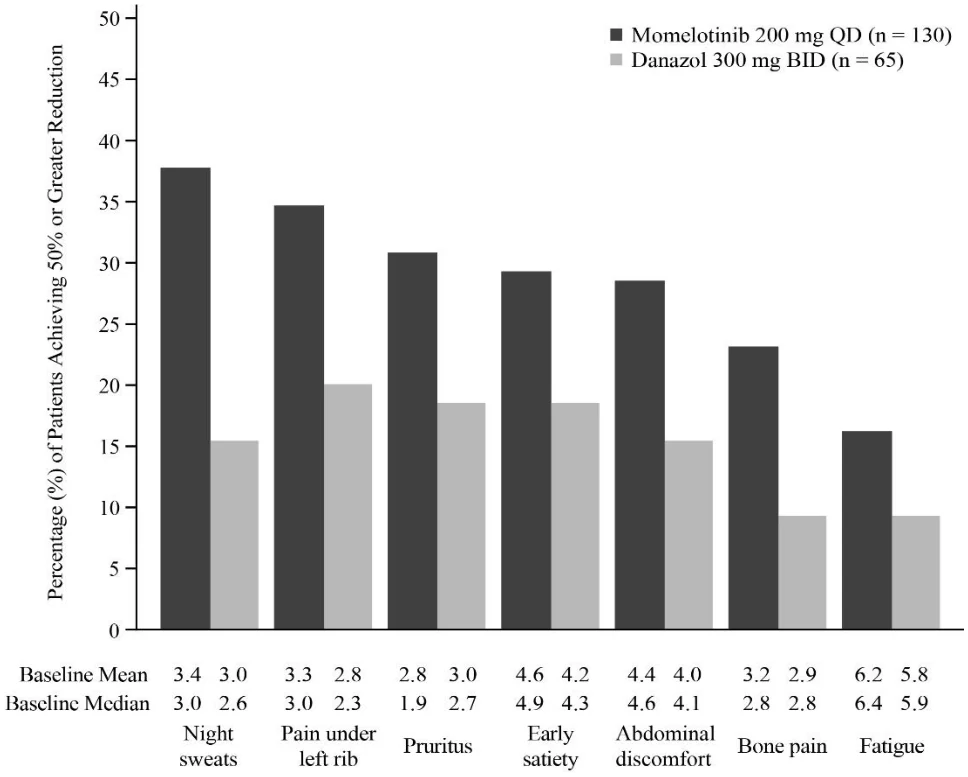
QD = once daily; BID = twice a day
a Thirty-six (27.7%) subjects treated with OJJAARA and 27 (41.5%) subjects treated with danazol discontinued treatment prior to Week 24.
An improvement was observed for cancer-related fatigue, as measured by the EORTC QLQ-C30 v3.0 fatigue subscale, for patients treated with OJJAARA compared with danazol. At Week 24, the mean change from baseline for cancer-related fatigue showed a reduction of 14.2 points for OJJAARA compared with 3.8 points for danazol. At Week 48, the majority of patients receiving OJJAARA who achieved ≥ 50% reduction from baseline MFSAF TSS at Week 24, maintained their response. The majority of patients receiving OJJAARA who achieved TI at Week 24 maintained TI at Week 48.
SIMPLIFY-1 (JAK inhibitor naïve)
Summary of trial design and patient demographics for SIMPLIFY-1.
Table 10 – Summary of trial design and patient demographics for SIMPLIFY-1
| Study # | Study design | Dosage, route of administration and duration | Study subjects (n) | Mean age (Range) | Sex |
| SIMPLIFY-1 (NCT01969838) | Phase 3 double-blind, 1:1 randomized, active controlled | OJJAARA 200 mg once daily orally for 24 weeks Ruxolitinib adjusted dose twice daily orally for 24 weeks | OJJAARA: 215 (Hgb < 10 g/dL: 86) Ruxolitinib: 217 (Hgb < 10 g/dL: 95) | OJJAARA 65.0 years (range 28 to 85 years) Ruxolitinib 64.4 years (range 25 to 86 years) | OJJAARA Male: 57.7% Female: 42.3% Ruxolitinib: Male: 55.3% Female: 44.7% |
SIMPLIFY-1 Trial Design and Baseline Characteristics
SIMPLIFY-1 was a double-blind, randomized, active-controlled study in 432 patients with MF who had not previously received a JAK inhibitor. Eligible patients were required to have an enlarged spleen at baseline, minimum baseline platelet count of 50 × 109/L and acceptable laboratory assessments 2 weeks prior to the first dose of study drug. Patients with active uncontrolled infection, or previously treated with JAK inhibitors were excluded from the study. Patients were treated with OJJAARA 200 mg once daily or ruxolitinib adjusted dose twice daily for 24 weeks. Patients were eligible to switch to open-label OJJAARA after 24 weeks (without tapering of the JAK inhibitor received during the randomization period). Post-hoc analyses were conducted in a subgroup of 181 patients with anemia (Hgb < 10g/dL). The baseline characteristics and efficacy results are provided for this subgroup.
In the overall population, the primary efficacy endpoint was percentage of patients with spleen volume response (reduction by 35% or greater) at week 24. Secondary endpoints included modified Myeloproliferative Neoplasm Symptom Assessment Form (MPN-SAF) TSS response rate at week 24 (defined as the percentage of patients with TSS reduction of 50% or greater from baseline to week 24) and transfusion independence at week 24 (defined as no transfusions and all Hgb values ≥8 g/dL in the 12 weeks prior to week 24).
Patient TSS response was measured by the modified MPN-SAF v2.0 diary (mean MPN-SAF TSS 19 at baseline). The inactivity item was excluded from the TSS calculation.
In the anemic subgroup, the median age was 68 years (range 25 to 86 years) with 67% of patients 65 years and older. Eighty-one percent of patients were white and 59% of patients were male. Sixty-three percent of patients had primary MF, 13% had post-PV MF, and 24% had post-ET MF. Four percent (4%) of patients had intermediate-1 risk, 25% had intermediate-2 risk, and 71% had high-risk disease, determined by the International Prognostic Scoring System (IPSS). In this study, 42% of patients had moderate to severe anemia (defined as baseline Hgb values <10 g/dL). Within the 8 weeks prior to enrollment, 55% of patients had red blood cell transfusions. At baseline, 29% and 44% of patients treated with OJJAARA or ruxolitinib, respectively, were transfusion independent (no transfusions and all hemoglobin values ≥8 g/dL in the 12 weeks prior to dosing). The baseline median Hgb measurement was 8.8 g/dL (no transfusions and all hemoglobin values ≥8 g/dL in the 12 weeks prior to dosing) and the median platelet count was 193 × 109/L (range 54 × 109/L to 2,865 × 109/L). At baseline, the median palpable spleen length below the left costal margin was 12 cm; the median spleen volume at baseline (measured by MRI or CT) was 1,843 cm3 (range 352 cm3 to 9,022 cm3). The baseline characteristics of the overall population were similar to the anemic subgroup, with the exception of anemia severity and transfusion requirements.
SIMPLIFY-1 Study Results
SIMPLIFY-1 met the prespecified primary endpoint of noninferiority of OJJAARA compared to ruxolitinib for spleen volume response (reduction by 35% or greater) (Table 11). Post-hoc analysis of spleen volume response in the subgroup of patients with anemia (Hgb < 10 g/dL) shows a similar trend. In this subgroup, a numerically lower percent of patients treated with OJJAARA (25%) achieved a TSS reduction of 50% or greater at Week 24 compared with ruxolitinib (36%). In the overall population, at Week 48 the majority of patients receiving OJJAARA, regardless of original treatment randomization, retained the splenic response (≥ 35% reduction). In the anemic subgroup, a numerically higher percent of patients treated with OJJAARA (47%) achieved or maintained transfusion independence than patients treated with ruxolitinib (27%) at Week 24. For patients randomized to momelotinib in the double-blind phase, including those who remained on momelotinib during the open-label phase, 81% of patients were transfusion independent by Week 48. In the anemic subgroup, 65% of patients achieved or maintained transfusion independence by Week 48.
Table 11 – Percent of Patients Achieving 35% or greater Spleen Volume Reduction from Baseline at Week 24 in SIMPLIFY-1
| Hemoglobin <10 g/dL Subgroup | Overall ITT Population | |||||||||||
|---|---|---|---|---|---|---|---|---|---|---|---|---|
OJJAARA (n = 86) | Ruxolitinib (n = 95) | OJJAARA (n = 215) | Ruxolitinib (n = 217) | |||||||||
Patients with Spleen Volume Reduction by 35% or More, n (%) (95% CI) | 27 (31) (22, 42) | 31 (33) (23, 43) | 57 (27) (21, 33) | 64 (30) (24, 36) | ||||||||
| Noninferiority proportion difference, % (95% CI) | 13 (2, 25)a | 9 (2, 16)a | ||||||||||
| p-value | NA | 0.014 | ||||||||||
a Delta = p(MMB) – 0.60 × p(RUX), where p(MMB) was the proportion with splenic response in the MMB group and p(RUX) was the proportion with splenic response in the RUX group
Figure 2 – Percent Change from Baseline in Spleen Volume for Each Patient in the Hgb < 10 g/dL subgroup, at Week 24 in SIMPLIFY-1a,b
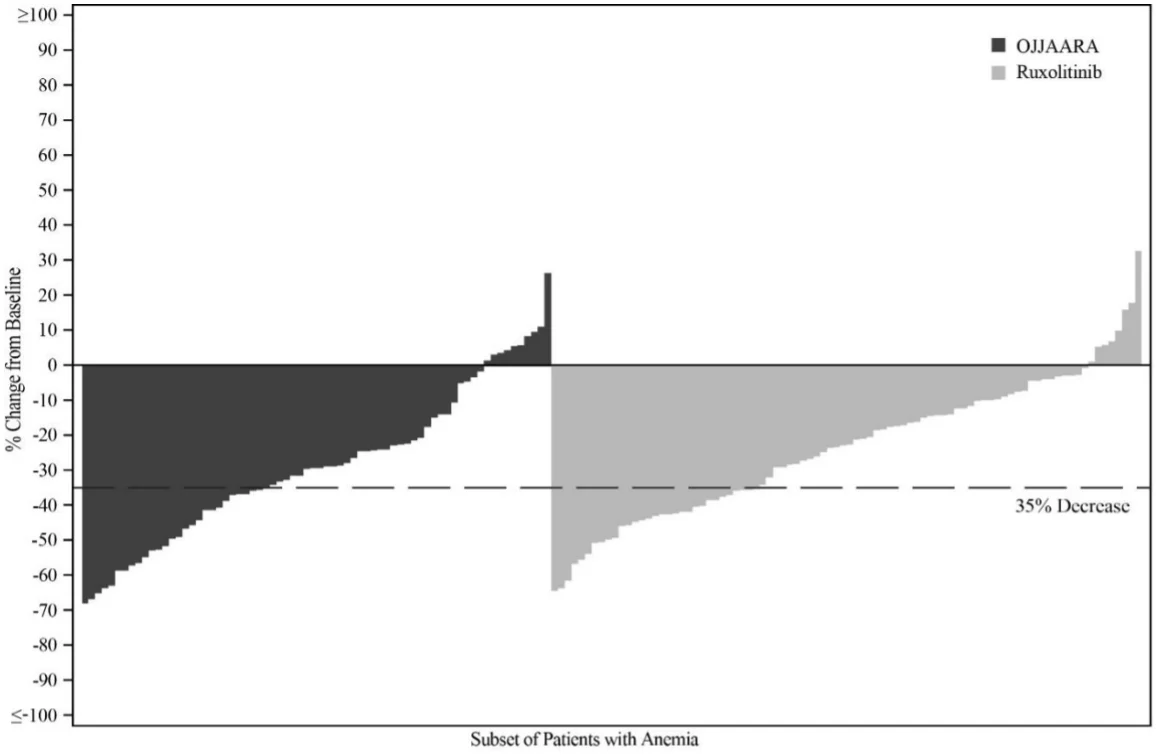
a Subset of patients with anemia (Hgb <10g/dL) at baseline; b Missing data rates in OJJAARA and ruxolitinib arms were 19% and 8%.
15. Microbiology
No microbiological information is required for this drug product.
16. Non-Clinical Toxicology
General Toxicology:
Toxicologic findings in repeat-dose rat (up to 26 weeks) and dog (up to 39 weeks) studies included reduced red cell mass as well as lower white blood cell count correlated with dose related cellular depletion in the bone marrow (femur and sternum) and with lymphoid depletion in the spleen, lymph node, thymus, and/or gut-associated lymphoid tissue. Recovery from the cellular and lymphoid depletion was noted but incomplete upon cessation of dosing. In the 26-week rat and 39-week dog studies, the exposures at the no observed adverse effect level (NOAEL) in rats at 5 mg/kg/day and dogs at 20 mg/kg/day are approximately 15-times (rats) and 1.4-times (dogs) the exposure at the recommended dose of 200 mg daily.
Non reversible cataracts (unilateral or bilateral) were observed after 39 weeks during ophthalmoscopic examination in 5 dogs at the high momelotinib dose of 50 mg/kg/day (exposure 2.8-times the human recommended dose of 200 mg daily) but were not identified in sections of the eye during histopathologic examination.
Oral administration of momelotinib at doses up to 250 mg/kg in rats had no effect on assessed neurological and behavioural parameters, and no notable effect on respiratory parameters. Momelotinib was a weak inhibitor of hERG channel current with an IC50 of >10 µM. Momelotinib affected cardiovascular parameters in dogs administered 100 mg/kg, which is approximately 4-fold above the estimated free drug Cmax in humans receiving the recommended dose of 200 mg daily.
No differences in mean plasma thiamine or thiamine diphosphate levels were observed in the 39-week study in dogs.
Carcinogenicity:
The carcinogenicity potential of momelotinib was assessed in rasH2 transgenic mice and Sprague-Dawley rats. There was no evidence of tumorigenicity in male or female mice that received momelotinib doses up to 100 mg/kg/day for 26 weeks. In a 2-year oral carcinogenicity study in Sprague-Dawley rats, momelotinib caused benign Leydig cell tumors at a dose of 15 mg/kg/day (exposure 17-times the maximum human recommended dose of 200 mg daily based on combined momelotinib and M21 [a major human metabolite] AUC). The increase in Leydig cell adenomas was considered related to a rat-specific phenomenon (i.e., prolactin-dependent Leydig cell tumorigenesis).
Genotoxicity:
Momelotinib was not mutagenic in a bacterial reverse mutation assay, or clastogenic in an in vitro chromosomal aberration assay with human peripheral blood lymphocytes or in vivo in a rat bone marrow micronucleus assay.
Reproductive and Developmental Toxicology:
Fertility
In fertility studies, momelotinib was administered orally for at least 70 days (males) and 14 days (females) prior to cohabitation and up to the implantation day (gestation Day 7) at doses of 5, 25, and 68 mg/kg/day to male and female rats.
In males, momelotinib reduced sperm concentration and motility and reduced testes and seminal vesicle weight at 25 mg/kg/day or greater (exposures 13-times the human recommended dose of 200 mg daily based on combined momelotinib and M21 [a major human metabolite] AUC) leading to reduced fertility at 68 mg/kg/day. In females, momelotinib reduced ovarian function (reproductive cycles and ovulation) at 68 mg/kg/day and decreased the number of pregnant females and increased pre- and post-implantation loss with most pregnant rats having total litter loss at 25 mg/kg/day or greater. Exposures at the no observed adverse effect level (NOAEL) in male and female rats at 5 mg/kg/day are approximately 3-times the exposure at the recommended dose of 200 mg daily (based on combined momelotinib and M21 AUC).
Pregnancy
In animal reproduction studies, oral administration of momelotinib at 2, 6 or 12 mg/kg/day to pregnant rats during the period of organogenesis (Gestation Day 6 to 17) was associated with embryo-fetal toxicity (embryonic death, soft tissue anomalies, skeletal variations, and lower mean fetal body weights) at 12 mg/kg/day (in the presence of maternal toxicity). Skeletal variations were observed at 6 mg/kg/day at exposures 3.5-fold the exposure at the human recommended dose of 200 mg daily based on combined momelotinib and M21 AUC. No development toxicity was observed at 2 mg/kg/day at exposures equivalent to the human recommended dose of 200 mg daily (based on combined momelotinib and M21 AUC).
In pregnant rabbits, oral administration of momelotinib at 7.5, 30 or 60 mg/kg/day during the period of organogenesis (Gestation Day 7 to 20) was associated with maternal toxicity and embryo-fetal toxicity (decreased fetal weight, delayed bone ossification, and abortion) at 60 mg/kg/day at less than the exposure equivalent to the recommended dose of 200 mg daily (based on combined momelotinib and M21 AUC). No developmental toxicity was observed at 30 mg/kg/day at exposures less than the recommended dose of 200 mg daily (based on combined momelotinib and M21 AUC).
In a pre- and post-natal development study, pregnant rats received oral momelotinib at 2, 6 or 12 mg/kg/day from organogenesis to end of lactation (Gestation Day 6 to lactation Day 20). Evidence of maternal toxicity, embryo-lethality, and decreased pup body weights were observed at 6 and 12 mg/kg/day. Pup survival was significantly reduced at 12 mg/kg/day from birth to Day 4 of lactation and therefore considered a direct effect of momelotinib via exposure through the milk. Momelotinib exposure in dams at 6 and 12 mg/kg/day were approximately 2 times the exposure at the recommended dose of 200 mg daily (based on combined momelotinib and M21 AUC). Exposure at the no observed adverse effect level in dams at 2 mg/kg/day was less than the exposure at the recommended dose of 200 mg daily (based on combined momelotinib and M21 AUC).