


Product Monograph - Jamp Prasugrel
SUMMARY PRODUCT INFORMATION
| Route of Administration | Dosage Form / Strength | All Nonmedicinal Ingredients |
| Oral | Tablet, 10 mg | Mannitol, microcrystalline cellulose, hydroxypropyl cellulose, sodium stearyl fumarate, hydroxypropyl cellulose hypromellose, triacetin, titanium dioxide, red iron oxide and yellow iron oxide. |
INDICATIONS AND CLINICAL USE
JAMP Prasugrel (prasugrel hydrochloride), co-administered with acetylsalicylic acid (ASA), is indicated for the early and long-term secondary prevention of atherothrombotic events in patients with acute coronary syndrome (ACS) as follows:
unstable angina (UA) or non-ST-segment elevation myocardial infarction (NSTEMI) managed with percutaneous coronary intervention (PCI)
ST-segment elevation myocardial infarction (STEMI) managed with primary or delayed PCI.
Geriatrics (≥ 75 years of age):
JAMP Prasugrel is not recommended in patients ≥75 years of age because of the increased risk of fatal and intracranial bleeding (see WARNINGS AND PRECAUTIONS, ADVERSE REACTIONS and ACTION AND CLINICAL PHARMACOLOGY).
Pediatrics (< 18 years of age):
The safety and efficacy of Prasugrel Tablets in pediatric patients (<18 years of age) have not been established and its use in this patient population is not indicated (see WARNINGS AND PRECAUTIONS and ACTION AND CLINICAL PHARMACOLOGY).
CONTRAINDICATIONS
JAMP Prasugrel (prasugrel hydrochloride) is contraindicated in:
patients with a known history of transient ischemic attack (TIA) or stroke (see ADVERSE REACTIONS and CLINICAL TRIALS)
patients with active pathological bleeding, such as gastrointestinal bleeding or intracranial hemorrhage
patients with severe hepatic impairment (Child-Pugh Class C) (see DOSAGE AND ADMINISTRATION and ACTION AND CLINICAL PHARMACOLOGY)
patients who are hypersensitive to this drug or to any ingredient in the formulation or component of the container (see DOSAGE FORMS, COMPOSITION AND PACKAGING)
WARNINGS AND PRECAUTIONS
Risk of Bleeding JAMP Prasugrel increases the risk of bleeding.
|
Bleeding Risk
Timing of Loading Dose in UA/NSTEMI
In a clinical trial of NSTEMI patients (the ACCOAST study), Prasugrel Tablets loading dose (30 mg) given 2 to 48 hours prior to diagnostic coronary angiography followed by 30 mg at the time of PCI increased the risk of major and minor peri-procedural bleeding compared with prasugrel loading dose (60 mg) at the time of PCI (see ADVERSE REACTIONS and DOSAGE AND ADMINISTRATION).
In the clinical trial that established the efficacy and safety of Prasugrel Tablets (TRITON-TIMI 38), Prasugrel Tablets and the control drug were not administered to UA/NSTEMI patients until coronary anatomy was established.
Use JAMP Prasugrel Cautiously in Patients:
with a propensity to bleed (e.g. due to recent trauma, recent surgery, recent or recurrent gastrointestinal (GI) bleeding, active peptic ulcer disease, moderate hepatic impairment, or renal impairment) (see ADVERSE REACTIONS and ACTION AND CLINICAL PHARMACOLOGY)
with concomitant administration of medications that may increase the risk of bleeding, including oral anticoagulants, non steroidal anti-inflammatory drugs (NSAIDs), and fibrinolytics (see ACTION AND CLINICAL PHARMACOLOGY).
Elective Surgery
If a patient is to undergo elective surgery and an antiplatelet effect is not desired, JAMP Prasugrel should be discontinued at least 7 days prior to surgery (see ACTION AND CLINICAL PHARMACOLOGY and CLINICAL TRIALS).
Reversal of Effect
For patients with active bleeding for whom reversal of the pharmacological effects of JAMP Prasugrel is required, platelet transfusion may be appropriate.
Discontinuation of JAMP Prasugrel
In patients with ACS who are managed with PCI, premature discontinuation of any antiplatelet medication, including JAMP Prasugrel, could result in an increased risk of thrombosis, myocardial infarction, or death due to the patient’s underlying disease. Patients who require premature discontinuation of JAMP Prasugrel (e.g. secondary to active bleeding) should be monitored for atherothrombotic events. Once the patient is stabilized, at the discretion of the patient’s treating physician, JAMP Prasugrel should be restarted as soon as possible.
Gastrointestinal
JAMP Prasugrel should be used with caution in patients with recent or recurrent gastrointestinal bleeding.
Hematologic
Thrombotic Thrombocytopenic Purpura (TTP) has been reported with the use of Prasugrel Tablets. TTP is a serious condition and requires prompt treatment.
Hepatic
No dosage adjustment is necessary in subjects with mild to moderate hepatic
impairment (Child-Pugh Class A and B). The pharmacokinetics and pharmacodynamics of Prasugrel Tablets in patients with severe hepatic disease (Child-Pugh Class C) have not been studied. JAMP Prasugrel should not be used in this population due to the potential risk of bleeding (see CONTRAINDICATIONS and ACTION AND CLINICAL PHARMACOLOGY).
Hypersensitivity Including Angioedema
Hypersensitivity including angioedema has been reported in patients receiving Prasugrel Tablets, including patients with a history of hypersensitivity reaction to other thienopyridines (see ADVERSE REACTIONS – Post-Market Adverse Drug Reactions).
Neoplasms
During TRITON-TIMI 38, newly diagnosed malignancies were reported in 1.6% and 1.2% of patients treated with Prasugrel Tablets and clopidogrel, respectively. The sites contributing to the differences were primarily colon and lung. In a Phase 3 clinical study of acute coronary syndrome patients with unstable angina/non-ST segment elevation not undergoing percutaneous coronary intervention, data for malignancies were prospectively collected, and independently adjudicated. Newly-diagnosed malignancies were reported in 1.8% and 1.7% of patients treated with Prasugrel Tablets and clopidogrel, respectively. The site of malignancies was balanced between treatment groups except for colorectal malignancies. The rates of colorectal malignancies were 0.3% Prasugrel Tablets, 0.1% clopidogrel and most were detected during investigation of GI bleeding or anemia. It is unclear if these observations are causally-related, are the result of increased detection due to bleeding, or random occurrences. The non-clinical studies were negative for carcinogenicity and tumour stimulation (see TOXICOLOGY, Carcinogenicity). Bleeding in patients taking antiplatelet therapy warrants diagnostic investigation since it may unmask a previously unsuspected lesion (e.g. tumour, ulcer).
Peri-operative Considerations
If a patient is to undergo elective surgery and an antiplatelet effect is not desired, JAMP Prasugrel should be discontinued at least 7 days prior to surgery (see ACTION AND CLINICAL PHARMACOLOGY and CLINICAL TRIALS).
Renal
No dosage adjustment is necessary for patients with renal impairment, including patients with end-stage renal disease. Patients with renal impairment could be at increased risk for bleeding when administered a thienopyridine (see ACTION AND CLINICAL PHARMACOLOGY).
Special Populations
Pregnant Women: There are no adequate and well-controlled studies in pregnant women.
Because animal reproduction studies are not always predictive of a human response, JAMP Prasugrel should be used during pregnancy only if the potential benefit to the mother justifies the potential risk to the fetus.
In embryo fetal developmental toxicology studies in rats and rabbits at doses up to
300 mg/kg/day (>240 times the recommended daily human maintenance dose on a mg/m2 basis), there was no evidence of malformations.
Non Teratogenic Effects: At doses causing effects on maternal body weight and/or food consumption in rats and rabbits (300 mg/kg/day), a slight decrease in offspring body weight (relative to controls) was observed.
In prenatal and postnatal rat studies, maternal treatment with prasugrel had no effect on fertility of male and female offspring at oral doses up to 300 mg/kg per day.
Nursing Women: There are no clinical studies in lactating women. A study in rats has shown that prasugrel metabolites are excreted in the animals’ milk. It is not known whether this drug is excreted in human milk. Because many drugs are excreted in human milk, prasugrel administration during breastfeeding is generally not recommended and should only be used if the potential benefit to the mother justifies the potential risk to the nursing infant.
Pediatrics (< 18 of age): Safety and effectiveness in pediatric patients have not been established.
Geriatrics (≥75 years of age): Of the total number of Prasugrel Tablets-treated patients in the TRITON TIMI-38 study, 13.2% were ≥75 years of age. Individuals ≥75 years of age had an increased risk of bleeding (including fatal and intracranial bleeding). Due to an increase in exposure to the active metabolite of prasugrel and possibly a greater sensitivity to bleeding in patients ≥75 years of age compared to patients <75 years of age, the use of JAMP Prasugrel in this population is not recommended (see ADVERSE REACTIONS and ACTION AND CLINICAL PHARMACOLOGY).
Body weight: Of the total number of Prasugrel Tablets patients in the TRITON study, 4.6% had a body weight of <60 kg (132 pounds). Individuals with a body weight of <60 kg had an increased risk of bleeding and an increased exposure to the active metabolite of prasugrel. For patients <60 kg, JAMP Prasugrel is not recommended (see ADVERSE REACTIONS and ACTION AND CLINICAL PHARMACOLOGY).
Ethnicity: No dose adjustment is necessary based on ethnicity alone (see ACTION AND CLINICAL PHARMACOLOGY).
ADVERSE REACTIONS
Adverse Drug Reaction Overview
In the All ACS population of Study TAAL, the percent of Treatment Emergent Adverse Events (TEAEs) (80.34% versus 80.02%), Serious Adverse Events (SAEs) (24.70% versus 24.26%), and prespecified clinically significant TEAEs (13.40% versus 12.25%) were similar for the Prasugrel Tablets- and clopidogrel-treated groups, respectively. Similar results were seen between the UA/NSTEMI and the STEMI populations for both treatment groups.
The 3 most frequently reported common (occurring at an incidence of 1%) hemorrhagic TEAEs (preferred terms) in both treatment groups were contusion, hematoma, and epistaxis. Similar results were seen in the UA/NSTEMI and STEMI populations.
A total of 5213 (77.33%) Prasugrel Tablets - and 5229 (77.86%) clopidogrel-treated subjects in TAAL experienced ≥1 non-hemorrhagic TEAE. In the All ACS population, the common non-hemorrhagic TEAEs of pyrexia and a greater tendency to bruise (preferred terms), coronary revascularization, fatigue, MI, musculoskeletal pain, constipation, and cardiac failure (preferred terms) were reported. The majority of non-hemorrhagic TEAEs were mild to moderate in severity, and the incidence was comparable between subjects treated with Prasugrel Tablets and those treated with clopidogrel.
Gastrointestinal hemorrhage (preferred term) was the only commonly reported hemorrhagic SAE for either Prasugrel Tablets- or clopidogrel-treated subjects in the All ACS UA/NSTEMI, and STEMI populations.
The non-hemorrhagic SAE of non-cardiac chest pain, coronary artery restenosis, chest pain, and angina pectoris were commonly reported by both Prasugrel Tablets- and clopidogrel-treated subjects in the All ACS population.
Drug Discontinuation: The rate of study drug discontinuation due to adverse events was 7.2% for Prasugrel Tablets and 6.3% for clopidogrel. Of these, bleeding was the most common adverse reaction for both drugs leading to study drug discontinuation (2.5% for Prasugrel Tablets and 1.4% for clopidogrel).
Clinical Trial Adverse Drug Reactions
Because clinical trials are conducted under very specific conditions the adverse reaction rates observed in the clinical trials may not reflect the rates observed in practice and should not be compared to the rates in the clinical trials of another drug. Adverse drug reaction information from clinical trials is useful for identifying drug-related adverse events and for approximating rates.
TRITON TIMI 38 Trial (TAAL)
During clinical development, 7681 patients with atherosclerosis with or without ACS who did or did not undergo PCI were exposed to Prasugrel Tablets in 5 studies using clopidogrel as the comparator.
Safety in patients with ACS undergoing PCI was evaluated in a clopidogrel-controlled study, TRITON, in which 6741 patients were treated with Prasugrel Tablets (60-mg loading dose and 10 mg once daily maintenance dose) for a median of 14.5 months (5802 patients were treated for over 6 months; 4136 patients were treated for more than 1 year). The population was 27 to 96 years of age, 25% female, and 92% Caucasian. The TRITON protocol provided for all patients to receive aspirin. The dose of clopidogrel in this study was 300-mg loading dose and 75 mg once daily maintenance dose.
Bleeding
Non-Coronary Artery Bypass Graft (CABG) Related Bleeding:
In TRITON, the frequency of patients experiencing a non-CABG-related bleeding event is shown in Table 1. The most common site of spontaneous non-CABG-related Thrombolysis in Myocardial Infarction (TIMI) Major or Minor bleeding was the GI tract (1.7% rate with Prasugrel Tablets and 1.3% rate with clopidogrel); the most frequent site of provoked bleeding was the arterial puncture site (1.3% rate with Prasugrel Tablets and 1.2% with clopidogrel).
Table 1: TRITON Incidence of Non-CABG Related Bleedinga (% Patients) for All ACS,
UA/NSTEMI and STEMI
| Event | All ACS | UA/NSTE | MI | STEMI | ||||||||||||||
Prasugrel Tabletsb +ASA (N=6741) | Clopidogrelb +ASA (N=6716) | Prasugrel Tabletsb +ASA (N=5001) | Clopidogrelb +ASA (N=4980) | Prasugrel Tabletsb +ASA (N=1740) | Clopidogrelb +ASA (N=1736) | |||||||||||||
| TIMI Major bleedingc | 2.2 | 1.7 | 2.2 | 1.6 | 2.2 | 2.0 | ||||||||||||
| Life-threateningd | 1.3 | 0.8 | 1.3 | 0.8 | 1.2 | 1.0 | ||||||||||||
| Fatal | 0.3 | 0.1 | 0.3 | 0.1 | 0.4 | 0.1 | ||||||||||||
| Symptomatic ICHe | 0.3 | 0.3 | 0.3 | 0.3 | 0.2 | 0.2 | ||||||||||||
| Requiring inotropes | 0.3 | 0.1 | 0.3 | 0.1 | 0.3 | 0.2 | ||||||||||||
| Requiring surgical intervention | 0.3 | 0.3 | 0.3 | 0.3 | 0.1 | 0.2 | ||||||||||||
| Requiring transfusion (≥4 units) | 0.7 | 0.5 | 0.6 | 0.3 | 0.8 | 0.8 | ||||||||||||
| TIMI Minor bleeding f | 2.4 | 1.9 | 2.3 | 1.6 | 2.7 | 2.6 | ||||||||||||
a Centrally adjudicated events defined by the TIMI Study Group criteria.
b Other standard therapies were used as appropriate. The TRITON protocol provided for all patients to receive aspirin.
c Any intracranial hemorrhage or any clinically overt bleeding associated with a fall in hemoglobin >5 g/dL.
d Life-threatening is a subset of TIMI Major bleeding and includes the types indented below. Patients may be counted in more than one row.
e ICH=intracranial hemorrhage.
f Clinically overt bleeding associated with a fall in hemoglobin of >3 g/dL but <5 g/dL.
Patients <60 kg (132 pounds):
In TRITON, non-CABG-related TIMI Major or Minor bleeding rates for patients in two weight groups were as follows (see DOSAGE AND ADMINISTRATION and WARNINGS AND PRECAUTIONS):
| Weight | Prasugrel Tablets | Clopidogrel |
| <60 kg (N=664) | 10.1% (0% fatal) | 6.5% (0.3% fatal) |
| ≥60 kg (N=12672) | 4.2% (0.3% fatal) | 3.3% (0.1% fatal) |
Geriatrics (≥75 years):
In TRITON, non-CABG-related TIMI Major or Minor bleeding rates for patients in two age groups were as follows (see DOSAGE AND ADMINISTRATION and WARNINGS AND PRECAUTIONS):
| Age | Prasugrel Tablets | Clopidogrel |
| ≥75 years (N=1785) | 9.0% (1.0% fatal) | 6.9% (0.1% fatal) |
| <75 years (N=11672) | 3.8% (0.2% fatal) | 2.9% (0.1% fatal) |
CABG-Related Bleeding:
In TRITON, 437 patients underwent CABG during the course of the study. Of those patients, the rate of CABG-related TIMI Major or Minor bleeding was 14.1% for the Prasugrel Tablets group and 4.5% in the clopidogrel group. The higher risk for bleeding events in subjects treated with Prasugrel Tablets persisted up to 7 days from the most recent dose of study drug.
Bleeding Reported as Adverse Reactions:
Table 2 shows the incidence of hemorrhagic adverse reactions.
Table 2: Hemorrhagic Adverse Reactions with an Incidence in the Prasugrel Tablets Group of ≥1% in TRITON
| MedDRA Preferred Term | Prasugrel | Clopidogrel |
| Contusion | 6.9 | 3.9 |
| Hematoma | 6.5 | 5.6 |
| Epistaxis | 6.2 | 3.3 |
| Ecchymosis | 2.2 | 1.7 |
| Vessel Puncture Site Hematoma | 2.0 | 1.6 |
| Puncture Site Hemorrhage | 1.8 | 1.3 |
| Hematuria | 1.5 | 1.3 |
| Gastrointestinal Hemorrhagea | 1.5 | 1.0 |
a Approximately 50% of patients experiencing GI bleeding had GI pathology.
ACCOAST (TADF)
Bleeding Risk Associated with Timing of Loading Dose in NSTEMI:
In another clinical trial in NSTEMI patients managed with PCI, patients given Prasugrel Tablets (a 30 mg loading dose) 2 to 48 hours (median 4.3 hours) prior to coronary angiography followed by 30 mg at the time of PCI had an increased risk of CABG or non-CABG TIMI major bleeding, occurring in 2.6 percent of pre-treated patients compared with 1.4 percent of non-pre-treated patients (HR: 1.90; CI, 1.19-3.02; P=0.006) with no additional benefit compared with patients receiving a Prasugrel Tablets loading dose of 60 mg at the time of PCI (see WARNINGS AND PRECAUTIONS – Bleeding Risk and DOSAGE AND ADMINISTRATION).
Table 3: ACCOAST Incidence of Non-CABG Related Bleeding through 7 days
| Adverse Reaction | Prasugrel Prior to Coronary Angiographya (N=2037) % | Prasugrel at time of PCIa (N=1996) % |
| TIMI Majorb or Minorc bleeding | 3.0 | 1.0 |
| TIMI Major bleedingb | 1.3 | 0.5 |
| Life-threateningd | 0.8 | 0.2 |
| Fatal | 0.1 | 0.0 |
| Symptomatic ICHe | 0.0 | 0.0 |
| Requiring inotropes | 0.3 | 0.2 |
| Requiring surgical intervention | 0.4 | 0.1 |
| Requiring transfusion (≥4 units) | 0.3 | 0.1 |
| TIMI Minor bleedingc | 1.7 | 0.6 |
a Other standard therapies were used as appropriate. The clinical study protocol provided for all patients to receive aspirin and a daily maintenance dose of prasugrel.
b Any intracranial hemorrhage or any clinically overt bleeding associated with a fall in hemoglobin >5 g/dL.
c Clinically overt bleeding associated with a fall in hemoglobin of >3 g/dL but <5 g/dL
d Life-threatening is a subset of TIMI Major bleeding and includes the types indented below.
e ICH=intracranial hemorrhage.
Patients may be counted in more than one row.
Other Adverse Reactions
In TRITON, non-hemorrhagic adverse drug reactions for Prasugrel Tablets and clopidogrel, respectively, are as follows: rash (2.8%, 2.4%), anemia (2.2%, 2.0%), and severe
thrombocytopenia (0.06%, 0.04%).
In TRITON, in patients with or without a history of TIA or stroke, the incidence of stroke was as follows:
| History of TIA or stroke | Prasugrel Tablets | Clopidogrel |
| Yes (N=518) | 6.5% (2.3% ICH*) | 1.2% (0% ICH*) |
| No (N=13090) | 0.9% ( 0.2% ICH*) | 1.0% (0.3% ICH*) |
*ICH=Intracranial hemorrhage
Prasugrel Tablets-treated patients with a history of TIA or a history of ischemic stroke more than
3 months prior to randomization had a higher rate of ischemic or hemorrhagic stroke compared to clopidogrel-treated patients. Patients with a history of ischemic stroke within 3 months of randomization or hemorrhagic stroke were excluded from TRITON. Prasugrel Tablets has not been studied without aspirin (ASA) in patients with prior history of TIA or stroke (see CLINICAL TRIALS).
Neoplasms
During TRITON-TIMI 38, newly diagnosed malignancies were reported in 1.6% and 1.2% of patients treated with Prasugrel Tablets and clopidogrel, respectively. The sites contributing to the differences were primarily colon and lung. In a Phase 3 clinical study of acute coronary syndrome patients with unstable angina/non-ST segment elevation not undergoing percutaneous coronary intervention, data for malignancies were prospectively collected, and independently adjudicated. Newly-diagnosed malignancies were reported in 1.8% and 1.7% of patients treated with Prasugrel Tablets and clopidogrel, respectively. The site of malignancies was balanced between treatment groups except for colorectal malignancies. The rates of colorectal malignancies were 0.3% Prasugrel Tablets, 0.1% clopidogrel and most were detected during investigation of GI bleeding or anemia. It is unclear if these observations are causally-related, are the result of increased detection due to bleeding, or random occurrences. The non-clinical studies were negative for carcinogenicity and tumour stimulation (see TOXICOLOGY, Carcinogenicity). Bleeding in patients taking antiplatelet therapy warrants diagnostic investigation since it may unmask a previously unsuspected lesion (e.g. tumour, ulcer).
Less Common Clinical Trial Adverse Drug Reactions (<1%)
Additional important hemorrhagic reactions in TRITON for Prasugrel Tablets and clopidogrel, respectively, are as follows: rectal hemorrhage (0.6%, 0.3%), hemoptysis (0.6%, 0.5%), gingival bleeding (0.5%, 0.6%), hematochezia (0.5%, 0.4%), subcutaneous hematoma (0.5%, 0.2%), post- procedural hemorrhage (0.5%, 0.2%), retroperitoneal hemorrhage (0.3%, 0.2%), and eye hemorrhage (0.2%, 0.1%).
Post-Market Adverse Drug Reactions
The following list of adverse drug reactions is based on post-marketing spontaneous reports, and corresponding reporting rates have been provided.
Blood and lymphatic system disorders:
Very rare: thrombotic thrombocytopenic purpura (TTP).
Immune System Disorders:
Rare: hypersensitivity including angioedema.
DRUG INTERACTIONS
Warfarin
Because of the potential for increased risk of bleeding, warfarin and JAMP Prasugrel should be coadministered with caution (see ACTION AND CLINICAL PHARMACOLOGY).
Nonsteroidal Anti-Inflammatory Drugs (NSAIDs)
Concomitant administration with chronic NSAIDs has not been studied. Because of the potential for increased risk of bleeding, chronic NSAIDs and JAMP Prasugrel should be coadministered with caution (see ACTION AND CLINICAL PHARMACOLOGY).
Other Concomitant Medications
JAMP Prasugrel can be concomitantly administered with drugs metabolized by cytochrome P450 enzymes (including statins) or with drugs that are inducers or inhibitors of cytochrome P450 enzymes (see ACTION AND CLINICAL PHARMACOLOGY).
Prasugrel Tablets can also be concomitantly administered with aspirin, heparin, digoxin, and drugs that elevate gastric pH, including proton pump inhibitors and H2 blockers (see ACTION AND CLINICAL PHARMACOLOGY).
Potential for other drugs to affect JAMP Prasugrel
Acetylsalicylic acid:
ASA (150 mg daily with an additional single 900 mg) did not alter Prasugrel Tablets-mediated inhibition of platelet aggregation (see CLINICAL TRIALS).
Heparin:
A single intravenous dose of unfractionated heparin (100 U/kg) did not significantly alter the Prasugrel Tablets-mediated inhibition of platelet aggregation. Likewise, Prasugrel Tablets did not significantly alter the effect of heparin on measures of coagulation.
Statins:
Atorvastatin (80 mg daily) did not alter the pharmacokinetics of Prasugrel Tablets and its inhibition of platelet aggregation. Therefore, statins that are substrates of CYP3A are not anticipated to have an effect on the pharmacokinetics of Prasugrel Tablets or its inhibition of platelet aggregation.
Drugs that elevate gastric pH:
Daily coadministration of ranitidine (an H2 blocker) or lansoprazole (a proton pump inhibitor) did not change the metabolite’s AUC and Tmax, but decreased the Cmax by 14% and 29%, respectively. In TRITON, Prasugrel Tablets was administered without regard to coadministration of a proton pump inhibitor (PPI) or H2 blocker with no significant effect on efficacy in Prasugrel Tablets patients.
Nonsteroidal Anti-Inflammatory Drugs (NSAIDs):
Concomitant administration with chronic NSAIDs has not been studied. Because of the potential for increased risk of bleeding, chronic NSAIDs and JAMP Prasugrel should be coadministered with caution (see WARNINGS AND PRECAUTIONS).
Inhibitors of CYP3A:
Ketoconazole (400 mg daily), a selective and potent inhibitor of CYP3A4, did not affect Prasugrel Tablets-mediated inhibition of platelet aggregation or the active metabolite’s AUC and Tmax, but decreased the Cmax by 34% to 46%. Therefore, CYP3A inhibitors such as verapamil, diltiazem, indinavir, ciprofloxacin, clarithromycin, and grapefruit juice are not anticipated to have a significant effect on the pharmacokinetics of the active metabolite.
Inducers of Cytochromes P450:
Rifampicin (600 mg daily), a potent inducer of CYP3A and CYP2B6, and an inducer of CYP2C9, CYP2C19, and CYP2C8, did not significantly change the pharmacokinetics of Prasugrel Tablets and its inhibition of platelet aggregation. Therefore, known CYP3A inducers such as rifampicin, carbamazepine, and other inducers of cytochromes P450 are not anticipated to have significant effect on the pharmacokinetics of the active metabolite.
Clopidogrel:
Following administration of 75 mg clopidogrel daily for 10 days, healthy subjects were placed on 10 mg daily of Prasugrel Tablets, with or without a 60-mg loading dose. Throughout the study, all subjects were concurrently taking 81 mg of aspirin once daily. Higher inhibition of platelet aggregation (p<0.001) was observed with Prasugrel Tablets with no increase in adverse reactions. Mean inhibition of platelet aggregation increased from 52% to 94% 1 hour after switching to the 60-mg loading dose of Prasugrel Tablets. After switching to 10 mg daily of Prasugrel Tablets without a loading dose, platelet aggregation increased gradually to the higher Prasugrel Tablets-mediated steady state inhibition (about 70%) in 4 to 5 days.
Potential for JAMP Prasugrel to Affect Other Drugs
In vitro metabolism studies demonstrate that prasugrel’s main circulating metabolites are not likely to cause clinically significant inhibition of CYP1A2, CYP2C9, CYP2C19, CYP2D6, or CYP3A, or induction of CYP1A2 or CYP3A.
Drugs Metabolized by CYP2C9 and 2C19:
Prasugrel Tablets did not inhibit CYP2C9 or CYP2C19, as it did not affect the pharmacokinetics of S-warfarin or R-warfarin. Because of the potential for increased risk of bleeding, warfarin and JAMP Prasugrel should be coadministered with caution (see WARNINGS AND PRECAUTION).
Drugs Metabolized by CYP2B6:
JAMP Prasugrel is a weak inhibitor of CYP2B6. In healthy subjects, Prasugrel Tablets decreased exposure to hydroxybupropion, a CYP2B6-mediated metabolite of bupropion, by 23%, which is not considered to be clinically significant. Prasugrel Tablets is not anticipated to have significant effect on the pharmacokinetics of drugs that are primarily metabolized by CYP2B6, such as halothane, cyclophosphamide, propofol, and nevirapine.
Effect on Digoxin:
Prasugrel Tablets has no clinically significant effect on the pharmacokinetics of digoxin. When Prasugrel Tablets was coadministered with digoxin, a substrate of P-glycoprotein transporter, the AUC of digoxin was not altered, while Cmax decreased by 17%.
Drug-Food Interactions
JAMP Prasugrel can be administered without regard to food (see ACTION AND CLINICAL PHARMACOLOGY).
Drug-Herb Interactions
Interactions with herbal products have not been established.
Drug-Laboratory Interactions
Interactions with laboratory tests have not been established.
DOSAGE AND ADMINISTRATION
Recommended Dose and Dosage Adjustment
JAMP Prasugrel should be initiated with a single 60-mg loading dose and then continued at a 10 mg once daily dose for long-term treatment. Patients taking JAMP Prasugrel should also take ASA (75 mg to 325 mg) daily.
Clinical trial data demonstrate the benefit of long-term treatment with Prasugrel Tablets co-administered with ASA, compared with clopidogrel co-administered with ASA.
JAMP Prasugrel may be administered with or without food (see ACTION AND CLINICAL PHARMACOLOGY and CLINICAL TRIALS).
Timing of Loading Dose in UA/NSTEMI Patients
In UA/NSTEMI patients, due to increased risk of bleeding, it is recommended that the loading dose of JAMP Prasugrel should generally be given at the time of the PCI (see WARNINGS AND PRECAUTIONS – Bleeding Risk and ADVERSE REACTIONS).
Missed Dose
If a scheduled daily dose of JAMP Prasugrel is missed, it should be taken as soon as possible. If the doses for an entire day are forgotten, resume taking JAMP Prasugrel at its usual dose the next day. Do not take two doses on the same day.
Discontinuation of JAMP Prasugrel
In patients with ACS who are managed with PCI, premature discontinuation of any antiplatelet medication, including JAMP Prasugrel, could result in an increased risk of thrombosis, myocardial infarction, or death due to the patient’s underlying disease. Patients who require premature discontinuation of JAMP Prasugrel (e.g. secondary to active bleeding) should be monitored for atherothrombotic events. Once the patient is stabilized, at the discretion of the patient’s treating physician, JAMP Prasugrel should be restarted as soon as possible.
If a patient is to undergo elective surgery and an antiplatelet effect is not desired, JAMP Prasugrel should be discontinued at least 7 days prior to surgery (see ACTION AND CLINICAL PHARMACOLOGY and CLINICAL TRIALS).
OVERDOSAGE
Signs and Symptoms
Overdose following JAMP Prasugrel administration may lead to prolonged bleeding time and subsequent bleeding complications. In rats, lethality was observed only after administration of the very high dose of 2000 mg/kg. Symptoms of acute toxicity in dogs included emesis, increased serum alkaline phosphatase, and hepatocellular atrophy. Symptoms of acute toxicity in rats included mydriasis, irregular respiration, decreased locomotor activity, ptosis, staggering gait, and lacrimation. Platelet inhibition by JAMP Prasugrel is rapid and irreversible, lasting for the life of the platelet, and is unlikely to be increased in the event of an overdose.
Treatment
No data are available on the reversal of the pharmacological effect of Prasugrel Tablets; however, based on biological plausibility, platelet transfusion and/or other blood products may be considered.
ACTION AND CLINICAL PHARMACOLOGY
Mechanism of Action
Prasugrel Tablets is an inhibitor of platelet activation and aggregation through the irreversible binding of its active metabolite to the P2Y12 class of ADP receptors on platelets. A variety of drugs that inhibit platelet function have been shown to decrease morbid events in people with established atherosclerotic disease. Since platelets participate in the initiation and/or evolution of thrombotic complications of atherosclerotic disease, inhibition of platelet function can result in the reduction of the rate of cardiovascular events such as death, myocardial infarction, or stroke.
Pharmacodynamics
Inhibition of ADP-induced platelet aggregation to 20 mcM or 5 mcM ADP (termed “platelet inhibition” in the following section) measured by light transmission aggregometry has been assessed in clinical pharmacology studies in healthy subjects and patients with stable atherosclerosis for both Prasugrel Tablets and clopidogrel used as active comparator with or without coadministration of aspirin. Following a 60-mg loading dose of Prasugrel Tablets, platelet inhibition occurred as early as 30 minutes and 15 minutes, respectively for 20 mcM and 5 mcM ADP (see Figure 1). This rapid onset of action is a result of the rapid biotransformation of Prasugrel Tablets to its active metabolite which is responsible for the inhibition of platelet aggregation.
Mean maximum platelet inhibition after a 60-mg loading dose of Prasugrel Tablets was 79% and 83%, respectively for 20 mcM and 5 mcM ADP, with ≥89% of all subjects achieving at least
50% inhibition of platelet aggregation by 1 hour for both ADP concentrations.
For management of a suspected drug overdose, contact your regional Poison Control Centre.
Mean steady state inhibition of platelet aggregation (IPA) was 69% and 74%, respectively for 20 mcM and 5 mcM ADP, and was achieved following 3 to 5 days of 10-mg maintenance dosing with a preceding loading dose of Prasugrel Tablets. Greater than 98% of subjects had ≥20% inhibition of platelet aggregation during maintenance dosing. The extent of inhibition of platelet aggregation is dependent on the dose of Prasugrel Tablets and exposure of the active metabolite.
Prasugrel Tablets-mediated inhibition of platelet aggregation exhibited low between-subject (9%) and within-subject (12%) variability (standard deviation) in both 20 mcM and 5 mcM ADP. Platelet aggregation gradually returned to baseline values after treatment in 7 to 9 days following a single 60-mg loading dose of Prasugrel Tablets and in 5 days following discontinuation of maintenance dosing at steady state.
20 mcM ADP
Loading Dose Maintenance Doses
5 mcM ADP
Loading Dose Maintenance Doses
100
90
80
70
60
50
40
30
20
10
0
100
90
80
70
60
50
40
30
20
10
0

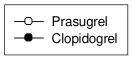
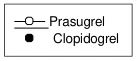
Figure 1: Least Square Mean (±95% CI) Inhibition of 20 mcM and 5 mcM ADP-induced Platelet Aggregation (IPA) Measured by Light Transmission Aggregometry after Prasugrel Tablets 60 mg/10 mg (ο) Loading Dose and Maintenance Dose and Clopidogrel 300 mg/75 mg (•), respectively. Arrows (↓) Indicate Day of Dose Administration.
The IPA achieved in response to prasugrel was significantly higher than that observed for clopidogrel responders. Among clopidogrel responders, the onset of IPA was still slower than that achieved following administration of prasugrel. Prasugrel 10 mg MD produced significantly greater IPA (p 0.01) than the approved 75 mg clopidogrel MD. The prasugrel 60 mg LD also achieved significantly more rapid onset and greater levels of IPA (p 0.001) (20 mcM ADP) than the clopidogrel 300 mg LD. A 60/10 mg LD/MD of prasugrel provided more rapid onset (beginning 30 minutes following LD) of higher and less variable IPA than was achieved with 600/75 mg or 600/150 mg LD/MD of clopidogrel in patients undergoing PCI. The 60 mg LD doubled the level of IPA compared to the 300 mg LD of clopidogrel. In addition, there were ≥3% PD poor responders with the prasugrel 60 mg LD compared to approximately 52% PD poor responders for the clopidogrel 300 mg LD. During maintenance dosing there were 0% PD poor responders with prasugrel 10 mg MD compared to 45% in the clopidogrel 75 mg MD group.
Trough IPA
0 1 2 3 4 5 6 7 8 9 10 11 12
2 3 4 5 6 7 8 9
Day 1, Hours
Day
0 1 2 3 4 5 6 7 8 9 10 11 12 2 3 4 5 6 7 8 9
Day
I n hi bi t i o n o f Pl at e l e t A gg r e ga t i on ( % )
I n h ib it io n of P l at e l e t Ag gr e gat ion ( % )
Based on the results of these studies, a prasugrel 60 mg LD and a daily 10 mg MD were selected for Study TAAL. In another Phase 2 study subjects with ACS received a 900 mg loading dose of clopidogrel. They were then randomly assigned to prasugrel 10 mg or clopidogrel 150 mg as a daily maintenance dose for 14 ± 2 days. Subjects were then switched directly (without a washout period) to the alternative MD treatment for an additional 14 ± 2 days. The prasugrel 10 mg MD regimen resulted in significantly greater platelet inhibition than clopidogrel 150 mg MD or a 900 mg LD.
In the TRIPLET Study, a pharmacodynamic study of ACS patients managed with PCI, a 60 mg loading dose of prasugrel administered after a loading dose of clopidogrel 600 mg resulted in similar inhibition of platelet aggregation to a loading dose of prasugrel 60 mg alone. Another study measured inhibition of platelet aggregation after discontinuing clopidogrel 75 mg and initiating prasugrel 60 mg loading dose with the next dose. When measured at 2 hours, there was an increased inhibition of platelet aggregation, which was similar to that observed with a 60 mg loading dose of prasugrel alone. In another study in CYP2C19 reduced metabolizers, discontinuing clopidogrel 75 mg and initiating prasugrel 5 mg or 10 mg with the next dose resulted in a significantly increased inhibition of platelet aggregation in Acute Coronary Syndrome (ACS) subjects with Unstable Angina/Non-ST-Elevation Myocardial Infarction who were medically managed (no coronary intervention).
Pharmacokinetics
Prasugrel is a prodrug and is rapidly metabolized to a pharmacologically active metabolite and inactive metabolites. The active metabolite’s exposure (AUC) has moderate to low between- subject (27%) and within-subject (19%) variability. Prasugrel’s pharmacokinetics are similar in healthy subjects, patients with stable atherosclerosis, and patients undergoing percutaneous coronary intervention.
Absorption: Following oral administration, ≥79% of the dose is absorbed. The absorption and metabolism are rapid, with peak plasma concentrations (Cmax) of the active metabolite occurring approximately 30 minutes after dosing. The active metabolite’s exposure (AUC) increases proportionally over the therapeutic dose range. In a study of healthy subjects, AUC of the active metabolite was unaffected by a high fat, high calorie meal, but Cmax was decreased by 49% and the time to reach Cmax (Tmax) was increased from 0.5 to 1.5 hours. Prasugrel Tablets can be administered without regard to food.
Distribution: The active metabolite binding to human serum albumin (4% buffered solution) was 98%.
Metabolism: Prasugrel is not detected in plasma following oral administration. It is rapidly hydrolyzed in the intestine to a thiolactone, which is then converted to the active metabolite by a single step of cytochrome P450 metabolism, primarily by CYP3A4 and CYP2B6 and to a lesser extent by CYP2C9 and CYP2C19. The active metabolite is further metabolized to two inactive compounds by S-methylation or conjugation with cysteine.
In healthy subjects, patients with stable atherosclerosis, and patients with ACS receiving prasugrel, there was no relevant effect of genetic variation in CYP3A5, CYP2B6, CYP2C9, or CYP2C19 on the pharmacokinetics of prasugrel or its inhibition of platelet aggregation.
Excretion: Approximately 68% of the prasugrel dose is excreted in the urine and 27% in the feces, as inactive metabolites. The active metabolite has an elimination half-life of about
7.4 hours (range 2 to 15 hours).
Pharmacogenomics
Both prasugrel and clopidogrel are pro-drugs that must be metabolized to their active moieties. Whereas the pharmacokinetics of prasugrel’s active metabolite are not known to be affected by genetic variations in CYP2B6, CYP2C9, CYP2C19, or CYP3A5, the pharmacokinetics of clopidogrel’s active metabolite are affected by CYP2C19 genotype, and approximately 30% of Caucasians, 40% of African descent, and 60% of Asians are reduced-metabolizers.
Special Populations and Conditions
Pediatrics (<18 of age): Pharmacokinetics and pharmacodynamics of Prasugrel Tablets have been preliminarily evaluated in a pediatric population. In a Phase 2, open-label, dose-ranging pharmacokinetic/pharmacodynamic study of 33 pediatric patients with sickle cell disease (ages 4 to <18 years old), exposure to the prasugrel active metabolite increased with increasing single doses. The magnitude of platelet inhibition generally increased with an increase in daily dose.
The safety and efficacy of Prasugrel Tablets in pediatric patients (<18 years of age) has not been established, thus its use in pediatric patients is not indicated (see INDICATION AND CLINICAL USE – Pediatrics [<18 years of age]).
Geriatrics (≥75 years of age): In a study of 32 healthy subjects between the ages of 20 and 80 years, age had no significant effect on the pharmacokinetics of prasugrel or its inhibition of platelet aggregation. In TRITON, the mean exposure (AUC) of the active metabolite was 19% higher in patients ≥75 years of age compared to patients <75 years of age. Due to an increase in exposure to the active metabolite of prasugrel and possibly a greater sensitivity to bleeding in patients ≥75 years of age compared to patients <75 years of age, JAMP Prasugrel is not recommended in this patient population (see WARNINGS AND PRECAUTIONS and ADVERSE REACTIONS).
Gender: Pharmacokinetics of prasugrel are similar in men and women.
Ethnicity: In clinical pharmacology studies, after adjusting for body weight, the AUC of the active metabolite was approximately 19% higher in Chinese, Japanese, and Korean subjects compared to Caucasian subjects. Within the Chinese, Japanese, and Korean subjects there was no difference in exposure amongst these groups. Exposure in subjects of African and Hispanic descent is comparable to that of Caucasians.
Hepatic Insufficiency: Pharmacokinetics of prasugrel and its inhibition of platelet aggregation were similar in subjects with mild to moderate hepatic impairment compared to healthy subjects.
Pharmacokinetics and pharmacodynamics of prasugrel in patients with severe hepatic disease (Child-Pugh Class C) have not been studied. JAMP Prasugrel should not be used due to the potential risk of bleeding in this population (see CONTRAINDICATIONS and WARNINGS AND PRECAUTIONS).
Renal Insufficiency: Pharmacokinetics of prasugrel and its inhibition of platelet aggregation are similar in patients with moderate renal impairment (CrCL=30 to 50 mL/min) and healthy subjects. Prasugrel-mediated inhibition of platelet aggregation was also similar in patients with end-stage renal disease (ESRD) who required hemodialysis compared to healthy subjects, although Cmax and AUC of the active metabolite decreased 51% and 42%, respectively, in ESRD patients (see WARNINGS AND PRECAUTIONS).
Body Weight: The mean exposure (AUC) of the active metabolite is approximately 30 to 40% higher in healthy subjects with a body weight of <60 kg (132 pounds) compared to those weighing 60 kg. Individuals with body weight <60 kg had an increased risk of bleeding and an increased exposure to the active metabolite of prasugrel. Prasugrel Tablets is not recommended in this patient population (see WARNINGS AND PRECAUTIONS and ADVERSE REACTIONS).
Smoking: Pharmacokinetics of prasugrel are similar in smokers and non-smokers.
STORAGE AND STABILITY
Store at 25°C; excursions permitted to 15°to 30°C.
Dispense product in original packaging. Keep product in package and do not remove until ready to use. Do not break the tablet.
SPECIAL HANDLING INSTRUCTIONS
Store product in original packaging.
DOSAGE FORMS, COMPOSITION AND PACKAGING
Beige coloured, elongated hexagonal shaped, biconvex, film coated tablets debossed with 'PG' on one side and '10' on the other side contains 10.98 mg prasugrel hydrochloride, equivalent to
10 mg of prasugrel.
During manufacture and storage prasugrel hydrochloride undergoes partial conversion to prasugrel free base to within controlled limits. Nonmedicinal ingredients include mannitol, microcrystalline cellulose, hydroxypropyl cellulose and sodium stearyl fumarate. The color coatings contain hypromellose, triacetin, titanium dioxide, red iron oxide and yellow iron oxide.
JAMP Prasugrel is available in bottle of 30 tablets.
PART II: SCIENTIFIC INFORMATION
PHARMACEUTICAL INFORMATION
Drug Substance
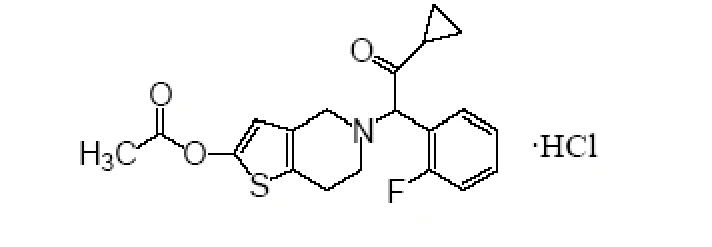
Common name: prasugrel hydrochloride
Chemical name: 2-acetoxy-5-( -cyclopropylcarbonyl-2-fluorobenzyl)-4,5,6,7- tetrahydrothieno[3,2-c]pyridine hydrochloride racemate
Molecular formula and molecular mass: C20H20FNO3S•HCl, 409.90 Daltons.
C20H20FNO3S, 373.45 Daltons.
Structural formula:
Physicochemical properties: It is a white to light brown solid. Prasugrel hydrochloride is soluble at pH 2, slightly soluble at pH 3 to 4, and practically insoluble at pH 6 to 7.5. It also dissolves freely in methanol and is slightly soluble in 1- and 2-propanol and acetone. It is practically insoluble in diethyl ether and ethyl acetate.
CLINICAL TRIALS
Comparative Bioavailability Study
A randomized, two-treatment, two-sequence, two-period, single 1 x 10 mg dose, crossover, bioequivalence study of JAMP Prasugrel prasugrel (as prasugrel hydrochloride) 10 mg tablets (JAMP Pharma Corporation) and EFFIENT® prasugrel (as prasugrel hydrochloride) 10 mg tablets (ELI LILLY CANADA INC.) was conducted in 36 healthy Asian male subjects from 22 to 42 years of age (n=36) under fasting conditions. The summary R-95913 (primary, inactive metabolite) data from the 36 subjects that completed the study are tabulated below.
Summary Table of the Comparative Bioavailability Data (Measured Data)
Primary, inactive metabolite (R-95913) (1 x 10 mg prasugrel hydrochloride) From measured data uncorrected for potency Geometric Mean Arithmetic Mean (CV %) | ||||
| Parameter | Test* | Reference† | % Ratio of Geometric Means | 90% Confidence Interval |
AUCT (ng.h/mL) | 153.9 163.3 (35.3) | 157.2 166.4 (34.4) | 97.9 | 93.3 - 102.7 |
AUCI (ng.h/mL) | 161.1 171.2 (35.9) | 165.8 175.5 (34.4) | 97.2 | 92.6 - 101.9 |
| Cmax (ng/mL) | 97.9 107.1 (42.3) | 95.8 104.5 (41.9) | 102.2 | 90.8 - 115.1 |
| Tmax§ (h) | 0.500 (0.333- 1.750) | 0.500 (0.333- 1.500) | ||
| T½€ (h) | 7.9 (21.0) | 8.6 (20.8) | ||
* JAMP Prasugrel prasugrel (as prasugrel hydrochloride) 10 mg tablets (JAMP Pharma Corporation)
† EFFIENT® prasugrel (as prasugrel hydrochloride) 10 mg tablets (ELI LILLY CANADA INC.) was purchased in Canada
§ Expressed as the median (range) only
€ Expressed as the arithmetic mean (CV%) only.
Summary Table of the Comparative Bioavailability Data (Corrected for Potency)
Primary, inactive metabolite (R-95913) (1 x 10 mg prasugrel hydrochloride) Data corrected for potency Geometric Mean | ||||
| Parameter | Test* | Reference† | % Ratio of Geometric Means | 90% Confidence Interval |
AUCT (ng.h/mL) | 158.8 | 153.4 | 103.5 | 98.7 - 108.6 |
AUCI (ng.h/mL) | 166.6 | 162.1 | 102.8 | 98.0 - 107.8 |
| Cmax (ng/mL) | 101.1 | 93.5 | 108.2 | 96.1 - 121.8 |
* JAMP Prasugrel prasugrel (as prasugrel hydrochloride) 10 mg tablets (JAMP Pharma Corporation)
† EFFIENT® prasugrel (as prasugrel hydrochloride) 10 mg tablets (ELI LILLY CANADA INC.) was purchased in Canada
Study Demographics and Trial Design
Table 4 Summary of patient demographics for clinical trials in prevention of atherothrombotic events and stent thrombosis in patients with acute coronary syndrome (ACS)
| Study # | Trial design | Dosage, route of administration and duration | Study subjects (N=number) | Mean age (Range) | Gender |
| H7T-MC- TAAL (TRITON) | (60-/10-mg LD/MD prasugrel vs. 300-/75-mg LD/MD clopidogrel regimens) with aspirin Route of administration: oral Maximum duration: 15 months , Median of 14.5 months | PCI in ACS (N=13,608) | 61 (27 to 96 years) | Male and female over 18 years old 25% female, and 92% Caucasian | |
H7T-MC- TAAH (Jumbo or TIMI 26) | Prasugrel plus aspirin (LD 40mg/MD 7.5mg, LD 60mg/MD10mg, LD 60mg/MD15 mg) or to clopidogrel plus aspirin (LD 300mg/MD 75mg). The loading dose at the time of PCI followed by 29 to 34 days of once-daily maintenance dosing. Route of administration: oral | Elective and urgent PCI (N=905) | 59 (22 to 75 years) | Male (77%)and female over 18 years old 91.2% caucasian |
In TRITON, the study population includes subjects with acute coronary syndrome (ACS; subjects with unstable angina and non-ST-segment elevation myocardial infarction [UA/NSTEMI] with TIMI risk score ≥3 or ST-segment elevation myocardial infarction [STEMI]) who are to undergo percutaneous coronary intervention (PCI).
TRITON-TIMI 38 (TAAL) Trial
The clinical evidence for the efficacy of Prasugrel Tablets is derived from the phase 3 TRITON study, a comparison of Prasugrel Tablets to clopidogrel, with both given in combination with aspirin and other standard therapy.
The TRITON study was a 13,608-patient, multicenter, international, randomized, double-blind, and parallel-group study comparing Prasugrel Tablets to clopidogrel. The patients randomized had ACS with moderate to high risk UA, NSTEMI, or STEMI and were managed with PCI.
Patients with UA/NSTEMI presenting within 72 hours of symptom onset were to be randomized after undergoing coronary angiography. Patients with STEMI presenting within 12 hours of symptom onset could be randomized prior to coronary angiography. Patients with STEMI presenting between 12 hours and 14 days of symptom onset were to be randomized after undergoing coronary angiography. Patients underwent PCI, and for both UA/NSTEMI and STEMI patients, the loading dose was to be administered anytime between randomization and 1 hour after the patient left the catheterization lab. If patients with STEMI were treated with thrombolytic therapy, randomization could not occur until at least 24 hours (for tenecteplase, reteplase or alteplase) or 48 hours (for streptokinase) after the thrombolytic was given.
Patients were randomized to receive Prasugrel Tablets (60 mg loading dose followed by 10 mg once daily) or clopidogrel (300-mg loading dose followed by 75 mg once daily) and were to be followed for a maximum of 15 months and a minimum of 6 months (actual median 14.5 months). Patients also received aspirin (75 mg to 325 mg once daily). Other therapies, such as heparin and intravenous glycoprotein IIb/IIIa (GPIIb/IIIa) inhibitors, were administered at the discretion of the physician.
The trial’s primary outcome was the composite of CV death, nonfatal MI, or nonfatal stroke. Analysis of the composite endpoint in the all ACS population (combined UA/NSTEMI and STEMI cohorts) was contingent upon showing statistical superiority of Prasugrel Tablets versus clopidogrel in the UA/NSTEMI cohort (p<0.05).
Study Results
Analysis of the All ACS Population
In TRITON, Prasugrel Tablets showed superior efficacy compared to clopidogrel in reducing the primary composite outcome events of cardiovascular (CV) death, nonfatal myocardial infarction (MI), or nonfatal stroke, and the pre-specified secondary outcome events, including stent thrombosis (see Table 5).
The patient population was 92% Caucasian, 26% female, and 39% ≥65 years of age. The benefits associated with Prasugrel Tablets were independent of the use of other acute and long-term cardiovascular therapies, including heparin/low molecular weight heparin, bivalirudin, intravenous GPIIb/IIIa inhibitors, lipid-lowering drugs, beta-blockers, and angiotensin converting enzyme inhibitors. The efficacy of Prasugrel Tablets was independent of aspirin dose (75 mg to 325 mg once daily). The use of oral anticoagulants, non-study antiplatelet drugs, and chronic NSAIDs was not allowed in TRITON.
Table 5: Patients with Outcome Events in the TRITON Primary Analysis* (All ACS Population)
| Outcome Eventsa | Prasugrel Tablets (+ASA) (N=6813) (%) | Clopidogrel (+ASA) (N=6795) (%) | Relative Risk Reduction (%)b (95% CI) | p-value |
| Primary Outcome Events | ||||
Primary Composite Outcome Events CV death, nonfatal MI, or nonfatal stroke | 9.4 | 11.5 | 18.8 (9.8, 26.8) | <0.001 |
Primary Individual Outcome Events CV death | 2.0 | 2.2 | 11.4 (-11.8, 29.9) | 0.307 |
| Nonfatal MI | 7.0 | 9.1 | 24.3 (14.7, 32.8) | <0.001 |
| Nonfatal stroke | 0.9 | 0.9 | -1.6 (-45.1, 28.8) | 0.930 |
| Secondary Outcome Events | ||||
| CV death, nonfatal MI, or nonfatal stroke through 90 days | 6.8 | 8.4 | 20.3 (9.9, 29.5) | <0.001 |
| CV death, nonfatal MI, or nonfatal stroke through 30 daysc | 5.7 | 7.4 | 23.3 (12.4, 32.8) | <0.001 |
| CV death, nonfatal MI, or urgent target vessel revascularization (UTVR) through 90 days | 6.9 | 8.7 | 20.6 (10.4, 29.7) | <0.001 |
| CV death, nonfatal MI, or UTVR through 30 days | 5.9 | 7.4 | 21.6 (10.6, 31.2) | <0.001 |
| All cause death, nonfatal MI, or nonfatal stroke through study end | 10.2 | 12.1 | 16.9 (8.1, 24.9) | <0.001 |
| CV death, nonfatal MI, nonfatal stroke, or rehospitalization for cardiac ischemic event through study end | 11.7 | 13.8 | 16.2 (7.9, 23.8) | <0.001 |
| Definite or probable stent thrombosis through study endd | 0.9 | 1.8 | 50.2 (31.7, 63.6) | <0.001 |
*corresponding KM endpoints in Wiviott 2007
a Observed rates
b Values with a negative Relative Risk Reduction indicate a relative risk increase.
c Rates from 30 days 4.14% vs 4.77% HR=0.869, corresponding KM endpoints in Antman 2008 d N=6422 for Prasugrel Tablets and N=6422 for clopidogrel; for stent thrombosis that occurred in stents placed at index PCI; statistically significantly lower rate 30 days after randomization; 52% RRR for any definite or probable stent thrombosis that occurred during the study
The Kaplan-Meier curve shows the primary composite endpoint of CV death, nonfatal MI, or nonfatal stroke over time in the all ACS population (see Figure 2). The all ACS event curves separated as early as 3 days and continued to diverge over the 15 month follow-up period.
Prasugrel Tablets demonstrated an 18% reduction in the primary composite endpoint from 0-3 days and a 20% reduction in the primary composite endpoint from 3 days to the end of the study.
13
12
11
10
9

8
7
6
5
4
3
2
1
0
0 30 60 90 120 150 180 210 240 270 300 330 360 390 420 450
Days from Randomization
Figure 2: Primary Endpoint for the All ACS Population
Recurrence of Primary Events
In a landmark analysis from the time of the first event to recurrent event or last follow-up, a second primary endpoint event occurred in 10.8% of the prasugrel-treated group compared with 15.4% of the clopidogrel-treated group (HR 0.65, 95% CI 0.46–0.92; p=0.016). Cardiovascular death following a non-fatal MI or stroke was also significantly reduced in the prasugrel group (3.7%) compared with the clopidogrel group (7.1%) (HR 0.46, 95% CI 0.25–0.82; p=0.008) (Murphy et al 2008).
Major Subgroups
The effect of Prasugrel Tablets in various subgroups is shown in Figure 3.
All ACS
Clopidogrel p<0.001
Card io vascu la r d ea th ,
n o n fa ta l MI, n on fa ta l stroke (%)
Figure 3: Hazard Ratio (95% CI) for Composite CV Death, Nonfatal MI, or Nonfatal Stroke in the TRITON Study for All ACS*
Baseline Characteristics
N Percent Events
Prasugrel Tablets
Clopidogrel
| OVERALL | 13608 | 9.4 | 11.5 | ||||||
| Age | < 65 y | 8322 | 7.7 | 10.2 | |||||
| > 65 y | 5286 | 12.2 | 13.6 | ||||||
| < 75 y | 11799 | 8.4 | 10.7 | ||||||
| > 75 y | 1809 | 16.0 | 17.0 | ||||||
| Gender | Female | 3523 | 10.4 | 11.8 | |||||
| Male | 10085 | 9.1 | 11.4 | ||||||
| Body weight | < 60 kg | 668 | 10.0 | 11.2 | |||||
| > 60 kg | 12769 | 9.3 | 11.3 | ||||||
| Region | North America | 4310 | 9.2 | 12.0 | |||||
| United States | 4059 | 9.4 | 12.1 | ||||||
| South America | 534 | 13.3 | 15.2 | ||||||
| Western Europe | 3553 | 9.2 | 10.6 | ||||||
| Eastern Europe | 3322 | 9.2 | 10.9 | ||||||
| Rest of World | 1889 | 9.7 | 12.1 | ||||||
| Diabetes Mellitus | Yes | 3146 | 11.4 | 15.8 | |||||
| No | 10462 | 8.8 | 10.2 | ||||||
| Metabolic syndrome | Yes | 5904 | 9.4 | 11.3 | |||||
| No | 7704 | 9.5 | 11.6 | ||||||
| Previous MI | Yes | 2434 | 13.1 | 16.6 | |||||
| No | 11174 | 8.6 | 10.4 | ||||||
| Previous PCI | Yes | 1830 | 12.4 | 15.4 | |||||
| No | 11778 | 9.0 | 10.9 | ||||||
| Previous CABG | Yes | 1038 | 15.9 | 18.1 | |||||
| No | 12570 | 8.9 | 11..0 | ||||||
| Previous TIA/Stroke | Yes | 518 | 17.9 |
| |||||
| No | 13090 | 9.1 | 11.4 | ||||||
| Stent type | Drug-eluting > 1 | 6383 | 9.0 | 11.0 | |||||
| Bare metal only | 6461 | 9.5 | 11.8 | ||||||
| None | 569 | 13.3 | 15.9 | ||||||
| GP IIb/IIIA Inhibitor Use | Yes | 7414 | 10.0 | 12.4 | |||||
| No | 6194 |
| 10.4 | ||||||
| 0.5 | 1.0 | 2.0 | |||||||
| Hazard Ratio | |||||||||
* corresponding KM endpoints in Wiviott 2007
Prasugrel Tablets better Clopiddooggrreell better
Patients who were <75 years, ≥60 kg, and with no history of TIA or stroke that were treated with prasugrel had a significantly greater treatment benefit with respect to the primary composite efficacy endpoint when compared to those who were treated with clopidogrel. This cohort of the All ACS population demonstrated an improved benefit-risk profile. The primary outcomes observed with prasugrel compared to clopidogrel were 7.99% versus 10.57%. (HR=0.745 (0.657- 0.844); p<0.001) (KM rates were 8.3% vs 11.0% as described in Wiviott 2007). All cause death, nonfatal MI or nonfatal stroke was 8.47% vs. 11.02% for prasugrel vs. clopidogrel, respectively (HR=0.76 (0.67-0.85), p<0.001). This benefit came without a statistically significant increase risk in bleeding (observed outcomes for nonCABG related TIMI major bleeds was 2.0% for the prasugrel group and 1.5% for the clopidogrel group (HR=1.24 (0.91-1.69), p=0.17). Death from any cause, nonfatal MI, nonfatal stroke, or non-CABG related nonfatal TIMI major bleeding was
10.2% vs. 12.5% for prasugrel vs. clopidogrel, respectively (HR=0.80 (0.71-0.89), p<0.001)
(Wiviott 2007).
Analysis of the UA/NSTEMI and STEMI Populations
Prasugrel Tablets reduced the occurrence of the primary composite endpoint compared to clopidogrel in both the UA/NSTEMI and STEMI populations (see Table 6 and 7).
Table 6: Patients with Outcome Events in TRITON (UA/NSTEMI)
| 30 Days | 450 Days | |||||
| Prasugrel (+ASA)a (%) | Clopidogrel (+ASA)a (%) | Relative Risk Reductionb (95% CI) p-value | Prasugrel (+ASA)a (%) | Clopidogrel (+ASA)a (%) | Relative Risk Reductionb (95% CI) p-value | |
| UA/NSTEMI | N=5044 | N=5030 | N=5044 | N=5030 | ||
| CV death, nonfatal MI, or nonfatal stroke | 5.43 | 6.68 | 19.2 (5.2, 31.1) 0.009 | 9.30 | 11.23 | 18.0 (7.3, 27.4) 0.002 |
| CV Death/nonfatal MI | 5.25 | 6.54 | 20.2 (6.1, 32.1) 0.006 | 8.64 | 10.48 | 18.2 (7.1, 28.0) 0.002 |
| CV Death | 0.73 | 0.74 | 0.3 (-57.2, 36.8) 0.988 | 1.78 | 1.83 | 2.1 (-30.9, 26.8) 0.885 |
| All cause death | 0.81 | 0.85 | 5.0 (-45.7, 38.1) 0.815 | 2.58 | 2.41 | -7.6 (-37.8, 16.0) 0.563 |
| All cause death/nonfatal MI, or nonfatal stroke | 5.51 | 6.78 | 19.2 (5.3, 31) 0.008 | 9.99 | 11.73 | 15.6 (5.0, 25.1) 0.005 |
a Other standard therapies were used as appropriate. The TRITON protocol provided for all patients to receive ASA.
bRRR = (1-Hazard Ratio) x 100%. Values with a negative relative risk reduction indicate a relative risk increase.
Table 7: Patients with Outcome Events in TRITON (STEMI)*
| 30 Days | 450 Days | |||||
| Prasugrel (+ASA)a (%) | Clopidogrel (+ASA)a (%) | Relative Risk Reductionb (95% CI) p-value | Prasugrel (+ASA)a (%) | Clopidogrel (+ASA)a (%) | Relative Risk Reductionb (95% CI) p-value | |
| STEMI | N=1769 | N=1765 | N=1769 | N=1765 | ||
| CV death, nonfatal MI, or nonfatal stroke | 6.50 | 9.41 | 31.6 (13.2, 46.0) 0.002 | 9.84 | 12.24 | 20.7 (3.2, 35.1) 0.019 |
| CV Death/ nonfatal MI | 6.16 | 8.73 | 30.0 (10.5, 45.2) 0.004 | 8.65 | 11.39 | 25.0 (7.4, 39.2) 0.007 |
| CV Death | 1.41 | 2.32 | 39.3 (0.2, 63.1) 0.047 | 2.43 | 3.29 | 26.2 (-9.4, 50.3) 0.129 |
| All cause death | 1.58 | 2.55 | 38.1 (0.7, 61.4) 0.045 | 3.28 | 4.31 | 24.1 (-6.8, 46.1) 0.113 |
| All cause death/nonfatal MI, or nonfatal stroke | 6.67 | 9.58 | 31.0 (12.7, 45.5) 0.002 | 10.63 | 13.14 | 20.3 (3.4, 34.3) 0.020 |
a Other standard therapies were used as appropriate. The TRITON protocol provided for all patients to receive ASA.
bRRR = (1-Hazard Ratio) x 100%. Values with a negative relative risk reduction indicate a relative risk increase.
*KM rates for corresponding endpoints can be found in Montalescot et al 2009
The secondary endpoint data for the UA/NSTEMI and STEMI populations are similar to those for the all ACS population.
The UA/NSTEMI event curve separated as early as 3 days and continued to diverge over the
15 month follow-up period. The STEMI event curve separated as early as 3 days and remained separate over the 15 month follow-up period.
There was significant difference in net clinical benefit as described by the endpoint of death, nonfatal MI, nonfatal stroke, nonCABG related TIMI major bleeding, for both the UA/NSTEMI group (observed rates were 11.36% for the prasugrel group vs. 12.66% for the clopidogrel group HR= 0.890;p=0.043) and the STEMI group (observed rates were 11.93% vs. 14.50% prasugrel vs clopidogrel respectively HR=0.809; p=0.022, KM rates were 12.2% for prasugrel vs. 14.6% for clopidogrel, as described in Montalescot et al 2009).
Comparative Bioavailability Studies
The performance of 5 mg tablet was compared to that of 10 mg tablet in study H7T-EW-TAAW, A Study to Determine the Relative Bioavailability of 5 and 10 mg Prasugrel Tablets:(Part A) and to Investigate the Pharmacokinetics of Prasugrel when Administered as a 5, 30 and 60 mg dose; (Part B) in Healthy Subjects.
Statistical Analysis of Relative Bioavailability between 2x5 mg and 1x10 mg Prasugrel Tablets
Least Squares geometric means | Ratio of geometric least squares means (90% CI) | |||||||||
| Metabolite | Parameters | 2x5 mg | 1x10 mg | 2x5 mg / 1x10 mg | ||||||
| R-138727 | AUC(0-tlast) (ng.h/mL) | 78.9 | 77.1 | 1.02 (0.988, 1.06) | ||||||
AUC(0-4h) (ng.h/mL) | 74.1 | 71.5 | 1.04 (1.00, 1.07) | |||||||
| Cmax (ng/mL) | 88.5 | 82.3 | 1.08 (0.990, 1.17) | |||||||
Statistical Comparison of tmax between 2x5 mg and 1x10 mg Prasugrel Tablets
Median
Median difference (90% CI)
Metabolite Parameters 2x5 mg 1x10 mg 2x5 mg - 1x10 mg
R-138727 tmax (h)
0.500 0.500
0
(-0.0200, 0)
The results showed that two 5 mg Prasugrel Tablets were bioequivalent to one 10 mg Prasugrel tablet. For all four assessed metabolites, the 90% CI of the ratio of geometric least squares means for Cmax and AUC(0-tlast) fell between 0.80 and 1.25; and tmax did not differ between the 5 mg and 10 mg tablets.
DETAILED PHARMACOLOGY
Prasugrel is a prodrug whose active metabolite specifically and irreversibly inhibits the P2Y12 class of platelet ADP receptor and consequently inhibits numerous ADP-mediated platelet activities. An extensive series of pharmacodynamic, pharmacokinetic, and toxicology studies in animals has been conducted with prasugrel. Collectively, the animal data substantiate the ability of prasugrel to be an effective treatment for the reduction of atherothrombotic events. These effects in animal models related to inhibition of thrombus formation are predictive for efficacy in humans. Furthermore the increased potency of prasugrel compared to clopidogrel in nonclinical pharmacology studies was consistent with the demonstrated superiority of prasugrel over clopidogrel in the pivotal study in the target population.
Based on safety pharmacology studies in animal models, administration of prasugrel at clinical doses would not be expected to produce secondary pharmacology related to CNS, cardiovascular (including QT interval), respiratory, renal, or GI function.
Pharmacokinetics
Absorption, distribution, metabolism, and excretion characteristics of prasugrel were generally similar in humans and the nonclinical species used in the toxicological evaluations
[14C]prasugrel radioactivity was rapidly distributed to tissues and was highest in tissues involved in absorption and elimination.
Placental transfer of prasugrel metabolites to the fetus of pregnant rats was low.
However, transfer of [14C]prasugrel-related radioactivity into the milk of lactating rats was demonstrated.
TOXICOLOGY
Single-Dose Toxicology Studies
Animal data indicate prasugrel has very low acute toxicity. Single dose toxicity studies using the oral route of administration were conducted in rats and mice at doses up to a limit dose of 2000 mg/kg; no animals died in these studies. Clinical observations in female rats given 2000 mg/kg included somewhat nonspecific signs of irregular respiration, reduced locomotor activity, ptosis, lacrimation, and staggering gait. In a comparison single-dose rat study of prasugrel base versus prasugrel hydrochloride, no deaths occurred at doses of prasugrel base up to 2000 mg/kg, while 3 of 5 males and 4 of 5 females administered 2000 mg/kg prasugrel hydrochloride died, likely due to increased exposure with the salt.
In an escalating dose study in beagle dogs, platelet aggregation was inhibited, consistent with the pharmacological action of the compound. Emesis was observed after administration at doses ≥300 mg/kg, and serum alkaline phosphatase (ALP) was increased following the 2000-mg/kg dose. Slight hepatocellular atrophy and ground glass appearance of hepatocellular cytoplasm were also observed in these dogs.
Repeat-Dose Toxicology Studies
Repeat dose studies of up to 3, 6, and 9 months in duration were conducted with prasugrel administered orally to mice, rats, and dogs, respectively. The primary effects of prasugrel observed during repeat-dose studies included decreased body weight relative to control in rodents that was occasionally accompanied by decreased food consumption; increased liver weight and histologic changes in the liver considered to be related to microsomal enzyme induction in mice, rats, and dogs; increased ALP in dogs; decreases in red blood cell parameters in rodents; and increases in platelet counts and prolongation of prothrombin times, activated partial thromboplastin times, or both in rats.
In a 3-month repeat-dose study in B6C3F1 mice, mortality, decreased body weight, and anemia were observed at a high dose (1000 mg/kg) of prasugrel. The anemia was attributed to subclinical blood loss rather than to hematopoietic suppression since an increase in the reticulocyte ratio was also observed, and there were no histologic effects on bone marrow. The liver was the primary target organ as evidenced by increased liver weight and hypertrophy of centrilobular hepatocytes (considered due to induction of drug-metabolizing enzymes). In a non- pivotal 2-week study, increased alanine transaminase (ALT) and aspartate aminotransferase (AST) activity and single cell necrosis indicated a toxic effect on liver at a very high dose of prasugrel (2000 mg/kg) which was also lethal.
Similar effects of reduced body weight relative to controls, increased liver weight, and hepatocellular hypertrophy were observed in 2-week, 1-month, 3-month, and 6-month studies in Fischer 344 rats at doses up to 300 mg/kg. Consistent with measured hepatic enzyme induction, administration of high doses resulted in proliferation of hepatic smooth endoplasmic reticulum (SER) and mild thyroid follicular hypertrophy. Hematologic changes included increased platelet counts and prolonged prothrombin times and activated partial thromboplastin times. Hepatic enzyme induction effects and alterations in coagulation parameters were considered physiologically compensatory in nature and thus not adverse. The No Observed Adverse Effect
Level (NOAEL) in the rat was 30 mg/kg (24-fold the clinical maintenance dose of 10 mg on a mg/m2 basis).
In a 2-week pilot study in beagle dogs, doses up to 1000 mg/kg were associated with emesis, transient mydriasis, decreased platelet aggregation (consistent with the pharmacology of prasugrel), minimal increases in ALT (2- to 4-fold increases at 1000 mg/kg), and increased ALP (which were increased approximately 3- to 10-fold at doses 100 mg/kg). Histopathologic changes included hepatocellular hypertrophy, atrophy of seminiferous epithelium, and, at the high dose of 1000 mg/kg, a decrease in hematopoietic cells was seen in bone marrow. The latter two effects were not observed in subsequent longer-term studies of 1, 3, or 9 months in duration. In these studies, decreased platelet aggregation activities, the expected pharmacological effect, increased ALP, decreased cholesterol and liver effects related to enzyme induction (e.g., hypertrophy of hepatocytes accompanied by the ground glass appearance of cytoplasm, proliferation of SER) were observed. The NOAEL in the dog was 4 mg/kg (11-fold the clinical maintenance dose of 10 mg on a mg/m2 basis).
Mutagenicity Studies: Prasugrel Tablets was not genotoxic in two in vitro tests (Ames bacterial gene mutation test, clastogenicity assay in Chinese hamster fibroblasts) and in one in vivo test (micronucleus test by intraperitoneal route in mice).
Carcinogenicity Studies: Prasugrel was administered orally to rats and mice for 2 years to assess the carcinogenic potential of prasugrel. Plasma levels of R-138727 and R-106583, the active metabolite and the major circulating human metabolite, respectively, were determined in these studies.
No compound-related tumors were observed in a 2-year rat study with prasugrel exposures ranging to >75 times the recommended therapeutic exposures in humans (based on plasma exposures to the active and major circulating human metabolites). There was an increased incidence of tumors (hepatocellular adenomas) in mice exposed for 2 years to high doses
(>75 times human exposure), but this was considered secondary to prasugrel-induced enzyme- induction. The rodent-specific association of liver tumors and drug-induced enzyme induction is well documented in the literature. Therefore, the increase in liver tumors with prasugrel administration in mice is not considered a relevant human risk.
Impairment of Fertility: Prasugrel Tablets had no effect on fertility of male and female rats at oral doses up to 300 mg/kg/day (240 times the recommended daily human maintenance dose on a mg/m2 basis).
Reproductive and Developmental Toxicology Studies
Studies to evaluate male and female fertility as well as potential effects on early embryonic development were conducted in the rat. Decreases in body weight gain and food consumption were observed in males and females at ≥100 mg/kg; however, prasugrel had no effect on male or female fertility or on early embryonic development at oral doses up to 300 mg/kg (>240-fold the clinical maintenance dose of 10 mg on a mg/m2 basis)
At a very high dose causing effects on maternal body weight and/or food consumption in rats and rabbits (300 mg/kg/day, >240 times the recommended daily human maintenance dose on a mg/m2 basis), a slight decrease in offspring body weight (relative to controls) was observed in rats and rabbits; however, there was no evidence of malformations. In prenatal and postnatal rat studies, maternal treatment had no effect on the behavioral or reproductive development of the offspring at doses up to 300 mg/kg/day (>240 times the recommended daily human maintenance dose on a mg/m2 basis).
Other Toxicology Studies
Based on antigenicity studies in mice and guinea pigs, prasugrel would not be expected to be antigenic.
The active metabolite (R-138727) and primary circulating human metabolite (R-106583) were evaluated by the in vitro cytotoxicity test (that is, uptake of Neutral Red) in the presence or absence of light using Balb/c 3T3 cells of mouse fibroblast cell line. Neither metabolite was positive in this assay.
In the hazard evaluation studies conducted in New Zealand white rabbits, prasugrel was a mild ocular irritant in that administration to the conjunctival sac of rabbits resulted in iritis (which resolved completely by 24 hours) and conjunctivitis (which resolved by 7 days post-treatment). Prasugrel did not cause dermal irritation following a single application of 1000 mg/kg to the skin of rabbits.
REFERENCES
- 1. Antman EM, Wiviott SD, Murphy SA, et al, Early and Late Benefits of Prasugrel in Patients With Acute Coronary Syndromes Undergoing Percutaneous Coronary Intervention. J Am Coll Cardiol. 2008;51(21):2028-2033.
- 2. Mega JL, Close SL, Wiviott SD, et al, Cytochrome P450 Genetic Polymorphisms and the Response to Prasugrel: Relationship to Pharmacokinetic, Pharmacodynamic, and Clinical Outcomes. Circulation 2009;119(19):2553-60.
- 3. Mega JL, Close SL, Wiviott SD, et al, Cytochrome P-450 Polymorphisms and Response to Clopidogrel. N Engl J Med 2009;360(4):354-362.
- 4. Montalescot G, Wiviott SD, Braunwald E, et al, Prasugrel compared with clopidogrel in patients undergoing percutaneous coronary intervention for ST-elevation myocardial infarction (TRITON-TIMI 38): double-blind, randomised controlled trial. Lancet. 2009; 373:723-731.
- 5. Murphy SA, Antman EM, Wiviott SD, et al, Reduction in recurrent cardiovascular events with prasugrel compared with clopidogrel in patients with acute coronary syndromes from the TRITON-TIMI 38 trial. Eur Heart J. 2008;29:2473-2479.
- 6. Wallentin L et al, Prasugrel achieves greater and faster P2Y12 receptor-mediated platelet inhibition than clopidogrel due to more efficient generation of its active metabolite in aspirin-treated patients with coronary artery disease. European Heart Journal (2008) 29:21–30
- 7. Wiviott SD, Braunwald E, McCabe CH, et al, Prasugrel versus clopidogrel in patients with acute coronary syndromes. N Engl J Med 2007; 357(20):2001-2015.
- 8.
Wiviott SD, Dietmar T, Frelinger AL, et al, Prasugrel Compared With High Loading- and Maintenance-Dose Clopidogrel in Patients With Planned Percutaneous
Coronary Intervention. The Prasugrel in Comparison to Clopidogrel for Inhibition of Platelet Activation and Aggregation–Thrombolysis in Myocardial Infarction 44 Trial. Circulation. 2007;116:2923-32.
- 9. Effient® (Prasugrel 10 mg tablets), Control #: 166375, Product monograph, Eli Lilly Canada Inc., Date of revision : June 17, 2014.