


Product Monograph - Jamp Rasagiline (Jamp Pharma, 1 mg)
RECENT MAJOR LABEL CHANGES
| 2 Contraindications | 04/2023 |
|---|---|
| 7 Warnings and Precautions | 04/2023 |
TABLE OF CONTENTS
Sections or subsections that are not applicable at the time of authorization are not listed.
RECENT MAJOR LABEL CHANGES ............................................................................................. 2
TABLE OF CONTENTS ............................................................................................................... 2
PART I: HEALTH PROFESSIONAL INFORMATION ...................................................................... 4
1 INDICATIONS ........................................................................................................................ 4
1.1 Pediatrics .............................................................................................................. 4
1.2 Geriatrics .................................................................................................................... 4
- 2. CONTRAINDICATIONS .......................................................................................................... 4
3 SERIOUS WARNINGS AND PRECAUTIONS BOX ............................................................. 5
4 DOSAGE AND ADMINISTRATION .................................................................................. 6
4.1 Dosing Considerations .......................................................................................... 6
4.2 Recommended Dose and Dosage Adjustment ..................................................... 6
4.4 Administration ..................................................................................................... 7
4.5 Missed Dose ......................................................................................................... 7
5 OVERDOSAGE .............................................................................................................. 7
6 DOSAGE FORMS, STRENGTHS, COMPOSITION AND PACKAGING .................................. 8
7 WARNINGS AND PRECAUTIONS ................................................................................... 9
7.1 Special populations ............................................................................................ 14
7.1.1 Pregnant Women .................................................................................................. 14
7.1.2 Breast-feeding ....................................................................................................... 15
7.1.3 Pediatrics ............................................................................................................... 15
7.1.4 Geriatrics ............................................................................................................... 15
8 ADVERSE REACTIONS ................................................................................................. 15
8.1 Adverse Reaction Overview ............................................................................... 15
8.2 Clinical Trial Adverse Reactions .......................................................................... 15
8.5 Post-Market Adverse Reactions ......................................................................... 22
9 DRUG INTERACTIONS ......................................................................................................... 22
9.1 Serious Drug Interactions ................................................................................... 22
9.3 Drug-Behavioural Interactions ........................................................................... 22
9.4 Drug-Drug Interactions ....................................................................................... 22
9.5 Drug-Food Interactions ...................................................................................... 27
9.6 Drug-Herb Interactions ...................................................................................... 27
9.7 Drug-Laboratory Test Interactions ..................................................................... 27
10 CLINICAL PHARMACOLOGY ............................................................................................... 27
10.1 Mechanism of Action ............................................................................................. 27
10.2 Pharmacodynamics ................................................................................................ 28
10.3 Pharmacokinetics ................................................................................................... 28
11 STORAGE, STABILITY AND DISPOSAL ................................................................................. 29
12 SPECIAL HANDLING INSTRUCTIONS .................................................................................. 29
PART II: SCIENTIFIC INFORMATION ........................................................................................ 30
13 PHARMACEUTICAL INFORMATION ................................................................................... 30
14 CLINICAL TRIALS ............................................................................................................... 31
14.1 Clinical Trials by Indication ..................................................................................... 31
Parkinson’s disease ........................................................................................................ 31
14.2 Comparative Bioavailability Studies: .................................................................. 37
15 MICROBIOLOGY ................................................................................................................ 37
16 NON-CLINICAL TOXICOLOGY ............................................................................................. 37
17 SUPPORTING PRODUCT MONOGRAPHS .......................................................................... 41
PATIENT MEDICATION INFORMATION .................................................................................. 42
PART I: HEALTH PROFESSIONAL INFORMATION
1 INDICATIONS
JAMP Rasagiline (rasagiline tablets) is indicated for:
- the treatment of the signs and symptoms of idiopathic Parkinson’s disease as initial monotherapy, and as adjunct therapy to dopamine agonists or to levodopa.
The effectiveness of rasagiline mesylate was demonstrated in patients with early Parkinson’s disease who were receiving rasagiline mesylate as monotherapy and who were not receiving any concomitant dopaminergic therapy. The effectiveness of rasagiline mesylate as adjunct therapy was demonstrated in patients with Parkinson’s disease who were treated with dopamine agonists in early stages or levodopa in more advanced stages of the disease.
1.1 Pediatrics
Pediatrics (< 18 years of age): Based on the data submitted and reviewed by Health Canada, the safety and efficacy of rasagiline mesylate in pediatric patients has not been established; therefore, Health Canada has not authorized an indication for pediatric use. See 7.1.3 Pediatrics.
1.2 Geriatrics
Geriatrics (> 65 years of age): Approximately half of patients in clinical trials were 65 years and over. There were no significant differences in the safety profile of the geriatric and non-geriatric patients.
2. CONTRAINDICATIONS
JAMP Rasagiline is contraindicated for:
- concomitant use with opioid analgesics, including meperidine and its derivatives, tramadol, methadone, tapentadol, and propoxyphene.
- concomitant use with serotonin-specific reuptake inhibitors (SSRIs), serotoninnorepinephrine reuptake inhibitors (SNRIs); tricyclic, tetracyclic or triazolopyridine antidepressants;
- concomitant use with cyclobenzaprine (a tricyclic muscle relaxant).
- concomitant use with St. John’s wort
Serious, sometimes fatal reactions have been precipitated with concomitant use of the above drugs and MAO inhibitors including selective MAO-B inhibitors. These reactions have been characterized by coma, severe hypertension or hypotension, severe respiratory depression, convulsions, malignant hyperpyrexia, excitation, peripheral vascular collapse and death. At least 14 days should elapse between discontinuation of JAMP Rasagiline and initiation of treatment with meperidine.
- concomitant use with the antitussive agent dextromethorphan. The combination of MAO inhibitors and dextromethorphan has been reported to cause brief episodes of psychosis or bizarre behavior.
- concomitant use with other MAO inhibitors because of the increased risk of non-selective MAO inhibition that may lead to a hypertensive crisis. At least 14 days should elapse between discontinuation of JAMP Rasagiline and initiation of treatment with MAO inhibitors.
- patients who are hypersensitive to this drug or to any ingredient in the formulation, including any non-medicinal ingredient, or component of the container. For a complete listing, see 6 DOSAGE FORMS, STRENGTHS, COMPOSITION AND PACKAGING.
3 SERIOUS WARNINGS AND PRECAUTIONS BOX
Serious Warnings and Precautions
Patients receiving treatment with JAMP Rasagiline and other dopaminergic agents have reported suddenly falling asleep while engaged in activities of daily living, including operating a motor vehicle, which has sometimes resulted in accidents. Although some of the patients reported somnolence while on JAMP Rasagiline, others perceived that they had no warning signs, such as excessive drowsiness, and believed that they were alert immediately prior to the event. Healthcare professionals should alert patients of the reported cases of sudden onset of sleep, bearing in mind that these events are not limited to initiation of therapy. Patients should also be advised that sudden onset of sleep has occurred without warning signs. If drowsiness or sudden onset of sleep should occur, patients should immediately contact their healthcare professional. Until further information is available on the management of this unpredictable and serious adverse event, patients should be warned not to drive or engage in other activities where impaired alertness could put themselves and others at risk of serious injury or death (e.g., operating machines). Episodes of falling asleep while engaged in activities of daily living have |
|---|
also been reported in patients taking other dopaminergic agents, therefore, symptoms may not be alleviated by substituting these products. Currently, the precise cause of this event is unknown. It is known that patients with Parkinson's disease experience alterations in sleep architecture, which results in excessive daytime sleepiness or spontaneous dozing, and that dopaminergic agents can also induce sleepiness. |
|---|
4 DOSAGE AND ADMINISTRATION
4.1 Dosing Considerations
There is no evidence that additional benefit will be obtained from the administration of doses higher than that recommended. Furthermore, higher doses will likely result in a loss of selectivity of rasagiline towards MAO-B with an increase in the inhibition of MAO-A. There is an increased risk of adverse reactions with higher doses as well as an increased risk of hypertensive episode (“cheese reaction”). See 7 WARNINGS AND PRECAUTIONS, Hypertension and Tyramine/rasagiline interaction.
4.2 Recommended Dose and Dosage Adjustment
Monotherapy
The recommended JAMP Rasagiline dose for the treatment of Parkinson’s disease patients is 1 mg administered once daily.
Adjunctive Therapy to Dopamine Agonists
The recommended JAMP Rasagiline dose as adjunctive therapy to dopamine agonists is 1 mg administered once daily.
Adjunctive Therapy to Levodopa
The dosage of JAMP Rasagiline shown to be effective in controlled clinical trials for adjunct therapy was 0.5 – 1 mg once daily. The recommended initial dose is 0.5 mg administered once daily. If a sufficient clinical response is not achieved, the dose may be increased to 1 mg administered once daily.
Change of levodopa dose in adjunct therapy: When JAMP Rasagiline is used in combination with levodopa a reduction of the levodopa dosage may be considered based upon individual response. During the controlled trials of JAMP Rasagiline as adjunct therapy to levodopa, levodopa dosage was reduced in some patients. In clinical studies, dosage reduction of levodopa was allowed within the first 6 weeks if dopaminergic side effects, including dyskinesia and hallucinations, emerged. In the PRESTO study levodopa dosage reduction occurred in 8% of patients in the placebo group and in 16% and 17% of patients in the 0.5 mg/day and 1 mg/day JAMP Rasagiline groups, respectively. In those patients who had levodopa dosage reduced, the dose was reduced on average by about 7%, 9%, and 13% in the placebo, 0.5 mg/day, and 1 mg/day groups, respectively. In the LARGO study levodopa dosage reduction occurred in 6% of patients in the placebo group and in 9% in the JAMP Rasagiline 1 mg/day group. In patients who had their levodopa dosage reduced, the dose was reduced on average by about 13% and 11% in the placebo and the JAMP Rasagiline groups, respectively.
Patients with Hepatic Impairment: JAMP Rasagiline plasma concentration will increase in patients with hepatic impairment. Patients with mild hepatic impairment should use 0.5 mg daily of JAMP Rasagiline. JAMP Rasagiline should not be used in patients with moderate to severe hepatic impairment. If patients progress from mild to moderate hepatic impairment, JAMP Rasagiline should be stopped. See 10.3 Pharmacokinetics, Special Populations and Conditions and 7 WARNINGS AND PRECAUTIONS, Hepatic Impairment.
Patients with Renal Impairment: Conclusive data are not available for renally impaired patients. As unconjugated rasagiline is not excreted by the kidney, JAMP Rasagiline can be given at usual doses in patients with mild renal impairment. Due to the absence of adequate safety data, JAMP Rasagiline should not be administered to patients with moderate to severe renal impairment.
Patients Taking Ciprofloxacin and Other CYP1A2 Inhibitors: Rasagiline plasma concentrations are expected to double in patients taking concomitant ciprofloxacin and other CYP1A2 inhibitors. Therefore, patients taking concomitant ciprofloxacin or other CYP1A2 inhibitors should use 0.5 mg daily of JAMP Rasagiline. See 7 WARNINGS AND PRECAUTIONS, Ciprofloxacin and Other CYP1A2 Inhibitors and 9.4 Drug-Drug Interactions.
Health Canada has not authorized an indication for pediatric use. See 7.1.3 Pediatrics.
4.4 Administration
JAMP Rasagiline is administered orally and should be taken with water at the same time each day. JAMP Rasagiline may be taken with or without food, without regard to meals.
4.5 Missed Dose
Patients should be instructed to take JAMP Rasagiline as prescribed. If a dose is missed the next dose should be taken at the usual time on the following day. The patient should not double-up the dose of JAMP Rasagiline.
5 OVERDOSAGE
Symptoms
Symptoms reported following overdose of JAMP Rasagiline in doses ranging from 3 mg to 100 mg include dysphoria, hypomania, hypertensive crisis, and serotonin syndrome.
The following description of presenting symptoms and clinical course is based upon overdose descriptions of non-selective MAO inhibitors.
Characteristically, signs and symptoms of non-selective MAOI overdose may not appear immediately. Delays of up to 12 hours between ingestion of drug and the appearance of signs may occur. Importantly, the peak intensity of the syndrome may not be reached for upwards of a day following the overdose. Death has been reported following overdosage. Therefore, immediate hospitalization, with continuous patient observation and monitoring for a period of at least two days following the ingestion of such drugs in overdose, is strongly recommended.
The clinical picture of MAOI overdose varies considerably; its severity may be a function of the amount of drug consumed. The central nervous and cardiovascular systems are prominently involved.
Signs and symptoms of overdosage may include, alone or in combination, any of the following: drowsiness, dizziness, faintness, irritability, hyperactivity, agitation, severe headache, hallucinations, trismus, opisthotonos, convulsions, and coma; rapid and irregular pulse, hypertension, hypotension and vascular collapse; precordial pain, respiratory depression and failure, hyperpyrexia, diaphoresis, and cool, clammy skin.
In the post-marketing period, serotonin syndrome has been reported in a patient erroneously treated with a higher than recommended dose of JAMP Rasagiline (4 mg daily) and tramadol.
Treatment
There is no specific antidote for rasagiline overdose. The following suggestions are offered based upon the assumption that rasagiline overdose may be modeled after non-selective MAO inhibitor poisoning. Treatment of overdose with non-selective MAO inhibitors is symptomatic and supportive. Respiration should be supported by appropriate measures, including management of the airway, use of supplemental oxygen, and mechanical ventilator assistance, as required. Body temperature should be monitored closely. Intensive management of hyperpyrexia may be required. Maintenance of fluid and electrolyte balance is essential. For this reason, in cases of overdose with JAMP Rasagiline, dietary tyramine restriction should be observed for several weeks to avoid the risk of a hypertensive/cheese reaction.
For management of a suspected drug overdose, contact your regional Poison Control Centre.
6 DOSAGE FORMS, STRENGTHS, COMPOSITION AND PACKAGING
Table 1 – Dosage Forms, Strengths, Composition and Packaging
| Route of Administration | Dosage Form / Strength/Composition | Non-medicinal Ingredients |
|---|
| Oral | Tablets; 0.5 mg and 1 mg (as rasagiline mesylate) | Colloidal anhydrous silica, microcrystalline cellulose, mannitol, maize starch, pregelatinized starch, citric acid, stearic acid and purified talc. |
|---|
JAMP Rasagiline (rasagiline mesylate tablets) 0.5 mg are white to off-white, round, flat, beveled tablets, debossed with ‘0.5’ on one side and plain on other side.
JAMP Rasagiline (rasagiline mesylate tablets) 1 mg are white to off-white, round, flat, beveled tablets, debossed with ‘1’ on one side and plain on other side.
They are supplied as follows: Bottles of 30 and 100 tablets.
7 WARNINGS AND PRECAUTIONS
Please see 3 SERIOUS WARNINGS AND PRECAUTIONS BOX.
General
JAMP Rasagiline should not be used at daily doses exceeding those recommended (1 mg/day) because of the risks associated with non-selective inhibition of MAO-B. See 10 CLINICAL
PHARMACOLOGY.
Ciprofloxacin and Other CYP1A2 Inhibitors:
Rasagiline plasma concentrations may increase up to 2 fold in patients using concomitant ciprofloxacin and other CYP1A2 inhibitors. See 9.4 Drug-Drug Interactions and 4.2 Recommended Dose and Dosage Adjustment, Patients Taking Ciprofloxacin and Other CYP1A2 Inhibitors.
Important safety information that healthcare professional should inform patients:
Patients receiving JAMP Rasagiline should be given the following instructions by the healthcare professional:
- Patients should be told that taking more than 1 mg may cause serious side effects which could include a severe headache, seizures, and a sudden rise in blood pressure. Patients should be told to seek immediate emergency medical assistance if they experience these side effects. Patients should contact their healthcare professional immediately if they experience any other unusual symptoms they have not had before or are not mentioned here.
- Patients who are taking ciprofloxacin and other CYP1A2 inhibitors and patients with mild hepatic impairment should use 0.5mg daily of JAMP Rasagiline.
- The possibility exists that very tyramine-rich foods (e.g., aged cheese such as Stilton) could possibly cause an increase in blood pressure. Patients should be advised to avoid certain foods containing a very large amount of tyramine (e.g., aged cheese) while taking recommended doses of JAMP Rasagiline because of the potential for large increases in blood pressure. If patients eat food very rich in tyramine and do not feel well after eating, they should contact their healthcare professional.
- Patients should be cautioned of the possibility of developing hallucinations and instructed to report them to their healthcare professional promptly should they develop.
- Patients should be advised to inform their healthcare professional if they are taking, or planning to take, any prescription or over-the-counter drugs. Especially with antidepressants and over-the-counter cold medications since there is a potential for interaction with JAMP Rasagiline. JAMP Rasagiline is contraindicated in patients using meperidine or MAOIs.
- Patients taking JAMP Rasagiline as adjunct to levodopa should be advised there is the possibility of increased dyskinesia and orthostatic (postural) hypotension.
- Patients taking JAMP Rasagiline as adjunct to dopamine agonists should be advised there is the possibility of increased side effects such as impulse control disorders and sudden sleep onset.
- Patients are advised to monitor for melanomas frequently and on a regular basis because patients with Parkinson’s disease have a higher risk of developing melanoma than the general population. Ideally, periodic skin examinations should be performed by appropriately qualified individuals (e.g. dermatologists).
- Patients should be instructed to take JAMP Rasagiline as prescribed. If a dose is missed the next dose should be taken at the usual time on the following day. The patient should not double-up the dose of JAMP Rasagiline.
- Patients should be told to contact their healthcare professional if they wish to discontinue JAMP Rasagiline.
Carcinogenesis and Mutagenesis
Melanoma:
Epidemiological studies have shown that patients with Parkinson’s disease have a higher risk (2- to approximately 6-fold higher) of developing melanoma than the general population. Whether the increased risk observed was due to Parkinson’s disease or other factors, such as drugs used to treat Parkinson’s disease, is unclear.
For the reasons stated above, patients and providers are advised to monitor for melanomas frequently and on a regular basis when using JAMP Rasagiline for any indication. Ideally periodic skin examinations should be performed by appropriately qualified individuals (e.g.
dermatologists).
Cardiovascular
Hypertension and tyramine/rasagiline interaction
Exacerbation of hypertension may occur during treatment with JAMP Rasagiline. Medication adjustment may be necessary if elevation of blood pressure is sustained. Monitor patients upon initiation or dose increase of JAMP Rasagiline for new onset hypertension or hypertension that is not adequately controlled.
Dietary tyramine restriction is not ordinarily required with ingestion of most foods and beverages that may contain tyramine, during treatment with recommended doses of JAMP Rasagiline. However, certain foods (e.g., aged cheeses, such as Stilton cheese) may contain very high amounts (i.e., > 150 mg) of tyramine and could potentially cause a hypertensive “cheese” reaction in patients taking JAMP Rasagiline even at the recommended doses due to increased sensitivity to tyramine. Patients should be advised to avoid foods (e.g., aged cheese) containing a very large amount of tyramine while taking recommended doses of JAMP Rasagiline because of the potential for large increases in blood pressure. Selectivity for inhibiting MAO-B diminishes in a dose-related manner as the dose is progressively increased above the recommended daily doses.
There were no cases of hypertensive crisis in the clinical development program associated with 1 mg daily rasagiline treatment, in which most patients did not follow dietary tyramine restriction.
Rare cases of hypertensive crisis have been reported in the post-marketing period in patients after ingesting unknown amounts of tyramine-rich foods while taking recommended doses of rasagiline mesylate.
Orthostatic Hypotension and Syncope:
When used as monotherapy, orthostatic (postural) hypotension was reported in approximately 3% of patients treated with 1 mg JAMP Rasagiline and 5% of patients treated with placebo. In the monotherapy trial, orthostatic hypotension did not lead to drug discontinuation and premature withdrawal in the JAMP Rasagiline treated patients or the placebo treated patients.
When used as an adjunct to levodopa, orthostatic hypotension was reported in approximately 6% of patients treated with 0.5 mg JAMP Rasagiline, 9% of patients treated with 1 mg JAMP Rasagiline and 3% of patients treated with placebo. Orthostatic hypotension led to drug discontinuation and premature withdrawal from clinical trials in one (0.7%) patient treated with JAMP Rasagiline 1 mg/day, no patients treated with JAMP Rasagiline 0.5 mg/day and no placebo-treated patients.
When used as an adjunct therapy to dopamine agonists, orthostatic hypotension was reported in 3.1% of patients treated with 1 mg JAMP Rasagiline and in 0.6% of patients treated with placebo.
Since dopaminergic therapy in Parkinson’s disease patients has been associated with orthostatic hypotension, which may lead to syncope, particular caution is advised in patients with a history of orthostatic hypotension, syncope or severe cardiovascular disease.
Clinical trial data suggest that orthostatic hypotension occurs most frequently in the first two months of rasagiline treatment and tends to decrease over time. Some patients treated with JAMP Rasagiline experienced a mildly increased risk for significant decreases in blood pressure unrelated to standing but while supine.
Hepatic/Biliary/Pancreatic
Rasagiline plasma concentration may increase in patients with mild (up to 2 fold, Child-Pugh score 5-6), moderate (up to 7 fold, Child-Pugh score 7-9), and severe hepatic (Child-Pugh score 10-15) impairment. Patients with mild hepatic impairment should be given the dose of 0.5 mg/day. JAMP Rasagiline should not be used in patients with moderate or severe hepatic impairment. If patients progress from mild to moderate hepatic impairment, JAMP Rasagiline should be stopped. See 10.3 Pharmacokinetics, Special Populations and Conditions and 4.2 Recommended Dose and Dosage Adjustment, Patients with Hepatic Impairment.
Monitoring and Laboratory Tests
Skin: Patients are advised to monitor for melanomas frequently and on a regular basis because patients with Parkinson’s disease have a higher risk of developing melanoma than the general population. Ideally, periodic skin examinations should be performed by appropriately qualified individuals (e.g. dermatologists).
Liver function: Assess liver function prior to beginning treatment with JAMP Rasagiline.
Neurologic
Serotonin Toxicity/Serotonin Syndrome:
Serotonin toxicity, also known as serotonin syndrome, is a potentially life-threatening condition and has been reported with MAO inhibitors (including selective MAO-B inhibitors), including JAMP Rasagiline, particularly during combined use with other serotonergic drugs. See 9.1 Serious Drug Interactions and 9.4 Drug-Drug Interactions.
Serotonin toxicity is characterized by neuromuscular excitation, autonomic stimulation (e.g. tachycardia, flushing) and altered mental state (e.g. anxiety, agitation, hypomania). In accordance with the Hunter Criteria, serotonin toxicity diagnosis is likely when, in the presence of at least one serotonergic agent, one of the following is observed:
- Spontaneous clonus
- Inducible clonus or ocular clonus with agitation or diaphoresis
- Tremor and hyperreflexia
- Hypertonia and body temperature >38°C and ocular clonus or inducible clonus.
Concomitant use of JAMP Rasagiline with serotonin-norepinephrine reuptake inhibitors (SNRIs), tricyclic antidepressants, tetracyclic antidepressants, triazolopyridine antidepressants, cyclobenzaprine, and opioid drugs (e.g., meperidine and meperidine derivatives, propoxyphene, tramadol, tapentadol) is contraindicated due to the risk of serotonin toxicity. See 2 CONTRAINDICATIONS, 9.1 Serious Drug Interactions and 9.4 Drug-Drug Interactions.
At least 14 days should elapse between discontinuation of JAMP Rasagiline and initiation of treatment with a tricyclic, tetracyclic, triazolopyridine, SSRI, or SNRI antidepressant.
Similarly, at least 14 days should elapse after discontinuing treatment with a tricyclic, tetracyclic, triazolopyridine, SSRI, or SNRI antidepressant before starting JAMP Rasagiline. Because of the long half-lives of fluoxetine and its active metabolite, at least five weeks (perhaps longer, especially if fluoxetine has been prescribed chronically and/or at higher doses) should elapse between discontinuation of fluoxetine and initiation of JAMP Rasagiline.
Dyskinesia:
When used as an adjunct to levodopa JAMP Rasagiline may potentiate dopaminergic side effects and exacerbate pre-existing dyskinesia (treatment-emergent dyskinesia occurred in about 18% of patients treated with 0.5 mg or 1 mg JAMP Rasagiline as an adjunct to levodopa and 10% of patients who received placebo as an adjunct to levodopa). Decreasing the dose of levodopa may ameliorate this side effect.
Psychiatric
Hallucinations
In the monotherapy study, hallucinations were reported as an adverse event in 1.3% of patients treated with 1 mg rasagiline mesylate and in 0.7% of patients treated with placebo. In the monotherapy trial, hallucinations led to drug discontinuation and premature withdrawal from clinical trials in 1.3% of the 1 mg rasagiline mesylate treated patients and in none of the placebo treated patients.
When used as an adjunct to dopamine agonists, hallucinations were reported as an adverse reaction in 1.2% of patients treated with 1 mg/day rasagiline mesylate and 1.8% of patients treated with placebo. Hallucinations led to drug discontinuation and premature withdrawal from the clinical trial in 0.6% of patients treated with 1 mg/day rasagiline mesylate and in none of the placebo-treated patients.
When used as an adjunct to levodopa, hallucinations were reported as an adverse event in approximately 5% of patients treated with 0.5 mg/day, 4% of patients treated with 1 mg/day rasagiline mesylate and 3% of patients treated with placebo. Hallucinations led to drug discontinuation and premature withdrawal from clinical trials in about 1% of patients treated with 0.5 mg/day or 1 mg/day and none of the placebo treated patients.
Postmarketing reports indicate that patients may experience new or worsening mental status and behavioral changes, which may be severe, including psychotic-like behavior during treatment with rasagiline mesylate or after starting or increasing the dose of rasagiline mesylate. Other drugs prescribed to improve the symptoms of Parkinson’s disease can have similar effects on thinking and behavior. This abnormal thinking and behavior can consist of one or more of a variety of manifestations including paranoid ideation, delusions, hallucinations, confusion, psychotic-like behavior, disorientation, aggressive behavior, agitation, and delirium.
Impulse Control/Compulsive Behaviours
Patients and caregivers should be advised to adhere to dosage instructions given by the healthcare professional. Patients should be regularly monitored for the development of impulse control disorders. Patients and caregivers should be made aware that behavioral symptoms of impulse control disorders including pathological gambling, increased libido, hypersexuality, compulsive spending or buying, binge eating and compulsive eating have been reported in patients treated with dopamine agonists and/or other dopaminergic treatments for Parkinson’s disease, including rasagiline mesylate. Safety data from various sources including literature, clinical trials, and post-market analysis have described an addictive pattern of dopamine replacement therapy, in which patients use doses in excess of those required to control their motor symptoms. Because patients may not recognize these behaviors as abnormal, it is important for healthcare professionals to specifically ask patients and caregivers to identify new behavior patterns. Review of treatment is recommended if such symptoms develop. These symptoms were generally reversible upon dose reduction or treatment discontinuation See 8 ADVERSE REACTIONS.
Renal
Conclusive data are not available for renally impaired patients. As unconjugated rasagiline is not excreted by the kidney, JAMP Rasagiline can be given at usual doses in patients with mild renal impairment. Due to the absence of adequate safety data, JAMP Rasagiline should not be administered to patients with moderate to severe renal impairment.
7.1 Special populations
7.1.1 Pregnant Women
Reproductive studies conducted with rasagiline in animals did not reveal any negative effect at doses much higher than those used in the clinical studies. However, there are no adequate and well-controlled studies of rasagiline in pregnant women. Because animal reproduction studies are not always predictive of human response, JAMP Rasagiline should be used during pregnancy only if clearly needed.
7.1.2 Breast-feeding
Experimental data indicated that rasagiline inhibits prolactin secretion and, thus, may inhibit lactation. It is not known whether rasagiline is excreted in human milk. Because many drugs are excreted in human milk, caution should be exercised when JAMP Rasagiline is administered to a nursing woman.
7.1.3 Pediatrics
Pediatrics (< 18 years of age): Based on the data submitted and reviewed by Health Canada, the safety and efficacy of JAMP Rasagiline in pediatric patients has not been established; therefore, Health Canada has not authorized an indication for pediatric use.
7.1.4 Geriatrics
Geriatrics (≥ 65 years of age): Approximately half of patients in clinical trials were 65 years and over. There were no significant differences in the safety profile of the geriatric and non-geriatric patients.
8 ADVERSE REACTIONS
8.1 Adverse Reaction Overview
The most commonly observed adverse events seen with JAMP Rasagiline were: abdominal pain, accidental injury, anorexia, arthralgia, constipation, cough, depression, dry mouth, dyskinesia, dyspepsia, ecchymosis, fall, flu syndrome, insomnia, nausea, paresthesia, peripheral edema, postural hypotension, rash, somnolence, vomiting, and weight loss.
The adverse events that led to the discontinuation of more than one patient were hallucinations, nausea, dizziness, diarrhea, weight loss, and rash.
8.2 Clinical Trial Adverse Reactions
Clinical trials are conducted under very specific conditions. The adverse reaction rates observed in the clinical trials; therefore, may not reflect the rates observed in practice and should not be compared to the rates in the clinical trials of another drug. Adverse reaction information from clinical trials may be useful in identifying and approximating rates of adverse drug reactions in real-world use.
Patients Receiving Rasagiline Mesylate Tablets as Initial Monotherapy
Adverse events leading to discontinuation in controlled clinical studies:
In the double-blind, placebo-controlled trial (TEMPO) conducted in patients receiving rasagiline mesylate tablets as monotherapy, approximately 5% of the 149 patients treated with rasagiline mesylate discontinued treatment due to adverse events compared to 2% of the 151 patients who received placebo.
The only adverse event that led to the discontinuation of more than one patient was hallucinations.
Adverse event incidence in a controlled clinical study:
The most commonly observed adverse events that occurred in ≥ 5% of patients receiving rasagiline mesylate tablets 1 mg as monotherapy (n=149) participating in the double-blind, placebo-controlled trial and that were at least 1.5 times the incidence in the placebo group (n=151), were: flu syndrome, arthralgia, depression, dyspepsia and fall.
Table 2 lists treatment emergent adverse events that occurred in ≥ 2% of patients receiving rasagiline mesylate tablets as monotherapy participating in the double-blind, placebo-controlled trial and were numerically more frequent than in the placebo group.
Table 2. Treatment Emergent* Adverse Events in Rasagiline Mesylate Tablets 1 mg-Treated Monotherapy Patients in TEMPO
| Placebo-Controlled Studies Without Levodopa Treatment | Rasagiline mesylate tablets 1 mg (N=149) | Placebo (N=151) |
|---|---|---|
| % of Patients | % of Patients | |
| Headache | 14 | 12 |
| Arthralgia | 7 | 4 |
| Dyspepsia | 7 | 4 |
| Depression | 5 | 2 |
| Fall | 5 | 3 |
| Flu syndrome | 5 | 1 |
| Conjunctivitis | 3 | 1 |
| Fever | 3 | 1 |
| Gastroenteritis | 3 | 1 |
| Rhinitis | 3 | 1 |
| Arthritis | 2 | 1 |
| Ecchymosis | 2 | 0 |
| Malaise | 2 | 0 |
| Neck Pain | 2 | 0 |
| Paresthesia | 2 | 1 |
| Vertigo | 2 | 1 |
*Incidence ≥ 2% in rasagiline mesylate tablets 1 mg group and numerically more frequent than in placebo group
Other events of potential clinical importance reported by 1% or more of Parkinson’s disease patients receiving rasagiline mesylate tablets as monotherapy, and at least as frequent as in the placebo group, in descending order of frequency include: dizziness, diarrhea, chest pain, albuminuria, allergic reaction, alopecia, angina pectoris, anorexia, asthma, hallucinations, impotence, leukopenia, libido decreased, liver function tests abnormal, skin carcinoma, syncope, vesiculobullous rash, vomiting.
There were no significant differences in the safety profile based on age or gender.
Patients Receiving Rasagiline Mesylate Tablets as Adjunct to Dopamine Agonists Therapy
Adverse events leading to discontinuation in a controlled clinical study:
In a double-blind, randomized, placebo-controlled trial (ANDANTE) conducted in patients receiving rasagiline mesylate tablets as add-on therapy to dopamine agonists, approximately 8% of the 162 patients treated with rasagiline mesylate discontinued rasagiline mesylate treatment due to adverse reactions compared to 4% of the 164 patients who received placebo.
The adverse reactions that led to the discontinuation of more than one patient were nausea and dizziness.
Adverse Events Incidence in a Controlled Clinical Study
The most commonly observed adverse reactions were those in which the treatment difference for the incidence in rasagiline mesylate tablet-treated patients was > 3% greater than the incidence in the placebo-treated patients and included peripheral edema, fall, arthralgia, cough, and insomnia.
Table 3 lists treatment-emergent adverse events that occurred in ≥ 2% of patients receiving rasagiline mesylate tablets as add- on therapy to dopamine agonists and were numerically more frequent than in the placebo group.
Table 3. Treatment-Emergent* Adverse Events in Patients Receiving Rasagiline Mesylate Tablets 1 mg as Adjunct to Dopamine Agonists in ANDANTE
Rasagiline mesylate tablets 1 mg (N=162) | Placebo (N=164) | |
|---|---|---|
| % of Patients | % of Patients | |
| Dizziness | 7 | 6 |
| Peripheral edema | 7 | 4 |
| Headache | 6 | 4 |
| Nausea | 6 | 4 |
| Fall | 6 | 1 |
| Arthralgia | 5 | 2 |
| Back pain | 4 | 3 |
| Upper Respiratory tract infection | 4 | 2 |
Rasagiline mesylate tablets 1 mg (N=162) | Placebo (N=164) | |
|---|---|---|
| % of Patients | % of Patients | |
| Cough | 4 | 1 |
| Insomnia | 4 | 1 |
| Fatigue | 3 | 2 |
| Orthostatic hypotension | 3 | 1 |
| Balance disorder | 2 | 1 |
| Constipation | 2 | 0 |
| Abnormal dreams | 2 | 0 |
| Micturition urgency | 2 | 0 |
| Weight increased | 2 | 0 |
*Incidence ≥ 2% in rasagiline mesylate tablets 1 mg group and numerically more frequent than in placebo group
Other events of potential clinical importance reported by 1% or more of patients receiving rasagiline mesylate tablets as add-on therapy to dopamine agonists, and at least as frequent as in the placebo group, in descending order of frequency include: somnolence, bronchitis, chest pain, cognitive disorder, dyskinesia, flatulence, gastro esophageal reflux disease, hypotension, nervousness, oropharyngeal pain, pain, presyncope, rapid eye movements sleep abnormal, rash, rhinorrhoea, sinusitis, skin papilloma, streptococcal pharyngitis, syncope, viral gastroenteritis, vision blurred.
There were no significant differences in the safety profile based on age or gender.
Patients Receiving Rasagiline Mesylate Tablets as Adjunct to Levodopa Therapy
Adverse events leading to discontinuation in controlled clinical studies:
In a double-blind, placebo-controlled trial (PRESTO) conducted in patients treated with rasagiline mesylate tablets as adjunct to levodopa therapy, approximately 9% of the 164 patients treated with rasagiline mesylate tablets 0.5 mg/day and 7% of the 149 patients treated with rasagiline mesylate tablets 1 mg/day discontinued treatment due to adverse events compared to 6% of the 159 patients who received placebo. The AEs that led to discontinuation of more than one rasagiline treated patient were diarrhea, weight loss, hallucination, and rash. Adverse event reporting was considered more reliable for PRESTO than for the second controlled trial (LARGO); therefore only the adverse event data from PRESTO are presented in this section of labeling.
Adverse event incidence in controlled clinical studies:
The most commonly observed adverse events that occurred in ≥5% of patients receiving rasagiline mesylate tablets 1 mg (n=149) as adjunct to levodopa therapy participating in the double-blind, placebo-controlled trial (PRESTO) and that were at least 1.5 times the incidence in the placebo group (n=159) in descending order of difference in incidence were dyskinesia, accidental injury, weight loss, postural hypotension, vomiting, anorexia, arthralgia, abdominal pain, nausea, constipation, dry mouth, rash, ecchymosis, somnolence and paresthesia.
Table 4 lists treatment emergent adverse events that occurred in ≥2% of patients treated with rasagiline mesylate tablets 1 mg/day as adjunct to levodopa therapy participating in the double-blind, placebo- controlled trial (PRESTO) and that were numerically more frequent than the placebo group. The table also shows the rates for the 0.5 mg group in PRESTO.
Table 4. Incidence of Treatment Emergent* Adverse Events in Patients Receiving Rasagiline Mesylate Tablets as Adjunct to Levodopa Therapy in PRESTO
Rasagiline mesylate tablets 1 mg + Levodopa (N=149) | Rasagiline mesylate tablets 0.5 mg + Levodopa (N=164) | Placebo + Levodopa (N=159) | |
|---|---|---|---|
| % of patients | % of patients | % of patients | |
| Dyskinesia | 18 | 18 | 10 |
| Accidental injury | 12 | 8 | 5 |
| Nausea | 12 | 10 | 8 |
| Headache | 11 | 8 | 10 |
| Fall | 11 | 12 | 8 |
| Weight loss | 9 | 2 | 3 |
| Constipation | 9 | 4 | 5 |
| Postural hypotension | 9 | 6 | 3 |
| Arthralgia | 8 | 6 | 4 |
| Vomiting | 7 | 4 | 1 |
| Dry mouth | 6 | 2 | 3 |
| Rash | 6 | 3 | 3 |
| Somnolence | 6 | 4 | 4 |
| Abdominal pain | 5 | 2 | 1 |
| Anorexia | 5 | 2 | 1 |
| Diarrhea | 5 | 7 | 4 |
| Ecchymosis | 5 | 2 | 3 |
| Dyspepsia | 5 | 4 | 4 |
| Paresthesia | 5 | 2 | 3 |
| Abnormal dreams | 4 | 1 | 1 |
| Hallucinations | 4 | 5 | 3 |
| Ataxia | 3 | 6 | 1 |
| Dyspnea | 3 | 5 | 2 |
| Infection | 3 | 2 | 2 |
| Neck pain | 3 | 1 | 1 |
| Sweating | 3 | 2 | 1 |
| Tenosynovitis | 3 | 1 | 0 |
Rasagiline mesylate tablets 1 mg + Levodopa (N=149) | Rasagiline mesylate tablets 0.5 mg + Levodopa (N=164) | Placebo + Levodopa (N=159) | |
|---|---|---|---|
| % of patients | % of patients | % of patients | |
| Dystonia | 3 | 2 | 1 |
| Gingivitis | 2 | 1 | 1 |
| Hemorrhage | 2 | 1 | 1 |
| Hernia | 2 | 1 | 1 |
| Myasthenia | 2 | 2 | 1 |
*Incidence ≥ 2% in rasagiline mesylate tablets 1 mg group and numerically more frequent than in placebo group.
Several of the more common adverse events seemed dose-related, including weight loss, postural hypotension, and dry mouth.
Other events of potential clinical importance reported in PRESTO by 1% or more of patients treated with rasagiline mesylate 1 mg/day as adjunct to levodopa therapy and at least as frequent as in the placebo group, in descending order of frequency include: skin carcinoma, anemia, albuminuria, amnesia, arthritis, bursitis, cerebrovascular accident, confusion, dysphagia, epistaxis, leg cramps, pruritus, skin ulcer.
There were no significant differences in the safety profile based on age or gender.
Other Adverse Events Observed During All Phase II/III/IV Clinical Trials
Rasagiline mesylate was administered to approximately 1523 patients during all PD phase II/III/IV clinical trials. About 771 patients received rasagiline mesylate for at least one year, approximately 361 patients received rasagiline mesylate for at least two years and 245 patients received rasagiline mesylate for more than 3 years, with 138 patients treated for more than 5 years. The long-term safety profile was similar to that observed with shorter duration exposure.
The frequencies listed below represent the proportion of the 1523 individuals exposed to rasagiline mesylate who experienced events of the type cited.
All events that occurred at least twice (or once for serious or potentially serious events) except those already listed above, trivial events, terms too vague to be meaningful, adverse events with no plausible relation to treatment and events that would be expected in patients of the age studied were reported without regard to determination of a causal relationship to rasagiline mesylate.
Events are further classified within body system categories and enumerated in order of decreasing frequency using the following definitions: frequent adverse events are defined as those occurring in at least 1/100 patients, infrequent adverse events are defined as those occurring in less than 1/100 to at least 1/1000 patients and rare adverse events are defined as those occurring in fewer than 1/1000 patients.
Body as a whole: Frequent: asthenia. Infrequent: chills, face edema, flank pain, photosensitivity reaction
Cardiovascular system: Frequent: bundle branch block. Infrequent: deep thrombophlebitis, heart failure, migraine, myocardial infarct, phlebitis, ventricular tachycardia. Rare: arterial thrombosis, atrial arrhythmia, AV block complete, AV block second degree, bigeminy, cerebral hemorrhage, cerebral ischemia, ventricular fibrillation
Digestive system: Frequent: gastrointestinal hemorrhage Infrequent: colitis, esophageal ulcer, esophagitis, fecal incontinence, intestinal obstruction, mouth ulceration, stomach ulcer, stomatitis, tongue edema. Rare: hematemesis, hemorrhagic gastritis, intestinal perforation, intestinal stenosis, jaundice, large intestine perforation, megacolon, melena
Hemic and Lymphatic system: Infrequent: macrocytic anemia. Rare: purpura, thrombocythemia
Metabolic and Nutritional disorders: Infrequent: hypocalcemia
Musculoskeletal system: Infrequent: bone necrosis, muscle atrophy. Rare: arthrosis
Nervous system: Frequent: abnormal gait, anxiety, hyperkinesia, hypertonia, neuropathy, tremor Infrequent: agitation, aphasia, circumoral paresthesia, convulsion, delusions, dementia, dysarthria, dysautonomia, dysesthesia, emotional lability, facial paralysis, foot drop, hemiplegia, hypesthesia, incoordination, manic reaction, myoclonus, neuritis, neurosis, paranoid reaction, personality disorder, psychosis, wrist drop. Rare: apathy, delirium, hostility, manic depressive reaction, myelitis, neuralgia, psychotic depression, stupor
Respiratory system: Infrequent: apnea, emphysema, laryngismus, pleural effusion, pneumothorax. Rare: interstitial pneumonia, larynx edema, lung fibrosis
Skin and Appendages: Infrequent: eczema, urticaria. Rare: exfoliative dermatitis, leukoderma
Special senses: Infrequent: blepharitis, deafness, diplopia, eye hemorrhage, eye pain, glaucoma, keratitis, ptosis, retinal degeneration, taste perversion, visual field defect. Rare: blindness, parosmia, photophobia, retinal detachment, retinal hemorrhage, strabismus, taste loss, vestibular disorder
Urogenital system: Frequent: hematuria, urinary incontinence. Infrequent: acute kidney failure, dysmenorrhea, dysuria, kidney calculus, nocturia, polyuria, scrotal edema, sexual function abnormal, urinary retention, urination impaired, vaginal hemorrhage, vaginal moniliasis, vaginitis. Rare: abnormal ejaculation, amenorrhea, anuria, epididymitis, gynecomastia, hydroureter, leukorrhea, priapism.
8.5 Post-Market Adverse Reactions
The following adverse events have been identified during post-approval use of rasagiline mesylate tablets. Because these events are reported voluntarily from a population of uncertain size, it is not always possible to reliably estimate their frequency or establish a causal relationship to drug exposure.
Nervous system: Serotonin syndrome characterized by agitation, confusion, rigidity, pyrexia, and myoclonus have been reported by patients treated with antidepressants concomitantly with rasagiline mesylate tablets. Cases of impulse control disorder, including pathological gambling, hypersexuality and other impulsive behaviours have been reported.
Cardiovascular system: Cases of elevated blood pressure, including rare cases of hypertensive crisis, associated with ingestion of unknown amounts of tyramine-rich foods; one report of elevated blood pressure in a patient using the ophthalmic vasoconstrictor tetrahydrozoline hydrochloride.
Renal and urinary disorders: Cases of neurogenic bladder have been reported.
9 DRUG INTERACTIONS
9.1 Serious Drug Interactions
Serious Drug Interactions
See 9.4 Drug-Drug Interactions |
|---|
9.3 Drug-Behavioural Interactions
Patients receiving treatment with JAMP Rasagiline and other dopaminergic agents have reported suddenly falling asleep while engaged in activities of daily living, including operating a motor vehicle, which has sometimes resulted in accidents.
9.4 Drug-Drug Interactions
The drugs listed in this table are based on either drug interaction case reports or studies, or potential interactions due to the expected magnitude and seriousness of the interaction (i.e., those identified as contraindicated).
Table 5. Established or Potential Drug-Drug Interactions
| [Proper/Common name] | Source of Evidence | Effect | Clinical comment |
|---|---|---|---|
Opioid analgesics, including meperidine and its derivatives, tramadol, methadone, tapentadol, and propoxyphene | T | Serious, sometimes fatal reactions have been precipitated with concomitant use of meperidine and MAO inhibitors including selective MAO-B inhibitors. These reactions have been characterized by coma, severe hypertension or hypotension, severe respiratory depression, convulsions, malignant hyperpyrexia, excitation, peripheral vascular collapse and death. | Concomitant use with JAMP Rasagiline is contraindicated. At least 14 days should elapse between discontinuation of JAMP Rasagiline and initiation of opioid analgesics. |
Selective serotonin reuptake inhibitors (SSRIs), Serotonin norepinephrine reuptake inhibitors (SNRIs), tricyclic and tetracyclic antidepressants | CT; C | Severe CNS toxicity associated with hyperpyrexia and death has been reported with the combined treatment of an antidepressant and nonselective MAOIs including the reversible MAOI, moclobemide or selective MAO-B inhibitors, selegiline and rasagiline. These adverse reactions are often described as “serotonin toxicity” or “serotonin syndrome” a potentially serious condition which can result in death. | Concomitant use with JAMP Rasagiline is contraindicated. At least 14 days should elapse between discontinuation of JAMP Rasagiline and initiation of treatment with a tricyclic, tetracyclic, triazolopyridine, SSRI, or SNRI antidepressant. Similarly, at least 14 days should elapse after discontinuing treatment with a tricyclic, tetracyclic, triazolopyridine, SSRI, |
| [Proper/Common name] | Source of Evidence | Effect | Clinical comment |
|---|---|---|---|
| or SNRI antidepressant before starting JAMP Rasagiline. Because of the long half-lives of fluoxetine and its active metabolite, at least five weeks (perhaps longer, especially if fluoxetine has been prescribed chronically and/or at higher doses) should elapse between discontinuation of fluoxetine and initiation of JAMP Rasagiline. | |||
| Dextromethorphan | T | The concomitant use of JAMP Rasagiline and dextromethorphan was not allowed in clinical studies. The combination of MAO inhibitors and dextromethorphan has been reported to cause brief episodes of psychosis or bizarre behavior. | Concomitant use with JAMP Rasagiline is contraindicated. |
| MAO inhibitors | T | JAMP Rasagiline should not be administered along with other MAO inhibitors, including reversible MAOI (moclobemide) and selective MAO-B inhibitors (selegiline) because of the increased risk of non-selective MAO inhibition that may lead to a hypertensive crisis. | Concomitant use with JAMP Rasagiline is contraindicated. At least 14 days should elapse between discontinuation of JAMP Rasagiline and initiation of treatment with MAO inhibitors. |
| Sympathomimetic medications | T | The concomitant use of JAMP Rasagiline and sympathomimetic medications was not allowed in | Because JAMP Rasagiline is a selective MAOI, |
| [Proper/Common name] | Source of Evidence | Effect | Clinical comment |
|---|---|---|---|
| clinical studies. Severe hypertensive reactions have followed the administration of sympathomimetics and nonselective MAO inhibitors. Hypertensive crisis has been reported in patients taking the recommended dose of JAMP Rasagiline and sympathomimetic medication (e.g. ephedrine, phenylephrine). Elevated blood pressure was reported in another patient taking the recommended dose of JAMP Rasagiline and ophthalmic drops with a sympathomimetic medication (tetrahydrozoline). | hypertensive reactions are not ordinarily expected with the concomitant use of sympathomimetic medications. Nevertheless, caution should be exercised when concomitantly using recommended doses of JAMP Rasagiline with any sympathomimetic medications including nasal, oral, and ophthalmic decongestants and cold remedies. | ||
| Levodopa/carbidopa | CT | When used as an adjunct to levodopa JAMP Rasagiline may potentiate dopaminergic side effects and exacerbate preexisting dyskinesia (treatmentemergent dyskinesia occurred in about 18% of patients treated with 0.5 mg or 1 mg rasagiline as an adjunct to levodopa and 10% of patients who received placebo as an adjunct to levodopa). Data from population pharmacokinetic studies comparing rasagiline clearance in the presence and absence of levodopa have given conflicting results. Although there may be some increase in rasagiline blood levels in the presence of levodopa, the effect is modest | Decreasing the dose of levodopa may ameliorate this side effect. |
| [Proper/Common name] | Source of Evidence | Effect | Clinical comment |
|---|---|---|---|
| and rasagiline dosing need not be modified in the presence of levodopa. | |||
Ciprofloxacin and Other CYP1A2 Inhibitors | CT | Rasagiline plasma concentrations may increase up to 2 fold in patients using concomitant ciprofloxacin and other CYP1A2 inhibitors. This could result in increased adverse events. When ciprofloxacin, an inhibitor of CYP 1A2, was administered to healthy volunteers (n=12) at 500 mg (BID) with 2 mg/day rasagiline, the AUC of rasagiline increased by 83% and there was no change in the elimination half life. In vitro metabolism studies showed that CYP 1A2 was the major enzyme responsible for the metabolism of rasagiline. There is the potential for inhibitors of this enzyme to alter JAMP Rasagiline clearance when coadministered. | Patients taking concomitant ciprofloxacin or other CYP1A2 inhibitors should use 0.5 mg daily of JAMP Rasagiline |
| Theophylline | CT | Co-administration of rasagiline 1 mg/day and theophylline, a substrate of CYP 1A2, up to 500 mg twice daily to healthy subjects (n=24), did not affect the pharmacokinetics of either drug. | None |
Legend: C = Case Study; CT = Clinical Trial; T = Theoretical
Effect of JAMP Rasagiline on other drugs: No additional in vivo trials have investigated the effect of JAMP Rasagiline on other drugs metabolized by the cytochrome P450 enzyme system.
In vitro, studies showed that rasagiline at a concentration of 1 g/ml (equivalent to a level that is 160 times the average Cmax ~ 5.9-8.5 ng/mL in Parkinson’s disease patients after 1 mg rasagiline multiple dosing, did not inhibit cytochrome P450 isoenzymes, CYP1A2, CYP2A6, CYP2C9, CYP2C19, CYP2D6, CYP2E1, CYP3A4 and CYP4A. These results indicate that rasagiline is unlikely to cause any clinically significant interference with substrates of these enzymes.
9.5 Drug-Food Interactions
Dietary tyramine restriction is not ordinarily required with ingestion of most foods and beverages that may contain tyramine, during treatment with recommended doses of JAMP Rasagiline. However, certain foods (e.g., aged cheeses, such as Stilton cheese) may contain very high amounts (i.e., > 150 mg) of tyramine and could potentially cause a hypertensive “cheese” reaction in patients taking JAMP Rasagiline even at the recommended doses due to increased sensitivity to tyramine. Patients should be advised to avoid foods (e.g., aged cheese) containing a very large amount of tyramine while taking recommended doses of JAMP Rasagiline because of the potential for large increases in blood pressure. Selectivity for inhibiting MAO-B diminishes in a dose-related manner as the dose is progressively increased above the recommended daily doses.
There were no cases of hypertensive crisis in the clinical development program associated with 1 mg daily rasagiline treatment, in which most patients did not follow dietary tyramine restriction.
Rare cases of hypertensive crisis have been reported in the post-marketing period in patients after ingesting unknown amounts of tyramine-rich foods while taking recommended doses of JAMP Rasagiline.
9.6 Drug-Herb Interactions
Interactions with herbal products have not been established.
9.7 Drug-Laboratory Test Interactions
Interactions with laboratory tests have not been established.
10 CLINICAL PHARMACOLOGY
10.1 Mechanism of Action
Rasagiline mesylate is a selective irreversible, monoamine oxidase inhibitor indicated for the treatment of idiopathic Parkinson’s disease. MAO, a flavin-containing enzyme, is classified into two major molecular species, A and B, and is localized in mitochondrial membranes throughout the body in nerve terminals, brain, liver and intestinal mucosa. MAO regulates the metabolic degradation of catecholamines and serotonin in the CNS and peripheral tissues. MAO-B is the major form in the human brain. In ex vivo animal studies in brain, liver and intestinal tissues rasagiline was shown to be a potent, irreversible monoamine oxidase type B (MAO-B) selective inhibitor. Rasagiline at the recommended therapeutic dose was also shown to be a potent and irreversible inhibitor of MAO-B in platelets.
The precise mechanisms of action of rasagiline are unknown. One mechanism is believed to be related to its MAO-B inhibitory activity, which causes an increase in extracellular levels of dopamine in the striatum. The elevated dopamine level and subsequent increased dopaminergic activity are likely to mediate rasagiline’s beneficial effects seen in models of dopaminergic motor dysfunction.
10.2 Pharmacodynamics
Platelet MAO activity in clinical studies: Studies in healthy subjects and in Parkinson’s disease patients have shown that rasagiline inhibits platelet MAO-B irreversibly. The inhibition lasts at least 1 week after last dose. Almost 25-35% MAO-B inhibition was achieved after a single rasagiline dose of 1 mg/day and more than 55% of MAO-B inhibition was achieved after a single rasagiline dose of 2 mg/day. Over 90% inhibition was achieved 3 days after rasagiline daily dosing at 2 mg/day and this inhibition level was maintained 3 days post-dose. Multiple doses of rasagiline of 0.5, 1 and 2 mg per day resulted in complete MAO-B inhibition.
Tyramine sensitivity and selectivity for MAO-B: Results of a special tyramine challenge study indicate that rasagiline is selective for MAO-B at recommended doses (0.5 to 1.0 mg daily) and can ordinarily be used without dietary tyramine restriction. The results of a clinical trial designed to examine the effects of rasagiline mesylate on blood pressure when it is administered with increasing doses of tyramine indicates the functional selectivity can be incomplete when healthy subjects ingest large amounts of tyramine while receiving recommended doses of rasagiline mesylate. The selectivity for inhibiting MAO-B diminishes in a dose-related manner.
10.3 Pharmacokinetics
Rasagiline in the range of 1- 6 mg demonstrated a more than proportional increase in AUC, while Cmax was dose proportional. Its mean steady-state half life is 3 hours but there is no correlation of pharmacokinetics with its pharmacological effect because of its irreversible inhibition of MAO-B.
Absorption: Rasagiline is rapidly absorbed, reaching peak plasma concentration (Cmax) in approximately 1 hour. The absolute bioavailability of rasagiline is about 36%.
Food does not affect the Tmax of rasagiline, although Cmax and exposure (AUC) are decreased by approximately 60% and 20%, respectively, when the drug is taken with a high fat meal. Because AUC is not significantly affected, JAMP Rasagiline can be administered with or without food. See 4.4 Administration.
Distribution: The mean volume of distribution at steady-state is 87 L indicating that the tissue binding of rasagiline is in excess of plasma protein binding. Plasma protein binding ranges from
88-94% with mean extent of binding of 61-63% to human albumin over the concentration range of 1-100 ng/mL.
Metabolism and Elimination: Rasagiline undergoes almost complete biotransformation in the liver prior to excretion. The metabolism of rasagiline proceeds through two main pathways: N- dealkylation and/or hydroxylation to yield: 1-aminoindan (AI), 3-hydroxy-N-propargyl-1 aminoindan (3-OH-PAI) and 3-hydroxy-1-aminoindan (3-OH-AI). In vitro experiments indicate that both routes of rasagiline metabolism are dependent on cytochrome P450 (CYP) system, with CYP 1A2 being the major iso-enzyme involved in rasagiline metabolism. Glucuronide conjugation of rasagiline and its metabolites, with subsequent urinary excretion, is the major elimination pathway.
After oral administration of 14C-labeled rasagiline, elimination occurred primarily via urine and secondarily via feces (62% of total dose in urine and 7% of total dose in feces over 7 days), with a total recovery of 84% of the dose over a period of 38 days. Less than 1% of rasagiline was excreted as unchanged drug in urine.
Special Populations and Conditions
- Pediatrics: JAMP Rasagiline has not been investigated in patients below 18 years of age.
- Geriatrics: Since age has little influence on rasagiline pharmacokinetics, it can be administered at the recommended dose in the elderly.
- Sex: The pharmacokinetic profile of rasagiline is similar in men and women
- Hepatic Impairment: Following repeat dose administration (7 days) of rasagiline (1 mg/day) in subjects with mild hepatic impairment (Child-Pugh score 5-6), AUC and Cmax were increased by 2 fold and 1.4 fold, respectively, compared to healthy subjects. In subjects with moderate hepatic impairment (Child-Pugh score 7-9), AUC and Cmax were increased by 7 fold and 2 fold, respectively, compared to healthy subjects See 7 WARNINGS AND PRECAUTIONS, Hepatic/Biliary/Pancreatic and 4.2 Recommended Dose and Dosage Adjustment, Patients with Hepatic Impairment.
- Renal Impairment: Conclusive data are not available for renally impaired patients. As unconjugated rasagiline is not excreted by the kidney, rasagiline can be given at usual doses in patients with mild renal impairment. Due to the absence of adequate safety data, rasagiline should not be administered to patients with moderate to severe renal impairment.
11 STORAGE, STABILITY AND DISPOSAL
Store at room temperature (15°C to 30°C). Protect from light.
12 SPECIAL HANDLING INSTRUCTIONS
This information is not available for this drug product.
PART II: SCIENTIFIC INFORMATION
13 PHARMACEUTICAL INFORMATION
Drug Substance:
Description: Rasagiline mesylate is a propargyl amine-based drug indicated for the treatment of idiopathic Parkinson’s disease.
Proper name: Rasagiline mesylate
Chemical name: N-Propargyl-1(R)-aminoindan mesylate
Chemical Abstract Service (CAS) Name: 1H-Inden-1-amine, 2,3-dihydro-N-2-propynyl-, (1R)-, methanesulfonate
Molecular formula: (C12H13N).CH4SO3
Structural formula:
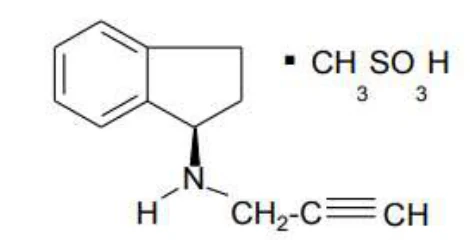
Molecular Weight: 267.34 g/mol
Physical Form: White to off-white powder
Solubility: Freely soluble in water or ethanol and sparingly soluble in isopropanol
14 CLINICAL TRIALS
14.1 Clinical Trials by Indication
Parkinson’s disease
Table 6 - Summary of Patient Demographics for Clinical Trials in Parkinson’s Disease
| Study # | Study design | Dosage, route of administration and duration | Study subjects (n) | Mean age (Range) | Sex |
|---|---|---|---|---|---|
TVP- 1012/232 (TEMPO) | A multicenter, double-blind, placebo-controlled, parallel-group, phase III study for the efficacy, tolerability, and safety of two doses of Rasagiline Mesylate in early Parkinson’s Disease (PD) patients not treated with Levodopa | 1 mg/day rasagiline, 2 mg/day rasagiline or placebo, administered orally 52 weeks treatment duration (26 weeks placebo-controlled, then 26 weeks active treatment) | N=404 | 61 (32-92 years) | 63% male 36% female |
TVP- 1012/103 (ANDANTE) | A multicenter, double-blind, placebo-controlled, randomized study to assess the safety and clinical benefit of Rasagiline as an add-on therapy to stable doses of dopamine agonists in the treatment of early Parkinson’s Disease | 1 mg/day rasagiline or placebo, administered orally 18 weeks treatment duration | N=328 | 62.5 (31-86 years) | 67.5% male 32.5% female |
| Study # | Study design | Dosage, route of administration and duration | Study subjects (n) | Mean age (Range) | Sex |
|---|---|---|---|---|---|
TVP- 1012/133 (PRESTO) | A multicenter, double-blind, randomized, placebo-controlled, parallel-group, phase III study for the efficacy, tolerability and safety of Rasagiline Mesylate in Levodopa treated Parkinson’s Disease patients with motor fluctuations | 0.5 mg/day rasagiline, 1 mg/day rasagiline or placebo, administered orally 26 weeks treatment duration | N=472 | 66 (45-81 years) | 67% male 33% female |
TVP- 1012/122 (LARGO) | 1 mg/day rasagiline, Entacapone 200 mg with each levodopa dose or placebo, administered orally 18 weeks treatment duration | N=687 | 64 (35-87 years) | 62% Male 38% female |
In phase II/III premarketing trials approximately 1361 patients received rasagiline mesylate with 771 being treated for at least one year, approximately 361 patients treated for at least two years, and 245 receiving rasagiline mesylate for more than 3 years. In a phase IV clinical trial, 162 patients received rasagiline for a duration of 18 weeks.
The effectiveness of rasagiline mesylate for the treatment of Parkinson’s disease was established in four 18- to 26-week, randomized, placebo-controlled trials. In one of these trials study TVP1012/232 (TEMPO) rasagiline mesylate was given as initial monotherapy treatment, in one as adjunctive therapy to dopamine agonists TVP-1012/103 (ANDANTE) and in the other two studies as adjunctive therapy to levodopa TVP-1012/133 (PRESTO) and TVP-1012/122 (LARGO).
Monotherapy Use of Rasagiline Mesylate Tablets
The monotherapy trial (TEMPO) was a double-blind, randomized, fixed-dose parallel group 26- week study in early Parkinson’s disease patients not yet receiving any concomitant dopaminergic therapy at the start of the study. The majority of the patients were not treated with any anti-Parkinson’s disease medication before receiving rasagiline mesylate treatment.
The first phase was placebo-controlled in which 404 patients were randomly assigned to receive placebo (138 patients), rasagiline 1 mg/day (134 patients) or rasagiline 2 mg/day (132 patients). Patients were not allowed to take levodopa, dopamine agonists, selegiline or amantadine, but if necessary, could take stable doses of anticholinergic medication. The average Parkinson’s disease duration was approximately 1 year (range 0 to 11 years). Patients completing the first 26 weeks or patients requiring additional anti-PD therapy could start the second phase of double- blind treatment in which all patients received rasagiline, 1 or 2 mg once daily.
Three hundred eighty patients entered the second phase. Patients who received rasagiline in the first phase remained on their originally assigned dose. Patients who received placebo in the first phase were switched to rasagiline, 2 mg once daily.
The primary measure of effectiveness was the change from baseline in the total score of the Unified Parkinson’s Disease Rating Scale (UPDRS), [mentation (Part I), + activities of daily living (ADL) (Part II) + motor function (Part III)]. The UPDRS is a multi-item rating scale that measures the ability of a patient to perform mental and motor tasks as well as activities of daily living. A reduction in the score represents improvement and a beneficial change from baseline appears as a negative number.
Rasagiline (1 or 2 mg once daily) had a significant beneficial effect relative to placebo on the primary measure of effectiveness in patients receiving six months of treatment and not on dopaminergic therapy. Patients who received rasagiline had significantly less worsening in the UPDRS score, compared to those who received placebo. The effectiveness of rasagiline 1 mg and 2 mg was comparable. Table 7 displays the results of the monotherapy trial.
Table 7. Early Parkinson’s Disease Patients not on Dopaminergic Therapy (TEMPO)
| Primary Measure of Effectiveness: Change in total UPDRS score | |||||||
|---|---|---|---|---|---|---|---|
| Baseline score | Change from baseline to termination score | p-value vs. placebo | |||||
| Placebo | 24.5 | 3.9 | --- | ||||
| 1.0 mg/day | 24.7 | 0.1 | 0.0001 | ||||
| 2.0 mg/day | 25.9 | 0.7 | 0.0001 | ||||
For the comparison between rasagiline 1mg/day and placebo, no differences in effectiveness based on age or gender were detected.
In addition in the TEMPO study the secondary measurements of effectiveness, UPDRS ADL (Activities of Daily Living) subscale score and Motor function subscale score, showed improvements consistent with the primary endpoint.
Adjunctive Use of Rasagiline Mesylate Tablets With Dopamine Agonists
The trial that investigated rasagiline as add-on therapy to dopamine agonists was a double-blind, randomized, fixed-dose, parallel group, 18-week study (ANDANTE). Early Parkinson’s disease patients were on stable dopamine agonist therapy for ≥30 days and were either unable to receive an optimal therapeutic dose of dopamine agonist due to intolerable side effects or required an additional therapeutic agent because their optimal dose of dopamine agonist was no longer sufficient to control Parkinson’s disease symptoms. Patients experiencing moderate to severe motor fluctuations and patients with an impulse control disorder were excluded from the study.
In this trial, 164 patients received placebo and 162 patients were treated with rasagiline 1 mg/day. The average Parkinson’s disease duration was approximately 2 years (range 0.1 to 14.5 years).
The primary measure of effectiveness was the change from baseline to week 18 in the total score of the Unified Parkinson’s Disease Rating Scale (UPDRS), [mentation (Part I) + activities of daily living (ADL) (Part II) + motor function (Part III)].
Rasagiline 1 mg had a significant beneficial effect relative to placebo on the primary measure of effectiveness in patients receiving stable dopamine agonist therapy. Table 8 displays the results of the add-on to dopamine agonist trial.
Table 8. Early Parkinson’s Disease Patients Receiving Rasagiline Mesylate Tablets as Adjunct Therapy with Stable Dopamine Agonist Therapy (ANDANTE)
| Primary Measure of Effectiveness: Change in total UPDRS score | |||||||
|---|---|---|---|---|---|---|---|
| Baseline score | Change from baseline to termination score | p-value vs. placebo | |||||
| Placebo | 29.8 | –1.2 | --- | ||||
Rasagiline 1.0 mg/day | 32.1 | –3.6 | 0.012 | ||||
Adjunctive Use of Rasagiline Mesylate Tablets With Levodopa
Two multicenter, randomized, multinational trials were conducted in more advanced Parkinson’s disease patients treated chronically with levodopa and experiencing motor fluctuations (including but not limited to, end of dose “wearing off,” sudden or random “off,”
etc) Studies TVP- 1012/133 (PRESTO) and TVP-1012/122 (LARGO). The first (PRESTO) was conducted in North America (U.S. and Canada) and compared two doses (0.5 mg and 1 mg daily) of rasagiline and placebo while the second (LARGO) was conducted outside of North America (several European countries, Argentina, Israel) and studied a single dose (1 mg daily) of rasagiline, a COMT inhibitor with each levodopa dose and placebo. Patients had had Parkinson’s disease for an average of 9 years (range 5 months to 33 years), had been taking levodopa for an average of 8 years (range 5 months to 32 years), and had been experiencing motor fluctuations for approximately 3 to 4 years (range 1 month to 23 years). Patients kept home diaries just prior to baseline and at specified intervals during the trial. Diaries recorded one of the following four conditions for each half-hour interval over a 24-hour period: “ON” (period of relatively good function and mobility) as either “ON” with no dyskinesia or without troublesome dyskinesia, “ON” with troublesome dyskinesia, “OFF” (period of relatively poor function and mobility) or asleep. “Troublesome” dyskinesia is defined as that which interferes with the patient’s daily activity. All patients had been inadequately controlled and were experiencing motor fluctuations typical of advanced stage disease despite receiving levodopa/decarboxylase inhibitor. The average dose of levodopa/decarboxylase inhibitor was approximately 700 to 800 mg (range 150 to 3000 mg/day). Patients were also allowed to take stable doses of additional anti-PD medications at entry into the trials. In both trials, approximately 65% of patients were on dopamine agonists and in the North American study (PRESTO) approximately 35% were on entacapone. The majority of patients taking entacapone were taking a dopamine agonist as well.
In both trials the primary measure of effectiveness was the change in the mean number of hours that were spent in the “OFF” state at baseline compared to the mean number of hours that were spent in the “OFF” state during the treatment period. Secondary measures of effectiveness included global assessments of improvement by the examiner, ADL subscale scores when OFF and UPDRS motor while ON. A reduction in the UPDRS score represents improvement and a beneficial change from baseline appears as a negative number.
PRESTO was a double-blind, randomized, fixed-dose parallel group trial conducted in 472 levodopa-treated Parkinson’s disease patients who were experiencing motor fluctuations. Patients were randomly assigned to receive placebo (159 patients), rasagiline 0.5 mg/day (164 patients), or rasagiline 1 mg/day (149 patients), and were treated for 26 weeks. Patients averaged approximately 6 hours daily in the “OFF” state at baseline, as confirmed by home diaries.
LARGO was a double-blind, randomized, parallel group trial conducted in 687 levodopa-treated Parkinson’s disease patients who were experiencing motor fluctuations. Patients were randomly assigned to receive placebo (229 patients), rasagiline 1 mg/day (231 patients) or an active comparator, a COMT inhibitor taken along with scheduled doses of levodopa/decarboxylase inhibitor (227 patients). Patients were treated for 18 weeks. Patients averaged approximately 5.6 hours daily in the “OFF” state at baseline as confirmed by home diaries.
In both studies rasagiline 1 mg once daily reduced “OFF” time compared to placebo when added to levodopa in patients experiencing motor fluctuations (Tables 9 and 10). The lower dose (0.5 mg) of rasagiline also significantly reduced “OFF” time (Table 9), but had a numerically smaller effect than the 1mg dose of rasagiline.
Table 9. Advanced* Parkinson’s Disease Patients Receiving Rasagiline Mesylate Tablets as Adjunct Therapy with Levodopa (PRESTO)
| Primary Measure of Effectiveness: Change in mean total daily “OFF” time | |||
|---|---|---|---|
| Baseline (hours) | Change from baseline to treatment period (hours) | p-value vs. placebo | |
| Placebo | 6.0 | -0.9 | --- |
| 0.5 mg/day | 6.0 | -1.4 | 0.0199 |
| 1.0 mg/day | 6.3 | -1.9 | < 0.0001 |
- * All recruited patients were experiencing motor fluctuations typical of advanced stage disease.
Table 10. Advanced* Parkinson’s Disease Patients Receiving Rasagiline Mesylate Tablets as Adjunct Therapy with Levodopa (LARGO)
| Primary Measure of Effectiveness: Change in mean total daily “OFF” time | |||
|---|---|---|---|
| Baseline (hours) | Change from baseline to treatment period (hours) | p-value vs. placebo | |
| Placebo | 5.5 |
| --- |
| 1.0 mg/day | 5.6 | -1.2 | 0.0001 |
| COMT inhibitor with each levodopa dose | 5.6 | -1.2 | <0.0001 |
* All recruited patients were experiencing motor fluctuations typical of advanced stage disease.
In both studies, dosage reduction of levodopa was allowed within the first 6 weeks if dopaminergic side effects, including dyskinesia and hallucinations, emerged. In PRESTO, levodopa dosage reduction occurred in 8% of patients in the placebo group and in 16% and 17% of patients in the 0.5 mg/day and 1 mg/day rasagiline groups, respectively. In those patients who had levodopa dosage reduced, the dose was reduced on average by about 7%, 9%, and 13% in the placebo, 0.5 mg/day, and 1 mg/day groups, respectively. In LARGO, levodopa dosage reduction occurred in 6% of patients in the placebo group and in 9% in the rasagiline 1 mg/day group. In patients who had their levodopa dosage reduced, the dose was reduced on average by about 13% and 11% in the placebo and the rasagiline groups, respectively.
For the comparison between rasagiline 1 mg/day and placebo in both studies, no differences in effectiveness based on age or gender were detected.
Several secondary outcome assessments in the two studies showed statistically significant improvements with rasagiline. These included effects on the activities of daily living (ADL) subscale of the UPDRS performed during an “OFF” period, and the motor subscale of the UPDRS as performed during an “ON” period.
14.2 Comparative Bioavailability Studies:
A double blind, balanced, randomized, two-treatment, two-sequence, two-period, single oral dose (1 x 1 mg), crossover comparative bioavailability study was conducted with JAMP Rasagiline tablets 1 mg (JAMP Pharma Corporation, Canada) and PrAZILECT® tablets 1 mg (Teva Pharmaceutical Industries Ltd., Israel) in 38 normal, healthy, adult, human subjects under fasting conditions. Data from 35 subjects who completed the study are presented in the following table.
SUMMARY TABLE OF THE COMPARATIVE BIOAVAILABILITY DATA
Rasagiline (1 x 1 mg) From measured data Geometric Mean Arithmetic Mean (CV %) | ||||
| Parameter | Test* | Reference† | % Ratio of Geometric Means | Confidence Interval |
AUCT (ng.h / mL) | 3.46 3.57 (27.35%) | 3.27 3.40 (26.93%) | 105.7% | 102.0% - 109.5% |
AUCI (ng.h / mL) | 3.51 3.62 (27.21%) | 3.33 3.45 (26.60%) | 105.6% | 101.9% - 109.4% |
Cmax (ng / mL) | 4.30 4.519 (30.25%) | 4.22 4.468 (33.52%) | 102.0% | 95.9% - 108.4% |
| Tmax (h)§ | 0.50 (0.17 - 0.67) | 0.33 (0.17 - 0.67) | ||
| T½ (h)€ | 2.62 (37.10%) | 2.44 (38.89%) | ||
* JAMP Rasagiline tablets 1 mg (JAMP Pharma Corporation, Canada)
† PrAZILECT® tablets 1 mg (Teva Pharmaceutical Industries Ltd., Israel) purchased in Canada
§ Expressed as the median (range) only
€ Expressed as the arithmetic mean (CV %) only
15 MICROBIOLOGY
No microbiological information is required for this drug product.
16 NON-CLINICAL TOXICOLOGY
General Toxicology
Acute Toxicity Studies
At the outset of the program the hydrochloride salt was selected as the development candidate. Subsequently the mesylate salt (designated TVP-1012) was chosen because of its superior stability profile. Bridging studies confirmed the similarity of the pharmacokinetic and toxicological profiles of the two salts. There was therefore no necessity to repeat the toxicology studies with the hydrochloride salt that were completed prior to the switch.
Single dose toxicity studies were conducted by the intravenous route in rats and by the oral route in mice, rats and dogs. Studies were initially conducted with the hydrochloride salt and subsequently with the more stable mesylate salt. Mortalities were induced in rats by intravenous doses > 69 mg/kg/day. Mortalities were induced in mice at oral doses of > 206 mg/kg, in rats at oral doses > 155 mg/kg and in dogs at oral doses of > 84 mg/kg. Death was a result of the functional neuropharmacological changes that can be anticipated when excessive doses of a molecule capable of inhibiting the oxidation of biogenic amines is administered. The maximal non-lethal oral dose for rats and mice was about 100 mg/kg/day and the maximum tolerable dose (MTD) in dogs was 42 mg/kg. These doses represent considerable multiples of the recommended clinically relevant maximum dose of 1 mg/patient/day.
Long-Term Toxicity Studies
The rat and dog were selected for the conduct of repeat dose toxicity studies, both species having been shown to be pharmacologically responsive to rasagiline-induced inhibition of MAO-B. Repeat dose intravenous toxicity studies of 4-weeks duration were conducted at maximum doses of 3 mg/kg/day in rats and 5 mg/kg/day in dogs. Repeat dose oral toxicity studies of up to 26 weeks duration were conducted in rats employing doses spanning the range 0.14 to 17 mg/kg/day and of up to 52 weeks duration in dogs employing doses spanning 0.28 to 21.0 mg/kg/day. The multiples of the systemic exposures to PAI and AI across the range of doses used for the repeat dose toxicity studies in rats and dogs are compared with the clinically relevant human exposure at the maximum recommended daily dose of 1 mg/day/patient in the following Table.
Table 11. Comparison of the Achieved Systemic Exposures to PAI and AI Over the Range of Doses used for Repeat Dose Oral Toxicity Studies in Rats and Dogs with Human Clinical Exposure at 1 mg/Patient/Day.
| Species | Sex | Dose | No. of Daily Doses | Cmax (ng/ml) | AUCt (ng h/ml) | |||||||||||
|---|---|---|---|---|---|---|---|---|---|---|---|---|---|---|---|---|
| PAI | AI | PAI | AI | |||||||||||||
| Rat | Male | 0.7 mg/kg/day | 90 | 64 | 17 | 74 | 50 | |||||||||
| 17.0 mg/kg/day | 28 | 1530 | 679 | 2706 | 3399 | |||||||||||
| Species | Sex | Dose | No. of Daily Doses | Cmax (ng/ml) | AUCt (ng h/ml) | ||||||||||||||
|---|---|---|---|---|---|---|---|---|---|---|---|---|---|---|---|---|---|---|---|
| PAI | AI | PAI | AI | ||||||||||||||||
| Female | 0.7 mg/kg/day | 90 | 80 | 31 | 78 | 89 | |||||||||||||
| 17.0 mg/kg/day | 28 | 1537 | 827 | 2829 | 6528 | ||||||||||||||
| Dog | Male | 0.7 mg/kg/day | 85 | 74 | 25 | 65 | 95 | ||||||||||||
| 21.0 mg/kg/day | 28 | 1604 | 1388 | 2807 | 7280 | ||||||||||||||
| Female | 0.7 mg/kg/day | 85 | 16 | 20 | 29 | 69 | |||||||||||||
| 21.0 mg/kg/day | 28 | 5358 | 1745 | 5781 | 1078 5 | ||||||||||||||
| Human* | Male | 1 mg/patient | 10 weeks | 5.8 | 2.0 | 9.6 | 6.6 | ||||||||||||
| Femal e | 1 mg/patient | 6.1 | 3.2 | 10.8 | 10.4 | ||||||||||||||
* Human exposure data taken from clinical study TVP-1012/231: Tolerability of TVP-1012, a Novel MAO-B Inhibitor, in Parkinson's disease patients.
Thus the lowest doses used for the repeat dose toxicity studies afforded at least a 2-fold multiple of the mean Cmax and AUClast values for PAI in humans receiving 1 mg/day. By contrast, the highest doses used for the repeat dose toxicology studies afforded at least a 250-fold multiple of Cmax and AUClast values for PAI in humans receiving 1 mg/day.
After intravenous and oral dosing the principal manifestations of toxicity were related to the loss of selectivity for MAO-B (i.e. reduced food intake and weight gain and hyperactivity and/or aggression in rats). At the higher oral doses these findings were sometimes accompanied by increases in liver weight and adaptive changes in hepatocyte morphology in rats. The liver changes were consistent with changes observed in rats treated with hepatic microsomal enzyme inducers, there was however no evidence from studies that measured hepatic microsomal proteins to support this hypothesis. Suspected changes in thyroid and bladder morphology identified in the rat 13–week oral study were not corroborated by findings in either the 4-week or 26-week rat oral studies. The no adverse effect levels (NOAELs) defined after 26 weeks’ treatment of rats and 52 weeks’ treatment of dogs were 5.1 mg/kg/day (for both rats and dogs). In terms of AUClast values, the animal NOAELs afford multiples of at least 15-fold with respect to exposure to PAI at the clinical dose of 1 mg/patient/day.
Studies were also conducted to examine whether co-administration of rasagiline with levodopa and a peripheral decarboxylase inhibitor (carbidopa) can produce effects other than the expected dopaminergic actions. There were no effects in rats or dogs given rasagiline/carbidopa/levodopa that could not be attributed to amplification of the effects of levodopa/carbidopa.
Carcinogenicity
Carcinogenesis: Two year carcinogenicity studies were conducted in CD-1 mice at oral (gavage) doses of 1, 15, and 45 mg/kg and in Sprague-Dawley rats at oral (gavage) doses of 0.3, 1, and 3 mg/kg (males) or 0.5, 2, 5, and 17 mg/kg (females). In rats, there was no increase in tumors at any dose tested. Plasma exposures at the highest dose tested were approximately 33 and 260 times, in male and female rats, respectively, the expected plasma exposures in humans at the maximum recommended dose (MRD) of 1 mg/day.
In mice, there was an increase in lung tumors (combined adenomas/carcinomas) at 15 and 45 mg/kg males and females. Plasma exposures associated with the no-effect dose (1 mg/kg) were approximately 5 times those expected in humans at the MRD.
The carcinogenic potential of rasagiline administered in combination with levodopa/carbidopa has not been examined.
Mutagenesis: Rasagiline was reproducibly clastogenic in in vitro chromosomal aberration assays in human lymphocytes in the presence of metabolic activation and was mutagenic and clastogenic in the in vitro mouse lymphoma TK assay in the absence and presence of metabolic activation. Rasagiline was negative in the in vitro bacterial reverse mutation (Ames) assay, the in vivo unscheduled DNA synthesis assay, and the in vivo micronucleus assay in CD-1 mice. Rasagiline was also negative in the in vivo micronucleus assay in CD-1 mice when administered in combination with levodopa/carbidopa.
Reproductive and Developmental Toxicology
Rasagiline had no effect on mating performance or fertility in male rats treated prior to and throughout the mating period, or in female rats treated from prior to mating through day 17 of gestation at oral doses up to 3 mg/kg/day (approximately 30 times the expected plasma rasagiline exposure (AUC) at the maximum recommended human dose [1 mg/day]). The effect of rasagiline administered in combination with levodopa/carbidopa on mating and fertility has not been examined.
No effect on embryo-fetal development was observed in a combined mating/fertility and embryo-fetal development study in female rats at doses up to 3 mg/kg/day (approximately 30 times the expected plasma rasagiline exposure (AUC) at the maximum recommended human dose [MRHD, 1 mg/day]).
In pregnant rabbits administered rasagiline throughout the period of organogenesis at oral doses of up to 36 mg/kg/day, no developmental toxicity was observed. At the highest dose tested, the plasma AUC was approximately 800 times that in humans at the MRHD.
In a study in which pregnant rats were dosed with rasagiline (0.1, 0.3, 1 mg/kg/day) orally, from the beginning of organogenesis to day 20 post-partum, offspring survival was decreased and offspring body weight was reduced at doses of 0.3 mg/kg/day and 1 mg/kg/day (10 and 16 times the expected plasma rasagiline exposure [AUC] at the MRHD). No plasma data were available at the no-effect dose (0.1 mg/kg); however, that dose is 1 times the MRHD on a mg/m2 basis. Rasagiline’s effect on physical and behavioral development was not adequately assessed in this study.
Rasagiline may be given as an adjunct therapy to levodopa/carbidopa treatment. In a study in which pregnant rats were dosed with rasagiline (0.1, 0.3, 1 mg/kg/day) and levodopa/carbidopa (80/20 mg/kg/day) (alone and in combination) throughout the period of organogenesis, there was an increased incidence of wavy ribs in fetuses from rats treated with rasagiline in combination with levodopa/carbidopa at 1/80/20 mg/kg/day (approximately 8 times the plasma AUC expected in humans at the MRHD and 1/1 times the MRHD of levodopa/carbidopa [800/200 mg/day] on a mg/m2 basis). In a study in which pregnant rabbits were dosed throughout the period of organogenesis with rasagiline alone (3 mg/kg) or in combination with levodopa/carbidopa (rasagiline: 0.1, 0.6, 1.2 mg/kg, levodopa/carbidopa: 80/20 mg/kg/day), an increase in embryo- fetal death was noted at rasagiline doses of 0.6 and 1.2 mg/kg/day when administered in combination with levodopa/carbidopa (approximately 7 and 13 times, respectively, the plasma rasagiline AUC at the MRHD). There was an increase in cardiovascular abnormalities with levodopa/carbidopa alone (1/1 times the MRHD on a mg/m2 basis) and to a greater extent when rasagiline (at all doses; 1-13 times the plasma rasagiline AUC at the MRHD) was administered in combination with levodopa/carbidopa.
17 SUPPORTING PRODUCT MONOGRAPHS
- 1. PrAZILECT® (Rasagiline Tablets, 0.5 mg and 1 mg), submission control No. 255783, Product Monograph Teva Canada Limited, Date of Revision: February 10, 2022.