


Product Monograph - Jamp-Vardenafil ODT
SUMMARY PRODUCT INFORMATION
| Table 1: Summary Product Information | ||
| Route of Administration | Dosage Form / Strength | Clinically Relevant Nonmedicinal Ingredients |
| oral | Orally disintegrating tablets / vardenafil 10 mg, as vardenafil hydrochloride trihydrate | None. For a complete listing see DOSAGE FORMS, COMPOSITION AND PACKAGING section. Aspartame (see WARNINGS AND PRECAUTIONS under Information for Patients) |
INDICATIONS AND CLINICAL USE
JAMP-VARDENAFIL ODT (vardenafil orally disintegrating tablets) is indicated for:
- Treatment of erectile dysfunction (difficulties or the inability to achieve or maintain penile erection sufficient for satisfactory sexual performance).
Special Populations
Pregnant and Nursing Women: JAMP-VARDENAFIL ODT is not indicated for use in women. There are no trials of vardenafil orally disintegrating tablets in pregnant women.
Pediatrics (< 18 years of age): JAMP-VARDENAFIL ODT is not indicated for use in individuals less than 18 years old.
Geriatrics (≥ 65 years of age): A starting dose of 5 mg vardenafil film-coated tablets should be considered in patients 65 years and older. On average, elderly males (65 years and over) had a 52% higher vardenafil AUC than younger males (18-45 years); however, this difference was not statistically significant. (See ACTION AND CLINICAL PHARMACOLOGY and DETAILED PHARMACOLOGY.) In clinical trials with vardenafil orally disintegrating tablets, 360 elderly subjects were treated with the 10 mg vardenafil orally disintegrating tablet as the only starting dose (see ACTION AND CLINICAL PHARMACOLOGY, Special Populations and Conditions and CLINICAL TRIALS).
CONTRAINDICATIONS
- Patients who are hypersensitive to JAMP-VARDENAFIL ODT (vardenafil orally disintegrating tablets) or to any ingredient in the formulations or component of the container. For a complete listing, see the DOSAGE FORMS, COMPOSITION AND PACKAGING section of the product monograph.
Consistent with the effects of PDE5 inhibition on the nitric oxide/cyclic guanosine monophosphate pathway, PDE5 inhibitors may potentiate the hypotensive effects of nitrates, and therefore coadministration of JAMP-VARDENAFIL ODT (vardenafil orally disintegrating tablets) with nitrates and nitric oxide donors is contraindicated.
In a patient prescribed JAMP-VARDENAFIL ODT (vardenafil orally disintegrating tablets), where nitrate administration is deemed medically necessary in a life-threatening situation, at least 24 hours should have elapsed after the last dose of JAMP-VARDENAFIL ODT (vardenafil orally disintegrating tablets) before nitrate administration is considered. In such circumstances, nitrates should only be administered under close medical supervision with appropriate hemodynamic monitoring.
- Concomitant use of JAMP-VARDENAFIL ODT (vardenafil orally disintegrating tablets) with cobicistat, indinavir, ritonavir, saquinavir, atazanavir, ketoconazole, itraconazole, erythromycin, or clarithromycin is contraindicated, as they are moderate or potent inhibitors of CYP3A4 (see WARNINGS AND PRECAUTIONS and DOSAGE AND ADMINISTRATION).
- JAMP-VARDENAFIL ODT (vardenafil orally disintegrating tablets) is contraindicated in patients with erectile dysfunction with a previous episode of non-arteritic anterior ischaemic optic neuropathy (NAION) (see WARNINGS AND PRECAUTIONS).
- The co-administration of PDE5 inhibitors, including JAMP-VARDENAFIL ODT, with guanylate cyclase stimulators, such as riociguat, is contraindicated as it may lead to potentially life-threatening episodes of symptomatic hypotension or syncope (see DRUG INTERACTIONS).
WARNINGS AND PRECAUTIONS
General
The evaluation of erectile dysfunction should include a determination of potential underlying causes, a medical assessment and the identification of appropriate treatment.
Before prescribing JAMP-VARDENAFIL ODT (vardenafil orally disintegrating tablets), it is important to note the following:
- Vardenafil orally disintegrating tablets has not been administered to patients with bleeding disorders or significant active peptic ulceration. Therefore JAMP-VARDENAFIL ODT should be administered to these patients after careful benefit-risk assessment. In humans, vardenafil orally disintegrating tablets has no effect on bleeding time alone or with acetylsalicylic acid (ie, ASPIRIN®). In vitro studies with human platelets indicate that vardenafil does not inhibit platelet aggregation induced by a variety of platelet agonists. A small, concentration-dependent, enhancement of the anti-aggregation effects of a nitric oxide donor, nitroprusside, was observed with supra-therapeutic concentrations of vardenafil in the presence of platelet agonists. The bleeding time in rats with a combination of heparin and vardenafil was not different from that observed with heparin alone. However, this interaction has not been studied in humans.
- Treatment for erectile dysfunction should generally be used with caution in patients with anatomical deformation of the penis (such as angulation, cavernosal fibrosis or Peyronie's disease) or in patients who have conditions that may predispose them to priapism (such as sickle cell anemia, multiple myeloma, or leukemia).
Vardenafil orally disintegrating tablets has not been studied in patients with CNS disease (other than vardenafil film-coated tablets in patients with spinal cord injury), hypoactive sexual desire, or in patients who have undergone pelvic surgery (except vardenafil film-coated tablets in patients who underwent nerve sparing prostatectomy), pelvic trauma, or radiotherapy.
Post-marketing reports of sudden loss of vision have occurred rarely, in temporal association with the use of PDE5 inhibitors. It is not clear whether these are related directly to the use of PDE5 inhibitors or to other factors. There may be an increased risk to patients who have already experienced Nonarteritic Anterior Ischemic Optic Neuropathy (NAION).
Cardiovascular
Physicians should consider the cardiovascular status of their patients, since there is a degree of cardiac risk associated with sexual activity. In men for whom sexual activity is not recommended because of their underlying cardiovascular status, including uncontrolled hypertension (with BP >140/90 mmHg), any treatment for erectile dysfunction, including JAMP-VARDENAFIL ODT, generally should not be used. Physicians are advised to consult the recommendations of the Princeton Consensus Panel. (10) The following groups of patients with cardiovascular disease were not included in clinical trials:
- patients with a myocardial infarction or stroke within the last 6 months,
- patients with unstable angina pectoris or acute myocardial ischemia,
- patients with uncontrolled arrhythmias, hypotension (<90/50 mmHg), uncontrolled hypertension (>170/110 mmHg),
- patients with symptomatic postural hypotension in the last six months.
JAMP-VARDENAFIL ODT has vasodilator properties which may result in mild and transient decreases in blood pressure. Patients with left ventricular outflow obstruction, eg, aortic stenosis and idiopathic hypertrophic subaortic stenosis, can be sensitive to the action of vasodilators, including Type 5 phosphodiesterase inhibitors.
Patients should be stable on alpha-blocker therapy before prescribing JAMP-VARDENAFIL ODT.
Patients receiving alpha-blocker therapy should be initiated at the lowest dose of 5 mg vardenafil film-coated tablet. Patients treated with alpha-blockers should not use JAMP-VARDENAFIL ODT as a starting dose.
Congenital and Acquired QT Prolongation
In a study of the effect of vardenafil on the QT interval in 59 healthy males, therapeutic (10 mg film-coated tablet) and supratherapeutic (80 mg film-coated tablet) doses of vardenafil produced minimal increases in QTc interval. (See ACTION AND CLINICAL PHARMACOLOGY, and DETAILED PHARMACOLOGY.) In a post-marketing study evaluating the effect of combining vardenafil with another drug of comparable QT effect (400 mg gatifloxacin), it was shown that the drug combination produced an additive QT effect when compared with either drug alone. (See DRUG INTERACTIONS, ACTION AND CLINICAL PHARMACOLOGY, and DETAILED
PHARMACOLOGY.) These observations should be considered in clinical decisions when prescribing JAMP-VARDENAFIL ODT to patients with known history of QT prolongation or patients who are taking medications known to prolong the QT interval. Patients with congenital QT prolongation (long QT syndrome) and those taking Class IA (eg, quinidine, procainamide) or Class III (eg, amiodarone, sotalol) antiarrhythmic medications should avoid using JAMP-
VARDENAFIL ODT.
Hepatic
JAMP-VARDENAFIL ODT is not indicated as a starting dose in patients with mild hepatic impairment (Child-Pugh A). In patients with mild hepatic impairment a starting dose of 10 mg vardenafil film-coated tablet is recommended. In patients with mild hepatic impairment (Child-Pugh A), administered vardenafil 10 mg film-coated tablet, vardenafil clearance was reduced resulting in 1.2-fold increased AUC and maximum concentration (Cmax) compared to healthy subjects. In patients with moderate impairment (Child-Pugh B), following a 10 mg dose of vardenafil film-coated tablet, the vardenafil clearance was reduced resulting in 2.6-fold and 2.3-fold increased AUC and Cmax compared to healthy male volunteers.
Patients with moderate hepatic impairment (Child Pugh B) should not use JAMP-VARDENAFIL ODT.
In patients with moderate hepatic impairment, a 5 mg starting dose of vardenafil film-coated tablet is recommended, which may subsequently be increased to a maximum dose of 10 mg film-coated tablet, based on tolerability and efficacy. (See DOSAGE AND ADMINISTRATION, and ACTION AND CLINICAL PHARMACOLOGY.)
There are no controlled clinical data on the efficacy and safety of vardenafil orally disintegrating tablets in severe hepatic impairment; its use is therefore not recommended until further information is available.
Ophthalmologic
There are no controlled clinical data on the efficacy and safety of vardenafil orally disintegrating tablets in known hereditary degenerative retinal disorders such as retinitis pigmentosa; its use is therefore not recommended until further information is available.
Physicians should advise patients to stop use of all phosphodiesterase type 5 (PDE5) inhibitors, including JAMP-VARDENAFIL ODT, and seek medical attention in the event of sudden loss of vision in one or both eyes. Such an event may be a sign of nonarteritic anterior ischemic optic neuropathy (NAION), a rare condition and a cause of decreased vision, including permanent loss of vision, that has been reported rarely postmarketing in temporal association with the use of all PDE5 inhibitors. Based on published literature, the annual incidence of NAION is 2.5–11.8 cases per 100,000 in males aged ≥50.
An observational case-crossover study evaluated the risk of NAION when PDE5 inhibitor use, as a class, occurred immediately before NAION onset (within 5 half-lives), compared to PDE5 inhibitor use in a prior time period. The results suggest an approximate 2-fold increase in the risk of NAION, with a risk estimate of 2.15 (95% CI 1.06, 4.34). A similar study reported a consistent result, with a risk estimate of 2.27 (95% CI 0.99, 5.20). Other risk factors for NAION, such as the presence of “crowded” optic disc, may have contributed to the occurrence of NAION in these studies.
Neither the rare postmarketing reports, nor the association of PDE5 inhibitor use and NAION in the observational studies, substantiate a causal relationship between PDE5 inhibitor use and NAION (see ADVERSE REACTIONS).
Physicians should consider whether their patients with underlying NAION risk factors could be adversely affected by use of PDE5 inhibitors. Individuals who have already experienced NAION are at increased risk of NAION recurrence. Therefore, PDE5 inhibitors, including JAMP-
VARDENAFIL ODT, should be used with caution in these patients and only when the anticipated benefits outweigh the risks. Individuals with “crowded” optic disc are also considered at greater risk for NAION compared to the general population, however, evidence is insufficient to support screening of prospective users of PDE5 inhibitors, including vardenafil, for this uncommon condition.
Otologic
Sudden decrease or loss of hearing has been reported in a few post-marketing and clinical trial cases with the use of PDE5 inhibitors, including vardenafil. These events, which may be accompanied by tinnitus and dizziness, have been reported in temporal association to the intake of PDE5 inhibitors, including vardenafil. In some of the cases, medical conditions and other factors were reported that may have also played a role in the otologic adverse events. In many cases, medical follow-up information was limited. It is not possible to determine whether these events are related directly to the use of PDE5 inhibitors or to other factors (see ADVERSE REACTIONS, Post-Market Adverse Drug Reactions and PART III: CONSUMER INFORMATION). Physicians should advise patients to stop taking vardenafil and seek prompt medical attention in case of sudden decrease or loss of hearing.
Renal
No dose adjustment is required in patients with renal impairment. In patients with mild, moderate, or severe renal impairment, the pharmacokinetics of vardenafil were similar to that of control groups with normal renal function. Vardenafil pharmacokinetics have not been evaluated in patients requiring dialysis.
There are no controlled clinical data on the efficacy and safety of vardenafil orally disintegrating tablets in end stage renal disease requiring dialysis; its use is therefore not recommended until further information is available.
Sexual Function/Reproduction
Risk of Priapism
Prolonged erection greater than 4 hours and priapism (painful erections greater than 6 hours in duration) have been reported infrequently with the use of PDE5 inhibitors, including vardenafil. The incidence of priapism may increase when PDE5 inhibitors are used in combination with intrapenile injections containing vasoactive agents, or other drugs with a known risk of priapism. In the event of an erection that persists longer than 4 hours, the patient should seek immediate medical assistance. If priapism is not treated immediately, penile tissue damage and permanent loss of potency could result. (See TREATMENT OF PRIAPISM.)
JAMP-VARDENAFIL ODT should be used with caution by patients with anatomical deformation of the penis (such as angulation, cavernosal fibrosis, or Peyronie’s disease) or by patients who have conditions that may predispose them to priapism (such as sickle cell anemia, multiple myeloma, or leukemia).
Combination with Other Erectile Dysfunction Therapies
The safety and efficacy of combinations of vardenafil orally disintegrating tablets with other agents for the treatment of erectile dysfunction have not been studied. Therefore, the use of such combinations is not recommended.
Information for Patients
Physicians should discuss with patients the contraindications of JAMP-VARDENAFIL ODT with regular and/or intermittent use of organic nitrates. Patients should be advised that concomitant use of vardenafil and nitrates could cause a sudden drop in blood pressure, dizziness, syncope, heart attack, or stroke.
Physicians should advise patients to stop taking PDE5 inhibitors, including JAMP-VARDENAFIL ODT, and seek prompt medical attention in the event of sudden decrease or loss of hearing. These events, which may be accompanied by tinnitus and dizziness, have been reported in temporal association to the intake of PDE5 inhibitors, including vardenafil. It is not possible to determine whether these events are related directly to the use of PDE5 inhibitors or to other factors. (See ADVERSE REACTIONS.)
Physicians should consider the potential cardiac risk of sexual activity in patients with pre-existing cardiovascular disease. Patients who experience symptoms upon initiation of sexual activity should be advised to refrain from further sexual activity and should report the episode to their physician.
Physicians should discuss with patients the appropriate use of JAMP-VARDENAFIL ODT and its potential benefits. The patient should be told that sexual stimulation is necessary for an erection if JAMP-VARDENAFIL ODT is consumed. Patients should be told that JAMP-VARDENAFIL ODT should be taken approximately 45-90 minutes before sexual activity and no more than the recommended dose should be taken. They should be advised to contact their physician for dose adjustment if they are not satisfied with the quality of their erection or if they have an undesirable effect as vardenafil in film-coated tablets are available in other strengths. Patients should be counselled about the importance of notifying their physicians about other medications they have been prescribed, including JAMP-VARDENAFIL ODT. Physicians should counsel patients that the concomitant use of PDE5 inhibitors, including JAMP-VARDENAFIL ODT with alpha-blockers may lead to symptomatic hypotension in some patients. PDE5 inhibitor therapy should only be initiated if the patient is stable on his alpha-blocker therapy. Patients should be advised that vardenafil may be administered at any time with tamsulosin. With other alpha-blockers, a time separation of dosing should be considered when vardenafil is prescribed concomitantly. In those patients already taking an optimized dose of vardenafil, alpha-blocker therapy should be initiated at the lowest dose. A stepwise increase in alpha-blocker dose may be associated with further lowering of blood pressure in patients taking a PDE5 inhibitor, including vardenafil. Patients should be advised that after stable concomitant therapy is established, vardenafil may be titrated as needed and tolerated. It should be noted that JAMP-VARDENAFIL ODT (vardenafil orally disintegrating tablets) is available only in a single strength.Patients who require a different dosage should be prescribed vardenafil film-coated tablets. (See DOSAGE AND ADMINISTRATION.)
Physicians should inform patients that erectile disturbances including prolonged erections greater than 4 hours and priapism have been reported with PDE5 inhibitors, including vardenafil. Patients who experience erections lasting 4 hours or more should be instructed to seek immediate medical assistance. If priapism is not treated immediately, penile tissue damage and permanent loss of potency may result. The incidence of priapism may increase when PDE5 inhibitors, including JAMP- VARDENAFIL ODT, are used in combination with intra-penile injections containing vasoactive agents (eg, CAVERJECT™).
JAMP-VARDENAFIL ODT should be used with caution in patients who have conditions that might predispose them to priapism (such as sickle cell anemia, multiple myeloma, or leukemia), or in patients with anatomical deformation of the penis (such as angulation, cavernosal fibrosis or Peyronie’s disease).
Nonarteritic Anterior Ischemic Optic Neuropathy (NAION) has been reported rarely in postmarketing surveillance with PDE5 inhibitors, including vardenafil. Physicians should discuss with their patients the increased risk of NAION before prescribing JAMP-VARDENAFIL ODT. If an individual experiences reduction or loss of vision in one or both eyes after the use of JAMP-VARDENAFIL ODT, he should immediately report the episode to his physician.
The use of JAMP-VARDENAFIL ODT offers no protection against sexually transmitted diseases. Counselling of patients about the protective measures necessary to guard against sexually transmitted diseases, including Human Immunodeficiency Virus (HIV), should be considered.
Aspartame: JAMP-VARDENAFIL ODT contains aspartame, a source of phenylalanine which may be harmful for people with phenylketonuria.
ADVERSE REACTIONS
Adverse Drug Reaction Overview Orally Disintegrating Tablets
Vardenafil orally disintegrating tablets was administered to 355 patients during clinical trials worldwide. The most frequently reported AEs during vardenafil orally disintegrating tablets treatment were headache (14.4% compared to 1.8% for placebo) followed by flushing (7.6% compared to 0.6% for placebo), nasal congestion (3.1% compared to 0.3% for placebo), dyspepsia (2.8% compared to 0.0% for placebo), dizziness (2.3% compared to 0.0% for placebo), and back pain (2.0% compared to 0.3% for placebo). Adverse events reported with vardenafil orally disintegrating tablets were comparable to those with vardenafil film-coated tablet.
Clinical Trial Adverse Drug Reactions
Because clinical trials are conducted under very specific conditions, the adverse reaction rates observed in the clinical trials may not reflect the rates observed in practice and should not be compared to the rates in the clinical trials of another drug. Adverse drug reaction information from clinical trials is useful for identifying drug-related adverse events and for approximating rates.
When vardenafil orally disintegrating tablets was taken as recommended, the following adverse events in Table 2 were reported in placebo-controlled clinical trials:
| Table 2: Adverse Events Reported by ≥1% of Patients Treated With vardenafil orally disintegrating tablets and More Frequent on Drug Than Placebo in Placebo-Controlled Trials of 10 mg vardenafil orally disintegrating tablets | ||||
| Vardenafil orally disintegrating tablets N = 355 (%) | Placebo N = 340 (%) | |||
Cardiac Disorders Supraventricular extrasystoles | 1.1 | 0.9 | ||
Gastrointestinal Disorders Diarrhea Dyspepsi a | 1.7 2.8 | 0.9 0.0 | ||
Musculoskeletal and Connective Tissue Disorders Back pain Muscle spasms | 2.0 1.1 | 0.3 0.6 | ||
Nervous System Disorders Dizziness Headache | 2.3 14.4 | 0.0 1.8 | ||
Respiratory, Thoracic and Mediastinal Disorders Nasal congestion | 3.1 | 0.3 | ||
Vascular Disorders Flushing | 7.6 | 0.6 | ||
Less Common Clinical Trial Adverse Drug Reactions (<1%)
The following additional adverse drug reactions occurred in <1% of patients receiving vardenafil orally disintegrating tablets in all clinical trials:
Cardiac Disorders: bundle branch block, palpitations.
Eye Disorders: diplopia, eye disorder, eye irritation, eye pain, eye pruritus, ocular hyperemia, vision blurred.
Gastrointestinal Disorders: abdominal pain (upper), dry mouth, dysphagia.
General Disorders and Administration Site Conditions: asthenia, chest pain, fatigue, feeling hot.
Investigations: alanine aminotransferase increased, heart rate increased.
Musculoskeletal and Connective Tissue Disorders: myalgia.
Nervous System Disorders: paresthesia.
Renal and Urinary Disorders: polyuria.
Reproductive System and Breast Disorders: prostatitis.
Respiratory, Thoracic and Mediastinal Disorders: dry throat, rhinorrhea.
Skin and Subcutaneous Tissue Disorders: hyperhydrosis, photosensitivity reaction, pruritus, rash.
Post-Market Adverse Drug Reactions
Myocardial infarction (MI) has been reported in temporal association with the use of vardenafil and sexual activity, but it is not possible to determine whether MI is related directly to vardenafil, to sexual activity, to the patient's underlying cardiovascular disease, or to a combination of these factors.
From post-marketing experience with drugs of this class, the following serious adverse events have been reported in temporal association with the use of the PDE5 inhibitors: abnormal accommodation, abnormal vision, amnesia, anxiety, cardiovascular hemorrhage, cerebrovascular hemorrhage, decreased vision, hematemesis, hematuria, intraocular hemorrhage, pulmonary hemorrhage, seizure, sudden cardiac death, temporary vision loss, and ventricular arrhythmia.
Cases of sudden decrease or loss of hearing have been reported in temporal association with the use of PDE5 inhibitors including vardenafil. In some cases, medical conditions and other factors were reported that may have also played a role in the otologic adverse events. In many cases, medical follow-up information was limited. It is not possible to determine whether these reported events are related directly to the use of vardenafil, to the patient’s underlying risk factors for hearing loss, a combination of these factors, or to other factors. (See WARNINGS AND PRECAUTIONS, ADVERSE REACTIONS, and PART III: CONSUMER INFORMATION.)
Special senses: nonarteritic anterior ischemic optic neuropathy, retinal vein occlusion, visual field defect.
Nonarteritic Anterior Ischemic Optic Neuropathy (NAION) has been reported rarely in post- marketing surveillance with PDE5 inhibitors, including vardenafil. Two observational case-crossover studies evaluated the risk of NAION after PDE5 inhibitor use, as a class. The results suggest an approximate 2-fold increase in the risk of NAION. However, a causal relationship between PDE5 inhibitor use and NAION has not been substantiated (See WARNINGS AND PRECAUTIONS).
DRUG INTERACTIONS
Serious Drug Interactions
|
Overview
CYP3A4 Inhibitors: Vardenafil is metabolized predominantly by hepatic enzymes via cytochrome P450 (CYP) isoform 3A4, with some contribution from CYP3A5 and CYP2C isoforms. Therefore, inhibitors of these enzymes may reduce vardenafil clearance. Concomitant use of JAMP-VARDENAFIL ODT with cobicistat, indinavir, ritonavir, saquinavir, atazanavir, ketoconazole, and itraconazole is contraindicated, as they are potent inhibitors of CYP3A4. (See CONTRAINDICATIONS and DOSAGE AND ADMINISTRATION.)
Antihypertensive Agents: The potential for vardenafil to augment the hypotensive effects of antihypertensive agents was examined in a clinical pharmacology study and in placebo-controlled clinical trials.
Vardenafil (20 mg film-coated tablet), when coadministered with slow-release nifedipine (30 mg or 60 mg once daily to hypertensive patients), did not affect the relative AUC or Cmax of nifedipine, a drug that is metabolized via CYP3A4. Vardenafil (20 mg film-coated tablet) produced mean additional blood pressure reductions of 5.9 mmHg and 5.2 mmHg for supine systolic and diastolic blood pressure, respectively, compared to placebo.
In the placebo-controlled studies of 5, 10, and 20 mg vardenafil (film-coated tablet), a total of 41% of patients on placebo and 42% of patients on vardenafil received at least one antihypertensive medication during their treatment with study medication. Major classes of antihypertensive agents were represented, including: calcium channel blockers (N = 353), ACE inhibitors (N = 650), beta-blockers (N = 346), angiotensin receptor blockers (N = 188), and diuretics (N = 312).
Analysis of these data showed no difference in adverse events, cardiovascular adverse events or discontinuations due to adverse events, in patients with or without antihypertensive medications.
Riociguat: Animal models showed an additive systemic blood pressure lowering effect when sildenafil or vardenafil was combined with riociguat. Increasing the dose of sildenafil or vardenafil resulted in a greater than proportional decrease in systemic blood pressure in some cases. In an exploratory study, single doses of riociguat administered to patients with pulmonary arterial hypertension (PAH) treated with sildenafil showed additive hemodynamic effects. A higher rate of discontinuation, predominately due to hypotension, was observed in PAH patients treated with a combination of sildenafil and riociguat compared to those treated with sildenafil alone.
Concomitant use of vardenafil with riociguat, a stimulator of sGC, is contraindicated (See
CONTRAINDICATIONS).
Alcohol: The pharmacokinetics of vardenafil were not influenced by alcohol, and the pharmacokinetics of alcohol were not influenced by coadministration with vardenafil. No additive effects on blood pressure, heart rate, or bleeding time are seen when vardenafil (20 mg film-coated tablet) is administered with alcohol compared to placebo plus alcohol.
Androgens, Pertinent Anti-androgens: Vardenafil has not been studied in patients using androgen replacement therapy or anti-androgens.
P-gp Substrate: In vitro data suggest that effects of vardenafil on P-gp substrates more sensitive than digoxin, such as dabigatran cannot be excluded.
Drug-Drug Interactions
| Table 3: Established or Potential Drug-Drug Interactions | |||
| Proper Name | Ref | Effect | Clinical Comment |
| Nitrates and nitric oxide donors | CT | Potentiates blood pressure lowering effects of sublingual nitrates taken 1 and 4 hours after a 20 mg dose of vardenafil film-coated tablet in healthy middle-aged subjects. These effects were not observed when 20 mg vardenafil film-coated tablet was taken 24 hours before the NTG. | Potentiation of the hypotensive effects of nitrates for patients with ischemic heart disease have not been evaluated, and concomitant use of nitrates with JAMP-VARDENAFIL ODT is contraindicated. (See CONTRAINDICATIONS.) |
Potent CYP3A4 Inhibitors | CT/ T | May decrease vardenafil clearance. | Concomitant use of JAMP- VARDENAFIL ODT with cobicistat, indinavir, ritonavir, saquinavir, atazanavir, ketoconazole, and itraconazole is contraindicated, as they are potent inhibitors of CYP3A4. (See CONTRAINDICATIONS and DOSAGE AND ADMINISTRATION.) |
| Dabigatran etexilate | T | Comparison of digoxin and dabigatran as clinical probe substrates for P-gp showed that dabigatran is a more sensitive substrate for P- gp. | In vitro data suggest that effects of vardenafil on P-gp substrates more sensitive than digoxin, such as dabigatran cannot be excluded. |
| Erythromycin | CT | 4-fold increase in vardenafil AUC and a 3-fold increase in Cmax when 500 mg t.i.d. erythromycin was coadministered with vardenafil (5 mg film-coated tablet) to healthy volunteers. | Concomitant use of JAMP- VARDENAFIL ODT with erythromycin is contraindicated, as it is a moderate inhibitor of CYP3A4. (See DOSAGE AND ADMINISTRATION.) |
| Clarithromycin | T | Expected to be similar to that for erythromycin. | Concomitant use of JAMP- VARDENAFIL ODT with clarithromycin is contraindicated, as it is a moderate inhibitor of CYP3A4. (See DOSAGE AND ADMINISTRATION.) |
| Gatifloxacin | CT | An increase in QTcF (Fridericia) was observed when 10 mg vardenafil and 400 mg gatifloxacin were coadministered. The combined effect on QTcF appears to be small (Point Estimate of 4 msec with a 90% Confidence Interval of 1-6 msec) and additive when compared to either drug alone. | The clinical impact of these QT changes is unknown. Patients with congenital QT prolongation (long QT syndrome) and those taking Class IA (eg, quinidine, procainamide) or Class III (eg, amiodarone, sotalol) antiarrhythmic medications should avoid using JAMP-VARDENAFIL ODT. (See DETAILED PHARMACOLOGY.) |
| Cimetidine | CT | No effect on AUC and Cmax of vardenafil film-coated tablet 20 mg when coadministered with 400 mg BID cimetidine in healthy male volunteers. | Cimetidine, a nonspecific CYP3A4 inhibitor, has no interaction with vardenafil. |
Table 3: Established or Potential Drug-Drug Interactions
| Proper Name | Ref | Effect | Clinical Comment |
| Alpha- adrenergic Receptor- blocking Agents | CT | Consistent with the vasodilatory effects of alpha-blockers and vardenafil, the concomitant use of vardenafil with alpha- blockers may lead to symptomatic hypotension in some patients. | Patients treated with alpha-blockers should not use JAMP- VARDENAFIL ODT as a starting dose. In those patients already taking an optimized dose of vardenafil, alpha-blocker therapy should be initiated at the lowest dose. A stepwise increase in alpha-blocker dose may be associated with further lowering of blood pressure in patients taking a PDE5 inhibitor, including vardenafil. Patients should be advised that after stable concomitant therapy is established, vardenafil may be titrated as needed and tolerated. (See DETAILED PHARMACOLOGY, DOSAGE AND ADMINISTRATION.) It should be noted that JAMP- VARDENAFIL ODT 10 mg (vardenafil) orally disintegrating tablets are available only in a single strength. Patients who require a different dosage should be prescribed vardenafil film-coated tablets. |
| Warfarin | CT | Warfarin, which is metabolized by CYP2C9, did not alter the plasma levels of vardenafil when coadministered. No effect on pharmacokinetic or pharmacodynamic activity of warfarin (25 mg) when coadministered with vardenafil orally disintegrating tablets (20 mg film- coated tablet). | No clinically relevant interactions with JAMP- VARDENAFIL ODT. |
| Glyburide | CT | The AUC and Cmax of glyburide was not altered by coadministration of vardenafil (20 mg film-coated tablet). No evidence that pharmacokinetics were altered by coadministration of 3.5 mg OD glyburide, which is metabolized by CYP3A4. | No clinically relevant interactions with JAMP- VARDENAFIL ODT. |
| Digoxin | CT | Digoxin (0.375 mg OD) did not alter the plasma levels of vardenafil when taken in combination. The steady-state pharmacokinetics of digoxin was not altered by the coadministration of vardenafil orally disintegrating tablets (20 mg film-coated tablet). | No clinically relevant interactions with JAMP-VARDENAFIL ODT. |
Table 3: Established or Potential Drug-Drug Interactions
| Proper Name | Ref | Effect | Clinical Comment |
| Antacids (magnesium hydroxide/ aluminum hydroxide (MAALOX®) | CT | A single dose of MAALOX® did not affect the AUC or the Cmax of vardenafil. | No clinically relevant interactions with JAMP-VARDENAFIL ODT. |
H2 Antagonists Ranitidine | CT | The AUC and Cmax of vardenafil orally disintegrating tablets was not affected by coadministration of ranitidine (150 mg BID). | No clinically relevant interactions with JAMP-VARDENAFIL ODT. |
Acetylsalicylic Acid (ASA) ASPIRIN | CT | Vardenafil (10 and 20 mg film-coated tablet) did not potentiate the increase in bleeding time caused by ASPIRIN (two 81 mg tablets OD). | No clinically relevant interactions with JAMP-VARDENAFIL ODT. |
| Nifedipine | CT | Vardenafil (20 mg film-coated tablet), when coadministered with slow-release nifedipine (30 mg or 60 mg once daily to hypertensive patients), did not affect the relative AUC or Cmax of nifedipine, a drug that is metabolized via CYP3A4. Vardenafil (20 mg film-coated tablet) produced mean additional blood pressure reductions of 5.9 mmHg and 5.2 mmHg for supine systolic and diastolic blood pressure, respectively, compared to placebo. | No clinically relevant interactions with JAMP-VARDENAFIL ODT. |
| Legend: C = Case Study; CT = Clinical Trial; T = Theoretical | |||
Drug-Food Interactions
Grapefruit juice, a weak inhibitor of CYP3A4 gut wall metabolism, may give rise to modest increases in plasma levels of vardenafil. The combination should be avoided. A high-fat meal may delay tmax by one hour. (See ACTION AND CLINICAL PHARMACOLOGY.)
Drug-Herb Interactions
Interactions with herbal products have not been established.
Drug-Laboratory Interactions
Interactions with laboratory tests have not been established.
DOSAGE AND ADMINISTRATION
Dosing Considerations
Vardenafil is not affected by moderate amounts of alcohol (0.5 g/kg body weight; approximately 3.4 fluid ounces of 40% alcohol in a 70 kg person). Sexual stimulation is required to achieve an erection.
JAMP-VARDENAFIL ODT (vardenafil orally disintegrating tablets) should be placed on the tongue until dissolved. It should be taken by itself without food or liquid in the mouth, immediately upon release from the blister. JAMP-VARDENAFIL ODT can be taken before or after food.
Bioequivalence studies have shown that vardenafil orally disintegrating tablets is not bioequivalent to vardenafil 10 mg film-coated tablets. Therefore, JAMP-VARDENAFIL ODT should not be used as an equivalent to vardenafil 10 mg film-coated tablets, ie, it is not interchangeable with vardenafil 10 mg film-coated tablets (see ACTION AND CLINICAL PHARMACOLOGY, Pharmacokinetics).
Patients who require a lower or higher dose of vardenafil need to be prescribed vardenafil film-coated tablets.
Recommended Dose and Dosage Adjustment
The recommended starting dose of JAMP-VARDENAFIL ODT is 10 mg, taken orally 45 to 90 minutes before sexual activity. Sexual activity can be initiated for up to 8 hours after taking JAMP- VARDENAFIL ODT. The maximum recommended dose for JAMP-VARDENAFIL ODT is 10 mg (one 10 mg orally disintegrating tablet) once daily. (See CLINICAL TRIALS.)
Geriatrics: A starting dose of 5 mg vardenafil film-coated tablets should be considered in patients 65 years or older. On average, elderly males (65 years and over) had a 52% higher vardenafil AUC than younger males (18-45 years); however, this difference was not statistically significant. (See ACTION AND CLINICAL PHARMACOLOGY and DETAILED PHARMACOLOGY.) In clinical trials with vardenafil orally disintegrating tablets, 360 elderly subjects were treated with the 10 mg vardenafil orally disintegrating tablet as the only starting dose (see CLINICAL TRIALS).
Vardenafil AUC and Cmax in elderly patients (65 years or over) taking vardenafil orally disintegrating tablets were increased by 31 to 39 % and 16 to 21 %, respectively, in comparison to patients aged 45 years and below.
Vardenafil was not found to accumulate in the plasma in patients aged 45 years and below or 65 years or over following once-daily dosing of 10 mg orodispersible tablet over ten days. No overall differences in safety or effectiveness were observed with vardenafil orally disintegrating tablets between elderly and younger subjects in placebo controlled clinical trials.
Hepatic Insufficiency: JAMP-VARDENAFIL ODT is not indicated as a starting dose in patients with mild hepatic impairment (Child-Pugh A). In patients with mild hepatic impairment, a starting dose of 10 mg vardenafil film-coated tablet is recommended. In patients with mild hepatic impairment (Child- Pugh A), vardenafil clearance was reduced resulting in 1.2-fold increased AUC and maximum concentration (Cmax) compared to healthy subjects. Vardenafil clearance is reduced in patients with moderate hepatic impairment. Patients with moderate hepatic impairment (Child-Pugh B) should not use JAMP-VARDENAFIL ODT. Vardenafil has not been evaluated in patients with severe hepatic impairment (Child-Pugh C). (See WARNINGS AND PRECAUTIONS, Hepatic.)
Renal Insufficiency: No dose adjustment is required for patients with mild, moderate, or severe renal impairment. Vardenafil has not been evaluated in patients on dialysis.
OVERDOSAGE
Vardenafil in single doses of film-coated tablets up to 80 mg per day was tolerated in healthy male volunteers without producing serious adverse side effects. A 40 mg once daily dose of vardenafil film- coated tablets demonstrated mild adverse events while 40 mg of film-coated tablets twice daily resulted in cases of severe back pain. No muscle or neurological toxicity was identified.
In cases of overdose, standard supportive measures should be taken as required. Renal dialysis is not expected to accelerate clearance because vardenafil is highly bound to plasma proteins and is not significantly eliminated in the urine.
TREATMENT OF PRIAPISM
Health professionals should warn patients that there have been rare reports of prolonged erections greater than 4 hours and priapism (painful erections greater than 6 hours in duration) for this class of compounds. In the event that an erection persists longer than 4 hours, the patient should seek immediate medical assistance. If priapism is not treated immediately, penile tissue damage and permanent loss of potency may result.
Detumescence Protocols
- 1. Aspirate 40 to 60 mL blood from either left or right corpora using a vacutainer and holder for drawing blood. Patient will often detumesce while blood is being aspirated. Apply ice for 20 minutes post aspiration if erection persists. If the first procedure is unsuccessful, try Procedure 2.
- 2. Put patient in supine position. Dilute 10 mg phenylephrine into 20 mL distilled water for injection (0.05%). With an insulin syringe, inject 0.1 to 0.2 mL (50-100 mcg) into the corpora every 2 to 5 minutes until the detumescence occurs. The occasional patient may experience transient bradycardia and hypertension when given phenylephrine injections; therefore, monitor the patient's blood pressure and pulse every 10 minutes. Patients at risk include those with cardiac arrhythmias and diabetes. Refer to the prescribing information for phenylephrine before use. Do not give phenylephrine to patients on monoamine oxidase (MAO) inhibitors. When phenylephrine is used within the first 12 hours of erection, the majority of patients will respond. If Procedure 2 is unsuccessful, try Procedure 3.
- 3. If the above measures fail to detumesce the patient, a urologist should be consulted as soon as possible, especially if the erection has been present for many hours. If priapism is not treated immediately, penile tissue damage and/or permanent loss of potency may result.
ACTION AND CLINICAL PHARMACOLOGY
Mechanism of Action
Vardenafil is a highly selective cyclic GMP-specific phosphodiesterase type 5 (PDE5) inhibitor used for the treatment of male erectile dysfunction/difficulties.
Penile erection is a hemodynamic process initiated by the relaxation of smooth muscle in the corpus cavernosum and its associated arterioles. During sexual stimulation, nitric oxide is released from nerve endings and endothelial cells in the corpus cavernosum. Nitric oxide activates the soluble enzyme guanylate cyclase, resulting in increased synthesis of cyclic guanosine monophosphate (cGMP) in the corpus cavernosum smooth muscle cells. The cGMP in turn triggers smooth muscle relaxation, allowing increased blood flow into the penis and resulting in an erection. The tissue concentration of cGMP is regulated by both the rates of synthesis and degradation via phosphodiesterases (PDEs).
For management of a suspected drug overdose, contact your regional Poison Control Centre.
The most prominent PDE in the human corpus cavernosum is the cGMP- specific phosphodiesterase type 5 (PDE5); by inhibiting PDE5, the enzyme responsible for cGMP degradation in the corpus cavernosum, vardenafil potently enhances the effect of endogenous nitric oxide, locally released in the corpus cavernosum upon sexual stimulation.
Studies on purified enzyme preparations have shown that vardenafil is a potent and selective inhibitor of human PDE5 with an IC50 (concentration that inhibits 50% of enzyme activity) of 0.7 nM. The inhibitory effect of vardenafil is more potent on PDE5 than on other known phosphodiesterases
(>15-fold relative to PDE6 [found in the retina], >130-fold relative to PDE1 [found in the brain, heart, and vascular system], >300-fold relative to PDE11 [found in the testes, penile vasculature, vascular smooth muscle, skeletal muscle, prostate, pituitary], and >1,000-fold relative to PDE2, 3, 4, 7, 8, 9, and 10). In vitro, vardenafil causes an elevation of cGMP in the isolated human corpus cavernosum, resulting in muscle relaxation. In the conscious rabbit, vardenafil causes a penile erection that is dependent upon endogenous nitric oxide synthesis and is potentiated by nitric oxide donors.
Pharmacodynamics
The following descriptions of pharmacodynamic studies were conducted using vardenafil film-coated tablets:
Studies of Vardenafil on Erectile Response: In patients with erectile dysfunction, erections considered sufficient for penetration (greater than or equal to 60% rigidity as measured by RIGISCAN® device [RigiScan Ambulatory Rigidity and Tumescence Monitor, Dacomed Corp., Minneapolis, USA]) occurred in 64% of men on 20 mg film-coated tablet as early as 15 minutes post dosing compared to 52% of men on placebo. The overall erectile response of these subjects treated with vardenafil film-coated tablet became statistically significant compared to placebo at 25 minutes post dosing. In two separate double-blind, placebo-controlled crossover RIGISCAN ® trials of men with erectile dysfunction of at least 6 months duration, 10 mg and 20 mg vardenafil film-coated tablet significantly improved erections initiated by visual sexual stimulation. Objective measurements of rigidity at the base and tip of the penis (by RIGISCAN ®) during visual sexual stimulation showed significantly better results at all doses and time points with vardenafil film-coated tablet than with placebo. The mean duration of an erection, in response to visual sexual stimulation, sufficient for penetration was 54 and 67 minutes at the base and 39 and 45 minutes at the tip of the penis for the
10 mg and 20 mg doses of vardenafil film-coated tablet respectively, compared to 31 minutes at the base and 17 minutes at the tip for placebo.
The earliest elapsed time from dosing to attainment of an erection perceived to be sufficient for penetration and resulting in successful completion of intercourse was evaluated in a randomized, double-blind parallel group study in men with ED. The percentage of men reporting successful completion of intercourse after dosing with 10 mg or 20 mg vardenafil (film-coated tablet) was greater than with placebo (P < 0.025) at all times ≥ 10 minutes and ≥ 11 minutes, respectively.
The amount of time from dosing (flexible dose) to attainment of an erection perceived to be sufficient for penetration and resulting in successful intercourse was evaluated in a randomized, double-blind, parallel group study in men with ED. The percentage of men reporting successful completion of intercourse 8 to 10 hours after dosing was greater with vardenafil compared to placebo (P < 0.001).
Studies of Vardenafil on Blood Pressure and Heart Rate: In a clinical pharmacology study of patients with erectile dysfunction, single doses of 20 mg vardenafil film-coated tablet caused a mean maximum decrease in supine blood pressure of 7 mmHg systolic and 8 mmHg diastolic (compared to placebo), accompanied by a mean maximum increase of heart rate of 4 beats per minute. The maximum decrease in blood pressure occurred between 1 and 4 hours after dosing. Following multiple dosing for 31 days, blood pressure responses were observed on Day 31 that were similar to those observed on Day 1. PDE5 inhibitors, including vardenafil, may add to the blood pressure lowering effects of antihypertensive agents. (See DRUG INTERACTIONS.)
Larger effects were recorded among subjects receiving concomitant nitrates. (See
CONTRAINDICATIONS and DETAILED PHARMACOLOGY.)
Studies of vardenafil on Cardiac Parameters: PDE5 inhibitors, including vardenafil, have been shown to increase the QT interval. In a study of the effect of vardenafil on the QT interval in
59 healthy males, therapeutic and supratherapeutic doses of vardenafil film-coated tablets and another member of the PDE5 inhibitor class produced minimal increases in the QTc interval. This effect on the QT interval is consistent with that observed with other members of the PDE5 inhibitor class. In a post-marketing study evaluating the effect of combining vardenafil film-coated tablets with another drug of comparable QT effect (400 mg gatifloxacin), it was shown that the drug combination produced an additive QT effect when compared with either drug alone. (See WARNINGS AND PRECAUTIONS, DRUG INTERACTIONS, and DETAILED PHARMACOLOGY.)
Studies of vardenafil on Exercise Performance in Patients With Coronary Artery Disease (CAD): In two independent trials that assessed 10 mg (N = 41) and 20 mg (N = 39) vardenafil film-coated tablet respectively, vardenafil did not alter the total treadmill exercise time compared to placebo. The patient population included men aged 40-80 years with stable exercise-induced angina documented by at least one of the following: 1) prior history of MI, CABG, PTCA, or stenting (not within 6 months); 2) positive coronary angiogram showing at least 60% narrowing of the diameter of at least one major coronary artery; or 3) a positive stress echocardiogram or stress nuclear perfusion. The results of the 20 mg study are shown in Table 4.
| Table 4: Effect of 20 mg Vardenafil Film-coated Tablets on Exercise Treadmill Completion Times (Mean in Seconds ± S.D.) | |||||
| Parameter | 20 mg Vardenafil Film- Coated Tablet (Mean in Seconds) | Placebo (Mean in Seconds) | |||
| Total Treadmill Exercise Time | 414 ± 114 (N = 36) | 411 ±124 (N = 36) | |||
| Total Time to Develop Symptoms of Angina Pectoris (first awareness) | 354 ± 137 (N = 36) | 347 ± 143 (N = 36) | |||
| Total Time to ST-Segment depression (1 mm or greater change from baseline) | 364 ±101 (N = 35) | 366 ± 105 (N = 36) | |||
Studies of Vardenafil on Vision: Single oral doses of phosphodiesterase inhibitors have demonstrated transient dose-related impairment of colour discrimination (blue/green) using the Farnsworth- Munsell 100-hue test and reductions in electroretinogram (ERG) b-wave amplitudes, with peak effects near the time of peak plasma levels. These findings are consistent with the inhibition of PDE6 in rods and cones, which is involved in phototransduction in the retina. The findings were most evident one hour after administration, diminishing but still present 6 hours after administration. In a single dose study in 25 normal males, 40 mg vardenafil film-coated tablets, twice the maximum daily recommended dose, did not alter visual acuity, intraocular pressure, fundoscopic and slit lamp findings. (See DETAILED PHARMACOLOGY.)
Studies of Vardenafil on Sperm Characteristics: In healthy male volunteers, there was no effect on sperm motility, morphology, or a variety of other parameters relevant to male reproductive function
1.5 hours after single 20 mg oral doses of vardenafil film-coated tablet were administered.
In a 6-month placebo-controlled study conducted with healthy males or males with erectile dysfunction, aged 25 to 64 years, daily treatment with 20 mg vardenafil (film-coated tablet) had no effect on sperm concentration, count, motility, or morphology. In addition, vardenafil had no effect on serum levels of testosterone, luteinizing hormone, or follicle-stimulating hormone. The effect of vardenafil on human fertility was not directly evaluated in this study. Although daily treatment with vardenafil 20 mg for six months in this study did not demonstrate significant effects on sperm characteristics, the effect of longer duration of treatment with vardenafil on sperm characteristics is unknown.
Pharmacokinetics
Bioequivalence studies have shown that vardenafil orally disintegrating tablets 10 mg (orally disintegrating tablet) is not bioequivalent to vardenafil 10 mg film-coated tablet; therefore, the orally disintegrating formulation should not be used as an equivalent to vardenafil 10 mg film-coated tablet.
Absorption: JAMP-VARDENAFIL ODT disintegrates on the tongue within a few seconds. A small amount of drug dissolved in the saliva is absorbed through the oral mucosa. The remainder is swallowed and absorbed in the gastrointestinal tract. This results in increased bioavailability compared to the film- coated tablet, such that the two formulations are not bioequivalent and not interchangeable.
The median time to reach Cmax (tmax) in patients receiving vardenafil orally disintegrating tablets 10 mg in the fasted state varied between 45 to 90 minutes. After administration of vardenafil orally disintegrating tablets 10 mg to elderly (≥ 65 years) and young (18 to 45 years) patients with erectile dysfunction, mean AUC was increased by 21% and 29 %, respectively while mean Cmax was lower by 19% and 8%, respectively in comparison to 10 mg vardenafil film-coated tablets. In a study of healthy male volunteers (18-50 years), the mean Cmax and AUC of vardenafil from vardenafil orally disintegrating tablets 10 mg were higher by 15% and 44%, respectively compared to
10 mg vardenafil film-coated tablets. Mean vardenafil plasma concentrations measured after administration of a single dose of vardenafil orally disintegrating tablets to patients with erectile dysfunction (18 to 45 years) are depicted in Figure 1.
Figure 1: Vardenafil Plasma Concentration (Mean ± SD) Profile for vardenafil orally disintegrating tablets in Men Age 18-45 years with Erectile Dysfunction
15
10
5
0
0 2 4 6 8 10 12 14 16
Time (h)
Vardenafil AUC and Cmax in elderly patients (65 years or older) taking vardenafil orally disintegrating tablets 10 mg were increased by 39% and 21%, respectively, in comparison to patients aged 45 years and below.
Vardenafil was not found to accumulate in plasma when vardenafil orally disintegrating tablets 10 mg was dosed once daily over 10 days.
A high fat meal had no effect on vardenafil AUC and tmax in healthy volunteers, while it resulted in a mean reduction in vardenafil Cmax by 35%. Clinical trials for vardenafil orally disintegrating tablets were conducted without regard to meals. Based on these results, JAMP-VARDENAFIL ODT 10 mg can be taken before or after food.
If JAMP-VARDENAFIL ODT is taken with water, the AUC is reduced by 29% and median tmax is shortened by 60 minutes while Cmax is not affected. JAMP-VARDENAFIL ODT should be taken without water.
Distribution: The mean steady-state volume of distribution (Vss) for vardenafil is 208 L, indicating extensive tissue distribution. Vardenafil and its major metabolite, M-1, are highly bound to plasma proteins (about 95% for parent drug and M-1). This protein binding is reversible and independent of total drug concentrations.
Ninety minutes after administration of a single dose of 20 mg vardenafil film-coated tablets, less than 0.0002% of the administered dose is detected in the semen. The concentrations of vardenafil and its primary metabolite in the ejaculate 1.5 hours post dose were 49% and 71%, respectively, of the concentrations in plasma at the same time point.
Metabolism: The mean terminal half-life of vardenafil in patients receiving vardenafil orally disintegrating tablets varied between approximately 4 to 6 hours. The elimination half-life of the metabolite M1 is between 3 to 5 hours, similar to the parent drug.
Pl a sm a c on c ent r at i o n ( µg/ L)
Excretion: Vardenafil is eliminated predominantly by hepatic metabolism. The total body clearance of vardenafil is 56 L/h and the terminal half-life is approximately 4-5 hours. After oral administration, vardenafil is excreted as metabolites predominantly in the feces (approximately 91% to 95% of administered oral dose) and to a lesser extent in the urine (approximately 2% to 6% of administered oral dose).
Special Populations and Conditions
Pediatrics (< 18 years of age): Vardenafil has not been evaluated in individuals less than 18 years old.
Geriatrics (≥ 65 years of age): A starting dose of 5 mg vardenafil film-coated tablet should be considered in patients 65 years and older. On average, elderly males (65 years and over) had a 52% higher vardenafil AUC and a 34% higher maximum concentration (Cmax) than younger males
(18-45 years); however, this difference was not statistically significant. (See WARNINGS AND PRECAUTIONS, DOSAGE AND ADMINISTRATION, and DETAILED PHARMACOLOGY.)
In clinical trials with vardenafil orally disintegrating tablets, 360 elderly subjects were treated with the 10 mg vardenafil orally disintegrating tablet as the only starting dose (see CLINICAL TRIALS).
Vardenafil AUC and Cmax in elderly patients (65 years old or over) taking vardenafil orally disintegrating tablets were increased by 31 to 39 % and 16 to 21 %, respectively, in comparison to patients aged 45 years old and below. Vardenafil was not found to accumulate in the plasma in patients aged 45 years old and below or 65 years or over following once-daily dosing of 10 mg orodispersible tablet over ten days. No overall differences in safety or effectiveness were observed with vardenafil orally disintegrating tablets between elderly and younger subjects in placebo controlled clinical trials.
Hepatic Insufficiency: JAMP-VARDENAFIL ODT is not indicated as a starting dose in patients with mild hepatic impairment (Child-Pugh A). In patients with mild hepatic impairment, a starting dose of 10 mg vardenafil film-coated tablet is recommended. In patients with mild hepatic impairment (Child-Pugh A), vardenafil clearance was reduced resulting in 1.2-fold increased AUC and maximum concentration (Cmax) compared to healthy subjects.
Patients with moderate hepatic impairment (Child Pugh B) should not use JAMP-VARDENAFIL ODT. Vardenafil has not been evaluated in patients with severe hepatic impairment (Child-Pugh C).
Renal Insufficiency: No dose adjustment is required in patients with renal impairment. In patients with mild creatine clearance (CLcr ≥ 50-80 mL/min), moderate (CLcr > 30-50 mL/min), or severe (CLcr ≤ 30 mL/min) renal impairment, the pharmacokinetics of vardenafil were similar to that of a control group with normal renal function. Vardenafil pharmacokinetics have not been evaluated in patients requiring dialysis.
STORAGE AND STABILITY
Store between 15°C to 30°C. Do not freeze. Store in the original package.
DOSAGE FORMS, COMPOSITION AND PACKAGING
JAMP-VARDENAFIL ODT tablets (vardenafil orally disintegrating tablets) are available as
White to off-white, round, biconvex uncoated tablets debossed with “VD10” on one side and plain on the other side. JAMP-VARDENAFIL ODT is available in a blister package of 4 tablets.
Composition:
JAMP-VARDENAFIL ODT contains vardenafil hydrochloride trihydrate equivalent to 10 mg of vardenafil per tablet for oral administration. The orally disintegrating tablets also contain the following nonmedicinal ingredients: Microcrystalline Cellulose, Lactose Anhydrous, Crospovidone, Colloidal Silicon Dioxide, Sodium Chloride, natural flavours, maize maltodextrin, modified corn starch, pulegone, aspartame, Sodium Stearyl Fumarate.
PART II: SCIENTIFIC INFORMATION
PHARMACEUTICAL INFORMATION
Drug Substance
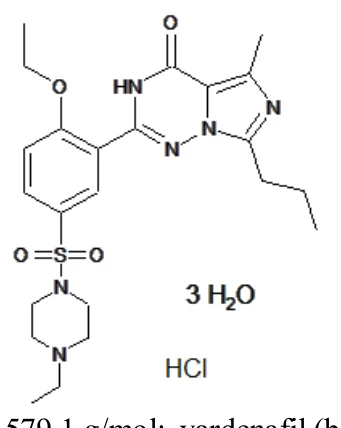
| Common name: Vardenafil hydrochloride trihydrate | |
Chemical name: 2-[2-Ethoxy-5-(4-ethyl-piperazine-1-sulfonyl)-phenyl]-5-methyl- 7-propyl-3H-imidazo[5,1-f][1,2,4]triazin-4-one monohydrochloride trihydrate | |
| Molecular formula: C23H32 | N6O4S. HCl . 3H2O |
| Structural formula: | |
| Molecular weight: 579.1 g/mol; vardenafil (base) = 488.6 g/mol | |
| Physicochemical properties: Vardenafil hydrochloride is a nearly colourless, crystalline substance | |
pka: Protonation of the ethylpiperazin nitrogen 6.7 Deprotonation of the amide proton 8.8 | |
Partition coefficient: log Po/w= 0.0 (octanol/water) log Po/w= 3.2 (octanol/phosphate buffer, pH = 7) | |
Solubility: Water 0.11 mg/mL. 0.1 N HCl 65 mg/mL 0.1 MNaOH 5.9 mg/mL | |
CLINICAL TRIALS
Comparative Bioavailability Studies
A double blind, randomized, single dose, two-period, crossover bioequivalence study was conducted between the test product, vardenafil hydrochloride orally disintegrating tablet 10 mg (Jamp Pharma Corporation, Canada) and the reference product, PrSTAXYN® (vardenafil hydrochloride) orally disintegrating tablet 10 mg (Bayer Inc., Canada). In the study, doses of 1 x 10 mg were administered without water in 35 healthy adult male human subjects under fasting conditions.
SUMMARY TABLE OF THE COMPARATIVE BIOAVAILABILITY DATA
Vardenafil orally disintegrating tablets (1 x 10 mg) From measured data Geometric Mean Arithmetic Mean (CV %) | ||||
| Parameter | Test* | Reference† | % Ratio of Geometric Means | 90% Confidence Interval |
AUCT (ng/mL) | 102.24 112.57 (44.84%) | 100.46 112.02 (48.58%) | 101.6 | 94.9-108.8 |
AUCI (ng/mL) | 105.14 116.27 (46.10%) | 103.42 115.77 (49.64%) | 101.5 | 94.8-108.7 |
| Cmax (ng/mL) | 27.25 29.92 (41.19%) | 26.50 29.75 (49.33%) | 102.6 | 92.4-113.8 |
| Tmax§ (h) | 0.83 (0.33-2.50) | 1.00 (0.33-3.00) | ||
| T½€ (h) | 4.65 (28.43%) | 4.76 (24.97) | ||
* Vardenafil hydrochloride orally disintegrating tablets 10 mg (Jamp Pharma Corporation, Canada)
† PrSTAXYN® (vardenafil hydrochloride) orally disintegrating tablets 10 mg (Bayer Inc., Mississauga, ON, L4W 5R6, Canada)
§ Expressed in the median (range).
€ Expressed in the arithmetic mean (CV%).
Fixed-Dose Trials in General Erectile Dysfunction Population (Orally Disintegrating Tablet)
The efficacy and safety of vardenafil orally disintegrating tablets was evaluated in two identical multinational, randomized, double-blind, placebo-controlled trials (POTENT-1 and POTENT-2). vardenafil orally disintegrating tablets was dosed without regard to meals on an as needed basis in men with ED, many of whom had multiple other medical conditions. The primary efficacy variables at 12 weeks (EF Domain score, SEP2 and SEP3) used in these trials were the same as those used in the film-coated tablet trials.
The POTENT-1 trial evaluated 355 patients (mean age 61.9 years). The mean baseline EF Domain Scores were 13 for both placebo and vardenafil orally disintegrating tablets groups. There was significant superiority (P < 0.0001) at 3 months with vardenafil orally disintegrating tablets over placebo (EF Domain Scores 21 and 14, respectively). Vardenafil orally disintegrating tablets also significantly improved rates of achieving an erection sufficient for penetration (SEP2) compared to placebo (74% vs 47%; P < 0.0001). Vardenafil orally disintegrating tablets demonstrated a clinically meaningful and statistically significant increase in the overall per-patient rate of maintenance of erection to successful intercourse (SEP3) (65% vs 27%; P < 0.0001).
Overall, 40% of the vardenafil orally disintegrating tablets treated subjects returned to a “normal” erectile function (IIEF-EF score of > 25) at Week 12/LOCF compared with 12% of the placebo subjects (p < 0.0001). Success rates were slightly better in the younger subject group compared with elderly subjects. In comparing the Global Assessment Question (GAQ) results at final visit, there were statistically significant (p < 0.0001) higher percentages of subjects with an improvement in erections in the vardenafil orally disintegrating tablets treated group than in the placebo group. The comparisons between the treatment groups were statistically significant. Slightly higher percentages of younger subjects in both treatment groups responded positively to the GAQ.
The POTENT-2 trial evaluated 331 patients (mean age 61.7 years). The mean baseline EF Domain Scores were 12 for vardenafil orally disintegrating tablets and 13 for placebo. There was significant improvement (P < 0.0001) at 3 months with vardenafil orally disintegrating tablets over placebo (EF Domain Scores 21 and 14, respectively). Vardenafil orally disintegrating tablets also significantly improved rates of achieving an erection sufficient for penetration (SEP2) compared to placebo (69% vs 43%; P < 0.0001). Vardenafil orally disintegrating tablets demonstrated a clinically meaningful and statistically significant increase in the overall per-patient rate of maintenance of erection to successful intercourse (SEP3) (60% vs 27%; P < 0.0001).
Overall, 46% of the treated subjects returned to a “normal” erectile function (IIEF-EF score of > 25) at Week 12/LOCF compared with 9% of the placebo subjects (p < 0.0001). Success rates were clearly better in the younger subject group compared with elderly subjects. There were nominally significant (p
< 0.0001) higher percentages of subjects with an improvement in erections in the vardenafil orally disintegrating tablets group than in the placebo group. Sixty-seven per cent of subjects treated with vardenafil orally disintegrating tablets had an improvement versus 24% in the placebo group.
In addition, a prospectively defined integrated efficacy analysis of both trials was performed. The superior efficacy of vardenafil orally disintegrating tablets compared to placebo was preserved regardless of baseline erectile dysfunction severity (ie, mild, moderate, or severe), etiology (organic, psychogenic, and mixed), duration of erectile dysfunction, ethnicity, and age. In subgroup analyses of patients with a history of diabetes (Type 1 and 2) (n = 186), dyslipidemia (n = 245), or hypertension (n = 286) vardenafil orally disintegrating tablets was consistently superior across all primary efficacy variables (EF Domain Score, SEP2 and SEP3) compared to placebo.
Other Vardenafil Clinical Trials Using Film-Coated Tablets
Efficacy of Vardenafil in Diabetes Mellitus Patients
In patients with Type 1 or Type 2 diabetes mellitus, vardenafil demonstrated clinically meaningful and statistically significant improvement in erectile function in a 3-month prospective fixed dose, double-blind, placebo-controlled trial. Significant improvements were shown in the EF Domain Score (the rates of obtaining an erection sufficient for penetration and successful intercourse), and hardness compared to placebo for the test doses of 10 mg and 20 mg vardenafil film-coated tablet at all time points during three months of treatment. (See Table 5.)
Table 5: Summary of Efficacy Variables in Diabetes Mellitus Trials
| Efficacy Variable | Placebo (N = 138) | Vardenafil 10 mg Film-Coated Tablet (N = 145) | Vardenafil 20 mg Film-Coated Tablet (N = 139) | |||
| Endpoint | Change | Endpoint | Change | Endpoint | Change | |
| IIEF, LS Mean | ||||||
| Erectile Function Domain Score | 12.6 | 1.4 | 17.1 | 6.1* | 19 | 6.6* |
| Overall Satisfaction Domain Score | 4.8 | 0.4 | 6.3 | 1.9* | 6.8 | 2.0* |
| Intercourse Satisfaction Domain Score | 6.6 | 0.6 | 8.4 | 2.4* | 9.2 | 2.8* |
| SEP Diary, % ‘Yes’ Response | ||||||
| Question 2 (Vaginal Penetration) | 36 | 3 | 61 | 30* | 64 | 23* |
| Question 3 (Successful Intercourse) | 23 | 12 | 49.2 | 40* | 54.2 | 39* |
* P = 0.0001
Analysis of the efficacy data showed that the degree of glycemic control did not affect the response to vardenafil, as shown in Table 6.
| Table 6: EF Domain Scores (With Change from Baseline) and GAQ of Patients in Study 100250 in the Different Subgroups of Glycemic Control at Week 12 (LOCF, ITT Population) | |||||||||||
| EF Domain | GAQ (%) | ||||||||||
| Placebo | Vardenafil 10 mg Film-Coated Tablet | Vardenafil 20 mg Film-Coated Tablet | Placebo | Vardenafil 10 mg Film- Coated Tablet | Vardenafil 20 mg Film- Coated Tablet | ||||||
| HbA1c #7%: Optimal | 11.4 (0.0) | 20.4 (9.3) | 21.6 (7.9) | 10.3 | 67.6 | 67.7 | |||||
| HbA1c 7%-# 8.4%: Sub-optimal | 11.4 (1.1) | 14.4 (3.6) | 18.9 (6.8) | 15.6 | 45.6 | 67.4 | |||||
| HbA1c 8.4%-#12%: Inadequate | 12.3 (1.2) | 15.6 (4.8) | 19.0 (8.1) | 16.9 | 51.1 | 70.4 | |||||
In this population, which is typically more resistant to therapy, response rates for improvement of erection were 57% with 10 mg, and 72% with 20 mg vardenafil compared to 13% with placebo for patients who completed three months of the trial as measured by GAQ. (See Figure 2.) Patients in the active treatment group continued on blinded active therapy of vardenafil for a total of 6 months.
These patients demonstrated response rates of 61% and 73% for 10 mg and 20 mg vardenafil film-coated tablet, respectively, again suggesting that vardenafil's effect is maintained over time.
Figure 2: Percentage of Patients Reporting an Improvement in Erections in the Diabetes Trial at 3 Months
*
80%
72 %
*
57 %
40%
20%
13 %
0%
Placebo (n=122)
LEVITRA® 10 mg (n=131)
Treatment Groups
LEVITRA® 20 mg (n=127)
* P < 0.0001 vs placebo; valid for ITT population; patients completing 3 months
Efficacy of 8±2 Hours After Flexible Dosing
Flexible dose vardenafil (5, 10, or 20 mg film-coated tablets), when dosed at 8±2 hours prior to sexual intercourse, demonstrated clinically and statistically superior efficacy (SEP3, SEP2, GAQ, IIEF-EF domain scores) compared with placebo in subjects with ED of broad etiology. Patients treated with vardenafil had clinically meaningful (≥18%) and statistically significant (p<0.001) improvements in their ability to maintain an erection to successful intercourse and achieve an erection sufficient for insertion compared with those receiving placebo at all treatment-week intervals examined over the course of the study. These improvements occurred within the first two weeks and were sustained through the 10 weeks of therapy. Over Weeks 2 to 10, success rates of SEP3 and SEP2 were 69% and 81% for vardenafil-treated subjects compared with 34% and 51% for placebo-treated subjects.
Success rates of SEP3 and SEP2 were examined by time study medication was taken to start of sexual activity (see Figure 3).
Pat ient s R ep or t in g I mpr ov e me nt
Figure 3: Overall Mean Success Rates of SEP3 and SEP2 at Hourly Intervals 6 to 10 Hours Postdose
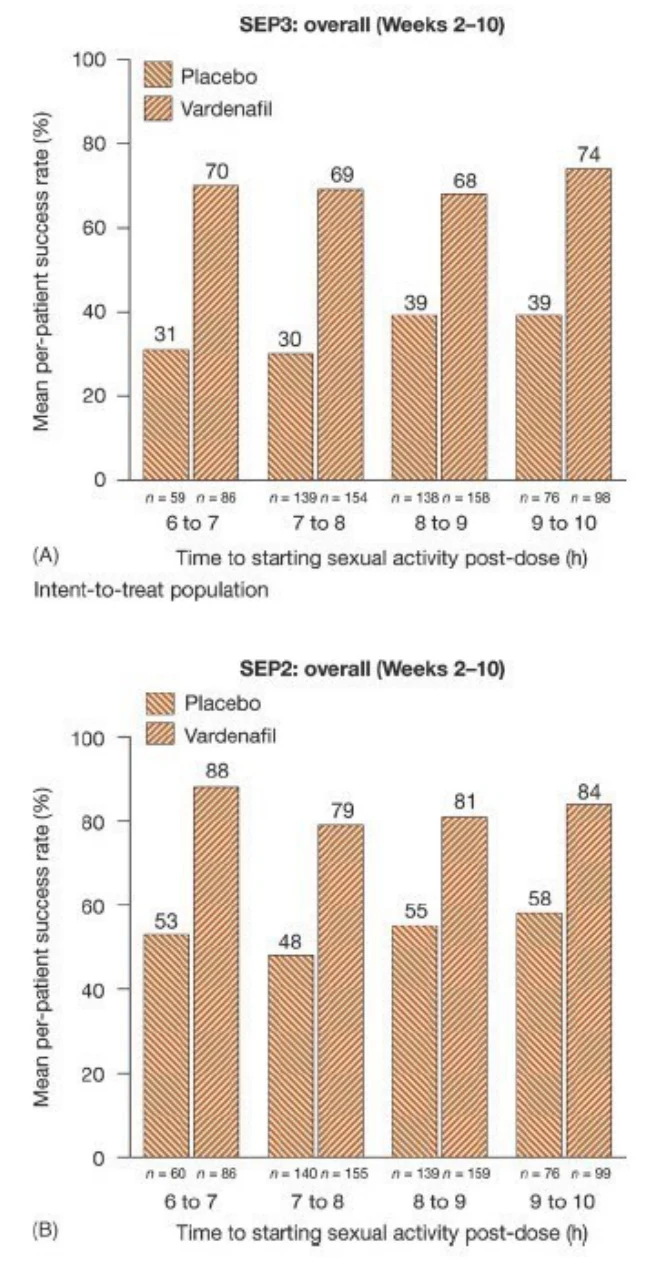
Mean success rates of SEP2 and SEP3 were higher for vardenafil-treated subjects compared with placebo treated subjects from 6 to 10 hours after intake of study medicine and for all attempts at penetration from 0 to 24 hours after intake of study medicine.
Clinical Conclusions
Vardenafil film-coated tablets and vardenafil orally disintegrating tablets were effective in a broad range of patients with erectile dysfunction, including those with a history of diabetes, hypertension and dyslipidemia. Vardenafil was efficacious in patients regardless of etiology (organic, psychogenic, and mixed), duration or baseline severity of erectile dysfunction, or age. Vardenafil was efficacious 8±2 hours after dosing.Vardenafil demonstrated significant improvement in the percent of patients whose EF returned to normal (EF domain score ≥ 26) compared to placebo. Response to treatment may differ depending upon severity of disease. (See CONTRAINDICATIONS and
WARNINGS AND PRECAUTIONS.) DETAILED PHARMACOLOGY
Pharmacodynamics
The following descriptions of pharmacodynamic studies were conducted using vardenafil film-coated tablets:
Studies of Vardenafil on Erectile Response: In patients with erectile dysfunction, erections considered sufficient for penetration (greater than or equal to 60% rigidity as measured by RIGISCAN ® device [RigiScan Ambulatory Rigidity and Tumescence Monitor, Dacomed Corp., Minneapolis, USA]) occurred in 64% of men on 20 mg vardenafil film-coated tablets as early as 15 minutes post dosing compared to 52% of men on placebo. The overall erectile response of these subjects treated with vardenafil became statistically significant compared to placebo at 25 minutes post dosing. In two separate double-blind, placebo-controlled crossover RIGISCAN ® trials of men with erectile dysfunction of at least 6 months duration, 10 mg and 20 mg vardenafil film-coated tablet significantly improved erections initiated by visual sexual stimulation. Objective measurements of rigidity at the base and tip of the penis (by RIGISCAN ®) during visual sexual stimulation showed significantly better results at all doses and time points with vardenafil than with placebo. The mean duration of an erection, in response to visual sexual stimulation, sufficient for penetration was 54 and 67 minutes at the base and 39 and 45 minutes at the tip of the penis for the 10 mg and 20 mg doses of vardenafil film-coated tablet respectively, compared to 31 minutes at the base and 17 minutes at the tip for placebo.
The earliest elapsed time from dosing to attainment of an erection perceived to be sufficient for penetration and resulting in successful completion of intercourse was evaluated in a randomized, double-blind parallel group study in men with ED. The percentage of men reporting successful completion of intercourse after dosing with 10 mg or 20 mg vardenafil (film-coated tablet) was greater than with placebo (P < 0.025) at all times ≥ 10 minutes and ≥ 11 minutes, respectively.
The amount of time from dosing (flexible dose) to attainment of an erection perceived to be sufficient for penetration and resulting in successful intercourse was evaluated in a randomized, double-blind, parallel group study in men with ED. The percentage of men reporting successful completion of intercourse 8 to 10 hours from dosing was greater with vardenafil compared to placebo (P < 0.001).
Studies of Vardenafil on Blood Pressure and Heart Rate: In a clinical pharmacology study of patients with erectile dysfunction, single doses of 20 mg vardenafil film-coated tablet caused a mean maximum decrease in supine blood pressure of 7 mmHg systolic and 8 mmHg diastolic (compared to placebo), accompanied by a mean maximum increase of heart rate of 4 beats per minute. The maximum decrease in blood pressure occurred between 1 and 4 hours after dosing. Following multiple dosing for 31 days, blood pressure responses were observed on Day 31 that were similar to those observed on Day 1. PDE5 inhibitors, including vardenafil, may add to the blood pressure lowering effects of antihypertensive agents. (See ACTION AND CLINICAL PHARMACOLOGY and DRUG INTERACTIONS.)
M ea n m ax i m al c ha ng e
M ea n m ax i m al c ha ng e
A study was conducted in which the blood pressure and heart rate response to 0.4 mg nitroglycerin (NTG) sublingually was evaluated in 18 healthy subjects following pretreatment with 20 mg vardenafil film-coated tablet at various times before NTG administration. 20 mg film-coated tablet caused an additional time-related reduction in blood pressure and increase in heart rate in association with NTG administration. The blood pressure effects were observed when 20 mg vardenafil film- coated tablet was dosed 1 or 4 hours before NTG and the heart rate effects were observed when 20 mg vardenafil film-coated tablet was dosed 1, 4, or 8 hours before NTG. Additional blood pressure and heart rate changes were not detected when 20 mg vardenafil film-coated tablet was dosed 24 hours before NTG (see Figure 4).
Figure 4: Placebo-Subtracted Point Estimates (With 90% CI) of Mean Maximal Blood Pressure and Heart Rate Effects of Predosing With 20 mg Vardenafil at 24, 8, 4, and 1 Hour Before 0.4 mg NTG Sublingually
Systolic BP
(mmHg)
10
5
0
Diastolic BP (mmHg)
4
2
0
Heart Rate (bpm)
16
14
12
10
-2 8
-5 -4 6
-10
-15
4
-6
2
-8
0
-10
-2
-20
24h 8h 4h 1h
-12
24h 8h 4h 1h
-4
24h 8h 4h 1h
Timing of Vardenafil Treatment Pre-NTG
Because the disease state of patients requiring nitrate therapy is anticipated to increase the likelihood of hypotension, the use of vardenafil by patients on nitrate therapy or on nitric oxide donors is contraindicated. (See CONTRAINDICATIONS.)
Studies of Vardenafil on Cardiac Parameters: The effect of 10 mg and 80 mg vardenafil film- coated tablets on QT interval was evaluated in a single-dose, double-blind, randomized, placebo- and active-controlled (moxifloxacin 400 mg) crossover study in 59 healthy males aged 45-60 years. This study also included another drug in the same class in approximately equipotent therapeutic doses (sildenafil 50 mg and 400 mg). The QT interval was measured at one hour post dose because this time point approximates the average time of peak vardenafil concentration. The 80 mg dose of vardenafil film-coated tablets (four times the highest recommended dose) was chosen because this dose yields plasma concentrations covering those observed upon coadministration of a low dose of vardenafil (5 mg) and 600 mg BID of ritonavir. Of the CYP3A4 inhibitors that have been studied, ritonavir causes the most significant drug-drug interaction with vardenafil. The table below summarizes the effect on mean uncorrected QT and mean corrected QT interval (QTc) with different methods of correction (Fridericia and a linear individual correction method) at one hour post dose.
No single correction method is known to be more valid than the other.
M ea n m ax i m al c ha ng e
| Table 7: Mean QT and QTc Changes in msec (90% CI) from Baseline Relative to Placebo at 1 Hour Post Dose With Different Methodologies to Correct for the Effect of Heart Rate | |||||||||
| Drug/Dose | Heart Rate (bpm) | QT Uncorrected (msec) | Fridericia QT Correction (msec) | Individual QT Correction (msec) | |||||
| Vardenafil 10 mg | 5 (4, 6) | -2 (-4, 0) | 8 (6, 9) | 4 (3, 6) | |||||
| Vardenafil 80 mg | 6 (5, 7) | -2 (-4, 0) | 10 (8, 11) | 6 (4, 7) | |||||
| Moxifloxacin 400 mg | 2 (1, 3) | 3 (1, 5) | 8 (6, 9) | 7 (5, 8) | |||||
| Sildenafil 50 mg | 4 (3, 5) | -2 (-4, 0) | 6 (5, 8) | 4 (2, 5) | |||||
| Sildenafil 400 mg | 5 (4, 6) | -1 (-3, 1) | 9 (8, 11) | 5 (4, 7) | |||||
Moxifloxacin produced the expected 5-10 msec prolongation, indicating that the study had the required sensitivity. Therapeutic and supratherapeutic doses of vardenafil and sildenafil produced similar decreases in uncorrected QT but increases in QTc interval. This study, however, was not designed to make direct statistical comparisons between the drugs or the dose levels. The actual clinical impact of these changes is unknown.
In a separate post-marketing study of 44 healthy volunteers, single doses of 10 mg vardenafil film- coated tablet resulted in a placebo-subtracted mean change from baseline of QTcF (Fridericia) correction of 5 msec (90% CI: 2,8). Single doses of gatifloxacin 400 mg resulted in a placebo- subtracted mean change from baseline QTcF of 4 msec (90% CI: 1,7). When vardenafil 10 mg film- coated tablet and gatifloxacin 400 mg were coadministered, the mean QTcF change from baseline was additive when compared to either drug alone and produced a mean QTcF change of 9 msec from baseline (90% CI: 6,11). The clinical impact of these QT changes is unknown. (See WARNINGS AND PRECAUTIONS, Congenital and Acquired QT Prolongation.)
Studies of Vardenafil on Exercise Performance in Patients with Coronary Artery Disease (CAD): In two independent trials that assessed 10 mg (N = 41) and 20 mg (N = 39) vardenafil film-coated tablet respectively, vardenafil did not alter the total treadmill exercise time compared to placebo. The patient population included men aged 40 to 80 years with stable exercise-induced angina documented by at least one of the following: 1) prior history of MI, CABG, PTCA, or stenting (not within 6 months); 2) positive coronary angiogram showing at least 60% narrowing of the diameter of at least one major coronary artery; or 3) a positive stress echocardiogram or stress nuclear perfusion. The results of the 20 mg study are shown in Table 8.
Table 8: Effect of 20 mg Vardenafil on Exercise Treadmill Completion Times (Mean in Seconds ± S.D.)
| Parameter | 20 mg Vardenafil Film-Coated Tablet (Mean in Seconds) | Placebo (Mean in Seconds) |
| Total Treadmill Exercise Time | 414 ± 114 (N = 36) | 411 ±124 (N = 36) |
| Total Time to Develop Symptoms of Angina Pectoris (first awareness) | 354 ± 137 (N = 36) | 347 ± 143 (N = 36) |
| Total Time to ST-Segment depression (1 mm or greater change from baseline) | 364 ±101 (N = 35) | 366 ± 105 (N = 36) |
Studies of Vardenafil on Vision: Single oral doses of phosphodiesterase inhibitors have demonstrated transient dose-related impairment of colour discrimination (blue/green) using the Farnsworth-Munsell 100-hue test and reductions in electroretinogram (ERG) b-wave amplitudes, with peak effects near the time of peak plasma levels. These findings are consistent with the inhibition of PDE6 in rods and cones, which is involved in phototransduction in the retina. The findings were most evident one hour after administration, diminishing but still present 6 hours after administration. In a single dose study in 25 normal males, 40 mg vardenafil film-coated tablet, twice the maximum daily recommended dose, did not alter visual acuity, intraocular pressure, fundoscopic and slit lamp findings. (See ACTION AND CLINICAL PHARMACOLOGY.)
In another double-blind placebo-controlled clinical trial, at least 15 doses of vardenafil 20 mg film-coated tablet were administered over 8 weeks versus placebo. Statistically but not clinically significant changes in ERG flicker amplitude response and oscillatory potential amplitude were apparent when comparing vardenafil to placebo-treated subjects. The FM-100 test did not detect any difference between vardenafil and placebo-treated subjects. A suprathreshold dose of sildenafil (200 mg) resulted in statistically significant decreases in amplitude of the rod response, cone response, flicker response, and oscillatory potential as measured by percent change from baseline averaged over both eyes in recordings obtained 2 hours after dosing. The maximum response was not significantly affected.
Alpha-blockers: Since alpha-blocker monotherapy can cause marked lowering of blood pressure, especially postural hypotension and syncope, interaction studies were conducted with vardenafil in patients with benign prostatic hyperplasia (BPH) on stable tamsulosin or terazosin therapy, as well as in normotensive volunteers after short-term alpha blockade.
In two interaction studies with healthy normotensive volunteers, after forced titration of the alpha- blockers tamsulosin or terazosin to high doses over 14 days or less, hypotension (in some cases symptomatic) was reported in a significant number of subjects after coadministration of vardenafil film- coated tablets. Among subjects treated with terazosin, hypotension (standing systolic blood pressure below 85 mmHg) was observed more frequently when vardenafil and terazosin were given to achieve simultaneous Cmax than when the dosing was administered to separate Cmax by 6 hours. Because these studies were conducted using healthy volunteers after forced titration of the alpha- blocker to high doses (subjects were not stable on alpha-blocker therapy), these studies may have limited clinical relevance.
Interaction studies were conducted with vardenafil in patients with benign prostatic hyperplasia (BPH) on stable tamsulosin or terazosin therapy. When vardenafil film-coated tablet was given at doses of 5, 10, or 20 mg on a background of stable therapy with tamsulosin, there was no clinically relevant additional reduction in mean maximal blood pressure. When vardenafil 5 mg film-coated tablet was dosed simultaneously with tamsulosin 0.4 mg, 2 of 21 patients experienced a standing systolic blood pressure below 85 mmHg. When vardenafil 5 mg film-coated tablet was given with a six-hour dose separation from tamsulosin, 2 of 21 patients experienced a standing systolic blood pressure below 85 mmHg. In a subsequent study in patients with BPH, when vardenafil 10 mg film-coated tablet and 20 mg film-coated tablet was dosed simultaneously with tamsulosin 0.4 or 0.8 mg there were no cases of standing systolic blood pressure below 85 mmHg. When vardenafil 5 mg film-coated tablet was given simultaneously with terazosin 5 or 10 mg, one of 21 patients experienced symptomatic postural hypotension. Hypotension was not observed when vardenafil 5 mg film-coated tablet and terazosin administration was separated by 6 hours. This should be considered when deciding about a time separation of dosing.
Concomitant treatment should be initiated only if the patient is stable on his alpha blocker therapy. In those patients who are stable on alpha-blocker therapy, vardenafil should be initiated at the lowest recommended starting dose of 5 mg film-coated tablet. Patients treated with alpha-blockers should not use JAMP-VARDENAFIL ODT as a starting dose.
Vardenafil may be administered at any time with tamsulosin. When other alpha-blockers such as terazosin are coadministered with vardenafil, a time separation of several hours should be considered.
Pharmacokinetics
Bioequivalence studies have shown that vardenafil orally disintegrating tablets 10 mg is not bioequivalent to vardenafil 10 mg film-coated tablet; therefore, the orally disintegrating formulation should not be used as an equivalent to vardenafil 10 mg film-coated tablet. Vardenafil is eliminated predominantly by hepatic metabolism. The elimination half-life is approximately 4 to 5 hours.
Absorption:
JAMP-VARDENAFIL ODT disintegrates on the tongue within a few seconds. A small amount of drug dissolved in the saliva is absorbed through the oral mucosa. The remainder is swallowed and absorbed in the gastrointestinal tract. This results in increased bioavailability compared to the film- coated tablet, such that the two formulations are not bioequivalent and not interchangeable.
The median time to reach Cmax (tmax) in patients receiving vardenafil orally disintegrating tablets 10 mg in the fasted state varied between 45 to 90 minutes. After administration of vardenafil orally disintegrating tablets 10 mg to elderly (≥ 65 years) and young (18 to 45 years) patients with erectile dysfunction, mean AUC was increased by 21% and 29%, respectively while mean Cmax was lower by 19% and 8%, respectively in comparison to 10 mg vardenafil film-coated tablets. In a study of healthy male volunteers (18 to 50 years), the mean Cmax and AUC of vardenafil from vardenafil orally disintegrating tablets 10 mg were higher by 15% and 44%, respectively compared to 10 mg vardenafil film-coated tablets. Mean vardenafil plasma concentrations measured after administration of a single dose of vardenafil orally disintegrating tablets to patients with erectile dysfunction (18 to 45 years) are depicted in Figure 5.
Figure 5: Vardenafil Plasma Concentration (Mean ± SD) Profile for vardenafil orally disintegrating tablets in Men Age 18-45 Years with Erectile Dysfunction
15
10
5
0
0 2 4 6 8 10 12 14 16
Time (h)
Vardenafil AUC and Cmax in elderly patients (65 years or older) taking vardenafil orally disintegrating tablets 10 mg were increased by 39% and 21%, respectively, in comparison to patients aged 45 years and below.
Vardenafil was not found to accumulate in plasma when vardenafil orally disintegrating tablets 10 mg was dosed once daily over 10 days.
A high fat meal had no effect on vardenafil AUC and tmax in healthy volunteers, while it resulted in a mean reduction in vardenafil Cmax by 35%. Based on these results, JAMP-VARDENAFIL ODT 10 mg can be taken before or after food. If vardenafil orally disintegrating tablets is taken with water, the AUC is reduced by 29% and median tmax is shortened by 60 minutes while Cmax is not affected. JAMP-VARDENAFIL ODT should be taken without water.
Distribution: The mean steady-state volume of distribution (Vss) for vardenafil is 208 L, indicating extensive tissue distribution. Vardenafil and its major metabolite, M-1, are highly bound to plasma proteins (about 95% for parent drug and M-1). This protein binding is reversible and independent of total drug concentrations.
Ninety minutes after administration of a single dose of 20 mg vardenafil, less than 0.0002% of the administered dose is detected in the semen. The concentrations of vardenafil and its primary metabolite in the ejaculate 1.5 hours post dose were 49% and 71%, respectively, of the concentrations in plasma at the same time point. (See ACTION AND CLINICAL PHARMACOLOGY.)
P l a s m a c o n c e nt r a ti o n (µ g / L)
Metabolism:
The mean terminal half-life of vardenafil in patients receiving vardenafil orally disintegrating tablets varied between about 4 to 6 hours. The elimination half-life of the metabolite M1 is between 3 to 5 hours, similar to the parent drug.
Excretion: The total body clearance of vardenafil is 56 L/h and the terminal half-life is approximately 4 to 5 hours. After oral administration, vardenafil is excreted as metabolites predominantly in the feces (approximately 91-95% of administered oral dose) and to a lesser extent in the urine (approximately 2% to 6% of administered oral dose).
Special Populations and Conditions
Pediatrics (< 18 years of age): Vardenafil has not been evaluated in individuals less than 18 years old.
Geriatrics (≥ 65 years of age): A starting dose of 5 mg vardenafil film-coated tablets should be considered in patients 65 years and older. (See DOSAGE AND ADMINISTRATION.)
On average, elderly males (65 years and over) had a 52% higher vardenafil AUC (Area Under the Curve) and a 34% higher maximum concentration (Cmax) than younger males (18 to 45 years). This difference was not statistically significant.
In clinical trials with vardenafil orally disintegrating tablets, 360 elderly subjects were treated with the 10 mg vardenafil orally disintegrating tablet as the only starting dose (see CLINICAL TRIALS).
Vardenafil AUC and Cmax in elderly patients (65 years or over) taking vardenafil orally disintegrating tablets were increased by 31 to 39 % and 16 % to 21 %, respectively, in comparison to patients aged 45 years and below.
Vardenafil was not found to accumulate in the plasma in patients aged 45 years and below or 65 years or over following once-daily dosing of 10 mg orodispersible tablet over ten days. No overall differences in safety or effectiveness were observed with vardenafil orally disintegrating tablets between elderly and younger subjects in placebo controlled clinical trials.
Hepatic Insufficiency: JAMP-VARDENAFIL ODT is not indicated as a starting dose in patients with mild hepatic impairment (Child-Pugh A). In patients with mild hepatic impairment, a starting dose of 10 mg vardenafil film-coated tablet is recommended. In patients with mild hepatic impairment (Child-Pugh A), vardenafil clearance was reduced resulting in 1.2-fold increased AUC and maximum concentration (Cmax) compared to healthy subjects.
Patients with moderate hepatic impairment (Child Pugh B) should not use JAMP-VARDENAFIL ODT. Vardenafil has not been evaluated in patients with severe hepatic impairment.
Renal Insufficiency: No dose adjustment is required in patients with renal impairment. In patients with mild (creatine clearance (CLcr ≥50-80 mL/min), moderate (CLcr > 30-50 mL/min), or severe (CLcr ≤30 mL/min) renal impairment, the pharmacokinetics of vardenafil were similar to that of a control group with normal renal function. Vardenafil pharmacokinetics have not been evaluated in patients requiring dialysis.
MICROBIOLOGY
Not applicable.
TOXICOLOGY
Vardenafil has been evaluated in a comprehensive series of toxicological studies, including in vitro and in vivo genetic toxicology assays, single-dose studies in mice and rats using both oral and intravenous routes of administration, repeated-dose studies in mice, rats, and dogs, reproductive and developmental studies in rats and rabbits, and life-time carcinogenicity studies in rats and mice.
Vardenafil was moderately toxic in mice and toxic in rats after oral and I.V. administration of single doses. The clinical signs observed were compatible with effects on the cardiovascular system. (See Table 10.) No adverse effects were observed in mice treated with up to 37 mg/kg (males) or
51 mg/kg (females) for 14 weeks, and no adverse effects were observed in rats treated for six months with up to 3 mg/kg (females) or 15 mg/kg (males), respectively. After 24-month daily treatment the no adverse effect level was established at 15 mg/kg (male rat) and 10 mg/kg (female rat), respectively. The no observed adverse effect level (NOAEL) for vardenafil in a study of dogs treated for 12 months was 3 mg/kg/day. (See Table 11.)
Vardenafil was administered to rats and mice for 24 months. These studies provide evidence that vardenafil is not carcinogenic. (See Table 12.) The systemic exposure achieved at the top dose was about 350-fold (rat) and 25-fold (mice) the exposure in humans at the maximum recommended therapeutic dose. No indication of genotoxicity or mutagenicity was found in a comprehensive battery of three in vitro assays and one in vivo assay. (See Table 13.)
Vardenafil did not impair either male or female fertility or early embryonic development as evidenced in a Segment I study in rats and Segment II studies in rats and rabbits (Table 14). Developmental toxicity (Segment II) studies in rats and rabbits did not reveal a specific primary teratogenic potential, although at high doses resulting in approximately 800 times the clinical exposure, maternal mortality accompanied by effects on intrauterine development were found. The NOAEL in the rat Segment III study was 8 mg/kg/day for maternal toxicity, and 1 mg/kg/day in the offspring, but the findings of developmental delay in the offspring do not raise specific concern in the context of the intended application of the drug in adult males. Vardenafil is secreted into the milk of lactating rats at concentrations approximately 10-fold greater than found in maternal plasma.
As expected for a PDE5 inhibitor, repeated dose toxicity studies in rats and dogs revealed cardiovascular effects as the prominent toxicological findings, which can essentially be related to the vasodilatory properties of PDE5 inhibitors including vardenafil. Other toxicological findings in the pancreas, exocrine glands, and the thyroid in repeated dose studies were confined to the rat (did not occur in dog and mouse). The effects observed in the rat have been described for other phosphodiesterase inhibitors. The key findings in long-term toxicity studies with the corresponding doses and exposure parameters at the lowest observed effect level (LOEL) in chronic studies are given in Table 9.
Table 9: Key Toxicological Findings (Lowest Effect Level) in Experimental Animals With Vardenafil and Respective Multiples of Human Exposure at the Maximum Recommended Therapeutic Dose
| Species/ Duration | Finding | Dose (mg/kg) | Multiples of Systemic Exposure Compared to Clinical | |
| Cmax (mcg/L) | AUC(mcg*h/L) | |||
| Rat, 6 months | Heart (females only): myocardial fibrosis; Mortality (1 of 20) | 75 (female) | 564 | 640 |
| Rat, 6 months | Thyroid (females only): colloidal alterations | 75 (female) | 564 | 640 |
| Rat, 6 months | Exocrine glands: parotid gland: diffuse acinar hypertrophy; females only: diffuse acinar hypertrophy (submandibular gland) | 75 (male) | 265 | 218 |
| 75 (female) | 564 | 640 | ||
| Rat, 6 months | Pancreas: diffuse acinar hypertrophy | 75 (male) | 265 | 218 |
| 75 (female) | 564 | 640 | ||
| Rat, 6 months | Pancreas (males only): focal acinar atrophy | 15 (male) | 73 | 25 |
| Rat, 6 months | Adrenal cortex: small vesicular vaculation (zona granulosa) | 15 (male) | 73 | 25 |
| 3 (female) | 35 | 19 | ||
| Rat, 2 years | Thyroid: follicular cell hypertrophy | 75 (male) | 390 | 362 |
| 25 (female) | 239 | 229 | ||
| Rat, 2 years | Adrenal cortex: small vesicular vaculation, diffuse hypertrophy (zona granulosa) | 75 (male) | 390 | 362 |
| 25 (female) | 239 | 229 | ||
| Rat, 2 years | exocrine glands: diffuse acinar hypertrophy (parotid and submandibular glands) | 15 (male) | 318 | 71 |
| 25 (female) | 239 | 229 | ||
| Dog, 1 year | Heart: peri-arterial edema | 30 (male) | 264 | 277 |
| 30 (female) | 235 | 212 | ||
| Dog, 1 year | decreased blood pressure, increased heart rate | 10 (male) | 101 | 71 |
| 10 (female) | 83 | 64 | ||
| Human PK data at the proposed maximum recommended therapeutic dose (20 mg/day) for comparison: | ||||
| Human (steady state) | 0.4 (male) | 1 | 1 | |
Table 10: Results of Single-Dose Acute Toxicity Studies
| Species | Route | Dose mg/kg/day | No. of Animals/ Dose | Duration | Findings |
| Single Dose Oral Toxicity in Mice and Rats | |||||
Hsk WIN:NMR mice Hsd Cpb: WU Rats | Oral (gavage) | Mouse Rat | 5/sex | 1 day | LD50 for male and female mice was 1000 mg/kg. LD50 for male rats was 250 mg/kg and for female rats 190 mg/kg. Necropsies did not reveal any test article related changes. The following signs of toxicity were seen in mice: decreased motility, staggering gait, abdominal position, tremor, tonic-clonic convulsions, laboured breathing, narrowed palpebral fissure. Rats showed the following signs of intoxication: decreased motility, staggering gait, lateral position, abdominal position, hunched posture, laboured breathing, narrowed palpebral fissure, chromodacryorrhea. |
| Single Dose Intravenous Toxicity in Mice and Rats | |||||
Hsk WIN:NMR mice Hsd Cpb: WU Rats | I.V. | Mouse Rat | 5/sex | 1 day | LD50 for male and female mice was 123 mg/kg. LD50 for male and female rats was 81 mg/kg. There were no test article related signs at the necropsies. The following symptoms were observed in mice: decreased motility and/or increased motility, staggering gait, abdominal position, tremor, tonic-clonic convulsions, laboured breathing, narrowed palpebral fissure. The corresponding findings in rats were: decreased motility, vocalization, staggering gait, abdominal position, tremor, tonic-clonic convulsions, laboured breathing, gasping, narrowed palpebral fissure. |
Table 11: Results of Long-Term Repeated Dose Toxicity Studies With Vardenafil
| Species, Strain, Number/Sex/ Dose | Dose (mg/kg BW/day) Route Duration of Treatment | Findings (at mg/kg/day) | NOAEL (mg/kg/day) |
| Mouse (CD-1) 5 | 0, 40, 200, 1000 ppm PO (drinking water) equivalent to 0, 6.7, 36.6, 150.7 mg/kg (males); 0, 10.1, 51.0, 203.1 mg/kg (females) 14 weeks | Reduced water intake (females, 1000 ppm) increased urea (males, 1000 ppm); increased liver, heart, and spleen weight (males, 1000 ppm) without histopathological correlation. | 37 (males) 51 (females) |
| Rat Wistar HsdCpd:W U 10 | 0, 6, 25, 100 PO (gavage) 4 weeks | Flushing (all doses); increased N- and O-demethylase activity with liver weight increase (100); thyroid follicular hypertrophy (100); slight myocardial fibrosis (females 100). | 25 |
Rat (Wistar HsdCpd:WU) 10 (main) 10 (recovery) | 0, 1, 5, 25, 125 PO (gavage) 14 weeks 0, 125 PO (gavage) 14 weeks followed by 4 weeks recovery | Increased mortality with myocardial necrosis (females, 125); reversible increase in water consumption (125). Reversible increase in WBC (125) increased N- and O- demethylase activity with liver weight increase (males 25; females 125); induction of mono-oxygenases and/or epoxide hydrolase (125); transient increase in T3 (females 5; males 25); reversible thyroid follicular hypertrophy (females, 125); reversible acinar hypertrophy in parotid and submandibular glands (25); acinar hypertrophy in exocrine pancreas without progression (25); nonreversible slight increase in kidney weight (females, 25) reversible increase in urine volume (females, 125). | 25 |
Rat (Wistar HsdCpd:WU) 10 | 0, 3, 15, 75 PO (gavage) 6 months | Increased mortality with myocardial necrosis (mainly in females, 75); thyroid colloidal alterations (females, 75); reversible acinar hypertrophy in parotid and submandibular glands (75); acinar hypertrophy in exocrine pancreas (75); focal acinar atrophy with interstitial fibrosis (males, 75); small vesicular vacuolation in the zone glomerulosa cells of the adrenal cortex (males, 15; females, 3); basophilic tubuli in kidneys (females, 75); increased relative kidney weight (males, 75; females, 15); increased relative heart weight (15); increased relative kidney weights (males, 15); increased relative adrenal weight (75); decreased plasma glucose and cholesterol; increased inorganic phosphate in plasma (females, 75); decreased ASAT and ALAT (males, 75); increased urine volume (75). | 15 (males) 3 (females) |
| Rat (Wistar | Males: 0, 3, 15, 75 PO | Increased water consumption (males, 75; females, 25); | 15 (males) |
| HsdCpd:WU) | (gavage) | increased liver weight (males, 75; females, 25); acinar | 10 (females) |
| 50 | Females: | hypertrophy of parotic and submandibular glands (males, | |
| 0, 3, 10, 25 PO | 15, 75; females, 25); diffuse hypertrophy and vacuolation of | ||
| (gavage) | adrenal gland zona glomerulosa (males, 75; females, 25); | ||
| 24 months | thyroid follicular cell hypertrophy (males, 75); ovarian | ||
| tubulostromal hyperplasia (females, 25); increased urine | |||
| volume (males, 75; females, 25). | |||
| Dog (Beagle) 4 | 0, 3, 10, 30 PO (gavage) 4 weeks | Slightly increased liver microsomal enzyme activity (EROD) (30); flushing, decreased blood pressure; increased heart rate (10); subepicardial and pericardial edema (10); mild myocardial necrosis and fibrosis (30). Compared to control animals, decreased mean testis weight in vardenafil treated animals (LOEL: 3 mg/kg). | 3 |
Table 11: Results of Long-Term Repeated Dose Toxicity Studies With Vardenafil
| Species, Strain, Number/Sex/ Dose | Dose (mg/kg BW/day) Route Duration of Treatment | Findings (at mg/kg/day) | NOAEL (mg/kg/day) |
| Dog (Beagle) 3 | 0, 1, 5, 12.5 intranasal 4 weeks | Adaptive local effects in the nasal cavity subsequent to vasodilating properties (12.5). Lower mean testis weight in control animals compared to vardenafil treated with no relationship to dose not considered to be treatment-related. All testes of all males (including control) were immature. | 12.5 |
| Dog (Beagle) 4 (main) | 0, 1, 3, 10, 30 PO (gavage) 13 weeks | Decreased blood pressure, increased heart rate (10); increased incidence of mushy feces (10,30); reddened eyes and gums (10); slightly impaired body weight development (males, 30); increased N-demethylase activity (30). | 3 |
| 2 (recovery) | 0,30 PO (gavage) 13 weeks followed by 4 weeks recovery | Slightly increased heart and liver weight (males, 10); minimal to moderate periarteritis and/or arteritis of cardiac blood vessels (30). | |
| Dog (Beagle) 4 | 0, 3, 10, 30 PO (gavage) 12 months | Decreased blood pressure, increased heart rate (10); increased incidence of mushy feces and mucosal redness (10); increased relative adrenal weight (females, 30); heart: peri-arterial edema (30). | 3 |
| Table 12: Results of Carcinogenicity Studies with Vardenafil | ||||||
| Species, Strain Number/Sex/ Dose | Dose (mg/kg BW/day) Duration of Treatment | Results | NOAEL (mg/kg/day) | |||
Rat (Wistar HsdCpd:WU) 50 | Males: 0, 3, 15, 75 PO (gavage) 2 years Females: 0, 3, 10, 25 PO (gavage) 2 years | No statistically significant positive linear trend in tumour incidence rates for either sex. The incidence of uterine adenocarcinomas in vardenafil treated groups did not exceed that of control animals [incidence: 12 - 6 - 7 - 12 (control - low - mid - high dose)].See Table 11 for nonneoplastic findings. | 75 (males) 25 (females) | |||
| Mouse (CD-1) 50 | 0, 40, 200,1000 ppm PO (drinking water) equivalent to 0, 7.0, 31.9, 150.5 mg/kg in males; equivalent to 0, 8.5, 42.1, 193.4 mg/kg in females 2 years | No statistically significant positive linear trend in tumour incidence rates for either sex. | 151 (males) 193 (females) | |||
| Table 13: Results of Mutagenicity/Genotoxicity Studies With Vardenafil | |||||||
| Study Type | Species or Cell Type | Dose Levels | Results | ||||
| in vitro bacterial mutagenicity | S. typhimurium TA 1535, TA 1537, TA 100, TA 98, TA 102 | 0, 16, 50, 158, 500, 1581, 5000 mcg/plate | Negative | ||||
in vitro mammalian cell mutagenicity | Chinese Hamster Ovary V79/HGPRT | 0, 2, 3.9, 7.8, 15.6, 31.3, 62.5, 125, 250, 500 mcg/mL | Negative | ||||
| in vitro clastogenicity | Chinese Hamster Ovary V79 | 0, 50, 100, 200, 400, 600 mcg/uL | Negative | ||||
| in vivo clastogenicity | Bone marrow erythroblasts of NMRI mice | 0, 75, 150, 300 mg/kg BW | Negative | ||||
| Table 14: Summary of Reproduction and Developmental Toxicity Studies With Vardenafil orally disintegrating | |||||||||
| Study Type | Species, Strain, Number/ Sex/ Dose | Doses (mg/kg/day) Route Duration of Treatment | Important Findings (at mg/kg/day) | No-adverse- effect-level (NOAEL) (mg/kg/day) | |||||
| Segment I Fertility | Rat (Wistar HsdCpb:WU) 24/sex/dose | 0, 6, 25, 100 PO (gavage) Males: 4 weeks prior to and during mating Females: 2 weeks prior to and during mating through Gestation Day 7 | Decreased body weight, increased water intake (25); salivation, decreased food consumption, (100); systemic tolerability (25). No findings with regard to fertility and early embryonic development. | 100 (fertility) | |||||
| Segment II Embryo-fetal development | Rat (Wistar HsdCpb:WU) 24 females | 0, 3, 18, 100 PO (gavage) Gestation days 6-17 | Maternal toxicity: increased mortality and other clinical signs of maternal toxicity, myocardial fibrosis (100). Embryo/fetal development: reduced placental and fetal weights, skeletal malformations (100) secondary to maternal toxicity. | 18 18; 100 (specific teratogenic effects) | |||||
| Segment II Embryo-fetal development | Rabbit (Himalayan CHBB:HM) 20 females | 0,3,18,90 PO (gavage) Gestation days 6-20 | decrease of food intake, amount of feces and urine (light yellow discolouration) (18);weight loss in one animal (90) | 18 | |||||
| Embryo/fetal development: decreased gestation rate, marginally retarded ossification (90) | 18 | ||||||||
| Segment III Pre- and post- natal development | Rat (Wistar HsdCpb:WU ) 25 females | 0,1,8,60 PO day 6 p.c. to 21 p.p. | F0: body weight loss (60); myocardial fibrosis (60) F1: decreased body weight, increased perinatal mortality (60); delay of physical development (8). | F0: 8 F1: 1 | |||||
REFERENCES
- 1. Auerbach SM, Gittelman M, Mazzu A, Cihon F, Sundaresan P, White WB. Simultaneous administration of vardenafil and tamsulosin does not induce clinically significant hypotension in patients with benign prostatic hyperplasia. Urology. 2004 Nov; 64(5):998-1003; discussion -4.
- 2. Ballard SA, Gingell CJ, Tang K, Turner LA, Price ME, Naylor AM. Effects of sildenafil on the relaxation of human corpus cavernosum tissue in vitro and on the activities of cyclic nucleotide phosphodiesterase isozymes. J Urol. 1998 Jun; 159(6):2164-71.
- 3. Beavo JA. Cyclic nucleotide phosphodiesterases: functional implications of multiple isoforms. Physiol Rev. 1995 Oct; 75(4):725-48.
- 4. Bischoff E. Vardenafil: a potent and selective inhibitor of phosphodiesterase Type 5 increases cyclic GMP in rabbit corpus cavernosum. Int J Impot Res. 2000; 12(Suppl 3):65.
- 5. Bischoff E, Niewoehner U, Haning H, Es Sayed M, Schenke T, Schlemmer KH. The oral efficacy of vardenafil hydrochloride for inducing penile erection in a conscious rabbit model. J Urol. 2001 Apr; 165(4):1316-8.
- 6. Bivalacqua TJ, Champion HC, Hellstrom WJ, Kadowitz PJ. Pharmacotherapy for erectile dysfunction. Trends Pharmacol Sci. 2000 Dec; 21(12):484-9.
- 7. Brock G, Nehra A, Lipshultz LI, Gleave M, Seger M, Padma-Nathan H. Influence of vardenafil on erectile dysfunction (ED) and depressive symptoms post radical prostatectomy [abstract]. Int J Impot Res. 2002; 14(Suppl 3):97.
- 8. Brock G, Nehra A, Lipshultz LI, Karlin GS, Gleave M, Seger M, et al. Safety and efficacy of vardenafil for the treatment of men with erectile dysfunction after radical retropubic prostatectomy. J Urol. 2003 Oct; 170(4 Pt 1):1278-83.
- 9. Cappelleri JC, Rosen RC, Smith MD, Mishra A, Osterloh IH. Diagnostic evaluation of the erectile function domain of the International Index of Erectile Function. Urology. 1999 Aug; 54(2):346-51.
- 10. DeBusk R, Drory Y, Goldstein I, Jackson G, Kaul S, Kimmel SE, et al. Management of sexual dysfunction in patients with cardiovascular disease: recommendations of The Princeton Consensus Panel. Am J Cardiol. 2000 Jul 15; 86(2):175-81.
- 11. Donatucci C, Pommerville P, Niederberger C, Thibonnier M, Segerson T, McVary K, et al. Vardenafil improved patient satisfaction with erection hardness, orgasmic function, and sexual experience in men with erectile dysfunction [abstract]. J Urol. 2003; 169:246.
- 12. Gittelman M, McMahon CG, Rodriguez-Rivera JA, Beneke M, Ulbrich E, Ewald S. The POTENT II randomised trial: efficacy and safety of an orodispersible vardenafil formulation for the treatment of erectile dysfunction. Int J Clin Pract. 2010 Apr; 64(5):594-603.
- 13. Giuliano F, Rubio-Aurioles E, Kennelly M, Montorsi F, Kim ED, Finkbeiner AE, et al. Efficacy and safety of vardenafil in men with erectile dysfunction caused by spinal cord injury. Neurology. 2006 Jan 24; 66(2):210-6.
- 14.
Goldstein I, Young JM, Fischer J, Bangerter K, Segerson T, Taylor T. Vardenafil, a new
phosphodiesterase type 5 inhibitor, in the treatment of erectile dysfunction in men with diabetes: a multicenter double-blind placebo-controlled fixed-dose study. Diabetes Care. 2003 Mar; 26(3):777-83.
- 15. Hatzichristou D, Montorsi F, Porst H, Buvat J, Taylor T, Bandel T. A flexible dose regimen of vardenafil for erectile dysfunction: a placebo-controlled trial [abstract]. Eur Urol. 2003; (Suppl 2):176.
- 16. Heinig R, Weimann B, Dietrich H, Bottcher MF. Pharmacokinetics of a new orodispersible tablet formulation of vardenafil: results of three clinical trials. Clin Drug Investig. 2010; 31(1):27-41.
- 17. Hellstrom WJ, Gittelman M, Karlin G, Segerson T, Thibonnier M, Taylor T, et al. Vardenafil for treatment of men with erectile dysfunction: efficacy and safety in a randomized, double- blind, placebo-controlled trial. J Androl. 2002 Nov-Dec; 23(6):763-71.
- 18. Kloner RA. Cardiovascular effects of the 3 phosphodiesterase-5 inhibitors approved for the treatment of erectile dysfunction. Circulation. 2004 Nov 9; 110(19):3149-55.
- 19. Kloner RA. Pharmacology and drug interaction effects of the phosphodiesterase 5 inhibitors: focus on alpha-blocker interactions. Am J Cardiol. 2005 Dec 26; 96(12B):42M-6M.
- 20. Kloner RA, Mohan P, Segerson T. Cardiovascular safety of vardenafil in patients receiving anti- hypertensive medications; a post-hoc analysis of five placebo-controlled clinical trials [abstract]. J Am Coll Cardiol. 2003; 41:276A, 177A.
- 21. Klotz T, Sachse R, Heidrich A, Jockenhovel F, Rohde G, Wensing G, et al. Vardenafil increases penile rigidity and tumescence in erectile dysfunction patients: a RigiScan and pharmacokinetic study. World J Urol. 2001 Feb; 19(1):32-9.
- 22. Levine LA. Diagnosis and treatment of erectile dysfunction. Am J Med. 2000 Dec 18; 109 Suppl 9A:3S-12S; discussion 29S-30S.
- 23. Lincoln TM. Cyclic GMP and mechanisms of vasodilation. Pharmacol Ther. 1989; 41(3):479- 502.
- 24. Lue TF. Erectile dysfunction. N Engl J Med. 2000 Jun 15; 342(24):1802-13.
- 25. Montorsi F, Padma-Nathan H, Buvat J, Schwaibold H, Beneke M, Ulbrich E, et al. Earliest time to onset of action leading to successful intercourse with vardenafil determined in an at- home setting: a randomized, double-blind, placebo-controlled trial. J Sex Med. 2004 Sep; 1(2):168- 78.
- 26. NIH Consensus Development Panel on Impotence. NIH Consensus Conference. Impotence. . JAMA. 1993 Jul 7; 270(1):83-90.
- 27. Padma-Nathan H, Giuliano F. Oral drug therapy for erectile dysfunction. Urol Clin North Am. 2001 May; 28(2):321-34.
- 28. Padma-Nathan H, Kaufman J, Taylor T. Earliest time of onset of erections with vardenafil determined in an at-home setting [abstract]. J Androl. 2003; 24(2nd Annual Meeting Suppl):48.
- 29.
Porst H, Rosen R, Padma-Nathan H, Goldstein I, Giuliano F, Ulbrich E, et al. The efficacy and tolerability of vardenafil, a new, oral, selective phosphodiesterase type 5 inhibitor, in patients with erectile dysfunction: the first at-home clinical trial. Int J Impot Res. 2001 Aug;
13(4):192-9.
- 30. Porst H, Sharlip ID, Hatzichristou D, Rubio-Aurioles E, Gittelman M, Stancil BN, et al. Extended duration of efficacy of vardenafil when taken 8 hours before intercourse: a randomized, double-blind, placebo-controlled study. Eur Urol. 2006 Nov; 50(5):1086-94; discussion 94-5.
- 31. Rosen RC, Bennett A, Ferguson D, Hirsch M, Padma-Nathan H, Wyllie M, editors. Standards for clinical trials in erectile dysfunction: research designs and outcomes assessment. [Erectile Dysfunction: Proceedings of the 1st International Consultation on Erectile Dysfunction held in Paris July 1-3 1999]; 2000; Plymouth, UK: Health Publication Ltd.
- 32. Saenz de Tejada I. Potentiation of the NO-mediated relaxation of human trabecular penile smooth muscle by the PDE5 inhibitor. Eur Urol. 2001; 39:S5.
- 33. Saenz de Tejada I, Angulo J, Cuevas P, Fernandez A, Moncada I, Allona A, et al. The phosphodiesterase inhibitory selectivity and the in vitro and in vivo potency of the new PDE5 inhibitor vardenafil. Int J Impot Res. 2001 Oct; 13(5):282-90.
- 34. Saenz de Tejada I, Glina S, Becher E, Ulbrich E, the Vardenafil Study Group. Long-term efficacy and safety of vardenafil: a 12-month double-blind study [abstract]. Int J Impot Res. 2002; 14(Suppl 3):35.
- 35. Sperling H, Debruyne F, Boermans A, Beneke M, Ulbrich E, Ewald S. The POTENT I randomized trial: efficacy and safety of an orodispersible vardenafil formulation for the treatment of erectile dysfunction. J Sex Med. Apr; 7(4 Pt 1):1497-507.
- 36. Sperling H, Gittelman M, Norenberg C, Ulbrich E, Ewald S. Efficacy and safety of an orodispersible vardenafil formulation for the treatment of erectile dysfunction in elderly men and those with underlying conditions: an integrated analysis of two pivotal trials. J Sex Med. Jan; 8(1):261-71.
- 37. Thadani U, Chrysant S, Mazzu A, Group TVS. The effect of vardenafil, a selective PDE5 inhibitor, on ischemic threshold, exercise tolerance, and circulatory responses during treadmill exercise in men with stable angina pectoris [abstract]. J Am Coll Cardiol. 2003; 41:336A.
- 38. Thadani U, Smith W, Nash S, Bittar N, Glasser S, Narayan P, et al. The effect of vardenafil, a potent and highly selective phosphodiesterase-5 inhibitor for the treatment of erectile dysfunction, on the cardiovascular response to exercise in patients with coronary artery disease. J Am Coll Cardiol. 2002 Dec 4; 40(11):2006-12.
- 39. Valiquette L, Hellstrom WJG, Gittelman M, Barkin J, Thibonnier M. Vardenafil provides reliable efficacy over time in men with erectile dysfunction [abstract]. Int J Impot Res. 2002; 14(Suppl 3):88.
- 40. Product Monograph of PrSTAXYN® (Vardenafil orally disintegrating tablets, 10 mg), Bayer Inc. Control #234112, Date of Revision : February 25, 2020.