


Product Monograph - Muse (Paladin Pharma)
CLINICAL PHARMACOLOGY
Actions
Alprostadil is a synthetic prostaglandin with various pharmacological actions that includevasodilation, inhibition of platelet aggregation, inhibition of gastric secretion, stimulation of intestinal smooth muscle and stimulation of uterine smooth muscle.
Prostaglandin E1 is a naturally occurring acidic lipid that is synthesized from fatty acid precursors by most mammalian tissues and has a variety of pharmacologic effects. Human seminal fluid is a rich source of prostaglandins, including PGE1 and PGE2, and the total concentration of prostaglandins in ejaculate has been estimated to be approximately 100-200
Fg/mL.
The vasodilatory effects of alprostadil on the cavernosal arteries and the trabecular smooth muscle of the corpora cavernosa result in rapid arterial inflow and expansion of the lacunar spaces within the corpora. As the expanded corporal sinusoids are compressed against the tunica albuginea, venous outflow through subtunical vessels is impeded and penile rigidity develops.
This process is referred to as the corporal veno-occlusive mechanism.
Pharmacokinetics
About 80% of alprostadil administered by the MUSE system is absorbed within 10 minutes and is rapidly cleared from the systemic circulation by the lungs, leaving barely detectable systemic blood levels.
Absorption
MUSE alprostadil is designed to deliver alprostadil directly to the urethral lining for transfer via the corpus spongiosum to the corpora cavernosa. Intraurethral administration of MUSE alprostadil is preceded by urination, and the residual urine disperses the medicated pellet, permitting alprostadil to be absorbed by the urethral mucosa. The transurethral absorption of alprostadil after administration is biphasic. Initial absorption is rapid, with approximately 80% of an administered dose absorbed within 10 minutes. The mean time to the maximum plasma
PGE1 concentration after a 1000 Fg intraurethral dose of MUSE alprostadil is approximately 16 minutes.
Distribution
Following administration, MUSE alprostadil is absorbed from the urethral mucosa into the corpus spongiosum. A portion of the administered dose is transported to the corpora cavernosa through collateral vessels, while the remainder passes into the pelvic venous circulation through veins draining the corpus spongiosum. The half-life of alprostadil in humans is short, varying between 30 seconds and 10 minutes, depending on the body compartment in which it is measured and the physiological status of the subject. Nearly all of the alprostadil entering the
central venous circulation is removed in a single pass through the lungs; thus peripheral venous plasma levels of PGE1 are low or undetectable (<2 picograms/mL) after MUSE administration.
The mean maximum plasma PGE1 concentration following intraurethral administration of the highest dose of MUSE alprostadil (1000 Fg) was barely detectable (11.4 picograms/mL). In a study of 14 subjects, the plasma PGE1 level was shown to be undetectable within 60 minutes of
MUSE alprostadil administration in most subjects.
Metabolism
Alprostadil is rapidly metabolized locally by enzymatic oxidation of the 15-hydroxyl group to
15-keto-PGE1. The enzyme catalyzing this process has been isolated from many tissues in the lower genitourinary tract including the urethra, prostate, and corpus cavernosum. 15-keto-PGE1 retains little (1-2%) of the biological activity of PGE1. 15-keto-PGE1 is rapidly reduced at the
C13-C14 position to form the most abundant metabolite in plasma, 13,14-dihydro,15-keto-PGE1
(DHK-PGE1), which is biologically inactive. The majority of DHK-PGE1 is further metabolized to smaller prostaglandin remnants that are cleared primarily by the kidney and liver. Between
60% and 90% of PGE1 has been shown to be metabolized after one pass through the pulmonary capillary beds. However, pulmonary clearance of PGE1 can be affected by disease states such as acute respiratory distress syndrome (ARDS), with a resultant reduction in the pulmonary extraction ratio.
Excretion
After intravenous administration of tritium-labelled alprostadil in man, labelled drug disappears rapidly from the blood in the first 10 minutes, and by 1 hour radioactivity in the blood reaches a low level.
The metabolites of alprostadil are excreted primarily by the kidney, with approximately 90% of an administered intravenous dose excreted in the urine within 24 hours of dosing. The remainder is excreted in the feces. There is no evidence of tissue retention of alprostadil or its metabolites following intravenous administration.
Pharmacokinetics in Special Populations
Pulmonary Disease
The near-complete pulmonary first-pass metabolism of PGE1 is the primary factor influencing the systemic pharmacokinetics of MUSE alprostadil and is a reason that peripheral venous plasma levels of PGE1 are low or undetectable (<2 picograms/mL) following administration.
Patients with pulmonary disease, therefore, may have a reduced capacity to clear the drug. In patients with the adult respiratory distress syndrome (ARDS), pulmonary extraction of intravescularly administered alprostadil was reduced by approximately 15% compared to a control group of patients with normal respiratory function (66±3.2% vs. 78±2.4%).
Geriatrics
The effects of age on the pharmacokinetics of alprostadil have not been evaluated.
Clinical Experience
The MUSE system was evaluated in 7 placebo-controlled trials of various design in over 2500 patients with a history of erectile dysfunction of various etiologies. These trials assessed erectile function in the clinic and sexual intercourse in outpatient settings.
Studies that established benefit demonstrated improvements in success rates for sexual intercourse compared with similarly administered placebo.
In 2 identical multicentre, double-blind, placebo-controlled, parallel-group studies, 1511 monogamous and heterosexual patients were enrolled and began dose titration in the clinic with doses between 125 Fg and 1000 Fg. Sixty-six percent of patients (996) completed dose titration and achieved an erection sufficient for intercourse. Couples on active therapy were more likely to have at least one successful sexual intercourse (65% vs. 19%) than were couples on placebo.
Among patients who reported successful intercourse at least once with active treatment, approximately 7 of 10 MUSE systems resulted in successful sexual intercourse.
Results were similar in patients with erectile dysfunction stemming from surgery or trauma, diabetes, vascular disease, or other etiologies. In administrations resulting in sexual intercourse,
average erections sufficient for penetration was 16 minutes on active drug. Successful therapy with MUSE alprostadil was associated with improvement in the quality of life measures of
"emotional well-being" for patients and "relationship with partner" for both patients and their female partners.
INDICATIONS AND CLINICAL USE
MUSE alprostadil is indicated for the treatment of erectile dysfunction. MUSE alprostadil may also be useful as an adjunct to diagnostic tests in the diagnosis of erectile dysfunction.
CONTRAINDICATIONS
MUSE alprostadil is contraindicated in men with any of the following:
- 1. Known hypersensitivity to alprostadil.
- 2. Abnormal penile anatomy: MUSE alprostadil is contraindicated in patients with urethral stricture, balanitis (inflammation/infection of the glans of the penis), severe hypospadias and curvatures, and in patients with acute or chronic urethritis.
- 3. Sickle cell anemia or trait, thrombocythemia, polycythemia, multiple myeloma: MUSE alprostadil is contraindicated in patients who are prone to venous thrombosis or who have a hyperviscosity syndrome and are therefore at increased risk of priapism (rigid erection lasting 6 or more hours).
- 4.
MUSE alprostadil should not be used in men for whom sexual activity is inadvisable (see
PRECAUTIONS - General)
- 5. MUSE alprostadil should not be used for sexual intercourse with a pregnant woman unless the couple uses a condom barrier.
WARNINGS
Because of the potential for symptomatic hypotension and syncope, which occurred in 3% and
0.4%, respectively, of patients during in-clinic dosing, MUSE titration should be carried out under medical supervision.
There exists a possibility of syncope or fainting occurring within one hour of post-administration of MUSE alprostadil. Patients should be cautioned to avoid activities, such as driving or hazardous tasks, where injury could result if hypotension or syncope were to occur after the administration of MUSE alprostadil.
PRECAUTIONS
General
- 1. A complete medical history and physical examination should be undertaken to exclude reversible causes of erectile dysfunction prior to the initiation of MUSE alprostadil therapy. In addition, underlying disorders that might preclude the use of the MUSE system (see CONTRAINDICATIONS) should be sought.
- 2. Cardiovascular effects: During in-clinic dosing, patients should be monitored for symptoms of hypotension, and the lowest effective dose of MUSE alprostadil should be prescribed.
- 3. Hematologic effects: Patients administering MUSE alprostadil improperly may be at risk of urethral abrasion resulting in minor bleeding or spotting. Patients on anticoagulant therapy or with bleeding disorders may be at higher risk of bleeding. Patients on anticoagulant therapy have been safely treated with MUSE alprostadil; however, the risk/benefit ratio in these patients should be considered prior to prescribing MUSE alprostadil.
- 4. Resumption of sexual activity: Sexual intercourse is considered a vigorous physical activity, and it increases heart rate as well as cardiac work. Physicians may want to examine the cardiac fitness of patients prior to treating erectile dysfunction.
- 5.
Priapism and prolonged erection: In clinical trials of MUSE alprostadil, priapism (rigid erection lasting $6 hours) and prolonged erection (rigid erection lasting 4 hours and <6 hours) were reported infrequently (<0.1% and 0.3% of patients, respectively).
Nevertheless, these events are a potential risk of pharmacologic therapy and can cause penile injury. Physicians should lower the dose or consider discontinuing treatment with
MUSE alprostadil in any patient who develops priapism or prolonged erection.
- 6.
Drug-Drug Interactions: Because there are low or undetectable (<2 picograms/mL)
amounts of alprostadil found in the peripheral venous circulation following administration, systemic drug-drug interactions with MUSE alprostadil are unlikely. The presence of medications in the circulation that attenuate erectile function, however, may influence the response to MUSE alprostadil.
Although formal studies have not been conducted, the concomitant use of MUSE alprostadil and anti-hypertension medications may increase the risk of hypotension. It is therefore advised that caution be used in the administration of MUSE alprostadil to individuals on anti-hypertensive medications. In addition, the presence of medication in the circulation that attenuate erectile function may influence the response to MUSE alprostadil.
- 7. Drug-Device Interactions: Use of the MUSE system in patients with penile implants has not been studied.
- 8. Sexual Preference: There is no experience in homosexual men and no experience with other than vaginal intercourse.
Nursing Women and Pediatric Use
MUSE alprostadil is not indicated for use in women or children.
ADVERSE REACTIONS
In-Clinic Titration
In the 2 largest double-blind, parallel, placebo-controlled trials, 1511 patients received MUSE alprostadil at least 1 time in the clinic setting. The most frequently reported drug-related side effects during in-clinic titration included pain in the penis (36%), urethra (13%), or testes (5%).
These discomforts were most commonly reported as mild and transient, but about 7% of patients withdrew at this stage because of adverse events. Urethral bleeding/spotting and other minor abrasions to the urethra were reported in approximately 3% of patients.
Symptomatic lowering of blood pressure (hypotension) occurred in 3% of patients. Dizziness was reported in 4% of patients. Syncope (fainting) was reported by 0.4% of patients.
Home Treatment
996 patients (66% of those who began titration) were studied during the home treatment portion of 2 Phase III placebo-controlled studies. Fewer than 2% of patients discontinued from these studies primarily because of adverse events. The following table summarizes the frequency of adverse events reported by patients using MUSE alprostadil or placebo.
Adverse Events Reported by $2% of Patients Treated with MUSE alprostadil and More Common than on Placebo At Home in Phase III Placebo-Controlled Clinical Studies for up to 3 Months
| Event | MUSE n = 486 | Placebo n = 511 |
| UROGENITAL SYSTEM | ||
Penile Pain Urethral Burning Minor Urethral Bleeding/Spotting Testicular Pain | 32% 12% 5% 5% | 3% 4% 1% 1% |
| NERVOUS SYSTEM | ||
| Dizziness | 2% | <1% |
| BODY AS A WHOLE | ||
Flu symptoms Headache Pain Accidental Injury Back Pain Pelvic Pain | 4% 3% 3% 3% 2% 2% | 2% 2% 1% 2% 1% <1% |
| RESPIRATORY | ||
Rhinitis Infection | 2% 3% | <1% 2% |
Other drug-related side effects observed during in-clinic titration and home treatment include swelling of leg veins, leg pain, perineal pain, and rapid pulse, each occurring in <2% of patients.
Female Partner Adverse Events
The most common drug-related adverse event reported by female partners during placebo-controlled clinical studies was vaginal burning/itching, reported by 5.8% of partners of patients on active vs. 0.8% of partners of patients on placebo. It is unknown whether this adverse event experienced by female partners was a result of the medication or a result of resuming sexual intercourse, which occurred much more frequently in partners of patients on active medication.
SYMPTOMS AND TREATMENT OF OVERDOSAGE
Overdosage has not been reported with MUSE alprostadil. Overdosage with MUSE alprostadil may result in hypotension, persistent penile pain, and possibly priapism (rigid erection lasting
$6h). Priapism can result in permanent worsening of erectile function. Patients suspected of overdosage who develop these symptoms should be kept under medical supervision until systemic or local symptoms have resolved and/or until penile detumescence has occurred.
Symptomatic treatment of any systemic symptoms would be appropriate.
Patients should be instructed to report any erections persisting for more than 4 hours to a physician. The treatment of priapism/prolonged erection should be according to established medical practice. Physicians may refer to two suggested protocols for detumescence presented below.
Detumescence Protocols
- 1. Aspirate 40 to 60 mL from either right or left corpora using vacutainer and holder as for drawing blood. Patient will often detumesce while aspirating. Apply ice for 20 minutes post aspiration if erection remains.
If 1) unsuccessful then,
- 2.
Have patient in supine position. Dilute 10 mg phenylephrine into 20 mL water for injection
(0.05%). With an insulin syringe, inject 0.1 to 0.2 mL (50-100) Fg) into the corpora every 2 to 5 minutes, until detumescence occurs. The occasional patient may experience very transient bradycardia and hypertension when given phenylephrine injections, therefore
monitor patient's blood pressure and pulse every 10 minutes. Patients at risk include those with cardiac arrhythmias and diabetics. Refer to the prescribing information for phenylephrine before use. DO NOT give to patients on MAO inhibitors. When phenylephrine is used within the first 12 hours of erection, the majority of patients will respond.
- 3. If the above measures fail to detumesce the patient, a urologist should be consulted as soon as possible, especially if the erection has been present for many hours. If priapism is not treated immediately, penile tissue damage and/or permanent loss of potency may result.
DOSAGE AND ADMINISTRATION
MUSE alprostadil is a transurethral delivery system available in 4 dosage strengths: 125 Fg,
250 Fg, 500 Fg and 1000 Fg. MUSE alprostadil should be administered as needed to achieve an erection. The onset of effect is within 5-10 minutes after administration. The duration of effect is approximately 30-60 minutes. However, the actual duration will vary from patient to patient.
Each patient should be instructed by a medical professional on proper technique for administering MUSE alprostadil prior to self-administration. The maximum frequency of use is no more than 2 systems per 24-hour period.
Initiation of Therapy
Dose titration should be undertaken under the supervision of a physician to test a patient's responsiveness to MUSE alprostadil, to demonstrate proper administration technique (see
detailed instructions for the administration of MUSE alprostadil in the patient package insert), and to monitor for evidence of hypotension. Patients should be individually titrated to the lowest dose that is sufficient for sexual intercourse. The lower dose of MUSE alprostadil (250 Fg) is recommended for initial dosing. If necessary, the dose should be increased on separate occasions in a stepwise manner until the patient achieves an erection that is sufficient for sexual intercourse.
Home Treatment Regimen
MUSE alprostadil should be used as needed to achieve an erection. The maximum frequency of use is 2 administrations per 24-hour period. Each MUSE system is for single-use only and should be properly discarded after use.
PHARMACEUTICAL INFORMATION
Drug Substance
Trade Name: MUSE
Proper Name: alprostadil
Chemical Name: prost-13-en-1-oic acid, 11,15-dihydroxy-
9-oxo-(11%,13E,15S)-(1R,2R,3R)-
3-hydroxy-2-[(E)-(3S)-3-hydroxy-1-
octenyl]-5-oxo-cyclopentane heptanoic acid
Structural Formula:
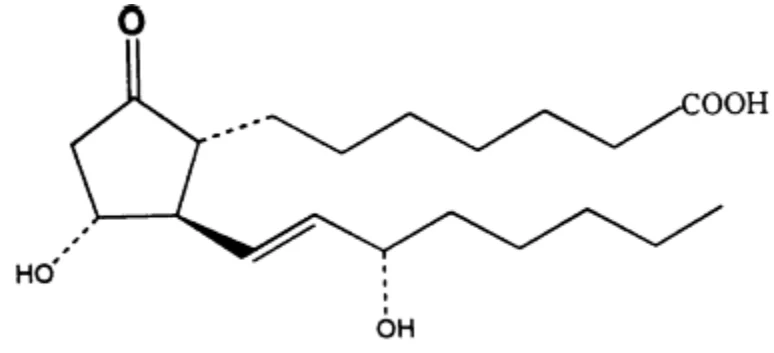
Molecular Formula: C20H34O5
Molecular Weight: 354.49
Description: Alprostadil is a white to off-white crystalline powder with a melting point between 115° and 116°C. Its solubility at 35°C is 8000 Fg per 100 mL double-distilled water.
Composition: The inactive ingredient in MUSE alprostadil is polyethylene glycol 1450,
USP. There are no other active agents or excipients in the MUSE system.
STABILITY AND STORAGE RECOMMENDATIONS
Store unopened foil pouches in a refrigerator at 2°- 8°C. Do not expose MUSE alprostadil to temperatures above 30°C. The MUSE system may be kept by the patient at room temperature
(below 30°C) for up to 14 days prior to use.
AVAILABILITY OF DOSAGE FORMS
MUSE alprostadil is a transurethral delivery system available in 4 dosage strengths: 125Fg,
250 Fg, 500 Fg and 1000 Fg.