


Product Monograph - Caverject Sterile Powder
RECENT MAJOR LABEL CHANGES
4 DOSAGE AND ADMINISTRATION, 4.2 Recommended Dose and Dosage Adjustment 7 WARNINGS AND PRECAUTIONS, Fertility | 12/2022 |
|---|
TABLE OF CONTENTS
Sections or subsections that are not applicable at the time of authorization are not listed.
RECENT MAJOR LABEL CHANGES .......................................................................................... 2
TABLE OF CONTENTS ............................................................................................................ 2
PART I: HEALTH PROFESSIONAL INFORMATION .................................................................... 4
1 INDICATIONS ............................................................................................................. 4
1.1 Pediatrics .................................................................................................................. 4
1.2 Geriatrics .................................................................................................................. 4
2 CONTRAINDICATIONS ................................................................................................ 4
4 DOSAGE AND ADMINISTRATION ................................................................................ 4
4.1 Dosing Considerations ............................................................................................. 4
4.2 Recommended Dose and Dosage Adjustment ........................................................ 5
4.3 Reconstitution .......................................................................................................... 6
4.4 Administration ......................................................................................................... 6
5 OVERDOSAGE ............................................................................................................ 7
6 DOSAGE FORMS, STRENGTHS, COMPOSITION AND PACKAGING ................................ 8
7 WARNINGS AND PRECAUTIONS ................................................................................. 8
7.1 Special Populations ................................................................................................ 11
7.1.1 Pregnant Women ............................................................................................. 11
7.1.2 Breast-feeding .................................................................................................. 11
7.1.3 Pediatrics .......................................................................................................... 11
7.1.4 Geriatrics .......................................................................................................... 12
8 ADVERSE REACTIONS............................................................................................... 12
8.1 Adverse Reaction Overview ................................................................................... 12
9 DRUG INTERACTIONS .............................................................................................. 15
9.2 Drug Interactions Overview ................................................................................... 15
9.3 Drug-Behavioural Interactions ............................................................................... 15
9.4 Drug-Drug Interactions .......................................................................................... 15
9.5 Drug-Food Interactions .......................................................................................... 15
9.6 Drug-Herb Interactions .......................................................................................... 15
9.7 Drug-Laboratory Test Interactions......................................................................... 15
10 CLINICAL PHARMACOLOGY ...................................................................................... 15
10.1 Mechanism of Action ....................................................................................... 15
10.2 Pharmacodynamics .......................................................................................... 16
10.3 Pharmacokinetics ............................................................................................. 17
11 STORAGE, STABILITY AND DISPOSAL ........................................................................ 18
12 SPECIAL HANDLING INSTRUCTIONS .......................................................................... 18
PART II: SCIENTIFIC INFORMATION ..................................................................................... 19
13 PHARMACEUTICAL INFORMATION .......................................................................... 19
14 CLINICAL TRIALS ...................................................................................................... 20
14.1 Trial Design and Study Demographics ............................................................. 20
15 MICROBIOLOGY ...................................................................................................... 20
16 NON-CLINICAL TOXICOLOGY .................................................................................... 20
PATIENT MEDICATION INFORMATION ................................................................................ 23
PART I: HEALTH PROFESSIONAL INFORMATION
1 INDICATIONS
CAVERJECT STERILE POWDER (alprostadil) is indicated for:
- the intracavernosal treatment of erectile dysfunction due to neurogenic, vasculogenic, psychogenic, or mixed etiology.
Intracavernosal CAVERJECT STERILE POWDER may also be useful as an adjunct to diagnostic tests in the diagnosis of erectile dysfunction.
1.1 Pediatrics
CAVERJECT STERILE POWDER is not indicated for pediatric use (See 2 CONTRAINDICATIONS).
1.2 Geriatrics
Geriatrics: No data are available to Health Canada; therefore, Health Canada has not authorized an indication for geriatric use.
2 CONTRAINDICATIONS
CAVERJECT STERILE POWDER (alprostadil) is contraindicated in the following individuals:
- Patients who are hypersensitive to this drug or to any ingredient in the formulation, including any non-medicinal ingredient, or component of the container. For a complete listing, see 6 DOSAGE FORMS, STRENGTHS, COMPOSITION AND PACKAGING.
- Patients who have any condition that may predispose them to priapism such as sickle cell anemia or trait, multiple myeloma or leukemia.
- Patients with anatomical deformations of the penis, such as angulation, cavernosal fibrosis, Peyronie's disease.
- Patients with penile implants
CAVERJECT STERILE POWDER should not be used in women or children and is not for use in newborns.
CAVERJECT STERILE POWDER should not be used in men for whom sexual activity is inadvisable or contraindicated.
4 DOSAGE AND ADMINISTRATION
4.1 Dosing Considerations
Appropriate initial doses and maintenance doses are recommended based on the etiology of the erectile dysfunction. In all cases, the dose should be titrated on an individual basis by the physician, and the lowest effective dose always employed as the therapeutic dose. An effective dose is defined as one which produces an erection sufficient for intercourse with an erection duration not exceeding 1 hour.
4.2 Recommended Dose and Dosage Adjustment
The following guidelines for dose titration are recommended.
Initial Titration in Physician's Office
Erectile Dysfunction of Vasculogenic, Psychogenic or Mixed Etiology. Dosage titration should be initiated at 2.5 mcg of alprostadil. If there is a partial response, the dose may be increased by 2.5 mcg to a dose of 5 mcg and then in increments of 5 to 10 mcg, depending upon erectile response, until the effective dose is reached (see Therapeutic/Effective Dose). If there is no response to the initial 2.5 mcg dose, the second dose may be increased to 7.5 mcg, followed by increments of 5 to 10 mcg. The patient must remain in the physician's office until complete detumescence is achieved. If there is no response, then the next higher dose may be given within 1 hour. During titration no more than two doses should be given within a 24 hour period. If there is a response, then there should be at least a 24 hour interval before the next dose is given.
Erectile Dysfunction of Pure Neurogenic Etiology. Dosage titration should be initiated at 1.25 mcg of alprostadil. The dose may be increased by 1.25 mcg to a dose of 2.5 mcg, followed by an increment of 2.5 mcg to a dose of 5 mcg and then in 5 mcg increments until the effective dose is reached (see 4 DOSAGE AND ADMINISTRATION, Dosing Considerations). The patient must remain in the physician's office until complete detumescence is achieved.
If there is no response, then the next higher dose may be given within 1 hour. During titration no more than two doses should be given within a 24 hour period. If there is a response, then there should be at least a 24 hour interval before the next dose is given.
In one clinical study involving 579 patients, the majority of patients (56%) were titrated to doses of >5 mcg but ≤20 mcg. The mean dose at the end of the titration phase was 17.8 mcg of alprostadil.
Maintenance Therapy
The initial injection of CAVERJECT STERILE POWDER must be delivered by a medically trained health care professional. Before beginning a self-injection program of therapy, the physician must ensure that the patient (or his partner) aptly demonstrates skill and competence with the injection procedure, and uses appropriate sterile technique. A patient package insert is available to patients for referral (see PATIENT MEDICATION INFORMATION).
The dose selected for self-injection therapy is established during dose titration in the physician’s office. The correct dose is the lowest effective dose. The dose should be reduced if the erection persists for longer than 1 hour; however, the physician should take into consideration the patients preferences when defining the dose for self-injection. An erection lasting >3 hours is to be treated as a medical emergency. A physician should be consulted for any dose adjustments, if required. The dose should be adjusted in accordance with the titration guidelines described above. Regular follow-up visits, at least every 3 months, are recommended in order to assess the safety and efficacy of the therapy.
Maximum Recommended Dose Limits
- Daily dose should not exceed 60 mcg.
- NOT more than once daily and NOT more than 3 times weekly, with at least 24 hours between each dose.
- Do not inject CAVERJECT STERILE POWDER into an erect penis.
There is no evidence that tolerance to the effects of CAVERJECT STERILE POWDER develops with continued use. The long-term use of CAVERJECT STERILE POWDER has been documented for up to 6 months in an uncontrolled self-injection study. The mean dose after 6 months was 20.7 mcg.
A vial of CAVERJECT STERILE POWDER delivers one dose only. Instructions for proper disposal of the syringe, needle and vial should be followed (see PATIENT MEDICATION INFORMATION).
Diagnostic Dose
Pharmacologic Testing
An initial dose of 2.5 mcg is employed with subsequent upward titration in 2.5 mcg increments. Patients are monitored for the occurrence of an erection following an intracavernosal injection of CAVERJECT STERILE POWDER.
Adjunct to Laboratory Investigations
A single dose of CAVERJECT STERILE POWDER sufficient to induce a rigid erection is used. For use with Doppler imaging/Duplex Ultrasonography, 133Xenon washout tests, Radionuclide Phallography and Penile Arteriography for the visualization and assessment of the penile vasculature.
4.3 Reconstitution
Parenteral Products:
Carefully hold syringe and vial as a unit, and gently swirl the two (do not shake) until the powder dissolves completely. DO NOT USE if the resulting solution is cloudy or coloured, or if it contains particles.
Table – Reconstitution
Parenteral Products (CAVERJECT STERILE POWDER)
| Vial Size | Volume of Diluent to be Added to Vial | Approximate Available Volume | Concentration per mL |
| 23.2 mcg | 1 mL BWFI | 1.13 mL | 20 mcg/mL |
4.4 Administration
CAVERJECT STERILE POWDER (alprostadil) is administered by direct intracavernosal injection. A 1/2-inch 27- to 30 gauge needle is generally recommended. CAVERJECT STERILE POWDER is injected into either of two corpora cavernosum along the dorso-lateral aspects of the proximal third of the penis. Avoid any area where there are visible veins. The injection site should be changed for each injection (i.e. alternate sides of penis). Within either area, the point of injection should also be changed each time and the injection site must be cleansed with an alcohol swab.
The diluent that is used to reconstitute CAVERJECT STERILE POWDER contains benzyl alcohol (see 7 WARNINGS AND PRECAUTIONS).
5 OVERDOSAGE
The pharmacotoxic signs of alprostadil are similar in all animal species and include depression, soft stool or diarrhea and rapid breathing. In mice, the lowest acute LD50 was 12 mg/kg which is 12,000 times greater than the maximum recommended human dose of 60 mcg.
In man, prolonged erection and/or priapism are known to occur following intracavernosal administration of vasoactive substances.
Given the dose-response relationship of alprostadil with erection duration, the therapeutic dose range should be determined individually for each patient by his physician during the initial office instruction.
Inadvertent or intentional overdosing is the most common cause of prolonged pharmacological erection. In clinical trials with CAVERJECT STERILE POWDER (alprostadil), overdosage was not observed. If intracavernous overdose of CAVERJECT STERILE POWDER occurs, the patient should be under medical supervision until any systemic effects have resolved and/or until penile detumescence has occurred. Symptomatic treatment of any systemic symptoms would be appropriate.
Patients should be instructed to report any erections persisting for more than 3 hours to a physician. The treatment of priapism/prolonged erection should be according to established medical practice. Physicians may refer to two suggested protocols for detumescence presented below.
Detumescence Protocols
- 1. Aspirate 40 to 60 mL from either right or left corpora using vacutainer and holder as for drawing blood. Use landmarks as for intracavernosal injection. Patient will often detumesce while aspirating. Apply ice for 20 minutes post aspiration if erection remains.
If 1) unsuccessful then,
- 2. Have patient in supine position. Dilute 10 mg phenylephrine into 20 mL water for injection (0.05%). With an insulin syringe, inject 0.1 to 0.2 mL (50-100 mcg) into the corpora every 2 to 5 minutes, until detumescence occurs.
The occasional patient may experience very transient bradycardia and hypertension when given phenylephrine injections, therefore monitor patient's blood pressure and pulse every 10 minutes. Patients at risk include those with cardiac arrhythmias and diabetics. Refer to the prescribing information for phenylephrine before use.
DO NOT give to patients on MAO inhibitors. When phenylephrine is used within the first 12 hours of erection, the majority of patients will respond.
- 3. If the above measures fail to detumesce the patient, a urologist should be consulted as soon as possible, especially if the erection has been present for many hours. If priapism is not treated immediately, penile tissue damage and/or permanent loss of potency may result.
| For management of a suspected drug overdose, contact your regional poison control centre. |
|---|
6 DOSAGE FORMS, STRENGTHS, COMPOSITION AND PACKAGING
Table – Dosage Forms, Strengths, Composition and Packaging
CAVERJECT STERILE POWDER is available in cartons containing 5 cases.
Each case contains: a single dose vial of 20 mcg CAVERJECT STERILE POWDER sterile powder, 1 mL pre-filled syringe of BWFI diluent, a 27-gauge, 0.5-inch needle, 2 alcohol swabs and Patient Administration Leaflet. These cases are fitted with a lock designed for safe and convenient disposal of the contents after use.
7 WARNINGS AND PRECAUTIONS
General
Information to be Provided to Patient
Patients using a self-injection program of therapy should receive proper instruction in both intracavernosal injection and aseptic technique (see PATIENT MEDICATION INFORMATION). Physicians should ensure that patients are able to demonstrate competence and skill with the injection procedure prior to initiating self-injection.
CAVERJECT STERILE POWDER uses a superfine needle for administration. As with all superfine needles, the possibility of needle breakage exists.
Needle breakage, with a portion of the needle remaining in the penis, has been reported and, in some cases, required hospitalization and surgical removal.
Careful patient instruction in proper handling and injection techniques may minimize the potential for needle breakage.
The patient should be instructed that, if the needle is bent, it must not be used; they should also not attempt to straighten a bent needle. They should remove the needle from the
| Route of Administration | Dosage Form / Strength/Composition | Non-medicinal Ingredients |
| Intracavernosal | Sterile Powder / 20 mcg | Lactose monohydrate, sodium citrate dihydrate, benzyl alcohol, hydrochloric acid and/or sodium hydroxide to adjust the pH |
syringe, discard it, and attach a new, unused sterile needle to the syringe.
The initial treatment dose is established in the physician’s office. The lowest effective dose sufficient to induce an erection lasting up to 1 hour should be used. The patient may expect an erection to occur within 5 to 20 minutes. Patients who require dosage adjustments and are self-injecting CAVERJECT STERILE POWDER, should not increase or decrease their dose without the advice of their physician. Generally, patients should not use CAVERJECT STERILE POWDER more than once a day and not more than 3 times a week, with at least 24 hours between each use.
CAVERJECT STERILE POWDER is labelled for "single use only", patients should discard any unused solution after withdrawing the proper volume for their dose. The vial should not be shaken once reconstituted.
Reconstituted vials of CAVERJECT STERILE POWDER which on visual inspection appear cloudy, coloured or contain particulate matter, should be discarded.
Patients who experience an erection lasting longer than 2 hours should attempt to detumesce using methods prescribed by their physician.
Patients should be advised on the possible adverse effects associated with the use of CAVERJECT STERILE POWDER; the most frequent being mild to moderate penile pain after injection. A patient should report to his physician if he complains of: any penile pain not previously present, an increased intensity of pain, nodules or hard tissue appearing in the penis, or curvature of the erect penis. There is the potential for infection with any type of injection, therefore patients should also report any occurrences of penile redness, swelling, or tenderness. The importance of regular physician visits to assess the continued safety and efficacy of CAVERJECT STERILE POWDER treatment should be stressed to the patient.
A potentially serious adverse reaction with intracavernosal therapy is priapism. Accordingly, the patient should be instructed to contact the physician's office immediately or, if unavailable, to seek immediate medical assistance if an erection persists for longer than 3 hours.
In clinical trials, the use of concomitant medicines such as antihypertensives, diuretics, antidiabetic agents (including insulin) or non-steroidal anti-inflammatory drugs, did not affect the safety or efficacy of CAVERJECT STERILE POWDER.
The use of CAVERJECT STERILE POWDER intracavernosally does not offer any protection from the spread of sexually transmitted diseases. Individuals using CAVERJECT STERILE POWDER should be properly counselled with regards to protective measures to safeguard against the spread of sexually transmitted diseases, including human immunodeficiency virus (HIV) infection.
Patients should be instructed not to reuse or share needles or syringes. The patient should not allow anyone else to use this medicine. Patients should dispose of used needles, syringes, and vials, safely and properly (see PATIENT MEDICATION INFORMATION).
A patient administration guide, found in every package of CAVERJECT STERILE POWDER, provides a step-by-step method for the proper preparation and administration of CAVERJECT
STERILE POWDER. Patients should be instructed to carefully follow this guide for self-injection.
Carcinogenesis and Mutagenesis
No human data are available. For animal data, see 16 NON-CLINICAL TOXICOLOGY.
Cardiovascular
Prolonged erection (4 to 6 hours) and/or priapism (>6 hours) are known to occur following intracavernosal administration of vasoactive substances, including CAVERJECT STERILE POWDER (alprostadil). In clinical studies, prolonged erection occurred in 4% of patients and 0.4% experienced priapism.
The patient should be instructed to immediately report to his physician, or if unavailable, to seek immediate medical assistance for an erection persisting more than 3 hours. Treatment of prolonged erection/priapism should be according to established medical practice (see 5 OVERDOSAGE). If priapism is not treated immediately, penile tissue damage and permanent loss of potency may result.
In the majority of cases, spontaneous detumescence occurred. To minimize the chances of prolonged erection or priapism, CAVERJECT STERILE POWDER should be titrated slowly to the lowest effective dose (see 4 DOSAGE AND ADMINISTRATION).
Patients on anticoagulants such as warfarin or heparin may have an increased propensity for bleeding after intracavernosal injection.
Genitourinary
Underlying treatable medical causes of erectile dysfunction must be diagnosed and treated prior to initiating therapy with CAVERJECT STERILE POWDER (alprostadil).
The results of clinical studies with CAVERJECT STERILE POWDER indicate an overall incidence of penile fibrosis, including Peyronie's disease, of 3% (55/1861). In one long-term (up to 18 months duration) self injection study, the incidence of fibrosis reported was 7.8% (53/683). Regular follow-up of patients, with careful examination of the penis, is strongly recommended to detect signs of penile fibrosis. Treatment with CAVERJECT STERILE POWDER should be discontinued in patients who develop penile angulation, cavernosal fibrosis or Peyronie's disease.
Hematologic
An injection of CAVERJECT STERILE POWDER can induce a small amount of bleeding at the injection site (see 8 ADVERSE REACTIONS). In patients infected with blood-borne diseases, this may increase the transmission of blood-borne diseases between partners.
The safety and efficacy of combinations of CAVERJECT STERILE POWDER and other vasoactive agents have not been systematically studied. Therefore, the use of such combinations is not recommended.
Reproductive Health: Female and Male Potential
Fertility
CAVERJECT STERILE POWDER is not indicated for use in women (see 2 CONTRAINDICATIONS). Rat reproductive studies indicate that alprostadil at doses of up to 0.2 milligram/kilogram/day (s.c.) (200 times the maximum human recommended dose of 60 microgram) did not have an adverse effect on the reproductive potential of the male rat (see 16 NON-CLINICAL TOXICOLOGY).
Function
In man, prolonged erection and/or priapism are known to occur following intracavernosal administration of vasoactive substances (see 5 OVERDOSAGE and 7 WARNINGS AND PRECAUTIONS).
Teratogenic Risk
CAVERJECT STERILE POWDER is not indicated for use in women (see 2 CONTRAINDICATIONS).
Respiratory
The diluent that is used to reconstitute CAVERJECT STERILE POWDER contains benzyl alcohol, a preservative that has been associated with serious adverse events, including the “gasping syndrome”, and death in pediatric patients. The minimum amount of benzyl alcohol at which toxicity may occur is not known. The risk of benzyl alcohol toxicity depends on the quantity administered and the liver and kidneys’ capacity to detoxify the chemical. Premature and low-birth weight infants may be more likely to develop toxicity.
Benzyl alcohol can cross the placenta.
7.1 Special Populations
7.1.1 Pregnant Women
CAVERJECT STERILE POWDER is not indicated for use in women (see 2 CONTRAINDICATIONS).
7.1.2 Breast-feeding
CAVERJECT STERILE POWDER is not indicated for use in women (see 2 CONTRAINDICATIONS).
7.1.3 Pediatrics
Pediatrics (<18 years): Based on the data submitted and reviewed by Health Canada, the safety and efficacy of CAVERJECT STERILE POWDER in pediatric patients has not been established; therefore, Health Canada has not authorized an indication for pediatric use (see 2 CONTRAINDICATIONS).
7.1.4 Geriatrics
Geriatrics: No data are available to Health Canada; therefore, Health Canada has not authorized an indication for geriatric use (see 2 CONTRAINDICATIONS).
8 ADVERSE REACTIONS
8.1 Adverse Reaction Overview
Local Adverse Events
The following local adverse events were reported from controlled and uncontrolled clinical trials, including an uncontrolled 18 month safety study.
Local Event (reported in ≥1% of patients) | No. (%) of Pts (N=1861) | |
Penile Pain Pain after injection Pain at the injection site | 696 580 370 | (37) (31) (20) |
| Prolonged erection (4-6 hr) | 82 | (4) |
| Penile fibrosisa | 55 | (3) |
| Injection site hematoma | 63 | (3) |
| Penis disorderb | 46 | (3) |
| Injection site ecchymosis | 32 | (2) |
| Penile rash | 21 | (1) |
| Penile edema | 18 | (1) |
a Includes generalized or deep fibrosis, penile curvature/deviation, and Peyronie's disease.
b Includes numbness, yeast infection, irritation, sensitivity, phimosis, pruritus, erythema, venous leak, penile skin tear, strange feeling in penis, burning sensation in penis and itch at tip of penis.
Penile Pain
Penile pain after intracavernosal administration of CAVERJECT STERILE POWDER (alprostadil) was reported at least once by 37% of patients in clinical studies of up to 18 months in duration. The intensity of pain was rated mild or moderate in the majority of cases. Three percent of patients discontinued treatment because of penile pain. The frequency of penile pain was 2% in 294 patients who received 1 to 3 injections of placebo.
Prolonged Erection/Priapism
In clinical trials, prolonged erection was defined as an erection that lasted for 4 to 6 hours; priapism was defined as an erection that lasted 6 hours or longer (see 7 WARNINGS AND PRECAUTIONS).
Hematoma/Ecchymosis
The frequency of hematoma and ecchymosis was 3% and 2% respectively. In most cases, hematoma/ecchymosis was judged to be a complication of a faulty injection technique. Accordingly, proper instruction of the patient in self-injection is of importance to minimize the potential of hematoma/ecchymosis (see 4 DOSAGE AND ADMINISTRATION).
Local events observed in <1% of the patients include: balanitis, lack of efficacy, injection site hemorrhage, injection site inflammation, injection site itching, injection site reaction, injection site swelling, injection site edema, trauma, urethral bleeding, urethral disorder, penile hematoma, penile warmth, priapism (>6 hr), numbness, yeast infection, irritation, sensitivity, phimosis, pruritus, erythema, venous leak, painful erection and abnormal ejaculation.
Systemic Adverse Events
The following systemic adverse event information was derived from controlled and uncontrolled studies, including an uncontrolled 18 month safety study.
Systemic Eventa by Body Systemb (reported in ≥1% of patients)c | No. (%) of Pts (N=1861) | |
BODY AS A WHOLE Upper respiratory infection Flu syndrome Headache Traumad Localized paine Back pain Localized abdominal pain | 245 76 42 37 33 32 22 10 | (13) (4) (2) (2) (2) (2) (1) (<1) |
RESPIRATORY Sinusitis Nasal congestion Cough Bronchitis Pharyngitis | 123 43 25 21 18 16 | (7) (2) (1) (1) (1) (<1) |
UROGENITAL Prostatic disorderf Urinary tract infection Testicular pain Hematuria | 121 28 16 16 10 | (7) (2) (<1) (<1) (<1) |
CARDIOVASCULAR Hypertension | 80 39 | (4) (2) |
CENTRAL NERVOUS Dizziness | 66 22 | (4) (1) |
DIGESTIVE Nausea Tooth abscess Diarrhea Dyspepsia | 86 14 12 11 11 | (5) (<1) (<1) (<1) (<1) |
SKIN AND APPENDAGES Rash | 49 11 | (3) (<1) |
a number (%) patients reporting the event, with patients reporting the same event more than once counted only once.
b number (%) patients reporting a drug-related event within body system, with patients reporting more than one event within the body system counted only once.
c no significant adverse events were reported by 294 patients who received 1 to 3 injections of placebo.
d includes injuries, fractures, abrasions, lacerations, dislocations.
e includes pain in various anatomical structures other than injection site.
f includes prostatitis, pain, hypertrophy, enlargement.
Systemic events reported in 1% of patients and judged by investigators to be possibly related to the use of CAVERJECT STERILE POWDER include: testicular pain, scrotal disorder, scrotal edema, hematuria, testicular disorder, impaired urination, urinary frequency, pelvic pain, hypotension, vasodilation, peripheral vascular disorder, supraventricular extrasystole, vasovagal reactions, hypoesthesia, non-generalized weakness, diaphoresis, rash, non-application site pruritus, skin neoplasm, nausea, dry mouth, increased serum creatinine, leg cramps and mydriasis.
Hemodynamic changes, manifested as decreases in blood pressure and increases in pulse rate, were observed during clinical studies, principally at doses above 20 mcg and above 30 mcg of alprostadil respectively, and appeared to be dose-dependent. However, these changes were clinically unimportant; only three patients discontinued the treatment because of symptomatic hypotension.
CAVERJECT STERILE POWDER had no clinically important effect on serum or urine laboratory tests.
Post-Market Adverse Drug Reactions
The following adverse event was reported during Post-Marketing Surveillance:
- Urogenital: Urinary urgency
9 DRUG INTERACTIONS
9.2 Drug Interactions Overview
9.3 Drug-Behavioural Interactions
Interactions with behaviour have not been established.
9.4 Drug-Drug Interactions
Patients on anticoagulants such as warfarin or heparin may have an increased propensity for bleeding after intracavernosal injection.
9.5 Drug-Food Interactions
Interactions with food have not been established.
9.6 Drug-Herb Interactions
Interactions with herbal products have not been established.
9.7 Drug-Laboratory Test Interactions
Interactions with laboratory tests have not been established.
10 CLINICAL PHARMACOLOGY
10.1 Mechanism of Action
Alprostadil is a prostaglandin with various pharmacological actions that include vasodilation and inhibition of platelet aggregation, inhibition of gastric secretion, stimulation of intestinal smooth muscle and stimulation of uterine smooth muscle.
Alprostadil, when given to impotent men by intracavernous injection, induces erections within 5 to 20 minutes after administration. The duration of erection is dose-dependent. The mechanism of penile erection involves a complex series of neurovascular events. Alprostadil injected intracavernosally causes tumescence by increasing cavernous blood flow through relaxation of trabecular smooth muscle and dilation of cavernosal arteries.
With regards to the action of alprostadil on penile structures, in most animal species tested, alprostadil had relaxant effects on retractor penis and corpus cavernosum urethrae in vitro. Alprostadil also relaxed isolated preparations of human corpus cavernosum and spongiosum as well as cavernous arterial segments previously contracted by either noradrenaline or PGF2α.
In pigtail monkeys (Macaca nemestrina), alprostadil increased cavernous arterial blood flow in vivo. The degree and duration of cavernous smooth muscle relaxation in this animal model was dose-dependent.
Other actions of PGE1 involve the cardiovascular system, central nervous system (CNS), autonomic nervous system, respiratory system, gastrointestinal system and hematopoietic system.
10.2 Pharmacodynamics
The actions of PGE1 involve the cardiovascular system, central nervous system (CNS), autonomic nervous system, respiratory system, gastrointestinal system and hematopoietic system.
Cardiovascular: PGE1 uniformly lowers the blood pressure of animals when administered intravenously in doses between 1 and 10 mcg/kg. The depressor action is due to a decrease in peripheral resistance. Associated with this are an increased cardiac output and heart rate. The effect of PGE1 on the cerebral circulation is controversial. Only a low potential exists that intrapenile PGE1 could induce a cardiovascular change since very limited systemic circulation occurs.
Central Nervous System: Prostaglandins are normally present in CNS tissue and exert potent and varied actions. The mechanisms are poorly understood but may be associated with increased cAMP levels. Large doses (7-20 mcg/kg in cats, 25-50 mcg/kg in monkeys) of PGE1 given by intraventricular injection has sedative effects in animals. The relevance of this pharmacologic activity to peripherally administered PGE1 is questionable since only minute amounts of PGE1 are taken up by the nervous tissue. PGE1 injected into the hypothalamus produces an elevation in body temperature.
Autonomic Nervous System: PGE1 appears to inhibit norepinephrine release from adrenergic nerve endings and inhibits effector responses resulting from adrenergic nerve stimulation.
Cholinergic responses are generally enhanced by PGE1, with the exceptions of the heart and gastric mucosa. PGE1 generally stimulates gastrointestinal smooth muscle and antagonizes sympathomimetic effects on smooth muscle.
Respiratory System: PGE1 inhibits bronchial muscle tone in animals and man when administered by aerosol. Infusion of PGE1 reduces arterial pulmonary pressure in dogs. The actions of PGE1 in the respiratory system are brief since the lung is capable of extensive metabolism. In guinea pigs and dogs, a single pass through the lungs removes 90% of PGE1 from the circulation within minutes.
Gastrointestinal: In rats, guinea pigs, cats and dogs, PGE1 inhibits gastric acid secretion by direct action on the mucosa rather than by effecting mucosal blood flow. In contrast, PGE1 stimulates intestinal secretion. Intra-arterial infusion of PGE1 in dogs (0.01-1 mcg/min) and cats (1 mcg/mL) also decreased jejunal motility. Intra-jejunal PGE1 (0.9 mcg/kg/min) administered to humans had the effect of reversing the net absorption of water and electrolytes. The role of prostaglandins in diarrhea however, is not established. PGE1 has no effect on salivary secretion in dogs. No consistent effect of PGE1 on insulin secretion is apparent.
Hematopoietic: PGE1 strongly inhibits ADP-induced platelet aggregation in rat, pig and human plasma. In humans and animals no inhibition is produced at doses of 0.1 and 0.2 mcg/kg/min.
10.3 Pharmacokinetics
Absorption
The absolute bioavailability of alprostadil following intracavernosal injection has not been determined.
Distribution
Following a 20 mcg intracavernosal injection of alprostadil, mean peripheral plasma concentrations of alprostadil were 89 pg/mL and 102 pg/mL at 30 and 60 minutes post injection respectively, which were not significantly greater than baseline levels of endogenous alprostadil at 96 pg/mL. Alprostadil is bound primarily to plasma albumin (81%) and to a lesser degree to α-globulin IV-4 fraction (55%). No significant binding could be demonstrated with erythrocytes or white cells.
Metabolism
Alprostadil is rapidly converted to compounds which are further metabolized prior to excretion. In man, a single pass through the lung effectively metabolizes approximately 80% of the available PGE1 primarily by beta- and omega-oxidation. Therefore, any alprostadil which may enter the systemic circulation following intracavernosal injection is rapidly metabolized. However, pulmonary clearance of PGE1 can be affected by disease states such as acute respiratory distress syndrome (ARDS), with a resultant reduction in the pulmonary extraction ratio.
After intracavernosal administration of 20 mcg of alprostadil, peripheral levels of the primary metabolite 15 oxo-13,14-dihydro-PGE1 increased, reaching a peak at 30 minutes and falling to pre-dose levels by 60 minutes post injection.
Elimination
The major route of elimination of the metabolites of alprostadil is through the kidney. Urinary excretion of an intravenous dose is essentially complete (90%) within 24 hours of administration. The remainder of the dose is excreted in the feces. There is no evidence to suggest any tissue retention of PGE1 or its metabolites after an intravenous administration.
Special Populations and Conditions
In one study, pulmonary extraction of alprostadil given intravenously was found to be reduced by 15% in patients with ARDS (66%) compared to patients with normal respiratory function (78%). In a second study of 14 patients with ARDS or at risk of developing ARDS, the mean extraction efficiency of alprostadil was 67% ranging from subnormal (11%) to normal (90%).
Pediatrics CAVERJECT STERILE POWDER contains the diluent benzyl alcohol and is contraindicated in children and newborns (see 2 CONTRAINDICATIONS).
Plasma alprostadil concentrations were evaluated in 10 neonates (gestational age 34 weeks in 2 infants and 38 to 40 weeks in 8 infants) receiving steady-state intravenous infusions of alprostadil to treat underlying cardiac malformations. Alprostadil infusion rates ranged from 5 to 50 ng/kg/min (median 45 ng/kg/min), with resultant plasma concentrations in the range of 22 to 530 pg/mL (median 56 pg/mL). The individual clearance of alprostadil in neonates is highly variable as reflected by the wide range of plasma concentrations observed.
- Geriatrics The potential effect of age on the pharmacokinetics of alprostadil has not been formally evaluated. In patients with ARDS, the mean (±SD) pulmonary extraction of alprostadil was 72 ± 15% in 11 elderly patients aged 65 years or older (mean 71 ± 6 years) and 65% ± 20% in 6 young patients aged 35 years or younger (mean 28 ± 5 years).
- Sex The influence of gender on the pharmacokinetics of alprostadil has not been formally studied. Two studies evaluated pulmonary extraction in 23 patients with ARDS following intravenous administration of alprostadil. The 17 males had a pulmonary extraction of 66% compared to 69% in the 6 female patients, suggesting no gender influence.
- Ethnic Origin The influence of race on the pharmacokinetics of alprostadil has not been formally studied.
- Hepatic Insufficiency The effects of hepatic insufficiency on the pharmacokinetics of alprostadil have not been formally studied. Since systemic clearance of alprostadil is primarily by first-pass metabolism through the lungs, it is not expected that altered hepatic function will have a major influence on the pharmacokinetics of alprostadil.
- Renal Insufficiency The effects of renal insufficiency on the pharmacokinetics of alprostadil have not been formally studied. Since systemic clearance of alprostadil is primarily by first-pass metabolism through the lungs, it is not expected that altered renal function will have a major influence on the pharmacokinetics of alprostadil.
11 STORAGE, STABILITY AND DISPOSAL
CAVERJECT STERILE POWDER The unreconstituted lyophilized sterile powder (20 mcg vials) should be stored between 2°C to 30°C.
Reconstituted Solutions Once reconstituted, the alprostadil solution must be used immediately. Do not freeze the reconstituted solution. A solution which appears cloudy, coloured or contains particles should be discarded.
12 SPECIAL HANDLING INSTRUCTIONS
Always safely dispose of the used syringe (needle), vial and swabs. To help you, the CAVERJECT STERILE POWDER case is designed as a safe and convenient disposal unit that should be locked. (As another option, your pharmacist may supply a disposal box especially for syringes.)
- 1. Remove red plastic lock from its holder inside the case. Put this to the side.
- 2. Place used syringe, needle, vial and used swabs in the plastic case. Close firmly so the case snaps shut.
- 3. Remove centre part of CAVERJECT STERILE POWDER label (perforated area) to show the keyhole.
- 4. To lock case, push the red lock through the hole in the case top. The case is now locked.
PART II: SCIENTIFIC INFORMATION
13 PHARMACEUTICAL INFORMATION
Drug Substance
Proper name: alprostadil (INN;USAN;BAN;JAN)
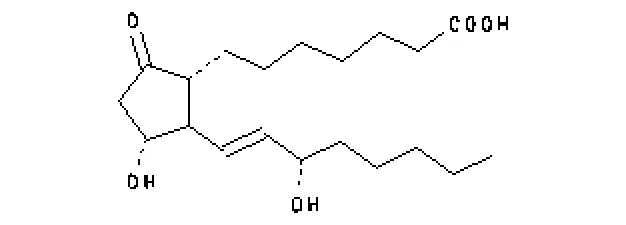
Chemical name: (11α, 13E, 15S)-11,15-dihydroxy-9-oxoprost-13-en-1-oic acid.
Molecular formula and molecular mass: C20H34O5; 354.49
Structural formula:
Physicochemical properties:
- an odourless, white to off-white crystalline powder.
- melting point of 115o to 116oC.
- acid dissociation constant (Ka) is 1.1 x 10⁻⁵
- solubility is 80 mcg/mL in water at 35oC.
- pH of 5.15 with 52 mcg /mL alprostadil in deaerated water at 23oC.
- partition coefficient of 0.7 in soyabean oil/water.
Product Characteristics:
CAVERJECT STERILE POWDER
STERILE POWDER Ingredients | 20 mcg Vial | |
Dry Powder (per vial) | Reconstituted (per mL) | |
| Alprostadil | 23.2 mcg | 20 mcg |
| Lactose Monohydrate | 193.8 mg | 172 mg |
| Sodium Citrate Dihydrate | 53 mcg | 47 mcg |
| 10% Hydro-chloric Acid | pH adj. | - |
| 10% Sodium Hydroxide | pH adj. | - |
| DILUENT Ingredients | Syringe Amount (per mL) | After Vial Reconstitution (per mL) |
| Benzyl Alcohol | 9.45 mg | 8.4 mg |
| Sterile Water for Injection | qs ad | - |
Reconstituted Solutions
CAVERJECT STERILE POWDER (alprostadil for injection) is reconstituted with the addition of 1 mL bacteriostatic water for injection (BWFI). Vial content after reconstitution is approximately 1.13 mL which allows 1.0 mL to be delivered to the patient. An excess of alprostadil is added to compensate for loss due to adsorption to the vial and syringe. The resultant solution contains 20 mcg/mL of alprostadil, 172 mg/mL lactose, 47 mcg/mL sodium citrate, and 8.4 mg/mL benzyl alcohol. Once reconstituted, no additional substances should be injected into the vial.
14 CLINICAL TRIALS
14.1 Trial Design and Study Demographics
The information on the trial design and study demographics on which the original indication was authorized is not available.
15 MICROBIOLOGY
No microbiological information is required for this drug product.
16 NON-CLINICAL TOXICOLOGY
General Toxicology:
| Acute Toxicity | ||
| Species | Route | Combined Sex Estimated LD50 Values, (mg/kg) |
| Mouse | IV | 96 (80-115) |
| Mouse | IV | 76 (66-88) |
Mouse Neonate Mouse Adult | SC SC | 12 (10-14) 76 (63-91) |
| Mouse | SC | 49 (42-56) |
| Rat | IV | 30 (26-34) |
| Rat | SC | 15 (13-17) |
| Rat Neonate | SC | 33 (29-39) |
| Rat | SC | 25 (22-29) |
| Dog | I-Arterial | Non-toxic at 0.5 mcg/kg/min |
Common clinical signs included: depression (inactivity), soft stool or diarrhea and rapid breathing. Hence, alprostadil was found to compromise the CNS, gastrointestinal tract and respiratory system at high doses.
| Long-Term Toxicity | ||||
| Species | Alprostadil Dose | Route | Duration | Observations |
| Rat | 150, 475, 1500 ng/kg/min | IV | 30 d | lethargy, tearing, edema of distal limbs, flushing, enlarged zymbal and mammary glands. |
| Rat | 0.5-2.2 mg/kg/d 1.0-2.5 mg/kg/d | SC | 7 d | retarded weight gain, changes in food and water consumption. maximum tolerable dose: 1.0 to 1.5 mg/kg/d (prolonged use) |
| Dog | 32, 100, 320 ng/kg/min | IV | 14 d | anorexia, tearing, depressed activity, edema, ptosis of eyelids 8 leukocytes, platelets, alkaline phosphatase, CPK, 9 erythrocytes, Hgb, Hct, calcium, albumin, glucose. treatment-related normocytic anemia. |
| Dog | 25, 80, 250 ng/kg/min | IV | 30 d | anorexia, tearing, lethargy, edema, subperiosteal new bone, 8 alkaline phosphatase, fibrinogen, Hct; 9 ALT, AST, BUN, calcium, albumin, glucose, total protein, Hgb, RBC, eosinophil. treatment-related normocytic anemia. |
| Dog | 100 ng/kg/min | IV | 30 d | enlarged limb bones, edema, new bone formation, bone resorption and remodelling. |
| Monke y | 0.5, 1.0, 1.5 mg/kg | IM | 8 d | emesis, sialorrhea, depression. maximum tolerable dose: 1 mg/kg (prolonged use) |
Carcinogenicity: No carcinogenicity studies were conducted with alprostadil. The short-term uses and the short biological half-life of alprostadil obviate the need for these studies.
| Local Tolerance | ||||
| Species | Alprostadil Dose | Route | Duration | Observations |
| Rat | 20, 40, 80 mcg/mL | IV | bolus | concentration dependent pain response. |
| Monkey | 3 mcg/d (20 mcg/mL) | IC† | 3x/wk, 14 d | raised foci at dose site, mild injection-related foreign body tissue response. |
| Monkey | 9 mcg/dose | IC | 3x/wk, 30 d | no penile/non-penile tissue lesions attributable to PGE1. raised foci at dose site, mild injection-related foreign body tissue response - reversible. |
| Monkey | 3, 9 mcg/dose | IC | 2x/wk, 6 mo | no penile/non-penile tissue lesions attributable to PGE1. raised foci, hematomas, sc bleeds at dose site, injection-related foreign tissue response - reversible. |
| Monkey | 3, 8.25 mcg/dose | IC | 2x/wk (incl 3-tid doses), 1 yr | no drug-related penile or systemic tissue lesions. penile bruising & reddening, raised foci, injection-related MN and/or PMN leukocyte infiltration, focal fibrous tissue proliferation - reversible. |
† IC = intracavernosal (intrapenile)
Genotoxicity: An extensive battery of genetic toxicology studies conducted with alprostadil gave no evidence of mutagenicity or genetic toxicity.
The influence of alprostadil on the growth rate of transplantable tumours was examined in mice receiving continuous intravenous infusion of up to 16 mcg/kg/min alprostadil for 9.5-10 days. Alprostadil treatment had no influence on the growth or malignancy potential of colon or mammary adenocarcinoma.
Reproductive and Developmental Toxicology: Rat reproductive studies indicate that alprostadil at doses of up to 0.2 milligram/kilogram/day (s.c.) (200 times the maximum human recommended dose of 60 microgram) did not have an adverse effect on the reproductive potential of the male rat.