


Patient Medication Information: uses, side effects, how to take - Jelido
What is JELIDO used for?
JELIDO (lidocaine hydrochloride jelly) is a topical jelly that is used in adults and children (2 years of age and older) to lubricate and numb (produce a temporary loss of feeling) the skin. It is used
- by your doctor before certain types of medical procedures;
- to help relieve the pain from inflammation of the bladder and the urethra
How does JELIDO work?
JELIDO (lidocaine hydrochloride jelly) belongs to a group of medicines called topical anaesthetics. Topical anesthetics block nerve signals. This causes a temporary loss of feeling or numbness on the area where the jelly has been applied.
What are the ingredients in JELIDO?
Medicinal ingredients: lidocaine hydrochloride 2%
Non-medicinal ingredients: Hypromellose USP, Purified Water and Sodium Hydroxide (to adjust the pH).
JELIDO comes in the following dosage forms:
JELIDO comes in a single-use syringe, in two package sizes: 6 mL and 11 mL.
Do not use JELIDO if:
you are allergic to:
- lidocaine, prilocaine or to any other type of anaesthetic ending in “-caine”
- any of the other ingredients in JELIDO (see list of Non-medicinal ingredients above)
- you have a blood disorder called methemoglobinemia
- have a condition called glucose-6-phosphate dehydrogenase deficiency
- it is to be used for infants who are 12 months of age or younger who are taking medicines that may cause the blood disorder called methemoglobenima (e.g., sulphonamides)
To help avoid side effects and ensure proper use, talk to your healthcare professional before you take JELIDO. Talk about any health conditions or problems you may have, including if you:
- Take other medications, including ones you can buy without prescription;
Have problems with your heart including:
- A slower than normal heart rate (bradycardia);
- Irregular heart beat (arrhythmia);
- Ever had a bad, unusual, or allergic reaction to JELIDO or any other medicines ending with “-caine”;
- Think you may be allergic or sensitive to any ingredients in JELIDO (see list of ingredients above);
- Have an infection, skin rash, cut, or wound at or near the area you want to apply JELIDO;
- Have a skin condition that is severe or that covers a large area;
- Have problems with your liver or kidneys;
- Have epilepsy;
- You or someone in your family has been diagnosed with a disorder that can cause nerve or skin problems (porphyria);
- Are experiencing shock;
Are pregnant, plan to become pregnant, or are breastfeeding.
Other warnings you should know about:
Driving and operating machines: Know how you feel after using JELIDO before you drive or use heavy machines.
Use in children: Children are at greater risk for serious side effects. Always follow your doctor’s instructions for using JELIDO, especially in young children and infants. It should not be used on the genitals of children or infants.
Using JELIDO in the mouth: When applied in your mouth or throat, topical anesthetics may numb your tongue and the lining of your mouth and make swallowing difficult. This can increase your risk of choking or accidently biting your tongue or the inside of your cheeks. You should avoid eating or drinking very hot or cold food or drinks or chewing gum until the numbness has worn off.
Tell your healthcare professional about all the medicines you take, including any drugs, vitamins, minerals, natural supplements or alternative medicines.
The following may interact with JELIDO:
- Drugs you can buy without a prescription;
- Anti-arrhythmic drugs used to treat heart problems (e.g. mexiletine, amiodarone). Your doctor should monitor you carefully and send you for an electrocardiogram (ECG) if you are taking JELIDO and amiodarone.
- Other local anaesthetics;
- Erythromycin used to treat bacterial infections;
- Itraconazole used to treat fungal infections;
If you are going to use high doses of this medicine for a long time, the following medications may interact with it:
- Propranolol used to treat heart problems
- Cimetidine used to treat gastrointestinal problem
- Fluvoxamine used to treat depression
- Other medicines which may cause methemoglobinemia, including: sulfonamides, acetanilide, aniline dyes, benzocaine (or other “-caine” type anesthetics), chloroquine, dapsone, naphthalene, nitrates or nitrites, nitrofurantoin, nitroglycerin, nitroprusside, pamaquine, para-aminosalicylic acid, phenacetin, phenobarbital, phenytoin, primaquine, quinine and high doses of acetaminophen.
How to use JELIDO:
JELIDO can be:
- applied by your doctor when you or your child arrive for the medical procedure
for your own use to treat certain conditions such as:
- pain caused by inflammation of the urethra or urinary bladder, or
- self-catheterization
When used by a Healthcare Professional:
Your dose or your child’s dose will depend on:
- what part of the body JELIDO will be applied and
- age, any health or medical conditions and medications you or child are taking
When treating yourself or your child:
- Do NOT use more JELIDO; or more often or for a longer period of time than your doctor ordered or than these package directions suggest. This may cause unwanted and serious side effects.
- ONLY apply the jelly on unbroken skin. If you have a special skin condition or other conditions that require a doctor’s supervision, talk to your doctor before you use JELIDO.
- JELIDO should start to work within 5 to 15 minutes after you apply it. The numbing effect usually lasts 20 to 30 minutes.
You should:
- clean the area well, before each application of jelly
- use the smallest amount of the jelly to control your symptoms
- avoid contact with your eyes
Check with your doctor or pharmacist if you:
- have any questions about how to apply or measure the amount of JELIDO you need to use
- are treating yourself and your condition does not seem to improve within 3 to 5 days
- feel that the effect of JELIDO is too strong or too weak
Children dose (2 years of age and older): Follow the doctor’s instructions on how much of the jelly to use, how often it should be applied to the affected area and how to apply it. The dose depends on the child’s weight. No more than 3 mL of jelly per 10 kilograms of the child’s weight should be used per dose. Do not use more than 4 doses in a period of 24 hours.
Instructions for Use for self-catheterization – JELIDO (Lidocaine hydrochloride jelly), USP
The following are general directions for the maximum amount of JELIDO that should be used without a doctor’s advice for adults.
Adult dose:
- For use in the urethra before insertion of urinary catheters: 5 to 20 mL is recommended as usually safe. A usual adult dose is one 11 mL syringe, with possibly an additional syringe of 6 or 11 mL.
- For use in the urethra and bladder: Your doctor may use as many as 4 syringes (40 mL).
Do not use more than 4 doses in a 24-hour period.
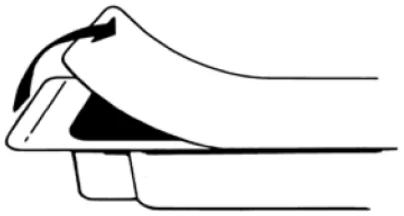
- 1. First, clean the urethral area using a clean washcloth or an antiseptic wipe. Then, remove the syringe from its sterile package by peeling back the paper backing where indicated by the red arrows.
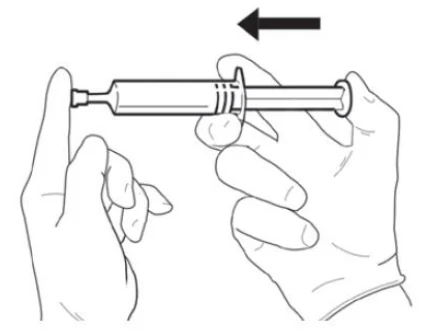
- 2. Hold a finger on the sealing cap and free the plunger by gently pressing it. This releases the pressure point and ensures a uniform instillation of JELIDO.
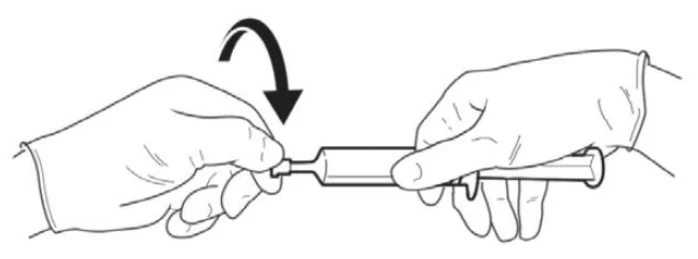
- 3. Remove the tip cap.
- 4. Force a small amount (i.e. 1 cm) of Jelly out of the syringe. Inspect the syringe and jelly to ensure that there is no particulate matter, precipitation, discolouration, or leakage prior to administration. Do not administer if you see particles, discolouration or leakage.
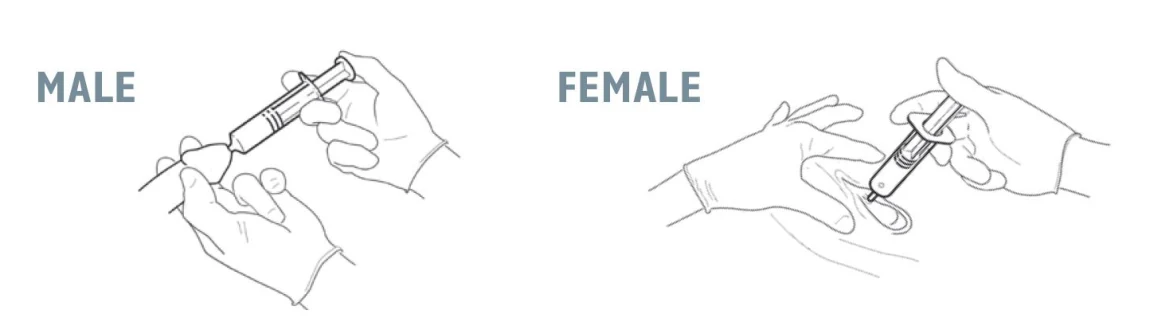
- 5. Apply a small amount of gel around the urethral opening. Then insert the tip into the opening of the urethra and depress the plunger slowly and smoothly to insert the gel.
- 6. The gel should start to work within 5-15 minutes after being applied. Do not insert the catheter until you feel the numbing or tingling effect.
Each syringe is single use. If there is any gel left, dispose of the syringe and remaining gel.
Overdose:
If you think you, or a person you are caring for, have used too much JELIDO, contact a healthcare professional, hospital emergency department, regional poison control centre or Health Canada’s toll-free number, 1-844 POISON-X (1-844-764-7669) immediately, even if there are no signs or symptoms.
Symptoms of an overdose include:
- numbness of the lips and around the mouth
- feeling lightheaded
- dizziness and
- blurred vision
- trembling
- seizures or
- losing consciousness
What are possible side effects from using JELIDO?
These are not all the possible side effects you may feel when taking JELIDO. If you experience any side effects not listed here, contact your healthcare professional.
Serious side effects and what to do about them
| Symptom / effect | Talk to your healthcare professional | Stop taking drug and get immediate medical help | |||
|---|---|---|---|---|---|
| Only if severe | In all cases | ||||
RARE Allergic reaction difficulty swallowing or breathing, wheezing; drop in blood pressure; feeling sick to your stomach and throwing up; hives or rash; swelling of the face, lips, tongue or throat. | X | X | |||
RARE Methemoglobinemia Brownish or greyish skin especially around lips and nails | X | ||||
EXTREMELY RARE drowsiness, numbness of your tongue, light-headedness, ringing in your ears, blurred vision, vomiting, dizziness, unusually slow heart beat, fainting, nervousness, unusual sweating, trembling or seizures. These symptoms can occur when too much JELIDO (lidocaine hydrochloride jelly) is used at one time and when large amounts are used over a long period of time. | X | ||||
If you have a troublesome symptom or side effect that is not listed here or becomes bad enough to interfere with your daily activities, talk to your healthcare professional.
Reporting Side Effects
You can report any suspected side effects associated with the use of health products to
Health Canada by:
- Visiting the Web page on Adverse Reaction Reporting (canada.ca/drug-device-reporting) for information on how to report online, by mail or by fax; or
- Calling toll-free at 1-866-234-2345.
NOTE: Contact your healthcare professional if you need information about how to manage your side effects. The Canada Vigilance Program does not provide medical advice.
Store:
At room temperature (15-30°C). Protect from freezing. Do not keep JELIDO in the bathroom medicine cabinet or other warm, moist places.
Store in the original package.
Keep out of the reach and sight of children.
Do not use JELIDO after the expiry date marked on the package.
If you want more information about JELIDO:
- Talk to your healthcare professional
- Find the full product monograph that is prepared for healthcare professionals and includes the Patient Medication Information by visiting the Health Canada Drug Product Database website (https://www.canada.ca/en/health-canada/services/drugs-health-products/drug-products/drug-product-database.html); the website www.pendopharm.com; or by calling 1-888-550-6060.
Last Revised: FEB 19, 2026
JELIDO® is a registered trademark of Finchley Research & Development Inc., used under license.