


Patient Medication Information: uses, side effects, how to take - Odan Lidocaine-Prilocaine Cream
What is ODAN LIDOCAINE-PRILOCAINE CREAM used for?
ODAN LIDOCAINE-PRILOCAINE CREAM is used to temporarily numb the skin. It can be used:
- on healthy, unbroken skin before getting a needle or having blood taken
- on healthy, unbroken skin before minor skin procedures or surgeries
before being vaccinated with only the following vaccines:
- MMR (Measles-Mumps-Rubella)
- DPTP (Diphtheria-Pertussis-Tetanus-Poliovirus)
- Haemophilus influenzae b
- Hepatitis B
- on the genitals for short surgeries
- for the cleansing of leg ulcers
ODAN LIDOCAINE-PRILOCAINE CREAM should only be used for the uses above. Serious and life-threatening side effects have happened when Lidocaine and Prilocaine Cream was applied to large areas of skin.
How does Odan Lidocaine-Prilocaine Cream work?
ODAN LIDOCAINE-PRILOCAINE CREAM contains the drugs lidocaine and prilocaine. These drugs are anesthetics and they cause a temporary numbness of the skin where the cream is applied.
What are the ingredients in ODAN LIDOCAINE-PRILOCAINE CREAM?
Medicinal ingredients: lidocaine 2.5% and prilocaine 2.5%
Non-medicinal ingredients: carboxypolymethylene, polyoxyethylene hydrogenated castor oil, sodium hydroxide, and purified water.
The ODAN LIDOCAINE-PRILOCAINE CREAM tubes are sealed with a latex sealant. The 5 g ODAN LIDOCAINE-PRILOCAINE CREAM tube also includes dressings. The dressings contain polyurethane film, acrylate polymer, paper frame, paper liners and label tape.
ODAN LIDOCAINE-PRILOCAINE CREAM comes in the following dosage forms:
Cream: 5 g and 30 g tubes
Do not use ODAN LIDOCAINE-PRILOCAINE CREAM if:
you are allergic to lidocaine, prilocaine, any other “-caine” type anesthetics, or any of the
non-medicinal ingredients in the product
- you have a blood disorder called methemoglobinemia
- it is for infants who are 12 months of age or younger and are taking drugs that may cause the blood disorder called methemoglobenima (e.g., sulphonamides, used to treat infections)
it is for infants who were born after less than 37 weeks of pregnancy
To help avoid side effects and ensure proper use, talk to your healthcare professional before you take ODAN LIDOCAINE-PRILOCAINE CREAM. Talk about any health conditions or problems you may have, including if you:
- have glucose-6-phosphate dehydrogenase deficiency
- have ever had a bad, unusual or allergic reaction to lidocaine or prilocaine, also available under brand names such as Xylocaine® (lidocaine) and Citanest® (prilocaine)
- may be sensitive or allergic to other ingredients of the cream or the dressing
- have an infection, skin rash or cut at, or near, the area where you want to apply ODAN LIDOCAINE-PRILOCAINE CREAM
- have atopic dermatitis, eczema or any other skin problems or diseases
- have severe kidney or liver disease
- are pregnant, trying to become pregnant
- are breastfeeding. If you are breastfeeding ODAN LIDOCAINE-PRILOCAINE CREAM should not be applied on or near the breasts
- would like to use ODAN LIDOCAINE-PRILOCAINE CREAM prior to treatment of a leg ulcer(s)
- would like to use ODAN LIDOCAINE-PRILOCAINE CREAM on the genital area of children
- are 65 years of age or older
Other warnings you should know about:
Risk of serious side effects
Be careful to apply no more than the maximum recommended dose of ODAN LIDOCAINE-PRILOCAINE CREAM. Serious and life-threatening side effects have occurred when Lidocaine and Prilocaine Cream was not used properly. This includes a serious blood disorder called methemoglobinemia, where the blood brings less oxygen to your body. If you develop this condition, you may have brownish or greyish skin especially around lips and nails. If your condition worsens, you can have:
- Heart problems leading to a heart attack, difficulty breathing or not breathing
Problems with your central nervous system such as:
- seizures
- dizziness
- fainting
- feeling drowsy
Other symptoms you may have include:
- numbness of the tongue
- light-headedness
- confusion
- headache
- sight or hearing problems
- vomiting
- dizziness
- weakness
- nervousness
- unusual sweating
- trembling
If you get any of these side effects, stop taking ODAN LIDOCAINE-PRILOCAINE CREAM and get medical help right away.
- Children are at greater risk for serious side effects. Always follow your healthcare professional’s instructions for using ODAN LIDOCAINE-PRILOCAINE CREAM, especially in young children and infants under 3 months old. ODAN LIDOCAINE-PRILOCAINE CREAM should not be used on the genitals of children or infants.
- ODAN LIDOCAINE-PRILOCAINE CREAM should not be used close to the ear or eyes because it can cause damage.
Driving and using machines:
- Know how you feel after using ODAN LIDOCAINE-PRILOCAINE CREAM before you drive or use heavy machines.
Tell your healthcare professional about all the medicines you take, including any drugs, vitamins, minerals, natural supplements or alternative medicines.
The following may interact with ODAN LIDOCAINE-PRILOCAINE CREAM:
- medicines for heart rhythm problems (e.g. mexilitine, amiodarone)
- other anesthetics, used to numb the skin
- other medicines which may cause methemoglobinemia, including: sulfonamides, acetanilide, aniline dyes, benzocaine (or other “-caine” type anesthetics), chloroquine, dapsone, naphthalene, nitrates or nitrites, nitrofurantoin, nitroglycerin, nitroprusside, pamaquine, para-aminosalicylic acid, phenacetin, phenobarbital, phenytoin, primaquine, quinine and high doses of acetaminophen
How to take ODAN LIDOCAINE-PRILOCAINE CREAM:
- Be careful not to apply more ODAN LIDOCAINE-PRILOCAINE CREAM than your healthcare professional recommended. Serious and life-threatening side effects have occurred when Lidocaine and Prilocaine Cream was not used properly and more than the recommended amounts were used.
- Be sure to only put ODAN LIDOCAINE-PRILOCAINE CREAM on unbroken skin, except for leg ulcers where it has been prescribed for that condition.
- Do not put ODAN LIDOCAINE-PRILOCAINE CREAM in your mouth, or swallow it. If ODAN LIDOCAINE-PRILOCAINE CREAM is accidentally swallowed, call your healthcare professional.
- Do not re-use ODAN LIDOCAINE-PRILOCAINE CREAM dressings once applied.
The numbing effect of ODAN LIDOCAINE-PRILOCAINE CREAM starts working about 1 hour after it is applied. You may still feel pressure and touch in the area where you applied ODAN LIDOCAINE-PRILOCAINE CREAM. The numbness of the skin may continue to
- increase after the cream is removed and will last for at least 2 hours following a 1-2 hour application.
- Tell your doctor or pharmacist if you feel that the effect of ODAN LIDOCAINE-PRILOCAINE CREAM is too strong or too weak.
Steps to apply ODAN LIDOCAINE-PRILOCAINE CREAM:
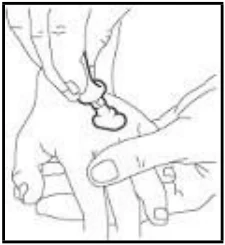
- 1. Make sure your skin is clean and dry. Apply cream in a thick layer at the site of the procedure. Do not rub the cream into the skin.
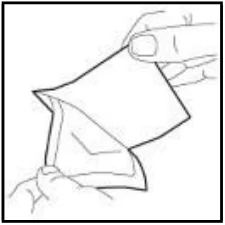
- 2.
Cover treated area with an air-tight dressing such as the provided dressing or plastic wrap. Dressings are provided with the 5 g tubes only.
If using the provided dressing remove the center cut-out piece as shown. Peel the paper liner from the paper-framed dressing. It is important to cover ODAN LIDOCAINE-PRILOCAINE CREAM with an air-tight dressing to ensure that the cream penetrates the skin properly and numbness of the area is felt.
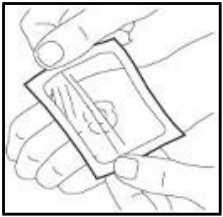
- 3. Carefully cover the ODAN LIDOCAINE-PRILOCAINE CREAM so that you are left with a thick layer of cream underneath the dressing. Do not spread out the cream. Smooth down the dressing edges carefully and make sure it is secure to prevent leakage. If using plastic wrap, hold the dressing in place with adhesive or medical tape and make sure it is air-tight.
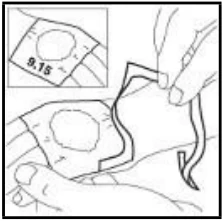
- 4. If using the provided dressing, remove the paper frame. The time of application can easily be marked directly on the dressing with a ballpoint pen. If using plastic wrap, mark the time of application on the medical tape that is holding the dressing in place.
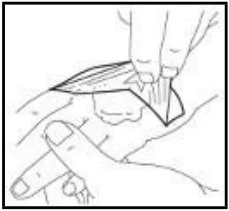
- 5. Keep the dressing and cream on for as long as your healthcare professional recommended, usually at least 1 hour. Remove the dressing and clear the area of excess cream thoroughly before the procedure. If you are applying ODAN LIDOCAINE-PRILOCAINE CREAM for a procedure to be performed by a doctor, you should leave the dressing on for the healthcare professional to remove, unless otherwise instructed.
- 6.
Throw the plastic wrap or the dressing in the garbage, out of the
- reach and sight of children and pets.
Usual dose:
The dosing for adults and children is listed below. To help prevent side effects, your healthcare professional may need to adjust the usual dose if you:
- are elderly
- are acutely ill
- have severe liver or kidney disease
- are being treated with other anesthetics or certain heart drugs (e.g. mexilitine, amiodarone)
- have skin conditions such as atopic dermatitis
- When applying ODAN LIDOCAINE-PRILOCAINE CREAM, 1 g of cream is the same as a ribbon of cream of about 3.5 cm (1.5 inches).
- Make sure to follow the steps above when you apply ODAN LIDOCAINE-PRILOCAINE CREAM, including covering the cream with an air-tight dressing.
Adults
DOSAGE OF ODAN LIDOCAINE-PRILOCAINE CREAM ON HEALTHY SKIN
For minor skin procedures/surgeries or when getting a needle or having blood taken:
- apply a thick layer of cream, about half of a 5 g tube (2 g), on an area slightly larger than a two dollar coin or “toonie”.
- leave the ODAN LIDOCAINE-PRILOCAINE CREAM on for at least 1 hour.
For procedures with larger areas, such as skin grafting:
- Your healthcare professional may apply ODAN LIDOCAINE-PRILOCAINE CREAM when you arrive for your procedure.
If your healthcare professional told you to put the cream on yourself before the procedure, make sure they clearly explain the size of the area to be treated:
apply a thick layer of cream to the area to be treated, about 1.5 to 2 g of cream to an area that is 10 cm2;
- 1.5 to 2 g is about half of a 5 g tube;
- a 10 cm2 area is a little larger than the size of a two dollar coin or “toonie”.
- leave the ODAN LIDOCAINE-PRILOCAINE CREAM on for at least 2 hours.
You will not get any added benefit from leaving ODAN LIDOCAINE-PRILOCAINE CREAM on for longer than 5 hours.
DOSAGE OF ODAN LIDOCAINE-PRILOCAINE CREAM ON LEG ULCERS
Talk to your healthcare professional before using ODAN LIDOCAINE-PRILOCAINE CREAM on leg ulcers.
For topical anesthesia before your leg ulcer(s) are cleansed:
apply a thick layer of cream to the area to be treated, about 1.5 to 2 g of cream to an area that is 10 cm2;
- 1.5 to 2 g is about half of a 5 g tube;
- a 10 cm2 area is a little larger than the size of a two dollar coin or “toonie”.
- use no more than 10 g (two 5 g tubes).
- leave ODAN LIDOCAINE-PRILOCAINE CREAM on the leg ulcer(s) for at least 30 minutes. Leaving ODAN LIDOCAINE-PRILOCAINE CREAM on for 60 minutes may improve the numbness you feel.
- the cleansing of the leg ulcer(s) should begin within 10 minutes after removing the cream.
- discard the tube of ODAN LIDOCAINE-PRILOCAINE CREAM with any remaining contents after each treatment.
DOSAGE OF ODAN LIDOCAINE-PRILOCAINE CREAM ON THE GENITALS
Talk to your healthcare professional before using ODAN LIDOCAINE-PRILOCAINE CREAM on your genitals.
Apply ODAN LIDOCAINE-PRILOCAINE CREAM when you are with your healthcare professional because it only needs to be on your skin for 5-10 minutes before the procedure.
For needle insertion or for surgical treatment of small lesions (removal of warts or a biopsy):
- use half of a 5 g tube (2 g) on the area to be treated. You may need to put the cream on a few areas.
You do not need an airtight dressing when using ODAN LIDOCAINE-PRILOCAINE CREAM on the genitals. Your healthcare professional should begin the surgical procedure immediately after removing the cream.
Children
- Observe your child closely during and after use of topical anesthetics. Children are at greater risk than adults for serious side effects, especially infants under 3 months of age.
- When using ODAN LIDOCAINE-PRILOCAINE CREAM for your child’s pain relief, remember it is also very important to provide comfort and emotional support.
- In children, ODAN LIDOCAINE-PRILOCAINE CREAM should only be applied to healthy, unbroken skin.
Infants Under the Age of 3 Months:
- Use only for infants under the age of 3 months if instructed by a healthcare professional.
- Apply up to 1 g of cream on a skin area not larger than 10 cm2 (a little larger than the size of a two dollar coin or “toonie”.
- Leave on for 1 hour. Do NOT leave ODAN LIDOCAINE-PRILOCAINE CREAM on the skin for longer than 1 hour.
Infants Between 3 and 12 Months of Age:
- Apply up to 2 g of cream on a total skin area not larger than 20 cm2 (a little larger than the size of a credit card).
- Leave on for at least 1 hour. Do not leave on the skin for more than 4 hours.
Children Between 1-6 Years:
- Apply up to 10 g of cream on a total skin area not larger than 100 cm2 (a little larger than the size of two credit cards).
- Leave on for at least 1 hour. Do not leave on the skin for more than 5 hours.
Children Between 7-12 Years:
- Apply up to 20 g of cream on a total skin area not larger than 200 cm2 (a little larger than a standard postcard).
- Leave on for at least 1 hour. Do not leave on the skin for more than 5 hours.
Overdose:
What are possible side effects from using ODAN LIDOCAINE-PRILOCAINE CREAM?
These are not all the possible side effects you may feel when taking ODAN LIDOCAINE-PRILOCAINE CREAM. If you experience any side effects not listed here, tell your healthcare professional.
Your skin where ODAN LIDOCAINE-PRILOCAINE CREAM was applied may stay numb for up to several hours after you take the cream off. Be careful to avoid hurting your skin until your skin isn’t numb anymore. This includes scratching, rubbing or exposing your skin to extreme hot or cold temperatures.
The following side effects can happen to the skin where the cream was applied:
- whitening or redness
- slight swelling or puffiness
- initial burning or itching
- tingling of the skin, warmth
- small red dots or purple spots
Serious side effects and what to do about them
| Symptom / effect | Talk to your healthcare professional | Stop taking drug and get immediate medical help | |
|---|---|---|---|
| Only if severe | In all cases | ||
| RARE | |||
| Methemoglobinemia: brownish or greyish skin especially around lips and nails. | ✓ | ||
| Eye irritation: if ODAN LIDOCAINE-PRILOCAINE CREAM enters the eye, immediately rinse the eye in water. | ✓ | ||
| Allergic reaction: difficulty swallowing or breathing, wheezing; drop in blood pressure; feeling sick to your stomach and throwing up; hives or rash; swelling of the face, lips, tongue or throat. | ✓ | ||
| VERY RARE | |||
| Central nervous system toxicity: seizures, dizziness, fainting, feeling drowsy, loss of consciousness. | ✓ | ||
If you think you, or a person you are caring for, have taken too much or accidentally swallowed ODAN LIDOCAINE-PRILOCAINE CREAM, contact a healthcare professional, hospital emergency department, regional poison control center or Health Canada’s toll-free number, 1-844 POISON-X (1-844-764-7669) immediately, even if there are no signs or symptoms.
| Cardiovascular collapse: severe chest pain and pressure, nausea, vomiting, shortness of breath, trouble breathing, stopping breathing. | ✓ |
|---|
If you have a troublesome symptom or side effect that is not listed here or becomes bad enough to interfere with your daily activities, tell your healthcare professional.
Storage:
- Keep ODAN LIDOCAINE-PRILOCAINE CREAM well out of the reach and sight of children.
- Store ODAN LIDOCAINE-PRILOCAINE CREAM at room temperature (15-30oC). Protect from freezing.
- Do not use ODAN LIDOCAINE-PRILOCAINE CREAM after the expiry date on the tube or after 30 days of opening the tube. Remember to return any unused ODAN LIDOCAINE-PRILOCAINE CREAM to your pharmacist.
If you want more information about ODAN LIDOCAINE-PRILOCAINE CREAM:
- Talk to your healthcare professional
- Find the full product monograph that is prepared for healthcare professionals and includes this Patient Medication Information by visiting the Health Canada Drug Product Database website (https://www.canada.ca/en/health-canada/services/drugs-health-products/drug-products/drug-product-database.html); or by calling 1-888-666-6326.
Odan Laboratories Ltd.
325 Stillview ave.
Pointe Claire, QC
H9R 2Y6
Last Revised: AUG 6, 2026
Reporting side effects
You can report any suspected side effects associated with the use of health products to Health Canada by:
- Visiting the Web page on Adverse Reaction Reporting (canada.ca/drug-device-reporting) for information on how to report online, by mail or by fax; or
- Calling toll-free at 1-866-234-2345.
NOTE: Contact your healthcare professional if you need information about how to manage your side effects. The Canada Vigilance Program does not provide medical advice.