


Product Monograph - Odan Lidocaine-Prilocaine Cream
RECENT MAJOR LABEL CHANGES
None at time of the most recent authorization
TABLE OF CONTENTS
Certain sections or subsections that are not applicable at the time of the preparation of the most recent authorized product monograph are not listed.
RECENT MAJOR LABEL CHANGES ................................................................................................2
TABLE OF CONTENTS ..................................................................................................................2
PART I: HEALTH PROFESSIONAL INFORMATION ..........................................................................4
1 INDICATIONS ..................................................................................................................4
1.1 Pediatrics ........................................................................................................................5
1.2 Geriatrics ........................................................................................................................5
2 CONTRAINDICATIONS .....................................................................................................5
4 DOSAGE AND ADMINISTRATION .....................................................................................5
4.1 Dosing Considerations .....................................................................................................6
4.2 Recommended Dose and Dosage Adjustment...................................................................6
4.3 Administration ................................................................................................................9
5 OVERDOSAGE .................................................................................................................9
6 DOSAGE FORMS, STRENGTHS, COMPOSITION AND PACKAGING.................................... 10
7 WARNINGS AND PRECAUTIONS .................................................................................... 11
7.1 Special Populations ........................................................................................................ 14
7.1.1 Pregnant Women .......................................................................................................... 14
7.1.2 Breast-feeding ............................................................................................................... 14
7.1.3 Pediatrics ...................................................................................................................... 15
7.1.4 Geriatrics ...................................................................................................................... 16
8 ADVERSE REACTIONS .................................................................................................... 16
8.1 Adverse Reaction Overview............................................................................................ 16
8.2 Clinical Trials Adverse Reactions ..................................................................................... 16
8.3 Post-Market Adverse Reactions...................................................................................... 17
9 DRUG INTERACTIONS .................................................................................................... 18
9.2 Drug Interactions Overview............................................................................................ 18
9.3 Drug-Behavioural Interactions........................................................................................ 18
9.4 Drug-Drug Interactions .................................................................................................. 18
9.5 Drug-Food Interactions .................................................................................................. 20
9.6 Drug-Herb Interactions .................................................................................................. 20
9.7 Drug-Laboratory Test Interactions .................................................................................. 20
10 CLINICAL PHARMACOLOGY ........................................................................................... 20
10.1 Mechanism of Action ..................................................................................................... 21
10.2 Pharmacodynamics ....................................................................................................... 21
10.3 Pharmacokinetics .......................................................................................................... 21
11 STORAGE, STABILITY AND DISPOSAL ............................................................................. 23
PART II: SCIENTIFIC INFORMATION ........................................................................................... 24
13 PHARMACEUTICAL INFORMATION ..................................................................................... 24
14 CLINICAL TRIALS ............................................................................................................ 25
14.1 Clinical Trials by Indication ............................................................................................. 25
14.2 Comparative Bioavailability Studies ................................................................................ 30
15 MICROBIOLOGY ............................................................................................................ 32
16 NON-CLINICAL TOXICOLOGY ......................................................................................... 32
17 SUPPORTING PRODUCT MONOGRAPHS ........................................................................ 36
PATIENT MEDICATION INFORMATION ...................................................................................... 37
PART I: HEALTH PROFESSIONAL INFORMATION
1 INDICATIONS
ODAN LIDOCAINE-PRILOCAINE CREAM should only be used for the approved indications because maximum safe doses for other uses are not known. Serious and life-threatening adverse events have occurred when lidocaine and prilocaine cream was applied to large areas of skin for topical analgesia during cosmetic procedures (e.g., laser depilation) (see 7 WARNINGS AND PRECAUTIONS; 8 ADVERSE REACTIONS).
ODAN LIDOCAINE-PRILOCAINE CREAM (lidocaine and prilocaine cream) is indicated for:
Topical analgesia of intact skin in connection with
- needle insertion, e.g., i.v. catheters or prior to blood sampling;
vaccination with only the following vaccines, shown not to interact with lidocaine and prilocaine in clinical trials: MMR, DPTP; Haemophilus influenzae b and Hepatitis B (see 14 CLINICAL TRIALS, Topical Analgesia in Pediatrics, Vaccination).
Since the effect of ODAN LIDOCAINE-PRILOCAINE CREAM on the immune response to any other vaccine is unknown, it cannot be recommended for use with other vaccines.
- superficial surgical procedures, e.g., removal of molluscum contagiosum, split skin grafting, electrolysis
- laser treatment for superficial skin surgeries, such as treatment of telangiectasia, port wine stains, warts, moles, skin nodules, and scar tissue
Topical analgesia of genital mucosa in connection with
- local infiltration anesthesia
- surgical procedures lasting not longer than 10 minutes on small superficial localized lesions, e.g., removal of condylomata by laser or cautery, and biopsies
Topical analgesia of leg ulcers in connection with
- mechanical/sharp cleansing/debridement, e.g., the removal of necrotic tissue and debris by curettes, scissors, tweezers, etc.
1.1 Pediatrics (<18 years of age):
Based on the data submitted and reviewed by Health Canada, the safety and efficacy of lidocaine and prilocaine in pediatric patients has been established. Therefore, Health Canada has authorized an indication for pediatric use. (see 14 CLINICAL TRIALS; 4 DOSAGE AND ADMINISTRATION; 7.1.3 Special Populations, Pediatrics)
ODAN LIDOCAINE-PRILOCAINE CREAM is contraindicated for use in preterm infants (defined as gestational age less than 37 weeks) (see 2 CONTRAINDICATIONS).
1.2 Geriatrics:
Evidence from clinical studies and experience suggests that use in the geriatric population may be associated with differences in safety or effectiveness. There are insufficient data to evaluate quantitative differences in systemic plasma levels of lidocaine and prilocaine between geriatric and non-geriatric patients following application of lidocaine and prilocaine cream (see 7.1.4 Special Populations, Geriatrics).
2 CONTRAINDICATIONS
ODAN LIDOCAINE-PRILOCAINE CREAM is contraindicated in:
- Patients who are hypersensitive to local anesthetics of the amide type or to any ingredients in the formulation, including any non-medicinal ingredient, or component of the container. For a complete listing, see 6 DOSAGE FORMS, STRENGTHS, COMPOSITION AND PACKAGING.
- Patients with congenital or idiopathic methemoglobinemia
- Procedures requiring large amounts of ODAN LIDOCAINE-PRILOCAINE CREAM over a large body area that are not conducted in a facility where the healthcare professionals are trained in the diagnosis and management of dose-related toxicity and other acute emergencies that may arise and, the appropriate resuscitative treatments and equipment required for management of toxic reactions and related emergencies are available
- Infants who require treatment with methemoglobin-inducing agents, e.g., sulfonamides and are 12 months of age or younger (see 9 DRUG INTERACTIONS)
- Preterm infants (defined as gestational age less than 37 weeks)
4 DOSAGE AND ADMINISTRATION
4.1 Dosing Considerations
- ODAN LIDOCAINE-PRILOCAINE CREAM should only be used for approved indications because maximum safe doses for other uses are not known.
- Serious and life threatening adverse events have occurred when lidocaine and prilocaine cream was applied to large areas of skin for topical analgesia during cosmetic procedures (e.g., laser depilation) (see 2 CONTRAINDICATIONS; 8 ADVERSE REACTIONS; 5 OVERDOSAGE).
- At each recommended dose (g cream / cm2 skin area), the depth and effectiveness of analgesia are dependent upon the total time elapsed between application and procedure (i.e., total time is a combination of the period of cream application and the period following the removal of the cream up until the procedure is performed).
- ODAN LIDOCAINE-PRILOCAINE CREAM should only be applied to intact, unbroken skin, with the exception for leg ulcers.
4.2 Recommended Dose and Dosage Adjustment
Table 1 and Table 2 detail dosing recommendations for ODAN LIDOCAINE-PRILOCAINE CREAM, for adults and pediatrics, respectively, while Table 3 provides common references for the size of each specific recommended maximum skin area.
Do not exceed dosages outlined in the tables below.
ODAN LIDOCAINE-PRILOCAINE CREAM
Table 1 ADULTS: Recommended Dosage of ODAN LIDOCAINE-PRILOCAINE CREAM According to Body Surface, and Procedurea
| Surface | Procedure | Cream Application | |
|---|---|---|---|
| Surface | Procedure | Cream Application | |
Intact Skin | Minor procedures, e.g., needle insertion, surgical treatment of localized lesions, and laser treatmenta, b. | Apply a thick layer of cream under an occlusive dressing to selected area(s). Remove the dressing and clean the area of any excess cream thoroughly prior to the procedure. In general, approx. 1.5 g / 10 cm2. Approx. 2 g (1 / 2 of 5 g tube) for a minimum of 1 hour. Maximum 5-hour applicationc. | |
| Dermal procedures performed on larger areas, in a hospital setting, e.g., split-skin graftingd. | 1.5 - 2 g / 10 cm2, up to a total of 60 g. Maximum recommended treated area: 400 cm2(d). Minimum application time: 2 hours. Maximum application time: 5 hoursc. | ||
| Genital Mucosa | Surgical procedures lasting not longer than 10 minutes on localized lesions, e.g., removal of genital warts, and prior to local infiltration anesthesia. | Approx. 2 g (1 / 2 of 5 g tube) per lesion for 5-10 minutes. Maximum 10 ge. Occlusion is not necessary. Commence procedure immediately after removal of cream. | |
| Leg Ulcers | Mechanical cleansing / debridement of leg ulcersf | Approx. 1-2 g / 10cm2 area, up to a total of 10 g. Cover with an occlusive dressing. Minimum 30 minutes application time, with up to 60 minutes for necrotic tissue with a thicker penetration barrier. Cleansing should start immediately after removal of the cream. | |
a ODAN LIDOCAINE-PRILOCAINE CREAM should only be used for approved indications because maximum safe doses for other uses are not known. Serious and life threatening adverse events have occurred when lidocaine and prilocaine cream was applied to large areas of skin for topical analgesia during cosmetic procedures (e.g., laser depilation).
b Topical analgesia with lidocaine and prilocaine has been evaluated in clinical trials in which laser treatments were for superficial skin surgeries, such as treatment of telangiectasia, port wine stains, warts, moles, skin nodules, and scar tissue.
c There is no benefit to application times longer than 5 hours, as the analgesic effectiveness of the cream dissipates over time.
d In clinical trials evaluating the analgesic effects of lidocaine and prilocaine during split skin grafting, lidocaine and prilocaine was well tolerated when applied to treatment areas of approximately 50 to 400 cm2 (n=232). A small number of patients in these clinical trials had lidocaine and prilocaine applied to treatment areas > 400 cm2 (n=8).
e Pharmacokinetic data for doses larger than 10 g are not available.
f In the treatment of leg ulcers, lidocaine and prilocaine cream has been repeatedly applied (up to 15 times within a 1-2 month period, at intervals of 1 to 4 days), with no apparent loss of effect or increase in local reaction.
Table 2 PEDIATRICS: Maximum Recommended Dosage of ODAN LIDOCAINE-PRILOCAINE CREAM According to Age
| Age | Cream Application |
| In general, approx. 1 g / 10 cm2 area for 1 hour under a dressing to minimize the potential for the child to accidentally spread the cream outside of the treatment area. Remove the dressing and clean the area of any excess cream thoroughly prior to the procedure. | |
Neonates 0 up to 3 months or <5 kg a, b (minimal gestational age is 37 weeks) | 0.5 to 1.0 g, and up to 10 cm2 area for approximately 1 hour. Standard dose = 1.0 g. Maximum 1-hour applicationc, d. No more than one application site at a time. The safety of repeated dosing has not been established. |
Infants 3 up to 12 months b and > 5 kg | Up to 2 g and 20 cm2 for approximately 1 houre. Maximum 4-hour application. |
Children 1-6 years and > 10 kg | Up to 10 g and 100 cm2 for a minimum of 1 hour. Maximum 5-hour applicationf. |
Children 7-12 years and > 20 kg | Up to 20 g and 200 cm2 for a minimum of 1 hour. Maximum 5-hour applicationf |
Please note: If a patient greater than 3 months old does not meet the minimum weight requirement, the maximum total dose of ODAN LIDOCAINE-PRILOCAINE CREAM should be restricted to that which corresponds to the patient’s weight.
- a Infants less than 3 months of age are at higher risk of methaemoglobinaemia due to immature reductase enzyme pathways.
- b Until further clinical data is available, ODAN LIDOCAINE-PRILOCAINE CREAM should not be used in infants who require treatment with methemoglobin-inducing agents, i.e., sulfonamides, and are 12 months of age or younger.
- c The safety of a longer application time has not been established.
- d Of eight cases of neonates with > 5% methemoglobin, misuse was documented in seven (overdose, or concomitant methemoglobin-inducing meds).
- e No clinically significant increase in methemoglobin fraction has been observed after an application time of up to 4 hours on 16 cm2.
- f There is no benefit to application times longer than 5 hours, as the analgesic effectiveness of the cream dissipates over time.
1 g of ODAN LIDOCAINE-PRILOCAINE CREAM administered from the 30 g aluminum tube is equivalent to a ribbon of cream of approximately 3.5 cm (approximately 1.5 inches).
Table 3 Conversion of Maximum Recommended Skin Areas (cm2) to Inches2 and to a Reference Object of Comparable Size
| cm2 | Inch2 | Area Reference |
| 10 | approx. 2 | A little larger than the size of a two dollar coin (“toonie”). |
| 16 | approx. 3 | A little larger than the size of a credit card. |
| 100 | approx. 4 | A little larger than the size of two credit cards. |
| 200 | approx. 6 | A little larger than the size of a standard postcard. |
Conditions where dosing adjustments may be required:
- In acutely ill, debilitated or elderly patients, those with impaired elimination, and patients with severe hepatic impairment who are more sensitive to systemic effects due to increased blood levels of lidocaine and prilocaine from repeated doses of ODAN LIDOCAINE-PRILOCAINE CREAM (lidocaine and prilocaine), smaller application areas are recommended to avoid toxicity. Decreased duration of application is not recommended as this may decrease the analgesic effect.
- In patients who are administered other local anesthetics or amide type local anesthetics (see 9 DRUG INTERACTIONS).
In patients with atopic dermatitis, extra care should be taken when applying ODAN LIDOCAINE-PRILOCAINE CREAM. A shorter application time is recommended (see 7 WARNINGS AND PRECAUTIONS, Skin and 10.3 Pharmacokinetics).
Pediatrics:
- Pediatric patients should be closely observed during and after use of topical anesthetics, as they are at greater risk than adults for serious adverse events (e.g., methaemoglobinaemia) (see 7.1.3 Special Populations, Pediatrics).
- ODAN LIDOCAINE-PRILOCAINE CREAM should not be used in infants who require treatment with methemoglobin-inducing agents, i.e., sulfonamides, and are 12 months of age or younger.
- ODAN LIDOCAINE-PRILOCAINE CREAM is contraindicated in preterm infants (defined as gestational age less than 37 weeks) (see 2 CONTRAINDICATIONS).
4.3 Administration
Cream: A thick layer of cream should be applied to the skin, under an occlusive dressing.
5 OVERDOSAGE
A few fatal cases have been reported with limited information and doses unknown, therefore a causal relationship to lidocaine and prilocaine could not be established.
Symptoms
General
Local anesthetic toxicity is manifested by symptoms of nervous system excitation and in severe cases, central nervous and cardiovascular depression.
In the unlikely event of toxicity following epidermal application of ODAN LIDOCAINE-PRILOCAINE CREAM, signs of systemic toxicity anticipated would be similar in nature to those observed following other routes of administration of local anesthetics.
Methemoglobinemia
Rare cases of methemoglobinemia have been reported.
Mild methemoglobinemia is characterized by tissue cyanosis, a bluish-grey or brownish discoloration of the skin, especially around the lips and nail beds, which is not reversed by breathing 100% oxygen. Clinical signs may also include pallor and marbleization.
Severe methemoglobinemia (MetHb concentrations above approximately 25%) is associated with signs of hypoxemia, i.e. dyspnea, tachycardia and depression of consciousness.
Drug-induced methemoglobinemia may occur with the use of drugs including but not limited to sulfonamides, acetanilid, aniline dyes, benzocaine, chloroquine, dapsone, naphthalene, nitrates and nitrites, nitrofurantoin, nitroglycerin, nitroprusside, pamaquine, para-aminosalicylic acid, phenacetin, phenobarbital, phenytoin, primaquine and quinine.
Acetaminophen has been shown to induce methemoglobin formation in vitro and in animals. In humans, methemoglobin formation is very rare at therapeutic doses and overdoses of acetaminophen.
It should be kept in mind that ODAN LIDOCAINE-PRILOCAINE CREAM is contraindicated for patients with congenital or idiopathic methemoglobinemia and for infants 12 months of age or younger who require treatment with methemoglobin-inducing drugs. Patients with glucose-6-phosphate dehydrogenase deficiency are more susceptible to drug-induced methemoglobinemia (see also 2 CONTRAINDICATIONS, 7 WARNINGS AND PRECAUTIONS).
Consideration should be given to the fact that pulse oximeter values may overestimate the actual oxygen saturation in case of increased methaemoglobin fraction; therefore, in cases of suspected methaemoglobinaemia, it may be more helpful to monitor oxygen saturation by CO- oximetry.
Treatment
Severe neurological symptoms (convulsions, CNS depression) must be treated symptomatically by respiratory support and the administration of anticonvulsive drugs.
In neonates, methemoglobin concentrations of up to 5 - 6% are not considered to be of clinical significance, with treatment of symptomatic methemoglobinemia not typically necessary unless methemoglobin concentrations are above 25 - 30%. However, the severity of clinical symptoms should be the primary consideration in the decision to initiate treatment, rather than the level of methemoglobin. Most patients recovered spontaneously after removal of the cream.
Methemoglobinemia may be treated with a slow intravenous injection of methylene blue. It has been reported in published literature that methylene blue should be used cautiously as a treatment for methemoglobinemia in patients with glucose-6-phosphate dehydrogenase deficiency because it may not be effective for these patients and may cause hemolytic anemia.
There are anecdotal reports of patients consuming lidocaine and prilocaine cream; all cases resolved without serious injury. Such patients should be monitored for symptoms of systemic toxicity (see 7 WARNINGS AND PRECAUTIONS).
6 DOSAGE FORMS, STRENGTHS, COMPOSITION AND PACKAGING
Table – Dosage Forms, Strengths, Composition and Packaging.
| Route of Administration | Dosage Form / Strength / Composition | Non-medicinal Ingredients |
|---|---|---|
| Topical | Cream, Lidocaine 2.5% and Prilocaine 2.5% | carboxypolymethylene, polyoxyethylene hydrogenated castor oil, sodium hydroxide, purified water. |
Dosage Forms
The active ingredients in ODAN LIDOCAINE-PRILOCAINE CREAM (lidocaine and prilocaine) in a 1:1 ratio, form a liquid eutectic mixture at temperatures above 16°C. ODAN LIDOCAINE-
For the most recent information in the management of a suspected drug overdose, contact your regional poison control center or Health Canada’s toll-free number, 1-844 POISON-X (1-844-764-7669).
PRILOCAINE CREAM is based on an emulsion system of this eutectic mixture and contains 2.5% lidocaine and 2.5% prilocaine. ODAN LIDOCAINE-PRILOCAINE CREAM contains no preservatives in view of the antimicrobial activity of lidocaine and prilocaine.
ODAN LIDOCAINE-PRILOCAINE CREAM is available in 5 g aluminum tubes with occlusive dressings, 5 g and 30 g aluminum tubes without dressings for use as a topical anesthetic for dermal analgesia. The tubes are sealed with a latex sealant and a polypropylene screw cap with a built in-point to perforate the seal.
ODAN LIDOCAINE-PRILOCAINE CREAM Composition (1 g of cream)
Medicinal Ingredients:
Lidocaine 25 mg
Prilocaine 25 mg
Non-medicinal Ingredients: Carboxypolymethylene
Polyoxyethylene hydrogenated castor oil
Sodium hydroxide to adjust pH to 8.7-9.7
Water, purified
7 WARNINGS AND PRECAUTIONS
General
Serious and life-threatening systemic adverse events, including methemoglobinemia, central nervous system toxicity and cardiovascular collapse have occurred when lidocaine and prilocaine cream was applied to large areas of skin for topical analgesia during cosmetic procedures (e.g., laser depilation) (see 8 ADVERSE REACTIONS; 5 OVERDOSAGE). ODAN LIDOCAINE-PRILOCAINE CREAM should only be used for the approved indications because maximum safe doses for other uses are not known.
Patients should be instructed to strictly adhere to dosing recommendations and application time and to limit the dose and area of application (see 4 DOSAGE AND ADMINISTRATION).
When using ODAN LIDOCAINE-PRILOCAINE CREAM in younger children, especially infants under the age of 3 months, care must be taken to ensure that the caregiver understands the need to limit the dose and area of application and to prevent accidental ingestion (see 4 DOSAGE AND ADMINISTRATION; 7.1.3 WARNINGS AND PRECAUTIONS, Special Populations, Pediatrics ). Children should be closely observed during and after use of topical anesthetics, as they are at greater risk than adults for serious adverse events (e.g., methemoglobinemia).
Repeated doses of ODAN LIDOCAINE-PRILOCAINE CREAM may increase blood levels of lidocaine and prilocaine. ODAN LIDOCAINE-PRILOCAINE CREAM should be used with caution in patients who may be more sensitive to the systemic effects of lidocaine and prilocaine including acutely ill, debilitated, or elderly patients, and patients with severe hepatic impairment (see 4 DOSAGE AND ADMINISTRATION).
Due to insufficient data on absorption, ODAN LIDOCAINE-PRILOCAINE CREAM should not be applied to open wounds as a result of trauma. Note: Leg ulcers often follow a slight trauma but are not classified as traumatic wounds.
Special care should also be employed to ensure the occlusive bandage is secure. This will avoid accidental dislocation and exposure of ODAN LIDOCAINE-PRILOCAINE CREAM, especially in young children.
ODAN LIDOCAINE-PRILOCAINE CREAM is not recommended in any clinical situation where it can penetrate or migrate into the middle ear. Tests on laboratory animals (guinea pigs) have shown that lidocaine and prilocaine has an ototoxic effect when instilled into the middle ear. When the same animals were exposed to lidocaine and prilocaine in the external auditory canal, no abnormalities were seen. Lidocaine and prilocaine causes minor structural damage to the tympanic membrane in rats when applied directly to the membrane.
Carcinogenesis and Mutagenesis
The active substances in ODAN LIDOCAINE-PRILOCAINE CREAM, lidocaine and prilocaine, have not been evaluated for carcinogenicity in animal studies following topical application; neither has lidocaine and prilocaine the eutectic mixture of lidocaine and prilocaine bases. Metabolites of prilocaine have been shown to be carcinogenic after life-time, once-daily oral exposure in laboratory animals (see 16 NON-CLINICAL TOXICOLOGY, Carcinogenicity).
Genotoxicity tests with lidocaine showed no evidence of mutagenic potential. However, a metabolite of lidocaine, 2,6-xylidine, showed weak evidence of activity in some genotoxicity tests (see 16 NON-CLINICAL TOXICOLOGY, Genotoxicity).
Driving and Operating Machinery
Due caution should be exercised when driving or operating a vehicle or potentially dangerous machinery.
Hematologic
In cases of suspected methaemoglobinaemia, CO-oximetry may provide more accurate measurements of oxygen saturation than pulse oximetervalues (see 5 OVERDOSAGE and
7.1.3 Pediatrics).
Hepatic/Biliary/Pancreatic
Because amide-type local anesthetics are metabolized by the liver, these drugs, especially repeated doses, should be used cautiously in patients with hepatic disease. For patients with severe hepatic disease, a reduced capacity to metabolize local anesthetics may increase the risk of developing toxic plasma concentrations (see 4 DOSAGE AND ADMINISTRATION).
Immune
Allergic Reactions: Allergic and anaphylactoid reactions associated with lidocaine or prilocaine can occur. They are characterized by urticaria, angioedema, bronchospasm, or in the most severe instances, anaphylactic shock. If these reactions occur, they should be managed according to standard clinical practice.
Vaccination:
Efficacy of immunization with live vaccines may be affected, as lidocaine and prilocaine have been shown to inhibit viral and bacterial growth. The effect of lidocaine and prilocaine on intradermal injections of live vaccines has not been determined.
Ophthalmologic
ODAN LIDOCAINE-PRILOCAINE CREAM should not be applied to, or near to, the eyes as it causes corneal irritation if it comes into contact with the cornea. This reaction may be reversible. In addition, the loss of protective reflexes may allow corneal irritation and potential abrasion. Take care to avoid accidental contact of ODAN LIDOCAINE-PRILOCAINE CREAM with the eyes (e.g., rubbing the eyes after using fingers to apply ODAN LIDOCAINE-PRILOCAINE CREAM elsewhere), as the analgesic effect may result in damage from undetected foreign bodies. If eye contact does occur, immediately rinse the eye in water or sodium chloride solution and protect the eye until sensation returns.
Renal
In individuals with normal renal function, the extent of systemic absorption of lidocaine and prilocaine is low, 5-14% after cutaneous application, higher on genital mucosa and leg ulcer. Only a small fraction of lidocaine and prilocaine (2-5%) is excreted unchanged in the urine, as the primary metabolism occurs in the liver (see 10.3 Pharmacokinetics). The pharmacokinetics of lidocaine and its main metabolite were not altered significantly in haemodialysis patients (n=4) who received an intravenous dose of lidocaine. Therefore, renal impairment is not expected to significantly affect the pharmacokinetics of lidocaine and prilocaine, when ODAN LIDOCAINE-PRILOCAINE CREAM is used according to dosage instructions (see 4 DOSAGE AND ADMINISTRATION).
Skin
Care should be taken when applying ODAN LIDOCAINE-PRILOCAINE CREAM to patients with atopic dermatitis. A more rapid and greater absorption through the skin is observed in these patients. Post marketing data and limited efficacy and safety data from studies that included a small number of pediatric patients with atopic dermatitis undergoing curettage of molluscum contagiosum indicate that caution is warranted when applying ODAN LIDOCAINE-PRILOCAINE CREAM to patients with atopic dermatitis and a shorter application time should be used (see 10 CLINICAL PHARMACOLOGY, Special Populations and Conditions, Atopic Dermatitis).
There have been several case reports of purpuric reactions from post-marketing use of lidocaine and prilocaine in pediatric patients. In most cases, children have had ongoing molluscum contagiosum and/or atopic constitution/dermatitis and an application time ≥30 minutes.
7.1 Special Populations
ODAN LIDOCAINE-PRILOCAINE CREAM is contraindicated for patients with congenital or idiopathic methemoglobinemia and for infants 12 months of age or younger who require treatment with methemoglobin-inducing drugs (see 2 CONTRAINDICATIONS).
Patients with glucose-6-phosphate dehydrogenase deficiency are more susceptible to drug-induced methemoglobinemia. In glucose-6-phosphate dehydrogenase deficient patients, the antidote methylene blue is ineffective at methaemoglobin reduction and is capable of oxidizing haemoglobin itself and, therefore, should not be given.
Patients who are acutely ill, debilitated or elderly, and patients with severe hepatic impairment may require dosing adjustments commensurate with age, weight and physical condition, because they may be more sensitive to systemic effects due to increased blood levels of lidocaine and prilocaine following repeated doses of ODAN LIDOCAINE-PRILOCAINE CREAM (see 4 DOSAGE AND ADMINISTRATION).
7.1.1 Pregnant Women
Pregnancy
The safety of lidocaine and prilocaine during pregnancy has not been established in humans.
Lidocaine and prilocaine cross the placental barrier and may be absorbed by the fetal tissues. It is reasonable to assume that lidocaine and prilocaine have been used in a large number of pregnant women and women of child-bearing age. No specific disturbances to the reproductive process have so far been reported, e.g., an increased incidence of malformations or other directly or indirectly harmful effects on the fetus. However, care should be given during early pregnancy when maximum organogenesis takes place.
Although, animal studies do not indicate any direct or indirect negative effects on pregnancy, parturition or postnatal development at clinically relevant doses, embryofoetal toxicity has been shown with subcutaneous/intramuscular administration of high doses of lidocaine or prilocaine much exceeding the exposure from topical application (see 16 NON-CLINICAL TOXICOLOGY).
Labor and Delivery
Should ODAN LIDOCAINE-PRILOCAINE CREAM be used concomitantly with other products containing lidocaine and/or prilocaine during labor and delivery, the total dose contributed by all formulations should be considered.
7.1.2 Breast-feeding
Lidocaine and, in all probability, prilocaine, are excreted in human milk, but in such small quantities that there is generally no risk of the infant being affected at therapeutic dose levels due to low systemic absorption. ODAN LIDOCAINE-PRILOCAINE CREAM can be used during breast-feeding, if clinically needed. If ODAN LIDOCAINE-PRILOCAINE CREAM is used during breast-feeding, it should be applied away from the breast to prevent accidental ingestion.
7.1.3 Pediatrics
Children should be closely observed during and after use of topical anesthetics, as they are at greater risk than adults for serious adverse events (e.g., methemoglobinemia).
Methemoglobin (MetHb) concentrations are normally maintained below 2% of total hemoglobin, due to the activity of NADH-dehydrogenase which reduces metHb to hemoglobin. In neonates, NADH-dehydrogenase activity is not yet fully developed, and therefore metHb can accumulate, causing methaemoglobinaemia, a condition in which hemoglobin cannot bind and deliver oxygen normally.
A metabolite of prilocaine, o-toluidine, is known to induce methaemoglobinaemia. Therefore, in the neonate, in addition to ensuring that ODAN LIDOCAINE-PRILOCAINE CREAM dosage recommendations result in safe lidocaine and prilocaine plasma concentrations, there is the additional need to ensure that o-toluidine-induced methaemoglobinaemia does not occur.
In neonates, increases in metHb concentrations of up to 5-6% are generally considered to be of little clinical significance, and treatment of symptomatic methaemoglobinaemia is typically not needed unless metHb concentrations are nearing 25%. (see 5 OVERDOSAGE)
When using ODAN LIDOCAINE-PRILOCAINE CREAM in younger children, especially infants under the age of 3 months, care must be taken to ensure that the caregiver understands the need to limit the dose and area of application and to prevent accidental ingestion (see 4 DOSAGE AND ADMINISTRATION).
In neonates (minimum gestation age: 37 weeks) and children weighing less than 20 kg, the area and duration of application should be limited (see 4 DOSAGE AND ADMINISTRATION, Table 2).
Studies have not demonstrated the efficacy of lidocaine and prilocaine for heel lancing in neonates.
ODAN LIDOCAINE-PRILOCAINE CREAM should not be applied to the genital mucosa of children or infants due to insufficient data on absorption.
In infants below the age of 3 months, the capacity of the MetHb reductase is lower than in older children and in adults. A transient, clinically insignificant increase in methemoglobin fraction is commonly observed up to 12 hours after an application of ODAN LIDOCAINE-PRILOCAINE CREAM.
ODAN LIDOCAINE-PRILOCAINE CREAM should not be used:
- in preterm infants (defined as a gestational age less than 37 weeks)
- in patients with congenital or idiopathic methemoglobinemia
- in infants who require treatment with methemoglobin-inducing agents such as sulfonamides, and are 12 months of age or younger (see 2 CONTRAINDICATIONS, 7 WARNINGS AND PRECAUTIONS; 9 DRUG INTERACTIONS; 8 ADVERSE REACTIONS; 14 CLINICAL TRIALS)
Parents should be reminded of the importance of emotional and psychological support of younger children undergoing medical or surgical procedures.
7.1.4 Geriatrics
Elderly patients may require dosing adjustments (see 4.2 DOSAGE AND ADMINISTRATION, Recommended Dose and Dosage Adjustment).
Greater sensitivity of some older individuals cannot be ruled out. There are insufficient data to evaluate quantitative differences in systemic plasma levels of lidocaine and prilocaine between geriatric and non-geriatric patients following application of lidocaine and prilocaine.
During intravenous studies, the elimination half-life of lidocaine was statistically significantly longer in elderly patients (2.5 hours) than in younger patients (1.5 hours).
No studies are available on the intravenous pharmacokinetics of prilocaine in elderly patients. (See 10.3 Pharmacokinetics).
8 ADVERSE REACTIONS
8.1 Adverse Reaction Overview
The most frequently reported adverse reactions in association with the use of lidocaine and prilocaine were local reactions such as paleness, erythema(redness) and edema. Other adverse experiences reported rarely include anaphylactic shock.
8.2 Clinical Trial Adverse Reactions
Clinical trials are conducted under very specific conditions. The adverse reaction rates observed in the clinical trials; therefore, may not reflect the rates observed in practice and should not be compared to the rates in the clinical trials of another drug. Adverse reaction information from clinical trials may be useful in identifying and approximating rates of adverse drug reactions in real-world use.
The adverse drug reactions included below for lidocaine and prilocaine represent data from both clinical and post-marketing experience.
Adverse Reactions
| Intact Skin (for all age groups) | |
| Common Events (>1%) | At the application site: transient local reactions such as paleness, erythema (redness) and edema. |
Uncommon Events (>0.1% and <1%) | At the application site: skin sensations, e.g., an initial mild burning or itching sensation; local paresthesia such as tingling. |
| Rare Events (<0.1%) | In rare cases, local anesthetics have been associated with allergic reactions; in the most severe instances, anaphylactic shock. There have also been rare cases of discrete local lesions at the application site, described as purpuric or petechial, especially after longer application times in children with atopic dermatitis or molluscum contagiosum. Corneal irritation after accidental eye exposure. Prilocaine in high doses may cause an increase in the methemoglobin level particularly in conjunction with methemoglobin-inducing agents (e.g., sulfonamides) (see 5 OVERDOSAGE). |
Very Rare Events (<0.01%) | In very rare cases, central nervous system toxicity (e.g. convulsion, dizziness, loss of consciousness, somnolence) and cardiovascular collapse (e.g. cardiac arrest, hypoxia, respiratory arrest) have occurred after very high doses of lidocaine and prilocaine. |
| Genital Mucosa | |
| Common Events (>1%) | Application site: transient local reactions such as erythema (redness), edema and paleness; local sensations, e.g., an initial, usually mild, burning sensation, itch or warmth. |
| Uncommon Events (>0.1% and <1%) | Application site: local paresthesia such as tingling |
| Rare Events (<0.1%) | In rare cases, local anesthetics have been associated with allergic reactions; in the most severe instances, anaphylactic shock. |
| Leg Ulcer | |
Common Events (>1%) | Transient local reactions at the application site such as paleness, erythema (redness) and edema. Skin sensations, e.g., an initial usually mild burning, itch or warmth at the application site. |
| Uncommon Events (>0.1% and <1%) | Skin irritation at the application site. |
Rare Events (<0.1%) | In rare cases, local anesthetics have been associated with allergic reactions; in the most severe instances, anaphylactic shock. |
8.5 Post-Market Adverse Reactions
During post-marketing experience serious and life threatening systemic adverse events, including methaemoglobinaemia, central nervous system toxicity and cardiovascular collapse, have occurred when lidocaine and prilocaine cream was applied to large areas of skin for topical analgesia during cosmetic procedures (e.g., laser depilation) (see 7 WARNINGS AND PRECAUTIONS).
9 DRUG INTERACTIONS
9.2 Drug Interactions Overview
Lidocaine is mainly metabolized in the liver to its two major pharmacologically active metabolites, monoethylglycinexylidine (MEGX) and glycinexylidine (GX), by CYP1A2 and CYP3A4 and has a high hepatic extraction ratio. Prilocaine is mainly metabolized to o-toluidine in the liver, by unestablished mechanisms. Only a small proportion (2-5%) of lidocaine and prilocaine is excreted unchanged in the urine. The hepatic clearance of lidocaine, and probably prilocaine, is expected to depend largely on blood flow.
With the low systemic exposure to lidocaine and prilocaine and short duration of topical application of ODAN LIDOCAINE-PRILOCAINE CREAM, metabolic drug-drug interactions of clinical significance with lidocaine or prilocaine are unlikely.
Clinically relevant pharmacodynamic drug interactions may occur with ODAN LIDOCAINE-PRILOCAINE CREAM and other local anesthetics or structurally related drugs, and Class I and Class III antiarrhythmic drugs due to additive effects.
Metabolism of prilocaine can accentuate the formation of methemoglobin. Co-administration of ODAN LIDOCAINE-PRILOCAINE CREAM and other methemoglobin-inducing agents to patients 12 months of age or younger may result in clinical signs of methemoglobinemia (see 2 CONTRAINDICATIONS, 7 WARNINGS AND PRECAUTIONS, 9 DRUG INTERACTIONS, 8 ADVERSE REACTIONS, 14 CLINICAL TRIALS).
9.3 Drug-Behavioural Interactions
Interactions of lidocaine and prilocaine with behavioural risks have not been established.
9.4 Drug-Drug Interactions
| Drug Class | Source of Evidence | Effect | Clinical Comment |
| Drug Class | Source of Evidence | Effect | Clinical Comment |
| Drug Class | Source of Evidence | Effect | Clinical Comment |
| Local anesthetics and amide-type local anesthetics (e.g., antiarrhythmics such as mexiletine) | T | Additive effect | Large doses of ODAN LIDOCAINE-PRILOCAINE CREAM should be used with caution in patients receiving other local anesthetics or agents structurally related to amide-type local anesthetics. |
| Class 1 antiarrhythmic drugs (e.g., mexiletine) | T | Additive and potentially synergistic | Class 1 antiarrhythmic drugs (e.g., mexiletine) should be used with caution since the toxic effects are additive and potentially synergistic. Monitor for signs of overdose (see 5 OVERDOSAGE). |
Class III antiarrhythmic drugs (e.g., amiodarone) | CT | Potential pharmacodynamic or pharmacokinetic interactions or both Additive effect | Plasma concentration of lidocaine may be increased following administration of a therapeutic dose of intravenous lidocaine to patients treated with amiodarone. Symptoms of lidocaine toxicity in patients treated concomitantly with lidocaine and amiodarone (see 5 OVERDOSAGE). Patients treated with Class III antiarrhythmic drugs (e.g., amiodarone) should be kept under close surveillance and ECG monitoring should be considered. |
Cimetidine or beta- blockers (e.g. Atenolol, Propranolol, Nodolol) | T | Reduce the clearance of lidocaine and cause potentially toxic plasma concentrations | When lidocaine is given in repeated high doses over a long time period. Such interactions are not expected to be clinically relevant when lidocaine (e.g., ODAN LIDOCAINE-PRILOCAINE CREAM) is used for short term treatment at recommended doses. |
| Methemoglobin- inducing agents (e.g. sulfonamides, acetanilid, aniline dyes, benzocaine, chloroquine, dapsone, naphthalene, nitrates and nitrites, nitrofurantoin, nitroglycerin, nitroprusside, pamaquine, para- aminosalicylicacid, phenacetin, phenobarbital, phenytoin, primaquine and quinine) | C | Methaemoglobinae mia | Patients treated concomitantly with EMLA may induce the formation of methemoglobin and result in overt clinical signs of methaemoglobinaemia (see 2 CONTRAINDICATIONS; 5 OVERDOSAGE; 7 WARNINGS AND PRECAUTIONS). |
| Acetaminophen | C | Methaemoglobinae mia | Shown to induce methemoglobin formation in vitro and in animals. In humans, methemoglobin formation is rare at therapeutic doses and overdoses (see 5 OVERDOSAGE; 8.2 Clinical Trial Adverse Reactions). |
9.5 Drug-Food Interactions
Interactions of lidocaine and prilocaine with food have not been established.
9.6 Drug-Herb Interactions
Interactions of lidocaine and prilocaine with herbs have not been established.
9.7 Drug-Laboratory Test Interactions
Interactions of lidocaine and prilocaine with laboratory tests have not been established.
10 CLINICAL PHARMACOLOGY
10.1 Mechanism of Action
ODAN LIDOCAINE-PRILOCAINE CREAM (Eutectic Mixture of Local Anesthetics) is a 1:1 oil/water emulsion of a eutectic mixture of lidocaine and prilocaine bases. Dermal analgesia is a result of the migration of lidocaine and prilocaine into the epidermal and dermal layers of the skin followed by the accumulation of these agents in the vicinity of dermal pain receptors and nerve endings. Lidocaine and prilocaine are both amide-type local anesthetic agents. They stabilize the neuronal membrane preventing the initiation and conduction of nerve impulses, thereby effecting local anesthetic action. ODAN LIDOCAINE-PRILOCAINE CREAM provides dermal analgesia; the depth of which depends upon the application time and the applied dose. Analgesia may be less for deeper structures.
10.2 Pharmacodynamics
ODAN LIDOCAINE-PRILOCAINE CREAM may produce a transient biphasic vascular response involving initial vasoconstriction followed by vasodilation at the application site (see 8 ADVERSE REACTIONS). In patients with atopic dermatitis, a shorter biphasic response involving initial vasoconstriction followed by vasodilation may be seen. Erythema may be observed after 30 to 60 minutes.
10.3 Pharmacokinetics
Absorption:
Systemic absorption of lidocaine and prilocaine from ODAN LIDOCAINE-PRILOCAINE CREAM is dependent upon several factors, including: the applied dose, area of application and duration of application. Additional factors include thickness of the skin (which varies in different areas of the body), vascularity of the skin in the area of application, the presence of any condition in which the skin is not healthy and intact (e.g., sunburn, rash), and shaving. Following application to leg ulcers, the characteristics of the ulcers may also affect the absorption.
Distribution and Metabolism:
Prilocaine has a larger distribution volume than lidocaine which results in lower plasma concentrations of prilocaine when equal amounts of prilocaine and lidocaine are administered. At concentrations produced by application of lidocaine and prilocaine, lidocaine is approximately 60-80% bound to plasma proteins, primarily alpha-1-acid glycoprotein. At much higher plasma concentrations (1 to 4 µg/mL of free base), the plasma protein binding of lidocaine is concentration dependent. Prilocaine is 55% bound to plasma proteins.
There is considerable inter-subject variability in lidocaine and prilocaine plasma levels. In pre - marketing studies, all plasma levels of lidocaine and prilocaine after topical administration of lidocaine and prilocaine products were found to be below 1.2 μg/mL. These are below the levels associated with systemic toxicity (5 μg/mL). (see 14 CLINICAL TRIALS).
It is not known if lidocaine or prilocaine are metabolized in the skin. Lidocaine is metabolized rapidly by the liver to a number of metabolites including monoethylglycinexylidide (MEGX) and glycinexylidide (GX), both of which have pharmacologic activity similar to, but less potent than that of lidocaine. Prilocaine is metabolized in both the liver and kidneys by amidases to various metabolites including ortho-toluidine and N-n-propylalanine.
Elimination:
The half-life of lidocaine elimination from the plasma following IV administration is approximately 65 to 150 minutes (mean 110, ±24 SD, n=13). More than 98% of an absorbed dose of lidocaine can be recovered in the urine as metabolites or parent drug. The systemic clearance is 10 to 20 mL/min/kg (mean 13, ±3 SD, n=13). The elimination half-life of prilocaine is approximately 10 to 150 minutes (mean 70, ±48 SD, n=13). The systemic clearance is 18 to 64 mL/min/kg (mean 38, ±15 SD, n=13).
Special Populations and Conditions
Atopic Dermatitis
It is well known that patients with atopic dermatitis show abnormal vascular reactions to pharmacological stimuli. In patients with atopic dermatitis, percutaneous absorption of lidocaine and prilocaine is more rapid and greater than in normal skin. In two adult patients, within one hour after application of 4-6 g lidocaine and prilocaine to a 25 cm2 area of the forearm, lidocaine and prilocaine plasma levels were higher than those observed in normal skin. However, in these patients, the systemic plasma levels were 100 times lower than those associated with toxicity. Dermatological procedures were not performed in the above patients.
Postmarketing data and limited efficacy and safety data from clinical trials that included a small number of pediatric patients with atopic dermatitis undergoing curettage of molluscum contagiosum indicate that a shorter application time no more than 30 minutes should be used (see 7 WARNINGS AND PRECAUTIONS). Application times of longer than 15 minutes in pediatric patients with atopic dermatitis have resulted in an increased incidence of local vascular reactions, particularly application site redness and edema, and in some cases petechia and purpura.
Caution is advised when applying ODAN LIDOCAINE-PRILOCAINE CREAM to patients with atopic dermatitis (see 7 WARNINGS AND PRECAUTIONS).
Geriatrics
There are insufficient data to evaluate quantitative differences in systemic plasma levels of lidocaine and prilocaine between geriatric and non-geriatric patients following application of lidocaine and prilocaine (see 7.1.4 WARNINGS AND PRECAUTIONS, Geriatrics).
During intravenous studies, the elimination half-life of lidocaine was statistically significantly longer in elderly patients (2.5 hours) than in younger patients (1.5 hours).
No studies are available on the intravenous pharmacokinetics of prilocaine in elderly patients. (see 7.1.4 WARNINGS ANDPRECAUTIONS, Geriatrics)
11 STORAGE, STABILITY AND DISPOSAL
ODAN LIDOCAINE-PRILOCAINE CREAM (lidocaine and prilocaine) in aluminium tubes should be stored at room temperature (15-30°C). Protect from freezing. ODAN LIDOCAINE-PRILOCAINE CREAM should be discarded within 30 days after opening the tube. Discard the tube with any remaining contents after each occasion that a patient has been treated with ODAN LIDOCAINE-PRILOCAINE CREAM on leg ulcers. Return any unused ODAN LIDOCAINE-PRILOCAINE CREAM to the pharmacist.
PART II: SCIENTIFIC INFORMATION
13 PHARMACEUTICAL INFORMATION
Drug Substance: Lidocaine
Proper name: lidocaine
Chemical name: 2-(diethylamino)-N-(2,6-dimethylphenyl)-acetamide
Molecular formula: C14H22N2O
Molecular mass: 234.3 g / mol
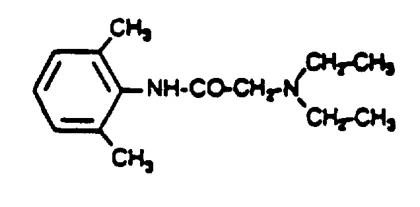
Structural formula:
Physicochemical properties:
Description: White to almost white crystalline powder
Solubility (20°C): In water: practically insoluble
In alcohol: very soluble
In ether: freely soluble
In methylene chloride: very soluble
Boiling point: 146°C at 1 mm Hg
166°C at 3 mm Hg
pKa: 7.9
Drug Substance: Prilocaine
Proper name: prilocaine
Chemical name: N-(2-methylphenyl)-2-(propylamino)-propanamide
Molecular formula: C13H20N2O
Molecular mass: 220.3 g / mol
Structural formula:
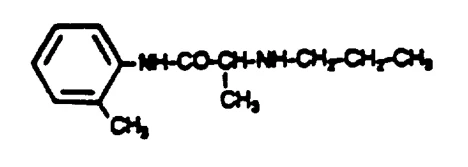
Physicochemical properties:
Description: White to almost white crystalline powder
Solubility (20°C): In water: slightly insoluble
In ethanol: very soluble
In acetone: very soluble
Boiling point: 156°C to 158°C at 1 mm Hg
pKa: 7.9
14 CLINICAL TRIALS
14.1 Clinical Trials by Indication
Lidocaine and Prilocaine Cream
Topical Analgesia in Adults
Intact Skin
Local analgesia of intact skin is achieved after a 60-minute application under an occlusive dressing. The analgesic efficacy and the depth of skin analgesia have been shown to increase with application times up to 120 minutes. The duration of analgesia after a 1-2 hour application is at least 2 hours. As the analgesic effectiveness of the cream gradually dissipates once applied, there is no benefit to application times longer than 5 hours.
The depth of analgesia, as measured by the insertion of a needle through the skin, is about 3 mm after a 60-minute application, about 4 mm after a 90-minute application and about 5 mm after a 120-minute application.
Both the analgesic efficacy and depth continue to increase after the removal of the cream from the skin surface, i.e., after a 60-minute application time to the dorsum of the hand, the analgesic efficacy continued to increase for 15 minutes, and persisted for a total of 75 minutes after removal of the cream.
Lidocaine and prilocaine cream is equally effective and has the same anesthetic onset time across the range of light to dark pigmented skin (skin types I - IV).
The systemic absorption of lidocaine and prilocaine was evaluated in 16 healthy volunteers after topical administration of lidocaine and prilocaine cream. Eight volunteers received 60 g of lidocaine and prilocaine cream applied to an area of 400 cm2 on the thigh under an occlusive dressing for 3 hours. Another 8 subjects had the same amount applied for 24 hours to represent an unintended prolonged application.
Maximum plasma concentrations (mean 0.12 µg/mL for lidocaine and 0.07 µg/mL for prilocaine), were reached approximately 2-6 hours after the application. Individual plasma concentrations of lidocaine and prilocaine were low throughout the study and did not exceed 0.4 µg/mL, which is far below potentially toxic levels of 5 µg/mL.
Following the application of approximately 150 g of lidocaine and prilocaine cream to intact skin areas of up to 1,300 cm2, for up to 3 hours duration, the highest individual plasma levels observed were 1.1 µg/mL lidocaine and 0.2 µg/mL prilocaine. These plasma levels remained below the levels at which symptoms of toxicity would be expected (5 µg/mL either agent).
Following application to the face (10 g/100 cm2 for 2 hours), maximum plasma levels (mean 0.16 µg/mL lidocaine and 0.06 µg/mL prilocaine) were reached after approximately 1.5-3 hours.
Superficial Skin Procedures
In an open split skin grafting study, blood samples were drawn immediately after removal of lidocaine and prilocaine cream and 3 hours later. The maximum plasma concentrations of lidocaine and prilocaine immediately after removal of the cream were 1.1 µg/mL and 0.2 µg/mL, respectively.
Genital Mucosa
Absorption from the genital mucosa is more rapid, i.e., maximum plasma concentrations are reached 20-45 minutes after application as opposed to 1.5-6 hours after application to intact skin. As a result, onset time and duration of action are shorter than after application to intact skin.
Leg Ulcers
In studies, lidocaine and prilocaine cream was shown to reduce the number of cleansing sessions required to achieve a clean ulcer compared to placebo cream, and reduced the post-cleansing pain up to 4 hours after debridement. No negative influence on ulcer healing or bacterial flora has been observed.
In clinical studies, the repeated use of lidocaine and prilocaine cream prior to the cleansing of leg ulcers has been evaluated in 88 patients. Application of 1 to 10 g/10 cm2 for 30-60 minutes, up to 15 times within a 1 - 2 month period, resulted in no apparent loss of analgesic effect or increase in local reactions. The maximum observed plasma levels for lidocaine, monoglycinexylidide and 2,6-xylidine were low at 0.41, 0.03 and 0.01 µg/mL, respectively, with no apparent accumulation. The maximum observed plasma levels for prilocaine and o-toluidine were 0.08 µg/mL and 0.01 µg/mL, respectively.
Following the application of 5 to 10 g of lidocaine and prilocaine cream to leg ulcers 15 to 64 cm2 in size, for 30 minutes, maximum individual plasma concentrations of lidocaine and prilocaine ranged from 0.05 to 0.84 µg/mL, 0.02 to 0.08 µg/mL, respectively. These maximum concentrations were reached within 1 to 2.5 hours.
After prolonged application (24 h) of 1 g lidocaine and prilocaine cream/10 cm2 to leg ulcers 50 to 100 cm2, maximum plasma concentrations of lidocaine and prilocaine ranged from 0.18 to 0.7 µg/mL and 0.06 to 0.28 µg/mL, and were observed 2-4 hours (in one patient 6-8 hours) after administration.
Topical Analgesia in Pediatrics (including neonates)
Intact Skin
Plasma concentrations of lidocaine and prilocaine were measured in 72 children after topical application of lidocaine and prilocaine cream to intact skin. In two of the six studies, venous blood samples were drawn before application of the cream and at 120, 180, 240 and 300 minutes after. In the first study (n = 10) where the patient ages were lower (2-3 yrs), maximum plasma concentrations of lidocaine and prilocaine were 0.315 µg/mL and 0.215 µg/mL, respectively.
Figure 1 Venous Plasma Concentrations of Lidocaine and Prilocaine after Epicutaneous Application of 10 g lidocaine and prilocaine cream for 120 minutes to Children 2-3 years of age (mean, max. and min. value, n = 10).
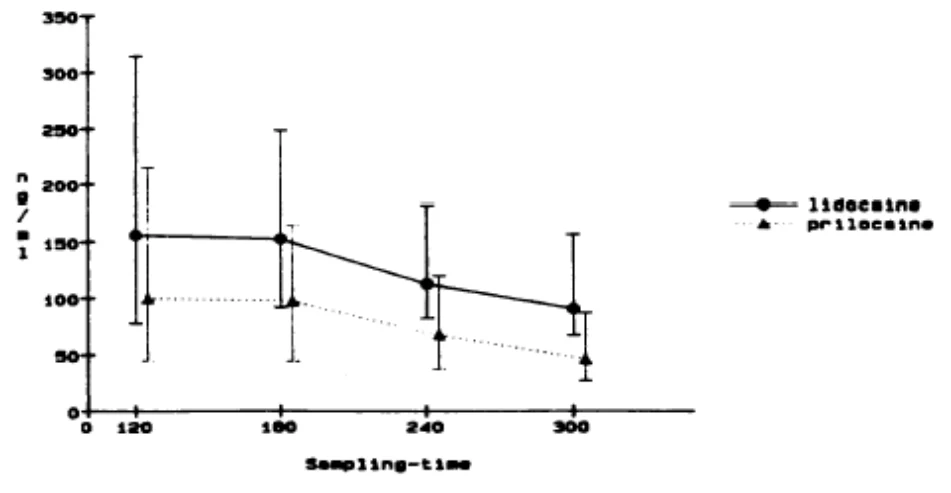
In the second study (n = 10), where the patient ages were higher (6-8 yrs), plasma levels were 0.299 µg/mL and 0.110 µg/mL, respectively, for lidocaine and prilocaine.
The remaining 4 studies evaluated the efficacy of lidocaine and prilocaine cream.
Table 6 Maximum Individual Plasma Concentrations of Lidocaine and Prilocaine Following Application of lidocaine and prilocaine cream in Children and Infants.
| Age | n | lidocaine and prilocaine cream Dose/Area (g/cm2) | Application Time (h) | Maximum Plasma Concentrations (µg/mL) | Time from Start of Application to Max Plasma Concentration (h) | ||||||||
|---|---|---|---|---|---|---|---|---|---|---|---|---|---|
| Lidocaine | Prilocaine | ||||||||||||
| Neonates (< 3 mos) | 38 | 1 g/10 cm2 | 1 | 0.135 | 0.107 | 4-6 | |||||||
Infants (3-12 mos) | 22 | 2 g/16 cm2 | 4 | 0.155 | 0.131 | 4 | |||||||
| Children (2-3 years) | 10 | 10 g/100 cm2 | 2 | 0.315 | 0.215 | 2 | |||||||
| Children (6-8 years) | 10 | 10-16 g/ 100-160 cm2 | 2 | 0.299 | 0.110 | 2-2.5 | |||||||
a Data in children 4-5 years old are not available.
In six clinical trials conducted in full-term infants below 3 months of age (n = 147 total), lidocaine and prilocaine cream was applied to several sites, including the heel and the prepuce of the penis.
The dose applied was 0.5 - 1.0 g for 1 hr in five studies, and 2.0 g for 4 hrs in one study. MetHb plasma levels were measured in all six studies, while lidocaine and prilocaine levels were measured in five.
MetHb levels after lidocaine and prilocaine cream application were increased over placebo levels, with the maximum percentage levels occurring most frequently at 8 hours post-application. The levels in these studies never approached potentially toxic levels, as the highest MetHb level reported was 3.37%, and the maximum increase from baseline reported was 2.19%, both reported in the study using the highest dose of lidocaine and prilocaine cream (2 g applied for 4 hours).
In all five studies, both mean and individual plasma concentrations of lidocaine and prilocaine remained well below toxic levels; individual maximum values of lidocaine and prilocaine were 0.412 and 0.05 µg/mL, respectively.
Superficial Skin Procedures
In eleven clinical trials investigating the efficacy of the topical application of lidocaine and prilocaine cream to the intact skin of infants and children (total n = approximately 1019; birth to 11 years), lidocaine and prilocaine cream was found to be superior to placebo in the reduction of pain associated with superficial skin procedures, based on scores from Visual Analogue Scales, Verbal Scales (three-and four- point), the Modified Behavioural Pain Scale and the Children's Hospital of Eastern Ontario Pain Scale (CHEOPS).
In seven of the eleven clinical trials, the efficacy of lidocaine and prilocaine cream in relieving the pain of immunization was investigated. Lidocaine and prilocaine has been shown to significantly reduce the pain associated with the following vaccines: MMR (Measles-Mumps-Rubella); DPTP (Diptheria-Pertussis-Tetanus- Poliovirus); Hemophilus influenzae b; Hepatitis B; Fluzone® and tetanus. The efficacy of lidocaine and prilocaine cream in reducing the pain of any other vaccine is unknown (see 14.1 Clinical Trials by Indication; Vaccination for further information on the use of lidocaine and prilocainecream prior to vaccination).
Circumcision
Data from three randomized, controlled studies in infants undergoing circumcision indicate that lidocaine and prilocaine cream may be more effective than placebo in attenuating the behavioural and physiologic indicators of neonatal pain during circumcision, but it does not entirely prevent infant distress.
The studies involved a total of 78 lidocaine and prilocaine cream-treated and 80 placebo-treated neonates.
In these studies, distress was measured at 9 or 13 time points throughout the procedure, and the values compared to a baseline point immediately prior to the procedure.
In one study, (lidocaine and prilocainecream dose was 0.5 g applied to the prepuce for approximately 1 hour), no significant differences in distress levels were found between groups using either the Neonatal Facial Coding System (NCFS), or various physiological parameters, such as heart rate and oxygen saturation.
In both the remaining two studies, under similar conditions of use (0.5 g, and 1.0 g, applied to the prepuce for approximately 1 hour), there was a significant overall mean effect of lidocaine and prilocaine cream over placebo (2 to 20 % difference) for NFCS, heart rate, and time spent crying.
In these studies, 1.0 g of lidocaine and prilocaine cream applied to the prepuce of the penis for 1 hour was well tolerated. The incidence and type of local reactions were not different from those for other age groups, and there were no clinical signs of methemoglobinemia.
Studies Conducted with Lidocaine and Prilocaine Patch
Needle Insertion
For pain relief in venepuncture, lidocaine and prilocaine patch has been shown to be efficacious and safe. There have been no observed local skin reactions of clinical significance.
Vaccination
[Note: MMR: Measles-Mumps-Rubella; DPTP: Diptheria-Pertussis-Tetanus-Poliovirus]
Lidocaine and prilocaine has been shown to effectively reduce the pain associated with vaccination in all age groups (see 14 CLINICAL TRIALS; Topical Analgesia in Pediatrics (including neonates); Superficial Skin Procedures). In order to determine if treatment with lidocaine and prilocaine prior to immunization interferes with the immune response, two pivotal, double-blind, placebo-controlled trials have been performed (total n = 325).
In the two pivotal, double-blind, placebo-controlled trials, 325 infants (from birth to 15 months) were treated with lidocaine and prilocaine patch or placebo patch prior to vaccination with MMR, DPTP, Haemophilus influenzae b or Hepatitis B vaccines. In both studies, there were no differences between the lidocaine and prilocaine patch and placebo-treated groups in: 1. the proportion of subjects achieving protective antibody levels for any vaccine constituent; 2. the proportion of subjects who achieved a ≥ 4 fold increase in antibodies to any vaccine constituent and 3. the geometric mean antibody levels for any vaccine constituent.
The results from the pivotal trials have shown that the use of lidocaine and prilocaine patch prior to vaccination with MMR, DPTP, Haemophilus influenzae b and Hepatitis B vaccines is safe and efficacious. No deleterious effect on the immune response has been demonstrated in connection with lidocaine and prilocaine patch use during clinical trials.
14.2 Comparative Bioavailability Studies
A double blinded, randomized, two-treatment, two-period, two-sequence, crossover topical bioequivalence study of Lidocaine and Prilocaine Cream of Odan Laboratories Ltd. and EMLA® Cream (Lidocaine and Prilocaine Cream) of Aspen Pharmacare Canada Inc., administered as a single 5 g dose, was conducted in healthy, adult, human male subjects under fasting conditions. Comparative bioavailability data from 29 subjects that were included in the statistical analysis are presented in the following tables:
SUMMARY TABLE OF THE COMPARATIVE BIOAVAILABILITY DATA
Lidocaine (5 g x lidocaine 2.5% / prilocaine 2.5%) Geometric Mean Arithmetic Mean (CV %) | ||||
|---|---|---|---|---|
| Parameter | Test1 | Reference2 | % Ratio of Geometric Means | 90% Confidence Interval |
AUCT (ng·h/mL) | 39.9 43.4 (44.5) | 39.1 43.4 (54.4) | 102.6 | 95.4 - 110.4 |
AUCI3 (ng·h/mL) | 46.6 50.5 (42.7) | 45.0 50.0 (52.6) | 102.9 | 94.6 - 111.8 |
Cmax (ng/mL) | 4.36 4.95 (54.1) | 4.31 4.99 (66.3) | 101.7 | 94.1 – 110.0 |
Tmax4 (h) | 6.00 (4.50 – 10.00) | 6.00 (4.00 – 10.00) | ||
T½3,5 (h) | 6.51 (22.4) | 6.61 (19.0) | ||
1 ODAN LIDOCAINE-PRILOCAINE CREAM (Lidocaine and Prilocaine Cream) of Odan Laboratories Ltd.
2 EMLA® Cream (Lidocaine and Prilocaine Cream) of Aspen Pharmacare Canada Inc.
3N=26
4 Expressed as the median (range) only
5 Expressed as the arithmetic mean (CV%) only
SUMMARY TABLE OF THE COMPARATIVE BIOAVAILABILITY DATA
Prilocaine (5 g x lidocaine 2.5% / prilocaine 2.5%) Geometric Mean Arithmetic Mean (CV %) | ||||
|---|---|---|---|---|
Prilocaine (5 g x lidocaine 2.5% / prilocaine 2.5%) Geometric Mean Arithmetic Mean (CV %) | ||||
| Parameter | Test1 | Reference2 | % Ratio of Geometric Means | 90% Confidence Interval |
| Parameter | Test1 | Reference2 | % Ratio of Geometric Means | 90% Confidence Interval |
AUCT (ng·h/mL) | 19.0 20.2 (39.9) | 20.1 21.4 (41.2) | 94.1 | 88.5 – 100.0 |
AUCI3 (ng·h/mL) | 17.2 18.5 (42.4) | 18.7 19.9 (41.9) | 92.6 | 87.4 - 98.1 |
Cmax (ng/mL) | 2.17 2.50 (57.1) | 2.42 2.74 (56.0) | 90.2 | 83.5 - 97.4 |
Tmax4 (h) | 6.00 (4.50 – 10.00) | 6.00 (4.00 – 10.00) | ||
T½3,5 (h) | 5.41 (24.4) | 5.23 (13.7) | ||
1 ODAN LIDOCAINE-PRILOCAINE CREAM (Lidocaine and Prilocaine Cream) of Odan Laboratories Ltd.
2 EMLA® Cream (Lidocaine and Prilocaine Cream) of Aspen Pharmacare Canada Inc.
3N=26
4 Expressed as the median (range) only
5 Expressed as the arithmetic mean (CV%) only
15 MICROBIOLOGY
No microbiological information is required for this drug product.
16 NON-CLINICAL TOXICOLOGY
General Toxicology
The acute toxicity of lidocaine, prilocaine, and a 1:1 mixture of lidocaine: prilocaine were studied in Sprague-Dawley rats and NMRI mice. The LD50 values obtained at Days 1 and 14 following a single administration of the test compound and the routes of administration used are summarized in Table 7.
Table 7 Acute Toxicity in Rats and Mice
| Animal | Sex | Number | Route of Administration | Test Compound | LD50 (mg/kg) Day 1, Day 14 | |
|---|---|---|---|---|---|---|
| Species | Strain | |||||
| Rat | Sprague- Dawley | M | 6 | i.v. | lidocaine HCl | 24.2 |
| Rat | Sprague- Dawley | M | 6 | i.v. | prilocaine HCl | 44.7 |
| Rat | Sprague- Dawley | M | 6 | i.v. | 1:1 prilocaine HCl/ lidocaine HCl | 24-35 |
| Mouse | NMRI | M | 10 | i.v. | lidocaine HCl | 63.0 |
| Mouse | NMRI | M | 10 | i.v. | prilocaine HCl | 90.9 |
| Mouse | NMRI | M | 10 | i.v. | 1:1 prilocaine HCl/ lidocaine HCl | 67.6 |
| Rat | Sprague- Dawley | M | 6 | s.c. | Lidocaine base | >1029 |
| Rat | Sprague- Dawley | M | 6 | s.c. | Prilocaine base | >925 |
| Rat | Sprague- Dawley | M | 6 | s.c. | 1:1 lidocaine base: prilocaine base | >865 |
| Rat | Sprague- Dawley | M | 6 | s.c. | Placebo | no mortalities |
After administration of high doses of either lidocaine or prilocaine alone or in combination effects were seen on the central nervous and cardiovascular systems.
Dermal application is the most relevant route of administration for purposes of testing lidocaine and prilocaine acute toxicity. A lidocaine and prilocaine cream was formulated in much higher concentrations (50 mg/mL of each agent) and applied for a longer period of time in a preliminary test.
The results showed that dermal absorption of both compounds was accentuated, blood concentrations were higher but no symptoms were observed in any animal.
Local tolerance studies using a 1:1 (w/w) mixture of lidocaine and prilocaine as an emulsion, cream or gel indicated that these formulations are well tolerated by intact and damaged skin, and mucosal membranes.
The acute toxicity of lidocaine and prilocaine cream was determined in 6 New Zealand white rabbits (3 males, 3 females) after a single dermal administration.
The test formulation was applied under a semi-occlusive dressing, for 24 hours, on at least 10% of the total skin area of each animal. The maximum possible concentration (43%) and amount (10 g) of lidocaine and prilocaine cream were used, resulting in a dose of approximately 1200 mg/kg body weight or 21.5 mg/cm2 skin. The animals were observed for 14 days.
No adverse reactions or deaths were seen, although all animals showed slightly reduced body weights after 14 days. No skin irritation was observed following the application of these large doses of lidocaine and prilocaine cream.
Blood samples were withdrawn for analysis of lidocaine and prilocaine both during and after application. The concentration of prilocaine was about 45% to 70% of the lidocaine level. Both concentrations rose rapidly, showed a steady state pattern between 3 and 25 hours, and then fell fairly rapidly, with only small amounts detectable after 49 hours. The maximum plasma concentrations obtained ranged from 1.13 µg/mL to 2.23 µg/mL for lidocaine, and 0.54 µg/mL to 1.52 µg/mL for prilocaine.
The general toxicity of lidocaine and prilocaine was studied in dogs following rectal administration for 1 month. Thirty Beagles were divided into 5 groups, 3 males and 3 females in each group (Table 8).
Table 8 General Toxicity of lidocaine and prilocaine in dogs
| Group | Compounds | Daily Dose of lidocaine and prilocaine | ||||||||||
|---|---|---|---|---|---|---|---|---|---|---|---|---|
| mg/kg | mL/kg | |||||||||||
| 1 | Untreated Control | - | - | |||||||||
| 2 | Placebo | - | - | |||||||||
| 3 | Lidocaine and prilocaine 2% | 5 | 0.25 | |||||||||
| 4 | Lidocaine and prilocaine 2% | 12 | 0.60 | |||||||||
| 5 | Lidocaine and prilocaine 5% | 12.5 | 0.25 | |||||||||
Group 1 was not treated with a test or a placebo formulation, but was identical to the other groups in all other respects. Group 2 received 0.25 mL/kg of the cream base for lidocaine and prilocaine5% cream.
The formulations were deposited approximately 5 cm into the rectal lumen using a rubber tube. Immediately before each dose the dogs were purged with a physiological saline solution.
Clinical signs, food consumption, body weight and rectal temperature were recorded regularly. Electrocardiography and ophthalmoscopy were performed.
The blood plasma concentrations of the components in lidocaine and prilocaine were determined. Hematology, blood chemistry and urinalysis were performed. Complete autopsies were performed on all animals, organ weights were recorded, and tissue samples were examined microscopically.
No signs of clinical dysfunction related to the treatment were seen during the study. The hematology, blood chemistry and urinalysis did not indicate any effect caused by the treatment. The pathologic investigation did not reveal any changes that could be related to treatment.
Carcinogenicity
No long-term animal studies evaluating carcinogenic potential of lidocaine and prilocaine or its active ingredients, lidocaine or prilocaine, have been conducted.
Chronic oral toxicity studies of o-toluidine, a metabolite of prilocaine, in mice (150- 2400 mg/kg) and rats (150-800 mg/kg) have shown that o-toluidine is a carcinogen in both species at all doses tested. A non-carcinogenic dose in rats or mice has not been established. The lowest tumor-inducing dose tested in animals (150 mg/kg) corresponds to approximately 30 times the amount of o-toluidine to which a 50 kg subject would be exposed following the application of 60 g of lidocaine and prilocaine cream for 24 hours on the intact skin, assuming an extent of absorption of 30%, and 100% conversion to o-toluidine. Based on a yearly exposure (once daily dosing with o-toluidine in animals and 5 treatment sessions with 60 g lidocaine and prilocaine cream in humans), the safety margins would be approximately 2200 times when comparing the exposure in animals to man.
Genotoxicity
Lidocaine and prilocaine did not show any evidence of mutagenic potential in either of the in vitro or in vivo tests performed - Ames Salmonella/mammalian microsome mutagenicity test and mouse micronucleus test. In addition, lidocaine did not induce chromosome aberrations in human lymphocytes.
A metabolite of prilocaine, o-toluidine (0.5 µg/mL), showed positive results in E. coli DNA repair and phage-induction assays. Urine concentrates from rats treated with o-toluidine (300 mg/kg orally) were mutagenic for Salmonella typhimurium with metabolic activation. Several other tests, including reverse mutations in five different Salmonella typhimurium strains with or without single strand breaks in DNA of V79 Chinese hamster cells, were negative.
Conflicting results were seen in the bacterial mutagenicity tests of 2,6-xylidine, a metabolite of lidocaine. Genotoxic effects were seen in mammalian cells treated with toxic concentrations of 2,6-xylidine; in mouse lymphoma cells (elevated mutation frequency), Chinese hamster ovary cells (chromosome aberrations and sister chromatid exchanges) and BALB/c-3T3 cells (increased cell transformation).
A chronic oral toxicity study of the metabolite 2,6-xylidine (0, 14, 45, 135 mg/kg) administered in feed to rats showed that there was a significantly greater incidence of nasal cavity tumors in male and female animals that had daily oral exposure to the highest dose of 2,6-xylidine for 2 years. The lowest tumor-inducing dose tested in animals (135 mg/kg) corresponds to approximately 60 times the amount of 2,6-xylidine to which a 50 kg subject would be exposed following the application of 60 g of lidocaine and prilocaine cream for 24 hours on the intact skin, assuming an extent of absorption of 15%, and 80% conversion to 2,6-xylidine. Based on a yearly exposure (once daily dosing with 2,6-xylidine in animals and 5 treatment sessions with 60 g lidocaine and prilocaine cream in humans), the safety margins would be approximately 4700 times when comparing the exposure in animals to man.
Risk Assessments comparing the calculated maximum human exposure to o-toluidine and 2,6- xylidine from intermittent use of lidocaine and prilocaine, with the exposure used in preclinical studies, indicate a wide margin of safety for clinical use.
Reproductive and Developmental Toxicology
In two teratogenicity studies in rats subcutaneous administration of a 1:1 w/w mixture of lidocaine HCl and prilocaine HCl in doses up to 40 + 40 mg/kg (150 µmol/kg lidocaine HCl + 160 µmol/kg prilocaine HCl) did not affect organogenesis or early fetal development.
A slight decrease in body weight gain was observed in the dams at the highest dose level. A dose-related incidence of necrosis at the injection site was observed. Also observed was a slight but dose-related decrease in packed cell volume, hemoglobin concentration and the number of erythrocytes, as well as a slight increase in the number of platelets. All changes were very small. An increase in methemoglobin concentration was observed, however, the increase was very slight and not statistically significant. The local reaction (necrosis) noted at the injection site prevented higher doses being given.
In studies on reproduction toxicity, embryotoxic or foetotoxic effects of lidocaine were detected at doses of 25 mg/kg s.c. in the rabbit and foetal hydronephrosis for prilocaine starting at doses of 100 mg/kg i.m. in the rat. At doses below the maternal toxic range in the rat, lidocaine or prilocaine has no effect on the postnatal development of the offspring. An impairment of the fertility of male or female rats by lidocaine or prilocaine was not observed. Lidocaine crosses the placental barrier by means of simple diffusion. The ratio of the embryofoetal dose to the maternal serum concentration is 0.4 to 1.3.
Special Toxicology
Placebo, 5.0, and 10.0% lidocaine and prilocaine emulsions were administered (0.25 mL) ocularly, on a single occasion, to 6 rabbits. Eye irritation was examined at both 1 hour and 24 hours after administration and then daily for up to 10 days after treatment. Administration of physiological saline and the placebo emulsion caused a mild and short-lasting irritation which had completely regressed after 48 hours. However, both 5.0 and 10.0% lidocaine and prilocaine emulsions produced a severe and long-lasting irritation, including marked conjunctival hyperemia, swelling, fluid and exudate discharge and iris reaction, but not corneal damage. These symptoms gradually disappeared 2- 10 days after administration. The reaction observed after a single ocular administration indicates that lidocaine and prilocaine emulsion is unsuitable for ocular administration. Furthermore, precautions should be taken when using this emulsion close to the eyes.
17 SUPPORTING PRODUCT MONOGRAPHS
- 1. EMLA Cream (Cream, 2.5% Lidocaine and 2.5% Prilocaine) and EMLA Patch (Transdermal Patch, 2.5% Lidocaine and 2.5% Prilocaine), submission control 258891, Product Monograph, Aspen Pharmacare Canada Inc. APR. 20, 2022