


Product Monograph - Zynrelef
1 INDICATIONS
ZYNRELEF is indicated for instillation into the surgical wound for postoperative analgesia after bunionectomy, open inguinal herniorrhaphy, and total knee arthroplasty surgical procedures.
1.1 Pediatrics
Pediatrics (<18 years of age): Safety and efficacy of ZYNRELEF have not been established in the pediatric population; therefore, Health Canada has not authorized an indication for pediatric use.
1.2 Geriatrics
Geriatrics (≥65 years of age): While evidence from clinical studies and experience suggest that there are no overall differences in safety or efficacy observed between geriatric patients and younger patients, elderly patients should be given reduced doses commensurate with their age and physical condition, including decreased renal function, when performing dose selection (See 4.1 DOSAGE AND ADMINISTRATION - Dosing Considerations, 7.1.4 WARNINGS AND PRECAUTIONS – Special Populations – Geriatrics and 10.3 CLINICAL PHARMACOLOGY - Pharmacokinetics).
2 CONTRAINDICATIONS
ZYNRELEF is contraindicated in:
- Patients who are hypersensitive to bupivacaine, meloxicam, or to any ingredient in the formulation, including non-medicinal ingredients, or components of the container. For a complete listing, See 6 DOSAGE FORMS, STRENGTHS, COMPOSITION AND PACKAGING.
- Patients undergoing obstetrical paracervical block anesthesia. Use of other local anesthetics in this technique has resulted in foetal bradycardia and death (See 7.1.1 WARNINGS AND PRECAUTIONS - Special Populations - Pregnant Women).
- Third trimester of pregnancy (See 7.1.1 WARNINGS AND PRECAUTIONS - Special Populations - Pregnant Women).
- Patients undergoing coronary artery bypass graft (CABG) surgery (See 7 WARNINGS AND PRECAUTIONS - Cardiovascular).
- Patients with a history of asthma, urticaria, or other allergic-type reactions after taking aspirin or other NSAIDs. Severe, sometimes fatal, anaphylactic reactions to NSAIDs have been reported in such patients (See 7 WARNINGS AND PRECAUTIONS-Respiratory and Sensitivity/Resistance).
- The use of ZYNRELEF in patients with severe hepatic impairment is contraindicated (See 7 WARNINGS AND PRECAUTIONS - Hepatic/Biliary/Pancreatic).
- The use of ZYNRELEF in patients with dialyzed severe renal impairment is not recommended. The use of ZYNRELEF in patients with non-dialyzed severe renal impairment is contraindicated (See 7 WARNINGS AND PRECAUTIONS - Renal).
3 SERIOUS WARNINGS AND PRECAUTIONS BOX
Serious Warnings and Precautions
Cardiovascular Thrombotic Events
Gastrointestinal Bleeding, Ulceration, and Perforation
|
|---|
4 DOSAGE AND ADMINISTRATION
4.1 Dosing Considerations
- ZYNRELEF is intended for single-dose administration only. A repeat use for the same surgery is not recommended within 18 days of ZYNRELEF administration.
- ZYNRELEF should be administered by trained personnel in a setting adequately equipped to promptly treat patients who show signs and symptoms of neurological or cardiac toxicity.
- The use of ZYNRELEF should be incorporated into a multimodal peri-operative pain management protocol specific to the type of surgery.
- ZYNRELEF was studied mostly in patients who underwent specific surgeries under general anesthesia, conscious sedation, or monitored anesthetic care. It was studied also in selected patients under spinal anesthesia and small nerve blocks.
- The toxic effects of local anesthetics are additive, including those used within the peri-operative period. Exposure to bupivacaine remains elevated through 96 hours following administration of ZYNRELEF. Caution is advised if other local anesthetics are used before, during, or after administration of ZYNRELEF.
- Avoid accidental intravascular administration of ZYNRELEF. Convulsions and cardiac arrest have occurred following accidental intravascular injection of bupivacaine and other amide-containing products.
- Bupivacaine, meloxicam, and their metabolites are excreted by the kidney. No dose adjustment of ZYNRELEF is necessary in patients with mild to moderate renal impairment (See 10.3 CLINICAL PHARMACOLOGY -Pharmacokinetics). The use of ZYNRELEF in patients with non-dialyzed severe renal impairment is contraindicated and use in patients with dialyzed severe renal impairment is not recommended (See 2 CONTRAINDICATIONS and 7 WARNINGS AND PRECAUTIONS).
Amide-type local anesthetics and meloxicam are primarily metabolized in the liver. No dose adjustment of ZYNRELEF is necessary in patients with mild to moderate hepatic impairment.
ZYNRELEF is not recommended for these types of analgesia:
- Epidural
- Intrathecal
- Intravascular or intra-articular use
- Regional nerve blocks
4.2 Recommended Dose and Dosage Adjustment
The dose of ZYNRELEF depends upon the size of the surgical site and the volume required to coat the affected tissues within the surgical site.
The recommended single dose of ZYNRELEF is as follows:
- Bunionectomy – up to 2.3 mL (bupivacaine 60 mg/meloxicam 1.8 mg)
- Open Inguinal Herniorrhaphy – up to 10.5 mL (bupivacaine 300 mg/meloxicam 9 mg)
- Total Knee Arthroplasty – up to 14 mL (bupivacaine 400 mg/meloxicam 12 mg)
The maximum total dose is 400 mg bupivacaine/12 mg meloxicam (14 mL).
Other local anesthetics can be used before, during, or after application of ZYNRELEF. When using ZYNRELEF with other local anesthetics, overall local anesthetic exposure must be considered through 96 hours (See 9 DRUG INTERACTIONS).
Debilitated, elderly patients and acutely ill patients should be given reduced doses commensurate with their age and physical condition.
Safety and efficacy of ZYNRELEF have not been established in highly vascular surgeries, such as intrathoracic, large multilevel spinal, and head and neck procedures. ZYNRELEF should not be used in these procedures.
4.3 Preparation
- ZYNRELEF is supplied as a procedure pack consisting of a single-dose glass vial, and the following sterile components: Luer lock syringe(s), a vented vial spike, Luer lock applicator(s), and tip cap(s). See the ZYNRELEF Instructions for Use included in the procedure pack for complete administration instructions with illustrations.
- The contents of the ZYNRELEF vial are sterile. The vial exterior is not sterile. Follow your facility’s standard operating procedures regarding aseptic and sterile preparation.
- ZYNRELEF is a viscous solution that should only be prepared and administered with the components provided in the ZYNRELEF procedure pack.
- Each ZYNRELEF vial contains overfill to compensate for residual amounts that remain in the vial, vented vial spike, Luer lock applicator, and syringe(s) during drug withdrawal and administration.
- Only apply ZYNRELEF with the supplied applicator after final irrigation and suction of each layer before suturing, if multiple tissue layers are involved.
- ZYNRELEF spreads readily in the surgical wound. The specified volumes are expected to be sufficient for the surgeries specified.
- When ZYNRELEF comes in contact with moisture in the tissues, it becomes more viscous, allowing it to stay in place.
- When using monofilament sutures, 3 or more knots (including at least one surgeon’s knot) are recommended as contact with ZYNRELEF may cause a single knot to loosen or untie. ZYNRELEF does not degrade sutures.
Preparation steps: Refer to Instructions for Use for additional details on the preparation of ZYNRELEF for administration.
- 1. Inspect the ZYNRELEF vial visually for particulate matter and discoloration, in which case the vial should be discarded.
- 2. Prepare vial for filling of syringe(s) by attaching vented vial spike. Prepare syringe by filling with air then attach to vented vial spike.
- 3. Invert to allow product to fill the neck and push air into vial. Withdraw dose of ZYNRELEF into syringe. (The dose volume takes into account the “hold-up” in the components.)
- 4. Repeat Step 1-3 for more than one syringe.
- 5. If product is prepared in advance of surgery, syringe tip caps may be used to cap the syringe until ready for application.
- 6. Before administration, remove the syringe tip cap and attach the Luer lock applicator.
4.4 Administration
Administration Instructions
Before administration, remove the syringe tip cap and attach the Luer lock cone-shaped applicator to the syringe.
- 1.
Using the Luer lock cone-shaped applicator attached to the syringe, apply ZYNRELEF to the tissues following final irrigation and suction and prior to suturing within the surgical site as follows:
- a. For bunionectomy, apply ZYNRELEF to the proximal and distal ends (i.e., beyond the boney repair) of the wound.
- b. For open inguinal herniorrhaphy, close the peritoneum (if applicable), then apply ZYNRELEF above and below the fascial repair.
- c. For total knee arthroplasty, apply ZYNRELEF directly to the joint capsule, the anteromedial tissues and periosteum, and the anterolateral tissues and periosteum after placement of the components.
- 2. Use a sufficient amount to coat the tissues. For small spaces, ensure there is not an excess that could be expressed from the site during closure. Excess ZYNRELEF on the skin should be wiped off to reduce skin irritation.
- 3. Only apply ZYNRELEF to the tissue layers below the skin incision and not directly onto the skin.
Compatibility Considerations
Diluting ZYNRELEF is not needed for efficacy.
- ZYNRELEF cannot be mixed with water, saline, or other local anesthetics as the product will become very viscous and difficult to administer.
- When a topical antiseptic such as povidone iodine (eg, Betadine®) is applied, the site should be allowed to dry before a local anesthetic, including ZYNRELEF, is administered into the site.
ZYNRELEF is compatible with:
- Syringe(s), Luer lock applicator(s), vented vial spike, and tip cap(s) provided in the procedure pack.
- Surgical mesh materials: Polypropylene (Prolene®), Gore-tex, and polyester.
- Silicone membranes.
- Bone cement.
- Metal alloys used in surgical implants.
5 OVERDOSAGE
No data are available with regard to overdose of ZYNRELEF. Findings related to the individual active substances are listed below.
Bupivacaine
Clinical Presentation
Acute emergencies from local anesthetics are generally related to high plasma concentrations encountered during therapeutic use of local anesthetics (See 7 WARNINGS AND PRECAUTIONS and 8 ADVERSE REACTIONS). If not treated immediately, convulsions with simultaneous hypoxia, hypercarbia, and acidosis plus myocardial depression from the direct effects of bupivacaine may result in cardiac arrhythmias, bradycardia, asystole, ventricular fibrillation, or cardiac arrest. Respiratory abnormalities, including apnea, may occur. If cardiac arrest occurs, successful outcome may require prolonged resuscitative efforts.
Management
The first step in the management of systemic toxic reactions consists of immediate attention to the establishment and maintenance of a patent airway and effective assisted or controlled ventilation with 100% oxygen with a delivery system capable of permitting immediate positive airway pressure by mask. Endotracheal intubation, using drugs and techniques familiar to the clinician, may be indicated after initial administration of oxygen by mask if difficulty is encountered in the maintenance of a patent airway, or if prolonged ventilatory support (assisted or controlled) is indicated. If necessary, use drugs to manage the convulsions. A bolus intravenous dose of a benzodiazepine will counteract CNS stimulation related to ZYNRELEF. Immediately after the institution of ventilatory measures, evaluate the adequacy of the circulation. Supportive treatment of circulatory depression may require Advance Cardiac Life Support measures.
Meloxicam
There is limited experience with meloxicam overdose, based on its oral use.
Symptoms following acute NSAID overdose are usually limited to lethargy, drowsiness, nausea, vomiting, and epigastric pain, which are generally reversible with supportive care. Gastrointestinal bleeding can occur. Anaphylactoid reactions have been reported with therapeutic ingestion of NSAIDs, and may occur following an overdose. Manage patients with symptomatic and supportive care following an overdose of ZYNRELEF.
| For management of a suspected drug overdose, contact your regional poison control centre for the latest information. |
|---|
6 DOSAGE FORMS, STRENGTHS, COMPOSITION AND PACKAGING
Procedure Pack Components
ZYNRELEF is filled in 10 mL or 20 mL USP, Ph Eur Type I clear glass vials with a 20 mm opening. The vials are closed with 20 mm 4432/50 chlorobutyl stoppers coated with FluroTec® and B2-40 and capped with 20 mm aluminum overseal with a matte flip-off cap. The contents of the ZYNRELEF vial are sterile. The exterior of the ZYNRELEF vial is not sterile.
Each procedure pack is supplied with a ZYNRELEF vial (packaged in an individual carton) with sterile, individually packaged components for preparation and administration including a vented vial spike, syringe(s), Luer lock applicator(s) and tip cap(s). There are 4 presentations of procedure packs that are available for ZYNRELEF:
- 400 mg bupivacaine and 12 mg meloxicam 14 mL in 20 mL single-dose vial
- 300 mg bupivacaine and 9 mg meloxicam 10.5 mL in 20 mL single-dose vial
- 200 mg bupivacaine and 6 mg meloxicam 7 mL in 10 mL single-dose vial
- 60 mg bupivacaine and 1.8 mg meloxicam 2.3 mL in 10 mL single-dose vial
7 WARNINGS AND PRECAUTIONS
General: Bupivacaine- and Meloxicam-containing Products
Local Anesthetic Systemic Toxicity (LAST)
As there is a potential risk of severe life-threatening adverse effects associated with the administration of bupivacaine, any bupivacaine-containing product should be administered in a setting where trained personnel and equipment are available to promptly treat patients who show evidence of neurological or cardiac toxicity (See 5 OVERDOSAGE, and 8 ADVERSE REACTIONS).
Accidental intravascular injection of bupivacaine and other amide-containing products have led to convulsions and cardiac arrest.
The toxic effects of local anesthetics are additive and their administration should be used with caution including monitoring for neurologic and cardiovascular effects related to local anesthetic systemic toxicity.
Wound Healing Adverse Reactions
ZYNRELEF may be associated with signs of wound redness and slower wound healing progress more likely following bunionectomy, which resolve over time. For small, confined surgical spaces, avoid
| Route of Administration | Dosage Form / Strength/Composition | Non-medicinal Ingredients |
| Application to surgical site | Bupivacaine and Meloxicam Extended-release solution 29.25 mg/mL bupivacaine and 0.88 mg/mL meloxicam | Dimethyl sulfoxide 117 mg/mL Maleic acid 0.59 mg/mL Triacetin 292.5 mg/mL TEG-POE: Tri(ethylene glycol) poly(orthoester) 729.8 mg/mL |
administration of excess volume. Close monitoring is recommended. For persistent wound adverse events, symptomatic management is recommended.
Dimethyl Sulfoxide-Containing Products
An abnormal taste or odor may be noted within a few minutes after administration of ZYNRELEF due to the presence of dimethyl sulfoxide (DMSO), which may persist for up to 72 hours.
Reports of Irreversible Chondrolysis with Intra-articular Infusions of Local Anesthetics Following Surgery
Intra-articular infusions of local anesthetics following arthroscopic and other surgical procedures is an unapproved use, and there have been postmarketing reports of irreversible chondrolysis in patients receiving such infusions. The majority of reported cases of irreversible chondrolysis have involved the shoulder joint; cases of glenohumeral chondrolysis have been described in pediatric patients and adult patients following intra-articular infusions of local anesthetics with and without epinephrine for periods of 48 to 72 hours. The time of onset of symptoms, such as joint pain, stiffness, and loss of motion can be variable, but may begin as early as the second month after surgery. Currently, there is no effective treatment for irreversible chondrolysis; patients who have experienced chondrolysis have required additional diagnostic and therapeutic procedures and some required arthroplasty or shoulder replacement.
Cardiovascular
Ventricular arrhythmia, ventricular fibrillation, sudden cardiovascular collapse and death have been reported when bupivacaine was utilized for local anesthetic procedures that may have resulted in high systemic concentrations of bupivacaine.
Bupivacaine and other amide-containing products should also be used with caution in patients with impaired cardiovascular function because they may be less able to compensate for functional changes associated with the prolongation of atrioventricular (A-V) conduction produced by these drugs.
Toxic blood concentrations of bupivacaine depress cardiac conductivity and excitability, which may lead to atrioventricular block, ventricular arrhythmias, and cardiac arrest, sometimes resulting in fatalities. In addition, myocardial contractility is depressed and peripheral vasodilation occurs, leading to decreased cardiac output and arterial blood pressure (See 5 OVERDOSAGE).
Clinical trials of several COX-2 selective and nonselective NSAIDs of up to three years duration have shown an increased risk of serious cardiovascular thrombotic events, including myocardial infarction (MI) and stroke, which can be fatal. Based on available data, it is unclear that the risk for cardiovascular (CV) thrombotic events is similar for all NSAIDs. The relative increase in serious CV thrombotic events over baseline conferred by NSAID use appears to be similar in those with and without known CV disease or risk factors for CV disease. However, patients with known CV disease or risk factors had a higher absolute incidence of excess serious CV thrombotic events, due to their increased baseline rate. Some observational studies found that this increased risk of serious CV thrombotic events began as early as the first weeks of treatment. The increase in CV thrombotic risk has been observed most consistently at higher doses. The risk of these events following single-dose local application of ZYNRELEF is uncertain.
To minimize the potential risk for an adverse CV event in NSAID-treated patients, do not exceed the recommended dose. Physicians and patients should remain alert for the development of such events following treatment with ZYNRELEF, even in the absence of previous CV symptoms. Inform patients about the signs and symptoms of serious CV events and the steps to take if they occur.
There is no consistent evidence that concurrent use of aspirin mitigates the increased risk of serious CV thrombotic events associated with NSAID use. The concurrent use of aspirin and an NSAID, such as meloxicam, increases the risk of serious gastrointestinal (GI) events (See 7 WARNINGS AND PRECAUTIONS).
Caution should be exercised when using ZYNRELEF in patients with risk factors for cardiovascular disease, cerebrovascular disease or renal disease, such as any of the following:
- Hypertension
- Dyslipidemia/Hyperlipidemia
- Diabetes Mellitus
- Congestive Heart Failure (NYHA I)
- Coronary Artery Disease (Atherosclerosis)
- Peripheral Arterial Disease
- Smoking
- Creatinine Clearance (< 60 mL/min or 1 mL/sec)
Coronary Artery Bypass Graft (CABG) Surgery
Two large, controlled clinical trials of a COX-2 selective NSAID for the treatment of pain in the first 10-14 days following CABG surgery found an increased incidence of myocardial infarction and stroke. NSAIDs and ZYNRELEF are contraindicated in CABG (See 2 CONTRAINDICATIONS).
Gastrointestinal
Serious gastrointestinal (GI) toxicity (sometimes fatal), such as peptic/duodenal ulceration, inflammation, perforation, obstruction and gastrointestinal bleeding, can occur at any time, with or without warning symptoms in patients treated with NSAIDs. Minor upper GI problems, such as dyspepsia, commonly occur at any time. Health care providers should remain alert for ulceration and bleeding in patients, even in the absence of previous GI tract symptoms. Most spontaneous reports of fatal GI events are in elderly or debilitated patients and therefore special care should be taken in treating this population. To minimize the potential risk for an adverse GI event, the lowest effective dose should be used for the shortest possible duration. For high risk patients, alternate therapies that do not involve NSAIDs should be considered.
Patients should be informed about the signs and/or symptoms of serious GI toxicity and seek emergency medical attention if they experience any such symptoms. Most patients who develop a serious upper GI adverse event on NSAID therapy have no symptoms. Upper GI ulcers, gross bleeding or perforation, caused by NSAIDs, appear to occur in approximately 1% of patients treated for 3-6 months, and in about 2-4% of patients treated for one year. Even short-term therapy has its risks.
Genitourinary
Some NSAIDs are associated with persistent urinary symptoms (bladder pain, dysuria, urinary frequency), hematuria or cystitis. The onset of these symptoms may occur at any time after the initiation of therapy with an NSAID.
Hepatic/Biliary/Pancreatic
Amide-type local anesthetics such as bupivacaine are metabolized primarily in the liver. These drugs should be used cautiously in patients with hepatic disease. Patients with severe hepatic disease, because of their inability to metabolize local anesthetics normally, are at a greater risk of developing toxic plasma concentrations.
Meloxicam is primarily metabolized in the liver. Borderline elevations of 1 or more liver tests may occur in patients taking NSAIDs, including meloxicam, which may worsen. A patient with symptoms and/or signs suggesting liver dysfunction, or in whom an abnormal liver test has occurred, should be evaluated for evidence of the development of a more severe hepatic reaction.
No dose adjustment of ZYNRELEF is necessary in patients with mild to moderate hepatic impairment. The use of ZYNRELEF in patients with severe hepatic impairment is contraindicated (See 2 CONTRAINDICATIONS, 4.1 DOSAGE AND ADMINISTRATION-Dosing Considerations, and 10 CLINICAL PHARMACOLOGY).
Drug Induced Liver Injury (DILI)
ZYNRELEF should not be given to patients who have a history of hepatic abnormalities linked to use of bupivacaine. Serious cases of drug-induced liver injury (DILI), hepatic failure, and increased hepatic enzymes have been reported with bupivacaine, especially following repeated injections or long-term infusions. These cases were not dose dependent, and patients were adults of all ages, with or without previous history of hepatic-related events.
Neurologic
The incidences of adverse neurologic reactions associated with the use of local anesthetics may be related to the total dose of local anesthetic administered and are also dependent upon the particular drug used, the route of administration, and the physical condition of the patient. Many of these effects may be related to local anesthetic techniques, with or without a contribution from the drug. Neurological effects following infiltration of soft tissue with local anesthetics may include persistent anesthesia, paresthesia, weakness, and paralysis, all of which may have slow, incomplete, or no recovery.
Central nervous system reactions with the use of local anesthetics are characterized by excitation and/or depression. Restlessness, anxiety, dizziness, tinnitus, blurred vision or tremors may occur, possibly proceeding to convulsions. However, excitement may be transient or absent, with depression being the first manifestation of an adverse reaction. This may quickly be followed by drowsiness merging into unconsciousness and respiratory arrest. Other central nervous system effects may be nausea, vomiting, chills, paresthesia, numbness of the tongue, hyperacusis, lightheadedness, dysarthria and constriction of the pupils.
Peri-Operative Considerations
Methemoglobinemia
Cases of methemoglobinemia have been reported in association with local anesthetic use. Although all patients are at risk for methemoglobinemia, patients with glucose-6-phosphate dehydrogenase deficiency, congenital or idiopathic methemoglobinemia, cardiac or pulmonary compromise, infants under 6 months of age, and concurrent exposure to oxidizing agents or their metabolites are more susceptible to developing clinical manifestations of the condition. If local anesthetics must be used in these patients, close monitoring for symptoms and signs of methemoglobinemia is recommended.
Signs of methemoglobinemia may occur immediately or may be delayed some hours after exposure, and are characterized by a cyanotic skin discoloration and/or abnormal coloration of the blood. Methemoglobin levels may continue to rise; therefore, immediate treatment is required to avert more serious central nervous system and cardiovascular adverse effects, including seizures, coma, arrhythmias, and death. Discontinue any oxidizing agents. Depending on the severity of the signs and symptoms, patients may respond to supportive care, i.e., oxygen therapy, hydration. A more severe clinical presentation may require treatment with methylene blue, exchange transfusion, or hyperbaric oxygen.
Renal
Renal toxicity has been seen in patients in whom renal prostaglandins have a compensatory role in the maintenance of renal perfusion. In these patients, administration of an NSAID may cause a dose-dependent reduction in prostaglandin formation and, secondarily, in renal blood flow, which may precipitate overt renal decompensation. Patients at greatest risk of this reaction are those with impaired renal function, dehydration, hypovolemia, heart failure, liver dysfunction, those taking diuretics and angiotensin converting enzyme (ACE) inhibitors or angiotensin receptor blockers (ARBs), and the elderly. (See 10 CLINICAL PHARMACOLOGY).
The renal effects of meloxicam may hasten the progression of renal dysfunction in patients with preexisting renal disease.
Renal function should be monitored in patients with renal or hepatic impairment, heart failure, dehydration, or hypovolemia after administration of ZYNRELEF.
No information is available from controlled clinical studies regarding the use of meloxicam in patients with advanced renal disease. Because some meloxicam metabolites are excreted by the kidney, avoid the use of ZYNRELEF in patients with advanced renal disease unless the benefits are expected to outweigh the risk of worsening renal function.
Meloxicam is not dialyzable. When using ZYNRELEF in patients on hemodialysis do not exceed the maximum recommended dose and do not use with other meloxicam-containing products.
The use of ZYNRELEF in patients with dialyzed severe renal impairment is not recommended. The use of ZYNRELEF in patients with non-dialyzed severe renal impairment is contraindicated (See 2 CONTRAINDICATIONS).
Reproductive Health: Female and Male Potential - Fertility
Studies evaluating the effects of ZYNRELEF on male and female fertility have not been performed.
Bupivacaine
The effect of bupivacaine on fertility has not been determined.
Meloxicam
The use of meloxicam, as with any drug known to inhibit cyclooxygenase/prostaglandin synthesis, may impair fertility in women attempting to conceive. In women who have difficulties conceiving or who are undergoing investigation of infertility, ZYNRELEF should only be used if the benefits outweigh the risks.
Respiratory
Exacerbation of Asthma-Related Aspirin Sensitivity
A subpopulation of patients with asthma may have aspirin-sensitive asthma, which may include: chronic rhinosinusitis complicated by nasal polyps; severe, potentially fatal bronchospasm; and/or intolerance to aspirin and other NSAIDs. Because cross-reactivity between aspirin and other NSAIDs has been reported in such aspirin-sensitive patients, NSAIDs are contraindicated in patients with this form of aspirin sensitivity (See 2 CONTRAINDICATIONS).
Monitor patients with preexisting asthma (without known aspirin sensitivity) for changes in the signs and symptoms of asthma.
Sensitivity/Resistance
Allergic Reactions
Allergic-type reactions are rare (<0.1%) and may occur as a result of hypersensitivity to local anesthetics of the amide type. These reactions are characterized by signs such as urticaria, pruritus, erythema, angioneurotic edema (including laryngeal edema), tachycardia, sneezing, nausea, vomiting, dizziness, syncope, excessive sweating, elevated temperature, and in the most severe instances, anaphylactic shock. (See 2 CONTRAINDICATIONS).
Meloxicam has been associated with anaphylactic reactions in patients with and without known hypersensitivity to meloxicam and in patients with aspirin-sensitive asthma (See 2 CONTRAINDICATIONS). Seek emergency help if an anaphylactic reaction occurs.
Skin
Serious Skin Reactions
NSAIDs, including meloxicam, can cause serious skin adverse reactions such as exfoliative dermatitis, Stevens-Johnson Syndrome (SJS), toxic epidermal necrolysis (TEN), and drug reaction with eosinophilia and systemic symptoms (DRESS), which can be fatal. These serious events may occur without warning. Inform patients about the signs and symptoms of serious skin reactions.
Skin Hypersensitivity
DMSO can initiate the liberation of histamine and there has been occasional hypersensitivity reaction with topical administration of DMSO.
7.1 Special Populations
7.1.1 Pregnant Women
There are no available human data on use of ZYNRELEF in pregnant women. ZYNRELEF is not recommended during pregnancy unless the potential benefit justifies the potential risk to the foetus (See 16 NON-CLINICAL TOXICOLOGY).
The maximum recommended human dose (MRHD) of ZYNRELEF is 400 mg and 12 mg of bupivacaine and meloxicam, respectively.
Bupivacaine
There are no adequate and well-controlled studies in pregnant women on the effect of bupivacaine on the developing foetus.
ZYNRELEF is not recommended for postoperative analgesia for Caesarean section.
Meloxicam
Inhibition of prostaglandin synthesis may adversely affect the pregnancy and/or the embryo/foetal development. Data from epidemiological studies suggest an increased risk of miscarriage and of cardiac malformation and gastroschisis after use of a prostaglandin synthesis inhibitor in early pregnancy. The absolute risk for cardiovascular malformation was increased from less than 1%, up to approximately 1.5%. The risk is believed to increase with dose and duration of therapy.
During the first and second trimester of pregnancy, meloxicam should not be given unless clearly necessary. If meloxicam is used by a woman attempting to conceive, or during the first and second trimester of pregnancy, the dose should be kept as low, and duration of treatment as short as possible.
During the third trimester of pregnancy, all prostaglandin synthesis inhibitors may expose the foetus to the following:
- Cardiopulmonary toxicity (with premature closure of the ductus arteriosus and pulmonary hypertension).
- Renal dysfunction, which may progress to renal failure with oligohydramniosis.
At the end of pregnancy, all prostaglandin synthesis inhibitors may expose the mother and the neonate to the following:
- Possible prolongation of bleeding time, an anti-aggregating effect, which may occur even at very low doses.
- Inhibition of uterine contractions resulting in delayed or prolonged labor. Consequently, ZYNRELEF is contraindicated during the third trimester of pregnancy (See 2 CONTRAINDICATIONS).
In animals, administration of a prostaglandin synthesis inhibitor has been shown to result in increased pre- and post-implantation loss and embryo-foetal lethality. In addition, increased incidences of various malformations, including cardiovascular, have been reported in animals given a prostaglandin synthesis inhibitor during the organogenetic period.
Labor and Delivery
Bupivacaine
Bupivacaine is contraindicated in obstetrical paracervical block anesthesia. While ZYNRELEF has not been tested with this technique, the use of bupivacaine HCl injection has resulted in foetal bradycardia and death. (See 2 CONTRAINDICATIONS). This does not exclude the use of bupivacaine at term for obstetrical analgesia.
Local anesthetics can rapidly cross the placenta, and when used for epidural, caudal, or pudendal block anesthesia, it can cause varying degrees of maternal, foetal, and neonatal toxicity (See 10 CLINICAL PHARMACOLOGY). The incidence and degree of toxicity depend upon the procedure performed, the type and amount of drug used, and the technique of drug administration. Adverse reactions in the parturient, foetus, and neonate involve alterations of the central nervous system, peripheral vascular tone, and cardiac function.
Meloxicam
There are no studies on the effects of meloxicam during labor or delivery. In animal studies, NSAIDs, including meloxicam, inhibit prostaglandin synthesis, cause delayed parturition, and increase the incidence of stillbirth (See 16 NON-CLINICAL TOXICOLOGY).
7.1.2 Breastfeeding
There is no information regarding the presence of ZYNRELEF in human milk, the effects on the breastfed infant or on milk production following administration of ZYNRELEF (See 16 NON-CLINICAL TOXICOLOGY). Bupivacaine and meloxicam are known to pass into breast milk. Following subcutaneous injection of ZYNRELEF, hydrolysis products of TEG-POE (triethylene glycol, pentaerythritol, and triethylene glycol acid) were detected in breast milk of lactating sows and in plasma and urine of piglets. It is not known whether DMSO is excreted in breast milk. The developmental and health benefits of breastfeeding should be considered along with the mother’s clinical need for ZYNRELEF and any potential adverse effects on the breastfed infant from ZYNRELEF.
Bupivacaine
Bupivacaine is excreted in the breast milk, but in such small quantities that there is generally no risk of affecting the infant at therapeutic doses.
Meloxicam
NSAIDs are known to pass into mother’s milk. Based on the low systemic exposure to meloxicam following administration of ZYNRELEF, the quantity of meloxicam excreted in breastmilk is expected to be low.
7.1.3 Pediatrics
No data are available to Health Canada; therefore, Health Canada has not authorized an indication for pediatric use.
7.1.4 Geriatrics
Elderly patients should be given reduced doses commensurate with their age and physical condition.
8 ADVERSE REACTIONS
8.1 Adverse Reaction Overview
The safety of ZYNRELEF was evaluated in 1,067 adult patients, including 628 patients who were administered ZYNRELEF via application into the surgical site following bunionectomy, herniorrhaphy, total knee arthroplasty, augmentation mammoplasty, or abdominoplasty. The most common adverse event was dizziness (15.1%).
8.2 Clinical Trial Adverse Reactions
Clinical trials are conducted under very specific conditions. The adverse reaction rates observed in the clinical trials; therefore, may not reflect the rates observed in practice and should not be compared to the rates in the clinical trials of another drug. Adverse reaction information from clinical trials may be useful in identifying and approximating rates of adverse drug reactions in real-world use.
Adverse drug reactions occurring in 3 double-blind, randomized, placebo- and active-controlled clinical trials and 1 follow-on open-label clinical trial are presented.
Bunionectomy
Table 1 presents the incidence of adverse reactions reported for ≥ 5% and higher than placebo incidence of patients from who received ZYNRELEF that occurred in the Phase 3 study in patients undergoing bunionectomy.
Table 1 - Treatment-emergent adverse events in study 301 (bunionectomy) reported by ≥5% of patients treated with ZYNRELEF
System Organ Class
| ZYNRELEF 60 mg/1.8 mg (N=157) % | Bupivacaine HCl 50 mg (N=154) % | Saline Placebo (N=101) % |
Cardiac disorders Bradycardia | 8 | 8 | 6 |
Nervous system disorders Dizziness Headache | 22 14 | 23 13 | 18 10 |
General disorders and administration site conditions Incision site oedema Incision site erythema Impaired healing | 17 13 6 | 14 12 4 | 13 8 1 |
Musculoskeletal disorders Muscle twitching | 6 | 5 | 5 |
Notes: Adverse reactions were coded using the Medical Dictionary for Regulatory Activities (MedDRA), Version 19.1. For each Preferred Term (PT), patients are included only once, even if they experienced multiple events in that PT. Only PTs with a higher incidence for ZYNRELEF than for saline placebo are included.
Herniorrhaphy
Table 2 presents the incidence of adverse reactions reported for ≥ 5% and higher than placebo incidence of patients from who received ZYNRELEF that occurred in the Phase 3 study in patients undergoing herniorrhaphy.
Table 2 - Treatment-emergent adverse events in study 302 (herniorrhaphy) reported by ≥5% of patients treated with ZYNRELEF
System Organ Class
| ZYNRELEF 300 mg/9 mg (N=163) % | Bupivacaine HCl 75 mg (N=173) % | Saline Placebo (N=82) % |
Cardiac disorders Bradycardia | 9 | 9 | 7 |
Nervous system disorders Headache | 13 | 14 | 12 |
Gastrointestinal disorders Dysgeusia | 9 | 12 | 4 |
General disorders and administration site conditions Skin odor abnormala | 8 | 1 | 1 |
a All Treatment Emergent Adverse Events of skin odor abnormal were recorded at a single site and are potentially related to the DMSO solvent in ZYNRELEF.
Notes: Adverse events were coded using the Medical Dictionary for Regulatory Activities (MedDRA), Version 19.1. For each Preferred Term (PT), patients are included only once, even if they experienced multiple events in that PT. Only PTs with a higher incidence for ZYNRELEF than for saline placebo are included.
Total Knee Arthroplasty
Table 3 presents the incidence of adverse reactions reported for ≥ 5% and higher than placebo incidence of patients from who received ZYNRELEF that occurred in the Phase 2b study in patients undergoing total knee arthroplasty.
Table 3 - Treatment-emergent adverse events in study 209 (total knee arthroplasty) Reported by ≥ 5% of patients treated with ZYNRELEF
System Organ Class
| ZYNRELEF 400 mg/12 mg (N=58) % | Bupivacaine HCl 125 mg (N=55) % | Saline Placebo (N=53) % |
Nervous system disorders Headache | 7 | 7 | 0 |
Vascular system disorders Hypertension Hypotension | 19 5 | 13 2 | 15 4 |
Skin and subcutaneous tissue disorders Pruritus Hyperhidrosis | 7 5 | 5 0 | 2 4 |
Gastrointestinal disorders Nausea Constipation Vomiting | 50 24 26 | 55 33 27 | 47 23 19 |
General disorders and administration site conditions Pyrexia | 14 | 15 | 4 |
Blood and lymphatic system disorders Leukocytosis Anemia | 7 5 | 2 0 | 0 2 |
Notes: Adverse events were coded using the Medical Dictionary for Regulatory Activities (MedDRA), Version 19.1. For each Preferred Term (PT), patients are included only once, even if they experienced multiple events in that PT. Only PTs with a higher incidence for ZYNRELEF than for saline placebo are included.
8.3 Less Common Clinical Trial Adverse Reactions
Less common adverse reactions included palpitations, tachycardia, ventricular arrhythmia, atrioventricular block, syncope, urticaria, decreased respiratory rate and incision site cellulitis.
Clinical study data show that intraoperative use of ketorolac was associated with higher frequencies of adverse events, especially of the cardiovascular and gastrointestinal systems (See 7 WARNINGS AND PRECAUTIONS).
8.4 Abnormal Laboratory Findings: Hematologic, Clinical Chemistry and Other Quantitative Data
Clinical Trial Findings
There were no clinically meaningful differences in hematology, hepatic and renal parameters in any treatment group from normal baseline values.
8.5 Post-Market Adverse Reactions
Not Applicable.
9 DRUG INTERACTIONS
9.2 Drug Interactions Overview
ZYNRELEF
In clinical studies, other local anesthetics (including ropivacaine and lidocaine) have been administered before, during, or after application of ZYNRELEF without evidence of local anesthetic systemic toxicity.
You may use other local anesthetics before, during, or after application of ZYNRELEF. The toxic effects of local anesthetics are additive and the overall total local anesthetic exposure must be considered.
Overall total local anesthetic exposure must be considered during the first 72 hours following application of ZYNRELEF.
9.3 Drug-Behavioural Interactions
The effect of ZYNRELEF on cigarette smoking, cannabis use, and/or alcohol consumption has not been studied.
The effect of ZYNRELEF on sexual activity, driving, and operating machinery has not been established.
9.4 Drug-Drug Interactions
The drugs listed in these tables are based on either drug interaction case reports or studies, or potential interactions due to the expected magnitude and seriousness of the interactions (i.e., those identified as contraindicated).
Table 4 lists the established or potential drug-drug interactions of bupivacaine.
Table 4 - Established or potential drug-drug interactions: bupivacaine
| Drug name or Group | Source of Evidence | Effect | Clinical comment |
| Antiarrhythmic drugs | C | Bupivacaine should also be used with caution with structurally related agents such as the antiarrhythmics, procainamide, disopyramide, mexiletine, and flecainide since the systemic toxic effects may be additive. | Patients being treated with anti-arrhythmic drugs should be under close surveillance and ECG monitoring. |
Legend: C = Case Study; CT = Clinical Trial
Patients who are administered local anesthetics may be at increased risk of developing methemoglobinemia when concurrently exposed to the following drugs, which could include other local anesthetics (Table 5).
Table 5 - Examples of drugs associated with methemoglobinemia
| Class | Examples |
|---|---|
| Nitrates/Nitrites | nitric oxide, nitroglycerin, nitroprusside, nitrous oxide |
| Local anesthetics | articaine, benzocaine, bupivacaine, lidocaine, mepivacaine, prilocaine, procaine, ropivacaine, tetracaine |
| Antineoplastic agents | cyclophosphamide, flutamide, hydroxyurea, ifosfamide, rasburicase |
| Antibiotics | dapsone, nitrofurantoin, para-aminosalicylic acid, sulfonamides |
| Antimalarials | chloroquine, primaquine |
| Anticonvulsants | phenobarbital, phenytoin, sodium valproate |
| Other drugs | acetaminophen, metoclopramide, quinine, sulfasalazine |
Table 6 lists the established or potential drug-drug interactions of meloxicam.
Table 6 - Established or potential drug-drug interactions: meloxicam
| Drug name or Group | Source of Evidence | Effect | Clinical Comment |
|---|---|---|---|
| ACE Inhibitors, Angiotensin Receptor Blockers or Beta-Blockers | C | NSAIDs may diminish the antihypertensive effect of angiotensin converting enzyme (ACE) inhibitors, angiotensin receptor blockers (ARBs), or beta-blockers (including propranolol). In patients who are elderly, volume-depleted (including those on diuretic therapy), or have renal impairment, co-administration of an NSAID with ACE inhibitors or ARBs may result in deterioration of renal function, including possible acute renal failure. These effects are usually reversible. | Monitor patients on ACE inhibitors, ARBs or beta-blockers to ensure that the desired blood pressure is obtained. In patients who are elderly, volume-depleted, or have impaired renal function, monitor for signs of worsening renal function. |
| Aspirin | CT | In a clinical study, the concomitant use of an NSAID and aspirin was associated with a significantly increased incidence of GI adverse reactions as compared to use of the NSAID alone. | If aspirin is indicated in the postoperative period, monitor patients for signs and symptoms of GI bleeding. |
Diuretics (e.g., furosemide | CT | NSAIDs have reduced the natriuretic effect of loop diuretics (eg, furosemide) and thiazide diuretics in some patients. This effect has | Observe patients on diuretics for signs of worsening renal function, in addition |
| Drug name or Group | Source of Evidence | Effect | Clinical Comment |
|---|---|---|---|
| and thiazide diuretics) | been attributed to the NSAID inhibition of renal prostaglandin synthesis. Studies with furosemide agents and meloxicam have not demonstrated a reduction in natriuretic effect. Furosemide single and multiple dose pharmacodynamics and pharmacokinetics are not affected by multiple doses of meloxicam. | to assuring diuretic efficacy including antihypertensive effects. | |
| Lithium | CT | In clinical trials, NSAIDs have produced a reduction in renal lithium clearance and an elevation of plasma lithium levels, which may reach toxic values. In a study conducted in healthy patients, mean pre-dose lithium concentration and AUC were increased by 21% in patients receiving lithium doses ranging from 804 to 1072 mg BID with meloxicam 15 mg QD as compared to patients receiving lithium alone. These effects have been attributed to inhibition of renal prostaglandin synthesis by meloxicam. | Monitor patients on lithium for signs of lithium toxicity. |
| NSAIDs and Salicylates | C, CT | Concomitant use of meloxicam with other NSAIDs or salicylates (e.g., diflunisal, salsalate) increases the risk of GI toxicity. | If additional NSAID or salicylate medication is indicated in the postoperative period, monitor patients for signs and symptoms of GI toxicity. |
Legend: C=Case study; CT=Clinical Trial
Based on existing information in their product labels, the following drugs may interact with NSAIDs, including meloxicam. They are warfarin, serotonin reuptake inhibitors (SSRIs), serotonin norepinephrine reuptake inhibitors (SNRIs), digoxin, methotrexate, cyclosporine, and pemetrexed.
9.5 Drug-Food Interactions
Interactions of ZYNRELEF with food have not been established.
9.6 Drug-Herb Interactions
Interactions of ZYNRELEF with herbal products have not been established.
9.7 Drug-Laboratory Test Interactions
Interactions of ZYNRELEF with laboratory tests have not been established.
10 CLINICAL PHARMACOLOGY
10.1 Mechanism of Action
ZYNRELEF is a local analgesic, containing bupivacaine and meloxicam as its active ingredients in a fixed-dose, dual-acting combination. Meloxicam in ZYNRELEF is associated with an increase in the analgesic effect of bupivacaine. The precise mechanism of action of ZYNRELEF is unknown. However, the presence of meloxicam in ZYNRELEF is hypothesized to reduce local inflammation (See 10.2 Pharmacodynamics).
Bupivacaine
Bupivacaine is a long-acting, amide-type local anesthetic with both anesthetic and analgesic effects.
Meloxicam
Meloxicam is a nonsteroidal anti-inflammatory drug (NSAID) that exhibits anti-inflammatory, analgesic, and antipyretic properties. It is a cyclooxygenase (COX) inhibitor with higher selectivity to the COX-2 isoenzymes.
10.2 Pharmacodynamics
Contribution of Meloxicam and Bupivacaine to Activity of ZYNRELEF
The contribution of each active ingredient in ZYNRELEF to its activity was demonstrated in two clinical pharmacology studies in patients undergoing bunionectomy (Study 208) and herniorrhaphy (Study 202), utilizing ZYNRELEF and formulations of meloxicam alone or bupivacaine alone in the ZYNRELEF vehicle. In both studies, meloxicam alone demonstrated negligible local analgesia and bupivacaine alone demonstrated greater analgesia compared with placebo through 24 hours postsurgery, despite exposure to bupivacaine for approximately 72 hours. Compared with bupivacaine alone in both studies, ZYNRELEF (at the same bupivacaine doses) demonstrated greater and longer analgesia.
Effect on Cardiac Repolarization
The effect of ZYNRELEF on cardiac repolarization as assessed by the QTc interval was evaluated in patients undergoing surgical procedures. ZYNRELEF, at doses up to the maximum recommended dose, did not demonstrate an effect on the QTc interval.
Bupivacaine
Bupivacaine stabilizes the neuronal membrane and prevents both the generation and the conduction of nerve impulses, thereby exerting a local anesthetic action. As with other local anesthetics, bupivacaine causes a reversible blockade of impulse propagation along nerve fibers by preventing the inward movement of sodium ions through the cell membrane of the nerve fibers. The sodium channel of the nerve membrane is considered a receptor for local anesthetic molecules.
Bupivacaine, like other local anesthetics, may also have effects on other excitable membranes e.g. in the brain and myocardium. If excessive amounts of drug reach the systemic circulation rapidly, symptoms and signs of toxicity will appear, emanating mainly from the central nervous and cardiovascular systems.
Central nervous system toxicity (See 5 OVERDOSAGE) usually precedes the cardiovascular effects as central nervous system toxicity occurs at lower plasma concentrations. Direct effects of local anesthetics on the heart include slow conduction, negative inotropism, and eventually cardiac arrest.
Meloxicam
NSAIDs are believed to exert their pharmacologic effects primarily through inhibition of the enzyme cyclooxygenase (COX) leading to an inhibition of biosynthesis of prostaglandins. Prostaglandins are mediators of inflammation, sensitize afferent nerves, and potentiate the action of bradykinin. Two isozymes of COX have been identified and characterized, namely, COX-1 and COX-2. COX-1, the constitutive form, is found in many tissues. In contrast, COX-2 is mostly an inducible enzyme thought to be involved in inflammatory responses and is highly expressed in inflamed tissues. Meloxicam has shown selective in vitro inhibition of COX-2.
A human pharmacology study compared the effects of meloxicam 7.5 mg once daily and indomethacin 25 mg three times daily on platelet aggregation and platelet thromboxane formation, which are exclusively COX-1 dependent, and renal prostaglandin (PGE2) excretion. Platelet aggregation and thromboxane formation were almost completely inhibited by indomethacin but remained unaffected by meloxicam. Meloxicam showed no significant effects on urinary PGE2 excretion whereas indomethacin reduced urinary PGE2 excretion by 43%.
The inhibition of thromboxane in platelets, and consequently platelet aggregation, occurs via inhibition of COX-1. Meloxicam inhibition of thromboxane in platelets (via COX-1) is dose dependent and incomplete at anti-inflammatory doses. No significant inhibition of platelet aggregation has been observed with meloxicam at the recommended therapeutic doses of 7.5 and 15 mg once daily.
Use with Multimodal Analgesia
Study 218 was a clinical pharmacology study in 78 patients undergoing bunionectomy. ZYNRELEF was evaluated at an individualized dose for each subject, up to a maximum dose of 60 mg/1.8 mg (which was used in Study 301). In one cohort, patients also received a multimodal analgesic regimen with oral ibuprofen and acetaminophen (alternating the 2 medications so that an analgesic was taken every 3 hours through 72 hours postsurgery). The addition of the multimodal regimen enhanced the analgesic effect of ZYNRELEF. No significant adverse events were observed in this patient series.
Study 215 was a clinical pharmacology study in 63 patients undergoing herniorrhaphy. ZYNRELEF 300 mg/9 mg was evaluated as part of a multimodal analgesic regimen with oral ibuprofen and acetaminophen (alternating the 2 medications so that an analgesic was taken every 3 hours through 72 hours postsurgery). In one cohort, patients also received IV ketorolac (15 or 30 mg) intraoperatively. The addition of the multimodal regimen enhanced the analgesic effect of ZYNRELEF. No significant adverse events were observed in this patient series. The cohort on ketorolac was associated with higher frequencies of adverse events, especially of the cardiovascular and gastrointestinal systems (See 7 WARNINGS AND PRECAUTIONS).
10.3 Pharmacokinetics
Application of ZYNRELEF into the surgical site results in systemic plasma levels of bupivacaine through 72 hours and meloxicam through 120 hours (See 7 WARNINGS AND PRECAUTIONS).
Absorption
ZYNRELEF is an extended-release formulation of bupivacaine and meloxicam using a polymer-based drug delivery system. Bupivacaine and meloxicam are released simultaneously from the polymer over approximately 3 days, following a single-dose instillation of ZYNRELEF into the surgical incision.
The analgesic effect observed with ZYNRELEF (See 10.2 Pharmacodynamics) was not associated with higher bupivacaine plasma levels. In the two Phase 2 studies in herniorrhaphy (Study 202) and bunionectomy (Study 208) that included comparisons of ZYNRELEF to a formulation of bupivacaine alone in the ZYNRELEF vehicle, systemic plasma levels of bupivacaine following administration of ZYNRELEF and bupivacaine alone (at the same bupivacaine doses) were generally similar over 72 hours.
Table 7 provides the pharmacokinetic parameters of bupivacaine and meloxicam after administration of ZYNRELEF following 3 different surgical procedures. Peak plasma levels of DMSO were observed at approximately 4 hours following administration of ZYNRELEF and declined quickly with low levels observed through 48 hours postdose.
Table 7 - Summary of pharmacokinetic parameters for bupivacaine and meloxicam after administration of a single dose of ZYNRELEF
| Active Ingredient | Parameter | Bunionectomy (Study 208): 60 mg/1.8 mg ZYNRELEF (N=17) | Herniorrhaphy (Study 202): 300 mg/9 mg ZYNRELEF (N=16) | Total Knee Arthroplasty (Study 209): 400 mg/12 mg ZYNRELEF (N=109) | ||||||||||||
| Bupivacaine | Cmax (ng/mL) | 53.6 (32.6) | 271 (147) | 672 (411) | ||||||||||||
| Tmax (h) | 3.00 (1.55-24.08) | 18.22 (3.10-30.28) | 20.87 (3.98-59.93) | |||||||||||||
| AUC(0-t) (h×ng/mL) | 1,650 (1,130) | 14,900 (8,470) | 31,300 (20,900) | |||||||||||||
| AUC(inf) (h×ng/mL) | 1,680 (1,190) | 15,300 (8,780) | 33,300 (22,300) | |||||||||||||
| t½ (h) | 15.0 (6.42) | 15.2 (8.28) | 14.2 (5.33) | |||||||||||||
| Meloxicam | Cmax (ng/mL) | 25.6 (13.8) | 225 (96.3) | 270 (139) | ||||||||||||
| Tmax (h) | 18.02 (8.13-60) | 53.72 (24.2-96.02) | 36.18 (8.13-73.98) | |||||||||||||
| AUC(0-t) (h×ng/mL) | 1,600 (915) | 18,600 (7,860) | 17,500 (10,500) | |||||||||||||
| AUC(inf) (h×ng/mL) | 1,660 (1,050) | 15,500 (NCa) | 18,700 (9,920) | |||||||||||||
| t½ (h) | 23.9 (7.06) | 21.9 (NCa) | 24.8 (6.22) | |||||||||||||
Notes: Arithmetic mean (standard deviation) except Tmax where it is median (range). Doses of ZYNRELEF are shown as bupivacaine dose (mg)/meloxicam dose (mg). NC, not calculated.
a Terminal elimination phase was not captured in a sufficient number of patients; SD was not calculated.
Distribution
After bupivacaine and meloxicam have been released from ZYNRELEF and are absorbed systemically, their distribution is expected to be the same as for other bupivacaine HCl solution formulations or meloxicam oral formulations.
Bupivacaine
Local anesthetics are bound to plasma proteins in varying degrees. The highly lipophilic agents, such as bupivacaine, are far more highly protein-bound than the more hydrophilic compounds. Bupivacaine is approximately 95% protein-bound in normal adults. Generally, the lower the plasma concentration of drug, the higher the percentage of drug bound to plasma proteins. If plasma protein concentrations are decreased, more of the free drug will be available to exert activity. Bupivacaine is mainly bound to alpha-1-acid glycoprotein.
Bupivacaine readily crosses the placenta and equilibrium in regard to the unbound concentration is rapidly reached. The rate and degree of diffusion is governed by (1) the degree of plasma protein binding, (2) the degree of ionization, and (3) the degree of lipid solubility. The degree of plasma protein binding in the foetus is less than in the mother, which results in lower total plasma concentrations in the foetus than in the mother. The free concentration, however, is the same in both mother and foetus.
Foetal/maternal ratios of local anesthetics appear to be inversely related to the degree of plasma protein binding because only the free, unbound drug is available for placental transfer. Bupivacaine, with a high protein binding capacity (95%), has a low foetal/maternal ratio (0.2 to 0.4).
Bupivacaine has a total plasma clearance of 0.58 L/min and a volume of distribution at steady state of 73 L.
Meloxicam
The mean volume of distribution (Vss) of meloxicam is approximately 10 L. Meloxicam is ~99.4% bound to human plasma proteins (primarily albumin) within the therapeutic dose range of oral meloxicam. The fraction of protein binding is independent of drug concentration, over the clinically relevant concentration range, but decreases to ~99% in patients with renal disease. Meloxicam penetration into human red blood cells, after oral dosing, is less than 10%. Following a radiolabeled dose, over 90% of the radioactivity detected in the plasma was present as unchanged meloxicam.
Meloxicam concentrations in synovial fluid, after a single oral dose, range from 40% to 50% of those in plasma. The free fraction in synovial fluid is 2.5 times higher than in plasma, due to the lower albumin content in synovial fluid as compared to plasma. The significance of this penetration is unknown.
TEG-POE
Following subcutaneous injection of ZYNRELEF, hydrolysis products of TEG-POE (triethylene glycol, pentaerythritol, and triethylene glycol acid) were detected in breast milk of lactating sows and in piglet plasma and urine.
Metabolism
Bupivacaine
Because of its amide structure, bupivacaine is extensively metabolized in the liver predominantly by aromatic hydroxylation to 4-hydroxy-bupivacaine and N-dealkylation to 2,6-pipecoloxylidine (PPX), both mediated by cytochrome P450 3A4. The major metabolite of bupivacaine is pipecoloxylidine, a dealkylated derivative. Patients with hepatic disease may be more susceptible to the potential toxicities of the amide-type local anesthetics. (See 7 WARNINGS AND PRECAUTIONS, and 10.3 Pharmacokinetics – Special populations and conditions – Hepatic insufficiency).
Meloxicam
Meloxicam is almost completely metabolized to four pharmacologically inactive metabolites. The major metabolite, 5'-carboxy meloxicam (60% of dose), from P-450 mediated metabolism was formed by oxidation of an intermediate metabolite 5'-hydroxymethyl meloxicam which is also excreted to a lesser extent (9% of dose). In vitro studies indicate that cytochrome P-450 2C9 plays an important role in this metabolic pathway with a minor contribution of the CYP 3A4 isozyme. Patients’ peroxidase activity is probably responsible for the other two metabolites which account for 16% and 4% of the administered dose, respectively.
DMSO
DMSO is metabolized by oxidation to dimethyl sulfone or by reduction to dimethyl sulfide.
Triacetin
Triacetin is predicted to be rapidly hydrolyzed in the body to glycerol and acetic acid.
Elimination
After bupivacaine and meloxicam have been released from ZYNRELEF and are absorbed systemically, their excretion is expected to be the same as for other bupivacaine HCl solution formulations or meloxicam oral formulations.
Bupivacaine
The mean apparent terminal half-life (t1/2) for bupivacaine from ZYNRELEF is approximately 14 to 15 hours.
Clearance of bupivacaine is almost entirely due to liver metabolism and more sensitive to changes in intrinsic hepatic enzyme function than to liver perfusion.
The kidney is the main excretory organ for most local anesthetics and their metabolites. Urinary excretion is affected by renal perfusion and factors affecting urinary pH.
Meloxicam
The mean apparent terminal half-life (t1/2) for meloxicam from ZYNRELEF is approximately 22 to 25 hours. Plasma clearance ranges from 7 to 9 mL/min.
Meloxicam excretion is predominately in the form of metabolites, and occurs to equal extents in the urine and feces. Following oral meloxicam, only traces of the unchanged parent compound are excreted in the urine (0.2%) and feces (1.6%). The extent of the urinary excretion was confirmed for unlabeled multiple 7.5 mg oral meloxicam doses: 0.5%, 6%, and 13% of the dose were found in urine in the form of meloxicam, and the 5’-hydroxymethyl and 5’-carboxy metabolites, respectively. There is significant biliary and/or enteral secretion of the drug. This was demonstrated when oral administration of cholestyramine following a single IV dose of meloxicam decreased the AUC of meloxicam by 50%.
DMSO
The mean apparent terminal half-life (t1/2) for DMSO from ZYNRELEF is approximately 5 to 10 hours.
TEG-POE
TEG-POE and/or its hydrolysis products are primarily excreted in the urine in rats.
Special Populations and Conditions
- Geriatrics, Sex and Ethnic Origin
Based on the population pharmacokinetic analysis, age, sex, race, and ethnicity do not have a clinically meaningful effect on the pharmacokinetics of bupivacaine or meloxicam in ZYNRELEF (See 1.2 INDICATIONS - Geriatrics, 4 DOSAGE AND ADMINISTRATION, 7.1 WARNINGS AND PRECAUTIONS – Special Populations).
- Hepatic Insufficiency
After bupivacaine and meloxicam have been released from ZYNRELEF and are absorbed systemically, the effects of hepatic impairment are expected to be the same as for other bupivacaine and meloxicam formulations.
Bupivacaine
Because amide-type local anesthetics such as bupivacaine are metabolized by the liver, these drugs should be used cautiously in patients with hepatic disease. Patients with severe hepatic disease, because of their inability to metabolize local anesthetics normally, are at a greater risk of developing toxic plasma concentrations (See 2 CONTRAINDICATIONS).
Meloxicam
Following a single 15 mg dose of oral meloxicam there was no marked difference in plasma concentrations in patients with mild (Child-Pugh Class I) or moderate (Child-Pugh Class II) hepatic impairment compared to healthy volunteers. Protein binding of oral meloxicam was not affected by hepatic impairment. No dosage adjustment of ZYNRELEF is necessary in patients with mild to moderate hepatic impairment. Patients with severe hepatic impairment (Child-Pugh Class III) have not been adequately studied (See 2 CONTRAINDICATIONS).
- Renal Insufficiency
After bupivacaine and meloxicam have been released from ZYNRELEF and are absorbed systemically, the effects of renal impairment are expected to be the same as for other bupivacaine and meloxicam formulations.
Bupivacaine
Local anesthetics should be used with caution in patients in poor general condition due to severe renal dysfunction although regional anesthesia is frequently indicated in these patients. (See 2 CONTRAINDICATIONS and 7 WARNINGS AND PRECAUTIONS).
Meloxicam
Meloxicam pharmacokinetics with oral meloxicam have been investigated in patients with different degrees of renal insufficiency. Following oral meloxicam, total drug plasma concentrations decreased with the degree of renal impairment while free AUC values were similar. Total clearance of meloxicam increased in these patients probably due to the increase in free fraction leading to an increased metabolic clearance. There is no need for dose adjustment of ZYNRELEF in patients with mild to moderate renal failure (CrCL >30 mL/min or >0.50 mL/sec). Patients with severe renal insufficiency have not been adequately studied. The use of ZYNRELEF in patients with severe renal impairment is contraindicated (See 2 CONTRAINDICATIONS, 4.1 DOSAGE AND ADMINISTRATION - Dosing Considerations, and 7 WARNINGS AND PRECAUTIONS - Renal).
In terminal renal failure, the increase in the volume of distribution may result in higher free meloxicam concentrations. (See 7 WARNINGS AND PRECAUTIONS and 7.1 WARNINGS AND PRECAUTIONS -Special Populations).
Hemodialysis
Following a single oral dose of meloxicam, the free Cmax plasma concentrations were higher in patients with renal failure on chronic hemodialysis (1% free fraction) in comparison to healthy volunteers (0.3% free fraction). Hemodialysis did not lower the total drug concentration in plasma. Meloxicam is not dialyzable (See 7 WARNINGS AND PRECAUTIONS).
11 STORAGE, STABILITY AND DISPOSAL
Store ZYNRELEF procedure packs at room temperature (15 – 25°C). Protect from moisture and light.
If ZYNRELEF vials are removed from the procedure pack, store at room temperature (15 – 25°C). Protect from light during storage.
Following use, any unused solution should be discarded.
PART II: SCIENTIFIC INFORMATION
13 PHARMACEUTICAL INFORMATION
Drug Substance
Proper name: (1) Bupivacaine and (2) meloxicam
Chemical name:
Bupivacaine: (±)-1-butyl-N-(2,6-dimethylphenyl)piperidine-2-carboxamide
Meloxicam: 4-hydroxy-2-methyl-N-(5-methyl-1,3-thiazol-2-yl)-2H-1,2-benzothiazine-3-carboxamide 1,1-dioxide
Molecular formula and molecular mass:
Bupivacaine: C18H28N2O 288.4
Meloxicam: C14H13N3O4S2 351.4
Structural formula:
Bupivacaine:
Meloxicam:
Physicochemical properties:
Bupivacaine: Bupivacaine is a white to off-white crystalline powder, crystals, or granules. Bupivacaine is soluble at 2.4 g/L in water at 25°C, > 100 g/L in methanol at 25°C. Bupivacaine is soluble in methanol, ethanol, and dichloromethane. Bupivacaine has a pKa value of 8.1.
Meloxicam: Meloxicam is a pale yellow solid, practically insoluble in water, with higher solubility observed in strong acids and bases. It is very slightly soluble in methanol. Meloxicam has an apparent partition coefficient (log P)app = 0.1 in n-octanol/buffer pH 7.4. Meloxicam has pKa values of 1.1 and 4.2.
14 CLINICAL TRIALS
14.1 Clinical Trials by Indication
Postoperative Analgesia After Bunionectomy, Open Inguinal Herniorrhaphy, and Total Knee Arthroplasty
Two Phase 3 studies and one Phase 2b study were performed in a total of 1,052 patients undergoing bunionectomy (Study 301), herniorrhaphy (Study 302), or total knee arthroplasty (Study 209). ZYNRELEF was instilled directly into the surgical site at the end of the procedure, after final irrigation and suction but prior to closure (Table 8). In the two Phase 3 studies, the bupivacaine HCl and saline placebo controls were administered by injection and instillation, respectively. In the Phase 2b study, the bupivacaine HCl and saline placebo controls were administered by periarticular injection.
Table 8 - Summary of patient demographics
| Study Number | Study design | Dosage, route of administration and duration | Study patients (n) | Mean age (Range) | Sex |
|---|---|---|---|---|---|
| 301 | Phase 3: Randomized, double-blind, placebo- and active-controlled study in patients undergoing bunionectomy | ZYNRELEF 60 mg/1.8 mg Saline placebo Bupivacaine HCl 0.5% 50 mg | 412 | 47 years (18-77) | Male: 14% Female: 86% |
| 302 | Phase 3: Randomized, double-blind, placebo- and active-controlled study in patients undergoing open inguinal herniorrhaphy | ZYNRELEF 300 mg/9 mg Saline placebo Bupivacaine HCl 0.25% 75 mg | 418 | 49 years (18-83) | Male: 94% Female: 6% |
| 209 | Phase 2b: Randomized, double-blind, placebo- and active-controlled study in patients undergoing total knee arthroplasty | ZYNRELEF 400 mg/12 mg + ropivacaine 0.5% 50 mg ZYNRELEF 400 mg/12 mg Saline placebo Bupivacaine HCl 0.25% 125 mg | 222 | 62 years (33-85) | Male: 49% Female: 51% |
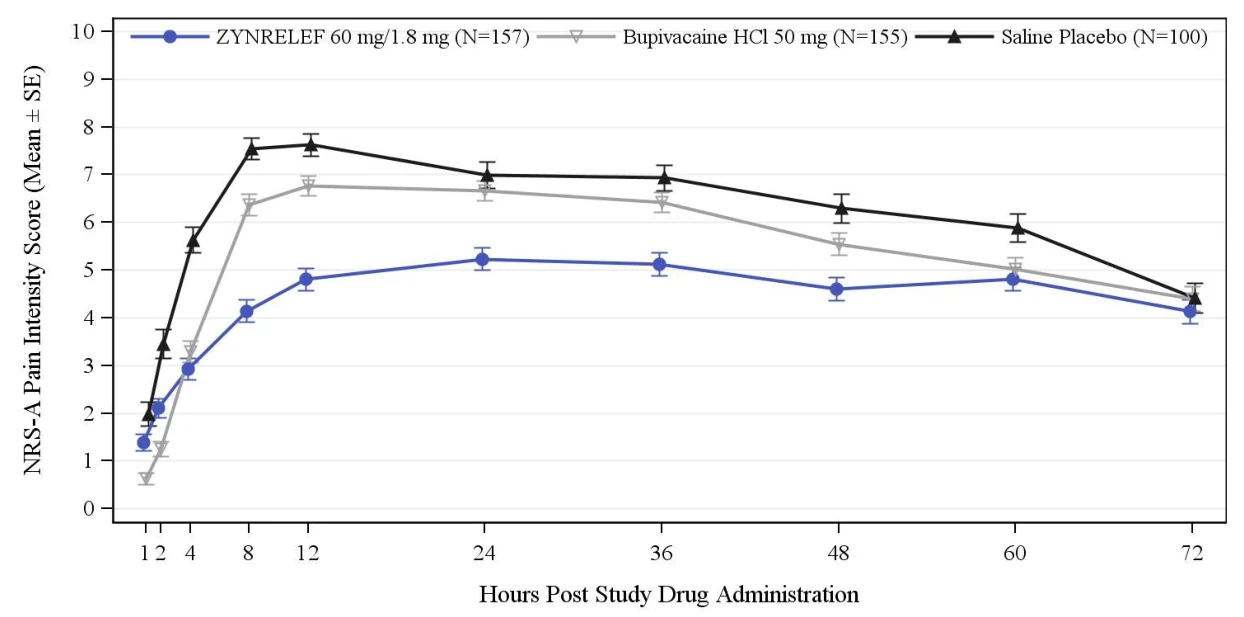
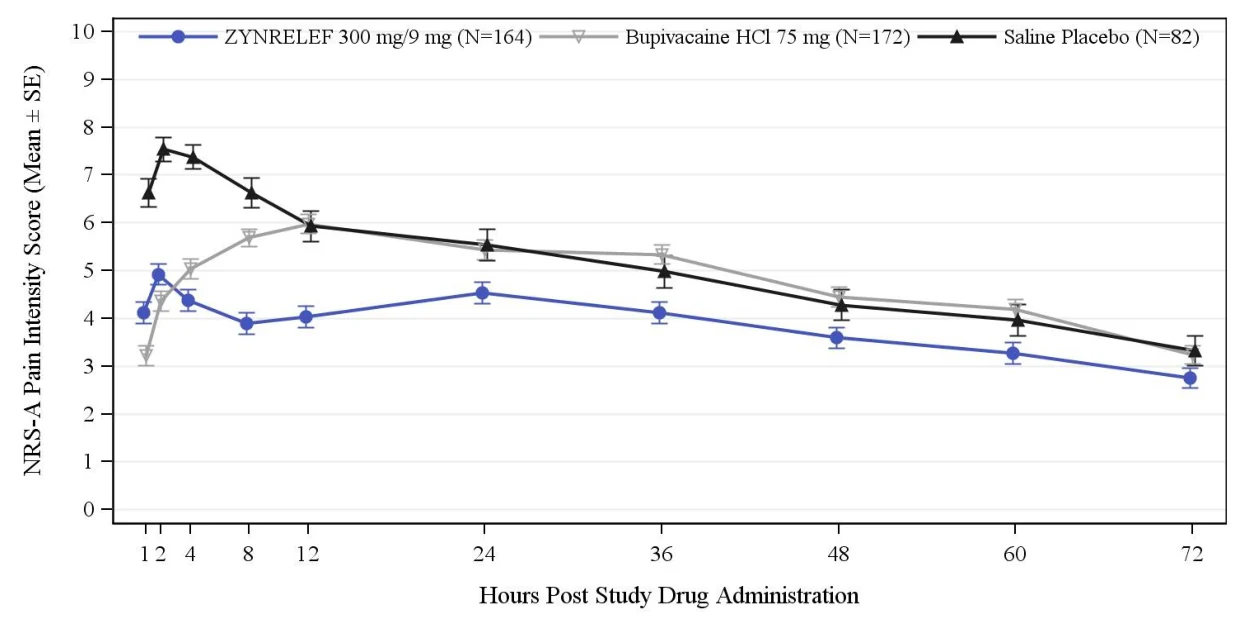
In the two Phase 3 studies, pain intensity was rated by the patients on a 0 to 10 numeric rating scale with activity (NRS-A) out to 72 hours postdose. Postoperatively, there was no scheduled pain medication regimen; however, patients were allowed rescue medication as needed (10 mg oxycodone orally every 4 hours, 10 mg intravenous (IV) morphine every 2 hours, and/or 1000 mg acetaminophen orally every 6 hours). The primary and key secondary endpoints were identical in the two studies and included the area under the curve (AUC 0-72) of the NRS pain intensity scores (cumulative pain scores) over the 72-hour period and other endpoints based on the NRS following surgery.
In Study 301, ZYNRELEF provided a significant reduction in pain intensity compared to both bupivacaine HCl and saline placebo for up to 72 hours (Table 9 and Figure 1). There was a reduction in the proportion of patients who experienced severe pain (NRS ≥7) at any timepoint for ZYNRELEF (54%) compared to bupivacaine HCl (75%) and saline placebo (83%).
Table 9 - Results of study 301 in patients undergoing bunionectomy
| ZYNRELEF 60 mg/1.8 mg (N=157) | Bupivacaine HCl 50 mg (N=155) | Saline Placebo (N=100) | ||||
|---|---|---|---|---|---|---|
| Primary Endpoint: AUC0-72 of the NRS-A Pain Intensity Scores | ||||||
| Mean (SD) | 323 (183) | 393 (154) | 445 (156) | |||
| Difference (95% CI) from placebo | -122 (-164, -80) p<0.0001 | |||||
Abbreviations: AUC0-72, area under the curve through 72 hours; CI, Confidence Interval; NRS-A, Numeric Rating Scale with activity.
Note: p-values reflect results of an analysis of variance with randomized treatment as the main effect. To control the study wise alpha level at 0.05, a testing hierarchy was applied for the primary and key secondary endpoints.
Figure 1 - Mean pain intensity over 72 hours in study 301 (Bunionectomy)
In Study 302, ZYNRELEF provided a significant reduction in pain intensity compared to both bupivacaine HCl and placebo (Table 10 and Figure 2). There was a reduction in the proportion of patients who experienced severe pain (NRS ≥7) at any timepoint for ZYNRELEF (49%) compared to bupivacaine HCl (60%) and saline placebo (82%).
Table 10 - Results of Study 302 in patients undergoing open inguinal herniorrhaphy
| ZYNRELEF 300 mg/9 mg (N=164) | Bupivacaine HCl 75 mg (N=172) | Saline Placebo (N=82) | ||||
|---|---|---|---|---|---|---|
| Primary Endpoint: AUC0-72 of the NRS-A Pain Intensity Scores | ||||||
| Mean (SD) | 269 (174) | 342 (158) | 351 (171) | |||
| Difference (95% CI) from placebo | -81 (-126, -37) p=0.0004 | |||||
Abbreviations: AUC0-72, area under the curve through 72 hours; CI, Confidence Interval; NRS-A, Numeric Rating Scale with activity.
Note: p-values reflect results of an analysis of variance with randomized treatment as the main effect. To control the study wise alpha level at 0.05, a testing hierarchy was applied for the primary and key secondary endpoints.
Figure 2 - Mean pain intensity over 72 hours in study 302 (Herniorrhaphy)
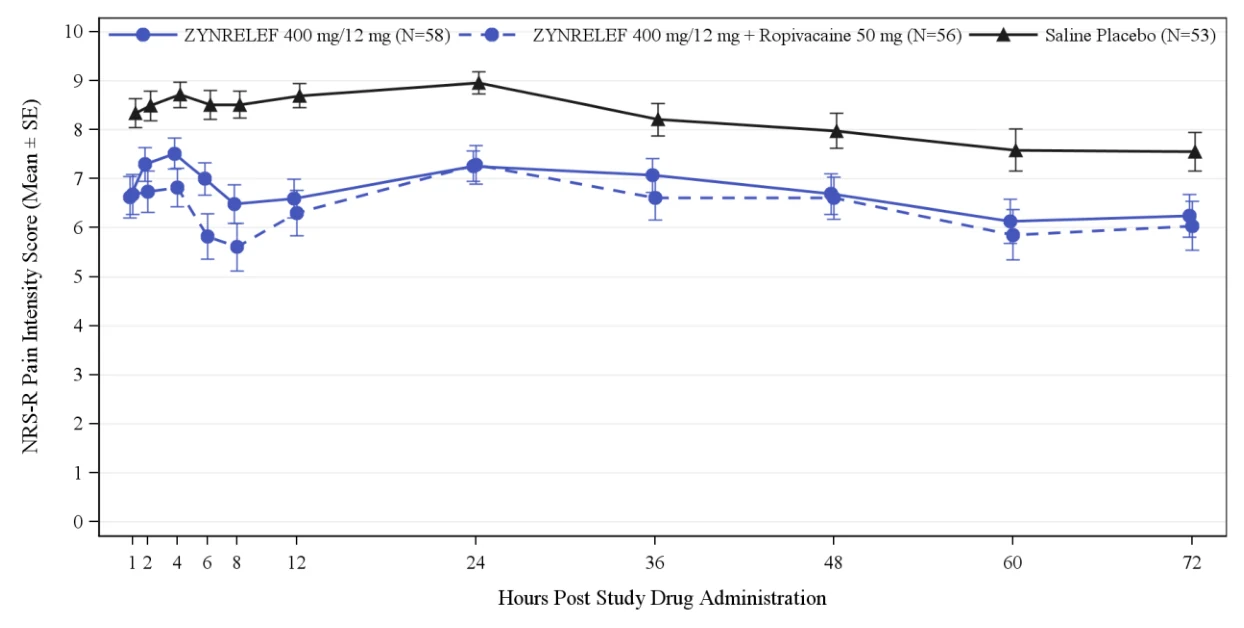
In the Phase 2b study, patients were administered a single 150 mg oral dose of pregabalin and up to 1 g of IV acetaminophen preoperatively. Pain intensity was rated by the patients on a 0 to 10 NRS at rest (NRS-R) out to 72 hours postdose. Postoperatively, there was no scheduled pain medication regimen, and patients were allowed only opioid rescue medication as needed (10 mg oxycodone orally every 4 hours, and/or 10-15 mg morphine IV every 2 hours). Non-opioid analgesics were not permitted as rescue medication.
In Study 209, ZYNRELEF 400 mg/12 mg alone or with low-dose ropivacaine (50 mg injected into the posterior capsule) was evaluated versus the active control, bupivacaine 125 mg, or saline placebo control. The primary endpoint was the AUC0-48 of the NRS-R pain intensity scores (cumulative pain scores) over the first 48 hours and the key secondary endpoint was AUC0-72 of the NRS pain intensity scores over the first 72 hours. ZYNRELEF alone and ZYNRELEF with low-dose ropivacaine demonstrated a significant reduction in pain intensity compared with saline placebo for the 72-hour postoperative period (Table 11 and Figure 3).
Table 11 - Results of Study 209 in patients undergoing total knee arthroplasty
| ZYNRELEF 400 mg/12 mg + Ropivacaine HCl 50 mg (N=56) | ZYNRELEF 400 mg/12 mg (N=58) | Saline Placebo (N=53) | |||||
|---|---|---|---|---|---|---|---|
| Primary Endpoint: AUC0-48 of the NRS-R Pain Intensity Scores | |||||||
| Mean (SD) | 307 (128) | 322 (100) | 396 (77) | ||||
| Difference (95% CI) from placebo | -89 (-128, -50) p<0.0001 | -74 (-113, -36) p=0.0002 | |||||
Abbreviations: AUC0-48, area under the curve through 48 hours; AUC0-72, area under the curve through 72 hours; CI, Confidence Interval; NRS-R, Numeric Rating Scale at rest.
Note: p-values reflect results of an analysis of variance with randomized treatment as the main effect. To control the study wise alpha level at 0.05, a testing hierarchy was applied for the primary and key secondary endpoints.
Figure 3 - Mean pain intensity over 72 hours in study 209 (Total Knee Arthroplasty) (with and without ropivacaine)
16 NON-CLINICAL TOXICOLOGY
General Toxicology:
Repeated-Dose
In the 28-day repeated-dose studies in rats and dogs, there were no findings indicative of systemic toxicity of ZYNRELEF. ZYNRELEF was administered subcutaneously every 48 hours at doses up to 25 and 0.75 mg/kg for rats and 13 and 0.39 mg/kg for dogs for bupivacaine and meloxicam, respectively. Observations consisted mainly of non-adverse inflammatory changes at the dosing sites. As the incidence and severity of these changes were generally comparable between low and high doses of bupivacaine and meloxicam, the excipients in the formulation (in particular DMSO and TEG-POE) were considered to contribute to the inflammatory response. After a 14-day recovery period, the inflammatory changes were of lower incidence and severity, or incompletely resolved.
Genotoxicity:
The mutagenic potential of ZYNRELEF has not been determined. A drug development formulation comprising 10% bupivacaine and 1.5% meloxicam with a different excipient composition did not identify any genotoxic activity in a bacterial reverse mutation assay.
Carcinogenicity:
Long-term studies in animals to evaluate the carcinogenic potential of ZYNRELEF have not been conducted.
Reproductive and Developmental Toxicology:
Following administration of ZYNRELEF to lactating pigs, bupivacaine and meloxicam were detected in milk, but only bupivacaine was detected in the plasma of piglets allowed to suckle milk from the treated animals. Following subcutaneous injection of ZYNRELEF, hydrolysis products of TEG-POE (triethylene glycol, pentaerythritol, and triethylene glycol acid) were detected in breast milk of lactating sows and in piglet plasma and urine.
The effect of ZYNRELEF on fertility has not been determined.
Bupivacaine
The effect of bupivacaine on fertility has not been determined.
No evidence of drug-induced teratogenic effects was observed in rats and rabbits previously given subcutaneous injections of bupivacaine only.
Decreased pup survival in rats and an embryocidal effect in rabbits have been observed when bupivacaine hydrochloride was administered to these species in doses comparable to 1.6 and 1.7 times the maximum daily exposure on a body surface area dose basis, respectively, for a 50 kg person.
Meloxicam
Oral reproductive studies in the rat have previously shown a decrease of ovulations and inhibition of implantations and embryotoxic effects (increase of resorptions) at maternotoxic dose levels of 1 mg/kg and higher. The affected dose levels exceeded the maximum daily exposure (5.3 mg) by a factor of 1.5-fold on body surface area dose basis (50 kg person). Foetotoxic effects at the end of gestation, shared by all prostaglandin synthesis inhibitors, have been described.
Studies of toxicity on reproduction in rats and rabbits did not reveal teratogenicity up to oral doses of 4 mg/kg in rats and 80 mg/kg in rabbits. Doses of 2.5 mg/kg in rats and 20 mg/kg and higher in rabbits were embryotoxic. Prolongation of gestation and labor and an increased incidence of stillbirths, which is a well-known phenomenon of prostaglandin inhibition, occurred in the peri- and postnatal study at doses of 0.125 mg/kg and above. Nonclinical studies indicate that meloxicam can be found in the milk of nursing rats.
Reproductive and developmental toxicity studies were conducted by oral administration of each excipient; for DMSO, triacetin and TEG-POE, bioavailability comparisons of oral and subcutaneous exposure allowed to determine the equivalent subcutaneous exposure achieved. There was no foetotoxicity and only minimal maternal toxicity was observed (for DMSO, in rabbits). For maleic acid, slight increases in late resorptions were noted following oral administration, with incidences comparable to those of the historical controls. In the absence of supportive information regarding exposure by a relevant route of administration, the clinical significance of these observations remains to be determined.
Special Toxicology:
Local Tolerance
In single-dose, local tolerance studies, ZYNRELEF did not have any impact on bone healing in rats, skin wound healing in minipigs, and wound healing in hernia repair in the presence of surgical mesh in rabbits. In the local tolerance skin wound healing studies in minipigs, non-adverse inflammatory changes were observed at incisions. At the end of the observation period, inflammatory changes were consistent with reparation. The inflammatory changes were not associated with the presence of bupivacaine or meloxicam in ZYNRELEF, but the excipients DMSO and TEG-POE were considered to contribute or exacerbate the inflammatory responses observed.
17 SUPPORTING PRODUCT MONOGRAPHS
- 1. Bupivacaine: Marcaine® (Bupivacaine Hydrochloride Injection USP), 2.5 mg/mL, 5 mg/mL and 7.5 mg/mL, submission control 208287, Product Monograph, Pfizer Canada Inc. (SEP 06, 2017)
- 2. Meloxicam: Apo-Meloxicam (Meloxicam Tablets), 7.5 mg and 15.0 mg, submission control 183487, Product Monograph, Apotex Inc. (APR 20, 2015)