


Product Monograph - Kadian
Recent Major Label Changes
| 2026-08 |
|---|---|
| 2025-07 |
| 2025-07 |
| 2026-08 |
| 2026-08 |
| 2026-08 |
| 2026-08 |
| 2026-08 |
| 2025-07 |
| 2026-08 |
| 2025-07 |
| 2025-07 |
Table of Contents
Certain sections or subsections that are not applicable at the time of the preparation of the most recent authorized product monograph are not listed.
Recent Major Label Changes ................................................................................................. 2
Table of Contents ................................................................................................................. 2
Part 1: Healthcare Professional Information.......................................................................... 5
- 1.
Indications..................................................................................................................... 5
1.1. Pediatrics .................................................................................................................... 5
1.2. Geriatrics .................................................................................................................... 5
- 2. Contraindications .......................................................................................................... 5
- 3. Serious Warnings and Precautions Box ........................................................................... 6
- 4.
Dosage and Administration ............................................................................................ 7
4.1. Dosing Considerations ............................................................................................... 7
4.2. Recommended Dose and Dosage Adjustment .......................................................... 7
4.2.1. Discontinuing Treatment ................................................................................. 11
4.4. Administration ......................................................................................................... 12
4.5. Missed Dose ............................................................................................................. 12
- 5. Overdose ..................................................................................................................... 12
- 6. Dosage Forms, Strengths, Composition, and Packaging ................................................ 13
- 7.
Warnings and Precautions ........................................................................................... 14
General ................................................................................................................................. 14
Cardiovascular ...................................................................................................................... 14
Dependence, Tolerance and/or Abuse Liability ................................................................... 14
Driving and Operating Machinery ........................................................................................ 16
Endocrine and Metabolism .................................................................................................. 16
Gastrointestinal .................................................................................................................... 16
Hepatic/Biliary/Pancreatic ................................................................................................... 16
Neurologic ............................................................................................................................ 17
Perioperative Considerations ............................................................................................... 19
Renal ..................................................................................................................................... 19
Reproductive Health ............................................................................................................. 19
Respiratory ........................................................................................................................... 19
7.1. Special Populations .................................................................................................. 20
7.1.1. Pregnancy ......................................................................................................... 20
7.1.2. Breastfeeding ................................................................................................... 20
7.1.3. Pediatrics .......................................................................................................... 20
7.1.4. Geriatrics .......................................................................................................... 20
- 8.
Adverse Reactions ....................................................................................................... 21
8.1. Adverse Reaction Overview ..................................................................................... 21
8.5. Post-Market Adverse Reactions ............................................................................... 21
- 9.
Drug Interactions ......................................................................................................... 24
9.1. Serious Drug Interactions ........................................................................................ 24
9.2. Drug Interactions Overview ..................................................................................... 24
9.3. Drug-Behaviour Interactions .................................................................................... 25
9.4. Drug-Drug Interactions ............................................................................................ 25
9.5. Drug-Food Interactions ............................................................................................ 27
9.6. Drug-Herb Interactions ............................................................................................ 27
- 10.
Clinical Pharmacology .................................................................................................. 27
10.1. Mechanism of Action ............................................................................................... 27
10.2. Pharmacodynamics .................................................................................................. 28
10.3. Pharmacokinetics ..................................................................................................... 28
- 11. Storage, Stability, and Disposal .................................................................................... 30
Part 2: Scientific Information .............................................................................................. 31
- 13. Pharmaceutical Information ........................................................................................ 31
- 14. Clinical Trials ............................................................................................................... 31
- 16. Non-Clinical Toxicology ................................................................................................ 31
Patient Medication Information ......................................................................................... 33
Part 1: Healthcare Professional Information
1. Indications
KADIAN (Morphine Sulfate Extended-Release Capsules) is indicated in adults for:
Management of pain severe enough to require daily, continuous, long-term opioid treatment, and:
- that is opioid-responsive; and
- for which alternative options are inadequate.
KADIAN is not indicated as an as-needed (prn) analgesic.
1.1. Pediatrics
Pediatrics (<18 years of age): No data are available to Health Canada; therefore, Health Canada has not authorized an indication for pediatric use.
1.2. Geriatrics
Geriatrics (>65 years of age): In general, dose selection for a geriatric patient should be cautious, usually starting at the low end of the dosing range, reflecting the greater frequency of decreased hepatic, renal, or cardiac function, concomitant disease or other drug therapy.
2. Contraindications
KADIAN is contraindicated in patients who are hypersensitive to this drug or to any ingredient in the formulation, including any non-medicinal ingredient, or component of the container. For a complete listing, see 6 Dosage Forms, Strengths, Composition, and Packaging.
KADIAN is also contraindicated:
- In patients who are hypersensitive to other opioid analgesics.
- In patients with known or suspected mechanical gastrointestinal obstruction (e.g., bowel obstruction, strictures) or any diseases/conditions that affect bowel transit (e.g., ileus of any type).
- In patients with suspected surgical abdomen.
- In patients with mild, intermittent or short duration pain that can be managed with other pain medications.
- The management of acute pain.
- Patients with acute asthma or other obstructive airway, and status asthmaticus.
- Patients with acute respiratory depression, elevated carbon dioxide levels in the blood, and cor pulmonale.
- Patients with acute alcoholism, delirium tremens, and convulsive disorders.
- Patients with severe Central Nervous System (CNS) depression, increased cerebrospinal or intracranial pressure, and head injury.
- Patients with toxic psychosis and severe kyphoscoliosis.
- Patients taking monoamine oxidase (MAO) inhibitors (or within 14 days of such therapy).
- Women who are breast-feeding, pregnant, or during labour and delivery (see 3 Serious Warnings and Precautions Box and 7 Warnings and Precautions).
- Patients who consume alcohol, or any medication containing alcohol. Co-ingestion of KADIAN and alcohol can potentially result in rapid increases in opioid plasma concentrations which may be fatal, even in opioid tolerant patients.
- Patients with cardiac arrhythmias.
3. Serious Warnings and Precautions Box
|
|---|
4. Dosage and Administration
4.1. Dosing Considerations
- All doses of opioids carry an inherent risk of fatal or non-fatal adverse events. This risk is increased with higher doses. For the management of chronic non-cancer, non-palliative pain, it is recommended that 90 mg of KADIAN not be exceeded. Each patient should be assessed for their risk prior to prescribing KADIAN, as the likelihood of experiencing serious adverse events can depend upon the type of opioid, duration of treatment, level of pain as well as the patient’s own level of tolerance. In addition, the level of pain should be assessed routinely to confirm the most appropriate dose and the need for further use of KADIAN (see 4 Dosage and Administration, Adjustment or reduction of Dosage).
- KADIAN should only be used in patients for whom alternative treatment options are ineffective or not tolerated (e.g., non-opioid analgesics), or would be otherwise inadequate to provide sufficient management of pain (e.g., immediate-release opioids).
- KADIAN should be swallowed whole; crushing, chewing, or dissolving KADIAN can cause rapid release and absorption of a potentially fatal dose of morphine sulphate (see 7 Warnings and Precautions).
4.2. Recommended Dose and Dosage Adjustment
KADIAN capsules are to be administered once daily (every 24 hours).
Selection of the initial dose of KADIAN should take into account the following:
- i. the total daily dose, potency and characteristics of previous opioid analgesics (e.g., pure agonists or mixed agonist/antagonist.)
- ii. the reliability of the relative potency estimate used to calculate the dose of morphine required (potency estimates vary with the route of administration).
- iii. the degree of opioid tolerance.
- iv. the patient's general condition and medical status.
- v. type and severity of pain.
Individual dosing requirements vary considerably based on each patient's size, weight, severity of pain, and medical and analgesic history.
Patients over the age of 50 tend to require much lower doses of morphine than do younger patients. In geriatric and debilitated patients and those with impaired respiratory function or significantly decreased renal function, the initial dose should be one half of the usual recommended dose.
The use of opioid analgesics for the relief of chronic pain, including cancer pain, should be only part of a complete approach to pain control which should include other types of treatment or drug therapy, non-drug measures and psychosocial support.
If signs of excessive opioid effects are observed early in the dosing interval, the next dose should be reduced. If this adjustment leads to inadequate analgesia, that is, breakthrough pain occurs, a supplemental dose of a short acting analgesic may be given. If breakthrough pain repeatedly occurs at the end of a dose interval, it is generally an indication for dosage increase, not more frequent administration. However, where judged necessary, KADIAN may be administered more frequently than every 24 hours. The dosing interval of KADIAN should not be reduced below every 12 hours. As experience is gained, adjustments can be made to obtain an appropriate balance between pain relief and opioid side effects.
For essential information on the important details of the management of cancer pain, the reader may wish to consult the following resources:
Paice JA, et al. Management of Chronic Pain in Survivors of Adult Cancers: American Society of Clinical Oncology Clinical Practice Guideline. J Clin Oncol. 2016; 34(27):3325-45.
National Comprehensive Cancer Network (NCCN). Adult cancer pain. J Natl Compr Canc Netw. 2013; 11(8):992-1022.
Because of the extended release properties of KADIAN, dosage increases should generally be separated by 48 hours.
When properly ingested, no evidence of dose dumping was observed in any of the patients receiving their full daily dose of morphine in the q24h arms of the various steady-state studies.
Use of KADIAN as the First Opioid Analgesic: There has been no systematic evaluation of KADIAN as an initial opioid analgesic in the management of pain. Because it may be more difficult to titrate a patient using a controlled release morphine, it is ordinarily advisable to begin treatment using an immediate release formulation.
For patients currently receiving opioids, the following dosing recommendations should be considered.
Conversion from Immediate Release Oral Morphine Formulations to KADIAN: Patients on immediate release oral morphine formulations may be converted to KADIAN by administering the patient's total daily morphine dose as KADIAN capsules on an every 24 hours dosing regimen. Dose is then adjusted as needed.
The first dose of KADIAN should be taken with the last dose of any immediate-release opioid medication due to the prolonged Tmax after administration of KADIAN.
Conversion from Sustained-Release Oral Morphine Formulations to KADIAN: Patients on sustained-release oral morphine formulations may be converted to KADIAN by administering the patient's total daily morphine dose as KADIAN capsules on an every 24 hours dosing regimen at the time of the next scheduled dose of morphine.
Conversion from Parenteral Morphine or Other Parenteral or Oral Opioids to KADIAN: If KADIAN is administered as the initial oral morphine drug product, particular care must be exercised in the conversion process. Because of uncertainty about an inter subject variation in relative estimates of opioid potency and cross tolerance, initial dosing regimens should be conservative; that is, an underestimation of the 24 hours’ oral morphine requirements is preferred to an overestimate. To this end, initial individual doses of KADIAN should be estimated conservatively.
Estimates of the relative potency of opioids are only approximate and are influenced by route of administration, individual patient differences, and possibly, by an individual's medical condition.
Consequently, it is difficult to recommend any fixed rule for converting a patient to KADIAN directly. The following general points should be considered:
Parenteral to Oral Morphine Ratio: Estimates of the oral to parenteral potency of morphine vary. Some authorities suggest that a dose of oral morphine only two to three times the daily parenteral morphine requirement may be sufficient in chronic use settings.
Other Parenteral or Oral Opioids to Oral Morphine: Because there are no data on these types of analgesic substitutions, specific recommendations are not possible. Physicians are advised to refer to published relative potency data, keeping in mind that such ratios are only approximate (see Table 1). In general, it is safer to underestimate the daily dose of KADIAN required and rely upon ad hoc supplementation to deal with inadequate analgesia.
Conversion ratios for opioids are subject to variations in kinetics governed by genetics and other factors. When switching from one opioid to another, consider reducing the calculated dose by 25-50% to minimize the risk of overdose. Subsequently, up-titrate the dose, as required, to reach the appropriate maintenance dose.
Table 1 – Opioid Conversion Tablea
| Opioids | To convert to oral morphine equivalent | To convert from oral morphine multiply by | Daily 90 mg MEDb |
| Morphine | 1 | 1 | 90 mg/d |
| Codeine | 0.15 | 6.67 | 600 mg/d |
| Hydromorphone | 5 | 0.2 | 18 mg/d |
| Oxycodone | 1.5 | 0.667 | 60 mg/d |
| Tapentadol | 0.3-0.4 | 2.5-3.33 | 300 mg/d |
| Tramadol | 0.1-0.2 | 6 | *** |
| Methadone | Morphine dose equivalence is not reliably established | ||
*** The maximum recommended daily dose of tramadol is 300 mg - 400 mg depending on the formulation. a. Adapted from the 2017 Canadian guideline for opioids for chronic non-cancer pain. McMaster University; 2017
b. MED: Morphine Equivalent Dose
Conversion from KADIAN to Other Controlled Release Oral Morphine Formulations: KADIAN is not bioequivalent to other controlled release morphine preparations. Conversion from KADIAN to the same daily dose of other controlled-release morphine preparations may lead to an initial change in the clinical status of the patient and close observation is recommended.
Conversion from KADIAN to Parenteral Opioids: When converting a patient from KADIAN to parenteral opioids, it is best to assume that the parenteral to oral potency is high. NOTE THAT THIS IS THE CONVERSE OF THE STRATEGY USED WHEN THE DIRECTION OF CONVERSION IS FROM THE PARENTERAL TO ORAL FORMULATIONS. IN BOTH CASES HOWEVER, THE AIM IS TO ESTIMATE THE NEW DOSE CONSERVATIVELY. For example, to estimate the required 24 hour dose of morphine for IM use, one could employ a conversion of 1 mg of morphine IM for every 6 mg of morphine as KADIAN. Therefore, the IM 24 hour dose would have to be divided by six and administered every 4 hours. This approach is recommended because it is least likely to cause overdose. However, for chronic dosing, clinical experience indicates that this ratio is 2-3:1 and individual titration is recommended (i.e., 20-30 mg of oral or rectal morphine is equivalent to 10 mg of parenteral morphine).
Opioid analgesic agents do not effectively relieve dysesthetic pain, post herpetic neuralgia, stabbing pains, activity related pain, and some forms of headache. This does not mean that patients with advanced cancer suffering these types of pain should not be given an adequate trial of opioid analgesics. However, such patients may need to be referred early on for other types of pain therapy. Pain without nociception is usually not opioid responsive.
Dose Titration: Dose titration is the key to success with morphine therapy. Proper optimization of doses scaled to the relief of the individual's pain should aim at the regular administration of the lowest dose of morphine which will maintain the patient free of pain at all times. Dose adjustments should be based on the patient's clinical response. Higher doses may be justified in some patients to cover periods of physical activity.
Because of the extended release properties of KADIAN, dosage adjustments should generally be separated by 48 hours. If dose increments turn out to be required, they should be proportionately greater at lower dose levels (in terms of percentage of the previous dose), than when adjusting a higher dose.
Adjustment or Reduction of Dosage: Physical dependence with or without psychological dependence tends to occur with chronic administration of opioids, including KADIAN. Withdrawal (abstinence) symptoms may occur following abrupt discontinuation of therapy. These symptoms may include body aches, diarrhea, gooseflesh, loss of appetite, nausea, nervousness or restlessness, runny nose, sneezing, tremors or shivering, stomach cramps, tachycardia, trouble with sleeping, unusual increase in sweating, palpitations, unexplained fever, weakness and yawning.
During the first 2 or 3 days of effective pain relief, the patient may exhibit drowsiness or sleep for prolonged periods. This can be misinterpreted as the effect of excessive analgesic dosing rather than the first sign of relief in a pain-exhausted patient. The dose, therefore, should be maintained for at least 3 days before reduction, provided that the sedation is not excessive or associated with unsteadiness and symptoms of confusion, and that respiratory activity and other vital signs are adequate. If excessive sedation persists, the reason(s) for such an effect must be sought. Some of these are concomitant sedative medications, hepatic or renal failure, exacerbated respiratory failure, higher doses than tolerated by an older patient, or an illness which is more severe than previously recognized. If it is necessary to reduce the dose, it can be carefully increased again after 2 or 4 days if it is obvious that the pain is not being well-controlled.
Following successful relief of severe pain, periodic attempts to reduce the opioid dose should be made. Smaller doses or complete discontinuation may become feasible due to a change in the patient's condition or mental state. Patients on prolonged therapy should be withdrawn gradually from the drug if it is no longer required for pain control. In patients who are appropriately treated with opioid analgesics and who undergo gradual withdrawal for the drug, these symptoms are usually mild (see 7 Warnings and Precautions). Tapering should be individualized and carried out under medical supervision.
Patient should be informed that reducing and/or discontinuing opioids decreases their tolerance to these drugs. If treatment needs to be re-initiated, the patient must start at the lowest dose and titrate up to avoid overdose.
Geriatrics (> 65 years of age):
In general, dose selection for a geriatric patient should be cautious, usually starting at the low end of the dosing range, reflecting the greater frequency of decreased hepatic, renal, or cardiac function, concomitant disease or other drug therapy (see 7.1.4 Geriatrics; 10.3 Pharmacokinetics, Special populations and conditions, Geriatrics).
4.2.1. Discontinuing Treatment
Abrupt discontinuation or rapid decreasing of the dose in a person physically dependent on an opioid may result in serious withdrawal symptoms and uncontrolled pain (see 7 Warnings and Precautions, Dependence, Tolerance and/or Abuse Liability). Such symptoms may lead the patient to seek other sources of licit or illicit opioids. Opioids should not be ceased abruptly in a patient who is physically dependent but withdrawn by tapering the dose slowly. Factors to take into account when deciding how to discontinue or decrease therapy include the dose and duration of the opioid the patient has been taking, the type of pain being treated and the physical and psychological attributes of the patient. A multimodal approach to pain management should be in place before initiating an opioid analgesic taper. During tapering, patients require regular review and support to manage any increase in pain, psychological distress and withdrawal symptoms.
There are no standard tapering schedules suitable for all patients and an individualized plan is necessary. In general, tapering should involve a dose reduction of no more than 10 percent to 25 percent every 2 to 4 weeks. If the patient is experiencing increased pain or serious withdrawal symptoms, it may be necessary to go back to the previous dose until stable before proceeding with a more gradual taper.
When ceasing opioids in a patient who has a suspected opioid use disorder, the need for medication assisted treatment and/or referral to a specialist should be considered.
The patient should be informed that reducing and/or discontinuing opioids will decrease their tolerance to these drugs. If treatment needs to be re-initiated, the patient must start at the lowest dose and titrate up to avoid overdose.
4.4. Administration
KADIAN should be swallowed whole; crushing, chewing, or dissolving Kadian can cause rapid release and absorption of a potentially fatal dose of morphine sulphate (see 7 Warnings and Precautions).
For patients who have difficulty swallowing, KADIAN capsules may be opened and the extended-release pellets may be administered in the following way:
The pellets may be sprinkled onto a small amount of soft foods (such as yoghurt, apple sauce or jam). This should be taken within 30 minutes of sprinkling. The pellets must not be chewed or crushed, and the mouth should be rinsed to ensure that all pellets have been swallowed.
4.5. Missed Dose
If a dose is missed, it should be taken as soon as possible. However, if it is almost time for the next dose, then the missed one should be skipped. Two doses should not be taken at once. If several doses are missed, then patients should contact their physician.
5. Overdose
Symptoms: Serious morphine overdosage is characterized by respiratory depression (reduced respiratory rate and/or tidal volume; Cheyne-Stokes respiration; cyanosis), extreme somnolence progressing to stupor or coma, dizziness, confusion, pneumonia aspiration, rhabdomyolysis progressing to renal failure, hypotonia, cold and clammy skin, toxic leukoencephalopathy, delayed post-hypoxic leukoencephalopathy, hypoglycemia, constricted pupils, and sometimes bradycardia and hypotension. Pinpoint pupils are a sign of narcotic overdose, but are not pathognomonic (e.g., pontine lesions of hemorrhagic or ischemic origin may produce similar findings). Marked mydriasis rather than miosis may be seen with hypoxia in the setting of morphine overdose. Severe overdosage may result in apnea, circulatory collapse, cardiac arrest and death.
Treatment: Primary attention should be given to the establishment of a patent airway and institution of assisted or controlled ventilation. The pure opioid antagonist, naloxone hydrochloride, is a specific antidote against respiratory depression which results from opioid overdose. Naloxone should be administered. However, because its duration of action is relatively short, the patient must be carefully monitored until spontaneous respiration is reliably re established. KADIAN will continue to release and add to the morphine load for periods longer than the action of a single dose of antagonist and the management of morphine overdosage should be modified accordingly. If the response to naloxone is suboptimal or not sustained, additional naloxone may be administered as needed to maintain alertness and respiratory function. There is no information available about the cumulative dose of naloxone that may be safely administered.
Naloxone should not be administered in the absence of clinically significant respiratory or circulatory depression secondary to morphine overdosage. Naloxone should be administered cautiously to persons who are known or suspected to be physically dependent on KADIAN. In such cases, an abrupt or complete reversal of opioid effects may precipitate an acute withdrawal syndrome. The severity of the withdrawal syndrome produced will depend on the degree of physical dependence and the dose of the antagonist administered. If it is necessary to treat serious respiratory depression in the physically dependent patient, the antagonist should be administered with extreme care and by titration with smaller than usual doses of the antagonist.
Supportive measures (including oxygen, vasopressors) should be employed in the management of circulatory shock and pulmonary oedema accompanying overdose as indicated. Cardiac arrest or arrhythmias may require cardiac massage or defibrillation.
Gastric contents may need to be emptied as this can be useful in removing unabsorbed drug, particularly when a sustained release formulation has been taken.
Morphine toxicity may be a result of overdosage but because of the large inter individual variation in sensitivity to opioids it is difficult to assess the exact dose of any opioid that is toxic or lethal. The toxic effects of morphine tend to be overshadowed by the presence of pain or tolerance. Patients having chronic morphine therapy have been known to take in excess of 3,000 mg/day with no apparent toxic effects being present.
| For the most recent information in the management of a suspected drug overdose, contact your regional poison control centre or Health Canada’s toll-free number, 1-844 POISON-X (1-844-764-7669). |
|---|
- 6. Dosage Forms, Strengths, Composition, and Packaging
Table 2 – Dosage Forms, Strengths, and Composition
KADIAN capsules contain creamy-white to light tan polymer coated extended release pellets of morphine hemisulfate 2.5 – hydrate and are available in five dosage strengths.
- 10 mg morphine hemisulfate 2.5 – hydrate: Size 4 capsule, clear cap imprinted with K10, and clear body imprinted with one black band. Presented in white plastic bottles of 100 capsules.
- 20 mg morphine hemisulfate 2.5 – hydrate: Size 4 capsule, clear cap imprinted with K20, and clear body imprinted with two black bands. Presented in white plastic bottles of 100 capsules.
- 50 mg morphine hemisulfate 2.5 – hydrate: Size 2 capsule, clear cap imprinted with K50, and clear body imprinted with three black bands. Presented in white plastic bottles of 100 capsules.
- 100 mg morphine hemisulfate 2.5 – hydrate: Size 0 capsule, clear cap imprinted with K100, and clear body imprinted with four black bands. Presented in white plastic bottles of 50 capsules.
| Route of Administration | Dosage Form/ Strength/Composition | Non-Medicinal Ingredients |
| Oral | Capsules, 10 mg, 20 mg, 50 mg, 100 mg and 200 mg | Diethyl Phthalate, Ethylcellulose N-50, Gelatin, Hypromellose, Methacrylic acid - ethyl acrylate copolymer (1:1), Type A, Polyethylene Glycol 6000 (Macrogol 6000), Talc, Sugar Spheres, and a black ink containing: ammonium hydroxide, the colouring agent E172 (black iron oxide), potassium hydroxide, propylene glycol, and shellac |
- 200 mg morphine hemisulfate 2.5 – hydrate: Size 000 capsule, clear cap imprinted with K200, and clear body, no printing on the body. Presented in white plastic bottles of 50 capsules and 100 capsules.
7. Warnings and Precautions
See 3 Serious Warnings and Precautions Box.
General
Morphine sulphate, a synthetic opioid, is a controlled substance listed in Schedule I of the Controlled Drugs and Substances Act (CDSA). Appropriate security measures should be taken to safeguard stock of morphine against diversion.
KADIAN is intended for use in patients who require more than several days of continuous treatment with a potent opioid analgesic.
As with any potent opioid, it is critical to adjust the dosing regimen of KADIAN for each patient individually, taking into account the patient's prior analgesic treatment experience. Although it is clearly impossible to enumerate every consideration that is important to the selection of the initial dose of KADIAN, attention should be given to the points listed under 4 Dosage and Administration.
Cardiovascular
Hypotensive Effect
KADIAN, like all opioid analgesics, may cause severe hypotension in an individual whose ability to maintain blood pressure has already been compromised by a reduced blood volume, or a concurrent administration of drugs such as phenothiazines or general anaesthetics (see 9 Drug Interactions). KADIAN may produce orthostatic hypotension in ambulatory patients.
KADIAN, like all opioid analgesics, should be administered with caution to patients in circulatory shock, as vasodilation produced by the drug may further reduce cardiac output and blood pressure.
Dependence, Tolerance and/or Abuse Liability
As with other opioids, tolerance, physical dependence and opioid use disorder (OUD) may develop upon repeated administration of KADIAN and there is a potential for development of psychological dependence.
Physical dependence and tolerance reflect the neuroadaptation of the opiate receptors to chronic exposure to an opiate, and are separate and distinct from abuse and addiction. Tolerance, as well as physical dependence, may develop upon repeated administration of opioids, and are not by themselves evidence of an addictive disorder or abuse.
Abuse or misuse of morphine may result in overdose and/or death. The risk of developing OUD is increased in patients with a personal or a family history (parents or siblings) of substance use disorders (including alcohol use disorder), in current tobacco users or in patients with a personal history of other mental health disorders (e.g., major depression, anxiety and personality disorders).
Patients will require monitoring for signs of drug-seeking behaviour (e.g., too early requests for refills). This includes the review of concomitant opioids and psycho-active drugs (like benzodiazepines). For patients with signs and symptoms of OUD, consultation with an addiction specialist should be considered. If treatment of physical dependence of patients on KADIAN is necessary, detoxification may be achieved by a gradual dosage reduction. Gastrointestinal disturbance or dehydration should be treated appropriately.
Patients on prolonged therapy should be tapered gradually from the drug if it is no longer required for pain control. Withdrawal symptoms may occur following abrupt discontinuation of therapy or upon administration of an opioid antagonist. (see 4 Dosage and Administration, Adjustment or reduction of Dosage). Some of the symptoms that may be associated with abrupt withdrawal of an opioid analgesic include body aches, diarrhea, gooseflesh, loss of appetite, nausea, nervousness or restlessness, anxiety, runny nose, sneezing, tremors or shivering, stomach cramps, tachycardia, trouble with sleeping, unusual increase in sweating, palpitations, unexplained fever, weakness and yawning (see 8.5 Post-Market Adverse Reactions).
Abrupt cessation or a sudden reduction in dose after prolonged use may result in withdrawal symptoms. The opioid agonist abstinence syndrome is characterized by some or all of the following symptoms: restlessness, lacrimation, rhinorrhea, yawning, perspiration, gooseflesh, restless sleep or "yen" and mydriasis during the first 24 hours. These symptoms often increase in severity and over the next 72 hours may be accompanied by increasing irritability, anxiety, weakness, twitching and spasms of muscles, kicking movements, severe backache, abdominal and leg pains, abdominal and muscle cramps, hot and cold flashes, insomnia, nausea, anorexia, vomiting, intestinal spasm, diarrhea, coryza and repetitive sneezing, increase in body temperature, blood pressure, respiratory rate and heart rate. Because of excessive loss of fluids through sweating, vomiting and diarrhea, there is usually marked weight loss, dehydration, ketosis and disturbances in acid base balance. Cardiovascular collapse can occur. Most observable symptoms disappear in 5-14 days without treatment; however, there appears to be a phase of secondary or chronic abstinence which may last for 2-6 months characterized by insomnia, irritability and muscle aches.
Tolerance, in which increasingly large doses are required in order to produce the same degree of analgesia, may develop upon repeated administration of morphine. The dose of KADIAN may need to be increased to maintain adequate pain relief (see 4 Dosage and Administration).
Addiction, Abuse and Misuse:
KADIAN is a potential drug of abuse and misuse, which can lead to overdose and death. Therefore KADIAN should be prescribed and handled with caution.
Patients should be assessed for their clinical risks for opioid abuse or addiction prior to being prescribed opioids. All patients receiving opioids should be routinely monitored for signs of misuse and abuse.
Opioids, such as KADIAN, should be used with particular care in patients with a personal or family history of alcohol and illicit/prescription drug abuse and other mental health disorders including, but not limited to, major depression and anxiety. However, concerns about abuse, addiction, and diversion should not prevent the proper management of pain.
Patients with a history of addiction to drugs or alcohol may be at higher risk of becoming addicted to KADIAN unless used under extreme caution and awareness.
Driving and Operating Machinery
Due caution should be exercised when driving or operating a vehicle or potentially dangerous machinery.
Morphine may impair the mental and/or physical abilities needed to perform potentially hazardous activities such as driving a car or operating machinery. Patients must be cautioned accordingly. Patients should also be warned about the potential combined effects of morphine with other CNS depressants, including other opioids, phenothiazines, sedative, sedative/hypnotics and alcohol (see 9 Drug Interactions).
Endocrine and Metabolism
Adrenal Insufficiency
Cases of adrenal insufficiency have been reported with opioid use, more often following greater than one month of use. Presentation of adrenal insufficiency may include non-specific symptoms and signs, including nausea, vomiting, anorexia, fatigue, weakness, dizziness, and low blood pressure. If adrenal insufficiency is suspected, confirm the diagnosis with diagnostic testing as soon as possible. If adrenal insufficiency is diagnosed, treat with physiologic replacement doses of corticosteroids. Wean the patient off of the opioid to allow adrenal function to recover and continue corticosteroid treatment until adrenal function recovers. Other opioids may be tried as some cases reported use of a different opioid without recurrence of adrenal insufficiency. The information available does not identify any particular opioids as being more likely to be associated with adrenal insufficiency.
Gastrointestinal
Opioid-Induced Esophageal Dysfunction
Cases of opioid-induced esophageal dysfunction (OIED) in patients taking opioids long-term have been reported. The risk of OIED appears to increase as the dose and duration of opioids increase, but may occur within weeks to months after opioid initiation. The most common esophageal symptoms appear to be dysphagia, gastroesophageal reflux and chest pain. Patients with OIED had high resolution manometry results showing spastic and/or obstructive abnormalities.
Gastrointestinal Motility
Opioids, including KADIAN, have been shown to decrease bowel motility. KADIAN may obscure the diagnosis or clinical course of patients with acute abdominal conditions, and is also contraindicated in patients with potential bowel obstruction, or delayed transit (see 2. Contraindications, 8. Adverse Reactions, 10. Clinical Pharmacology).
Hepatic/Biliary/Pancreatic
Patients with Hepatic Insufficiency
Morphine should be administered with caution and in a reduced dosage in patient with hepatic insufficiency.
Dysfunction and Spasm of the Sphincter of Oddi
KADIAN may cause dysfunction and spasm of the sphincter of Oddi, and an increase in intrabiliary pressure. Other opioid related effects may include a reduction in biliary and pancreatic secretions or elevations in serum amylase. Therefore, KADIAN must be administered with caution in patients with pancreatitis and diseases of the biliary tract. Monitor patients with biliary tract disease for worsening symptoms (see 2. Contraindications).
Neurologic
Interactions with CNS Depressants (Including benzodiazepines and alcohol)
KADIAN should be used with caution and in a reduced dosage during concomitant administration of other opioid analgesics, general anesthetics, phenothiazines, sedatives, hypnotics, tricyclic antidepressants, antipsychotics, antihistamines, benzodiazepines, gabapentin, pregabalin, baclofen, centrally-active anti-emetics and other CNS depressants, including alcohol. Respiratory depression, hypotension, profound sedation, coma or death may result. When such combination therapy is contemplated, a substantial reduction in the dose of one or both agents should be considered and patients should be carefully monitored. KADIAN should not be consumed with alcohol as it may increase the chance of experiencing dangerous side effects (see 9 Drug Interactions).
Observational studies have demonstrated that concomitant use of opioid analgesics and benzodiazepines increases the risk of drug-related mortality compared to use of opioid analgesics alone. Because of similar pharmacological properties, it is reasonable to expect similar risk with the concomitant use of other CNS depressant drugs with opioid analgesics (see 9 Drug Interactions). If the decision is made to prescribe a benzodiazepine or other CNS depressant concomitantly with an opioid analgesic, prescribe the lowest effective dosages and minimum durations of concomitant use. In patients already receiving an opioid analgesic, prescribe a lower initial dose of the benzodiazepine or other CNS depressant than indicated in the absence of an opioid, and titrate based on clinical response. If an opioid analgesic is initiated in a patient already taking a benzodiazepine or other CNS depressant, prescribe a lower initial dose of the opioid analgesic, and titrate based on clinical response. Follow patients closely for signs and symptoms of respiratory depression and sedation.
Advise both patients and caregivers about the risks of respiratory depression and sedation when KADIAN is used with benzodiazepines or other CNS depressants (including alcohol and illicit drugs). Advise patients not to drive or operate heavy machinery until the effects of concomitant use of the benzodiazepine or other CNS depressant have been determined. Screen patients for risk of substance use disorders, including opioid abuse and misuse, and warn them of the risk for overdose and death associated with the use of additional CNS depressants including alcohol and illicit drugs (see 9 Drug Interactions).
KADIAN should not be consumed with alcohol as it may increase the chance of experiencing dangerous side effects, including death (see 2 Contraindications and 8 Adverse Reactions, Sedation, and 9 Drug Interactions).
Severe pain antagonizes the subjective and respiratory depressant actions of opioid analgesics. Should pain suddenly subside, these effects may rapidly become manifest.
Head Injury and Increased Intracranial Pressure
The respiratory depressant effects of morphine with carbon dioxide retention and secondary elevation of cerebrospinal fluid pressure may be markedly exaggerated in the presence of head injury, other intracranial lesions, or a pre-existing increase in intracranial pressure. Morphine produces effects which may obscure neurological signs of further increases in pressure in patients with head injuries. KADIAN is contraindicated in patients with severe CNS depression, increased cerebrospinal or intracranial pressure, and head injury (see 2 Contraindications).
Neonatal Opioid Withdrawal Syndrome (NOWS)
Prolonged maternal use of opioids during pregnancy can result in withdrawal signs in the neonate. Neonatal opioid withdrawal syndrome, unlike opioid withdrawal syndrome in adults, may be life-threatening.
Neonatal opioid withdrawal syndrome presents as irritability, hyperactivity and abnormal sleep pattern, high pitched cry, tremor, vomiting, diarrhea and failure to gain weight. The onset, duration, and severity of neonatal opioid withdrawal syndrome vary based on the specific opioid used, duration of use, timing and amount of last maternal use, and rate of elimination of the drug by the newborn.
Use of KADIAN is contraindicated in pregnant women (see 2 Contraindications).
Use in Patients with Convulsive or Seizure Disorders
The morphine sulphate in KADIAN may aggravate convulsions in patients with convulsive disorders, and may induce or aggravate seizures in some clinical settings. Therefore, KADIAN should not be used in these patients (see 2 Contraindications).
Opioid Induced Hyperalgesia
Opioid induced hyperalgesia (OIH) is a paradoxical response to an opioid in which pain perception increases despite stable or increased opioid exposure. It differs from tolerance, where higher opioid doses are required to achieve the same analgesic effect or treat recurring pain. Clinically, OIH may be associated with high opioid doses, long term opioid treatment, and intra-operative opioid use. OIH may manifest as an unexplained increase in pain, more diffuse pain than pre-existing, or as pain from normally non-painful stimuli (allodynia), in the absence of disease progression. When OIH is suspected, the dose of opioid should be reduced or tapered off, if possible. It is reasonable to consider opioid rotation, or the use of a non-opioid strategy for pain control. There is currently no well-established treatment for OIH.
Serotonin Toxicity / Serotonin Syndrome
Serotonin toxicity, also known as serotonin syndrome, is a potentially life-threatening condition and has been reported with morphine, including KADIAN, particularly during combined use with other serotonergic drugs (See 9.4. Drug-Drug Interactions).
Serotonin toxicity is characterised by neuromuscular excitation, autonomic stimulation (e.g., tachycardia, flushing) and altered mental state (e.g., anxiety, agitation, hypomania).
In accordance with the Hunter Criteria, serotonin toxicity diagnosis is likely when, in the presence of at least one serotonergic agent, one of the following is observed:
- Spontaneous clonus
- Inducible clonus or ocular clonus with agitation or diaphoresis
- Tremor and hyperreflexia
- Hypertonia and body temperature >38°C and ocular clonus or inducible clonus.
If concomitant treatment with KADIAN and other serotonergic agents is clinically warranted, careful observation of the patient is advised, particularly during treatment initiation and dose increases (see 9.4. Drug-Drug Interactions). If serotonin toxicity is suspected, discontinuation of the serotonergic agents should be considered.
Perioperative Considerations
Cordotomy Patients who are scheduled for cordotomy or other interruption of pain transmission pathways should not receive KADIAN within 24 hours of the procedure.
Surgery on Biliary Tract
Opioid analgesics, including KADIAN, should be used with caution in patients about to undergo surgery of the biliary tract, since it may cause spasm of the sphincter of Oddi (see 2. Contraindications).
Renal
Patients with Severe renal insufficiency
Morphine should be administered with caution and in a reduced dosage in patient with severe renal insufficiency.
Reproductive Health
- Function / Fertility
Long-term use of opioids may be associated with decreased sex hormone levels, increased prolactin and symptoms such as low libido, erectile dysfunction, infertility, impotence, or amenorrhea (see 8.5. Post-Market Adverse Reactions).
Respiratory
Respiratory Depression
Serious, life-threatening, or fatal respiratory depression has been reported with the use of opioids, even when used as recommended. Respiratory depression from opioid use, if not immediately recognized and treated, may lead to respiratory arrest and death. Carbon dioxide (CO2) retention from opioid-induced respiratory depression can exacerbate the sedating effects of opioids.
While serious, life-threatening, or fatal respiratory depression can occur at any time during the use of KADIAN, the risk is greatest during the initiation of therapy or following a dose increase. Patients should be closely monitored for respiratory depression when initiating therapy with KADIAN and following dose increases.
To reduce the risk of respiratory depression, proper dosing and titration of KADIAN are essential (see 4 Dosage and Administration). Overestimating the KADIAN dose when converting patients from another opioid product can result in fatal overdose with the first dose.
Sleep Apnea
Opioids can cause sleep-related breathing disorders such as sleep apnea syndromes (including central sleep apnea [CSA]) and hypoxia (including sleep-related hypoxia). Opioid use increases the risk of CSA in a dose-dependent fashion. Evaluate patients on an ongoing basis for the onset of a new sleep apnea, or a worsening of an existing sleep apnea. In these patients, consider reducing or stopping the opioid treatment if appropriate, using best practices for tapering of opioids (see 4.2 Recommended Dose and Dosage Adjustment).
Acute Chest Syndrome (ACS) in Patients with Sickle Cell Disease (SCD)
Due to a possible association between ACS and morphine use in SCD patients treated with morphine during a vaso-occlusive crisis, close monitoring for ACS symptoms is warranted.
7.1. Special Populations
Special Risk Groups
KADIAN should be administered with caution, and in reduced dosages in debilitated patients; patients with severe renal or hepatic insufficiency or impaired pulmonary function; patients with Addison's disease; myxoedema; hypothyroidism; prostatic hypertrophy or urethral stricture (see 4.2 Recommended Dose and Dosage Adjustment; 10.3 Pharmacokinetics, Special populations and conditions).
7.1.1. Pregnancy
Animal reproduction studies have not been performed using morphine. It is not known whether morphine can cause foetal damage when administered throughout pregnancy or if it can affect reproductive capacity in humans.
Prolonged maternal use of opioids during pregnancy can result in withdrawal signs in the neonate. Neonatal opioid withdrawal syndrome, unlike opioid withdrawal syndrome in adults, may be life-threatening (see 7 Warnings and Precautions, Neonatal Opioid Withdrawal Syndrome (NOWS)).
Use of KADIAN is contraindicated in pregnant women (see 2 Contraindications).
7.1.2. Breastfeeding
Labour, Delivery and Nursing Women
KADIAN is contraindicated during labour, delivery, pregnancy and in nursing mothers. Morphine sulphate can cross the placental barrier and is also excreted in breast milk. Life-threatening respiratory depression may occur in the infant if opioids are administered to the mother. Naloxone, a drug that counters the effects of opioids, should be readily available if KADIAN is used in this population.
7.1.3. Pediatrics
Pediatrics < 18 years of age: No data are available to Health Canada; therefore, Health Canada has not authorized an indication for pediatric use.
7.1.4. Geriatrics
Geriatrics (> 65 years of age):
KADIAN should be administered with caution, and in reduced dosages in geriatric patients (see 4.2 Recommended Dose and Dosage Adjustment; 10.3 Pharmacokinetics, Special populations and conditions, Geriatrics).
8. Adverse Reactions
8.1. Adverse Reaction Overview
The adverse reactions caused by morphine are essentially the same as those observed with other oral and parenteral opioid analgesics. They include the following major hazards: respiratory depression, apnoea and to a lesser degree, circulatory depression, respiratory arrest, shock and cardiac arrest.
Most common adverse effects are: constipation, dizziness, dysphoria, euphoria, lightheadedness, nausea, sedation, sweating and vomiting.
8.5. Post-Market Adverse Reactions
Sedation:
Most patients receiving morphine will experience initial drowsiness. This usually disappears in three to five days and is not a cause for concern unless it is excessive, or accompanied with unsteadiness or confusion. Excessive or persistent sedation should be investigated. Factors to be considered should include concurrent sedative medications, the presence of hepatic or renal insufficiency, exacerbated respiratory failure, tolerance to the dose used especially in older patients, disease severity and the patient's general condition. If the dose of KADIAN has been reduced and pain is not adequately controlled, the dose may be carefully increased again after a few days.
Dizziness and Unsteadiness:
May be associated with morphine induced postural hypotension, particularly in geriatric or debilitated patients. The dosage should be adjusted according to individual needs but, because of reduced clearance, dosage may be lower in patients over 50 years of age.
Nausea and Vomiting:
Nausea and vomiting are common after single doses of morphine or as an early undesirable effect of regular opioid therapy. The prescription of a suitable antiemetic should be considered. The frequency of nausea and vomiting usually decreases within a week or so but may persist due to opioid induced gastric stasis.
Constipation:
Most patients suffer from constipation while taking opioids on a chronic basis. Some patients, particularly those who are geriatric, debilitated or bedridden may become impacted. Patients must be cautioned accordingly and laxatives, softeners and other appropriate treatments should be initiated at the beginning of opioid therapy.
Cardiovascular:
- Bradycardia
- Chills
- Faintness
- Flushing of the face
- Hypertension
- Hypotension
- Palpitations
- Syncope
- Tachycardia
Nervous system disorders:
- Agitation
- Alterations in mood (nervousness, apprehension, depression, floating feelings)
- Confusional symptoms and occasionally hallucinations
- Disorientation
- Dizziness
- Dysphoria
- Dyspnea
- Euphoria
- Headache
- Hypothermia
- Increased intracranial pressure
- Insomnia
- Muscle rigidity
- Paresthesia
- Seizures
- Serotonin toxicity/Serotonin syndrome
- Tremor
- Uncoordinated muscle movements
- Weakness
Gastrointestinal:
- Anorexia
- Biliary colic
- Colic
- Constipation
- Dry mouth
- Laryngospasm
- Taste alterations
Genitourinary:
- Reduced libido or potency
- Urine retention or hesitancy
Endocrine:
- Androgen deficiency
- A syndrome of inappropriate antidiuretic hormone secretion characterized by hyponatraemia secondary to decreased free water excretion may occur (monitoring of electrolytes may be necessary).
Visual Disturbances:
- Blurred vision
- Diplopia
- Miosis
- Nystagmus
Dermatologic:
- Diaphoresis
- Oedema
- Other skin rashes
- Pruritus
- Urticaria
Withdrawal (Abstinence) Syndrome:
Chronic use of opioid analgesics may be associated with the development of physical dependence. An abstinence syndrome may be precipitated when opioid administration is suddenly discontinued or opioid antagonists administered.
Withdrawal symptoms that may be observed after discontinuation of opioid use include body aches, diarrhea, piloerection, anorexia, nervousness or restlessness, rhinorrhea, sneezing, tremors or shivering, abdominal colic, nausea, sleep disturbance, unusual increase in sweating and yawning, weakness, tachycardia and unexplained fever. With appropriate dose adjustments and gradual withdrawal these symptoms are usually mild.
Androgen deficiency:
Chronic use of opioids may influence the hypothalamic-pituitary-gonadal axis, leading to androgen deficiency that may manifest as low libido, impotence, erectile dysfunction, amenorrhea, or infertility. The causal role of opioids in the clinical syndrome of hypogonadism is unknown because the various medical, physical, lifestyle, and psychological stressors that may influence gonadal hormone levels have not been adequately controlled for in studies conducted to date. Patients presenting with symptoms of androgen deficiency should undergo laboratory evaluation.
Gastrointestinal Disorders:
Cases of opioid-induced esophageal dysfunction (OIED) have been reported in patients taking opioids long-term, and in some cases, with onset within weeks to months after opioid initiation. The most common esophageal symptoms appear to be dysphagia, gastroesophageal reflux and chest pain.
Metabolic and Nutritional Disorders:
Hypoglycemia
9. Drug Interactions
9.1. Serious Drug Interactions
|
|---|
9.2. Drug Interactions Overview
Interactions with CNS Depressants (including benzodiazepines and alcohol)
Due to additive pharmacologic effect, the concomitant use of KADIAN with other CNS depressants, including benzodiazepines and alcohol, may increase the risk of respiratory depression, hypotension, profound sedation, coma, and death (see 9.1. Serious Drug Interactions; 9.3. Drug-Behaviour Interactions). Reserve concomitant prescribing of these drugs for use in patients for whom alternative treatment options are inadequate. Limit dosages and durations to the minimum required. Follow patients closely for signs of respiratory depression and sedation (see 7 Warnings and Precautions, Neurologic, Interactions with CNS Depressants (including benzodiazepines and alcohol) and Driving and Operating Machinery). KADIAN should not be consumed with alcohol as it may increase the chance of experiencing dangerous side effects.
Monoamine Oxidase Inhibitors (MAOIs)
The concurrent use of MAOIs and other opioid drugs such as morphine can cause anxiety, confusion and significant depression of respiration, sometimes leading to coma. Morphine should not be given to patients taking MAOIs or within 14 days of stopping such treatment.
9.3. Drug-Behaviour Interactions
KADIAN should not be consumed with alcohol as it may increase the risk of experiencing dangerous side effects (see 7. Warnings and Precautions, Neurologic, Interactions with CNS Depressants (including benzodiazepines and alcohol)).
9.4. Drug-Drug Interactions
Generally, the effects of morphine may be antagonized by acidifying agents and potentiated by alkalizing agents. The analgesic effect of morphine is potentiated by amphetamines, chlorpromazine, and methocarbamol.
The drugs listed in this table are based on either drug interaction case reports or studies, or potential interactions due to the expected magnitude and seriousness of the interaction (i.e., those identified as contraindicated).
Table 3 – Established or Potential Drug-Drug Interactions
| Non-proprietary name(s) of the drug product(s) | Source of evidence | Effect | Clinical comment |
| Cimetidine | C | There is a report of confusion and severe respiratory depression when a haemodialysis patient was administered morphine and cimetidine. | |
CNS Depressants (e.g., other opioids, benzodiazepines, sedatives, hypnotics, gabapentin, pregabalin, baclofen, antidepressants, anxiolytics, general anesthetics, antipsychotics, phenothiazines, neuroleptics, antihistamines, antiemetics, beta-blockers, alcohol) | T | Due to additive pharmacologic effect, concomitant use may increase the risk of respiratory depression, hypotension, profound sedation, coma, and death. | Reserve concomitant prescribing of these drugs for when alternative treatment options are inadequate. Limit dosages and durations to the minimum required. Follow patients closely for signs of respiratory depression and sedation (see 7. Warnings and Precautions, Neurologic, Interactions with CNS Depressants (including benzodiazepines and alcohol)). |
| Diuretics | C | Morphine reduces the efficacy of diuretics by inducing the release of antidiuretic hormone. Morphine may also lead to acute retention of urine by causing spasm of the sphincter of the bladder, | |
| particularly in men with prostatism. | |||
| Mixed Agonist/Antagonist Opioid Analgesics | T | Mixed agonist/antagonist analgesics may reduce the analgesic effect or may precipitate withdrawal symptoms. | Mixed agonist/antagonist opioid analgesics (e.g., pentazocine and buprenorphine) should NOT be administered to a patient who has received or is receiving a course of therapy with a pure opioid agonist analgesic. |
| Monoamine Oxidase Inhibitors (MAOIs) | C | The concurrent use of MAOIs and other opioid drugs such as morphine can cause anxiety, confusion and significant depression of respiration, sometimes leading to coma. | Morphine should not be given to patients taking MAOIs or within 14 days of stopping such treatment. |
| Muscle Relaxants | C | Morphine may enhance the neuromuscular blocking action of skeletal relaxants and produce an increased degree of respiratory depression. | |
| P2Y12 inhibitors (e.g., clopidogrel, prasugrel, ticagrelor) | T | The co-administration of oral P2Y12 inhibitors with morphine can decrease the absorption and peak concentration of oral P2Y12 inhibitors and delay the onset of the antiplatelet effect, due to morphine’s effect on gastric emptying. | Clinical relevance is unknown, but caution is recommended. In patients co-administered morphine and a P2Y12 inhibitor, for whom morphine cannot be withheld, and fast P2Y12 inhibition is deemed crucial, the use of a parenteral P2Y12 inhibitor may be considered. |
| Rifampicin | T | Plasma concentrations of morphine may be reduced by rifampicin. | The analgesic effect of morphine should be monitored and doses of morphine adjusted during and after treatment with rifampicin. |
| Serotonergic Agents (including SSRIs, SNRIs, tricyclic | C | Coadministration of morphine sulphate with a serotonergic agent, such as a Selective | If concomitant use of morphine with a serotonergic drug is |
| antidepressants, MAOIs, other psychiatric medications [amoxapine, maprotiline, nefazodone, trazodone, buspirone, vilazodone, mirtazapine and lithium], migraine medicines [5-HT1 agonists), antiemetics [ondansetron, granisetron, dolasetron, palonosetron] and other serotonergic medications [including dextromethorphan, Iinezolid, cyclobenzaprine, methylene blue, St. John’s Wort, tryptophan]. | Serotonin Re-uptake Inhibitor or a Serotonin Norepinephrine Re-uptake Inhibitor, may increase the risk of serotonin syndrome, a potentially life-threatening condition (see 7 Warnings and Precautions, Neurologic). This may occur within the recommended dose range. Symptoms of serotonin syndrome may include mental status changes such as agitation, hallucinations, or coma; autonomic instability such as tachycardia, Iabile blood pressure, or hyperthermia; and neurologic abnormalities such as hyperreflexia, incoordination, or rigidity. The onset of symptoms generally occurs within several hours to a few days of concomitant use but may occur Iater, particularly after dose increases. | warranted, the patient should be observed for symptoms of serotonin syndrome, particularly during treatment initiation and dose increases. Treatment with the opioid and/or serotonergic medication should be discontinued if serotonin syndrome is suspected, and the patient should receive immediate medical attention. | |
Legend: C = Case Study; CT = Clinical Trial; T = Theoretical; PBPK = Physiologically based pharmacokinetic modeling; popPK = Population pharmacokinetic modeling
9.5. Drug-Food Interactions
The bioavailability of KADIAN is not significantly affected by food.
9.6. Drug-Herb Interactions
In vitro data suggest that St John’s Wort (Hypericum perforatum) may induce cytochrome P450 3A4. There is a theoretical possibility therefore, that plasma levels of morphine may be decreased during concomitant administration and increased upon withdrawal of St John’s Wort.
10. Clinical Pharmacology
10.1. Mechanism of Action
Morphine is an opiate agonist. Its principal pharmacologic effect is exerted on the CNS and on the intestines. Morphine interacts as an agonist at specific receptor binding sites and is a more potent agonist at the u-receptor (localized in pain modulating regions of the CNS) than at the k-receptor (localized in the deep layers of the cerebral cortex). Analgesia, miosis, and/or decreased body temperature can result from agonist activity at the u- or k-receptor. The opiate agonists act at several sites within the CNS. This action involves several systems of neurotransmitters to produce analgesia, the precise mechanism of which has not been fully elucidated. Threshold or responsiveness of afferent nerve endings to noxious stimuli and the conduction of impulses along peripheral nerves are not altered by opiate agonist activity. Instead, the drugs alter pain perception at the spinal cord and higher levels in the CNS. The patient's emotional response to pain is also altered.
Morphine is an opioid analgesic which exerts an agonist effect at specific, saturable opioid receptors in the CNS and other tissues. Morphine produces diverse pharmacological effects in man including analgesia, suppression of the cough reflex, respiratory depression due to a reduction in the responsiveness of the respiratory centre to carbon dioxide, nausea and emesis through direct stimulation of the chemoreceptor trigger-zone (CTZ), mood changes including euphoria and dysphoria, sedation, mental clouding, alterations in both the endocrine and autonomic nervous systems, and a decrease in gastrointestinal motility leading to constipation.
10.2. Pharmacodynamics
Opiate agonist activity on the CNS causes suppression of the cough reflex, respiratory depression, drowsiness, sedation, change in mood, euphoria, dysphoria, mental clouding, nausea, vomiting, and EEG changes in addition to analgesia. Anaesthesia is a result of higher than usual dosages of analgesic. Respiratory depression is produced by morphine by a direct effect on the respiratory centres in the brain stem. This results in decreased sensitivity and responsiveness to increases in serum carbon dioxide tension (PCO2). Morphine decreases gastric, biliary, and pancreatic secretions and delays digestion. The precise action of clinical doses of opiate agonists on GI smooth muscle tone is controversial, however the ultimate result is constipation. KADIAN increases smooth muscle tone in the antral portion of the stomach, the small intestine (particularly the duodenum), the large intestine, the sphincters and in the biliary and urinary tracts. Spasms (particularly of the sphincter of Oddi) and an increase in biliary tract pressure may also result.
10.3. Pharmacokinetics
Absorption
Oral administration of morphine results in good absorption. Morphine is rapidly absorbed from the gastrointestinal tract, nasal mucosa and lung after subcutaneous (SC) and intramuscular (IM) injection. When administered orally it is subject to extensive but variable 'first pass' metabolism and only about 40% of the administered dose reaches the central compartment.
Following oral administration, the dose normalised extent of absorption (AUC) of morphine from KADIAN is similar to that obtained from morphine solutions. However, the rate of absorption of morphine from KADIAN is significantly slower.
A single 50 mg oral dose of KADIAN in 30 healthy male subjects resulted in a mean peak plasma morphine concentration of 8.1 ng/mL (Cmax) at 8.5 hours (Tmax). The extent of absorption was unaffected by food, but the Tmax was slightly delayed to 10 hours. However, this is not clinically significant. KADIAN can be administered with or without food.
Distribution
It is distributed in decreasing order of concentration into skeletal muscle, kidneys, liver, intestinal tract, lungs, spleen, and brain. It easily penetrates the placental barrier and small amounts of morphine can be distributed into the milk of nursing women. About 30 to 35% of morphine is reversibly protein bound.
When KADIAN is given on a fixed dosing regimen, steady state is achieved within about two days.
The pharmacokinetic characteristics of KADIAN administered once daily for a 7 day period have been investigated in 24 patients with moderate-severe chronic cancer pain requiring opioid analgesia. The mean pharmacokinetic values were calculated from steady-state plasma morphine data and adjusted to a dose of 100 mg:
| Parameter | Mean ± S.D. |
| Cmax (ng/mL) | 37.3 ± 14.0 |
| Tmax (h) | 10.3 ± 3.3 |
| AUC (ng.h/mL) | 501 ± 193 |
| Cmin (ng/mL) | 9.9 ± 5.2 |
| T≥0.75 Cmax (h) | 6.0 ± 3.0 |
Cmax = maximum observed plasma morphine concentration Tmax = time to reach Cmax AUC = area under the plasma concentration time curve Cmin= minimum plasma morphine concentration T≥0.75 Cmax = time for which the plasma morphine concentration is greater than or equal to 75% of the Cmax | |
Metabolism
Metabolism of morphine occurs principally in the liver. The drug undergoes conjugation with glucuronic acid at the 3-hydroxyl group, and secondary conjugation may also occur at the 6-hydroxyl group to form the 3, 6-diglucuronide.
Although a small fraction of morphine (less than 5%) is demethylated, for all practical purposes, virtually all morphine is converted to glucuronide metabolites including morphine-3-glucuronide and morphine-6-glucuronide. The glucuronide system has very high capacity and is not easily saturated even in disease. Studies in healthy subjects and cancer patients have shown that the glucuronide metabolite to morphine mean molar ratios (based on AUC) are similar following single doses of KADIAN and morphine sulphate solution. The morphine to morphine-3-glucuronide to morphine-6-glucuronide mean molar ratios (based on AUC) are approximately 1:26:4, similar to those occurring with morphine sulphate solution.
Elimination
Morphine is rapidly removed from the blood stream. Morphine has a mean elimination half-life of 2 to 3 hours. However, there is great inter-patient variability. Morphine is excreted in urine mainly as morphine-3-glucuronide and smaller amounts of morphine-3, 6-diglucuronide and unchanged drug (Morphine is excreted primarily in the urine as morphine-3-glucuronide and morphine-6-Glucuronide). A small amount of the glucuronide metabolites is excreted in the bile and there is some minor enterohepatic cycling.
Excretion in feces account for approximately 7-10% of a dose of morphine with a large portion of this excreted via the bile. Conjugated morphine which has been excreted in the bile may be hydrolysed and reabsorbed from the large bowel.
Morphine-6-glucuronide has been shown to be pharmacologically active. Because accumulation of this metabolite has been observed in patients with renal disease, caution should be exercised in patients with clinically significant impairment of renal function.
Special populations and conditions
- Geriatrics There have been no specific studies carried out in geriatrics with KADIAN, but the generally reported effects of morphine potentially apply. Since hepatic blood flow is largely unaffected by increasing age, the clearance of morphine sulfate would not be expected to be reduced in geriatric patients. However, it has been suggested that the half-life of morphine in older patients may be slightly longer than that of a young adult. The plasma clearance values were found to be reduced in older subjects. An age-related decline in plasma clearance after intravenous morphine, and a reduction in first-pass metabolism after oral morphine sulfate solution, has been reported which supports this suggestion. Respiratory depression is the chief hazard of all morphine preparations and occurs more frequently in geriatric patients (see 7.1.4 Geriatrics).
- Pregnancy and breastfeeding KADIAN is contraindicated during labour, delivery, pregnancy and in nursing mothers. Morphine sulphate can cross the placental barrier and is also excreted in breast milk (see 7.1.2. Breastfeeding).
- Hepatic Insufficiency There has been no evaluation of KADIAN in patients with impaired hepatic function. Pharmacokinetic parameters of morphine show considerable inter-subject variation. The average volume of distribution (Vd) is approximately 4 L/kg and the terminal half-life is 2 to 4 hours.
- Renal Insufficiency There has been no evaluation of KADIAN in patients with impaired renal function. Pharmacokinetic parameters of morphine show considerable inter-subject variation. The average volume of distribution (Vd) is approximately 4 L/kg and the terminal half-life is 2 to 4 hours.
- Storage, Stability, and Disposal
Store capsules between 15-25°C. Protect from light and moisture.
KADIAN should be kept in a safe place, out of the sight and reach of children before, during and after use. KADIAN should not be used in front of children, since they may copy these actions.
Unused or expired KADIAN should be properly disposed of as soon as it is no longer needed to prevent accidental exposure to others, including children or pets. If temporary storage is required before disposal, a sealed child-proof container, such as a biohazard waste container or a lockable medication box could be obtained from a pharmacy.
KADIAN should never be disposed of in household trash. Disposal via a pharmacy take back program is recommended.
Part 2: Scientific Information
13. Pharmaceutical Information
Drug Substance
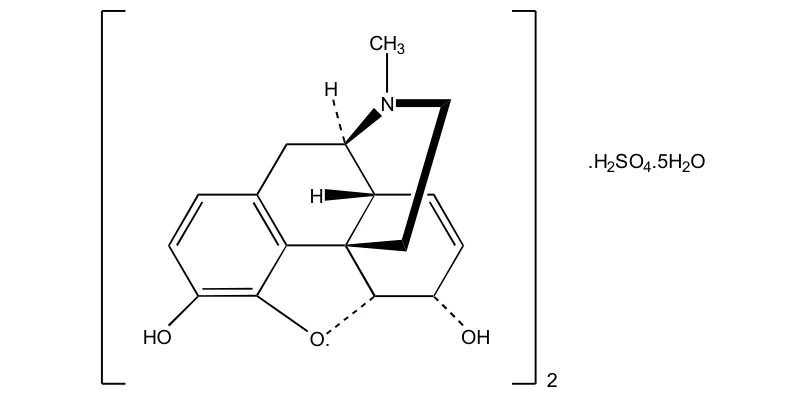
Non-proprietary name of the drug substance(s): Morphine hemisulfate 2.5 – hydrate
Chemical name: 7,8-Didehydro-4,5-epoxy-17-methylmorphinan-3,6-diol sulphate salt (2:1) pentahydrate
Molecular formula and molecular mass: C34H40N2O10S . 5H2O, 758.84
Structural formula:
Physicochemical properties:
Description: White crystalline powder consisting of acicular crystals or cubical masses.
Solubility: Soluble in water, very slightly soluble in alcohol, practically insoluble in toluene. Specific Optical Rotation: -107° to -110°, determined on a 20 mg/mL aqueous solution, calculated with reference to the anhydrous, ethanol-free substance.
Pharmaceutical standard: Ph. Eur.
14. Clinical Trials
The clinical trial data on which the original indication was authorized is not available.
16. Non-Clinical Toxicology
No animal studies have been performed to evaluate the carcinogenic potential of Morphine Sulfate Extended-Release Capsules.
No studies have been performed to evaluate the genotoxic potential of Morphine Sulfate Extended-Release Capsules.
No dedicated animal fertility studies have been performed for Morphine Sulfate Extended-Release Capsules.
There is considerable species to species variation in the acute toxicity of morphine in animal species. Patients receiving morphine may exhibit tolerance, psychological dependence, and physical
dependence. Overdosage of morphine can cause respiratory depression and death even in patients who have developed tolerance. Physical dependence may result from continued administration of morphine which is closely related to tolerance. Miosis will usually continue to be exhibited by individuals who are morphine dependent. Withdrawal symptoms will result if morphine is abruptly discontinued or if an opiate antagonist is administered. If the patient has received 240 mg or more of morphine hydrochloride for 30 days or longer a severe abstinence syndrome occurs. Mothers who are physically dependent on opiate agonists will give birth to neonates who may also be opiate dependent. These neonates will usually exhibit withdrawal symptoms from 1 - 4 days after birth.