


Product Monograph - M.O.S. SR Tablets 30mg
INDICATIONS:
Adults:
M.O.S.-SR (Morphine Hydrochloride) is indicated for the management of pain severe enough to require daily, continuous, long-term opioid treatment, and:
- that is opioid-responsive; and,
- for which alternative treatment options are inadequate.
M.O.S.-SR is not indicated as an as-needed (prn) analgesic.
Geriatrics (> 65 years of age):
In general, dose selection for an elderly patient should be cautious, usually starting at the low end of the dosing range, reflecting the greater frequency of decreased hepatic, renal, or cardiac function, concomitant disease or other drug therapy.
Pediatrics (< 18 years of age):
The safety and efficacy of M.O.S.-SR has not been studied in the pediatric population. Therefore, the use of M.O.S.-SR is not recommended in patients under 18 years of age.
CONTRAINDICATIONS:
M.O.S.-S.R. (Morphine Hydrochloride) is contraindicated in:
Patients who are hypersensitive to the active substance (Morphine Hydrochloride) or other opioid analgesics or to any ingredient in the formulation. For a complete listing, see the DOSAGE
FORMS, COMPOSITION AND PACKAGING section of the Product Monograph.
- In patients with known or suspected mechanical gastrointestinal obstruction (e.g., bowel obstruction, strictures) or any diseases/conditions that affect bowel transit (e.g., ileus of any type).
- Patients with suspected surgical abdomen (e.g., acute appendicitis or pancreatitis).
- Patients with mild, intermittent or short duration pain that can be managed with other pain medications.
- The management of acute pain.
- Patients with acute asthma or other obstructive airway, and status asthmaticus.
- Patients with acute respiratory depression, elevated carbon dioxide levels in the blood, and cor pulmonale.
- Patients with acute alcoholism, delirium tremens, and convulsive disorders.
- Patients who consume alcohol, or any medications containing alcohol
- Patients with severe CNS depression, increased cerebrospinal or intracranial pressure, and head injury.
- Patients with delirium tremens; convulsive disorders.
- Patients taking monoamine oxidase (MAO) inhibitors (or within 14 days of such therapy).
- Women who are breast-feeding, pregnant, or during labour and delivery.
WARNINGS AND PRECAUTIONS:
SERIOUS WARNINGS AND PRECAUTIONS
Limitation of Use
Because of the risks of addiction, abuse, and misuse with opioids, even at recommended doses and because of the greater risks of overdose and death with extended-release opioid formulations, M.O.S.-SR should only be used in patients for whom alternative treatment options are ineffective or not tolerated (e.g., non-opioid analgesics), or would be otherwise inadequate to provide sufficient management of pain (e.g., immediate-release opioids) ( see DOSAGE AND ADMINISTRATION).
Addiction, Abuse, and Misuse
M.O.S.-SR poses risks of opioid addiction, abuse and misuse, which can lead to overdose and death. Each patient’s risk should be assessed prior to prescribing M.O.S.-SR and all patients should be monitored regularly for the development of these behaviours or conditions (see WARNINGS AND PRECAUTIONS). M.O.S.-SR should be stored securely to avoid theft or misuse.
Life-threatening Respiratory Depression
Serious life-threatening or fatal respiratory depression may occur with use of M.O.S.-SR. Patients should be monitored for respiratory depression, especially during initiation of M.O.S.-SR or following a dose increase. M.O.S.-SR should be swallowed whole, crushing, chewing or dissolving M.O.S.-SR slow release tablets can cause rapid release and absorption of a potentially fatal dose of morphine hydrochloride.
Accidental Exposure
Accidental consumption of even one dose of M.O.S.-SR especially by children can result in a fatal overdose of morphine hydrochloride (see DOSAGE AND ADMINISTRATION subsection Disposal, for instructions on proper disposal).
Neonatal Opioid Withdrawal Syndrome
Prolonged maternal use of M.O.S.-SR during pregnancy can result in neonatal opioid withdrawal syndrome, which may be life-threatening (see WARNINGS AND PRECAUTIONS).
Interaction with Alcohol
The co-ingestion of alcohol with M.O.S.-SR may result in increased plasma levels and a potentially fatal overdose of morphine hydrochloride (see WARNINGS AND PRECAUTIONS and DRUG INTERACTIONS).
Addiction, Abuse and Misuse
M.O.S.-SR is a potential drug of abuse and misuse, which can lead to overdose and death. Therefore M.O.S.-SR should be prescribed and handled with extreme caution as is appropriate to drugs having potential for abuse. Patients should be assessed for their clinical risks for opioid abuse or addiction prior to being prescribed opioids. All patients receiving opioids should be routinely monitored for signs of misuse or abuse.
Opioids such as M.O.S.-SR, should be used with particular care in patients with a history of alcohol and illicit/prescription drug abuse. However concerns about drug abuse, addiction and diversion should not prevent the proper management of pain.
Dependence/Tolerance:
As with other opioids, tolerance and physical dependence may develop upon repeated administration of M.O.S.-SR and there is a potential for development of psychological dependence.
Physical dependence and tolerance reflect the neuroadaptation of the opiate receptors to chronic exposure to an opiate and are separate and distinct from abuse and addiction. Tolerance as well as physical dependence, may develop upon repeated administration of opioids, and are not by themselves evidence of an addictive disorder or abuse.
Patients on prolonged therapy should be tapered gradually from the drug if it is no longer required for pain control. Following abrupt discontinuation of morphine therapy or upon administration of an opioid antagonist, withdrawal symptoms may occur.
Cardiovascular
Morphine administration can cause severe hypotension with concurrent administration of such drugs as phenothiazines or certain anaesthetics, or in patients whose ability to maintain adequate blood pressure is compromised by reduced blood volume.
Gastrointestinal
The administration of morphine may obscure the diagnosis or clinical course in patients with acute abdominal conditions.
Neurologic
Interactions with Central Nervous System Depressants (Including Alcohol):
The depressant effects of morphine are potentiated by other CNS depressants. M.O.S.-SR should be used with caution and in a reduced dosage during concomitant administration with other opioid analgesics, general anesthetics, phenothiazines and other tranquilizers, sedatives-hypnotics, tricyclic antidepressants, antipsychotics, antihistamines, benzodiazepines, centrally-active anti-emetics and other CNS depressants including alcohol. Respiratory depression, hypotension and profound sedation, coma or death may result. When such combination therapy in contemplated, substantial reduction in the dose of one or both agents should be considered and patients should be carefully monitored (see DRUG INTERCATIONS).
Head injury:
The respiratory depressant effects of morphine, and the capacity to elevate cerebrospinal fluid pressure, may be greatly increased in the presence of an already elevated intracranial pressure produced by trauma. Also, morphine may produce confusion, miosis, vomiting and other side effects which obscure the clinical course of patients with head injury. In such patients, morphine must be used with extreme caution and only if it is judged essential.
Neonatal Opioid withdrawal Syndrome (NOWS)
Prolonged maternal use of opioids during pregnancy can result in withdrawal signs in the neonate. Neonatal opioid withdrawal syndrome, unlike opioid withdrawal syndrome in adults may be life-threatening.
Neonatal opioid withdrawal syndrome presents as irritability, hyperactivity and abnormal sleep pattern, high pitched cry, tremor, vomiting, diarrhea and failure to gain weight. The onset, duration and severity of neonatal opioid withdrawal syndrome vary based on the specific opioid used, duration of use, timing and amount of last maternal use, and rate of elimination of the drug in the newborn.
M.O.S.-SR is contraindicated in pregnant women (see CONTRAINDICATIONS).
Respiratory Depression
Serious life-threatening or fatal respiratory depression has been reported with the use of opioids, even when used as recommended. Respiratory depression from opioid use, if not immediately recognized and treated, may lead to respiratory arrest and death. Carbon dioxide (CO2) retention from opioid-induced respiratory depression can exacerbate the sedating effects of opioids.
While serious, life-threatening, or fatal respiratory depression can occur at any time during the use of M.O.S.-SR, the risk is greatest during the initiation of therapy or following a dose increase. Patients should be closely monitored for respiratory depression when initiating therapy with M.O.S.-SR and following dose increases.
To reduce the risk of respiratory depression, proper dosing and titration of M.O.S.-SR are essential. Over-estimating the M.O.S.-SR dose when converting patients from another opioid product can result in fatal overdose with the first dose.
The subjective and respiratory depressant actions of morphine can be antagonized by severe pain. These effects may quickly become manifest if pain would suddenly subside. Patients scheduled for cordotomy or other interruption of pain transmission pathways should not receive morphine within 24 hours of the procedure.
Morphine should be used with extreme caution in patients with substantially decreased respiratory reserve, pre-existing respiratory depression, hypoxia or hypercapnia. Such patients are often less sensitive to the stimulatory effects of carbon dioxide on the respiratory centre and the respiratory depressant effects of morphine may reduce respiratory drive to the point of apnea.
Occupational Hazards: Morphine may impair the mental and/or physical abilities required for the performance of potentially hazardous tasks such as driving a car or operating machinery. Morphine in combination with other opioid analgesics, phenothiazines, sedative-hypnotics and alcohol has additive depressant effects.
The patient should be cautioned accordingly.
Special Populations
Pregnant Women:
Prolonged maternal use of opioids during pregnancy can result in withdrawal signs in the neonate. Neonatal opioid withdrawal syndrome in adults may be life-threatening (see WARNINGS AND PRECAUTION – NEONATAL OPIOID WITHDRAWAL SYNDROME).
M.O.S.-SR is contraindicated in pregnant women (see CONTRAINDICATIONS).
Use during Labor/Delivery and in Nursing Mothers:
Morphine crosses the placenta and its administration during labour can produce respiratory depression in the neonate. Morphine has been detected in human breast milk, hence morphine should not be administered to a nursing mother.
Geriatrics (> 65 years of age):
In general, dose selection for an elderly patient should be cautious, usually starting at the low end of the dosing range, reflecting the greater frequency of decreased hepatic, renal, or cardiac function, concomitant disease or other drug therapy.
Morphine should also be given with caution, and in reduced dosages, to certain patients, such as debilitated patients and those with severe impairment of hepatic or renal function, hypothyroidism, Addison's disease, and prostatic hypertrophy or urethral stricture.
Pediatrics (< 18 years of age):
The safety and efficacy of M.O.S.-SR has not been studied in the pediatric population. Therefore, the use of M.O.S.-SR is not recommended in patients under 18 years of age.
DRUG INTERACTIONS:
The depressant effects of morphine are potentiated by other CNS depressants such as alcohol, other opioids, sedatives, hypnotics, anti-histaminics or psychotropic drugs (e.g. MAO inhibitors, phenothiazines, butyrophenones, and tricyclic antidepressants). Naltrexone blocks the therapeutic effects of morphine and will precipitate withdrawal symptoms if administered to a patient physically dependent on morphine.
Naloxone antagonizes the analgesic, CNS, and respiratory depressant effects of morphine. Morphine may antagonize the effects of metoclopramide on gastrointestinal motility. Concurrent use of hydroxyzine may result in increased analgesia as well as increased CNS depressant and hypotensive effects. Premedication or intra-anaesthetic use of neuroleptics with morphine may increase the risk of respiratory depression.
Drug-lifestyle Interaction
The concomitant use of alcohol should be avoided (see WARNINGS AND PRECAUTIONS, Serious Warnings and Precautions Box).
ADVERSE REACTIONS:
The major hazards associated with morphine, as with other opioid analgesics, are respiratory depression and, to a lesser degree, circulatory depression. Respiratory arrest, shock and cardiac arrest have occurred following oral or parenteral use of morphine.
Most Common Adverse Effects Requiring Medical Attention: The most frequently observed side effects of opioid analgesics such as morphine are sedation, nausea and vomiting, constipation and sweating.
Sedation: Most patients experience initial drowsiness partly for pharmacokinetic reasons and partly because patients often recuperate from prolonged fatigue after the relief of persistent pain. Drowsiness usually clears in three to five days and is usually not a reason for concern providing that it is not excessive, or associated with unsteadiness or confusional symptoms. If excessive sedation persists the reason for it must be sought. Some of these are: concomitant sedative medications, hepatic or renal failure, exacerbated respiratory failure, higher doses than tolerated in an older patient, or the patient is actually more severely ill than realized. If it is necessary to reduce the dose, it can be carefully increased again after three or four days if it is obvious that the pain is not being well controlled. Dizziness and unsteadiness may be caused by postural hypotension particularly in elderly or debilitated patients. It can be alleviated if the patient lies down. Because of the slower clearance in patients over 50 years of age, an appropriate dose in this age group may be as low as half or less the usual dose in the younger age group.
Nausea and Vomiting: Nausea and vomiting occur frequently after single doses of opioids or as an early unwanted effect of regular opioid therapy. When instituting prolonged therapy for chronic pain the routine prescription of antiemetic should be considered. Patients taking the equivalent of a single dose of 20 mg or more of morphine every 4 hours (60 mg M.O.S.-SR every 12 hours) usually require an antiemetic during early therapy. Small doses of prochlorperazine or haloperidol are the most frequently prescribed antiemetics. Nausea and vomiting tend to lessen in a week or so but may persist due to opioid-induced gastric stasis. In such patients, metoclopramide is often useful.
Constipation: Practically all patients become constipated while taking opioids on a persistent basis. In some instances, particularly the elderly or bedridden patients may become impacted. It is essential to caution the patients in this regard and to institute an appropriate regimen of bowel management at the start of prolonged opioid therapy. Softeners, laxatives and other appropriate measures should be used as required.
Other adverse reactions include:
Cardiovascular: Supra-ventricular tachycardia, postural hypotension, palpitations, faintness and syncope.
Central Nervous System: Euphoria, dysphoria, weakness, insomnia, dizziness, confusional symptoms and occasional hallucinations.
Gastrointestinal: Dry mouth, anorexia, constipation, cramps, taste alterations and biliary tract cramps.
Genitourinary: Urinary retention or hesitance, reduced libido or potency.
Endocrine: A syndrome of inappropriate antidiuretic hormone secretion characterized by hyponatremia secondary to decreased free-water excretion may be prominent (monitoring of electrolytes may be necessary).
Allergy: Pruritus, urticaria, other skin rashes and edema.
Withdrawal (Abstinence) Syndrome: Physical dependence with or without psychological dependence tends to occur on chronic administration. An abstinence syndrome may be precipitated when opioid administration is discontinued or opioid antagonists administered. The following withdrawal symptoms may be observed after opioids are discontinued: body aches, diarrhea, gooseflesh, loss of appetite, nervousness or restlessness, runny nose, sneezing, tremors or shivering, stomach cramps, nausea, trouble with sleeping, unusual increase in sweating and yawning, weakness, tachycardia and unexplained fever. With appropriate medical use of opioids and gradual withdrawal from the drug, these symptoms are usually mild.
SYMPTOMS AND TREATMENT OF OVERDOSAGE
Symptomatology
Serious morphine overdosage is characterized by respiratory depression (reduced respiratory rate and/or tidal volume; Cheyne-Stokes respiration; cyanosis), extreme somnolence progressing to stupor or coma, flaccidity of skeletal muscle, cold or clammy skin, and sometimes hypotension and bradycardia. Severe overdosage may result in apnea, circulatory collapse, cardiac arrest and death.
Treatment
Primary attention should be given to the establishment of adequate respiratory exchange through provision of a patent airway and controlled or assisted ventilation. The opioid antagonist naloxone hydrochloride is a specific antidote against respiratory depression due to overdosage or as a result of unusual sensitivity to morphine. An appropriate dose of one of the antagonists should therefore be administered, preferably by the intravenous route. The usual initial iv adult dose of naloxone is 0.4 mg or higher. Concomitant efforts at respiratory resuscitation should be carried out. Since the duration of action of morphine, particularly sustained release formulations, may exceed that of the antagonist, the patient should be under continued surveillance and doses of the antagonist should be repeated as needed to maintain adequate respiration.
An antagonist should not be administered in the absence of clinically significant respiratory or cardiovascular depression. Oxygen, intravenous fluids, vasopressors and other supportive measures should
be used as indicated.
In an individual physically dependent on opioids, the administration of the usual dose of opioid antagonist will precipitate an acute withdrawal syndrome. The severity of this syndrome will depend on the degree of physical dependence and the dose of antagonist administered. The use of opioid antagonists in such individuals should be avoided if possible. If an opioid antagonist must be used to treat serious respiratory depression in the physically dependent patient, the antagonist should be administered with extreme care by using dosage titration, commencing with 10 or 20% of the usual recommended initial dose.
Evacuation of gastric contents may be useful in removing unabsorbed drug, particularly when a sustained release formulation has been taken.
DOSAGE AND ADMINISTRATION:
M.O.S.-SR should only be used in patients for whom alternative treatment options are ineffective or not tolerated (e.g, non-opioid analgesics), or would be otherwise inadequate to provide sufficient management of pain (e.g., immediate-release opioids).
M.O.S.-SR should be swallowed whole; crushing, shewing or dissolving M.O.S.-SR slow release tablets can cause rapid release and absorption of a potentially fatal dose of morphine hydrochloride (see WARNINGS AND PRECAUTIONS).
Administration and dosing of morphine should be individualized bearing in mind the properties of the drug. In addition, the nature and severity of the pain or pains experienced, and the total condition of the patient must be taken into account. Of special importance is other medication given previously or concurrently.
As with other strong opioid analgesics, use of morphine for the management of persistent pain should be preceded by a thorough assessment of the patient and diagnosis of the specific pain or pains and their causes. Use of opioids for the relief of chronic pain, including cancer pain, all important as it may be, should be only one part of a comprehensive approach to pain control including other treatment modalities or drug therapy, non-drug measures and psychosocial support.
For essential information on the important details of the management of cancer pain, the reader may wish to consult the following resource:
Cancer Pain: A Monograph on the management of cancer pain. Health and Welfare Canada (reference no. 17).
Initial Adult Dose: Individual dosing requirements vary considerably based on each patient's age, weight, severity of pain, and medical and analgesic history.
The most frequent initial dose is 30 mg M.O.S.-SR every 12 hours.
Patients over the age of 50 tend to require much lower doses of morphine than in the younger age group. In elderly and debilitated patients and those with impaired respiratory function or significantly decreased renal function, the initial dose should be one half the usual recommended dose.
Patients currently receiving other oral morphine formulations may be transferred to M.O.S.-SR at the same total daily morphine dosage equally divided into two 12 hourly M.O.S.-SR doses.
For patients who are receiving an alternate opioid, the "oral morphine equivalent" of the analgesic presently being used should be determined. Having determined the total daily dosage of the present analgesic, the following equivalence table can be used to calculate the approximate daily oral morphine dosage that should provide equivalent analgesia. This total daily oral morphine dosage should then be equally divided in two 12 hourly M.O.S.-SR doses.
(1)References: Cancer Pain: A Monograph on the Management of Cancer Pain, Health and Welfare
Canada, 1984.
Foley, K.M., New Engl. J. Med. 313: 84-95, 1985.
Aronoff, G.M. and Evans, W.O., In: Evaluation and Treatment of Chronic Pain, 2nd Ed., G.M. Aronoff (Ed.), Williams and Wilkins, Baltimore, pp. 359-368, 1992.
TABLE 1 OPIOID ANALGESICS: APPROXIMATE ANALGESIC EQUIVALENCES(1) | |||
| DRUG | Equivalent Dose (mg)(2) (compared to morphine 10 mg IM) | Duration of Action (hours) | |
| Parenteral | Oral | ||
Strong Opioid Agonists: Morphine (single dose) (chronic dose) Hydromorphone Anileridine Levorphanol Meperidine(4) Oxymorphone Methadone(5) Heroin | 10 10 1.5-2 25 2 75 1.5 5-8 | 60 20-30(3) 6-7.5 75 4 300 5 (rectal) 10-15 | 3-4 3-4 2-4 2-3 4-8 1-3 3-4 3-4 |
Weak Opioid Agonists: Codeine Oxycodone Propoxyphene | 120 5-10 50 | 200 10-15 100 | 3-4 2-4 2-4 |
Mixed Agonist-Antagonists(6): Pentazocine(4) Nalbuphine Butorphanol | 60 10 2 | 180 | 3-4 3-6 3-4 |
Cherny, N.I. and Portenoy, R.K., In: Textbook of Pain, 3rd Ed., P.D. Wall and R.
Melzack (Eds.), Churchill Livingstone, London, pp. 1437-1467, 1994. (2)Most of these data were derived from single-dose, acute pain studies and should be considered an approximation for selection of doses when treating chronic pain.
(3)For acute pain, the oral dose of morphine is six times the injectable dose. However, for chronic dosing, this ratio becomes 2 or 3:1, possibly due to the accumulation of active metabolites. (4)These drugs are not recommended for the management of chronic pain.
(5)Extremely variable equianalgesic dose. Patients should undergo personalized titration starting at an equivalent to 1/10 of the morphine dose.
(6)Mixed agonist-antagonists can precipitate withdrawal in patients on pure opioid agonists.
Dose titration:
Dose titration is the key to success with morphine therapy. PROPER OPTIMIZATION OF DOSES SCALED TO THE RELIEF OF THE INDIVIDUAL'S PAIN SHOULD AIM AT THE REGULAR ADMINISTRATION OF THE LOWEST DOSE OF MORPHINE WHICH WILL MAINTAIN THE PATIENT FREE OF PAIN AT ALL TIMES. Dose adjustments should be based on the patient's clinical response. Higher doses may be justified in some patients to cover periods of physical activity.
Because of the sustained release properties of M.O.S.-SR, dosage adjustments should generally be separated by 48 hours. If dose increments turn out to be required, they should be proportionately greater at the lower level (in terms of percentage of previous dose), than when adjusting a higher dose. The usual recommended dose (q12h) increments are 30, 60, 90, 120, 150, 180, 210 mg. Above the 210 mg/dose (420 mg/day) increments should be by 30 - 60 mg/dose.
M.O.S.-SR tablets are designed to allow 12 hourly dosing. If "breakthrough" pain repeatedly occurs at the end of a dose interval, it is generally an indication for a dosage increase, not more frequent administration. However, where judged necessary for optimization of drug effects, M.O.S.-SR may be administered q8h. More frequent (than q8h) administration of M.O.S.-SR is not recommended.
Adjustment or reduction of dosage:
During the first two or three days of effective pain relief, the patient may exhibit drowsiness or sleep for prolonged periods. This can be misinterpreted as the effect of excessive analgesic dosing rather than the first sign of relief in a pain-exhausted patient. The dose, therefore, should be maintained for at least three days before reduction, provided the sedation is not excessive or associated with unsteadiness and confusional symptoms, and respiratory activity and other vital signs are adequate. If excessive sedation persists, the reason (s) for such an effect must be sought. Some of these are: concomitant sedative medications, hepatic or renal failure, exacerbated respiratory failure, higher doses than tolerated by an older patient, or the patient is actually more severely ill than realized. If it is necessary to reduce the dose, it can be carefully increased again after three or four days if it is obvious that the pain is not being well controlled.
Following successful relief of severe pain, periodic attempts to reduce the opioid dose should be made. Smaller dose or complete discontinuation of the opioid analgesic may become feasible due to a change in the patient's condition or improved mental state.
M.O.S.-SR (MORPHINE HYDROCHLORIDE SLOW RELEASE TABLETS) SHOULD BE SWALLOWED INTACT, NOT CHEWED, CRUSHED OR BROKEN.
Opioid agents do not relieve effectively dysesthetic pain, post-herpetic neuralgia, stabbing pains, activity-related pain, and some forms of headache. This is not to say that patients with advanced cancer suffering from some of these forms of pain should not be given an adequate trial of opiate analgesics, but it may be necessary to refer such patients at an early time for other forms of pain therapy. Pain without nociception is usually not opioid-responsive.
Disposal
M.O.S.-SR should be kept in a safe place, out of the sight and reach of children before, during and after use. M.O.S.-SR should not be used in front of children, since they may copy these actions.
Unused of expired M.O.S.-SR should be properly disposed of as soon as it is no longer needed to prevent accidental exposure to others, including children or pets. If temporary storage is required before disposal, a sealed child-proof container, such as a biohazard waste container or lockable medication box could be obtained from a pharmacy.
M.O.S.-SR should never be disposed of in household trash. Disposal via the pharmacy take back program is recommended.
AVAILABILITY
M.O.S.-SR: Tablets
M.O.S.-SR-30: Each blue, round, biconvex, film-coated, slow release tablet printed 30 on one side, contains: morphine HCl 30 mg. Nonmedicinal ingredients: microcrystalline cellulose, magnesium stearate, simetry and talc. Bottles of 50.
M.O.S.-SR-60: Each red, round, biconvex film-coated, slow release tablet printed 60 on one side, contains: morphine HCl 60 mg. Nonmedicinal ingredients: microcrystalline cellulose, magnesium stearate, simetry and talc. Bottles of 50.
Store tablets below 30oC (86oF). Protect from light.
CHEMISTRY AND PHARMACOLOGY
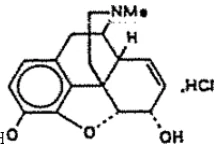
Chemical Name: 7,8-didehydro-4,5-epoxy-17-methylmorphinan-3,6-diol hydrochloride (1:1) (salt)
trihydrate.
Chemical Structure:
H
Molecular Formula: C17H19NO3. HCl. 3H2O
Molecular Weight: 375.9 (trihydrate)
321.8 (anhydrous)
Description: Morphine hydrochloride is a white, odourless, crystalline powder or silky crystals. It is soluble in water and in ethanol, and practically insoluble in chloroform and in ether.
Pharmacology
Morphine is an opiate agonist which exerts its principal pharmacologic effect on the CNS and on the intestines. The drug interacts as agonist at specific receptor binding sites. It is a more potent agonist at the μ-receptor (localized in pain modulating regions of the CNS) than at the k-receptor (localized in the deep layers of the cerebral cortex). Agonist activity at the μ-or k-receptor can result in analgesia, miosis, and/or decreased body temperature. The opiate agonists act at several sites within the CNS involving several systems of neurotransmitters to produce analgesia, but the precise mechanism of action has not been fully elucidated. Opiate agonists do not alter the threshold or responsiveness of afferent nerve endings to noxious stimuli nor the conduction of impulses along peripheral nerves; instead, the drugs alter the perception of pain at the spinal cord and higher levels in the CNS and the patient's emotional response to pain. In addition to analgesia, the effects of opiate agonists on the CNS cause suppression of the cough reflex, respiratory depression, drowsiness, sedation, change in mood, euphoria, dysphoria, mental clouding, nausea, vomiting, and EEG changes. Dosages higher than usual analgesic dosages result in anaesthesia. Morphine produces respiratory depression by a direct effect on the respiratory centres in the brain stem resulting in decreased sensitivity and responsiveness to increases in serum carbon dioxide tension (Pco2). Gastric, biliary, and pancreatic secretions are decreased by morphine and the drug delays digestion. Although the precise action of clinical doses of opiate agonists on GI smooth muscle tone is controversial, the ultimate result is constipation. Morphine increases smooth muscle tone in the antral portion of the stomach, the small intestine (particularly the duodenum), the large intestine, and the sphincters. Tone is increased in the biliary tract; spasms (particular of the sphincter of Oddi) and an increase in biliary tract pressure may result. The drug also increases smooth muscle tone in the urinary tract.
Morphine is well absorbed following oral administration. The drug is rapidly removed from the blood stream and distributed in decreasing order of concentration into skeletal muscle, kidneys, liver, intestinal tract, lungs, spleen, and brain. The drug readily penetrates the placental barrier, and small amounts can be
distributed into the milk of nursing women. Analgesia usually occurs within one hour following administration of M.O.S.-SR tablets and is maintained thereafter. Within 3 to 4 hours post-dose, maximum blood levels of morphine are attained at steady state and therapeutic levels tend to persist over a period of 12 hours.
Morphine is metabolized principally in the liver and undergoes conjugation with glucuronic acid at the 3-hydroxyl group. Secondary conjugation may also occur at the 6-hydroxyl group to form the 3,6-diglucuronide. The mean elimination half-life of morphine is 2 to 3 hours with great inter-patient variability. Morphine is excreted in urine mainly as morphine-3-glucuronide and smaller amounts of morphine-3,6-diglucuronide and unchanged drug. About 90% of total urinary excretion occurs within 24 hours after the last dose is given. Approximately 7-10% of a dose of morphine is excreted in feces with a large portion of this excreted via the bile. Conjugated morphine excreted in the bile may be hydrolysed and reabsorbed from the large bowel.
TOXICOLOGY
The acute toxicity of morphine in animal species varies considerably from species to species. Tolerance, psychological dependence, and physical dependence may occur in patients receiving morphine. Even in patients who have developed tolerance, an overdosage can cause respiratory depression and death. Continued administration of morphine may lead to physical dependence which is closely related to tolerance. Individuals who are morphine dependent will usually continue to exhibit miosis. If the drug is abruptly discontinued, or an opiate antagonist is administered, withdrawal symptoms will result. A severe abstinence syndrome occurs if the patient has received 240 mg or more of morphine hydrochloride for 30 days or longer. Neonates born to mothers physically dependent on opiate agonists may also be opiate dependent and usually exhibit withdrawal symptoms from 1 - 4 days after birth.
SELECTED REFERENCES:
- 1. Brooks I, De Jager R, Blumenreich M, George E, Savarese JJ: Principles of cancer pain management. Use of long-acting oral morphine. J Fam Practice 1989; 28:3:275-280.
- 2. Brunk S, Delle M: Morphine metabolism in man. Clin Phar Ther 1974; 16:51-57.
- 3. Caillé G, Besner J-G, Ayoub J, Jolivet J, Talon C: Clinical and pharmacokinetic evaluation of 30 mg and 60 mg sustained release morphine tablets. Unpublished. Data on file: ICN Canada Limited,Montréal, Canada 1987.
- 4. Fell D, Chmielewski A, Smith G: Postoperative analgesia with controlled-release morphine sulphate: comparison with intramuscular morphine. Brit Med J 1982; 285:92-94.
- 5. Foley KM: The treatment of cancer pain. N Eng J Med 1985; 313:84-95.
- 6. Hanks GW, Twycross RG, Bliss JM: Controlled release morphine tablets: a double-blind trial in patients with advanced cancer. Anaesthesia 1987; 42:840-844.
- 7. Health and Public Policy Committee, American College of Physicians. Drug therapy of severe, chronic pain in terminal illness. Ann Intern Med 1983; 99:870-873.
- 8.
Houde RW: Rational use of narcotic analgesics for controlling cancer pain. Drug Ther Hosp 1980;
5:41-47.
- 9.
Jaffe JH, Martin WR: Opiate analgesics and antagonists. In: Gilman AG, Goodman LS, Gilman
A, editors: The Pharmacological Basis of Therapeutics. Macmillan Publishing Co, Inc, New York 1980: 494-534.
- 10.
Kager L, Ljungdahl J, Rane A, Sawe J: Per oral morphine treatment of pain in terminal cancer.
Lakartidningen 1979; 76:3411-3415.
- 11.
Kaiko RF: Age and morphine analgesia in cancer patients with postoperative pain. Clin Pharmacol
Ther 1980; 28:823-826.
- 12.
Misra AL: Factors affecting the action of narcotics. In: Adler ML, Manara L, Samanin R, editors:
Metabolism of opiates. Raven Press, New York 1978; 197-343.
- 13.
Moertel CG: Treatment of cancer pain with orally administered medications. JAMA 1980;
244:2448-2450.
- 14. Neumann PB, Henriksen H, Grosman N, Christensen CB: Plasma morphine concentrations during chronic oral administration in patients with cancer pain. Pain 1982; 13:247-252.
- 15. Rane A, et al: Pharmacological treatment of cancer pain with special reference to oral use of morphine. Acta Anaesth Scand 1982 Suppl 74:97-103.
- 16.
Sawe J, Dahlstrom B, Paalzow L, Rane A: Morphine kinetics in cancer patients. Clin Pharmacol
Ther 1981; 30:629-635.
- 17.
Scott JF: Cancer pain. A monograph on the management of cancer pain. Health and Welfare
Canada, 1984.
- 18. Simon EJ, Hiller JM: Opiate receptors. Annu Rev Pharmacol Toxicol 1978; 18:371-394.
- 19. Snyder SH: Receptors, neurotransmitters and drug responses. N Eng J Med 1979; 300:465-472.
- 20. Spector S, Vesell ES: Disposition of morphine in man. Science 1971; 174:421-422.
- 21. Twycross RG: Relief of terminal pain. Brit Med J 1975; 4:212-214.
- 22.
Twycross RG: Relief of pain. In: Saunder CM, editor: The management of terminal disease.
Edward Arnold, London 1978: 65-92.
- 23.
Twycross RG, York SA: Symptom control in far advanced cancer. Vol 1, Pain Relief. Pitman
Books, New York 1983.
- 24.
Vanderberghe HM, Soldin SJ, Macleod SM: Pharmacokinetics of morphine: A Review. Amer
Assoc Clin Chem 1982; Nov: 1-5.