


Product Monograph - Kisqali
RECENT MAJOR LABEL CHANGES
| 1 Indications | 2025-June |
|---|---|
| 4 Dosage and Administration, 4.2 Recommended Dose and Dosage Adjustment | 2025-June |
| 7 Warnings and Precautions, Cardiovascular, Hematologic, Hepatic/Biliary/Pancreatic, Monitoring and laboratory tests, Respiratory | 2025-June |
TABLE OF CONTENTS
Sections or subsections that are not applicable at the time of authorization are not listed.
RECENT MAJOR LABEL CHANGES .............................................................................................. 2
TABLE OF CONTENTS ................................................................................................................ 3
PART I: HEALTH PROFESSIONAL INFORMATION ....................................................................... 5
1 INDICATIONS ................................................................................................................. 5
1.1 Pediatrics ........................................................................................................... 5
1.2 Geriatrics ........................................................................................................... 5
2 CONTRAINDICATIONS ................................................................................................... 6
3 SERIOUS WARNINGS AND PRECAUTIONS BOX ............................................................. 6
4 DOSAGE AND ADMINISTRATION .................................................................................. 6
4.1 Dosing Considerations ........................................................................................ 6
4.2 Recommended Dose and Dosage Adjustment .................................................... 6
4.5 Missed Dose ..................................................................................................... 12
5 OVERDOSAGE.............................................................................................................. 12
6 DOSAGE FORMS, STRENGTHS, COMPOSITION AND PACKAGING ............................... 12
7 WARNINGS AND PRECAUTIONS .................................................................................. 13
7.1 Special Populations .......................................................................................... 19
7.1.1 Pregnant Women ......................................................................................... 19
7.1.2 Breast-feeding .............................................................................................. 19
7.1.3 Pediatrics ..................................................................................................... 20
7.1.4 Geriatrics ..................................................................................................... 20
8 ADVERSE REACTIONS .................................................................................................. 20
8.1 Adverse Reaction Overview ............................................................................. 20
8.2 Clinical Trial Adverse Reactions ........................................................................ 23
8.3 Less Common Clinical Trial Adverse Reactions ................................................. 30
8.4 Abnormal Laboratory Findings: Hematologic, Clinical Chemistry and Other Quantitative Data ........................................................................................................ 31
8.5 Post-Market Adverse Reactions ....................................................................... 35
9 DRUG INTERACTIONS .................................................................................................. 35
9.2 Drug Interactions Overview.............................................................................. 35
9.4 Drug-Drug Interactions..................................................................................... 36
9.5 Drug-Food Interactions .................................................................................... 40
9.6 Drug-Herb Interactions .................................................................................... 40
9.7 Drug-Laboratory Test Interactions.................................................................... 40
10 CLINICAL PHARMACOLOGY ......................................................................................... 40
10.1 Mechanism of Action ....................................................................................... 40
10.2 Pharmacodynamics .......................................................................................... 40
10.3 Pharmacokinetics ............................................................................................. 42
11 STORAGE, STABILITY AND DISPOSAL .......................................................................... 45
12 SPECIAL HANDLING INSTRUCTIONS ............................................................................ 45
PART II: SCIENTIFIC INFORMATION ........................................................................................ 46
13 PHARMACEUTICAL INFORMATION ............................................................................. 46
14 CLINICAL TRIALS .......................................................................................................... 47
14.1 Clinical Trials by Indication ................................................................................... 47
14.2 Comparative Bioavailability Studies ..................................................................... 71
15 MICROBIOLOGY .......................................................................................................... 72
16 NON-CLINICAL TOXICOLOGY ....................................................................................... 72
Patient Medication Information ............................................................................................. 78
PART I: HEALTH PROFESSIONAL INFORMATION
1 INDICATIONS
Early breast cancer
KISQALI® (ribociclib tablets) is indicated:
In combination with an aromatase inhibitor for the adjuvant treatment of adult patients with hormone receptor (HR)-positive, human epidermal growth factor receptor 2 (HER2)-negative stage II-III early breast cancer at high risk of recurrence.
In pre- or perimenopausal women, or men, the aromatase inhibitor should be combined with a luteinizing hormone-releasing hormone (LHRH) agonist.
Advanced or metastatic breast cancer
KISQALI® (ribociclib tablets) is indicated, in combination with:
- an aromatase inhibitor for the treatment of pre/perimenopausal or postmenopausal women, or men, with hormone receptor (HR)-positive, human epidermal growth factor receptor 2 (HER2)-negative advanced or metastatic breast cancer, as initial endocrine-based therapy;
- In pre/perimenopausal women, or men, the endocrine therapy should be combined with a luteinizing hormone releasing hormone (LHRH) agonist.
- fulvestrant for the treatment of postmenopausal women, with HR-positive, HER2-negative advanced or metastatic breast cancer, as initial endocrine-based therapy or following disease progression on endocrine therapy.
1.1 Pediatrics
Pediatrics (≤ 18 years of age):
Health Canada has not authorized an indication for pediatric use.
1.2 Geriatrics
Geriatrics (≥ 65 years of age):
Of the 2549 patients with early breast cancer who received KISQALI in the phase III study (NATALEE, ribociclib plus AI arm), 407 patients (16.0%) were ≥ 65 years of age.
Of 334 patients with advanced or metastatic breast who received KISQALI plus letrozole in the pivotal phase III study A2301, 150 patients (45%) were ≥ 65 years of age; no major differences in safety of KISQALI were observed between patients < 65 and ≥ 65 years of age. Of 483 patients who received KISQALI plus fulvestrant in the phase III study F2301, 226 patients (46.8%) were ≥65 years of age and 65 patients (13.5%) were ≥75 years of age. No major differences in safety of KISQALI were observed between these patients and younger patients (see 4 DOSAGE AND ADMINISTRATION).
2 CONTRAINDICATIONS
- Patients with hypersensitivity to this drug or to any ingredient in the formulation. For a complete listing, see 6 DOSAGE FORMS, STRENGTHS, COMPOSITION and PACKAGING.
- Patients with untreated congenital long QT syndrome, a QTcF interval of ≥450 msec at baseline, and those who are at significant risk of developing QTc prolongation (see 7 WARNINGS and PRECAUTIONS).
3 SERIOUS WARNINGS AND PRECAUTIONS BOX
Serious Warnings and Precautions
4 DOSAGE AND ADMINISTRATION
4.1 Dosing Considerations
Dose adjustment is required in patients with moderate and severe hepatic impairment (see 4.2 Recommended Dose and Dosage Adjustments, and 10.3 Pharmacokinetics)
Dose adjustment is required in patients with severe renal impairment (see 4.2 Recommended Dose and Dosage Adjustments, and 10.3 Pharmacokinetics).
Concomitant use of KISQALI should be avoided with strong CYP3A inhibitors. KISQALI dose adjustment is required if a strong CYP3A inhibitor must be co-administered (see 4.2 Recommended Dose and Dosage Adjustments, and 10.3 Pharmacokinetics ).
KISQALI can be taken with or without food (see 9.5 Drug-Food Interactions).
4.2 Recommended Dose and Dosage Adjustment
Treatment with KISQALI should only be prescribed by a physician experienced in the use of anticancer therapies.
Recommended dose
In men and premenopausal women, the aromatase inhibitor should be combined with a luteinizing hormone-releasing hormone (LHRH) agonist such as goserelin at a dose of 3.6 mg as injectable subcutaneous implant on day 1 of each 28-day cycle.
Early breast cancer
The recommended dose of KISQALI is 400 mg (2 x 200 mg film-coated tablets) taken orally, once daily for 21 consecutive days followed by 7 days off treatment resulting in a complete cycle of 28 days. KISQALI should be continued until completion of 3 years of treatment or until disease recurrence or unacceptable toxicity occurs.
In patients with early breast cancer, the endocrine therapy co-administered with KISQALI includes a non-steroidal aromatase inhibitor (NSAI) such as letrozole at a dose of 2.5 mg, taken once daily throughout the 28-day cycle or anastrozole at a dose of 1 mg taken once daily throughout the 28-day cycle.
For dosing and administration instructions of the co-administered endocrine therapy, refer to the applicable full prescribing information.
Advanced or metastatic breast cancer
The recommended dose of KISQALI is 600 mg (3 x 200 mg film-coated tablets) taken orally, once daily for 21 consecutive days followed by 7 days off treatment resulting in a complete cycle of 28 days.
When co-administered with KISQALI, the recommended dose of fulvestrant is 500 mg administered intramuscularly on days 1, 15 and 29, and once monthly thereafter. Refer to the Product Monograph for fulvestrant for detailed conditions of use.
For dosing and co-administration of KISQALI with an aromatase inhibitor refer to the applicable Product Monograph for detailed conditions of use.
Dose Adjustments for Adverse Drug Reactions
Management of severe or intolerable adverse drug reactions (ADRs) may require temporary dose interruption, reduction, or permanent discontinuation of KISQALI. If dose reduction is required, the recommended dose reduction guidelines for adverse drug reactions (ADRs) are listed in Table 1.
Table 1 Recommended dose modification guidelines for adverse drug reaction
| KISQALI | ||||
| Dose | Number of Tablets | |||
| Early breast cancer | ||||
| Starting dose | 400 mg/day | 2 x 200 mg tablets | ||
| Dose reduction | 200 mg/day* | 1 x 200 mg tablet | ||
| Advanced or metastatic breast cancer | ||||
| Starting dose | 600 mg/day | 3 × 200 mg tablets | ||
| First dose reduction | 400 mg/day | 2 × 200 mg tablets | ||
| Second dose reduction | 200 mg/day* | 1 × 200 mg tablet | ||
*If further dose reduction below 200 mg/day is required, discontinue the treatment.
Tables 2, 3, 4, 5 and 6 summarize recommendations for dose interruption, reduction, or discontinuation of KISQALI in the management of specific ADRs. Clinical judgment of the treating physician should guide the management plan of each patient based on individual benefit/risk assessment (see 7 WARNINGS AND PRECAUTIONS and 8 ADVERSE REACTIONS).
Table 2 Dose modification and management for neutropenia
| Neutropenia | Grade 1 or 2 (ANC1 1,000/mm3 – <LLN2) | Grade 3 (ANC1 500- <1,000/mm3) | Grade 3 febrile* neutropenia | Grade 4 (ANC1 <500/mm3) | |||
| No dose adjustment is required. | Interrupt KISQALI until recovery to Grade ≤2. Resume KISQALI at the same dose level. If toxicity recurs at Grade 3, interrupt KISQALI dose until recovery to Grade ≤2 , then resume KISQALI at the next lower dose level. | Interrupt KISQALI until recovery of neutropenia to Grade ≤2. Resume KISQALI at the next lower dose level. | Interrupt KISQALI until recovery to Grade ≤2. Resume KISQALI at the next lower dose level. | ||||
Perform Complete Blood Counts (CBC) before initiating treatment with KISQALI. After initiating treatment with KISQALI, monitor CBC every 2 weeks for the first 2 cycles, at the beginning of each of the subsequent 4 cycles, and as clinically indicated. | |||||||
*Grade 3 neutropenia with a single episode of fever >38.3ᵒC (or a sustained temperature 38ᵒC or above for more than one hour) Grading according to Common Terminology Criteria for Adverse Events (CTCAE) version 4.03. 1: absolute neutrophil count 2: lower limit of normal | |||||||
Table 3 Dose modification and management for hepatobiliary toxicity
| AST and/or ALT elevations from baseline*, without increase in total bilirubin above 2 x ULN | Grade 1 (>ULN – 3 x ULN) | Grade 2 (>3 to 5 x ULN) | Grade 3 (>5 to 20 x ULN) | Grade 4 (>20 x ULN) | ||||
| No dose adjustment is required. | Baseline* at <Grade 2: | Interrupt KISQALI until recovery to ≤ baseline grade, then resume at next lower dose level. If Grade 3 recurs, discontinue KISQALI. | Discontinue KISQALI | |||||
Interrupt KISQALI until recovery to ≤ baseline grade, then resume KISQALI at same dose level. If Grade 2 recurs, resume KISQALI at next lower dose level. ------------------------------ Baseline* at Grade 2: No dose interruption. | ||||||||
| Combined elevations in AST and/or ALT together with total bilirubin increase, in the absence of cholestasis | If patients develop ALT and/or AST >3 x ULN along with total bilirubin >2 x ULN irrespective of baseline grade, discontinue KISQALI. | |||||||
Perform LFTs before initiating treatment with KISQALI. After initiating treatment with KISQALI, monitor LFTs every 2 weeks for the first 2 cycles, at the beginning of each of the subsequent 4 cycles, and monitor periodically as clinically indicated. If Grade ≥2 abnormalities are observed, more frequent monitoring, for example, twice weekly, is recommended. | ||||||||
AST= aspartate aminotransferase - ALT= alanine aminotransferase *Baseline = prior to treatment initiation. Grading according to Common Terminology Criteria for Adverse Events (CTCAE) version 4.03. | ||||||||
Table 4 Dose modification and management for QT prolongation
| QTcF* prolongation | Early breast cancer |
|---|---|
| Advanced or metastatic breast cancer | |
| >480 ms and ≤500 ms | Interrupt KISQALI treatment and wait until QTcF resolves to ≤480ms |
| Resume at the same dose | Reduce to the next lower level dose |
| If QTcF >480ms recurs, interrupt KISQALI treatment and wait until QTcF resolves to ≤480ms, then resume at next lower level dose. | |
| >500 ms | Interrupt KISQALI treatment and wait until QTcF resolves to ≤480ms, then resume at next lower level dose. If QTcF > 500ms recurs, discontinue KISQALI. |
| Permanently discontinue KISQALI if QTcF interval is greater than 500 ms or shows a greater than 60 ms change from baseline and is associated with Torsade de Pointes or polymorphic ventricular tachycardia, unexplained syncope or signs/symptoms of serious arrhythmia. | |
Note: If further dose reductions are required at the 200 mg dose, KISQALI should be discontinued. Electrocardiograms (ECGs) should be assessed prior to initiation of treatment in all patients. | |
Repeat ECGs at approximately Day 14 of the first cycle and as clinically indicated.
In case of QTcF prolongation at any given time during treatment, more frequent ECG monitoring is recommended as clinically indicated.
*QTcF = QT interval corrected by Fridericia’s formula.
Table 5 Dose modification and management for ILD/Pneumonitis
| ILD/pneumonitis | Grade 1 (asymptomatic) | Grade 2 (symptomatic) | Grade 3 or 4 (severe) | |||
| No dose adjustment is required. Initiate appropriate medical therapy and monitor as clinically indicated. | Interrupt KISQALI until recovery to Grade ≤1, then resume KISQALI at the next lower dose level*. | Discontinue KISQALI | ||||
Grading according to CTCAE Version 4.03. * An individualized benefit-risk assessment should be performed when considering resuming KISQALI ILD = Interstitial Lung Disease | ||||||
Table 6 Dose modification and management for other toxicities*
| Other toxicities | Grade 1 or 2 | Grade 3 | Grade 4 |
| No dose adjustment is required. Initiate appropriate medical therapy and monitor as clinically indicated. | Interrupt KISQALI dose until recovery to Grade ≤1, then resume KISQALI at the same dose level. If Grade 3 recurs, resume KISQALI at the next lower dose level. | Discontinue KISQALI. | |
*Excluding neutropenia, hepatobiliary toxicity, QT interval prolongation and ILD/Pneumonitis. Grading according to Common Terminology Criteria for Adverse Events (CTCAE) Version 4.03. | |||
Refer to the Product Monograph for the co-administered aromatase inhibitor, fulvestrant or LHRH agonist for dose modification guidelines in the event of toxicity and other relevant safety information.
Dose modification for use of KISQALI with strong CYP3A inhibitors
Concomitant use of KISQALI with strong CYP3A inhibitors should be avoided and an alternative concomitant medication should be considered with low potential for CYP3A inhibition. If a strong CYP3A inhibitor must be co-administered, reduce the dose of KISQALI according to Table 7.
Table 7: Dose modifications for concomitant use with strong CYP3A inhibitors
| Indication | Co-administration with Strong CYP3A Inhibitors |
|---|---|
| Early breast cancer | Monitor for adverse reactions and, if necessary, reduce the KISQALI dose to 200 mg once daily |
| Advanced or metastatic breast cancer | Reduce the KISQALI dose to 400 mg once daily |
Due to inter-patient variability, the recommended dose adjustments may not be optimal in all patients, therefore close monitoring for ADRs is recommended.
If the strong inhibitor is discontinued, the KISQALI dose should be changed (after at least 5 elimination half-lives of the strong CYP3A inhibitor) to the dose used prior to the initiation of the strong CYP3A inhibitor (see 9.4 Drug-Drug Interactions).
Special populations
Patients with hepatic impairment:
The recommended dose modifications for patients with hepatic impairment are shown in Table 8 (see 10.3 Pharmacokinetics).
Table 8: Dose modification for hepatic impairment
| Indication | Mild hepatic impairment (Child-Pugh class A) | Moderate and severe hepatic impairment (Child-Pugh class B or C) |
|---|---|---|
| Early breast cancer | No dose adjustment is necessary | No dose adjustment is necessary |
| Advanced or metastatic breast cancer | No dose adjustment is necessary | KISQALI 400 mg once daily |
The efficacy and safety of KISQALI have not been studied in breast cancer patients with moderate and severe hepatic impairment; initiate KISQALI treatment in these patients only when perceived benefit outweighs potential risk.
Refer to the appropriate Product Monograph for the aromatase inhibitor, fulvestrant or the LHRH agonist for dose modifications related to hepatic impairment.
Patients with renal impairment:
No dose adjustment is necessary in patients with mild or moderate renal impairment. A starting dose of 200 mg is recommended for patients with severe renal impairment (10.3 Pharmacokinetics).
KISQALI has not been studied in breast cancer patients with severe renal impairment.
Caution should be used in patients with severe renal impairment with close monitoring for signs of toxicity; initiate KISQALI treatment in these patients only when perceived benefit outweighs potential risk.
Pediatrics (< 18 years of age): Health Canada has not authorized an indication for pediatric use.
Geriatrics (≥ 65 years of age): No adjustment of the starting dose is required in patients over 65 years of age.
4.4 Administration
The recommended starting dose of KISQALI in early breast cancer is 400 mg once daily (2 tablets of 200 mg) and in advanced or metastatic breast cancer is 600 mg once daily (3 tablets of 200 mg). KISQALI should be taken orally, once a day for 21 consecutive days followed by 7 days off treatment.
KISQALI and aromatase inhibitors or fulvestrant should be taken at approximately the same time each day, preferably in the morning. KISQALI tablets should be swallowed whole (tablets should not be chewed, crushed or split prior to swallowing). Tablets that are broken, cracked, or otherwise not intact should not be ingested.
4.5 Missed Dose
If the patient vomits or misses a dose, no additional dose should be taken that day. They should take the next dose at the next scheduled time. If the patient misses a dose on any given day, the tablets for that missed dose should be discarded. The patient should resume their regular dosing schedule at the usual time on the following day until the 21-day treatment course is completed. Missed doses should not be taken during the 7 days off treatment.
5 OVERDOSAGE
There is limited experience with reported cases of KISQALI overdose in humans. Patients should be closely monitored for adverse drug reactions. General symptomatic and supportive measures, such as ECG monitoring, should be initiated in all cases of overdosage.
For management of a suspected drug overdose, contact your regional poison control centre.
6 DOSAGE FORMS, STRENGTHS, COMPOSITION AND PACKAGING
| Route of Administration | Dosage Form / Strength / Composition | Non-medicinal Ingredients |
| Oral | Tablets; 200 mg ribociclib (as ribociclib succinate) Strength: Each tablet contains 200 mg ribociclib (as ribociclib succinate) Medicinal ingredient: ribociclib succinate | No clinically relevant non-medicinal ingredients: Excipients colloidal silicon dioxide; crospovidone (Type A); iron oxide black; iron oxide red; lecithin (soy); low-substituted hydroxypropylcellulose; magnesium stearate; microcrystalline cellulose; polyvinyl alcohol (partially hydrolysed); talc; titanium dioxide; xanthan gum |
COMPOSITION:
KISQALI (ribociclib tablets) is a light greyish violet film-coated tablet, unscored, round, curved with beveled edge, debossed with “RIC” on one side and “NVR” on the other side.
PACKAGING:
KISQALI (ribociclib tablets) is supplied in unit dose blisters in the following pack sizes: 21, 42 and 63 tablets.
| KISQALI TABLETS | |
|---|---|
| Package Size | Package Configuration |
| Pack of 63: | Blister pack containing 21 tablets (3 tablets for 600mg dose). 3 Blister packs per outer container |
| Pack of 42: | Blister pack containing 14 tablets (2 tablets for 400 mg dose). 3 Blister packs per outer container |
| Pack of 21: | Blister pack containing 21 tablets (1 tablet for 200mg dose). 1 Blister pack per outer container |
7 WARNINGS AND PRECAUTIONS
Please see 3 SERIOUS WARNINGS AND PRECAUTIONS BOX.
Carcinogenesis and Mutagenesis
In the 2 year rat carcinogenicity study, increase incidence of adenocarcinoma in the uterus/cervix and follicular tumors in the thyroid glands of males have been observed.
These effects are related to prolonged hypoprolactinemia secondary to CDK4 inhibition of lactotrophic cell function in the pituitary gland, altering the hypothalamus-pituitary-gonadal axis. Considering important differences between rodents and humans with regard to synthesis and role of prolactin, it is not certain whether this mode of action is expected to have consequences in humans (see 16 NON-CLINICAL TOXICOLOGY).
Cardiovascular
QT interval prolongation
A concentration-dependent increase in QT interval has been demonstrated in patients treated with KISQALI.
For patients with early breast cancer who received 400 mg KISQALI, standard 12-lead ECG at appropriate intervals, including unscheduled measurements, were performed in the phase III clinical trial O12301C (NATALEE trial). The longest mean change from baseline was observed at the Cycle 1 Day 15 4-hour post-dose with a value of + 11.4 ms (See 10.2 Pharmacodynamics).
Clinically, notable QTcF > 480 ms were infrequent in the KISQALI plus AI arm (10 patients, 0.4%) vs. the AI alone arm (4 patients, 0.2%), which included 3 patients (0.1%) with a QTcF interval of > 500 ms in the KISQALI plus AI arm vs 1 patient (< 0.1%) in the AI alone arm. An increase of QTcF > 60 ms from baseline in QTcF interval was observed in 19 patients (0.8%) in the KISQALI plus AI arm vs 2 patients (0.1%) in the AI alone arm. There were no reported cases of sudden death or Torsade de Pointes.
In patients with advanced or metastatic breast cancer who received KISQALI 600 mg, ECG assessments during steady-state were collected on Cycle 1 Day 15 in the three phase III clinical studies E2301, F2301 and A2301 and were also collected on Cycle 3 Day 15 in study E2301 and Cycle 2 Day 15 in study F2301.
Overall, the longest mean change from baseline was observed at C1D15 4-hour post-dose with a value of +22.7 ms in the KISQALI plus AI group. The mean increase from baseline of approximately 19.6 msec (90% CI 18.0, 21.2) during steady-state treatment at 2 hours post-dosing on Day 15 in the phase III A2301 clinical trial (See 10.2 Pharmacodynamics). The median time to first occurrence of Grade 2/3/4 QT prolongation was 2.1 weeks approximating C1D15.
Pooled ECG data from phase III clinical studies E2301, F2301 and A2301, showed in the KISQALI arm, new QTcF > 480 ms in 55 patients (5.2%), which included 15 patients (1.4%) with a QTcF interval of > 500 ms. In the placebo arm, new QTcF > 480 ms was observed in 12 patients (1.5%), including 3 patients (0.4%) with a QTcF interval of > 500 ms. Increase in QTcF from baseline > 60 ms was observed in 61 (5.8%) and 3 (0.4%) patients in the KISQALI and placebo arms, respectively. One event of sudden death (0.3%) occurred during treatment with KISQALI plus letrozole in the phase III clinical trial (A2301) in a patient with Grade 2 QT prolongation and Grade 3 hypokalemia. No cases of sudden death were reported in studies E2301 or F2301.
An ECG should be assessed prior to initiation of treatment with KISQALI, repeated ECG at approximately Day 14 of the first cycle, and then as clinically indicated.
Treatment with KISQALI is contraindicated in patients with untreated congenital long QT syndrome; baseline prolongation of the QTc interval; and patients at risk of developing QTc prolongation (for example, uncontrolled, significant cardiac disease including but not limited to, recent myocardial infarction, congestive heart failure, unstable angina and bradyarrhythmias).
Treatment with KISQALI should be avoided in patients with uncorrected electrolyte abnormalities (e.g. hypokalemia, hypomagnesemia, or hypocalcemia) and in combination with other medicinal products known to prolong the QTc interval and/or strong CYP3A inhibitors (see 4 DOSAGE AND ADMINISTRATION, 9 DRUG INTERACTIONS and 10 CLINICAL PHARMACOLOGY).
When drugs that prolong the QTc interval are prescribed, health professionals should counsel their patients concerning the nature and implications of the ECG changes, underlying diseases and disorders that are considered to represent risk factors, demonstrated and predicted drug-drug interactions, symptoms suggestive of arrhythmia, risk management strategies, and other information relevant to the use of the drug.
Use caution when KISQALI is in combination with agents known to cause bradycardia (e.g., beta-blockers, non-dihydropyridine calcium channel blockers, clonidine, and digoxin).
Based on the observed QT prolongation during treatment, KISQALI may require dose interruption, reduction or discontinuation as described in Table 4: Dose Modification and Management-QT prolongation (see 4 DOSAGE AND ADMINISTRATION, 8 ADVERSE REACTIONS and 10 CLINICAL PHARMACOLOGY).
Increased QTc Prolongation with Concomitant Use of Tamoxifen
KISQALI is not indicated for use in combination with tamoxifen and combined treatment is not recommended (see 10 PHARMACOLOGY, Cardiac Electrophysiology). In E2301 (MONALEESA-7), the observed mean QTcF interval increase from baseline in the tamoxifen 20 mg/day plus placebo subgroup was approximately 14-18 msec at steady-state on C3/D15 (i.e., Day 71) compared with approximately 2-3 msec in the NSAI plus placebo population, suggesting that tamoxifen had a QTcF interval prolongation effect which contributed to the QTcF interval prolongation observed in the KISQALI plus tamoxifen group (see 10 CLINICAL PHARMACOLOGY, Cardiac Electrophysiology). In the placebo arm, an increase of >60 msec from baseline occurred in 6/90 (6.7%) of the patients receiving tamoxifen 20 mg/day, and in no patients (0/245) receiving an NSAI. An increase of >60 msec from baseline in the QTcF interval was observed in 14/87 (16.1%) of patients receiving KISQALI plus tamoxifen and in 18/245 (7.3%) of patients receiving KISQALI plus an NSAI.
Tamoxifen exposure (Cmax and AUC0-24h) was increased approximately 2-fold following co-administration of ribociclib and tamoxifen (see 9 DRUG INTERACTIONS).
Thromboembolic events
In the pooled phase III clinical studies, thromboembolic events occurred in 37 patients (3.5%) in the KISQALI plus any combination, compared with 19 (2.3%) in the placebo plus any combination. Pulmonary embolism was reported in 14 patients (1.3%) receiving KISQALI plus any combination and 10 patients (1.2%) receiving placebo plus any combination.
Patients at risk of thromboembolic events should be closely monitored while receiving KISQALI.
Driving and operating machinery
Fatigue and syncope have been reported with the use of KISQALI. Patients should exercise caution when driving or operating machinery while taking KISQALI.
Hematologic
Neutropenia
A concentration-dependent neutropenia has been demonstrated in patients treated with KISQALI.
In patients with early breast cancer (phase III clinical study NATALEE (O12301C)), neutropenia was the most frequently reported adverse drug reaction (62.5%) in the KISQALI plus AI arm compared to (4.6%) in the AI alone arm, and a Grade 3 or 4 decrease in neutrophil counts (based on laboratory findings) was reported in 45.1% of patients receiving KISQALI plus AI compared to 1.7% of patients receiving AI alone. (see 8. ADVERSE REACTIONS).
Among the patients with early breast cancer who had Grade 2, 3 or 4 neutropenia in the phase III clinical study, the median time to Grade 2, 3 or 4 neutropenia was 0.6 months. The median time to resolution of Grade ≥3 (to normalization or Grade <3) was 0.3 months in the KISQALI plus AI arm. Febrile neutropenia was reported in 0.3% of patients receiving KISQALI plus AI.
In patients with advanced or metastatic breast cancer (pooled phase III clinical studies), neutropenia was the most frequently reported adverse drug reaction (75.4%) and a Common Terminology Criteria for Adverse Events (CTCAE) Grade 3 or 4 decrease in neutrophil counts (based on laboratory findings) was reported in 62.0% of patients receiving KISQALI plus any combination.
Among the patients with advanced or metastatic breast cancer who had Grade 2, 3 or 4 neutropenia in the pooled phase III clinical studies, the median time to Grade 2, 3 or 4 neutropenia was 17 days. The median time to resolution of Grade ≥3 (to normalization or Grade <3) was 12 days in the KISQALI plus any combination treatment arm. Febrile neutropenia was reported in 1.7% of patients exposed to KISQALI in the phase III clinical studies.
A complete blood count (CBC) should be performed before initiating therapy with KISQALI. CBC should be monitored every 2 weeks for the first 2 cycles, at the beginning of each of the subsequent 4 cycles and as clinically indicated.
Based on the severity of the neutropenia, KISQALI may require dose interruption, reduction or discontinuation as described in Table 2: Dose Modification and Management for Neutropenia (see 4 DOSAGE AND ADMINISTRATION).
Other Hematologic Parameters
Decreases in lymphocytes, leukocytes, hemoglobin and platelets were observed in patients treated with KISQALI. Grade 3 or 4 leukopenia was reported in 15.5% of patients in the KISQALI arm in the pooled phase III studies (see 8 ADVERSE REACTIONS). In clinical trials with KISQALI, anemia and leukopenia were usually managed with temporary KISQALI interruption and/or dose reduction. Monitor complete blood count prior to the start of KISQALI therapy, every 2 weeks for the first 2 cycles, at the beginning of each of the subsequent 4 cycles, and as clinically indicated (see 7 WARNINGS AND PRECAUTIONS, Monitoring and Laboratory Tests and 4 DOSAGE AND ADMINISTRATION).
Hepatic/Biliary/Pancreatic
Hepatobiliary toxicity
KISQALI may induce hepatotoxicity. In the phase III study in patients with early breast cancer, hepatobiliary toxicity events occurred in a higher proportion of patients in the KISQALI plus AI arm vs AI alone arm (26.4% vs 11.2%, respectively), with more Grade 3/4 AEs reported in patients treated with KISQALI plus AI (8.6% vs 1.7%, respectively).
Grade 3 or 4 increases in ALT (7.6% vs. 0.7%) and AST (4.7% vs. 0.5%) were reported in the KISQALI plus AI arm and AI alone group, respectively. Grade 4 increases in ALT (1.5%) and AST (0.8%) were reported in the KISQALI plus AI arm. No Grade 4 increase in ALT or AST was reported in the AI alone arm. 1 case (<0.1%) of Grade 4 increase in ALT was reported in the AI alone arm.
In the phase III clinical study, 80.9% (165/204) of Grade 3 or 4 ALT or AST elevation events occurred within the first 6 months of treatment with KISQALI plus AI arm (see 8 ADVERSE REACTIONS) with a median time to resolution (to normalization or Grade ≤2) of 0.7 months.
There were 8 clinically confirmed Hy’s Law cases (concurrent elevations of ALT or AST >3 x ULN and of total bilirubin >2 x ULN, with normal alkaline phosphatase levels), all in the KISQALI plus AI arm. Of these 8 cases, 6 completely recovered to normal within 65 to 303 days after discontinuation of KISQALI. There were 9 patients (0.4%) in the KISQALI plus AI arm who presented Drug induced liver injury (DILI) of whom 4 patients’ events were confirmed to meet Hy’s Law criteria (included in the count of 8 Hy’s Law cases described above). The reported DILI events were resolved in most patients.
Dose interruptions due to hepatobiliary toxicity events were reported in 12.4% of patients with early breast cancer treated with KISQALI plus AI, primarily due to ALT increased (10.1%) and/or AST increased (6.8%). Dose adjustment due to hepatobiliary toxicity events was reported in 2.6% of patients treated with KISQALI plus AI, primarily due to ALT increased (1.9%) and/or AST increased (0.6%). Discontinuation of treatment with KISQALI due to abnormal liver function tests and hepatotoxicity occurred in 8.9% and 0.1% of patients, respectively (see 7 WARNINGS AND PRECAUTIONS).
In the pooled phase III clinical studies in patients with advanced or metastatic breast cancer, hepatobiliary toxicity events occurred in a higher proportion of patients in the KISQALI plus any combination arms vs the placebo plus any combination arms (27.3% vs 19.6%, respectively) with more Grade 3/4 AEs reported in patients treated with KISQALI plus any combination (13.2% vs. 6.1%), respectively.
Concurrent elevations of ALT or AST >3 x ULN and of total bilirubin >2 x ULN, with normal alkaline phosphatase levels, occurred in 8 patients treated with KISQALI plus AI (in 6 patients ALT or AST levels recovered to normal within 65 to 303 days after discontinuation of KISQALI).
Grade 3 or 4 increases in alanine aminotransferase (ALT, 11.2% vs. 1.7%) and aspartate aminotransferase (AST, 7.8% vs. 2.1%) were reported in the KISQALI plus any combination and placebo plus any combination arms respectively. Grade 4 increases in ALT (2.0% vs. 0.2%) and AST (1.1% vs. 0.1%) were reported in the KISQALI plus any combination and placebo plus any combination arms respectively.
Concurrent elevations of ALT or AST greater than three times the upper limit of normal (ULN) and of total bilirubin greater than two times the ULN, with normal ALP levels, and in the absence of cholestasis (consistent with the definition of drug-induced liver injury) occurred in 6 (0.6%) patients (4 patients in Study A2301) whose levels recovered to normal within 154 days; and 2 patients in Study F2301, whose levels recovered to normal within 121 and 532 days, respectively, after discontinuation of KISQALI. There were no such cases reported in Study E2301.
In the pooled phase III clinical studies, 70.9% (90/127) of Grade 3 or 4 ALT or AST elevation events occurred within the first 6 months of treatment (see 8 ADVERSE REACTIONS). The majority of increases in ALT and AST were reported without concurrent elevations of bilirubin. Among the patients who had Grade 3 or 4 ALT/AST elevation, the median time-to-onset was 92 days for the KISQALI plus any combination treatment arm. The median time to resolution (to normalization or Grade ≤2) was 21 days in the KISQALI plus any combination treatment arm.
Of the six patients in KISQALI plus fulvestrant arm who met biochemical criteria of Hy’s Law, two were confirmed. KISQALI was discontinued in both of these cases and these patients subsequently recovered after discontinuation.
Dose interruptions and/or adjustments due to hepatobiliary toxicity events were reported in 12.3% of KISQALI -treated patients, primarily due to ALT increased (7.9%) and/or AST increased (7.3%). Discontinuation of treatment with KISQALI due to abnormal liver function tests and hepatotoxicity occurred in 2.4% and 0.3% of patients respectively.
Liver function tests (LFTs) should be performed before initiating therapy with KISQALI and every 2 weeks for the first 2 cycles, at the beginning of each of the subsequent 4 cycles, and as clinically indicated (7 WARNINGS AND PRECAUTIONS, Monitoring and Laboratory Tests and 4 DOSAGE AND ADMINISTRATION).
Based on the severity of the transaminase elevations, KISQALI may require dose interruption, reduction, or discontinuation as described in Table 3: Dose modification and management – Hepatobiliary toxicity (see 4 DOSAGE AND ADMINISTRATION). Recommendations for patients who have elevated AST/ALT Grade >3 at baseline have not been established.
Monitoring and Laboratory Tests
- Complete blood count (CBC): CBC should be performed before initiating therapy with KISQALI. CBC should be monitored every 2 weeks for the first 2 cycles, at the beginning of each of the subsequent 4 cycles and as clinically indicated.
- Liver function test (LFT): LFT should be performed before initiating therapy with KISQALI every 2 weeks for the first 2 cycles, at the beginning of each of the subsequent 4 cycles, and as clinically indicated (for example, repeating liver enzyme and serum bilirubin twice weekly may be required in case of liver enzyme or bilirubin increase requiring dose interruption). In the event of Grade ≥ 2 LFT abnormality, more frequent monitoring is required.
- Electrocardiography (ECG): Assess ECGs prior to initiating treatment, during Cycle 1 at approximately Day 14, and then as clinically indicated. Treatment with KISQALI should be initiated only in patients with QTcF value less than 450 msec. QTc prolongation is expected to be maximal during steady-state treatment between days 8 and 21 of the 28-day cycle. More frequent ECG monitoring is recommended whenever clinically indicated based on a patient’s individual risk factors, for example in case of QTc prolongation during treatment, the presence of underlying risk factors for Torsade de Pointes or concomitant use of medications known to prolong the QTc interval. Repeat ECGs if patients present with symptoms suggestive of QT prolongation (e.g. palpitations or syncope), or in the event of electrolyte imbalances.
- Electrolytes: Monitoring of serum electrolytes (including potassium, calcium, phosphorus and magnesium) should be performed in patients prior to initiation of treatment, at the beginning of the first 6 cycles, and then as clinically indicated based on a patient’s individual risk factors. Any abnormality should be corrected before the initiation or continuation of KISQALI therapy.
Reproductive Health: Female and Male Potential
Based on animal studies and the mechanism of action of ribociclib, KISQALI can cause fetal harm when administered to a pregnant woman. Women of reproductive potential should be advised to use effective contraception during therapy with KISQALI and for at least 21 days after the last dose (see 16 NON-CLINICAL TOXICOLOGY). There are no clinical data available regarding the effects of KISQALI on fertility, based on animal studies.
Male Fertility
KISQALI may impair fertility in males of reproductive potential (see 16 NON-CLINICAL TOXICOLOGY).
Respiratory
Interstitial Lung Disease (ILD)/Pneumonitis
Severe, life-threatening, or fatal ILD and/or pneumonitis can occur in patient treated with KISQALI and other CDK4/6 inhibitors.
In the phase III clinical study in patients with early breast cancer, ILD /pneumonitis any grade was reported in 1.5% of patients in the ribociclib plus AI arm and 0.9% in the AI alone arm. One ILD event (Grade 1) was reported in the KISQALI plus AI arm with no cases in the AI alone arm. Pneumonitis (any Grade) was reported in 0.6%, vs 0.4% patients respectively, with no grade 3 events in the KISQALI plus AI arm and 2 Grade 3 events in the AI arm.
In the phase III clinical studies in patients with advanced or metastatic breast cancer, 1.6% of KISQALI-treated patients had ILD/pneumonitis of any Grade, 0.3% had Grade 3 or 4, and 0.1% had a fatal outcome. Additional cases of ILD/pneumonitis have been observed with KISQALI in the post-marketing setting (see 8.5 ADVERSE DRUG REACTIONS, Post-Market Adverse Events).
Based on the severity of the ILD/pneumonitis patients may require treatment interruption, dose reduction or permanent discontinuation as described in Table 5 (see 4 DOSAGE AND ADMINISTRATION).
Patients should be monitored for pulmonary symptoms indicative of ILD/pneumonitis.
Skin
Severe cutaneous reactions
Toxic epidermal necrolysis (TEN) has been reported with KISQALI treatment. If signs and symptoms suggestive of severe cutaneous reactions (e.g., progressive widespread skin rash often with blisters or mucosal lesions) appear, KISQALI should be immediately and permanently discontinued.
7.1 Special Populations
7.1.1 Pregnant Women
There are no adequate and well-controlled studies using KISQALI in pregnant women. Ribociclib showed fetotoxicity and teratogenicity at doses which did not show maternal toxicity in rats and rabbits (see 16 NON-CLINICAL TOXICOLOGY). It is possible that KISQALI can cause fetal harm when administered to a pregnant woman.
Female patients of reproductive potential should have a pregnancy test prior to initiation of treatment with KISQALI. The patient should be advised of the risk to a fetus, if KISQALI is used during pregnancy or if the patient becomes pregnant while taking KISQALI.
7.1.2 Breast-feeding
Ribociclib and its metabolites readily passed into the milk of lactating rats. It is not known if ribociclib is excreted in human milk. There are no data on the effects of ribociclib on the breastfed child or the effects of ribociclib on milk production.
Because of the potential for serious adverse reactions in nursing infants from KISQALI, a decision should be made whether to discontinue nursing or to discontinue the drug, taking into account the importance of the drug to the mother. It is recommended that women taking KISQALI should not breastfeed for at least 21 days after the last dose (see 16 NON-CLINICAL TOXICOLOGY).
7.1.3 Pediatrics
Pediatrics (≤ 18 years of age): Health Canada has not authorized an indication for pediatric use.
7.1.4 Geriatrics
Geriatrics (≥ 65 years of age): Of the 2549 patients with early breast cancer who received KISQALI in the phase III study (NATALEE, ribociclib plus AI arm), 407 patients (16.0%) were ≥ 65 years of age.
Of 334 patients with advanced or metastatic breast cancer who received KISQALI plus letrozole in the phase III study A2301, 150 patients (45%) were ≥65 years of age. Of 483 patients who received KISQALI plus fulvestrant in the phase III study F2301, 226 patients (47%) were ≥65 years of age and 65 patients (13.5%) were ≥75 years of age. No major differences in safety of KISQALI were observed between these patients and patients <65 years of age (see 4 DOSAGE AND ADMINISTRATION).
8 ADVERSE REACTIONS
8.1 Adverse Reaction Overview
Early breast cancer
The overall safety profile reported below is based on the data set of 2,525 patients who received KISQALI in combination with aromatase inhibitor (AI) in the open-label phase III clinical study (NATALEE) in HR-positive, HER2-negative early breast cancer. The median duration of exposure to ribociclib across the study was 32.9 months with 69.4% patients exposed for >24 months and 42.8% of patients completed the 36 months ribociclib regimen.
The most common ADRs across the NATALEE study (reported at a frequency of >20% and exceeding the frequency for AI alone) were neutropenia (62.5% vs. 4.6%), infections (36.3% vs. 26.3%), nausea (23.3% vs.7.8%, headache (23.0% vs. 17.1%), fatigue (22.3% vs. 13.2%), leukopenia (22.3% vs. 3.6%), and abnormal liver function tests (22.3% vs. 7.6%).
Serious adverse events were reported in 14.1% of patients in the KISQALI plus AI arm vs. 10.5% in the AI alone arm. COVID-19 or positive SARS-CoV-2 test was reported in (21.3% vs. 14.1%) and (21.1% vs. 13.6%), respectively.
The most common Grade ≥3 ADRs (reported at a frequency of >2% and for which the frequency for KISQALI exceeds the frequency for AI alone) were neutropenia (28% vs. 0.6%), ALT increased (7.6% vs. 0.7%), AST increased (4.7% vs. 0.5%) and leukopenia (3.7% vs. 0.1%).
Dose reductions due to adverse events (AEs), regardless of causality, occurred in 586 patients (23.2%) receiving KISQALI plus AI. AEs requiring KISQALI dose reduction (incidence > 2%) were limited to neutropenia (All Grades: 8.5%; grade 3 events 6.2%, grade 4 events 0.9%) and decreased neutrophil count (5.6%; 4.5%, 0.5%, respectively).
AEs requiring study drug interruption were reported more commonly in the KISQALI plus AI arm (73.6%), compared with the AI alone arm (8.1%). The most common AEs (incidence > 5%) requiring interruption in the KISQALI plus AI arm were neutropenia (27.0%), decreased neutrophil count (17.5%), increased ALT (10.1%), COVID-19 (9.0%), and increased AST (6.8%).
AEs leading to discontinuation of study treatment in the KISQALI plus AI arm were reported in 524 patients (20.8%). The most common AEs leading to permanent discontinuation of KISQALI were ALT increase (7.1%), AST increase (2.8%), and arthralgia (1.5%). AEs leading to discontinuation of study treatment in the AI alone arm were reported in 134 patients (5.5%).
On-treatment deaths attributed to AE, were reported in 11 patients (0.4%) in the KISQALI plus AI arm, none of which were related to KISQALI, and 4 patients (0.2%) in the AI alone arm. The leading cause of mortality in the KISQALI plus AI arm was COVID-19, COVID-19 pneumonia (6 fatal events).
Advanced or metastatic breast cancer
The overall safety evaluation is based on the pooled data set of 1065 patients who received KISQALI in combination with endocrine therapy (N=582 in combination with non-steroidal aromatase inhibitor (NSAI), and N=483 in combination with fulvestrant), in double blind, placebo-controlled phase III clinical studies (MONALEESA-2, MONALEESA-7-NSAI population, MONALEESA-3) in HR-positive, HER2-negative advanced or metastatic breast cancer.
The median duration of exposure to study treatment across the pooled phase III studies dataset was 19.2 months with 61.7% patients exposed for >12 months.
The most common adverse drug reactions (ADRs) across the pooled phase III studies (reported at a frequency of >20% and exceeding the frequency for placebo) were neutropenia, infections/infestations, nausea, fatigue, diarrhea, leukopenia, vomiting, headache, constipation, alopecia, cough, rash, back pain, anemia, and abnormal liver function tests.
The most common Grade 3/4 ADRs in the pooled data (reported at a frequency of >2% and exceeding the frequency for placebo) were neutropenia, leukopenia, abnormal liver function tests, lymphopenia, infections/infestations, back pain, anemia, fatigue, dry mouth, oropharyngeal pain, hypophosphatemia and vomiting. Dose reductions of KISQALI or placebo due to adverse events (AEs), regardless of causality occurred in 39.5% of patients receiving KISQALI in phase III clinical studies regardless of the combination and in 4.3% of patients receiving placebo. No dose reduction was allowed for NSAI or fulvestrant in the phase III studies. Permanent discontinuation of KISQALI or placebo due to AEs, regardless of causality occurred in 17.2% KISQALI plus any combination versus 5.1% in placebo plus any combination; The most common AEs leading to permanent discontinuation of KISQALI with any combination partner were ALT increased (4.5%), AST increased (2.5%) and vomiting (1.1%). Adverse events leading to treatment permanent discontinuations reported in 8.7% of patients receiving KISQALI plus any combination and in 3.1% of patients receiving placebo plus any combination.
In addition, the safety of KISQALI in combination with letrozole was evaluated in men (n=39) in an open-label, multicenter clinical study (COMPLEEMENT-1) for the treatment of patients with HR-positive, HER2-negative, advanced breast cancer who received no prior hormonal therapy for advanced disease. The median duration of exposure to KISQALI was 20.8 months (range: 0.5 to 30.6 months).
Adverse reactions occurring in men treated with KISQALI plus letrozole and goserelin were similar to those occurring in women treated with KISQALI plus endocrine therapy.
The most common Grade ≥ 3 AEs, regardless of causality, leading to permanent discontinuation of KISQALI with letrozole and goserelin were ALT increased (2.6%) and peripheral oedema (2.6%).
In the pooled studies, ILD was reported in 3 patients (0.3%) and pneumonitis was reported in 6 patients (0.6%) in the KISQALI arm (N=1065). In the placebo arm, ILD was not reported, and pneumonitis was reported in 3 patients (0.4%) (N= 818).
In the pooled analysis of three phase III studies, on-treatment deaths were reported in 22 patients (2.1%) treated with KISQALI plus any combination versus 16 patients (2.0%) treated with placebo plus any combination treatment. Excluding the most frequent causes of death, disease progression, 3 treatment-related causes of death were reported in patients treated with KISQALI plus any combination treatment. Causes of death were acute respiratory distress syndrome 2 (0.2%), acute respiratory failure 1 (0.1%), and sudden death (in a patient who had Grade 3 hypokalemia and Grade 2 QT prolongation that improved to Grade 1 on the same day, both reported 10 days before the event) 1 (0.1%).
In Study F2301, on-treatment deaths, regardless of causality, were reported in 7 patients (1.4%) due to the underlying malignancy and 6 patients (1.2%) due to other causes while on treatment with KISQALI plus fulvestrant. Causes of death included one pulmonary embolism, one acute respiratory distress syndrome, one cardiac failure, one pneumonia, one hemorrhagic shock, and one ventricular arrhythmia. Seven patients (2.9%) died due to the underlying malignancy and 1 patient (0.4%) died due to pulmonary embolism while on placebo plus fulvestrant.
QT interval prolongation
In the phase III study in patients with early breast cancer 5.3% of patients in the KISQALI plus AI arm and 1.4% of patients in the AI alone arm reported events of QT interval prolongation. In the KISQALI plus AI arm QT interval prolongation events were presented primarily by ECG QT prolonged (4.3%) that was the only confirmed adverse drug reaction with KISQALI. Dose interruptions were reported in 1.1% of KISQALI treated patients due to ECG QT prolonged and syncope. Dose adjustments were reported in 0.1% of KISQALI treated patients due to ECG QT prolonged.
A central analysis of ECG data showed 10 patients (0.4%) and 4 patients (0.2%) with at least one post-baseline QTcF interval >480 ms for the KISQALI plus AI arm and the AI alone arm, respectively. Among the patients who had QTcF interval prolongation of >480 ms in the KISQALI plus AI arm, the median time to onset was 15 days and these changes were reversible with dose interruption and/or dose adjustment (see 4 DOSAGE AND ADMINISTRATION, 7 WARNING AND PRECAUTIONS and 10 CLINICAL PHARMACOLOGY). QTcF interval >60 ms change from baseline was observed in 19 patients (0.8%) in the KISQALI plus AI arm and post-baseline QTcF interval >500 ms was observed in 3 patients (0.1%) in the KISQALI plus AI arm.
In the phase III clinical studies in patients with advanced or metastatic breast cancer, 9.3% of patients in the KISQALI plus any combination and 3.5% in the placebo plus any combination had at least one event of QT interval prolongation (including ECG QT interval prolonged, syncope). Dose interruptions and/or adjustments were reported in 2.9% of KISQALI-treated patients due to electrocardiogram QT interval prolonged and syncope.
A central analysis of ECG data (average of triplicate) showed 55 patients (5.2%) and 12 patients (1.5%) with at least one post-baseline QTcF interval >480 ms for the KISQALI treatment arm and the placebo arms respectively. In study A2301, ECG assessments during steady-state treatment were collected only on Cycle 1, Day 15. Among the patients who had QTcF prolongation of >480 msecs, the median time to onset was 15 days regardless of the combination and these changes were reversible with dose interruption and/or dose adjustment (see 4 DOSAGE AND ADMINISTRATION, 7 WARNINGS AND PRECAUTIONS and 10 CLINICAL PHARMACOLOGY).
Neutropenia
Severity of neutropenia is concentration dependent.
In the phase III study in patients with early breast cancer, neutropenia was a frequently reported laboratory finding. Treatment discontinuation due to neutropenia was low (1.1%) in patients receiving KISQALI plus AI (see 4 DOSAGE AND ADMINISTRATION and 7 WARNING AND PRECAUTIONS).
Neutropenia was most frequently reported by laboratory findings in the phase III studies in patients with advanced or metastatic breast cancer. Treatment discontinuation due to neutropenia occurred in 8 of 1065 (0.8%) patients receiving KISQALI plus any combination partner. Dose interruptions due to neutropenia occurred in 434 of 1065 (40.8%) patients and led to dose reductions in 196 of 1065 (18.4%) of the patients receiving KISQALI plus letrozole (see 4 DOSAGE AND ADMINISTRATION and 7 WARNINGS AND PRECAUTIONS).
Based on its severity, neutropenia was managed by laboratory monitoring, dose interruption and/or dose modification. All patients should be instructed to report any fever promptly.
8.2 Clinical Trial Adverse Reactions
Clinical trials are conducted under very specific conditions. The adverse reaction rates observed in the clinical trials; therefore, may not reflect the rates observed in practice and should not be compared to the rates in the clinical trials of another drug.
ADRs from the phase III clinical studies in patients with early breast cancer and advanced or metastatic breast cancer (Tables 9, 10, 11 and 12) are listed by MedDRA system organ class (MedDRA version 18.1). Within each system organ class, the adverse drug reactions are ranked by frequency, with the most frequent reactions first. Within each frequency grouping, adverse drug reactions are presented in order of decreasing seriousness.
Early breast cancer
Table 9 Adverse drug reactions in ≥ 10% and ≥ 2% higher than the AI alone arm based on data from phase III NATALEE study in patients with early breast cancer
| System Organ Class | KISQALI + AI N=2525 | AI N=2442 | ||||||||||||||
|---|---|---|---|---|---|---|---|---|---|---|---|---|---|---|---|---|
| All grades | Grade 3 | Grade 4 | All grades | Grade 3 | Grade 4 | |||||||||||
| Adverse drug reactions | % | % | % | % | % | % | ||||||||||
| Blood and lymphatic system disorder | ||||||||||||||||
| Neutropenia | 63 | 44 | 2 | 5 | 0.9 | 0.1 | ||||||||||
| Leukopenia | 22 | 7 | <0.1 | 4 | 0.3 | <0.1 | ||||||||||
| Gastrointestinal disorders | ||||||||||||||||
| Nausea | 23 | 0.2 | 0 | 8 | <0.1 | 0 | ||||||||||
| Diarrhoea | 15 | 0.6 | 0 | 6 | 0.1 | 0 | ||||||||||
| Constipation | 13 | 0.2 | 0 | 5 | 0 | 0 | ||||||||||
| Abdominal pain2 | 11 | 0.5 | 0 | 7 | 0.4 | 0 | ||||||||||
| General disorders and administration site conditions | ||||||||||||||||
| Fatigue | 22 | 0.8 | 0 | 13 | 0.2 | 0 | ||||||||||
| Asthenia | 17 | 0.6 | 0 | 12 | 0.1 | 0 | ||||||||||
| Pyrexia | 11 | 0.2 | 0 | 6 | 0.1 | 0 | ||||||||||
| Infections and infestations | ||||||||||||||||
| Infections1 | 36 | 2 | 0.2 | 26 | 0.9 | <0.1 | ||||||||||
| Investigations | ||||||||||||||||
| Abnormal liver function tests3 | 22 | 8 | 1 | 8 | 1 | <0.1 | ||||||||||
| Nervous system disorders | ||||||||||||||||
| Headache | 23 | 0.4 | 0 | 17 | 0.2 | 0 | ||||||||||
| Respiratory, thoracic and mediastinal disorders | ||||||||||||||||
| Cough | 13 | 0.1 | 0 | 8 | 0.1 | 0 | ||||||||||
| Skin and subcutaneous tissue disorders | ||||||||||||||||
| Alopecia | 15 | 0 | 0 | 5 | 0 | 0 | ||||||||||
1 Infections: urinary tract infections; respiratory tract infections. Grade 5 infections n=3 (0.1%) in the KISQALI + AI arm, and n=1 (<0.1%) in the AI alone arm. 2 Abdominal pain: abdominal pain, abdominal pain upper. 3 Abnormal liver function tests: ALT increased, AST increased, blood bilirubin increased. | ||||||||||||||||
Advanced or metastatic breast cancer
Table 10 Adverse drug reactions observed in ≥ 10% and ≥ 2% higher than Placebo Arm in the phase III clinical study A2301 in patients with advanced or metastatic breast cancer
| System Organ Class | KISQALI plus Letrozole N=334 | Placebo plus Letrozole N=330 | ||||||||||||
|---|---|---|---|---|---|---|---|---|---|---|---|---|---|---|
| System Organ Class | KISQALI plus Letrozole N=334 | Placebo plus Letrozole N=330 | ||||||||||||
| System Organ Class | KISQALI plus Letrozole N=334 | Placebo plus Letrozole N=330 | ||||||||||||
| All grades | Grade 3 | Grade 4 | All grades | Grade 3 | Grade 4 | |||||||||
| All grades | Grade 3 | Grade 4 | All grades | Grade 3 | Grade 4 | |||||||||
| All grades | Grade 3 | Grade 4 | All grades | Grade 3 | Grade 4 | |||||||||
| Adverse drug reactions | % | % | % | % | % | % | ||||||||
| Adverse drug reactions | % | % | % | % | % | % | ||||||||
| Adverse drug reactions | % | % | % | % | % | % | ||||||||
| Blood and lymphatic system disorders | ||||||||||||||
| Neutropenia | 77 | 54 | 10 | 6 | 1 | 0 | ||||||||
| Leukopenia | 35 | 21 | 1 | 5 | <1 | 0 | ||||||||
| Anemia | 24 | 3 | <1 | 8 | 2 | 0 | ||||||||
| Lymphopenia | 13 | 7 | 1 | 3 | 1 | 0 | ||||||||
| Thrombocytopenia1 | 11 | <1 | 0 | <1 | <1 | 0 | ||||||||
| Eye Disorders | ||||||||||||||
| Lacrimation increase | 12 | 0 | 0 | 2 | 0 | 0 | ||||||||
| Gastrointestinal disorders | ||||||||||||||
| Nausea | 55 | 3 | 0 | 32 | <1 | 0 | ||||||||
| Diarrhea | 41 | 2 | 0 | 26 | <1 | 0 | ||||||||
| Vomiting | 35 | 4 | 0 | 19 | <1 | 0 | ||||||||
| Constipation | 30 | 1 | 0 | 22 | 0 | 0 | ||||||||
| Abdominal pain | 21 | 1 | 0 | 14 | <1 | 0 | ||||||||
| Stomatitis | 16 | <1 | 0 | 7 | 0 | 0 | ||||||||
| Dysgeusia | 10 | <1 | 0 | 7 | 0 | 0 | ||||||||
| Dyspepsia | 11 | <1 | 0 | 8 | 0 | 0 | ||||||||
| General disorders and administration site conditions | ||||||||||||||
| Fatigue | 43 | 3 | <1 | 35 | <1 | 0 | ||||||||
| Peripheral edema | 19 | <1 | 0 | 13 | 0 | 0 | ||||||||
| Pyrexia | 15 | <1 | 0 | 7 | 0 | 0 | ||||||||
| Asthenia | 14 | 2 | 0 | 15 | 1 | 0 | ||||||||
| Dry mouth | 14 | <1 | 0 | 11 | <1 | 0 | ||||||||
| Infections | ||||||||||||||
| Respiratory tract infections2 | 39 | 2 | <1 | 31 | <1 | 0 | ||||||||
| Urinary tract infections3 | 19 | 1 | 0 | 11 | 0 | 0 | ||||||||
| Investigations | ||||||||||||||
| Abnormal liver function tests4 | 23 | 10 | 2 | 9 | 2 | 0 | ||||||||
| Metabolism and nutrition disorders | ||||||||||||||
| Decreased appetite | 22 | 1 | 0 | 18 | <1 | 0 | ||||||||
| Blood creatinine increase | 11 | <1 | 0 | 3 | 0 | 0 | ||||||||
| Musculoskeletal and connective tissue disorders | ||||||||||||||
| Back pain | 27 | 3 | 0 | 23 | 1 | 0 | ||||||||
| Nervous system disorders | ||||||||||||||
| Headache | 29 | <1 | 0 | 23 | <1 | 0 | ||||||||
| Insomnia | 17 | 0 | 0 | 14 | 0 | 0 | ||||||||
| Respiratory, thoracic and mediastinal disorders | ||||||||||||||
| Dyspnea | 16 | 2 | 0 | 13 | <1 | 0 | ||||||||
| Skin and subcutaneous tissue disorders | ||||||||||||||
| Alopecia | 35 | 0 | 0 | 17 | 0 | 0 | ||||||||
| Rash5 | 24 | 1 | 0 | 11 | <1 | 0 | ||||||||
| Pruritus | 18 | <1 | 0 | 8 | 0 | 0 | ||||||||
| Dry skin | 10 | 0 | 0 | 4 | 0 | 0 | ||||||||
1Thrombocytopenia: platelet count decreased (3.3% with no Grade 3/4)
2 Respiratory tract infections: upper respiratory tract infections, nasopharyngitis, bronchitis (8%), sinusitis (6%), pneumonia (5%), rhinitis (4%), respiratory tract infection (2%), pharyngitis (2%), lower respiratory tract infection (2%), laryngitis (1%), viral upper respiratory tract infection (1%), acute sinusitis (<1%), atypical pneumonia (<1%), viral sinusitis (<1%).
3 Urinary tract infections: urinary tract infection, cystitis (4%), escherichia urinary tract infection (<1%).
4Abnormal liver function tests: ALT increased, AST increased, blood bilirubin increased (2%).
5Rash: rash, rash maculopapular (4%), rash pruritic (1%).
Table 11 Adverse Drug Reactions Observed in ≥ 10% and ≥ 2% higher than Placebo Arm in the phase III clinical Study E2301 (NSAI)
| KISQALI plus NSAI plus goserelin | Placebo plus NSAI plus goserelin | |||||||||||||||
|---|---|---|---|---|---|---|---|---|---|---|---|---|---|---|---|---|
| System Organ Class | N=248 | N=247 | ||||||||||||||
All Grades | Grade 3 | Grade 4 | All Grades | Grade 3 | Grade 4 | |||||||||||
| Adverse drug reactions | % | % | % | % | % | % | ||||||||||
| Blood and lymphatic system disorders | ||||||||||||||||
| Neutropenia | 80 | 57 | 12 | 10 | 4 | 1 | ||||||||||
| Leukopenia | 34 | 15 | <1 | 4 | 1 | 0 | ||||||||||
| Anemia | 20 | 4 | 0 | 9 | 2 | 0 | ||||||||||
| Lymphopenia | 13 | 5 | <1 | 3 | 1 | <1 | ||||||||||
| Thrombocytopenia1 | 10 | 0 | <1 | 2 | 0 | <1 | ||||||||||
| Gastrointestinal disorders | ||||||||||||||||
| Nausea | 34 | 0 | 0 | 25 | 0 | 0 | ||||||||||
| Diarrhea | 23 | 2 | 0 | 21 | 0 | 0 | ||||||||||
| Abdominal Pain | 19 | 1 | 0 | 16 | <1 | 0 | ||||||||||
| Constipation | 18 | 0 | 0 | 14 | 0 | 0 | ||||||||||
| Stomatitis | 14 | 0 | 0 | 9 | <1 | 0 | ||||||||||
| General disorders and administration site conditions | ||||||||||||||||
| Pyrexia | 18 | 1 | 0 | 8 | <1 | 0 | ||||||||||
| Pain in extremity | 16 | 0 | 0 | 10 | 1 | 0 | ||||||||||
| Asthenia | 15 | 1 | 0 | 11 | 0 | 0 | ||||||||||
| Peripheral edema | 11 | 0 | 0 | 8 | 0 | 0 | ||||||||||
| Oropharyngeal pain | 10 | 0 | 0 | 4 | 0 | 0 | ||||||||||
| Infections and Infestations | ||||||||||||||||
| Infections2 | 43 | 2 | 0 | 32 | <1 | 0 | ||||||||||
| Investigations | ||||||||||||||||
| Abnormal liver function tests3 | 21 | 7 | 0 | 15 | 3 | 0 | ||||||||||
| Electrocardiogram QT prolonged | 10 | 1 | 0 | 2 | 0 | 0 | ||||||||||
| Musculoskeletal and connective tissue disorders | ||||||||||||||||
| Arthralgia | 43 | 1 | 0 | 38 | 1 | 0 | ||||||||||
| Back pain | 24 | 1 | 0 | 22 | 2 | 0 | ||||||||||
| Nervous system disorders | ||||||||||||||||
| Headache | 29 | 0 | 0 | 26 | <1 | 0 | ||||||||||
Table 12 Adverse Drug Reactions Observed in ≥ 10% and ≥ 2% higher than Placebo Arm in phase III clinical Study F2301
| KISQALI + fulvestrant | Placebo + fulvestrant | |||||||||||||
|---|---|---|---|---|---|---|---|---|---|---|---|---|---|---|
| System Organ Class | N = 483 | N = 241 | ||||||||||||
| All Grades | Grade 3 | Grade 4 | All Grades | Grade 3 | Grade 4 | |||||||||
| Adverse drug reactions | % | % | % | % | % | % | ||||||||
| Blood and lymphatic system disorders | ||||||||||||||
| Neutropenia | 72 | 50 | 8 | 4 | 1 | 0 | ||||||||
| Leukopenia | 31 | 15 | <1 | 1 | 0 | 0 | ||||||||
| Anemia | 20 | 4 | 0 | 9 | 3 | 0 | ||||||||
| Lymphopenia | 10 | 5 | <1 | 1 | 0 | 0 | ||||||||
| Gastrointestinal disorders | ||||||||||||||
| Nausea | 47 | 2 | 0 | 31 | 1 | 0 | ||||||||
| Diarrhea | 33 | 1 | 0 | 22 | 1 | 0 | ||||||||
| Vomiting | 29 | 2 | 0 | 14 | 0 | 0 | ||||||||
| Constipation | 26 | 1 | 0 | 13 | 0 | 0 | ||||||||
| Abdominal pain | 19 | 2 | 0 | 15 | 1 | 0 | ||||||||
| Stomatitis | 12 | 1 | 0 | 5 | 0 | 0 | ||||||||
| Dyspepsia | 11 | 0 | 0 | 6 | 0 | 0 | ||||||||
| General disorders and administration site conditions | ||||||||||||||
| Peripheral edema | 17 | 0 | 0 | 9 | 0 | 0 | ||||||||
| Asthenia | 16 | <1 | 0 | 13 | <1 | 0 | ||||||||
| Pyrexia | 15 | <1 | 0 | 7 | 0 | 0 | ||||||||
| Infections and Infestations | ||||||||||||||
| Infections1 | 48 | 6 | 0 | 35 | 3 | 0 | ||||||||
| Investigations | ||||||||||||||
| Abnormal liver function tests2 | 18 | 8 | 2 | 10 | 1 | 0 | ||||||||
| Metabolism and nutrition disorders | ||||||||||||||
| Respiratory, thoracic and mediastinal disorders | ||||||
|---|---|---|---|---|---|---|
| Cough | 20 | 0 | 0 | 11 | 0 | 0 |
| Skin and subcutaneous tissue disorders | ||||||
| Alopecia | 21 | 0 | 0 | 14 | 0 | 0 |
| Rash | 20 | <1 | 0 | 10 | 0 | 0 |
| Pruritus | 12 | 0 | 0 | 6 | 0 | 0 |
Grading according to CTCAE 4.03 (Common Terminology Criteria for Adverse Events) 1Thrombocytopenia: thrombocytopenia (5%), platelet count decreased (4%). 2 Infections: urinary tract infections; respiratory tract infections; gastroenteritis (4%). 3 Abnormal liver function tests: ALT increased, AST increased, blood bilirubin increased (2%). | ||||||
| Decreased appetite | 18 | <1 | 0 | 13 | 0 | 0 |
|---|---|---|---|---|---|---|
| Nervous system disorders | ||||||
| Headache | 25 | 1 | 0 | 21 | <1 | 0 |
| Dizziness | 15 | <1 | 0 | 8 | 0 | 0 |
| Respiratory, thoracic and mediastinal disorders | ||||||
| Cough | 25 | 0 | 0 | 17 | 0 | 0 |
| Dyspnea | 18 | 2 | <1 | 14 | 2 | 0 |
| Skin and subcutaneous tissue disorders | ||||||
| Rash | 26 | 1 | 0 | 9 | 0 | 0 |
| Pruritus | 22 | 1 | 0 | 7 | 0 | 0 |
| Alopecia | 20 | 0 | 0 | 5 | 0 | 0 |
| Grading according to CTCAE 4.03 (Common Terminology Criteria for Adverse Events) | ||||||
1Infections: urinary tract infections; respiratory tract infections; gastroenteritis; sepsis (1%). 2Abnormal liver function tests: ALT increased, AST increased, blood bilirubin increased | ||||||
8.3 Less Common Clinical Trial Adverse Reactions
Other clinically significant adverse drug reactions in Study O12301C in patients with early breast cancer reported in < 10% of patients and with higher incidences reported in the KISQALI + AI arm (all grades) are presented below:
Blood and lymphatic system disorders: anemia (9%), thrombocytopenia (6%), lymphopenia (5%), febrile neutropenia (0.3%)
Gastrointestinal disorders: vomiting (8%), stomatitis* (6%)
General disorders and administration site conditions: peripheral oedema (7%), oropharyngeal pain (6%)
Hepatobiliary disorders: hepatotoxicity** (1%)
Investigations: electrocardiogram QT prolonged (4%), blood creatinine increased (4%)
Metabolism and nutrition disorders: hypocalcaemia (5%), hypokalemia (5%), decreased appetite (5%)
Nervous system disorders: dizziness (9%)
Respiratory, thoracic and mediastinal disorders: dyspnoea (7%)
Skin and subcutaneous tissue disorders: rash *** (9%), pruritus (7%)
* Stomatitis: stomatitis, mucositis.
** Hepatotoxicity: hepatic cytolysis, drug induced liver injury, hepatotoxicity, autoimmune hepatitis (single case).
*** Rash: rash, rash maculopapular, rash pruritic.
Other clinically significant adverse drug reactions in Studies A2301, E2301, and F2301 in patients with advanced or metastatic breast cancer reported in < 10% of patients and with higher incidences reported in the KISQALI plus endocrine therapy arm (all grades) are presented below:
Blood and lymphatic system disorders: thrombocytopenia (10%), febrile neutropenia (2%)
Cardiac disorders: syncope (2%)
Eye disorders: lacrimation increased (7%), dry eye (6%)
Gastrointestinal disorders: dry mouth (8%), dysgeusia (7%),
General disorders and administration site conditions: oropharyngeal pain (8%)
Hepatobiliary disorders: hepatotoxicity# (2%)
Investigations: blood creatinine increased (8%), electrocardiogram QT prolonged (7%)
Metabolism and nutrition disorders: hypocalcemia (5%), hypokalemia (4%), hypophosphatemia (3%),
Nervous system disorders: vertigo (6%),
Skin and subcutaneous tissue disorders: dry skin (9%), erythema (5%), vitiligo (3%),
#Hepatotoxicity: hepatic cytolysis, drug-induced liver injury, hepatotoxicity, hepatic failure (single non- fatal case), autoimmune hepatitis (single case).
8.4 Abnormal Laboratory Findings: Hematologic, Clinical Chemistry and Other Quantitative Data
Clinical Trial Findings
Early breast cancer
Clinically relevant abnormalities of routine hematological or biochemical laboratory values from the data set of the phase III NATALEE study in patients with early breast cancer are presented in Table 13.
Table 13 Laboratory abnormalities observed in ≥ 10% in the NATALEE study in patients with early breast cancer.
| Laboratory abnormalities | KISQALI + AI N=2525 | AI N=2442 | ||||||||||||||
|---|---|---|---|---|---|---|---|---|---|---|---|---|---|---|---|---|
| All grades | Grade 3 | Grade 4 | All grades | Grade 3 | Grade 4 | |||||||||||
| % | % | % | % | % | % | |||||||||||
| HEMATOLOGY | ||||||||||||||||
| Lymphocyte count decreased | 97 | 16 | 3 | 88 | 4 | 55 (2) | ||||||||||
| Leukocyte count decreased | 95 | 27 | 0.2 | 45 | 0.5 | 2 (0.1) | ||||||||||
| Neutrophil count decreased | 94 | 43 | 2 | 35 | 1 | 6 (0.2) | ||||||||||
| Hemoglobin decreased | 47 | 0.6 | 0 | 26 | 0.3 | 0 | ||||||||||
| Platelet count decreased | 28 | 0.4 | <0.1 | 13 | 0.3 | <0.1 | ||||||||||
| CHEMISTRY | ||||||||||||||||
| ALT increased | 45 | 7 | 2 | 35 | 1 | <0.1 | ||||||||||
| AST increased | 44 | 5 | 0.8 | 33 | 1 | 0 | ||||||||||
| Creatinine increased | 33 | 0.3 | 0 | 11 | 0 | 0 | ||||||||||
Advanced or metastatic breast cancer
- phase III studies, are presented in Tables 14, 15 and 16.
Table 14 Laboratory abnormalities observed in the phase III clinical study A2301
| Laboratory abnormalities | KISQALI plus Letrozole N=334 % | Placebo plus Letrozole N=330 % | ||||||||||||
|---|---|---|---|---|---|---|---|---|---|---|---|---|---|---|
| All grades | Grade 3 | Grade 4 | All grades | Grade 3 | Grade 4 | |||||||||
| % | % | % | % | % | % | |||||||||
| Leukocyte count decreased | 95 | 37 | 3 | 34 | 1 | <1 | ||||||||
| Neutrophil count decreased | 94 | 53 | 11 | 28 | 1 | <1 | ||||||||
| Hemoglobin decreased | 63 | 5 | 0 | 33 | 2 | 0 | ||||||||
| Alanine aminotransferase increased (ALT) | 59 | 11 | 2 | 42 | 1 | 0 | ||||||||
| Lymphocyte count decreased | 58 | 16 | 2 | 26 | 4 | 1 | ||||||||
| Aspartate aminotransferase increased (AST) | 57 | 7 | 1 | 39 | 2 | 0 | ||||||||
| Platelet count decreased | 35 | 1 | 0 | 9 | <1 | <1 | ||||||||
| Creatinine increased | 27 | 1 | <1 | 8 | <1 | 0 | ||||||||
| Potassium decreased | 16 | 2 | 2 | 9 | 2 | 0 | ||||||||
| Phosphorous decreased | 15 | 6 | 0 | 6 | 1 | 0 | ||||||||
| Bilirubin increased | 7 | 2 | <1 | 4 | 1 | 0 | ||||||||
Table 15
Laboratory Abnormalities Observed in ≥ 10% of Patients in the phase III clinical Study E2301
| Laboratory abnormalities | KISQALI + NSAI + goserelin | Placebo + NSAI + goserelin | |||||||
|---|---|---|---|---|---|---|---|---|---|
| N = 248 | N = 247 | ||||||||
| All Grades | Grade 3 | Grade 4 | All Grades | Grade 3 | Grade 4 | ||||
| % | % | % | % | % | % | ||||
| HEMATOLOGY | |||||||||
| Leukocyte count decreased | 94 | 38 | 3 | 35 | 1 | <1 | |||
| Neutrophil count decreased | 93 | 57 | 12 | 32 | 4 | 1 | |||
| Hemoglobin decreased | 85 | 3 | 0 | 56 | 1 | 0 | |||
| Lymphocyte count decreased | 60 | 17 | 3 | 21 | 3 | 1 | |||
| Platelet count decreased | 31 | <1 | 1 | 11 | <1 | 1 | |||
| CHEMISTRY | |||||||||
| Aspartate aminotransferase increased | 48 | 7 | 0 | 41 | 1 | <1 | |||
| Gamma-glutamyl transferase increased | 46 | 7 | 2 | 44 | 9 | 1 | |||
| Alanine aminotransferase increased | 45 | 8 | <1 | 34 | 2 | 1 | |||
| Phosphorous decreased | 17 | 2 | 0 | 15 | <1 | <1 | |||
| Potassium decreased | 17 | 1 | <1 | 15 | 1 | <1 | |||
| Glucose serum decreased | 15 | <1 | 1 | 11 | <1 | <1 | |||
| Creatinine increased | 12 | 0 | <1 | 4 | 0 | 0 | |||
- 16
- of Patients in the phase III clinical Study F2301
| Laboratory abnormalities | KISQALI + fulvestrant | Placebo + fulvestrant | ||||||
|---|---|---|---|---|---|---|---|---|
| Laboratory abnormalities | KISQALI + fulvestrant | Placebo + fulvestrant | ||||||
| N = 483 | N = 241 | |||||||
| N = 483 | N = 241 | |||||||
| All Grades | Grade 3 | Grade 4 | All Grades | Grade 3 | Grade 4 | |||
| All Grades | Grade 3 | Grade 4 | All Grades | Grade 3 | Grade 4 | |||
| % | % | % | % | % | % | |||
| % | % | % | % | % | % | |||
| HEMATOLOGY | ||||||||
| Leukocyte count decreased | 95 | 29 | 1 | 29 | <1 | 0 | ||
| Neutrophil count decreased | 93 | 49 | 8 | 23 | 1 | 0 | ||
| Lymphocyte count decreased | 75 | 19 | 2 | 38 | 4 | 1 | ||
| Hemoglobin decreased | 64 | 6 | 0 | 38 | 4 | 0 | ||
| Platelet count decreased | 35 | 1 | 1 | 12 | 0 | 0 | ||
| CHEMISTRY | ||||||||
| Creatinine increased | 68 | 1 | <1 | 35 | <1 | 0 | ||
| Gamma-glutamyl transferase increased | 57 | 8 | 1 | 50 | 9 | 2 | ||
| Aspartate aminotransferase increased | 56 | 6 | 2 | 47 | 3 | 0 | ||
| Alanine aminotransferase increased | 50 | 9 | 3 | 39 | 2 | 0 | ||
| Glucose serum decreased | 25 | 0 | 0 | 21 | 0 | 0 | ||
| Phosphorous decreased | 21 | 5 | 0 | 9 | 1 | 0 | ||
| Albumin decreased | 12 | 0 | 0 | 9 | 0 | 0 | ||
8.5 Post-Market Adverse Reactions
- s are derived from post-marketing experience with KISQALI via spontaneous case reports and literature cases. As these reactions are reported voluntarily from a population of uncertain size, it is not possible to reliably estimate their frequency which is therefore categorized as not known.
| Respiratory, thoracic and mediastinal disorders | |
|---|---|
| Interstitial lung disease (ILD)/pneumonitis | |
| Skin and subcutaneous tissue disorders | |
|---|---|
| Toxic epidermal necrolysis (TEN) | |
9 DRUG INTERACTIONS
9.2 Drug Interactions Overview
Ribociclib is primarily metabolized by CYP3A and is a time-dependent inhibitor of CYP3A. Concomitant use of KISQALI and CYP3A inhibitors and inducers may respectively increase and decrease exposure to ribociclib. KISQALI should not be used concomitantly with strong inhibitors or inducers of CYP3A. If a strong CYP3A inhibitor must be used, refer to the dosing recommendations (see 4.2 Recommended Dose and Dosage Adjustments and 9.4 Drug-Drug Interactions).
KISQALI has been shown to prolong the QT interval in a concentration-dependent manner (see 10.2 Pharmacodynamics, Cardiac electrophysiology). Avoid concomitant use of drugs known to prolong QT interval, such as anti-arrhythmic medicines.
Concomitant use of KISQALI and tamoxifen resulted in approximately a 2-fold increase in tamoxifen exposure and increased QTc prolongation. Avoid concomitant use of tamoxifen with KISQALI.
Concomitant use of KISQALI and a CYP3A4 substrate may increase the exposure to the substrate. Co-administration of KISQALI and a CYP3A substrate with a narrow therapeutic index should be avoided; if avoidance is not possible, the dose of the substrate may need to be reduced.
9.4 Drug-Drug Interactions
Drugs that may increase ribociclib plasma concentrations
CYP3A inhibitors: Co-administration of a strong CYP3A4 inhibitor ritonavir (100 mg twice daily for 14 days) with a single dose of 400 mg ribociclib increased ribociclib exposure (AUC inf) in healthy subjects by 3.2-fold. Physiologically-based pharmacokinetic (PBPK) simulations estimated that coadministration of ritonavir (100 mg twice daily for 8 days) with repeated daily doses of 400 mg ribociclib may increase ribociclib steady-state Cmax and AUC by 1.5 and 1.8-fold, respectively.
Avoid concomitant use of strong CYP3A inhibitors including, but not limited to, clarithromycin, indinavir, itraconazole, ketoconazole, lopinavir, ritonavir, nefazodone, nelfinavir, posaconazole, saquinavir, telaprevir, telithromycin, verapamil, and voriconazole. Alternative concomitant medications with a low potential to inhibit CYP3A should be considered and patients should be monitored for ribociclib-related ADRs.
In patients with early breast cancer who are receiving 400 mg KISQALI, if co-administration of KISQALI with strong CYP3A inhibitor cannot be avoided, monitor for adverse reactions and if necessary, reduce the dose of KISQALI to 200 mg once daily (see 4.2 Recommended Dose and Dosage Adjustments).
In patients with advanced or metastatic breast cancer who are receiving 600 mg KISQALI, if co-administration of KISQALI with a strong CYP3A inhibitor cannot be avoided, reduce the dose of KISQALI to 400 mg once daily (see 4.2 Recommended Dose and Dosage Adjustments).
PBPK simulations estimated that a moderate CYP3A4 inhibitor erythromycin may increase ribociclib steady-state Cmax and AUC by 1.1-fold and 1.2-fold, respectively, following KISQALI 400 mg once daily, and 1.1-fold and 1.1-fold respectively, following KISQALI 600 mg once daily. No dose adjustments of ribociclib are required at initiation of treatment with mild or moderate CYP3A4 inhibitors. However, monitoring of ribociclib-related ADRs is recommended.
Drugs that may decrease ribociclib plasma concentrations
CYP3A inducers: Co-administration of a strong CYP3A4 inducer (rifampin) decreased the plasma exposure of ribociclib in healthy subjects by 89%. PBPK simulations estimated that a moderate CYP3A4 inducer efavirenz (600 mg once daily for 14 days) may decrease ribociclib steady-state Cmax and AUC by 55% and 74%, respectively, following KISQALI 400 mg once daily, and by 52% and 71%, respectively, following KISQALI 600 mg once daily.
Avoid concomitant use of strong CYP3A inducers, including, but not limited to, phenytoin, rifampin, and carbamazepine. An alternate concomitant medication with no or minimal potential to induce CYP3A should be considered.
Drugs that may have their plasma concentrations altered by ribociclib
CYP3A4 substrates: Co-administration of midazolam (CYP3A4 substrate) with multiple doses of KISQALI (400 mg) increased the midazolam exposure by 280% (3.80-fold) in healthy subjects, compared with administration of midazolam alone. Simulations using physiologically-based PK (PBPK) models suggested that KISQALI given at the clinically relevant dose of 600 mg is expected to increase the midazolam AUC by 5.2-fold. Therefore co-administration of KISQALI with a CYP3A substrates with a narrow therapeutic index should be avoided. If avoidance is not possible, the dose of a sensitive CYP3A substrate with a narrow therapeutic index, including but not limited to alfentanil, cyclosporine, dihydroergotamine, ergotamine, everolimus, fentanyl, pimozide, quinidine, sirolimus and tacrolimus, may need to be reduced.
CYP1A2 substrates: Co-administration of caffeine (CYP1A2 substrate) with multiple doses of KISQALI (400 mg) increased caffeine exposure by 20% (1.20-fold) in healthy subjects, compared with administration of caffeine alone. At the clinically relevant dose of 600 mg, simulations using PBPK models predicted only weak inhibitory effects of ribociclib on CYP1A2 substrates (<2-fold increase in AUC).
Co-administration with statins: Concomitant use of ribociclib with statins, such as simvastatin, lovastatin and atorvastatin which are substrates of CYP3A4 and/or drug transporters, including BCRP, may increase the risk of rhabdomyolysis due to increased statin plasma concentration. Close monitoring is recommended.
Anti-arrhythmic medicines and other medicinal products that may prolong the QT interval
QTc interval prolongation has been reported in patients treated with KISQALI. The concomitant administration of KISQALI with other medicinal products known to prolong the QT interval or induce Torsade de Pointes should be avoided.
While the patient is using KISQALI, other QTc-prolonging drugs should be discontinued and alternative concomitant drugs that do not prolong the QTc interval should be chosen. When it is not feasible to avoid concomitant use of drugs known to prolong the QTc interval, obtain ECGs and electrolytes prior to the start of treatment, after initiation of any drug known to prolong QTc interval, and monitor periodically as clinically indicated during treatment.
Drugs that have been associated with QTc interval prolongation and/or Torsade de Pointes include, but are not limited to, the examples in the following list. Chemical/pharmacological classes are listed if some, although not necessarily all, class members have been implicated in QTc interval prolongation and/or Torsade de Pointes:
- Class IA antiarrhythmics (e.g., quinidine, procainamide, disopyramide)
- Class III antiarrhythmics (e.g., amiodarone, sotalol, ibutilide, dronedarone)
- Class 1C antiarrhythmics (e.g., flecainide, propafenone)
- antipsychotics (e.g., olanzapine, chlorpromazine, pimozide, haloperidol, droperidol, ziprasidone)
- antidepressants (e.g., fluoxetine, citalopram, venlafaxine, tricyclic/tetracyclic antidepressants [e.g., amitriptyline, imipramine, maprotiline])
- opioids (e.g., methadone)
- macrolide antibiotics and analogues (e.g., erythromycin, clarithromycin, azithromycin, tacrolimus)
- quinolone antibiotics (e.g., moxifloxacin, levofloxacin, ciprofloxacin)
- pentamidine
- antimalarials (e.g., quinine, chloroquine)
- azole antifungals (e.g., ketoconazole, fluconazole, voriconazole)
- domperidone
- anagrelide
- ivabradine
- 5-hydroxytryptamine (5-HT)3 receptor antagonists (e.g., ondansetron)
- tyrosine kinase inhibitors (e.g., sunitinib, nilotinib, ceritinib, vandetanib)
- arsenic trioxide
- histone deacetylase inhibitors (e.g., vorinostat)
- beta-2 adrenoceptor agonists (e.g., salmeterol, formoterol)
Tamoxifen
KISQALI is not indicated for use in combination with tamoxifen and combined use is not recommended because of increased QTc prolongation (See 7 WARNINGS AND PRECAUTIONS; 10 CLINICAL PHARMACOLOGY, Cardiac Electrophysiology). Data from a clinical trial in patients with breast cancer indicated that tamoxifen exposure (Cmax and AUC0-24h) was increased approximately 2-fold following co-administration of ribociclib and tamoxifen.
Drugs that affect electrolytes
Use of KISQALI with drugs that can decrease electrolyte levels should be avoided to the extent possible. Such drugs include, but are not limited to, the following: loop, thiazide, and related diuretics; laxatives and enemas; amphotericin B; high-dose corticosteroids; and proton pump inhibitors.
Drugs that reduce heart rate
Avoid using KISQALI concomitantly with drugs that reduce heart rate (e.g., beta-blockers, digitalis glycosides, non-dihydropyridine calcium channel blockers, cholinesterase inhibitors, alpha2-adrenoceptor agonists, If inhibitors and sphingosine-1 phosphate receptor modulators).
The above lists of potentially interacting drugs are not comprehensive. Current information sources should be consulted for newly approved drugs that prolong the QTc interval, inhibit CYP3A, or decrease electrolytes, as well as for older drugs for which these effects have recently been established.
Gastric pH elevating medications
Ribociclib exhibited high solubility at or below pH 4.5 and in bio-relevant media (at pH 5.0 and 6.5). Co-administration of KISQALI with medicinal products that elevate the gastric pH was not evaluated in a clinical trial; however, altered ribociclib absorption was not observed in the population pharmacokinetic analysis nor in simulations using PBPK models.
Effect of ribociclib on transporters
Ribociclib may inhibit Breast Cancer Resistance Protein (BCRP), Organic Cation Transporter 2 (OCT2), Multidrug and Toxic Compound Extrusion Protein-1 (MATE1), and human Bile Salt Export Pump (BSEP) at clinically relevant concentrations. Patients should be closely monitored when co-administered with ribociclib and substrates of these transporters.
In vitro evaluations indicated that ribociclib has a low potential to inhibit the activities of drug transporters P-glycoprotein (P-gp), Organic Anion Transporter 1 /3 (OAT1/3), Organic anion transporting polypeptides B1/B3 (OATP1B1/B3), Organic Cation Transporter 1 (OCT1), Multidrug and Toxic Compound Extrusion Protein 2K (MATE2K) and Multidrug resistance-associated protein 2 (MRP2) at clinically relevant concentrations.
Effect of transporters on ribociclib
Based on in vitro data, P-gp and BCRP mediated transport are unlikely to affect the extent of oral absorption of ribociclib at therapeutic doses. Ribociclib is not a substrate for hepatic uptake transporters OATP1B1/1B3 or OCT-1 in vitro.
Effect of ribociclib on CYP enzymes
In vitro, ribociclib did not inhibit CYP2E1, CYP2A6, CYP2B6, CYP2C8, CYP2C9, CYP2C19, and CYP2D6. Ribociclib was a reversible inhibitor of CYP1A2 and CYP3A4/5 and a time-dependent inhibitor of CYP3A4/5 at clinically relevant concentrations. No induction of CYP1A2, CYP2B6, CYP2C9 or CYP3A4 was observed in vitro at clinically relevant concentrations.
Co-administration with Letrozole
Data from a clinical trial in patients with breast cancer and population PK analysis indicated no drug interaction between ribociclib and letrozole following co-administration of the drugs. (See Table 18, Pharmacokinetics).
Co-administration with Exemestane: Data from a clinical trial in patients with breast cancer indicated no clinically relevant drug interaction between ribociclib and exemestane following coadministration of the drugs.
Co-administration with Anastrozole: Data from a clinical trial in patients with breast cancer indicated no clinically relevant drug interaction between ribociclib and anastrozole following coadministration of the drugs.
Co-administration with Fulvestrant: Data from a clinical trial in patients with breast cancer indicated no clinically relevant effect of fulvestrant on ribociclib exposure following coadministration of the drugs.
Co-administration with Goserelin: No formal examination of the potential drug interaction with goserelin was done. The metabolism of goserelin is not CYP-mediated; rather hydrolysis of C-terminal amino acids is the major clearance mechanism. Based on the available information, goserelin is not expected to affect the metabolism of nor be affected by co-administered drugs. It is not clear if all molecules in this drug class would have no potential for drug interaction with ribociclib.
9.5 Drug-Food Interactions
KISQALI should not be administered with grapefruit, grapefruit juice, or grapefruit-containing products, all of which are known to inhibit cytochrome CYP3A enzymes and may increase the exposure to ribociclib.
KISQALI can be administered with or without food (see 4 DOSAGE AND ADMINISTRATION).
9.6 Drug-Herb Interactions
St. John’s wort (Hypericum perforatum) is an inducer of CYP3A4/5 that may decrease ribociclib plasma concentrations and should be avoided. Interactions with other herbal products have not been established.
9.7 Drug-Laboratory Test Interactions
Interactions between KISQALI and laboratory tests have not been studied.
10 CLINICAL PHARMACOLOGY
10.1 Mechanism of Action
Ribociclib is an inhibitor of cyclin-dependent kinase (CDK) 4 and 6. These kinases are activated upon binding to D-cyclins and play a crucial role in signaling pathways which lead to cell cycle progression and cellular proliferation. The cyclin D-CDK4/6 complex regulates cell cycle progression through phosphorylation of the retinoblastoma protein (pRb) (see 16 NON-CLINICAL TOXICOLOGY, DETAILED PHARMACOLOGY, Pharmacodynamics).
In vitro, ribociclib decreased pRb phosphorylation resulting in arrest in the G1 phase of the cell cycle and reduced proliferation in breast cancer-derived models. In vivo, treatment with single agent ribociclib led to tumor regressions which correlated with inhibition of pRb phosphorylation at well tolerated doses.
In in vivo studies using patient-derived estrogen positive breast cancer xenograft models, combinations of ribociclib and antiestrogen therapies (i.e. letrozole) resulted in superior inhibition of tumor growth compared to each drug alone. Additionally, in vivo antitumor activity of combination of ribociclib with fulvestrant was assessed in immune-deficient mice bearing human breast cancer xenografts. The combination of ribociclib and fulvestrant resulted in complete tumor growth inhibition.
10.2 Pharmacodynamics
Cardiac electrophysiology
In the phase III clinical trial CLEE011A2301, the phase Ib/II trial CLEE011X2107, and the phase III trial CLEE011E2301 in patients with HR-positive, HER2-negative advanced or metastatic breast cancer, ribociclib 600 mg was administered once daily for 21 consecutive days followed by 7-day planned break (28-day cycle, 3 weeks on/1 week off). In CLEE011E2301 and CLEE011X2107, QTcF interval prolongation occurred that was maximal during steady-state treatment (day 8-21) (Table 17).
Table 17 Mean QTc change from baseline observed in Studies CLEE011A2301 and CLEE011X2107
| Study | |||
|---|---|---|---|
| Treatment | |||
| Cycle/Day | |||
| Time (h) | n | ||
| Mean Change from Baseline QTc (msec) | 90% CI | ||
| CLEE011A2301 | |||
| Ribociclib 600 mg + Letrozole 2.5 mg | |||
| C1/D15 | |||
| 0 | 308 | 13.5 | 12.1, 14.9 |
| 2 | 277 | 19.6 | 18.0, 21.2 |
| Placebo + Letrozole 2.5 mg | |||
| C1/D15 | |||
| 0 | 313 | 1.7 | 0.5, 2.8 |
| 2 | 307 | 1.8 | 0.7, 3.0 |
| CLEE011X2107 | |||
| Ribociclib 600 mg + Letrozole 2.5 mg | |||
| C1/D1 | |||
| 2 | 46 | 5.9 | 3.3, 8.6 |
| 4 | 46 | 12.3 | 9.4, 15.3 |
| C1/D8 | |||
| 0 | 46 | 10.6 | 7.4, 13.7 |
| 4 | 46 | 19.3 | 15.5, 23.1 |
| C1/D15 | |||
| 0 | 46 | 11.5 | 7.4, 15.6 |
| 2 | 42 | 23.0 | 19.1, 26.9 |
| 4 | 42 | 21.5 | 17.1, 25.9 |
| 8 | 43 | 20.3 | 16.5, 24.1 |
| C1/D21 | |||
| 0 | 43 | 14.3 | 11.1, 17.5 |
| 2 | 39 | 21.7 | 17.6, 25.8 |
| 4 | 40 | 24.6 | 18.9, 30.3 |
In Study CLEE011E2301, the magnitude of the QTc prolongation effect was greater when KISQALI was administered in combination with tamoxifen than when KISQALI was administered in combination with NSAI. The QTc prolongation effects of tamoxifen and KISQALI appeared to be approximately additive. Because of the lengthy elimination half-life values of tamoxifen and its active metabolite, only the Cycle 3 data are expected to represent steady-state effects, with mean changes from baseline QTc of 27.6-32.6 msec in the KISQALI plus tamoxifen group and 13.7-17.6 msec in the placebo plus tamoxifen group KISQALI is not indicated for use in combination with tamoxifen and combined use is not recommended (see 9.4 Drug-Drug Interactions).
Ribociclib also appears to decrease heart rate. In study CLEE011X2107 (Arm 1; N=47), the mean change from baseline in heart rate was -5.5 bpm (90% CI: -7.3, -3.7, n=42) at 2 h post-dosing on C1D15 and -7.1 bpm (90% CI -8.8, -5.3) at 2 h post-dosing on C1D21.
In study CLEE011A2301 (N=334), the mean change from baseline in heart rate on C1D15 at 2 h post-dose was -2.2 bpm (90% CI -3.2, -1.2; n=277) in the ribociclib plus letrozole arm and 1.7 bpm (90% CI: 0.8, 2.7, N=307) in the placebo plus letrozole arm.
A concentration-QT analysis of data in patients with breast cancer treated with KISQALI at doses ranging from 50 to 1,200 mg suggested that ribociclib causes concentration-dependent increases in the QTc interval.
In patients with early breast cancer, the estimated geometric mean QT interval change from baseline for KISQALI 400 mg starting dose in combination with non-steroidal aromatase inhibitor (NSAI) was 10.00 ms (90% CI: 8.0, 11.9), at the geometric mean Cmax at steady state. The longest mean change from baseline was observed at the Cycle 1 Day 15 4-hour post-dose with a value of + 11.4 ms. The mean change from baseline in QTcF increased from Cycle 1 Day 15 pre-dose, 6.0 ms (SD=14.79); to 2 h post-dose 9.4 ms (SD=15.66); to 4 h post-dose, 11.4 ms (SD=15.99). (see 7 WARNINGS AND PRECAUTIONS).
In patients with advanced or metastatic breast cancer, the estimated QTcF interval mean change from baseline for KISQALI 600 mg dose in combination with NSAI or fulvestrant was 22.00 msec (90% CI: 20.56, 23.44) and 23.7 msec (90% CI: 22.31, 25.08), respectively, at the geometric mean Cmax at steady-state compared to 34.7 msec (90% CI: 31.64, 37.78) in combination with tamoxifen. Overall, the longest mean change from baseline was observed at C1D15 4-hour post-dose with a value of +22.7 ms in the ribociclib plus AI group. The mean change (SD) from baseline in QTcF was 15.7 (16.22) ms at C1D15 pre-dose, 19.9 (18.03) ms at 2-h post-dose, 22.7 (21.03) ms at 4-h post-dose, and 4.8 (15.17) ms at C2D1 pre-dose. (see 7 WARNINGS AND PRECAUTIONS).
10.3 Pharmacokinetics
The pharmacokinetics of ribociclib were investigated in patients with advanced cancer following oral daily doses of 50 mg to 1,200 mg. Healthy subjects received single oral doses of 400 or 600 mg or repeated daily oral doses (8 days) of 400 mg.
Table 18 Summary of Ribociclib Pharmacokinetic Parameters
Cmax (ng/mL) | Tmax (h) | AUC0-24h (hr•ng/mL) | T1/2,acc (h) | CL/F (L/h) | |
Multiple doses (C1, D18/21) 600 mg (study X2101) Pooled1 | n=57 1820 (62.4) | n=57 2.40 (0.683, 7.82) | n=54 23800 (66.0) | n=49 32.0 (63.2) | n=53 25.5 (65.7) |
Multiple doses (C1 D21) 600 mg (study X2107) | n=28 1720 (44.6) | n=28 2.11 (1.05, 7.67) | n=23 23290 (52.2) | n=18 30.4 (38.7) | n=20 26.5 (53.2) |
C: cycle; D: day; n: number of patients with cancer with corresponding evaluable PK parameters; PK: pharmacokinetics.
Data are presented as geometric mean (CV% geo mean) for all parameters except for Tmax which is presented as median (range)
1 Pooled data from patients with cancer receiving intermittent schedule (3 weeks on 1 week off) and patients with cancer with continuous dosing (once daily for 28 days)
Absorption
Following oral administration of ribociclib to patients with advanced solid tumors or lymphomas peak plasma levels (Cmax) of ribociclib were achieved between 1 and 4 hours (time to reach maximum concentration, Tmax). The geometric mean absolute bioavailability of ribociclib after a single oral dose of 600 mg was 65.8% in healthy subjects. Ribociclib exhibited slightly over-proportional increases in exposure (Cmax and AUC) across the dose range tested (50 to 1,200 mg). Following repeated once daily dosing, steady-state was generally achieved after 8 days and ribociclib accumulated with a geometric mean accumulation ratio of 2.51 (range: 0.972 to 6.40).
Compared to the fasted state, oral administration of a single 600 mg dose of ribociclib film-coated tablet formulation with a high-fat, high-calorie meal had no effect on the rate and extent of absorption of ribociclib (Cmax GMR: 1.00; 90% CI: 0.898, 1.11; AUCinf GMR: 1.06; 90% CI: 1.01, 1.12).
Distribution:
Binding of ribociclib to human plasma proteins in vitro was approximately 70% and independent of concentration (10 to 10,000 ng/mL). Ribociclib was equally distributed between red blood cells and plasma with a mean in vivo blood-to-plasma ratio of 1.04. The apparent volume of distribution at steady-state (Vss/F) was 1,090 L based on the population pharmacokinetic analysis. In rats with intact blood brain barriers, there was relatively low brain penetration by ribociclib following oral administration and intracarotid injection.
Metabolism:
In vitro and in vivo studies indicated that ribociclib undergoes extensive hepatic metabolism mainly via CYP3A4 in humans. Following oral administration of a single 600 mg dose of [14C]ribociclib to humans, the primary metabolic pathways for ribociclib involved oxidation [dealkylation, C and/or N-oxygenation, oxidation (-2H)] and combinations thereof. Phase II conjugates of ribociclib phase I metabolites involved N-acetylation, sulfation, cysteine conjugation, glycosylation and glucuronidation. Ribociclib was the major circulating drug-derived entity in plasma (43.5%). The major circulating metabolites included metabolite M13 (CCI284, N-hydroxylation), M4 (LEQ803, N-demethylation), and M1 (secondary glucuronide), each representing an estimated 9.39%, 8.60%, and 7.78% of total radioactivity, and 21.6%, 19.8%, and 17.9% of ribociclib exposure, respectively. The pharmacological effects of ribociclib are considered to be primarily due to parent drug, with negligible contribution from circulating metabolites.
Ribociclib was extensively metabolized with the unchanged drug accounting for 17.3% and 12.1% of the dose in feces and urine, respectively. Metabolite LEQ803 was a significant metabolite in excreta and represented approximately 13.9% and 3.74% of the administered dose in feces and urine, respectively. Numerous other metabolites were detected in both feces and urine in minor amounts (≤ 2.78% of the administered dose).
Elimination
The geometric mean plasma effective half-life (based on accumulation ratio) was 32.0 hours (63% CV) and the geometric mean apparent oral clearance (CL/F) was 25.5 L/hr (66% CV) at steady-state at 600 mg in patients with advanced cancer. The mean CL/F estimated by population PK analysis was 38.4 L/hr (95% CI: 35.5 to 41.9) at steady state at 400 mg in patients with early breast cancer. The geometric mean half-life (T1/2) of ribociclib ranged from 29.7 to 54.7 hours and the geometric mean CL/F of ribociclib ranged from 39.9 to 77.5 L/hr at 600 mg across studies in healthy subjects.
Ribociclib is eliminated mainly via the feces, with a small contribution from the renal route. In 6 healthy male subjects, following a single oral dose of [14C] ribociclib, 91.7% of the total administered radioactive dose was recovered within 22 days; feces was the major route of excretion (69.1%), with 22.6% of the dose recovered in the urine.
Special Populations and Conditions
- Pediatrics (< 18 years of age): The pharmacokinetics of ribociclib in this population has not been established.
- Effect of age, weight, gender and race: Population pharmacokinetic analysis showed that there are no clinically relevant effects of age (23-89 years), body weight, gender, or race on the systemic exposure of ribociclib that would require a dose adjustment. Two of 42 patients in the MONALEESA3 study (F2301), who had population pharmacokinetic simulated exposure and had age 65 or older as well as weight less than 59 kg, had Grade 3 or 4 pulmonary toxicity, in the context of progression of underlying malignancy.
- Hepatic Impairment: Based on a pharmacokinetic trial in subjects with hepatic impairment (Child-Pugh Class), mild hepatic impairment had no effect on the exposure of ribociclib. The mean exposure for ribociclib was increased less than 2-fold in subjects with moderate (geometric mean ratio [GMR]: 1.44 for Cmax; 1.28 for AUCinf) and severe (GMR: 1.32 for Cmax; 1.29 for AUCinf) hepatic impairment. Based on a population pharmacokinetic analysis that included 160 advanced cancer patients with normal hepatic function and 47 patients with mild hepatic impairment (total bilirubin ≤ ULN and AST > ULN, or total bilirubin > 1 to ≤1.5 xULN and AST any value), mild hepatic impairment had no effect on the exposure of ribociclib.
Renal Impairment: The effect of renal function on the pharmacokinetics of ribociclib was assessed in a renal impairment study in non-cancer subjects that included 14 subjects with normal renal function (Absolute Glomerular Filtration Rate (aGFR) ≥90 mL/min), 8 subjects with mild renal impairment (aGFR 60 to <90 mL/min), 6 subjects with moderate renal impairment (aGFR 30 to <60 mL/min), 7 subjects with severe renal impairment (aGFR 15 to <30 mL/min), and 3 subjects with end stage renal disease (ESRD) (aGFR <15 mL/min) at single oral ribociclib dose of 400 mg.
In subjects with mild, moderate, and severe renal impairment, and ESRD, AUCinf increased to 1.62-fold, 1.94-fold, 2.67-fold, and 3.32-fold respectively, and Cmax increased to 1.80-fold, 1.79-fold, 2.30-fold, and 2.53-fold respectively, relative to the exposure in subjects with normal renal function.
The effect of renal function on the pharmacokinetics of ribociclib was also assessed in cancer patients in clinical trials. Based on a population pharmacokinetic analysis that included 77 advanced cancer patients with normal renal function [estimated glomerular filtration rate (eGFR) ≥90 mL/min/1.73 m2], 76 patients with mild renal impairment (eGFR 60 to <90 mL/min/1.73 m2) and 35 patients with moderate renal impairment (eGFR 30 to <60 mL/min/1.73 m2), mild and moderate renal impairment had no clinically meaningful effect on the exposure of ribociclib. Similar findings were reported in a subgroup pharmacokinetic analysis based on three of the clinical trials in advanced cancer patients treated with ribociclib 600 mg daily.
A sub-group analysis of PK data from early breast cancer study O12301C also showed no clinically meaningful effect of mild or moderate renal impairment on steady state ribociclib exposure following oral administration of ribociclib 400 mg as repeat doses.
11 STORAGE, STABILITY AND DISPOSAL
Store KISQALI between 15 oC and 25oC.
Store in original package to protect from moisture.
12 SPECIAL HANDLING INSTRUCTIONS
KISQALI must be kept out of the sight and reach of children.
PART II: SCIENTIFIC INFORMATION
13 PHARMACEUTICAL INFORMATION
Drug Substance
Proper name: ribociclib succinate
Chemical name: Butanedioic acid—7-cyclopentyl-N,N-dimethyl-2-{[5-(piperazin-1-yl) pyridin-2-yl]amino}-7H-pyrrolo[2,3-d]pyrimidine-6-carboxamide (1/1)
Molecular formula and molecular mass: Free base: C23H30N8O
Succinate salt: C23H30N8O.C4H6O4
552.64 g/mole (salt form) [free base: 434.55 g/mol]
Structural formula:
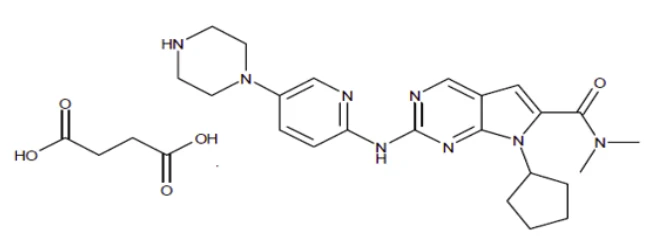
Physicochemical properties:
Physical Description: Light yellow to yellowish brown crystalline powder
Solubility: The solubility of ribociclib succinate drug substance is pH-dependent, with high solubility in acidic media and low solubility in neutral media.
In acidic conditions, ribociclib succinate has a solubility > 2.4 mg/mL, but at pH 6.8 ribociclib freeform precipitates and the solubility decreases to 0.8 mg/mL. Ribociclib succinate is therefore considered to have low solubility according to the Biopharmaceutics Classification System (BCS).
pH: The pH of a 1.0% m/V solution of ribociclib succinate drug substance in water is 5.19.
pKa: The drug substance is an anhydrous succinate salt of ribociclib with pKa values of 5.3 and 8.5.
Partition Coefficient/Distribution Coefficient:
Distribution coefficients were measured for ribociclib succinate drug substance at different pH at 37 °C. The different values as function of the pH are reported below.
Distribution coefficient:
| Media | pH (measured) | Distribution coefficient, D | Log D (measured) |
| n-octanol / pH 1 (0.1 N HCl) | 0.93 | 0.00290 | -2.57 |
| n-octanol / pH 5.5 (acetate buffer) | 5.57 | 0.471 | -.033 |
| n-octanol / pH 7.5 (phosphate buffer) | 7.45 | 71.9 | 1.85 |
Melting point: Ribociclib succinate drug substance shows melting followed by decomposition at about 205 °C (by DSC).
14 CLINICAL TRIALS
14.1 Clinical Trials by Indication
Early Breast Cancer
Table 19 - Summary of Patient Demographics for the Clinical Trial Study CLEE011O12301C (NATALEE) in Early Breast Cancer
| Study # | Trial design | Dosage, route of administration and duration | Study subjects | Median age (Range) | Gender |
| LEE011 O12301C | Randomized, open-label, multicenter phase III clinical study in pre/post-menopausal women, and men, with HR-positive, HER2-negative, stage II-III early breast cancer irrespective of nodal status evaluating KISQALI® in combination with an aromatase inhibitor (AI, letrozole or anastrozole) versus AI alone. | KISQALI 400 mg orally once daily for 21 days followed by 7 days off treatment for 3 years NSAI: Letrozole 2.5 mg or anastrozole 1 mg taken orally once daily throughout 28-day cycle for ≥ 5 years Goserelin (in premenopausal women and men), 3.6 mg injectable subcutaneous implant on day 1 of each 28-day cycle for ≥ 5 years. | All patients: 5,101 KISQALI+ NSAI (2,549) NSAI alone (2,552) | KISQALI+ NSAI 52 (24 – 90) years NSAI alone: 52 (24-89) years | Women N=5,081 Men N= 20 |
The efficacy of KISQALI in early breast cancer was evaluated in the randomized, open-label, multicenter phase III clinical study NATALEE, conducted in pre/post-menopausal women, and men, with HR-positive, HER2-negative, early breast cancer with Anatomic Stage II or III irrespective of nodal status that was:
- Anatomic Stage Group IIB-III, or
Anatomic Stage Group IIA that is either:
o Node positive or
o Node negative, with:
- Histologic grade 3, or
Histologic grade 2, with any of the following criteria:
- Ki67 ≥ 20%
- High risk by gene signature testing
Applying TNM criteria, NATALEE included patients with any lymph node involvement or if no nodal involvement either tumor size > 5 cm, or tumor size 2-5 cm with either tumor grade 2 (and high genomic risk or Ki67 ≥ 20%) or tumor grade 3.
A total of 5,101 patients, including 20 male patients, were randomized in a 1:1 ratio to receive either KISQALI plus AI (n=2,549) or AI alone (n=2,552). KISQALI was given orally at a dose of 400 mg once daily for 21 consecutive days followed by 7 days off treatment in combination with letrozole 2.5 mg or anastrozole 1 mg orally once daily for 28 days. Premenopausal women, and men received goserelin at a dose of 3.6 mg as injectable subcutaneous implant administered on Day 1 of each 28-day cycle. Therapy with KISQALI continued until completion of 3-year treatment from the randomization date (approximately 39 cycles).
Randomization to the treatment was stratified by Anatomic Stage: stage II, 2,154 patients (42.2%) vs stage III, 2,947 patients (57.8%); prior treatment with adjuvant/ neoadjuvant chemotherapy: Yes, 4,432 patients (86.9%) vs No, 669 patients, (13.1%); menopausal status: premenopausal women and men, 2,253 patients (44.2%)vs postmenopausal women, 2,848 patients (55.8%); and region: North America/Western Europe/Oceania, 3,128 patients (61.3%) vs rest of the world, 1,973 patients (38.7%).
Demographics and baseline disease characteristics were balanced and comparable between the two study arms. Patients had a median age of 52 years (range 24 to 90). 15.2% patients were aged 65 years and older, including 123 patients (2.4%) aged 75 years and older. The patients included were White (73.4%), Asian (13.2%) and Black or African American (1.7%). All patients had an ECOG performance status of 0 or 1. A total of 88.2% of patients had received chemotherapy in the neoadjuvant or adjuvant setting and 71.1% had received antihormonal therapy in the neo/adjuvant setting prior to study entry.
Study Results
The primary endpoint of the NATALEE study was invasive disease-free survival (iDFS). IDFS was defined as the time from randomization to the first occurrence of local invasive breast recurrence, regional invasive recurrence, distant recurrence, death (any cause), contralateral invasive breast cancer, or second primary non-breast invasive cancer (excluding basal and squamous cell carcinomas of the skin).
At the primary analysis, data cut-off date (11-Jan-2023), the study met its primary endpoint and demonstrated a statistically significant improvement in iDFS, in the intent-to-treat (ITT) population with KISQALI plus AI compared with AI alone (HR= 0.748; 95% CI: 0.618, 0.906; p-value 0.0014). At the final iDFS analysis cut-off date (21-Jul-2023), a substantial number of patients had completed 3 years of
KISQALI treatment since the primary analysis, with additional 576 patients for a total of 1,091 patients (42.8%). At the final iDFS analysis, 509 iDFS events were observed with a median follow-up of 33.3 months for iDFS across both arms. Results demonstrated an estimated 25.1% relative reduction in the risk of an iDFS event with KISQALI plus AI compared with AI alone (HR = 0.749; 95% CI: 0.628, 0.892; p-value 0.0006). Per Kaplan-Meier analysis, the 3-year iDFS rate was 90.7% with KISQALI plus AI and 87.6% with AI alone, reflecting a 3.1% absolute benefit favoring KISQALI plus AI combination (See Table 20, Figure 1).
Consistent results were observed in terms of Distant Disease Free Survival (DDFS). There were 204 (8.0%) DDFS events with KISQALI plus AI compared to 256 (10%) DDFS events with AI alone (HR: 0.749, 95% CI: 0.623,0.900; p-value 0.0010). Overall survival data are immature. With a median OS follow-up of 35.9 months, 172 patients (3.5%) died: 84/2,549 (3.3%) in the KISQALI plus AI arm vs. 88/2,552 (3.4%) in the AI alone arm.
Table 20 NATALEE (O12301C) final efficacy results (iDFS and DDFS) based on investigator assessment, (Intent-to-treat population) (21-Jul-23 cut-off)
Kisqali plus AI* N=2549 | AI N=2552 | |||||||
|---|---|---|---|---|---|---|---|---|
| Invasive disease-free survival (iDFSa) | ||||||||
| Number of patients with an event (n, %) | 226 (8.9%) | 283 (11.1%) | ||||||
| Hazard ratio (95% CI) | 0.749 (0.628 to 0.892) | |||||||
| p-valueb | 0.0006 | |||||||
| iDFS at 36 months (%, 95% CI) | 90.7 (89.3, 91.8) | 87.6 (86.1, 88.9) | ||||||
| Distant disease-free survival (DDFSc) | ||||||||
| Number of patients with an event (n, %) | 204 (8.0%) | 256 (10%) | ||||||
| Hazard ratio (95% CI) | 0.749 (0.623 to 0.900) | |||||||
| p-value | 0.0010 | |||||||
CI=confidence interval; N=number of patients. a iDFS defined as the time from randomization to the first occurrence of: locoregional relapse, distant relapse, ipsilateral and contralateral invasive breast cancer, second primary non-breast invasive cancer or death from any cause. b nominal p-value is obtained from the one-sided stratified log-rank test cDDFS defined as the time from randomization to the first distant recurrence, death (any cause) or second primary non-breast cancer (excluding basal and squamous cell carcinomas of the skin) * AI= Aromatase inhibitors: Letrozole or anastrozole | ||||||||
Figure 1 NATALEE (O12301C) Kaplan-Meier plot of iDFS based on investigator assessment (ITT) (21-Jul-2023 cut-off)
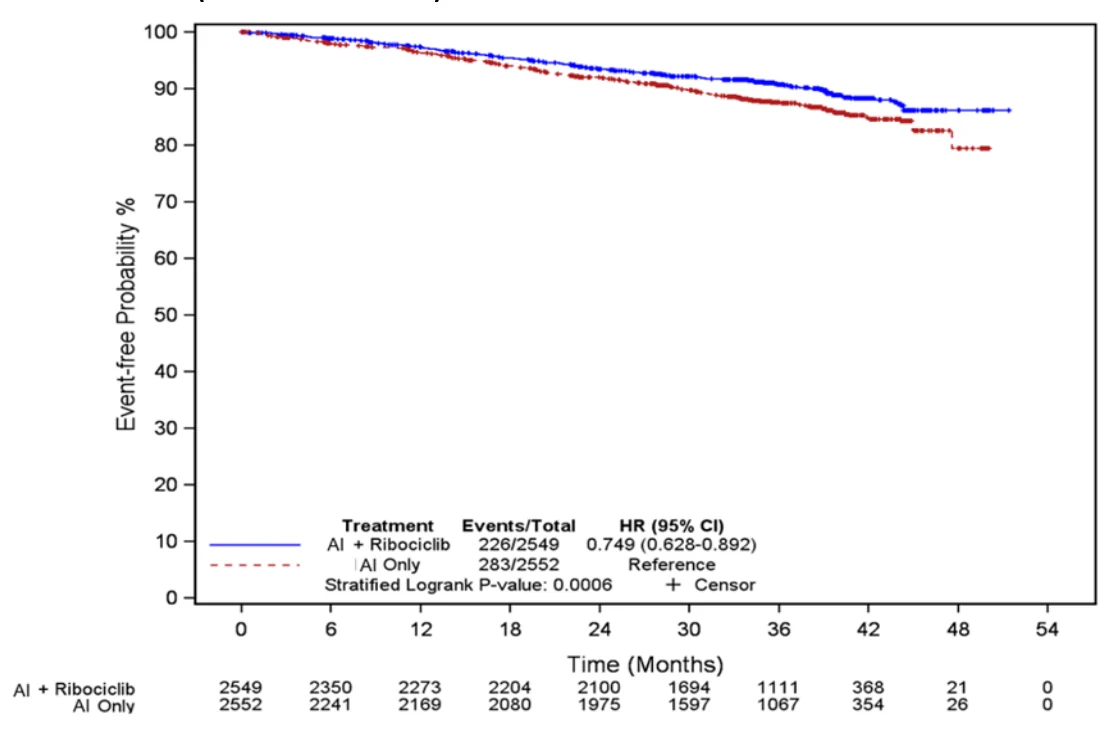
AI - aromatase inhibitor
P-value from stratified log-rank test is one-sided.
Figure 2 NATALEE (O12301C) Forest plot of iDFS from subgroup analysis based on investigator assessment (ITT) (21-Jul-23 cut-off)
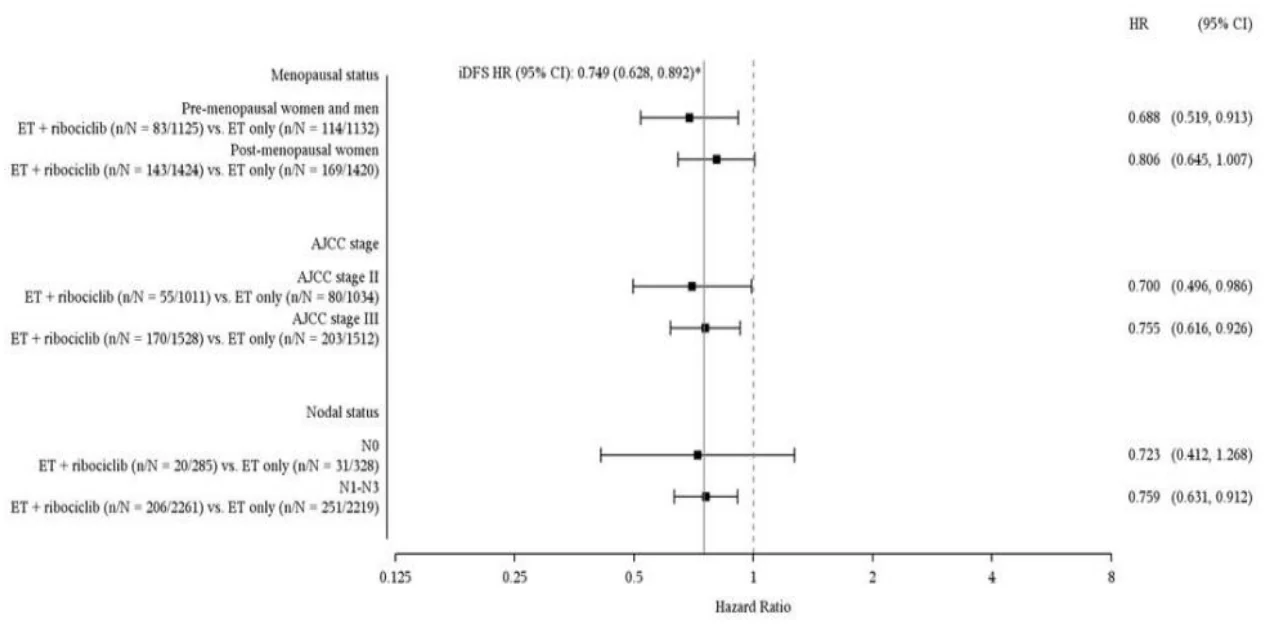
The consistency of IDFS improvement was generally evident across all subgroups, including key subgroups:
- Anatomical staging: Stage III (HR=0.755; 95% CI: 0.616, 0.926); Stage II (HR=0.700; 95% CI: 0.496, 0.986)
- Menopausal status: Premenopausal women & Men (HR= 0.688; 95% CI: 0.519, 0.913); Postmenopausal (HR = 0.806; 95% CI: 0.645, 1.007)
- Nodal status: Node -negative (N0) subgroup (HR = 0.723; 95% CI: 0.412, 1.268); Node-positive (N1-N3) , (HR= 0.759 ;95% CI: 0.631, 0.912)
While estimates for node-negative (N0) and node-positive (N1-N3) patients were similar, N0 patients represented only 12% of the population included in the NATALEE trial, limiting a robust conclusion about benefit in this subgroup.
Advanced or metastatic breast cancer in patients who received no prior therapy for advanced disease.
Table 21 - Summary of Patient Demographics for the Clinical Trial CLEE011A2301 (MONALEESA-2) in Advanced or Metastatic Breast Cancer
| Study # | Trial design | Dosage, route of administration and duration | Study subjects | Mean age (Range) | Gender |
LEE011 A2301 | A randomized, double-blind, placebo-controlled, multicenter phase III clinical study in the treatment of postmenopausal women with HR positive, HER2-negative, advanced breast cancer who received no prior therapy for advanced disease in combination with letrozole versus letrozole alone | Route of Administration : Oral Dosage: Ribociclib (600 mg once daily, on Days 1-21 of a 28- day cycle) plus letrozole (2.5 mg once daily in a 28- day cycle) Placebo (daily, on Days 1-21 of a 28-day cycle) plus letrozole (2.5 mg once daily in a 28-day cycle) Duration: Until disease progression, unacceptable toxicity, death, or study treatment discontinuation for any other reason. The median duration of exposure to the study treatment was similar in both treatment groups: 13.0 months in the ribociclib plus letrozole group (range: 0 to 23 months) and 12.4 months (range: 0 to 22 months) in the placebo plus letrozole group | A total of 668 patients with advanced breast cancer Ribociclib plus Letrozole: 334 female patients Placebo plus Letrozole: 330 female patients 4 patients in Placebo plus Letrozole never treated | Ribociclib plus letrozole Mean= 61.4 (23-91) years of age Placebo plus letrozole All patients 61.9 (29-88) years of age | Post-menopausal women |
Study CLEE011A2301 was a randomized, double-blind, placebo-controlled, multicenter phase III clinical study of KISQALI plus letrozole versus placebo plus letrozole for the treatment of postmenopausal women with HR positive, HER2-negative, advanced breast cancer who received no prior therapy for advanced disease.
A total of 668 patients were randomized in a 1:1 ratio to receive either KISQALI 600 mg and letrozole (n= 334), or placebo and letrozole (n= 334), stratified according to the presence of liver and/or lung metastases. Demographics and baseline disease characteristics were balanced and comparable between study arms. KISQALI was given orally at a dose of 600 mg daily for 21 consecutive days followed by 7 days off treatment in combination with letrozole 2.5 mg once daily for 28 days. Patients were not allowed to cross over from placebo to KISQALI during the study or after disease progression.
Patients enrolled in this study had a median age of 62 years (range 23 to 91) with 44.2% 65 years of age and older, including 69 patients (10.3%) of age 75 years and older. The patients included were Caucasian (82.2%), Asian (7.6%), and Black (2.5%). All patients had an ECOG performance status of 0 or 1. A total of 46.6% of patients had received chemotherapy in the neoadjuvant or adjuvant setting and 51.3% had received antihormonal therapy in the neo/adjuvant setting prior to study entry. 34.1% of patients had de novo metastatic disease. 22.0% of patients had bone only disease and 58.8% of patients had visceral disease. Patients with CNS metastases documented at baseline were not permitted in this study.
Study Results
The primary endpoint for the study was met at the planned interim analysis conducted after observing 80% of targeted progression-free survival (PFS) events using the Response Evaluation Criteria in Solid Tumors (RECIST v1.1), based on the investigator assessment in the full population (all randomized patients) and confirmed by a blinded independent central radiological assessment.
The efficacy results demonstrated a statistically significant improvement in PFS in patients receiving KISQALI plus letrozole compared to patients receiving placebo plus letrozole in the full analysis set (FAS) (HR = 0.556; 95% CI: 0.429, 0.720; one sided stratified log-rank test p-value = 0.00000329), with an estimated 44% reduction in risk of progression for patients treated with the combination of KISQALI plus letrozole. The median PFS was not reached in the KISQALI plus letrozole arm [95% CI: 19.3 – not reached (NR)] at the time of the primary analysis. The median PFS was 14.7 months (95% CI, 13.0, and 16.5) for the placebo plus letrozole arm.
Results were consistent across the subgroups of age, race, prior adjuvant or neo-adjuvant chemotherapy or hormonal therapies, liver and/or lung involvement, and bone only metastatic disease (Figure 3).
The updated Kaplan-Meier curve for PFS is provided in Figure 3.
The global health status/Quality of Life (QoL) showed no relevant difference between the KISQALI plus letrozole arm and the placebo plus letrozole control arm.
As shown in Table 22, an update of efficacy data resulted in a median PFS of 25.3 months (95% CI: 23.0, 30.3) for ribociclib plus letrozole treated patients and 16.0 months (95% CI: 13.4, 18.2) for patients receiving placebo plus letrozole; 54.7% of patients receiving ribociclib plus letrozole were estimated to be disease progression free at 24 months compared with 35.9% in the placebo plus letrozole arm.
Table 22 Efficacy Results Based on Investigator Assessment for MONALEESA-2 (02-Jan-17 cut-off)
Ribociclib plus letrozole
N=334
Placebo plus letrozole
N=334
Progression free survival
Median [months] (95% CI)
25.3 (23.0-30.3)
16.0 (13.4-18.2)
Hazard ratio (95% CI)
0.568 (0.457-0.704)
p-valuea
9.63×10⁻⁸
CI=confidence interval; N=number of patients;
ap-value is obtained from the one-sided stratified log-rank test.
Figure 3 Kaplan-Meier plot of PFS based on Investigator assessment – MONALEESA-2 (Full analysis set -02-Jan-17 cut-off)
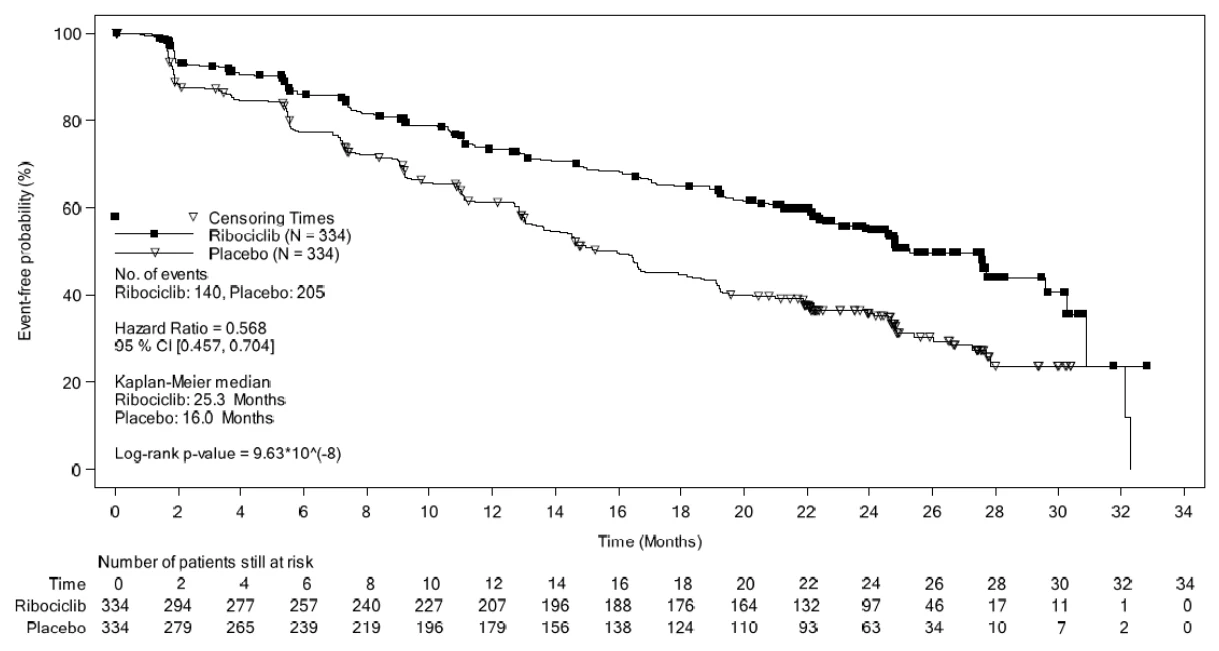
In patients with measurable disease, the overall response rate according to local radiologist assessment was 52.7% of patients (95% CI: 46.6%, 58.9%) in the KISQALI plus letrozole arm and 37.1% (95% CI: 31.1%, 43.2%) in the placebo plus letrozole arm.
Figure 4 Forest plot of Subgroup analysis of PFS based on Investigator assessment – MONALEESA-2 (Full analysis set 02-Jan-17 cut-off)
The global health status/QoL showed no relevant difference between the KISQALI plus letrozole arm and the placebo plus letrozole control arm.
A series of pre-specified subgroup PFS analyses was performed based on prognostic factors and baseline characteristics to investigate the internal consistency of treatment effect. A reduction in the
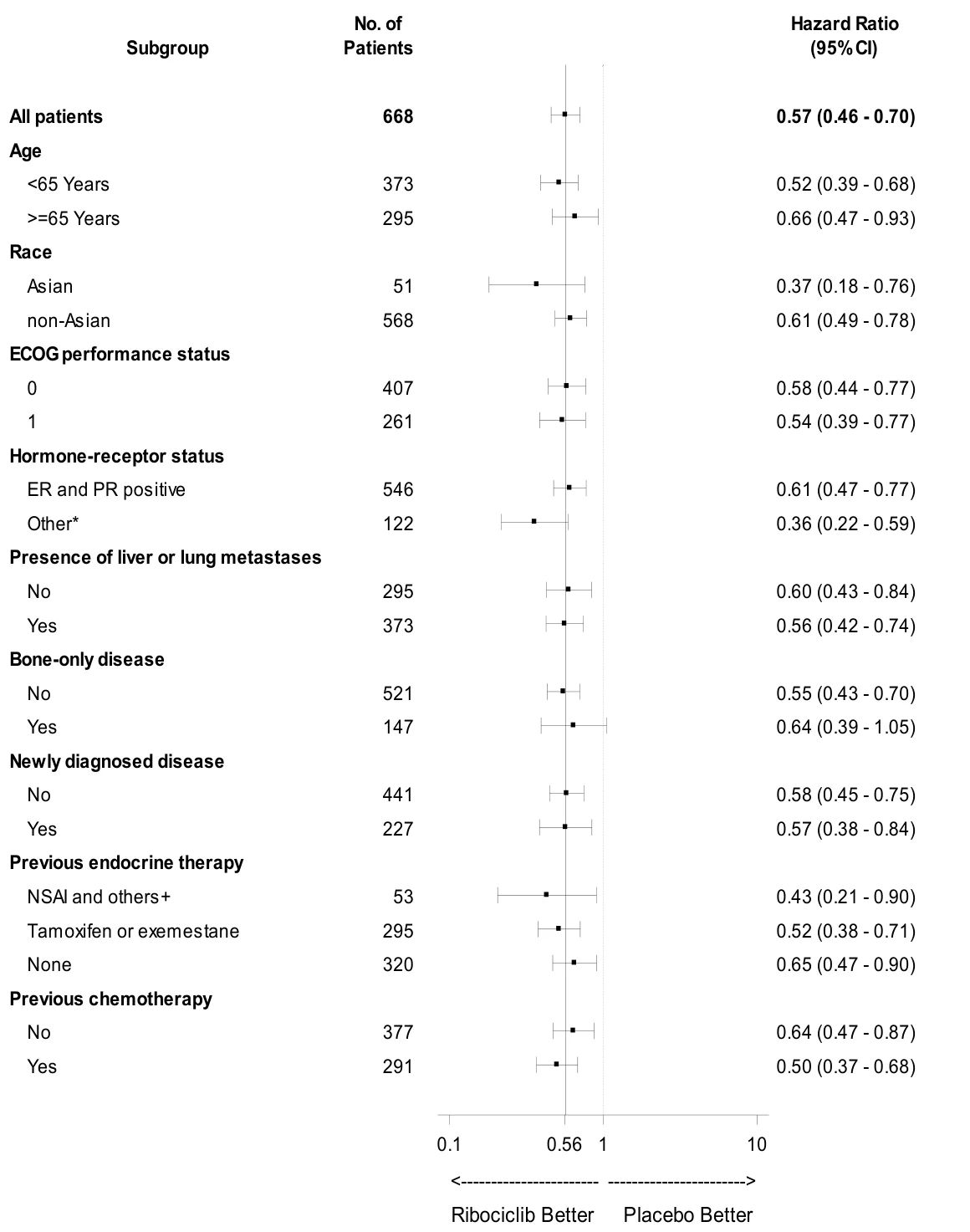
risk of disease progression or death in favour of the ribociclib plus letrozole arm was observed in all individual patient subgroups of age, race, prior adjuvant or neo-adjuvant chemotherapy or hormonal therapies, liver and/or lung involvement and bone-only metastatic disease. This was evident for patients with liver and/or lung disease (HR; 0.561 [95% CI: 0.424, 0.743]), median progression-free survival [mPFS] 24.8 months vs 13.4 months respectively for the ribociclib and placebo arms respectively; the same benefit was observed for those patients, without liver and/or lung disease (HR; 0.597 [95% CI: 0.426, 0.837], mPFS 27.6 months versus 18.2 months).
At the time of the final overall survival (OS) analysis (10-Jun-2021 cut-off), the study met its key secondary endpoint, and showed superior efficacy with statistically significant and clinically meaningful improvement in OS with a 23.5% relative reduction in risk of death (HR: 0.765, 95% CI: 0.628, 0.932; p-value=0.004); see Figure 5.
Figure 5 MONALEESA-2 (A2301) Kaplan-Meier plot for OS (FAS) (data cut-off 10-Jun-2021)
Log-rank test and Cox PH model are stratified by liver and/or lung metastasis as per IRT.
One sided P-value is obtained from stratified log rank test.
Additionally, the median time to first subsequent chemotherapy was prolonged by 11.7 months in the KISQALI arm compared to the placebo arm (50.6 months, 95% CI: 38.9, 60.0 months vs 38.9 months, 95% CI: 31.4, 45.4).
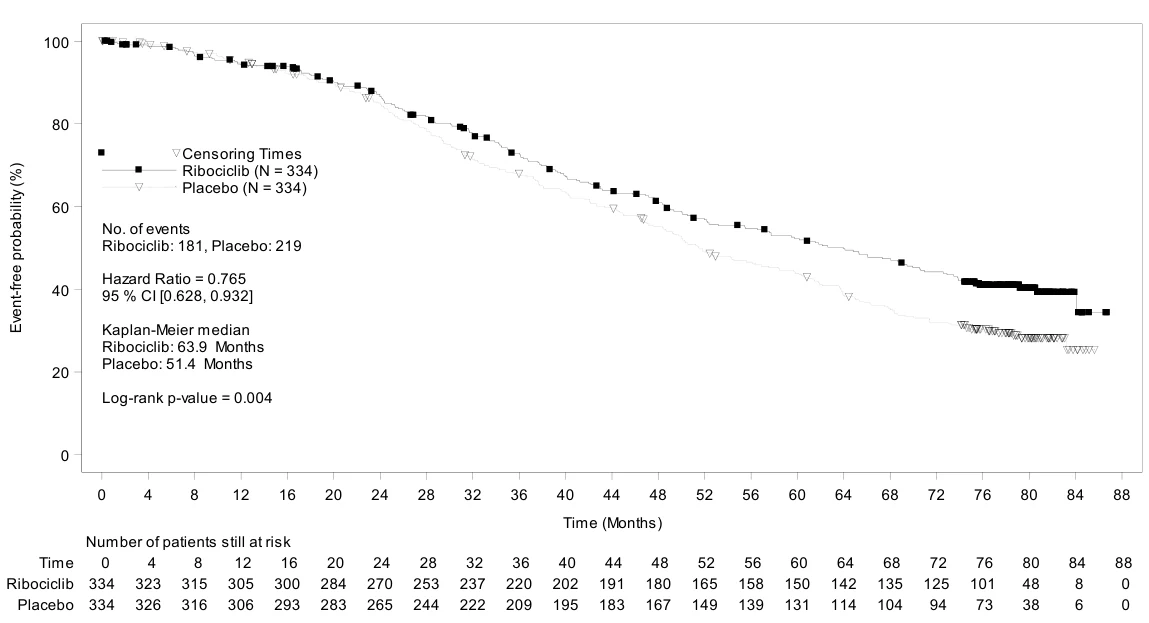
Study CLEE011A2404 (COMPLEEMENT-1)
Table 23 - Summary of Patient Demographics for the Clinical Trial COMPLEEMENT-1 in Advanced or Metastatic Breast Cancer
| Study # | Trial design | Dosage, route of administration and duration | Study subjects | Mean age (Range) | Gender |
LEE011 A2404 (Phase IIIb) | Open-label, multicenter, study of ribociclib (LEE011) in combination with letrozole for the treatment of men and pre/postmenopa usal women with HR-positive, HER2−negative advanced breast cancer (aBC) with no prior hormonal therapy for advanced disease | Route of Administration: Oral Dosage: Ribociclib (600 mg/day p.o. 3 weeks on and 1 week off + Letrozole (2.5 mg/day p.o. once daily for 28 days) + Goserelin (3.6 mg every 28 days s.c. or leuprolide 7.5 mg every 28 days i.m. (only for premenopausal women and men)) Median duration of exposure to the study treatment was 20.8 months in the male patients. | A total of 3246 patients with advanced breast cancer were enrolled. N (male) = 39 N (female) = 3207 | Male Median: 62 years (range: 33 to 80) Female Median: 58 years (range: 20-92) | Male and Female |
KISQALI was evaluated in an open-label, single arm, multicenter phase IIIb clinical study comparing ribociclib in combination with letrozole in men and pre/post-menopausal women with HR-positive, HER2-negative, advanced breast cancer who received no prior hormonal therapy for advanced disease. Premenopausal women, and men, also received goserelin or leuprolide.
The study enrolled 3246 patients, including 39 male patients, who received KISQALI 600 mg orally once daily for 21 consecutive days followed by 7 days off; and letrozole 2.5 mg orally once daily for 28 days; and goserelin 3.6 mg as injectable subcutaneous implant or leuprolide 7.5 mg as intramuscular injection administered on Day 1 of each 28 day cycle. Patients were treated until disease progression or unacceptable toxicity occurred.
Male patients enrolled in this study had a median age of 62 years (range 33 to 80). Of these patients, 38.5% were 65 years and older, including 10.3% aged 75 years and older. The male patients enrolled were Caucasian (71.8%), Asian (7.7%), and Black (2.6%), with 17.9% unknown. Nearly all male patients (97.4%) had an ECOG performance status of 0 or 1. The majority of male patients (97%) had 4 or less metastatic sites, which were primarily bone and visceral (69.2% each). Table 24 summarizes the efficacy results in male patients.
Study Results
Table 24 COMPLEEMENT-1 (A2404) efficacy results in male patients based on investigator assessment (intent-to-treat population)
KISQALI + Letrozole + Goserelin or Leuprolide N=39 | |
|---|---|
Overall Response Rate* Number of patients with confirmed CR or PR : Total number of patients with measurable disease at baseline | 15: 32 (46.9 %) |
| (95% CI) | (29.1, 65.3) |
Duration of Response1 Number of patients with PD : Number of patients with confirmed CR or PR | 2: 15 (13.3%) |
Median (months) 95% CI | NR (21.3, NR) |
Number of patients with DoR ≥ 12 months: Number of patients with confirmed CR or PR | 12: 15 (80.0%) |
| Clinical Benefit Rate2 | |
Number of patients with confirmed CR or PR or prolonged SD : Total number of patients with measurable disease at baseline (95% CI) | 23: 32 (71.9%) (53.3, 86.3) |
Abbreviations: CI, confidence interval, NR, not reached. *Based on confirmed responses. 1Number of events in patients with confirmed complete response (CR) or partial response (PR). 2Proportion of patients with complete response + partial response + (stable disease or non-complete response/non-progressive disease ≥24 weeks) | |
Table 25 - Summary of Patient Demographics for the Clinical trial CLEE011E2301 (MONALEESA-7) in Advanced or Metastatic Breast Cancer
| Study # | Trial design | Dosage, route of administration and duration | Study subjects | Mean age (Range) | Gender |
LEE011 E2301 | A Phase III randomized, double-blind, placebo-controlled study comparing ribociclib plus goserelin plus either tamoxifen or a NSAI (letrozole or anastrozole), (henceforth ribociclib arm) versus placebo plus goserelin plus either tamoxifen or a NSAI (letrozole or anastrozole) (henceforth placebo arm), in premenopausal women with HR-positive, HER2-negative advanced breast cancer who received no prior hormonal therapy for advanced breast cancer. | Route of Administration : Oral Dosage Ribociclib arm: Ribociclib (600 mg orally once daily, on Days 1-21 of a 28-Day cycle) plus goserelin (3.6 mg subcutaneous implant on Day 1 of 28-day Cycle) plus either tamoxifen (20 mg orally once daily) or a NSAI (either letrozole 2.5 mg orally once daily or anastrozole 1 mg orally once daily). Dosage Placebo arm: Placebo (orally daily, on Days 1-21 of a 28-day cycle) plus goserelin (3.6 mg subcutaneous implant on Day 1 of 28-day Cycle) plus either tamoxifen (20 mg orally once daily) or a NSAI (letrozole 2.5 mg orally once daily or anastrozole 1 mg orally once daily). Duration of treatment: until disease progression, unacceptable toxicity, death, or discontinuation from the study treatment for any other reason. The median duration of follow-up (defined as the time from randomization to the data cut-off date) was 19.2 months (min-max: 12.6 - 32.1). The study is currently ongoing. | Total of 672 Randomized 1:1 335 patients in ribociclib arm and 337 patients in placebo arm. All randomized patients received study treatment. | Median age of patients in the study was 44 years (min to max: 25 to 58) and 72.3% were ≥ 40 years of age. Ribociclib arm: median age was 43 years (min to max: 25 - 58) and 70.7% were ≥ 40 years of age. Placebo arm: median age was 45 years (min to max: 29 - 58) and 73.9% were ≥ 40 years of age. | Pre- or Peri menopausal women with HR-positive, HER2-negative advanced breast cancer who received no prior hormonal therapy for their advanced disease |
Study CLEE011E2301 was a randomized, double-blind, placebo-controlled multicenter phase III clinical study comparing KISQALI plus either a non-steroidal aromatase inhibitor (NSAI) or tamoxifen and goserelin versus placebo plus either a NSAI or tamoxifen and goserelin for the treatment of pre- and perimenopausal women with (HR)-positive, HER2-negative, advanced breast cancer.
A total of 672 patients were randomized 1:1 to receive KISQALI 600 mg plus NSAI or tamoxifen plus goserelin (n= 335) or placebo plus NSAI or tamoxifen plus goserelin (n= 337), stratified according to the presence of liver and/or lung metastases, prior chemotherapy for advanced disease, and endocrine combination partner (NSAI and goserelin versus tamoxifen and goserelin). Demographics and baseline disease characteristics were balanced and comparable between study arms.
Tamoxifen 20 mg or NSAI (letrozole 2.5 mg or anastrozole 1 mg) were given orally once daily on a continuous schedule; goserelin 3.6 mg was administered as sub-cutaneous injection on day 1 of each 28 day cycle, with either KISQALI 600 mg or placebo given orally once daily for 21 consecutive days followed by 7 days off until disease progression or unacceptable toxicity. Patients were not allowed to cross over from placebo to KISQALI during the study or after disease progression. Patients were not allowed to switch between endocrine combination partners.
Patients enrolled in the study had a median age of 44 years (range 25 to 58) and 27.7% of patients were younger than 40 years of age. The majority were Caucasian (57.7%), Asian (29.5%), or Black (2.8%) and nearly all patients (99.0%) had an ECOG performance status of 0 or 1. Of these 672 patients, 14.0% had received prior chemotherapy for metastatic disease. Of the 672 patients, 32.6% of patients had received chemotherapy in the adjuvant vs 18.0% in the neo-adjuvant setting and 39.6% had received endocrine therapy in the adjuvant vs 0.7% in the neo-adjuvant setting prior to study entry. Approximately 40.2% of patients had de novo metastatic disease, 23.7% had bone only disease, and 56.7% had visceral disease.
Study Results
The primary efficacy endpoint for the study was met after observing 318 progression-free survival (PFS) events using the Response Evaluation Criteria in Solid Tumors (RECIST) v1.1, based on the investigator assessment in the full analysis set, and supported by a blinded independent central radiological assessment.
The median follow-up duration at the time of the primary PFS analysis was 19.2 months.
In the pre-specified subgroup analysis of 495 patients who had received KISQALI or placebo in combination with NSAI plus goserelin, the median PFS was 27.5 months (19.1, not estimable (NE)) in the KISQALI plus NSAI subgroup and 13.8 months (12.6, 17.4) in the placebo plus NSAI population [HR: 0.569 (95% CI: 0.436, 0.743)], which was consistent with the overall study population regardless of combination partner. Efficacy results are presented in Table 26 and the Kaplan-Meier curve for PFS in Figures 6 and 7. Results in the KISQALI plus NSAI population were consistent across subgroups of age, race, prior adjuvant/ neo-adjuvant chemotherapy or hormonal therapies, liver and/or lung involvement and bone only metastatic disease (Figure 8).
The global health status /QoL showed no relevant difference between KISQALI compared with placebo.
Figure 6 Kaplan-Meier plot of PFS based on investigator assessment -MONALEESA-7 (Full analysis set 20-Aug-17 cut-off)
Table 26 CLEE011E2301 efficacy results based on investigator assessment in patients who received NSAI - MONALEESA-7 (20-Aug-17 cut-off)
| Analysis | Ribociclib plus NSAI plus goserelin (%, 95% CI) | Placebo plus NSAI plus goserelin (%, 95% CI) | ||||||
|---|---|---|---|---|---|---|---|---|
| Progression- free survival | N=248 | N=247 | ||||||
| Median [months] (95% CI) | 27.5 (19.1, NE) | 13.8 (12.6, 17.4) | ||||||
| Hazard ratio (95% CI) | 0.569 (0.436, 0.743) | |||||||
| Patients with measurable disease | N=192 | N=199 | ||||||
| Overall Response Ratea | 50.5 (43.4 , 57.6) | 36.2 (29.5 , 42.9) | ||||||
aORR: proportion of patients with complete response + partial response
CI=confidence interval; N=number of patients; NE = Not estimable.
Figure 7 Kaplan-Meier plot of PFS based on investigator assessment in patients who received NSAI – MONALEESA-7 (20-Aug-17 cut-off)
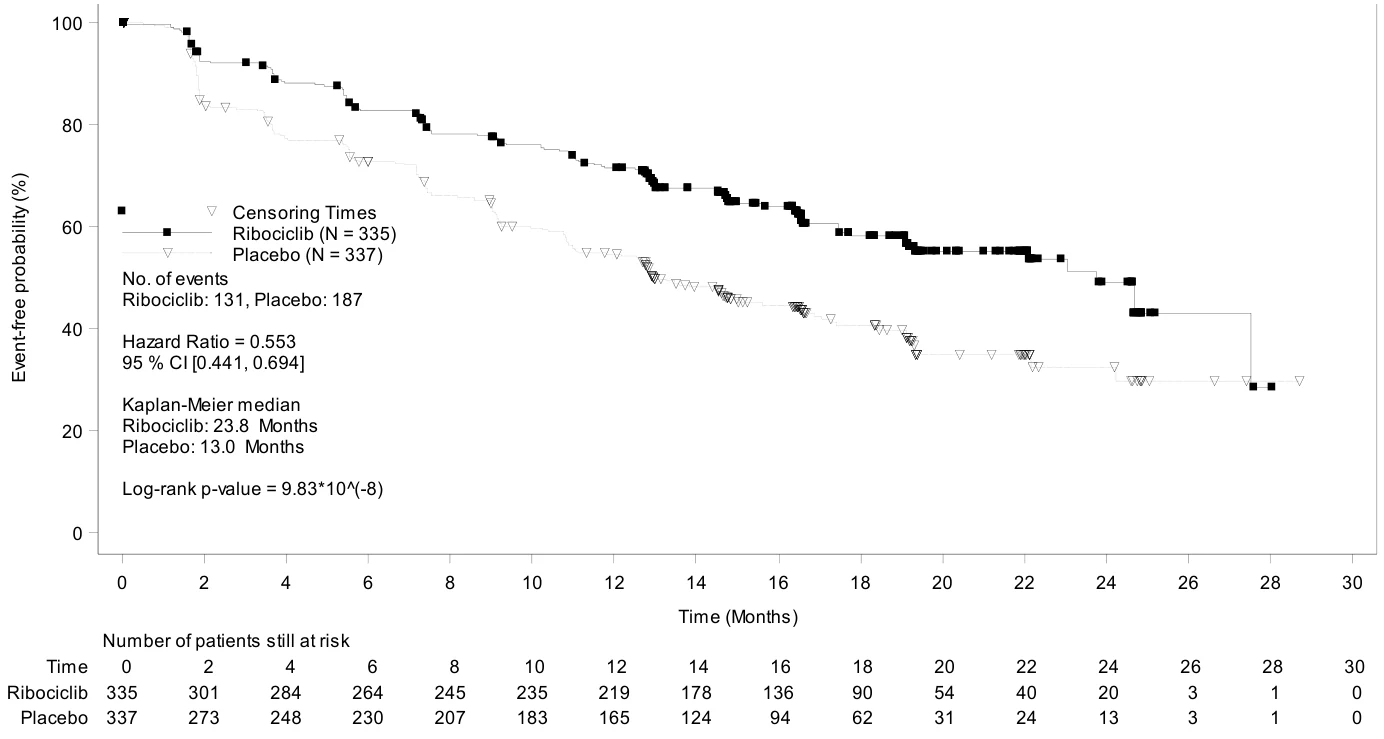
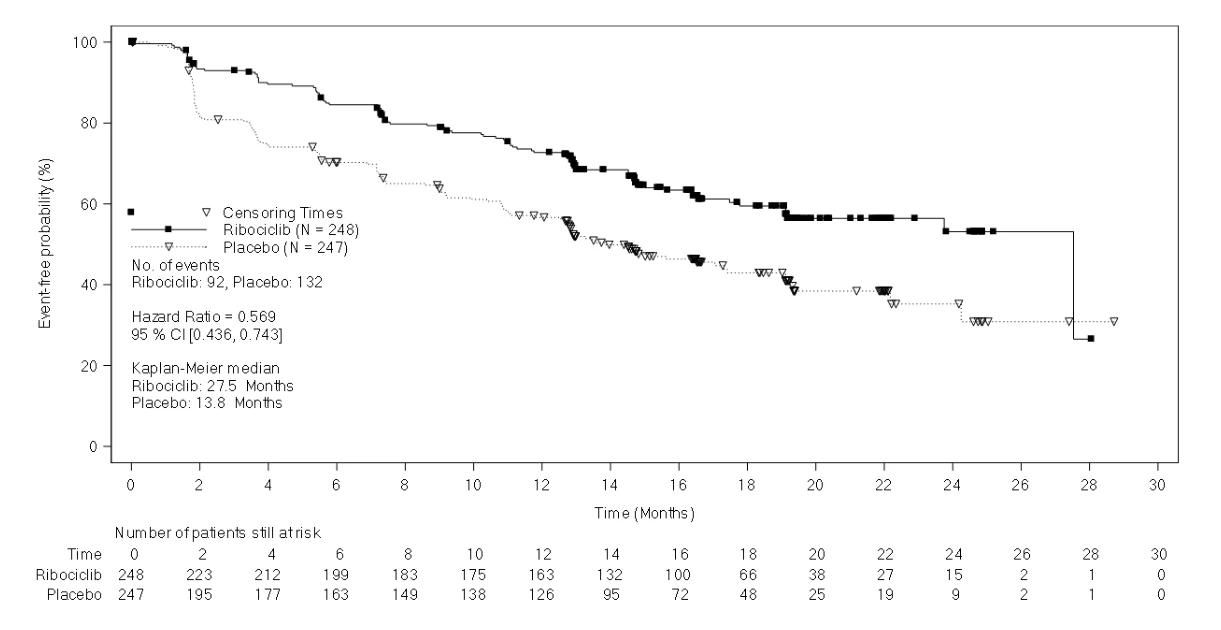
Figure 8 Forest plot of PFS based on investigator assessment in patients who received NSAI1 (20-Aug-17 cut-off)
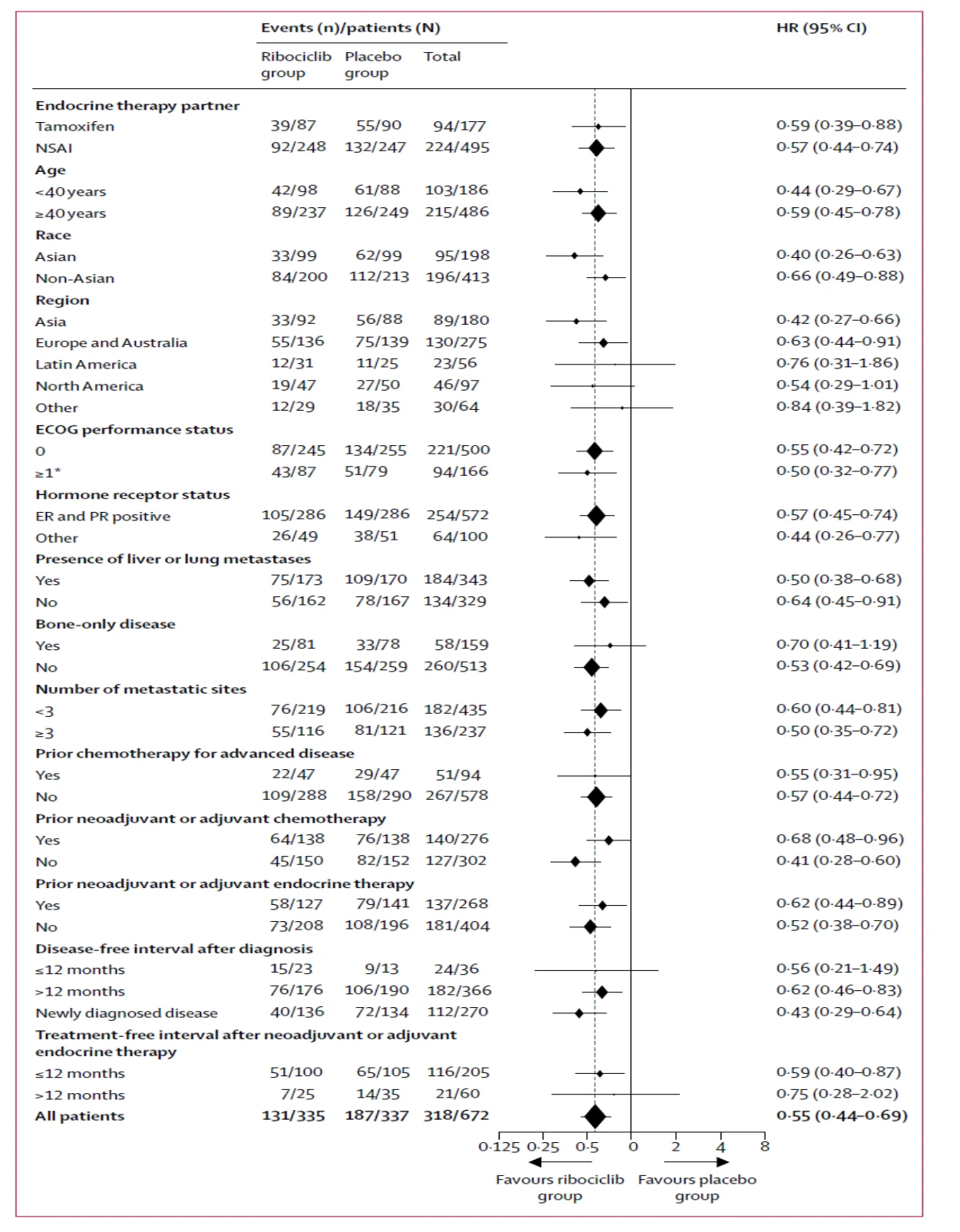

1 KISQALI is not indicated for use in combination with tamoxifen and combined treatment is not recommended.
At the time of the second (final) prespecified OS analysis (30-Nov-2018 cut-off), the study met its key secondary endpoint of OS, demonstrating a statistically significant improvement in OS (HR: 0.712; 95% CI: 0.535, 0.948; one-sided stratified log-rank test p-value: 0.00973), and was consistent for the NSAI population (Figure 9) and across exploratory subgroups. Median OS was not reached in the KISQALI arm and was 40.9 months (95% CI: 37.8, NE) in the placebo arm. The median duration of follow-up was 34.6 months.
These data suggest an estimated relative risk reduction of death of approximately 29% in the KISQALI arm compared to the placebo arm.
Figure 9 MONALEESA-7 (E2301) Kaplan-Meier plot of OS in patients who received NSAI (30-Nov-18 cut-off)
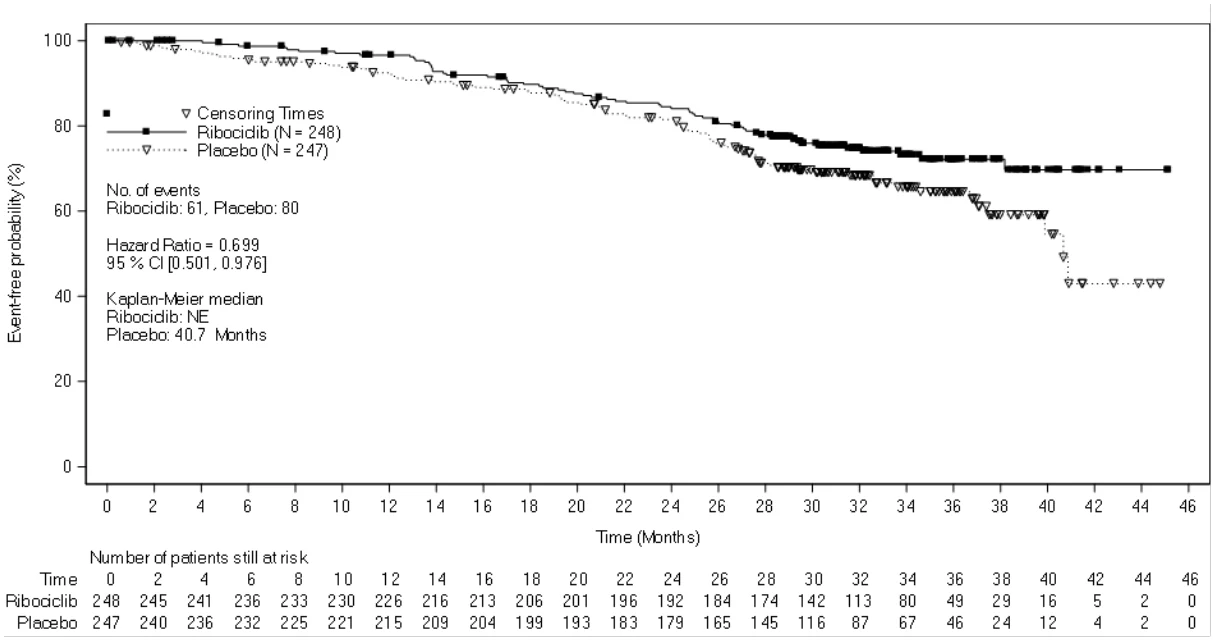
Hazard ratio is based on unstratified Cox model.
The median time to progression on next-line therapy or death (PFS2) in the NSAI population was 32.3 months (26.9, 38.3) in the placebo arm and was not reached (39.4, NE) in the KISQALI arm [HR:0.660 (CI: 0.503, 0.868)].
Table 27 – Summary of Patient Demographics for the Clinical Trial CLEE011F2301 (MONALEESA-3)
in Advanced or Metastatic Breast Cancer
| Study # | Trial design | Dosage, route of administration and duration | Study subjects | Mean age (Range) | Gender |
| LEE011 F2301 | A randomized double-blind, placebo-controlled study of ribociclib in combination with fulvestrant for the treatment of men and postmenopausal women with hormone receptor positive, HER2 negative, advanced breast cancer who have received no or only one line of prior endocrine treatment. | Route of Administration : Oral Dosage: Ribociclib (600 mg orally once daily on Days 1-21 of a 28-day cycle) plus fulvestrant (500 mg intramuscular [im] injection on Cycle 1 Days 1 and 15 and on Day 1 of subsequent cycles). Placebo (orally once daily on Days 1-21 of a 28-day cycle) plus fulvestrant (500 mg im injection on Cycle 1 Days 1 and 15 and on Day 1 of subsequent cycles). Duration until disease progression, unacceptable toxicity, death, or discontinuation from the study treatment for any other reason. | 726 patients were randomized 2:1 with 484 patients in the ribociclib plus fulvestrant arm and 242 patients in the placebo plus fulvestrant arm. 2 patients never received study treatment. | Median age of patients in the study was 63 years (min to max: 31 to 89); 46.7% were ≥ 65 years of age and 13.8 were ≥ 75 years of age. Ribociclib arm: Median age was 63 years (min to max: 31 to 89). Placebo arm: Median age was 63 years (min to max: 34 to 86). | Men and Post menopausal women |
MONALEESA-3 was a randomized double-blind, placebo controlled study of KISQALI in combination with fulvestrant for the treatment of men and postmenopausal women with hormone receptor (HR)-positive, HER2-negative, advanced breast cancer who have received no or only one line of prior endocrine treatment.
A total of 726 patients were randomized in a 2:1 ratio to receive KISQALI 600 mg and fulvestrant (n= 484) or placebo and fulvestrant (n= 242), stratified according to the presence of liver and/or lung metastases and prior endocrine therapy for advanced or metastatic disease. First-line patients with advanced breast cancer (A) include de novo advanced breast cancer with no prior endocrine therapy, and patients who relapsed after 12 months of (neo) adjuvant endocrine therapy completion.
Second-line patients’ subgroup (B) includes those patients whose disease relapsed during adjuvant therapy or less than 12 months after endocrine adjuvant therapy completion, and those who progressed to first line endocrine therapy. Demographics and baseline disease characteristics were balanced and comparable between study arms. KISQALI 600 mg or placebo was given orally daily for 21 consecutive days followed by 7 days off treatment in combination with fulvestrant 500 mg administered intramuscularly on Cycle 1 Day 1, Cycle 1 Day 15, Cycle 2 Day 1 and every 28 days thereafter.
Patients enrolled in this study had a median age of 63 years (range 31 to 89); 46.7% of patients were 65 years and older, including 13.8% of patients 75 years of age and older. The patients included were
Caucasian (85.3%), Asian (8.7%), or Black (0.7%). Nearly all patients (99.7%) had an ECOG performance status of 0 or 1. First- and second-line patients were enrolled in this study (of whom 19.1 % of patients had de novo metastatic disease). Approximately 43% of patients had received chemotherapy in the adjuvant vs 13.1% in the neo-adjuvant setting and 58.5% had received endocrine therapy in the adjuvant vs 1.4% in the neo-adjuvant setting prior to study entry. Approximately 21% of patients had bone-only disease and 60.5% of patients had visceral disease.
Study Results
The primary efficacy endpoint for the study was assessed after observing 361 progression-free survival (PFS) events using the Response Evaluation Criteria in Solid Tumors (RECIST v1.1), based on the investigator assessment in the full analysis set. The median follow-up duration at the time of primary PFS analysis was 20.4 months.
The primary efficacy results demonstrated a statistically significant improvement in PFS in patients receiving KISQALI plus fulvestrant compared to patients receiving placebo plus fulvestrant with an estimated 41% reduction in relative risk of progression or death in favor of the KISQALI plus fulvestrant arm (HR = 0.593, 95% CI: 0.480, 0.732, one-sided stratified log rank test p-value = 0.00000041). The descriptive updated PFS results support the primary PFS analyses.
PFS analyses based on the blinded independent central radiological assessment (hazard ratio 0.492) were supportive of the primary efficacy results.
In patients with measurable disease, the overall response rate according to local radiologist assessment was 40.9% of patients (95% CI: 35.9%, 45.8%) in the KISQALI plus fulvestrant arm and 28.7% (95% CI: 22.1%, 35.3%) in the placebo plus fulvestrant arm with a reported p-value of 0.003.
Results were consistent across pre-specified sub-groups of age, prior adjuvant or neo-adjuvant chemotherapy or hormonal therapies, liver and/or lung involvement, bone-only metastatic disease. The subgroup analysis is presented in a Forest Plot in Figure 10.
Figure 10 Forest plot of primary PFS results based on investigator assessment (FAS) (03 Nov 17 cut-off) – Study CLEE011F2301
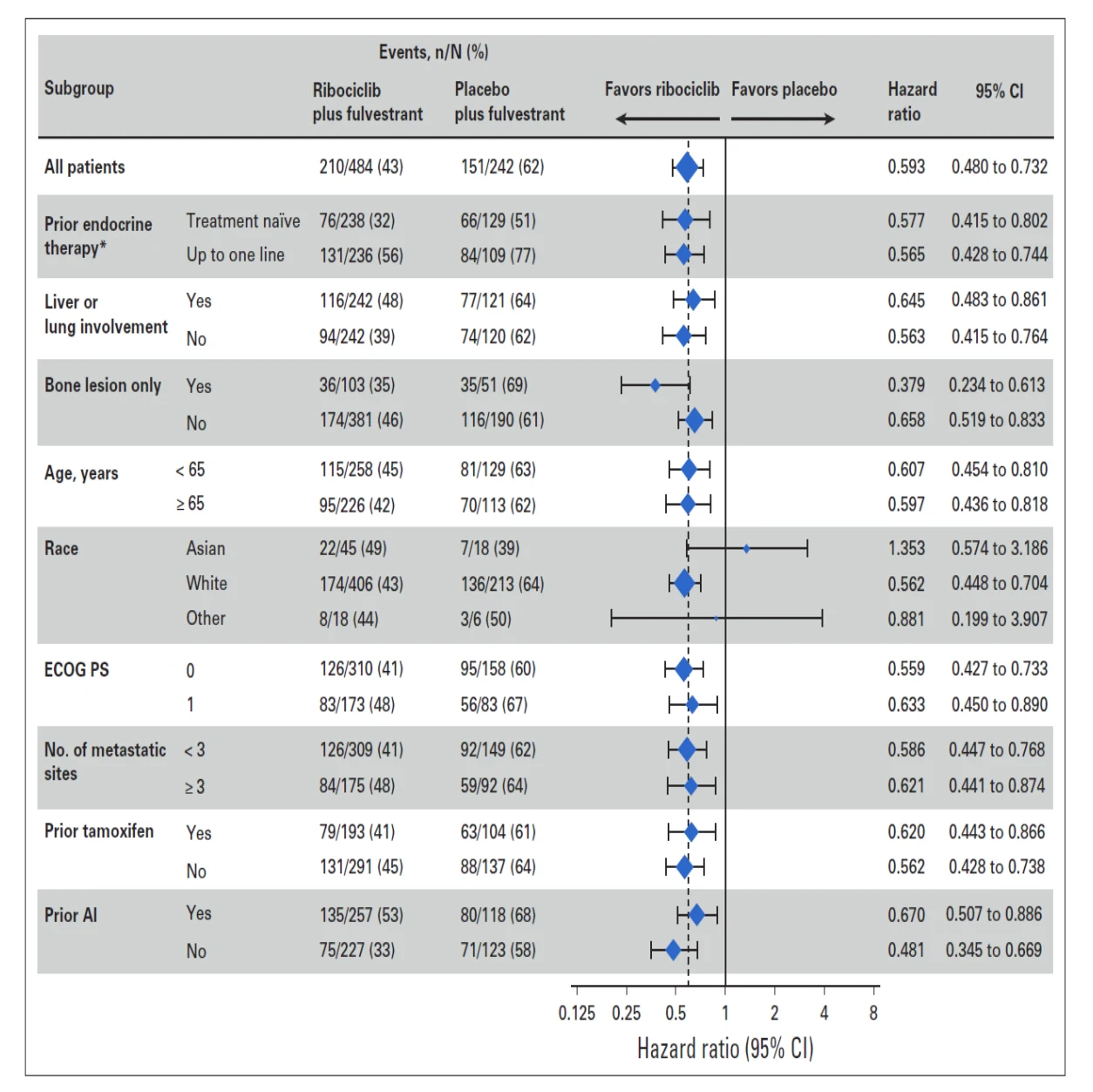
Progression-free survival outcomes in patient subgroups. Hazard ratios were estimated on the basis of stratified Cox proportional hazards model, except in subgroups related to stratification factors (presence or absence of lung or liver metastases and prior endocrine therapy), where an unstratified analysis was used. AI, aromatase inhibitor; ECOG PS, Eastern Cooperative Oncology Group performance status. (*) Prior endocrine therapy for advanced disease; 14 patients were not included in the prior endocrine therapy subgroup analysis because of missing data or criteria not being met.
Since the median PFS for first-line patients had not been reached at the time of the primary analysis, a descriptive update of primary efficacy results (PFS) was performed at the time of the second OS interim analysis, and the updated PFS results are summarized in Table 28 and the Kaplan-Meier curve is provided in Figure 13.
Table 28 MONALEESA-3 (F2301) descriptive updated PFS results (03-Jun-19 cut-off)
| Overall population | Ribociclib plus fulvestrant N=484 | Placebo plus fulvestrant N=242 | |||||||
|---|---|---|---|---|---|---|---|---|---|
| Number of events – n[%] | 283 (58.5) | 193 (79.8) | |||||||
| Median PFS [months] (95% CI) | 20.6 (18.6, 24.0) | 12.8 (10.9, 16.3) | |||||||
| Hazard ratio (95% CI) | 0.587 (0.488, 0.705) | ||||||||
| First-line setting | Ribociclib 600 mg N=237 | Placebo N=128 | |||||||
| Number of events – n [%] | 112 (47.3) | 95 (74.2) | |||||||
| Median PFS [months] (95% CI) | 33.6 (27.1, 41.3) | 19.2 (14.9, 23.6) | |||||||
| Hazard ratio (95% CI) | 0.546 (0.415, 0.718) | ||||||||
| Second-line setting or with an early relapse | Ribociclib 600 mg N=237 | Placebo N=109 | |||||||
| Number of events – n [%] | 167 (70.5) | 95 (87.2) | |||||||
| Median PFS [months] (95% CI) | 14.6 (12.5, 18.6) | 9.1 (5.8, 11.0) | |||||||
| Hazard ratio (95% CI) | 0.571 (0.443, 0.737) | ||||||||
CI=confidence interval First-line setting = newly diagnosed (de novo) advanced breast cancer or relapse after 12 months from completion of (neo)adjuvant endocrine therapy with no treatment for advanced or metastatic disease Second-line setting or with an early relapse = relapse on or within 12 months from completion of (neo)adjuvant endocrine therapy with no treatment for advanced or metastatic disease (early relapse), relapse after 12 months from completion of (neo)adjuvant therapy with subsequent progression after one line of endocrine therapy for advanced or metastatic disease, or advanced or metastatic breast cancer at diagnosis that progressed after one line of endocrine therapy for advanced disease with no prior (neo)adjuvant treatment for early disease | |||||||||
The global health status/QoL showed no relevant difference between KISQALI plus fulvestrant arm and the placebo plus fulvestrant arm.
Figure 11 MONALEESA-3 (F2301) Kaplan-Meier plot of descriptive updated PFS based on investigator assessment (FAS) (03-Jun-19 cut off)
At the time of the second interim OS analysis the study met its key secondary endpoint demonstrating a statistically significant improvement in OS for the overall population (Figure 12) and was consistent for the prior endocrine therapy subgroups (Figures 12 and 13) and across all other subgroups.
Figure 12 MONALEESA-3 (F2301) Kaplan Meier plot of OS (FAS) (03-Jun-19 cut-off)
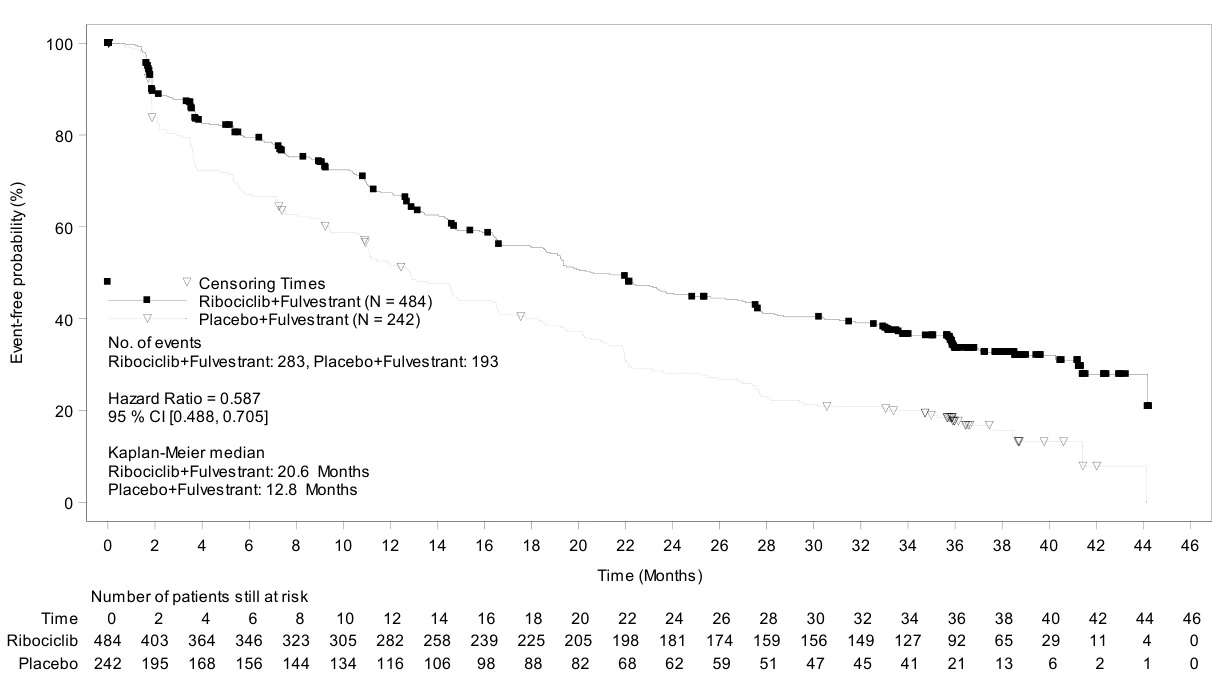
Log-rank test and Cox model are stratified by lung and/or liver metastasis, prior chemotherapy for advanced disease, and endocrine combination partner per IRT
P-value is one-sided and is compared against a threshold of 0.01129 as determined by the Lan-DeMets (O’Brien-Fleming) alpha-spending function for an overall significance level of 0.025.
Figure 13 MONALEESA-3 (F2301) Kaplan Meier plot of OS for patients in first-line1 setting (FAS) (03-Jun-19 cut-off)
Hazard ratio is based on unstratified Cox model
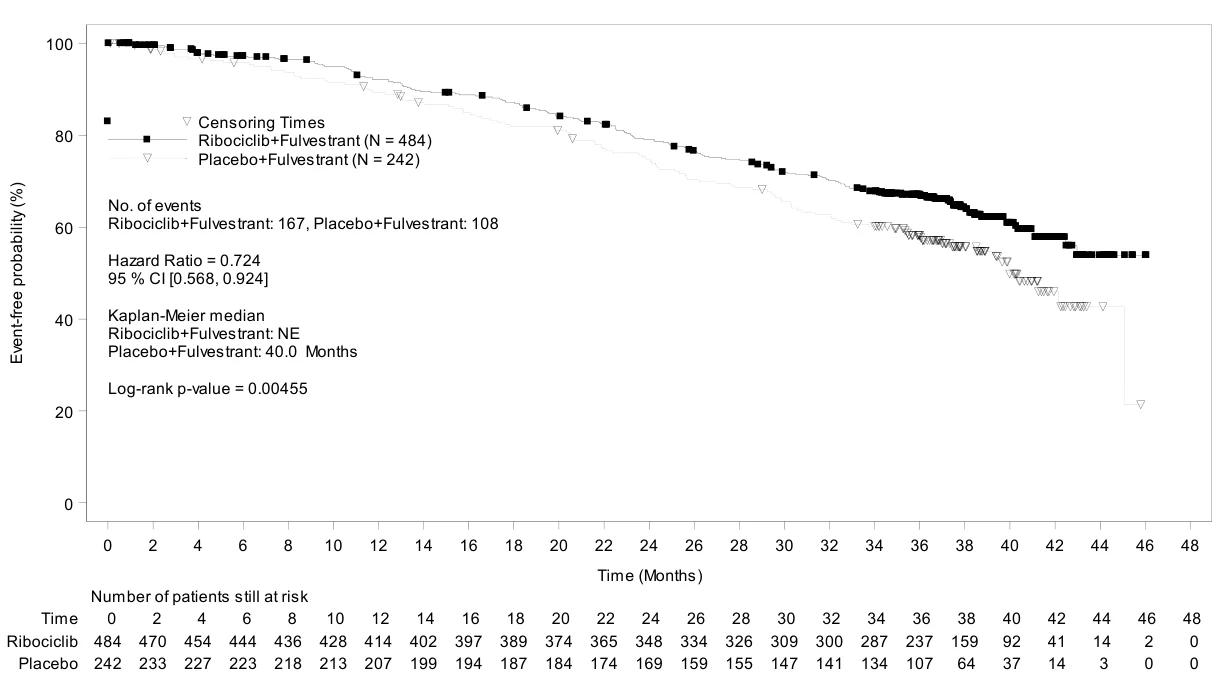
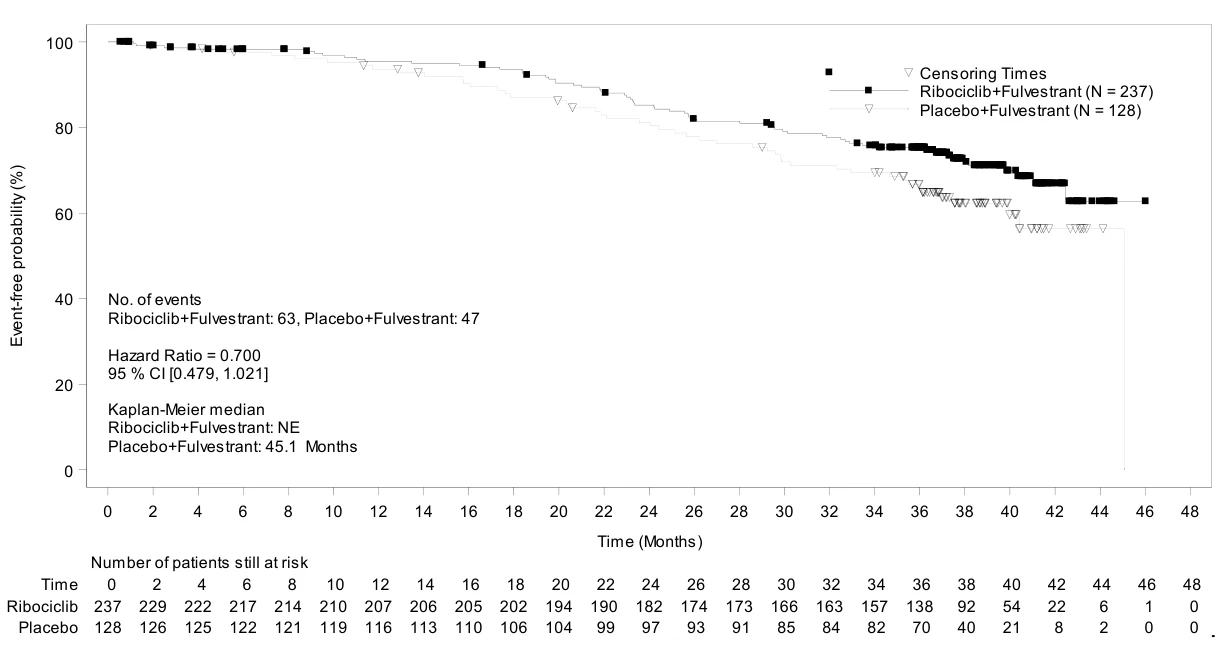
1First-line setting = newly diagnosed (de novo) advanced breast cancer or relapse after 12 months from completion of (neo)adjuvant endocrine therapy with no treatment for advanced or metastatic disease
Figure 14 MONALEESA-3 (F2301) Kaplan Meier plot of OS for patients in second-line setting or with an early relapse1 (FAS) (03-Jun-19 cut-off)
Hazard ratio is based on unstratified Cox model
1Second-line setting or with an early relapse = relapse on or within 12 months from completion of (neo)adjuvant endocrine therapy with no treatment for advanced or metastatic disease (early relapse), relapse after 12 months from completion of (neo)adjuvant therapy with subsequent progression after one line of endocrine therapy for advanced or metastatic disease, or advanced or metastatic breast cancer at diagnosis that progressed after one line of endocrine therapy for advanced disease with no prior (neo)adjuvant treatment for early disease
Additionally, time to progression on next-line therapy or death (PFS2) in patients in the KISQALI arm was longer compared to patients in the placebo arm (HR: 0.670 (95% CI: 0.542, 0.830)) in the overall study population. The median PFS2 was 39.8 months (95% CI: 32.5, NE) for the KISQALI arm and 29.4 months (95% CI: 24.1, 33.1) in the placebo arm.
14.2 Comparative Bioavailability Studies
Study A2103 was a randomized, open-label, single-center, crossover study to evaluate the BE of a new tablet formulation of ribociclib in comparison to a capsule formulation of ribociclib and the effect of food following a single oral dose of 600 mg in healthy subjects.
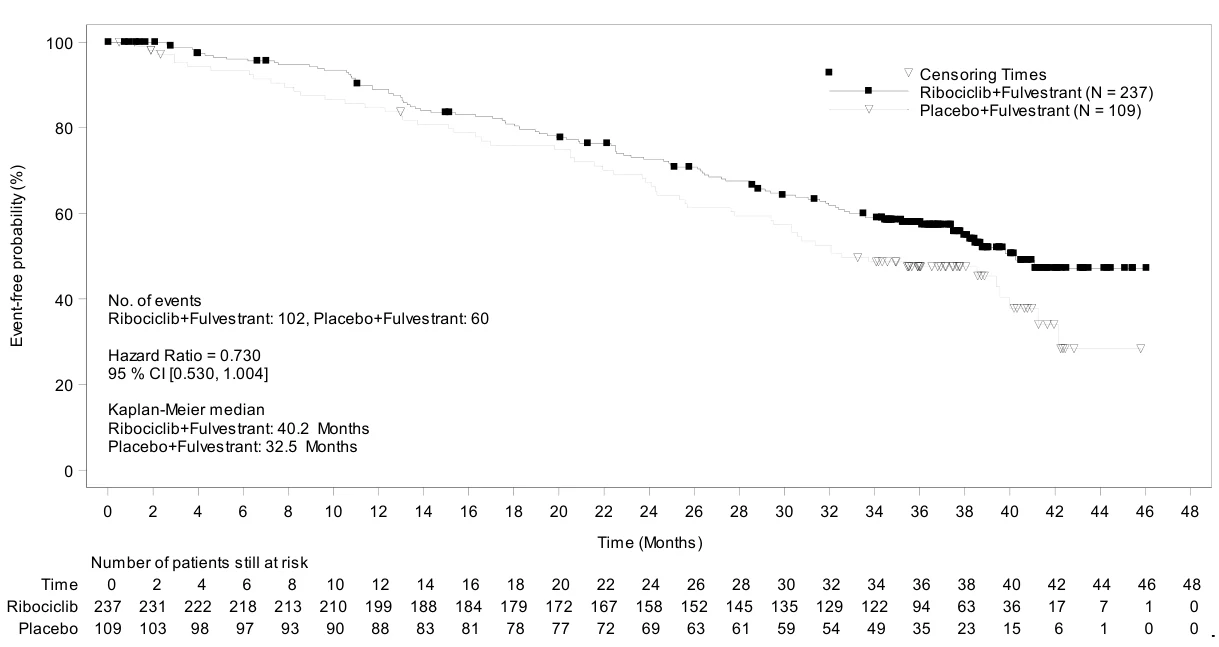
Table 29 Study A2103
Ribociclib
(3 x _200_ mg)
From measured data
Geometric Mean
Reference: 600mg LEE011 capsule, Test: 600mg LEE011 tablet.
- Model is a linear effects model of the log-transformed PK parameters. Included in the model were treatment, period and sequence as fixed effects and subjects nested within sequences as a random effect.
- n = number of subjects with non-missing values.
-AUCT = AUClast
- The analysis is conducted on log transformed PK parameters. Then the results are back transformed to get adjusted geo-mean, Geo-mean ratio, and 90% CI.
- For Tmax, median is presented under ‘Test’ and ‘Reference’, median difference under 'Ratio of Geometric Means', and minimum and maximum differences under 90% CI.
- Source: Table 14.2-1.1a
15 MICROBIOLOGY
No microbiological information is required for this drug product.
16 NON-CLINICAL TOXICOLOGY
DETAILED PHARMACOLOGY
Pharmacodynamics
In biochemical assays, ribociclib inhibits CDK4/Cyclin D1 and CDK6/Cyclin-D3 enzyme complexes with IC50 values of 0.01 µM (4.3 ng/mL) and 0.039 µM (16.9 ng/mL), respectively. In a panel of serine/threonine and tyrosine kinases, inhibition of CDK4/D1 or CDK6/D3 was selective, ribociclib was inactive (IC50 >10 µM) against 34 other serine/threonine and tyrosine kinases and showing weak
| Parameter | Test | Reference | Ratio of Geometric Means | 90% Confidence Interval (Lower, Upper) |
AUCT (hr*ng/mL) | 10600 n=31 | 10600 n=31 | 1 | (0.881, 1.14) |
AUCI (hr*ng/mL) | 10800 n=31 | 11500 n=30 | 0.937 | (0.885, 0.991) |
CMAX (ng/mL) | 601 n=31 | 596 n=31 | 1.01 | (0.869, 1.17) |
| TMAX (h) | 3 n=31 | 3 n=31 | 0 | (-4, 3) |
inhibition (> 2.0 µM) against Aurora A, HER1, and LCK with the IC50 values of 2.0 µM, 9.0 µM, and 7.7 µM, respectively, further demonstrating its relative inactivity against kinases other than CDK4/6.
Ribociclib was a potent inhibitor of cell proliferation in a wide variety of cancer cell lines. A functional pRb protein was a requirement for the inhibition of cell proliferation. Cancer cell lines with genetic aberrations in the CDK4/6 signalling pathways were particularly susceptible to the anti-proliferative effects of ribociclib. The IC50 value for cell proliferation inhibition by ribociclib in the mantle cell lymphoma cell line Jeko-2 with a translocation in the CCND1 gene (coding for cyclin D1) was 0.080 µM and the IC50 values for inhibition of phosphorylation of pRb and G1 arrest were 0.180 and 0.100 µM, respectively. The IC50 values for target phosphorylation of pRb, cell cycle assays and proliferation are similar and consistent with pRb phosphorylation tightly linked to G1 to S transition, with the inhibition of pRb phosphorylation leading to G1 arrest in cells. The main mode of inhibition of cell proliferation was growth arrest and there were no significant cell death. In Jeko-1 cells, the metabolites M4 (LEQ803) and M13 (CCI28) were less potent inhibitors than ribociclib, with G1 arrest occurring at IC50 values of >13 times that of ribociclib.
Ribociclib was tested in a panel of 47 breast cancer cell lines annotated with ER status. Luminal ER+ breast cancer cell lines were most sensitive to ribociclib, with 16 of the 18 cell lines with IC50s < 1 µM, while majority (21 out of 29) of the ER-negative cell lines have IC50s> 1 µM.
In immunocompromised mice with established MCF7 ER+ human breast cancer xenograft model, ribociclib monotherapy at 75 mg/kg p.o., once per day resulted in exposure approximately similar to 400 mg to 600 mg once daily in human. Ribociclib treatment resulted in tumor regression with minimal effect on body weight. In immunocompromised mice with a patient-derived ER+ breast cancer xenograft model (PDX191), ribociclib at 75 mg/kg/day exhibited tumor growth inhibition which correlated with inhibition of pRb phosphorylation.
The anti-tumor efficacy of ribociclib and letrozole was assessed in immunocompromised mice using a primary ER+ breast cancer xenograft model derived from a patient tumor with a known sensitivity to letrozole. Ribociclib at 75 mg/kg combined with letrozole at 2.5 mg/kg, both dosed orally every day for 55 days, induced greater tumor growth inhibition than each agent alone. The combination of ribociclib and letrozole demonstrated statistically significant antitumor activity with complete tumor growth inhibition, 2 out of 10 partial and 2 out of 10 complete tumor regressions. Tumor growth delay after stopping dosing was also observed.
Secondary Pharmacodynamics
Ribociclib and LEQ803 were assessed for their off-target activity on respectively 147 and 144 G protein-coupled receptors (GPCRs), transporters, ion channels, nuclear receptors and enzymes.
For ribociclib, activities were found on phosphodiesterase PDE4d (IC50= 0.59 µM, n=2), rat vesicular monoamine transporter VMAT2 (IC50 = 6.3 µM, n=2), orexin-2 receptor (70% inhibition at 10 µM) and apelin receptor (54% inhibition at 10 µM). IC50 values were not determined for the last two mentioned targets.
For LEQ803, activities were found on phosphodiesterase PDE4d (IC50 = 0.6 µM), serotonin 5HT3 channel (IC50 = 2.63 µM), neuronal nicotinic alpha 2 channel (IC50 = 5.7 µM), cannabinoid CB1 receptor (IC50 = 28 µM), peripheral rat imidazoline I2 receptor (71% inhibition at 10 µM), rabbit monoamine transporter VMAT2 (84% inhibition at 10 µM) and rat brain sodium channel site II (70% inhibition at 10 µM). IC50 values were not determined for the last three mentioned targets.
The clinical free Cmax at the recommended dose of 600 mg ribociclib was 1.2 µM, and the free Cmax of LEQ803 was 0.03 µM.
Given the absence of brain penetration by ribociclib following oral administration and intracarotid injection in rats, centrally-mediated effects resulting from interactions with targets expressed in the central nervous system (VMAT-2, PDE4d, serotonin 5-HT3, rat brain sodium channel site II, neuronal nicotinic alpha 2 channel receptors, orexin receptor OX2 and cannabinoid CB1 receptors) are unlikely to develop in humans.
Safety pharmacology
Ribociclib caused a concentration-dependent decrease in hERG potassium channel currents in stably transfected HEK293 cells with an estimated IC50 of up to 53.0 μM.
Ribociclib caused a concentration-dependent inhibition of the Nav1.5 sodium channel currents in stably transfected HEK293 cells with an IC50 of 24 µM.
LEQ803, a major metabolite of ribociclib, caused a concentration-dependent suppression of hERG channel currents in stably transfected HEK293 cells with an IC50 of 4.5µM.
In vivo cardiac safety studies in dogs demonstrated dose and concentration related QTc interval prolongation at exposures that would be expected to be achieved in patients following the recommended dose of 600 mg. Increased premature ventricular contractions (PVCs) were reported in a dog receiving a single oral dose of 100 mg/kg (resulting an exposure approximately 5-fold the clinical Cmax).
TOXICOLOGY
Repeated dose toxicity
The repeat dose toxicity was characterized in dogs and rats at doses up to and including maximum tolerated dose. In the dog, body weight loss, vomiting and severe liver/gall bladder toxicity occurred at 25 and 20 mg/kg/day in 2 and 4 week study. In the rat there were 2 potentially ribociclib related deaths in male rats after ≥17 weeks of dosing at 150 mg/kg/day. Both animals had irregular respiration and microscopically there were increased alveolar macrophage infiltrates.
Mild to moderate decreases in circulating red and white blood cells correlated with bone marrow hypocellularity and lymphoid tissue findings (atrophy/lymphoid depletion) in dogs and rats in studies ranging from 2 to 27 weeks in rats and 2 to 39 weeks in dogs. These changes as well as findings in intestinal mucosa (atrophy), skin (atrophy) and bone (decreased bone formation) in dog in the 2 and 4 week studies and are considered related to the pharmacological mechanism of action. They were reversible or partially reversible after 4 weeks without treatment.
Testicular changes with seminiferous tubule degeneration and secondary effects in the epididymis with reduced luminal sperm with luminal cellular debris and epithelial vacuolation were noted in rats and dogs. In the 15- and 27-week rat studies, the NOAEL was 25 mg/kg/day, while in the 15- and 39-week studies in the dog, a NOAEL was not identified (≤1 mg/kg/day). After a 4 week withdrawal period, the changes were consistent with partial recovery. The withdrawal period, given the length of the spermatogenic cycle, was not long enough for complete recovery.
Kidney changes, consisting of degeneration/regeneration of tubular epithelial cells, were noted in male rats only at ≥75 mg/kg/day in the 15 and 27 week studies. Vacuolation of bile duct epithelium was noted in males at 150 mg/kg/day after 4 and 15 weeks, in males at ≥75 mg/kg/day and in females at 300 mg/kg/day after 27 weeks of dosing. Increased incidence and severity of alveolar macrophage infiltrates in the lung of males at ≥75 mg/kg/day in the 4 week study, at 150 mg/kg/day in the 15 week study, and at ≥75 mg/kg/day in the 27 week study, as well as at 300 mg/kg/day in females in the 27 week study. The changes in kidney, bile duct and lung were reversible after a 4 week withdrawal period.
The pathogenesis of the bile duct toxicity, lymph node histiocytosis and lung macrophage infiltrates in the rat was suggested to be due to phospholipidosis. Liver/bile ducts/gallbladder was also identified as a target organ of toxicity for ribociclib in the dog. Findings in the dog included proliferative changes, cholestasis, sand-like gallbladder calculi, and inspissated bile and the proliferative changes within the intra- and extra-hepatic biliary tree may be indicative of irritation as a consequence of excretion of ribociclib and/or its metabolites via the biliary system. Mass balance data in rats and dogs show that the majority of ribociclib-related radioactivity is eliminated by metabolism via hepatic metabolism and biliary excretion.
The ribociclib exposures at the maximal feasible dose in repeat dose studies in rats and dogs were generally less than or similar to exposure in patients at MRHD. Thus, even for findings where NOAELs were identified, ribociclib exposure was less than clinical exposure at MRHD.
Reproductive Toxicity/Fertility
A fertility study in male rats has not been performed, however ribociclib general toxicology studies clearly identified the testes as a target tissue in rats and dogs (see Repeated Dose Toxicity) and reduced fertility or infertility is to be expected in males.
In a fertility study in female rats, ribociclib did not affect the reproductive function, fertility or early embryonic development at any dose up to 300 mg/kg/day (approximately 0.6 times the clinical exposure in patients at the highest recommended dose of 600 mg/day based on AUC).
In embryo-fetal development studies in rats and rabbits, pregnant animals received oral doses of ribociclib up to 1,000 mg/kg/day and 60 mg/kg/day, respectively, during the period of organogenesis.
In rats, 1,000 mg/kg/day was lethal in the maternal animals with embryofetal mortality. At 300 mg/kg/day, a slight, non-adverse trend towards reduced maternal body weight gain and fetal toxicity evidenced by reduced fetal weights accompanied by skeletal changes were considered to be transitory and/or related to the lower fetal weights. There were no effects upon embryo-fetal mortality or adverse effects on fetal morphology at 50 or 300 mg/kg/day. The no-observed-adverse-effect level (NOAEL) for maternal toxicity was considered to be 300 mg/kg/day. The no-observed-effect-level (NOEL) for embryo-fetal development was considered to be 50 mg/kg/day.
In rabbits at doses of 30 and 60 mg/kg/day, there were adverse effects on embryo-fetal development as evidenced by increased incidences of fetal abnormalities (malformations and external, visceral and skeletal variants) and fetal growth (lower fetal weights). These findings included reduced/small lung lobes and additional vessel on the aortic arch and diaphragmatic hernia, absent accessory lobe or (partly) fused lung lobes and reduced/small accessory lung lobe (30 and 60 mg/kg), extra/rudimentary 13th ribs and misshapen hyoid bone and reduced number of phalanges in the pollex. There was no evidence of embryo-fetal mortality. The no-observed-effect level (NOEL) for maternal toxicity was 30 mg/kg/day and the NOEL for the embryo-fetal development was 10 mg/kg/day.
At 300 mg/kg/day in rats and 30 mg/kg/day in rabbits, the maternal systemic exposures (AUC) were lower than or at 1.5 times that achieved in patients at the highest recommended dose of 600 mg/day in patients with advanced or metastatic cancer. Animal/human exposure margins at the no-effect doses for embryofetal toxicity in both species were well below therapeutic levels.
In lactating rats administered a single dose of 50 mg/kg, exposure to ribociclib was 3.56 fold higher in milk than in maternal plasma.
Carcinogenicity:
Ribociclib was assessed for carcinogenicity in a 2-year rat study.
Oral administration of ribociclib for 2 years resulted in an increased incidence of endometrial epithelial adenocarcinoma and glandular and squamous hyperplasia in the uterus/cervix of female rats at doses ≥300 mg/kg/day as well as an increased incidence in follicular tumors in the thyroid glands of male rats at a dose of 50 mg/kg/day. Mean exposure at steady state (AUC0-24h) in female and male rats in whom neoplastic changes were seen was 1.2- and 1.4-times that achieved in patients at the recommended dose of 600 mg/day, respectively. Mean exposure at steady state (AUC0-24h) in female and male rats in whom neoplastic changes were seen was 2.2- and 2.5-times that achieved in patients at a dose of 400 mg/day, respectively.
Additional non-neoplastic proliferative changes consisted of increased liver altered foci (basophilic and clear cell) and testicular interstitial (Leydig) cell hyperplasia in male rats at doses of ≥5 mg/kg/day and 50 mg/kg/day, respectively. Mean exposure at steady state (AUC0-24h) was below and 1.4-times that achieved in patients at the recommended dose of 600 mg/day, respectively. Mean exposure at steady state (AUC0-24h) was below and 2.5-times that achieved in patients at a dose of 400 mg/day, respectively.
The mechanism for the thyroid findings in male rats is considered to be a rodent-specific microsomal enzyme induction in the liver and therefore not expected to have relevance to humans.
The effects on the uterus/cervix and on the testicular interstitial (Leydig) cell are related to prolonged hypoprolactinemia secondary to CDK4 inhibition of lactotrophic cell function in the pituitary gland, altering the hypothalamus-pituitary-gonadal axis.
Potential mechanisms for the thyroid findings in males include a rodent-specific microsomal enzyme induction in the liver and/or a dysregulation of the hypothalamus-pituitary-testis-thyroid axis secondary to a persistent on-target hypoprolactinemia.
Any potential increase of estrogen/progesterone ratio in humans by this mechanism would be compensated by an inhibitory action of concomitant anti-estrogen therapy on estrogen synthesis as in humans. KISQALI is indicated in combination with estrogen-lowering agents.
Considering important differences between rodents and humans with regard to synthesis and role of prolactin, the consequence of CDK4 inhibition in this context in humans is unclear.
Genotoxicity:
Ribociclib was not genotoxic in vitro in bacterial and mammalian cell assays with and without metabolic activation and in an in vivo study in rats.
Phototoxicity:
Ribociclib was shown to absorb light in the UV-B and UV-A range. An in vitro phototoxicity test did not identify a relevant phototoxicity potential for ribociclib. The risk that ribociclib causes photosensitization in patients is considered low.