


Patient Medication Information: uses, side effects, how to take - Kovaltry (Bayer, PM 00039011)
SERIOUS WARNINGS AND PRECAUTIONS
- The development of circulating neutralizing antibodies to FVIII may occur during the treatment of patients with hemophilia A
What is KOVALTRY used for?
- KOVALTRY is used for treatment and prevention (prophylaxis) of bleeding in patients with hemophilia A (congenital factor VIII deficiency).
- It is also used for prophylaxis treatment of children to reduce the occurrence of spontaneous bleeding episodes in hemophilia A.
- This preparation does not contain von Willebrand factor and is therefore not to be used in von Willebrand's disease.
How does KOVALTRY work?
KOVALTRY is clotting Factor VIII. It is very similar to the Factor VIII that occurs naturally in human blood. In patients with hemophilia A, who do not have enough natural Factor VIII in their blood, KOVALTRY gives them additional Factor VIII to help prevent and/or control bleeding. KOVALTRY is given directly into the blood through an injection in a vein. KOVALTRY is prepared by recombinant technology without addition of any human- or animal-derived components in the manufacturing process.
What are the ingredients in KOVALTRY?
Medicinal ingredients: Antihemophilic Factor (Recombinant)
Non-medicinal ingredients: Calcium chloride, Histidine, Glycine, Polysorbate 80, Sodium chloride, Sucrose
KOVALTRY comes in the following dosage forms:
KOVALTRY 250 IU:
The vial with powder contains 250 IU (International Units) of Antihemophilic Factor (Recombinant). After reconstitution with the water for injection (2.5 mL), each vial contains octocog alfa 100 IU/mL.
KOVALTRY 500 IU:
The vial with powder contains 500 IU (International Units) of Antihemophilic Factor (Recombinant). After reconstitution with the water for injection (2.5 mL), each vial contains octocog alfa 200 IU/mL.
KOVALTRY 1000 IU:
The vial with powder contains 1000 IU (International Units) of Antihemophilic Factor (Recombinant). After reconstitution with the water for injection (2.5 mL), each vial contains octocog alfa 400 IU/ mL.
KOVALTRY 2000 IU:
The vial with powder contains 2000 IU (International Units) of Antihemophilic Factor (Recombinant). After reconstitution with the water for injection (5 mL), each vial contains octocog alfa 400 IU/ mL.
KOVALTRY 3000 IU:
The vial with powder contains 3000 IU (International Units) of Antihemophilic Factor (Recombinant). After reconstitution with the water for injection (5 mL), each vial contains octocog alfa 600 IU/ mL.
Do not use KOVALTRY if:
- If you are allergic (hypersensitive) to octocog alfa, or to any of the other ingredients of KOVALTRY
- If you have had allergic reactions to mouse or hamster protein.
To help avoid side effects and ensure proper use, talk to your healthcare professional before you take KOVALTRY. Talk about any health conditions or problems you may have, including if you:
- are allergic to mouse or hamster protein
Other warnings you should know about:
If you experience tightness in the chest, feel dizzy, sick or faint, or experience dizziness upon standing, you may be experiencing a rare severe sudden allergic reaction (a so-called anaphylactic reaction) to KOVALTRY. If this occurs, stop administration of the product immediately and seek medical advice.
Your doctor may carry out tests to ensure that your current dose of KOVALTRY provides adequate Factor VIII levels.
If your bleeding is not being controlled with your usual dose of KOVALTRY, consult your doctor immediately. You may have developed Factor VIII inhibitors and your doctor may carry out tests to confirm this. Factor VIII inhibitors are antibodies in the
- blood which block the Factor VIII you are using, and makes it less effective to prevent and control bleeding.
- If you have previously developed a Factor VIII inhibitor and you switch Factor VIII products, you may be at risk of your inhibitor coming back.
When frequent injections are required, your healthcare professional may propose to have a device surgically placed under the skin to facilitate access to the bloodstream. This device may result in an infection. Inform your healthcare provider if you have a catheter-related infection.
Tell your healthcare provider if you have been told you have heart disease or are at risk for heart disease.
Tell your healthcare professional about all the medicines you take, including any drugs, vitamins, minerals, natural supplements or alternative medicines.
The following may interact with KOVALTRY:
- No interactions with other medicines are known. However, please tell your doctor or pharmacist if you are taking or have recently taken any other medicines, including medicines obtained without a prescription.
How to take KOVALTRY:
- KOVALTRY is intended for intravenous administration only and must be administered within 3 hours after reconstitution (see below).
You must use aseptic conditions (meaning clean and germ free) during reconstitution and administration. Use only the medical devices (pre-filled syringe containing diluent and administration set) for reconstitution and administration that are provided with each carton of KOVALTRY. If a device package is opened or damaged, do not use this medical device. If these devices cannot be used, please contact your healthcare provider. If you have any questions about KOVALTRY contact Bayer at 1-800-265-7382 or canada.medinfo@bayer.com,
- KOVALTRY must not be mixed with other infusion solutions. Follow the directions given by your doctor closely and use the instructions below as a guide:
A. Open The easiest way to remove the cap from the vials is to move the top from side-to-side while pulling upward at the same time. This breaks the small plastic tabs that connect the cap to the top of the vial. | |
B. Remove Tip Cap Remove the tamper-evident tip cap from the syringe. Separate the tip cap from the syringe by gently breaking it off. Hold the syringe in one hand while snapping off the tip cap with the other hand. Do not try to twist it off. Move it from side-to-side. |
C. Connect Syringe Connect the prefilled syringe to the powder vial by gently screwing it on clockwise on to the top of the vial until finger tight. Do not overtighten. | |
A. Activate (Spike the vial) Place the vial on a solid, non-skid surface. Hold the vial firmly with one hand. With the other hand, place your thumb and forefinger on the fingerplate of the syringe and press down firmly on the fingerplate until it meets the top of the powder vial. This is the most critical step in the process. If the syringe is not pushed down firmly enough, the system will not be fully activated. | |
B. Connect Plunger Rod Grasp the plunger rod at the top. Avoid contact with the rest of the plunger rod. Immediately connect it to the syringe by screwing the plunger rod clockwise into the rubber stopper. | |
C. Inject Inject diluent into the vial by slowly pressing down the plunger rod. Pushing down the syringe too quickly may cause foaming in the vial. If this occurs, wait until the foam subsides before continuing. | |
D. Mix Mix the diluent and powder by swirling gently and slowly. DO NOT SHAKE THE VIAL. Be sure the powder is completely dissolved before using. | |
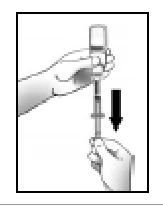
A. Transfer Invert the vial, with the syringe still attached and smoothly draw all the solution into the syringe. Tilt the vial to the side and back to check that all remaining solution has been drawn into the large opening in the rubber stopper. Carefully remove all air by pushing the air back into the vial, but making sure you have withdrawn all of the solution. | |
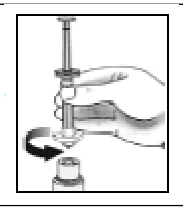
B. Disconnect Disconnect the syringe from the empty vial by unscrewing it counterclockwise. DO NOT PULL THE SYRINGE FROM THE VIAL WITHOUT UNSCREWING IT FIRST. |
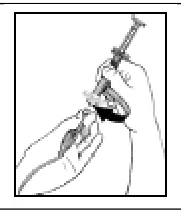
C. Infuse Attach the syringe to the butterfly set by screwing it in clockwise and follow the infusion instructions provided with Kovaltry with BIO-SET. |
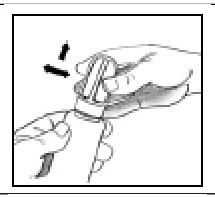
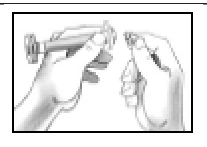
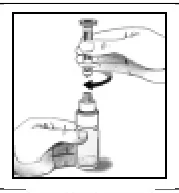
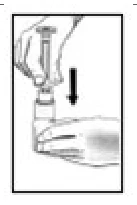
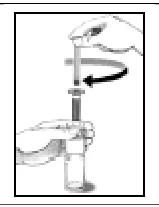
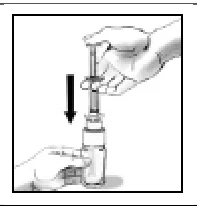
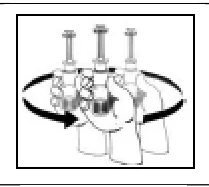
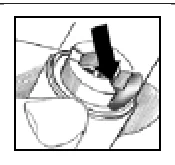
If receiving more than one vial, reconstitute each concentrate vial as described above with the diluent syringe provided. To combine two or more doses, use a larger plastic syringe (not provided) and administer as usual.
Parenteral drug products should be inspected visually for particulate matter and discoloration prior to administration, whenever solution and container permit.
USUAL DOSE:
Treatment of bleeding
How much KOVALTRY you should use and how often you should use it depends on many factors such as your weight, the severity of your hemophilia, where the bleed is and how serious it is, whether you have inhibitors and how high the inhibitor titre is and the Factor VIII level that is needed.
Your doctor will calculate the dose of KOVALTRY and how frequently you should use it to get the necessary level of Factor VIII activity in your blood. He/she should always adjust the amount of KOVALTRY to be administered and the frequency of administration according to your individual needs. Under certain circumstances larger amounts than those calculated may be required, especially for the initial dose.
Prevention of bleeding
If you are using KOVALTRY to prevent bleeding (prophylaxis), your doctor will calculate the dose for you. For an adult or adolescent (> 12 years of age) this will usually be in the range of 20 to 40 IU of Kovaltry per kg of body weight, given 2-3 times per week. However, in some cases, especially for younger patients, shorter dose intervals or higher doses may be necessary.
For children ≤12 years old, the recommended dose for routine prophylaxis is 20 to 50 IU of KOVALTRY per kg body weight twice weekly, three times weekly, or every other day according to individual requirements.
Laboratory tests
It is strongly recommended that appropriate laboratory tests be performed on your plasma at suitable intervals to ensure that adequate Factor VIII levels have been reached and are maintained. For major surgery in particular, close monitoring of the treatment by means of coagulation analysis must be carried out.
If bleeding is not controlled
If you feel the effect of KOVALTRY is too strong or too weak, talk to your doctor.
Patients with inhibitors
If you have been told by your doctor that you have developed Factor VIII inhibitors you may need to use a larger amount of KOVALTRY to control bleeding. If this dose does not control your bleeding your doctor may consider giving you an additional product, Factor VIIa concentrate or (activated) prothrombin complex concentrate.
These treatments should be prescribed by doctors with experience in the care of patients with hemophilia A. Speak to your doctor if you would like further information on this.
Do not increase your dose of KOVALTRY you use to control your bleeding without consulting your doctor.
Speed of administration
KOVALTRY should be injected intravenously over several minutes. The rate of administration should be determined by the patient’s comfort level.
Duration of treatment
Your doctor will tell you, how often and at what intervals KOVALTRY is to be administered.
Usually, replacement therapy with KOVALTRY is a life-time treatment.
Overdose:
No symptoms of overdose with recombinant coagulation Factor VIII have been reported.
| If you think you have taken too much KOVALTRY, contact your healthcare professional, hospital emergency department or regional Poison Control Centre immediately, even if there are no symptoms. |
Missed Dose:
- Proceed with your next dose immediately and continue at regular intervals as advised by your doctor.
- Do not take a double dose to make up for a forgotten dose.
Do not stop using KOVALTRY without consulting your doctor.
What are possible side effects from using KOVALTRY?
These are not all the possible side effects you may feel when taking KOVALTRY. If you experience any side effects not listed here, contact your healthcare professional. Please also see Product Monograph Part I: WARNINGS AND PRECAUTIONS.
common: may affect more than 1% and less than 10% of users
- lymph nodes enlarged
- heart palpitations
- rapid heartbeat
- stomach pain
- stomach discomfort
- indigestion
- fever
- chest discomfort
- local reactions where you injected the medication
- headache
- dizziness
- trouble falling asleep
- rash/itchy rash, allergic dermatitis, itching
Uncommon: may affect more than 0.1% and less than 1% of users
- hypersensitivity reactions including severe sudden allergic reaction (anaphylactic shock, e.g. tightness of the chest/general feeling of being unwell, dizziness and nausea and mildly reduced blood pressure, which may make you feel faint upon standing)
- dysgeusia (odd taste)
- flushing ( redness of the face)
- urticaria (swelling)
Serious Side Effects and What to do About Them
| Symptom/ Effect | Talk to your healthcare professional | Stop taking drug and get immediate medical help | |
| Only if severe | In all cases | ||
| Common | |||
| Lack of effect | |||
| Uncommon | |||
| Hypersensitivity reactions including severe sudden allergic reaction (anaphylactic shock, e.g. tightness of the chest/general feeling of being unwell, hives, dizziness and nausea and mildly reduced blood pressure, which may make you feel faint upon standing) | |||
If you have a troublesome symptom or side effect that is not listed here or becomes bad enough to interfere with your daily activities, talk to your healthcare professional.
Reporting Side Effects
You can help improve the safe use of health products for Canadians by reporting serious and unexpected side effects to Health Canada. Your report may help to identify new side effects and change the product safety information. 3 ways to report:
NOTE: Contact your health professional if you need information about how to manage your side effects. The Canada Vigilance Program does not provide medical advice. |
Storage:
Do not use this medicine after the expiry date stated on the labels and cartons
Store in a refrigerator (2°C - 8°C). Do not freeze. Keep the vial and the pre-filled syringe in the outer carton in order to protect from light.
You may store the product when kept in its outer carton at room temperature (up to 25°C) for a single period of up to 12 months. Once the product is removed from refrigeration, it cannot be returned to the refrigerator.
The reconstituted solution should be used immediately (within 3 hours). This product is for single use only. Any unused solution must be discarded.
.
Do not use KOVALTRY if you notice any particles or the solution is cloudy.
Keep out of reach and sight of children.
If you want more information about KOVALTRY:
- Talk to your healthcare professional
- Find the full product monograph that is prepared for healthcare professionals and includes this Patient Medication Information by visiting the Health Canada website [http://hc-sc.gc.ca/index-eng.php]; the manufacturer’s website http://www.bayer.ca or by calling Bayer Medical Information at 1-800-265-7382 or canada.medinfo@bayer.com.
Bayer Inc. 2920 Matheson Boulevard East, Mississauga, Ontario L4W 5R6 |

Last Revised April 20, 2017
© 2017, Bayer Inc.
® TM see www.bayer.ca/tm-mc