


Patient Medication Information: uses, side effects, how to take - Zonovate
What ZONOVATE® is used for:
ZONOVATE® is used to treat and prevent bleeding episodes in patients with hemophilia A.
How ZONOVATE® works:
In patients with hemophilia A, Factor VIII is missing or not working properly. ZONOVATE® replaces this faulty or missing ‘Factor VIII’ and helps blood to form clots at the site of bleeding.
The ingredients in ZONOVATE® are:
Medicinal ingredients: The medicinal ingredient is human coagulation Factor VIII, produced by recombinant DNA technology. Factor VIII is a protein naturally found in the blood that helps it to clot.
Non-medicinal ingredients: calcium chloride dihydrate, L-histidine, L-methionine, polysorbate 80, sodium chloride, sucrose
ZONOVATE® does not contain any human blood or plasma, albumin, preservatives, or added animal or human components in the final product, making it naturally free from the risk of transmission of blood-borne pathogens such as human immunodeficiency virus (HIV), hepatitis viruses, and parvovirus.
ZONOVATE® comes in the following dosage forms:
ZONOVATE® is available in single-dose vials that contain nominally 250, 500, 1000, 1500, 2000 or 3000 International Units (IU) per vial, with a prefilled syringe containing 4 mL 0.9% sodium chloride solution for injection (solvent). After reconstitution with the supplied solvent the prepared solution for injection will have the following concentration:
| Vial size | Approximate concentration of ZONOVATE® after reconstitution |
|---|---|
| 250 IU | 62.5 IU/mL |
| 500 IU | 125 IU/mL |
| 1000 IU | 250 IU/mL |
| 1500 IU | 375 IU/mL |
| 2000 IU | 500 IU/mL |
| 3000 IU | 750 IU/mL |
Each pack of ZONOVATE® contains a vial with white or slightly yellow powder, a 4 mL prefilled
ZONOVATE® Product Monograph Page 27 of 39 syringe with a clear colourless solution (solvent), a plunger rod and a vial adapter.
Do not use ZONOVATE® if:
You are allergic to the medicinal ingredient, or to any ingredient in the formulation (including hamster protein), or component of the container. If you are not sure, talk to your doctor before using this medicine.
ZONOVATE® is not indicated for treatment of von Willebrand disease.
People who already have health issues that affect the heart and blood vessels might have a higher chance of heart problems when they use Factor VIII replacement therapy.
To help avoid side effects and ensure proper use, talk to your healthcare professional before you take ZONOVATE®. Talk about any health conditions or problems you may have, including if you:
- Are taking, have recently taken or might take any other medicines. This includes medicines obtained without a prescription or herbal medicines.
Are pregnant or breast-feeding, or if you think that you may be pregnant or are planning to have a baby.
Other warnings you should know about:
Talk to your doctor if you do not think your bleed is being controlled with the dose you receive, as there can be several reasons for this. Some people using this medicine can develop antibodies to Factor VIII (also known as ‘Factor VIII inhibitors’). Factor VIII inhibitors make ZONOVATE® less effective in preventing or controlling bleeding. If this happens you may need a higher dose of ZONOVATE® or a different medicine to control your bleed.
Do not increase the total dose of ZONOVATE® to control your bleed without talking to your doctor. You should tell your doctor if you have been previously treated with Factor VIII products, especially if you developed inhibitors, since there might be a higher risk that it happens again.
If your bleed does not stop contact your doctor, your hemophilia treatment centre or go to a hospital immediately.
ZONOVATE® can cause some serious side effects including allergic reactions. You will need to be aware of these while you are using ZONOVATE®.
Tell your healthcare professional about all the medicines you take, including any drugs, vitamins, minerals, natural supplements or alternative medicines.
The following may interact with ZONOVATE®:
There are no known interactions of ZONOVATE® with other medicinal products.
How to take ZONOVATE®:
Treatment with ZONOVATE® will be started by a doctor who is experienced in the care of patients with hemophilia A. Always use this medicine exactly as your doctor has told you. Check with your doctor if you are not sure.
ZONOVATE® is given as an injection into a vein (intravenously). Please refer to the end of this insert for instructions on how to prepare and administer ZONOVATE®.
Your doctor will calculate your dose for you. This will depend on your weight and what the medicine is being used for.
Usual dose:
Prevention of bleeding
- The usual dose of ZONOVATE® is 20 to 50 International Units (IU) per kg of body weight.
- The injection is given every 2 to 3 days.
Treatment of bleeding
- The dose of ZONOVATE® is calculated depending on your body weight and the Factor VIII levels to be achieved.
- The amount of ZONOVATE® needed will depend on where the bleed is and how severe it is.
Use in children and adolescents
ZONOVATE® can be used in children. In children (below the age of 12) higher doses or more frequent injections may be needed. Children (above the age of 12) and adolescents can use the same dose as adults.
Overdose:
Missed Dose:
If you are taking ZONOVATE® to prevent bleeds you should contact your doctor if you have missed a dose and do not know how to compensate for this.
Stopping Treatment:
If you stop using ZONOVATE® you may no longer be protected against bleeding or a current bleed may not stop. Do not stop using ZONOVATE® without talking to your doctor.
Possible side effects from using ZONOVATE®:
These are not all the possible side effects you may feel when taking ZONOVATE®. If you experience any side effects not listed here, contact your healthcare professional.
If severe, sudden allergic reactions (anaphylactic reactions) occur (very rare), the injection must be stopped immediately. You must contact your doctor immediately if you have one of the following early symptoms:
- difficulty in breathing, shortness of breath or wheezing
- chest tightness
- swelling of the lips and tongue
- rash, hives, wheals or generalised itching
- feeling dizzy or loss of consciousness
- low blood pressure (having pale and cold skin, fast heartbeat)
If you think you, or a person you are caring for have taken too much ZONOVATE®, contact your healthcare professional, your hemophilia treatment centre, your regional poison control centre or Health Canada’s toll-free number, 1-844 POISON-X (1-844-764-7669) immediately, even if there are no signs or symptoms immediately, even if there are no symptoms.
Severe symptoms, including difficulty in swallowing or breathing and red or swollen face or hands, require prompt emergency treatment.
If you have an allergic reaction, your doctor may change your medicine.
Side effects in patients who have previously been treated with Factor VIII products Common side effects (may affect up to 1 in 10 people):
- blood tests showing changes in the way the liver functions
- reactions (redness and itching) around the site where you injected the medicine
Uncommon side effects (may affect up to 1 in 100 people):
- feeling tired
- headache
- feeling dizzy
- difficulty sleeping (insomnia)
- fast heartbeat
- increased blood pressure
- rash
- fever
- feeling hot
- stiffness of muscles
- pain in muscles
- pain in legs and arms
- swelling of legs and feet
- joint disease
- bruising
Side effects in children and adolescents
The side effects observed in children and adolescents are the same as observed in adults. Side effects in patients who have never been previously treated with Factor VIII products
Very common side effects (more than 1 in 10 people):
- formation of neutralizing antibodies to Factor VIII
Common side effects (may affect up to 1 in 10 people):
- flushing of the skin
- inflammation of vein
- bleeding into joint spaces
- bleeding in muscle tissue
- cough
- redness around the site where you placed catheter
- vomiting
- rash
- fever
Serious side effects and what to do about them
| Frequency/Side | Talk to your healthcare | Stop taking this |
|---|
Reporting Side Effects
You can report any suspected side effects associated with the use of health products to Health Canada by:
- Visiting the Web page on Adverse Reaction Reporting (canada.ca/drug-device-reporting) for information on how to report online, by mail or by fax; or
- Calling toll-free at 1-866-234-2345.
NOTE: Contact your healthcare professional if you need information about how to manage your side effects. The Canada Vigilance Program does not provide medical advice.
| Effect/Symptom | professional | drug and get immediate medical help | |
|---|---|---|---|
| Only if severe | In all cases | ||
| Very Common | |||
Lack of effect: Bleeding does not stop after taking ZONOVATE® | ✓ | ||
| Very Rare | |||
Severe, sudden allergic reactions: Difficulty breathing or swallowing, chest tightness, swelling of lips and tongue, rash, hives, dizziness, pale and cold skin, fast heartbeat, red or swollen face or hands | ✓ | ✓ | |
If you have a troublesome symptom or side effect that is not listed here or becomes bad enough to interfere with your daily activities, talk to your healthcare professional.
Storage:
Keep this medicine out of the sight and reach of children.
Do not use this medicine after the expiry date which is stated on the carton, on the vial, on the vial adapter, and on the prefilled syringe labels. The expiry date refers to the last day of that month.
The powder in the vial appears as a white or slightly yellow powder. Do not use the powder if the colour has changed.
Prior to Reconstitution
Store in original package in order to protect from light. Do not freeze.
ZONOVATE® vials can be stored in the refrigerator (2°C – 8°C) up to the expiration date. During the shelf life, the product may also be kept at room temperature up to 30°C for a single period no longer than12 months, or up to 40°C for a single period no longer than 3 months.
If you choose to store ZONOVATE® at room temperature:
- Note the date that the product is removed from refrigeration on the carton.
Do not use after 12 months if stored up to 30°C or after 3 months if stored up to 40°C or
after the expiration date listed on the carton, whichever is earlier.
- Do not return the product to the refrigerator.
After Reconstitution
Once you have reconstituted ZONOVATE® it should be used immediately. If you cannot use the reconstituted solution immediately, it must be used within 24 hours when stored in the refrigerator at 2°C - 8°C, within 4 hours when stored at room temperature up to 30°C, or within 2 hours when stored between 30°C and 40°C. Store the reconstituted product in the vial, with the vial adapter and the syringe still attached.
If not used immediately the medicine may no longer be sterile and could cause infection. Do not store the solution without your doctor’s advice.
The reconstituted solution will be clear to slightly opalescent. Do not use this medicine if you notice that it is cloudy or contains visible particles.
If you want more information about ZONOVATE®:
- Talk to your healthcare professional
- Find the full product monograph that is prepared for healthcare professionals and includes this Patient Medication Information by visiting the Health Canada Drug Product Database website (Drug Product Database: Access the database); the manufacturer’s website http://www.novonordisk.ca, or by calling 1-800-465-4334.
ZONOVATE® is a registered trademark of Novo Nordisk Health Care AG and is used under license by Novo Nordisk Canada Inc.
MixPro® is a registered trademark of Novo Nordisk A/S and is used under license by Novo Nordisk Canada Inc.
Date of Authorization: February 10, 2026
© 2025
Novo Nordisk Canada Inc.
INSTRUCTIONS ON HOW TO USE ZONOVATE®
READ THESE INSTRUCTIONS CAREFULLY BEFORE USING ZONOVATE®.
ZONOVATE® is supplied as a powder. Before injection (administration) it must be reconstituted with the solvent supplied in the syringe. The solvent is a 0.9% sodium chloride solution for injection. The reconstituted ZONOVATE® must be injected into your vein (intravenous injection). The equipment in this package is designed to reconstitute and inject ZONOVATE®.
You will also need an infusion set (tubing and butterfly needle), sterile alcohol swabs, gauze pads and plasters. These devices are not included in the ZONOVATE® package.
Do not use the equipment without proper training from your doctor or nurse. Always wash your hands and ensure that the area around you is clean.
When you prepare and inject medication directly into the veins, it is important to use a clean and germ free (aseptic) technique. Improper technique can introduce germs that can infect the blood.
Do not open the equipment until you are ready to use it.
Do not use the equipment if it has been dropped, or if it is damaged. Use a new package instead.
Do not use the equipment if it is expired. Use a new package instead. The expiry date is printed on the outer carton, on the vial, on the vial adapter, and on the prefilled syringe.
Do not use the equipment if you suspect it is contaminated. Use a new package instead.
Do not dispose of any of the items until after you have injected the reconstituted solution. The equipment is for single use only.
Contents
The package contains:
- 1 vial with ZONOVATE® powder
- 1 vial adapter
- 1 prefilled syringe with solvent
- 1 plunger rod (placed under the syringe)
The prefilled solvent syringe with sterile vial adapter, together serve as a needleless reconstitution system named the MixPro®.
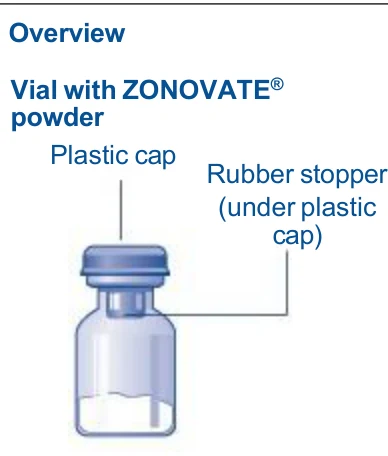
Overview
Vial with ZONOVATE® powder
Plastic cap Rubber stopper
(under plastic cap)
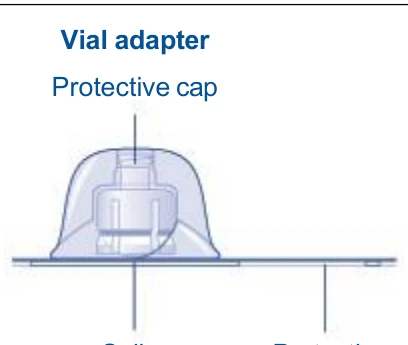
Vial adapter
Protective cap
Spike Protective (under protective paper paper)
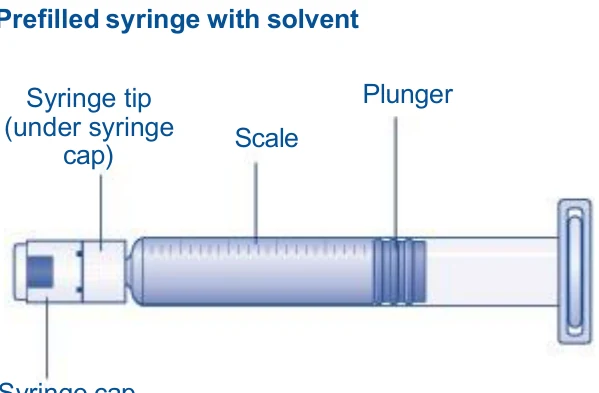
Prefilled syringe with solvent
Syringe tip Plunger (under syringe Scale
cap)
Syringe cap
Plunger rod
Thread Wide top
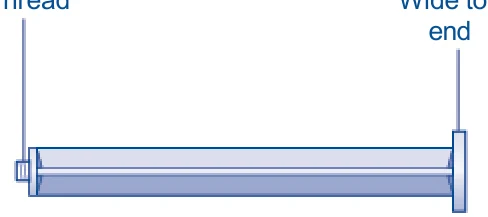
end
- 1. Prepare the Vial and Syringe
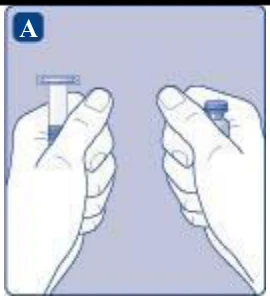
Step A
A
Take out the number of ZONOVATE® packages you need.
Check the expiry date.
Check the name, strength and colour of the package, to make sure it contains the correct product.
Wash your hands and dry them properly using a clean towel or air dry.
Take the vial, the vial adapter and the prefilled syringe out of the carton. Leave the plunger rod untouched in the carton.
Bring the vial and the prefilled syringe to room temperature. You can do this by holding them in your hands until they feel as warm as your hands.
Do not use any other way to heat the vial and prefilled syringe.
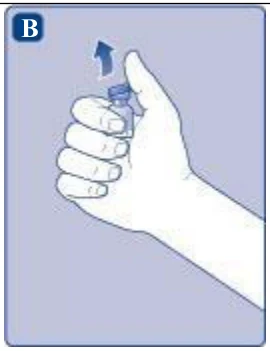
Step B
B
Remove the plastic cap from the vial. If the plastic cap is loose or missing, do not use the vial.
Wipe the rubber stopper with a sterile alcohol swab and allow it to air dry for a few seconds before use to ensure that it is as germ free as possible.
Do not touch the rubber stopper with your fingers as this can transfer germs.
- 2. Attach the Vial Adapter
| Step C | 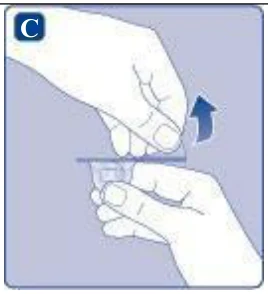 C | Remove the protective paper from the vial adapter. If the protective paper is not fully sealed or if it is broken, do not use the vial adapter. Do not take the vial adapter out of the protective cap with your fingers. If you touch the spike on the vial adapter, germs from your fingers can be transferred. | |
|---|---|---|---|
| Step D | 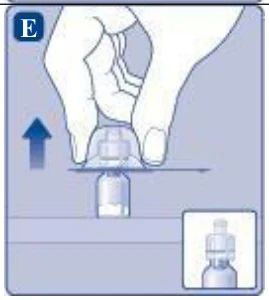 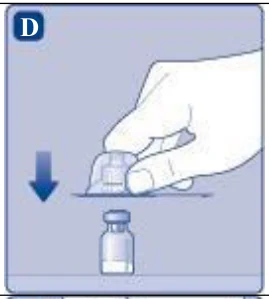 D | Place the vial on a flat and solid surface. Turn over the protective cap, and snap the vial adapter onto the vial. Once attached, do not remove the vial adapter from the vial. | |
| Step E | E | Lightly squeeze the protective cap with your thumb and index finger as shown. Remove the protective cap from the vial adapter. Do not lift the vial adapter from the vial when removing the protective cap. | |
| |||
| Step F | 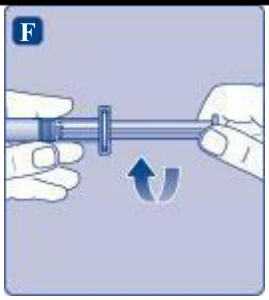 F | Grasp the plunger rod by the wide top end and take it out of the carton. Do not touch the sides or the thread of the plunger rod. If you touch the sides or the thread, germs from your fingers can be transferred. Immediately connect the plunger rod to the syringe by turning it clockwise into the plunger inside the prefilled syringe until resistance is felt. | |
| Step G | 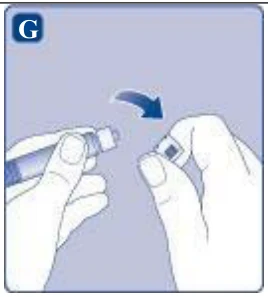 G | Remove the syringe cap from the prefilled syringe by bending it down until the perforation breaks. Do not touch the syringe tip under the syringe cap. If you touch the syringe tip, germs from your fingers can be transferred. If the syringe cap is loose or missing, do not use the prefilled syringe. | |
|---|---|---|---|
| Step H | 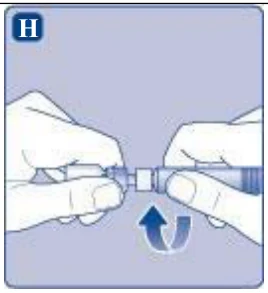 H | Screw the prefilled syringe securely onto the vial adapter until resistance is felt. | |
| |||
| Step I | 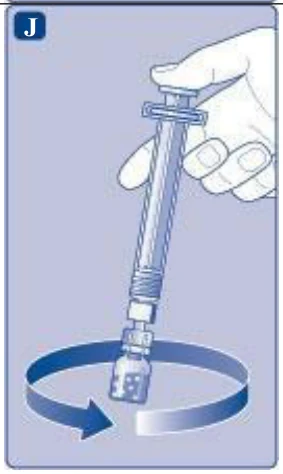 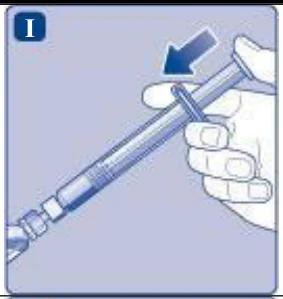 I | Hold the prefilled syringe slightly tilted with the vial pointing downwards. Push the plunger rod to inject all the solvent into the vial. | |
| Step J | J | Keep the plunger rod pressed down and swirl the vial gently until all the powder is dissolved. Do not shake the vial as this will cause foaming. Check the reconstituted solution. It must be clear to slightly opalescent (slightly unclear). If you notice visible particles or discoloration, do not use it. Use a new package instead. | |
| ZONOVATE® is recommended to be used immediately after it has been reconstituted. This is because if left, the medicine may no longer be sterile and could cause infections. | |||
If you cannot use the reconstituted ZONOVATE® solution immediately, it must be used within 24 hours when stored in the refrigerator at 2°C - 8°C, within 4 hours when stored at room temperature up to 30°C, or within 2 hours when stored between 30°C and 40°C. Store the reconstituted product in the vial, with the vial adapter and the syringe still attached. Do not freeze reconstituted ZONOVATE® solution or store it in syringes. Do not store the solution without your doctor’s advice. Keep reconstituted ZONOVATE® solution out of direct light. If your dose requires more than one vial, repeat step A to J with additional vials, vial adapters and prefilled syringes until you have reached your required dose. | ||
|---|---|---|
| Step K | 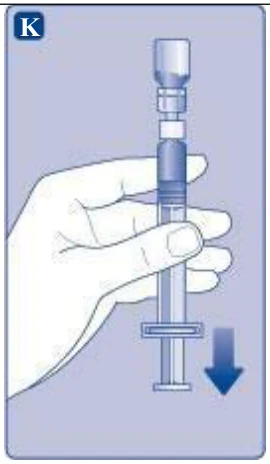 K | Keep the plunger rod pushed completely in. Turn the syringe with the vial upside down. Stop pushing the plunger rod and let it move back on its own while the reconstituted solution fills the syringe. Pull the plunger rod slightly downwards to draw the reconstituted solution into the syringe. In case you only need part of the entire vial, use the scale on the syringe to see how much reconstituted solution you withdraw, as instructed by your doctor or nurse. If, at any point, there is too much air in the syringe, inject the air back into the vial. While holding the vial upside down, tap the syringe gently to let any air bubbles rise to the top. Push the plunger rod slowly until all air bubbles are gone. |
| Step L | 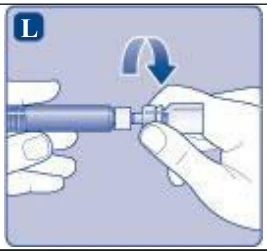 L | Unscrew the vial adapter with the vial. Do not touch the syringe tip. If you touch the syringe tip, germs from your fingers can be transferred. |
| ||
ZONOVATE® is now ready to inject into your vein.
- Inject the reconstituted solution as instructed by your doctor or nurse.
- Inject slowly over 2 to 5 minutes.
- Do not mix ZONOVATE® with any other intravenous infusions or medications.
Injecting ZONOVATE® via needleless connectors for intravenous (IV) catheters
Caution: The MixPro® prefilled solvent syringe is made of glass and is designed to be compatible with standard luer-lock connections. Some needleless connectors with an internal spike are incompatible with the prefilled syringe. This incompatibility may prevent administration of the drug and/or result in damage to the needleless connector.
Injecting the solution via a central venous access device (CVAD) such as a central venous catheter or a subcutaneous port:
- Use a clean and germ free (aseptic) technique. Follow the instructions for proper use for your connector and CVAD in consultation with your doctor or nurse.
- Injecting into a CVAD may require using a sterile 10 mL plastic syringe for withdrawal of the reconstituted solution. This should be done right after step J.
- If the CVAD line needs to be flushed before or after ZONOVATE® injection, use 0.9% Sodium Chloride solution for injection.
If you have encountered any problems with attaching the prefilled solvent syringe to any luer-lock compatible device, or have any questions please contact Novo Nordisk at 1-800-465-4334.
- 6. Disposal
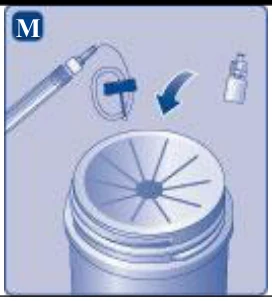
Step M
M
After injection, safely dispose of all unused ZONOVATE® solution, the syringe with the infusion set, the vial with the vial adapter, and other waste materials as instructed by your healthcare provider.
Do not throw it out with the ordinary household waste.
Do not disassemble the equipment before disposal. Do not reuse the equipment.