


Product Monograph - Lapelga
Recent Major Label Changes
None at time of the most recent authorization
Table of Contents
Certain sections or subsections that are not applicable at the time of preparation of the most recent authorized product monograph are not listed.
Recent Major Label Changes ....................................................................................... 2
Table of Contents .......................................................................................................... 2
Part 1: Healthcare Professional Information ............................................................... 4
- 1.
Indications ........................................................................................................... 4
1.1 Pediatrics (< 18 years of age) ......................................................................... 4
1.2 Geriatrics (> 65 year of age) ........................................................................... 4
- 2. Contraindications ............................................................................................... 4
- 3. Serious Warnings and Precautions Box .......................................................... 4
- 4.
Dosage and Administration ............................................................................... 4
4.1 Dosing Considerations ................................................................................... 4
4.2 Recommended Dose and Dosage Adjustment ............................................... 5
4.3 Reconstitution ................................................................................................. 5
4.4 Administration ................................................................................................. 5
4.5 Missed Dose ................................................................................................... 5
- 5. Overdose ............................................................................................................. 5
- 6. Dose Forms, Strengths, Composition, and Packaging ................................... 6
- 7.
Warnings and Precautions ................................................................................ 7
General ................................................................................................................. 7
Carcinogenesis and Genotoxicity ......................................................................... 7
Cardiovascular ...................................................................................................... 8
Hematologic.......................................................................................................... 8
Immune ................................................................................................................ 8
Monitoring and Laboratory Tests .......................................................................... 9
Renal .................................................................................................................... 9
Reproductive Health ............................................................................................. 9
Respiratory ........................................................................................................... 9
7.1 Special Populations ...................................................................................... 10
7.1.1. Pregnancy ................................................................................................... 10
7.1.2. Breastfeeding .............................................................................................. 10
7.1.3. Pediatrics ..................................................................................................... 10
7.1.4. Geriatrics ..................................................................................................... 10
- 8.
Adverse Reactions ........................................................................................... 10
8.1 Adverse Reaction Overview ......................................................................... 10
8.2 Clinical Trial Adverse Reactions ................................................................... 10
8.3 Less Common Clinical Trial Adverse Reactions ........................................... 12
8.4 Abnormal Laboratory Findings: Hematologic, Clinical Chemistry and Other Quantitative Data ................................................................................................ 13
8.5 Post-Market Adverse Reactions ................................................................... 13
- 9.
Drug Interactions .............................................................................................. 13
9.2 Drug Interactions Overview .......................................................................... 13
9.3 Drug-Behavioural Interactions ...................................................................... 13
9.4 Drug-Drug Interactions ................................................................................. 13
9.5 Drug-Food Interactions ................................................................................. 14
9.6 Drug-Herb Interactions ................................................................................. 14
9.7 Drug-Laboratory Test Interactions ................................................................ 14
- 10.
Clinical Pharmacology ..................................................................................... 14
10.1 Mechanism of Action .................................................................................. 14
10.2 Pharmacodynamics .................................................................................... 14
10.3 Pharmacokinetics ....................................................................................... 14
10.4 Immunogenicity .......................................................................................... 15
- 11. Storage, Stability, and Disposal ...................................................................... 16
- 12. Special Handling Instructions ......................................................................... 16
Part 2: Scientific Information ..................................................................................... 17
- 13. Pharmaceutical Information ............................................................................ 17
- 14.
Clinical Trials .................................................................................................... 17
14.1 Clinical Trials by Indication ......................................................................... 17
- 15. Microbiology ..................................................................................................... 19
- 16. Non-Clinical Toxicology ................................................................................... 20
- 17. Supporting Product Monographs ................................................................... 21
Patient Medication Information .................................................................................. 22
Patient Medication Information .................................................................................. 36
Part 1: Healthcare Professional Information
LAPELGA® (pegfilgrastim Injection) is a biosimilar biologic drug (biosimilar) to Neulasta (pegfilgrastim injection). A biosimilar is a biologic drug that was granted authorization based on a demonstration of similarity to a version previously authorized in Canada, known as the reference biologic drug.
1. Indications
LAPELGA® (pegfilgrastim) is indicated to decrease the incidence of infection, as manifested by febrile neutropenia, in patients with non-myeloid malignancies receiving myelosuppressive anti-neoplastic drugs.
1.1 Pediatrics (< 18 years of age)
No data are available to Health Canada; therefore, Health Canada has not authorized an indication for pediatric use.
1.2 Geriatrics (> 65 year of age)
No data are available to Health Canada; therefore Health Canada has not authorized on indication for geriatric use.
2. Contraindications
Lapelga® (pegfilgrastim) is contraindicated in patients with known hypersensitivity to E. coli-derived proteins‚ pegfilgrastim‚ filgrastim, or to any ingredient in the formulation, including any non-medicinal ingredient, or to component of the container. For a complete listing of the components, see the 6 Dosage Forms, Strengths, Composition, and Packaging section of the Product Monograph.
3. Serious Warnings and Precautions Box
4. Dosage and Administration
4.1 Dosing Considerations
LAPELGA® (pegfilgrastim) should be administered no sooner than 24 hours after the administration of cytotoxic chemotherapy (see 7. Warnings and Precautions).
- Splenic rupture, including fatal cases, has been reported following the administration of pegfilgrastim and its parent compound, filgrastim (see 7 Warnings and Precautions: General).
- Severe sickle cell crises have been associated with the use of pegfilgrastim in patients with sickle cell trait or sickle cell disease. Severe sickle cell crises, in some cases resulting in death, have also been associated with filgrastim, the parent compound of pegfilgrastim (see 7 Warnings and Precautions: Hematologic).
Renal impairment, including end-stage renal disease, appears to have no effect on the pharmacokinetics of Lapelga® and no dosage adjustment is required.
4.2 Recommended Dose and Dosage Adjustment
The recommended dose of LAPELGA® is a single subcutaneous injection of 6 mg, administered once per cycle of chemotherapy. LAPELGA® should be administered no sooner than 24 hours after the administration of cytotoxic chemotherapy (see 7 Warnings and Precautions).
Health Canada has not authorized an indication for pediatric use for LAPELGA® (see 1 Indications).
4.3 Reconstitution
Not applicable. Product does not need to be reconstituted.
4.4 Administration
LAPELGA® is intended for subcutaneous injection only and should not be given by any other route of administration. LAPELGA® should not be mixed with any diluents. LAPELGA® should not be vigorously shaken.
LAPELGA® Pre-filled Syringe
LAPELGA® is supplied in single-use pre-filled syringes with a *BD UltraSafe Plus™ Passive Needle Guard to prevent accidental needle stick injury. When the pre-filled syringe is emptied of all the medication, the passive needle-guard mechanism pushes over the needle, withdrawing it from the skin and covering it completely. The pre-filled syringe should be disposed of by placing the entire pre-filled syringe with guard activated into an approved puncture-proof container.
*BD UltraSafe Plus™ Passive is a trademark of Becton, Dickinson and Company.
LAPELGA® Pre-filled Autoinjector
LAPELGA® is supplied in a single-use pre-filled autoinjector. The autoinjector was designed to allow for simplified and accurate dose delivery making dose administration easier.
The pre-filled autoinjector should be disposed of by placing the entire pre-filled autoinjector into an approved puncture-proof container.
4.5 Missed Dose
If a scheduled dose is missed, LAPELGA® should not be administered less than 14 days before subsequent administration of cytotoxic chemotherapy.
5. Overdose
The maximum tolerated dose of LAPELGA® (pegfilgrastim) has not been determined in humans. Pegfilgrastim administered at a dose of 300 mcg/kg (n = 12), approximately three times the recommended dose, exhibited an adverse event profile similar to that observed at the recommended dose.
For the most recent information in the management of a suspected drug overdose, contact your regional poison control centre or Health Canada’s toll-free number, 1-844 POISON-X (1-844-764-7669).
- 6. Dose Forms, Strengths, Composition, and Packaging
To help ensure the traceability of biologic products, including biosimilars, health professionals should recognize the importance of recording both the brand name and the non-proprietary (active ingredient) name as well as other product-specific identifiers such as the Drug Identification Number (DIN) and the batch/lot number of the product supplied.
Table 1. Dosage Forms, Strengths, and Composition
LAPELGA® (pegfilgrastim) is a sterile‚ clear‚ colourless‚ preservative-free liquid for SC administration. Each single-use pre-filled syringe and single-use pre-filled autoinjector (0.6 mL) of LAPELGA® (10 mg/mL) contains 6 mg of pegfilgrastim (based on protein mass only). The product is formulated at pH 4.0 in 10 mM acetate, 5% sorbitol, 0.004% polysorbate 20 and water for injection (q.s. to 0.6 mL).
Availability of Dosage Forms
LAPELGA® Pre-filled Syringe
LAPELGA® is supplied as a preservative-free solution (0.6 mL) containing 6 mg of pegfilgrastim (10 mg/mL) in a 1 mL, glass (USP Type I), single-use pre-filled syringe with a 27 gauge, ½ inch needle, and a BD UltraSafe PLUS™ Passive™ Needle Guard.
LAPELGA® is provided in a carton containing one blister packaged pre-filled syringe along with the package insert.
The LAPELGA® syringe plunger stopper and needle cover are not made with natural rubber latex.
LAPELGA® Pre-filled Autoinjector
LAPELGA® is supplied as a preservative-free solution (0.6 mL) containing 6 mg of pegfilgrastim (10 mg/mL) in a 1 mL, glass (USP Type I), single-use autoinjector containing a pre-filled syringe with a 27 gauge and ½ inch needle.
LAPELGA® is provided in a carton containing one pre-filled autoinjector along with the package insert.
The needle cover on the single-use pre-filled autoinjector is not made with natural rubber latex.
To reduce the risk of accidental needle sticks to users, each single-use pre-filled syringe is equipped with a BD UltraSafe PLUS™ Passive Needle Guard that is passively activated to cover the needle during disposal.
| Route of Administration | Dosage Form / Strength/Composition | Non-Medicinal Ingredients |
| Subcutaneous (SC) Injection | Sterile Solution for Injection / 6 mg/0.6 mL (10 mg/mL) | Acetate polysorbate 20 sorbitol water for injection |
Description
LAPELGA® (pegfilgrastim) is a biosimilar product that is a long-acting form of recombinant human granulocyte colony-stimulating factor (r-metHuG-CSF) or filgrastim. LAPELGA® is composed of filgrastim with a 20,000 dalton polyethylene glycol (PEG) molecule covalently bound to the N-terminal methionine residue. Filgrastim is a 175 amino acid protein with a molecular weight of 18,800 daltons; LAPELGA® has a total molecular weight of 39,000 daltons.
7. Warnings and Precautions
Please see the 3 Serious Warnings and Precautions Box at the beginning of Part 1: Healthcare Professional Information.
General
LAPELGA® (pegfilgrastim) has not been evaluated for PBPC (peripheral blood progenitor cell) mobilization. Therefore, it should not be used in that setting.
Splenic Rupture: Splenic rupture, including fatal cases, has been reported following the administration of pegfilgrastim and its parent compound, filgrastim. Patients receiving LAPELGA® who report left upper abdominal and/or shoulder tip pain should be evaluated for an enlarged spleen or splenic rupture.
Simultaneous Use with Chemotherapy and Radiation Therapy: The safety and efficacy of LAPELGA® administered concurrently with cytotoxic chemotherapy have not been established. Because of the potential for an increase in sensitivity of rapidly dividing myeloid cells to cytotoxic chemotherapy‚ LAPELGA® should not be administered in the period between 14 days before and 24 hours after administration of cytotoxic chemotherapy (see 4 Dosage and Administration).
The safety and efficacy of LAPELGA® have not been evaluated in patients receiving chemotherapy associated with delayed myelosuppression (eg, nitrosoureas), mitomycin C, or myelosuppressive doses of anti-metabolites such as 5-fluorouracil (5-FU). Concomitant use of pegfilgrastim with 5-FU or other anti-metabolites has not been evaluated in humans; although it has been studied and shown to potentiate myelosuppression in animal models (see 16 Non-Clinical Toxicology).
The safety and efficacy of pegfilgrastim have not been evaluated in patients receiving radiation therapy, except for patients with breast or lung cancer.
Carcinogenesis and Genotoxicity
No carcinogenesis or mutagenesis studies were conducted with LAPELGA®.
Potential Effect on Malignant Cells: LAPELGA® (pegfilgrastim) and filgrastim are growth factors that primarily stimulate production of neutrophils and neutrophil precursors by binding to the G-CSF receptor. Overall, the possibility that LAPELGA® can act as a growth factor for any tumour type cannot be excluded. The use of LAPELGA® in chronic myeloid leukemia (CML) and myelodysplastic syndrome (MDS) has not been studied. .
MDS and AML in Breast Cancer and Lung Cancer Patients: In the post-marketing observational study setting, findings showed that pegfilgrastim is associated with an increased risk of MDS and AML in breast and lung cancer patients when used in conjunction with chemotherapy and/or radiotherapy. Monitor patients for signs and symptoms of MDS/AML in these settings.
Cardiovascular
Aortitis: Aortitis has been reported in patients receiving pegfilgrastim and may present with generalized signs and symptoms such as fever and increased inflammatory markers. Consider aortitis in patients who develop these signs and symptoms without known etiology.
Capillary Leak Syndrome: Capillary leak syndrome (CLS) has been reported after the administration of pegfilgrastim or filgrastim. CLS can cause circulatory shock and may be fatal, and is characterized by hypotension, hypoalbuminemia, edema, and hemoconcentration. Episodes vary in frequency, severity and may be life-threatening if treatment is delayed. Patients who develop symptoms of capillary leak syndrome should be closely monitored and receive treatment, which may include a need for intensive care.
Hematologic
Sickle Cell Crises: Severe sickle cell crises have been associated with the use of LAPELGA® in patients with sickle cell trait or sickle cell disease. Severe sickle cell crises, in some cases resulting in death, have also been associated with filgrastim, the parent compound of pegfilgrastim. Only physicians qualified by specialized training or experience in the treatment of patients with sickle cell trait and sickle cell disease should prescribe LAPELGA® for such patients, and only after careful consideration of the potential risks and benefits.
Leukocytosis: In clinical studies with pegfilgrastim, white blood cell counts of 100 x 109/L or greater have been reported in less than 1% of patients with cancer receiving myelosuppressive chemotherapy (n = 930), and were not associated with any reported adverse clinical effects (see 7 Warnings and Precautions, Monitoring and Laboratory Tests).
In studies of pegfilgrastim administration after chemotherapy‚ most reported side effects were consistent with those usually seen as a result of cytotoxic chemotherapy (see 8 Adverse Reactions). Because of the potential for patients to receive full doses of chemotherapy on the prescribed schedule‚ patients may be at greater risk of thrombocytopenia‚ anemia‚ and non-hematologic consequences of increased chemotherapy doses (please refer to the prescribing information for specific chemotherapy agents). Regular monitoring of hematocrit value and platelet count is recommended. Furthermore, care should be exercised in the administration of LAPELGA® in conjunction with drugs known to lower platelet count.
Thrombocytopenia: Thrombocytopenia, including serious events, has been reported in patients receiving pegfilgrastim. Platelet counts should be monitored regularly as clinically indicated.
Immune
Hypersensitivity/Allergic Reactions: Hypersensitivity including serious allergic reactions and anaphylactic reactions, skin rash, urticaria and erythema/flushing occurring on initial or subsequent treatment have been reported both with pegfilgrastim and filgrastim. In some cases, symptoms have recurred with rechallenge, suggesting a causal relationship. In rare cases, allergic reactions including anaphylaxis recurred within days after initial anti-allergic treatment was discontinued. If a serious allergic reaction or an anaphylactic reaction occurs, appropriate therapy should be administered and further use of LAPELGA® should be discontinued. Antibodies to filgrastim or pegfilgrastim have been reported, although no neutralizing antibodies have been reported (see 10.4 Immunogenicity). Do not administer LAPELGA® to patients with a history of hypersensitivity to filgrastim or pegfilgrastim.
Cutaneous Vasculitis: Uncommon (≥ 1 / 1,000 to < 1 / 100)) events of cutaneous vasculitis have been reported in patients treated with pegfilgrastim. The mechanism of vasculitis in patients receiving LAPELGA® is unknown.
Monitoring and Laboratory Tests
To assess a patient's hematologic status and ability to tolerate myelosuppressive chemotherapy, a complete blood count (CBC) and platelet count should be obtained before chemotherapy is administered. Pegfilgrastim produced ANC (absolute neutrophil count) profiles similar to daily filgrastim, including earlier ANC nadir, shorter duration of severe neutropenia, and accelerated ANC recovery, compared with ANC profiles observed without growth factor support. Regular monitoring of hematocrit value, white blood cell count and platelet count, as clinically indicated, is recommended.
Renal
Glomerulonephritis: Glomerulonephritis has been reported in patients receiving filgrastim and pegfilgrastim. Generally, events of glomerulonephritis resolved after dose reduction or withdrawal of filgrastim and pegfilgrastim. Urinalysis monitoring is recommended.
Reproductive Health
Fertility
No studies evaluating sexual function or reproduction in humans were conducted with pegfilgrastim.
Function
No studies evaluating sexual function or reproduction in humans were conducted with pegfilgrastim.
Respiratory
Acute respiratory distress syndrome (ARDS): Acute respiratory distress syndrome (ARDS) has been reported following administration of pegfilgrastim and is postulated to be secondary to an influx of neutrophils to sites of inflammation in the lungs. Neutropenic patients receiving LAPELGA® who develop fever, lung infiltrates, or respiratory distress should be evaluated for the possibility of ARDS. In the event that ARDS occurs, LAPELGA® should be discontinued and/or withheld until resolution of ARDS and patients should receive appropriate medical management for this condition.
7.1 Special Populations
7.1.1. Pregnancy
There were no pregnant women exposed to pegfilgrastim in clinical trials. LAPELGA® should be used during pregnancy only if the potential benefit outweighs the risk to the fetus (see 16 Non-Clinical Toxicology).
7.1.2. Breastfeeding
It is not known whether pegfilgrastim is excreted in human milk. Because many drugs are excreted in human milk‚ LAPELGA® is not recommended for women who are breast-feeding. LAPELGA® should only be administered to a nursing woman if the potential benefit outweighs the risk.
7.1.3. Pediatrics
Pediatrics (< 18 years of age): The safety and effectiveness of LAPELGA® in pediatric patients have not been established.
7.1.4. Geriatrics
Geriatrics (> 65 years of age): Of the total number of subjects with cancer who received pegfilgrastim in clinical studies (n = 930), 139 subjects (15%) were 65 years or older and 18 subjects (2%) were 75 years or older. No overall differences in safety or effectiveness were observed between these patients and younger patients, and other reported clinical experience has not identified differences in responses between the elderly and younger patients; however, due to the small number of elderly subjects, small but clinically relevant differences cannot be excluded.
8. Adverse Reactions
8.1 Adverse Reaction Overview
The most frequently reported study drug-related adverse event was bone pain, for which the incidence in patients treated with pegfilgrastim was similar to that in patients treated with filgrastim. Bone pain was generally reported as mild-to-moderate, could be controlled in most patients with non-narcotic analgesia.
See 7 Warnings and Precautions regarding Splenic Rupture, ARDS, Hypersensitivity/Allergic Reactions, and Sickle Cell Crises.
8.2 Clinical Trial Adverse Reactions
Clinical trials are conducted under very specific conditions. Therefore, the frequencies of adverse reactions observed in the clinical trials may not reflect frequencies observed in clinical practice and should not be compared to frequencies reported in clinical trials of another drug.
Safety data are based on 7 randomized clinical trials involving 932 patients with lymphoma and solid tumours (breast and thoracic) who received pegfilgrastim after non-myeloablative cytotoxic chemotherapy. Common adverse events occurred at similar rates between the treatment arms in both the filgrastim-controlled trials (pegfilgrastim, n = 465; filgrastim, n = 331) and the placebo-controlled trial (pegfilgrastim, n = 467; placebo, n = 461). Most adverse experiences were attributed by the investigator as the sequelae of the underlying malignancy or cytotoxic chemotherapy. In the filgrastim-controlled trials, these adverse experiences occurred at rates between 15% and 72% and included: nausea, fatigue, alopecia, diarrhea, vomiting, constipation, fever, anorexia, skeletal pain, headache, taste perversion, dyspepsia, myalgia, insomnia, abdominal pain, arthralgia, generalized weakness, peripheral edema, dizziness, granulocytopenia, stomatitis, mucositis and neutropenic fever. A summary of the most frequently reported adverse reactions in these randomized clinical trials can be found in
Table 2 and Table 3.
In clinical trials comparing pegfilgrastim to filgrastim, medullary bone pain was reported in 26% of pegfilgrastim-treated patients, which was comparable to the incidence in filgrastim-treated patients. In the study comparing pegfilgrastim to placebo, the incidence of bone pain was 23% vs. 16%, respectively. This bone pain was generally reported to be of mild-to-moderate severity. Approximately 17% (for all bone pain type AEs; 10% for specifically “bone pain”) of all subjects utilized non-narcotic analgesics and less than 6% utilized narcotic analgesics in association with bone pain. No patient withdrew from study due to bone pain.
Across all studies, no life-threatening or fatal adverse events were attributed to pegfilgrastim. There was only one serious adverse event (dyspnea) reported as possibly related to pegfilgrastim in a single patient. No events of pleuritis, pericarditis, or other major systemic reactions to pegfilgrastim were reported.
No clinically significant changes in vital signs were observed. No evidence of interaction of pegfilgrastim with other drugs was observed in the course of clinical trials (see 7 Warnings and Precautions).
Table 2. Most Frequently* Reported Adverse Reactions in Randomized Clinical Trials with Filgrastim as Comparator
| Body System and Preferred Term | Pegfilgrastim n = 465 (%) | Filgrastim n = 331 (%) |
| Application Site | ||
| Injection Site Pain | 16 (3%) | 9 (3%) |
| Body as a whole | ||
| Pain | 8 (2%) | 4 (1%) |
| Chest Pain (Non-Cardiac) | 4 (1%) | 3 (1%) |
| Edema Periorbital | 3 (1%) | 0 (0%) |
| Fever | 3 (1%) | 4 (1%) |
| CNS/PNS | ||
| Headache | 20 (4%) | 12 (4%) |
| Musculo-skeletal | ||
| Skeletal Pain | 96 (21%) | 89 (27%) |
| Myalgia | 32 (7%) | 25 (8%) |
| Arthralgia | 27 (6%) | 19 (6%) |
| Back Pain | 19 (4%) | 26 (8%) |
| Limb Pain | 12 (3%) | 7 (2%) |
| Musculo-Skeletal Pain | 5 (1%) | 4 (1%) |
| Neck Pain | 4 (1%) | 3 (1%) |
* Most frequently reported events were considered to be those events reported in ≥ 1% of the patients in the pegfilgrastim group.
| Table 3. Most Frequently* Reported Adverse Reactions in Randomized Clinical Trials with Placebo Control | |||||||
| Body System and Preferred Term | Pegfilgrastim n = 467 (%) | Placebo n = 461 (%) | |||||
| Blood and Lymphatic System Disorders | |||||||
| Leukocytosis | 5 (1%) | 1 (0%) | |||||
| Gastrointestinal Disorders | |||||||
| Diarrhea | 9 (2%) | 10 (2%) | |||||
| General Disorders and Administration Site Conditions | |||||||
| Pyrexia | 8 (2%) | 9 (2%) | |||||
| Fatigue | 3 (1%) | 5 (1%) | |||||
| Infections and Infestations | |||||||
| Influenza | 6 (1%) | 5 (1%) | |||||
| Musculoskeletal and Connective Tissue Disorders | |||||||
| Bone Pain | 62 (13%) | 41 (9%) | |||||
| Myalgia | 26 (6%) | 23 (5%) | |||||
| Arthralgia | 32 (7%) | 19 (4%) | |||||
| Polymyalgia | 8 (2%) | 7 (2%) | |||||
| Musculoskeletal Pain | 14 (3%) | 5 (1%) | |||||
| Pain in Limb | 11 (2%) | 5 (1%) | |||||
| Back Pain | 8 (2%) | 4 (1%) | |||||
| Polyarthralgia | 5 (1%) | 0 (0%) | |||||
| Nervous System Disorders | |||||||
| Headache | 6 (1%) | 2 (0%) | |||||
| Skin and Subcutaneous Tissue Disorders | |||||||
| Alopecia | 8 (2%) | 9 (2%) | |||||
* Most frequently reported events were those events reported in ≥ 1% of the patients in the pegfilgrastim group.
8.3 Less Common Clinical Trial Adverse Reactions
The following adverse drug reactions were reported at an incidence of < 1% in controlled clinical studies (occurring in more than 1 patient, with higher frequency than filgrastim):
General Disorders and Administration Site Conditions: injection site bruising;
Infections and Infestations: rhinitis;
Nervous System Disorders: hypertonia;
Skin and Subcutaneous Tissue Disorders: periorbital edema.
The following adverse drug reactions were reported at an incidence of < 1% in controlled clinical studies (occurring in more than 1 patient, with higher frequency than placebo):
General Disorders and Administration Site Conditions: chest pain, pain.
8.4 Abnormal Laboratory Findings: Hematologic, Clinical Chemistry and Other Quantitative Data
Spontaneously reversible elevations in Lactate dehydrogenase (LDH), alkaline phosphatase, and uric acid of mild-to-moderate severity were observed. Most changes have been attributed to post-cytokine bone marrow expansion as well as to chemotherapy and metastatic disease. The incidences of these changes, presented for pegfilgrastim versus filgrastim and placebo, were: LDH (18% versus 29% and 18%), alkaline phosphatase (11% versus 16% and 12%), and uric acid [10% versus 9% and 13 % (1% of uric acid reported cases for filgrastim and pegfilgrastim treatment groups were classified as severe)].
In clinical studies with pegfilgrastim, white blood cell counts of 100 x 109/L or greater have been reported in less than 1% of patients with cancer receiving myelosuppressive chemotherapy (n = 930), and were not associated with any reported adverse clinical effects.
8.5 Post-Market Adverse Reactions
In addition to the events listed above, reports of adverse reactions have been identified post- market in patients receiving pegfilgrastim, including:
- Splenomegaly (enlarged spleen) and Splenic rupture (see 7 Warnings and Precautions, General, Splenic Rupture)
- Aortitis (see 7 Warnings and Precautions, Cardiovascular)
- Capillary Leak Syndrome (see 7 Warnings and Precautions, Cardiovascular)
- Sickle cell crisis (see 7 Wanings and Precautions, Hematologic)
- Myelodysplastic Syndrome (MDS) and Acute Myeloid Leukaemia (AML) in Breast and Lung Cancer Patients (see 7 Warnings and Precautions, Carcinogenesis and Genotoxicity)
- Allergic reactions (see 7 Warning and Precautions, Hypersensitivity/Allergic Reactions)
- Cutaneous Vasculitis (see 7. Warnings and Precautions, Immune)
- Glomerulonephritis (see 7 Warnings and Precautions, Renal)
- Acute respiratory distress syndrome (ARDS) (see 7 Warnings and Precautions: Respiratory)
- Injection site reactions (pain, induration, and local erythema)
- Generalized erythema and flushing
- Sweet’s syndrome (acute febrile neutrophilic dermatosis)
9. Drug Interactions
9.2 Drug Interactions Overview
Drug interactions between pegfilgrastim and other drugs have not been studied. Drugs such as lithium that may potentiate the release of neutrophils should be used with caution; such patients should have more frequent monitoring of their neutrophil counts.
9.3 Drug-Behavioural Interactions
Drug-behavioural interactions have not been established.
9.4 Drug-Drug Interactions
Interactions with other drugs have not been established.
9.5 Drug-Food Interactions
Interactions with food have not been established.
9.6 Drug-Herb Interactions
Interactions with herbal products have not been established.
9.7 Drug-Laboratory Test Interactions
Increased hematopoietic activity of the bone marrow in response to growth factor therapy has been associated with transient positive bone-imaging changes. This should be considered when interpreting bone-imaging results.
10. Clinical Pharmacology
10.1 Mechanism of Action
Pegfilgrastim and filgrastim are colony-stimulating factors that act on hematopoietic cells by binding to specific cell surface receptors thereby stimulating proliferation, differentiation, commitment, and end cell functional activation. Studies on cellular proliferation, receptor binding, and neutrophil function demonstrate that filgrastim and pegfilgrastim have the same mechanism of action. Pegfilgrastim has reduced renal clearance and prolonged persistence in vivo as compared to filgrastim.
10.2 Pharmacodynamics
See information in 10.3 Pharmacokinetics.
10.3 Pharmacokinetics
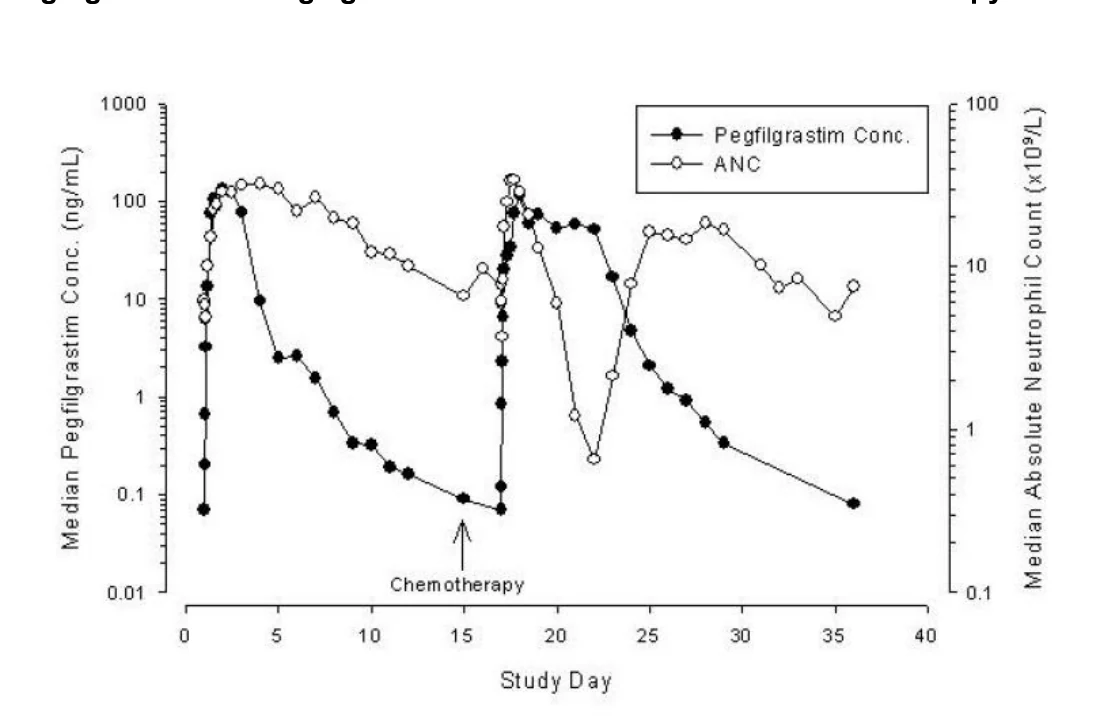
The pharmacokinetics and pharmacodynamics of pegfilgrastim were studied in patients with cancer. The pharmacokinetics of pegfilgrastim were nonlinear in cancer patients and clearance decreased with increases in dose. Neutrophil-mediated clearance is an important component of the clearance of pegfilgrastim, and serum clearance is related to the number of neutrophils (neutrophil-mediated, self-regulating clearance). Consistent with a self-regulating clearance mechanism, the serum concentration of pegfilgrastim declined rapidly at the onset of neutrophil recovery, following myelosuppressive chemotherapy (see Figure 1). In addition to numbers of neutrophils, body weight appeared to be a factor. Patients with higher body weights experienced higher systemic exposure to pegfilgrastim after receiving a dose normalized for body weight. A large variability in the pharmacokinetics of pegfilgrastim was observed in cancer patients. The half-life of pegfilgrastim ranged from 25 to 49 hours after SC injection.
Table 4. Summary of Pharmacokinetic Parameters of pegfilgrastim in Cancer Patients After SC Administration
| Cmax | t½ (h) | AUC0-∞ | Clearance | |
| Single dose* Median | 78.3-175 ng/mL | 25-49 hr | 5640-15000 ng•hr/mL | 6.68-17.7 mL/hr/kg |
* Doses of 100 mcg/kg and 6 mg
Figure 1. Median Pegfilgrastim Serum Concentration and Absolute Neutrophil Count Profiles in Patients with Non-Small Cell Lung cancer (n=3) After a Single Injection of Pegfilgrastim 100 mcg/kg Administered Before and After Chemotherapy
Special Populations and Conditions
Pediatrics: The pharmacokinetic profile in pediatric populations has not been assessed.
Geriatrics: No differences were observed in the pharmacokinetics of geriatric patients with cancer (≥ 65 years of age) compared to younger patients (< 65 years of age) (see 7 Warnings and Precautions, Special Populations, Geriatrics).
Sex: No gender-related differences were observed in the pharmacokinetics of pegfilgrastim.
Ethnic origin: The effect of race on pharmacokinetics has not been adequately assessed.
Hepatic Insufficiency: The pharmacokinetic profile in patients with hepatic insufficiency has not been assessed.
Renal Insufficiency: Renal impairment, including end-stage renal disease, appears to have no effects on the pharmacokinetics of pegfilgrastim.
10.4 Immunogenicity
As with all therapeutic proteins, there is a potential for immunogenicity. The incidence of antibody development in patients receiving the reference product (Neulasta) has not been adequately determined. While available data suggest that a small proportion of patients developed binding antibodies to filgrastim or pegfilgrastim, the nature and specificity of these antibodies has not been adequately studied. No neutralizing antibodies have been detected using a cell-based bioassay in 46 (9%, n = 534) patients who apparently developed binding antibodies. The detection of antibody formation is highly dependent on the sensitivity and specificity of the assay, and the observed incidence of antibody positivity in an assay may be influenced by several factors including sample handling, concomitant medications, and underlying disease. Therefore, comparison of the incidence of antibodies to pegfilgrastim with the incidence of antibodies to other products may be misleading.
Cytopenias resulting from an antibody response to exogenous growth factors have been reported on rare occasions in patients treated with other recombinant growth factors. There is a theoretical possibility that an antibody directed against pegfilgrastim may cross-react with endogenous G-CSF, resulting in immune-mediated neutropenia, but this has not been observed in clinical studies.
- 11. Storage, Stability, and Disposal
LAPELGA® (pegfilgrastim) should be stored refrigerated at 2° to 8°C (36° to 46°F). Keep the container in the outer carton to protect from light. Accidental one-time exposure to temperatures up to 30ºC or exposure to freezing temperatures (less than 0ºC) does not adversely affect the stability of LAPELGA®. Freezing should be avoided; however, if accidentally frozen once, LAPELGA® should be allowed to thaw in the refrigerator before administration. If exposure has been greater than 24 hours or frozen more than once, then LAPELGA® should not be used.
Within its shelf-life and for the purpose of ambulatory use, LAPELGA® can be removed from the refrigerator and left at room temperature (not above 25°C) for a single period of up to 15 days that ends within the labelled expiry date. Once LAPELGA® has been out at room temperature it should not be put back into the refrigerator. Any LAPELGA® syringes that have been out of the refrigerator for longer than 15 days should not be used and should be disposed of in accordance with local requirements.
LAPELGA® should be visually inspected for discolouration and particulate matter before administration. LAPELGA® should not be administered if discolouration or particulates are observed.
The pre-filled syringe or autoinjector should be disposed of by placing the entire pre-filled syringe with guard activated or autoinjector into an approved puncture-proof container.
12. Special Handling Instructions
LAPELGA® (pegfilgrastim) should not be vigorously shaken. Freezing should be avoided. Store in the carton provided to protect from light.
Part 2: Scientific Information
13. Pharmaceutical Information
Drug Substance
Proper name:
pegfilgrastim
Chemical name:
Pegylated recombinant methionyl human granulocyte colony-stimulating factor
Molecular formula and molecular mass:
CH3O(C2H4O)nC3H6C845H1338N223O243S9
Pegfilgrastim has a total molecular weight of 39,000 daltons.
Structural formula:
Pegfilgrastim is composed of filgrastim (recombinant methionyl human G-CSF) with a 20,000 dalton polyethylene glycol (PEG) molecule covalently bound to the N-terminal methionine residue. Filgrastim is a 175 amino acid protein manufactured by recombinant DNA technology. Filgrastim is produced by Escherichia coli (E. coli) bacteria into which the human G-CSF gene has been inserted. Filgrastim has an amino acid sequence that is identical to the natural sequence predicted by human DNA sequence analysis‚ except for the addition of an N-terminal methionine necessary for expression in E. coli. Because filgrastim is produced in E. coli‚ the protein is nonglycosylated and thus differs from G-CSF isolated from a human cell.
Physicochemical properties:
Pegfilgrastim drug substance is a clear and colourless liquid with a pH of 4.0 ± 0.2.
Product Characteristics
LAPELGA® (pegfilgrastim) is a sterile, clear colourless liquid.
14. Clinical Trials
14.1 Clinical Trials by Indication
Decrease in incidence of infection, as manifested by febrile neutropenia, in patients with non-myeloid malignancies receiving myelosuppressive anti-neoplastic drugs
Table 5. Summary of patient demographics for clinical trials for decrease in incidence of infection, as manifested by febrile neutropenia, in patients with non-myeloid malignancies receiving myelosuppressive anti-neoplastic drugs
| Study # | Trial design | Dosage, route of administration and duration | Study subjects (n = number) | Mean age (Range) years | Gender |
|---|---|---|---|---|---|
| 980226 | Phase 3, double-blind, randomized, filgrastim controlled | Single SC dose of 100 mcg/kg/day pegfilgrastim or SC dose of 5 mcg/kg/day filgrastim, up to 4 cycles | 310 (154 pegfilgrastim, 156 filgrastim) | 50.9 (25-81) pegfilgrastim 51.8 (26-87) filgrastim | 306 female, 4 male |
| 990749 | Phase 3, double-blind, randomized, filgrastim controlled | 6 mg single dose of pegfilgrastim SC or 5 mcg/kg/day filgrastim, up to 14 days, up to 4 cycles | 157 (80 pegfilgrastim, 77 filgrastim) | 51.9 (31-75) pegfilgrastim 52.6 (30-74) filgrastim | 156 female, 1 male |
| 20010144 | Phase 3, double-blind, placebo- controlled, randomized | Pegfilgrastim, 6 mg SC, single dose every 3 weeks, up to 12 weeks | 928 (463 pegfilgrastim, 465 placebo) | 51.9 (21-88) pegfilgrastim 52.1 (24-76) placebo | 99% female |
Pegfilgrastim administered as a single SC injection, after each cycle of chemotherapy, has been shown to be safe and effective in reducing neutropenia and associated clinical sequelae in a variety of chemotherapy settings.
Pegfilgrastim has been evaluated in three Phase 3, randomized, double-blind, controlled studies. Results from two active controlled studies (n = 467) conducted in patients with breast cancer undergoing up to 4 cycles of chemotherapy with doxorubicin and docetaxel demonstrated non- inferiority of pegfilgrastim to filgrastim. A clinically and statistically similar reduction in the duration of severe neutropenia (absolute neutrophil count [ANC] < 0.5 x 10⁹/L; WHO grade 4) was seen in patients who received a single injection of pegfilgrastim, either 6 mg fixed dose or 100 mcg/kg, compared with patients who received a mean of 11 daily injections (cycle 1) of filgrastim 5 mcg/kg/day.
The mean (std dev) duration of severe neutropenia in cycle 1 in patients who received a single fixed-dose (6 mg) SC injection of pegfilgrastim (n = 68) was 1.8 (1.4) days compared with 1.6 (1.1) days in patients who received daily injections (range: 7 to 14 injections) of filgrastim (n = 62). The difference in means was 0.18 days (95% CI of -0.23 to 0.61). Durations of severe neutropenia were also comparable between treatment groups in all subsequent cycles. The rate of febrile neutropenia (temperature ≥ 38.2°C with an ANC < 0.5 x 10⁹/L) across all cycles was lower for patients receiving pegfilgrastim (13%) compared to patients receiving filgrastim (20%) (-7% difference; 95% CI of -19% to +5%). A single SC injection of pegfilgrastim per chemotherapy cycle was safe and well tolerated (see 8 Adverse Reactions).
The third study employed a placebo control and evaluated the effect of pegfilgrastim on the incidence of febrile neutropenia when administered in first and all subsequent cycles of a moderately myelosuppressive chemotherapy regimen, docetaxel administered at 100 mg/m2 Q3W for 4 cycles, which has been reported to be associated with a febrile neutropenia rate of 10% to 20%.
In this study, 928 patients with metastatic or non-metastatic breast cancer were treated with docetaxel. On day 2 of cycle 1, patients were randomized to receive either a single SC dose of 6 mg of pegfilgrastim or placebo. Patients who received pegfilgrastim in cycle 1 were scheduled to receive pegfilgrastim in all subsequent cycles. Patients who received placebo in cycle 1 were scheduled to receive placebo in all subsequent cycles; however, patients who experienced febrile neutropenia would receive open-label pegfilgrastim.
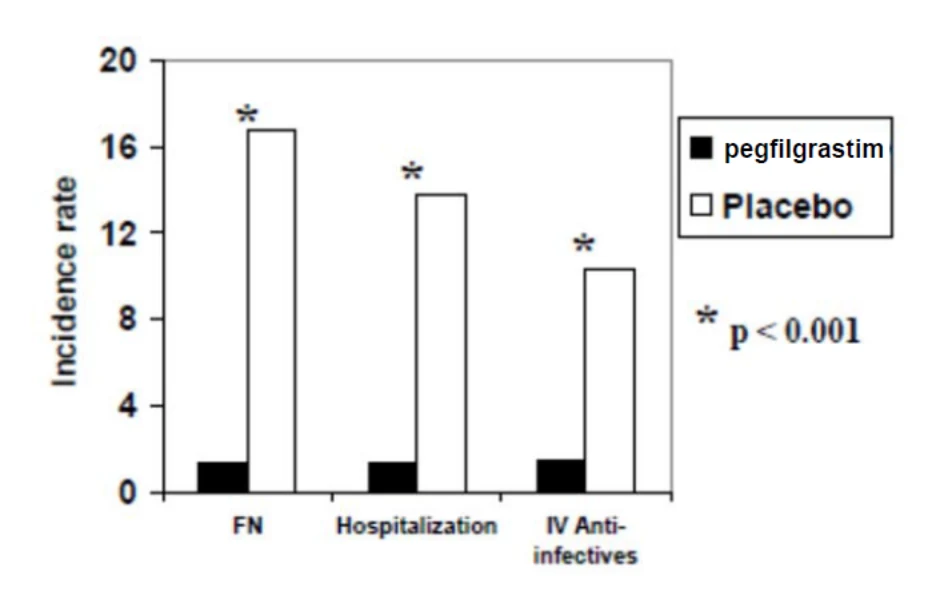
The incidence of febrile neutropenia was statistically significantly lower for patients randomized to receive pegfilgrastim versus placebo (1% versus 17%, p ≤ 0.001). The incidence of hospitalizations and IV anti-infective use associated with a clinical diagnosis of febrile neutropenia was significantly lower in the pegfilgrastim group compared with placebo [1% versus 14%, p ≤ 0.001; and 2% versus 10%, p ≤ 0.001, respectively (see Figure 2)].
Figure 2. Percentage of Subjects with Febrile Neutropenia (FN), Who Were Hospitalized, and Who Received IV Anti-infectives for FN
Data from Phase 2 studies in patients with various malignancies undergoing a variety of chemotherapy regimens further support the safety and efficacy of pegfilgrastim. Dose-finding studies in patients with breast cancer (n = 152), thoracic tumours (n = 92), and non-Hodgkin's lymphoma (NHL) (n = 49) demonstrated that the efficacy of a single injection of pegfilgrastim 100 mcg/kg was similar to daily injections of filgrastim 5 mcg/kg/day, and superior to pegfilgrastim doses of 30 or 60 mcg/kg, at reducing the duration of severe neutropenia and the rate of febrile neutropenia. A randomized Phase 2 study of patients with NHL or Hodgkin's lymphoma (n = 60) further supports the safety and efficacy of pegfilgrastim.
15. Microbiology
No microbiology information is required for this drug product.
16. Non-Clinical Toxicology
Preclinical Studies
The preclinical toxicology of pegfilgrastim was studied in Sprague-Dawley® rats and cynomolgus monkeys. A single-dose IV study was conducted in rats. Pegfilgrastim caused no clinical signs or mortality at single IV doses up to 10,000 mcg/kg in rats.
Repeat-dose studies included 2-week SC (every-other-day dosing) and 6-month SC/IV (weekly dosing) studies in rats and a 1-month SC (weekly dosing) study in monkeys. Dosing was intermittent to mimic intended human use of pegfilgrastim. Pegfilgrastim was well tolerated for 6 months at once-weekly doses up to 1000 mcg/kg SC or 300 mcg/kg IV in rats, and for 1 month at once-weekly doses up to 750 mcg/kg SC in cynomolgus monkeys. No effects on body weight, food consumption, or survival were observed. Pegfilgrastim caused an increase in leukocyte counts, primarily segmented neutrophils, but also some increases in band neutrophils, monocytes, and lymphocytes. Pegfilgrastim also modestly decreased erythrocyte counts, hemoglobin and hematocrit levels, decreased serum cholesterol, slightly decreased serum potassium, and increased serum alkaline phosphatase. Splenomegaly was the principal gross pathological finding. Histopathological examination revealed increased neutrophilic granulopoiesis in bone marrow and extramedullary hematopoiesis in spleen, liver, and/or lymph nodes. Leukocytosis in spleen, liver, and lymph nodes, and mild inflammation and mononuclear cell infiltrate at the injection site were additionally observed in monkeys treated with pegfilgrastim. Observed changes tended to reverse upon cessation of treatment. Changes specific to every-other-day dosing in rats (≥ 500 mcg/kg only) included slightly increased serum ALT and/or AST, mild myelofibrosis in bone marrow, and increased osteoblastic/osteoclastic activity in bone. Little or no seroreactivity to pegfilgrastim was evident in rats, whereas a dose and time-dependent increase in seroreactivity was observed in monkeys; however, pegfilgrastim induced neutrophil increases were maintained.
Pegfilgrastim has been shown to have adverse effects in pregnant rabbits when given every other-day at doses as low as 50 mcg/kg. Nonclinical data in pregnant rats indicate that very low levels of pegfilgrastim may cross the placenta.
Pegfilgrastim administered SC to pregnant rabbits at doses of 200 and 250 mcg/kg every-other-day during the period of organogenesis was associated with an increased incidence of abortions. Increased post implantation loss due to early resorptions and decreased numbers of live fetuses were observed at pegfilgrastim doses of 200 to 1000 mcg/kg every other day. Decreased maternal food consumption and/or weight gain and decreased fetal weight were observed at doses of 50 to 1000 mcg/kg every other day. Pegfilgrastim did not cause visceral or skeletal malformations in rabbit fetuses at doses as high as 200 mcg/kg every-other-day and did not cause external malformations in rabbit fetuses at doses as high as 1000 mcg/kg every other day.
Pegfilgrastim was not associated with an increase in external, visceral, or skeletal malformations in fetuses when administered by SC injection to pregnant rats during the period of organogenesis at dose levels up to 1000 mcg/kg every other day. However, an increased incidence of wavy ribs, generally regarded as a reversible pathological finding, was observed in rat fetuses at dose levels of 300 and 1000 mcg/kg every other day. No maternal or neonatal toxicities were observed in female rats administered once-weekly SC injections of pegfilgrastim up to 1000 mcg/kg in a pre- and postnatal developmental study.
Filgrastim is known to be negative in bacterial mutagenesis assays (Ames assay). Pegfilgrastim did not cause precancerous or cancerous lesions in Sprague-Dawley® rats after once-weekly SC injections of up to 1000 mcg/kg for 6 months. Given the similar biochemical activity to filgrastim, the chemical nature of the PEG moiety, and extensive clinical experience with filgrastim, it is considered unlikely that pegfilgrastim would be carcinogenic when used as directed.
Pegfilgrastim is a growth factor that primarily stimulates production of neutrophils and neutrophil precursors; however, the G-CSF receptor through which pegfilgrastim and filgrastim act has been found on tumour cell lines, including some myeloid, T-lymphoid, lung, head and neck, and bladder tumour cell lines. In vitro proliferation has been observed in response to filgrastim in some of these cell lines, particularly acute myeloid leukemia (AML) cell lines.
Indices of mating or fertility in male and female Sprague-Dawley® rats were not adversely affected by once-weekly SC injections of pegfilgrastim of up to 1000 mcg/kg for 2 to 4 weeks before and during cohabitation.
17. Supporting Product Monographs
Neulasta Solution for Injection, 6 mg (10 mg/mL), Submission Control No: 242732, Product Monograph, Amgen Canada Inc. (January 8, 2021).
Neulasta is a registered trademark of Amgen Inc.