


Product Monograph - Leucovorin Calcium Injection USP (Hikma Canada)
RECENT MAJOR LABEL CHANGES
None at time of the most recent authorization.
TABLE OF CONTENTS
Certain sections or subsections that are not applicable at the time of the preparation of the most recent authorized product monograph are not listed.
RECENT MAJOR LABEL CHANGES ............................................................................................. 2
TABLE OF CONTENTS
PART I: HEALTH PROFESSIONAL INFORMATION ...................................................................... 4
- 1
INDICATIONS ............................................................................................................... 4
- 1.1 Pediatrics ................................................................................................................ 4
- 1.2 Geriatrics ................................................................................................................ 4
- 2 CONTRAINDICATIONS .................................................................................................. 4
- 3 SERIOUS WARNINGS AND PRECAUTIONS BOX ............................................................. 5
- 4
DOSAGE AND ADMINISTRATION .................................................................................. 5
- 4.2 Recommended Dose and Dosage Adjustment ........................................................ 5
- 4.3 Reconstitution ........................................................................................................ 7
- 4.4 Administration ........................................................................................................ 7
- 5 OVERDOSAGE .............................................................................................................. 8
- 6 DOSAGE FORMS, STRENGTHS, COMPOSITION AND PACKAGING .................................. 8
- 7
WARNINGS AND PRECAUTIONS ................................................................................... 8
- 7.1 Special Populations............................................................................................... 10
- 7.1.1 Pregnant Women ............................................................................................ 10
- 7.1.2 Breast-feeding ................................................................................................ 10
- 7.1.3 Pediatrics ........................................................................................................ 10
- 7.1.4 Geriatrics ........................................................................................................ 11
- 8
ADVERSE REACTIONS ................................................................................................. 11
- 8.1 Adverse Reaction Overview .................................................................................. 11
- 8.2 Clinical Trial Adverse Reactions ............................................................................ 11
8.5 Post-Market Adverse Reactions ............................................................................ 12
- 9
DRUG INTERACTIONS ................................................................................................. 12
- 9.1 Serious Drug Interactions ..................................................................................... 12
- 9.4 Drug-Drug Interactions ......................................................................................... 12
- 9.5 Drug-Food Interactions ......................................................................................... 14
- 9.6 Drug-Herb Interactions ......................................................................................... 14
- 9.7 Drug-Laboratory Test Interactions ........................................................................ 14
- 10
CLINICAL PHARMACOLOGY ........................................................................................ 14
- 10.1 Mechanism of Action ...................................................................................... 14
- 10.2 Pharmacodynamics ......................................................................................... 14
- 10.3 Pharmacokinetics ............................................................................................ 14
- 11 STORAGE, STABILITY AND DISPOSAL .......................................................................... 15
- 12 SPECIAL HANDLING INSTRUCTIONS ............................................................................ 15
PART II: SCIENTIFIC INFORMATION ....................................................................................... 16
- 13 PHARMACEUTICAL INFORMATION ............................................................................. 16
- 14 CLINICAL TRIALS ......................................................................................................... 16
- 15 MICROBIOLOGY ......................................................................................................... 16
- 16 NON-CLINICAL TOXICOLOGY ...................................................................................... 16
- 17 SUPPORTING PRODUCT MONOGRAPHS ........................................................................ 18
PATIENT MEDICATION INFORMATION .................................................................................. 19
PART I: HEALTH PROFESSIONAL INFORMATION
1 INDICATIONS
Leucovorin Calcium Injection USP (leucovorin calcium) is indicated:
- To diminish the toxicity and counteract the effects of overdosage of folic acid antagonists.
- To diminish the systemic toxicity of methotrexate after administration of methotrexate as a chemotherapeutic agent, as part of chemotherapeutic treatment programs in the management of several forms of cancer.
- To treat megaloblastic anemias due to folate deficiency, as in sprue and other nutritional deficiencies; and megaloblastic anemias of pregnancy and infancy (see 2 CONTRAINDICATIONS).
- For pre-treatment followed by fluorouracil to prolong survival in the palliative treatment of patients with advanced colorectal cancer.
1.1 Pediatrics
Pediatrics (< 18 years of age): No data are available to Health Canada; therefore, Health Canada has not authorized an indication for pediatric use (see 7.1.3 Pediatrics).
1.2 Geriatrics
Geriatrics: Evidence from clinical studies and experience suggests that use in the geriatric population is associated with differences in safety or effectiveness (see 7 WARNINGS AND PRECAUTIONS, General and 7.1.4 Geriatrics).
2 CONTRAINDICATIONS
Leucovorin Calcium Injection USP is contraindicated for:
- Pernicious anemia therapy or other megaloblastic anemias secondary to a deficiency of vitamin B12. Its use can lead to an apparent response of the hematopoietic system, but neurological damage may occur or progress if already present.
- Known hypersensitivity to this drug or to any ingredient in the formulation or component of the container (see 6 DOSAGE FORMS, STRENGTHS, COMPOSITION AND PACKAGING).
- Intrathecal administration.
3 SERIOUS WARNINGS AND PRECAUTIONS BOX
Serious Warnings and Precautions
- Leucovorin Calcium Injection USP should only be given by intramuscular or intravenous injection and must not be administered intrathecally (see 2 CONTRAINDICATIONS and 4 DOSAGE AND ADMINISTRATION). Death has been reported when folinic acid has been administered intrathecally following intrathecal overdose of methotrexate.
- Leucovorin Calcium Injection USP should only be used with 5-fluorouracil or methotrexate under the direct supervision of a clinician experienced in the use of cancer chemotherapeutic agents.
- Patients receiving any combination therapy regimen involving leucovorin and fluorouracil should be carefully monitored for diarrhea and/or stomatitis/mucositis as these are the first indications that severe and potentially life-threatening toxicity could develop (see 7 WARNINGS AND PRECAUTIONS and 9 DRUG INTERACTIONS).
- Fatalities have occurred as a result of gastrointestinal toxicity (predominantly mucositis and diarrhea) (see 7 WARNINGS AND PRECAUTIONS and 8 ADVERSE REACTIONS).
Fatalities have occurred as a result of myelosuppression (see 7 WARNINGS AND PRECAUTIONS
and 8 ADVERSE REACTIONS).
- Cases of Stevens-Johnson Syndrome (SJS) and Toxic Epidermal Necrolysis (TEN), some fatal, have been reported in patients receiving leucovorin in combination therapy (see 8 ADVERSE REACTIONS).
- Leucovorin may diminish the effect of anti-epileptic substances such as phenobarbital, primidone and phenytoin. During leucovorin administration in epileptic patients treated with these substances, there is a risk to increase the frequency of seizures due to a decrease of plasma concentrations of anti-epileptic drugs (see 9 DRUG INTERACTIONS).
4 DOSAGE AND ADMINISTRATION
4.2 Recommended Dose and Dosage Adjustment
Due to calcium content of leucovorin solution, no more than 160 mg of leucovorin should be injected, per minute, intravenously.
Treatment of Overdosage of Folic Acid Antagonists:
In cases of overdosage of folic acid antagonists, prompt administration of leucovorin calcium is essential; if a period of more than four hours intervenes, the treatment may be ineffective.
The dose of leucovorin calcium should be equal to or greater than the suspected dose of folic acid antagonist.
Where large doses of methotrexate have been given, leucovorin may be administered by intravenous infusion in doses up to 75 mg within 12 hours, followed by 12 mg intramuscularly every six hours, for four doses. In less severe overdosage, 6 to 12 mg of leucovorin may be given intramuscularly every six hours, for four doses, until the serum methotrexate level is less than 10-8M.
Use After Chemotherapy with Methotrexate:
The dosage and scheduling of doses of leucovorin varies, but it is normally given about 6 to 24 hours following methotrexate administration, in amounts equal to the weight of methotrexate given.
Serum creatinine and methotrexate levels should be determined at 24-hour intervals. If the 24-hour serum creatinine has increased 50% over baseline or if the 24-hour methotrexate level is greater than 5 x 10⁻⁶M or the 48-hour level is greater than 9 x 10⁻⁷M, the dose of leucovorin should be increased to 100 mg/m2 intravenously every 3 hours until the methotrexate level is less than 10-8M.
Hydration (3 L/day) and urinary alkalinization with NaHCO3 should be employed concomitantly. The bicarbonate dose should be adjusted to maintain the urine pH at 7.0 or greater.
In most cases, leucovorin should not be administered simultaneously with systemic methotrexate, since the therapeutic effect of the antimetabolite may be nullified. However, when methotrexate is administered by intra-arterial (regional perfusion) or intrathecal injection, leucovorin may be given (intramuscularly, intravenously or orally) concomitantly, to offset systemic methotrexate toxicity without abolishing the local activity of the cytotoxic drug.
Treatment of Megaloblastic Anemia:
For treatment of megaloblastic anemia due to folate deficiency, the dose should not exceed 1 mg daily. The duration of therapy depends on the hematologic response to the drug. Oral leucovorin is preferred to parenteral therapy, except where cases of severe vomiting impair drug absorption when administered orally.
Treatment of Advanced Colorectal Cancer:
Leucovorin is administered at 200 mg/m2 by slow intravenous injection prior to dosing with 370 mg/m2 fluorouracil by slow intravenous injection, for 5 consecutive days.
This 5-day treatment course may be repeated at 4-week (28 days) intervals, provided that the patient has completely recovered from the toxic effects of the prior treatment course.
In subsequent treatment courses, the dosage of fluorouracil should be adjusted based on patient tolerance of the prior treatment course. The daily dosage of fluorouracil should be reduced by 20% for patients who experienced moderate hematologic or gastrointestinal toxicity in the prior treatment course, and by 30% for patients who experienced severe toxicity. For patients who did not experience toxicity in the prior treatment course, fluorouracil dosage may be increased by 10%. Leucovorin dosages are not adjusted for toxicity.
4.3 Reconstitution Parenteral Products:
Dilution for Intravenous Infusion: When required for intravenous infusion, Leucovorin Calcium Injection USP may be diluted with 5% Dextrose Injection, 0.9% Sodium Chloride Injection, Lactated Ringer's Injection or Ringer's Injection to give a final concentration of 0.05 mg/mL leucovorin. These dilutions may be stored for 24 hours at room temperature. Due to the possibility of antimicrobial contamination, unused solution should be discarded after that time.
Dilutions with the hypertonic infusion solutions, 10% Dextrose Injection and 5% Dextrose in 0.9% Sodium Chloride Injection, may also be prepared to a final concentration of 0.05 mg/mL of leucovorin. However, these dilutions should be stored for no longer than 8 hours at room temperatures. Unused solution should be discarded after that time. All steps of dilution must be done in non-PVC materials..
4.4 Administration
Leucovorin Calcium Injection USP may be administered as received by intramuscular injection or intravenous injection, or it may be diluted for intravenous infusion (see 4.3 Reconstitution, Dilution for Intravenous Infusion).
Dispensing of Pharmacy Bulk Vials: Leucovorin Calcium Injection USP, 10 mg/mL, is supplied as 500 mg in 50 mL and 300 mg in 30 mL of sterile, unpreserved, isotonic solution (see 6 DOSAGE FORMS, STRENGTHS, COMPOSITION AND PACKAGING).
The use of Pharmacy Bulk Vials is restricted to hospitals with a recognized intravenous admixture program. The Pharmacy Bulk vial is intended for single puncture, multiple dispensing, and for intravenous use only.
Contents of the Pharmacy Bulk vials should be dispensed within eight hours of the initial entry because of the potential for microbial contamination. Discard any unused portion. The diluted solutions prepared from the Pharmacy Bulk Vial should be used within 24 hours if kept at room temperature, from the time of the initial entry into the Pharmacy Bulk vial. However, the product diluted with hypertonic infusion solutions is restricted to 8 hours if kept at room temperature, from the time of the initial entry into the Pharmacy Bulk Vial.
Pharmacy Bulk Vials contain no preservatives. Care must be taken to minimize the potential for inadvertent introduction of microorganisms during manipulation in the hospital environment.
Warning: As with all parenteral drug products, intravenous admixtures should be inspected visually for clarity, particulate matter, precipitate, discolouration and leakage prior to administration, whenever solution and container permit. Solutions showing haziness, particulate matter, precipitate, discolouration or leakage should not be used.
5 OVERDOSAGE
Leucovorin has very low acute and subchronic toxicity in animals. There has been no experience with overdosage of parenteral leucovorin in humans.
For the most recent information in the management of a suspected drug overdose, contact your regional poison control centre, or Health Canada’s toll-free number 1-844 POISON-X (1-844-764-7669).
6 DOSAGE FORMS, STRENGTHS, COMPOSITION AND PACKAGING
Table 1 – Dosage Forms, Strengths, Composition and Packaging
| Route of Administration | Dosage Form / Strength / Composition | Non-medicinal Ingredients |
|---|---|---|
Intramuscular injection Intravenous injection Intravenous infusion | Leucovorin Calcium Injection USP is a sterile solution of leucovorin (as the calcium salt), supplied as 10 mg/mL, in water for injection with sodium chloride 8.5 mg/mL, added for isotonicity. | Contains no preservatives. Sodium hydroxide or hydrochloric acid may be used for pH adjustment. |
Leucovorin Calcium Injection USP is available as a 10 mg/mL sterile, unpreserved, isotonic solution of leucovorin (as the calcium salt), in 10 mL (50 mg/5 mL) and (100 mg/10 mL) single-use vials amber glass vials with 20 mm Bromobutyl stopper and flip-off cap.
Leucovorin Calcium Injection USP is available as a 10 mg/mL sterile, unpreserved, isotonic solution of leucovorin (as the calcium salt), in a 50 mL (500 mg/50 mL) and (300 mg/30 mL) Pharmacy Bulk Vial amber glass vials with 20 mm Bromobutyl stopper and flip-off cap for intravenous administration only. The Pharmacy Bulk Vial is supplied to hospitals with a recognized intravenous admixture program only.
The vial stopper is not made with natural rubber latex.
7 WARNINGS AND PRECAUTIONS
Please see 3 SERIOUS WARNINGS AND PRECAUTIONS BOX.
General
Since leucovorin may enhance the toxicity of fluorouracil, combination therapy consisting of leucovorin and fluorouracil for advanced colorectal cancer should be administered under the supervision of a physician experienced in the use of antimetabolite cancer chemotherapy. Particular care should be taken in the treatment of elderly or debilitated colorectal cancer patients, as these patients may be at increased risk of severe toxicity. Death from severe enterocolitis, diarrhea and dehydration has been reported in elderly patients receiving leucovorin and fluorouracil. Concomitant granulocytopenia and fever were present in some but not all of the patients.
In cases of overdosage of folic acid antagonists, prompt administration of leucovorin calcium is essential; if a period of more than four hours intervenes, the treatment may be ineffective due to the time delay. Monitoring of the serum methotrexate concentration is essential in determining the optimal dose of leucovorin to give and duration of therapy. Delayed methotrexate excretion may be an indication of a third space fluid accumulation (i.e. ascites, pleural effusion), renal insufficiency, low pH of urine or inadequate hydration. Higher doses of leucovorin or prolonged administration may be indicated in such cases. Leucovorin has no apparent effect on pre-existing methotrexate nephrotoxicity.
Excessive leucovorin doses must be avoided since this might impair the antitumour activity of methotrexate, especially in CNS tumours where leucovorin accumulates after repeated courses.
Resistance to methotrexate as a result of decreased membrane transport also implies resistance to folinic acid rescue as both medicinal products share the same transport system.
In case of co-administration of leucovorin and fluorouracil, diarrhea and/or stomatitis/mucositis are the first indications that severe and potentially life-threatening toxicity could develop. Patients who experience these symptoms while receiving any combination therapy regimen involving leucovorin and fluorouracil should be carefully monitored. Generally these symptoms are controllable by reducing the dose of fluorouracil. Treatment-related deaths have been sporadically reported in patients receiving leucovorin/fluorouracil combination therapy.
Leucovorin enhances the toxicity of fluorouracil. When these drugs are administered concurrently in the palliative therapy of advanced colorectal cancer, the dosage of fluorouracil must be reduced. Although the toxicities observed in patients treated with the combination of leucovorin and fluorouracil are qualitatively similar to those observed in patients treated with fluorouracil alone, gastrointestinal toxicities (particularly stomatitis and diarrhea) are observed more commonly and may be more severe in patients receiving the combination therapy.
Leucovorin should be used with caution after methotrexate chemotherapy, when the following medical problems exist:
- Aciduria (urine pH less than 7)
- Ascites
- Dehydration (Note: Inadequate hydration including that secondary to vomiting may also result in increased methotrexate toxicity.)
- Gastrointestinal obstruction
- Pleural or peritoneal effusions
- Renal function impairment (Note: Risk of methotrexate toxicity is increased because elimination of methotrexate may be impaired and accumulation may occur; even small doses of methotrexate may lead to severe myelosuppression and mucositis; larger doses and/or increased duration of leucovorin treatment may be necessary.)
Patient monitoring is recommended when leucovorin is administered as part of methotrexate chemotherapy programs. Monitoring may include creatinine clearance determinations prior to therapy; plasma or serum methotrexate determinations to detect developing renal function impairment (an increase of greater than 50% within 24 hours is associated with severe renal toxicity); urine pH determination (recommended every 6 hours to ensure that the pH remains greater than 7.0 to minimize the risk of methotrexate nephropathy). Leucovorin has no apparent effect on pre-existing methotrexate nephrotoxicity.
Gastrointestinal
Therapy with leucovorin/fluorouracil must not be initiated or continued in patients who have symptoms of gastrointestinal toxicity of any severity, until those symptoms have resolved. Patients with diarrhea must be closely monitored until the diarrhea has resolved, as rapid clinical deterioration leading to death can occur. Elderly or debilitated patients are at greater risk for severe toxicity when receiving this therapy. In elderly patients, it is recommended to begin with a reduced dosage of fluorouracil.
Monitoring and Laboratory Tests
Calcium levels should be monitored in patients receiving combined leucovorin /5-fluorouracil treatment and calcium supplementation should be provided if calcium levels are low. Complete blood count (CBC)
with differential and platelets: prior to each treatment; weekly during the first two courses; at time of anticipated white blood cell (WBC) nadir in all courses thereafter. Electrolytes and liver function tests: prior to each treatment for the first three courses and prior to every other course thereafter.
Reproductive Health: Female and Male Potential
- Fertility:
Calcium folinate is an intermediate product in the metabolism of folic acid and occurs naturally in the body. No fertility studies have been conducted with calcium folinate in animals.
7.1 Special Populations
7.1.1 Pregnant Women
Leucovorin is an intermediate product in the metabolism of folic acid and occurs naturally in the body.
There are no adequate and well-controlled clinical studies conducted in pregnant or breast-feeding women.
7.1.2 Breast-feeding
Problems have not been documented. It is unknown if Leucovorin Calcium Injection USP is excreted in human milk. Precaution should be exercised because many drugs can be excreted in human milk.
Calcium folinate in combination with 5-fluorouracil is not recommended for use in woman who are breast-feeding.
7.1.3 Pediatrics
No data are available to Health Canada; therefore, Health Canada has not authorized an indication for pediatric use. Leucovorin may increase the frequency of seizures in susceptible children.
7.1.4 Geriatrics
No information is available regarding the use of leucovorin in geriatrics. Elderly patients are at greater risk of developing severe toxicity when treated with the combination of leucovorin plus fluorouracil for the palliative treatment of colorectal cancer.
8 ADVERSE REACTIONS
8.1 Adverse Reaction Overview
Table 2: Adverse Drug Reactions during Leucovorin Calcium Monotherapy
| System Organ Class | ADR Term |
|---|---|
| System Organ Class | ADR Term |
| General disorders and administrations site conditions | Pyrexia |
| Immune system disorders | Hypersensitivity |
| Anaphylactic reaction | |
| Anaphylactic shock | |
| Nervous system disorders | Seizure |
| Syncope | |
| Skin and subcutaneous tissue disorders | Urticaria Stevens-Johnson Syndrome Toxic Epidermal Necrolysis |
Generally, the safety profile depends on the applied regimen of 5-fluorouracil due to enhancement of the 5-fluorouracil induced toxicities. Additional undesirable effects, when used in combination with 5- fluorouracil, are presented in Table 3.
Table 3: Adverse Drug Reactions during Leucovorin Calcium Combination Therapy with 5-fluorouracil
| System Organ Class | Adverse Drug Reaction |
|---|---|
| Blood and lymphatic system disorders | Anemia |
| Neutropenia | |
| Leucopenia | |
| Thrombocytopenia | |
| Gastrointestinal disorders | Diarrhea |
| Nausea | |
| Vomiting | |
| Stomatitis | |
| General disorders and administration site conditions | Mucosal inflammation |
| Metabolism and nutrition disorders | Hyperammonemia |
| Skin and subcutaneous tissue disorders | Palmar-plantar erythrodysesthesia syndrome (hand-foot syndrome) |
8.2 Clinical Trial Adverse Reactions
Clinical trials are conducted under very specific conditions. The adverse reaction rates observed in the clinical trials; therefore, may not reflect the rates observed in practice and should not be compared to the rates in the clinical trials of another drug. Adverse reaction information from clinical trials may be useful in identifying and approximating rates of adverse drug reactions in real-world use.
Allergic reactions, wheezing, skin rash, hives or itching occur rarely. In combination regimens, the toxicity of fluorouracil is enhanced by leucovorin. The most common manifestations are mucositis, stomatitis, leukopenia and/or diarrhea which may be dose-limiting. In clinical trials with this drug combination, these toxicities were found to be controllable by appropriately reducing the dose of fluorouracil.
8.5 Post-Market Adverse Reactions
Cases of Stevens-Johnson Syndrome (SJS) and Toxic Epidermal Necrolysis (TEN), some fatal, have been reported in patients receiving leucovorin in combination with other agents known to be associated with these disorders. A contributory role of leucovorin in these occurrences of SJS/TEN cannot be excluded.
Fatalities have occurred as a result of gastrointestinal toxicity (predominantly mucositis and diarrhea) and myelosuppression. In patients with diarrhea, rapid clinical deterioration leading to death can occur.
9 DRUG INTERACTIONS
9.1 Serious Drug Interactions
9.4 Drug-Drug Interactions
The following drugs or combinations containing these drugs may interact with leucovorin with clinical significance:
- Anticonvulsants, barbiturate
- Anticonvulsant, hydantoin
Primidone
Large doses of leucovorin may counteract the anticonvulsant effects of these medications.
Leucovorin has been administered simultaneously with pyrimethamine without interfering with its anti-malarial therapy.
Table 4 - Established or Potential Drug-Drug Interactions
| Leucovorin Calcium | Source of Evidence | Effect | Clinical comment |
|---|---|---|---|
| anti-epileptic substances such as phenobarbital, primidone and phenytoin | Unknown | diminished | Leucovorin may diminish the effect of anti-epileptic substances such as phenobarbital, primidone and phenytoin. During leucovorin administration in epileptic patients treated with these substances, there is a risk to increase the frequency of seizures (a diminution of plasma levels of enzymatic inductor anticonvulsant drugs may be observed because the hepatic metabolism is increased, as folates are one of the cofactors). Clinical monitoring, possibly |
Serious Drug Interactions
- Patients receiving any combination therapy regimen involving leucovorin and fluorouracil should be carefully monitored for diarrhea and/or stomatitis/mucositis as these are the first indications that severe and potentially life-threatening toxicity could develop (see 7 WARNINGS AND PRECAUTIONS and 9 DRUG INTERACTIONS).
- Leucovorin may diminish the effect of anti-epileptic substances such as phenobarbital, primidone and phenytoin. During leucovorin administration in epileptic patients treated with these substances, there is a risk to increase the frequency of seizures due to a decrease of plasma concentrations of anti-epileptic drugs (see 9 DRUG INTERACTIONS).
- Leucovorin enhances the cytotoxicity and toxicity of fluorouracil. Leucovorin must not be mixed with fluorouracil in the same intravenous injection or infusion (see 9 DRUG INTERACTIONS).
| Leucovorin Calcium | Source of Evidence | Effect | Clinical comment |
|---|---|---|---|
| monitoring of the plasma concentrations and, if necessary, dose adaptation of the anti-epileptic drug during leucovorin administration and after discontinuation is recommended. | |||
| folic acid antagonist (e.g., cotrimoxazole, pyrimethamine, methotrexate, antibiotic with antifolic effect) | Unknown | Reduced or neutralized | When leucovorin is given in conjunction with a folic acid antagonist (e.g., cotrimoxazole, pyrimethamine, methotrexate, antibiotic with antifolic effect), the efficacy of the folic acid antagonist may either be reduced or completely neutralized. |
| Di-aminopyrimidines (e.g., trimethoprim or co-trimoxazole) | Unknown | Inhibit antibiotic effect | Di-aminopyrimidines (there is some evidence that concomitant administration of leucovorin and trimethoprim (or co-trimoxazole) may inhibit the antibiotic effect of trimethoprim) |
| Methotrexate | unknown | Nullify antitumour effect | Leucovorin administered concomitantly with methotrexate may nullify the antitumour chemotherapeutic effect of the latter drug (see 4 DOSAGE AND ADMINISTRATION). |
| Fluorouracil | Unknown | Enhance cytotoxicity | Leucovorin enhances the cytotoxicity and toxicity of fluorouracil. Leucovorin must not be mixed with fluorouracil in the same intravenous injection or infusion. |
9.5 Drug-Food Interactions
Interactions with food have not been established.
9.6 Drug-Herb Interactions
Interactions with herbal products have not been established.
9.7 Drug-Laboratory Test Interactions
Interactions with laboratory tests have not been established.
10 CLINICAL PHARMACOLOGY
10.1 Mechanism of Action
Leucovorin is a reduced form of folic acid, which is readily converted to other reduced folic acid derivatives (e.g., tetrahydrofolate). Because it does not require reduction by dihydrofolate reductase as does folic acid, leucovorin is not affected by blockages of this enzyme by folic acid antagonists (dihydrofolate reductase inhibitors). This allows purine and thymidine synthesis, and thus DNA, RNA and protein synthesis to occur. Leucovorin may limit methotrexate action on normal cells by competing with methotrexate for the same transport processes into the cell.
Leucovorin enhances the cytotoxicity of fluoropyrimidines such as fluorouracil by their metabolites, methylene tetrahydrofolate and fluorodeoxyuridine monophosphate, forming a stable ternary complex with thymidylate synthase and thereby decreasing intracellular levels of that enzyme and the product thymidylate. The cell then dies as a result of thymine starvation.
10.2 Pharmacodynamics
A folic acid deficiency is produced during therapy with the folic acid antagonists aminopterin and amethopterin (methotrexate) used as antineoplastic agents and with the chemotherapeutic agent pyrimethamine. These agents competitively inhibit the conversion of folic acid to folinic acid. Their affinity for folate reductase is so much greater than that of folic acid that not even large doses of folic acid will correct the drug-induced deficiency. In the event of a severe toxic reaction, the already reduced form, folinic acid, can be given, since it can be used directly to form new coenzyme.
10.3 Pharmacokinetics
Thirty minutes following oral administration of leucovorin calcium, 92 to 93% of total reduced folates in serum were assayable as 5-methyltetrahydrofolate. The determination of 5-methyltetrahydro-folate was carried out by the use of a differential microbiological disc assay procedure utilizing methotrexate resistant strains of Lactobacillus casei and Streptococcus faecium var. durans. Peak serum levels of 5-methyltetrahydrofolate were reached earlier following intramuscular administration (approximately 45 minutes) than after oral administration (approximately 2 hours).
Similar results were obtained after oral administration of radiolabelled leucovorin calcium. These studies also indicated substantial metabolism of leucovorin calcium during transfer from gastrointestinal tract to the systemic circulation, since 90% of the serum folate was identified as 5-methyltetrahydrofolate by chromatographic techniques.
The serum half-life of leucovorin (or 5-formyltetrahydrofolate) was 35 to 45 minutes following both oral and intramuscular administration. The serum half-life of 5-methyltetrahydrofolate was about 2 1/4 hours. 5-methyltetrahydrofolate was excreted via the kidneys in a manner proportional to its serum concentration.
Methotrexate did not seem to affect the absorption of folate.
11 STORAGE, STABILITY AND DISPOSAL
Leucovorin Calcium Injection USP should be stored refrigerated (2oC to 8oC) and protected from light and freezing.
12 SPECIAL HANDLING INSTRUCTIONS
There are no special handling instructions for this drug product.
PART II: SCIENTIFIC INFORMATION
13 PHARMACEUTICAL INFORMATION
Drug Substance
Proper name: Calcium Folinate hydrate
Chemical name: L-glutamic acid, N (4 ((2 amino 5 formyl 1, 4, 5, 6, 7, 8 hexahydro 4 oxo 6 pteridinyl)methyl)amino)benzoyl) calcium salt (1:1).
Molecular formula and molecular mass: C20H21CaN7O7. xH2O, 511.50 g/mol (anhydrous substance)
Structural formula:
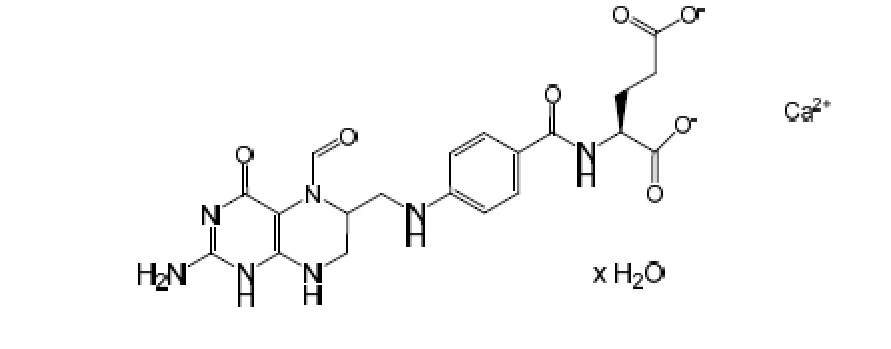
Physicochemical properties: Leucovorin is a mixture of the diastereoisomers of 5-formyltetrahydrofolic acid, the biologically active component of the mixture being the (-)-L-isomer.
Leucovorin calcium occurs as a white or light yellow, crystalline powder , odourless powder, which is sparingly soluble in water and practically insoluble in alcohol. The hydrated salt contains 10 to 17% water. The optical rotation is +14.4° to +18.0° for the anhydrous substance. The pH is 6.8 to 8.0 for this 2.5% aqueous solution.
14 CLINICAL TRIALS
The clinical trial data on which the original indication was authorized are not available.
15 MICROBIOLOGY
No microbiological information is required for this drug product.
16 NON-CLINICAL TOXICOLOGY
In mice, the LD50 was 991 mg/kg intravenously. Toxic symptoms included body tremors, marked ataxia, clonic convulsions and deaths within 10 minutes in CD-1 male mice. The single-dose oral LD50 could not be determined because, at doses as high as 20,000 mg/kg, no toxicity was observed in CD-1 and Long-Evans male rats. Doses higher than this could not be given because of the limitations of dose volume and viscosity.
In subchronic studies, oral doses of leucovorin at 0, 75, 225 or 675 mg/kg daily for over 30 days to rats and beagle dogs produced no drug-related toxic effects on body weight, food consumption, hematology, blood chemistry, urinalysis or pathology. No alteration in ECG in dogs occurred. Ophthalmoscopic examinations of rats and dogs revealed no drug-induced toxic effects.
Genotoxicity, carcinogenicity, and fertility studies have not been conducted with calcium folinate.
Embryo-fetal reproduction toxicity studies have been performed in rats and rabbits. Rats were dosed up to 1800 mg/m2 which is 9 times the maximum recommended human dose, and rabbits were dosed up to 3300 mg/m2 which is 16 times the maximum recommended human dose. There was no embryo- fetal toxicity noted in rabbits. At the maximum dose in rats, there was a slight increase in early embryonic resorptions and no other adverse effects on embryo-fetal development. No resorptions were noted in dose groups at 5 times the maximum recommended human dose.
17 SUPPORTING PRODUCT MONOGRAPHS
Pr LEUCOVORIN CALCIUM INJECTION USP (Solution, 10 mg/mL, intravenous and intramuscular), submission control 267164, Product Monograph, Pfizer Canada ULC. (DEC 13, 2022)