


Patient Medication Information: uses, side effects, how to take - Levodexa
What is LEVODEXA used for?
LEVODEXA is used to prevent and treat inflammation and prevent possible infection of the eye after cataract surgery in adults.
Antibacterial drugs like LEVODEXA treat only bacterial infections. They do not treat viral infections such as the common cold. Although you may feel better early in treatment, LEVODEXA should be taken exactly as directed.
As with other anti-infective medicines, misuse or overuse of LEVODEXA could lead to the growth of bacteria that will not be killed by LEVODEXA. This means that LEVODEXA may not work for you in the future. Do not share your medicine. “How does LEVODEXA work?
LEVODEXA is an ophthalmic solution that contains levofloxacin and dexamethasone.
Levofloxacin is an antibiotic (used to treat bacterial infections) of the type called fluoroquinolones (sometimes shortened to quinolones). It works by killing some types of bacteria that can cause infections.
Dexamethasone is a corticosteroid, (used to treat inflammation) It works by stopping symptoms like pain, heat, swelling and redness (anti-inflammatory). What are the ingredients in LEVODEXA?
Medicinal ingredients: dexamethasone (as dexamethasone sodium phosphate) and levofloxacin (as levofloxacin hemihydrate)
Non-medicinal ingredients: Benzalkonium chloride, sodium dihydrogen phosphate monohydrate, disodium phosphate dodecahydrate, sodium citrate, sodium hydroxide or hydrochloric acid (to adjust pH), water for injections.
LEVODEXA comes in the following dosage forms:
Ophthalmic solution, 0.1 % (w/v) dexamethasone and 0.5% (w/v) levofloxacin
Do not use LEVODEXA if:
- You are allergic to levofloxacin or other quinolone antibiotics.
- you are allergic to dexamethasone or to any other ingredient in LEVODEXA or parts of the container (see What are the ingredients in LEVODEXA?).
- you have herpes simplex keratitis (an infection of the cornea caused by the herpes simplex virus).
- you have viral infections (vaccinia, varicella and/or other viral diseases) of the cornea and conjunctiva.
- you have mycobacterial eye infections, including tuberculosis of the eye.
- you have fungal eye infection.
- you have a parasitic eye infection.
- you have an untreated eye infection where pus is discharged.
To help avoid side effects and ensure proper use, talk to your healthcare professional before you take LEVODEXA. Talk about any health conditions or problems you may have, including if you:
- have high pressure in the eye or if you have already had high pressure in the eye after using an eye steroid medicine.
- have glaucoma (a condition where pressure builds up on the eye and damages your eye’s optic nerve).
- have visual disturbance or blurred vision.
- have a condition causing a thinning of the eye tissues.
- are diabetic.
Other warnings you should know about:
Contact Lenses
After cataract surgery you should not wear contact lenses the whole time you are using LEVODEXA.
Pregnancy and Breast-feeding
If you are pregnant or breast-feeding, think you may be pregnant or are planning to have a baby, talk to your healthcare professional before using LEVODEXA.
LEVODEXA should NOT be used during pregnancy or breast-feeding.
Driving and Using Machines:
Your vision may become blurred for a short period of time after using LEVODEXA. Do NOT drive or use machines until your vision is clear again.
Slowed healing of eye wounds:
If you use LEVODEXA together with non-steroidal anti-inflammatory eyedrop medicines, wounds in your eyes may heal more slowly.
Immune System:
If you use LEVODEXA for a long time, it may supress your immune system. This may lead to potential bacterial, viral, fungal or parasitic infections.
Tell your healthcare professional about all the medicines you take, including any drugs, vitamins, minerals, natural supplements or alternative medicines.
The following may interact with LEVODEXA:
- medicines used to treat bacterial infections (antibiotics)
- other eye drop or eye ointment medicines
- medicines used to treat pain and inflammation in the eye (ocular NSAIDs (Non-Steroidal Anti-Inflammatory Drugs))
If you use LEVODEXA together with non-steroidal anti-inflammatory eyedrop medicines, wounds in your eyes may heal more slowly. ritonavir or cobicistat, medicines used to treat HIV (human- immunodeficiency virus) infections.
- Using LEVODEXA with these medicines may raise the level of dexamethasone in your blood.
- probenecid (medicine used to treat gout), cimetidine (medicine used to treat heartburn) and cyclosporin (medicine used to suppress your immune system after an organ transplant).
How to take LEVODEXA:
For use on the eye only.
If possible, ask someone else to apply the drops for you. Ask them to read these instructions with you before applying the drops.
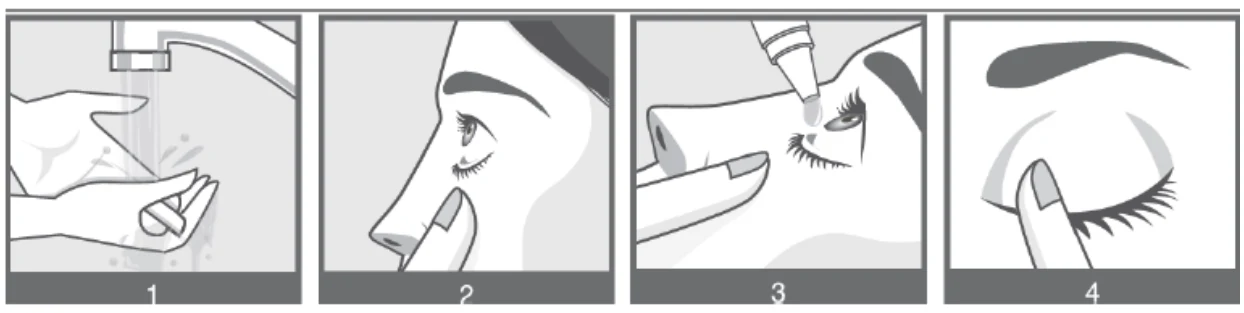
- 1) Wash your hands (picture 1).
- 2) Open the bottle. Remove the loose collar from the cap when the bottle is first opened.
- 3) To avoid infections and eye injury, take special care that the tip of the dropper bottle does not touch your eye, the skin around your eye or your fingers.
- 4) Twist off the bottle cap. Hold the bottle pointing down, between your thumb and fingers.
- 5) Gently pull down the lower eyelid until there is a small pocket. The drop will go in here (picture 2).
- 6) Tilt your head back and look at the ceiling. Bring the bottle tip close to the eye.
- 7)
Apply pressure to the corner of your eye by the nose and, squeeze the bottle gently in the middle and let a drop fall into your eye (picture 3).
a. Please note that there might be a few seconds delay between squeezing and the drop coming out. Do NOT squeeze too hard.
- 8)
After using the product, press a finger into the corner of your eye by the nose. This helps to stop the medicine getting into the rest of the body (picture 4).
a. If a drop misses your eye, try again.
- 9) Put the bottle cap firmly back on immediately after use.
Usual dose:
1 drop in the affected eye(s) every 6 hours.
Always use this medicine exactly as your healthcare professional has told you. Check with your healthcare professional if you are not sure.
Do NOT take more than 4 drops per day. Usually, LEVODEXA is taken for 7 days. If your healthcare professional feels it is necessary, treatment is followed by another 7 days of steroid eye drops.
Your healthcare professional will advise you how long to apply the drops.
If you are putting other medicine in your eye, you should wait at least 15 minutes between applying the different types of drops.
Eye ointments should be used last.
Overdose:
If you use more of this medicine than you, should it can be washed out with warm water.
| If you think you, or a person you are caring for, have taken too much LEVODEXA, contact a healthcare professional, hospital emergency department, or regional poison control centre immediately, even if there are no symptoms. |
|---|
Missed Dose:
If you forget to take LEVODEXA, use a single drop as soon as you remember. If it is close to your next dose, skip the missed dose and follow your regular dosing schedule. Do NOT take a double dose to make up for the dose you missed.
What are possible side effects from using LEVODEXA?
These are not all the possible side effects you may have when taking LEVODEXA. If you experience any side effects not listed here, tell your healthcare professional.
- high pressure in the eye
- blurred vision
- discomfort in eye
- irritation or stinging in eye
- burning or itching eyes
- mucus in eyes
- swollen eye and/or eyelid
- headache
Serious side effects and what to do about them
| Symptom / effect | Talk to your healthcare professional | Stop taking drug and get immediate medical help | |
|---|---|---|---|
| Only if severe | In all cases | ||
| VERY RARE | |||
| Allergic Reaction: swelling and tightness in the throat, breathing difficulties | ✓ | ||
If you have a troublesome symptom or side effect that is not listed here or becomes bad enough to interfere with your daily activities, tell your healthcare professional.
Reporting Side Effects
You can report any suspected side effects associated with the use of health products to Health Canada by:
NOTE: Contact your health professional if you need information about how to manage your side effects. The Canada Vigilance Program does not provide medical advice. |
Storage:
Store in the original container at room temperature (15 to 30 °C) Keep the bottle tightly closed. To prevent infections, unused portion must be throwed away 28 days after first open.
Keep out of reach and sight of children.
If you want more information about LEVODEXA:
- Talk to your healthcare professional
- Find the full product monograph that is prepared for healthcare professionals and includes this Patient Medication Information by visiting the Health Canada website: (https://www.canada.ca/en/health-canada/services/drugs-health-products/drug-products/drug-product-database.html; https://www.xediton.com/, or by calling 1-800-XEDITON.