


Product Monograph - Levothyroxine Sodium for Injection (Avir Pharma)
RECENT MAJOR LABEL CHANGES
| 7 WARNINGS AND PRECAUTIONS, Monitoring and Laboratory Tests | 08/2024 |
|---|---|
| 7 WARNINGS AND PRECAUTIONS, 7.1.3 Pediatrics | 10/2025 |
TABLE OF CONTENTS
Sections or subsections that are not applicable at the time of authorization are not listed.
RECENT MAJOR LABEL CHANGES .......................................................................................... 2
TABLE OF CONTENTS ............................................................................................................ 2
PART I: HEALTH PROFESSIONAL INFORMATION .................................................................... 4
1 INDICATIONS ............................................................................................................. 4
1.1 Pediatrics .................................................................................................................. 4
1.2 Geriatrics .................................................................................................................. 4
2 CONTRAINDICATIONS ................................................................................................ 4
3 SERIOUS WARNINGS AND PRECAUTIONS BOX ........................................................... 4
4 DOSAGE AND ADMINISTRATION ................................................................................ 5
4.1 Dosing Considerations ............................................................................................. 5
4.2 Recommended Dose and Dosage Adjustment ........................................................ 5
4.3 Reconstitution .......................................................................................................... 6
4.4 Administration ......................................................................................................... 6
4.5 Missed Dose ............................................................................................................. 6
5 OVERDOSAGE ............................................................................................................ 6
6 DOSAGE FORMS, STRENGTHS, COMPOSITION AND PACKAGING ................................ 7
7 WARNINGS AND PRECAUTIONS ................................................................................. 7
7.1 Special Populations ................................................................................................ 10
7.1.1 Pregnant Women ............................................................................................. 10
7.1.2 Breast-feeding .................................................................................................. 10
7.1.3 Pediatrics .......................................................................................................... 10
7.1.4 Geriatrics .......................................................................................................... 10
8 ADVERSE REACTIONS............................................................................................... 11
8.1 Adverse Reaction Overview ................................................................................... 11
9 DRUG INTERACTIONS .............................................................................................. 11
9.2 Drug Interactions Overview ................................................................................... 11
9.4 Drug-Drug Interactions .......................................................................................... 12
9.6 Drug-Herb Interactions .......................................................................................... 16
9.7 Drug-Laboratory Test Interactions......................................................................... 16
10 CLINICAL PHARMACOLOGY ...................................................................................... 17
10.1 Mechanism of Action ....................................................................................... 17
10.2 Pharmacodynamics .......................................................................................... 17
10.3 Pharmacokinetics ............................................................................................. 17
11 STORAGE, STABILITY AND DISPOSAL ........................................................................ 18
12 SPECIAL HANDLING INSTRUCTIONS .......................................................................... 18
PART II: SCIENTIFIC INFORMATION ..................................................................................... 19
13 PHARMACEUTICAL INFORMATION .......................................................................... 19
14 CLINICAL TRIALS ...................................................................................................... 20
15 MICROBIOLOGY ...................................................................................................... 20
16 NON-CLINICAL TOXICOLOGY .................................................................................... 20
17 SUPPORTING PRODUCT MONOGRAPHS ................................................................... 20
PATIENT MEDICATION INFORMATION ................................................................................ 21
PART I: HEALTH PROFESSIONAL INFORMATION
1 INDICATIONS
LEVOTHYROXINE SODIUM FOR INJECTION is indicated for the treatment of overt hypothyroidism of any etiology when parenteral use is clinically warranted, such as when rapid repletion is required, or when oral administration is precluded.
1.1 Pediatrics
Pediatrics: LEVOTHYROXINE SODIUM FOR INJECTION is approved for use in the pediatric population. However, dosing and monitoring considerations apply (see 4.2 Recommended Dose and Dosage Adjustment, Dosing in Pediatrics).
1.2 Geriatrics
Geriatrics: LEVOTHYROXINE SODIUM FOR INJECTION is approved for use in the geriatric population. However, dosing precautions apply (see 4.2 Recommended Dose and Dosage Adjustment, Dosing in the Elderly and in Patients with Cardiovascular Disease).
2 CONTRAINDICATIONS
- Patients who are hypersensitive to this drug or to any ingredient in the formulation or component of the container. For a complete listing, see 6 DOSAGE FORMS, COMPOSITION AND PACKAGING.
- Patients with untreated subclinical [suppressed serum TSH level with normal triiodothyronine (T3) and levothyroxine (T4) levels] or overt thyrotoxicosis of any etiology.
- Patients with acute myocardial infarction, acute myocarditis, or acute pancarditis.
- Patients with uncorrected/untreated adrenal insufficiency since thyroid hormones may precipitate an acute adrenal crisis by increasing the metabolic clearance of glucocorticoids (see 7 WARNINGS AND PRECAUTIONS, Immune, Autoimmune Polyglandular Syndrome).
- Pregnant women with hyperthyroidism treated with antithyroid agents. Combination therapy of hyperthyroidism with levothyroxine and antithyroid agents is not indicated in pregnancy (see 7.1.1 Pregnant Women).
3 SERIOUS WARNINGS AND PRECAUTIONS BOX
Serious Warnings and Precautions
Thyroid hormones, including levothyroxine, either alone or with other therapeutic agents, should not be used for the treatment of obesity or for weight loss. In euthyroid patients, doses within the range of daily hormonal requirements are ineffective for weight reduction. Larger doses may produce serious or even life-threatening manifestations of toxicity, particularly when given in association with sympathomimetic amines such as those used for their anorectic effects.
4 DOSAGE AND ADMINISTRATION
4.1 Dosing Considerations
LEVOTHYROXINE SODIUM FOR INJECTION can be used intravenously or intramuscularly in place of the oral dosage form when oral administration is precluded.
LEVOTHYROXINE SODIUM FOR INJECTION can be used intravenously in place of the oral dosage form when rapid repletion is required.
The relative bioavailability between LEVOTHYROXINE SODIUM FOR INJECTION and oral levothyroxine products has not been established. Based on medical practice, the relative bioavailability between oral and intravenous administration of LEVOTHYROXINE SODIUM FOR INJECTION is estimated to be from 48 to 74%. Caution should be used when switching patients from oral levothyroxine products to LEVOTHYROXINE SODIUM FOR INJECTION as accurate dosing conversion has not been studied.
LEVOTHYROXINE SODIUM FOR INJECTION should be administered, as clinically indicated, until the patient can tolerate oral therapy and is clinically stable. For chronic treatment of hypothyroidism, an oral dosage form of levothyroxine should be used to maintain a euthyroid state.
Due to differences in absorption characteristics of patients and the oral levothyroxine product formulations, TSH and thyroid hormone levels should be measured a few weeks after initiating oral levothyroxine and dose adjusted accordingly until the serum TSH concentration is normalized and signs and symptoms resolve (see 7 WARNINGS AND PRECAUTIONS, Monitoring and Laboratory Tests).
4.2 Recommended Dose and Dosage Adjustment
Use of LEVOTHYROXINE SODIUM FOR INJECTION in place of the oral dosage form when oral administration is precluded: Based on medical practice, the initial parenteral dosage should be between 48 to 74% of the previously established oral dosage form of levothyroxine sodium tablets.
If cardiac symptoms develop or worsen, the cardiac disease should be evaluated and the dose of LEVOTHYROXINE SODIUM FOR INJECTION reduced (see 7 WARNINGS AND PRECAUTIONS, Cardiovascular). Rarely, worsening angina or other signs of cardiac ischemia may prevent achieving a TSH in the normal range.
Daily administration of LEVOTHYROXINE SODIUM FOR INJECTION should be maintained until the patient is capable of tolerating an oral dose and is clinically stable. For chronic treatment of hypothyroidism, an oral dosage form of levothyroxine should be used to maintain a euthyroid state.
Intravenous Use of LEVOTHYROXINE SODIUM FOR INJECTION, When Rapid Repletion is Required e.g., Myxedema Coma: An initial intravenous loading dose of LEVOTHYROXINE SODIUM FOR INJECTION, usually between 300 to 500 mcg, is given to replete the peripheral pool of T4. The initial dose is followed by daily intravenous doses of 50 to 100 mcg until the patient is stable and oral administration is feasible. Normal T4 levels are usually achieved in 24 hours, followed by progressive increases in T3. Improvement in cardiac output, blood pressure, temperature, and mental status generally occur within 24 hours, with improvement in many manifestations of hypothyroidism in 4 to 7 days.
Dosing in Pediatrics: Myxedema coma is a disease of the elderly. An approved oral dosage form of levothyroxine should be used in the pediatric patient population for maintaining a euthyroid state in non-complicated hypothyroidism. The initial parenteral dosage should be approximately one-half the previously established oral dosage of levothyroxine sodium tablets.
Dosing in the Elderly and in Patients with Cardiovascular Disease: Intravenous levothyroxine may be associated with cardiac toxicity, including arrhythmias, tachycardia, myocardial ischemia and infarction, or worsening of congestive heart failure and death in the elderly and in those with underlying cardiovascular disease. In the elderly, the full replacement dose may be altered by decreases in T4 metabolism. Therefore, cautious use, including doses in the lower end of the recommended range, may be warranted in these populations.
4.3 Reconstitution
Reconstitute the lyophilized Levothyroxine Sodium for Injection by aseptically adding 5 mL of 0.9% Sodium Chloride Injection, USP only.
Do not use Bacteriostatic Sodium Chloride Injection, USP, as the bacteriostatic agent may interfere with complete reconstitution.
Shake vial to ensure complete mixing. Use immediately after reconstitution.
The resultant solution will have a final concentration of approximately 40 mcg per mL and 100 mcg per mL for the 200 mcg and 500 mcg vials, respectively.
4.4 Administration
LEVOTHYROXINE SODIUM FOR INJECTION can be used intravenously in place of the oral dosage form when rapid repletion is required. It can also be used intravenously or intramuscularly when oral administration is precluded.
Administration of LEVOTHYROXINE SODIUM FOR INJECTION by the subcutaneous route is not recommended as studies have shown that the influx of T4 from the subcutaneous site is very slow, and depends on many factors such as volume of injection, the anatomic site of injection, ambient temperature, and presence of vasospasm.
Do not add LEVOTHYROXINE SODIUM FOR INJECTION to other IV fluids.
Parenteral products should be inspected for clarity of solutions prior to administration whenever solution and container permit. Solutions showing haziness, particulate matter, precipitate, discolouration or leakage should not be used.
LEVOTHYROXINE SODIUM FOR INJECTION comes in a single-dose vial, and any unused portion should be discarded.
Caution should be exercised when administering LEVOTHYROXINE SODIUM FOR INJECTION to patients with underlying cardiovascular disease, to the elderly, and to those with concomitant adrenal insufficiency (see 7 WARNINGS AND PRECAUTIONS, Cardiovascular).
4.5 Missed Dose
The missed dose should be administered as soon as possible. If it is almost time for the next dose, the missed dose should not be administered. Instead, the next regularly scheduled dose should be administered. Doses should not be doubled.
5 OVERDOSAGE
The signs and symptoms of overdosage are those of hyperthyroidism (see 8.1 Adverse Reaction Overview). Overdose may cause symptoms of a significant increase in the metabolic rate. In addition, confusion and disorientation may occur. Cerebral embolism, shock, coma, and death have been reported. Levothyroxine overdose may also lead to symptoms of acute psychosis, especially in patients at risk of psychotic disorders. Symptoms may appear several days after the overdose of levothyroxine sodium. Several cases of sudden cardiac death have also been reported in patients with many years of levothyroxine sodium abuse.
An elevated T3 level is a reliable indicator of overdose, more so than elevated T4 or free T4 (FT4) levels.
Depending on the extent of the overdose it is recommended that treatment with LEVOTHYROXINE SODIUM FOR INJECTION is stopped, and that thyroid hormone monitored.
For management of a suspected drug overdose, contact your regional poison control centre.
Acute Massive Overdosage: This may be a life-threatening emergency; therefore, symptomatic and supportive therapy should be instituted immediately. Beta-sympathomimetic effects or increased central and peripheral sympathetic activity such as tachycardia, anxiety, agitation or hyperkinesia may be treated by administering betablockers, e.g., propranolol, provided that there are no medical contraindications to their use. Provide respiratory support as needed; control congestive heart failure and arrhythmia; control fever, hypoglycemia, and fluid loss as necessary. Large doses of antithyroid drugs (e.g., methimazole or propylthiouracil) followed in one to two hours by large doses of iodine may be given to inhibit synthesis and release of thyroid hormones. Glucocorticoids may be given to inhibit the conversion of T4 to T3. Plasmapheresis, charcoal hemoperfusion and exchange transfusion have been reserved for cases in which continued clinical deterioration occurs despite conventional therapy. Due to its high protein binding, levothyroxine sodium cannot be eliminated via hemodialysis or hemoperfusion.
6 DOSAGE FORMS, STRENGTHS, COMPOSITION AND PACKAGING
Table 1 – Dosage Form, Strengths, Composition and Packaging
LEVOTHYROXINE SODIUM FOR INJECTION: Sterile lyophilized powder for reconstitution is supplied in 10 mL single-dose vials:
- 200 mcg levothyroxine sodium, USP in 10 mL vials packaged individually.
- 500 mcg levothyroxine sodium, USP in 10 mL vials packaged individually.
The stopper is not made with natural rubber latex.
7 WARNINGS AND PRECAUTIONS
Please see 3 SERIOUS WARNINGS AND PRECAUTIONS BOX.
| Route of Administration | Dosage Form / Strength / Composition | Non-medicinal Ingredients |
Injection (intravenous or intramuscular) | Lyophilized Powder for solution 200 mcg / vial 500 mcg / vial | Dibasic sodium phosphate heptahydrate, mannitol and sodium hydroxide. |
General
Levothyroxine has a narrow therapeutic index. Regardless of the indication for use, careful dosage titration is necessary to avoid the consequences of over- or undertreatment. These consequences include, among others, effects on growth and development, cardiovascular function, bone metabolism, reproductive function, cognitive function, emotional state, gastrointestinal function, and on glucose and lipid metabolism.
Many drugs interact with levothyroxine sodium, necessitating adjustments in dosing to maintain therapeutic response (see 9.4 Drug-Drug Interactions).
Before starting therapy with thyroid hormones, the following diseases or medical conditions must be excluded or treated: coronary failure, angina pectoris, arteriosclerosis, hypertension, pituitary insufficiency, or adrenal insufficiency. Thyroid autonomy should also be excluded or treated before starting therapy with thyroid hormones.
LEVOTHYROXINE SODIUM FOR INJECTION therapy for patients with previously undiagnosed endocrine disorders, including adrenal insufficiency, hypopituitarism, and diabetes insipidus, may worsen symptoms of these endocrinopathies.
Seizures have been reported rarely in association with the initiation of levothyroxine sodium therapy, and may be related to the effect of thyroid hormone on seizure threshold.
Carcinogenesis and Mutagenesis
Although animal studies to determine the mutagenic or carcinogenic potential of thyroid hormones have not been performed, synthetic T4 is identical to that produced by the human thyroid gland. A reported association between prolonged thyroid hormone therapy and breast cancer has not been confirmed and patients receiving levothyroxine for established indications should not discontinue therapy.
Cardiovascular
Excessive bolus dosing of LEVOTHYROXINE SODIUM FOR INJECTION (greater than 500 mcg) are associated with cardiac complications, particularly in the elderly and in patients with an underlying cardiac condition.
Overtreatment with levothyroxine sodium may have adverse cardiovascular effects such as an increase in heart rate, cardiac wall thickness, and cardiac contractility, and may precipitate angina or arrhythmias. Close observation of the patient following the administration of LEVOTHYROXINE SODIUM FOR INJECTION is advised.
If cardiac symptoms develop or worsen, the levothyroxine dose should be reduced. Patients with coronary artery disease who are receiving levothyroxine therapy should be monitored closely during surgical procedures, since the possibility of precipitating cardiac arrhythmias may be greater in those treated with levothyroxine. Concomitant administration of levothyroxine and sympathomimetic agents to patients with coronary artery disease may precipitate coronary insufficiency. Hence, frequent checks of thyroid hormone parameters must be performed in these cases.
Exercise caution when administering LEVOTHYROXINE SODIUM FOR INJECTION to patients with cardiovascular disorders and to the elderly in whom there is an increased risk of occult cardiac disease. In these patients, levothyroxine therapy should be initiated at lower doses than those recommended in younger individuals or in patients without cardiac disease (see 7.1.4 Geriatrics and 4.2 Recommended Dose and Dosage Adjustment, Dosing in the Elderly and in Patients with Cardiovascular Disease).
Endocrine and Metabolism
Hypothalamic/Pituitary Hormone Deficiencies: In patients with secondary or tertiary hypothyroidism, additional hypothalamic/pituitary hormone deficiencies should be considered and, if diagnosed, treated for adrenal insufficiency (see 7 WARNINGS AND PRECAUTIONS, Immune, Autoimmune Polyglandular Syndrome).
Bone Mineral Density: Supra-physiological serum levels of levothyroxine sodium should be avoided in postmenopausal women with hypothyroidism and an increased risk of osteoporosis. Close monitoring of the thyroid function is recommended. It is recommended that these patients should be given the minimum dose necessary to achieve the desired clinical and biochemical response.
Hematologic
T4 enhances the response to anticoagulant therapy. Prothrombin time should be closely monitored in patients taking both levothyroxine and oral anticoagulants, and the dosage of anticoagulant adjusted accordingly (see 9.4 Drug-Drug Interactions).
Immune
Autoimmune Polyglandular Syndrome: Occasionally, chronic autoimmune thyroiditis may occur in association with other autoimmune disorders such as adrenal insufficiency, pernicious anemia, and insulin-dependent diabetes mellitus. Patients with concomitant adrenal insufficiency should be treated with replacement glucocorticoids prior to initiation of treatment with LEVOTHYROXINE SODIUM FOR INJECTION. Failure to do so may precipitate an acute adrenal crisis when thyroid hormone therapy is initiated, due to increased metabolic clearance of glucocorticoids by thyroid hormone. Patients with diabetes mellitus may require upward adjustments of their antidiabetic therapeutic regimens when treated with levothyroxine (see 9.4 Drug-Drug Interactions).
Monitoring and Laboratory Tests
Clinical and laboratory evaluations should generally be performed at 6 to 8 week intervals (2 to 4 weeks in severely hypothyroid patients), and the dosage adjusted, if necessary, until the serum TSH concentration is normalized and signs and symptoms resolved.
Adequacy of levothyroxine sodium therapy for hypothyroidism of pituitary or hypothalamic origin should be assessed by measuring FT4, which should be maintained in the upper half of the normal range. Measurement of TSH is not a reliable indicator of response to therapy for this condition.
Serum biotin may interfere with thyroid function immunoassays that are based on a biotin/streptavidin interaction, leading to either falsely decreased or falsely increased test results (see 9.7 Drug-Laboratory Test Interactions). The risk of interference increases with higher doses of biotin. When possible, it is recommended that patients abstain from taking biotin supplements for at least 2 days prior to specimen collection.
When interpreting results of laboratory tests, possible biotin interference has to be taken into consideration, especially if a lack of coherence with the clinical presentation is observed.
Psychiatric
When initiating levothyroxine therapy in patients at risk of psychotic disorders, it is recommended to start at a low levothyroxine dose and to slowly increase the dosage at the beginning of the therapy. Monitoring of the patient is advised. If signs of psychotic disorders occur, adjustment of the dose of levothyroxine should be considered.
Reproductive Health: Female and Male Potential
- Fertility
LEVOTHYROXINE SODIUM FOR INJECTION should not be used in the treatment of male or female infertility unless this condition is associated with hypothyroidism. Animal studies have not been performed to evaluate the effects of levothyroxine on fertility.
- Teratogenic Risk
Studies in pregnant women treated with oral levothyroxine to maintain a euthyroid state have not shown an increased risk of congenital abnormalities.
7.1 Special Populations
7.1.1 Pregnant Women
Hypothyroidism during pregnancy is associated with a higher rate of complications, including spontaneous abortion, pre-eclampsia, stillbirth and premature delivery. Maternal hypothyroidism may have an adverse effect on fetal and childhood growth and development.
Thyroid hormones cross the placental barrier to some extent as evidenced by levels in cord blood of athyreotic fetuses being approximately one-third maternal levels. Transfer of thyroid hormone from the mother to the fetus, however, may not be adequate to prevent in utero hypothyroidism.
Combination therapy of LEVOTHYROXINE SODIUM FOR INJECTION and an antithyroid agent for hyperthyroidism is contraindicated during pregnancy (see 2 CONTRAINDICATIONS). Such combination would require higher doses of anti-thyroid agents, which are known to pass the placenta and to induce hypothyroidism in the infant.
7.1.2 Breast-feeding
Adequate replacement doses of levothyroxine are generally needed to maintain normal lactation. Although thyroid hormones are excreted only minimally in human milk, caution should be exercised when LEVOTHYROXINE SODIUM FOR INJECTION is administered to a nursing woman.
7.1.3 Pediatrics
Pediatrics (All ages including neonates): Haemodynamic parameters should be monitored when levothyroxine therapy is initiated in very low birth weight preterm neonates as circulatory collapse may occur due to the immature adrenal function.
An approved, oral dosage form of levothyroxine should be used in the pediatric patient population for maintaining an euthyroid state in non-complicated hypothyroidism.
7.1.4 Geriatrics
In the elderly, the full replacement dose may be altered by decreases in T4 metabolism. Furthermore, there is increased prevalence of cardiovascular disease, with atrial fibrillation being a common side effect associated with levothyroxine treatment in the elderly. Therefore, cautious use, including doses in the lower end of the recommended range, may be warranted in these populations (see 7 WARNINGS AND PRECAUTIONS, Cardiovascular, and 4.2 Recommended Dose and Dosage Adjustment, Dosing in the Elderly and in Patients with Cardiovascular Disease).
8 ADVERSE REACTIONS
8.1 Adverse Reaction Overview
Adverse reactions associated with levothyroxine therapy are primarily those of hyperthyroidism due to therapeutic overdosage. Adverse reactions observed with levothyroxine use include the following:
| Cardiac Disorders: | palpitations, tachycardia, arrhythmias, increased pulse and blood pressure, cardiac failure, angina, myocardial infarction and cardiac arrest |
| Gastrointestinal System: | diarrhea, vomiting, abdominal cramps |
| General: | fatigue, heat intolerance, fever, excessive sweating |
| Immune System Disorders: | Hypersensitivity reactions to inactive ingredients have occurred in patients treated with thyroid hormone products. These include urticaria, pruritus, skin rash, flushing, angioedema, various GI symptoms (abdominal pain, nausea, vomiting and diarrhea), fever, arthralgia, serum sickness and wheezing. Hypersensitivity to levothyroxine itself is not known to occur. |
| Investigations: | decreased bone mineral density; elevations in liver function tests |
| Metabolism and Nutrition Disorders: | increased appetite, weight loss |
| Musculoskeletal and Connective Tissue: | tremors, muscle weakness, muscle spasm; slipped capital femoral epiphysis in children, excessive dose may result in premature closure of the epiphyses in children (with resultant compromised adult height) |
| Nervous System: | headache, pseudotumour cerebri, seizures |
| Psychiatric Disorders: | anxiety, emotional lability, hyperactivity, insomnia, irritability, nervousness and restlessness, |
| Reproductive System: | menstrual irregularities, impaired fertility |
| Respiratory System: | dyspnea |
| Skin and subcutaneous tissue disorders: | alopecia (generally transient), flushing, rash |
| Vascular Disorders: | flushing |
9 DRUG INTERACTIONS
9.2 Drug Interactions Overview
Many drugs affect thyroid hormone synthesis and secretion, pharmacokinetics (e.g., absorption, distribution, including protein binding, metabolism, and excretion), and target tissue response, and may alter the therapeutic response to levothyroxine. In addition, thyroid hormones and thyroid status have varied effects on the pharmacokinetics and actions of other drugs. A listing of drug-thyroidal axis interactions is contained in Table 2.
9.3 Drug-Behavioural Interactions
This information is available for this drug product.
9.4 Drug-Drug Interactions
The list of drug-thyroidal axis interactions in Table 2 may not be comprehensive due to the introduction of new drugs that interact with the thyroidal axis or the discovery of previously unknown interactions.
Table 2: Established or Potential Drug-Drug Interactions
| Drug or Drug Class | Effect |
| Drug or Drug Class | Effect |
| Drug or Drug Class | Effect |
| Drug or Drug Class | Effect |
| Drug or Drug Class | Effect |
Drugs that may reduce TSH secretion – the reduction is not sustained; therefore, hypothyroidism does not occur | |
Dopamine/Dopamine Agonists Glucocorticoids Octreotide | Use of these agents may result in a transient reduction in TSH secretion when administered at the following doses:
|
| Drugs that alter thyroid hormone secretion | |
| Drugs that may decrease thyroid hormone secretion, which may result in hypothyroidism | |
Aminoglutethimide Amiodarone Iodide (including iodine containing radiographic contrast agents) Lithium Thioamides
Sulfonamides Tolbutamide | Long-term aminoglutethimide therapy may minimally decrease T4 and T3 levels and increase TSH, although all values remain within normal limits in most patients. Oral cholecystographic agents and amiodarone are slowly excreted, producing more prolonged hypothyroidism than parenterally administered iodinated contrast agents. Lithium blocks the TSH-mediated release of T4 and T3. Thyroid function should therefore be carefully monitored during lithium initiation, stabilization, and maintenance. The fetus, neonate, elderly and euthyroid patients with underlying thyroid disease (e.g., Hashimoto’s thyroiditis or with Grave’s disease previously treated with radioiodine or surgery) are among those individuals who are particularly susceptible to iodine-induced hypothyroidism. |
| Drugs that may increase thyroid hormone secretion, which may result in hyperthyroidism | |
Amiodarone Iodide (including iodine-containing radiographic contrast agents) | Amiodarone may induce hyperthyroidism by causing thyroiditis. Iodide and drugs that contain pharmacologic amounts of iodide may cause hyperthyroidism in euthyroid patients with Graves’ disease previously treated with antithyroid drugs or in euthyroid patients with thyroid autonomy Hyperthyroidism may develop over several weeks and may persist for several months after therapy discontinuation. |
| Drugs that may alter T4 and T3 serum transport – but FT4 concentration remains normal; and therefore, the patient remains euthyroid | |
Clofibrate Estrogen-containing Oral Contraceptives Estrogens (oral) Heroin/Methadone 5-Fluorouracil Mitotane Tamoxifen | Increase serum TBG Concentration |
Androgens/Anabolic Steroids Asparaginase Glucocorticoids Slow-Release Nicotinic Acid | Decrease serum TBG Concentration |
| Drugs that may cause protein-binding site displacement | |
Furosemide (greater than 80 mg IV) Heparin Hydantoins Non Steroidal Anti-Inflammatory Drugs
Salicylates (greater than 2 g/day) | Administration of these agents with levothyroxine sodium results in an initial transient increase in FT4. Continued administration results in a decrease in Serum T4 and normal FT4 and TSH concentrations and, therefore, patients are clinically euthyroid. Salicylates inhibit binding of T4 and T3 to TBG and transthyretin. An initial increase in serum FT4 is followed by return of FT4 to normal levels with sustained therapeutic serum salicylate concentrations, although total-T4 levels may decrease by as much as 30%. |
| Drugs that may alter T4 and T3 metabolism | |
| Drugs that may increase hepatic metabolism, which may result in hypothyroidism | |
Carbamazepine Hydantoins Phenobarbital Rifampin Ritanovir | Phenytoin and carbamazepine reduce serum protein binding of levothyroxine sodium, and total and FT4 may be reduced by 20 to 40%, but most patients have normal serum TSH levels and are clinically euthyroid. Stimulation of hepatic microsomal drug-metabolizing enzyme activity such as rifampicin and barbiturates may cause increased hepatic degradation of levothyroxine sodium, resulting in increased levothyroxine sodium requirements. Post marketing cases have been reported indicating a potential interaction between ritonavir containing products and levothyroxine, resulting in TSH increased levels and hypothyroidism. TSH should be monitored in patients treated concomintantly with ritonavir and levothyroxine for at least the first month after starting and/or ending ritonavir treatment. |
| Drugs that may decrease T4 5’-deiodinase activity | |
Amiodarone Beta-adrenergic antagonists
Glucocorticoids
Propylthiouracil (PTU) | Administration of these enzyme inhibitors decreases the peripheral conversion of T4 to T3, leading to decreased T3 levels. However, serum T4 levels are usually normal but may occasionally be slightly increased. In patients treated with large doses of propranolol (greater than 160 mg/day), T3 and T4 levels change slightly, TSH levels remain normal, and patients are clinically euthyroid. It should be noted that actions of particular beta-adrenergic antagonists may be impaired when the hypothyroid patient is converted to the euthyroid state. Short-term administration of large doses of glucocorticoids may decrease serum T3 concentrations by 30% with minimal change in serum T4 levels. However, long-term glucocorticoid therapy may result in slightly decreased T3 and T4 levels due to decreased TBG production (see above). |
| Miscellaneous | |
Anticoagulants (oral)
| Thyroid hormones appear to increase the catabolism of vitamin K-dependent clotting factors, thereby increasing the anticoagulant activity of oral anticoagulants. Concomitant use of these agents impairs the compensatory increases in clotting factor synthesis. Prothrombin time should be carefully monitored in patients taking levothyroxine sodium and oral anticoagulants and the dose of anticoagulant therapy adjusted accordingly. |
Antidepressants
| Concurrent use of tri/tetracyclic antidepressants and levothyroxine sodium may increase the therapeutic and toxic effects of both drugs, possibly due to increased receptor sensitivity to catecholamines. Toxic effects may include increased risk of cardiac arrhythmias and CNS stimulation; onset of action of tricyclics may be accelerated. Administration of sertraline in patients stabilized on levothyroxine sodium may result in increased levothyroxine sodium requirements. |
Antidiabetic Agents
| Addition of levothyroxine sodium to antidiabetic or insulin therapy may result in increased antidiabetic agent or insulin requirements. Careful monitoring of diabetic control is recommended, especially when thyroid therapy is started, changed, or discontinued. |
| Cardiac glycosides | Serum digitalis glycoside levels may be reduced in hyperthyroidism or when the hypothyroid patient is converted to the euthyroid state. Therapeutic effect of digitalis glycosides may be reduced. |
Cytokines
| Therapy with interferon-alpha has been associated with the development of antithyroid microsomal antibodies in 20% of patients, and some have transient hypothyroidism, hyperthyroidism, or both. Patients who have antithyroid antibodies before treatment are at higher risk for thyroid dysfunction during treatment. Interleukin-2 has been associated with transient painless thyroiditis in 20% of patients. Interferon-beta and -gamma have not been reported to cause thyroid dysfunction. |
Growth Hormones
| Excessive use of thyroid hormones with growth hormones may accelerate epiphyseal closure. However, untreated hypothyroidism may interfere with growth response to growth hormone. |
| Ketamine | Concurrent use may produce marked hypertension and tachycardia; cautious administration to patients receiving thyroid hormone therapy is recommended. |
Methylxanthine Bronchodilators (e.g., Theophylline) | Decreased theophylline clearance may occur in hypothyroid patients; clearance returns to normal when the euthyroid state is achieved. |
| Radiographic Agents | Thyroid hormones may reduce the uptake of 123I, 131I, and 99mTc. |
| Sympathomimetics | Concurrent use may increase the effects of sympathomimetics or thyroid hormone. Thyroid hormones may increase the risk of coronary insufficiency when sympathomimetic agents are administered to patients with coronary artery disease. |
| Tyrosine Kinase Inhibitors | Plasma concentration of levothyroxine (thyroxine) possibly reduced by Tyrosine Kinase Inhibitors (e.g. imatinib, sunitinib). |
Chloral Hydrate Ciprofloxacin Diazepam Ethionamide Lovastatin Metoclopramide 6-Mercaptopurine Nitroprusside Para-aminosalicylate sodium Perphenazine Resorcinol (excessive topical use) Raloxifen Thiazide Diuretics | These agents have been associated with thyroid hormone and/or TSH level alterations by various mechanisms. |
Legend: C = Case Study; CT = Clinical Trial; T = Theoretical
9.6 Drug-Herb Interactions
St John’s Wort may increase hepatic metabolism of levothyroxine, which may result in hypothyroidism.
9.7 Drug-Laboratory Test Interactions
A number of drugs or moieties are known to alter serum levels of TSH, T4 and T3 and may thereby influence the interpretation of laboratory tests of thyroid function (see Table 2).
Changes in Thyroid-Binding Globule (TBG) concentration must be considered when interpreting T4 and T3 values, which necessitates measurement and evaluation of unbound (free) hormone and/or determination of the free-T4 index (FT4I). Pregnancy, infectious hepatitis, estrogens, estrogen-containing oral contraceptives, and acute intermittent porphyria increase TBG concentrations. Decreases in TBG concentrations are observed in nephrosis, severe hypoproteinemia, severe liver disease, acromegaly, and after androgen or glucocorticoid therapy (see Table 2). Familial hyper or hypo thyroxine binding globulinemias have been described, with the incidence of TBG deficiency approximating 1 in 9000.
Serum biotin may interfere with thyroid function immunoassays that are based on a biotin/streptavidin interaction, leading to either falsely decreased or falsely increased test results (see 7 WARNINGS AND PRECAUTIONS, Monitoring and Laboratory Tests). When available, alternative tests not susceptible to biotin interference should be used for patients taking biotin containing products.
10 CLINICAL PHARMACOLOGY
10.1 Mechanism of Action
Thyroid hormones exert their physiologic actions through control of DNA transcription and protein synthesis. T3 and T4 diffuse into the cell nucleus and bind to thyroid receptor proteins attached to DNA. This hormone nuclear receptor complex activates gene transcription and synthesis of messenger RNA and cytoplasmic proteins. Changes in protein concentrations are responsible for the metabolic changes observed in organs and tissues.
The physiological actions of thyroid hormones are produced predominantly by T3, the majority of which (approximately 80%) is derived from T4 by deiodination in peripheral tissues.
10.2 Pharmacodynamics
LEVOTHYROXINE SODIUM FOR INJECTION contains synthetic crystalline L-3,3’,5,5’-tetraiodothyronine sodium salt [levothyroxine (T4) sodium]. Synthetic T4 is identical to that produced in the human thyroid gland.
Thyroid hormones regulate multiple metabolic processes and play an essential role in normal growth and development, and normal maturation of the central nervous system and bone. The metabolic actions of thyroid hormones include augmentation of cellular respiration and thermogenesis, as well as metabolism of proteins, carbohydrates and lipids. The protein anabolic effects of thyroid hormones are essential to normal growth and development. Thyroid hormones also appear to have direct effects on tissues, such as increased myocardial contractility and decreased systemic vascular resistance.
10.3 Pharmacokinetics
Absorption
Following intravenous administration of levothyroxine sodium for injection, the synthetic levothyroxine cannot be distinguished from the natural hormone that is secreted endogenously. Absorption following intramuscular administration is variable.
Distribution
Circulating thyroid hormones are greater than 99% bound to plasma proteins, including thyroxine-binding globulin (TBG), thyroxine-binding pre-albumin (TBPA), and albumin (TBA), whose capacities and affinities vary for each hormone. The higher affinity of both TBG and TBPA for T4 partially explains the higher serum levels, slower metabolic clearance, and longer half-life of T4 compared to T3. Protein-bound thyroid hormones exist in reverse equilibrium with small amounts of free hormone. Only unbound hormone is metabolically active. Many drugs and physiologic conditions affect the binding of thyroid hormones to serum proteins (see 9.4 Drug-Drug Interactions and 9.7 Drug-Laboratory Test Interactions). Thyroid hormones do not readily cross the placental barrier (see 7.1.1 Pregnant Women).
Metabolism
The major pathway of thyroid hormone metabolism is through sequential deiodination. Approximately 80% of circulating T3 is derived from peripheral T4 by monodeiodination of T4 at the 5 position (outer ring). Peripheral monodeiodination of T4 at the 5 position (inner ring) results in the formation of reverse triiodothyronine (rT3), which is calorigenically inactive. T3 and rT3 are further deiodinated to diiodothyronine. The liver is the major site of degradation for both T4 and T3, with T4 deiodination also occurring at a number of additional sites, including the kidney and other tissues. Thyroid hormones are also metabolized via conjugation with glucuronides and sulfates and excreted directly into the bile and gut where they undergo enterohepatic recirculation.
Elimination
Thyroid hormones are primarily eliminated by the kidneys. T4 is slowly eliminated (see Table 1).
A portion of the conjugated hormone reaches the colon unchanged and is eliminated in the feces. Approximately 20% of T4 is eliminated in the stool. Urinary excretion of T4 decreases with age.
Table 1: Pharmacokinetic Parameters of Thyroid Hormones in Euthyroid Patients
| Hormone | Ratio in Thyroglobulin | Biologic Potency | t½ (days) | Protein Binding (%)2 |
| Levothyroxine (T4) | 10-20 | 1 | 6-71 | 99.96 |
| Liothyronine (T3) | 1 | 4 | ≤ 2 | 99.5 |
1 3 to 4 days in hyperthyroidism, 9 to 10 days in hypothyroidism
2 Includes TBG, TBPA, and TBA
11 STORAGE, STABILITY AND DISPOSAL
Store at controlled room temperature between 15 and 30°C, protected from light.
Single-dose vial. Use immediately after reconstitution. The reconstituted drug product is stable for a period of 4 hours at 25°C. Discard any unused portion.
Keep in a safe place out of the sight and reach of children.
12 SPECIAL HANDLING INSTRUCTIONS
The information is not available for this drug product.
PART II: SCIENTIFIC INFORMATION
13 PHARMACEUTICAL INFORMATION
Drug Substance
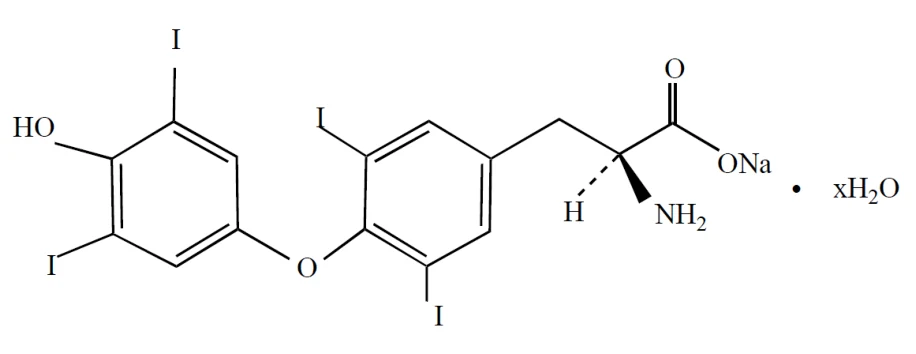
Levothyroxine Sodium is a physiologically active material being the levo-isomer of thyroxine.
Proper name: Sodium Levothyroxine (L-T4, Na)
Chemical name: USP: (1) L-Tyrosine, O-(4-hydroxy-3,5-diiodophenyl)-3,5-diiodo-, monosodium salt
(2) Monosodium L-thyroxine hydrate
EP: sodium(2S)-2-amino-3-[4-(4-hydroxy-3,5-diiodophenoxy)-3, 5-dioodophenyl] propanoate
Molecular formula and molecular mass: C15H10I4NNaO4 • xH2O
798.85 g/mol (anhydrous)
Structural formula:
Product Characteristics
Physicochemical properties: Off-white to slightly brownish-yellow powder or fine, faintly coloured crystalline powder
Solubility: Very slightly soluble in water
Slightly soluble in ethanol
Soluble in alkali hydroxide solutions
Solvent g/100 mL
H2O 0.14
95% ethanol 0.3, 0.4
alkali hydroxides soluble
chloroform almost insoluble
ethyl ether almost insoluble
pH 7.4 buffer 0.022 - 0.044
Melting point: Isomer Melting Range (°C)
L-T4 233 - 235 (decomp)
L-T4 235 - 236 (decomp)
D-T4 237 (decomp)
L-T4 236 (corr)
pKa: The apparent pKa of the phenolic hydroxyl, carboxyl and amino functions has been reported:
Function pKa pKaa
carboxyl 2.2 3.832
phenolic hydroxyl 6.7 8.085
amino 10.1 9.141
a In 75% dimethylsulfoxide-water and 0.1 M KNO3
Titrant: potentiometric with sodium hydroxide
14 CLINICAL TRIALS
No clinical studies have been conducted with levothyroxine sodium for injection.
15 MICROBIOLOGY
No microbiological information is required for this drug product.
16 NON-CLINICAL TOXICOLOGY
Animal studies have not been performed to evaluate the toxicology, carcinogenic potential, mutagenic potential or effects on fertility of levothyroxine sodium for injection.
17 SUPPORTING PRODUCT MONOGRAPHS
- 1. PrEUTHYROX® (Tablets, 25, 50, 75, 88, 100, 112, 125, 137, 150, 175, 200, and 300 mcg), submission control 274121, Product Monograph, EMD Serono, A Division of EMD Inc., Canada. (AUG 22, 2023).
- 2. PrSYNTHROID® (Tablets, 25, 50, 75, 88, 100, 112, 125, 137, 150, 175, 200, and 300 mcg), submission control 275351, Product Monograph, BGP Pharma ULC. (AUG 17, 2023).
- 3. PrTIROCAPTM (Tablets, 13, 25, 50, 75, 88, 100, 112, 125, 137, 150, 175, and 200 mcg), submission control 248553, Product Monograph, Institut Biochimique SA (IBSA). (JUN 17, 2021).
- 4. PrLEVOTHYROXINE SODIUM FOR INJECTION (levothyroxine sodium), powder, 200 mcg/vial and 500 mcg/vial and LEVOTHYROXINE SODIUM INJECTION (levothyroxine sodium), solution, 200 mcg/5 mL (40 mcg/mL) and 500 mcg/5 ml (100 mcg/mL), submission control 287632, Product Monograph, Fresenius Kabi Canada Ltd. (NOV 08, 2024).