


Product Monograph - Lidocaine Hydrochloride Injection USP (Pfizer Canada, PM 00067087)
RECENT MAJOR LABEL CHANGES
No major label changes related to safety and efficacy have been made within the past 24 months.
TABLE OF CONTENTS
Sections or subsections that are not applicable at the time of authorization are not listed.
RECENT MAJOR LABEL CHANGES............................................................................................ 2
TABLE OF CONTENTS .............................................................................................................. 2
PART I: HEALTH PROFESSIONAL INFORMATION ..................................................................... 4
1 INDICATIONS .............................................................................................................. 4
1.1 Pediatrics .......................................................................................................... 4
1.2 Geriatrics........................................................................................................... 4
2 CONTRAINDICATIONS ................................................................................................. 4
3 SERIOUS WARNINGS AND PRECAUTIONS BOX ............................................................ 4
4 DOSAGE AND ADMINISTRATION................................................................................. 5
4.1 Dosing Considerations ....................................................................................... 5
4.2 Recommended Dose and Dosage Adjustment..................................................... 5
4.4 Administration................................................................................................... 5
4.5 Missed Dose ...................................................................................................... 8
5 OVERDOSAGE ............................................................................................................. 9
6 DOSAGE FORMS, STRENGTHS, COMPOSITION AND PACKAGING ............................... 10
7 WARNINGS AND PRECAUTIONS ................................................................................ 11
7.1 Special Populations .......................................................................................... 11
7.1.1 Pregnant Women ....................................................................................... 11
7.1.2 Breast-feeding............................................................................................ 12
7.1.3 Pediatrics ................................................................................................... 12
7.1.4 Geriatrics ................................................................................................... 12
8 ADVERSE REACTIONS ................................................................................................ 12
8.1 Adverse Reaction Overview.............................................................................. 12
8.2 Clinical Trial Adverse Reactions ........................................................................ 12
8.2.1 Clinical Trial Adverse Reactions – Pediatrics ................................................ 12
8.3 Less Common Clinical Trial Adverse Reactions .................................................. 12
8.3.1 Less Common Clinical Trial Adverse Reactions – Pediatrics .......................... 12
8.4 Abnormal Laboratory Findings: Hematologic, Clinical Chemistry and Other Quantitative Data ...................................................................................................... 12
8.5 Post-Market Adverse Reactions........................................................................ 12
9 DRUG INTERACTIONS................................................................................................ 13
9.2 Drug Interactions Overview.............................................................................. 13
9.3 Drug-Behavioural Interactions.......................................................................... 13
9.4 Drug-Drug Interactions .................................................................................... 13
9.5 Drug-Food Interactions .................................................................................... 15
9.6 Drug-Herb Interactions .................................................................................... 15
9.7 Drug-Laboratory Test Interactions .................................................................... 15
10 CLINICAL PHARMACOLOGY ....................................................................................... 15
10.1 Mechanism of Action.................................................................................. 15
10.2 Pharmacodynamics .................................................................................... 15
10.3 Pharmacokinetics ....................................................................................... 15
11 STORAGE, STABILITY AND DISPOSAL ......................................................................... 16
12 SPECIAL HANDLING INSTRUCTIONS........................................................................... 16
PART II: SCIENTIFIC INFORMATION ...................................................................................... 17
13 PHARMACEUTICAL INFORMATION............................................................................ 17
14 CLINICAL TRIALS........................................................................................................ 17
14.1 Trial Design and Study Demographics ......................................................... 17
14.2 Study Results ............................................................................................. 17
14.3 Comparative Bioavailability Studies ............................................................ 17
14.4 Immunogenicity ......................................................................................... 17
15 MICROBIOLOGY ........................................................................................................ 18
16 NON-CLINICAL TOXICOLOGY ..................................................................................... 18
PATIENT MEDICATION INFORMATION ................................................................................. 19
PART I: HEALTH PROFESSIONAL INFORMATION
1 INDICATIONS
Lidocaine Hydrochloride Injection USP (lidocaine hydrochloride) is indicated for:
- The treatment of ventricular tachycardia and premature ventricular beats of life-threatening nature, which may occur during acute myocardial infarction, digitalis toxicity or other cardiac diseases.
1.1 Pediatrics
Pediatrics (< 18 years of age): No data are available to Health Canada; therefore, Health Canada has not authorized an indication for pediatric use. See 7 WARNINGS AND PRECAUTIONS, 7.1 Special Populations, 7.1.3 Pediatrics.
1.2 Geriatrics
Evidence from clinical studies and experience suggests that use in the geriatric population is associated with differences in safety or effectiveness. See 7 WARNINGS AND PRECAUTIONS, 7.1 Special Populations, 7.1.4 Geriatrics.
2 CONTRAINDICATIONS
Lidocaine Hydrochloride Injection USP is contraindicated in patients with:
- hypersensitivity to local anaesthetics of the amide type or to any ingredient in the formulation, including any non-medicinal ingredient, or component of the container. For a complete listing, see 6 DOSAGE FORMS, STRENGTHS, COMPOSITION AND PACKAGING.
- Stokes-Adams’ Syndrome;
- severe degrees of sinoatrial, atrioventricular or intraventricular block;
- advanced hepatic disease.
See 7 WARNINGS AND PRECAUTIONS.
3 SERIOUS WARNINGS AND PRECAUTIONS BOX
Serious Warnings and Precautions
|
4 DOSAGE AND ADMINISTRATION
4.1 Dosing Considerations
CAUTION: In shock, heart failure, hepatocellular liver disease and in those over 70 years of age, reduce the dose recommended below for single injection by one half and measure serum concentrations frequently. See 7 WARNINGS AND PRECAUTIONS.
4.2 Recommended Dose and Dosage Adjustment
For direct intravenous injection, the usual dose of Lidocaine Hydrochloride Injection USP is 50 to 100 mg administered at an approximate rate of 25 to 50 mg/min. Sufficient time should be allowed to enable a slow circulation to carry the drug to the site of action. If the initial injection of 50 to 100 mg does not produce the desired response, a second dose may be repeated after five to ten minutes.
Health Canada has not authorized an indication for pediatric use. See 1 INDICATIONS, 1.1 Pediatrics.
4.4 Administration
NO MORE THAN 200 TO 300 MG OF LIDOCAINE HYDROCHLORIDE INJECTION USP SHOULD BE ADMINISTERED DURING A ONE-HOUR PERIOD.
Do not administer unless solution is clear, and container is undamaged. Discard unused portion. See 11 STORAGE, STABILITY and DISPOSAL.
Lidocaine Hydrochloride Injection USP is designed for use only as direct intravenous injection.
Instructions on how to use the AnsyrTM syringe:
USE ASEPTIC TECHNIQUE.
- 1. Remove luer cover.
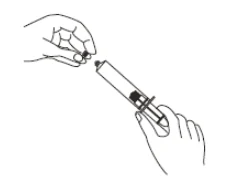
- 2. Hold plunger and push barrel forward to relieve any resistance that may be present.
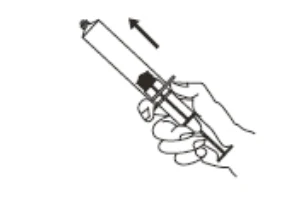
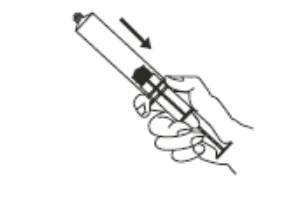
- 3. Pull the barrel down until air is expelled from syringe.
Instructions on how to use the LifeShield® Abboject® syringe:
CAUTION: Liquid in glass vial. Handle with care. Inspect vial for damage prior to assembly.
USE ASEPTIC TECHNIQUE. Do not assemble until ready to use.
- 1. Remove caps from vial and injector.
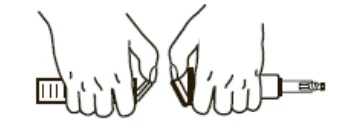
- 2. Insert vial into injector without exerting excessive force. Ensure that vial and injector are properly aligned. Gently rotate vial clockwise (about 3 turns) until medication enters needle. If resistance is encountered, remove vial and repeat procedure.
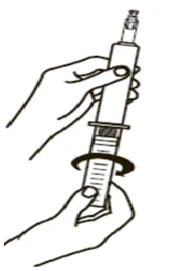
- 3. To access green male luer lock adapter, push yellow hood in and then twist counterclockwise.
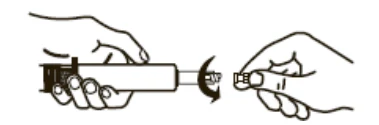
Or,
To access needle, twist and pull yellow hood clockwise to remove hood and green adapter.
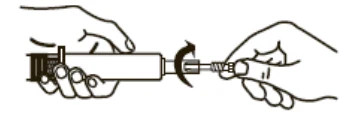
- 4. Apply gentle downward pressure on vial to initiate liquid flow. DO NOT APPLY EXCESSIVE FORCE TO VIAL.
Instructions on how to use the Abboject® syringe:
CAUTION: Liquid in glass vial. Handle with care. Inspect vial for damage prior to assembly.
USE ASEPTIC TECHNIQUE. Do not assemble until ready to use.
- 1. Remove caps from vial and injector.
- 2. Insert vial into injector without exerting excessive force. Ensure that vial and injector are properly aligned. Gently rotate vial clockwise (about 3 turns) until medication enters needle. If resistance is encountered, remove vial and repeat procedure.
- 3. Twist and pull adapter cover to remove
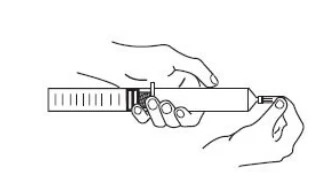
- 4. Apply gentle downward pressure on vial to initiate liquid flow. DO NOT APPLY EXCESSIVE FORCE TO VIAL.
4.5 Missed Dose
This information is not available for this drug product.
5 OVERDOSAGE
Use of the drug should be discontinued if severe reactions occur. In the event of circulatory collapse, emergency resuscitative measures, such as oxygen, vasopressor drugs or cardiac massage, should be instituted. Cardiac pacemaker and defibrillator should be readily available. For severe convulsions, small doses of an ultra-short-acting barbiturate, or a short-acting muscle relaxant (if the patient is under anaesthesia) may be used.
With intravascular injections, the toxic effect will be obvious within one to three minutes. Toxic reactions mainly involve the central nervous and cardiovascular systems.
Symptoms
Acute toxicity: CNS toxicity is a graded response with symptoms and signs of escalating severity. The first symptoms are circumoral paraesthesia, numbness of the tongue,
light-headedness, hyperacusis and tinnitus. Visual disturbance and muscular tremors are more serious and precede the onset of generalised convulsions. These signs must not be mistaken for neurotic behaviour.
Unconsciousness and grand mal convulsions may follow. These may last from a few seconds to several minutes. Hypoxia and hypercarbia occur rapidly following convulsions due to the increased muscular activity, together with the interference with normal respiration and loss of the airway. In severe cases, apnoea may occur. Acidosis increases the toxic effects.
Recovery is due to redistribution of the drug from the central nervous system
and metabolism. Recovery may be rapid unless large amounts of the drug have been injected.
Cardiovascular toxicity: Cardiovascular toxicity indicates a more severe situation. Hypotension, bradycardia, decreased cardiac output, heart block, arrhythmia and even ventricular arrhythmias, ventricular fibrillation and cardiac arrest may occur as a result of high systemic concentrations of the drug.
Cardiovascular toxic effects are generally preceded by signs of toxicity in the central nervous system. In rare cases, cardiac arrest has occurred without prodromal CNS effects.
Management of adverse effects
Treatment of toxicity should be to discontinue administration of Lidocaine Hydrochloride Injection USP. Institute emergency resuscitative procedures and administer the emergency drugs necessary to manage the situation. Adequate ventilation of the patient (including oxygen if necessary) should be ensured, and convulsions should be arrested if present. Adequacy of the circulation should then be evaluated, bearing in mind that drugs used to treat convulsions depress the circulation when administered intravenously.
For severe convulsions, small increments of diazepam or a short acting barbiturate such as thiopentone should be administered. Suxamethonium will stop the muscle convulsions rapidly but will require tracheal intubation and controlled ventilation and should only be used by those familiar with these procedures. If ventricular fibrillation or cardiac arrest occurs, effective cardiovascular resuscitation treatment must be instituted and maintained for a prolonged period if necessary. Optimal oxygenation and ventilation, and circulatory support as well as treatment of acidosis are of vital importance. If cardiovascular depression occurs (hypotension, bradycardia), appropriate treatment with intravenous fluids, vasopressor, chronotropic and or inotropic agents should be considered. Children should be given doses commensurate with age and weight.
Dialysis is of negligible value in the treatment of acute overdosage with Lidocaine Hydrochloride Injection USP.
| For management of a suspected drug overdose, contact your regional poison control centre. |
6 DOSAGE FORMS, STRENGTHS, COMPOSITION AND PACKAGING
Table 1 – Dosage Forms, Strengths, Composition and Packaging
Lidocaine Hydrochloride Injection USP for single intravenous injection is supplied in 5 mL LifeShield Abboject syringe1, Abboject® syringe2 and 5 mL AnsyrTM syringe3.
1: LifeShield® Abboject® syringe:The ready-to-use LifeShield®Abboject® syringe minimizes errors and protects caregivers and patients alike. It can be used for needle-free or shrouded needle access. The design features two pieces: a calibrated glass drug vial and a matching plastic syringe barrel with integral injector needle. Medication, fluid path, and needle are sterile and nonpyrogenic if caps and needle cover are undisturbed and package is intact.
2: Abboject® syringe: The ready-to-use Abboject® syringe minimizes errors and protects caregivers and patients alike. It can be used for needle-free access. The design features two pieces: a calibrated glass drug vial and a matching plastic luer lock syringe barrel. Medication, fluid path, and needle are sterile and nonpyrogenic if caps and luer end cover are undisturbed and package is intact.
3: AnsyrTM syringe: This syringe is a proprietary delivery option offering one-piece, polypropylene plastic construction with a needle-free luer lock adapter. Ansyr syringes are available prefilled with a wide range of emergency medications. Graduated markings on the syringe barrel conform to ISO standards and clearly show any drug remaining. Medication and fluid path are sterile and nonpyrogenic if luer cover is undisturbed and package is intact.
| Route of Administration | Dosage Form / Strength/Composition | Non-medicinal Ingredients |
| Intravenous | Solution; 20 mg/mL | Sodium chloride. May contain hydrochloric acid and/or sodium hydroxide for pH adjustment. |
7 WARNINGS AND PRECAUTIONS
Cardiovascular
Constant ECG monitoring is essential for the proper administration of Lidocaine Hydrochloride Injection USP intravenously. Signs of excessive depression of cardiac conductivity, such as prolongation of PR interval and QRS complex, and the appearance of aggravation of arrhythmias, should be followed by prompt cessation of the intravenous injection. Lidocaine Hydrochloride Injection USP must be used in the treatment of cardiac arrhythmias under the constant supervision of a physician, with meticulous regulation of the rate of injection.
In patients with heart-block and bradycardia, severe digitalis intoxication and severe myocardial disease, any cardiac depressant should be used with caution (see 2 CONTRAINDICATIONS).
Patients with congestive heart failure or shock require smaller doses of Lidocaine Hydrochloride Injection USP since the drug may accumulate in these patients and result in toxic manifestations.
The intravenous administration of Lidocaine Hydrochloride Injection USP may sometimes be accompanied by a hypotensive response and, in overdosage, this could be precipitous. For this reason, the intravenous dose should not exceed 100 mg in a single injection, and no more than 200 to 300 mg should be given during a one-hour period (see 4 DOSAGE AND ADMINISTRATION).
See 8 ADVERSE REACTIONS, 8.5 Post-Market Adverse Reactions.
Hepatic/Biliary/Pancreatic
Patients with liver disease require smaller doses of Lidocaine Hydrochloride Injection USP since the drug may accumulate in these patients and result in toxic manifestations. See 2 CONTRAINDICATIONS.
Monitoring and Laboratory Tests
Constant electrocardiographic and blood pressure monitoring are essential.
Clinical evaluation and periodic laboratory determinations are necessary to monitor changes in fluid balance, electrolyte concentrations and acid-base balance during prolonged parenteral therapy or whenever the condition of the patient warrants such evaluation.
Neurologic
In unconscious patients, circulatory collapse should be watched for, since CNS effects may not be apparent as an initial manifestation of toxicity. See 8 ADVERSE REACTIONS, 8.5 Post-Market Adverse Reactions.
7.1 Special Populations
7.1.1 Pregnant Women
The safety of Lidocaine Hydrochloride Injection USP with respect to the development of the human fetus has not been adequately established. Lidocaine crosses the blood-brain barrier and placenta by passive diffusion. Therefore, the risk/benefit ratio should be determined when the use of Lidocaine Hydrochloride Injection USP in early pregnancy is considered.
7.1.2 Breast-feeding
Small amounts of lidocaine are secreted into breast milk and the possibility of an allergic reaction in the infant, albeit remote, should be borne in mind when using lidocaine in nursing mothers.
7.1.3 Pediatrics
Pediatrics (< 18 years of age): No data are available to Health Canada; therefore, Health Canada has not authorized an indication for pediatric use. See 1 INDICATIONS, 1.1 Pediatrics.
7.1.4 Geriatrics
Patients over 70 years of age require smaller doses of Lidocaine Hydrochloride Injection USP since the drug may accumulate in these patients and result in toxic manifestations. See 1 INDICATIONS, 1.2 Geriatrics.
8 ADVERSE REACTIONS
8.1 Adverse Reaction Overview
Adverse experiences following the administration of Lidocaine Hydrochloride Injection USP are similar in nature to those observed with other amide local anesthetic agents. Adverse experiences may result from high plasma levels caused by excessive dosage or may result from a hypersensitivity, idiosyncrasy or diminished tolerance on the part of the patient. Serious adverse experiences are generally systemic in nature. Systemic toxicity mainly involves the central nervous system and/or the cardiovascular system. Central nervous system reactions are excitatory and/or depressant with the most severe manifestations of convulsions accompanied by respiratory depression and/or arrest. Cardiovascular reactions are usually depressant in nature and may lead to cardiac arrest.
8.2 Clinical Trial Adverse Reactions
This information is not available for this drug product.
8.2.1 Clinical Trial Adverse Reactions – Pediatrics
This information is not available for this drug product.
8.3 Less Common Clinical Trial Adverse Reactions
This information is not available for this drug product.
8.3.1 Less Common Clinical Trial Adverse Reactions – Pediatrics
This information is not available for this drug product.
8.4 Abnormal Laboratory Findings: Hematologic, Clinical Chemistry and Other Quantitative Data
This information is not available for this drug product.
8.5 Post-Market Adverse Reactions
Systemic reactions of the following types have been reported. The adverse reaction under Central Nervous System, Cardiovascular System followed by Allergic Reaction are listed, in general, in a progression from mild to severe.
Central Nervous System
Nervousness, light-headedness, dizziness, blurred or double vision, tinnitus, twitching or tremors, drowsiness, nausea and vomiting, sensation of heat, cold or numbness, convulsions, unconsciousness and respiratory depression or arrest.
Cardiovascular System
Myocardial depression, hypotension, bradycardia and cardiac arrest. There have been reports of A-V block in patients with diffuse intraventricular conduction disturbances, as well as reports of acceleration of conduction in the presence of atrial flutter, leading to a large increase in ventricular rate.
Allergic Reactions
Cutaneous lesions of delayed onset, urticaria, oedema and other manifestations of allergy. The detection of sensitivity by skin testing is of doubtful value.
Adverse reactions were found to be dose related. Toxic effects have been observed at concentrations over 6 mcg/mL. However, idiosyncratic reactions have been reported at low doses in some patients.
Cross-sensitivity between lidocaine and procainamide or lidocaine and quinidine has not been reported. See 9 DRUG INTERACTIONS, 9.4 Drug-Drug Interactions.
See 2 CONTRAINDICATIONS.
9 DRUG INTERACTIONS
9.2 Drug Interactions Overview
When Lidocaine Hydrochloride Injection USP is administered with other antiarrhythmic drugs the cardiac effects may be additive or antagonistic and toxic effects may be additive.
9.3 Drug-Behavioural Interactions
Acute, severe alcohol intoxication can centrally depress the cardiovascular system and may thereby prolong lidocaine (lignocaine) elimination half-life.
9.4 Drug-Drug Interactions
The drugs listed in Table 2 are based on either drug interaction case reports or studies, or potential interactions due to the expected magnitude and seriousness of the interaction (i.e., those identified as contraindicated).
Table 2 Established or Potential Drug-Drug interactions
| [Proper/Common name] | Source of Evidence | Effect | Clinical comment |
| Antiarrhythmic drugs such as phenytoin, procainamide, propranolol or quinidine | C or CT | Cardiac effects may be additive or antagonistic and toxic effects may be additive. | Caution is warranted for concomitant use |
| Beta-adrenoreceptor antagonists | CT | May reduce hepatic blood flow and | Caution is warranted |
| (propranolol and metoprolol) | thereby reduce lidocaine clearance. | ||
| Cimetidine | CT | May reduce hepatic blood flow and thereby reduce lidocaine clearance. | Caution is warranted |
| Amiodarone | C | Reported precipitation of seizures and lead to severe sinus bradycardia and a long sinoatrial arrest. | Patients receiving the combination should be monitored carefully. |
| Skeletal muscle relaxants | CT | Lidocaine prolongs the duration of suxamethonium, leading to excessive neuromuscular blockade. | Caution is warranted. |
| Inhalant anesthetics | CT | Lidocaine decreases the minimum effective concentration of inhalational. anesthetics, e.g. nitrous oxide. | Caution is warranted |
| Anticonvulsant drugs | CT | Phenytoin, phenobarbitone, primidone and carbamazepine may stimulate the hepatic metabolism of lidocaine | Clinical significance of this effect is not known. |
| Fentanyl | C | lidocaine may reduce the seizure threshold to fentanyl in man. | Caution is warranted |
| Structurally related local anaesthetic drugs | T | Potential additive systemic toxic effect | Caution is warranted |
| Alcohol | T | Acute, severe alcohol intoxication can centrally depress the cardiovascular system and may thereby prolong the | Caution is warranted |
| elimination half-life of lidocaine. |
Legend: C = Case Study; CT = Clinical Trial; T = Theoretical
9.5 Drug-Food Interactions
Interactions with food have not been established.
9.6 Drug-Herb Interactions
Interactions with herbal products have not been established.
9.7 Drug-Laboratory Test Interactions
Interactions with laboratory tests have not been established.
10 CLINICAL PHARMACOLOGY
10.1 Mechanism of Action
The mode of action of the antiarrhythmic effect of lidocaine appears to be similar to that of procaine, procainamide and quinidine. Ventricular excitability is depressed, and the stimulation threshold of the ventricle is increased during diastole. The sinoatrial node is, however, unaffected. Lidocaine in recommended doses does not produce a significant decrease in arterial pressure nor in cardiac contractile force. In large doses, lidocaine hydrochloride may produce circulatory depression but the magnitude of the changes is less than that found with comparable doses of procainamide. Neither drug appreciably affects the duration of the absolute refractory period.
The onset of action following a single intravenous injection varies from 45 to 90 seconds and duration of action is 10 to 20 minutes. Lidocaine plasma levels have been correlated with clinical effectiveness. The therapeutic range is 1.2 to 6 mcg/mL. Plasma drug concentration higher than 5 to 6 mcg/mL increases the risk of toxicity.
10.2 Pharmacodynamics
This information is not available for this drug product.
10.3 Pharmacokinetics
Absorption
The bioavailability of Lidocaine Hydrocholoride Injection USP is 100% via intravenous administration.
Distribution
The plasma protein binding of lidocaine is dependent on drug concentration and the fraction bound decreases with increasing concentration. At concentrations of 1 to 4 mcg free base per mL, 60 to 80 percent of lidocaine is protein bound. In addition to lidocaine concentration, the binding is dependent on the plasma concentration of the α-1-acid glycoprotein. The blood to plasma distribution ratio is approximately 0.84. Lidocaine crosses the blood-brain barrier and placenta by passive diffusion.
Metabolism
Lidocaine is rapidly metabolized by the liver and less than 10% of a dose is excreted unchanged in the urine. Oxidative N-dealkylation, a major pathway of metabolism, results in the metabolites monoethylglycinexylidide and glycinexylidide. The pharmacological/toxicological activities of these metabolites are similar to but less potent than lidocaine. The primary metabolite in urine is a conjugate of 4-hydroxy-2, 6-dimethylaniline.
Elimination
The elimination half-life of lidocaine following an intravenous bolus injection is typically 1.5 to 2 hours. There are data that indicate that the half-life may be 3 hours or longer following infusions of greater than 24 hours.
Special Population and Conditions
Hepatic Insufficiency
Because of the rapid rate at which lidocaine is metabolized, any condition that alters liver function, including changes in liver blood flow, which could result from severe congestive heart failure or shock may alter lidocaine kinetics. The half-life may be two-fold or more greater in patients with liver dysfunction.
Renal Insufficiency
Renal dysfunction does not affect lidocaine kinetics, but may increase the accumulation of metabolites.
11 STORAGE, STABILITY AND DISPOSAL
Store between 20°C and 25°C. Protect from freezing. Avoid excessive heat.
Parenteral drug products should be inspected visually for particulate matter and discoloration prior to administration, whenever solution and container permit.
Do not use unless the solution is clear and container or seal intact. Discard if it contains a precipitate.
For single-use, discard unused portion. Any unused medicinal product should be disposed of in accordance with local requirements.
12 SPECIAL HANDLING INSTRUCTIONS
Liquid in glass vial. Handle with care. Inspect vial for damage prior to assembly.
PART II: SCIENTIFIC INFORMATION
13 PHARMACEUTICAL INFORMATION
Drug Substance
Proper name: Lidocaine Hydrochloride
Chemical name: 2-(Diethylamino)-N-(2,6-dimethylphenyl)-acetamide monohydrochloride monohydrate
Molecular formula and molecular mass: C14H22N20.HCl.H20; 288.82
Structural formula:
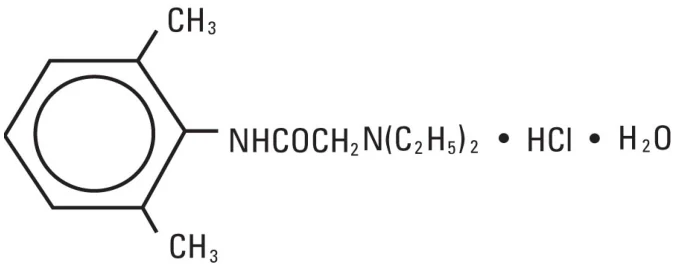
Physicochemical properties:
Lidocaine hydrochloride is a white, odourless, crystalline powder which has a slightly bitter taste. It is very soluble in water and in alcohol, soluble in chloroform, and insoluble in ether. Melting point 77°C to 78°C, pKa 7.86. The pH range of a 0.5% solution of lidocaine hydrochloride in water is 4.0 to 5.5.
2% single-use syringes contain lidocaine hydrochloride (expressed as the hydrochloride salt) and sodium chloride sufficient to render the solution isotonic (6 mg/mL). They may contain sodium hydroxide and/or hydrochloric acid for pH adjustment. The pH range is 5.0 to 7.0.
Product Characteristics
This information is not available for this drug product.
14 CLINICAL TRIALS
14.1 Trial Design and Study Demographics
This information is not available for this drug product.
14.2 Study Results
This information is not available for this drug product.
14.3 Comparative Bioavailability Studies
This information is not available for this drug product.
14.4 Immunogenicity
This information is not available for this drug product.
15 MICROBIOLOGY
No microbiological information is required for this drug product.
16 NON-CLINICAL TOXICOLOGY
Genotoxicity
The genotoxic potential of 2,6-xylidine has been studied with mixed results: positive results were reported in assays of gene mutations (weakly positive in the Ames test with metabolic activation and in the mouse lymphoma assay) and chromosomal damage (chromosomal aberrations in Chinese hamster ovary cells at concentrations at which the drug is precipitated from solution). No evidence of genotoxicity was found in vivo assays for chromosomal damage (micronucleus assay) and DNA damage (unscheduled DNA synthesis). Covalent binding studies of DNA from liver and ethmoid turbinates in rats indicate that 2,6-xylidine may be genotoxic under certain conditions in vivo.
Carcinogenicity
A two-year oral toxicity study of 2,6-xylidine, a metabolite of lidocaine (lignocaine), has shown that in both male and female rats, 2,6-xylidine in daily doses of 900 mg/m2 (150 mg/kg) resulted in carcinomas and adenomas of the nasal cavity. No nasal tumours were observed in the low dose (15 mg/kg) or control animals. The compound also caused subcutaneous fibromas and/or fibrosarcomas in male and female rats (significant at 150 mg/kg).