


Product Monograph - Lincocin
SUMMARY PRODUCT INFORMATION
| Route of Administration | Dosage Form / Strength | Clinically Relevant Nonmedicinal Ingredients |
| Intramuscular Intravenous | Sterile solution for injection 300 mg/mL lincomycin (as lincomycin hydrochloride monohydrate) | Benzyl alcohol For a complete listing see Dosage Forms, Composition and Packaging section. |
INDICATIONS AND CLINICAL USE
LINCOCIN (lincomycin hydrochloride) is indicated for:
- the treatment of serious infections due to sensitive gram positive organisms (staphylococci, including penicillinase-producing staphylococci, streptococci and pneumococci) when the patient is intolerant of, or the organism resistant to other appropriate antibiotics.
- the treatment of osteomyelitis, when the causative organism has been found to be sensitive to this antibiotic.
To reduce the development of drug-resistant bacteria and maintain the effectiveness of LINCOCIN and other antibacterial drugs, LINCOCIN should be used only to treat infections that are proven or strongly suspected to be caused by susceptible bacteria. When culture and susceptibility information are available, they should be considered in selecting or modifying antibacterial therapy. In the absence of such data, local epidemiology and susceptibility patterns may contribute to the empiric selection of therapy.
CONTRAINDICATIONS
LINCOCIN (lincomycin hydrochloride) is contraindicated in:
- Patients previously been found to be hypersensitive to this drug or to any ingredient in the formulation or component of the container (see Dosage Forms, Composition and Packaging section).
- Patients previously been found to be hypersensitive to clindamycin.
- Patients with pre-existing monilial infections.
- The newborn.
WARNINGS AND PRECAUTIONS
General
Lincomycin should not be injected intravenously undiluted as a bolus. All intravenous doses of LINCOCIN should be given by infusion over a period of 30 to 120 minutes. Cases of cardiopulmonary arrest have been reported during the treatment of severe endocarditis when large intravenous doses (over 4 grams) were given rapidly without dilution. These reactions do not occur when the drug is diluted as noted under DOSAGE AND ADMINISTRATION.
LINCOCIN is not indicated for use in the treatment of meningitis as the levels within the cerebral spinal fluid do not reach an adequate concentration to combat this infection.
Efficacy of LINCOCIN in the prophylactic treatment of rheumatic fever has not been established.
Driving and Operating Machinery
No studies were conducted to determine the effect of lincomycin on ability to drive and use machines. Due caution should be exercised when driving or operating a vehicle or potentially dangerous machinery.
Ear/Nose/Throat
No ototoxicity has been demonstrated in any of a large number of patients treated with LINCOCIN.
Endocrine and Metabolism
Since adequate data are not yet available in patients with pre-existing endocrine or metabolic diseases, its use in such patients is not recommended at this time unless special clinical circumstances so indicate.
Gastrointestinal
LINCOCIN (lincomycin hydrochloride) should be used with caution in those patients with a history of gastro-intestinal disease, specifically colitis.
Clostridium difficile-associated disease (CDAD)
Clostridium difficile-associated disease (CDAD) has been reported with use of many antibacterial agents, including LINCOCIN (lincomycin hydrochloride). CDAD may range in severity from mild diarrhoea to fatal colitis. It is important to consider this diagnosis in patients who present with diarrhoea, or symptoms of colitis, pseudomembranous colitis, toxic megacolon, or perforation of colon subsequent to the administration of any antibacterial agent. CDAD has been reported to occur over 2 months after the administration of antibacterial agents.
Treatment with antibacterial agents may alter the normal flora of the colon and may permit overgrowth of Clostridium difficile. C. difficile produces toxins A and B, which contribute to the development of CDAD. CDAD may cause significant morbidity and mortality. CDAD can be refractory to antimicrobial therapy.
If the diagnosis of CDAD is suspected or confirmed, appropriate therapeutic measures should be initiated. Mild cases of CDAD usually respond to discontinuation of antibacterial agents not directed against Clostridium difficile. In moderate to severe cases, consideration should be given to management with fluids and electrolytes, protein supplementation, and treatment with an antibacterial agent clinically effective against Clostridium difficile. Surgical evaluation should be instituted as clinically indicated, as surgical intervention may be required in certain severe cases (see Adverse Reactions section).
Hepatic/Biliary/Pancreatic
The serum half-life of LINCOCIN is increased in those patients with impaired renal or hepatic function. Therefore, consideration should be given to reducing the frequency of administration in these patients. In patients with abnormal hepatic function, serum half-life may be two-fold longer than in patients with normal hepatic function. Patients with abnormal hepatic function should be dosed with caution and serum
lincomycin levels monitored during high-dose therapy (see Dosage and Administration –Administration section).
Immune
Severe hypersensitivity reactions, including anaphylactic reactions and severe cutaneous adverse reactions (SCAR) such as Stevens-Johnson syndrome (SJS), toxic epidermal necrolysis (TEN), acute generalised exanthematous pustulosis (AGEP), and erythema multiforme (EM) have been reported in patients receiving LINCOCIN therapy. If an anaphylactic reaction or severe skin reaction occurs, LINCOCIN should be discontinued and appropriate therapy should be initiated (see Adverse Reactions section).
Neurologic
No serious neurologic abnormalities have been reported to date.
Renal
No serious renal abnormalities have been reported to date. The serum half-life of LINCOCIN is increased in those patients with impaired renal or hepatic function. Therefore, consideration should be given to reducing the frequency of administration in these patients. Patients with severe impairment of renal function should be dosed with caution and serum lincomycin levels monitored during high-dose therapy (see Dosage and Administration – Administration section).
Susceptibility/Resistance
Development of drug resistant bacteria
Prescribing LINCOCIN in the absence of a proven or strongly suspected bacterial infection is unlikely to provide benefit to the patient and risks the development of drug-resistant bacteria.
Special Populations
Pregnant Women
LINCOCIN should not be used in pregnancy unless clearly needed and unless the expected benefits to the mother outweigh any potential risks to the fetus.
In humans, lincomycin crosses the placenta and results in cord serum levels about 25% of the maternal serum levels. No significant accumulation occurs in the amniotic fluid. The lincomycin injection formulation contains benzyl alcohol. Benzyl alcohol can cross the placenta (see also Warnings and Precautions, Special Populations, Pediatrics section).
There are limited data on the use of lincomycin in pregnant women. Limited experience with 322 women receiving LINCOCIN orally at a dosage of 500 mg four times per day for seven days during pregnancy revealed no ill effect in the mother or the fetus. One hundred and ten of these patients were treated in the first trimester of pregnancy, 105 in the second trimester and 107 in the third trimester. All were suffering from cervicitis and/or vaginitis of bacterial origin in conjunction with their pregnancy (see also Warnings and Precautions, Special Populations, Pediatrics section).
Nursing Women
LINCOCIN has been reported in breast milk at concentrations of 0.5 - 2.4 μg/mL. However, the use of lincomycin in pregnant and/or breast-feeding women should involve careful consideration of expected benefits and possible risks.
Pediatrics
One hundred and twelve of the children, ages 6½ to 7½ years, from these patients have been examined and compared with a control group of 65 children born at the same time in the same hospital. LINCOCIN treatment did not result in any drug related abnormalities (physical, dental or developmental) when compared with the control group.
The lincomycin injection formulation contains benzyl alcohol. The preservative benzyl alcohol has been associated with serious adverse events, including the “gasping syndrome”, and death in pediatric patients. Although normal therapeutic doses of this product ordinarily deliver amounts of benzyl alcohol that are substantially lower than those reported in association with the “gasping syndrome”, the minimum amount of benzyl alcohol at which toxicity may occur is not known. The risk of benzyl alcohol toxicity depends on the quantity administered and the liver and kidneys’ capacity to detoxify the chemical. Premature and low-birth weight infants may be more likely to develop toxicity.
Safety and effectiveness in pediatric patients below the age of one month have not been established.
Monitoring and Laboratory Tests
The use of antibiotics occasionally results in overgrowth of non-susceptible organisms - particularly yeasts. Should superinfections occur, appropriate measures should be taken. No direct relationship of the drug to liver disease has been established. However, it is recommended that all patients receiving treatment for longer than one or two weeks have liver and kidney function tests performed. If abnormal tests appear, the drug should be discontinued unless, in the opinion of the physician, the drug should be continued for the treatment of a serious infection.
During clinical studies of LINCOCIN in the therapy of infectious disease, a few cases of neutropenia and/or leukopenia were reported. No cases of irreversible toxicity to the hematopoietic system have been reported; however, it is recommended that blood counts be obtained early and repeated periodically during the course of LINCOCIN therapy.
ADVERSE REACTIONS
The following adverse reactions have been reported with the use of LINCOCIN (lincomycin hydrochloride):
- 1.
Gastrointestinal - Nausea, vomiting, esophagitis, colitis, persistent diarrhoea and abdominal distress.
Pseudomembranous colitis, Clostridium difficile colitis and Clostridium difficile-associated disease has been observed and the syndrome has manifested as a spectrum of symptoms from watery to severe diarrhoea, fever, abdominal cramps and leucocytosis. This may be accompanied by the passage of blood and mucous with resultant peritonitis, shock and toxic megacolon when the offending antibiotic is not discontinued and/or the condition treated) (see Warnings and Precautions, Gastrointestinal section).
- 2. Hematopoietic - Neutropenia, leukopenia, agranulocytosis, and thrombocytopenic purpura have been reported. There have been rare reports of aplastic anemia and pancytopenia in which lincomycin could not be ruled out as the causative agent.
- 3. Hypersensitivity Reactions - Hypersensitivity reactions such as angioneurotic edema, serum sickness and anaphylaxis have been reported, some of these in patients sensitive to penicillin. Rare instances of erythema multiforme, some resembling Stevens-Johnson syndrome, have been associated with LINCOCIN administration (see Warnings and Precautions, Immune section).
- 4. Skin and Mucous Membranes - Toxic epidermal necrolysis, acute generalised exanthematous pustulosis, pruritus, skin rashes, urticaria, vaginitis, and rare instances of exfoliative and vesiculobullous dermatitis have been reported (see Warnings and Precautions, Immune section).
- 5. Liver - Jaundice and abnormal liver function tests (particularly elevation of serum transaminase) have been observed during lincomycin therapy.
- 6.
Cardiovascular - Instances of hypotension following parenteral administration have been reported, particularly after too rapid administration.
Rare instances of cardiopulmonary arrest have been reported after too rapid intravenous administration (see Dosage and Administration section).
- 7.
Local Reactions - Local irritation, pain, induration, and sterile abscess formation have been seen with
IM injection. Thrombophlebitis has been reported with IV injection. These reactions can be minimized by deep IM injection and avoidance of indwelling intravenous catheters.
DRUG INTERACTIONS
In vitro studies have shown antagonistic activity between LINCOCIN and erythromycin; therefore, these agents should not be used concurrently.
Because LINCOCIN has been shown to have neuromuscular blocking properties which may enhance the action of other neuromuscular blocking agents, it should be used with caution in patients receiving such agents.
DOSAGE AND ADMINISTRATION
Administration
| INTRAMUSCULAR (Sterile Solution) | INTRAVENOUS (Sterile Solution) | |
| Adults | 600 mg (2mL) every 24 hours | 600 mg (2mL) every 8 to 12** hours. Administer as infusion in 250 mL or more of 5% glucose in water or normal saline over a period of 30 to 120 mins. |
Severe Infections | 600 mg (2mL) every 12 hours | |
| Children* | 10 mg/kg every 24 hours | 10 to 20 mg/kg/day in two or three doses at 8 to 12 hour intervals. Administer as infusion diluted as for adults. |
Severe Infections | 10 mg/kg every 12 hours |
* Over one month of age
** All doses may be increased in more severe infections. Doses as high as 8.4 grams per day, for seven days, in four divided doses of 2100 mg in an infusion of 250 mL, of normal saline, over a period of 120 minutes, were well tolerated in normal volunteers.
In β-hemolytic streptococcal infections, continue treatment for at least 10 days to diminish the likelihood of subsequent rheumatic fever or glomerulonephritis.
When therapy with lincomycin is required in individuals with severe impairment of renal function, an appropriate dose is 25% to 30% of that recommended for patients with normally functioning kidneys.
Patients with abnormal hepatic function should be dosed with caution and serum lincomycin levels monitored during high-dose therapy (see Warnings and Precautions section).
Reconstitution:
LINCOCIN (600 mg - 2 mL and 1800 mg - 6 mL) was found to be compatible with 500 mL of the following solutions for a period of 24 hours at room temperature:
5% Dextrose in Water 10% Dextrose in Saline
5% Dextrose in Saline Invert sugar 10%
10% Dextrose in Water Polysal M with 5% dextrose
Ringer's Solution Sodium lactate 1/6 molar
Compatibility was determined by a study which indicated no appreciable change in the pH of the resultant mixture and no loss of potency of the LINCOCIN when diluted as indicated above.
Incompatibilities
When combined with lincomycin in an infusion solution, novobiocin, kanamycin, and phenytoin are each physically incompatible with lincomycin. This list may not be all-inclusive due to the multiple factors influencing drug compatibility data.
OVERDOSAGE
No cases of large overdosage have been reported. It would be expected however that should overdosage occur, gastrointestinal side effects, including abdominal pain, nausea, vomiting and diarrhea, might be seen and should be treated symptomatically.
In the event of an overdose, LINCOCIN should be discontinued and general supportive treatment given until renal elimination take place.
Hemodialysis or peritoneal dialysis does not effectively remove lincomycin from the blood.
ACTION AND CLINICAL PHARMACOLOGY
The mode of action of lincomycin hydrochloride is the inhibition of protein synthesis by the inhibition of the binding of aminoacyl sRNA to the messenger ribosome complex at the 50S ribosomal unit.
Pharmacodynamics
Mechanism of Action
Lincomycin is a lincosamide antibiotic produced by fermentation of Streptomyces lincolnensis. Lincomycin inhibits bacterial protein synthesis by binding to the 50S subunit of the bacterial ribosome. Lincomycin is predominantly bacteriostatic in vitro.
Resistance
Cross resistance between lincomycin and clindamycin is complete. Resistance is most often due to methylation of specific nucleotides in the 23S RNA of the 50S ribosomal subunit, which can determine cross resistance to macrolides and streptogramins B (MLSB phenotype). Resistance to lincosamides may be inducible by macrolides in macrolide-resistant bacterial isolates. Macrolide-resistant isolates of these
For management of a suspected drug overdose, contact your regional Poison Control Centre.
organisms should be tested for inducible resistance to lincomycin/clindamycin using the D-zone test or other standard methodology.
The prevalence of acquired resistance may vary geographically and with time for selected species and local information on resistance is desirable, particularly when treating severe infections. As necessary, expert advice should be sought when the local prevalence of resistance is such that the utility of the agent in at least some types of infections is questionable.
A decrease in clindamycin/lincomycin susceptibility over time has been noted including (but not limited to) among methicillin-resistant Staphylococcus aureus and in some species of Clostridium.
There are currently no antimicrobial susceptibility testing (AST) interpretive criteria for LINCOCIN.
Pharmacokinetics
Intramuscular administration of a single dose of 600 mg of lincomycin produces average peak serum levels of 11.6 μg/mL at 60 minutes and maintains therapeutic levels for 17 to 20 hours for most susceptible gram-positive organisms. Urinary excretion after this dose ranges from 1.8 to 24.8 percent (mean: 10.3 percent) (see Detailed Pharmacology section).
A two hour intravenous infusion of 600 mg of lincomycin achieves average peak serum levels of 15.9 μg/mL and yields therapeutic levels for 14 hours for most susceptible gram-positive organisms. Urinary excretion ranges from 4.9 to 23.3 percent (mean: 15.1 percent).
The biological half-life after intramuscular administration is approximately 5 hours. The serum half-life of lincomycin may be prolonged in patients with severe impairment of renal function compared to patients with normal renal function. In patients with abnormal hepatic function, serum half-life may be two-fold longer than in patients with normal hepatic function. Hemodialysis and peritoneal dialysis are not effective in removing lincomycin from the serum (see Warnings and Precautions, Dosage and Administration, and Overdosage sections).
Tissue level studies indicate that bile is an important route of excretion. Significant levels have been demonstrated in the majority of body tissues. Although lincomycin appears to diffuse into cerebrospinal fluid (CSF), levels of lincomycin in the CSF appear inadequate for the treatment of meningitis (see Detailed Pharmacology section).
STORAGE AND STABILITY
Store at room temperature (15 -30 ºC), protect from light.
DOSAGE FORMS, COMPOSITION AND PACKAGING
LINCOCIN (lincomycin hydrochloride) is available as:
Sterile Solution - Each mL containing LINCOCIN (lincomycin hydrochloride monohydrate) equivalent to lincomycin base 300 mg; also Benzyl Alcohol, 9.45 mg; Water for Injection, q.s. - supplied in 2 mL.
PART II: SCIENTIFIC INFORMATION
PHARMACEUTICAL INFORMATION
Drug Substance
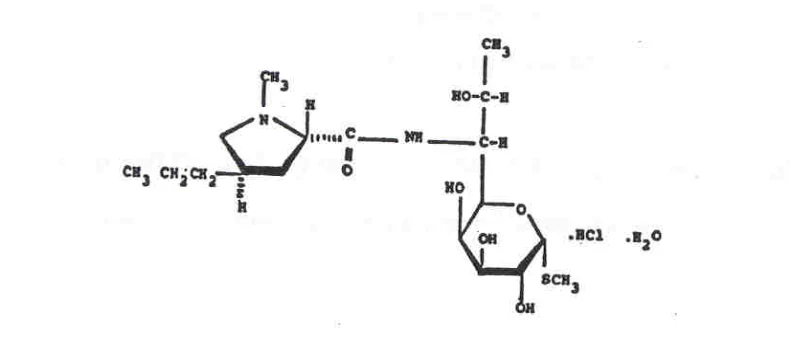
Proper name: Lincomycin hydrochloride monohydrate
Chemical name: D-erythro-α-galacto-Octopyranoside, methyl 6, 8-dideoxy-6- [[(1-methyl-4-propyl-2-pyrrolidinyl) carbonyl] amino]-1- thio-monohydrochloride, monohydrate, (2S-trans).
Molecular formula C18H34N2O6S.HCl.H2O
and molecular mass: 461.01
443.00 (anhydrous)
Structural formula:
Physicochemical properties: Lincomycin, an antibiotic produced by Streptomyces lincolnensis var.
lincolnensis, is chemically distinct from other clinically available antibiotics except its semi-synthetic derivative clindamycin (Dalacin C) and is isolated as a white crystalline solid.
Lincomycin hydrochloride is stable in the dry state and in aqueous solution for at least 24 months. It is readily soluble in water at room temperature in concentrations up to 500 mg/mL. Physical stability of aqueous solutions can be maintained at drug concentrations up to 345 mg/mL at temperatures as low as 4 ºC. The solubility in 95 percent ethanol is 80 mg/mL.
DETAILED PHARMACOLOGY
Clinical Absorption
Intramuscular administration of lincomycin produces peak serum levels in 30 minutes with detectable levels persisting for 24 hours after a 600 mg dose.
Intravenous infusions of lincomycin over a two hour interval yield therapeutic levels for 14 hours (see TABLE I).
| TABLE I Average Serum Levels in μg/mL of Lincomycin After Single Dose Administration in Normal Volunteers | ||||||||
| Time After Medication In Hours | ||||||||
| DOSAGE | ROUTE | 0.5 | 2 | 4 | 6 | 8 | 12 | 24 |
| 300 mg | I.M. | 15.0 | 10.2 | 7.4 | 4.1 | 2.1 | 0.7 | 0 |
| 600 mg | I.M. | 18.5 | 10.5 | 5.5 | 4.9 | 4.2 | 1.3 | 0.3 |
| 600 mg | I.V. | 20.9 | 11.2 | 6.4 | 3.7 | 2.2 | 1.1 | 0 |
The biological half-life after intramuscular or intravenous administration is 5.4 ± 1.0 hours.
Urinary Excretion
The urinary excretion of lincomycin varies depending on the dosage used and the route of administration (see Table II).
| TABLE II Range and Average 24-hour Urinary Recovery of Lincomycin After a Single Dose in Normal Volunteers | |||
| DOSAGE | ROUTE | RANGE* | AVERAGE* |
| 300 mg | I.M. | 5.57 to 16.89 | 10.48 |
| 600 mg | I.M. | 1.82 to 24.80 | 10.30 |
| 600 mg | I.V. | 4.9 to 23.3 | 15.1 |
| *Expressed as a percentage of the administration dose, 10 patients in each group. | |||
Biliary Excretion
The bile is an important route of excretion of lincomycin as can be seen in the results tabulated in Table III.
TABLE III Serum and Biliary Levels After Single I.V. Doses of Lincomycin
SINGLE I.V. DOSE 600 mg | ||
| TIME AFTER MEDICATION | SERUM* | BILE** |
| 0.5 hours | 8.8 | - |
| 1 hour | - | 67.0 |
| 2 hours | 5.2 | 8.0 |
| 3 hours | - | - |
| 4 hours | 3.8 | 3.8 |
| 5 hours | - | 7.0 |
| 6 hours | 3.8 | 2.8 |
| 7 hours | - | 1.2 |
| 8 hours | 3.8 | 1.5 |
| 9 hours | - | 2.4 |
| 10 hours | - | 1.3 |
| 12 hours | 0.9 | - |
| 14 hours | - | - |
| 24 hours | 0 | 0 |
* μg/mL of serum
** μg/mL of bile
Lincomycin Levels in Tissues and Body Fluids
Lincomycin penetrates most body tissues and fluids to a varying degree, depending on the dosage and route of administration. Table IV represents a compilation of data available in this regard.
| TABLE IV Tissue and Body Fluid Levels of Lincomycin in Humans | ||
| TISSUE OR BODY FLUID | LINCOMYCIN DOSAGE AND ROUTE OF ADMINISTRATION | RANGE OF VALUES* |
| Amniotic Fluid | 600 mg I.M. Single Dose | 1.5- 6.9 |
Spinal Fluid (normal volunteers) | 600 mg I.M. Single Dose | 0.7- 1.15 |
Spinal Fluid (pneumococcal meningitis) | 1200 mg I.V. q4h | 20.0** |
| Joint Fluid | 600 mg I.M. q6h | 4.3-20.0 |
| Aqueous Humor (non-inflamed eyes) | 600 mg I.M. q4h | <0.5- 2.0 |
| Aqueous Humor (inflamed eye) | 600 mg I.M. q4h | 21.0** |
| Bone | 600 mg I.M. q6h | 2.2- 6.6 |
| * in μg/mL of body fluids or μg/gram of tissue homogenates ** only one specimen available. | ||
MICROBIOLOGY
In vitro studies indicate that the spectrum of activity includes Micrococcus (Staphylococcus) aureus, Staphylococcus albus, 8-hemolytic Streptococcus, Streptococcus viridans, Streptococcus pneumoniae, Clostridium tetani, Clostridium perfringens and Corynebacterium diphtheriae. Minimum inhibitory concentrations for these organisms are listed in Table V.
TABLE V Minimum Inhibitory Concentrations (M.I.C.'s) In Vitro of Organisms Sensitive to LINCOCIN (lincomycin hydrochloride) | ||
| ORGANISM | M.I.C. (μ/mL) | Reference |
| Staphylococcus aureus | 0.12 - 2.0 | (16) |
| Staphylococcus albus | 0.8 - 1.5 | ( 9) |
| 8-Hemolytic streptococcus | 0.12 - 2.0 | (16) |
| Streptococcus viridans | 0.12 - 0.5 | (16) |
| Streptococcus pneumonia | 0.12 - 1.0 | (16) |
| Clostridium tetani & perfringens | 0.36 - 1.4 | (15) |
| Corynebacterium diphtheria | 0.4 | ( 9) |
This drug is not active against most strains of Streptococcus faecalis, nor against Neisseria gonorrhoea, Hemophilus influenzae (with the 2 μg disk), or other gram-negative organisms or yeasts.
LINCOCIN may or may not be bactericidal depending on the serum level attained and the sensitivity of the organism present.
LINCOCIN resistance development by staphylococci is slow and stepwise rather than rapid and streptomycin-like. LINCOCIN participates in the dissociated cross-resistance phenomenon with erythromycin. LINCOCIN is not cross-resistant with penicillin, ampicillin, tetracycline, or streptomycin. It is however cross-resistant with clindamycin.
Animal studies on the etiology of antibiotic-associated colitis and the protective effect of vancomycin has suggested a toxin(s) produced by Clostridia as the causative agent.
Studies in hamsters have shown that oral vancomycin was protective against clindamycin-induced enterocolitis when administered concurrently with, or prior to, the antibiotic challenge. Vancomycin produced a marked decrease in the colonic Clostridia counts suggesting that its antimicrobial action was responsible for its protective effect. This was supported by the finding that in vitro, vancomycin did not decrease the cytotoxic activity of an isolated toxin associated with antibiotic-induced enterocolitis in hamsters. In rabbits, vancomycin administered concurrently with clindamycin was protective against enterocolitis and resulted in a greatly lower fecal Clostridia count. Extracts from the stools of these rabbits were not lethal to mice.
Analysis of the feces of patients with pseudomembranous colitis has shown the presence of a neutralizable toxin and Clostridia species (most frequently C. difficile). Almost all strains of C. difficile tested were sensitive to vancomycin with minimum inhibitory concentrations ranging from 0.2 to 16 μg/mL (Table VI).
TABLE VI Minimum Inhibitory Concentrations (M.I.C.) of Vancomycin vs C. difficile. | ||
| # Strains | M.I.C. (μg/mL) | Reference |
| 39 | ≤ 4 | 10 |
| 10 | 0.5 - 4 | 3 |
| 15 | 0.2 -1.6 | 8 |
| 37 | 0.5 - 16 | 5 |
| 17 | < 1 | 6 |
When patients with pseudomembranous colitis were treated with oral vancomycin 125 to 500 mg four times daily, fecal vancomycin concentrations greatly exceeded the MIC's for C. difficile.
TOXICOLOGY
The acute LD50 intraperitoneally in mice is 1000 mg/kg and orally in rats is >4000 mg/kg. Lincomycin was well tolerated orally in rats and dogs at doses up to 300 mg/kg/day for periods up to one year. Parenteral dosages of up to 60 mg/kg/day for 30 days subcutaneously in the rat and intramuscularly in the dog produced no significant systemic effects or pathological findings at necropsy.
Lincomycin at a daily dose level of 75 mg/kg subcutaneously was injected into mature male and female rats during a prebreeding period of 60 days and throughout two mating cycles (84 days). No evidence was obtained that lincomycin exerted any effect on breeding performance and no drug-induced anomalies were discovered in the young. Similarly no evidence was obtained that lincomycin, when given in sustained parenteral dosage of 50 mg/kg daily to pregnant female dogs, produced a teratogenic effect of the canine embryo.
The subcutaneous LD50 value in the newborn rat was determined to be 783 mg/kg. Newborn rats and canine pups have tolerated multiple doses of 30 - 90 mg/kg/day of the drug without evidence of ill effects.
REFERENCES
- 1.
Bartlett JG, Cisneros RL, and Onderdonk AB. Clindamycin-Associated Colitis in Hamsters:
Protection with Vancomycin. 1977; Gastroenterology 73:772-776.
- 2.
Bartlett JG, Chang T, and Onderdonk AB. Comparison of Five Regimens for Treatment of
Experimental Clindamycin-Associated Colitis. 1978; J. Infect. Dis. 138:81-86.
- 3.
Bartlett JG, Chang T, Onderdonk AB, and Taylor NS. Colitis Induced by Clostridium difficile.
1979; Rev. Infect. Dis. 1:370-378.
- 4.
Abrams GD, Boyd DI, Browne RA, Fekety R, Silva J, and Work CO. The Protective Effect of
Vancomycin on Clindamycin-Induced Colitis in Hamsters. 1977; Johns Hopkins Medical Journal. 141: 183-192.
- 5.
Alexander-Williams J, Arabi Y, Burdon DW, Brown JD, George RH, and Keighley MRB.
Pseudomembranous Colitis Caused by Clostridia. 1978; (Letter) New EnglandJnal of Medicine 299:48.
- 6.
Alexander-Williams J, Arabi Y, Brown JD, Burdon DW, Keighley MRB, Shinagawa N, and
Young DJ. Antibiotic Susceptibility of Clostridium difficile. 1979; J. Antibicrob. Chemother. 5: 307-310.
- 7. Chang FN, Seh CJ, and Weisblum B. 1966; Biochemistry 55:431-438.
- 8. Fekety R. Prevention and Treatment of Antibiotic-Associated Colitis. 1979; American Society for Microbiology, Washington D.C. Microbiology - 1979; 276-279.
- 9.
DeHaan RM, Garrison DW, and Lawson JB. 1967; Antimicrobial Agents and Chemotherapy
397-400.
- 10. George WL, Kirby BD, Sutter VL, and Finegold SM. Antibicrobial Susceptibility of Clostridium difficile. 1979; Microbiology. American Society for Microbiology, Washington D.C. 267-271.
- 11.
Broitman SA, Katz L, LaMont JT, Rieth J, Rothman SW, Sonnenblick EB, and Trier JS.
Experimental Clindamycin-Associated Colitis in Rabbits: Evidence for Toxin-Mediated Mucosal Damage. 1978; Gastroenterology. 74:246-252.
- 12.
Alexander-Williams J, Arabi Y, Bentley S, Burdon DW, George RH, Johnson M, Keighley MRB,
Mogg GAG, Thompson H, and Young D. Randomised Controlled Trial of Vancomycin for Pseudomembramous Colitis and Postoperative Diarrhoea. 1978; British Medical Journal. 2:1667-1669.
- 13.
LaMont JT. Sonnenblick EB, and Rothman S. Role of Clostridial Toxin in the Pathogenesis of
Clindamycin Colitis in Rabbits. 1979; Gastroenterology. 76:356-361.
- 14. Clapp HW, Grady JE, and Lewis C. 1962; Antimicrobial Agents and Chemotherapy. 570-582.
- 15. Fernandes R, Phillips I, and Warren C. 11 April 1970; British Medical Journal. 201-202.
- 16.
Bartlett JG, Christie D, Gurwith M, Markham R, and Tedesco F. Oral Vancomycin for
Antibiotic-Associated Pseudomembranous Colitis. 1978; Lancet. 2:226-228.
- 17.
Bartlett JG. Antimicrobial-associated gastroenteritis. Ann Roy Coll Phys Surg Can 1980 13:32-
35.
- 18.
Barlett JG, Viscidi RP. Antibiotic-associated pseudomembranous colitis in children. Pediatrics
1981 67:381-386.
- 19.
Meuwissen SGM, Rietra PJ. Antibiotic-associated pseudomembranous colitis: a progress report.
Acta Gastro-Entero Belg 1980 43:377-385.
- 20.
Roddis MJ. Antibiotic-associated colitis: a retrospective study of fifteen cases. Age Aging
1978 7:182-188.
- 21.
Goldstein EJC, Schussheim A. Antibiotic-associated pseudomembranous colitis in siblings.
Pediatrics 1980 66:932-935.
- 22. Tailor Sandra AN. Antibiotic-induced diarrhea. Pharmacy Practise 1991 Jun;7(5):19-24.
- 23. Chang TW, Gorback SL, et.al. Bacitracin treatment of antibiotic-associated colitis and diarrhea caused by Clostridium difficile toxin. Gastroenterology 1980 78:1584-1586.
- 24.
Lerner PI. Penetration of cephalothin and lincomycin into cerebrospinal fluid. Am J Med Sci
1969 257:125-131.
- 25.
Fiske N, Medina A, et.al. Absorption, diffusion and excretion of a new antibiotic, lincomycin.
Antimicrob Agts Chemother 1963:189-196.
- 26. Oskam HJ. Lincomycin, een nieus antibioticum; vergelyking met erytromycina in enige combinatre-antibiogrammen. Ned-tijdschr, Geneesk. 1966 110:1138-1141.
- 27.
Samuelson RJ, Giesecke AH, et.al. Lincomycin-curare interaction. Anesth Analg 1976 54:103-
105.
- 28.
Gergis SD, Robbo JT, et.al. Comparative neuromuscular effects of lincomycin and clindamycin.
Anesth Analg 1977 66:329-332.
- 29.
Sanford JP. Guide to antimicrobial therapy. 1991. Bethesda: Antimicrobial Therapy, Inc,
1991:12.
- 30. Anonymous. Treatment of Clostridium difficile diarrhea. Med Lett Drugs Ther 1990;31(803):94-5.
- 31.
Black DL, Poppe SM, Marks TA, et al. A two-generation reproduction study (oral) in rats given
U-10149A. Upjohn Technical Report 7259-87-024, 27 January 1988.
- 32. Goyings LS, Thomas RW, VanHuysen CN, et al. Three generation reproductive study with premix and USP grades of lincomycin hydrochloride in Sprague-Dawley rats. Upjohn Technical Report 768-9610-79-001, 30 April 1979.
- 33.
Siglin JC. PNU-10149 and PNU-10149A: An oral (drug in diet) embryo-fetal development
(segment II) study in Sprague-Dawley rats. Pharmacia & Upjohn Study Report a0021718.17, August 1998).
- 34. Duignan NM, Andrews J, Williams JD. Pharmacological studies with lincomycin in late pregnancy. Br Med J 1973;3:75-8.
- 35.
Bellamy HM, Bates BB, et al; LINCOMYCIN Metabolism in Patients with Hepatic
Insufficiency: Effect of Liver Disease on LINCOMYCIN Serum Concentrations. Antimicrob Agents Chemother 1966:36-41, 1967.
- 36.
Bennett WM, Muther RS, et al; Drug Therapy in Renal Failure: Dosing Guidelines for Adults.
Part 1: Antimicrobial Agents, Analgesics. Ann Intern Med 93:62-89, 1980.
- 37.
Whelton A; Therapeutic Consideration in the Use of Antibiotics in Renal Insufficiency. Obstet
Gynecol 5(Suppl.):128S-138S, 1980.
- 38.
Trissel LA. Handbook on Injectable Drugs, 10th ed. American Society of Health-System
Pharmacists, Bethesda, MD, 1998.