


Product Monograph - Dalacin C Flavoured Granules
Recent Major Label Changes
| 7 Warnings and Precautions, Immune | 2026/06 |
|---|
Table of Contents
Certain sections or subsections that are not applicable at the time of the preparation of the most recent authorized product monograph are not listed.
Recent Major Label Changes ................................................................................................... 2
Table of Contents ................................................................................................................... 2
Part 1: Healthcare Professional Information ........................................................................... 4
- 1.
Indications ....................................................................................................................... 4
1.1. Pediatrics .................................................................................................................. 4
1.2. Geriatrics .................................................................................................................. 4
- 2. Contraindications ............................................................................................................ 5
- 4.
Dosage and Administration ............................................................................................. 5
4.1. Dosing Considerations .............................................................................................. 5
4.2. Recommended Dose and Dosage Adjustment ......................................................... 5
4.3. Reconstitution .......................................................................................................... 6
4.4. Administration .......................................................................................................... 6
4.5. Missed Dose ............................................................................................................. 6
- 5. Overdose ......................................................................................................................... 6
- 6. Dosage Forms, Strengths, Composition, and Packaging ................................................... 7
- 7.
Warnings and Precautions ............................................................................................... 7
General ................................................................................................................................. 7
Gastrointestinal .................................................................................................................... 7
Hematologic ......................................................................................................................... 8
Hepatic/Biliary/Pancreatic .................................................................................................... 8
Immune ................................................................................................................................ 8
Monitoring and Laboratory Tests ......................................................................................... 8
Renal ..................................................................................................................................... 9
Sensitivity/Resistance ........................................................................................................... 9
7.1. Special Populations .................................................................................................. 9
7.1.1. Pregnancy ........................................................................................................ 9
7.1.2. Breastfeeding .................................................................................................. 9
7.1.3. Pediatrics ....................................................................................................... 10
7.1.4. Geriatrics ....................................................................................................... 10
- 8.
Adverse Reactions ......................................................................................................... 10
8.2. Clinical Trial Adverse Reactions .............................................................................. 10
8.3. Less Common Clinical Trial Adverse Reactions ....................................................... 11
8.5. Post-Market Adverse Reactions ............................................................................. 11
- 9.
Drug Interactions ........................................................................................................... 12
9.2. Drug Interactions Overview .................................................................................... 12
9.4. Drug-Drug Interactions ........................................................................................... 13
9.5. Drug-Food Interactions........................................................................................... 14
9.6. Drug-Herb Interactions ........................................................................................... 14
9.7. Drug-Laboratory Test Interactions ......................................................................... 14
- 10.
Clinical Pharmacology ................................................................................................... 14
10.1. Mechanism of Action .............................................................................................. 14
10.2. Pharmacodynamics ................................................................................................ 14
10.3. Pharmacokinetics ................................................................................................... 14
- 11. Storage, Stability, and Disposal ...................................................................................... 16
- 12. Special Handling Instructions ......................................................................................... 16
Part 2: Scientific Information ................................................................................................ 17
- 13. Pharmaceutical Information .......................................................................................... 17
- 14. Clinical Trials .................................................................................................................. 17
- 15. Microbiology ................................................................................................................. 17
- 16. Non-Clinical Toxicology .................................................................................................. 24
Patient Medication Information ........................................................................................... 26
Part 1: Healthcare Professional Information
1. Indications
DALACIN C FLAVOURED GRANULES (clindamycin palmitate hydrochloride) is indicated in the treatment of serious infections due to sensitive anaerobic bacteria, such as Bacteroides species, Peptostreptococcus, anaerobic streptococci, Clostridium species and microaerophilic streptococci.
DALACIN C FLAVOURED GRANULES is also indicated in serious infections due to sensitive gram-positive aerobic organisms (staphylococci, including penicillinase-producing staphylococci, streptococci and pneumococci) when the patient is intolerant of, or the organism is resistant to other appropriate antibiotics.
DALACIN C FLAVOURED GRANULES is indicated for prophylaxis against alpha-hemolytic
(viridans group) streptococci before dental, oral and upper respiratory tract surgery.
- a) The prophylaxis of bacterial endocarditis in patients allergic to penicillin with any of the following conditions: congenital cardiac malformations, rheumatic and other acquired valvular dysfunction, prosthetic heart valves, previous history of bacterial endocarditis, hypertrophic cardiomyopathy, surgically constructed systemic-pulmonary shunts, mitral valve prolapse with valvular regurgitation or mitral valve prolapse without regurgitation but associated with thickening and/or redundancy of the valve leaflets.
- b) Patients taking oral penicillin for prevention or recurrence of rheumatic fever should be given another agent such as clindamycin, for prevention of bacterial endocarditis.
To reduce the development of drug-resistant bacteria and maintain the effectiveness of DALACIN C FLAVOURED GRANULES and other antibacterial drugs, DALACIN C FLAVOURED GRANULES should be used only to treat or prevent infections that are proven or strongly suspected to be caused by susceptible bacteria. When culture and susceptibility information are available, they should be considered in selecting or modifying antibacterial therapy. In the absence of such data, local epidemiology and susceptibility patterns may contribute to the empiric selection of therapy.
1.1. Pediatrics
Pediatrics (over one month of age): Based on the data submitted and reviewed by Health Canada, the safety and efficacy of DALACIN C FLAVOURED GRANULES in pediatric patients has been established. Therefore, Health Canada has authorized an indication for pediatric use. It is not known if use of clindamycin in the pediatric population is associated with differences in safety or effectiveness compared with adult patients.
1.2. Geriatrics
Geriatrics (> 65 years of age): Insufficient data are available to Health Canada. Clinical studies of clindamycin did not include sufficient numbers of patients age 65 and over to determine whether they respond differently from younger patients.
2. Contraindications
DALACIN C FLAVOURED GRANULES (clindamycin palmitate hydrochloride) is contraindicated in patients with a known hypersensitivity to clindamycin or lincomycin or to any component of the formulation or component of the container. For a complete listing, see 6 Dosage Forms, Strengths, Composition, and Packaging.
DALACIN C FLAVOURED GRANULES is not indicated in the newborn (infant below 30 days of age).
4. Dosage and Administration
4.1. Dosing Considerations
DALACIN C FLAVOURED GRANULES dose modification may not be necessary in patients with renal disease. DALACIN C FLAVOURED GRANULES dosage reduction in liver disease is not generally considered necessary. Dosage adjustments are not necessary in the elderly with normal hepatic function and normal (age-adjusted) renal function.
4.2. Recommended Dose and Dosage Adjustment
Children (Over one month of age)
Clindamycin should be dosed based on total body weight regardless of obesity.
One of the following three dosage ranges should be selected depending on the severity of the infection:
8 - 12 mg/kg/day (4-6 mg/lb/day) divided into 3 or 4 equal doses.
13 - 16 mg/kg/day (6.5-8.0 mg/lb/day) divided into 3 or 4 equal doses.
17 - 25 mg/kg/day (8.5-12.5 mg/lb/day) divided into 3 or 4 equal doses.
Weight
Pounds
8-12 mg/kg/day
4-6 mg/lb/day
13-16 mg/kg/day
6.5-8.0 mg/lb/day
17-25 mg/kg/day
8.5-12.5 mg/lb/day
22-40
37.5 mg q. 6h.
75 mg q. 8h.
75 mg q. 6h.
40-55
75 mg q. 8h.
75 mg q. 6h.
150 mg q. 8h.
55-75
75 mg q. 6h.
150 mg q. 8h.
150 mg q. 6h.
75-100
150 mg q. 8h.
150 mg q. 6h.
300 mg q. 8h.
100
and over--use adult dosage
150 mg q. 6h.
300 mg q. 6h.
450 mg q. 6h.
Note: In cases of ß-haemolytic streptococcal infections, treatment should continue for at least 10 days to diminish the likelihood of subsequent rheumatic fever or glomerulonephritis.
For prevention of endocarditis
Adults: 300 mg orally 1 hour before procedure; then 150 mg 6 hours after initial dose.
Children: 10 mg/kg (not to exceed adult dose) orally 1 hour before procedure; then 5 mg/kg
6 hours after initial dose.
4.3. Reconstitution
Oral Solutions:
100 mL Size - Reconstitute bottles of 100 mL with 75 mL of water. Add a large portion of the water and shake vigorously; add the remainder of the water and shake until the solution is uniform.
When reconstituted with 75 mL demineralized or distilled water, each 5 mL (teaspoonful) contains clindamycin palmitate hydrochloride equivalent to 75 mg clindamycin base and the total solution volume is 100 mL.
4.4. Administration
Absorption of clindamycin is not appreciably modified by ingestion of food and DALACIN C FLAVOURED GRANULES may be taken with meals.
4.5. Missed Dose
If a dose is missed, it should be taken as soon as remembered unless it is almost time for the next dose. The dose should not be doubled to make up for a missed dose.
5. Overdose
Activated charcoal may be administered to aid in the removal of unabsorbed drug. General supportive measures are recommended.
No cases of overdosage have been reported. It would be expected however, that should overdosage occur, gastrointestinal side effects including abdominal pain, nausea, vomiting and diarrhea might be seen. During clinical trials, one three year old child was given 100 mg/kg of clindamycin hydrochloride for five days and showed mild abdominal pain and diarrhea. One 13 year old patient was given 75 mg/kg of clindamycin hydrochloride for five days with no side effects. In both cases, laboratory values remained normal. In a study in normal adult volunteers up to 1800 mg/day for 21 days of clindamycin palmitate hydrochloride was given with only a change in the consistency and frequency of stools reported as well as three rashes, two cases of nausea and one case of dizziness.
Hemodialysis and peritoneal dialysis are not effective means of removing the compound from the blood.
The average biological half-life of clindamycin is 2.4 hours and is approximately two hours in pediatric patients.
For the most recent information in the management of a suspected drug overdose, contact your regional poison control centre or Health Canada’s toll-free number, 1-844 POISON-X (1-844-764-7669).
- 6. Dosage Forms, Strengths, Composition, and Packaging
Table 1 – Dosage Forms, Strengths, Composition and Packaging
Each 100mL glass bottle of DALACIN C FLAVOURED GRANULES (clindamycin palmitate hydrochloride) contains clindamycin palmitate hydrochloride equivalent to 1500 mg of clindamycin base.
7. Warnings and Precautions
General
DALACIN C FLAVOURED GRANULES do not diffuse adequately into cerebrospinal fluid and thus should not be used in the treatment of meningitis.
The use of antibiotics occasionally results in overgrowth of non-susceptible organisms - particularly yeasts. Should superinfections occur, appropriate measures should be taken as dictated by the clinical situation.
Care should be exercised when treating patients with multiple medications (see 9 Drug Interactions).
Gastrointestinal
DALACIN C FLAVOURED GRANULES should be prescribed with caution in patients with a history of gastrointestinal disease, particularly colitis, inflammatory bowel disease (including regional enteritis and ulcerative colitis), or a history of antibiotic-associated colitis (including pseudomembranous colitis).
Clostridium difficile-associated disease (CDAD)
Clostridium difficile-associated disease (CDAD) has been reported with use of many antibacterial agents, including DALACIN C FLAVOURED GRANULES (clindamycin palmitate hydrochloride). CDAD may range in severity from mild diarrhea to fatal colitis. It is important to consider this diagnosis in patients who present with diarrhea, or symptoms of colitis, pseudomembranous colitis, toxic megacolon, or perforation of colon subsequent to the administration of any antibacterial agent. CDAD has been reported to occur over 2 months after the administration of antibacterial agents.
| Route of Administration | Dosage Form / Strength/Composition | Non-medicinal Ingredients |
| Oral | Oral Solution, 75 mg/5 mL clindamycin, when reconstituted | Artificial cherry flavour, ethyl paraben, pluronic F68, polymethylsiloxane, sucrose. Energy: 25.1 kj (6 kcal)/5mL. Sodium: trace. Gluten-free. Sucrose: when reconstituted with 75 mL of water, each 5 mL contains approximately 1837 mg of sucrose |
Treatment with antibacterial agents may alter the normal flora of the colon and may permit overgrowth of Clostridium difficile. C. difficile produces toxins A and B, which contribute to the development of CDAD. CDAD may cause significant morbidity and mortality. CDAD can be refractory to antimicrobial therapy.
If the diagnosis of CDAD is suspected or confirmed, appropriate therapeutic measures should be initiated. Mild cases of CDAD usually respond to discontinuation of antibacterial agents not directed against Clostridium difficile. In moderate to severe cases, consideration should be given to management with fluids and electrolytes, protein supplementation, and treatment with an antibacterial agent clinically effective against Clostridium difficile. Surgical evaluation should be instituted as clinically indicated, as surgical intervention may be required in certain severe cases (see 8 Adverse Reactions).
Hematologic
In patients with G-6-PD deficiency, the combination of clindamycin with primaquine may cause hemolytic reactions. Routine blood examinations should be done during therapy with primaquine to monitor potential hematologic toxicities. Reference should also be made to the primaquine Product Monograph for other possible risk groups for other hematologic reactions (see 8 Adverse Reactions).
Hepatic/Biliary/Pancreatic
In patients with moderate to severe liver disease, prolongation of the half-life of clindamycin has been found. However, it was postulated from studies that when given every eight hours, accumulation of clindamycin should rarely occur. Therefore, dosage reduction in liver disease is not generally considered necessary. Periodic liver enzyme determinations should be made when treating patients with severe liver disease.
Immune
DALACIN C FLAVOURED GRANULES (clindamycin palmitate hydrochloride) should be prescribed with caution in atopic individuals.
Serious hypersensitivity reactions, including anaphylactoid reactions, severe skin reactions such as drug reaction with eosinophilia and systemic symptoms (DRESS), and dermatological reactions including Stevens-Johnson syndrome (SJS), toxic epidermal necrolysis (TEN), acute generalized exanthematous pustulosis (AGEP) and Kounis syndrome have been reported in patients on clindamycin therapy. If a hypersensitivity reaction occurs clindamycin should be discontinued and appropriate therapy should be initiated (see 2 Contraindications, 8 Adverse Reactions).
Monitoring and Laboratory Tests
Periodic liver and kidney function tests and blood counts should be performed during prolonged therapy when treating patients with severe liver disease.
When DALACIN C FLAVOURED GRANULES is administered to the pediatric population, appropriate monitoring of organ system functions is desirable.
As with all antibiotics, perform culture and sensitivity studies in conjunction with drug therapy.
Renal
DALACIN C FLAVOURED GRANULES dose modification may not be necessary in patients with renal disease. The serum half-life of clindamycin is increased slightly in patients with markedly reduced renal function.
Clindamycin is potentially nephrotoxic. Acute kidney injury including acute renal failure has been reported. Therefore, monitoring of renal function should be considered during therapy of patients with pre-existing renal dysfunction or taking concomitant nephrotoxic drugs and monitoring of renal function should be performed if therapy is prolonged.
Sensitivity/Resistance
Development of drug-resistant bacteria
Prescribing DALACIN C FLAVOURED GRANULES in the absence of a proven or strongly suspected bacterial infection is unlikely to provide benefit to the patient and risks the development of drug-resistant bacteria.
7.1. Special Populations
7.1.1. Pregnancy
There are no adequate and well-controlled studies in pregnant women. Safety for use in pregnancy has not been established.
Clindamycin should not be used in pregnancy unless clearly needed and unless the expected benefits to the mother outweigh any potential risks to the fetus.
Clindamycin crosses the placenta in humans. After multiple doses, amniotic fluid concentrations were approximately 30% of maternal blood concentrations. Clindamycin was widely distributed in fetal tissues with the highest concentration found in liver.
Reproduction studies have been performed in rats and mice using subcutaneous and oral doses of clindamycin ranging from 20 to 600 mg/kg/day and have revealed no evidence of impaired fertility or harm to the fetus due to clindamycin except at doses that caused maternal toxicity. In one mouse strain, cleft palates were observed in treated fetuses; this response was not produced in other mouse strains or in other species, and therefore may be a strain specific effect. Oral and subcutaneous reproductive toxicity studies in rats and rabbits revealed no evidence of impaired fertility or harm to the fetus due to clindamycin, except at doses that caused maternal toxicity. Animal reproduction studies are not always predictive of human response.
7.1.2. Breastfeeding
Clindamycin has been reported to appear in human breast milk in ranges from <0.5 to 3.8 mcg/mL.
Clindamycin has the potential to cause adverse effects on the breastfed infant’s gastrointestinal flora such as diarrhea or blood in the stool, or rash. Because of the potential for serious adverse reactions in nursing infants, if clindamycin is required by a nursing mother, it is not a reason to discontinue breastfeeding, but an alternate drug may be preferred. If DALACIN C FLAVOURED GRANULES is used by a nursing mother, monitor the infant for possible adverse effects on the gastrointestinal flora, such as diarrhea, candidiasis (thrush, diaper rash) or blood in the stool indicating possible antibiotic-associated colitis.
The developmental and health benefits of breastfeeding should be considered along with the mother’s clinical need for DALACIN C FLAVOURED GRANULES and any potential adverse effects on the breastfed child from DALACIN C FLAVOURED GRANULES or from the underlying maternal condition.
7.1.3. Pediatrics
Pediatrics (over one month of age): When DALACIN C FLAVOURED GRANULES is administered to the pediatric population, appropriate monitoring of organ system functions is desirable.
7.1.4. Geriatrics
Geriatrics (> 60 years of age): Experience has demonstrated that antibiotic-associated colitis may occur more frequently and with increased severity among elderly (> 60 years) and debilitated patients. These patients should be carefully monitored for the development of diarrhea.
8. Adverse Reactions
8.2. Clinical Trial Adverse Reactions
Clinical trials are conducted under very specific conditions. The adverse reaction rates observed in the clinical trials; therefore, may not reflect the rates observed in practice and should not be compared to the rates in the clinical trials of another drug. Adverse reaction information from clinical trials may be useful in identifying and approximating rates of adverse drug reactions in real-world use.
Adverse drug reaction frequencies for the three clindamycin formulations (clindamycin capsules, clindamycin granules for oral solution and clindamycin injection) are based on the clinical data sources from the original drug submission and on the total number of patients enrolled in the clinical trials (N=1787).
Adverse drug reactions that were considered causally related to clindamycin and observed in ≥ 1% of patients are presented below in Table 2. They are listed according to MedDRA system organ class.
Table 2. Adverse Drug Reactions Occurring in ≥ 1% of Patients treated with clindamycin within the Original Clinical Trials
Adverse Reaction System Organ Class / Preferred Term | clindamycin Total N=17871 n (%) |
| Gastrointestinal disorders | |
| Diarrhea | 26 (1.45) |
| Investigations | |
| Liver function test abnormal | 66 (3.7) |
| Skin and subcutaneous tissue disorders | |
| Rash maculopapular | 21 (1.18) |
1clindamycin hydrochloride capsules N=851; clindamycin granules for oral solution N=340; clindamycin phosphate injection N=596
8.3. Less Common Clinical Trial Adverse Reactions
Less common adverse drug reactions that were considered causally related to clindamycin and observed in < 1% of patients are listed below.
Blood and lymphatic system disorders: Eosinophilia.
Gastrointestinal disorders: Nausea, abdominal pain and vomiting.
General disorders and administration site conditions: Local irritation, pain, abscess formation have been seen with IM injection.
Nervous system disorders: Dysgeusia.
Skin and subcutaneous tissue disorders: Urticaria, erythema multiforme and pruritus.
8.5. Post-Market Adverse Reactions
Additional adverse events which have been reported in temporal association with DALACIN C formulations (clindamycin capsules, clindamycin granules for oral solution and clindamycin injection) since market introduction are listed below. Because they are reported voluntarily from a population of unknown size, estimates of frequency cannot be established.
Blood and lymphatic system disorders: Agranulocytosis, leucopenia, neutropenia and thrombocytopenia. In clindamycin/primaquine combination studies, serious hematologic toxicities (grade III, grade IV neutropenia or anemia, platelet counts < 50 x 109/L, or methemoglobin levels of 15% or greater) have been observed.
Cardiac disorders: Cardio-respiratory arrest and hypotension have been seen with rapid intravenous administration.
Gastrointestinal disorders: Colitis and pseudomembranous colitis. Clostridium difficile-associated disease (CDAD) has been observed and may manifest as a range of symptoms varying from watery diarrhea to fatal colitis, the onset of which may occur during or after antibacterial treatment (see 7 Warnings and Precautions). Esophagitis and esophageal ulcer have been reported with the oral formulations.
General disorders and administration site conditions: Injection site irritation and thrombophlebitis. These reactions can be minimized by deep IM injection and avoidance of indwelling intravenous catheters.
Hepatobiliary disorders: Jaundice.
Immune system disorders: Generalized mild to moderate morbilliform-like skin rashes, anaphylactic shock, anaphylactoid reactions, anaphylactic reactions, hypersensitivity, Kounis syndrome, and drug reaction with eosinophilia and systemic symptoms (DRESS).
Infections and infestations: Clostridium difficile colitis.
Musculoskeletal: Polyarthritis.
Renal and urinary disorders: Renal dysfunction as evidenced by azotemia, oliguria and/or proteinuria. Acute kidney injury including acute renal failure has been reported. (see 7 Warnings and Precautions)
Skin and subcutaneous tissue disorders: Toxic epidermal necrolysis (TEN), Stevens-Johnson syndrome (SJS), erythema multiforme, dermatitis exfoliative, dermatitis bullous, cutaneous vasculitis, dermatitis vesiculobullous, rash morbilliform, symmetrical drug-related intertriginous and flexural exanthema, vaginal infection, vaginitis, acute generalized exanthematous pustulosis (AGEP), angioedema.
Vascular disorders: Thrombophlebitis has been seen with rapid intravenous administration.
9. Drug Interactions
9.2. Drug Interactions Overview
Clindamycin is metabolized predominantly by CYP3A4, and to a lesser extent CYP3A5, to the major metabolite clindamycin sulfoxide and minor metabolite, N-desmethylclindamycin. Therefore inhibitors of CYP3A4 and CYP3A5 may reduce clindamycin clearance and inducers of these isoenzymes may increase clindamycin clearance. In the presence of strong CYP3A4 inducers such as rifampin, monitor for loss of effectiveness.
In vitro studies indicate that clindamycin does not inhibit CYP1A2, CYP2C9, CYP2C19, CYP2E1, or CYP2D6 and only moderately inhibits CYP3A4. Therefore, clinically important interactions between clindamycin and coadministered drugs metabolized by these CYP enzymes are unlikely.
Clindamycin has been shown to have neuromuscular blocking properties and potential antagonism with erythromycin and aminoglycosides (see Table 3).
In a clindamycin/primaquine combination study, serious hematologic toxicities have been observed, but the contribution of clindamycin, if any, is unknown (see 8 Adverse Reactions).
9.4. Drug-Drug Interactions
The drugs listed in this table are based on either drug interaction case reports or studies, or potential interactions due to the expected magnitude and seriousness of the interaction.
Table 3 - Established or Potential Drug-Drug Interactions
| Proper name | Ref | Effect | Clinical comment |
Neuromuscular blocking agents Examples include: atracurium, doxacurium, pancuronium, vecuronium | CS | Clindamycin has been shown to have neuromuscular blocking properties that may enhance the action of other neuromuscular blocking agents. | Use with caution in patients receiving these agents concurrently. |
| Aminoglycosides | T | Clindamycin is reported to antagonize bactericidal activity of aminoglycosides in vitro. In vivo antagonism has not been demonstrated. | |
| Erythromycin | T | Antagonism has been demonstrated between clindamycin and erythromycin in vitro. Clindamycin and erythromycin may compete for the same protein binding site in bacteria. | Due to possible clinical significance the two drugs should not be administered concurrently. |
| Inhibitors of CYP3A4, CYP3A5 | T | Clearance of clindamycin may be reduced. | |
| Inducers of CYP3A4, CYP3A5 | T | Clearance of clindamycin may be increased. | Monitor for loss of effectiveness. |
| Strong inducers of CYP3A4 such as rifampin | CS and CT | Rifampin appears to dramatically decrease the serum clindamycin concentration. | Serum clindamycin levels and effectiveness should be carefully monitored. A clinically relevant effect of clindamycin on rifampin concentrations is not expected. |
Legend: CS = Case Study; CT = Clinical Trial; T = Theoretical
9.5. Drug-Food Interactions
Interactions with food have not been established.
9.6. Drug-Herb Interactions
Efficacy of clindamycin should be closely monitored in patients using concomitant St-John’s wort, a CYP3A4 inducer.
9.7. Drug-Laboratory Test Interactions
Interactions with laboratory tests have not been established.
10. Clinical Pharmacology
10.1. Mechanism of Action
Clindamycin palmitate hydrochloride is a water soluble palmitic acid ester of clindamycin. The intact ester is essentially inactive as an antibacterial agent. Chemical or enzymatic hydrolysis of clindamycin palmitate hydrochloride is necessary to obtain the antibiotic activity of the clindamycin base. Clindamycin is a lincosamide antibiotic that inhibits bacterial protein synthesis. It binds to the 50S ribosomal subunit and affects both ribosome assembly and the translation process. At usual doses, clindamycin exhibits bacteriostatic activity in vitro.
10.2. Pharmacodynamics
See 15 Microbiology.
10.3. Pharmacokinetics
Absorption:
Clindamycin is rapidly and almost completely (90%) absorbed from the gastrointestinal tract in humans. Concomitant administration of food does not adversely affect the absorption of clindamycin released by the hydrolysis of clindamycin palmitate hydrochloride.
Metabolism:
Clindamycin palmitate hydrochloride is rapidly hydrolyzed to clindamycin in the intestinal tract. In vitro studies in human liver and intestinal microsomes indicate clindamycin is predominantly oxidized by CYP3A4, with minor contribution from CYP3A5, to form clindamycin sulfoxide and a minor metabolite, N-desmethylclindamycin.
Distribution:
Clindamycin binds primarily to alpha-1-acid glycoprotein. Protein binding is concentration dependent, ranging from 60% to 94% at therapeutic serum concentrations.
Clindamycin is widely distributed in body fluids and tissues. Tissue levels of clindamycin have been determined in various tissues in adult patients undergoing surgical procedures as noted in Table 3.
Clindamycin does not cross the blood-brain-barrier even in the presence of inflamed meninges.
TABLE 4
Specimen
No. of
Specimens
Average Serum
Level
mcg/mL
Average
Fluid Level
mcg/mL
Tissue
Level mcg/mL
Pancreatic fluid
4
1.15
45.1
Bile
19
3.35
52.45
Gall Bladder
16
0.81
4.33
Liver
1
42.35
3.80
Kidney
1
1.50
9.07
Bone
2
2.44
9.91
Elimination:
Elimination of free clindamycin in the urine during a 24 hour period following a single dose of clindamycin palmitate hydrochloride was 9% of the administered drug and was similar to the percentage excreted by patients treated with clindamycin hydrochloride.
The average elimination half-life is 2.4 hours. After oral administration of clindamycin hydrochloride, elimination half-life is increased to approximately 4.0 hours (range 3.4 –5.1 h) in the elderly compared to 3.2 hours (range 2.1 - 4.2 h) in younger adults.
Special Populations and Conditions
Geriatrics: Pharmacokinetic studies with clindamycin have shown no clinically important differences between young and elderly subjects with normal hepatic function and normal (age-adjusted) renal function after oral or intravenous administration.
Pediatrics: Serum level studies with clindamycin palmitate hydrochloride in children weighing 50-100 lbs given 2, 3 and 4 mg/kg every 6 hours (8, 12, or 16 mg/kg/day) demonstrated mean one hour serum levels of clindamycin after the first dose (peak levels observed in this study) of 1.24, 2.25, and 2.44 mcg/mL respectively. There was no indication of drug accumulation. By the fifth dose the 6-hour serum concentration had reached equilibrium, indicating that the peak serum concentrations after this time would be about what they were on Day 4, namely, 0.72, 1.23 and 1.45 mcg/mL with doses of 8, 12 or 16 mg/kg/day, respectively. Serum levels have been uniform and predictable from patient to patient and dose to dose.
The biological half-life of clindamycin after doses of clindamycin palmitate hydrochloride is approximately 2 hours in children.
Multiple dose studies in newborn and infants up to 6 months of age showed that the drug did not accumulate in the serum and was excreted rapidly. Two out of five patients did have higher serum levels, the significance of which is not clear.
Obese Pediatric Patients Aged 2 to Less than 18 Years and Obese Adults Aged 18 to 20 Years: An analysis of pharmacokinetic data in obese pediatric patients aged 2 to less than 18 years and obese adults aged 18 to 20 years demonstrated that clindamycin clearance and volume of distribution normalized by total body weight are comparable regardless of obesity.
- 11. Storage, Stability, and Disposal
Before reconstitution, store at controlled room temperature (20-25°C).
Do not refrigerate the reconstituted solution, since under conditions of low temperature, the solution may thicken and is difficult to pour.
The reconstituted solution is stable at room temperature for 14 days.
12. Special Handling Instructions
There are no special handling instructions.
Part 2: Scientific Information
13. Pharmaceutical Information
Drug Substance
Proper name: clindamycin palmitate hydrochloride
Chemical name: L-threo-α-D-galacto-Octopyranoside,methyl-7-chloro-6,7,8-trideoxy-6-[[(1-methyl-4-propyl-2-pyrrolidinyl)carbonyl]amino]-1-thio-,2-hexadecanoate, monohydrochloride, (2S-trans)- or 7(S)-chloro-7-deoxylinocomycin 2-palmitate, hydrochloride.
Molecular formula and molecular mass: C34H63ClN206S.HCl, 699.86
Structural formula:
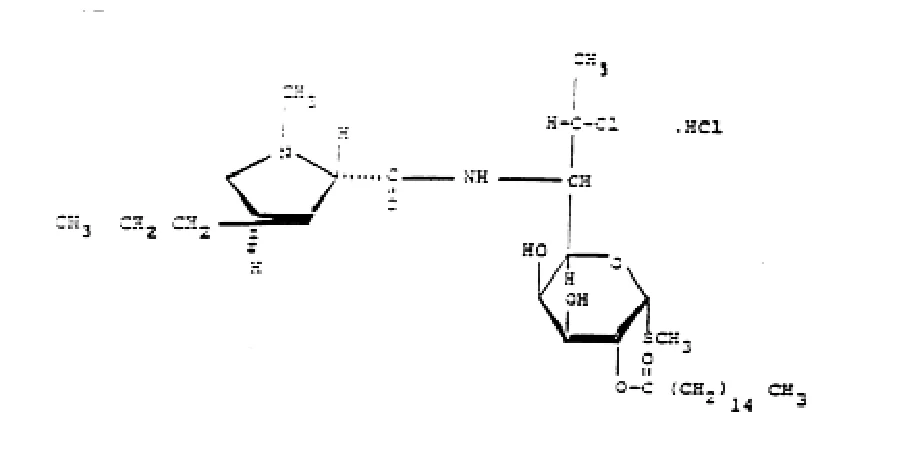
Physicochemical properties: Clindamycin palmitate hydrochloride is a water-soluble hydrochloride salt of the ester of clindamycin and palmitic acid and is a white to off-white amorphous powder with a characteristic odour. It is very soluble in DMF (N,N-dimethlyformamide), freely soluble in water, chloroform and ether, and soluble in alcohol and ethyl acetate. A 1% solution in water has a pH of 2.8 to 3.8.
14. Clinical Trials
The authorized indications were based on safety and efficacy clinical trials which were conducted with DALACIN C FLAVOURED GRANULES.
15. Microbiology
Efficacy is related to the time period over which the agent level is above the minimum inhibitory concentration (MIC) of the pathogen (%T/MIC).
Resistance
Development of resistance to clindamycin by staphylococci is slow and stepwise rather than rapid and streptomycin-like. Clindamycin, like lincomycin, participates in the dissociated cross-resistance phenomenon with erythromycin. Clindamycin is not cross-resistant with penicillin, ampicillin, tetracycline or streptomycin. It is, however, cross-resistant with lincomycin.
Resistance to clindamycin may occur by one of several mechanisms. Resistance does not appear to be caused by reduced drug uptake but rather is generally due to alterations in the bacterial target site (50S ribosomal subunit). Resistance can result from either changes in a ribosomal protein at the receptor site or a change in the 23S ribosomal RNA by methylation of adenine. These alterations can determine in vitro cross resistance to macrolides and streptogramins B (MLSB phenotype). Rare isolates of staphylococci and some veterinary isolates of streptococci may enzymatically inactivate clindamycin by adenylation. Plasmid-mediated transferable resistance to clindamycin (and erythromycin) in B. fragilis was reported in 1979. Despite the existence of multiple resistance mechanisms, the reported incidence of clindamycin resistance in the B. fragilis group has remained relatively low (averaging 5.3% from 1970-1987 in over 7,600 isolates).
Resistance to clindamycin may be inducible by macrolides in macrolide-resistant bacterial isolates. Inducible resistance can be demonstrated with a disk test (D-zone test) or in broth. Less frequently encountered resistance mechanisms involve modification of the antibiotic and active efflux. There is complete cross resistance between clindamycin and lincomycin. As with many antibiotics, the incidence of resistance varies with the bacterial species and the geographical area. The incidence of resistance to clindamycin is higher among methicillin-resistant staphylococcal isolates and penicillin-resistant pneumococcal isolates than among organisms susceptible to these agents. Susceptibility of isolates to clindamycin should be assessed by individual MIC determination.
Susceptibility Test Methods
The prevalence of acquired resistance may vary geographically and with time for selected species and local information on resistance is desirable, particularly when treating severe infections. As necessary, expert advice should be sought when the local prevalence of resistance is such that the utility of the agent in at least some types of infections is questionable.
Particularly in severe infections or therapy failure microbiological diagnosis with verification of the pathogen and its susceptibility to clindamycin is recommended.
Resistance is usually defined by susceptibility interpretive criteria (breakpoints) established by Clinical and Laboratory Standards Institute (CLSI) or European Committee on Antimicrobial Susceptibility Testing (EUCAST) for systemically administered antibiotics.
In order to assess the significance of in vitro antibiotic activity against bacterial species, it is necessary to compare the organism's minimum inhibitory concentration (MIC) to the defined susceptibility interpretive breakpoints for the antibiotic. Table 5 identifies the currently-accepted MIC interpretative breakpoints for clindamycin.
The in vitro activity of clindamycin in combination with primaquine has not been determined.
Clinical and Laboratory Standards Institute (CLSI) breakpoints for relevant organisms are listed below.
Table 5. CLSI Susceptibility Interpretive Criteria for Clindamycin
| Pathogen | ||||||
|---|---|---|---|---|---|---|
| Minimal Inhibitory Concentrations (MIC in mcg/mL) | Disk Diffusion (Zone Diameters in mm)a | |||||
| Staphylococcus spp. | S ≤ 0.5 | I 1–2 | R ≥4 | S ≥21 | I 15–20 | R ≤14 |
Streptococcus pneumoniae and other Streptococcus spp. | ≤0.25 | 0.5 | ≥1 | ≥19 | 16–18 | ≤15 |
| Anaerobic Bacteriab | ≤2 | 4 | ≥8 | NA | NA | NA |
NA = not applicable
aDisk content 2 micrograms of clindamycin
bMIC ranges for anaerobes are based on agar dilution methodology
A report of “Susceptible” (S) indicates that the pathogen is likely to be inhibited if the antimicrobial compound in the blood reaches the concentrations usually achievable. A report of “Intermediate” (I) indicates that the result should be considered equivocal, and, if the microorganism is not fully susceptible to alternative, clinically feasible drugs, the test should be repeated. This category implies possible clinical applicability in body sites where the drug is physiologically concentrated or in situations where high dosage of drug can be used. This category also provides a buffer zone that prevents small, uncontrolled technical factors from causing major discrepancies in interpretation. A report of “Resistant” (R) indicates that the pathogen is not likely to be inhibited if the antimicrobial compound in the blood reaches the usually achievable concentrations; other therapy should be selected.
The reported clindamycin MIC90 value (i.e., the concentration of clindamycin that inhibits 90% of test isolates) was utilized as the most descriptive measure of clindamycin activity. Where the data from more than one study are summarized, the weighted average MIC90 value was calculated to account for differences in the number of strains in each study.
Standardized susceptibility test procedures require the use of laboratory controls to monitor and ensure the accuracy and precision of the supplies and reagents used in the assay, and the techniques of the individuals performing the test. Standard clindamycin powder should provide the MIC ranges in Table 6. For the disk diffusion technique using the 2 mcg clindamycin disk the criteria provided in Table 5 should be achieved.
| Table 6. CLSI Acceptable Quality Control (QC) Ranges for Clindamycin to be Used in Validation of Susceptibility Test Results | ||
| QC Strain | Minimum Inhibitory Concentration Range (mcg/mL) | Disk Diffusion Range (Zone Diameters in mm) |
Staphylococcus aureus ATCC 29213 | 0.06–0.25 | NA |
Staphylococcus aureus ATCC 25923 | NA | 24–30 |
Streptococcus pneumoniae ATCC 49619 | 0.03–0.12 | 19–25 |
Bacteroides fragilis ATCC 25285 | 0.5–2a | NA |
Bacteroides thetaiotaomicron ATCC 29741 | 2–8a | NA |
Eggerthella lenta ATCC 43055 | 0.06–0.25a | NA |
NA=Not applicable. ATCC® is a registered trademark of the American Type Culture Collection aMIC ranges for anaerobes are based on agar dilution methodology. The European Committee on Antimicrobial Susceptibility Testing (EUCAST) breakpoints are presented below. | ||
| Table 7. EUCAST Susceptibility Interpretive Criteria for Clindamycin | ||||||||
MIC breakpoints (mg/L) | Zone diameter breakpoints (mm)a | |||||||
| Organism | S ≤ | R > | S ≥ | R < | ||||
| Staphylococcus spp. | 0.25 | 0.5 | 22 | 19 | ||||
Streptococcus Groups A, B, C and G | 0.5 | 0.5 | 17 | 17 | ||||
| Streptococcus pneumoniae | 0.5 | 0.5 | 19 | 19 | ||||
| Viridans group streptococci | 0.5 | 0.5 | 19 | 19 | ||||
| Gram-positive anaerobes | 4 | 4 | NA | NA | ||||
| Gram-negative anaerobes | 4 | 4 | NA | NA | ||||
| Corynebacterium spp. | 0.5 | 0.5 | 20 | 20 | ||||
aDisk content 2 µg of clindamycin NA=not applicable; S=susceptible; R=resistant | ||||||||
EUCAST QC ranges for MIC and disk zone determinations are in the table below.
| Table 8. EUCAST Acceptable Quality Control (QC) Ranges for Clindamycin to be Used in Validation of Susceptibility Test Results | |||||
| QC Strain | Minimum Inhibitory Concentration Range (mcg/mL) | Disk Diffusion Range (Zone Diameters in mm) | |||
Staphylococcus aureus ATCC 29213 | 0.06–0.25 | 23-29 | |||
Streptococcus pneumoniae ATCC 49619 | 0.03–0.125 | 22-28 | |||
| ATCC® is a registered trademark of the American Type Culture Collection | |||||
Antimicrobial Activity
The in vitro susceptibility of clinical isolates to clindamycin is presented in Table 9 (gram-positive aerobic bacteria), Table 10 (gram-negative aerobic bacteria), Table 11 (gram-positive anaerobic bacteria), Table 12 (gram-negative anaerobic bacteria) and Table 13 (Chlamydia spp and Mycoplasma spp).
Table 9: In vitro activity of clindamycin against gram-positive aerobic bacteriaa
Organism
Nb
MIC90 Rangec
MIC90d
Bacillus cereus
46
1
1
Corynebacterium diphtheriae
192
0.1
0.1
Listeria monocytogenes
218
1-8
2.22
Staphylococcus aureus (methicillin-susceptible)
286
0.12-2
0.50
Staphylococcus saprophyticus
57
0.12-0.25
0.16
Streptococcus agalactia
59
≤0.06-0.50
0.15
Streptococcus bovis
22
0.04
0.04
Streptococcus pneumonia (penicillin-susceptible)
660
0.03-0.25
0.23
Streptococcus pyogenes
141
0.13-0.25
0.08
Streptococcus spp, Group B
38
≤0.12-0.25
0.15
Streptococcus spp, Group C
30
≤0.12-0.50
0.22
Streptococcus spp, Group G
34
0.06-0.50
0.31
Streptococcus spp, viridans Group (penicillin-susceptible)
67
≤0.06-1.6
0.53 a clinical efficacy has not been established for some of these species
b N, total number of isolates
c Range of reported MIC90 values
d MIC90 for single study or weighted average MIC90 for two or more studies
Table 10: In vitro activity of clindamycin against gram-negative aerobic bacteriaa
Organism
Nb
MIC90 Rangec
MIC90d
Campylobacter jejuni
449
0.39-8
1.7
Campylobacter fetus
41
1-1.6
1.2
Campylobacter coli
31
0.50
0.50
Gardnerella vaginalis
156
≤0.06-0.39
0.3
Helicobacter pylori
47
2-3.1
2.6
Neisseria gonorrhoeae (β-lactamase-negative)
77
4
4
Neisseria gonorrhoeae (β-lactamase-positive)
54
2
2 a clinical efficacy has not been established for some of these species
b N, total number of isolates
c Range of reported MIC90 values
d MIC90 for single study or weighted average MIC90 for two or more studies
Table 11: In vitro activity of clindamycin against gram-positive anaerobic bacteriaa
Organism
Nb
MIC90 Rangec
MIC90d
Actinomyces israelii
46
0.12
0.12
Actinomyces spp
38
0.50-1
0.8
Clostridium botulinum
224
4
4
Clostridium difficile
191
4->256
57.7
Clostridium novyi
18
2
2
Clostridium perfringens
386
0.25-8
3.4
Clostridium ramosum
98
4-12.5
8.3
Eubacterium spp
45
0.4-2
1.1
Lactobacillus spp
88
0.50-1
0.8
Peptostreptococcus anaerobes
283
0.25-0.50
0.4
Peptostreptococcus asaccharolyticus
268
0.25-2
1.5
Peptostreptococcus magnus
90
2
2
Peptostreptococcus prevotii
87
0.12-4
2.9
Peptostreptococcus tetradius
28
0.5
0.5
Anaerobic gram-positive cocci
247
0.5-1
0.9
Propionibacterium acnes
267
0.10-0.25
0.2
Propionibacterium spp
71
0.12-0.20
0.16 a clinical efficacy has not been established for some of these species
b N, total number of isolates
c Range of reported MIC90 values
d MIC90 for single study or weighted average MIC90 for two or more studies
Table 12: In vitro activity of clindamycin against gram-negative anaerobic bacteriaa
Organism
Nb
MIC90 Rangec
MIC90d
Bacteroides fragilis group
4,284
0.5-8
2.45
Bacteroides fragilis
2,002
≤0.20-4
2.22
Bacteroides melaninogenicus
224
≤0.03-0.50
0.07
Bacteroides spp
141
≤0.06-0.50
0.31
Bacteroides bivius
155
≤0.03-≤0.05-
≤0.11
Bacteroides disiens
33
≤0.03-≤0.06
≤0.05
Fusobacterium spp
330
≤0.10-2
0.85
Mobiluncus mulieris
10
0.06
0.06
Mobiluncus curtisii
12
0.12
0.12
Veillonella spp
38
0.06-0.25
0.20 a clinical efficacy has not been established for some of these species
b N, total number of isolates
c Range of reported MIC90 values
d MIC90 for single study or weighted average MIC90 for two or more studies
Clindamycin has demonstrated in vitro activity against Chlamydia trachomatis and Mycoplasma spp (see Table 13). For Chlamydia trachomatis, the MIC90 for clindamycin is reached at 2.3 μg/mL; in vitro synergism with gentamicin has also been demonstrated.
Table 13: In vitro activity of clindamycin against Chlamydia spp and Mycoplasma spp a
Organism
Nb
MIC90 Rangec
MIC90d
Chlamydia trachomatis
84
0.5-5.9
2.3
Mycoplasma hominis
106
0.25-0.8
0.58
Mycoplasma pneumoniae
9
4
4 a clinical efficacy has not been established for some of these species
b N, total number of isolates
c Range of reported MIC90 values
d MIC90 for single study or weighted average MIC90 for two or more studies
16. Non-Clinical Toxicology
General Toxicology:
Animal
The results of acute toxicity studies in animals are shown in Table 14.
TABLE 14
Species
Route
LD50 (mg/kg)
Adult mouse
IP
> 2500
Adult rat
Oral
> 5000
Adult rat
IP
> 2500
Adult rat
SC
> 2000
Newborn rat
SC
> 1250
The following subacute and chronic animal toxicology was performed.
7 Day Oral Tolerance Study in Rats
1000 mg/kg was administered to rats with no drug related toxicity noted except some increase in body weight in females.
7 Day Oral Tolerance Study in the Dog
A dose of 600 mg/kg was administered. Leucocyte values fluctuated somewhat during the pre-test and treatment periods. There was a relative decrease in neutrophils. Alkaline phosphatase values were elevated post treatment in 2 of 3 dogs but no morphologic effect of the drug was detected in the liver of these dogs.
6 Month Chronic Oral Toxicity in the Rat
Clindamycin palmitate hydrochloride, at doses of 100, 300 and 600 mg/kg was given to groups of 20 rats daily for 6 months. Data obtained after two months were normal. Similarly, data at the end of 6 months showed no drug related effects. Female body weight was greater in the treated groups than in the controls.
6 Month Chronic Oral Toxicity in the Dog
Dogs were administered clindamycin palmitate hydrochloride at doses of 0, 30, 100 and 300 mg/kg daily for 6 months, and all 3 treatment levels were well tolerated. Alkaline phosphatase levels were elevated in 3 dogs (2 controls, and one at 300 mg/kg) but no other abnormalities were noted.
Carcinogenicity: Long term studies in animals have not been performed with clindamycin to evaluate carcinogenic potential.
Genotoxicity: Genotoxicity tests performed included a rat micronucleus test and an Ames Salmonella reversion test. Both tests were negative.
Reproductive and Developmental Toxicology:
Teratogenic and Reproductive Studies in the Rat and Rabbit
Clindamycin palmitate hydrochloride was not teratogenic when given to pregnant rats from gestation day 6 through 15 at levels of 300 and 600 mg/kg/day. The reproductive performance of treated rats was comparable to control rats.
Oral and subcutaneous reproductive toxicity studies in rats and rabbits revealed no evidence of impaired fertility or harm to the fetus due to clindamycin, except at doses that caused maternal toxicity.
In oral embryo fetal development studies in rats and subcutaneous embryo fetal development studies in rats and rabbits, no developmental toxicity was observed except at doses that produced maternal toxicity.