


Patient Medication Information: uses, side effects, how to take - Lotemax Gel
ABOUT THIS MEDICATION
What the medication is used for:
Lotemax® Gel is used for the treatment of post-operative inflammation and pain following cataract surgery.
What it does:
Lotemax® Gel is a corticosteroid and is believed to act by reducing the production of substances associated with inflammation, including prostaglandins and leukotrienes. By reducing these substances inflammation and pain are reduced..
When it should not be used:
Do not use Lotemax® Gel:
- If you are allergic to loteprednol or any of the ingredients contained in Lotemax® Gel (see What the important nonmedicinal ingredients are) or if you are allergic to any other corticosteroid.
- If you have eye infections caused by viruses such as herpes simplex, vaccinia and varicella or caused by bacteria or a fungus or if you think you have any other eye infection.
What the medicinal ingredient is:
The medicinal ingredient is loteprednol etabonate. Each mL contains 5 mg (0.5% w/w) loteprednol etabonate.
What the important nonmedicinal ingredients are:
Boric acid, edetate disodium dihydrate, glycerin, polycarbophil, propylene glycol, sodium chloride, tyloxapol, water for injection, and sodium hydroxide. The preservative is benzalkonium chloride 0.003% w/w.
What dosage forms it comes in:
Sterile ophthalmic gel 0.5% w/w.
WARNINGS AND PRECAUTIONS
BEFORE you use Lotemax® Gel talk to your doctor or pharmacist:
- If you have an eye disease/infection caused by viruses such as herpes simplex, vaccinia and varicella or caused by bacteria or a fungus or if you think you have any other eye infection.
If you had or have glaucoma or increased pressure in
- the eye as Lotemax® Gel might increase the pressure in the eye. Glaucoma, which occurs when the pressure in the eye increases for a period of time, can cause damage to the optic nerve, vision problems, and sometimes a loss of vision. Your doctor may monitor your intraocular pressure.
- If signs and symptoms fail to improve after two days of using Lotemax® Gel, consult your doctor
If you are pregnant or planning to become pregnant. Lotemax® Gel should not be used in pregnant women unless the doctor determines this is appropriate for you as there might be a risk of harm to the embryo or fetus.
- If you are breastfeeding or planning to breastfeed. Lotemax® Gel should not be used in breastfeeding women unless the doctor determines that this is appropriate for the infant as there might be a risk of harm to the nursing baby.
- If you are under 18 years of age.
Consult your doctor if the following occurs while taking Lotemax® Gel:
- If you develop an eye infection or other new or worsening symptoms.
- If you develop a blister on the eye (a bleb).
INTERACTIONS WITH THIS MEDICATION
Drug interaction studies have not been done for Lotemax® Gel.
Please inform your doctor or pharmacist if you are taking or have taken recently any other medicines, even those not prescribed.
PROPER USE OF THIS MEDICATION
Usual dose:
For adults only.
Invert closed bottle and shake once to fill tip before instilling drops.
Apply one or two drops of Lotemax® Gel into the conjunctival sac (see pictogram) of the affected eye four times daily beginning the day after surgery and continuing throughout the first 2 weeks of the postoperative period.
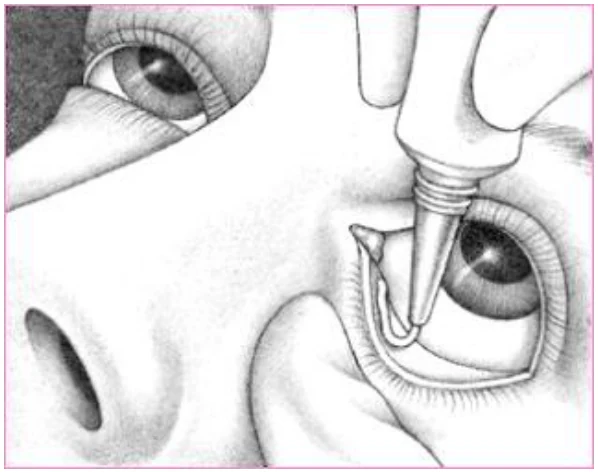
- Do not allow the dropper tip to touch any surface as this may contaminate the gel. The cap should remain on the bottle when not in use.
- Use only if imprinted neckband is intact.
- Wash hands prior to using Lotemax® Gel.
- Do not wear contact lenses during the course of therapy.
- Do not use if tamper evident skirt is visible on bottom of cap.
- If pain develops, redness, itching or inflammation becomes aggravated, consult your doctor.
- If you are using another medication in the eye, wait at least 15 minutes before applying.
Overdose:
| In case of drug overdose, contact a health care practitioner, hospital emergency department or regional Poison Control Centre immediately, even if there are no symptoms. |
Missed Dose:
If you miss a dose, take the next dose as scheduled then continue as before. Do not double doses.
SIDE EFFECTS AND WHAT TO DO ABOUT THEM
Eye gel can cause your vision to be blurred. This usually passes quickly. Do not drive or use machines until your vision is clear. Like all medicines, Lotemax® Gel can have unwanted effects. The most common side effects in patients treated with Lotemax® Gel are:
- Increased pressure within the eye
- Blurred or abnormal vision
- Swelling or discharge from the eyes
- Painful, dry or sticky eyes
- Tearing
- Sensation of having an object in your eye
- Itching in the eye or on the eyelid
- Redness in the eye or on the eyelid
- Photophobia (discomfort on exposure to light)
Another unwanted effect might include headache, nausea, cold, sore throat, runny nose, dizziness or rash.
If you notice these or any other effects, tell your doctor or pharmacist.
This is not a complete list of side effects. For any unexpected effects while taking Lotemax® Gel, contact your doctor or pharmacist.
HOW TO STORE IT
Store upright between 15 - 25ºC (59-77ºF) for up to 28 days after first opening.
Keep out of reach and sight of children.
REPORTING SUSPECTED SIDE EFFECTS
You can report any suspected adverse reactions associated with the use of health products to the Canada Vigilance Program by one of the following 3 ways: --------------------------------------------------------------------------
Postage paid labels, Canada Vigilance Reporting Form and the adverse reaction reporting guidelines are available on the MedEffect™ Canada Web site at www.healthcanada.gc.ca/medeffect. NOTE: Should you require information related to the management of side effects, contact your health professional. The Canada Vigilance Program does not provide medical advice. |
MORE INFORMATION
This document plus the full product monograph, prepared for health professionals can be found at:
http://www.bausch.ca
or by contacting the sponsor, Bausch & Lomb Incorporated, at:
1-888-459-5000