


Product Monograph - M-Tranexamic Acid
RECENT MAJOR LABEL CHANGES
Not Applicable
TABLE OF CONTENTS
Sections or subsections that are not applicable at the time of authorization are not listed.
RECENT MAJOR LABEL CHANGES .......................................................................................... 2
TABLE OF CONTENTS ............................................................................................................ 2
RECENT MAJOR LABEL CHANGES .......................................................................................... 2
TABLE OF CONTENTS ............................................................................................................ 2
PART I: HEALTH PROFESSIONAL INFORMATION .................................................................... 4
1 INDICATIONS ............................................................................................................. 4
1.1 Pediatrics .................................................................................................................. 4
1.2 Geriatrics .................................................................................................................. 4
2 CONTRAINDICATIONS ................................................................................................ 4
4 DOSAGE AND ADMINISTRATION ................................................................................ 5
4.1 Dosing Considerations ............................................................................................. 5
4.2 Recommended Dose and Dosage Adjustment ........................................................ 5
4.5 Missed Dose ............................................................................................................. 6
5 OVERDOSAGE ............................................................................................................ 6
6 DOSAGE FORMS, STRENGTHS, COMPOSITION AND PACKAGING ................................ 6
7 WARNINGS AND PRECAUTIONS ................................................................................. 7
7.1 Special Populations .................................................................................................. 8
7.1.1 Pregnant Women ..................................................................................................... 8
7.1.2 Breast-feeding .......................................................................................................... 9
7.1.3 Pediatrics ................................................................................................................ 10
7.1.4 Geriatrics ................................................................................................................ 10
8 ADVERSE REACTIONS............................................................................................... 10
8.1 Adverse Reaction Overview ................................................................................... 10
8.2 Clinical Trial Adverse Reactions ............................................................................. 10
8.2.1 Clinical Trial Adverse Reactions – Pediatrics.......................................................... 11
8.3 Less Common Clinical Trial Adverse Reactions ...................................................... 11
8.3.1 Less Common Clinical Trial Adverse Reactions – Pediatrics .................................. 11
8.4 Abnormal Laboratory Findings: Hematologic, Clinical Chemistry and Other Quantitative Data ................................................................................................... 11
8.5 Post-Market Adverse Reactions ............................................................................. 11
9 DRUG INTERACTIONS .............................................................................................. 11
9.2 Drug Interactions Overview ................................................................................... 11
9.4 Drug-Drug Interactions .......................................................................................... 11
9.5 Drug-Food Interactions .......................................................................................... 12
9.6 Drug-Herb Interactions .......................................................................................... 12
9.7 Drug-Laboratory Test Interactions......................................................................... 12
10 CLINICAL PHARMACOLOGY ...................................................................................... 12
10.1 Mechanism of Action ............................................................................................. 12
10.2 Pharmacodynamics ................................................................................................ 12
10.3 Pharmacokinetics ................................................................................................... 13
11 STORAGE, STABILITY AND DISPOSAL ........................................................................ 14
12 SPECIAL HANDLING INSTRUCTIONS .......................................................................... 14
PART II: SCIENTIFIC INFORMATION ..................................................................................... 15
13 PHARMACEUTICAL INFORMATION .......................................................................... 15
14 CLINICAL TRIALS ...................................................................................................... 15
14.1 Trial Design and Study Demographics ................................................................... 15
14.3 Comparative Bioavailability Studies ...................................................................... 15
14.4 Immunogenicity ..................................................................................................... 16
14.5 Clinical Trials – Reference Biologic Drug ................................................................ 16
15 MICROBIOLOGY ...................................................................................................... 16
16 NON-CLINICAL TOXICOLOGY .................................................................................... 16
17 SUPPORTING PRODUCT MONOGRAPS ..................................................................... 17
PATIENT MEDICATION INFORMATION ................................................................................ 18
PART I: HEALTH PROFESSIONAL INFORMATION
1 INDICATIONS
M-TRANEXAMIC ACID (tranexamic acid tablet) is indicated for:
- Hereditary angioneurotic oedema.
- Increased local fibrinolysis when the diagnosis is indicative of hyperfibrinolysis, as with conization of the cervix, dental extraction in patients with coagulopathies (in conjunction with antihaemophilic factor) epistaxis, hyphaema, and menorrhagia (hypermenorrhea).
1.1 Pediatrics
Based on the data submitted and reviewed by Health Canada, the safety and efficacy of tranexamic acid in pediatric patients has been established for use in hereditary angioneurotic oedema and increased local fibrinolysis when the diagnosis is indicative of hyperfibrinolysis. Specific data is available for surgical patients undergoing cardiac and orthopedic surgeries. Therefore, Health Canada has authorized M-TRANEXAMIC ACID in these indications for pediatric use.
For menorrhagia (hypermenorrhea), limited data are available to Health Canada. Clinical experience with tranexamic acid in menorrhagic (hypermenorrhea) children under 18 years of age is not available. Therefore, Health Canada has not authorized M-TRANEXAMIC ACID for this indication for pediatric use.
1.2 Geriatrics
Clinical studies of tranexamic acid did not include sufficient numbers of subjects aged 65 and over to determine whether they respond differently from younger subjects. Other reported clinical experience has not identified differences in responses between the elderly and younger patients. In general, dose selection for an elderly patient should be cautious, usually starting at the low end of the dosing range, reflecting the greater frequency of decreased hepatic, renal, or cardiac function, and of concomitant disease or other drug therapy.
2 CONTRAINDICATIONS
- Intrathecal and epidural administration of tranexamic acid is contraindicated.
- Patients with a history or risk of thrombosis should not be given M-TRANEXAMIC ACID (tranexamic acid), unless at the same time it is possible to give treatment with anticoagulants. The preparation should not be given to patients with acquired disturbances of colour vision. If disturbances of vision arise during the course of treatment the administration of the preparation should be discontinued.
- Patients with active thromboembolic disease, such as deep vein thrombosis, pulmonary embolism, and cerebral thrombosis.
Patients with subarachnoid haemorrhage: the limited clinical experience shows that a
- -bleeding is offset by an increase in the rate of cerebral ischaemia.
- Haematuria (see 7 WARNINGS and PRECAUTIONS)
- M-TRANEXAMIC ACID is contraindicated in patients who are hypersensitive to this drug or to any ingredient in the formulation, including any non-medicinal ingredient, or component of the container. For a complete listing, see 6 DOSAGE FORMS, STRENGTHS, COMPOSITION AND PACKAGING.
4 DOSAGE AND ADMINISTRATION
4.1 Dosing Considerations
- Tranexamic acid blood levels are increased in patients with renal insufficiency. Dose modifications are required in patients with renal insufficiency (see 4.2 Recommended Dose and Dosage Adjustment)
- Hypotension may occur after fast injection.
- The risk for thromboembolic events may be increased in patients using hormonal contraceptives. If M-TRANEXAMIC ACID has to be used in these patients, advise them to use an effective alternative (non-hormonal) contraceptive method. (see 9 DRUG INTERACTIONS).
4.2 Recommended Dose and Dosage Adjustment
- Conization of the cervix: 2-3 tablets (1000-1500 mg) every 8-12 hours, 12 days post operatively
- Epistaxis: 2-3 tablets (1000-1500 mg) every 8-12 hours for 10 days
- Hyphaema: 2-3 tablets (1000-1500 mg) every 8-12 hours for 7 days
- Dental Surgery in Patients with Coagulopathies: 2 hours before the operation, Factor VIII and Factor IX should be given as well as M-TRANEXAMIC ACID, 25 mg/kg orally. After the operation, 25 mg/kg M-TRANEXAMIC ACID is given orally 3-4 times a day for 6-8 days. After the operation the patient does not generally require further substitution therapy.
- Menorrhagia (hypermenorrhea): 2-3 tablets (1000-1500 mg), 3-4 times a day for several days. M-TRANEXAMIC ACID treatment should only be started when copious bleeding has begun.
- Hereditary angioneurotic oedema: Some patients can sense the onset of attacks and are best treated intermittently with 2-3 tablets (1000-1500 mg), 2-3 times a day for several days. Others should be treated continuously with this dose.
- Pediatrics: Dosage should be calculated according to body weight at 25 mg/kg orally 2-3 times a day. Clinical experience with M-TRANEXAMIC ACID in menorrhagic (hypermenorrhea) children under 18 years of age is not available.
Patients with Impaired Renal Function: In patients with serum creatine concentrations of
- At serum creatine levels of 250 to 500 μmol/L the dosage should be 15 mg/kg orally at 24 hourly intervals, and at serum creatine levels of 500 μmol/L or more, the same dose should be given at intervals of 48 hours between doses.
4.5 Missed Dose
If you forget to take your tablets you should take your next dose as usual. Do not take extra tablets to make up for the missed dose.
5 OVERDOSAGE
There is no known case of overdosage of M-TRANEXAMIC ACID in humans. Symptoms may include nausea, diarrhoea, dizziness, headache, convulsions, vomiting orthostatic symptoms and hypotension.
Treatment of overdosage would consist of initiating vomiting, institution of gastric lavage, charcoal therapy, and symptomatic treatment. Maintain adequate diuresis.
It has been seen that 37 g of tranexamic acid caused mild intoxication in a seventeen-year-old after gastric lavage.
| For management of a suspected drug overdose, contact your regional poison control centre. |
|---|
6 DOSAGE FORMS, STRENGTHS, COMPOSITION AND PACKAGING
Table: Dosage Forms, Strengths and Composition
| Route of Administration | Dosage Form / Strength/Composition | Non-medicinal Ingredients |
|---|---|---|
| Oral | Tablet / 500 mg / tranexamic acid | Cellulose microcrystalline, colloidal silica anhydrous, castor oil hydrogenated, low substituted hydroxypropyl cellulose (LH 11), magnesium stearate, pregelatinised starch, povidone, talc. The tablets are coated with colour hypromellose, macrogol, opadry white OY-IN-58910 contains propylen glycol, sodium lauryl sulphate and titanium dioxide. |
Packaging
Tablets (Off-white to pale yellow, oval shaped film-coated tablets plain on both sides) in 10’s tablets Alu-Alu blister pack and HDPE bottles of 100 tablets. Each tablet contains 500 mg Tranexamic acid.
7 WARNINGS AND PRECAUTIONS
General
The erroneous administration of tranexamic acid via intrathecal or epidural routes has been reported, resulting in serious adverse reactions including death.
Cardiovascular
Venous and arterial thrombosis or thromboembolism has been reported in patients treated tranexamic acid. Patients with a high risk for thrombosis (a previous thromboembolic event and a family history of thromboembolic disease) should use M-TRANEXAMIC ACID only if there is a strong medical indication and under strict medical supervision.
Patients with disseminated intravascular coagulation (DIC), who require treatment with M-TRANEXAMIC ACID, must be under the strict supervision of a physician experienced in treating this disorder.
Driving and Operating Machinery
Tranexamic acid may cause dizziness and therefore may influence the ability to drive or use machines.
Endocrine and Metabolism
Hormonal Contraceptives: Combination hormonal contraceptives are known to increase the risk of venous thromboembolism, as well as arterial thromboses such as stroke and myocardial infarction. Because M-TRANEXAMIC ACID is an antifibrinolytic, concomitant use of hormonal contraception and M-TRANEXAMIC ACID may further exacerbate this increased thrombotic risk. Women using hormonal contraception should use M-TRANEXAMIC ACID only if there is a strong medical need and the benefit of treatment will outweigh the potential increased risk of a thrombotic event. The risk for thromboembolic events may be increased in patients using hormonal contraceptives. If M-TRANEXAMIC ACID has to be used in these patients, advise them to use an effective alternative (non-hormonal) contraceptive method. (see 9 DRUG INTERACTIONS).
The following patients should consult their doctor prior to initiating treatment with M-TRANEXAMIC ACID: obese and diabetic, with polycystic ovary syndrome or a history of endometrial cancer in a first-degree relative, women receiving unopposed oestrogen or tamoxifen.
Hematologic
Avoid concomitant use of M-TRANEXAMIC ACID with medical products that are prothrombotic because concomitant use can further increase the risk of thromboembolic adverse reactions associated with tranexamic acid.
Patients with irregular menstrual bleeding should not use M-TRANEXAMIC ACID until the cause of the irregularity has been established.
Patients should consult their doctor if menstrual bleeding is not reduced after three menstrual cycles.
If menstrual bleeding is not adequately reduced by M-TRANEXAMIC ACID, an alternative treatment should be considered.
Patients taking anticoagulants (see 4.2 Recommended Dose and Dosage Adjustment).
Neurologic
Convulsions have been reported in association with tranexamic acid treatment.
Ophthalmologic
Visual disturbances including visual impairment, vision blurred, impaired color vision have been reported with tranexamic acid. For patients who are to be treated for several weeks with tranexamic acid, an ophthalmic check-up is advisable (sharpness of vision, colour vision, fundus, field of vision, etc.) if possible, before treatment is initiated and regularly during treatments.
Renal
Tranexamic acid therapy is not indicated in haematuria caused by diseases of the renal parenchyma. Intravascular precipitation of fibrin frequently occurs in these conditions and may aggravate the disease. In addition, in cases of massive renal hemorrhage of any cause, antifibrinolytic therapy carries the risk of clot retention in the renal pelvis.
Care should be taken in cases of renal insufficiency due to the risk of accumulation, and where there is pronounced haematuria from the upper urinary tract, since in isolated cases obstacles to passage have been observed in the tract (see 4.2 Recommended Dose and Dosage Adjustment).
Reproductive Health: Female and Male Potential
- Fertility
There are limited clinical data regarding the impact of tranexamic acid on fertility. After both oral and intravenous administration, tranexamic acid passes into the semen and inhibits its fibrinolytic activity, but without affecting the motility of the spermatozoa.
Sensitivity/Resistance
Cases of allergic reaction with use of intravenous tranexamic acid, including anaphylaxis or anaphylactoid reaction have been reported that are suggestive of a causal relationship. Patients should be closely monitored for the possibility of a severe allergic reaction occurring following its administration.
7.1 Special Populations
7.1.1 Pregnant Women
Tranexamic acid passes through the placenta. The concentration in cord blood after an intravenous injection of 10 mg/kg to pregnant women is about 30 mg/L, as high as in the maternal blood. Fibrinolytic activity is very high in neonates. It is not known for certain whether a reduction of this activity during the first hours of life is harmful. Kullander and Nilsson who have wide experience with tranexamic acid in connection with childbirth have observed no negative effect on the infants.
For decisions regarding the use of tranexamic acid during pregnancy, the potential risk of tranexamic acid administration on the fetus should always be considered along with the mother’s clinical need for tranexamic acid; an accurate risk-benefit evaluation should drive the treating physician’s decision.
Available data from published studies, case series and case reports with tranexamic acid use in pregnant women in the second and third trimester and at the time of delivery have not clarified whether there is a drug-associated risk of miscarriage or adverse maternal or fetal outcomes. There are cases of fetal structural abnormalities that resulted in death of the newborn following administration of tranexamic acid to the mother during conception or the first trimester of pregnancy; however, due to other confounding factors the actual risk of major birth defects with use of tranexamic acid during pregnancy is not clear.
There were 13 clinical studies that described fetal and/or neonatal functional issues such as low Apgar score, neonatal sepsis, cephalohematoma and 9 clinical studies that discussed alterations to growth including low birth weight and preterm birth at 22-36 weeks of gestation in fetuses and infants exposed to tranexamic acid in utero.
A woman with fibrinolytic bleeding in the fourth month of pregnancy was treated with tranexamic acid for a total of 64 days. The total dose was 256 g. The delivery occurred spontaneously in the 30th week of pregnancy and was normal in all other respects. The infant was healthy.
In a case of threatened placental abruption that was prevented by giving tranexamic acid, the patient had already lost two children in connection with placental abruption. In the 26th week of her third pregnancy bleeding occurred, indicating abruption. Pathological proteolysis with predominant activation of the fibrinolytic system was established. Between the 26th and 33rd week of pregnancy about 250 g of tranexamic acid were given, both intravenously and orally. The bleeding was arrested, and a healthy child was delivered by Caesarean section.
The estimated background risk for major birth defects and miscarriage for the indicated human population is unknown. All pregnancies have a background risk of birth defect, loss, or other adverse outcomes.
7.1.2 Breast-feeding
Tranexamic acid is secreted in the mother’s milk at a concentration of only a hundredth of the corresponding serum levels.
Published literature reports the presence of tranexamic acid in human milk. There are no data on the effects of tranexamic acid on the breastfed child or the effects on milk production. The developmental and health benefits of breastfeeding should be considered along with the mother’s clinical need for tranexamic acid and any potential adverse effects on the breastfed child from tranexamic acid or from the underlying maternal condition.
7.1.3 Pediatrics
Based on the data submitted and reviewed by Health Canada, the safety and efficacy of M-TRANEXAMIC ACID in pediatric patients has been established for use in hereditary angioneurotic oedema and increased local fibrinolysis when the diagnosis is indicative of hyperfibrinolysis. Specific data is available for surgical patients undergoing cardiac and orthopedic surgeries. Therefore, Health Canada has authorized M-TRANEXAMIC ACID in these indications for pediatric use.
For menorrhagia (hypermenorrhea), limited data are available to Health Canada. Clinical experience with M-TRANEXAMIC ACID in menorrhagic (hypermenorrhea) children under 18 years of age is not available. Therefore, Health Canada has not authorized M-TRANEXAMIC ACID for this indication for pediatric use. See 1.1 Pediatrics.
7.1.4 Geriatrics
Clinical studies of tranexamic acid did not include sufficient numbers of subjects aged 65 and over to determine whether they respond differently from younger subjects. Other reported clinical experience has not identified differences in responses between the elderly and younger patients. In general, dose selection for an elderly patient should be cautious, usually starting at the low end of the dosing range, reflecting the greater frequency of decreased hepatic, renal, or cardiac function, and of concomitant disease or other drug therapy. See 1.2 Geriatrics.
8 ADVERSE REACTIONS
8.1 Adverse Reaction Overview
Gastrointestinal Disorders: Gastrointestinal symptoms (nausea, vomiting, diarrhea) occur but disappear when the dose is reduced.
Immune System Disorders: allergic dermatitis has been reported less commonly.
Nervous System Disorders: Isolated cases of dizziness or reduced blood pressure have been reported.
8.2 Clinical Trial Adverse Reactions
Clinical trials are conducted under very specific conditions. The adverse reaction rates observed in the clinical trials; therefore, may not reflect the rates observed in practice and should not be compared to the rates in the clinical trials of another drug. Adverse reaction information from clinical trials may be useful in identifying and approximating rates of adverse drug reactions in real-world use.
Eye Disorders: No retinal changes have been reported or observed at ophthalmic check-ups of patients treated with tranexamic acid for several weeks or months. This is despite experimental findings in animals (dog and cat) where retina changes have been observed after long-term administration of large doses of tranexamic acid.
8.2.1 Clinical Trial Adverse Reactions – Pediatrics
Additional data is not available for the pediatric population that is any different from the adult population (see section 8.1).
8.3 Less Common Clinical Trial Adverse Reactions
See section 8.1.
8.3.1 Less Common Clinical Trial Adverse Reactions – Pediatrics
Additional data is not available for the pediatric population that is any different from the adult population (see section 8.1).
8.4 Abnormal Laboratory Findings: Hematologic, Clinical Chemistry and Other Quantitative Data
No data is available regarding abnormal laboratory findings and tranexamic acid therapy.
8.5 Post-Market Adverse Reactions
Rare cases of adverse events have been reported with the use of tranexamic acid.
Eye Disorders: impaired vision, blurred vision or colour vision impairment (chromatopsia)
Immune System Disorders: Cases of allergic reaction with use of intravenous tranexamic acid, including anaphylaxis or anaphylactoid reaction have been reported that are suggestive of a causal relationship.
Nervous System Disorders: dizziness and seizures.
Vascular Disorders: thromboembolic events (acute myocardial infarction, thrombosis, arterial thrombosis limb, carotid artery thrombosis, cerebral infarction, cerebrovascular accident, deep vein thrombosis, pulmonary embolism, cerebral thrombosis, acute renal cortical necrosis, and central retinal artery and vein obstruction). Hypotension may occur after fast injection.
9 DRUG INTERACTIONS
9.2 Drug Interactions Overview
No studies of interactions between M-TRANEXAMIC ACID and other drugs have been conducted. Because of the absence of interaction studies, simultaneous treatment with anticoagulants must take place under the strict supervision of a physician experienced in this field.
9.4 Drug-Drug Interactions
Because M-TRANEXAMIC ACID is an antifibrinolytic, avoid concomitant use of M-TRANEXAMIC ACID with medical products that are prothrombotic because concomitant use can further increase the risk of thromboembolic adverse reactions associated with tranexamic acid.
Potential drug-drug interactions may lead to myocardial infarction after co-administration with hormonal contraceptives, hydrochlorothiazide, desmopressin, sulbactam-ampicillin, carbazochrome, ranitidine, or nitroglycerin. Concomitant use of hormonal contraception and M-TRANEXAMIC ACID may further exacerbate the increased thrombotic risk associated with combination hormonal contraceptives (see 7 WARNINGS AND PRECAUTIONS).
9.5 Drug-Food Interactions
Interactions with food have not been established.
9.6 Drug-Herb Interactions
Interactions with herbal products have not been established.
9.7 Drug-Laboratory Test Interactions
Interactions with laboratory tests have not been established.
10 CLINICAL PHARMACOLOGY
10.1 Mechanism of Action
M-TRANEXAMIC ACID (tranexamic acid) produces an antifibrinolytic effect by competitively inhibiting the activation of plasminogen to plasmin. It is also a weak non-competitive inhibitor of plasmin. These properties make possible its clinical use as an antifibrinolytic in the treatment of both general and local fibrinolytic hemorrhages. It has an action mechanism similar to, but about 10 times more potent in vitro, than that of E amino caproic acid (EACA).
Tranexamic acid binds considerably more strongly than EACA to both the strong and weak sites in the plasminogen molecule in a ratio corresponding to the difference in potency between the compounds. The pharmacological significance of the binding to these different sites has not yet been evaluated.
The therapeutic plasma concentration of tranexamic acid is 5-15 mg/L. The functional interaction between plasminogen and tissue activator, located mainly on fibrin, is prevented by dissociation of the complex between fibrin and specific substrate binding sites on plasminogen. A potentiating effect on natural inhibitors also appears to contribute to the clinical effect during antifibrinolytic therapy.
10.2 Pharmacodynamics
When administered 36-48 hours before surgery in four doses of 10-20 mg per kg body weight, an antifibrinolytically active concentration (10 μg/mL) of tranexamic acid remained up to 17 hours in the tissues investigated, and up to 7-8 hours in the serum.
Tranexamic acid (5 x 10⁻²M) competitively inhibits the activation of trypsinogen by enterokinase and non-competitively inhibits the proteolytic activity of trypsin at 4-fold greater concentration. While aminocaproic acid moderately inhibits trypsin (40%), urinary kallikrein (30%) and pancreatic kallikrein (60%), Tranexamic acid has little effect (less than 10%) on any of these enzymes.
A still weaker effect is exerted on thrombin (7 x 10⁻³M, 100 mg/L). Tranexamic acid (7 x 10⁻²M) added to blood has no influence on the platelet count, coagulation time, one-stage prothrombin time or recalcification time. The plasma levels of AHF, Factor IX, prothrombin, Factor VII, Factor V and fibrinogen also remain unchanged in vitro.
Tranexamic acid (7 x 10⁻³M, 1 g/L) does not aggregate human platelets in vitro. On the contrary in vivo (dogs) a dose of 30 mg/kg I.V. showed a decreased ADP-induced aggregability and a stabilizing effect on glass bead adhesiveness for 24 hours after the administration.
The activity of chymotrypsin is not impaired by synthetic antifibrinolytics and an inhibition of the action of pepsin is observed only in high concentrations, 6 x 10⁻³M. The degradation of bradykinin in human plasma is not significantly inhibited at 10-2M.
Tranexamic acid administered by I.V. infusion in the anaesthetized cat in doses of 0.4-2 mg/kg/min for 60 minutes and i.m. in the rabbit, cat and dog in doses of 170 mg/kg do not cause significant changes in arterial blood pressure, respiration of ECG.
The mechanism of the cardiovascular effect of Tranexamic acid is less clear than that of E-amino caproic acid, which appears to produce an indirect sympathomimetic effect. In relation to its therapeutic effect Tranexamic acid has about 10 times less potent effect than EACA on blood pressure. Threshold doses to produce increase in the blood pressure and heart rate are 50-100 mg/kg for Tranexamic acid and 30-50 mg/kg for EACA in anaesthetized cats, corresponding to a human equivalent dose of 160-320 mg/kg for tranexamic acid and 96-160 mg/kg for EACA.
10.3 Pharmacokinetics
Absorption
Absorption from the human gastrointestinal tract is not complete (40%). Three hours after a single oral dose of 25 mg per kg body weight, the peak serum level was 15.4 mg per L and the aqueous humour level was 1.6 mg per L.
Distribution
Tranexamic acid does not bind to serum albumin. The plasma protein binding seems to be fully accounted for by its binding to plasminogen and appears to be negligible at therapeutic plasma levels of 5-10 mg/L. Intravenous administration of 10 mg per kg body weight gave plasma concentrations of 18.3 μg, 9.6 μg and 5 μg per mL one, three and five hours after the injection. The ability of tranexamic acid to cross the blood brain barrier has been demonstrated when administered to patients with ruptured intracranial aneurysms. Tranexamic acid diffuses rapidly to the joint fluid and to the synovial membrane. In the joint fluid the same concentration was obtained as in the serum. The biological half-life in the joint fluid was about 3 hours.
Metabolism
Possible routes of biotransformation are acetylation or deamination followed by oxidation or reduction.
Elimination
Tranexamic acid is eliminated by glomerular filtration, excretion being about 30% at one hour, 55% at three hours and 90% at 24 hours after intravenous administration of 10 mg per kg body weight. After oral administration of 10-15 mg per kg body weight, excretion was 1% at one hour, 7% at three hours and 39% at 24 hours.
After oral administration approximately 50% of the parent compound, 2% of the deaminated dicarboxylic acid, and 0.5% of the acetylated product are excreted.
Special Populations and Conditions
- Pediatrics
Clinical experience with tranexamic acid in menorrhagic children under 18 years of age is not available.
- Pregnancy and Breast-feeding
Tranexamic acid crosses the placenta. After an intravenous injection of 10 mg per kg the concentration can rise to about 30 μg per mL of fetal serum. Tranexamic acid also passes over into the breast milk during lactation in concentrations 1/100 of the corresponding serum levels.
- Renal Insufficiency
See 4.2 Recommended Dose and Dosage Adjustment.
11 STORAGE, STABILITY AND DISPOSAL
Store at room temperature (15°C - 30°C). Keep your medicine out of the reach and sight of children.
12 SPECIAL HANDLING INSTRUCTIONS
None
PART II: SCIENTIFIC INFORMATION
13 PHARMACEUTICAL INFORMATION
Drug Substance
| Proper name: | Tranexamic acid |
|---|---|
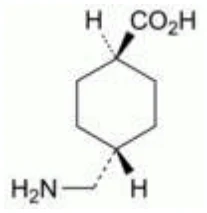
| Chemical name: | trans 4 (aminomethyl) cyclohexane carboxylic acid |
| Molecular formula and molecular mass: | C8H15NO2 and 157.2 g/mol |
| Structural formula: |
| Physicochemical properties: | White or almost white, crystalline powder |
|---|
Product Characteristics:
Solubility: Freely soluble in water and in glacial acetic acid, practically insoluble in acetone and in ethanol (96 per cent).
14 CLINICAL TRIALS
14.1 Trial Design and Study Demographics
- The data is not available.
14.3 Comparative Bioavailability Studies
A randomized, open-label, two-treatment, two-period, two-sequence, single-dose (1 x 500 mg) cross over bioequivalence study of M-TRANEXAMIC ACID (Tranexamic Acid) Tablets, 500 mg (Mantra Pharma Inc.) and CYKLOKAPRON® (Tranexamic Acid) Film-Coated Tablets, 500 mg (Meda Pharmaceuticals Ltd., United Kingdom) was conducted in 36 healthy, adult, Indian Asian subjects (6 females and 30 males) under fasting conditions. All 36 subjects completed the study. The bioavailability data and results of the study are summarized in the following table.
* M-TRANEXAMIC ACID (Tranexamic Acid) Tablets, 500 mg (Mantra Pharma Inc.)
† CYKLOKAPRON® (Tranexamic Acid) Film-Coated Tablets, 500 mg (Meda Pharmaceuticals Ltd.) were purchased from the United Kingdom
§ Expressed as the median (range) only
€ Expressed as the arithmetic mean (CV%) only
14.4 Immunogenicity
- The data is not available.
14.5 Clinical Trials – Reference Biologic Drug
- The data is not available.
15 MICROBIOLOGY
No microbiological information is required for this drug product.
16 NON-CLINICAL TOXICOLOGY
General Toxicology:
Nonclinical studies have shown a retinal toxicity associated with tranexamic acid. Toxicity is characterized by retinal atrophy commencing with changes to the retinal pigmented epithelium and progressing to retinal detachment in cats. The toxicity appears to be dose related, and changes are partially reversible at lower doses. Effects (some fully reversible) are seen in cats at clinically relevant doses. In the dog, effects were only observed at extremely
Tranexamic Acid (1 x 500 mg) From measured data Geometric Mean Arithmetic Mean (CV%) | ||||
|---|---|---|---|---|
| Parameter | Test* | Reference† | % Ratio of Geometric Means | 90% Confidence Interval |
AUCT (µg*h/mL) | 47.04 48.15 (21.14) | 46.61 48.16 (24.98) | 100.92 | 96.50-105.54 |
AUCI (µg*h/mL) | 48.64 49.75 (20.92) | 48.15 49.70 (24.74) | 101.02 | 96.81-105.41 |
Cmax (µg/mL) | 7.82 8.03 (22.43) | 7.56 7.86 (27.45) | 103.41 | 98.22-108.88 |
Tmax§ (h) | 2.33 (1.50 - 4.00) | 2.33 (1.50 - 4.00) | ||
T½€ (h) | 5.59 (22.38) | 5.42 (22.75) | ||
high dose levels of 2 x 400 mg/kg/day and peak plasma levels of about 200 mg per litre. By comparison, in humans peak plasma levels are in the range of 10-20 mg per litre after a therapeutic oral dose of about 30 mg/kg body weight.
Studies suggest that the underlying mechanism for retinal toxicity may be related to a transient retinal ischemia at higher dose exposures, linked to the known sympathomimetic effect of high plasma levels of tranexamic acid. The clinical relevance of these findings is unknown.
In subacute toxicity studies, daily doses of Tranexamic acid administered orally to rats (1 to 5 g/kg for 10 weeks) and dogs (100 to 500 mg/kg for 4 months) and intra-peritoneally to rats (0 to 1000 mg/kg for 2 weeks) resulted in dose-related emesis, loose stools or diarrhea, and decreased body weight gain. Intravenous administration of tranexamic acid to rabbits (60 to 180 mg/kg for 13 days) resulted in dose-related tachypnea.
In the 1-month intravenous study in dogs given 20, 100 or 500 mg/kg/day emesis and salivation occurred at the two highest dose levels. Microscopically, pulmonary thromboembolism was found in one dog receiving the intermediate dose and one from the high dose group. The latter dog also had two thrombophlebitis in the urinary bladder. No cardiac hemorrhages were found. Epileptogenic activity has been observed in animals with intrathecal use of tranexamic acid. No other significant observations have been made in general toxicology studies.
Carcinogenicity:
In one of the carcinogenicity studies in which rats were given tranexamic acid in high doses, biliary hyperplasia, cholangioma and adenocarcinoma of the liver were found. These findings have not been reproduced in a number of subsequent carcinogenicity studies. An increased incidence of leukemia (although not statistically significant) occurred in one study in mice given 4.8 percent Tranexamic acid for 20 months. In other studies, the frequency and histologic appearance of the observed tumors were similar in the test groups and in the untreated animals.
Reproductive and Development Toxicology:
In reproductive toxicity studies, tranexamic acid had no adverse effect on reproductive parameters of mice, rats and rabbits at clinically relevant doses.
17 SUPPORTING PRODUCT MONOGRAPS
- 1. PrCYKLOKAPRON® (Tablets, 500 mg and 100 mg/mL solution for Intravenous Injection), Submission Control 254356, Product Monograph, Pfizer Canada ULC., Date of Revision: November 25, 2021.