


Product Monograph - Memantine (Sivem Pharmaceuticals)
CLINICAL TRIALS
Comparative Bioavailability Studies
A single dose, open-label, 2-way crossover, comparative bioavailability study under fasting conditions was conducted with 15 healthy adult male volunteers. The rate and extent of absorption of memantine were measured and compared following a single dose (1 x 10 mg tablet) of MEMANTINE and Ebixa®. The results from 13 subjects who completed the study are summarized in the following table:
SUMMARY TABLE OF THE COMPARATIVE BIOAVAILABILITY DATA
Memantine (1 x 10 mg) From measured data Geometric Mean Arithmetic Mean (CV %) | ||||
|---|---|---|---|---|
| Parameter | MEMANTINE * | Ebixa®† | % Ratio of Geometric Means | 90% Confidence Interval |
AUC0-72h (pg.h/mL) | 549003.90 550405.62 (6.01) | 559335.11 560155.02 (5.37) | 98.15 | 96.65 to 99.68 |
Cmax (pg/mL) | 11925.28 11968.77 (8.49) | 12009.50 12035.14 (7.92) | 99.30 | 97.41 to 101.22 |
Tmax§ (h) | 7.00 (2.00) | 7.00 (1.50) | ||
* MEMANTINE is manufactured for Sivem Pharmaceuticals ULC.
† Ebixa® is manufactured by Lundbeck GmbH and was purchased in Germany.
§ Expressed as the arithmetic mean (CV %).
AUCI and T1/2 are not reported; these parameters could not be accurately estimated due to the long half-life of the active ingredient and the design of the study.
The potential efficacy of memantine hydrochloride as a treatment for the symptomatic management of moderate to severe Alzheimer’s disease was demonstrated by the results of a randomized, double-blind, placebo-controlled 6-month clinical study. The study was conducted in patients with Alzheimer's disease. The mean age of patients participating in the memantine hydrochloride trial was 76 with a range of 50 to 93 years. Approximately 66% of patients were women. Female patients participating in the clinical trial were required to be at least 50 years of age and at least 2 years postmenopausal or surgically sterile. The racial distribution was approximately 91% Caucasian. Patient demographics were similar in a second randomized, double-blind, placebo controlled, 6-month clinical trial in patients with moderate to severe Alzheimer’s disease: mean age was 78 years, approximately 71% were female and approximately 81% were Caucasian. In all studies, for patients randomized to memantine hydrochloride, treatment was initiated at 5 mg/day and increased weekly by 5 mg/day to a dose of 20 mg/day (10 mg twice a day).
Study Outcome Measures: In the studies, the efficacy of memantine hydrochloride was evaluated using validated assessments for patients with moderate to severe dementia in a dual outcome strategy that included assessment of activities of daily living (modified Alzheimer’s Disease Cooperative Study – Activities of Daily Living inventory) and a clinician’s global assessment of change (Clinician’s Interview Based Impression of Change with caregiver input [Study 1]) or a measure of cognition (Severe Impairment Battery [Study 2]).
The Alzheimer’s Disease Cooperative Study – Activities of Daily Living inventory (ADCS-ADLsev) measures the functional capabilities of patients and is based on interview of a caregiver familiar with the behaviour of the patient. The modified ADCS-ADLsev includes 19 items that rate the patients’ abilities to eat, dress, bathe, telephone, travel, shop, and perform other household chores from the highest level of independent performance to complete loss. Lower total modified ADCS-ADLsev scores indicate greater functional impairment.
The Severe Impairment Battery (SIB) assesses selected aspects of cognitive performance including elements of attention, orientation, language, memory, visuospatial ability, construction, praxis, and social interaction and is sensitive to longitudinal changes in cognitive function in patients with moderate to severe dementia. Lower total SIB scores indicate greater cognitive impairment.
The ability of memantine hydrochloride to produce an overall clinical effect was assessed using a Clinician's Interview Based Impression of Change, which evaluates four domains: general (overall clinical status), functional (including activities of daily living), cognitive, and behavioural. The CIBIC-Plus represents the assessment of a skilled clinician using validated scales based on his/her observation at an interview with the patient, in combination with information provided by a caregiver familiar with the behaviour of the patient over the interval rated. The CIBIC-Plus is scored as a seven point categorical rating, ranging from a score of 1, indicating "markedly improved" to a score of 4, indicating "unchanged" to a score of 7, indicating "markedly worse."
Clinical trial results are summarized for the last observation carried forward (LOCF) analysis of the Intent-to-Treat (ITT) population. The ITT population corresponds to all patients who were randomized to treatment regardless of treatment received and the LOCF analysis is based on carrying the last observation while on treatment forward to the study endpoint when patients were unable to complete the study.
Study 1 (Twenty-Eight-Week Study)
Study 1 was a 28 week study in which 252 patients with moderate to severe Alzheimer’s disease (diagnosed according to DSM-IV and NINCDS-ADRDA criteria, with Mini-Mental State Examination scores ≥ 3 and ≤ 14 and Global Deterioration Scale Stages 5-6) were randomized to memantine hydrochloride or placebo. Sixty-seven percent and 77% of patients randomized to placebo and memantine hydrochloride, respectively, completed the study. The two primary efficacy endpoints were the mean change from baseline to endpoint (Week 28 LOCF) on the ADCS-ADLsev and CIBIC-Plus rating at endpoint (Week 28 LOCF).
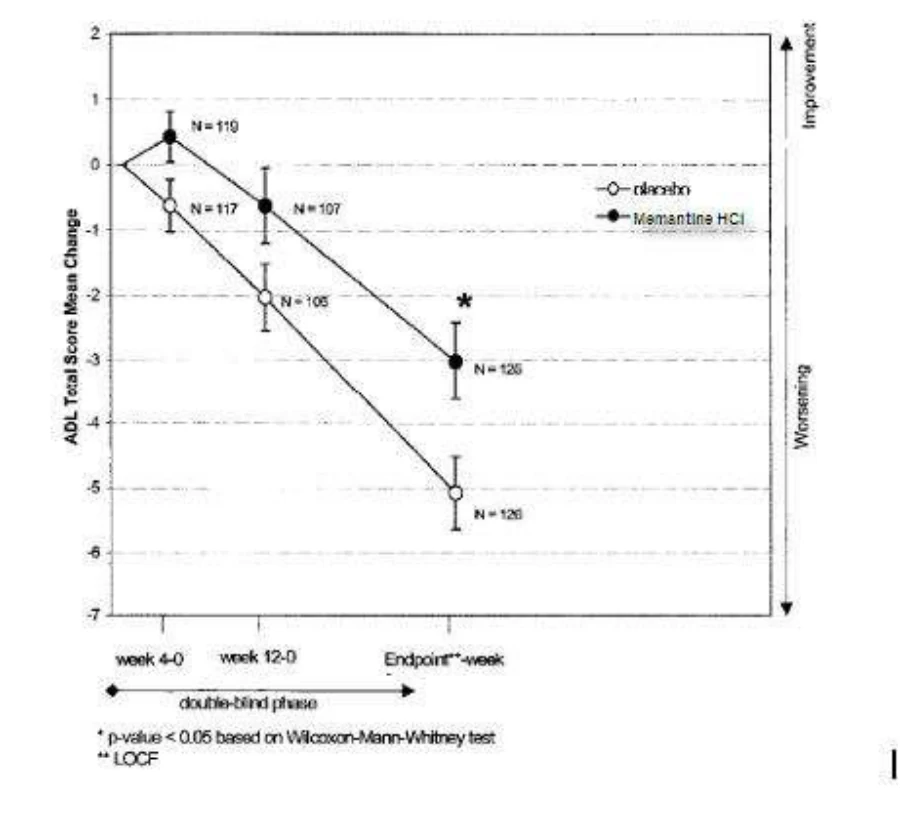
At endpoint (Week 28 LOCF), the mean change from baseline in the ADCS-ADLsev score was statistically significantly less for the memantine hydrochloride-treated patients compared to the patients on placebo (treatment difference of 2.1 units (p=0.022) (Figure 1).
Figure 1: Time course of the change from baseline in ADCS-ADLsev score at week
28-LOCF (ITT population)
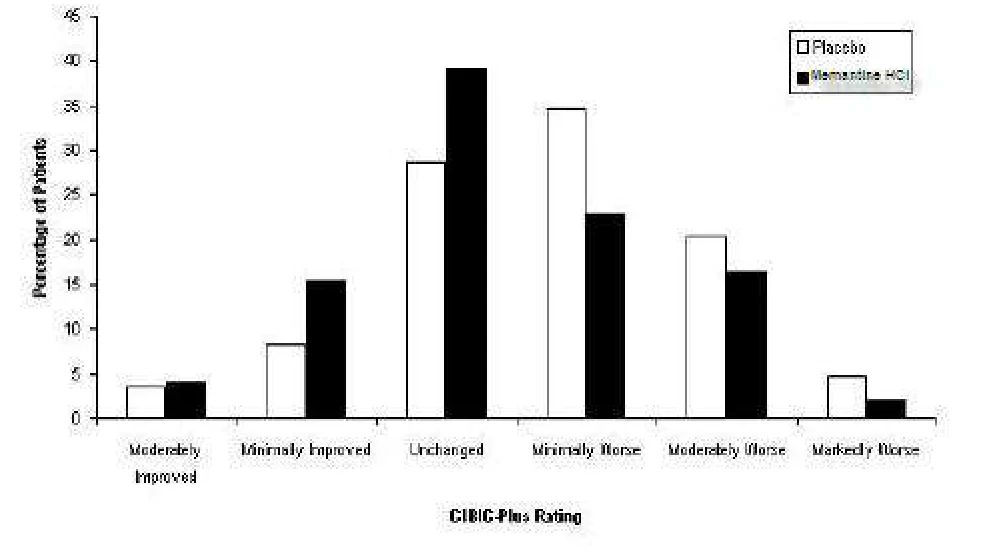
The percentage distribution of CIBIC-Plus scores for patients in each treatment group is shown in Figure 2. The mean CIBIC-Plus rating for the memantine hydrochloride group was numerically superior, but not statistically significantly superior, to that of the placebo group (treatment difference of 0.25 units, p = 0.06).
Figure 2: Distribution of CIBIC-Plus ratings at week 28 -LOCF (ITT population)
The Severe Impairment Battery was a secondary efficacy measure. At study endpoint (Week
28 LOCF), the mean difference in the SIB change scores from baseline for the memantine hydrochloride-treated patients compared to the patients on placebo was 5.9 units, with the memantine hydrochloride group showing less decline than the placebo group.
Study 2 (Twenty-four-Week Study)
Study 2 was a 24 week study, in which 350 patients with moderate to severe Alzheimer’s disease (diagnosed according to DSM-IV and NINCDS-ADRDA criteria, with Mini-Mental State Examination scores ≥ 5 and ≤ 14) were randomized to memantine hydrochloride or placebo. Seventy-three percent and 75% of patients randomized to placebo and memantine hydrochloride, respectively, completed the study. The two primary efficacy endpoints were the mean change from baseline to endpoint (Week 24 LOCF) on the ADCS-ADLsev and SIB. Differences between treatment groups on the two primary endpoints were not statistically significant based on the primary analysis of efficacy.
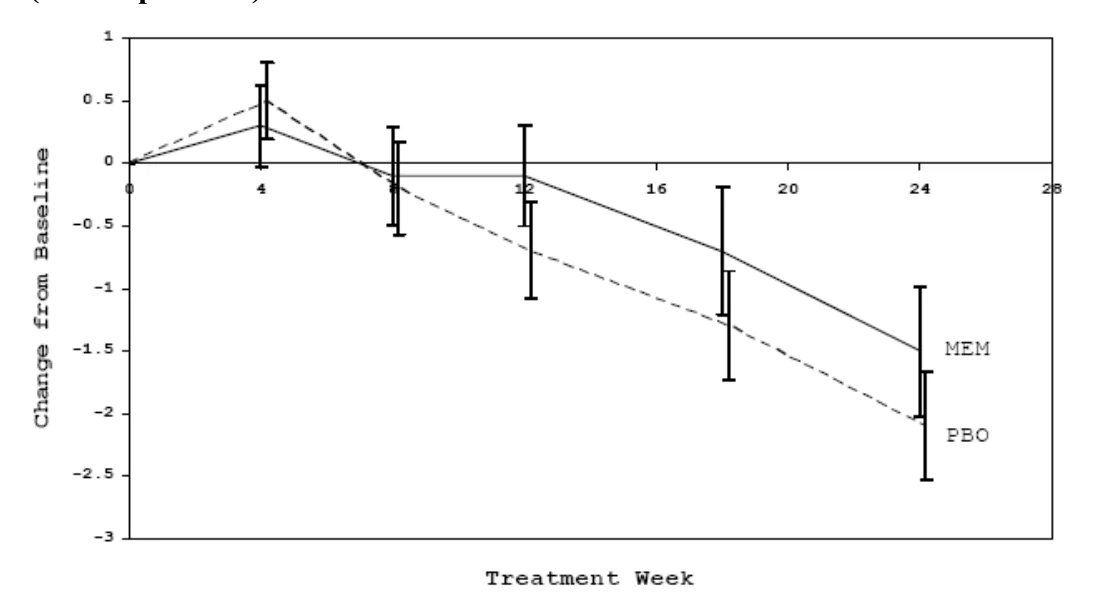
At endpoint (Week 24 LOCF), the mean change from baseline in the ADCS-ADLsev score was numerically less for the memantine hydrochloride-treated patients compared to the patients on placebo (treatment difference of 0.7 units (Figure 3)).
Figure 3: Time course of the change from baseline in ADCS-ADLsev score at 24 weeks-LOCF (ITT Population)
At study endpoint (Week 24 LOCF) the mean difference in the SIB change scores was numerically less for the memantine hydrochloride-treated patients compared to the patients on placebo (treatment difference of 0.6 units).
Figure 4: Time course of the change from baseline in SIB score at 24 weeks-LOCF (ITT Population)
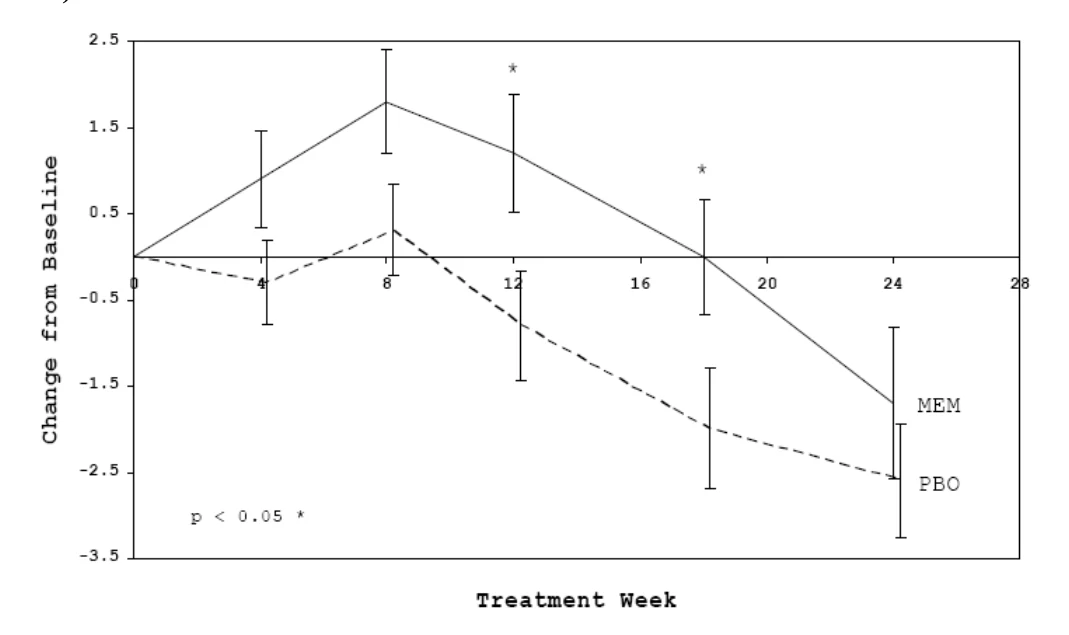
A post-hoc nonparametric re-analysis of the primary efficacy endpoint data showed that at study endpoint (Week 24 LOCF) the mean difference in the SIB change scores was statistically significantly less for the memantine hydrochloride-treated patients compared to the patients on placebo (p = 0.031).
INDICATIONS AND CLINICAL USE
MEMANTINE (memantine hydrochloride) may be useful as monotherapy for the symptomatic treatment of patients with moderate to severe dementia of the Alzheimer’s type.
MEMANTINE tablets should only be prescribed by (or following consultation with) clinicians who are experienced in the diagnosis and management of Alzheimer’s disease.
In a 28-week placebo controlled monotherapy trial, patients with moderate to severe Alzheimer’s disease showed stabilization or less worsening of functional and cognitive symptoms and of global assessment when treated with memantine hydrochloride compared to placebo.
Memantine hydrochloride has not been studied in controlled clinical trials for the symptomatic treatment of moderate to severe Alzheimer’s disease for more than 6 months.
CONTRAINDICATIONS
Memantine hydrochloride is contraindicated in patients with known hypersensitivity to memantine hydrochloride or to any excipients used in the formulation.
WARNINGS
Neurological conditions
Seizures: Memantine hydrochloride has not been systematically evaluated in patients with a seizure disorder. These patients were excluded from clinical studies during the premarketing testing of memantine hydrochloride. In clinical trials, seizures occurred in 0.3% of patients treated with memantine hydrochloride and 0.4% of patients treated with placebo. Seizure activity may be a manifestation of Alzheimer’s disease. The risk/benefit of memantine treatment for patients with a history of seizure disorder or predisposing factors for epilepsy must, therefore, be carefully evaluated.
Genitourinary Conditions
Conditions that raise urine pH may reduce the urinary elimination of memantine by a factor of
7 to 9, resulting in increased plasma levels of memantine (see ACTIONS AND CLINICAL PHARMACOLOGY). These conditions include drastic changes in diet, e.g. from a carnivore to a vegetarian diet, or a massive ingestion of alkalising gastric buffers (see Drugs Which Makes Urine Alkaline, PRECAUTIONS). Also, urine pH may be elevated by states of renal tubulary acidosis (RTA) or severe infections of the urinary tract with Proteus bacteria.
Cardiovascular Conditions
In most clinical trials, patients with recent myocardial infarction, uncompensated congestive heart failure (NYHA III-IV), and uncontrolled hypertension were excluded. However, patients such as those with controlled hypertension (DBP < 105 mm/Hg), right bundle branch blockage and pacemaker were included. Although cardiovascular adverse events occurred at low frequencies in the two placebo-controlled clinical trials involving patient with moderate to severe Alzheimer’s disease, there were increased frequencies of hypertension, chest pain, bradycardia and cardiac failure adverse events in patients who were treated with memantine hydrochloride compared to placebo in these trials. Consequently, caution should be observed when memantine is initiated in patients with cardiovascular conditions.
PRECAUTIONS
Ophthalmic Conditions
In an open label study where memantine hydrochloride was administered to 10 elderly patients at a dose of 20 mg per day for approximately 48 months, memantine concentrations in lacrimal fluid were about 3 fold higher than in plasma and did not show ophthalmologic effects. In another 6-month placebo-controlled trial, no major treatment differences were reported for ocular effects but worsening of the corneal condition was reported for slightly more patients treated with memantine hydrochloride than placebo (5.4% memantine vs. 3.3% placebo). Repeat-dose toxicology studies demonstrated corneal and lens histopathological changes in rodents treated with memantine hydrochloride. Therefore, periodic monitoring of the patient’s ophthalmic condition is recommended.
Hypersensitivity
Skin Hypersensitivity Reactions - Serious skin reactions (Stevens Johnson syndrome and acute generalized exanthematous pustulosis), and other less serious skin reactions (e.g., erythema multiforme), have been reported in patients receiving memantine hydrochloride (see ADVERSE REACTIONS, Post-Market Adverse Drug Reactions). Patients or caregivers should be instructed to inform their health care provider of any skin reactions that occur during treatment with memantine hydrochloride. It is recommended that treatment should be discontinued at the first appearance of skin rash.
Concomitant Use with Other Drugs
Use with compounds chemically related to N-methyl-D-aspartate (NMDA) antagonists: As these compounds act at the same receptor system as memantine, adverse drug reactions (mainly CNS-related) may be more frequent or pronounced. Pharmacotoxic psychosis has been reported in the literature in two Parkinson’s disease patients who were treated concomitantly with memantine, amantadine, L-dopa and terguride (see PRECAUTIONS, Drug Interactions, Other agents). The combined use of memantine hydrochloride with other compounds chemically related to NMDA antagonists such as amantadine, ketamine or dextromethorphan has not been systematically evaluated and is therefore not recommended.
Conditions that Make Urine Alkaline
The clearance of memantine was reduced by about 80% under alkaline urine conditions at pH 8. Therefore, alterations of urine pH towards the alkaline condition may lead to an accumulation of the drug with a possible increase in adverse effects. Urine pH is altered by diet, drugs (e.g. carbonic anhydrase inhibitors, sodium bicarbonate) and clinical state of the patient (e.g. renal tubular acidosis or severe infections of the urinary tract). Hence, memantine should be used with caution under these conditions (see PHARMACOKINETICS and WARNINGS).
Special Populations
Hepatic Impairment
Memantine hydrochloride undergoes minimal hepatic metabolism and is excreted primarily in its unchanged form by the kidneys. The pharmacokinetics of memantine have been studied in subjects with moderate hepatic impairment (see PHARMACOKINETICS). In patients with mild or moderate hepatic impaired function (Child-Pugh A and Child-Pugh B) no dose adjustment is needed. There are no data available for use of memantine in patients with severe hepatic impairment. Therefore, administration of memantine hydrochloride is not recommended in patients with severe hepatic impairment.
Renal Impairment
In patients with mildly impaired renal function (creatinine clearance 50 - 80 mL/min) no dosage adjustment is required. In patients with moderate renal impairment (creatinine clearance
30 - 49 mL/min) the daily dose should be 10 mg per day. If well tolerated after at least 7 days of treatment, and based on clinical response, the dose may be increased up to 20 mg/day according to the standard titration scheme. In patients with severe renal impairment (creatinine clearance 15 - 29 mL/min) the daily dosage should be 10 mg per day (see PHARMACOKINETICS and DOSAGE AND ADMINISTRATION).
Use in Patients ≥ 85 Years Old
In placebo-controlled clinical studies, the number of patients aged 85 years or older who received memantine at the therapeutic dose of 20 mg/day was 40. There is limited safety information for memantine hydrochloride in this patient population.
Use in Patients with Serious Co-Morbid Conditions
There is limited information on the safety of memantine treatment in patients with moderate to severe Alzheimer’s disease with serious co-morbidities, as these patients were excluded from clinical trials. The use of memantine hydrochloride in Alzheimer’s disease patients with chronic illnesses common among the geriatric population should be considered only after a proper risk/benefit assessment. Dose escalation in this patient population should proceed with caution.
Pregnancy
Oral treatment of female rats with memantine once daily during organogenesis produced mild maternal toxicity at doses of 6-18 mg/kg/day (3-9 times the Maximum Recommended Human Dose [MRHD] on a mg/m2 basis); however, memantine was not teratogenic at doses up to
18 mg/kg/day (9 times the MRHD on a mg/m2 basis), the highest dose tested. In a rat reproduction and fertility study, reduced growth and a developmental delay were observed at
18 mg/kg/day (9 times the MRHD on a mg/m2 basis).
Memantine doses of 0, 3, 10 and 30 mg/kg/day were orally administered to pregnant rabbits during the period of organogenesis. At 30 mg/kg/day (30 times the MRHD on a mg/m2 basis)
maternal toxicity and a slight increase in post-implantation loss were observed. No teratogenic effects were observed in rabbits administered memantine 30 mg/kg/day (30 times the MRHD on a mg/m2 basis). The maternal and fetal no observed effect level (NOEL) was 10 mg/kg/day
(10 times the MRHD on a mg/m2 basis).
In a peri and postnatal study, memantine was orally administered to rats at up to 18 mg/kg/day
(9 times the MRHD on a mg/m2 basis). At 18 mg/kg/day pups showed reduced mean body weights but there was no effect on their development or behaviour. Animal studies showed no indication of an adverse effect of memantine on labour and delivery.
There are no adequate and well-controlled studies of memantine in pregnant women to establish the safe use of memantine hydrochloride for this population. Therefore, memantine hydrochloride should not be used in women of childbearing potential, unless, in the opinion of the physician, the expected benefits to the patient markedly outweigh the possible hazards to the foetus.
Nursing Mothers
It is not known whether memantine is excreted in human breast milk. Therefore memantine hydrochloride should not be used in nursing mothers.
Pediatric Use
The safety and effectiveness of memantine hydrochloride in any illness occurring in pediatric patients have not been established. Therefore, memantine hydrochloride is not recommended for use in children.
DRUG INTERACTIONS
Compounds chemically related to N-methyl-D-aspartate (NMDA) antagonists: The combined use of memantine hydrochloride with other compounds chemically related to NMDA antagonists such as amantadine, ketamine or dextromethorphan has not been systematically evaluated and is therefore not recommended (see PRECAUTIONS, Concomitant Use With Other Drugs).
Effects of memantine hydrochloride on substrates of microsomal enzymes: In vitro studies conducted with marker substrates of CYP450 enzymes (CYP1A2, -2A6, -2C9, -2D6, -2E1, -3A4) revealed minimal inhibition of these enzymes by memantine. No pharmacokinetic interactions with drugs metabolized by these enzymes are expected.
Effects of inhibitors and/or substrates of microsomal enzymes on memantine hydrochloride: Memantine is predominantly renally eliminated, and drugs that are substrates and/or inhibitors of the CYP450 system are not expected to alter the metabolism of memantine.
Drugs eliminated via renal mechanisms: Co-administration of drugs that use the same renal cationic transport system as memantine, such as cimetidine, ranitidine, quinidine, hydrochlorothiazide (HCTZ), triamterene (TA), and nicotine could potentially alter the plasma levels of both agents. Coadministration of memantine hydrochloride and hydrochlorothiazide/ triamterene (HCTZ/TA) did not affect the bioavailability of either memantine or triamterene, and the bioavailability of HCTZ decreased by 20%. The pharmacokinetics of memantine is similar in smokers and non-smokers, suggesting that nicotine may not affect the disposition of memantine. The potential for compromised renal function in elderly patients should be considered when memantine will be used concomitantly with other drugs eliminated via renal mechanisms (see PRECAUTIONS, DOSAGE AND ADMINISTRATION).
Drugs highly bound to plasma proteins: Because the plasma protein binding of memantine is low (45%), an interaction with drugs that are highly bound to plasma proteins, such as warfarin and digoxin, is unlikely.
Oral Anticoagulants: In post marketing experience isolated cases of international normalized ratio (INR) increases have been reported in patients treated concomitantly with memantine and warfarin. Although no causal relationship has been established, close monitoring of prothrombin time or INR is advised for patients treated concomitantly with memantine and oral anticoagulants.
Antihyperglycemic drugs: In young healthy adult subjects (n=21, age range 19-35 years), co-administration of a single 20 mg oral dose of memantine under steady state conditions of glyburide/metformin (1.25 mg glyburide/250 mg metformin) did not affect the pharmacokinetics of memantine, glyburide or metformin. The renal excretion of metformin and memantine, and potential for compromised renal function in elderly patients should be considered when memantine and metformin will be used concomitantly (see PRECAUTIONS, DOSAGE AND ADMINISTRATION).
Other agents: Since the effects of L-dopa, dopaminergic agonists, and anticholinergics may be enhanced by concomitant treatment with memantine hydrochloride, dosage adjustment of these other agents may be necessary.
Carcinogenesis, Mutagenesis and Impairment of Fertility
There was no evidence of carcinogenicity in a 113-week oral study in mice for either sex at doses up to 40 mg/kg/day (10 times the maximum recommended human dose [MRHD] on a mg/m2 basis). There was also no evidence of carcinogenicity in rats orally dosed at up to 40 mg/kg/day for 71 weeks followed by 20 mg/kg/day (19 and 10 times the MRHD on a mg/m2 basis, respectively) through 128 weeks.
Memantine did not show any genotoxic potential in assays for gene mutation (bacterial and mammalian cells in vitro) or in clastogenicity assays (human lymphocytes in vitro and mouse bone marrow in vivo).
No impairment of fertility or reproductive performance was seen in rats administered up to
18 mg/kg/day (9 times the MRHD on a mg/m2 basis) orally from 14 days prior to mating through gestation and lactation in females, or for 60 days prior to mating in males.
ADVERSE EVENTS
A total of 916 patients were treated with memantine in double-blind, placebo-controlled dementia studies. Of these patients, 726 (79%) completed the studies. Patients were treated with memantine for a mean of 148.5 days. Approximately 61% of patients received memantine for at least 24 weeks.
Adverse Events Leading to Discontinuation of Treatment
In placebo-controlled trials in which dementia patients received doses of memantine hydrochloride up to 20 mg/day, 11.1 % (102/916) of the memantine hydrochloride-treated patients discontinued treatment due to an adverse event. The discontinuation rate in the placebo-treated patients was 11.6% (109/893). The most frequent adverse event leading to discontinuation was agitation with an observed frequency among patients who discontinued treatment of 1.0% in patients receiving memantine vs. 1.8% in patients administered placebo. None of the other adverse events leading to discontinuation met the criteria for most common adverse events, defined as those occurring at a frequency of at least 2% and at twice the incidence seen in placebo patients.
Adverse Events Reported in Placebo-Controlled Dementia Trials
Table 1 lists treatment emergent signs and symptoms that were reported in at least 2% of patients in placebo-controlled dementia trials and for which the rate of occurrence was greater for patients treated with memantine hydrochloride than for those treated with placebo. The prescriber should be aware that these figures cannot be used to predict the incidence of adverse events in the course of usual medical practice where patient characteristics and other factors differ from those that prevailed in the clinical trials. Similarly, the cited frequencies cannot be compared with figures obtained from other clinical investigations involving different treatments, uses, and investigators. The cited figures, however, do provide the prescribing physician with some basis for estimating the relative contribution of drug and non-drug factors to the adverse event incidence rate in the population studied.
Table 1: Adverse Events Reported in Controlled Clinical Trials in at Least 2% of Patients Receiving Memantine Hydrochloride and at a Higher Frequency than Placebo-treated Patients
Body System Adverse Event | Placebo (N = 893) % | Memantine Hydrochloride (N = 916) % |
|---|---|---|
| Body as a Whole | ||
| Pain | 0.8 | 2.0 |
| Cardiovascular System | ||
| Hypertension | 1.9 | 2.6 |
| Central and Peripheral Nervous System | ||
| Dizziness | 3.7 | 5.5 |
| Headache | 2.9 | 4.5 |
| Gastrointestinal System | ||
| Constipation | 2.8 | 4.8 |
Body System Adverse Event | Placebo (N = 893) % | Memantine Hydrochloride (N = 916) % |
|---|---|---|
| Diarrhea | 2.8 | 3.4 |
| Nausea | 1.8 | 2.3 |
| Vomiting | 1.7 | 2.3 |
| Musculoskeletal System | ||
| Back pain | 1.9 | 2.2 |
| Psychiatric Disorders | ||
| Anxiety | 0.7 | 2.1 |
| Confusion | 4.3 | 4.6 |
| Hallucinations | 1.0 | 2.1 |
| Somnolence | 1.8 | 2.3 |
| Respiratory System | ||
| Coughing | 3.2 | 3.4 |
Other adverse events occurring with an incidence of at least 2% in memantine hydrochloride-treated patients but at an equal or lower rate than placebo were agitation, arthralgia, bronchitis, cataract, depression, fall, gait abnormal, inflicted injury, influenza-like symptoms, insomnia, urinary incontinence and urinary tract infection.
Vital Sign Changes: Memantine hydrochloride and placebo groups were compared with respect to (1) mean change from baseline in vital signs (pulse, systolic blood pressure, and diastolic blood pressure) and (2) the incidence of patients meeting criteria for potentially clinically significant changes from baseline in these variables. These analyses did not reveal any clinically important changes in vital signs associated with memantine hydrochloride treatment.
Laboratory Changes: Memantine hydrochloride and placebo groups were compared with respect to (1) mean change from baseline in various serum chemistry, hematology, and urinalysis variables and (2) the incidence of patients meeting criteria for potentially clinically significant changes from baseline in these variables. These analyses revealed no clinically important changes in laboratory test parameters associated with memantine hydrochloride treatment.
ECG Changes: Memantine hydrochloride and placebo groups were compared with respect to
(1) mean change from baseline in various ECG parameters and (2) the incidence of patients meeting criteria for potentially clinically significant changes from baseline in these variables. These analyses revealed no clinically important changes in ECG parameters associated with memantine hydrochloride treatment.
Other Adverse Events Observed During Clinical Trials
Memantine hydrochloride has been administered to approximately 1333 patients with dementia, of whom more than 1200 received the maximum recommended dose of 20 mg/day. Approximately 830 patients received memantine hydrochloride for at least 6 months of treatment and 387 patients were treated for approximately a year or more.
All adverse events occurring in at least two patients are included, except for those already listed in Table 1, WHO terms too general to be informative, or events unlikely to be caused by the drug. Events are classified by body system and listed using the following definitions: frequent -those occurring on one or more occasions in at least 1/100 patients; infrequent- those occurring in less than 1/100 patients but at least in 1/1000 patients. These adverse events are not necessarily related to memantine hydrochloride treatment and in most cases were observed at a similar frequency in placebo-treated patients in the controlled studies.
Autonomic Nervous System: Infrequent: sweating increased, mouth dry.
Body as a Whole: Frequent: asthenia, fatigue, oedema, leg pain, malaise, sepsis, syncope. Infrequent: abscess, allergic reaction, allergy, chest pain precordial, choking, condition aggravated, ESR increased, flushing, hernia NOS, hot flushes, hypothermia, infection, infection fungal, infection viral, moniliasis, oedema peripheral, pallor, rigors, sudden death.
Cardiovascular System: Frequent: angina pectoris, bradycardia, cardiac failure, cardiac failure left, heart murmur, oedema dependent. Infrequent: aneurysm, arrhythmia, cardiac arrest, embolism pulmonary, fibrillation atrial, heart block, heart disorder, hypertension aggravated, hypotension, hypotension postural, myocardial infarction, palpitation, phlebitis, pulmonary oedema, tachycardia, thrombophlebitis, thrombophlebitis deep, vascular disorder.
Central and Peripheral Nervous System: Frequent: aphasia, ataxia, cerebrovascular disorder, hypokinesia, transient ischemic attack, vertigo. Infrequent: absences, cerebral hemorrhage, coma, convulsions, coordination abnormal, extrapyramidal disorder, hemiparesis, hemiplegia, hyperkinesia, hypertonia, hypoesthesia, muscle contractions involuntary, neuralgia, neuropathy, paralysis, paresthesia, ptosis, speech disorder, stupor, tremor.
Gastrointestinal System: Frequent: abdominal pain, dyspepsia, fecal incontinence, hemorrhoids, tooth disorder. Infrequent: diverticulitis, dysphagia, esophageal ulceration, esophagitis, flatulence, gastroenteritis, gastroesophageal reflux, gastrointestinal disorder NOS, GI hemorrhage, gingivitis, hemorrhage rectum, melena, mucositis NOS, oesophagitis, saliva altered, saliva increased, stomatitis ulcerative, tooth ache, tooth caries.
Hemic and Lymphatic Disorders: Frequent: purpura. Infrequent: epistaxis, hematoma, leukocytosis, leukopenia, polycythemia.
Metabolic and Nutritional Disorders: Frequent: hyperglycemia, hypernatremia, hypokalemia, phosphatase alkaline increased, weight decrease. Infrequent: bilirubinemia, BUN increased, dehydration, diabetes mellitus, diabetes mellitus aggravated, gamma-GT increased, gout, hepatic enzymes increased, hepatic function abnormal, hypercholesterolemia, hyperkalemia, hyperuricemia, hyponatremia, NPN increased, polydipsia, AST increased, ALT increased, thirst.
Musculoskeletal System: Frequent: arthritis, arthrosis, muscle weakness, myalgia. Infrequent: arthritis aggravated, arthritis rheumatoid, bursitis, skeletal pain.
Neoplasms: Infrequent: basal cell carcinoma, breast neoplasm benign (female), breast neoplasm malignant (female), carcinoma, neoplasm NOS, skin neoplasm malignant.
Psychiatric Disorders: Frequent: aggressive reaction, anorexia, apathy, cognitive disorder, delusion, nervousness. Infrequent: amnesia, appetite increased, concentration impaired, crying abnormal, delirium, depersonalization, emotional lability, libido increased, neurosis, paranoid reaction, paroniria, personality disorder, psychosis, sleep disorder, suicide attempt, thinking abnormal.
Reproductive Disorders, Female: Infrequent: vaginal hemorrhage, moniliasis; Male: Frequent: moniliasis.
Respiratory System: Frequent: dyspnea, pharyngitis, pneumonia, upper respiratory tract infection, rhinitis. Infrequent: apnea, asthma, bronchospasm, hemoptysis, respiratory disorder, sinusitis.
Skin and Appendages: Frequent: bullous eruption, herpes zoster, skin disorder, skin ulceration. Infrequent: alopecia, blister, cellulitis, dermatitis, eczema, pruritus, rash erythematous, seborrhea, skin dry, skin erosion, skin reaction localized, toxic skin eruption, urticaria.
Special Senses: Frequent: cataract, eye abnormality, macula lutea degeneration, vision abnormal. Infrequent: blepharitis, blurred vision, conjunctival hemorrhage, conjunctivitis, corneal opacity, decreased visual acuity, diplopia, ear ache, ear disorder NOS, eye infection, eye pain, glaucoma, hearing decreased, lacrimation abnormal, myopia, xerophthalmia, retinal detachment, retinal disorder, retinal hemorrhage, tinnitus.
Urinary System: Frequent: cystitis, dysuria. Infrequent: hematuria, micturition disorder, polyuria, pyuria, renal function abnormal, urinary retention.
Vascular Disorders: Infrequent: venous thrombosis/ thromboembolism.
Post-Market Adverse Drug Reactions
The following adverse events of possible importance, for which there are inadequate data to determine the causal relationship to memantine treatment have been reported to be temporally associated with memantine treatment and are not described elsewhere in labeling: acne, atrioventricular block, bone fracture, cerebral infarction, cholelithiasis, claudication, colitis, depressed level of consciousness (including loss of consciousness and coma), dyskinesia, encephalopathy, gastritis, grand mal convulsions, hepatic failure, hepatitis (including increased ALT and AST), hyperlipidemia, hypoglycemia, ileus, increased INR, intracranial hemorrhage, myoclonus, neuroleptic malignant syndrome, acute pancreatitis, aspiration pneumonia, acute renal failure, prolonged QT interval, psychotic reactions, restlessness, sepsis, supraventricular tachycardia, tardive dyskinesia, thrombocytopenia.
A search of postmarket data found cases of the following skin hypersensitivity reactions: Drug Eruption, Pemphigoid, Toxic Skin Eruption, Stevens-Johnson Syndrome, Skin Exfoliation,
Blister, Erythma Multiforme, Dermatitis Bulous, Pemphigus, Acute Generalized Exanthematous Pustulosis.
Alzheimer’s disease has been associated with depression, suicidal ideation and suicide. In post-marketing experience these events have been reported in patients treated with memantine hydrochloride.
OVERDOSAGE
For management of a suspected drug overdose, contact your regional Poison Control Centre immediately.
Symptoms
Cases of accidental and intentional overdose have been reported with memantine. The highest ingested dose that has been reported in an overdose is 2000 mg. Reported signs and symptoms in this case were agitation, diplopia and coma followed by full recovery. Fatal overdoses have only been reported when memantine was taken with several other drugs by patients on polytherapy that included memantine. No fatal cases of overdose have been reported in which memantine was taken alone.
Treatment of Overdosage
Because strategies for the management of overdose are continually evolving, it is advisable to contact a regional Poison Control Center for the latest recommendations for the management of a suspected overdose of any drug.
Establish and maintain an airway to ensure adequate ventilation and oxygenation. Gastric lavage and use of activated charcoal should be considered. Cardiac and vital sign monitoring are recommended, along with general symptomatic and supportive measures. There are no specific antidotes for memantine hydrochloride. Elimination of memantine can be enhanced by acidification of urine.
DOSAGE AND ADMINISTRATION
MEMANTINE (memantine hydrochloride) should only be prescribed by (or following consultation with) clinicians who are experienced in the diagnosis and management of Alzheimer’s disease. Therapy should only be started if a caregiver is available who will regularly monitor drug intake by the patient. Diagnosis should be made according to current guidelines. The tolerance and dosing of memantine should be reassessed on a regular basis, preferably within three months after start of treatment. Thereafter, the clinical benefit of memantine and the patient’s tolerance of treatment should be reassessed on a regular basis according to current clinical guidelines. Discontinuation of memantine should be considered when evidence of a therapeutic effect is no longer present or if the patient does not tolerate treatment.
Adults: The recommended maintenance dose for MEMANTINE is 20 mg/day. In order to reduce the risk of side effects the maintenance dose is achieved by upward titration as follows: the usual starting dose is 5 mg/day. The dose should then be increased in 5 mg increments to 10 mg/day (5 mg twice a day), 15 mg/day (10 mg and 5 mg as separate doses), and 20 mg/day (10 mg twice a day), depending on the patient’s response and tolerability. The minimum recommended interval between dose increases is one week. The recommended dose titration is summarized in the following table.
| 10 mg Tablets | ||
| AM | PM | |
| Week 1 | ½ tablet | none |
| Week 2 | ½ tablet | ½ tablet |
| Week 3 | 1 tablet | ½ tablet |
| Week 4 and beyond | 1 tablet | 1 tablet |
The tablets can be taken with or without food. They should be swallowed whole with some water.
If a dose is missed, the patient should be instructed to take the next dose as scheduled. There is no need to make up the missed dose.
Special Populations
Elderly: On the basis of the clinical studies the recommended dose for patients over the age of 65 years is 20 mg per day (10 mg twice a day) as described above (see PHARMACOKINETICS).
Renal impairment: In patients with mildly impaired renal function (creatinine clearance
50 - 80 mL/min) no dosage adjustment is required. In patients with moderate renal impairment (creatinine clearance 30 - 49 mL/min) the daily dose should be 10 mg per day. If well tolerated after at least 7 days of treatment, and based on clinical response, the dose may be increased up to 20 mg/day according to the standard titration scheme. In patients with severe renal impairment (creatinine clearance 15 - 29 mL/min) the daily dosage should be 10 mg per day (see PHARMACOKINETICS and PRECAUTIONS).
Hepatic impairment: In patients with mild or moderate hepatic impaired function (Child-Pugh A and Child-Pugh B) no dose adjustment is needed (see PHARMACOKINETICS). There are no data available for use of memantine in patients with severe hepatic impairment. Therefore, administration of memantine hydrochloride is not recommended in patients with severe hepatic impairment.
PHARMACEUTICAL INFORMATION
Drug Substance
Proper name: Memantine hydrochloride
Chemical Name: 1-Amino-3,5-dimethyladamantane hydrochloride.
Structural Formula:
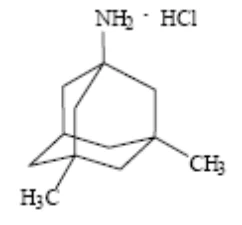
Molecular Formula: C12H21N· HCl
Molecular Weight: 215.77 g/mol
Description: White to almost white, crystalline powder.
Solubility: Freely soluble in water.
STORAGE AND STABILITY
MEMANTINE tablets should be stored in a dry place at room temperature between 15°C and 30°C.
DOSAGE FORMS, COMPOSITION AND PACKAGING
MEMANTINE film-coated tablets, 10 mg, are available as white, centrally tapered oblong tablets with breakmarks on both sides and embossement “10” on one side.
MEMANTINE tablets contain 10 mg of memantine hydrochloride and the following nonmedicinal ingredients: colloidal anhydrous silica, glycerol triacetate, hypromellose, lactose monohydrate, magnesium stearate, microcrystalline cellulose, polyethylene glycol and titanium dioxide.
MEMANTINE film-coated tablets, 10 mg, are available in bottles of 100 tablets.
PHARMACOLOGY
Persistent activation of the central nervous system N-methyl-D-aspartate (NMDA) receptors by the excitatory amino acid glutamate has been hypothesized to be involved in the pathogenesis of Alzheimer’s disease. Memantine, a low to moderate affinity uncompetitive (open channel) NMDA receptor antagonist, binds preferentially to the NMDA receptor-operated cation channels. It blocks the effects of pathologically elevated tonic levels of glutamate that may lead to neuronal dysfunction.
In vitro electrophysiological studies suggest that memantine inhibits NMDA receptor-mediated currents in a use-dependent [i.e., it blocks the receptor channel in the presence of an agonist, e.g., glutamate] and voltage-dependent manner, with rapid receptor-unblocking kinetics. Because of these attributes, memantine can selectively antagonize pathological activation of NMDA receptors without affecting the physiological functioning of the receptor. Physiological activation of NMDA receptors is known to play a critical role in synaptic plasticity processes such as cognition.
(+) MK-801 (dizocilpine) is the prototypical NMDA uncompetitive receptor antagonist. Memantine binds to the MK-801 recognition site in the NMDA channel with a Ki of 0.5 mcM and antagonises NMDA receptor-mediated inward currents in vitro with an IC50 of 1-3 mcM. The Ki-value of memantine at the phencyclidine (PCP) binding site of the NMDA receptor is 0.5 mcM in human frontal cortex (0.1 ppm).
In several in vitro and in vivo studies, memantine has been shown to protect neurons from cell death due to excitotoxicity. For example, memantine protects rat cortical and hippocampal cells from the neurotoxic effects of glutamate. In addition, memantine attenuates β-amyloid (Aβ)-induced hippocampal cell death (apoptosis) in rats in vivo, and protects cholinergic neurons of the rat nucleus basalis magnocellularis from NMDA-induced neurotoxicity.
Memantine also improves learning and memory in animal studies. For example, memantine prevents (Aβ)-induced impairment in learning in rats, and reverses neurodegeneration and memory impairment in rats produced by the NMDA receptor agonist quinolinic acid. Memantine does not affect learning in normal (control) rats.
Memantine exhibits low to negligible affinity for other receptors (GABA, benzodiazepine, dopamine, adrenergic, noradrenergic, histamine and glycine) or voltage-dependent Ca2+, Na+ or K+ channels. In addition, it does not directly affect the acetylcholine receptor or cholinergic transmission, which have been implicated in the cholinomimetic side effects (e.g., increased gastric acid secretion, nausea and vomiting) seen with acetylcholinesterase inhibitors. Memantine showed antagonist effects at the 5HT3 receptor with a potency similar to that for the NMDA receptor.
Standard safety pharmacology studies were conducted to evaluate memantine’s effects on CNS, cardiovascular, gastrointestinal and renal functions. At doses higher than the pharmacologically relevant dose (≥ 30 mg/kg), memantine produced considerable CNS side effects. Decreased awareness, motor activity and reflexes were observed at high doses (100 mg/kg). High doses of memantine (≥ 30 mg/kg, intraduodenal) decreased cardiac minute output, stroke volume and systolic left ventricular pressure. Memantine inhibited intestinal motility in rats with an ED50 of 20 mg/kg, and produced diuresis and saluresis in rats at high doses (40 mg/kg; p.o.).
PHARMACOKINETICS
Absorption
Memantine is relatively rapidly and completely absorbed after oral administration.
Approximate peak plasma memantine concentrations after single and repeated oral doses (gavage or capsule) in rat and baboon are given in the table below:
Table 2. Peak plasma memantine concentrations
| Species | Treatment duration | Dose (mg/kg) | Peak plasma concentration (ppm) Males Females | ||||||||
| Rat | Single dose | 25 50 100 | 1.0 2.4 4.4 | 1.6 2.4 4.9 | |||||||
| 5-week | 10 20 40 | 0.4 1.2 1.5 | 0.8 1.3 3.0 | ||||||||
| 26-week | 10 20 40 | 0.8 1.5 2.4 | 1.0 2.1 2.4 | ||||||||
52-week (diet) | 20/15 (m/f) 40/30 70/50 | 0.2 0.7 3.2 | 0.3 0.8 2.1 | ||||||||
| Baboon | 2-week | 8 | 0.4 | 0.3 | |||||||
| 13-week | 2 4 8 | 0.0 0.02 0.10 | 0.0 0.01 0.05 | ||||||||
| 52 week | 2 4 8 | 0.01 0.02 0.06 | 0.01 0.02 0.07 | ||||||||
There was no systematic sex difference, female levels were 0.5 to 2 times male levels in various samples, with no discernible pattern (and tmax did not differ between the sexes).
Distribution
Mean plasma binding of memantine in the rat is 41%, comparable to the 45% binding found in man.
Distribution studies with memantine have been carried out in rats and baboons. Oral bioavailability of memantine is virtually complete, and distribution to target, the brain, is rapid. Once in the body, memantine distributes preferentially to the organs of metabolism and excretion, liver and kidney, but also to the lung. Exceptionally high concentrations of memantine were found in bile and Harderian glands, and at lower concentrations in the central nervous system, consistent with its lipophilicity. High concentrations are also found in the uveal tract of pigmented animals. The localization of 14C-memantine and/or its labelled metabolites in the uveal tract (which includes choroid, ciliary body and iris) of the eyes of pigmented animals
(239 ppm vs. 13 ppm in albinos) suggests that the test substance has an affinity with melanin, which has also been demonstrated in vitro.
More pharmacologically oriented studies have focused on determining the concentration in extracellular fluid. Based on the assumption that concentrations measured in the cerebrospinal fluid (CSF) or microdialysate allow conclusions to be drawn about the concentration at the site of action, the following results are of interest. After IP administration of 20 mg memantine per kg to rats, about 0.3 ppm memantine was found in the microdialysate, taking the recovery into account. Under the same conditions 0.8 ppm total memantine (free and bound memantine) was found in the plasma. Similar results have been reported for humans, with a CSF/serum ratio for total memantine of about 0.4-0.6. Monitoring of the plasma concentration therefore provides information about the presumed concentration at the site of action across different species.
Following 7 days infusion of memantine (20 mg/kg/day) whole brain concentrations were
44-fold higher than free concentrations in serum. The free brain ECF concentration of memantine (0.83 ± 0.05 mcM) corrected for in vivo recovery (39%) was comparable to free serum and CSF concentrations.
Metabolism and Elimination
Memantine metabolites are mainly derivatives hydroxylated on the methyl groups (-CH2OH or
-COOH) or on the cage structure, with an intact or oxidised amino function (hydroxylamino, nitro derivatives). In addition, conjugated compounds were found as phase II metabolites but they seem to be of minor importance.
The following table shows the proportion (%) of these metabolites in urine after memantine administration:
Table 3. Metabolites in urine after memantine administration
| Metabolites | Mouse | Rat | Baboon | Man |
| Unmetabolised | 68 | 28 | 9 | 68 |
| Hydroxy derivatives* | 46 | 65 | 41 | 17 |
| N-oxidised** | 4 | 1 | 43 | 10 |
| Carboxy derivatives*** | 0 | 6 | 1 | 0 |
| N-glucuronide**** | 5 | <1 | <1 | 6 |
* Hydroxylated metabolites were MRZ 2/371, 2/373, 2/374, 2/525, 2/564, 2/677
** N-oxidised (nitro, nitroso) metabolites were MRZ 2/523, 2/524, 2/529
*** MRZ 2/375
**** MRZ 2/325.
Other metabolites found were <1% in all species.
Memantine and its metabolites are excreted primarily via the kidney. After a single oral dose of 14C-memantine, a minimum of 80-90% of the excreted radioactivity was excreted in the urine in rats, mice, rabbits, miniature pigs, dogs, baboons and humans.
In the baboon, a substantial portion of memantine radioactivity is associated with bile. Since excretion is predominantly renal, this indicates substantial enterohepatic circulation.
As for amantadine, memantine is partly excreted by tubular secretion.
Elimination half-life was approximately 4 hours in all species except man; there was no accumulation with repeat dosing. In baboon’s 13 and 52 week oral toxicity studies, followed by a 4 week recovery period, no detectable memantine was present at the end of the recovery period in any tissue except the eye; concentrations in the eyes fell from 8 to 0.4 ppm during recovery in the 13 week study, and from 15 to 1 ppm in the 52 week study.
TOXICOLOGY
Acute Toxicity
Acute oral and intravenous toxicity studies in rat and mouse demonstrated that memantine is moderately toxic. The lowest lethal oral dose is ≥ 300 mg/kg in both species. The results of standard LD50 studies are as follows:
| Route of administration | Species | LD50 (mg/kg) Male Female | |||||
|---|---|---|---|---|---|---|---|
| Intravenous | Mouse | 30 32 | |||||
| Rat | 38 38 | ||||||
| Intraperitoneal | Rat | 79 - | |||||
| Subcutaneous | Mouse | 206 138 | |||||
| Rat | 436 386 | ||||||
| Oral | Mouse | 498 437 | |||||
| Rat | 370 328 | ||||||
Toxic symptoms were similar by all administration routes: ataxia, tremor, prone position and bradypnea. These motor effects at high doses are consistent with central nervous system blockade of glutamatergic transmission in neocortex and cortical projection fields. Recovery was relatively rapid in all cases, i.e. within hours after intravenous administration and within 1-2 days after intraperitoneal, subcutaneous or oral administration. No persistent clinical signs were seen in survivors 14 days after acute high dose memantine treatment.
Repeat-Dose and Long-Term Toxicity
In subchronic and chronic studies the most prominent clinical signs in all species were related to the central nervous system and included ataxia, tremor, and/or unsteadiness and aggressiveness or hyperexcitability in rodents, incoordination, tremors and apathy or quietness in dogs and baboons, and convulsions in dogs. Reduced body weight, which was sometimes accompanied by a change in food consumption, was noted in all studies.
Pathological changes, such as accumulation of foamy macrophages in several tissues, renal papillary mineralization, tubulo-interstitial nephritis, vacuolization of defined cortical neurons, and corneal opacities were observed in repeat-dose toxicity studies in rodents. The neuronal vacuolation and corneal opacities occurred at dose levels that resulted in overt toxicity.
In rats, following repeat-dose administration of memantine for various durations, the accumulation of foamy macrophages was observed in several tissues including lungs, kidneys, liver Kupffer cells, cornea, lymphoid organs, testes, epididymides and tongue muscle. Accumulation of foamy macrophages is a form of phospholipidosis. In most tissues, except for lungs, the accumulation of foamy macrophages occurred when blood concentrations were several-fold greater than the potential concentrations in humans at therapeutic doses. In lungs accumulations of foamy macrophages were observed when systemic exposure was less than
2-times the potential systemic exposure at human therapeutic dose levels.
Renal papillary mineralization or calcification of the collecting tubuli of the renal medulla was observed in male rats at doses of 20 mg/kg (or higher) and in female rats 15 mg/kg (or higher) following repeat-dose administration of memantine for 52-weeks or 2 years. The kidney lesions were observed at memantine blood concentrations that were less than 2-fold the potential systemic exposure in humans following repeated administration of 20 mg/day.
Cerebrocortical neurons in adult rodent brain are prone to injury (or lesions) by systemic administration of high affinity uncompetitive (or open channel) NMDA receptor antagonists, such as, (+) MK-801, PCP, and ketamine. To determine the potential of memantine to induce Olney-type lesions, studies were conducted in rats that indicated that single intraperitoneal doses of memantine of 20 mg/kg (or higher) or oral doses of 100 mg/kg (or higher) produced a dose related increase in the frequency and severity of Olney-type lesions. These experiments also indicated that vacuolization was reversible and that only a small portion of cells became necrotic. Repeated daily oral doses of 40 mg/kg/day memantine administered in a dose-escalation manner did not demonstrate evidence of neurotoxicity when examined after appropriate tissue fixation procedures. Although body weight was reduced in the mid and high dose groups, no ataxia, neuronal vacuolisation or necrosis was observed at any dose level.
Experiments in rats comparing the effect of duration of dosing (acute vs. subchronic) and route of administration (dietary vs. gavage) of memantine on the development of Olney-type lesions demonstrated that regardless of duration or route of administration, ataxia occurred at doses 2 to 4 times lower than vacuolization or necrosis.
Numerous repeated dose toxicology studies with memantine were performed without any significant observations regarding neuropathology. Re-examination with appropriate preparation techniques of the existing brain tissue slides from 13-week and 52-weeks dietary study in mice and rat, respectively, and examination of the newly prepared slides from the 52-week rat study revealed no neurodegenerative changes. Histopathological examination of brains from the
13-week mouse study also revealed vacuolization in brainstem and cerebellum of males, but not cingulate and retrosplenial cortex, at 320 mg/kg/day, a dose that produced profound systemic toxicity including death.
The ability of memantine to produce Olney-type lesions in baboons was also examined. The highest dose (8 mg/kg/day) from the 52-week study was administered to baboons for 2 weeks. While ptosis was observed in all treated animals, perfusion fixation prepared brain revealed no evidence of vacuolization or necrosis. These results are consistent with the actions of other NMDA antagonists in primates, which have demonstrated that primates are resistant to the development of Olney-type lesions. Similarly in humans subjected to high doses of a low affinity uncompetitive NMDA receptor antagonist or amantadine, no necrosis in posterior cingulate/retrosplenial cortex or elsewhere in the brain was found at autopsy.
Reproduction Studies
Reproductive performance of rats was examined after treatment in all segments of the reproductive cycle in a series of three studies, all using the same doses: 2, 6 and 18 mg/kg/day. The doses were chosen on the basis of a range-finding gavage study with low doses of up to 12.5 mg/kg, and on previous repeat dose oral studies in rats showing dose-related weight loss at 15-30 mg/kg. Treatment of female rats with memantine orally once daily during organogenesis produced mild maternal toxicity at doses of 6-18 mg/kg/day (3-9 times the Maximum Recommended Human Dose [MRHD] on a mg/m2 basis); however, memantine was not teratogenic at doses up to 18 mg/kg/day (9 times the MRHD on a mg/m2 basis), the highest dose tested. In a rat reproduction and fertility study, reduced growth and a developmental delay were observed in offspring of mothers administered 18 mg/kg/day (9 times the MRHD on a mg/m2 basis).
At 30 mg/kg/day (30 times the MRHD on mg/m2 basis) maternal toxicity and slight increase in post-implantation loss were observed in rabbits administered memantine once daily during organogenesis. No teratogenic effects were observed at that dose level. The maternal and fetal no observed effect level (NOEL) was 10 mg/kg/day (10 times the MRHD on a mg/m2 basis).
In a peri and postnatal study, memantine was orally administered in rats at up to 18 mg/kg/day
(9 times the MRHD on a mg/m2 basis). At 18 mg/kg/day pups showed reduced mean body weights but there was no effect on their development or behaviour. Animal studies showed no indication of an adverse effect of memantine on labor and delivery.
Considering memantine’s molecular weight and its lipophilicity, it is likely that it will be present in the treated mother’s milk during lactation (at unknown levels). In a peri and postnatal study there were dose-related increases in memantine levels in milk in lactating rats when memantine was administered from mating through postnatal day 4, although no toxic effects were seen in suckling offspring.
REFERENCES
Pre-Clinical/In-Vitro
- 1. Barnes CA, Danysz W, Parsons CG. Effects of the uncompetitive NMDA receptor antagonist memantine on hippocampal long-term potentiation, short-term exploratory modulation and spatial memory in awake, freely moving rats. Eur J Neurosci 1996; 8: 565-571.
- 2. Kornhuber J, Bormann J, Retz W, Hübers M, Riederer P. Memantine displaces [3H] MK-801 at therapeutic concentrations in postmortem human frontal cortex. European J Pharm. 1989;166, 589-590.
- 3. Kornhuber et al.,1991 Effects of the 1-amino-adamantanes at the MK-801-binding site of the NMDA-receptor-gated ion channel: a human postmortem brain study. Eur J Pharmacol 1991; 206: 297-300.
- 4. Misztal et al. 1996 Learning deficits induced by chronic intraventricular infusion of quinolinic acid - protection by MK-801 and memantine. Eur J Pharmacol 1996; 296: 1-8.
- 5. Parsons et al. Memantine is a clinically well tolerated NMDA receptor antagonist - a review of preclinical data. Neuropharmacology 1999; 38: 735-767.
- 6. Wenk et al., 1994 Investigations of neurotoxicity and neuroprotection within the nucleus basalis of the rat. Brain Res 1994; 655: 7-11.
- 7. Wenk et al., 1995 MK-801, memantine and amantadine show neuroprotective activity in the nucleus basalis magnocellularis. Eur J Pharmacol 1995; 293: 267-270.
- 8. Willard et al., The cytotoxicity of chronic neuroinflammation upon basal forebrain cholinergic neurons of rats can be attenuated by glutamatergic antagonism or cyclooxygenase-2 inhibition. Exp Brain Res, 2000; 134:58-65.
- 9. Zajaczkowski et al. Infusion of (+)-MK-801 and memantine - contrasting effects on radial maze learning in rats with entorhinal cortex lesion. Eur J Pharmacol 1996; 296: 239-246.
Clinical/Review Articles
- 10. Cacabelos R, Takeda M, Winblad B. The glutamatergic system and neurodegeneration in dementia: preventive strategies in Alzheimer's disease. Int JGeriatr Psychiatry 1999;14(1):3-47
- 11. Danysz W, Parsons CG, Möbius HJ, Stöffler A, Quack, G. Neuroprotection and symptomatological action of memantine relevant for Alzheimer’s Disease - an unified hypothesis on the mechanism of action. Neurotox Res 2000; 2(2-3): 85-98.
- 12. Ferm L. Behavioural activities in demented geriatric patients. Gerontol Clin 1974;16:185-94.
- 13. Fratiglioni L, Launer LJ, Anderson K, et al. Incidence of dementia and major subtypes in Europe: a collaborative study of population-based cohorts. Neurology 2000; 54 (Suppl. 5): S10-S15
- 14. Galasko D, Bennett D, Sano M, Ernesto C, Thomas R, Grundman M, and Ferris S. An inventory to assess activities of daily living for clinical trials in Alzheimer’s disease. Alzheimer’s Dis and Assoc Disord 1997; 11 (Suppl2): 33-39.
- 15. Galasko DR, Schmitt FA, Jin S, Saxton J, Bennett D, Sano M, Ferris SH. Detailed assessment of cognition and activities of daily living in moderate to severe Alzheimer’s disease. Neurobiol Aging 2000; 21(1S): 168.
- 16. Henderson AS, Jorm AF. Definition and epidemiology of dementia: a review. In: Maj M, Sartorius N, eds. Dementia. © 2000 John Wiley & Sons Ltd, Chichester, UK. 1-33.
- 17. Jorm AF, Jolley D. The incidence of dementia: a meta-analysis. Neurology 1998; 51(3):728-33.
- 18. Kornhuber and Quack, 1995 Cerebrospinal fluid and serum concentrations of the N-methyl D-asapartate (NDMA) receptor antagonist memantine in man. Neurosci Lett 1995; Aug 4, 195(2):137-139.
- 19. Kornhuber J, Weller M. Psychotogenicity and N-methyl-D-aspartate receptor antagonism: implications for neuroprotective pharmacotherapy. Biol Psychiatry 1997;41(2):135-44.
- 20. McKhann G, Drachman D, Folstein M, et al. Clinical diagnosis of Alzheimer’s disease: report of the NINCDS-ADRDA Work Group under the auspices of Department of Health and Human Services Task Force on Alzheimer’s Disease. Neurology 1984; 34: 939-944.
- 21. Panisset M, Roudier M, Saxton J, Boller F. Severe impairment battery - A neuropsychological test for severely demented patients. Arch Neurol 1994; 51: 41-45.
- 22. Periclou A, Ventura D, Rao N, Abramowitz W. Pharmacokinetic study of memantine in healthy and renally impaired subjects. Clin Pharmacol Ther 2006; 79:134-43.
- 23. Rao N, Chou T, Ventura D, Abramowitz W. Investigation of the pharmacokinetic and pharmacodynamic interactions between memantine and glyburide/metformin in healthy young subjects: a single-center, multiple-dose, open-label study. Clin Ther 2005; 27(10): 1596-1606.
- 24.
Reisberg B, Schneider L, Doody R, et al. Clinical global measures of dementia. Position paper from the International Working Group on Harmonization of Dementia Drug
- Guidelines. Alzheimer Dis Assoc Disord 1997; 11 (Suppl. 3): S8-S18.
- 25. Reisberg B, Windscheif U, Ferris SH, Hingorani VH, Stöffler A, and Möbius HJ. Memantine in moderately severe to severe Alzheimer's disease (AD): results of a placebo-controlled 6-month trial. Neurobiology of Aging 2000; 21(1S): S275.
- 26. Schmitt FA, Ashford W, Ernesto C, Saxton J, Schneider LS, Clark CM, Ferris SH, Mackell JA, Schafer K, Thal LJ. The severe impairment battery: concurrent validity and the assessment of longitudinal change in Alzheimer's disease. The Alzheimer's Disease Cooperative Study. Alzheimers Dis Assoc Disord 1997; 11(Suppl 2): 51-56.
- 27. Schugens MM, Egerter R, Daum I, Schepelmann K, Klockgether T, and Loeschmann PA. The NMDA antagonist memantine impairs classical eyeblink conditioning in humans. Neuroscience Letters 1997; 224[1]: 57-60.
- 28. Wimo A, Jönsson B, Karlsson G, Winblad B., eds. Health Economics of Dementia. John Wiley & Sons Ltd.; 1998: 465-99.
- 29. Winblad B, Wimo A, Möbius H-J, Fox JM, Fratiglioni L. Severe dementia: a common condition entailing high costs at individual and societal levels. Int J Geriatr Psychiatry 1999; 14: 911-4.
- 30. Winblad, B., Poritis, N. Memantine in severe dementia: Results of the 9M-BEST study (benefit and efficacy in severely demented patients during treatment with memantine). Int J Geriatr Psychiatry 1999; 14: 135-146.
- 31. Winblad B, Möbius HJ, Stöffler A. Glutamate receptors as a target for Alzheimer’s disease –are clinical results supporting the hope? J Neural Transm 2002; (Suppl) 62: 217-225.
- 32. Lundbeck Canada Inc., Ebixa® Product Monograph, Control No. 181785, Date of revision: May 14, 2015.