


Product Monograph - Mesasal
Indications and Clinical Use
MESASAL® (5-aminosalicylic acid) tablets are indicated in the management of acute ulcerative colitis, and for the prevention of relapse of active ulcerative colitis.
Contraindications
MESASAL® (5-aminosalicylic acid) is contraindicated where there is a history of hypersensitivity to salicylates, or to any ingredient in the formulation or component of the container. For a complete listing, see the Pharmaceutical lnformation - Composition section.
MESASAL® is contraindicated in cases of hemorrhagic diathesis.
MESASAL® is contraindicated in patients with existing gastric and duodenal ulcers.
MESASAL® is contraindicated in patients with urinary tract obstruction.
MESASAL® is contraindicated in children under 2 years of age.
MESASAL® is contraindicated in patients with severe renal impairment (GFR <30ml/min/1.73m2) and/or severe hepatic impairment (see Warnings).
Warnings
There have been reports of hepatic failure and increased liver enzymes in patients with pre-existing liver disease when treated with mesalazine (5-ASA) products. Therefore, MESASAL® is contraindicated in patients with severe hepatic impairment (see Contraindications).
In patients with mild to moderate liver function impairment, caution should be exercised and mesalazine (5-ASA) products should only be used if the expected benefit clearly outweighs the risks to the patients. Appropriate assessment and monitoring of liver function should be performed.
Interstitial nephritis has been reported following treatment with 5-Aminosalicylic acid. Hence, it is recommended that all patients, including those with compromised renal function, impaired renal reserve or individuals with an increased risk of developing renal dysfunction due to use of nephrotoxic drugs or other co-morbid conditions, have their renal function monitored (with serum creatinine levels measured) prior to treatment start. Renal function should then be periodically monitored during chronic treatment, based on individual patient history. Treatment with 5-Aminosalicylic acid should be discontinued promptly if renal function significantly deteriorates. Care should be taken to ensure adequate hydration in patients with compromised renal function during exacerbations of inflammatory bowel disease.
Effects on Ability to Drive and Use Machinery
There are no data available on the effects of (5-Aminosalicylic Acid) 5-ASA on ability to drive and use machines.
Cardiovascular
Cardiac side effects, including pericarditis and myocarditis have been uncommonly reported with the use of (5-Aminosalicylic Acid) 5-ASA preparations.
Cases of pericarditis have also been reported as manifestation of inflammatory bowel disease.
Discontinuation of 5-ASA may be warranted in some cases, however a re-challenge with 5-ASA can be performed under careful clinical observation should the continued therapeutic need for 5-ASA be present. Caution should be taken in prescribing this medication to patients with conditions predisposing to the development of myocarditis or pericarditis.
Gastrointestinal
Epigastric pain, also commonly associated with inflammatory bowel disease and prednisone or sulfasalazine (SAS) therapy should be investigated in order to exclude pericarditis and pancreatitis either as adverse drug reactions to 5-ASA or secondary manifestations of inflammatory bowel disease.
Patients with pyloric stenosis may have prolonged gastric retention of MESASAL® tablets which could delay release of 5-ASA in the colon.
1 MESASAL 500mg tablet contains 2.1 mmol (49mg) sodium. This must be taken into consideration in patients on a sodium controlled (low-sodium/low-salt) diet.
Renal
Reports of renal impairment, including minimal change nephropathy, and acute or chronic interstitial nephritis have been associated with 5-Aminosalicylic Acid (5-ASA) products and pro-drugs of mesalamine. In patients with mild to moderate renal dysfunction, caution should be exercised and MESASAL® should be used only if the benefits outweigh the risks. Patients on 5-ASA, especially those with pre-existing renal disease, should be carefully monitored with urinalysis, and BUN and creatinine testing. Initial assessment and periodic monitoring of the renal function is recommended since 5-ASA is substantially excreted by the kidney, and prolonged 5-ASA therapy may damage the kidneys. Because elderly patients are more likely to have decreased renal function, closer monitoring of the renal function may be needed. (See Contraindications.)
Sensitivity/Resistance
Caution should be exercised when 5-Aminosalicylic Acid (5-ASA) is initially used in patients known to be allergic to sulfasalazine. These patients should be instructed to discontinue therapy if signs of rash or pyrexia become apparent. In case of an allergic reaction, appropriate measures (standard of care) should be taken.
Acute Intolerance Syndrome
5-Aminosalicylic Acid (5-ASA) has been implicated in the production of an acute intolerance syndrome characterized by cramping, acute abdominal pain and bloody diarrhea, sometimes fever, headache and a rash; in such cases prompt withdrawal is required. The patient’s history of sulfasalazine intolerance, if any, should be re-evaluated. If a rechallenge is performed later in order to validate the hypersensitivity, it should be carried out under close supervision and only if clearly needed, giving consideration to reduced dosage. The possibility of increased absorption of 5-ASA and concomitant renal tubular damage must be kept in mind. Patients on concurrent mesalamine products which contain or release mesalamine, and those with pre-existing renal disease should be carefully monitored with urinalysis, and BUN and creatinine testing.
Sexual Function / Reproduction
Decreased sperm count and impaired sperm motility, which may affect male fertility, have been reported with mesalazine (5-ASA). This effect may be reversible when treatment is discontinued.
Use in Pregnancy and Lactation
MESASAL® should be used during pregnancy only if the benefits clearly outweigh the risks to the fetus. 5-ASA is known to cross the placental barrier; however adequate human data on use of MESASAL® during pregnancy are not available.
Dibutyl phthalate (DBP) is present as an inactive ingredient in MESASAL®. Animal studies have shown DBP was associated with adverse effects on the male reproductive system, skeletal malformations and reduced fertility in both female and male animals.
The human daily intake of DBP from the maximum recommended dose of MESASAL® tablets is approximately 13 mg. Published reports in rats show that male rat offspring exposed in utero to DBP (greater than or equal to 100 mg/kg/day, approximately 64 times the human dose based on a human body weight of 50 kg), display reproductive system aberrations compatible with disruption of androgenic dependent development. The clinical significance of this finding in rats is unknown. At higher dosages (greater than or equal to 500 mg/kg/day, approximately 320 times the human dose), additional effects, including cryptorchidism, hypospadias, atrophy or agenesis of sex accessory organs, testicular injury, reduced daily sperm production, permanent retention of nipples, and decreased anogenital distance are noted. Female offspring are unaffected. High doses of DBP, administered to pregnant rats was associated with increased incidences of developmental abnormalities, such as cleft palate (greater than or equal to 630 mg/kg/day, approximately 404 times the human dose) and skeletal abnormalities (greater than or equal to 750 mg/kg/day, approximately 480 times the human dose) in the offspring.
Nursing Women
Adequate human data on use during lactation are not available.
Available human lactation data show breast milk is a potential source of exposure to phthalate esters, including DBP. The clinical significance of this has not been determined.
Mesalamine and its main metabolite N-acetyl-5-ASA are excreted in breast milk. The concentration of mesalamine is much lower than in maternal blood, but the metabolite N-acetyl-5-ASA appears in similar concentrations. Caution should be exercised, and MESASAL® should be used in nursing mothers only if the potential benefits outweigh the possible risks.
When mesalamine is used in nursing women, infants should be monitored for changes in stool consistency as hypersensitivity reactions manifested as diarrhea in the infants have been reported.
Pediatric Use
There is limited experience with respect to the use of this drug in children; potential benefits should be weighed against possible risks. MESASAL® should not be used in infants/toddlers aged less than 24 months. (See Contraindications.)
Geriatrics
Clinical studies of mesalamine did not include sufficient number of subjects aged 65 and over to determine whether they respond differently from younger subjects. Other reported clinical experience has not identified differences in responses between the elderly and younger patients. In general, dose selection for an elderly patient should be cautious, usually starting at the low end of the dosing range, reflecting the greater frequency of decreased hepatic, renal, or cardiac function or concomitant disease or other drug therapy.
5-Aminosalicylic Acid (5-ASA) is substantially excreted by the kidney, and the risk of toxic reactions to this drug may be greater in patients with impaired renal function. Because elderly patients are more likely to have decreased renal function, it may be useful to monitor renal function.
Precautions
Drug Interactions
Caution should be exercised when MESASAL® and sulfonyl ureas are prescribed concomitantly since the blood-sugar reducing effect of sulfonyl ureas may be enhanced. Interactions with coumarins, probenecid, sulfinpyrazone, spironolactone, furosemide and rifampicin cannot be excluded. MESASAL® may delay the excretion of methotrexate. Potentiation of undesirable glucocorticoid effects on the stomach is possible. 5-Aminosalicylic Acid (5-ASA) could also increase renal and hematologic toxicity of methotrexate by additive effect and diminished absorption of folic acid.
In long term therapy, periodic urinalysis should be conducted. Caution should be exercised when therapy is first initiated in patients known to be allergic to sulfasalazine.
There is in vitro evidence that mesalazine (5-ASA) is a weak inhibitor of the azathioprine metabolizing enzyme thiopurine methyltransferase (TPMT). Enhancement of the myelosuppressive effects of azathioprine or 6-mercaptopurine may occur rarely in patients who are treated concomitantly with mesalazine (5-ASA). Interaction between azathioprine, 6-mercaptopurine and aminosalicylates (including mesalamine) can increase the risk of leucopenia. An increase in whole blood 6-thioguanine nucleotide (6-TGN) concentrations has been reported although the mechanism of this interaction remains unclear.
A theoretical interaction of salicylates with Varicella Virus Vaccine (chicken pox vaccine) might increase the risk of Reye’s syndrome; as a result, the use of salicylates (including mesalamine) is discouraged for six weeks following Varicella vaccination.
Drug-food or drug-herb interactions have not been studied.
Drug-Laboratories Test Interactions
Several reports of possible interference with measurements, by liquid chromatography, of urinary normetanephrine causing a false-positive test result have been observed in patients exposed to sulfasalazine or its metabolite, mesalamine/mesalazine.
Adverse Reactions
Overview
Hypersensitivity reactions have been reported in a sub-group of patients known to be allergic to sulfasalazine including rash, pyrexia, and dizziness with reactions occurring at the onset of therapy and resolving promptly following discontinuation.
Other manifestations of hypersensitivity reported with 5-ASA include acute pancreatitis, hepatitis, pericarditis, interstitial nephritis, interstitial pneumonia and pleural effusion. Interstitial pneumonia, pancreatitis and pericarditis have also been reported as manifestations of inflammatory bowel disease.
As with all 5-Aminosalicylic Acid (5-ASA) products, exacerbations of ulcerative colitis characterized by cramping, acute abdominal pain and diarrhoea have been reported with 5-ASA. Other reported side effects include headache, dizziness, insomnia, flatulence, nausea, myocarditis and hair loss. Aplastic anaemia has been reported in the literature with unspecified formulations of mesalamine.
Clinical Trial Adverse Drug Reactions
In controlled clinical trials in 395 patients who received 5-ASA, the following adverse reactions were reported: headache (3.0%), nausea (2.0%), abdominal pain (1.5%), and diarrhea (1.5%). Rash (including pruritus and urticaria) has also been reported.
Post-Market Adverse Drug Reactions
Other adverse effects common to salicylates, such as occasional transitory abnormal liver function tests or hypersensitivity reactions including pulmonary and cardiac changes, may be expected to occur rarely. There have been a few spontaneous reports of pancreatitis, acute and chronic interstitial nephritis and pericarditis, associated with 5-ASA therapy. Exacerbation of symptoms of colitis has been reported very rarely. Decreased sperm count, impaired sperm motility, neuropathy, hepatitis and alterations in peripheral blood counts such as leucopenia, neutropenia, thrombocytopenia and aplastic anemia have been reported rarely. Agranulocytosis, anaphylactic reaction, drug reaction with eosinophihlia and systemic symptoms (DRESS) and Stevens-Johnson Syndrome (SJS) have also been reported.
Symptoms and Treatment of Overdosage
For management of a suspected drug overdose, contact your regional Poison Control Centre.
There has been no clinical experience with 5-Aminosalicylic Acid (5-ASA, or mesalamine) overdosage. However, because mesalamine is an aminosalicylate, the symptoms of overdose may mimic the symptoms of salicylate overdose; therefore, measures used to treat salicylate overdose may be applied to mesalamine overdose. Under ordinary circumstances, local mesalamine absorption from the colon is limited.
There is no specific antidote and treatment is symptomatic and supportive.
Dosage and Administration
During the acute inflammatory stage and in long-term maintenance therapy, MESASAL® (5-aminosalicylic acid) must be taken reliably and consistently by the patient in order to ensure therapeutic success.
Although symptomatic relief may be seen as early as three to twenty-one days, therapy should be continued depending on clinical findings.
The following dosage regimens are recommended:
Adults
MESASAL® tablets should be swallowed whole before meals with plenty of fluid.
For the management of acute ulcerative colitis, 1.5 g to 3 g daily in divided doses.
For prevention of relapses of acute ulcerative colitis, 1.5 g daily in divided doses.
Missed Dose
If a patient misses a dose, the patient should be directed to take it as soon as possible. However, if it is almost time for the next dose, the patient should skip the missed dose and go back to the regular dosing schedule. The patient should not take a double dose.
Storage
Store MESASAL® at controlled room temperature (15oC to 30oC). Keep out of reach of children.
Pharmaceutical Information
Drug Substance
Proper Name: mesalazine
Chemical Name: 5-aminosalicylic acid (5-ASA)
Structural Formula:
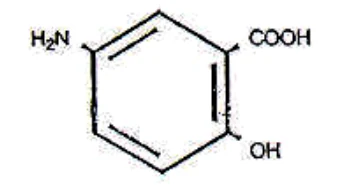
Molecular Formula: C7H7NO3
Molecular Weight: 153.14
Description: 5-Aminosalicylic acid is a fine, white to rose-red coloured powder with a characteristic smell. It is slightly soluble in water (1.4 g/L, 37°C, pH 7.5) and is soluble in 10% NaOH solution.
Composition
Each oval, red-orange enteric coated tablet contains the following medicinal ingredient: 5-aminosalicylic acid 500 mg; and the following non-medicinal ingredients: calcium stearate, dibutylphthalate (DBP), glycine, iron oxide (red), iron oxide (yellow), methacrylic acid copolymer, microcrystalline cellulose, polyethylene glycol 6000, povidone, silicon dioxide, sodium carbonate, sodium croscarmellose, talc and titanium dioxide. MESASAL® tablets are acrylic coated to prevent release of 5-ASA until the tablets reach the terminal ileum and proximal colon.
Availability of Dosage Forms
MESASAL® enteric coated tablets, 500 mg, are available in polyethylene bottles of 100 tablets.
Pharmacology
Ulcerative colitis is an inflammatory disease of the lower gut of unknown etiology.
5-ASA has been shown to be the therapeutically active component of sulfasalazine which has been used for treatment of inflammatory bowel disease for 40 years.
The mechanism of action of 5-ASA in treatment of inflammatory bowel disease is still under investigation. The disease is of a chronic inflammatory nature and mechanism of action studies relevant to the understanding of how 5-ASA might modify features of chronic inflammation have been made. In particular, studies have been conducted to assess 5-ASA' s effect on arachidonic acid metabolism via (a) the cyclo-oxygenase, (b) lipoxygenase pathways, and (c) scavenging of oxygen free radicals.
Cyclo-oxygenase activity
Compared with normal individuals, patients with active ulcerative colitis have been shown to have increased levels of prostaglandins in feces, colorectal venous blood, urine and cultures of rectal mucosal biopsy specimens. It has not been established whether these changes are the cause or the consequence of inflammatory disease in the lower gut. Sulfasalazine, 5-aminosalicylic acid (5-ASA) and N-acetyl-5-ASA (a metabolite of 5-ASA) have been shown to be inhibitors of prostaglandin synthesis in vitro through inhibitory effects on prostaglandin synthetase (cyclo-oxygenase). The observed effects of sulfasalazine in vitro in converting net sodium and water secretion in diseased colon to net absorption could relate to an effect on local prostaglandin production, although recent evidence suggests an independent mechanism. Thus, there appears to be a basis to attribute the efficacy of 5-ASA in inflammatory bowel diseases to inhibition of cyclo-oxygenase. However, this explanation is, in part, countered by the lack of efficacy of other known cyclo-oxygenase inhibitors, e.g., indomethacin, sodium salicylates, and flurbiprofen, in the treatment of active ulcerative colitis and Crohn's disease.
Lipoxygenase activity
Sulfasalazine and sulfapyridine inhibit the random migration of polymorphonuclear leukocytes as well as their production of superoxide dismutase. 5-ASA and sulfapyridine inhibit myeloperoxidase-mediated iodination and cytotoxicity. These effects on polymorphonuclear leukocytes may occur through inhibition of the lipoxygenase pathway. Also, through this pathway, sulfasalazine and 5-ASA block the synthesis of one of the leukotrienes which recruits inflammatory cells into sites of inflammation. These effects may account for some of the anti-inflammatory effects of 5-ASA and sulfasalazine in inflammatory bowel disease.
Scavenging of oxygen free radicals activity
More recent data support a mechanism of action for 5-ASA based on scavenging of oxygen free radicals. Acting as a proton donor, 5-ASA approximates the potency of nordihydroguaiaretic acid, a biological antioxidant. Others suggest that "5-ASA may break the free radical chain reaction initiated and maintained by activated phagocytes, thus arresting the perpetuating tissue destruction." In this activity (the potent scavenging of free radicals) 5-ASA differs from SASP, sulfapyridine, N-acetyl-5-ASA, and other salicylate compounds.
Pharmacokinetics
The enteric coating of MESASAL® tablets is designed to permit passage of the tablet intact through the stomach and upper small intestine. The release of 5-ASA in the lower small intestine permits its therapeutic effect to begin in the terminal ileum and to continue through the entire length of the colon.
In patients with inflammatory bowel disease receiving oral doses of 500 mg MESASAL® (5-aminosalicylic acid) three times a day, mean steady-state plasma concentrations of 5-ASA and N-acetyl-5-ASA (its major metabolite) averaged 0.7 and 1.2 μg/mL, respectively. Treatment with a smaller dose (250 mg t.i.d.) resulted in lower steady-state concentrations of 5-ASA and N-acetyl-5-ASA (0.4 and 1.0 μg/mL, respectively).
Administration of four single doses of 500 mg MESASAL® to healthy volunteers at least one week apart, resulted in essentially the same pharmacokinetic profiles for either fasted or fed groups who received oral doses. Peak drug and metabolite levels generally occur about 6.5 - 7 hours after drug administration. Urinary (35% fed and fasted) and fecal (34% fed and 26.5% fasted) recovery of total 5-ASA indicated that 5-ASA is available both for local and systemic action. Fed groups experienced a delay of 1.5 - 3 hours in time to peak of 5-ASA and N-acetyl-5-ASA plasma levels. In the same study, administration of 500 mg MESASAL® suppositories resulted in a median urinary recovery of 10.8%.
In the rat, 5-ASA is readily absorbed from the upper gastrointestinal tract and metabolized in both the gastrointestinal tract and the liver to N-acetyl-5-ASA. Most of the absorbed drug is excreted as N-acetyl-5-ASA by the kidney, with small quantities excreted in the bile.
In humans, 5-ASA is eliminated mainly in the form of N-acetyl-5-ASA which is excreted in the urine. The acetylation of 5-ASA takes place in the liver and the gastrointestinal wall of the colon independently of the acetylator status. Although in one study the acetylation process appeared to be saturable (i.e., half-life increased from 0.6 to 1.4 hours for parent drug), plasma concentration at steady-state and area under the curve for parent drug showed no deviation from linearity between the doses studied (i.e., 250 mg or 500 mg t.i.d.).
Bioavailability
MESASAL® (5-aminosalicylic acid) tablets are enteric coated allowing 5-ASA release to occur above pH 6. In a cross-over study to determine gastrointestinal transit and disintegration characteristics in healthy subjects (n=8), with each volunteer studied in both fasted and fed conditions, the tablets tended to disintegrate about 5 hours after leaving the stomach. The enteric coating appeared to be unaffected by gastric retention time. Site of disintegration seems to be affected by the rate of intestinal transit as well as by pH. In 3 of 4 subjects showing the slowest intestinal transit, disintegration occurred in the ileum. In 8 instances (50%) disintegration occurred in the ascending colon. In 3 instances, disintegration occurred beyond the ascending colon. In the remaining two instances, the precise point of disintegration could not be accurately determined.
In a study of 13 patients with inflammatory bowel disease (6 with ulcerative colitis, 1 with total colectomy; 7 with Crohn's Disease, 2 with right hemi-colectomy) the tablets disintegrated with a mean time of 3.2 hours after leaving the stomach. For 9 of the 11 patients for whom disintegration time could be accurately determined, this occurred within 1 hour of the mean time. Overall tablet disintegration occurred in the small intestine in over 60% of the patients. Subsequently, the tablet became finely dispersed and remained in the colon for many hours.
Toxicology
Animals
Acute 5-ASA intoxication in rats and mice is characterized by sedation, dysphagia, weight loss and pigmented urine. Subacute and chronic toxicity studies in rats and dogs confirm that the kidney is the target organ for drug toxicity. Oral administration of 5-ASA to rats at 40, 160 and 640 mg/kg/day for up to 13 weeks showed the 40 mg/kg/day dose to be a "no effect" dose in both male and female rats. Renal damage was seen at the higher dosage levels. A 26-week oral dosing study in groups of 20 male and 20 female rats showed that 5-ASA caused renal damage at a dosage of 320 mg/kg/day as exhibited by papillary necrosis, tubular basophilia and mononuclear cell infiltration, increased kidney weights, significantly elevated water consumption and a higher incidence of hemoglobinuria and hematuria. However, no adverse changes were seen at dosages of 80 mg/kg/day or 40 mg/kg/day.
In another study in rats, daily oral administration of 5-ASA at doses up to 200 mg/kg for 4 weeks did not produce nephrotoxicity.
Humans
The human dose (about 20 mg/kg) is below that which causes renal damage in animals; no evidence of renal impairment has been noted in clinical studies.
In an eight week oral toxicity (feeding) study, 5 groups of 16 mice (8 per sex) received MESASAL® at 0, 200, 400, 700, 1000 mg/kg. No toxicity was detected in any of the groups. In a twelve month oral toxicity (feeding) study, 4 groups of 12 beagle dogs (6 per sex) received 0, 40, 60, 100 mg/kg MESASAL® per day. 5-ASA was associated with nephrotoxicity at dose levels of 60 and 100 mg/kg. A clear, no-effect level for the renal change was established in this study at 40mg/kg.
References or Selected Bibliography
- 1 Ahnfelt-Ronne I, Nielsen OH. The antiinflammatory moiety of sulfasalazine, 5-aminosalicylic acid, is a radical scavenger. Agents Actions 1987; 21(1-2):191-194.
- 2 American Academy of Pediatrics. The transfer of drugs and other chemicals into human milk. Pediatrics 2001; 108(3):776-89.
- 3 Bouhanick B, Fauvel J. Pont F. Biochemical misdiagnosis of pheochromocytoma in patients treated with sulfasalazine. JAMA (2010) 304: 1898-1901.
- 4 Craven PA, Pfanstiel J, Saito R, DeRubertis FR. Actions of sulfasalazine and 5-aminosalicylic acid as reactive oxygen scavengers in the suppression of bile acid-induced increases in colonic epithelial cell loss and proliferative activity. Gastroenterology 1987; 92(6):1998-2008.
- 5 Del Soldato P, Campieri M, Brignola C, Bazzocchi G, Gionchetti P, Lanfranchi GA et al. A possible mechanism of action of sulfasalazine and 5-aminosalicylic acid in inflammatory bowel diseases: interaction with oxygen free radicals. Gastroenterology 1985; 89(5):1215-1216.
- 6 Hardy JG, Healey JN, Lee SW, Reynolds JR. Gastrointestinal transit of an enteric-coated delayed-release 5-aminosalicylic acid tablet. Aliment Pharmacol Ther 1987; 1(3):209-216.
- 7 Hardy JG, Healey JN, Reynolds JR. Evaluation of an enteric-coated delayed-release 5-aminosalicylic acid tablet in patients with inflammatory bowel disease. Aliment Pharmacol Ther 1987; 1(4):273-280.
- 8 Ito S, Blajchman A, Stephenson M, Eliopoulos C, Koren G. Prospective follow-up of adverse reactions in breast-fed infants exposed to maternal medication. Am J Obstet Gynecol 1993; 168(5):1393-9.
- 9 Ito T, Imai T, Kikumori T, Shibata A, Horiba T, Kobayashi H, Sawaki M, Watanabe R, Nakao A, Kiuchi T. Adrenal incidentaloma: review of 197 patients and report of a drug-related false-positive urinary normetanephrine result. Surg. Today (2006) 36: 961-965.
- 10 May B. Treatment of Chronic Inflammatory Bowel Diseases. A Study of Mesalazine Under Conditions of Practice with More Than 1700 Patients. Munch Med Wochenschr 1987; 129(43):786-789.
- 11 MICROMEDEX®: Mesalazine. DRUGDEX® Evaluations. April 2010.
- 12 Modigliani R, Rambaud JC. [New salazosulfapyridine derivatives. Progress in the treatment of chronic inflammatory diseases of the intestines?]. Gastroenterol Clin Biol 1987; 11(4):325-332.
- 13 Molin L, Stendahl O. The effect of sulfasalazine and its active components on human polymorphonuclear leukocyte function in relation to ulcerative colitis. Acta Med Scand 1979; 206(6):451-457.
- 14 Nelis GF. Diarrhoea due to 5-aminosalicylic acid in breast milk. Lancet 1989; 1(8634):383.
- 15 Nielsen OH, Bukhave K, Elmgreen J, Ahnfelt-Ronne I. Inhibition of 5-lipoxygenase pathway of arachidonic acid metabolism in human neutrophils by sulfasalazine and 5-aminosalicylic acid. Dig Dis Sci 1987; 32(6):577-582.
- 16 Peskar BM, Dreyling KW, May B, Schaarschmidt K, Goebell H. Possible mode of action of 5-aminosalicylic acid. Dig Dis Sci 1987; 32(12 Suppl):51S-56S.
- 17 Rachmilewitz D. Coated mesalazine (5-aminosalicylic acid) versus sulphasalazine in the treatment of active ulcerative colitis: a randomised trial. BMJ 1989; 298(6666):82-86.
- 18 Rampton DS, Sladen GE. The effect of sulphasalazine withdrawal on rectal mucosal function and prostaglandin E2 release in inactive ulcerative colitis. Scand J Gastroenterol 1981; 16(1):157-159.
- 19 Rutgeerts P. Comparative efficacy of coated, oral 5-aminosalicylic acid (Claversal) and sulphasalazine for maintaining remission of ulcerative colitis. International Study Group. Aliment Pharmacol Ther 1989; 3(2):183-191.
- 20 SALOFALK® (Mesalamine Suppositories) Product Monograph, Aptalis Pharma Canada Inc., 2014.
- 21 Turunen U, Elomaa I, Anttila VJ, Seppala K. Mesalazine tolerance in patients with inflammatory bowel disease and previous intolerance or allergy to sulphasalazine or sulphonamides. Scand J Gastroenterol 1987; 22(7):798-802.
- 22 Walsh N. Sulfasalazine induced falsely positive urinary catecholamines. Rheumatology News 5[8], 11. 2006.