


Product Monograph - Midamor
Recent Major Label Changes
| 7 WARNINGS AND PRECAUTIONS, 7.1.4 Geriatrics | 2025-06 |
|---|
Table of Contents
Certain sections or subsections that are not applicable at the time of the preparation of the most recent authorized product monograph are not listed.
Recent Major Label Changes .................................................................................................. 2
Table of Contents .................................................................................................................. 2
PART 1: Healthcare Professional Information ......................................................................... 4
- 1.
Indications ................................................................................................................. 4
1.1. Pediatrics ............................................................................................................. 4
1.2. Geriatrics ............................................................................................................. 4
- 2. Contraindications ....................................................................................................... 4
- 3. Serious Warnings and Precautions Box ...................................................................... 5
- 4.
Dosage and Administration ........................................................................................ 5
4.1. Dosing Considerations ............................................................................................ 5
4.2. Recommended Dose and Dosage Adjustment ....................................................... 5
4.5. Missed Dose ............................................................................................................ 6
- 5. Overdose ................................................................................................................... 6
6 Dosage Forms, Strengths, Composition, and Packaging ............................................... 6
- 7.
Warnings and Precautions .......................................................................................... 7
Driving and Operating Machinery ................................................................................ 7
Endocrine and Metabolism .......................................................................................... 7
Hepatic/Biliary/Pancreatic ........................................................................................... 8
Monitoring and Laboratory Tests ................................................................................ 8
Renal ............................................................................................................................. 8
Reproductive Health .................................................................................................... 8
7.1 Special Populations ................................................................................................. 8
7.1.1 Pregnant Women ................................................................................................ 8
7.1.2 Breastfeeding ...................................................................................................... 9
7.1.3 Pediatrics ............................................................................................................. 9
7.1.4 Geriatrics ............................................................................................................. 9
8 Adverse Reactions ...................................................................................................... 9
8.1 Adverse Reaction Overview .................................................................................... 9
8.2 Clinical Trial Adverse Reactions .............................................................................. 9
8.3. Less Common Clinical Trial Adverse Reactions ..................................................... 10
8.5 Post-Market Adverse Reactions ............................................................................ 11
9 Drug Interactions ...................................................................................................... 11
9.1. Serious Drug Interactions ..................................................................................... 11
9.3. Drug-Behaviour Interactions ................................................................................. 12
9.4 Drug-Drug Interactions ......................................................................................... 12
9.5 Drug-Food Interactions ......................................................................................... 12
9.6 Drug-Herb Interactions ......................................................................................... 13
9.7 Drug-Laboratory Test Interactions........................................................................ 13
10 Clinical Pharmacology ............................................................................................... 13
10.1 Mechanism of Action ............................................................................................ 13
10.2 Pharmacodynamics ............................................................................................... 13
10.3 Pharmacokinetics .................................................................................................. 13
11 Storage, Stability, and Disposal ................................................................................. 14
Part 2: Scientific Information ................................................................................................ 15
13 Pharmaceutical Information ...................................................................................... 15
14 Clinical Trials ............................................................................................................. 15
14.2 Comparative Bioavailability Studies ................................................................. 15
15 Microbiology ............................................................................................................. 16
16 Non-Clinical Toxicology ............................................................................................. 16
Patient Medication Information .................................................. Error! Bookmark not defined.
Part 1: Healthcare Professional Information
1. Indications
MIDAMOR (amiloride hydrochloride tablets) is indicated:
- For use alone or concomitantly with thiazide diuretics or other kaliuretic-diuretic agents in the treatment of patients with cirrhosis of the liver with ascites and edema.
- As an adjunct to thiazide diuretics or other kaliuretic-diuretic agents for the treatment of edema of cardiac origin or of hypertension in patients who have hypokalemia, or in whom maintenance of normal serum potassium levels is considered to be clinically important, e.g., digitalized patients, patients in whom adequate dietary intake of potassium is not feasible, or patients with cardiac arrhythmias.
Use in Hepatic Cirrhosis with Ascites and Edema
MIDAMOR used alone may provide satisfactory diuresis with diminished potassium loss and with a reduced risk of metabolic alkalosis. In resistant cases MIDAMOR may be used with kaliuretic-diuretic agents to help produce satisfactory diuresis, while maintaining a more balanced serum electrolyte pattern.
As with all therapy for the ascites of hepatic cirrhosis, gradual weight loss and avoidance of electrolyte imbalance are the chief objectives. See 7 WARNINGS AND PRECAUTIONS, Hepatic/Biliary/Pancreatic.
1.1. Pediatrics
Pediatrics (< 18 years of age): No data are available to Health Canada; therefore, Health Canada has not authorized an indication for pediatric use. See 7.1.3 Pediatrics.
1.2. Geriatrics
Geriatrics (≥65 years of age): Evidence from clinical studies and experience suggests that use in the geriatric population is associated with differences in safety or effectiveness. See 3 SERIOUS WARNINGS AND PRECAUTIONS BOX, Hyperkalemia, 7 WARNINGS AND PRECAUTIONS, Endocrine and Metabolism, Hyperkalemia and 9.4 Drug-Drug Interactions, Non-steroidal anti-inflammatory drugs (NSAIDs).
2. Contraindications
MIDAMOR is contraindicated in the following conditions:
- Hypersensitivity: Patients with known hypersensitivity to amiloride or other derivatives, or to any ingredient in the formulation, including any non-medical ingredient, or component of the container. For a complete listing, see 6 DOSAGE FORMS, STRENGTHS, COMPOSITION AND PACKAGING.
- Hyperkalemia: MIDAMOR should not be used in the presence of elevated serum potassium levels. See 7 WARNINGS AND PRECAUTIONS, Endocrine and Metabolism, Hyperkalemia.
- Antikaliuretic Therapy or Potassium Salts: Other antikaliuretic agents and potassium supplements are contraindicated in patients receiving amiloride hydrochloride (such combination therapy is commonly associated with rapid increases in plasma potassium levels).
Impaired Renal Function: Anuria, acute renal failure, severe or progressive renal disease, and diabetic
- nephropathy are contraindications to the use of MIDAMOR. See 7 WARNINGS AND PRECAUTIONS, Renal.
3. Serious Warnings and Precautions Box
Hyperkalemia
|
|---|
4. Dosage and Administration
4.1. Dosing Considerations
- The incidence of hyperkalemia is dose-related and this should be considered especially when daily doses over 10 mg are used.
- Patients should be monitored carefully for clinical, laboratory, and electrocardiographic (ECG) evidence of hyperkalemia and for acidosis. Monitoring of the serum potassium level is important because hyperkalemia is not always associated with an abnormal ECG.
4.2. Recommended Dose and Dosage Adjustment
Hepatic Cirrhosis with Ascites and Edema
Treatment should be started with a small dose of MIDAMOR, i.e., one 5 mg tablet daily, plus a small dose of a diuretic agent (other than antikaliuretics). If necessary, dosages of both drugs may be increased gradually until effective diuresis is obtained. The dosage of MIDAMOR should not exceed four tablets (20 mg) a day. Maintenance doses may be lower than those required to initiate diuresis; therefore, reduction in the daily dosage should be attempted when the patient’s weight is stabilized. In cirrhotic patients, gradual weight reduction is especially desirable to reduce the likelihood of untoward reactions associated with diuretic therapy.
In those instances where MIDAMOR is used alone, the initial daily dosage should be two 5 mg tablets (as a single dose or one tablet twice a day). Dosage may be increased depending on the need. The total daily dosage should not exceed four tablets (20 mg). After diuresis has been achieved the dosage may be reduced by decrements of one tablet to the least amount required.
Edema of Cardiac Origin
MIDAMOR, one or two 5 mg tablets daily, may be given with the usual doses of a diuretic agent (other than antikaliuretics). This dose is sufficient in most cases. If potassium levels remain low, the dosage of MIDAMOR may be increased gradually. The dosage of MIDAMOR should not exceed four tablets (20 mg) a day.
The optimal dosage is determined by the serum potassium level. Reduction in dosage should be attempted for maintenance therapy. Maintenance therapy may be on an intermittent basis.
Hypertension
MIDAMOR, one or two 5 mg tablets daily, is given with the usual antihypertensive dosage of a diuretic agent (other than antikaliuretics). The dosage may be adjusted if necessary. More than two 5 mg tablets of MIDAMOR daily usually is not needed; in any event, the maximum dosage is four tablets (20 mg) a day.
Pediatrics
Health Canada has not authorized an indication for pediatric use.
4.5. Missed Dose
If the patient misses a dose, inform the patient to skip the missed dose and take the next dose at the regular dosing schedule.
5. Overdose
No data are available in regard to overdosage in humans.
It is not known whether the drug is dialyzable.
If hyperkalemia occurs, active measures should be taken to reduce the serum potassium levels. See 7 WARNINGS AND PRECAUTIONS, Endocrine and Metabolism, Hyperkalemia.
The most likely signs and symptoms to be expected with overdosage are dehydration and electrolyte imbalance. These can be treated by established procedures. Therapy with MIDAMOR should be discontinued and the patient observed closely. There is no specific antidote. Emesis should be induced or gastric lavage performed. Treatment is symptomatic and supportive.
| For the most recent information in the management of a suspected drug overdose, contact your regional poison control centre or Health Canada’s toll-free number, 1-844 POISON-X (1-844-764-7669). |
|---|
6 Dosage Forms, Strengths, Composition, and Packaging
Table 1 – Dosage Forms, Strengths, and Composition
| Route of Administration | Dosage Form / Strength/Composition | Non-medicinal Ingredients |
| Oral | Tablet 5 mg | Croscarmellose sodium, lactose monohydrate, magnesium stearate, microcrystalline cellulose, and yellow ferric oxide. |
MIDAMOR 5 mg tablets: each yellow, diamond-shaped, biconvex tablet, engraved “5" on one side and plain on the other, contains 5 mg of amiloride hydrochloride. Available in bottles of 100 tablets.
7. Warnings and Precautions
See 3 Serious Warnings and Precautions Box.
Driving and Operating Machinery
The effect of MIDAMOR on ability to drive and operate machinery has not been studied. However, since its use has been associated with dizziness, weakness, visual disturbances, vertigo, orthostatic hypotension and somnolence, patients should be cautioned not to drive, operate dangerous machinery or engage in activities that require alertness or physical coordination if they are experiencing any of these effects. See 8 Adverse Reactions.
Endocrine and Metabolism
Hyperkalemia:
The risk of hyperkalemia may be increased when potassium-conserving agents, including amiloride hydrochloride, are administered concomitantly with an angiotensin-converting enzyme inhibitor, an angiotensin II receptor antagonist, cyclosporine or tacrolimus (see 9.4 Drug-Drug Interactions, Angiotensin-converting enzyme inhibitor, cyclosporine or tacrolimus).
When abnormal, the ECG in hyperkalemia is characterized primarily by tall, peaked T waves or elevations from previous tracings. There may also be lowering of the R wave and increased depth of the S wave, widening and even disappearance of the P wave, progressive widening of the QRS complex, prolongation of the PR interval, and ST depression.
If hyperkalemia occurs in patients taking MIDAMOR, the drug should be discontinued immediately. If the serum potassium level exceeds 6.5 mEq per liter, active measures should be taken to reduce it. Such measures include the intravenous administration of sodium bicarbonate solution or oral or parenteral glucose with a rapid-acting insulin preparation. If needed, a cation exchange resin such as sodium polystyrene sulfonate may be given orally or by enema. Patients with persistent hyperkalemia may require dialysis.
Diabetes Mellitus: In diabetic patients, hyperkalemia has been commonly reported with the use of amiloride hydrochloride, particularly if they have chronic renal disease or prerenal azotemia. Some deaths occurred in this last group of patients. Therefore, if therapy with MIDAMOR is considered essential, the drug should be used with caution in diabetic or suspected diabetic patients and only after first determining the status of renal function.
Careful monitoring of serum potassium levels is required throughout the therapy.
One patient with poorly controlled diabetes mellitus who became severely hyperkalemic while on amiloride hydrochloride died following two repeated intravenous glucose tolerance tests. Therefore, MIDAMOR should be discontinued at least 3 days before glucose tolerance testing.
Metabolic or Respiratory Acidosis: Antikaliuretic therapy should be instituted only with caution in patients in whom respiratory or metabolic acidosis may occur, such as patients with cardiopulmonary disease or diabetes. If MIDAMOR is given to these patients, frequent monitoring of acid-base balance is necessary. Shifts in acid-base balance alter the ratio of extracellular/intracellular potassium, and the development of acidosis may be associated with rapid increases in serum potassium levels.
Hepatic/Biliary/Pancreatic
Effects Related to Diuresis in Cirrhotic Patients: Patients with hepatic cirrhosis and ascites are intolerant of acute shifts in electrolyte balance and often have pre-existing hypokalemia as a result of associated secondary hyperaldosteronism. When oral diuretic therapy is used, these patients should be carefully monitored and diuresis should be gradual.
Hepatic encephalopathy, manifested by tremors, confusion, and coma, has been reported in association with amiloride hydrochloride therapy.
In a few cirrhotic patients, pre-existing jaundice increased, but the relationship to drug is uncertain.
Monitoring and Laboratory Tests
Electrolyte Imbalance and BUN Increases: Hyponatremia and hypochloremia may occur when MIDAMOR is used with other diuretics. Increases in BUN levels have been reported. These increases usually have accompanied vigorous fluid elimination, especially when diuretic therapy was used in seriously ill patients, such as those who had hepatic cirrhosis with ascites and metabolic alkalosis, or those with resistant edema. Therefore, careful monitoring of serum electrolytes and BUN levels is important when using MIDAMOR.
Renal
Impaired Renal Function: Patients with impaired renal function other than those listed under CONTRAINDICATIONS (see 2 CONTRAINDICATIONS) and who have BUN levels over 30 mg per 100 mL, serum creatinine levels over 1.5 mg per 100 mL, or with whole blood urea values over 60 mg per 100 mL or with diabetes mellitus, should not receive the drug without careful, frequent monitoring of serum electrolytes, creatinine, and BUN levels. Potassium retention associated with the use of amiloride hydrochloride is accentuated in the presence of renal impairment and may result in the rapid development of hyperkalemia. Prolongation of amiloride hydrochloride excretion was observed in patients with renal impairment.
Reproductive Health
Fertility
Reproduction studies in rats showed no evidence of impaired fertility (see 16 Non-Clinical Toxicology - Reproductive and Developmental Toxicology.
7.1 Special Populations
7.1.1 Pregnant Women
Teratologic studies with amiloride hydrochloride in rabbits and mice revealed no evidence of harm to the fetus. At approximately 5 or more times the expected maximum daily dose for humans, some toxicity was seen in adult rats and rabbits and a decrease in rat pup growth and survival occurred.
In rats a trace of drug crossed the placental barrier.
Because clinical experience is limited, MIDAMOR is not recommended for use during pregnancy. The potential benefits of the drug must be weighed against possible hazards to the fetus if it is administered to a woman of childbearing age.
7.1.2 Breastfeeding
It is not known whether MIDAMOR is excreted in human milk. In rats secretion of amiloride hydrochloride in milk has been demonstrated. Because many drugs are excreted in human milk and because of the potential for serious adverse reactions, a decision should be made whether to discontinue nursing or to discontinue the drug taking into account the importance of the drug to the mother.
7.1.3 Pediatrics
Pediatrics (< 18 years of age): No data are available to Health Canada; therefore, Health Canada has not authorized an indication for pediatric use.
7.1.4 Geriatrics
Geriatrics (≥ 65 years of age): Evidence from clinical studies and experience suggests that use in the geriatric population is associated with differences in safety or effectiveness.
Because elderly patients are more likely to have decreased renal function, care should be taken in dose selection, and it may be useful to monitor renal function and potassium levels. This drug is known to be substantially excreted by the kidney, and the risk of toxic reactions to this drug may be greater in patients with impaired renal function. In general, dose selection for an elderly patient should start at the low end of the dosing range, reflecting the greater frequency of decreased hepatic, renal or cardiac function, and of concomitant disease or other drug therapy.
Clinical studies of amiloride hydrochloride did not include sufficient numbers of subjects aged 65 and over to determine whether they respond differently from younger subjects. Other reported clinical experience has not identified differences in responses between the elderly and younger patients.
See 2 CONTRAINDICATIONS; 7 WARNINGS AND PRECAUTIONS, Renal See 3 SERIOUS WARNINGS AND PRECAUTIONS, Hyperkalemia; 7 WARNINGS AND PRECAUTIONS, Endocrine and Metabolism, Hyperkalemia and 9.4 Drug-Drug Interactions, Non-steroidal anti-inflammatory drugs (NSAIDs).
8 Adverse Reactions
8.1 Adverse Reaction Overview
While rare, the most serious adverse effect of amiloride hydrochloride is symptomatic hyperkalemia (symptoms of hyperkalemia may include paresthesias, muscular weakness, fatigue, flaccid paralysis of the extremities, bradycardia, shock and ECG abnormalities). See 2 CONTRAINDICATIONS and 7 WARNINGS AND PRECAUTIONS, Endocrine and Metabolism, Hyperkalemia.
8.2 Clinical Trial Adverse Reactions
Clinical trials are conducted under very specific conditions. The adverse reaction rates observed in the clinical trials; therefore, may not reflect the rates observed in practice and should not be compared to the rates in the clinical trials of another drug.
The following incidence of adverse reactions was determined from clinical trials (837 patients treated with amiloride hydrochloride).
Table 2 - Adverse Reactions Reported from Clinical Trials Occurring in ≥ 1% of Patients
| System organ class/preferred term | Amiloride hydrochloride n = 837 (%) |
|---|---|
| Gastrointestinal disorders | |
| Nausea/anorexia | 6.1 |
| Diarrhea | 3.8 |
| Vomiting | 3.3 |
| Abdominal pain | <3% |
| Gas pain | <3% |
| Appetite changes | <3% |
| Constipation | <3% |
| General disorders and administration site conditions | |
| Weakness | <3% |
| Fatigability | <3% |
| Musculoskeletal and connective tissue disorders | |
| Muscle cramps | <3% |
| Metabolism and nutrition disorders | |
| Asymptomatic hyperkalemia | 8.0 |
| Nervous system disorders | |
| Headache | 7.6 |
| Dizziness | <3% |
| Encephalopathy | <3% |
| Reproductive system and breast disorders | |
| Impotence | <3% |
| Respiratory, thoracic, and mediastinal disorders | |
| Cough | <3% |
| Dyspnea | <3% |
8.3. Less Common Clinical Trial Adverse Reactions
Blood and lymphatic system disorders: Aplastic anemia, neutropenia
Cardiac disorders: Angina pectoris, Arrhythmia, Palpitation, Complete heart block (in a patient with a partial heart block)
Eye disorders : Visual disturbances
Gastrointestinal disorders : Activation of probable pre-existing peptic ulcer, Gastrointestinal bleeding, Abdominal fullness, Gastrointestinal disturbance, Thirst, Heartburn, Flatulence, Dyspepsia, Dryness of the mouth
General disorders and administration site conditions: Chest pain
Hepatobiliary disorders: Jaundice
In cirrhotic patients, jaundice associated with the underlying disease process has deepened in a few instances, but the relationship to drug is uncertain.
In patients with pre-existing severe liver disease, hepatic encephalopathy, manifested by tremors, confusion, coma, and increased jaundice, have been reported in association with diuretics, including amiloride hydrochloride.
Investigations: Abnormalities of liver function tests, Increased intraocular pressure
Metabolism and nutrition disorders: Hyperuricemia, Symptomatic hyperkalemia, Hyponatremia
Musculoskeletal and connective tissue disorders: Joint pain, Leg ache, Back pain, Neck/shoulder ache, Pain extremities
Nervous System disorders: Paresthesia, Tremors, Vertigo, Mental confusion, Insomnia, Somnolence, Tinnitus
Pyschiatric disorders: Nervousness, Decreased libido, Depression
Renal and urinary disorders: Polyuria, Dysuria, Urinary frequency, Bladder spasms
Respiratory, thoracic, and mediastinal disorders: Shortness of breath, Nasal congestion
Skin and subcutaneous tissue disorders: Skin rash, Pruritus, Alopecia
Vascular disorders: Orthostatic hypotension
8.5 Post-Market Adverse Reactions
During post-marketing experience with amiloride hydrochloride, gynecomastia and itching have been reported.
9 Drug Interactions
9.1. Serious Drug Interactions
Serious Drug Interactions
|
|---|
9.3. Drug-Behaviour Interactions
Interactions with behaviour have not been established.
9.4 Drug-Drug Interactions
The drugs listed in this table are based on either drug interaction case reports or studies, or potential interactions due to the expected magnitude and seriousness of the interaction (i.e., those identified as contraindicated).
Table 3 - Established or Potential Drug-Drug Interactions
| Proper/Common name | Source of Evidence | Effect | Clinical comment |
| Lithium | T | Diuretics reduce the renal clearance of lithium and add a high risk of lithium toxicity. | Lithium should generally not be given with diuretics. |
| Angiotensin-converting enzyme inhibitor, cyclosporine or tacrolimus | T | When amiloride HCI is administered concomitantly with an angiotensin-converting enzyme inhibitor, cyclosporine or tacrolimus, the risk of hyperkalemia may be increased. | If concomitant use of these agents is indicated because of demonstrated hypokalemia, they should be used with caution and with frequent monitoring of serum potassium. |
| Non-steroidal anti-inflammatory drugs (NSAIDs) | T | In some patients, the administration of a non-steroidal anti-inflammatory agent can reduce the diuretic, natriuretic, and antihypertensive effects of loop, potassium-sparing and thiazide diuretics. Concomitant administration of non-steroidal anti-inflammatory drugs (NSAIDs) and potassium-sparing agents, including amiloride hydrochloride, may cause hyperkalemia and renal failure, particularly in elderly patients. | When amiloride hydrochloride is used concomitantly with NSAIDs, the patient should be observed closely to determine if the desired effect of the diuretic is obtained. Renal function and serum potassium levels should be carefully monitored. |
Legend: C = Case Study; CT = Clinical Trial; T = Theoretical
9.5 Drug-Food Interactions
Interactions with food have not been established.
9.6 Drug-Herb Interactions
Interactions with herbal products have not been established.
9.7 Drug-Laboratory Test Interactions
Interactions with laboratory tests have not been established.
10 Clinical Pharmacology
10.1 Mechanism of Action
Amiloride hydrochloride is an antikaliuretic drug with mild natriuretic diuretic and antihypertensive activity. These activities may be additive to the effects of thiazides or other saluretic-diuretic agents. The principal use of amiloride hydrochloride is to conserve potassium in selected patients receiving kaliuretic- diuretic agents. Amiloride hydrochloride interferes with the mechanism involved in the exchange of sodium for potassium in the distal convoluted tubule and collecting duct of the nephron. An increase in sodium and a decrease in potassium and hydrogen ion excretion are induced in the presence or absence of aldosterone, thereby suggesting a direct tubular action of the drug. Chloride excretion may remain unchanged or increase slowly with continued therapy.
Amiloride hydrochloride is chemically unrelated to other known antikaliuretic or diuretic agents. It is a salt of a moderately strong base (pKa 8.7). When administered with hydrochlorothiazide, it has been shown to result in less excretion of magnesium than thiazide or loop diuretics used alone. An enzymatic basis for the renal action of amiloride hydrochloride has not been elucidated. It is not an inhibitor of carbonic anhydrase.
10.2 Pharmacodynamics
In rats and dogs, amiloride hydrochloride in an oral dose of 0.1 mg/kg or less increases the excretion of sodium and, to a lesser extent, of chloride but does not increase the excretion of potassium.
Following oral administration to dogs, amiloride hydrochloride increases the rate of sodium excretion less than do the more potent agents, but the moderate effect on sodium excretion has an extended duration. Natriuresis increases only moderately as the oral dose is increased from 0.25 to 4.0 mg/kg, this activity persists beyond 6 hours.
An increase in sodium excretion is produced when amiloride hydrochloride is given together with chlorothiazide, hydrochlorothiazide, or acetazolamide in rats. Amiloride hydrochloride antagonizes the kaliuretic effect of the other diuretic.
10.3 Pharmacokinetics
Absorption
Approximately 50% of an oral dose is absorbed. Amiloride hydrochloride usually begins to act within 2 hours after an oral dose. Its effect on electrolyte excretion reaches a peak between 6 and 10 hours and lasts about 24 hours.
Distribution
Peak plasma levels are obtained in 3 to 4 hours and plasma half-life varies from 6 to 9 hours.
Metabolism
Amiloride hydrochloride is not metabolized by the liver.
Elimination
About 50% of a 20 mg dose of amiloride hydrochloride is excreted unchanged in the urine and 40% is excreted in the stool within 72 hours. In clinical studies, amiloride hydrochloride was found to have little effect on glomerular filtration rate or renal blood flow.
Special Populations and Conditions
- Pediatrics: No data are available to Health Canada; therefore, Health Canada has not authorized an indication for pediatric use.
- Geriatrics: Evidence from clinical studies and experience suggests that use in the geriatric population is associated with differences in safety or effectiveness. See 7 WARNINGS AND PRECAUTIONS, Endocrine and Metabolism, Hyperkalemia, 7.1.4 Geriatrics, and 9.4 Drug-Drug Interactions, Non-steroidal anti-inflammatory drugs (NSAIDs).
Pregnancy and Breast-feeding: Amiloride hydrochloride is not recommended for use during pregnancy. See 7.1.1 Pregnant Women.
It is unknown if amiloride hydrochloride is excreted in human milk. Precaution should be exercised because many drugs can be excreted in human milk. See 7.1.2 Breastfeeding.
- Hepatic Insufficiency: See 7 WARNINGS AND PRECAUTIONS, Hepatic/Biliary/Pancreatic.
- Renal Insufficiency: Since MIDAMOR is mostly excreted by the kidneys, it is contraindicated in patients with anuria, acute renal failure, severe or progressive renal disease, and diabetic nephropathy (See 2 CONTRAINDICATIONS).
11 Storage, Stability, and Disposal
Store at room temperature (15°C to 30°C). Keep out of reach and sight of children.
Part 2: Scientific Information
13 Pharmaceutical Information
Drug Substance
Proper name: Amiloride hydrochloride
Chemical names: 1) Pyrazinecarboxamide, 3,5-diamino-N-(amino-iminomethyl)-6- chloro-, monohydrochloride dihydrate;
- 2) N-Amidino-3,5-diamino-6-chloropyrazinecarboxamide monohydrochloride dihydrate
Molecular formula and molecular mass: C6H8CIN7O.HCI.2H2O and 302.12 g/mol
Structural formula:
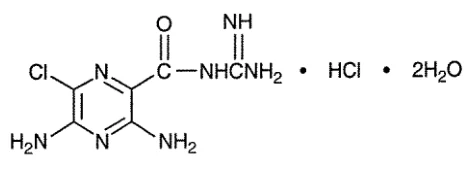
Physicochemical properties: A yellow to greenish yellow, odourless or practically odourless, crystalline compound, soluble in water. Amiloride hydrochloride is chemically unrelated to other known antikaliuretic or diuretic agents. It is a salt of a moderately strong base (pKa 8.7).
14 Clinical Trials
14.2 Comparative Bioavailability Studies
A comparative bioavailability study was performed using healthy human volunteers. The rate and extent of absorption of amiloride hydrochloride was measured and compared following oral administration of MIDAMOR (additional formulation B) (1 x 5 mg) tablets or MIDAMOR (original formulation A) (1 x 5 mg) tablets. The results from measured data are summarized as follows:
Table 4 - Summary Table of the Comparative Bioavailability Data
Summary Table of the Comparative Bioavailability Data (Dose: 1 x 5 mg) From measured data | |||
| Parameter | Geometric Mean Arithmetic Mean (CV%) | Ratio of Geometric Means (%)** | |
| MIDAMOR (B) | MIDAMOR (A) † | ||
AUCT (ng·hr/mL) | 85.8 88.2 (23) | 86.9 89.3 (21) | 98.7 |
AUC0-72 (ng·hr/mL) | 91.6 92.9 (17) | 91.7 93.1 (17) | 99.8 |
AUCI (ng·hr/mL) | 92.9 95.7 (23) | 92.6 95.3 (22) | 100.3 |
Cmax (ng/mL) | 5.45 5.57 (20) | 5.46 5.56 (19) | 99.9 |
| Tmax (hr)* | 3.92 (25) | 3.86 (27) | - |
| t1/2 (hr)* | 20.4 (47) | 17.4 (25) | - |
* Arithmetic means (CV%). ** Based on the least squares estimate. † Midamor, marketed by Merck Frosst, purchased in Canada. | |||
15 Microbiology
No microbiological information is required for this drug product.
16 Non-Clinical Toxicology
General Toxicology
Rats received amiloride hydrochloride by oral route at doses of 0, 2.5, 5.0 and 10 to 15 mg/kg for up to 80 weeks. Inhibition of weight gain occurred in male rats. Treatment related changes included alterations in urinary and serum sodium and potassium, renal tubular dilatation and a dose-dependent hyperplasia of the adrenal zona glomerulosa. Hypotonia of muscles, loss of righting reflex and coma occurred in moribund rats (high dose group). Symptoms of electrolyte imbalance including paraphimosis, occurred at doses of 10 mg/kg/day during a one year study. A no observed adverse effect level (NOAEL) of 5 mg/kg is approximately equivalent to a dose 2 times greater than the maximum human recommended dose of 20 mg/day, considering a human body weight of 50 kg.
Dogs treated with oral doses of 0, 2, 4 and 8 mg/kg/day (base) for one year showed changes in body weight, water intake and serum electrolytes. Positive fecal occult blood occurred at a slightly greater incidence in treated animals but no evidence of gastrointestinal ulceration was seen. Doses producing marked electrolyte changes had no effect on blood glucose or glucose tolerance. Dose-dependent hyperplasia of the zona glomerulosa of the adrenals was observed in all treated dogs. Due to effects seen at every dose, no safety margin was derived.
In monkeys treated with oral doses of 0, 2, 4 and 8 (increased to 15.8) mg/kg/day for one year, excitable and irritable behavior occurred at the highest dose. Increase in serum potassium and decrease in serum sodium occurred at doses as low as 4 mg/kg/day. Although adrenal glands of some high and middle dose animals appeared enlarged, hyperplasia of the zona glomerulosa was not observed. Urinary excretion of aldosterone was increased in high dose animals. A NOAEL of 2 mg/kg is approximately equivalent to a dose 1.6 times greater than the maximum human recommended dose of 20 mg/day.
Carcinogenicity
Amiloride hydrochloride had no apparent carcinogenic effect in albino mice treated with oral doses up to 10 mg/kg/day for 92 weeks or in rats treated with oral doses up to 8 mg/kg/day for 104 weeks. These strains of rats and mice have been shown to be susceptible to the activity of a known carcinogen. In mice, this represents a safety margin of 2-fold and in rats, of 3-fold.
Genotoxicity
Amiloride hydrochloride did not have any mutagenic activity in the Ames microbial mutagen assay with or without rat liver activation systems.
Reproductive and Developmental Toxicology
Amiloride hydrochloride had no teratogenic effect by external, visceral, or skeletal examination of the progeny of albino New Zealand rabbits treated orally with 2, 4, or 8 mg/kg/day (base) on days 6 through 18 of gestation or CF1 albino mice treated orally with 2.5, 5.0 or 10.0 mg/kg/day (base) on days 6 through 15 of gestation. In rabbits the highest dose caused definite maternal weight loss; in mice 10 mg/kg/day was toxic (6 of 19 died). These results yield a maternal safety margin of 3-fold and a developmental safety margin of 6-fold in rabbits, and a safe dose approximately equivalent to the maximum human recommended dose in mice.
No effect on reproductive performance or fertility in albino rats (GOBS strain) given 2, 4 or 8 mg/kg/day (base) orally was noted. Growth rate and food consumption were reduced at the highest dose. Doses of 4 and 8 mg/kg/day were administered without effect during late gestation and growth. The high dose adversely affected pup survival and growth. A NOAEL of 4 mg/kg is approximately equivalent to a dose 1.6 times greater than the maximum human recommended dose of 20 mg/day.
Special Toxicology
Special Studies Relative to Adrenal Zona Glomerulosa, Hyperplasia and Diabetes
Amiloride hydrochloride produced a dose-dependent hyperplasia of the zona glomerulosa of the adrenal cortex in rats and dogs and to a lesser extent in monkeys. In rats reversibility of the hyperplasia was demonstrated after the drug was given for 58 weeks and the animals were observed for an additional 22 weeks. Hyperplasia has been shown to disappear in 19 to 30 days after cessation of treatment and the adrenals were normal within 30 to 58 days. The hyperplasia can be reduced by substitution of physiologic saline for drinking water. Hyperplasia of the adrenal zona glomerulosa occurred in maternal mice but not in the offspring in a teratogenic study. The hyperplasia is considered to be induced by alteration of serum electrolytes and/or inhibition of aldosterone activity.
No effect on carbohydrate metabolism was observed when the toxicity of amiloride hydrochloride was studied in obese diabetic Zucker rats and normal-thin rats. Amiloride hydrochloride had no adverse effect on glucose tolerance in acute experiments in rats or a chronic study in dogs.
Juvenile Toxicity
The effect of amiloride hydrochloride on I131 uptake was measured in immature female rats. A dose of about 5 or 10 mg/kg/day given subcutaneously every 8 hours for 21 days did not alter I131 uptake.