


Product Monograph - Mint-Itraconazole
RECENT MAJOR LABEL CHANGES
| 05/2023 |
|---|---|
| 05/2024 |
TABLE OF CONTENTS
Certain sections or subsections that are not applicable at the time of the preparation of the most recent authorized product monograph are not listed.
TABLE OF CONTENTS ............................................................................................................................. 2
PART I: HEALTH PROFESSIONAL INFORMATION ................................................................................. 4
1 INDICATIONS ................................................................................................................................ 4
1.1 Pediatrics ........................................................................................................................ 4
1.2 Geriatrics ........................................................................................................................ 4
2 CONTRAINDICATIONS ................................................................................................................. 5
3 SERIOUS WARNINGS AND PRECAUTIONS BOX ........................................................................ 6
4 DOSAGE AND ADMINISTRATION ................................................................................................ 7
4.1 Dosing Considerations .................................................................................................... 7
4.2 Recommended Dose and Dosage Adjustment ................................................................ 7
4.4 Administration ................................................................................................................. 9
4.5 Missed Dose ................................................................................................................... 9
5 OVERDOSAGE .............................................................................................................................. 9
6 DOSAGE FORMS, STRENGTHS, COMPOSITION AND PACKAGING ....................................... 10
7 WARNINGS AND PRECAUTIONS ............................................................................................... 10
7.1 Special Populations ...................................................................................................... 14
7.1.1 Pregnant Women .......................................................................................................... 14
7.1.2 Breast-feeding............................................................................................................... 14
7.1.3 Pediatrics ...................................................................................................................... 14
7.1.4 Geriatrics ...................................................................................................................... 15
8 ADVERSE REACTIONS ............................................................................................................... 15
8.1 Adverse Reaction Overview .......................................................................................... 15
8.2 Clinical Trial Adverse Reactions .................................................................................... 15
8.3 Less Common Clinical Trial Adverse Reactions ............................................................ 16
8.4 Abnormal Laboratory Findings: Hematologic, Clinical Chemistry and Other Quantitative Data .............................................................................................................................. 16
8.5 Post-Market Adverse Reactions .................................................................................... 16
9 DRUG INTERACTIONS ................................................................................................................ 18
9.1 Serious Drug Interactions .............................................................................................. 18
9.2 Drug Interactions Overview ........................................................................................... 18
9.4 Drug-Drug Interactions .................................................................................................. 19
9.5 Drug-Food Interactions ................................................................................................. 32
9.6 Drug-Herb Interactions .................................................................................................. 32
9.7 Drug-Laboratory Test Interactions ................................................................................. 33
10 CLINICAL PHARMACOLOGY ..................................................................................................... 33
10.1 Mechanism of Action .................................................................................................... 33
10.2 Pharmacodynamics ....................................................................................................... 33
10.3 Pharmacokinetics .......................................................................................................... 34
11 STORAGE, STABILITY AND DISPOSAL .................................................................................... 37
12 SPECIAL HANDLING INSTRUCTIONS ....................................................................................... 38
PART II: SCIENTIFIC INFORMATION ..................................................................................................... 39
13 PHARMACEUTICAL INFORMATION .......................................................................................... 39
14 CLINICAL TRIALS ....................................................................................................................... 40
14.1 Clinical Trials by Indication ............................................................................................ 40
14.2 Comparative Bioavailability Studies ............................................................................... 40
15 MICROBIOLOGY ......................................................................................................................... 40
16 NON-CLINICAL TOXICOLOGY .................................................................................................... 42
17 SUPPORTING PRODUCT MONOGRAPH .................................................................................. 47
PATIENT MEDICATION INFORMATION ................................................................................................. 48
PART I: HEALTH PROFESSIONAL INFORMATION
1 INDICATIONS
MINT-ITRACONAZOLE (itraconazole) capsules are indicated for:
the treatment of the following systemic fungal infections in normal, predisposed or immunocompromised patients:
- 1. Invasive and non-invasive pulmonary aspergillosis.
- 2. Oral and/or esophageal candidiasis.
- 3. Chronic pulmonary histoplasmosis.
- 4. Cutaneous and lymphatic sporotrichosis.
- 5. Paracoccidioidomycosis.
- 6. Chromoblastomycosis.(formerly chromomycosis)
- 7. Blastomycosis.
The type of organism responsible for the infection should be isolated and identified and other relevant laboratory studies (wet mount, histopathology, serology) should be undertaken as appropriate to confirm diagnosis. Therapy may be initiated prior to obtaining these results when clinically warranted; however, once these results become available, antifungal therapy should be adjusted accordingly.
the treatment of the following topical fungal infections in normal, predisposed or immunocompromised patients:
- 8. Dermatomycoses due to tinea corporis, tinea cruris, tinea pedis, and pityriasis versicolor, where oral therapy is considered appropriate.
- 9. Onychomycosis.
Prior to initiating treatment with MINT-ITRACONAZOLE capsules, appropriate nail or skin specimens should be obtained for laboratory testing (KOH preparation, fungal culture, or nail biopsy) in order to confirm the diagnosis of onychomycosis or dermatomycoses.
Since elimination of itraconazole from skin and nail tissues is slower than from plasma, optimal clinical and mycological responses are thus reached 2 to 4 weeks after the cessation of treatment for skin infections and 6 to 9 months after the cessation of treatment for nail infections.
1.1 Pediatrics
Pediatrics (< 18 years of age): Based on the data submitted and reviewed by Health Canada, the safety and efficacy of itraconazole capsules in pediatric patients has not been established; therefore Health Canada has not authorized an indication for pediatric use (see 7.1.3 Pediatrics).
1.2 Geriatrics
Geriatrics (> 65 years of age): Clinical data on the use of itraconazole capsules in elderly patients is limited. It is advised to use MINT-ITRACONAZOLE in these patients only if it is determined that the potential benefit outweighs the potential risks (see 7.1.4 Geriatrics).
2 CONTRAINDICATIONS
MINT-ITRACONAZOLE should not be administered to patients with evidence of ventricular dysfunction such as congestive heart failure (CHF) or a history of CHF except for the treatment of life-threatening or other serious infections (see Table 1, Calcium Channel Blockers; 3 SERIOUS WARNINGS AND PRECAUTIONS BOX; 7 WARNINGS AND PRECAUTIONS, Cardiovascular, Use in Patients with Underlying Cardiac Disease;
8.5 Post-Market Adverse Reactions).
- Coadministration with MINT-ITRACONAZOLE, a potent cytochrome P450 3A4 isoenzyme system (CYP3A4) inhibitor, causes increased plasma concentrations of drugs metabolized by this pathway which may increase or prolong both therapeutic and adverse effects to such an extent that a potentially serious situation may occur. For example, increased plasma concentrations of some of these drugs can lead to QT prolongation and ventricular tachyarrhythmias including occurrences of torsade de pointes, a potentially fatal arrhythmia. Drugs that are contraindicated in combination with itraconazole are listed in Table 1 (see 3 SERIOUS WARNINGS AND PRECAUTIONS BOX and 9.4 Drug-Drug Interactions, Table 6).
Table 1: Drugs that are contraindicated with MINT-ITRACONAZOLE
| Drug Class | Drugs within Class that are Contraindicated with MINT-ITRACONAZOLE |
|---|---|
| Analgesics | methadone |
| Anti-arrhythmics | disopyramide, dronedarone, quinidine |
Anticoagulants and Antiplatelet Drugs | ticagrelor, apixaban, rivaroxaban |
| Antifungals | isavuconazole |
| Antimigraine Drugs | ergot alkaloids, such as dihydroergotamine, ergometrine (ergonovine), ergotamine, eletriptan |
| Antineoplastics | irinotecan, venetoclax (for chronic lymphocytic leukemia/small lymphocytic lymphoma patients during initiation/titration/ramp-up phase). |
| Antipsychotics, Anxiolytics and Hypnotics | lurasidone, pimozide, triazolam |
| Antivirals | asunaprevir (boosted) |
| Calcium Channel Blockers | felodipine |
| Cardiovascular Drugs, | ivabradine, ranolazine |
| Diuretics | eplerenone |
| Gastrointestinal Drugs | domperidone, naloxegol |
| Lipid Regulating Drugs | lomitapide, lovastatin, simvastatin |
| Urologic Drugs | fesoterodine, in subjects with moderate to severe renal impairment, or moderate to severe hepatic impairment solifenacin, in subjects with severe renal impairment or moderate to severe hepatic impairment. |
Miscellaneous Drugs and Other Substances | colchicine, in subjects with renal or hepatic impairment, eliglustat. |
- MINT-ITRACONAZOLE is contraindicated in patients with a known hypersensitivity to itraconazole or its excipients. For a complete listing, see the 6 DOSAGE FORMS, STRENGTHS, COMPOSITION AND PACKAGING.
- There is limited information regarding cross-hypersensitivity between itraconazole and other azole antifungal agents. Caution should be used in prescribing MINT-ITRACONAZOLE to patients with hypersensitivity to other azoles.
- MINT-ITRACONAZOLE should not be administered for the treatment of onychomycosis or dermatomycoses (tinea corporis, tinea cruris, tinea pedis, pityriasis versicolor) to pregnant patients or to women contemplating pregnancy.
3 SERIOUS WARNINGS AND PRECAUTIONS BOX
Serious Warnings and Precautions
- Congestive Heart Failure (CHF): MINT-ITRACONAZOLE (itraconazole) should not be administered to patients with evidence of ventricular dysfunction such as congestive heart failure (CHF) or a history of CHF except for the treatment of life - threatening or other serious infections. If signs or symptoms of congestive heart failure occur during administration of MINT-ITRACONAZOLE, discontinue administration. (see 2 CONTRAINDICATIONS, Table 1, Calcium Channel Blockers; 7 WARNINGS AND PRECAUTIONS, Cardiovascular, Use in Patients with Underlying Cardiac Disease; 8.5 Post-Market Adverse Reactions).
- Drug Interactions: Coadministration of a number of CYP3A4 substrates with MINT-ITRACONAZOLE is contraindicated. Drugs that are contraindicated are listed in Table 1 (see 2 CONTRAINDICATIONS and 9.1 Serious Drug Interactions and 9.4 Drug-Drug Interactions, Table 6). The drugs listed in this table are based on either drug interaction case reports or studies, or potential interactions due to the expected magnitude and seriousness of the interaction (i.e., those identified as contraindicated).
- Liver Toxicity: Itraconazole capsules have been associated with rare cases of serious hepatotoxicity, including liver failure and death. It is advisable to monitor liver function. If clinical signs or symptoms develop that are consistent with liver disease, such as anorexia, nausea, vomiting, jaundice, fatigue, abdominal pain, dark urine, or pale stools, treatment should be discontinued and liver function testing performed. (see 7 WARNINGS AND PRECAUTIONS, Hepatic/Biliary/Pancreatic and 8 ADVERSE REACTIONS).
4 DOSAGE AND ADMINISTRATION
4.1 Dosing Considerations
When MINT-ITRACONAZOLE therapy is indicated, the type of organism responsible for the infection should be isolated and identified; however, therapy may be initiated prior to obtaining these results when clinically warranted.
MINT-ITRACONAZOLE capsules are a different preparation than itraconazole oral solution and should not be used interchangeably.
For maximal absorption, it is essential to administer MINT-ITRACONAZOLE immediately after a full meal (see 10 CLINICAL PHARMACOLOGY). See 7 WARNINGS AND PRECAUTIONS for treatment of patients with decreased gastric acidity.
Concomitant administration of MINT-ITRACONAZOLE with certain medications may require a dose adjustment for either MINT-ITRACONAZOLE or for the other medication (see 9 DRUG INTERACTIONS).
In patients also receiving acid neutralizing medicines (e.g., aluminum hydroxide), these should be administered at least 1 hour before or 2 hours after the intake of MINT-ITRACONAZOLE.
Special Populations
Pediatrics (< 18 years of age)
Health Canada has not authorized an indication for pediatric use. (See 1.1 Pediatrics).
Geriatrics (> 65 years of age)
Clinical data on the use of itraconazole capsules in elderly patients is limited. It is advised to use MINT-ITRACONAZOLE in these patients only if it is determined that the potential benefit outweighs the potential risks. In general, it is recommended that the dose selection for an elderly patient should be taken into consideration, reflecting the greater frequency of decreased hepatic, renal, or cardiac function, and concomitant disease or other drug therapy.
Patients with Hepatic Impairment
Limited data are available on the use of oral itraconazole in patients with hepatic impairment. Caution should be exercised when this drug is administered in this patient population (see
- 7 WARNINGS AND PRECAUTIONS, Hepatic/Biliary/Pancreatic; 10 CLINICAL
PHARMACOLOGY, Special Populations and Conditions, Hepatic Insufficiency).
Patients with Renal Impairment
Limited data are available on the use of oral itraconazole in patients with renal impairment. The exposure of itraconazole may be lower in some patients with renal insufficiency. Caution should be exercised when this drug is administered in this patient population and adjusting the dose may be considered (see 7 WARNINGS AND PRECAUTIONS, Renal; 10 CLINICAL PHARMACOLOGY, Special Populations and Conditions, Renal Insufficiency).
4.2 Recommended Dose and Dosage Adjustment
MINT-ITRACONAZOLE should be administered at a dose of 100-400 mg/day. Dosage recommendations vary according to the infection treated.
Oral Candidiasis:
The recommended dose is 100 mg daily for 2 weeks.
Esophageal Candidiasis:
The recommended dose is 100 mg daily for 4 weeks.
Blastomycosis and Chronic Pulmonary Histoplasmosis
The recommended dose is 200 mg once daily. If there is no obvious improvement or there is evidence of progressive fungal disease, the dose should be increased in 100 mg increments to a maximum of 400 mg daily. Doses above 200 mg per day should be given in 2 divided doses.
Treatment should be continued for a minimum of 3 months and until clinical parameters and laboratory tests indicate that the active fungal infection has subsided. An inadequate period of treatment may lead to recurrence of active infection.
Other Systemic Mycoses
Table 2: Dosing recommendations for other systemic mycoses
| Indication | Dose | Median Duration |
|---|---|---|
Aspergillosis Pulmonary Invasive pulmonary | 200 mg o.d. 200 mg b.i.d. | 3-4 months 3-4 months |
| Sporotrichosis: lymphocutaneous and cutaneous | 100 mg or 200 mg once daily (localized lesions) or 200 mg twice daily (extensive lesions) | 3-6 months |
| Paracoccidioidomycosis | 100 mg o.d. | 6 months |
Chromoblastomycosis (formerly chromomycosis) due to Fonsecaea pedrosoi due to Cladosporium carrioni | 200 mg o.d. | 6 months |
Dermatomycoses
Standard Dosages:
Tinea corporis/Tinea cruris
The recommended dose is 100 mg once daily for 14 consecutive days.
Tinea pedis
The recommended dose is 100 mg once daily for 28 consecutive days.
Pityriasis versicolor
The recommended dose is 100 mg twice daily or 200 mg once daily for 5 -7 consecutive days.
Alternative Dosages:
Shorter dosing schedules have also been found to be effective in the treatment of tinea corporis/tinea cruris and tinea pedis. The shorter dosages are:
Tinea corporis/tinea cruris: 200 mg o.d. for 7 consecutive days;
Tinea pedis: 200 mg b.i.d. for 7 consecutive days.
Equivalency between standard and alternative dosages was not established. Patients with chronic recalcitrant tinea pedis may benefit from the standard dosage of a lower daily dose (100 mg) for a longer period of time (4 weeks).
Onychomycosis
The recommended clinical dose for onychomycosis is:
A one-week treatment course consists of 200 mg twice daily for 7 days. Treatment with 2 one- week courses is recommended for fingernail infections and 3 one-week courses for toenail infections. The one-week courses are always separated by a 3-week drug-free interval. Clinical response will become evident as the nail regrows, following discontinuation of the treatment.
Table 3: Recommended clinical dose for onychomycosis
| Pulse1 1 | Pulse1 2 | Pulse1 3 | |||||||||
|---|---|---|---|---|---|---|---|---|---|---|---|
| Site of onychomycosis | Week 1 | Week 2 | Week 3 | Week 4 | Week 5 | Week 6 | Week 7 | Week 8 | Week 9 | ||
Toenails with or without fingernail involvement | 200 mg b.i.d. for 7 days | itraconazole-free weeks | 200 mg b.i.d. for 7 days | itraconazole-free weeks | 200 mg b.i.d. for 7 days | ||||||
Fingernails only | 200 mg b.i.d. for 7 days | itraconazole-free weeks | 200 mg b.i.d. for 7 days | ||||||||
- 1. A pulse equals a one-week course of treatment.
Tissue Elimination of itraconazole
Elimination of itraconazole from skin and nail tissues is slower than from plasma. Optimal clinical and mycological responses are reached 2 to 4 weeks after the cessation of treatment for skin infections and 6 to 9 months after the cessation of treatment for nail infections.
4.4 Administration
MINT-ITRACONAZOLE capsules must be swallowed whole.
4.5 Missed Dose
Physicians should use clinical judgment based on the type and severity of the infection.
5 OVERDOSAGE
There is no experience of overdosage with itraconazole; however, based on animal toxicity data, symptoms of a gastrointestinal or central nervous system nature may be expected to occur.
Although no data is available for itraconazole, standard supportive treatment should be applied as necessary.
It has been reported that itraconazole cannot be removed by hemodialysis. No specific antidote is available. Discontinue therapy immediately.
For the most recent information in the management of a suspected drug overdose, contact your regional poison control centre or Health Canada’s toll-free number, 1-844 POISON-X (1-844-764-7669)
6 DOSAGE FORMS, STRENGTHS, COMPOSITION AND PACKAGING
Table 4: Dosage Forms, Strengths, Composition and Packaging
| Route of Administration | Dosage Form / Strength/Composition | Non-medicinal Ingredients |
|---|---|---|
| Oral | Capsule / 100 mg | Hypromellose, polyethylene glycol, sugar spheres (sucrose and corn starch); hard gelatin capsules contain: gelatin and titanium dioxide. |
MINT-ITRACONAZOLE is available as ‘size “0el” hard gelatin white opaque capsules, imprinted in black ink with “ITR 100” and filled with off-white to cream colored pellets.
MINT-ITRACONAZOLE is supplied in blisters packs of 30 capsules (3 x 10’s).
7 WARNINGS AND PRECAUTIONS
Please see 3 SERIOUS WARNINGS AND PRECAUTIONS BOX.
General
MINT-ITRACONAZOLE capsules and itraconazole oral solution should not be used interchangeably. This is because drug exposure is greater with the oral solution than with the capsules when the same dose of drug is given. In addition, the topical effects of mucosal exposure may be different between the two formulations. Itraconazole oral solution is indicated only for the treatment of oral and/or esophageal candidiasis.
Due to its pharmacokinetic properties, MINT-ITRACONAZOLE is not recommended for initiation of treatment in patients with immediately life-threatening systemic fungal infections.
In systemic candidiasis, if fluconazole-resistant strains of Candida species are suspected, it cannot be assumed that these are sensitive to itraconazole, hence it is recommended to have their sensitivity tested before the start of itraconazole therapy (see 15 MICROBIOLOGY, Resistance and Cross-Resistance).
Carcinogenesis and Genotoxicity
See 16 NON-CLINICAL TOXICOLOGY, Carcinogenicity for discussion on animal data.
Cardiovascular
Cardiac Dysrhythmias
Life-threatening cardiac dysrhythmias and/or sudden death have occurred in patients using drugs such as methadone, pimozide or quinidine concomitantly with itraconazole and/or other CYP3A4 inhibitors. Concomitant administration of these drugs with itraconazole is contraindicated (see 2 CONTRAINDICATIONS and 9.1 Serious Drug Interactions and 9.4 Drug- Drug Interactions, Table 6). The drugs listed in this table are based on either drug interaction case reports or studies, or potential interactions due to the expected magnitude and seriousness of the interaction (i.e., those identified as contraindicated).
Use in Patients with Underlying Cardiac Disease
Itraconazole has been associated with reports of CHF. In post-marketing experience, heart failure was more frequently reported in patients receiving a total daily dose of 400 mg than among those receiving lower total daily doses. This suggests that the risk of heart failure might increase with the total daily dose of itraconazole.
MINT-ITRACONAZOLE should not be administered for the treatment of onychomycosis or dermatomycoses in patients with evidence of ventricular dysfunction such as CHF or a history of CHF. MINT-ITRACONAZOLE should not be used for other indications in patients with evidence of ventricular dysfunction unless the benefit clearly outweighs the risk.
The benefit/risk assessment should take into consideration factors such as the severity of the indication, the dosing regimen (e.g., total daily dose), and the individual risk factors for CHF. These risk factors include cardiac disease, such as ischemic and valvular disease; significant pulmonary disease, such as chronic obstructive pulmonary disease; renal failure and other edematous disorders. Such patients should be informed of the signs and symptoms of CHF, treated with caution, and monitored for signs and symptoms of CHF during treatment; if such signs or symptoms do occur during treatment, MINT-ITRACONAZOLE should be discontinued (see 9 DRUG INTERACTIONS and 8.5 Post-Market Adverse Reactions).
Itraconazole has been shown to have a negative inotropic effect. When itraconazole was administered intravenously to anesthetized dogs, a dose -related negative inotropic effect was documented. In a healthy volunteer study (n=8) of itraconazole for injection, a transient asymptomatic decrease of the left ventricular ejection fraction was observed using gated SPECT imaging; this resolved before the next infusion, 12 hours later.
Calcium channel blockers can have negative inotropic effects which may be additive to those of itraconazole. In addition, itraconazole can inhibit the metabolism of calcium channel blockers. Therefore, caution should be used when coadministering itraconazole and calcium channel blockers due to an increased risk of CHF. Concomitant administration of MINT-ITRACONAZOLE with felodipine is contraindicated.
Cases of CHF, peripheral edema, and pulmonary edema have been reported in the post - marketing period among patients being treated for onychomycosis and/or systemic fungal infections (see 8.5 Post-Market Adverse Reactions).
Driving and Operating Machinery
Adverse reactions such as dizziness, visual disturbances and hearing loss have been reported while taking itraconazole. These adverse reactions may impair the ability to drive a vehicle and operate machinery. While taking MINT-ITRACONAZOLE, patients should be cautioned not to drive, operate dangerous machinery or engage in activities that require alertness or physical coordination if they are experiencing any of these effects (see 8.5 Post-Market Adverse Reactions).
Ear/Nose/Throat
Hearing Loss
Transient or permanent hearing loss has been reported in patients receiving treatment with itraconazole. Several of these reports included concurrent administration of quinidine, which is contraindicated (see 2 CONTRAINDICATIONS and 9 DRUG INTERACTIONS, Antiarrhythmics). The hearing loss usually resolves when treatment is stopped but can persist in some patients.
Gastrointestinal
Use in Patients with Decreased Gastric Acidity
Absorption of itraconazole from MINT-ITRACONAZOLE is impaired when gastric acidity is decreased. In patients with reduced gastric acidity, whether from disease (e.g., patients with achlorhydria) or from concomitant medication (e.g., AIDS patients taking drugs that reduce gastric acidity), it is advisable to administer MINT-ITRACONAZOLE with an acidic beverage (such as non-diet cola). The antifungal activity should be monitored and the itraconazole dose increased as deemed necessary (see 10.3 Pharmacokinetics, Absorption).
In patients also receiving acid-neutralizing medicines (e.g., aluminum hydroxide), these should be administered at least 2 hours after the intake of MINT-ITRACONAZOLE.
Hepatic/Biliary/Pancreatic
Rare cases of serious hepatotoxicity (including liver failure and death) have been observed with itraconazole treatment. Some of these cases had neither pre-existing liver disease nor a serious underlying medical condition and some of these cases developed within the first week of treatment.
In patients with elevated or abnormal liver enzymes or active liver disease, or who have experienced liver toxicity with other drugs, treatment with MINT-ITRACONAZOLE is strongly discouraged unless there is a serious or life-threatening situation where the expected benefit exceeds the risk. Liver function monitoring should be done in patients with pre-existing hepatic function abnormalities or those who have experienced liver toxicity with other medications and should be considered in all patients receiving MINT-ITRACONAZOLE capsules.
Treatment should be stopped immediately and liver function testing should be conducted in patients who develop signs and symptoms suggestive of liver dysfunction. Such signs and symptoms include unusual fatigue, anorexia, nausea and/or vomiting, jaundice, abdominal pain, dark urine or pale stools (see 3 SERIOUS WARNINGS AND PRECAUTIONS BOX and
- 8 ADVERSE REACTIONS).
Itraconazole binds extensively to plasma proteins.
Use in Patients with Hepatic Insufficiency
Limited data are available on the use of oral itraconazole in patients with hepatic impairment. Caution should be exercised when the drug is administered in this patient population. It is recommended that patients with impaired hepatic function be carefully monitored when taking itraconazole. In a clinical trial in cirrhotic patients, the mean terminal half-life of itraconazole was increased by 131% and its mean Cmax decreased by 47%. It is recommended that the prolonged elimination half-life of itraconazole observed in the single oral dose clinical trial with itraconazole capsules in cirrhotic patients be considered when deciding to initiate therapy with other medications metabolized by CYP3A4 (see 10 CLINICAL PHARMACOLOGY, Special Populations and Conditions, Hepatic Insufficiency).
Immune
Use in Acquired Immunodeficiency Syndrome (AIDS) and Neutropenic Patients
Studies with itraconazole in neutropenic and AIDS patients have indicated that itraconazole plasma concentrations are lower than those in healthy subjects (particularly in those patients who are achlorhydric); therefore, monitoring of the itraconazole plasma concentrations and a dose adjustment based on the clinical response in these patients, if necessary, are recommended. In one study, adequate plasma concentrations of itraconazole (measured by
HPLC) for antifungal prophylaxis in neutropenic patients were greater than 250 ng/mL.
Inadequate plasma concentrations were frequently found in patients whose antineoplastic therapy predisposed them to very poor oral absorption and frequent vomiting. In this case, antiemetics can be coadministered and it is particularly important that MINT-ITRACONAZOLE be administered with meals.
There has been one report of reduced itraconazole absorption when taken with didanosine. Since the excipients in the didanosine formulation are known to have an acid-neutralizing effect, and since the absorption of itraconazole can be affected by the level of acidity in the stomach, it is recommended that didanosine be administered at least 2 hours after dosing with MINT-ITRACONAZOLE.
The results from a study in which 8 HIV-infected individuals were treated with zidovudine, 8 ± 0.4 mg/kg/day with or without itraconazole capsules 100 mg b.i.d., showed that the pharmacokinetics of zidovudine were not affected during concomitant administration of itraconazole capsules.
In patients with AIDS having received treatment for a systemic fungal infection such as sporotrichosis, blastomycosis or histoplasmosis and who are considered at risk for relapse, the treating physician should evaluate the need for a maintenance treatment.
Monitoring and Laboratory Tests
Plasma levels 3 to 4 hours after dosing with itraconazole should be monitored in patients requiring treatment for more than one month, in patients with systemic mycoses who have factors predisposing to poor absorption (such as achlorhydria, renal insufficiency, neutropenia, AIDS) or in those who are taking drugs which may alter itraconazole absorption or metabolism (such as rifampicin and phenytoin).
Due to the presence of an active metabolite, monitoring of plasma levels by bioassay will indicate plasma levels roughly 3 times higher than will monitoring by high-performance liquid chromatography, unless solvent conditions for the HPLC assay are adjusted to allow simultaneous detection of both the parent drug and this metabolite (hydroxy-itraconazole).
Liver function monitoring should be done in patients with pre-existing hepatic abnormalities, or those who have experienced liver toxicity with other medications and should also be considered in all patients receiving treatment with MINT-ITRACONAZOLE.
Hypokalemia has been reported in a few patients. Therefore, serum potassium should be monitored in patients at risk during high-dose itraconazole therapy.
Neurologic
If neuropathy occurs that may be attributable to MINT-ITRACONAZOLE, the treatment should be discontinued.
Renal
Use in Patients with Renal Insufficiency
Limited data are available on the use of oral itraconazole in patients with renal impairment. The exposure of itraconazole may be lower in some patients with renal insufficiency. Caution should be exercised when this drug is administered in this patient population and adjusting the dose may be considered (see 10 CLINICAL PHARMACOLOGY, Special Populations and Conditions, Renal Insufficiency).
In a few patients, hypokalemia has been reported. Consequently, serum potassium should be monitored in patients at risk during high-dose itraconazole therapy.
Itraconazole cannot be removed by hemodialysis.
Respiratory
Cystic Fibrosis
In cystic fibrosis patients, variability in therapeutic levels of itraconazole was observed with steady-state dosing of itraconazole oral solution using 2.5 mg/kg bid. Steady state concentrations of > 250 ng/mL were achieved in approximately 50% of subjects greater than 16 years of age, but in none of the patients less than 16 years of age. If a patient does not respond to MINT-ITRACONAZOLE, consideration should be given to switching to alternative therapy.
7.1 Special Populations
7.1.1 Pregnant Women
MINT-ITRACONAZOLE should not be used for the treatment of onychomycosis or dermatomycoses in pregnant patients or in women contemplating pregnancy (see 2 CONTRAINDICATIONS). MINT-ITRACONAZOLE must not be used during pregnancy except for life-threatening cases where the potential benefit to the mother outweighs the potential harm to the fetus. Itraconazole has been shown to produce teratogenic effects (major skeletal and secondary soft tissue defects) when administered at high doses (40 mg/kg/day, 5 times MRHD or higher) to pregnant rats. When administered to pregnant mice at high doses (80 mg/kg/day, 10 times MRHD or higher) itraconazole has been shown to produce encephaloceles and/or macroglossia.
MINT-ITRACONAZOLE should not be administered to women of child-bearing potential for the treatment of onychomycosis or dermatomycoses unless they are using effective measures to prevent pregnancy and they begin therapy on the second or third day following the onset of menses.
Pregnancy should be avoided in women using MINT-ITRACONAZOLE and for 2 months following end of treatment. In women of childbearing potential, a reliable method of barrier contraception must always be used in combination with other methods of contraception e.g. oral or other hormonal contraceptives (see 9 DRUG INTERACTIONS).
There is limited information on the use of itraconazole during pregnancy. During post-marketing experience, cases of congenital abnormalities have been reported. These cases included skeletal, genitourinary tract, cardiovascular and ophthalmic malformations, as well as chromosomal and multiple malformations. A causal relationship with itraconazole capsules has not been established.
7.1.2 Breast-feeding
Itraconazole is excreted in human milk; therefore, the patient should be advised to discontinue nursing while taking MINT-ITRACONAZOLE.
7.1.3 Pediatrics
Based on the data submitted and reviewed by Health Canada, the safety and efficacy of itraconazole in pediatric patients has not been established; therefore, Health Canada has not authorized an indication for pediatric use (see 1.1 Pediatrics).
No pharmacokinetic data is available in pediatric patients. A small number of patients from age 3 to 16 years have been treated with 100 mg/day of itraconazole for systemic fungal infections and no serious adverse events have been reported. Toxicological studies have shown that itraconazole, when administered to rats, can produce bone toxicity. While no such toxicity has been reported in adult patients, the long-term effect of itraconazole in children is unknown (see 16 NON-CLINICAL TOXICOLOGY).
7.1.4 Geriatrics
Clinical data on the use of itraconazole capsules in elderly patients is limited. It is advised to use MINT-ITRACONAZOLE in these patients only if it is determined that the potential benefit outweighs the potential risks. In general, it is recommended that the dose selection for an elderly patient should be taken into consideration, reflecting the greater frequency of decreased hepatic, renal, or cardiac function, and concomitant disease or other drug therapy.
8 ADVERSE REACTIONS
8.1 Adverse Reaction Overview
Itraconazole has been associated with rare cases of serious hepatotoxicity, including liver failure and death. Some of these cases had neither pre-existing liver disease nor a serious underlying medical condition. If clinical signs or symptoms develop that are consistent with liver disease, treatment should be discontinued and liver function testing performed. Before consideration is given to reinstituting therapy, the risks and benefits of MINT-ITRACONAZOLE use should be reassessed (see 7 WARNINGS AND PRECAUTIONS, Hepatic/Biliary/Pancreatic).
The most frequently reported adverse experiences in association with the use of itraconazole capsules were of gastrointestinal origin, such as dyspepsia, nausea, vomiting, diarrhea, abdominal pain and constipation. Other adverse experiences reported very rarely (< 1/10000) include reversible increases in hepatic enzymes, hepatitis, menstrual disorder, dizziness and allergic reactions (such as pruritus, rash, urticaria and angioedema), peripheral neuropathy, Stevens-Johnson syndrome, alopecia, hypokalemia, edema, congestive heart failure and pulmonary edema.
8.2 Clinical Trial Adverse Reactions
Clinical trials are conducted under very specific conditions. Therefore, the frequencies of adverse reactions observed in the clinical trials may not reflect frequencies observed in clinical practice and should not be compared to frequencies reported in clinical trials of another drug.
Adverse experiences during short-term therapy with itraconazole capsules occurred in 7.8% of patients. During long-term therapy in patients, most of whom had underlying pathology and received multiple concomitant treatments, the incidence of adverse experiences was higher (20.6%). The most common adverse experiences (reported by at least 1% of patients) during short-term or long-term therapy with itraconazole capsules are presented in Table 5.
Table 5: Most common adverse experiences (≥1%) during long-term therapy with itraconazole capsules in comparison with short-term therapy
| Short-term Therapy | Long-term Therapy | ||
|---|---|---|---|
| Total number of patients | 12889 | 916 | |
| Body System1/ Adverse Event | Incidence (%) | ||
| Gastrointestinal1 | 4.4 | 9.1 | |
| Nausea | 1.6 | 2.9 | |
| Dermatological1 | 0.8 | 4.5 | |
| Rash | <1.0 | 1.6 | |
| Pruritus | <1.0 | 1.3 | |
| Central Nervous System1 | 2.1 | 4.3 | |
| Headache | 1.0 | 1.1 | |
| Respiratory System1 | <1.0 | 3.9 | |
| Liver and Biliary System1 | 0.11 | 2.7 | |
| Miscellaneous1 | 0.7 | 5.6 | |
| Edema | <1.0 | 1.0 | |
- 1. Rates represent summary of all types of adverse events recorded for the body system.
For 834 clinical trial patients receiving 2-4 cycles of one-week therapy, the most frequently reported adverse events during the treatment and follow-up period were abdominal pain (1.9%), nausea (1.6%) and headache (1.3%).
8.3 Less Common Clinical Trial Adverse Reactions
The following adverse experiences have been reported at an incidence greater than 0.5% and less than 1% during short-term therapy with itraconazole capsules:
Central and Peripheral Nervous System: dizziness/faintness; vertigo
Gastrointestinal: dyspepsia/epigastric pain/upset stomach; abdominal pain/discomfort; vomiting; pyrosis; diarrhea; gastritis; flatulence/meteorism; constipation; decreased appetite; other gastric complaints
General: edema; pain; fatigue; fever Immune : allergic reaction Psychiatric: sleepiness/somnolence Skin: pruritus; rash
The following adverse experiences have been reported at an incidence of greater than 0.5% but less than 1% of patients during long-term therapy with itraconazole capsules:
Cardiovascular: chest pain; hypertension
Central and Peripheral Nervous System: dizziness
Gastrointestinal: vomiting; dyspepsia/epigastralgia; diarrhea; abdominal pain
General: pain; fatigue; fever
Liver and Biliary System: increase in liver enzymes; abnormal liver function tests; jaundice; hepatitis; cirrhosis; hepatocellular damage; abnormal hepatic function
Metabolic and Nutritional: hypokalemia
Respiratory System: bronchitis/bronchospasm; dyspnea; coughing; rhinitis; sinusitis
8.4 Abnormal Laboratory Findings: Hematologic, Clinical Chemistry and Other Quantitative Data
An increase in liver enzymes and abnormal liver function tests have been reported infrequently in patients treated with itraconazole capsules. In post-marketing experience, high triglyceride levels have been reported very rarely.
8.5 Post-Market Adverse Reactions
Worldwide post-marketing experiences with the use of itraconazole (across all three itraconazole formulations: itraconazole capsules, itraconazole oral solution and itraconazole
IV) include reports of the adverse events listed below.
Blood and lymphatic system disorders: granulocytopenia, leukopenia, neutropenia, thrombocytopenia
Immune system disorders: serum sickness, angioneurotic edema, anaphylactic, hypersensitivity, anaphylactoid and allergic reactions
Infections and infestations: upper respiratory tract infection
Metabolism and nutrition disorders: hyperglycemia, hypertriglyceridemia, hypokalemia, hypomagnesemia
Psychiatric disorders: confusional state
Nervous system disorders: peripheral neuropathy, paresthesia, hypoesthesia, headache, dizziness, tremor
Eye disorders: visual disturbances, including vision blurred and diplopia
Ear and labyrinth disorders: tinnitus, transient or permanent hearing loss
Endocrine disorders: Pseudoaldosteronism
Cardiac disorders: cardiac failure, congestive heart failure, left ventricular failure, tachycardia, bradycardia
Vascular disorders: hypotension
Respiratory, thoracic and mediastinal disorders: pulmonary edema, dyspnea, dysphonia
Gastrointestinal disorders: pancreatitis, abdominal pain, vomiting, dyspepsia, nausea, diarrhea, constipation, dysgeusia, gastrointestinal disorder
Hepatobiliary disorders: serious hepatotoxicity (including some cases of fatal acute liver failure), hepatitis, reversible increases in hepatic enzymes, hepatic failure, hyperbilirubinemia
Skin and subcutaneous tissue disorders: toxic epidermal necrolysis, Stevens-Johnson syndrome, acute generalized exanthematous pustulosis, erythema multiforme, exfoliative dermatitis, leukocytoclastic vasculitis, urticaria, alopecia, photosensitivity, rash, pruritus, rash erythematous, hyperhidrosis
Investigations: blood creatine phosphokinase increased, alanine aminotransferase increased, aspartate aminotransferase increased, blood alkaline phosphatase increased, blood lactate dehydrogenase increased, blood urea increased, gamma-glutamyltransferase increased, hepatic enzyme increased, urine analysis abnormal
Musculoskeletal and connective tissue disorders: myalgia, arthralgia
Renal and urinary disorders: pollakiuria, urinary incontinence, renal impairment
Reproductive system and breast disorders: menstrual disorders, erectile dysfunction
General disorders and administration site conditions: edema, pyrexia, generalized edema, face edema, chills
9 DRUG INTERACTIONS
9.1 Serious Drug Interactions
9.2 Drug Interactions Overview
Itraconazole is a drug with a high interaction potential. The various types of interaction and associated general recommendations are described below. In addition, Table 6 provides a listing example of drugs that may interact with itraconazole, organized per drug family for easy reference.
Itraconazole is mainly metabolized through CYP3A4. Other substances that either share this metabolic pathway or modify CYP3A4 activity may influence the pharmacokinetics of itraconazole. Coadministration of itraconazole with moderate or potent CYP3A4 inducers may decrease the bioavailability of itraconazole and hydroxy-itraconazole to such an extent that efficacy may be reduced. Coadministration with moderate or potent inhibitors of CYP3A4 may increase the bioavailability of itraconazole, which may result in increased or prolonged pharmacologic effects of itraconazole.
Absorption of itraconazole from the capsule formulation is reduced in subjects with reduced gastric acidity. Drugs that reduce gastric acidity impair the absorption of itraconazole from itraconazole capsules. To counteract this effect, it is recommended to administer itraconazole capsules with an acidic beverage (such as non-diet cola) upon coadministration with drugs that reduce gastric acidity (see 7 WARNINGS AND PRECAUTIONS, Gastrointestinal).
Serious Drug Interactions
MINT-ITRACONAZOLE is a potent CYP3A4 inhibitor and a P-glycoprotein inhibitor. Increased plasma concentrations of these drugs, caused by coadministration with itraconazole, may increase or prolong both therapeutic and adverse effects to such an extent that a potentially serious situation may occur. Coadministration of a number of CYP3A4 substrates is contraindicated with MINT-ITRACONAZOLE. For example, increased plasma concentrations of some of these drugs can lead to QT prolongation and ventricular tachyarrhythmias including occurrences of torsade de pointes, a potentially fatal arrhythmia. Drugs that are contraindicated with MINT-ITRACONAZOLE are listed below:
- methadone, disopyramide, dronedarone, quinidine, ticagrelor, apixaban, rivaroxaban, isavuconazole, ergot alkaloids such as dihydroergotamine, ergometrine (ergonovine), ergotamine, irinotecan, venetoclax (for chronic lymphocytic leukemia/small lymphocytic lymphoma patients during initiation/titration/ramp-up phase), lurasidone, pimozide, triazolam, asunaprevir (boosted), felodipine, ivabradine, ranolazine, eplerenone, domperidone, naloxegol, lomitapide, lovastatin, simvastatin, fesoterodine (in subjects with moderate to severe renal impairment, or moderate to severe hepatic impairment), solifenacin (in subjects with severe renal impairment or moderate to severe hepatic impairment), eletriptan, colchicine (in subjects with renal or hepatic impairment), eliglustat.
See 2 CONTRAINDICATIONS, Table 1; 3 SERIOUS WARNINGS AND PRECAUTIONS BOX.
Itraconazole and its major metabolite, hydroxy-itraconazole are potent CYP3A4 inhibitors. Itraconazole is an inhibitor of the drug transporters P-glycoprotein and breast cancer resistance protein (BCRP). Itraconazole can inhibit the metabolism of drugs metabolized by CYP3A4 and can inhibit the drug transport by P-glycoprotein and/or BCRP, which may result in increased plasma concentrations of these drugs and/or their active metabolite(s) when they are administered with itraconazole. These elevated plasma concentrations may increase or prolong both therapeutic and adverse effects of these drugs. For some drugs, coadministration with itraconazole may result in decreased plasma concentrations of the drug or of the active moiety of the drug. This may result in reduced efficacy of the drug.
Following cessation of medical treatment with itraconazole, plasma concentrations decrease below the detection limit within 7 to 14 days, depending on the dose and duration of treatment. In patients with hepatic cirrhosis or in subjects receiving CYP3A4 inhibitors the plasma concentrations decline slower. This is particularly important for consideration when initiating therapy with drugs whose metabolism is affected by itraconazole.
The following general recommendations apply, unless stated differently in Table 6. The drugs listed in this table are based on either drug interaction case reports or studies, or potential interactions due to the expected magnitude and seriousness of the interaction (i.e., those identified as contraindicated).
‘CONTRAINDICATED’: Under no circumstances is the drug to be coadministered with itraconazole. This applies to:
- CYP3A4 substrates for which increased plasma concentrations may increase or prolong therapeutic and/or adverse effects to such an extent that a potentially serious situation may occur (see 2 CONTRAINDICATIONS).
‘NOT RECOMMENDED’: It is recommended that the use of the drug be avoided, unless the benefits outweigh the potentially increased risks. If coadministration cannot be avoided, clinical monitoring is recommended, and the dosage of itraconazole and/or the coadministered drug adapted as deemed necessary. When appropriate, it is recommended that plasma concentrations be measured. This applies to:
- Moderate or potent CYP3A4 inducers: not recommended from 2 weeks before and during treatment with itraconazole
- CYP3A4/P-gp/BCRP substrates for which increased or decreased plasma concentrations result in significant risk: not recommended during and up to 2 weeks after treatment with itraconazole.
‘USE WITH CAUTION’: Careful monitoring is recommended when the drug is coadministered with itraconazole. Upon coadministration, it is recommended that patients be monitored closely and the dosage of itraconazole and/or the coadministered drug adapted as deemed necessary. When appropriate, it is recommended that plasma concentrations be measured. This applies to:
- Drugs that reduce gastric acidity (itraconazole capsules only)
- Moderate or potent inhibitors of CYP3A4
- CYP3A4/P-gp/BCRP substrates for which increased or decreased plasma concentrations result in a clinically relevant risk
The list of examples of interacting drugs in the table below is not comprehensive and therefore the label of each drug that is coadministered with itraconazole should be consulted for information related to the route of metabolism, interaction pathways, potential risks, and specific actions to be taken with regards to coadministration.
9.4 Drug-Drug Interactions
The drugs listed in this table are based on either drug interaction case reports or studies, or potential interactions due to the expected magnitude and seriousness of the interaction (i.e., those identified as contraindicated).
Table 6: Examples of drugs that may interact with MINT-ITRACONAZOLE
Examples of medicinal products within class | Expected/Potential effect on drug levels (see footnotes for additional info) | Clinical comment (see codes above for additional info) |
|---|---|---|
Examples of medicinal products within class | Expected/Potential effect on drug levels (see footnotes for additional info) | Clinical comment (see codes above for additional info) |
Examples of medicinal products within class | Expected/Potential effect on drug levels (see footnotes for additional info) | Clinical comment (see codes above for additional info) |
Examples of medicinal products within class | Expected/Potential effect on drug levels (see footnotes for additional info) | Clinical comment (see codes above for additional info) |
Examples of medicinal products within class | Expected/Potential effect on drug levels (see footnotes for additional info) | Clinical comment (see codes above for additional info) |
Examples of medicinal products within class | Expected/Potential effect on drug levels (see footnotes for additional info) | Clinical comment (see codes above for additional info) |
Examples of medicinal products within class | Expected/Potential effect on drug levels (see footnotes for additional info) | Clinical comment (see codes above for additional info) |
Examples of medicinal products within class | Expected/Potential effect on drug levels (see footnotes for additional info) | Clinical comment (see codes above for additional info) |
Examples of medicinal products within class | Expected/Potential effect on drug levels (see footnotes for additional info) | Clinical comment (see codes above for additional info) |
Examples of medicinal products within class | Expected/Potential effect on drug levels (see footnotes for additional info) | Clinical comment (see codes above for additional info) |
Examples of medicinal products within class | Expected/Potential effect on drug levels (see footnotes for additional info) | Clinical comment (see codes above for additional info) |
Examples of medicinal products within class | Expected/Potential effect on drug levels (see footnotes for additional info) | Clinical comment (see codes above for additional info) |
Examples of medicinal products within class | Expected/Potential effect on drug levels (see footnotes for additional info) | Clinical comment (see codes above for additional info) |
| Alpha Blockers | ||
| Alfuzosin Silodosin Tamsulosin | Alfuzosin Cmax (↑↑), AUC (↑↑)2 Silodosin Cmax (↑↑), AUC (↑↑)2 Tamsulosin Cmax (↑↑), AUC (↑↑)2 | NOT RECOMMENDED during and for 2 weeks after treatment with itraconazole. Increased risk of alfuzosin/ silodosin/tamsulosin-related adverse reactions4. |
| Analgesics | ||
Alfentanil Buprenorphine (IV and sublingual) Oxycodone Sufentanil | Alfentanil AUC (↑↑ to ↑↑↑↑)2 Buprenorphine Cmax (↑↑), AUC (↑↑)2 Oxycodone Cmax ↑, AUC ↑↑ Sufentanil conc increase (extent unknown)2,3 | USE WITH CAUTION, monitor for adverse reactions related to the analgesic4, dose reduction of alfentanil/buprenorphine/ oxycodone/sufentanil may be necessary. |
| Fentanyl | Fentanyl IV AUC (↑↑)2 Fentanyl other form. conc increase (extent unknown)2,3 | NOT RECOMMENDED during and for 2 weeks after treatment with itraconazole. Increased risk of fentanyl-related adverse reactions4. |
| Methadone | (R)-methadone Cmax (↑), AUC (↑)2 | CONTRAINDICATED during and for 2 weeks after treatment with itraconazole. Increased risk of methadone-related adverse reactions, such as potentially life-threatening respiratory depression, QT prolongation and TdP. |
| Anti-arrhythmics | ||
| Digoxin | Digoxin Cmax ↑, AUC ↑ | USE WITH CAUTION, monitor for digoxin adverse reactions, dose reduction of digoxin may be necessary4. |
| Disopyramide | Disopyramide conc increase (↑↑)2,3 | CONTRAINDICATED during and for 2 weeks after treatment with itraconazole. Increased risk of disopyramide-related adverse reactions, such as serious arrhythmias including TdP. |
| Dronedarone | Dronedarone Cmax (↑↑↑), AUC (↑↑↑↑)2 | CONTRAINDICATED during and for 2 weeks after treatment with itraconazole. Increased risk of dronedarone-related adverse reactions, such as QT prolongation and cardiovascular death. |
| Quinidine | Quinidine Cmax ↑, AUC ↑↑ | CONTRAINDICATED during and for 2 weeks after treatment with itraconazole. Increased risk of quinidine-related adverse reactions, such as QT prolongation, TdP, hypotension, confusion and delirium. |
| Antibacterials | ||
| Ciprofloxacin Erythromycin | Itraconazole Cmax ↑, AUC ↑ | USE WITH CAUTION, monitor for itraconazole adverse reactions, dose reduction of itraconazole may be necessary. |
| Clarithromycin | Clarithromycin conc increase (extent unknown)2,3 Itraconazole Cmax ↑, AUC ↑; | USE WITH CAUTION, monitor for adverse reactions related to itraconazole and/or clarithromycin4, dose reduction of itraconazole and/or clarithromycin may be necessary. |
| Isoniazid Rifampicin | Isoniazid: itraconazole conc. (↓↓↓)2,3 Rifampicin: itraconazole AUC ↓↓↓ | NOT RECOMMENDED from 2 weeks before and during treatment with itraconazole, Itraconazole efficacy may be reduced. |
| Rifabutin | Rifabutin conc. increase (extent unknown) 2,3 Itraconazole: Cmax ↓↓, AUC ↓↓ | NOT RECOMMENDED from 2 weeks before, during and for 2 weeks after treatment with itraconazole. Itraconazole efficacy may be reduced and increased risk of rifabutin-related adverse reactions4. |
| Anticoagulants and Antiplatelet Drugs | ||
| Vorapaxar | Vorapaxar Cmax (↑), AUC (↑)2 | NOT RECOMMENDED during and for 2 weeks after treatment with itraconazole. Increased risk of vorapaxar-related adverse reactions4. |
| Edoxaban | Edoxaban Cmax (↑), AUC (↑)2 | NOT RECOMMENDED during and for 2 weeks after treatment with itraconazole. Increased risk of edoxaban-related adverse reactions4. If concomitant use cannot be avoided, dose reduction of edoxaban is recommended |
Coumarins (e.g., warfarin) Cilostazol | Coumarins (e.g., warfarin) conc increase (extent unknown)2,3 Cilostazol Cmax (↑), AUC (↑↑)2 | USE WITH CAUTION, monitor for coumarins/cilostazol adverse reactions, dose reduction of coumarins/cilostazol may be necessary4. |
| Dabigatran | Dabigatran Cmax (↑↑), AUC (↑↑)2 | USE WITH CAUTION, monitor for dabigatran adverse reactions, dose reduction of dabigatran may be necessary4. |
| Ticagrelor | Ticagrelor Cmax (↑↑), AUC (↑↑↑)2 | CONTRAINDICATED during and for 2 weeks after treatment with itraconazole. Increased risk of ticagrelor-related adverse reactions, such as bleeding. |
Apixaban Rivaroxaban | Apixaban Cmax (↑), AUC (↑)2 Rivaroxaban Cmax (↑), AUC (↑ to ↑↑)2 | CONTRAINDICATED during and for 2 weeks after treatment with itraconazole. Increased risk of apixaban/rivaroxaban-related adverse reactions4. |
| Anticonvulsants | ||
| Carbamazepine | Carbamazepine conc. (↑)2,3 Itraconazole conc. (↓↓)2,3 | NOT RECOMMENDED from 2 weeks before, during and for 2 weeks after treatment with itraconazole. Itraconazole efficacy may be reduced and increased risk for carbamazepine-related adverse reactions4. |
| Phenobarbital Phenytoin | Phenobarbital: itraconazole conc. (↓↓↓)2,3 Phenytoin: itraconazole AUC ↓↓↓ | NOT RECOMMENDED from 2 weeks before and during treatment with itraconazole. Itraconazole efficacy may be reduced. |
| Antidiabetics | ||
| Repaglinide Saxagliptin | Repaglinide Cmax ↑, AUC ↑ Saxagliptin Cmax (↑↑), AUC (↑↑)2 | USE WITH CAUTION, monitor for repaglinide/saxagliptin adverse reactions, dose reduction of repaglinide/saxagliptin may be necessary4. |
| Antihelminthics, antifungals and antiprotozoals | ||
| Quinine | Quinine Cmax ↔, AUC ↑ | USE WITH CAUTION, monitor for quinine adverse reactions4. Refer to the Product Monograph (PM) for specific actions to be taken. |
| Isavuconazole | Isavuconazole Cmax (↔), AUC (↑↑↑)2 | CONTRAINDICATED during and for 2 weeks after treatment with itraconazole. Increased risk of isavuconazole-related adverse reactions, such as hepatic adverse reactions, hypersensitivity reactions, embryo-fetal toxicity and cardiac disorders, including QTc interval shortening. |
| Praziquantel | Praziquantel Cmax (↑↑), AUC (↑)2 | USE WITH CAUTION, monitor for praziquantel adverse reactions, dose reduction of praziquantel may be necessary4. |
| Antihistamines | ||
Bilastine Ebastine Rupatadine | Bilastine Cmax (↑↑), AUC (↑)2 Ebastine Cmax ↑↑, AUC ↑↑↑ Rupatadine conc increase (↑↑↑↑)2,3 | USE WITH CAUTION, monitor for bilastine/ebastine/rupatadine adverse reactions4, dose reduction of bilastine/ebastine/rupatadine may be necessary. |
| Antimigraine Drugs | ||
| Eletriptan | Eletriptan Cmax (↑↑), AUC (↑↑↑)2 | CONTRAINDICATED during and for 2 weeks after treatment with itraconazole. Coadministration of eletriptan with MINT-ITRACONAZOLE can elevate plasma eletriptan concentrations which could result in serious adverse events. |
Ergot alkaloids (such as dihydroergotamine, ergometrine (ergonovine), ergotamine) | Ergot alkaloids conc increase (extent unknown)2,3 | CONTRAINDICATED during and for 2 weeks after treatment with itraconazole. Increased risk of ergot alkaloid-related adverse reactions, such as ergotism. |
| Antineoplastics | ||
Bortezomib Brentuximab vedotin Busulfan Erlotinib Gefitinib Imatinib Ixabepilone Nintedanib Pemigatinib Ponatinib Ruxolitinib Sonidegib Tretinoin (oral) Vandetanib | Bortezomib AUC (↑)2 Brentuximab vedotin AUC (↑)2 Busulfan Cmax ↑, AUC ↑ Erlotinib Cmax (↑↑), AUC (↑)2 Gefitinib Cmax ↑, AUC ↑ Imatinib Cmax (↑), AUC (↑)2 Ixabepilone Cmax (↔), AUC (↑)2 Nintedanib Cmax (↑), AUC (↑)2 Pemigatinib Cmax ↑, AUC ↑ Ponatinib Cmax (↑), AUC (↑)2 Ruxolitinib Cmax (↑), AUC (↑)2 Sonidegib Cmax (↑), AUC (↑↑)2 Tretinoin Cmax (↑), AUC (↑)2 Vandetanib Cmax ↔, AUC ↑ | USE WITH CAUTION, monitor for adverse reactions related to the antineoplastic drug4, dose reduction of the antineoplastic drug may be necessary. |
| Idelalisib | Idelalisib Cmax (↑), AUC (↑)2 Itraconazole serum conc. increase (extent unknown)2,3 | USE WITH CAUTION, monitor for adverse reactions related to itraconazole and/or idelalisib4, dose reduction of itraconazole and/or idelalisib may be necessary. |
Axitinib Bosutinib Cabazitaxel Cabozantinib Ceritinib Cobimetinib Crizotinib Dabrafenib | Axitinib Cmax (↑), AUC (↑↑)2 Bosutinib Cmax (↑↑↑), AUC (↑↑↑)2 Cabazitaxel Cmax (↔), AUC (↔)2 Cabozantinib Cmax (↔), AUC (↑)2 Ceritinib Cmax (↑), AUC (↑↑)2 Cobimetinib Cmax ↑↑, AUC ↑↑↑ Crizotinib Cmax (↑), AUC (↑↑)2 | NOT RECOMMENDED during and for 2 weeks after treatment with itraconazole. Increased risk of adverse reactions related to the antineoplastic drug4. Additionally: For cabazitaxel, even though the |
Dasatinib Docetaxel Entrectinib Glasdegib Ibrutinib Lapatinib Nilotinib Olaparib Pazopanib Sunitinib Talazoparib Trabectedin Trastuzumab emtansine Vinca alkaloids | Dabrafenib AUC (↑)2 Dasatinib Cmax (↑↑), AUC (↑↑)2 Docetaxel AUC (↔ to ↑↑)2 Entrectinib Cmax ↑, AUC ↑↑↑ Glasdegib Cmax (↑), AUC (↑↑)2 Ibrutinib Cmax (↑↑↑↑), AUC (↑↑↑↑)2 Lapatinib Cmax (↑↑), AUC (↑↑)2 Nilotinib Cmax (↑), AUC (↑↑)2 Olaparib Cmax ↑, AUC ↑↑ Pazopanib Cmax (↑), AUC (↑)2 Sunitinib Cmax (↑), AUC (↑)2 Talazoparib Cmax ↑, AUC ↑ Trabectedin Cmax (↑), AUC (↑)2 Trastuzumab emtasine conc. increase (extent unknown) 2,3 Vinca alkaloid conc. increase (extent unknown) 2,3 | change in pharmacokinetic parameters did not reach statistical significance in a low-dose drug interaction study with ketoconazole, a high variability in the results was observed. For entrectinib, refer to the Product Monograph for specific actions to be taken. For ibrutinib, refer to the Product Monograph for specific actions to be taken. |
| Regorafenib | Regorafenib AUC (↓↓ by estimation of active moiety)2 | NOT RECOMMENDED during and for 2 weeks after treatment with itraconazole. Regorafenib efficacy may be reduced. |
| Irinotecan | Irinotecan and its active metabolite conc increase (extent unknown)2,3 | CONTRAINDICATED during and for 2 weeks after treatment with itraconazole. Increased risk of irinotecan-related adverse reactions, such as potentially life-threatening myelosuppression and diarrhea. |
| Venetoclax | Venetoclax Cmax (↑↑↑), AUC(↑↑↑)2 | CONTRAINDICATED for chronic lymphocytic leukemia/small lymphocytic lymphoma patients during dose initiation/titration/ramp-up phase of venetoclax. Otherwise, NOT RECOMMENDED during and for 2 weeks after treatment with itraconazole. |
| Antipsychotics, Anxiolytics and Hypnotics | ||
Alprazolam Aripiprazole Brotizolam Buspirone Haloperidol Midazolam (iv) Perospirone Quetiapine Ramelteon Risperidone Zopiclone | Alprazolam Cmax ↔, AUC ↑↑ Aripiprazole Cmax ↑, AUC ↑ Brotizolam Cmax ↔, AUC ↑↑ Buspirone Cmax ↑↑↑↑, AUC ↑↑↑↑ Haloperidol Cmax ↑, AUC ↑ Midazolam (iv) conc increase ↑↑3 Perospirone Cmax ↑↑↑, AUC ↑↑↑ Quetiapine Cmax (↑↑), AUC (↑↑↑)2 Ramelteon Cmax (↑), AUC (↑)2 Risperidone conc increase ↑3 Zopiclone Cmax ↑, AUC ↑ | USE WITH CAUTION, monitor for adverse reactions related to the antipsychotic, anxiolytic or hypnotic drug4, dose reduction of these drugs may be necessary. |
| Lurasidone | Lurasidone Cmax (↑↑↑), AUC (↑↑↑)2 | CONTRAINDICATED during and for 2 weeks after treatment with itraconazole. Increased risk of lurasidone-related adverse reactions, such as hypotension, circulatory collapse, severe extrapyramidal symptoms, seizures. |
| Pimozide | Pimozide Cmax (↑), AUC (↑↑)2 | CONTRAINDICATED during and for 2 weeks after treatment with itraconazole. Increased risk of pimozide-related adverse reactions, such as cardiac arrhythmias, possibly associated with QT prolongation and TdP. |
| Triazolam | Triazolam Cmax ↑ to ↑↑, AUC ↑↑ to ↑↑↑↑ | CONTRAINDICATED during and for 2 weeks after treatment with itraconazole. Increased risk of triazolam-related adverse reactions, such as seizures, respiratory depression, angioedema, apnea and coma. |
| Antivirals | ||
| Asunaprevir (boosted) | Asunaprevir Cmax (↑↑↑), AUC (↑↑↑)2 | CONTRAINDICATED, refer to the PM of the antiviral drug for specific actions to be taken. |
Tenofovir disoproxil fumarate (TDF) | Tenofovir conc increase (extent unknown)2,3 | USE WITH CAUTION, however, refer to the PM of the antiviral drug for specific actions to be taken. |
| Cobicistat | Cobicistat conc increase (extent unknown)2,3 Itraconazole conc increase (extent unknown)2,3 | USE WITH CAUTION, monitor for adverse reactions related to itraconazole, dose reduction of itraconazole may be necessary. |
| Daclatasvir | Daclatasvir Cmax (↑), AUC (↑↑)2 | USE WITH CAUTION, monitor for daclatasvir adverse reactions4, dose reduction of daclatasvir may be necessary. |
Darunavir (boosted) Fosamprenavir (ritonavir- boosted) | Ritonavir-boosted darunavir: itraconazole Cmax (↑↑), AUC (↑↑)2 Ritonavir-boosted fosamprenavir: itraconazole Cmax (↑), AUC (↑↑)2 | USE WITH CAUTION, monitor for itraconazole adverse reactions, dose reduction of itraconazole may be necessary. |
| Elvitegravir (boosted) | Elvitegravir Cmax (↑), AUC (↑)2 Itraconazole conc increase (extent unknown)2,3 | USE WITH CAUTION, monitor for adverse reactions related to itraconazole and/or elvitegravir (ritonavir-boosted)4. Dose reduction of itraconazole may be necessary; refer to the elvitegravir PM for specific actions to be taken. |
Efavirenz Nevirapine | Efavirenz: itraconazole Cmax ↓, AUC ↓ Nevirapine: itraconazole Cmax ↓, AUC ↓↓ | NOT RECOMMENDED from 2 weeks before and during treatment with itraconazole. Itraconazole efficacy may be reduced. |
| Elbasvir/Grazoprevir | Elbasvir Cmax (↔), AUC (↑)2 Grazoprevir Cmax (↔), AUC (↑↑)2 | USE WITH CAUTION, monitor for adverse reactions related to the co- administered drugs4. Refer to the elbasvir/grazoprevir PM for specific actions to be taken. |
| Glecaprevir/Pibrentasvir | Glecaprevir Cmax (↑↑), AUC (↑↑ to ↑↑↑)2 Pibrentasvir Cmax (↔ to ↑), AUC (↔ to ↑↑)2 | USE WITH CAUTION, monitor for adverse reactions related to the co- administered drugs4. Refer to the glecaprevir/pibrentasvir PM for specific actions to be taken. |
| Indinavir | Itraconazole conc. ↑3 Indinavir Cmax ↔, AUC ↑ | USE WITH CAUTION, monitor for adverse reactions related to itraconazole and/or indinavir4, dose reduction of itraconazole and/or indinavir may be necessary. |
| Maraviroc | Maraviroc Cmax (↑↑), AUC (↑↑↑)2 | USE WITH CAUTION monitor for adverse reactions4. Dose reduction of maraviroc may be necessary. |
| Ritonavir | Itraconazole Cmax (↑), AUC (↑↑)2 Ritonavir Cmax (↔), AUC (↑)2 | USE WITH CAUTION, monitor for adverse reactions related to itraconazole and/or ritonavir4, Dose reduction of itraconazole may be necessary; refer to the ritonavir PM for specific actions to be taken. |
| Saquinavir | Saquinavir (unboosted) Cmax ↑↑, AUC ↑↑↑ Itraconazole (with boosted saquinavir) Cmax (↑), AUC (↑↑)2 | USE WITH CAUTION, monitor for adverse reactions related to itraconazole and/or saquinavir4, Dose reduction of itraconazole may be necessary; refer to the saquinavir PM for specific actions to be taken. |
| Beta Blockers | ||
| Nadolol | Nadolol Cmax ↑↑, AUC ↑↑ | USE WITH CAUTION, monitor for nadolol adverse reactions4. Dose reduction of nadolol may be necessary. |
| Calcium Channel Blockers | ||
| Diltiazem | Diltiazem & Itraconazole conc increase (extent unknown)2,3 | USE WITH CAUTION, monitor for adverse reactions related to itraconazole and/or diltiazem4, dose reduction of itraconazole and/or diltiazem may be necessary. |
| Felodipine | Felodipine Cmax ↑↑↑, AUC ↑↑↑ | CONTRAINDICATED during and for 2 weeks after treatment with itraconazole. Increased risk of dihydropyridine-related adverse reactions, such as hypotension and peripheral edema. |
Other dihydropyridines Verapamil | Dihydropyridine conc increase (extent unknown)2,3 Verapamil conc increase (extent unknown)2,3 | USE WITH CAUTION, monitor for dihydropyridine/verapamil adverse reactions4, dose reduction of dihydropyridine/verapamil may be necessary. |
| Cardiovascular Drugs | ||
Aliskiren Riociguat Sildenafil (pulmonary hypertension) Tadalafil (pulmonary hypertension) | Aliskiren Cmax ↑↑↑, AUC ↑↑↑ Riociguat Cmax (↑), AUC (↑↑)2 Sildenafil/Tadalafil conc increase (extent unknown but effect may be greater than reported under Urologic Drugs)2,3 | NOT RECOMMENDED during and for 2 weeks after treatment with itraconazole4. Increased risk of adverse reactions related to the cardiovascular drug. |
| Bosentan Guanfacine | Bosentan Cmax (↑↑), AUC (↑↑)2 Guanfacine Cmax (↑), AUC (↑↑)2 | USE WITH CAUTION, monitor for bosentan/guanfacine adverse reactions4, dose reduction of bosentan/guanfacine may be necessary. |
| Ivabradine | Ivabradine Cmax (↑↑), AUC (↑↑↑)2 | CONTRAINDICATED during and for 2 weeks after treatment with itraconazole. Increased risk of ivabradine-related adverse reactions, such as atrial fibrillation, bradycardia, sinus arrest and heart block. |
| Ranolazine | Ranolazine Cmax (↑↑), AUC (↑↑)a | CONTRAINDICATED during and for 2 weeks after treatment with itraconazole. Increased risk of ranolazine-related adverse reactions, such as QT prolongation and renal failure. |
| Contraceptives1 | ||
Dienogest Ulipristal | Dienogest Cmax (↑), AUC (↑↑)2 Ulipristal Cmax (↑↑), AUC (↑↑↑)2 | USE WITH CAUTION, monitor for contraceptive adverse reactions4, refer to the dienogest/ulipristal PM for specific actions to be taken. |
| Diuretics | ||
| Eplerenone | Eplerenone Cmax (↑), AUC (↑↑↑)2 | CONTRAINDICATED during and for 2 weeks after treatment with itraconazole. Increased risk of eplerenone-related adverse reactions, such as hyperkalemia and hypotension. |
| Gastrointestinal Drugs | ||
| Aprepitant Loperamide Netupitant | Aprepitant AUC (↑↑↑)2 Loperamide Cmax ↑↑, AUC ↑↑ Netupitant Cmax (↑), AUC (↑↑)2 | USE WITH CAUTION, monitor for aprepitant/loperamide/netupitant adverse reactions4, Dose reduction of aprepitant/loperamide may be necessary. Refer to the netupitant Product Monograph for specific actions to be taken. |
| Domperidone | Domperidone Cmax ↑↑, AUC ↑↑ | CONTRAINDICATED during and for 2 weeks after treatment with itraconazole. Increased risk of domperidone-related adverse reactions, such as serious ventricular arrhythmias and sudden cardiac death. |
Drugs that reduce gastric acidity | Itraconazole: Cmax ↓↓, AUC ↓↓ | USE WITH CAUTION, Drugs that reduce gastric acidity: e.g. acid neutralizing medicines such as aluminum hydroxide, or acid secretion suppressors such as H2- receptor antagonists and proton pump inhibitors. When co-treatment with acid neutralizing medicines (e.g. aluminum hydroxide) these should be administered at least 2 hours before or 2 hours after the intake of MINT-ITRACONAZOLE. (See 7 WARNINGS AND PRECAUTIONS.) |
| Naloxegol | Naloxegol Cmax (↑↑↑), AUC (↑↑↑↑)2 | CONTRAINDICATED during and for 2 weeks after treatment with itraconazole. Increased risk of naloxegol-related adverse reactions, such as opioid withdrawal symptoms. |
| Saccharomyces boulardii | S. boulardii colonization decrease (extent unknown) | NOT RECOMMENDED during and for 2 weeks after treatment with itraconazole. S. boulardii efficacy may be reduced. |
| Immunosuppressants | ||
Budesonide Ciclesonide Cyclosporine Dexamethasone Fluticasone Methylprednisolone Tacrolimus Temsirolimus | Budesonide (inhalation) Cmax ↑, AUC ↑↑; Budesonide (other form.) conc increase (extent unknown)2,3 Ciclesonide (inhalation) Cmax (↑↑), AUC (↑↑)2 Cyclosporine (iv) conc increase ↔ to ↑3 Cyclosporine (other form.) conc increase (extent unknown)2,3 Dexamethasone Cmax ↔ (iv) ↑ (oral), AUC ↑↑ (iv, oral) Fluticasone (inhalation) conc increase ↑↑3 Fluticasone (nasal) conc increase (↑)2,3 Methylprednisolone (oral) Cmax ↑ to ↑↑, AUC ↑↑ Methylprednisolone (iv) AUC ↑↑ Tacrolimus (iv) conc increase ↑3 Tacrolimus (oral) Cmax (↑↑), AUC (↑↑)2 Temsirolimus (iv) Cmax (↑↑), AUC (↑↑)2 | USE WITH CAUTION, monitor for immunosuppressant adverse reactions4, Dose reduction of the immunosuppressant drug may be necessary. |
Everolimus Sirolimus (rapamycin) | Everolimus Cmax (↑↑), AUC (↑↑↑↑)2 Sirolimus Cmax (↑↑), AUC (↑↑↑↑)2 | NOT RECOMMENDED during and for 2 weeks after treatment with itraconazole4. Increased risk of everolimus/ sirolimus-related adverse reactions. |
| Lipid Regulating Drugs | ||
| Atorvastatin | Atorvastatin Cmax ↔ to ↑↑, AUC ↑ to↑↑ | USE WITH CAUTION, monitor for atorvastatin adverse reactions4. Dose reduction of atorvastatin may be necessary. |
| Lomitapide | Lomitapide Cmax (↑↑↑↑), AUC (↑↑↑↑)2 | CONTRAINDICATED during and for 2 weeks after treatment with itraconazole. Increased risk of lomitapide-related adverse reactions, such as hepatotoxicity and severe gastrointestinal reactions. |
Lovastatin Simvastatin | Lovastatin Cmax ↑↑↑↑, AUC ↑↑↑↑ Simvastatin Cmax ↑↑↑↑, AUC ↑↑↑↑ | CONTRAINDICATED during and for 2 weeks after treatment with itraconazole. Increased risk of lovastatin/ simvastatin-related adverse reactions, such as myopathy, rhabdomyolysis and liver enzyme abnormalities. |
| Nonsteroidal Anti-Inflammatory Drugs | ||
| Meloxicam | Meloxicam Cmax ↓↓, AUC ↓ | USE WITH CAUTION, monitor for reduced efficacy of meloxicam, dose adaption of meloxicam may be necessary. |
| Respiratory Drugs | ||
| Salmeterol | Salmeterol Cmax (↑), AUC (↑↑↑↑)1 | NOT RECOMMENDED during and for 2 weeks after treatment with itraconazole. Increased risk of salmeterol-related adverse reactions4. |
| SSRIs, Tricyclics and Related Antidepressants | ||
| Reboxetine Venlafaxine | Reboxetine Cmax (↔), AUC (↑)2 Venlafaxine Cmax (↑), AUC (↑)2 | USE WITH CAUTION, monitor for reboxetine/venlafaxine adverse reactions4. Dose reduction of reboxetine/venlafaxine may be necessary. |
| Urologic Drugs | ||
| Darifenacin Vardenafil | Darifenacin Cmax (↑↑↑), AUC (↑↑↑ to ↑↑↑↑)2 Vardenafil Cmax (↑↑), AUC (↑↑↑↑)2 | NOT RECOMMENDED during and for 2 weeks after treatment with itraconazole. Increased risk of darifenacin/vardenafil-related adverse reactions4. |
Dutasteride Imidafenacin Oxybutynin Sildenafil (erectile dysfunction) Tadalafil (erectile dysfunction and benign prostatic hyperplasia) Tolterodine | Dutasteride conc increase (extent unknown)2,3 Imidafenacin Cmax ↑, AUC ↑ Oxybutynin conc increase ↑3 Sildenafil Cmax (↑↑), AUC (↑↑ to ↑↑↑↑)2 Tadalafil Cmax (↑), AUC (↑↑)2 Tolterodine Cmax (↑ to ↑↑), AUC (↑↑)2 in poor metabolizers of CYP2D6 | USE WITH CAUTION, monitor for urologic drug adverse reactions4, dose reduction of the urologic drug may be necessary; refer to the dutasteride PM for specific actions to be taken. (For sildenafil and tadalafil, see also Cardiovascular Drugs, Miscellaneous Drugs and Other Substances in this table.) |
| Fesoterodine | Fesoterodine Cmax (↑↑), AUC (↑↑)2 | CONTRAINDICATED in patients with moderate to severe renal or hepatic impairment, during and for 2 weeks after treatment with itraconazole. Increased risk of fesoterodine-related adverse reactions, such as severe anticholinergic effects. USE WITH CAUTION in other patients: monitor for fesoterodine adverse reactions4, dose reduction of fesoterodine may be necessary. |
| Solifenacin | Solifenacin Cmax (↑), AUC (↑↑)2 | CONTRAINDICATED in patients with severe renal or moderate to severe hepatic impairment, during and for 2 weeks after treatment with itraconazole. Increased risk of solifenacin-related adverse reactions, such as anticholinergic effects and QT prolongation. USE WITH CAUTION in other patients, monitor for solifenacin drug adverse reactions4, dose reduction of solifenacin may be necessary. |
| Miscellaneous Drugs and Other Substances | ||
| Alitretinoin (oral) Cabergoline Cannabinoids Cinacalcet | Alitretinoin Cmax (↑), AUC (↑)2 Cabergoline Cmax (↑↑), AUC (↑↑)2 Cannabinoids conc increase, extent unknown but likely (↑↑)2 Cinacalcet Cmax (↑↑), AUC (↑↑)2 | USE WITH CAUTION, monitor for alitretinoin/ cabergoline/cannabinoids/cinacalcet drug adverse reactions. Dose reduction of alitretinoin/ cabergoline/cannabinoids/cinacalcet may be necessary4. |
| Colchicine | Colchicine Cmax (↑), AUC (↑↑)2 | CONTRAINDICATED in patients with renal or hepatic impairment, during and for 2 weeks after treatment with itraconazole. Increased risk of colchicine-related adverse reactions, such as decreased cardiac output, cardiac arrhythmias, respiratory distress and bone marrow depression. NOT RECOMMENDED in other patients, during and for 2 weeks after treatment with itraconazole. Increased risk of colchicine-related adverse reactions4. |
| Eliglustat | CYP2D6 EMs: Eliglustat Cmax (↑↑), AUC (↑↑)2 Higher increases are expected in CYP2D6 IMs/PMs and upon coadministration with a CYP2D6 inhibitor. | CONTRAINDICATED in CYP2D6 EMs taking a strong or moderate CYP2D6 inhibitor / CYP2D6 IMs and PMs, during and for 2 weeks after treatment with itraconazole. Increased risk of eliglustat-related adverse reactions such as prolongation of the PR, QTc, and/or QRS cardiac interval, and cardiac arrhythmias. USE WITH CAUTION in CYP2D6 EMs, monitor for eliglustat adverse reactions4, dose reduction of eliglustat may be necessary. |
| Ergot alkaloids | Ergot alkaloids conc increase (extent unknown)2,3 | CONTRAINDICATED during and for 2 weeks after treatment with itraconazole. Increased risk of ergot alkaloid-related adverse reactions, such as ergotism. (see also Antimigraine Drugs in this table) |
| Galantamine | Galantamine Cmax (↑), AUC (↑)2 | USE WITH CAUTION, monitor for galantamine adverse reactions4. Dose reduction of galantamine may be necessary. |
| Ivacaftor | Ivacaftor Cmax (↑↑), AUC (↑↑↑)2 | USE WITH CAUTION, monitor for ivacaftor adverse reactions4. Dose reduction of ivacaftor may be necessary. |
| Lumacaftor/Ivacaftor | Ivacaftor Cmax (↑↑), AUC (↑↑)2 Lumacaftor Cmax (↔), AUC (↔)2 Itraconazole conc decrease, extent unknown but likely ↓↓↓ | NOT RECOMMENDED from 2 weeks before, during and for 2 weeks after treatment with itraconazole. Itraconazole efficacy may be reduced and increased risk of ivacaftor-related adverse reactions4. |
| Vasopressin Receptor Antagonists | ||
Conivaptan Tolvaptan | Conivaptan Cmax (↑↑), AUC (↑↑↑↑)2 Tolvaptan Cmax (↑↑), AUC (↑↑↑)2 | NOT RECOMMENDED during and for 2 weeks after treatment with itraconazole. Increased risk of conivaptan/ tolvaptan-related adverse reactions4. |
| Mozavaptan | Mozavaptan Cmax ↑, AUC ↑↑ | USE WITH CAUTION, monitor for mozavaptan adverse reactions4. Dose reduction of mozavaptan may be necessary. |
- 1.
CYP3A4 inhibitors (including itraconazole) may increase systemic contraceptive hormone concentrations. EMs: extensive metabolizers; IMs: intermediate metabolizers, PMs: poor metabolizers; TdP: Torsade de Pointes
Note:
Average increase:
↑: <100% (i.e. <2-fold);
↑↑: 100-400% (i.e. ≥2-fold to <5-fold);
↑↑↑: 400-900% (i.e. ≥5-fold and <10-fold);
↑↑↑↑: ≥10-fold;
Average decrease:
↓: <40%;
↓↓: 40-80%;
↓↓↓: >80%;
No effect: ↔
For the effect (middle column) the name of the parent drug is stated, even when the effect is related to the active moiety or the active metabolite of a prodrug.
- 2. For drugs with arrows between brackets, the assessment was based on the mechanism of interaction and clinical drug interaction information with ketoconazole or other strong CYP3A4 inhibitors and/or inhibitors of P- glycoprotein or BCRP, modelling techniques, case reports and/or in vitro data. For the other drugs listed, the assessment was based on clinical drug interaction information with itraconazole.
- 3. Pharmacokinetic parameters were not available.
- 4. Please consult the corresponding Product Monograph (PM) for information on drug-related adverse reactions
9.5 Drug-Food Interactions
For optimal absorption, MINT-ITRACONAZOLE should be taken immediately after a full meal (see 10.3 Pharmacokinetics).
9.6 Drug-Herb Interactions
Interactions with herbal products have not been established.
9.7 Drug-Laboratory Test Interactions
Interactions with laboratory tests have not been established.
10 CLINICAL PHARMACOLOGY
10.1 Mechanism of Action
In vitro studies have demonstrated that itraconazole inhibits the cytochrome P450 -dependent synthesis of ergosterol, which is a vital component of fungal and yeast cell membranes. This inhibition leads to deteriorated membranes, disturbed enzyme activities, and an uncoordinated synthesis of chitin, all together contributing to the antifungal activity. The inhibition of ergosterol synthesis has been attributed to interference with the reactions involved in the removal of the 14-α-methyl group of the precursor of ergosterol, lanosterol. Itraconazole has a very low affinity for mammalian P450 enzymes in contrast to fungal P450 enzymes. Itraconazole is fungitoxic to dermatophytes and yeasts.
10.2 Pharmacodynamics
In vitro
A 50% inhibition of cholesterol biosynthesis is obtained in vitro in human lymphocytes with itraconazole at a concentration of 4 x 10⁻⁷M, which is more than 100 times the concentration of itraconazole needed to produce a 50% inhibition of the ergosterol synthesis in Candida albicans.
Up to a concentration of 10-5M, itraconazole did not inhibit the cytochrome P450 dependent aromatization of androstenedione to estrogens by human placental microsomes.
In vivo
In male volunteers, basal serum levels of cholesterol remained similar to the control values obtained before itraconazole treatment of 100 mg o.d. for one month.
Long-term administration of itraconazole (up to 400 mg/day for up to a maximum of 2 years) indicated a slight decrease in plasma cholesterol in 67 patients who had a baseline cholesterol plasma level higher than 200 mg/dL.
Only 9.5% of patients showed a shift to a somewhat higher plasma cholesterol level. Similar results were observed in 29 patients with baseline cholesterol levels of at least 250 mg/dL and itraconazole therapy (50-400 mg/day) for a minimum of 3 months. Twenty-three patients showed a reduction, and 6 patients had an increased cholesterol level. In this study, the overall decrease in cholesterol did not coincide with alterations in the triglyceride levels.
There was no significant effect of itraconazole 100 or 200 mg taken daily for 35 days on the serum levels of 25-hydroxycholecalciferol and 1,25-dihydroxycholecalciferol in 12 volunteers.
In volunteers receiving single or multiple doses of itraconazole for up to 30 days, no effect on serum levels of the following hormones were observed: basal plasma cortisol, testosterone, aldosterone, cortisol response to cosyntropin (ACTH) and plasma prolactin and response of plasma prolactin, follicle-stimulating hormone (FSH) and luteinizing hormone (LH) to an intravenous luteinizing hormone-releasing hormone (LHRH) challenge.
Plasma progesterone and estradiol levels measured once weekly (before, during and for 2 weeks after a 5-week administration period of itraconazole 200 mg/day) and saliva progesterone concentrations measured daily during the 5-week administration reflected a totally normal hormonal profile throughout the menstrual cycle.
In healthy female volunteers with normal, regular menstrual cycles, a single 300 mg dose of itraconazole taken during the late follicular phase did not modify the circadian variation in plasma 17β-estradiol levels. The same dose taken during the luteal phase had no effects on 17β-estradiol and progesterone levels.
Male patients with superficial mycoses who received 50 or 100 mg itraconazole for up to
2 months showed no change in levels of testosterone, sex hormone-binding globulin (SHBG), luteinizing hormone (LH), follicle-stimulating hormone (FSH) and estradiol.
In 15 patients with systemic mycoses receiving 200 to 400 mg/day itraconazole, adrenal function was studied before and after 12.4 ± 5 (7-24) months of treatment. No change in the response of plasma cortisol to ACTH stimulation was observed. Average testosterone values measured in these patients before and after itraconazole were not statistically significantly different. However, one of eight patients treated with itraconazole 600 mg/day for severe or refractory systemic fungal infection, demonstrated a blunted cortisol response after one month of treatment. Reduction of the dose to 400 mg/day was associated with resolution of the symptoms associated with adrenal insufficiency and an improved cortisol response.
The administration of 200 mg itraconazole daily for 5 weeks had no significant influence on the heart rate, blood pressure, ECG-intervals and systolic time intervals in volunteers. This finding was confirmed in cancer patients who received 50 mg itraconazole daily for 48 weeks.
In 6 healthy volunteers, itraconazole 200 mg daily did not seem to have a negative influence on immune functions. After 5 weeks of itraconazole treatment, only values for OKT4 positive lymphocyte showed a significant shift from 42 ± 3.3% to 53 ± 3.3%. This increase, as well as shifts in the other immunological parameters, remained within the normal ranges.
Animal Pharmacodynamics
In general observation tests, the dose of 40 mg/kg, given orally to mice and injected intraperitoneally in rats, was devoid of central actions. In addition, many peripheral (anticholinergic, antidiarrheal, α1-adrenergic blocking, muscle relaxant, aspirin-like activation) and non-specific actions (hypothermic, toxic) can be excluded from its activity profile.
Itraconazole, at the oral dose of 40 mg/kg in rats was found to be devoid of effects on conditioned food consumption; fecal excretion; urine excretion; castor oil diarrhea; tail withdrawal reaction time; Mycobacterium butyricum arthritis (36 mg/kg in the food); and gastric mucosal integrity (40 mg/mL or 100 mg/kg in 0.15 M HCl). Whenever any effects of itraconazole dissolved in PEG 200 were observed, they were identical to those seen with the vehicle alone.
10.3 Pharmacokinetics
The pharmacokinetics of itraconazole were studied using 6 healthy male volunteers who received, in a cross-over design, single 100 mg doses of itraconazole as a polyethylene glycol capsule, with or without food. The same 6 volunteers also received 50 mg or 200 mg with food in a crossover design. In this study, only itraconazole plasma concentrations were measured.
Table 7: Pharmacokinetic parameters for itraconazole
| 50 mg (fed) | 100 mg (fed) | 100 mg (fasted) | 200 mg (fed) | |
|---|---|---|---|---|
| Cmax (ng/mL) | 45 ± 16 | 132 ± 67 | 38 ± 20 | 289 ± 100 |
| Tmax (hours) | 3.2 ± 1.3 | 4.0 ± 1.1 | 3.3 ± 1.0 | 4.7 ± 1.4 |
| AUC0-∞ (ng.h/mL) | 567 ± 264 | 1899 ± 838 | 722 ± 289 | 5211 ± 2116 |
Values are means ± standard deviation
Doubling the itraconazole dose results in approximately a 3-fold increase in the itraconazole plasma concentrations.
Values given in Table 8 represent data from a crossover pharmacokinetic study in which
27 healthy male volunteers each took a single 200 mg dose of itraconazole capsules with or without food.
Table 8: Crossover pharmacokinetic study of itraconazole in healthy male volunteers
| Itraconazole | Hydroxy-itraconazole | |||||||||||||||
|---|---|---|---|---|---|---|---|---|---|---|---|---|---|---|---|---|
| Cmax (ng/mL) | Fed | Fasted | Fed | Fasted | ||||||||||||
| 239 ± 85 | 140 ± 65 | 397 ± 103 | 286 ± 101 | |||||||||||||
| Tmax (hours) | 4.5 ± 1.1 | 3.9 ± 1.0 | 5.1 ± 1.6 | 4.5 ± 1.1 | ||||||||||||
| AUC0-∞ (ng.h/mL) | 3423 ± 1154 | 2094 ± 905 | 7978 ± 2648 | 5191 ± 2489 | ||||||||||||
| t½ (hours) | 21 ± 5 | 21 ± 7 | 12 ± 3 | 12 ± 3 | ||||||||||||
Values are means ± standard deviation
Steady-state concentrations were reached within 15 days following oral doses of 50 -400 mg daily. Values given in Table 9 are data at steady-state from a pharmacokinetic study in which 27 healthy male volunteers took 200 mg itraconazole capsules b.i.d. (with food) for 15 days.
Table 9: Steady-state pharmacokinetic study of itraconazole in healthy male volunteers
| Itraconazole | Hydroxy-itraconazole | |
|---|---|---|
| Cmax (ng/mL) | 2282 ± 514 | 3488 ± 742 |
| Cmin (ng/mL) | 1855 ± 535 | 3349 ± 761 |
| Tmax (hours) | 4.6 ± 1.8 | 3.4 ± 3.4 |
| AUC0-∞ (ng.h/mL) | 22569 ± 5375 | 38572 ± 8450 |
| t½ (hours) | 64 ± 32 | 56 ± 24 |
Values are means ± standard deviation
Results of the pharmacokinetic study suggest that itraconazole may undergo saturation metabolism with multiple dosing.
Absorption
The pharmacokinetics of itraconazole after intravenous administration and its absolute oral bioavailability from an oral solution were studied in a randomized crossover study using 6 healthy male volunteers. The total plasma clearance averaged 381 ± 95 mL/min and the apparent volume of distribution averaged 796 ± 185 L. The observed absolute oral bioavailability of itraconazole was 55%.
The oral bioavailability of itraconazole capsules is maximal when the capsules are given immediately after a full meal.
Absorption of itraconazole capsules is reduced in subjects with reduced gastric acidity, such as subjects taking medications known as gastric acid secretion suppressors (e.g., H2-receptor antagonists, proton pump inhibitors) or subjects with achlorhydria caused by certain diseases (see 7 WARNINGS AND PRECAUTIONS, Gastrointestinal and 9 DRUG INTERACTIONS).
Absorption of itraconazole under fasted conditions in these subjects is increased when itraconazole capsules are administered with an acidic beverage (such as a non-diet cola). When itraconazole capsules were administered as a single 200-mg dose under fasted conditions with non-diet cola after ranitidine pretreatment, a H2-receptor antagonist, itraconazole absorption was comparable to that observed when itraconazole capsules were administered alone (see 9 DRUG INTERACTIONS).
Itraconazole exposure is lower with the capsule formulation than with the oral solution when the same dose of drug is given (see 7 WARNINGS AND PRECAUTIONS, General).
Distribution
The plasma protein binding of itraconazole is 99.8% and that of hydroxy - itraconazole is 99.5%.
Concentrations of itraconazole in whole blood are 60% of those in plasma. Uptake in keratinous tissues, especially the skin, is up to 5 times higher than in plasma, and elimination of itraconazole is related to epidermal regeneration. Therefore, therapeutic levels in the skin persist for 2 to 4 weeks after discontinuation of a 4-week treatment. Therapeutic levels of itraconazole in nails persist for 6 to 9 months after cessation of treatment. Itraconazole is also present in sebum and to a lesser extent in sweat. Itraconazole is extensively distributed into tissues which are prone to fungal invasion. Concentrations in lung, kidney, liver, bone, stomach, spleen and muscle were found to be 2 to 3 times higher than the corresponding plasma concentration and the uptake into keratinous tissues, skin in particular, up to four times higher. Concentrations in the cerebrospinal fluid are much lower than in plasma.
Metabolism
Itraconazole is extensively metabolized by the liver into a large number of metabolites. In vitro studies have shown that CYP3A4 is the major enzyme involved in the metabolism of itraconazole. The main metabolite is hydroxy-itraconazole, which has antifungal activity comparable to itraconazole in vitro. Antifungal drug levels measured by bioassay were about 3 times those of itraconazole assayed by high-performance liquid chromatography. The main metabolic pathways were oxidative scission of the dioxolane ring, aliphatic oxidation at the 1-methylpropyl substituent, N-dealkylation of this 1-methylpropyl substituent, oxidative degradation of the piperazine ring and triazolone scission.
Excretion
Within one week of an oral solution dose, urinary excretion amounted to 35% of the dose and fecal excretion represented 54% of the dose. Renal excretion of itraconazole and the active metabolite hydroxy-itraconazole accounts for less than 1% of an intravenous dose. Based on an oral radiolabelled dose, fecal excretion of unchanged drug ranges from 3% to 18% of the dose.
Special Populations and Conditions
- Pediatrics: No pharmacokinetic data is available in pediatric patients (see 7.1.3 Pediatrics).
- Geriatrics: See 7.1.4 Geriatrics.
Hepatic Insufficiency: Itraconazole is predominantly metabolized in the liver. Pharmacokinetic data for patients with hepatic insufficiency is limited to subjects who
- received a single 100 mg dose of itraconazole capsules. A pharmacokinetic study using a single 100 mg dose of itraconazole (one 100 mg capsule) was conducted in 6 healthy and 12 cirrhotic subjects. A statistically significant reduction in mean Cmax (47%; mean cirrhotic Cmax 87 ± 18 ng/mL, mean healthy Cmax 164 ± 34 ng/mL) and a two-fold increase in the elimination half-life (37 ± 7 hrs and 16 ± 5 hrs, respectively) of itraconazole were noted in cirrhotic subjects compared with healthy subjects. However, overall exposure to itraconazole, based on AUC was similar in cirrhotic patients and in healthy subjects (mean cirrhotic AUC 1449 ± 207 ng.h/mL, mean healthy AUC 1856 ± 388 ng.h/mL). Data are not available in cirrhotic patients during long-term use of itraconazole. Patients with impaired hepatic function should be carefully monitored when taking itraconazole. The prolonged elimination half-life of itraconazole observed in cirrhotic patients should be considered when deciding to initiate therapy with other medicines metabolized by CYP3A4 (see
7 WARNINGS AND PRECAUTIONS, Hepatic/Biliary/Pancreatic).
- Renal Insufficiency: Limited data are available on the use of itraconazole in patients with renal insufficiency. Caution should be exercised when the drug is administered in this patient population (see 7 WARNINGS AND PRECAUTIONS, Renal). Pharmacokinetic data in renally impaired patients is limited to subjects who received a single 200 mg dose of itraconazole capsules. A pharmacokinetic study using a single 200 mg dose of itraconazole (four 50 mg capsules) was conducted in three groups of patients with renal impairment (uremia: n=7; hemodialysis: n=7; continuous ambulatory peritoneal dialysis: n=5). Mean ± SD pharmacokinetic parameters are summarized below.
Table 10: Mean pharmacokinetic parameters in renally impaired patients receiving a single 200 mg oral dose of itraconazole
| Patient Group (n) | Tmax (h) | Cmax (ng/mL) | AUC0-8h (ng.h/mL) |
|---|---|---|---|
| Uremic (7) | 4.0 ± 1.2 | 213 ± 178 | 1026 ± 819 |
| Hemodialysis | |||
| Off dialysis (7) | 4.7 ± 1.4 | 140 ± 119 | 634 ± 507 |
| On dialysis (7) | 4.1 ± 0.9 | 113 ± 83 | 507 ± 371 |
| CAPD (5) | 4.4 ± 2.2 | 77 ± 29 | 325 ± 107 |
Plasma concentration vs. time profiles showed wide inter-subject variation in all three groups. In uremic subjects (mean CrCl 13 mL/min/1.73m2), mean plasma concentrations and overall exposure, based on AUC∞, were slightly reduced compared with healthy subject in a previous study (AUC∞ values of 3454 ± 3132 vs. 4161 ± 1949 ng hr/mL in uremic patients and healthy subjects, respectively). Cmax and AUC0-8h values were reduced 30-40% in hemodialysis patients on non-dialysis days, compared to uremic patients (see Table 10), and further reduced 10 -20% on dialysis days. In CAPD patients, Cmax and AUC0-8h values were reduced to one-third the values seen in non-dialyzed uremic patients.
Data are not available in renally impaired patients during long-term use of itraconazole. Dialysis has no effect on the half-life or clearance of itraconazole or hydroxy-itraconazole (see
7 WARNINGS AND PRECAUTIONS, Renal and 4 DOSAGE AND ADMINISTRATION, Patients with Renal Impairment).
11 STORAGE, STABILITY AND DISPOSAL
MINT-ITRACONAZOLE capsules should be stored between 15°C-30°C. They should be protected from light and moisture. Keep out of the reach and sight of children. Store blisters in the cartons provided.
12 SPECIAL HANDLING INSTRUCTIONS
Not applicable.
PART II: SCIENTIFIC INFORMATION
13 PHARMACEUTICAL INFORMATION
Non-proprietary name of the drug substance: Itraconazole
Chemical name: 4-[4-[4-[4-[[cis-2-(2,4-Dichlorophenyl)-2-(1H-1,2,4-triazol-1-ylmethyl)-1,3-dioxolan-4-yl]methoxy]phenyl]piperazinl-yl]phenyl]-2-[(1RS)-1-methylpropyl]-2,4-dihydro-3H-1,2,4-triazol-3-one.
Molecular formula and molecular mass: C35H38Cl2N8O4, 706 g/mol
Structural formula:
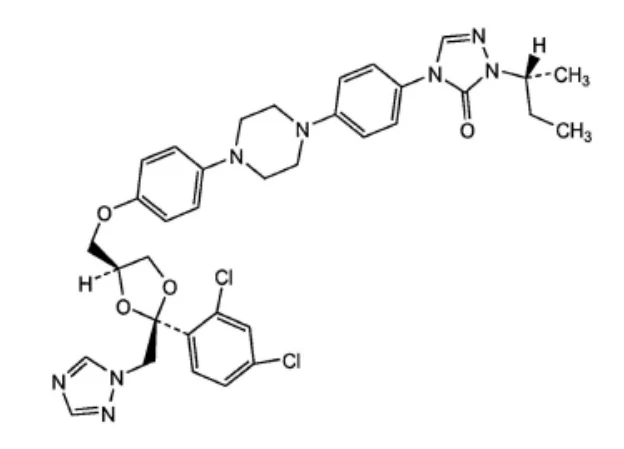
Physicochemical properties: Itraconazole is a white or an almost white powder, with a pKa of 3.7 and a melting range of 165-169°C. It is highly hydrophobic and lipophilic, with a log partition coefficient of 5.66 in the n-octanol/aqueous buffer solution of pH=8.1.
Itraconazole is very poorly soluble in water (<1 µg/mL) and in diluted acidic solutions (<5 µg/mL).
Concentrations exceeding 1% can only be obtained in some organic solvents such as acidified polyethylene glycols (PEG) or in aqueous cyclodextrin solutions.
14 CLINICAL TRIALS
14.1 Clinical Trials by Indication
The clinical trial data on which the original indication was authorized is not available because this information cannot be accessed.
14.2 Comparative Bioavailability Studies
Fed Study
A randomized, blinded, two-treatment, three-period, three-sequence, single dose, reference replicated, crossover, reference scaled oral bioequivalence study of MINT-ITRACONAZOLE (Itraconazole) 1 x 100 mg capsules by Mint Pharmaceuticals Inc. and SPORANOX® (Itraconazole) 1 x 100 mg capsules by Janssen Inc. was conducted in 48 healthy adult, Asian male subjects under high-fat, high-calorie conditions. The summary of results is presented in the following table (n=47).
SUMMARY TABLE OF THE COMPARATIVE BIOAVAILABILITY DATA
Itraconazole (1 x 100 mg) From measured data Geometric Mean Arithmetic Mean (CV %) | ||||
| Parameter | Test1 | Reference2 | % Ratio of Geometric Means | 90% Confidence Interval |
AUCT3 (ng.hr/mL) | 1120.04 1310.53 (50.88) | 1190.52 1396.76 (56.62) | 94.29 | 83.63 – 106.32 |
AUCI (ng.hr/mL) | 1224.06 1424.75 (50.34) | 1279.13 1508.14 (55.57) | 94.59 | 84.31 – 106.14 |
| Cmax (ng/mL) | 104.66 118.75 (47.10) | 104.51 122.74 (55.75) | 100.34 | 90.69 – 111.01 |
Tmax4 (hr) | 4.50 (2.00 - 8.00) | 4.50 (1.00 - 10.00) | ||
T½5 (hr) | 31.38 (38.03) | 31.96 (36.54) | ||
1 MINT-ITRACONAZOLE (itraconazole) 100 mg capsules (Mint Pharmaceuticals Inc.)
2 SPORANOX (itraconazole) 100 mg capsules (Janssen Inc.) were purchased in Canada
3Where sampling occurred to 120 hrs post-dose (with LQCT ranging from 24.00 – 120.00 hr)
4 Expressed as the median (range) only
5 Expressed as the arithmetic mean (CV%) only
15 MICROBIOLOGY
Itraconazole is an orally active triazole antifungal drug which demonstrates antifungal activity on a wide variety of fungi and yeast in vitro.
Itraconazole exhibits in vitro activity against Aspergillus spp., Blastomyces dermatitidis, Cladosporium spp., Coccidioides immitis, Cryptococcus neoformans, Geotrichum spp., Histoplasma spp., including H. capsulatum, Paracoccidioides brasiliensis, Talaromyces marneffei, Sporothrix schenckii and Trichosporon, Epidermophyton floccosum, Fonsecaea spp., Malassezia spp., Microsporum spp., Pseudallescheria boydii and Trichophyton spp.
MIC90's for the majority of medically important fungi are between 0.1 and 1.0 µg/mL, while fungicidal activity is obtained at higher concentrations (10 µg/mL). The in vitro activity of hydroxy-itraconazole (the only active metabolite) is comparable to the in vitro activity of itraconazole.
In vitro results vary considerably depending on culture medium, inoculum size, conditions of incubation, etc. Because of this variability of in vitro results, most fungi show a higher apparent sensitivity to itraconazole in vivo.
The principal fungus types that are not inhibited by itraconazole are Zygomycetes (e.g., Rhizopus spp., Rhizomucor spp., Mucor spp., and Absidia spp.), Fusarium spp., Scedosporium spp. and Scopulariopsis spp.
Candida krusei, Candida glabrata and Candida guilliermondii are generally the least susceptible Candida species, with some isolates showing unequivocal resistance to itraconazole in vitro.
The following in vivo activity of oral itraconazole was observed in experimental animal models of systemic mycoses:
Table 11: In vivo activity oral itraconazole
| Infection | Animal | Delay/ duration 1 (days) | % of animals responding at dosage indicated (mg/kg/day) | Response | |||||||
|---|---|---|---|---|---|---|---|---|---|---|---|
| 1.25 | 2.5 | 5 | 10 | 20 | 40 | 80 | 160 | ||||
| Candidiasis | Guinea pig | 0/14 | 27 | 10 0 | 96 | 862 | Negative kidney culture | ||||
| Rat | 0/3 | Survived 21 days | |||||||||
| Rabbit | +1/7 | Negative kidney culture | |||||||||
Aspergillosi s | Guinea pig | 0/14 | 83 | 75 | 47 | Survived 28 days | |||||
| Guinea pig | +0/14 | 50 | 83 | Survived 28 days | |||||||
| IC4 guinea pig | 0/28 | 100 | Survived 28 days | ||||||||
| IC4 guinea pig | +1/28 | 80 | Survived 28 days | ||||||||
| Mouse | 0/5 | Negative kidney culture | |||||||||
| Rabbit3 | +3/14 | 100 | Cured | ||||||||
| Cryptococc osis | Guinea pig | +3/35 | 88 | 100 | 732 | 53 | Negative culture (CSF excluded) | ||||
| Mouse | 0/14 | Negative CSF culture | |||||||||
| Rabbit | +4/14 | Negative CSF culture | |||||||||
| Sporotricho sis | Guinea pig | 0/28 | 80 | 100 | Cured | ||||||
Histoplasm osis | Guinea pig | 0/14 | 63 | 100 | Cured | ||||||
| Coccidioido my-cosis | Rat |
| 1005 | Negative lung culture | |||||||
| Rat | +7/14 | 805 | Negative lung culture | ||||||||
Paracoccidi oid- omycosis | Mouse | 0/28 | 10 0 | Survived 28 days | |||||||
- 1. Delay in start of treatment relative to time of infection/duration of treatment.
- 2. 200 mg given to each animal, roughly equivalent to 80 mg/kg/day.
- 3. Itraconazole administered intravenously.
- 4. IC = immunocompromised by cyclophosphamide, corticosteroids or mechlorethamine.
- 5. Actual dosage 16 mg/kg/day.
Resistance and Cross-Resistance
Isolates from several fungal species, (including Aspergillus fumigatus), with decreased susceptibility to itraconazole have been isolated in vitro and from patients receiving prolonged therapy. Azole resistance appears to develop slowly and is often the result of several genetic mutations. Mechanisms that have been described are overexpression of ERG11, which encodes the target enzyme 14α-demethylase, point mutations in ERG11 that lead to decreased target affinity and/or transporter overexpression resulting in increased efflux.
Cross-resistance between members of the azole class has been observed within Candida spp., the finding of cross-resistance is dependent on a number of factors, including the species evaluated, its clinical history, the particular azole compounds compared, and the type of susceptibility test that is performed.
16 NON-CLINICAL TOXICOLOGY
General Toxicology:
Acute
The LD50 values for itraconazole, 14 days after administration were as follows:
Table 12: LD50 values for itraconazole 14 days after administration
| ROUTE | SPECIES | NUMBER & SEX OF ANIMALS | LD50 IN MG/KG (LIMITS) |
|---|---|---|---|
| Oral | Mouse | 60 M & F | >320 |
| Rat | 60 M & F | >320 | |
| Guinea Pig | 60 M & F | >160 | |
| Dog (Beagle) | 18 M & F | >200 | |
| Intravenous | Mouse | 80 M & F | 46.4 (35.5-60.6) |
| Rat | 40 M | 46.4 (35.5-60.6) | |
| Rat | 40 F | 40.0 (30.6-52.3) |
Signs of toxicity after oral administration were palpebral ptosis, sedation, hypotonia, tremors, hypothermia, ataxia, diarrhea, loss of righting reflex, piloerection, exophthalmia, convulsions in rodents, and vomiting, licking and slight diarrhea in dogs.
After intravenous administration: similar signs were encountered as with oral administration. In addition, dyspnea was seen in rodents.
In the oral studies in rodents, CNS and GI disturbances and mortality were also present in polyethylene glycol (PEG)-treated animals receiving the maximally tolerated volume (20 mL/kg of body weight). This PEG-related toxicity was not observed in mice or guinea pigs receiving 10 mL/kg body weight, and was less severe in rats receiving 10 mL/kg body weight.
Necropsy revealed no consistent drug-related macroscopic changes.
Long-Term Toxicity
Rats: 3 months
In a 3-month toxicity study, itraconazole was administered orally (gavage) at dose levels of 10, 40, and 160 mg/kg to groups of 20 male and 20 female Wistar rats. Clinical signs of GI disturbances (diarrhea) and deaths (12/40 drug-related, 8 female, 4 male) were observed in rats receiving 160 mg/kg/day. Other changes observed included decreased food consumption and body weight gain; increased serum cholesterol and glucose levels; enlarged adrenals with increased fat accumulation and accumulation of proteinaceous material in macrophages.
In rats receiving 40 mg/kg/day orally, similar but less marked histological changes were observed, but no drug-related abnormalities were detected in clinical, hematologic, food consumption and body weight parameters. Serum chemistry abnormalities were limited to increased cholesterol levels in rats receiving 10 or 40 mg/kg/day.
Rats: 3 months + 1 month recovery
Itraconazole was administered for 3 months to groups of 20 male and 20 female rats by daily gavage at dose levels of 5, 20 or 80 mg/kg body weight/day. This study included both untreated control rats and control rats which received the vehicle (PEG 400) only. At the end of the dosage period, rats from all groups were sacrificed for pathological examinations. Other rats (groups of 10 males and 10 females) from the untreated control group, the vehicle control group, and the group of rats receiving 80 mg/kg (high dose level) were allowed to live one additional month during which no compound or vehicle was administered (recovery period).
There were no drug-related deaths and no relevant abnormalities in the clinical observations, slit-lamp examinations, food consumption, body weight gain, hematologic parameters or urinalyses. Possible drug-related effects were observed in the serum analyses and post-mortem examinations. All abnormalities were no longer observed one month following the cessation of dosing except for marginally enlarged adrenals and a slight, clearly regressing, increase of the number of foamy cells in the lungs of the 80 mg/kg females.
Beagle dogs: 3 months
Itraconazole was administered orally (gelatin capsules) to groups of 3 male and 3 female dogs for 3 months. The daily dose levels were 2.5, 10 and 40 mg/kg/day. No drug-related changes were observed in the mortality, clinical signs, ophthalmoscopy, food consumption, body weight gain, hematologic parameters, serum chemistry values (except marginally decreased albumin levels in the 10 and 40 mg/kg groups), or urinalyses. Also no drug-related gross lesions were found. In the 40 mg/kg/day group the absolute and relative adrenal weights were increased and the thymus weights were slightly decreased. Histologically, hypertrophy and increased fat, detectable in the adrenals of the dogs receiving 10 mg/kg/day were more pronounced in the dogs receiving 40 mg/kg/day. Marginal lymphatic hypoplasia was detected particularly in the thymuses in the 40 mg/kg/day dogs.
Beagle Dogs: 3 months + 1 month recovery
Itraconazole was also administered daily, via gelatin capsules, for 3 months to groups of 4 female and 4 male dogs at dose levels of 5, 20 or 80 mg/kg body weight/day. This study included both untreated control dogs and control dogs which received the vehicle (PEG 400)
only. At the end of the dosage period, dogs from all groups were sacrificed for pathological examinations. Four other dogs (2 male and 2 female) from the untreated control groups, and the group receiving 80 mg/kg (high dose level) remained under observation for one additional month during which no compound or vehicle was administered (recovery period).
No adverse effects were present in the dogs receiving 5 mg/kg. Body weight gains were marginally and transiently decreased in the 20 mg/kg group. In dogs receiving 80 mg/kg there was progressive weight loss during the entire dosing period. One male in the 80 mg/kg group died and one male of the 80 mg/kg group was sacrificed because of poor health and emaciation. In the dogs receiving 80 mg/kg, food consumption decreased (estimated). Possibly drug-related hematological changes were observed in the 80 mg/kg dogs; serum chemistry examinations revealed nonsignificant trends in the dogs receiving 20 mg/kg and significant changes in the dogs receiving 80 mg/kg. Urinalysis indicated possible drug-related effects in the 80 mg/kg dogs. Other changes observed in the post-mortem examinations of the 80 mg/kg dogs and to a lesser extent, the 20 mg/kg dogs were: swollen adrenals, hypertrophy and vacuolation of the adrenal cortex, foamy macrophages in the lymphoid tissue, and foamy cells in the lungs.
All abnormalities were no longer observed after one month of recovery except for the histological changes in the adrenals which remained present, but to a much reduced extent in 2 of 4 dogs, and the persistence of much less pronounced, but still somewhat elevated (but within normal limits), haptoglobin and alkaline phosphatase levels. The target organ changes observed in lymphoid tissue, lungs, and liver completely disappeared in the 80 mg/kg recovery group.
Rats: 6 months
Itraconazole was administered to groups of 20 male and 20 female rats admixed in the diet at levels of 10, 40 and 160 mg/100 g food. The dosage levels calculated from the food consumption and body weights were 7, 30 and 160 mg/kg/day for the males and 10, 45 and 357 mg/kg/day for the females. However, there was wastage of the food due to drug-induced overactivity in the male 160 mg/100 g food group and the female 40 and 160 mg/100 g food groups which biased the actual test compound intake calculations.
No adverse effects were found in the eyes. The incidences of drug-related deaths were 1/20 in the males of the 160 mg/100 g food group and 14/20 in the females of the 160 mg/100 g food group. Increased serum cholesterol levels and macroscopic changes indicating increased bone fragility in a few rats were the only observations found in the 10 mg/100 g food group, although a macroscopic bone change was also observed in one control rat. Both of these changes were observed in rats of all dosage levels. The adrenals, kidneys, liver (including clinical pathological parameters), macrophage system (including that of the lung), abdominal mesothelium, ovary, uterus, and bone showed drug-specific histologic changes in the rats receiving 160 mg/100 g food and, to a lesser extent, those receiving 40 mg/100 g food. In general, the females were more severely affected. No drug-related histological changes were observed at 10 mg/100 g food.
Rats: 12 months
Itraconazole was administered to groups of 20 male and 20 female rats via the diet at dosage levels of 5, 20 and 80 mg/100 g food or approximately 5, 20 and 80 mg/kg/day (calculated mean compound intake of 3, 12 and 59 mg/kg/day in the males and 4, 27 and 131 mg/kg/day in the females). Drug-related overactivity and food wastage were observed in the rats receiving 20 or 80 mg/100 g food. The food consumption was estimated to have been decreased in the males of the 80 mg/100 g food group and the females of the 20 and 80 mg/100 g food groups. The food wastage biased the calculated compound intake in these groups.
No adverse effects were found in the eyes. The incidence of drug-related deaths was 6/20, all of which occurred in the females of the 80 mg/100 g food group. Increased serum cholesterol levels were the only adverse findings present in the rats receiving 5 mg/100 g food. The changes occurring at dose levels of 20 and 80 mg/100 g food were similar to, but less extensive than those found at dose levels of 40 and 160 mg/100 g food in the 6 month study. More specifically, no adverse histologic lesions were found in the male rats receiving 20 mg/100 g food and there were no lesions indicating bone fragility in either the male or the female
5 mg/100 g food groups. In general, the females were more severely affected. No drug-related histological changes were observed at the dose of 5 mg/100 g food.
Dogs: 12 months
Itraconazole was administered, via gelatin capsules, to groups of 4 male and 4 female dogs at dosage levels of 5, 20 or 80 mg/kg/day. One male in the 80 mg/kg/day group that became moribund was sacrificed. All other dogs lived 12 months, but one female receiving 20 mg/kg/day and one female receiving 80 mg/kg/day had a transient period of poor health. No adverse effects were found in the dogs receiving 5 mg/kg/day. The changes in the 20 mg/kg/day group were limited, the most significant being decreased serum calcium, increased serum alanine aminotransferase, and a tendency of the adrenal cortex to hypertrophy. In the dogs receiving 80 mg/kg/day, food consumption and body weight gains were decreased, the serum calcium, total protein, and albumin levels were decreased, and the alkaline phosphatase and alanine aminotransferase levels were increased. When considering the time-dependency, this liver dysfunction was surely not progressing with increasing duration.
At necropsy, the adrenals were enlarged. Histologically, the adrenals showed a tendency toward hypertrophy, the lymph nodes had less copious germinal centres, and in the mesenteric lymph nodes, there was a slightly increased prominence of foamy cells. The thymuses were more involuted; there was increased PAS-positive material in the sinusoidal lining of the liver cells and in the lung there was a tendency toward increased small foci of foamy cells (also noted in the lung of dogs receiving 20 mg/kg/day). No drug-related histological changes were observed at 5 mg/kg/day.
Carcinogenicity
The carcinogenic potential of itraconazole was evaluated in groups of 50 male and female mice and groups of 50 male and female rats with itraconazole administered in the diet for 23 months and 24 months, respectively.
In mice, doses were 5, 20 and 80 mg/kg body weight/day. No toxic effects were observed in any of the exposed males. A temporary body weight decrease and an increased incidence of adrenal pigmentation were observed in females receiving 80 mg/kg body weight/day. Tumour incidences of all dosed groups were comparable to those of the control group.
In rats, the doses were 3.2, 13.4 and 25.5 mg/kg body weight/day for the males and 4.7, 22.5, and 52.4 mg/kg body weight/day for the females. Pathological examination revealed, at the high dose and to a lesser extent at the mid dose, modifications of several organs such as abdominal mesothelia, adrenal, lung, lymph node, mammary gland, female genital tract, pituitary gland, skin with subcutis, thymus and urinary bladder. Male rats treated with the high dose of
25.5 mg/kg body weight/day (3.1x Maximum Recommended Human Dose [MRHD]) had a decrease in body weight gain and slight increase in the incidence of soft tissue sarcoma. These sarcomas may have been a consequence of chronic inflammatory reaction of the connective tissue related to a rat-specific response of hypercholesterolemia which was not observed in dogs or humans. In female rats, there was a slight decrease in body weight gain at the low-dose group and an increased wastage of food at the mid- and high-dose groups. Some altered blood parameters and a slight increase in mortality were observed in the high-dose group. Female rats treated with approximately 50 mg/kg body weight/day (6.25x MRHD) had an increased incidence of squamous cell carcinoma of the lung (2/50) when compared to the control group. Although the occurrence of squamous cell carcinoma in the lung is extremely rare in untreated rats, the increased incidence in this study was not statistically significant.
Genotoxicity
Itraconazole was studied for mutagenic potential by the Salmonella typhimurium microsomal activation (Ames test), Drosophila recessive lethal mutation (Drosophila melanogaster), micronucleus formation (male and female rats), dominant lethal mutation (male and female mice), mouse lymphoma L5178Y test system and chromosome aberration (human lymphocytes). No mutagenic potential was demonstrated with any of these tests.
Reproductive and Developmental Toxicology:
Segment I Reproduction Studies
Itraconazole was administered orally by gavage to groups of 24 male and 24 female rats in a segment I study to assess its effects on male and female fertility. The dose levels studied were 10, 40 and 160 mg/kg/day which were administered to males (minimum 60 days prior to mating) and females (14 days prior to mating and a further 8 days during pregnancy). No adverse effects were found in the 10 mg/kg/day groups. There were no effects on fertility in the
40 mg/kg/day groups, but parental toxicity was present. In the 160 mg/kg/day groups, parental toxicity including deaths occurred (2 males, 16 females). In the few surviving females of the 160 mg/kg/day group, pregnancy rates decreased and resorption rates increased, whereas other fertility parameters such as copulation index, number of corpora lutea, and the number of implantations per pregnant rat were normal. It was concluded that itraconazole had no primary effect on male or female fertility and that any adverse effects on fertility were secondary to the general toxicity seen at a partially lethal level of 160 mg/kg/day. No teratogenic effects were present in this study.
Segment II Reproduction Studies
In rats, itraconazole was administered by gavage (2 studies) and admixed with the diet. The dose levels in all rat studies were 10, 40 and 160 mg/kg/day. In the diet study, where itraconazole was administered to groups of 20 female rats from day 6 through day 15 of pregnancy, maternal toxicity and embryotoxicity were found at 40 and 160 mg/kg/day (100% resorption at 160 mg/kg/day). Teratogenic effects (major skeletal defects or abnormalities secondary to skeletal defects) were present in the offspring of the 40 mg/kg/day females. There were no fetuses of the 160 mg/kg/day dams available. When itraconazole was administered via gavage to groups of 36 females (from day 8 through day 18 of pregnancy) in one study and groups of approximately 20 females (from day 6 through day 15 of pregnancy) in another study, maternal toxicity, embryotoxicity and teratologic changes were observed at 160 mg/kg/day. The only effect noted in the 40 mg/kg/day group was a slightly lowered pup weight in one of the two studies.
In a segment II rabbit study, the dose levels were 5 (17 females), 20 (15 females) and 80 (16 females) mg/kg/day administered by gavage from day 6 through day 18 of pregnancy.
Reduced implantation was found in the 20 mg/kg/day dams but this observation is a predosing effect. In this study, no embryotoxicity or teratogenicity was present. A second study was performed with the clinical pellet formulation. Doses administered to groups of 15 female rabbits by gavage were 25, 50 and 100 mg/kg/day from day 6 through day 18 of pregnancy. Slight maternal toxicity was characterized by decreased food consumption during and after dosing of 50 and 100 mg/kg/day. Itraconazole did not produce embryotoxic or teratogenic effects.
Two segment II reproduction studies were also conducted in mice, where itraconazole was administered by gavage from days 6 through 16 of pregnancy. The dose levels were 10, 40 and 160 mg/kg/day in the first study (groups of 24 dosed females) and 40, 80 and 160 mg/kg/day (groups of 30 dosed females) in the second. No adverse effects were found in the dams or fetuses of dams receiving 10 or 40 mg/kg/day. In the 80 and 160 mg/kg/day groups a few malformations (mainly encephaloceles and/or macroglossia) were found. A dose level of 160 mg/kg/day produced both maternal toxicity and embryotoxicity.
In a special segment II teratogenicity study in groups of 10 dosed female rats, it was shown that the embryotoxicity and teratogenicity seen after itraconazole at 160 mg/kg could be reduced by simultaneous administration of arachidonic acid. This protective effect of arachidonic acid is similar to what is known for non-steroidal and steroidal anti-inflammatory drugs. Since itraconazole did not show any relevant in vitro inhibitory activity on the target enzymes of the arachidonic acid pathway, an indirect, adrenal-mediated mechanism was proposed.
To evaluate this hypothesis, adrenalectomy was performed at day 4 of pregnancy in pregnant rats. Adrenalectomy resulted in a reduction of the embryotoxic and teratogenic effects of itraconazole dosed at 40 mg/kg. The data indicates that the adrenal effects seen at high dose levels of itraconazole are, at least partially, responsible for the adverse itraconazole effects on the progeny of pregnant rats.
Segment III Reproduction Studies
Perinatal and postnatal effects were studied in groups of 24 female rats in a segment III study. Itraconazole was administered via gavage at the rates of 5, 20 and 80 mg/kg/day from day 18 of pregnancy through a 3-week lactation period. There were no adverse effects at 5 or
20 mg/kg/day whereas maternal toxicity only was present at the dose level of 80 mg/kg/day. Except for a marginal effect on pup weight at 80 mg/kg, no embryotoxic or teratogenic, or any other adverse effects were noticed in the offspring. In a subsequent, second generation study, no adverse effects on reproduction were noted in rats derived from dams (groups of 10 females) dosed up to 80 mg/kg.
17 SUPPORTING PRODUCT MONOGRAPH
SPORANOX (capsules, 100 mg), submission control 288116, Product Monograph, Janssen Inc. (JUN 04, 2025)