


Product Monograph - Cresemba
RECENT MAJOR LABEL CHANGES
| 1 INDICATIONS | 11/2024 |
|---|---|
| 4 DOSAGE AND ADMINISTRATION | 11/2024 |
| 7 WARNINGS AND PRECAUTIONS, Sensitivity/Resistance | 04/2022 |
TABLE OF CONTENTS
Sections or subsections that are not applicable at the time of authorization are not listed.
RECENT MAJOR LABEL CHANGES ............................................................................................ 2
TABLE OF CONTENTS .............................................................................................................. 2
PART I: HEALTH PROFESSIONAL INFORMATION ...................................................................... 4
1 INDICATIONS ............................................................................................................... 4
1.1 Pediatrics .............................................................................................................. 4
1.2 Geriatrics .............................................................................................................. 4
2 CONTRAINDICATIONS ................................................................................................. 4
3 SERIOUS WARNINGS AND PRECAUTIONS BOX ............................................................ 5
4 DOSAGE AND ADMINISTRATION ................................................................................. 5
4.1 Dosing Considerations .......................................................................................... 5
4.2 Recommended Dose and Dosage Adjustment ..................................................... 6
4.3 Reconstitution ...................................................................................................... 7
4.4 Administration ...................................................................................................... 8
4.5 Missed Dose ......................................................................................................... 9
5 OVERDOSAGE .............................................................................................................. 9
6 DOSAGE FORMS, STRENGTHS, COMPOSITION AND PACKAGING ................................. 9
7 WARNINGS AND PRECAUTIONS ................................................................................ 10
7.1 Special Populations ............................................................................................. 12
7.1.1 Pregnant Women ........................................................................................... 12
7.1.2 Breast-feeding ................................................................................................ 12
7.1.3 Pediatrics ........................................................................................................ 13
7.1.4 Geriatrics ........................................................................................................ 13
8 ADVERSE REACTIONS ................................................................................................ 13
8.1 Adverse Reaction Overview ................................................................................ 13
8.2 Clinical Trial Adverse Reactions .......................................................................... 13
8.2.1 Clinical Trial Adverse Reactions – Pediatrics ................................................... 15
8.3 Less Common Clinical Trial Adverse Reactions ................................................... 16
8.3.1 Less Common Clinical Trial Adverse Reactions – Pediatrics ............................ 17
8.4 Abnormal Laboratory Findings: Hematologic, Clinical Chemistry and Other Quantitative Data ........................................................................................................... 18
8.5 Post-Market Adverse Reactions ......................................................................... 18
9 DRUG INTERACTIONS ................................................................................................ 18
9.1 Serious Drug Interactions ................................................................................... 18
9.2 Drug Interactions Overview ................................................................................ 18
9.3 Drug-Behavioural Interactions ............................................................................ 19
9.4 Drug-Drug Interactions ....................................................................................... 19
9.5 Drug-Food Interactions ....................................................................................... 28
9.6 Drug-Herb Interactions ....................................................................................... 28
9.7 Drug-Laboratory Test Interactions ...................................................................... 28
10 CLINICAL PHARMACOLOGY ....................................................................................... 28
10.1 Mechanism of Action .......................................................................................... 28
10.2 Pharmacodynamics ............................................................................................ 28
10.3 Pharmacokinetics ............................................................................................... 28
11 STORAGE, STABILITY AND DISPOSAL ......................................................................... 32
PART II: SCIENTIFIC INFORMATION ....................................................................................... 33
13 PHARMACEUTICAL INFORMATION ............................................................................ 33
14 CLINICAL TRIALS ........................................................................................................ 34
14.1 Clinical Trials by Indication ................................................................................. 34
15 MICROBIOLOGY ........................................................................................................ 38
16 NON-CLINICAL TOXICOLOGY ..................................................................................... 38
PATIENT MEDICATION INFORMATION .................................................................................. 41
PATIENT MEDICATION INFORMATION .................................................................................. 47
PATIENT MEDICATION INFORMATION .................................................................................. 53
PART I: HEALTH PROFESSIONAL INFORMATION
1 INDICATIONS
CRESEMBA (isavuconazole, as isavuconazonium sulfate) is an azole antifungal indicated for use in adults and pediatrics from 1 year to up to 18 years for the treatment of:
- Invasive aspergillosis;
- Invasive mucormycosis.
1.1 Pediatrics
Pediatrics (1 - < 18 years of age): The use of CRESEMBA in pediatric patients is supported by safety and pharmacokinetic data from one open-label, non-comparative Phase 1 study in which 46 subjects (aged 1 - < 18) received isavuconazole for prophylaxis for up to 28 days and one open-label, non-comparative Phase 2 study in which 31 subjects (aged 1 - < 18) with suspected or confirmed invasive aspergillosis or invasive mucormycosis, were administered either oral or IV CRESEMBA for up to 181 days. The safety profile and pharmacokinetics were comparable to that observed in adult Phase 3 studies. Therefore, Health Canada has authorized an indication for pediatric use.
1.2 Geriatrics
Geriatrics (≥ 65 years of age): The clinical experience in elderly patients is limited. See 4 DOSAGE AND ADMINISTRATION and 10 CLINICAL PHARMACOLOGY, 10.3 Pharmacokinetics.
2 CONTRAINDICATIONS
CRESEMBA is contraindicated in:
- Patients who are hypersensitive to this drug or to any ingredient in the formulation, including any non-medicinal ingredient, or component of the container. For a complete listing, see 6 DOSAGE FORMS, STRENGTHS, COMPOSITION AND PACKAGING.
- Co-administration with strong CYP3A4 inhibitor ketoconazole because this strong CYP3A4 inhibitor can significantly increase the plasma concentration of isavuconazole. See 9 DRUG INTERACTIONS.
- Co-administration with strong CYP3A4 inducers, such as rifampin, rifabutin, carbamazepine, phenytoin, St. John’s wort, high-dose ritonavir (>400mg every 12 hours), or long acting barbiturates (e.g. phenobarbital) because strong CYP3A4 inducers can significantly decrease the plasma concentration of isavuconazole. See 9 DRUG INTERACTIONS.
- Co-administration with moderate CYP3A4/5 inducers such as efavirenz and etravirine. See 9 DRUG INTERACTIONS.
- Patients with familial short QT syndrome. See 7 WARNINGS AND PRECAUTIONS.
3 SERIOUS WARNINGS AND PRECAUTIONS BOX
Serious Warnings and Precautions
Embryo-Fetal Toxicity:
|
|---|
4 DOSAGE AND ADMINISTRATION
4.1 Dosing Considerations
CRESEMBA is available with two routes of administration: oral (capsules) and intravenous (powder for solution).
- Capsules: 40 mg isavuconazole capsules, equivalent to 74.5 mg isavuconazonium sulfate, are to be used in pediatric patients from 6 years up to 18 years, and 100 mg isavuconazole capsules, equivalent to 186.3 mg isavuconazonium sulfate, are to be used in adults (see 4.2 Recommended Dose and Dosage Adjustment). All capsules per dose must be taken at the same time.
Powder for solution (for intravenous infusion): 200 mg isavuconazole, equivalent to 372.6 mg isavuconazonium sulfate, is to be used in adults and pediatric patients from 1 year up to 18 years (see 4.2 Recommended Dose and Dosage Adjustment).
- Precautions are to be taken before handling or administering CRESEMBA (isavuconazole for injection). See 4.3 Reconstitution and 4.4 Administration for instructions on reconstitution, dilution and filtration.
- On the basis of the high oral bioavailability (98%), switching between intravenous and oral administration is appropriate when clinically indicated. See 10 CLINICAL PHARMACOLOGY. Patient who are unable to swallow capsules or pediatric patients who have a bodyweight less than 16 kg should receive CRESEMBA as intravenous infusion. Loading dose is not required when switching between formulations. Start maintenance doses 12 to 24 hours after the last loading dose.
- Duration of therapy should be determined by the clinical response. Safety and efficacy data of isavuconazole use for longer than 6 months is limited. Therefore, the benefit-risk balance should be carefully considered. See 10 CLINICAL PHARMACOLOGY and 15 MICROBIOLOGY.
- CRESEMBA has not been studied in patients with severe hepatic impairment (Child-Pugh Class C). Use in these patients is not recommended unless the potential benefit is considered to outweigh the risks. See 7 WARNINGS AND PRECAUTIONS, 8 ADVERSE REACTIONS, and 10 CLINICAL PHARMACOLOGY.
- Specimens for fungal culture and other relevant laboratory studies (including histopathology) to isolate and identify causative organism(s) should be obtained prior to initiating antifungal therapy. Therapy may be instituted before the results of the cultures and other laboratory studies are known. However, once these results become available, antifungal therapy should be adjusted accordingly.
4.2 Recommended Dose and Dosage Adjustment
Table 1 - Dosing regimen for CRESEMBA
Loading Dose (every 8 hours for the first 48 hours) d | Maintenance Dose (once daily) e | ||
| Capsules | |||
| 40 mga of isavuconazole per capsule | |||
| Pediatric patients from 6 year up to 18 years | |||
| Body weight 16 kg to < 18 kg | Two 40 mg capsules (80 mg) orally | Two 40 mg capsules (80 mg) orally | |
| Body weight 18 kg to < 25 kg | Three 40 mg capsules (120 mg) orally | Three 40 mg capsules (120 mg) orally | |
| Body weight 25 kg to < 32 kg | Four 40 mg capsules (160 mg) orally | Four 40 mg capsules (160 mg) orally | |
| Body weight ≥ 32 kg | Five 40 mg capsules (200 mg) orally | Five 40 mg capsules (200 mg) orally | |
| 100 mgb of isavuconazole per capsule | |||
| Adults | Two 100 mg capsules (200 mg) orally | Two 100 mg capsules (200 mg) orally | |
| Isavuconazole for injection | |||
| 200 mgc of isavuconazole per vial | |||
| Pediatric patients from 1 year up to 18 years | |||
| Body weight < 37 kg | 5.4 mg/kg isavuconazole intravenously | 5.4 mg/kg isavuconazole intravenously | |
| Body weight ≥ 37 kg | 1 vial (200 mg) intravenously f | 1 vial (200 mg) intravenously f | |
| Adults | 1 vial (200 mg) intravenously f | 1 vial (200 mg) intravenously f | |
a 40 mg of isavuconazole is equivalent to 74.5 mg of isavuconazonium sulfate b 100 mg of isavuconazole is equivalent to 186.3 mg of isavuconazonium sulfate c 200 mg of isavuconazole is equivalent to 372.6 mg of isavuconazonium sulfate d 6 doses in total
e Maintenance dose: Starting 12 to 24 hours after the last loading dose f After reconstitution and dilution
Pediatrics
- The maximum of any individual loading or daily maintenance dose to be administered to any pediatric patient is 200 mg isavuconazole.
- The safety and efficacy of isavuconazole in pediatric patients below 1 year of age has not been established.
- The use of CRESEMBA 100 mg capsules has not been studied in pediatric patients.
Geriatrics
- No dose adjustment is necessary for elderly patients.
Renal Impairment
- No dose adjustment is necessary in adult patients with renal impairment, including patients with end-stage renal disease. See 7 WARNINGS AND PRECAUTIONS and 10 CLINICAL PHARMACOLOGY.
- Data for CRESEMBA use in pediatrics patients from 1 year up to 18 years with renal impairment is limited. Therefore, no dose recommendations can be made for these patients. See 7 WARNINGS AND PRECAUTIONS and 10 CLINICAL PHARMACOLOGY
Hepatic Impairment
- No dose adjustment is necessary in adult patients with mild or moderate hepatic impairment (Child-Pugh Classes A and B). Use in patient with severe hepatic impairment (Child-Pugh Class C) is not recommended unless the potential benefit is considered to outweigh the risks. See 7 WARNINGS AND PRECAUTIONS, 8 ADVERSE REACTIONS and 10 CLINICAL PHARMACOLOGY.
- No data is available for CRESEMBA use in pediatrics patients from 1 year up to 18 years with hepatic impairment. Therefore, no dose recommendations can be made for these patients.
4.3 Reconstitution
Parenteral Products:
Aseptic technique must be strictly observed in all handling since no preservative or bacteriostatic agent is present in CRESEMBA (isavuconazole for injection) or in the materials specified for reconstitution.
One vial of CRESEMBA (isavuconazole for injection) should be reconstituted by addition of 5 mL water for injections to the vial. The reconstituted concentrate contains 40 mg isavuconazole per mL. The vial should be gently shaken to dissolve the powder completely. See Table 2.
The reconstituted solution should be inspected visually for particulate matter and discoloration. Reconstituted concentrate should be clear and free of visible particulate. It must be further diluted prior to administration. The reconstituted solution may be stored below 25°C for maximum 1 hour prior to preparation of the patient infusion solution.
Table 2 - Reconstitution
| Vial Size | Volume of Diluent to be Added to Vial | Approximate Available Volume | Concentration per mL |
| 10 mL | 5 mL water | 5 mL | 40 mg/mL isavuconazole |
Following reconstitution, CRESEMBA (isavuconazole for injection) must be further diluted in compatible diluent to a concentration corresponding to approximately 0.8 mg/mL of isavuconazole prior to administration by intravenous infusion. CRESEMBA (isavuconazole for injection) should only be administered with the following diluents:
- 0.9% sodium chloride solution for injection
- 5% dextrose solution for injection
After the reconstituted concentrate is further diluted, the diluted solution may show fine white-to-translucent particulates of isavuconazole that do not sediment (but will be removed by in-line filtration). The diluted solution should be mixed gently, or the bag should be rolled to minimize the formation of particulates. Unnecessary vibration or vigorous shaking of the solution should be avoided. Do not use a pneumatic transport system.
Adults and pediatric patients with bodyweight from 37 kg:
After reconstitution, the entire content of the reconstituted concentrate should be removed from the vial and added to an infusion bag containing 250 mL of diluent (Table 3). The infusion solution contains approximately 0.8 mg isavuconazole per mL (corresponding to approximately 1.5 mg/mL isavuconazonium sulfate).
Table 3 – Dilution for Adults and pediatric patients with bodyweight from 37 kg
| Infusion Bag size | Volume of Diluent to be Added to Reconstituted Concentrate | Approximate Available Volume | Concentration per mL |
| ≥ 250 mL | 250 mL | 255 mL | 0.8 mg/mL isavuconazole |
Pediatric patients with bodyweight below 37 kg:
After reconstitution, the appropriate volume of the reconstituted concentrate based on pediatric dosing recommendations should be removed from the vial and added to an infusion bag containing the appropriate volume of diluent. The infusion solution must contain approximately 0.8 mg isavuconazole per mL (corresponding to approximately 1.5 mg/mL isavuconazonium sulfate).
4.4 Administration
CRESEMBA (isavuconazole capsules)
- CRESEMBA capsules can be taken with or without food.
- CRESEMBA capsules should be swallowed whole. Do not chew, crush, dissolve or open the capsules.
CRESEMBA (isavuconazole for injection)
- CRESEMBA (isavuconazole for injection) must be reconstituted and then further diluted in 250 mL of a compatible diluent to a concentration corresponding to approximately 0.8 mg/mL of isavuconazole prior to administration by intravenous infusion For reconstitution and dilution instructions, see 4.3 Reconstitution.
- The solution or infusion must be administered via an infusion set with an in-line filter (pore size 0.2 μm to 1.2 μm) made of polyether sulfone (PES) over a minimum of 1 hour to reduce infusion-related reactions. Regardless of the infusion solution container size utilised, the entire volume of the container should be administered to ensure the complete intended dose of the product is administered.
- If possible, the intravenous administration of CRESEMBA (isavuconazole for injection) should be completed within 6 hours after reconstitution and dilution at room temperature. If this is not possible, the infusion solution should be immediately refrigerated after dilution, and infusion should be completed within 24 hours. Chemical and physical in-use stability after reconstitution and dilution has been demonstrated for 24 hours at 2 - 8 °C, or 6 hours at room temperature.
- Do not administer as an intravenous bolus injection.
- CRESEMBA (isavuconazole for injection) should not be infused into the same line or cannula concomitantly with other intravenous products.
- Flush intravenous lines with 0.9% sodium chloride solution for injection, or 5% dextrose solution for injection prior to and after infusion of CRESEMBA (isavuconazole for injection).
- This medicinal product is for single use only. Discard partially-used vials.
4.5 Missed Dose
If a dose of CRESEMBA (isavuconazole capsules) is missed, it should be taken as soon as possible, unless it is almost time for the next dose. A patient should not take a double dose to make up for a forgotten one.
5 OVERDOSAGE
Symptoms
In a QT study, symptoms reported more frequently at supratherapeutic doses of CRESEMBA (equivalent to isavuconazole 600 mg/day) than at therapeutic doses (equivalent to isavuconazole 200 mg/day dose) included: headache, dizziness, paraesthesia, somnolence, disturbance in attention, dysgeusia, dry mouth, diarrhea, oral hypoaesthesia, vomiting, hot flush, anxiety, restlessness, palpitations, tachycardia, photophobia and arthralgia.
Management of Overdose
Isavuconazole is not removed by hemodialysis. There is no specific antidote for isavuconazole. In the event of an overdose, supportive treatment should be instituted.
| For management of a suspected drug overdose, contact your regional poison control centre. |
|---|
6 DOSAGE FORMS, STRENGTHS, COMPOSITION AND PACKAGING
Table 4 - Dosage Forms, Strengths, Composition and Packaging
| Route of Administration | Dosage Form / Strength/Composition | Non-medicinal Ingredients |
| Oral | Capsules / 40 mg isavuconazole (as 74.5 mg isavuconazonium sulfate) and 100 mg isavuconazole (as 186.3 mg isavuconazonium sulfate) | Capsule contents: magnesium citrate (anhydrous), microcrystalline cellulose, silica (colloidal anhydrous), stearic acid, talc Capsule shell: disodium edetate (100 mg), gellan gum (100 mg), hypromellose, potassium acetate (100 mg), red iron oxide, sodium lauryl sulfate (100 mg), titanium dioxide Printing ink: black iron oxide, potassium hydroxide, propylene glycol, shellac |
| Intravenous (infusion) | Powder for solution / 200 mg isavuconazole (as 372.6 mg isavuconazonium sulfate) | Mannitol Sulfuric acid (pH adjustment) |
Capsules
CRESEMBA 40 mg capsules have a Swedish orange (reddish-brown) capsule body marked with “CR40” in black ink. Capsule length: 15.9 mm.
CRESEMBA 40 mg capsules are packaged in carton containing 35 capsules. Each carton contains 5 blister cards of 7 capsules each, and each capsule pocket is connected to a pocket with desiccant.
CRESEMBA 100 mg capsules have a Swedish orange (reddish-brown) capsule body marked with “100” in black ink and a white cap marked with “C” in black ink. Capsule length: 24.2 mm.
CRESEMBA 100 mg capsules are packaged in carton containing 14 capsules. Each carton contains 2 blister cards of 7 capsules each, and each capsule pocket is connected to a pocket with desiccant.
Powder for solution
CRESEMBA (isavuconazole for injection) is a white to yellow powder supplied in a 10 mL Type 1 glass vial with rubber stopper and an aluminum cap with plastic seal. CRESEMBA (isavuconazole for injection) is water soluble, preservative-free, sterile, and nonpyrogenic.
7 WARNINGS AND PRECAUTIONS
Please see 3 SERIOUS WARNINGS AND PRECAUTIONS BOX.
General
During intravenous administration of isavuconazole, infusion-related reactions including hypotension, dyspnea, dizziness, paraesthesia, nausea, and headache were reported. See 8 ADVERSE REACTIONS. The infusion should be stopped if these reactions occur.
Limitations of the clinical data for invasive mucormycosis
The clinical experience for isavuconazole in the treatment of invasive mucormycosis is limited to one prospective non-comparative clinical study in 37 adult patients with proven or probable mucormycosis (mITT-Mucorales) who received isavuconazole for primary treatment, or because other antifungal treatments (predominantly amphotericin B) were not effective.
For individual Mucorales species, the clinical efficacy data are very limited. Susceptibility data indicate that concentrations of isavuconazole required for inhibition in vitro are variable between genera/species within the order of Mucorales, and generally higher than concentrations required to inhibit Aspergillus species. No dose-finding study has been conducted for isavuconazole use in mucormycosis and patients were administered the same dose of isavuconazole as was used for the treatment of invasive aspergillosis (See 14 CLINICAL TRIALS and 15 MICROBIOLOGY).
Cardiovascular
CRESEMBA is contraindicated in patients with familial short QT syndrome. See 2 CONTRAINDICATIONS. In a QT study in healthy human subjects, isavuconazole shortened the QTc interval in a concentration-related manner. See 10 CLINICAL PHARMACOLOGY.
Caution is warranted when prescribing CRESEMBA to patients taking other medicinal products known to decrease the QT interval, such as rufinamide.
Driving and Operating Machinery
Isavuconazole has a moderate potential to influence the ability to drive and use machines. Patients should avoid driving or operating machinery if symptoms of confusional state, somnolence, syncope, and/or dizziness are experienced.
Drug Interactions
Co-administration of CRESEMBA with strong CYP3A4 inhibitor ketoconazole and strong inducers (such as rifampin, rifabutin and high-dose ritonavir) is contraindicated (see 2 CONTRAINDICATIONS). See 9 DRUG INTERATIONS, 9.1 Serious Drug Interactions and 9.4 Drug-Drug Interactions for warnings and precautions regarding co-administration with CYP3A4/5 inhibitors and inducers, CYP3A4/5 substrates including immunosuppressants, CYP2B6 substrates, and P-gp substrates.
Hepatic/Biliary/Pancreatic
Hepatic adverse drug reactions (e.g., elevations in alanine aminotransferase (ALT), aspartate aminotransferase (AST), alkaline phosphatase, total bilirubin) have been reported in clinical trials. The elevations in liver-related laboratory tests were generally reversible and did not require discontinuation of CRESEMBA. Cases of more severe hepatic adverse drug reactions including hepatitis, cholestasis or hepatic failure including death have been reported in patients with serious underlying medical conditions (e.g., hematologic malignancy) during treatment with azole antifungal agents, including CRESEMBA.
Evaluate liver-related laboratory tests at the start and during the course of CRESEMBA therapy. Monitor patients who develop abnormality in liver-related laboratory tests during CRESEMBA therapy for the development of more severe hepatic injury. Discontinue CRESEMBA if clinical signs and symptoms consistent with liver disease develop that may be attributable to CRESEMBA. See 8 ADVERSE REACTIONS.
Patients with Severe Hepatic Impairment
CRESEMBA has not been studied in patients with severe hepatic impairment (Child-Pugh Class C). Use in these patients is not recommended unless the potential benefit is considered to outweigh the risks. These patients should be carefully monitored for potential drug toxicity. See 4 DOSAGE AND ADMINISTRATION, 8 ADVERSE REACTIONS and 10 CLINICAL PHARMACOLOGY.
CRESEMBA has not been studied in pediatric patients with hepatic impairment.
Renal
Patients with Renal Impairment
CRESEMBA has been studied in patients with mild, moderate or severe renal impairment compared to patients with normal renal function. No dose adjustment is required in patients with renal impairment, including those patients with end-stage renal disease.
In clinical studies, CRESEMBA was administered to 5 pediatric subjects with mild, moderate, or severe renal impairment. Therefore, data for CRESEMBA use in pediatric patients with renal impairment is limited (see 10 CLINICAL PHARMACOLOGY).
Isavuconazole is not readily dialyzable. See 4 DOSAGE AND ADMINISTRATION.
Reproductive Health: Female and Male Potential
Fertility
CRESEMBA did not affect the fertility of male or female rats treated with oral doses equivalent to less than half the maintenance human dose (200 mg) based on AUC comparisons.
Function
No data are available.
Teratogenic Risk
Not applicable.
Sensitivity/Resistance
Hypersensitivity Reactions
Hypersensitivity to CRESEMBA may result in adverse reactions that include: anaphylactic reactions (including fatal outcome), hypotension, respiratory failure, dyspnea, drug eruption, pruritus, and rash. Discontinue CRESEMBA if a patient experiences an anaphylactic reaction.
Serious hypersensitivity and severe skin reactions, such as anaphylaxis or Stevens-Johnson syndrome, have been reported during treatment with other azole antifungal agents. Discontinue CRESEMBA if a patient develops a severe cutaneous adverse reaction.
There is no information regarding cross-sensitivity between CRESEMBA and other azole antifungal agents. However, caution should be used in prescribing CRESEMBA to patients with hypersensitivity to other azole antifungal agents.
Skin
Severe Cutaneous Adverse Reactions
Severe cutaneous adverse reactions, such as Stevens-Johnson syndrome, have been reported during treatment with azole antifungal agents. If a patient develops a severe cutaneous adverse reaction such as exfoliative cutaneous reactions, CRESEMBA should be discontinued.
7.1 Special Populations
7.1.1 Pregnant Women
CRESEMBA may cause fetal harm when administered to a pregnant woman. CRESEMBA should not be used during pregnancy unless the potential benefits to the patient outweigh the risk to the fetus. There are no adequate or well-controlled clinical studies of CRESEMBA in pregnant women.
CRESEMBA is not recommended for women of childbearing potential who are not using effective contraception. Women who become pregnant, or wish to become pregnant, during CRESEMBA treatment are encouraged to contact their physician.
Perinatal mortality was significantly increased in the offspring of pregnant rats dosed orally with isavuconazonium sulfate at levels that were less than half the maintenance human dose based on AUC comparisons during pregnancy through the weaning period.
Isavuconazonium chloride administration in rats and rabbits was associated with dose-related increases in the incidences of rudimentary cervical ribs at doses equivalent to about one fifth and one tenth of the clinical exposures based on AUC comparisons. In rats, dose-related increases in the incidences of zygomatic arch fusion and supernumerary ribs/rudimentary supernumerary ribs were also noted at levels equivalent to one fifth the clinical dose based on AUC comparisons. See 16 NON-CLINICAL TOXICOLOGY.
7.1.2 Breast-feeding
Mothers should not breast-feed while taking CRESEMBA. Isavuconazole is excreted in the milk of lactating rats following intravenous administration. A risk to newborns and infants cannot be excluded. See 16 NON-CLINICAL TOXICOLOGY.
7.1.3 Pediatrics
Pediatrics (1 - < 18 years of age): Based on the data submitted and reviewed by Health Canada, the safety and efficacy of CRESEMBA in pediatric patients has been established. Therefore, Health Canada has authorized an indication for pediatric use.
7.1.4 Geriatrics
The clinical experience in elderly patients is limited. See 1 INDICATIONS and 4 DOSAGE AND ADMINISTRATION.
8 ADVERSE REACTIONS
8.1 Adverse Reaction Overview
The Phase 3 clinical trials involved 403 patients with invasive fungal infections treated with CRESEMBA. The most frequently reported adverse reactions among CRESEMBA-treated adult patients were nausea (26%), vomiting (25%), diarrhea (22%), headache (17%), elevated liver chemistry tests (16%), hypokalemia (14%), constipation (13%), dyspnea (12%), cough (12%), peripheral edema (11%), and back pain (10%). Serious adverse reactions occurred in 223/403 (55%) of patients and 56/403 (14%) of patients permanently discontinued treatment with CRESEMBA due to an adverse reaction in the two trials. The adverse reactions which most often led to permanent discontinuation of CRESEMBA therapy in adults during the clinical trials were: confusional state (0.7%), acute renal failure (0.7%), increased blood bilirubin (0.5%), convulsion (0.5%), dyspnea (0.5%), epilepsy (0.5%), respiratory failure (0.5%), and vomiting (0.5%).
Patients in the clinical trials were immunocompromised with underlying conditions including hematological malignancy, post-chemotherapy neutropenia, graft-versus-host disease, and hematopoietic stem cell transplant. The patient population was 61% male, had a mean age of 51 years (range 17-92, including 85 patients aged greater than 65 years), and was 79% white and 3% black. One hundred forty-four (144) patients had a duration of CRESEMBA therapy of greater than 12 weeks, with 52 patients receiving CRESEMBA for over six months.
In a randomized, double-blind, active-controlled clinical trial for treatment of invasive aspergillosis (9766-CL-0104), treatment-emergent adverse reactions occurred in 247/257 (96%), and 255/259 (99%) patients in the CRESEMBA and voriconazole treatment groups, respectively. Treatment-emergent adverse reactions resulting in permanent discontinuation were reported in 37 (14%) CRESEMBA-treated patients and 59 (23%) voriconazole-treated patients.
In an open-label, non-comparative trial of CRESEMBA in patients with invasive aspergillosis and renal impairment or invasive mucormycosis (9766-CL-0103), treatment-emergent adverse reactions occurred in 139/146 (95%) of patients receiving CRESEMBA. Adverse reactions resulting in permanent discontinuation were reported in 19 (13%) of these patients.
The frequencies and types of adverse reactions observed in CRESEMBA-treated patients were similar between these two trials.
8.2 Clinical Trial Adverse Reactions
Clinical trials are conducted under very specific conditions. The adverse reaction rates observed in the clinical trials; therefore, may not reflect the rates observed in practice and should not be compared to the rates in the clinical trials of another drug. Adverse reaction information from clinical trials may be useful in identifying and approximating rates of adverse drug reactions in real-world use.
Table 5 includes selected treatment-emergent adverse reactions which were reported at an incidence of more than 5% during CRESEMBA therapy in Study 9766-CL-0104 (Invasive Aspergillosis). Study details including dosing regimen and treatment duration are described in 14 CLINICAL TRIALS. The trial design and study demographics of Invasive Aspergillosis study (9766-CL-0104) and Invasive Mucormycosis study (9766-CL-0103) are presented in Table 11 and Table 14).
Table 5 - Selected Treatment-Emergent Adverse Reactions with Rates of 5% or Greater in CRESEMBA-treated Patients in Study 9766-CL-0104 (Invasive Aspergillosis)
System Organ Class Preferred Term | CRESEMBA n = 257 (%) | Voriconazole n = 259 (%) | ||
| Gastrointestinal disorders | ||||
| Nausea | 27.6 | 30.1 | ||
| Vomiting | 24.9 | 28.2 | ||
| Diarrhea | 23.7 | 23.2 | ||
| Abdominal pain | 16.7 | 22.8 | ||
| Constipation | 14.0 | 20.8 | ||
| Dyspepsia | 6.2 | 5.4 | ||
| General disorders and administration site conditions | ||||
| Edema peripheral | 15.2 | 17.8 | ||
| Fatigue | 10.5 | 6.9 | ||
| Chest pain | 8.9 | 6.2 | ||
| Injection site reaction | 6.2 | 1.5 | ||
| Hepatobiliary disorders | ||||
| Elevated liver laboratory testsa | 17.1 | 24.3 | ||
| Metabolism and nutrition disorders | ||||
| Hypokalemia | 19.1 | 22.4 | ||
| Decreased appetite | 8.6 | 10.8 | ||
| Hypomagnesemia | 5.4 | 10.4 | ||
| Muskuloskeletal and connective tissue disorders | ||||
| Back pain | 10.1 | 7.3 | ||
| Nervous system disorders | ||||
| Headache | 16.7 | 14.7 | ||
System Organ Class Preferred Term | CRESEMBA n = 257 (%) | Voriconazole n = 259 (%) | ||
| Psychiatric disorders | ||||
| Insomnia | 10.5 | 9.7 | ||
| Deliriumb | 8.6 | 11.6 | ||
| Anxiety | 8.2 | 6.9 | ||
| Renal and urinary disorders | ||||
| Renal failure | 10.1 | 8.1 | ||
| Respiratory, thoracic and mediastinal disorders | ||||
| Dyspnea | 17.1 | 13.5 | ||
| Acute respiratory failure | 7.4 | 8.5 | ||
| Skin and subcutaneous tissue disorders | ||||
| Rash | 8.6 | 13.9 | ||
| Pruritus | 8.2 | 5.8 | ||
| Vascular disorders | ||||
| Hypotension | 8.2 | 10.8 | ||
a Elevated liver laboratory tests include reactions of increased alanine aminotransferase, aspartate aminotransferase, blood alkaline phosphatase, blood bilirubin, and gamma-glutamyltransferase.
b Delirium includes adverse reactions of agitation, confusional state, delirium, disorientation, and mental status changes.
8.2.1 Clinical Trial Adverse Reactions – Pediatrics
The clinical safety of isavuconazole was assessed in 77 pediatric patients who received at least one dose of intravenous or oral isavuconazole. This included 46 pediatric patients who received isavuconazole as well as other antifungals for prophylaxis for up to 28 days, and 31 patients with suspected or confirmed invasive fungal disease, including 27 subjects with proven or possible invasive aspergillosis or invasive mucormycosis who received isavuconazole as primary therapy for up to 181 days with median treatment duration of 55 days. Table 6 includes frequently reported treatment-emergent adverse reactions in pediatric studies. Overall, the safety profile of isavuconazole in the pediatric population was similar to that in adults. Adverse reactions observed in pediatric subjects that occurred at higher frequencies compared to adults were stomatitis, abdominal pain, and pyrexia. These were attributed to differences between pediatrics and adults with respect to underlying condition at baseline, use of concomitant chemotherapy agents and/or patient medical history.
Table 6 - Frequently reported Treatment-Emergent Adverse Reactions (≥ 15%) in CRESEMBA-treated pediatric patients in Study 9766-CL-0046 and Study 9766-CL-0107
System Organ Class Preferred Term | 9766-CL-0046 CRESEMBA n = 46 (%) | 9766-CL-0107 CRESEMBA n = 31 (%) | ||||
| Blood and lymphatic system disorders | ||||||
| Anaemia | 17.4 | 9.7 | ||||
| Cardiac disorders | ||||||
| Tachycardia | 15.2 | 9.7 | ||||
| Gastrointestinal disorders | ||||||
| Abdominal pain | 23.9 | 9.7 | ||||
| Diarrhoea | 26.1 | 25.8 | ||||
| Stomatitis | 2.2 | 16.1 | ||||
| Vomiting | 19.6 | 22.6 | ||||
| General disorders and administration site conditions | ||||||
| Mucosal inflammation | 28.3 | 0 | ||||
| Non-cardiac chest pain | 0 | 16.1 | ||||
| Pyrexia | 45.7 | 29.0 | ||||
| Muskuloskeletal and connective tissue disorders | ||||||
| Pain in extremity | 17.4 | 6.5 | ||||
| Respiratory, thoracic and mediastinal disorders | ||||||
| Epistaxis | 15.2 | 9.7 | ||||
8.3 Less Common Clinical Trial Adverse Reactions - Adults
Additional adverse reactions reported in less than 5% of all CRESEMBA-treated patients in both clinical trials, not listed in Table 5, are presented below. This listing includes adverse reactions where a causal relationship to isavuconazole cannot be ruled out or those which may help the physician in managing the risks to the patients.
Blood and lymphatic system disorders: agranulocytosis, leukopenia, pancytopenia
Cardiac disorders: atrial fibrillation, atrial flutter, bradycardia, reduced QT interval on electrocardiogram, palpitations, supraventricular extrasystoles, supraventricular tachycardia, ventricular extrasystoles, cardiac arrest
Ear and labyrinth disorders: tinnitus, vertigo
Eye disorders: optic neuropathy
Gastrointestinal: abdominal distension, gastritis, gingivitis, stomatitis
General disorders and administration site conditions: catheter thrombosis, chills, malaise
Hepatobiliary disorders: cholecystitis, cholelithiasis, hepatitis, hepatomegaly, hepatic failure
Immune system disorders: hypersensitivity
Injury, poisoning and procedural complications: fall
Metabolism and nutrition disorders: hypoalbuminemia, hypoglycemia, hyponatremia
Musculoskeletal and connective tissue disorders: bone pain, myositis, neck pain
Nervous system disorders: convulsion, dysgeusia, encephalopathy, hypoesthesia, migraine, peripheral neuropathy, paraesthesia, somnolence, stupor, syncope, tremor
Psychiatric disorders: confusion, depression, hallucination
Renal and urinary disorders: hematuria, proteinuria
Respiratory, thoracic and mediastinal disorders: bronchospasm, tachypnea
Skin and subcutaneous tissue disorders: alopecia, dermatitis, exfoliative dermatitis, erythema, petechiae, urticaria
Vascular disorders: thrombophlebitis
8.3.1 Less Common Clinical Trial Adverse Reactions – Pediatrics
Additional adverse reactions reported in less than 15% of all CRESEMBA-treated patients in both pediatric clinical trials, not listed in Table 6, are presented below. This listing includes adverse reactions where a causal relationship to isavuconazole cannot be ruled out or those which may help the physician in managing the risks to the patients.
Cardiac disorders: conduction disorder
Gastrointestinal: nausea
General disorders and administration site conditions: infusion site pain, infusion site pruritus, injection site reaction
Immune system disorders: graft vs host disease
Injury, poisoning and procedural complications: infusion related reaction, procedural nausea, procedural vomiting, vascular access site pain
Investigations: alanine aminotransferase increased, aspartate aminotransferase increased, blood bilirubin increased, cardiac murmur, electrocardiogram QT prolonged, gamma-glutamyltransferase increased, hepatic enzyme increased, weight decreased
Metabolism and nutrition disorders: fluid imbalance, hypoalbuminaemia
Nervous system disorders: headache
Psychiatric disorders: depression
Skin and subcutaneous tissue disorders: pruritus allergic, pruritus generalised, rash, rash erythematous, rash follicular, urticaria
Vascular disorders: hypotension
8.4 Abnormal Laboratory Findings: Hematologic, Clinical Chemistry and Other Quantitative Data
Clinical Trial Findings
In Study 9766-CL-0104, elevated liver transaminases (alanine aminotransferase or aspartate aminotransferase) > 3 × Upper Limit of Normal (ULN) were reported at the end of study treatment in 4.4% of patients who received CRESEMBA. Marked elevations of liver transaminases > 10 × ULN developed in 1.2% of patients on CRESEMBA. In pediatric studies, elevated liver transaminases > 3 x ULN and > 10 x ULN were reported in 17.1% and 2.6% of subjects, respectively, while receiving CRESEMBA. See 14 CLINICAL TRIALS.
8.5 Post-Market Adverse Reactions
The following additional adverse reactions have been reported during clinical studies and/or marketed use as uncommon (≥1/1,000 to <1/100):
Blood and lymphatic system disorders: neutropenia, thrombocytopenia, anemia
General disorders and administration site conditions: asthenia
Immune system disorders: anaphylactic reaction
Metabolism and nutrition disorders: malnutrition
Nervous system disorders: dizziness
Respiratory, thoracic and mediastinal disorders: hemoptysis, epistaxis
Skin and subcutaneous tissue disorders: drug eruption
Vascular disorders: circulatory collapse.
The following adverse reactions were observed during post-market use in pediatric patients that occurred at a higher frequency than observed in pediatric clinical studies: hypoglycemia, hyperkalaemia, hypermagnesaemia, and hyperphosphataemia.
9 DRUG INTERACTIONS
9.1 Serious Drug Interactions
Serious Drug Interactions Due to the effect on plasma concentrations, isavuconazole is contraindicated with the following drugs:
See Table 7 for further information regarding drug-drug interactions with these drugs. |
|---|
9.2 Drug Interactions Overview
Isavuconazole is a substrate of CYP3A4 and CYP3A5. See 10 CLINICAL PHARMACOLOGY. Co-administration of medicinal products which are inhibitors of CYP3A4 and/or CYP3A5 may increase the plasma concentrations of isavuconazole. Co-administration of medicinal products which are inducers of CYP3A4 and/or CYP3A5 may decrease the plasma concentrations of isavuconazole.
9.3 Drug-Behavioural Interactions
Isavuconazole has a moderate potential to influence the ability to drive and use machines. Patients should avoid driving or operating machinery if symptoms of confusional state, somnolence, syncope, and/or dizziness are experienced.
9.4 Drug-Drug Interactions
Isavuconazole is a substrate of CYP3A4 and CYP3A5. In vitro, isavuconazole is an inhibitor of CYP3A4, CYP2C8, CYP2C9, CYP2C19, and CYP2D6. Isavuconazole is also an inhibitor of P-gp-, BCRP-and OCT2-mediated drug transporters. In vitro, isavuconazole is also an inducer of CYP3A4, CYP2B6, CYP2C8, and CYP2C9.
The effect of co-administration of drugs on the pharmacokinetics of isavuconazole and the effect of isavuconazole on the pharmacokinetics of co-administered drugs were studied after single and multiple doses of isavuconazole in healthy subjects.
Appropriate therapeutic drug monitoring and dose adjustment of some products (e.g immunosuppressants (i.e., tacrolimus, sirolimus, and cyclosporine)) may be necessary when co-administered with CRESEMBA. Drugs with a narrow therapeutic window that are P-gp substrates, such as digoxin, may require dose adjustment when administered concomitantly with CRESEMBA. See Table 7 - Established or Potential Drug-Drug Interactions.
Potential of medicinal products to affect the pharmacokinetics of isavuconazole
CYP3A4/5 Inhibition
Co-administration of CRESEMBA with the strong CYP3A4/5 inhibitor ketoconazole is contraindicated. This medicinal product can significantly increase plasma concentrations of isavuconazole. See 2 CONTRAINDICATIONS and 9 DRUG INTERACTIONS.
For the strong CYP3A4 inhibitor lopinavir/ritonavir, a two-fold increase in isavuconazole exposure was observed. For other strong CYP3A4 inhibitors, such as clarithromycin, indinavir and saquinavir, a less pronounced effect can be expected, based on their relative potency. No dose adjustment of CRESEMBA is necessary when co-administered with these strong CYP3A4/5 inhibitors, however caution is advised as adverse drug reactions may increase. See 7 WARNINGS AND PRECAUTIONS.
No dose adjustment is warranted for moderate to mild CYP3A4/5 inhibitors.
CYP3A4/5 Induction
Co-administration of CRESEMBA with potent CYP3A4/5 inducers such as rifampin, rifabutin, carbamazepine, high dose ritonavir (>400mg every 12 hours), long-acting barbiturates (e.g., phenobarbital), phenytoin and St. John's wort, or with moderate CYP3A4/5 inducers such as efavirenz and etravirine, is contraindicated, since these medicinal products can significantly decrease plasma concentrations of isavuconazole. See 2 CONTRAINDICATIONS.
Co-administration with mild CYP3A4/5 inducers such as aprepitant, prednisone and pioglitazone, may result in mild to moderate decreases of isavuconazole plasma levels; co administration with mild CYP3A4/5 inducers should be avoided unless the potential benefit is considered to outweigh the risk. See 7 WARNINGS AND PRECAUTIONS.
Potential for CRESEMBA to affect exposures of other medicines
Medicines metabolized by CYP3A4/5
Isavuconazole is a moderate inhibitor of CYP3A4/5; co-administration of CRESEMBA with medicines which are substrates of CYP3A4/5 may result in increased plasma concentrations of these medicines.
Medicines metabolized by CYP2B6
Isavuconazole is a mild CYP2B6 inducer; co-administration of CRESEMBA may result in decreased plasma concentrations of CYP2B6 substrates.
Medicines transported by P-gp in the intestine
Isavuconazole is a mild inhibitor of P-glycoprotein (P-gp); co-administration with CRESEMBA may result in increased plasma concentrations of P-gp substrates.
Medicines transported by BCRP
In vitro, isavuconazole is an inhibitor of BCRP, and plasma concentrations of substrates of BCRP may therefore be increased. Caution is advised when CRESEMBA is given concomitantly with substrates of BCRP.
Medicines renally excreted via transport proteins
Isavuconazole is a mild inhibitor of the organic cation transporter 2 (OCT2). Co-administration of CRESEMBA with medicines which are substrates of OCT2 may result in increased plasma concentrations of these medicines.
Uridine diphosphate-glucuronosyltransferases (UGT) substrates
Isavuconazole is a mild inhibitor of UGT. Co-administration of CRESEMBA with medicines which are substrates of UGT may result in mildly increased plasma concentrations of these medicines.
Table 7 - Established or Potential Drug-Drug Interactions
Isavuconazole Co-administered medicines by therapeutic area | Source of Evidence | Effects on drug concentrations / Geometric Mean Change (%) in AUC, Cmax (Mode of action) | Recommendation concerning co-administration |
| Anticonvulsants | |||
Carbamazepine, phenobarbital and phenytoin (strong CYP3A4/5 inducers) | T | Isavuconazole concentrations may decrease (CYP3A induction by carbamazepine, phenytoin and long-acting barbiturates such as phenobarbital). | The concomitant administration of CRESEMBA and carbamazepine, phenytoin and long-acting barbiturates such as phenobarbital is contraindicated. |
Isavuconazole Co-administered medicines by therapeutic area | Source of Evidence | Effects on drug concentrations / Geometric Mean Change (%) in AUC, Cmax (Mode of action) | Recommendation concerning co-administration |
| Antibacterials | |||
Rifampin (strong CYP3A4/5 inducer) | CT | Isavuconazole: AUCtau: ↓ 90% Cmax: ↓ 75% (CYP3A4/5 induction) | As this medicinal product can significantly decrease plasma concentrations of isavuconazole, the concomitant administration of CRESEMBA and rifampin is contraindicated. |
Rifabutin (strong CYP3A4/5 inducer) | T | Isavuconazole concentrations may significantly decrease. (CYP3A4/5 induction) | The concomitant administration of CRESEMBA and rifabutin is contraindicated. |
Clarithromycin (strong CYP3A4/5 inhibitor) | T | Isavuconazole concentrations may increase. (CYP3A4/5 inhibition) | Based on relative potency, no CRESEMBA dose adjustment necessary; caution is advised as adverse drug reactions may increase. |
| Antifungals | |||
Ketoconazole (strong CYP3A4/5 inhibitor) | CT | Isavuconazole: AUCtau: ↑ 422% Cmax: ↑ 9% (CYP3A4/5 inhibition) | This medicinal product can significantly increase plasma concentrations of isavuconazole. The concomitant administration of CRESEMBA and ketoconazole is contraindicated. |
| Herbal medicines | |||
St John's wort (Hypericum perforatum) (strong CYP3A4/5 inducer) | T | Isavuconazole concentrations may significantly decrease. (CYP3A4/5 induction). | The concomitant administration of CRESEMBA and St John's wort is contraindicated. |
| Immunosuppressants | |||
Cyclosporine, sirolimus, tacrolimus (CYP3A4/5 substrates) | CT | Cyclosporine: AUC0-∞: ↑ 29% Cmax: ↑ 6% Sirolimus: AUCinf: ↑ 84% Cmax: ↑ 65% Tacrolimus: AUC0-∞: ↑ 125% Cmax: ↑ 42% (CYP3A4 inhibition) | Systemic exposure to these medicinal products metabolised by CYP3A4 may be increased when co-administered with CRESEMBA. No CRESEMBA dose adjustment necessary. Cyclosporine, sirolimus, tacrolimus: monitoring of plasma levels and appropriate dose adjustment if required. |
Isavuconazole Co-administered medicines by therapeutic area | Source of Evidence | Effects on drug concentrations / Geometric Mean Change (%) in AUC, Cmax (Mode of action) | Recommendation concerning co-administration |
| Mycophenolate mofetil (MMF) (UGT substrate) | CT | Mycophenolic acid (MPA, active metabolite): AUC0-∞: ↑ 35% Cmax: ↓ 11% (UGT inhibition) | No CRESEMBA dose adjustment necessary. MMF: monitoring for MPA-related toxicities is advised. |
Prednisone (CYP3A4 substrate) | CT | Prednisolone (active metabolite): AUC0-∞: ↑ 8% Cmax: ↓ 4% (CYP3A4 inhibition) Isavuconazole concentrations may decrease. (CYP3A4/5 induction) | Co-administration should be avoided unless the potential benefit is considered to outweigh the risk. |
| Opioids | |||
Short-acting opiates (alfentanil, fentanyl) (CYP3A4/5 substrate) | T | Short-acting opiate concentrations may increase. (CYP3A4/5 inhibition). | No CRESEMBA dose adjustment necessary. Short-acting opiates (alfentanil, fentanyl): careful monitoring for any occurrence of drug toxicity, and dose reduction if required. |
Methadone (CYP3A4/5, 2B6 and 2C9 substrate) | CT | S-methadone (inactive opiate isomer) AUC0-∞: ↓ 35% Cmax: ↑ 1% 40% reduction in terminal half-life R-methadone (active opiate isomer). AUC0-∞: ↓ 10% Cmax: ↑ 4% (CYP2B6 induction) | No CRESEMBA dose adjustment necessary. Methadone: no dose adjustment required. |
| Anti-cancer | |||
Vinca alkaloids (vincristine, vinblastine) (P-gp and CYP3A substrates) | T | Vinca alkaloid concentrations may increase. (P-gp and CYP3A4 inhibition) | Avoid concomitant use of CRESEMBA with vinca alkaloids due to increased risk of vinca alkaloid-related adverse reactions. |
Isavuconazole Co-administered medicines by therapeutic area | Source of Evidence | Effects on drug concentrations / Geometric Mean Change (%) in AUC, Cmax (Mode of action) | Recommendation concerning co-administration |
Cyclophosphamide (CYP2B6 substrate) | T | Isavuconazole is an inducer of CYP2B6. Cyclophosphamide has a narrow therapeutic index. Cyclophosphamide concentrations may decrease. (CYP2B6 induction) | No CRESEMBA dose adjustment necessary. Cyclophosphamide: careful monitoring for any occurrence of lack of efficacy, and dose increase if required. |
Methotrexate (BCRP, OAT1, OAT3 substrate) | CT | Methotrexate: AUC0-∞: ↓ 3% Cmax: ↓ 11% 7-hydroxymetabolite: AUC0-∞: ↑ 29% Cmax: ↑ 15% (Mechanism unknown) | No CRESEMBA dose adjustment necessary. Methotrexate: no dose adjustment required. |
Other anticancer agents (daunorubicin, doxorubicin, imatinib, irinotecan, lapatinib, mitoxantrone, topotecan) (BCRP substrates) | T | Daunorubicin, doxorubicin, imatinib, irinotecan, lapatinib, mitoxantrone, topotecan concentrations may increase. (BCRP inhibition) | No CRESEMBA dose adjustment necessary. Daunorubicin, doxorubicin, imatinib, irinotecan, lapatinib, mitoxantrone or topotecan: careful monitoring for any occurrence of drug toxicity, and dose reduction if required. |
| Antiemetics | |||
Aprepitant (mild CYP3A4/5 inducer) | T | Isavuconazole concentrations may decrease. (CYP3A4/5 induction) | Co-administration should be avoided unless the potential benefit is considered to outweigh the risk. |
| Antidiabetics | |||
Metformin (OCT1, OCT2 and MATE1 substrate) | CT | Metformin: AUC0-∞: ↑ 52% Cmax: ↑ 23% (OCT2 inhibition) | No CRESEMBA dose adjustment necessary. Metformin: dose reduction may be required. |
Repaglinide (CYP2C8 and OATP1B1 substrate) | CT | Repaglinide: AUC0-∞: ↓ 8% Cmax: ↓ 14% | No CRESEMBA dose adjustment necessary. Repaglinide: no dose adjustment required. |
Pioglitazone (mild CYP3A4/5 inducer) | T | Isavuconazole concentrations may decrease. (CYP3A4/5 induction) | Co-administration should be avoided unless the potential benefit is considered to outweigh the risk. |
Isavuconazole Co-administered medicines by therapeutic area | Source of Evidence | Effects on drug concentrations / Geometric Mean Change (%) in AUC, Cmax (Mode of action) | Recommendation concerning co-administration |
| Anticoagulants | |||
Dabigatran etexilate (P-gp substrate) | T | Dabigatran etexilate concentrations may increase. (P-gp inhibition). | No CRESEMBA dose adjustment necessary. Dabigatran etexilate has a narrow therapeutic index and should be monitored, and dose reduction if required. |
Warfarin (CYP2C9 substrate) | CT | S-warfarin AUC0-∞: ↑ 11% Cmax: ↓ 12% R-warfarin AUC0-∞: ↑ 20% Cmax: ↓ 7% | No CRESEMBA dose adjustment necessary. Warfarin: no dose adjustment required. |
| Antiretroviral agents | |||
Lopinavir / Ritonavir (CYP3A4/5 strong inhibitors and substrates) | CT | Lopinavir: AUCtau: ↓ 27% Cmax: ↓ 23% Cmin,ss: ↓ 16%a Ritonavir: AUCtau: ↓ 31% Cmax: ↓ 33% (Mechanism unknown) Isavuconazole: AUCtau: ↑ 96% Cmax: ↑ 74% (CYP3A4/5 inhibition) | For this strong CYP3A4 inhibitor, a two-fold increase in isavuconazole exposure was observed. No CRESEMBA dose adjustment necessary; caution is advised as adverse drug reactions may increase. Lopinavir/ritonavir: no dose adjustment for lopinavir 400 mg / ritonavir 100 mg every 12 hours required, but careful monitoring for any occurrence of lack of anti-viral efficacy. |
Ritonavir (at doses >400 mg every 12 hours) (strong CYP3A4/5 inducer) | T | Ritonavir at high doses may significantly decrease isavuconazole concentrations. (CYP3A4/5 induction) | The concomitant administration of CRESEMBA and high doses of ritonavir (>400 mg every 12 hours) is contraindicated. |
Efavirenz (CYP3A4/5 moderate inducer and CYP2B6 substrate) | T | Efavirenz concentrations may decrease. (CYP2B6 induction) Isavuconazole drug concentrations may significantly decrease. (CYP3A4/5 induction) | The concomitant administration of CRESEMBA and efavirenz is contraindicated. |
Isavuconazole Co-administered medicines by therapeutic area | Source of Evidence | Effects on drug concentrations / Geometric Mean Change (%) in AUC, Cmax (Mode of action) | Recommendation concerning co-administration |
Etravirine (moderate CYP3A4/5 inducer) | T | Isavuconazole concentrations may significantly decrease. (CYP3A4/5 induction) | The concomitant administration of CRESEMBA and etravirine is contraindicated. |
Indinavir (CYP3A4/5 strong inhibitor and substrate) | CT | Indinavir:b AUC0-∞: ↓ 36% Cmax: ↓ 52% (Mechanism unknown) Isavuconazole concentrations may increase. (CYP3A4/5 inhibition) | Based on relative potency, no CRESEMBA dose adjustment necessary; caution is advised as adverse drug reactions may increase. Indinavir: careful monitoring for any occurrence of lack of anti-viral efficacy, and dose increase if required. |
Saquinavir (strong CYP3A4 inhibitor) | T | Saquinavir concentrations may decrease (as observed with lopinavir/ritonavir) or increase (CYP3A4 inhibition). Isavuconazole concentrations may increase. (CYP3A4/5 inhibition). | Based on relative potency, no CRESEMBA dose adjustment necessary; caution is advised as adverse drug reactions may increase. Saquinavir: careful monitoring for any occurrence of drug toxicity and /or lack of anti-viral efficacy, and dose adjustment if required |
Other protease inhibitors (e.g., fosamprenavir, nelfinavir) (CYP3A4/5 strong or moderate inhibitors and substrates) | T | Protease inhibitor concentrations may decrease (as observed with lopinavir/ritonavir) or increase. (CYP3A4 inhibition) Isavuconazole concentrations may increase. (CYP3A4/5 inhibition). | No CRESEMBA dose adjustment necessary. Protease inhibitors: careful monitoring for any occurrence of drug toxicity and /or lack of anti- viral efficacy, and dose adjustment if required. |
Other Non-Nucleoside Reverse Transcriptase Inhibitor (NNRTI) (e.g., delavirdine, and nevirapine) (CYP3A4/5 and 2B6 inducers and substrates) | T | NNRTI concentrations may decrease (CYP2B6 induction by isavuconazole) or increase. (CYP3A4/5 inhibition) | No CRESEMBA dose adjustment necessary. NNRTIs: careful monitoring for any occurrence of drug toxicity and/or lack of anti-viral efficacy, and dose adjustment if required. |
Isavuconazole Co-administered medicines by therapeutic area | Source of Evidence | Effects on drug concentrations / Geometric Mean Change (%) in AUC, Cmax (Mode of action) | Recommendation concerning co-administration |
| Antacids | |||
Esomeprazole (CYP2C19 substrate and gastric pH ↑) | CT | Isavuconazole: AUCtau: ↑ 8% Cmax: ↑ 5% | No CRESEMBA dose adjustment necessary. Esomeprazole: no dose adjustment required. |
Omeprazole (CYP2C19 substrate and gastric pH ↑) | CT | Omeprazole: AUC0-∞: ↓ 11% Cmax: ↓ 23% | No CRESEMBA dose adjustment necessary. Omeprazole: no dose adjustment required. |
| Lipid-lowering agents | |||
Atorvastatin and other statins (CYP3A4 substrates e.g., simvastatin, lovastatin, pravastatin, cilastatin, rosuvastatin) (CYP3A4/5 and/or BCRP substrates) | CT | Atorvastatin: AUC0-∞: ↑ 37% Cmax: ↑ 3% Other statins were not studied. Statins concentrations may increase. (CYP3A4/5 or BCRP inhibition) | No CRESEMBA dose adjustment necessary. Based on results with atorvastatin, no statin dose adjustment required. Monitoring of adverse reactions typical of statins is advised. |
| Antiarrhythmics | |||
Digoxin (P-gp substrate) | CT | Digoxin: AUC0-∞: ↑ 25% Cmax: ↑ 33% (P-gp inhibition) | No CRESEMBA dose adjustment necessary. Isavuconazole may increase the exposure of digoxin which has a narrow therapeutic index. Digoxin: serum digoxin concentrations should be monitored and used for titration of the digoxin dose. |
| Oral contraceptives | |||
Ethinyl estradiol and norethindrone (CYP3A4/5 substrates) | CT | Ethinyl estradiol AUC0-∞: ↑ 8% Cmax: ↑ 14% Norethindrone AUC0-∞: ↑ 16% Cmax: ↑ 6% | No CRESEMBA dose adjustment necessary. Ethinyl estradiol and norethindrone: no dose adjustment required. |
Isavuconazole Co-administered medicines by therapeutic area | Source of Evidence | Effects on drug concentrations / Geometric Mean Change (%) in AUC, Cmax (Mode of action) | Recommendation concerning co-administration |
| Antitussives | |||
Dextromethorphan (CYP2D6 substrate) | CT | Dextromethorphan: AUC0-∞: ↑ 18% Cmax: ↑ 17% Dextrorphan (active metabolite): AUC0-∞: ↑ 4% Cmax: ↓ 2% | No CRESEMBA dose adjustment necessary. Dextromethorphan: no dose adjustment required. |
| Benzodiazepines | |||
Midazolam (CYP3A4/5 substrate) | CT | Oral midazolam: AUC0-∞: ↑ 103% Cmax: ↑ 72% (CYP3A4 inhibition) | No CRESEMBA dose adjustment necessary. Midazolam: careful monitoring of clinical signs and symptoms recommended, and dose reduction if required. |
| Antigout agent | |||
Colchicine (P-gp substrate) | T | Colchicine concentrations may increase. (P-gp inhibition) | No CRESEMBA dose adjustment necessary. Colchicine has a narrow therapeutic index and should be monitored, dose reduction if required. |
| Natural products | |||
Caffeine (CYP1A2 substrate) | CT | Caffeine: AUC0-∞: ↑ 4% Cmax: ↓ 1% | No CRESEMBA dose adjustment necessary. Caffeine: no dose adjustment required. |
| Smoking cessation aids | |||
Bupropion (CYP2B6 substrate) | CT | Buproprion: AUC0-∞: ↓ 42% Cmax: ↓ 31% (CYP2B6 induction) | No CRESEMBA dose adjustment necessary. Bupropion: dose increase if required. |
Legend: C = Case Study in adults; CT = Clinical Trial in adults; T = Theoretical, has not been studiedNNRTI = non-nucleoside reverse-transcriptase inhibitor; P-gp = P-glycoprotein.
a % decrease of the mean trough level values
b Indinavir was studied only after a single dose of 400 mg isavuconazole.
AUC0-∞ = area under the plasma concentration-time profiles extrapolated to infinity;
AUCtau = area under the plasma concentration-time profiles during the 24 h interval at steady state;
Cmax = peak plasma concentration; Cmin,ss = trough levels at steady state.
9.5 Drug-Food Interactions
CRESEMBA can be administered with or without food.
9.6 Drug-Herb Interactions
Concomitant administration of CRESEMBA with St. John’s wort is contraindicated as isavuconazole concentrations may significantly decrease. Interactions with other herbal products have not been established.
9.7 Drug-Laboratory Test Interactions
Interactions with laboratory tests have not been established. See 8 ADVERSE REACTIONS.
10 CLINICAL PHARMACOLOGY
10.1 Mechanism of Action
Isavuconazonium sulfate is the prodrug of isavuconazole, an azole antifungal.
Isavuconazole demonstrates a fungicidal effect by blocking the synthesis of ergosterol, a key component of the fungal cell membrane, through the inhibition of cytochrome P-450-dependent enzyme lanosterol 14-alpha-demethylase, responsible for the conversion of lanosterol to ergosterol. This results in an accumulation of methylated sterol precursors and a depletion of ergosterol within the cell membrane, thus weakening the structure and function of the fungal cell membrane.
10.2 Pharmacodynamics
In patients treated with CRESEMBA for invasive aspergillosis in a controlled trial, there was no significant association between plasma AUC or plasma isavuconazole concentration and efficacy.
Cardiac Electrophysiology
The effect on QTc interval of multiple doses of CRESEMBA capsules was evaluated. CRESEMBA capsules was administered as 2 capsules (equivalent to 200 mg of isavuconazole) three times daily on days 1 and 2 followed by either 2 capsules or 6 capsules (equivalent to 600 mg of isavuconazole) once daily for 13 days in a randomized, placebo- and active-controlled (moxifloxacin 400 mg single dose), four-treatment-arm, parallel study in 160 healthy subjects.
Isavuconazole resulted in dose-related shortening of the QTc interval. For the 200 mg dosing regimen, the least squares mean (LSM) difference from placebo was -13.1 msec at 2 hours postdose (90% CI: -17.1, -9.1 msec). Increasing the dose to 600 mg resulted in an LSM difference from placebo of -24.6 msec at 2 hours postdose (90% CI: -28.7, -20.4). CRESEMBA capsules was not evaluated in combination with other drugs that reduce the QTc interval, so the additive effects are not known.
10.3 Pharmacokinetics
CRESEMBA contains isavuconazonium sulfate, a water-soluble prodrug of isavuconazole. CRESEMBA can be administered both parenterally as intravenous infusion and orally as capsules. Following administration, isavuconazonium sulfate is rapidly hydrolyzed by plasma esterases to the active moiety isavuconazole.
Table 8 - Steady State Pharmacokinetic Parameters of Isavuconazole Following Oral Administration of CRESEMBA (isavuconazole capsules) in healthy adults
| Parameter | CRESEMBA (isavuconazole capsules) 200 mg (n = 37) | CRESEMBA (isavuconazole capsules) 600 mg (n = 32) |
| Cmax (ng/mL) | ||
| Mean | 7499 | 20028 |
| SD | 1893.3 | 3584.3 |
| CV % | 25.2 | 17.9 |
| tmax (h) | ||
| Median | 3.000 | 4.000 |
| Range | 2.0 – 4.0 | 2.0 – 4.0 |
| AUC (h•ng/mL) | ||
| Mean | 121402 | 352805 |
| SD | 35768.8 | 72018.5 |
| CV % | 29.5 | 20.4 |
As shown in Table 9, the absolute bioavailability of isavuconazole following oral administration of a single dose of CRESEMBA capsules was 98%. Based on these findings, intravenous and oral dosing can be used interchangeably where clinically appropriate.
Table 9 - Pharmacokinetic Comparison for Oral and IV Dose (Mean) in adults
CRESEMBA (isavuconazole capsules 400 mg Oral | CRESEMBA (isavuconazole for injection 400 mg IV | |
| AUC (h•ng/ml) | 189462.8 | 193906.8 |
| CV (%) | 36.5 | 37.2 |
| Half-life (h) | 110 | 115 |
Absorption
Following oral administration of CRESEMBA capsules in healthy adult subjects, the active moiety isavuconazole is absorbed and reaches maximum plasma concentrations (Cmax) approximately 2–3 hours after single and multiple dosing. See Table 8.
Oral administration of CRESEMBA capsules equivalent to 400 mg isavuconazole with a high-fat meal reduced isavuconazole Cmax by 9% and increased AUC by 9%. CRESEMBA capsules can be taken with or without food.
Studies in healthy subjects have demonstrated that the pharmacokinetics of isavuconazole are proportional up to 600 mg per day.
Distribution
Isavuconazole is extensively distributed, with a mean steady state volume of distribution (Vss) of approximately 450 L. Isavuconazole is highly bound (> 99%) to human plasma proteins, predominantly to albumin.
Metabolism:
In vitro / in vivo studies indicate that CYP3A4, CYP3A5, and subsequently uridine diphosphate- glucuronosyltransferases (UGT), are involved in the metabolism of isavuconazole. Following single doses of [cyano-14C]isavuconazonium and [pyridinylmethyl 14C]isavuconazonium sulfate in humans, in addition to the active moiety (isavuconazole) and the inactive cleavage product, a number of minor metabolites were identified. Except for the active moiety isavuconazole, no individual metabolite was observed with an AUC > 10% of total radio-labelled material.
Elimination
Following oral administration of radio-labelled isavuconazonium sulfate to healthy subjects, a mean of 46.1% of the radioactive dose was recovered in faeces, and 45.5% was recovered in urine.
Renal excretion of intact isavuconazole was less than 1% of the dose administered.
The inactive cleavage product is primarily eliminated by metabolism and subsequent renal excretion of the metabolites.
Special Populations and Conditions
Pediatrics: The pediatric dosage regimens were confirmed using a population pharmacokinetic (PK) model developed using data from three clinical studies (N=97); two clinical studies (N = 73) conducted in pediatric patients (1 to < 18 years of age) of whom 31 received isavuconazole for treating invasive aspergillosis or mucormycosis.
The predicted exposures to isavuconazole for pediatric patients at steady-state based on different age groups, regardless of route of administration, are shown in Table 10. The predicted exposures were comparable to exposures observed at steady-state (AUCss) from a clinical study conducted in adult patients with infections caused by Aspergillus species and other filamentous fungi (mean AUCss = 101217 h•ng/mL with standard deviation (SD) = 55858).
The predicted exposures under the pediatric dosing regimen were below the exposures of adults who received multiple daily supra therapeutic doses of 600 mg isavuconazole (Table 8), where there was a greater occurrence of adverse events (see 5 OVERDOSAGE).
Table 10 - Isavuconazole AUC (h•ng/mL) values at steady-state by age group estimated from pediatric population PK model analysis
| AUCss (h•ng/mL) | |||
| Age (years) | 1 to < 6 years (n = 15) | 6 to < 12 years (n = 29) | 12 to < 18 years (n = 29) |
| Mean | 84691 | 97503 | 104255 |
| Median | 73070 | 87681 | 97917 |
| Min – max | 35856 – 149202 | 38138 – 154819 | 35643 – 215506 |
Min = minimum; Max = maximum.
Geriatrics: The AUC of isavuconazole following a single oral dose of CRESEMBA capsules equivalent to 200 mg isavuconazole in elderly subjects (65 years and older) was similar to that in younger volunteers (18 to 45 years). The AUC was similar between younger female and male subjects and between elderly and younger males.
AUC estimates in elderly females were 38% and 47% greater than AUC estimates obtained in elderly males and younger females, respectively. The pharmacokinetic differences in elderly females receiving CRESEMBA are not considered to be clinically significant. Therefore, no dose adjustment is required based on age and gender.
- Sex: AUC estimates were similar between young female and male subjects (18 to 45 years). There was a difference in AUC for elderly females. See Geriatrics above. No dose adjustment is required based on gender.
- Ethnic Origin: A 2-compartment population pharmacokinetic model was developed to assess the pharmacokinetics of isavuconazole between healthy Western and Chinese subjects. Chinese subjects were found to have on average a 40% lower clearance compared to Western subjects (1.6 L/hr for Chinese subjects as compared to 2.6 L/hr for Western subjects) and therefore approximately 50% higher AUC than Western subjects. Body mass index (BMI) did not play a role in the observed differences. No dose adjustment is recommended for Chinese patients.
Hepatic Insufficiency: After a single 100 mg dose of isavuconazole was administered to 32 adult patients with mild (Child-Pugh Class A) hepatic insufficiency and 32 patients with moderate (Child-Pugh Class B) hepatic insufficiency (16 intravenous and 16 oral patients per Child-Pugh class), the least square mean systemic exposure (AUC) increased 64% in the Child-Pugh Class A group, and 84% in the Child-Pugh Class B group, relative to 32 age- and weight-matched healthy subjects with normal hepatic function. Mean plasma concentrations (Cmax) were 2% lower in the Child-Pugh Class A group and 30% lower in the Child-Pugh Class B group. The population pharmacokinetic evaluation of isavuconazole in healthy subjects and patients with mild or moderate hepatic dysfunction demonstrated that the mild and moderate hepatic impairment populations had 40% and 48% lower isavuconazole clearance (CL) values, respectively, than did the healthy population.
No dose adjustment is required in adult patients with mild to moderate hepatic impairment. CRESEMBA has not been studied in adult patients with severe hepatic impairment (Child-Pugh Class C). Use in these patients is not recommended unless the potential benefit is considered to outweigh the risks. See 4 DOSAGE AND ADMINISTRATION and 7 WARNINGS AND PRECAUTIONS.
No data are available in pediatric patients with hepatic impairment (see 4 DOSAGE AND ADMINISTRATION).
Renal Insufficiency: No clinically relevant changes were observed in the total Cmax and AUC of isavuconazole in adult subjects with mild, moderate or severe renal impairment compared to subjects with normal renal function. Of the 403 patients who received CRESEMBA in the phase 3 studies, 79 (20%) of patients had an estimated glomerular filtration rate (GFR) less than 60 mL/min/1.73 m2. No dose adjustment is required in adult patients with renal impairment, including those patients with end-stage renal disease. Isavuconazole is not readily dialyzable. See 4 DOSAGE AND ADMINISTRATION.
5 pediatric patients with renal impairment were included in clinical studies, including 3 subjects with mild renal impairment, 1 subject with moderate renal impairment and 1 subject with severe renal impairment. Although mean and median AUC of isavuconazole was comparable to subjects with normal renal impairment, the data is insufficient to make recommendations for use of CRESEMBA in renally impaired pediatric patients (see 4 DOSAGE AND ADMINISTRATION, 7 WARNINGS AND PRECAUTIONS).
11 STORAGE, STABILITY AND DISPOSAL
Keep out of reach and sight of children.
CRESEMBA (isavuconazole capsules)
Store at room temperature (15 - 30 °C). Store in the original packaging in order to protect from moisture.
CRESEMBA (isavuconazole for injection)
Powder vial
Store powder vial in refrigerator (2 to 8 °C).
Reconstituted solution
The vial containing the reconstituted solution may be stored below 25°C for maximum 1 hour prior to preparation of the patient infusion solution.
Diluted solution for infusion
If possible, the intravenous administration of CRESEMBA (isavuconazole for injection) should be completed within 6 hours after reconstitution and dilution at room temperature (15 - 30 °C). If this is not possible, the infusion solution should be refrigerated immediately after dilution, and infusion should be completed within 24 hours. Chemical and physical in-use stability after reconstitution and dilution has been demonstrated for 24 hours at 2 - 8 °C, or 6 hours at room temperature (15 - 30 °C).
PART II: SCIENTIFIC INFORMATION
13 PHARMACEUTICAL INFORMATION
Drug Substance
Proper name: isavuconazonium sulfate
Chemical name:
USAN:
1-{(2R,3R)-3-[4-(4-Cyanophenyl)-1,3-thiazol-2-yl]-2-(2,5-difluorophenyl)-2-hydroxybutyl}- 4-[(1RS)-1-({methyl[3-({[(methylamino)acetyl]oxy}methyl)pyridin-2-yl]carbamoyl}oxy)ethyl]-1H-1,2,4-triazol-4-ium monosulfate
IUPAC:
1-{(2R,3R)-3-[4-(4-Cyanophenyl)-1,3-thiazol-2-yl]-2-(2,5-difluorophenyl)-2-hydroxybutyl}- 4-[(1RS)-1-({methyl[3-({[(methylamino)acetyl]oxy}methyl)pyridin-2-yl]carbamoyl}oxy)ethyl]-1H-1,2,4-triazol-4-ium monosulfate
Molecular formula and molecular mass: C35H35F2N8O5•HSSO4 and molecular weight of 814.84
Structural formula:
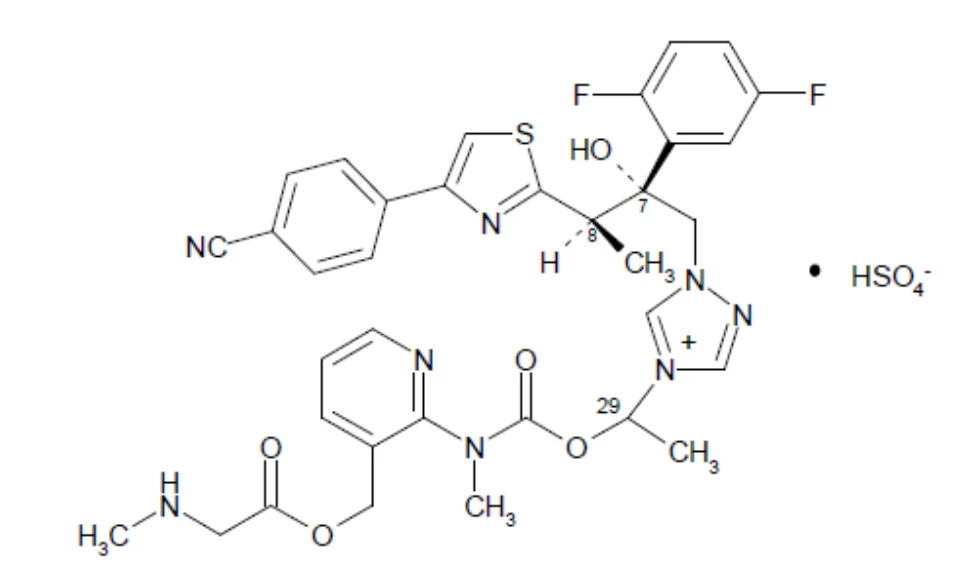
Physicochemical properties: Isavuconazonium sulfate is a white amorphous powder with a pKa of 7.3 that is very soluble in water, methanol, dimethyl sulfoxide, and pH 1,3,5,7; and sparingly soluble in absolute ethanol.
Isavuconazonium has three chiral centres and is a mixture of two epimers. After administration both epimers are rapidly converted to the active moiety, isavuconazole.
14 CLINICAL TRIALS
14.1 Clinical Trials by Indication
Invasive Aspergillosis
Table 11 - Summary of patient demographics for clinical trials for invasive aspergillosis
| Study # | Study design | Dosage, route of administration and duration | Study subjects (n) | Mean age (Range) | Sex |
| 9766-CL-0104 | Randomized, multi-centre, double-blind, noninferiority, comparative, active-controlled |
Comparator:
| 516 (ITT) 231 (myITT)c 95% with fungal disease involving lungs Caucasians (78%) | 51.1 (17 – 87) | M: 59.7% F: 40.3% |
EoT = End of Treatment; F = Female; ITT = Intent-to-Treat; IV = Intravenous; M = Male; QD = once daily; TID = 3 times daily; q12h = every 12 hours
a Loading dose (day 1,2): 200 mg TID IV; Maintenance dose (day 3 to EoT): 200mg QD IV or oral
b Loading dose (day 1): 6 mg/kg q12h IV; Maintenance dose (day 2 to EoT): 4 mg/kg q12h IV or 200 mg q12h oral c myITT: patients with proven or probable invasive aspergillosis confirmed by serology, culture or histology.
Patients in the clinical trial were immunocompromised with underlying conditions including hematological malignancy, neutropenia post-chemotherapy, graft-versus-host disease, and hematopoietic stem cell transplant.
Study 9766-CL-0104 evaluated the safety and efficacy of CRESEMBA versus voriconazole for primary treatment of invasive fungal disease caused by Aspergillus species or other filamentous fungi. Eligible patients had proven, probable, or possible invasive fungal infections per European Organisation for Research and Treatment of Cancer/Mycoses Study Group (EORTC/MSG) criteria. At least one Aspergillus species was identified in 30% of the patients; A. fumigatus and A. flavus were the most common pathogens identified. There were few patients with other Aspergillus species: A. niger, A. sydowi, A. terreus, and A. westerdijkiae. Baseline risk factors for ITT and myITT (patients with proven or probable invasive aspergillosis confirmed by serology, culture or histology) populations are presented in Table 12.
Table 12 - Baseline Risk Factors in ITT and myITT Populations
| CRESEMBA | voriconazole | |||||||||
N=258 (ITT) n (%) | N=123 (myITT) n (%) | N=258 (ITT) n (%) | N=108 (myITT) n (%) | |||||||
| Hematologic Malignancy | 211 (82) | 100 (81) | 222 (86) | 90 (83) | ||||||
| Allogenic Hematopoietic Stem Cell Transplant | 54 (21) | 32 (26) | 51 (20) | 22 (20) | ||||||
| Neutropeniaa | 163 (63) | 78 (63) | 175 (68) | 64 (59) | ||||||
| Corticosteroid Use | 48 (19) | 25 (20) | 39 (15) | 27 (25) | ||||||
| T-Cell Immunosuppressant Use | 111 (43) | 52 (42) | 109 (42) | 52 (48) | ||||||
ITT = Intent-to-Treat; myITT = mycological Intent-to-Treat
a Neutropenia is defined as less than 500 cells/mm3
Study results
Efficacy endpoints included the assessment of all-cause mortality through day 42 in the overall population (ITT) and the myITT, as well as the overall response at end-of-treatment (EoT) in the myITT population. These results are shown in Table 13.
Table 13 - Results of study 9766-CL-0104 in Aspergillosis
Endpoints (population) | CRESEMBA 200 mg | Voriconazole 200 mg | Adjusted Treatment Difference (%) (95% CI) a |
| Primary Endpoint | |||
All-cause mortality, Day 42 (ITT) | 18.6% (n=258) | 20.2% (n=258) | -1.0 (-8.0, 5.9) |
| Key Secondary Endpoints | |||
All-cause mortality, Day 42 (Proven or Probable Invasive Aspergillosis) | 18.7% (n=123) | 22.2% (n=108) | -2.7 (-13.6, 8.2) |
Overall Response = Success at EoT (Proven or Probable Invasive Aspergillosis) | 35.0% (n=123) | 38.9% (n=108) | -4.0 (-16.3, 8.4) |
CI = Confidence Interval; EoT = End of Treatment, ITT = Intent-to-Treat;
a Cochran-Mantel-Haenszel method stratified by the randomization factors.
This study demonstrated that CRESEMBA is effective for the treatment of invasive aspergillosis. CRESEMBA is noninferior relative to voriconazole since the upper bound of the 95% CI around the adjusted treatment difference is lower than the prespecified non-inferiority margin of 10%. The Data Review Committee assessed overall response at EoT showed similar success rates in the CRESEMBA and voriconazole treatment groups.
Invasive Mucormycosis
Table 14 - Summary of patient demographics for clinical trials for invasive mucormycosis
| Study # | Study design | Dosage, route of administration and duration | Study subjects (n) | Mean age (Range) | Sex |
| 9766-CL-0103 | Open-Label, multi-centre, uncontrolled |
| 37 (mITT-Mucorales) Caucasians (68%) | 48.5 (22 - 79) | M: 81.1% F: 18.9% |
EoT = End of Treatment; F = Female; ITT = Intent-to-Treat; IV = Intravenous; M = Male; QD = once daily; TID = 3 times daily; q12h = every 12 hours
a Loading dose (day 1,2): 200 mg TID IV or oral; Maintenance dose (day 3 to EoT): 200mg QD IV or oral
Patients in the clinical trial were immunocompromised with underlying conditions including hematological malignancy, neutropenia post-chemotherapy, graft-versus-host disease, and hematopoietic stem cell transplant.
Study 9766-CL-0103 evaluated the safety and efficacy of a subset of ITT patients (n=146) with invasive mucormycosis. Thirty-seven (37) adult patients had proven or probable mucormycosis (mITT-Mucormorales) (EORTC/MSG based criteria). Rhizopus oryzae and Mucormycetes were the most common pathogens identified. There were few patients with other Mucorales: Lichtheimia corymbifera, Mucor amphibiorum, Mucor circinelloides, Rhizomucor pusillus, Rhizopus azygosporus, and Rhizopus microspores.
Patients were administered either CRESEMBA IV infusion or oral capsules at the same dose regimen as that used to treat invasive aspergillosis. Median treatment duration was 84 days (2 to 882 days) for the overall mucormycosis patient population (the median duration for IV dosing was 10 days, and 80 days for oral dosing); 102 days for the 21 patients not previously treated for mucormycosis, 33 days for the 11 patients refractory to, and 85 days for the 5 patients intolerant of other antifungal therapy. There were 7 patients with mucormycosis dosed for longer than 6 months.
Fifty-nine percent (59%) of patients had pulmonary disease involvement, half of whom also had other organ involvement. The most common non-pulmonary disease locations were sinus (43%), eye (19%), CNS (16%) and bone (14%). An independent Data Review Committee classified patients receiving CRESEMBA as primary therapy, or for invasive mold disease refractory to, or patients intolerant of other antifungal therapy (e.g., 11/37 patients with prior Amphotericin B based therapy). Baseline risk factors are presented in Table 15.
Table 15 - Baseline Risk Factors in Mucormycosis
Primary N=21 n (%) | Refractory N=11 n (%) | Intolerant N=5 n (%) | Total N=37 n (%) | |
| Hematologic Malignancy | 11 (52) | 7 (64) | 4 (80) | 22 (60) |
| Allogenic Hematopoietic Stem Cell Transplant | 4 (19) | 4 (36) | 5 (100) | 13 (35) |
| Neutropeniaa | 4(19) | 5 (46) | 1 (20) | 10 (27) |
| Corticosteroid Use | 5 (24) | 3 (27) | 2 (40) | 10 (27) |
| T-Cell Immunosuppressant Use | 7 (33) | 6 (55) | 5 (100) | 18 (49) |
Therapy status assessed by independent Data Review Committee: Primary = patients received CRESEMBA as primary treatment; refractory = patients underlying infection not adequately treated by prior therapy; intolerant = patients unable to tolerate prior therapy.
a Neutropenia is defined as less than 500 cells/mm3.
Study results
Efficacy endpoints, including the all-cause mortality through day 42, 84 and success in overall response at EoT as assessed by the Data Review Committee, are shown in Table 16.
Table 16 - Results of study 9766-CL-0103 in Mucormycosis
| Endpoints | CRESEMBA 200 mg |
| Primary Endpoint | |
All-cause Mortality Through Day 42
| 38% (n = 37) 33% (n = 21) 44% (n = 16) |
| Key Secondary Endpoint | |
All-cause Mortality Through Day 84 (secondary endpoint)
Overall Response Rate at EoT (i.e. Success)
| 43% (n = 37) 43% (n = 21) 44% (n = 16) 31% (n = 35 a) 32% (n = 19 a) 31% (n = 16) |
EoT = End of Treatment
a Two primary mucormycosis patients were not assessed at EoT due to ongoing treatment.
These results provide evidence that CRESEMBA is effective for the treatment for mucormycosis, in light of the natural history of untreated mucormycosis. However, the efficacy of CRESEMBA for the treatment for invasive mucormycosis has not been evaluated in concurrent, controlled clinical trials.
15 MICROBIOLOGY
Mechanism of Action
Isavuconazonium sulfate is the prodrug of isavuconazole, an azole antifungal drug. Isavuconazole inhibits the synthesis of ergosterol, a key component of the fungal cell membrane, through the inhibition of cytochrome P-450 dependent enzyme lanosterol 14-alpha-demethylase.
Activity in vitro and in clinical infections
Isavuconazole has activity against most strains of the following microorganisms, both in vitro and in clinical infections: Aspergillus flavus, Aspergillus fumigatus, Aspergillus niger, and pathogenic members of the order Mucorales such as Rhizopus spp., Lichtheimia spp., Mucor spp., and Mucormycetes species. See 14 CLINICAL TRIALS.
In animal models of disseminated and pulmonary aspergillosis and mucormycosis, the pharmacodynamic (PD) index important in efficacy is exposure divided by minimum inhibitory concentration (MIC) (AUC/MIC). No clear correlation between in vitro MIC and clinical response for different species of Aspergillus and genera/species of the order Mucorales could be established.
Activity in vitro
Concentrations of isavuconazole required to inhibit Aspergillus species and genera/species of the order Mucorales in vitro have been very variable. Generally, concentrations of isavuconazole required to inhibit Mucorales are higher than those required to inhibit the majority of Aspergillus species.
Drug Resistance
There is a potential for development of resistance to isavuconazole.
The mechanism of resistance to isavuconazole, like other azole antifungals, is likely due to multiple mechanisms that include substitutions in the target gene CYP51. Changes in sterol profile and elevated efflux pump activity were observed, however, the clinical relevance of these findings is unclear.
In vitro and animal studies suggest cross-resistance between isavuconazole and other azoles. The relevance of cross-resistance to clinical outcome has not been fully characterized. However, patients failing prior azole therapy may require alternative antifungal therapy.
Reduced susceptibility to triazole antifungal agents has been associated with mutations in the fungal CYP51A and CYP51B genes coding for the target protein lanosterol 14-alpha-demethylase involved in ergosterol biosynthesis. Fungal strains with reduced in vitro susceptibility to isavuconazole have been reported, and cross-resistance with voriconazole and other triazole antifungal agents cannot be excluded.
16 NON-CLINICAL TOXICOLOGY
General Toxicology
Repeat-dose toxicity after oral administration was studied in mice, rats and Cynomolgus monkeys for up to 13, 26 and 39 weeks, respectively.
Isavuconazole resulted in toxicological changes in the liver, thyroid and adrenals that occurred at 0.3, 0.3, and 0.7 times the exposures seen in humans in mice, rat, and monkey, respectively. An increase in liver weights associated with centrilobular hepatocyte hypertrophy was observed which was attributable to induction of CYP enzymes and was reversible after cessation of treatment. In addition, reversible effects considered secondary to isavuconazole metabolism, were observed in the thyroid (increased weights associated with cellular hypertrophy and considered to be rat specific) and adrenals (increased adrenal weight associated with cortical vacuolation, and thickening of zona fasciculate, considered due to CYP2B induction).
Isavuconazole inhibited the hERG potassium channel and the L-type calcium channel with an IC50 of 5.82 µM and 6.57 µM respectively (34- and 38-fold the human non-protein bound Cmax at maximum recommended human dose (MRHD), respectively). The in vivo 39-week repeated-dose toxicology studies in monkeys did not show QTcF prolongation at levels that were 0.8 fold those of the human exposure at the maintenance dose of 200 mg per day.
Carcinogenicity
In a 2-year rat carcinogenicity study and a 2-year mouse carcinogenicity study, dose-related increases in hepatocellular adenomas and/or carcinomas were observed in male and female B6C3F1/Crl mice, and male, but not female Han Wistar rats at doses as low as 0.1 times the exposure seen in humans administered the maintenance dose. Hepatic hemangiomas were increased in female mice at 300 mg/kg, at an exposure similar to the maintenance dose. Hepatoblastoma was increased in male mice at 100 mg/kg, about 0.4 times the systemic exposures based on AUC comparisons.
Thyroid follicular cell adenomas were observed in male and female rats at doses as low as 60 mg/kg in male rats (about 0.2 times the human clinical maintenance dose). The relevance of the rat liver and thyroid tumors to human carcinogenic risk remains unclear.
A significant increase in the incidence of skin fibromas was seen in male rats at 300 mg/kg, exposures 0.8 times the human exposure at the human clinical maintenance dose. Uterine adenocarcinomas were observed in female rats at 200 mg/kg, at systemic exposures similar to the human exposure at the human clinical maintenance dose. The relevance for humans of the skin and uterine tumours cannot be excluded.
Hepatocellular adenomas and carcinomas have been reported in mice and rats in carcinogenicity studies for other drugs in the azole class at near human recommended doses.
Genotoxicity
Isavuconazole has no discernible mutagenic or genotoxic potential. Isavuconazole was negative in a bacterial reverse mutation assay, was weakly clastogenic at cytotoxic concentrations in the L5178Y tk+/- mouse lymphoma chromosome aberration assay, and showed no biologically relevant or statistically significant increase in the frequency of micronuclei in an in vivo rat micronucleus test.
Reproductive and Developmental Toxicology
Isavuconazonium chloride administration was associated with dose-related increases in the incidences of rudimentary cervical ribs in rats and rabbits at doses equivalent to about one fifth and one tenth of the clinical exposures based on AUC comparisons. In rats, dose-related increases in the incidences of zygomatic arch fusion and supernumerary ribs/rudimentary supernumerary ribs were also noted at levels equivalent to one fifth the clinical dose based on AUC comparisons. Skeletal abnormalities have also been observed in embryo-fetal development studies of other azole antifungal agents.
Perinatal mortality was significantly increased in the offspring of pregnant rats dosed orally with isavuconazonium sulfate at less than half the maintenance human dose based on AUC comparisons during pregnancy through the weaning period. In utero exposure to the active moiety isavuconazole had no effect on the fertility of the surviving pups.
Intravenous administration of 14C-labelled isavuconazonium sulfate to lactating rats resulted in the recovery of radiolabel in the milk.
Isavuconazole did not affect the fertility of male or female rats treated with oral doses less than half the maintenance human dose (200 mg) based on AUC comparisons.
Juvenile Toxicity
Following once daily administration of oral isavuconazonium sulfate to juvenile rats beginning on day 4 of age and continuing to day 91 (13 weeks) of age, toxicological changes in liver, adrenal gland, and thyroid gland were observed at exposures 0.2 times the exposures expected in pediatric subjects. These data are similar to what was observed in 13 week and 26 week adult rat studies. Therefore, in the absence of any new toxicological findings in the juvenile rats, the toxicity profile for once daily oral isavuconazonium sulfate is considered comparable to adult rats.