


Product Monograph - Apo-Voriconazole
RECENT MAJOR LABEL CHANGES
| 2 CONTRAINDICATIONS | 04/2024 |
|---|---|
| 7 WARNINGS AND PRECAUTIONS, Carcinogenesis and Mutagenesis | 04/2024 |
| 7 WARNINGS AND PRECAUTIONS, Skin | 04/2024 |
| 7 WARNINGS AND PRECAUTIONS, Tyrosine kinase inhibitors (CYP3A4 substrates) | 04/2024 |
TABLE OF CONTENTS
Sections or subsections that are not applicable at the time of authorization are not listed.
RECENT MAJOR LABEL CHANGES ................................................................................................ 2
TABLE OF CONTENTS ................................................................................................................... 2
PART I: HEALTH PROFESSIONAL INFORMATION ......................................................................... 4
1 INDICATIONS ............................................................................................................... 4
1.1 Pediatrics ................................................................................................................. 4
1.2 Geriatrics ................................................................................................................. 4
2 CONTRAINDICATIONS .................................................................................................. 4
3 SERIOUS WARNINGS AND PRECAUTIONS BOX ............................................................ 6
4 DOSAGE AND ADMINISTRATION ................................................................................. 8
4.1 Dosing Considerations ............................................................................................. 8
4.2 Recommended Dose and Dosage Adjustment ........................................................ 8
4.4 Administration ...................................................................................................... 10
4.5 Missed dose .......................................................................................................... 10
5 OVERDOSAGE ............................................................................................................ 10
6 DOSAGE FORMS, STRENGTHS, COMPOSITION AND PACKAGING ............................... 10
7 WARNINGS AND PRECAUTIONS ................................................................................ 11
7.1 Special Populations ............................................................................................... 16
7.1.1 Pregnant Women ............................................................................................ 16
7.1.2 Breast-feeding ................................................................................................. 17
7.1.3 Pediatrics ......................................................................................................... 17
7.1.4 Geriatrics ......................................................................................................... 17
8 ADVERSE REACTIONS ................................................................................................ 17
8.1 Adverse Reaction Overview .................................................................................. 17
8.2 Clinical Trial Adverse Reactions ............................................................................. 18
8.3 Less Common Clinical Trial Adverse Reactions ...................................................... 21
8.4 Abnormal Laboratory Findings: Hematologic, Clinical Chemistry and Other Quantitative Data .................................................................................................. 23
8.5 Post-Market Adverse Reactions ............................................................................ 25
9 DRUG INTERACTIONS ................................................................................................ 25
9.1 Serious Drug Interactions ...................................................................................... 25
9.2 Drug Interactions Overview .................................................................................. 26
9.3 Drug-Behavioural Interactions .............................................................................. 26
9.4 Drug-Drug Interactions .......................................................................................... 26
9.5 Drug-Food Interactions ......................................................................................... 39
9.6 Drug-Herb Interactions ......................................................................................... 39
9.7 Drug-Laboratory Test Interactions ........................................................................ 39
10 CLINICAL PHARMACOLOGY ....................................................................................... 39
10.1 Mechanism of Action ....................................................................................... 39
10.2 Pharmacodynamics ......................................................................................... 40
10.3 Pharmacokinetics ............................................................................................ 40
11 STORAGE, STABILITY AND DISPOSAL ......................................................................... 45
12 SPECIAL HANDLING INSTRUCTIONS ........................................................................... 45
PART II: SCIENTIFIC INFORMATION ....................................................................................... 47
13 PHARMACEUTICAL INFORMATION ............................................................................ 47
14 CLINICAL TRIALS ........................................................................................................ 48
14.1 Clinical Trials by Indication .............................................................................. 48
14.2 Comparative Bioavailability Studies ................................................................. 51
15 MICROBIOLOGY ......................................................................................................... 51
16 NON-CLINICAL TOXICOLOGY ...................................................................................... 55
17 SUPPORTING PRODUCT MONOGRAPHS .................................................................... 58
PATIENT MEDICATION INFORMATION .................................................................................. 59
PART I: HEALTH PROFESSIONAL INFORMATION
1 INDICATIONS
APO-VORICONAZOLE (voriconazole tablets) is indicated for:
- Invasive aspergillosis
- Candidemia in non-neutropenic patients and the following Candida infections: disseminated infections in skin and infections in abdomen, kidney, bladder wall and wounds (see 14 CLINICAL TRIALS and 15 MICROBIOLOGY).
1.1 Pediatrics
Pediatrics (<12 years of age). Based on the data submitted and reviewed by Health Canada, the safety and efficacy of voriconazole in pediatric patients below 12 years of age have not been established; therefore, Health Canada has not authorized an indication for use in these patients. (See 7 WARNINGS AND PRECAUTIONS, 14 CLINICAL TRIALS and 10 CLINICAL PHARMACOLOGY).
1.2 Geriatrics
Evidence from clinical studies and experience suggests that safety and effectiveness of voriconazole are similar in geriatric and adult subjects (see 7 WARNINGS AND PRECAUTIONS, 4 DOSAGE AND ADMINISTRATION and 10 CLINICAL PHARMACOLOGY).
2 CONTRAINDICATIONS
- APO-VORICONAZOLE is contraindicated in patients with known hypersensitivity to voriconazole or its excipients. For a complete listing see 6 DOSAGE FORMS, STRENGTHS, COMPOSITION AND PACKAGING section of the Product Monograph.
- There is no information regarding cross-sensitivity between voriconazole and other azole antifungal agents. Caution should be used when prescribing APO-VORICONAZOLE to patients with hypersensitivity to other azoles.
- As an inhibitor of the cytochrome P450 isozymes CYP2C19, CYP2C9 and CYP3A4, voriconazole is contraindicated for coadministration with drugs that are highly dependent on these isozymes for clearance and for which elevated plasma concentrations are associated with serious and/or life threatening events. These drugs are listed in Table 1.
- As a substrate of the cytochrome P450 isozymes CYP2C19, CYP2C9 and CYP3A4, voriconazole is contraindicated for coadministration with drugs that significantly decrease voriconazole plasma concentrations due to induction of these isoenzymes, which may increase the potential for serious and/or life-threatening events (see 9 DRUG INTERACTIONS). These drugs are listed in Table 1.
Table 1 - Drugs That Are Contraindicated with APO-VORICONAZOLE
| Drug class | Drugs within class that are Contraindicated with APO-VORICONAZOLE | Clinical comment |
|---|---|---|
| Antiarrhythmic agents | quinidine | CONTRAINDICATED due to potential for serious and/or life-threatening reactions such as cardiac arrhythmias |
| Anticonvulsants | carbamazepine, long acting barbiturates | CONTRAINDICATED due to potential to significantly reduce plasma voriconazole concentrations |
| Antimycobacterial | rifampin, rifabutin | CONTRAINDICATED due to effect in significantly reducing plasma concentration of voriconazole |
| Antipsychotic | lurasidone, pimozide | CONTRAINDICATED since voriconazole may result in significant increases in exposure and the potential for serious and/or life-threatening reactions such as cardiac arrhythmias. |
| BCL-2 Inhibitor | venetoclax | CONTRAINDICATED at initiation and during ramp-up phase of treatment with venetoclax |
| Benzodiazepines | triazolam and orally administered midazolam | CONTRAINDICATED as it may result in significant increases in exposure and the potential for serious adverse reactions, including prolonged or increased sedation, respiratory depression and impaired coordination |
| Ergot derivatives | dihydroergotamine | CONTRAINDICATED due to potential for serious and/or life-threatening reactions such as ergotism |
| HCN Channel Blockers | ivabradine | CONTRAINDICATED due to potential for serious and/or life-threatening reactions such as cardiac arrhythmias |
| Herbal Products | St. John’s Wort** (hypericum perforatum) | CONTRAINDICATED due to its effect in significantly reducing plasma exposure of voriconazole |
| Hypnotic | eszopiclone | CONTRAINDICATED in elderly |
| Drug class | Drugs within class that are Contraindicated with APO-VORICONAZOLE | Clinical comment |
|---|---|---|
| patients (≥ 65 years of age) as concomitant administration might significantly increase plasma concentrations of eszopiclone and its sedative effect. | ||
| Immunosuppressant | sirolimus | CONTRAINDICATED due to voriconazole’s effect in significantly increasing plasma exposure of sirolimus |
| Opioid receptor antagonist | naloxegol | CONTRAINDICATED due to voriconazole’s potential to significantly increase plasma concentrations of naloxegol which may precipitate opioid withdrawal symptoms |
| Protease inhibitor | ritonavir (high dose) | CONTRAINDICATED due to its effect in significantly reducing plasma exposure of voriconazole |
| Non-nucleoside reverse transcriptase inhibitor (NNRTI) | efavirenz (doses of 400 mg once daily or higher) | CONTRAINDICATED due to its effect in significantly reducing plasma exposure of voriconazole |
| Statins | lovastatin and simvastatin | CONTRAINDICATED as it might increase the risk of statin-associated adverse reactions, including myopathy and rhabdomyolysis |
| Vasopressin V2 receptor antagonist | tolvaptan | CONTRAINDICATED because voriconazole may significantly increase plasma concentrations of tolvaptan and the potential for serious adverse reactions |
** also P-gp inducer
3 SERIOUS WARNINGS AND PRECAUTIONS BOX
Serious Warnings and Precautions
|
|---|
significantly decreases plasma concentrations of voriconazole
|
|---|
- Musculoskeletal adverse events: Fluorosis and periostitis have been reported in transplant patients during long-term voriconazole therapy. If a patient develops skeletal pain and radiologic findings compatible with fluorosis or periostitis, APO-VORICONAZOLE should be discontinued (see 7 WARNINGS AND PRECAUTIONS, Musculoskeletal)
4 DOSAGE AND ADMINISTRATION
4.1 Dosing Considerations
- Therapy should be initiated with the specific loading dose regimen
- Dosage is based on weight
- Dose can be adjusted if patient response is inadequate or patient is unable to tolerate treatment
- In patients with mild to moderate hepatic impairment, the maintenance dose should be halved
- When APO-VORICONAZOLE is taken concomitantly with other drugs, the dosage of APO-VORICONAZOLE or the concomitant drugs may need to be adjusted (see 9 DRUG INTERACTIONS)
4.2 Recommended Dose and Dosage Adjustment
Dosage
Use in Adults
Therapy must be initiated with the specified loading dose regimen of oral voriconazole to achieve adequate plasma concentrations on Day 1.
Detailed information on dosage recommendations is provided in the following table.
Table 2 - Voriconazole Dosage and Administration
Loading Dose Regimen (first 24 hours) | Maintenance Dose (after first 24 hours) | |||||||||
|---|---|---|---|---|---|---|---|---|---|---|
Patients ≥ 40 kg | Patients < 40 kg | Patients ≥ 40 kg | Patients < 40 kg | |||||||
Invasive Aspergillosisa | 400 mg BID¹ (Two 200 mg tablets) | 200 mg BID¹ (one 200 mg tablet) | 200 mg BID¹ (one 200 mg tablet) | 100 mg BID¹ (two 50 mg tablets) | ||||||
Candidemia and invasive candidiasis | 400 mg BID¹ (Two 200 mg tablets) | 400 mg BID¹ (Two 200 mg tablets) | 200 mg BID¹ (one 200 mg tablet) | 100 mg BID¹ (two 50 mg tablets) | ||||||
¹ BID = twice daily (12 hours apart).
a In the pivotal clinical study of invasive aspergillosis, the median duration of oral voriconazole therapy was 76 days (range 2 to 232 days).
Dosage Adjustment
If patient response is inadequate, the APO-VORICONAZOLE maintenance dose may be increased from 200 mg every twelve hours to 300 mg every 12 hours. For patients weighing less than 40 kg, the APO-VORICONAZOLE maintenance dose may be increased from 100 mg every twelve hours to 150 mg every 12 hours. If patients are unable to tolerate 300 mg orally every 12 hours, reduce the APO-VORICONAZOLE maintenance dose by 50 mg steps to a minimum of 200 mg every 12 hours (or to 100 mg every 12 hours for adult patients weighing less than 40 kg).
Treatment duration depends upon the patient's clinical and mycological response. Patients with candidemia should be treated for at least 14 days following resolution of symptoms or following last positive culture, whichever is longer.
Use in Geriatrics
Dosage adjustment does not appear to be required for elderly patients (see 7 WARNINGS AND PRECAUTIONS, 10 CLINICAL PHARMACOLOGY).
Use in Pediatrics (< 12 years of age)
Health Canada has not authorized an indication for pediatric use. (See 1.1 Pediatrics, 7 WARNINGS AND PRECAUTIONS, 10 CLINICAL PHARMACOLOGY)
Use in Patients with Renal Impairment
The pharmacokinetics of orally administered voriconazole do not appear to be affected by renal insufficiency. Therefore, no dosage adjustment is necessary for oral dosing in patients with mild to severe renal impairment (see 7 WARNINGS AND PRECAUTIONS, 10 CLINICAL PHARMACOLOGY).
Due to the small number of subjects studied, close clinical monitoring is advised.
Voriconazole is hemodialyzed with clearance of 121 mL/min. The mean amount of voriconazole removed during 4 hour hemodialysis session (8%, range 1 to 16%) is not enough to warrant dose adjustment.
Use in Patients with Hepatic Impairment
Hepatic impairment is likely to result in increased voriconazole plasma levels in patients with mild to moderate hepatic cirrhosis (Child-Pugh A and B).
It is recommended that the standard loading dose regimens be used but that the maintenance dose be halved in patients with mild to moderate hepatic cirrhosis (Child-Pugh A and B).
Safety and efficacy of reduced voriconazole dosing in this setting is not established.
Due to the small number of subjects studied, close clinical monitoring is advised.
Voriconazole has not been studied in patients with severe hepatic cirrhosis (Child-Pugh C). APO-VORICONAZOLE should be used only if the benefit outweighs the potential risk. Patients should be carefully monitored for drug toxicity (see 7 WARNINGS AND PRECAUTIONS, 10 CLINICAL PHARMACOLOGY).
4.4 Administration
APO-VORICONAZOLE Tablets should be taken at least one hour before, or two hours following, a meal (see 10 CLINICAL PHARMACOLOGY).
4.5 Missed Dose
Patients who miss taking a dose should take their regular dose next time it is due. Patients should not take a double dose to make up for the forgotten dose.
5 OVERDOSAGE
There is no known antidote to voriconazole; it is recommended that treatment of overdose is symptomatic and supportive. Administration of activated charcoal may be used to aid in removal of unabsorbed drug.
EKG monitoring is recommended due to the possible prolongation of the QT interval and ensuing risk of arrhythmia.
Voriconazole is hemodialyzed with clearance of 121 mL/min. In an overdose, hemodialysis may assist in the removal of voriconazole from the body.
In clinical trials, there were three cases of accidental overdose with voriconazole. All occurred in pediatric patients who received up to five times the recommended dose of voriconazole. A single adverse event of photophobia of 10 minutes duration was reported.
For management of a suspected drug overdose, contact your regional poison control centre.
6 DOSAGE FORMS, STRENGTHS, COMPOSITION AND PACKAGING
Table 3 – Dosage Forms, Strengths, Composition and Packaging
| Route of Administration | Dosage Form / Strength / Composition | Non-medicinal Ingredients |
|---|---|---|
| Oral | Tablet: 50 mg and 200 mg | Croscarmellose sodium, lactose monohydrate, magnesium stearate, |
| Route of Administration | Dosage Form / Strength / Composition | Non-medicinal Ingredients |
|---|---|---|
| polyethylene glycol, polyvinyl alcohol, talc and titanium dioxide |
APO-VORICONAZOLE (voriconazole) Tablets
APO-VORICONAZOLE (voriconazole) Tablets 50 mg - White coloured, round-shaped, film-coated tablets, engraved “APO” on one side and “VOR” over “50” on the other side.
APO-VORICONAZOLE (voriconazole) Tablets 200 mg - White coloured, modified oval-shaped, biconvex film-coated tablets, engraved “APO” on one side and “VOR 200” on the other side.
APO-VORICONAZOLE (voriconazole) tablets are available in HDPE bottles of 30’s.
7 WARNINGS AND PRECAUTIONS
General
APO-VORICONAZOLE tablets contain lactose and should not be given to patients with rare hereditary problems of galactose intolerance.
Adrenal Events
Reversible cases of adrenal insufficiency have been reported in patients receiving azoles, including voriconazole. Adrenal insufficiency has been reported in patients receiving azoles with or without concomitant corticosteroids. In patients receiving azoles without corticosteroids, adrenal insufficiency is related to direct inhibition of steroidogenesis by azoles. In patients taking corticosteroids, voriconazole associated CYP3A4 inhibition of their metabolism may lead to corticosteroid excess and adrenal suppression (see 9 DRUG INTERACTIONS). Cushing’s syndrome with and without subsequent adrenal insufficiency has also been reported in patients receiving voriconazole concomitantly with corticosteroids.
Patients on long-term treatment with voriconazole and corticosteroids (including inhaled corticosteroids e.g. budesonide) should be carefully monitored for adrenal cortex dysfunction both during treatment and when voriconazole is discontinued (see 9 DRUG INTERACTIONS). Patients should be instructed to seek immediate medical care if they develop signs and symptoms of Cushing’s syndrome or adrenal insufficiency.
Carcinogenesis and Mutagenesis
In patients with photosensitivity skin reactions and additional risk factors, squamous cell carcinoma of the skin (including cutaneous SCC in situ, or Bowen’s disease) and melanoma have been reported during long-term therapy. If a patient develops a skin lesion consistent with squamous cell carcinoma or melanoma, voriconazole discontinuation should be considered.
Voriconazole demonstrated clastogenic activity in human lymphocyte cultures in vitro.
Voriconazole did not display mutagenic activity in bacterial or mammalian cells in vitro, or clastogenic activity in vivo.
For animal data regarding carcinogenesis and mutagenesis (see 16 NON-CLINICAL TOXICOLOGY).
Cardiovascular
QT Interval Prolongation
Voriconazole has been associated with prolongation of the QT interval of the electrocardiogram in some patients. Prolongation of QT interval may increase the risk of arrhythmia (see 10 CLINICAL PHARMACOLOGY). During clinical development and post-marketing surveillance, there have been rare cases of arrhythmias (including ventricular arrhythmias such as torsades de pointes), cardiac arrests and sudden deaths in patients taking voriconazole. These cases usually involved patients with risk factors such as history of cardiotoxic chemotherapy, cardiomyopathy, hypokalemia and concomitant medications that may have been contributory.
Due to limited clinical experience, voriconazole should be administered with caution to patients with potentially proarrhythmic conditions such as cardiomyopathy (in particular when heart failure is present), existing symptomatic arrhythmias, hypokalemia, clinically significant sinus bradycardia, acute myocardial ischemia, congestive heart failure or congenital or acquired prolongation of QT.
Caution should be exercised if voriconazole is used in patients taking other drugs that may prolong the QT interval, such as antipsychotics, tricyclic antidepressants, erythromycin, Class IA (e.g. procainamide, quinidine) Class III (e.g. amiodarone, sotalol) antiarrhythmic agents (see 9 DRUG INTERACTIONS).
There is a report of a life-threatening syncopal episode in a patient receiving concomitant voriconazole and methadone (see 9.4 Drug-Drug Interactions - Effect of Voriconazole on other drugs).
Drugs metabolized by the hepatic cytochrome P450 isoenzymes CYP2C19, CYP2C9 and CYP3A4 may also affect, or be affected by, voriconazole levels, with possible resulting QT effects. Such drugs include tacrolimus, HIV protease inhibitors, and macrolide antibiotics (See 9 DRUG INTERACTIONS).
Driving and Operating Machinery
Voriconazole may cause visual symptoms including blurring and/or photophobia. The majority of visual symptoms appeared to spontaneously resolve within 60 minutes. Patients on voriconazole must avoid potentially hazardous tasks, such as driving or operating machinery if they perceive any change in vision. Patients should not drive at night while taking voriconazole.
Hepatic/Biliary/Pancreatic
Hepatic
In clinical trials, there have been uncommon cases of serious hepatic reactions during treatment with voriconazole (including clinical hepatitis, cholestasis, and fulminant hepatic failure, including fatalities). Instances of hepatic reactions were noted to occur primarily in patients with serious underlying medical conditions (predominantly hematological malignancy). Hepatic reactions, including hepatitis and jaundice, have occurred among patients with no other identifiable risk factors. Liver dysfunction has usually been reversible on discontinuation of therapy.
Patients who develop abnormal liver function tests during voriconazole therapy should be monitored for the development of more severe hepatic injury. Discontinuation of voriconazole must be considered if clinical signs and symptoms consistent with liver disease develop that may be attributable to voriconazole (see below under Patients with Hepatic Impairment, 8 ADVERSE REACTIONS, 4 DOSAGE AND ADMINISTRATION, 10 CLINICAL PHARMACOLOGY).
Patients with Hepatic Impairment
It is recommended that the standard loading dose regimens be used but that the maintenance dose be halved in patients with mild to moderate hepatic cirrhosis (Child-Pugh A and B) receiving voriconazole (see above under Hepatic/Biliary/Pancreatic, 8 ADVERSE REACTIONS, 4 DOSAGE AND ADMINISTRATION, 10 CLINICAL PHARMACOLOGY).
Safety and efficacy of reduced voriconazole dosing in this setting is not established.
Due to the small number of subjects studied, close clinical monitoring is advised.
Voriconazole has not been studied in patients with severe cirrhosis (Child-Pugh Class C). Voriconazole has been associated with elevations in liver function tests and clinical signs of liver damage, such as jaundice, and should only be used in patients with severe hepatic insufficiency if the benefit outweighs the potential risk. Patients with hepatic insufficiency must be carefully monitored for drug toxicity.
Pancreatic
Adults and children with risk factors for acute pancreatitis (e.g. recent chemotherapy, hematopoietic stem cell transplantation [HSCT]), should be monitored for development of pancreatitis during voriconazole treatment.
Monitoring and Laboratory Tests
Patient management should include periodic laboratory evaluation of renal function (particularly serum creatinine).
Patients receiving voriconazole must be carefully monitored for hepatic toxicity. Clinical management should include laboratory evaluation of hepatic function (particularly liver function tests and bilirubin) at the initiation of treatment with voriconazole and at least weekly for the first month of treatment. If treatment is continued, monitoring frequency can be reduced to monthly if there are no changes in the liver function tests.
Electrolyte disturbances such as hypokalemia, hypomagnesemia and hypocalcemia should be monitored and corrected, if necessary, prior to initiation of and during voriconazole therapy (see 4 DOSAGE AND ADMINISTRATION).
Musculoskeletal
Non-infectious periostitis with elevated fluoride and alkaline phosphatase levels has been reported in transplant patients. If a patient develops skeletal pain and radiologic findings compatible with fluorosis or periostitis, voriconazole should be discontinued.
Ophthalmologic
Voriconazole may cause visual symptoms including photophobia altered/enhanced visual perception, blurred vision and/or color vision change. The majority of visual symptoms appeared to spontaneously resolve within 60 minutes. The effect of voriconazole on visual function is not known if treatment continues beyond 28 days. If treatment continues beyond 28 days, visual function including visual acuity, visual field and color perception should be monitored.
There has been a small number of post-marketing reports of vision loss (including decreased visual acuity or visual fields) where a relationship to voriconazole could not be excluded. These events mostly occurred in medically complex patients, where underlying disease processes and the primary infections themselves confound interpretation (see below under 8 ADVERSE REACTIONS).
There have been post-marketing reports of prolonged visual adverse events, including optic neuritis and papilledema. These events occurred primarily in severely ill patients who had underlying conditions and/or concomitant medications which may have caused or contributed to these events (see 8.5 Post-Market Adverse Reactions).
Renal
Acute renal failure has been observed in severely ill patients undergoing treatment with voriconazole. Patients being treated with voriconazole are likely to be treated concomitantly with nephrotoxic medications and have concurrent conditions that may result in decreased renal function.
Reproductive Health: Female and Male Potential
Females of reproductive potential should use effective contraception during treatment with APO-VORICONAZOLE (see 7.1.1 Pregnant Women).
- Fertility
No effects on fertility were observed in the rat study performed with voriconazole at exposures similar to those obtained in humans at therapeutic doses.
- Teratogenic Risk
APO-VORICONAZOLE can cause fetal harm when administered to a pregnant woman. In animals, voriconazole administration was associated with fetal malformation, embryotoxicity, increased gestational length, dystocia, and embryomortality (see 16 NON-CLINICAL TOXICOLOGY, Reproductive and Developmental Toxicity).
Sensitivity/Resistance
Voriconazole does not have activity against Zygomycete spp in vitro (see 15 MICROBIOLOGY). Cases of breakthrough zygomycosis, most fatal, have been reported in patients who had received voriconazole.
Skin
There have been cases of severe cutaneous adverse reactions, such as Stevens-Johnson Syndrome (uncommon), toxic epidermal necrolysis (rare), drug reaction with eosinophilia and systemic symptoms and erythema multiforme (rare) which can be life-threatening or fatal (see 8 ADVERSE REACTIONS). Stevens-Johnson Syndrome and toxic epidermal necrolysis should be considered as a differential diagnosis if patients develop prodromal flu-like symptoms (fever, malaise, rhinitis, chest pain. vomiting, sore throat, cough, diarrhea, headache, myalgia and arthralgia). If a patient develops an exfoliative cutaneous reaction voriconazole should be discontinued.
Photosensitivity reactions have been observed. An increased risk of skin toxicity with concomitant use of methotrexate, a drug associated with ultraviolet (UV) reactivation has been observed. There is a potential for this risk to be observed with other drugs associated with UV reactivation. It is recommended that patients, including children, avoid exposure to direct sunlight during voriconazole treatment and use measures such as protective clothing and sunscreen with high sun protection factor (SPF). In patients with photosensitivity skin reactions and additional risk factors, squamous cell carcinoma of the skin and melanoma have been reported during long-term therapy.
If phototoxic reactions occur, multidisciplinary advice should be sought and the patient should be referred to a dermatologist. Voriconazole discontinuation should be considered. Dermatologic evaluation should be performed on a systematic and regular basis, whenever voriconazole is continued despite the occurrence of phototoxicity-related lesions, to allow early detection and management of premalignant lesions.
If a patient develops a skin lesion consistent with premalignant skin lesions, squamous cell carcinoma or melanoma, voriconazole discontinuation should be considered.
There was a small number of post-marketing reports of squamous cell carcinoma, all of which were preceded by episodes of photosensitivity and/or phototoxicity.
The frequency of phototoxicity reactions is higher in the pediatric population. As an evolution towards squamous cell carcinoma has been reported, stringent measures for the photoprotection are warranted in this population of patients. In children experiencing photoaging injuries such as lentigines or ephelides, sun avoidance and dermatologic follow-up are recommended even after treatment discontinuation.
Tyrosine kinase inhibitors (CYP3A4 substrates)
Coadministration of voriconazole with tyrosine kinase inhibitors metabolised by CYP3A4 is expected to increase tyrosine kinase inhibitor plasma concentrations and the risk of adverse reactions. If concomitant use cannot be avoided, dose reduction of the tyrosine kinase inhibitor and close clinical monitoring is recommended.
7.1 Special Populations
7.1.1 Pregnant Women
Women of child-bearing potential should always use effective contraception during treatment with voriconazole.
There are no adequate and well-controlled studies in pregnant women. Voriconazole can cause fetal harm when administered to a pregnant woman. If this drug is used in pregnancy, or if the patient becomes pregnant while taking this drug, the patient should be apprised of the potential hazard to the fetus. Voriconazole must not be used during pregnancy unless the benefit to the mother clearly outweighs the potential risk to the fetus.
In reproduction studies in rats, voriconazole was teratogenic (cleft palate, hydronephrosis/hydroureter) from 10 mg/kg (0.3 times the human exposure based on body surface area comparisons) and above. Plasma estradiol in pregnant rats was reduced at all dose levels. Voriconazole treatment in rats produced increased gestational length and dystocia which was associated with increased perinatal pup mortality at the 10 mg/kg dose. In rabbits, voriconazole increased embryolethality, and reduced fetal weight (see 16 NON-CLINICAL TOXICOLOGY – Reproductive and Developmental Toxicology).
7.1.2 Breast-feeding
Breast-feeding must be stopped on initiation of treatment with voriconazole. The excretion of voriconazole in breast milk has not been investigated.
7.1.3 Pediatrics
Safety and effectiveness in pediatric subjects below the age of twelve years have not been established. A limited number of pediatric subjects have received voriconazole at doses comparable to those used in adults on a per kilogram body weight basis. There were no apparent differences in safety or efficacy of voriconazole compared to adults although post-marketing data suggest there might be a higher occurrence of skin reactions in the pediatric population compared to adults. A total of 22 patients aged 12 to 18 years of with invasive aspergillosis were included in the therapeutic studies. Twelve out of 22 (55%) patients had successful response after treatment with a maintenance dose of voriconazole 4 mg/kg twice daily (see 10 CLINICAL PHARMACOLOGY).
7.1.4 Geriatrics
In multiple-dose therapeutic trials of voriconazole, 9.2% of patients were ≥ 65 years of age and 1.8% of patients were ≥ 75 years of age. In a clinical pharmacology study in healthy volunteers, some differences were seen in the pharmacokinetic parameters of elderly males compared to young males, and a relationship between plasma concentrations and age was observed in the patients in therapeutic studies. However, the overall safety profile of the elderly patients appeared similar to that of the young. Therefore, dosage adjustment does not appear to be required (see 10 CLINICAL PHARMACOLOGY, 4 DOSAGE AND ADMINISTRATION).
8 ADVERSE REACTIONS
8.1 Adverse Reaction Overview
The most frequently reported adverse events (all causalities) in the therapeutic trials were visual disturbances, fever, rash, vomiting, nausea, diarrhea, headache, sepsis, peripheral edema, abdominal pain, and respiratory disorder. The treatment-related adverse events which most often led to discontinuation of voriconazole therapy were elevated liver function tests, rash, and visual disturbances (see 7 WARNINGS AND PRECAUTIONS, 10 CLINICAL PHARMACOLOGY).
8.2 Clinical Trial Adverse Reactions
Clinical trials are conducted under very specific conditions. The adverse reaction rates observed in the clinical trials; therefore, may not reflect the rates observed in practice and should not be compared to the rates in the clinical trials of another drug. Adverse reaction information from clinical trials may be useful in identifying and approximating rates of adverse drug reactions in real-world use.
The data described in the table below reflect exposure to voriconazole in 1655 patients in the therapeutic studies. This represents a heterogeneous population, including immunocompromised patients with hematological malignancy or HIV and non-neutropenic patients. This subgroup does not include healthy volunteers and patients treated in the compassionate use and non-therapeutic studies. This patient population was 62% male, had a mean age of 46 years (range 11 to 90, including 51 patients aged 12 to 18 years), and was 78% white and 10% black. Five hundred sixty-one patients had a duration of voriconazole therapy of greater than 12 weeks, with 136 patients receiving voriconazole for over six months. Table 4 includes all adverse events which were reported at an incidence of ≥ 2% during voriconazole therapy in all therapeutic studies population, studies 307/602 and 608 combined, or study 305, as well as events of concern which occurred at an incidence of < 2%.
In studies 307/602, 381 patients (196 on voriconazole, 185 on amphotericin B) were treated to compare voriconazole to amphotericin B followed by other licensed antifungal therapy in the primary treatment of patients with acute invasive aspergillosis. In study 608, 403 non-neutropenic patients with candidemia were treated to compare voriconazole (272 patients) to the regimen of amphotericin B followed by fluconazole (131 patients). Study 305 evaluated the effects of oral voriconazole (200 patients) and oral fluconazole (191 patients) for another indication in immunocompromised (primarily HIV) patients. Laboratory test abnormalities are discussed under Clinical Laboratory Values below.
Table 4 - TREATMENT-EMERGENT ADVERSE EVENTS
Rate ≥ 2% on Voriconazole or Adverse Events of Concern in All Therapeutic Studies Population, Studies 307/602-608 combined, or Study 305. Possibly Related to Therapy or Causality Unknown
All Therapeutic Studies | Studies 307/602 and 608 (IV/ oral therapy) | Study 305 (oral therapy) | ||||||||||||
|---|---|---|---|---|---|---|---|---|---|---|---|---|---|---|
Voriconazole N = 1655 | Voriconazole N = 468 | Ampho B* N=185 | Ampho B→ Fluconazole N= 131 | Voriconazole N = 200 | Fluconazole N =191 | |||||||||
| N (%) | N (%) | N (%) | N (%) | N (%) | N (%) | |||||||||
| Special Senses | ||||||||||||||
All Therapeutic Studies | Studies 307/602 and 608 (IV/ oral therapy) | Study 305 (oral therapy) | ||||||||||||||||||||
|---|---|---|---|---|---|---|---|---|---|---|---|---|---|---|---|---|---|---|---|---|---|---|
Voriconazole N = 1655 | Voriconazole N = 468 | Ampho B* N=185 | Ampho B→ Fluconazole N= 131 | Voriconazole N = 200 | Fluconazole N =191 | |||||||||||||||||
| N (%) | N (%) | N (%) | N (%) | N (%) | N (%) | |||||||||||||||||
| Abnormal vision | 310 (18.7) | 63 (13.5) | 1 (0.5) | 0 | 31 (15.5) | 8 (4.2) | ||||||||||||||||
| Photophobia | 37 (2.2) | 8 (1.7) | 0 | 0 | 5 (2.5) | 2 (1.0) | ||||||||||||||||
| Chromatopsia | 20 (1.2) | 2 (0.4) | 0 | 0 | 2 (1.0) | 0 | ||||||||||||||||
| Body as a Whole | ||||||||||||||||||||||
| Fever | 94 (5.7) | 8 (1.7) | 25 (13.5) | 5 (3.8) | 0 | 0 | ||||||||||||||||
| Chills | 61 (3.7) | 1 (0.2) | 36 (19.5) | 8 (6.1) | 1 (0.5) | 0 | ||||||||||||||||
| Headache | 49 (3.0) | 9 (1.9) | 8 (4.3) | 1 (0.8) | 0 | 1 (0.5) | ||||||||||||||||
| Cardiovascular System | ||||||||||||||||||||||
| Tachycardia | 39 (2.4) | 6 (1.3) | 5 (2.7) | 0 | 0 | 0 | ||||||||||||||||
| Digestive System | ||||||||||||||||||||||
| Nausea | 89 (5.4) | 18 (3.8) | 29 (15.7) | 2 (1.5) | 2 (1.0) | 3 (1.6) | ||||||||||||||||
| Vomiting | 72 (4.4) | 15 (3.2) | 18 (9.7) | 1 (0.8) | 2 (1.0) | 1 (0.5) | ||||||||||||||||
| Liver function tests abnormal | 45 (2.7) | 15 (3.2) | 4 (2.2) | 1 (0.8) | 6 (3.0) | 2 (1.0) | ||||||||||||||||
| Cholestatic jaundice | 17 (1.0) | 8 (1.7) | 0 | 1 (0.8) | 3 (1.5) | 0 | ||||||||||||||||
| Metabolic and Nutritional Systems | ||||||||||||||||||||||
| Alkaline phosphatase increased | 59 (3.6) | 19 (4.1) | 4 (2.2) | 3 (2.3) | 10 (5.0) | 3 (1.6) | ||||||||||||||||
| Hepatic enzymes increased | 30 (1.8) | 11 (2.4) | 5 (2.7) | 1 (0.8) | 3 (1.5) | 0 | ||||||||||||||||
| SGOT increased | 31 (1.9) | 9 (1.9) | 0 | 1 (0.8) | 8 (4.0) | 2 (1.0) | ||||||||||||||||
| SGPT increased | 29 (1.8) | 9 (1.9) | 1 (0.5) | 2 (1.5) | 6 (3.0) | 2 (1.0) | ||||||||||||||||
| Hypokalemia | 26 (1.6) | 3 (0.6) | 36 (19.5) | 16 (12.2) | 0 | 0 | ||||||||||||||||
| Bilirubinemia | 15 (0.9) | 5 (1.1) | 3 (1.6) | 2 (1.5) | 1 (0.5) | 0 | ||||||||||||||||
| Creatinine increased | 4 (0.2) | 0 | 59 (31.9) | 10 (7.6) | 1 (0.5) | 0 | ||||||||||||||||
| Nervous System | ||||||||||||||||||||||
| Hallucinations | 39 (2.4) | 13 (2.8) | 1 (0.5) | 0 | 0 | 0 | ||||||||||||||||
| Skin and Appendages | ||||||||||||||||||||||
| Rash | 88 (5.3) | 20 (4.3) | 7 (3.8) | 1 (0.8) | 3 (1.5) | 1 (0.5) | ||||||||||||||||
All Therapeutic Studies | Studies 307/602 and 608 (IV/ oral therapy) | Study 305 (oral therapy) | ||||||||||||||
|---|---|---|---|---|---|---|---|---|---|---|---|---|---|---|---|---|
Voriconazole N = 1655 | Voriconazole N = 468 | Ampho B* N=185 | Ampho B→ Fluconazole N= 131 | Voriconazole N = 200 | Fluconazole N =191 | |||||||||||
| N (%) | N (%) | N (%) | N (%) | N (%) | N (%) | |||||||||||
| Urogenital | ||||||||||||||||
| Kidney function abnormal | 10 (0.6) | 6 (1.3) | 40 (21.6) | 9 (6.9) | 1 (0.5) | 1 (0.5) | ||||||||||
| Acute kidney failure | 7 (0.4) | 2 (0.4) | 11 (5.9) | 7 (5.3) | 0 | 0 | ||||||||||
*Amphotericin B followed by other licensed antifungal therapy
Visual Disturbances:
In clinical trials, Voriconazole treatment-related visual disturbances were common. In these studies, approximately 21% of patients experienced altered/enhanced visual perception, blurred vision, color vision change and/or photophobia. These visual disturbances were generally mild and rarely resulted in discontinuation. Visual disturbances may be associated with higher plasma concentrations and/or doses.
The mechanism of action of the visual disturbances is unknown, although the site of action is most likely to be within the retina. The majority of visual symptoms appeared to spontaneously resolve within 60 minutes. The serious conditions of the patients treated in Phase 3 studies did not generally allow rigorous testing of visual function. In a study in healthy volunteers investigating the effect of 28 days treatment with voriconazole on retinal function, voriconazole caused a decrease in the electroretinogram (ERG) waveform amplitude, a decrease in the visual field and an alteration in colour perception. The ERG measures electrical currents in the retina. The effects were noted early in administration and continued through the course of study drug dosing. Fourteen days after the end of dosing, ERG, visual fields and colour perception returned to normal (see 7 WARNINGS AND PRECAUTIONS, 10 CLINICAL PHARMACOLOGY).
Dermatological Reactions:
Dermatological reactions were common in the patients treated with voriconazole. The mechanism underlying these dermatologic adverse events remains unknown. In clinical trials, rashes considered related to therapy were reported by 7% (110/1655) of voriconazole-treated patients. The majority of rashes were of mild to moderate severity. Cases of photosensitivity reactions appear to be more likely to occur with long term treatment. Patients have developed severe cutaneous adverse reactions (SCARs), including Stevens Johnson syndrome (uncommon), toxic epidermal necrolysis (rare), drug reaction with eosinophilia and systemic symptoms (DRESS) which was reported post-marketing (not known) and erythema multiforme
(rare) during treatment with voriconazole. Stevens-Johnson Syndrome and toxic epidermal necrolysis should be considered as a differential diagnosis if patients develop prodromal flu-like symptoms (fever, malaise, rhinitis, chest pain, vomiting, sore throat, cough, diarrhea, headache, myalgia and arthralgia).
Patients should be closely monitored at the first appearance of a skin rash and voriconazole should be discontinued if lesions progress. It is recommended that patients avoid strong, direct sunlight during voriconazole therapy (see 7 WARNINGS AND PRECAUTIONS).
8.3 Less Common Clinical Trial Adverse Reactions
The following adverse events occurred in < 2% of all voriconazole-treated patients, in all therapeutic studies (N=1655). This listing includes events where a causal relationship to voriconazole cannot be ruled out or those which may help the physician in managing the risks to the patients. The list does not include events included in Table 4 above and does not include every event reported in the voriconazole clinical program.
Body as a Whole: Abdomen enlarged, abdominal pain, allergic reaction, anaphylactoid reaction (see 2 CONTRAINDICATIONS), ascites, asthenia, back pain, chest pain, cellulitis, edema, face edema, flank pain, flu syndrome, graft versus host reaction, granuloma, infection, bacterial infection, fungal infection, mucous membrane disorder, multi-organ failure, pain, pelvic pain, peritonitis, sepsis, substernal chest pain.
Cardiovascular: A fatal case of ventricular fibrillation occurred where a relationship to voriconazole could not be ruled out. There have been rare cases of torsades de pointes in which a causal relationship to voriconazole could not be excluded.
Atrial arrhythmia, atrial fibrillation, AV block complete, bigeminy, bradycardia, bundle branch block, cardiomegaly, cardiomyopathy, cerebral hemorrhage, cerebral ischemia, cerebrovascular accident, congestive heart failure, deep thrombophlebitis, endocarditis, extrasystoles, heart arrest, hypertension, hypotension, myocardial infarction, nodal arrhythmia, palpitation, phlebitis, postural hypotension, pulmonary embolus, QT interval prolonged, supraventricular extrasystoles, supraventricular tachycardia, syncope, thrombophlebitis, vasodilatation, ventricular arrhythmia, ventricular fibrillation, ventricular tachycardia (including torsades de pointes).
Digestive: anorexia, cheilitis, cholecystitis, cholelithiasis, constipation, diarrhea, dry mouth, duodenal ulcer perforation, duodenitis, dyspepsia, dysphagia, esophageal ulcer, esophagitis, flatulence, gastroenteritis, gastrointestinal hemorrhage, GGT/LDH elevated, gingivitis, glossitis, gum hemorrhage, gum hyperplasia, hematemesis, hepatic coma, hepatic failure, hepatitis, intestinal perforation, intestinal ulcer, jaundice, enlarged liver, melena, mouth ulceration, pancreatitis, parotid gland enlargement, periodontitis, proctitis, pseudomembranous colitis, rectal disorder, rectal hemorrhage, stomach ulcer, stomatitis, tongue edema.
Endocrine: adrenal cortex insufficiency, diabetes insipidus, hyperthyroidism, hypothyroidism.
Hemic and Lymphatic: agranulocytosis, anemia (macrocytic, megaloblastic, microcytic, normocytic), aplastic anemia, hemolytic anemia, bleeding time increased, cyanosis, DIC, ecchymosis, eosinophilia, hypervolemia, leukopenia, lymphadenopathy, lymphangitis, marrow depression, pancytopenia, petechia, purpura, enlarged spleen, thrombocytopenia, thrombotic thrombocytopenic purpura.
Metabolic and Nutritional: albuminuria, BUN increased, creatine phosphokinase increased, edema, glucose tolerance decreased, hypercalcemia, hypercholesteremia, hyperglycemia, hyperkalemia, hypermagnesemia, hypernatremia, hyperuricemia, hypocalcemia, hypoglycemia, hypomagnesemia, hyponatremia, hypophosphatemia, peripheral edema, uremia.
Musculoskeletal: arthralgia, arthritis, bone necrosis, bone pain, leg cramps, myalgia, myasthenia, myopathy, osteomalacia, osteoporosis.
Nervous System: abnormal dreams, acute brain syndrome, agitation, akathisia, amnesia, anxiety, ataxia, brain edema, coma, confusion, convulsion, delirium, dementia, depersonalization, depression, diplopia, dizziness, encephalitis, encephalopathy, euphoria, Extrapyramidal Syndrome, grand mal convulsion, Guillain-Barré syndrome, hypertonia, hypesthesia, insomnia, intracranial hypertension, libido decreased, neuralgia, neuropathy, nystagmus, oculogyric crisis, paresthesia, psychosis, somnolence, suicidal ideation, tremor, vertigo.
Respiratory System: cough increased, dyspnea, epistaxis, hemoptysis, hypoxia, lung edema, pharyngitis, pleural effusion, pneumonia, respiratory disorder, respiratory distress syndrome, respiratory tract infection, rhinitis, sinusitis, voice alteration.
Skin and Appendages: alopecia, angioedema, contact dermatitis, discoid lupus erythematosis, drug reaction with eosinophilia and systemic symptoms (DRESS), eczema, erythema multiforme, exfoliative dermatitis, fixed drug eruption, furunculosis, herpes simplex, maculopapular rash, melanosis, photosensitivity skin reaction, psoriasis, pruritus, pseudoporphyria, skin discoloration, skin disorder, skin dry, sweating, toxic epidermal necrolysis, urticaria.
Special Senses: abnormality of accommodation, blepharitis, color blindness, conjunctivitis, corneal opacity, deafness, ear pain, eye pain, eye hemorrhage, hypoacusis, dry eyes, keratitis, keratoconjunctivitis, mydriasis, night blindness, optic atrophy, optic neuritis, otitis externa, papilledema, retinal hemorrhage, retinitis, scleritis, taste loss, taste perversion, tinnitus, uveitis, visual field defect.
Urogenital: anuria, blighted ovum, creatinine clearance decreased, dysmenorrhea, dysuria, epididymitis, glycosuria, hemorrhagic cystitis, hematuria, hydronephrosis, impotence, kidney pain, kidney tubular necrosis, metrorrhagia, nephritis, nephrosis, oliguria, scrotal edema, urinary incontinence, urinary retention, urinary tract infection, uterine hemorrhage, vaginal hemorrhage.
8.4 Abnormal Laboratory Findings: Hematologic, Clinical Chemistry and Other Quantitative Data
Clinical Trial Findings
The overall incidence of clinically significant transaminase abnormalities in all therapeutic studies was 12.4% (206/1655) of patients treated with voriconazole. Increased incidences of liver function test abnormalities may be associated with higher plasma concentrations and/or doses. The majority of abnormal liver function tests either resolved during treatment without dose adjustment or following dose adjustment, including discontinuation of therapy.
In clinical trials, there have been uncommon cases of serious hepatic reactions during treatment with voriconazole (including clinical hepatitis, cholestasis, and fulminant hepatic failure, including fatalities). Instances of hepatic reactions were noted to occur primarily in patients with serious underlying medical conditions (predominantly hematological malignancy). Hepatic reactions, including hepatitis and jaundice, have occurred among patients with no other identifiable risk factors. Liver dysfunction has usually been reversible on discontinuation of therapy.
Liver function tests should be evaluated at the start of and during the course of voriconazole therapy. Patients who develop abnormal liver function tests should be monitored for the development of more severe hepatic injury. Patient management should include laboratory evaluation of hepatic function (particularly liver function tests and bilirubin). Discontinuation of voriconazole must be considered if clinical signs and symptoms consistent with liver disease develop that may be attributable to voriconazole (see 7 WARNINGS AND PRECAUTIONS, 10 CLINICAL PHARMACOLOGY).
Acute renal failure has been observed in severely ill patients undergoing treatment with voriconazole. Patients being treated with voriconazole are likely to be treated concomitantly with nephrotoxic medications and have concurrent conditions that may result in decreased renal function. It is recommended that patients are monitored for the development of abnormal renal function. This should include laboratory evaluation, particularly serum creatinine.
Tables 5, 6 and 7 show the number of patients with hypokalemia and clinically significant changes in renal and liver function tests in three randomized, comparative multicenter studies. In Study 305, patients were randomized to either oral voriconazole or oral fluconazole to evaluate an indication other than invasive aspergillosis in immunocompromised patients. In protocol 307/602, patients with definite or probable invasive aspergillosis were randomized to either voriconazole or amphotericin B therapy. In study 608, patients with candidemia were randomized to either voriconazole or the regimen of amphotericin B followed by fluconazole.
Table 5 - Protocol 305 - Clinically Significant Laboratory Test Abnormalities
| Criteria* | VORICONAZOLE n/N (%) | FLUCONAZOLE n/N (%) | |
|---|---|---|---|
| T. Bilirubin | > 1.5x ULN | 8/185 (4.3) | 7/186 (3.8) |
| AST | > 3.0x ULN | 38/187 (20.3) | 15/186 (8.1) |
| ALT | > 3.0x ULN | 20/187 (10.7) | 12/186 (6.5) |
| Alk phos | > 3.0x ULN | 19/187 (10.2) | 14/186 (7.5) |
* Without regard to baseline value
n number of patients with a clinically significant abnormality while on study therapy
N total number of patients with at least one observation of the given lab test while on study therapy
ULN upper limit of normal
Table 6 - Protocol 307/602 - Clinically Significant Laboratory Test Abnormalities
| Criteria* | VORICONAZOLE n/N (%) | AMPHOTERICIN B** n/N (%) | |
|---|---|---|---|
| T. Bilirubin | > 1.5x ULN | 35/180 (19.4) | 46/173 (26.6) |
| AST | > 3.0x ULN | 21/180 (11.7) | 18/174 (10.3) |
| ALT | > 3.0x ULN | 34/180 (18.9) | 40/173 (23.1) |
| Alk phos | > 3.0x ULN | 29/181 (16.0) | 38/173 (22.0) |
| Creatinine | > 1.3x ULN | 39/182 (21.4) | 102/177 (57.6) |
| Potassium | < 0.9x LLN | 30/181 (16.6) | 70/178 (39.3) |
* Without regard to baseline value
** Amphotericin B followed by other licensed antifungal therapy
n number of patients with a clinically significant abnormality while on study therapy
N total number of patients with at least one observation of the given lab test while on study therapy
ULN upper limit of normal
LLN lower limit of normal
Table 7 - Protocol 608 - Clinically Significant Laboratory Test Abnormalities
| Criteria* | VORICONAZOLE n/N (%) | AMPHOTERICIN B followed by FLUCONAZOLE n/N (%) | |
|---|---|---|---|
| T. Bilirubin | > 1.5x ULN | 50/261 (19.2) | 31/115 (27.0) |
| AST | > 3.0x ULN | 40/261 (15.3) | 16/116 (13.8) |
| ALT | > 3.0x ULN | 22/261 (8.4) | 15/116 (12.9) |
| Alk phos | > 3.0x ULN | 59/261 (22.6) | 26/115 (22.6) |
| Creatinine | > 1.3x ULN | 39/260 (15.0) | 32/118 (27.1) |
| Potassium | < 0.9x LLN | 43/258 (16.7) | 35/118 (29.7) |
* Without regard to baseline value
n number of patients with a clinically significant abnormality while on study therapy
N total number of patients with at least one observation of the given lab test while on study therapy
ULN upper limit of normal
LLN lower limit of normal
8.5 Post-Market Adverse Reactions
During post-marketing surveillance, cases of severe hypoglycemia have been reported in patients receiving voriconazole and glipizide (see 9 DRUG INTERACTIONS).
During post-marketing surveillance, there have been rare cases of arrhythmias (including ventricular arrhythmias such as torsades de pointes), cardiac arrests and sudden deaths in patients taking voriconazole. These cases usually involved patients with risk factors such as history of cardiotoxic chemotherapy, cardiomyopathy, hypokalemia and concomitant medications that may have been contributory (see 7 WARNINGS AND PRECAUTIONS).
There have been post-marketing reports of pancreatitis in pediatric patients (see 7 WARNINGS AND PRECAUTIONS).
There has been a small number of post-marketing reports of vision loss (including decreased visual acuity or visual fields) where a relationship to voriconazole could not be excluded. These events mostly occurred in medically complex patients, where underlying disease processes and the primary infections themselves confound interpretation (see 7 WARNINGS AND PRECAUTIONS).
There have been post-marketing reports of prolonged visual adverse events (see 7 WARNINGS AND PRECAUTIONS).
During post-marketing surveillance, there have been cases of hyponatremia and rare cases of peripheral neuropathy.
There have been post-marketing reports of squamous cell carcinoma (see 7 WARNINGS AND PRECAUTIONS).
Increased risk of skin toxicity with concomitant use of methotrexate, a drug associated with UV reactivation, was observed in post marketing reports (see 7 WARNINGS AND PRECAUTIONS).
9 DRUG INTERACTIONS
9.1 Serious Drug Interactions
Serious Drug Interactions Contraindicated Drugs: pimozide, quinidine, carbamazepine, long acting barbiturates, |
|---|
efavirenz (doses of 400 mg once daily or higher), ergot alkaloids, rifabutin, rifampin, naloxegol, ivabradine, ritonavir (high dose), St. John’s Wort, sirolimus, venetoclax, eszopiclone (in patients ≥ 65 years of age), lovastatin, simvastatin, triazolam, orally administered midazolam, tolvaptan, and lurasidone (see 2 CONTRAINDICATIONS). Drugs whose concomitant use should be avoided: everolimus, fluconazole, lemborexant and ritonavir (low dose) (see 9.4 Drug-Drug Interactions below). Drugs whose concomitant use requires dose adjustment of voriconazole: phenytoin and efavirenz (doses of 300 mg once daily) (see 9.4 Drug-Drug Interactions below). Drugs whose concomitant use requires consideration of dose reduction at initiation of concomitant treatment and close therapeutic monitoring of drug levels during treatment: cyclosporine and tacrolimus (see 9.4 Drug-Drug Interactions below). Drugs whose concomitant use requires consideration of dose reduction and/or close monitoring for adverse events during treatment: anticoagulants (warfarin and other oral coumarins), benzodiazepines, calcium channel blockers, HIV protease inhibitors other than indinavir, methadone, non-nucleoside reverse transcriptase inhibitors (NNRTIs), non-steroidal anti-inflammatory drugs (NSAIDs), omeprazole, short and long acting opiates, statins, sulphonylureas, vinca alkaloids, eszopiclone (in adults < 65 years of age), glasdegib, metabolized tyrosine kinase inhibitors, and tretinoin (see 9.4 Drug-Drug Interactions below). |
|---|
9.2 Drug Interactions Overview
Potential for Other Drugs to Affect Voriconazole
Voriconazole is metabolised by cytochrome P450 isoenzymes CYP2C19, CYP2C9, and CYP3A4. In vitro, the affinity for CYP3A4 is 100-fold lower than that for CYP2C9 and CYP2C19. Inhibitors or inducers of these isoenzymes may increase or decrease voriconazole plasma concentrations, respectively.
Potential for Voriconazole to Affect Other Drugs
Voriconazole inhibits the activity of cytochrome P450 isoenzymes CYP2C19, CYP2C9, and CYP3A4. Therefore, there is potential for voriconazole to increase the plasma concentrations of drugs metabolised by these CYP450 isoenzymes, in particular for substances metabolized by CYP3A4 since voriconazole is a strong CYP3A4 inhibitor (though the increase in AUC is substrate dependent). In patients who are CYP2C19 poor metabolizers, there may be more reliance on CYP3A4 for elimination.
9.3 Drug-Behavioural Interactions
Interactions with individual behaviour have not been established.
9.4 Drug-Drug Interactions
Interactions between voriconazole and other medicinal products are listed in Table 8 (once daily as “QD”, twice daily as “BID”, three times daily as “TID” and not determined as “ND”). The direction of the arrow for each pharmacokinetic parameter is based on the 90% confidence interval of the geometric mean ratio being within (↔), below (↓) or above (↑) the 80 to 125% range. The asterisk (*) indicates a two-way interaction. AUCτ, AUCt and AUC0-∞ represent area under the curve over a dosing interval, from time zero to the time with detectable measurement and from time zero to infinity, respectively.
The interactions in the table are presented in the following order: contraindications, those requiring dose adjustment and careful clinical and/or biological monitoring, and finally those that have no significant pharmacokinetic interaction but may be of clinical interest in this therapeutic field.
Unless otherwise specified, drug interaction studies have been performed in healthy adult male subjects using multiple dosing to steady state with oral voriconazole at 200 mg BID. These results are relevant to other populations and routes of administration.
Table 8 - Summary of Drug-Drug Interactions between Voriconazole and Other Drugs
Medicinal product [Mechanism of Interaction] | Interaction Geometric mean changes (%) | Recommendations concerning co-administration |
|---|---|---|
| Pimozide, quinidine, and ivabradine [CYP3A4 substrates] | Although not studied, increased plasma concentrations of these medicinal products can lead to QTc prolongation and rare occurrences of torsades de pointes. | Contraindicated |
Carbamazepine and long-acting barbiturates (including but not limited to: phenobarbital, mephobarbital) [potent CYP450 inducers] | Although not studied, carbamazepine and long-acting barbiturates are likely to significantly decrease plasma voriconazole concentrations. | Contraindicated |
Efavirenz (non-nucleoside reverse transcriptase inhibitor) [CYP450 inducer; CYP3A4 inhibitor and substrate] Efavirenz 400 mg QD, | Efavirenz Cmax ↑38% | Use of standard doses of |
Medicinal product [Mechanism of Interaction] | Interaction Geometric mean changes (%) | Recommendations concerning co-administration |
|---|---|---|
coadministered with voriconazole 200 mg BID * Efavirenz 300 mg QD, co-administered with voriconazole 400 mg BID* | Efavirenz AUCτ ↑44% Voriconazole Cmax ↓61% Voriconazole AUCτ ↓77% Compared to efavirenz 600 mg QD, Efavirenz Cmax ↔ Efavirenz AUCτ ↑17% Compared to voriconazole 200 mg BID, Voriconazole Cmax ↑23% Voriconazole AUCτ ↓7% | voriconazole with efavirenz doses of 400 mg QD or higher is contraindicated due to significant decrease in voriconazole exposure. Voriconazole may be co-administered with efavirenz if the voriconazole maintenance dose is increased to 400 mg BID and the efavirenz dose is decreased to 300 mg QD. When voriconazole treatment is stopped, the initial dose of efavirenz should be restored. |
Other Non-Nucleoside Reverse Transcriptase Inhibitors (NNRTIs) (including but not limited to: delavirdine, nevirapine)* [CYP3A4 substrates, inhibitors or CYP450 inducers] | Not studied clinically. In vitro studies show that the metabolism of voriconazole may be inhibited by NNRTIs and voriconazole may inhibit the metabolism of NNRTIs. The findings of the effect of efavirenz on voriconazole suggest that the metabolism of voriconazole may be induced by a NNRTI. | Careful monitoring for any occurrence of drug toxicity and/or lack of efficacy, and dose adjustment may be needed. |
Ergot alkaloids (including but not limited to: dihydroergotamine) [CYP3A4 substrates] | Although not studied, voriconazole is likely to increase the plasma concentrations of ergot alkaloids and lead to ergotism. | Contraindicated |
Lurasidone [CYP3A4 substrate] | Although not studied, voriconazole is likely to | Contraindicated |
Medicinal product [Mechanism of Interaction] | Interaction Geometric mean changes (%) | Recommendations concerning co-administration |
|---|---|---|
| significantly increase the plasma concentrations of lurasidone | ||
Rifabutin [potent CYP450 inducer] 300 mg QD 300 mg QD (co-administered with voriconazole 400 mg BID)* | Voriconazole Cmax ↓ 69% Voriconazole AUCτ ↓78% Rifabutin Cmax ↑195% Rifabutin AUCτ ↑331% Compared to voriconazole 200 mg BID, Voriconazole Cmax ↑104% Voriconazole AUCτ ↑87% | Contraindicated due to significant decrease in voriconazole exposure during co-administration. |
Rifampicin (600 mg QD) [potent CYP450 inducer] | Voriconazole Cmax ↓93% Voriconazole AUCτ ↓96% | Contraindicated due to significant decrease in voriconazole exposure during co-administration. |
Ritonavir (protease inhibitor) [potent CYP450 inducer; CYP3A4 inhibitor and substrate] High dose (400 mg BID) Low dose (100 mg BID)* | Ritonavir Cmax and AUCτ ↔ Voriconazole Cmax ↓66% Voriconazole AUCτ ↓82% Ritonavir Cmax ↓25% Ritonavir AUCτ ↓13% Voriconazole Cmax ↓24% Voriconazole AUCτ ↓39% | Co-administration of voriconazole and high doses of ritonavir (400 mg BID and higher) is contraindicated due to significant decrease in voriconazole exposure. Co-administration of voriconazole and low dose ritonavir (100 mg BID) should be avoided, unless an assessment of the benefit/risk to the patient justifies the use of voriconazole. |
Medicinal product [Mechanism of Interaction] | Interaction Geometric mean changes (%) | Recommendations concerning co-administration |
|---|---|---|
Other HIV Protease Inhibitors (including but not limited to: atazanavir, amprenavir, darunavir, lopinavir, nelfinavir and saquinavir)* [CYP3A4 substrates and inhibitors] boosted with low dose ritonavir 100 mg BID | Although not studied, low dose ritonavir (100 mg BID) could decrease voriconazole level. | Co-administration of voriconazole and low dose ritonavir (100 mg BID) boosted protease inhibitors should be avoided since low dose ritonavir could decrease voriconazole exposure, unless an assessment of the benefit/risk to the patient justifies the use of voriconazole. |
Other HIV Protease Inhibitors (e.g., atazanavir, amprenavir, darunavir, lopinavir, nelfinavir and saquinavir)* [CYP3A4 substrates and inhibitors] | Not studied clinically. In vitro studies show that voriconazole may inhibit the metabolism of HIV protease inhibitors (amprenavir, nelfinavir, saquinavir) and the metabolism of voriconazole may also be inhibited by HIV protease inhibitors. Although not studied, voriconazole is likely to inhibit the metabolism of other protease inhibitors (atazanavir, darunavir, lopinavir) and the metabolism of voriconazole is also likely to be inhibited by these protease inhibitors. | Careful monitoring for any occurrence of drug toxicity and/or lack of efficacy, and dose adjustment may be needed. |
St John’s Wort [CYP450 inducer; P-gp inducer] 300 mg TID (co-administered with voriconazole 400 mg single dose) | In an independent published study, Voriconazole AUC0-∞ ↓59% | Contraindicated due to significant decrease in voriconazole exposure during co-administration. |
Everolimus [CYP3A4 substrate, P-gp substrate] | Although not studied, voriconazole is likely to significantly increase the | Co-administration of voriconazole and everolimus is not recommended |
Medicinal product [Mechanism of Interaction] | Interaction Geometric mean changes (%) | Recommendations concerning co-administration |
|---|---|---|
| plasma concentrations of everolimus. | because voriconazole is expected to significantly increase everolimus concentrations. | |
Venetoclax [CYP3A4 substrate] | Although not studied, voriconazole is likely to significantly increase the plasma concentration of venetoclax. | Concomitant use of strong CYP3A inhibitors, such as voriconazole and venetoclax may increase the risk of tumor lysis syndrome at the dose initiation and during the ramp-up phase (see 2 CONTRAINDICATIONS). For patients who have completed the ramp-up phase and are on a steady daily dose of venetoclax, venetoclax dose should be reduced to 100 mg or less as instructed in the venetoclax tablets Product Monograph. Close monitoring for signs of toxicity is recommended. |
Naloxegol [CYP3A4 substrate] | Although not studied, voriconazole is likely to significantly increase the plasma concentrations of naloxegol. | Co-administration of voriconazole and naloxegol is contraindicated. |
Fluconazole (200 mg QD) [CYP2C9, CYP2C19 and CYP3A4 inhibitor] | Voriconazole Cmax ↑57% Voriconazole AUCτ ↑79% Fluconazole Cmax ND Fluconazole AUCτ ND | The reduced dose and/or frequency of voriconazole and fluconazole that would eliminate this effect have not been established. Monitoring for voriconazole-associated adverse events is recommended if voriconazole is used sequentially after fluconazole. |
| Phenytoin | Concomitant use of |
Medicinal product [Mechanism of Interaction] | Interaction Geometric mean changes (%) | Recommendations concerning co-administration |
|---|---|---|
[CYP2C9 substrate and potent CYP450 inducer] 300 mg QD 300 mg QD (co-administered with voriconazole 400 mg BID)* | Voriconazole Cmax ↓49% Voriconazole AUCτ ↓69% Phenytoin Cmax ↑67% Phenytoin AUCτ ↑81% Compared to voriconazole 200 mg BID, Voriconazole Cmax ↑34% Voriconazole AUCτ ↑39% | voriconazole and phenytoin should be avoided unless the benefit outweighs the risk. Careful monitoring of phenytoin plasma levels is recommended. Phenytoin may be co-administered with voriconazole if the maintenance dose of voriconazole is increased from 200 mg to 400 mg oral BID, (100 mg to 200 mg oral BID in patients less than 40 kg). |
Letermovir [CYP2C9 and CYP2C19 inducer] | Voriconazole Cmax↓ 39% Voriconazole AUC0-12↓ 44% Voriconazole C12↓ 51% | If concomitant administration of voriconazole with letermovir cannot be avoided, monitor for loss of voriconazole effectiveness. |
Lemborexant [CYP3A4 substrate] | Although not studied, voriconazole is likely to increase the plasma concentrations of lemborexant | Concomitant use of voriconazole and lemborexant should be avoided. |
Glasdegib [CYP3A4 substrate] | Although not studied, voriconazole is likely to increase the plasma concentrations of glasdegib and increase risk of QTc prolongation. | Consider alternative therapies that are not strong CYP3A4 inhibitor during treatment with glasdegib. If concomitant use cannot be avoided, monitor patients for increased risk of adverse reactions including QTc interval prolongation |
| Tyrosine kinase inhibitors | Although not studied, | If concomitant use cannot be |
Medicinal product [Mechanism of Interaction] | Interaction Geometric mean changes (%) | Recommendations concerning co-administration |
|---|---|---|
(including but not limited to: axitinib, bosutinib, cabozantinib, ceritinib, cobimetinib, dabrafenib, dasatinib, nilotinib, sunitinib, ibrutinib, ribociclib) [CYP3A4 substrates] | voriconazole may increase plasma concentrations of tyrosine kinase inhibitors metabolized by CYP3A4. | avoided, dose reduction of the tyrosine kinase inhibitor and close clinical monitoring is recommended. |
Anticoagulants Warfarin (30 mg single dose, co-administered with 300 mg BID voriconazole) [CYP2C9 substrate] Other oral coumarins (including but not limited to: phenprocoumon, acenocoumarol) [CYP2C9 and CYP3A4 substrates] | Co-administration of voriconazole (300 mg BID) with warfarin (30 mg single dose) increased maximum prothrombin time by 93%. Maximum increase in prothrombin time was approximately 2-fold Although not studied, voriconazole may increase the plasma concentrations of coumarins that may cause an increase in prothrombin time. | Close monitoring of prothrombin time or other suitable anticoagulation tests is recommended, and the dose of anticoagulants should be adjusted accordingly. |
Ivacaftor [CYP3A4 substrate] | Although not studied, voriconazole is likely to increase the plasma concentrations of ivacaftor with the risk of increased adverse effects. | Dose reduction of ivacaftor is recommended. |
Eszopiclone [CYP3A4 substrate] | Although not studied, voriconazole is likely to increase the plasma concentrations and sedative effect of eszopiclone. | Co-administration of voriconazole and eszopiclone is contraindicated in patients ≥ 65 years of age. Dose reduction of eszopiclone is recommended for patients < 65 years of age. |
Medicinal product [Mechanism of Interaction] | Interaction Geometric mean changes (%) | Recommendations concerning co-administration |
|---|---|---|
Benzodiazepines [CYP3A4 substrates] Triazolam and orally administered midazolam Midazolam (0.5 mg/kg IV single dose) Midazolam (7.5 mg oral single dose) Other benzodiazepines (including but not limited to: alprazolam) | Midazolam AUC0-∞ ↑ 3.7-fold Midazolam Cmax ↑ 3.8-fold Midazolam AUC0-∞ ↑ 10.3-fold Although not studied, voriconazole is likely to increase the plasma concentrations of other benzodiazepines that are metabolised by CYP3A4 and lead to a prolonged sedative effect. | Co-administration of voriconazole and triazolam or orally administered midazolam is contraindicated If concomitant use of voriconazole and these benzodiazepines cannot be avoided, dose reduction of benzodiazepines is recommended. Clinical monitoring for adverse events and toxicity, including prolonged sedation, may be necessary |
| Tolvaptan [CYP3A substrate] | Although not studied clinically, voriconazole is likely to significantly increase the plasma concentrations of tolvaptan. | Co-administration of tolvaptan and voriconazole is contraindicated |
| Calcium channel blockers [CYP3A4 substrates] | Although not studied clinically, voriconazole has been shown to inhibit felodipine metabolism in vitro (human liver microsomes). Therefore, voriconazole may increase the plasma concentrations of calcium channel blockers that are metabolized by | Frequent monitoring for adverse events and toxicity related to calcium channel blockers is recommended during co-administration. Dose adjustment of the calcium channel blocker may be needed. |
Medicinal product [Mechanism of Interaction] | Interaction Geometric mean changes (%) | Recommendations concerning co-administration |
|---|---|---|
| CYP3A4. | ||
Immunosuppressants [CYP3A4 substrates] Sirolimus (2 mg single dose) Cyclosporine (In stable renal transplant recipients receiving chronic cyclosporin therapy) Tacrolimus (0.1 mg/kg single dose) | In an independent published study, Sirolimus Cmax ↑6.6-fold Sirolimus AUC0-∞↑11-fold Cyclosporine Cmax ↑13% Cyclosporine AUCτ ↑70% Tacrolimus Cmax ↑117% Tacrolimus AUCt ↑221% | Co-administration of voriconazole and sirolimus is contraindicated due to significant increase in sirolimus exposure. When initiating voriconazole in patients already on cyclosporine it is recommended that the cyclosporine dose be halved and cyclosporine level carefully monitored. Increased cyclosporine levels have been associated with nephrotoxicity. When voriconazole is discontinued, cyclosporine levels must be carefully monitored and the dose increased as necessary. When initiating voriconazole in patients already on tacrolimus, it is recommended that the tacrolimus dose be reduced to a third of the original dose and tacrolimus level carefully monitored. Increased tacrolimus levels have been associated with nephrotoxicity. When voriconazole is discontinued, tacrolimus levels must be carefully monitored and the dose increased as necessary. |
| Long Acting Opiates | Dose reduction in oxycodone | |
Medicinal product [Mechanism of Interaction] | Interaction Geometric mean changes (%) | Recommendations concerning co-administration |
|---|---|---|
[CYP3A4 substrates] Oxycodone (10 mg single dose) | In an independent published study, Oxycodone Cmax ↑1.7-fold Oxycodone AUC0-∞↑3.6-fold | and other long-acting opiates metabolized by CYP3A4 (e.g., hydrocodone) should be considered. Frequent monitoring for opiate-associated adverse events may be necessary. |
Methadone (32 - 100 mg QD) [CYP3A4 substrate] | R-methadone (active) Cmax ↑31% R-methadone (active) AUCτ ↑47% S-methadone Cmax ↑65% S-methadone AUCτ ↑103% | Frequent monitoring for adverse events and toxicity related to methadone, including QT prolongation, is recommended. Dose reduction of methadone may be needed. |
Non-Steroidal Anti-Inflammatory Drugs (NSAIDs) [CYP2C9 substrates] Ibuprofen (400 mg single dose) Diclofenac (50 mg single dose) | S-Ibuprofen Cmax ↑20% S-Ibuprofen AUC0-∞↑100% Diclofenac Cmax ↑114% Diclofenac AUC0-∞ ↑78% | Frequent monitoring for adverse events and toxicity related to NSAIDs is recommended. Dose reduction of NSAIDs may be needed. |
Omeprazole (40 mg QD)* [CYP2C19 inhibitor; CYP2C19 and CYP3A4 substrate] | Omeprazole Cmax ↑116% Omeprazole AUCτ ↑280% Voriconazole Cmax ↑15% Voriconazole AUCτ ↑41% Other proton pump inhibitors that are CYP2C19 substrates may also be inhibited by voriconazole and may result in increased plasma concentrations of these medicinal products. | No dose adjustment of voriconazole is recommended. When initiating voriconazole in patients already receiving omeprazole doses of 40 mg or above, it is recommended that the omeprazole dose be halved. |
Oral Contraceptives* [CYP3A4 substrate; CYP2C19 inhibitor] Norethisterone/ethinylestradiol | Ethinylestradiol Cmax ↑36% Ethinylestradiol AUCτ ↑61% Norethisterone Cmax ↑15% | Monitoring for adverse events related to oral contraceptives, in addition to those for voriconazole, is recommended. |
Medicinal product [Mechanism of Interaction] | Interaction Geometric mean changes (%) | Recommendations concerning co-administration |
|---|---|---|
| (1 mg/0.035 mg QD) | Norethisterone AUCτ ↑53% Voriconazole Cmax ↑14% Voriconazole AUCτ ↑46% | |
Short Acting Opiates [CYP3A4 substrates] Alfentanil (20 mcg/kg single dose, with concomitant naloxone) Fentanyl (5 mcg/kg single dose) | In an independent published study, Alfentanil AUC0-∞ ↑6-fold In an independent published study, Fentanyl AUC0-∞ ↑1.34-fold | Dose reduction of alfentanil, fentanyl and other short acting opiates similar in structure to alfentanil and metabolised by CYP3A4 (e.g., sufentanil) should be considered. Extended and frequent monitoring for respiratory depression and other opiate-associated adverse events is recommended. |
| Lovastatin and simvastatin [CYP3A4 substrates] | Although not studied, voriconazole is likely to increase the plasma concentrations of statins that are metabolised by CYP3A4 and could lead to rhabdomyolysis. | Contraindicated |
Atorvastatin [CYP3A4 substrates] | Although not studied, voriconazole is likely to increase the plasma concentrations of statins that are metabolised by CYP3A4 and could lead to rhabdomyolysis. | If concomitant use of voriconazole and atorvastatin cannot be avoided, the dose of atorvastatin should not exceed 20 mg daily. Monitor patients for signs and symptoms of statin-associated adverse events such as myopathy and rhabdomyolysis |
| Sulfonylureas (including but not limited to: tolbutamide, | Although not studied, voriconazole is likely to | Careful monitoring of blood glucose is recommended. |
Medicinal product [Mechanism of Interaction] | Interaction Geometric mean changes (%) | Recommendations concerning co-administration |
|---|---|---|
glipizide, glyburide) [CYP2C9 substrates] | increase the plasma concentrations of sulfonylureas and cause hypoglycaemia. | Dose reduction of sulfonylureas should be considered. |
Vinca alkaloids (including but not limited to: vincristine and vinblastine) [CYP3A4 substrates] | Although not studied, voriconazole is likely to increase the plasma concentrations of vinca alkaloids and lead to neurotoxicity. | Dose reduction of vinca alkaloids should be considered. |
Tretinoin [CYP3A4 substrate] | Although not studied, voriconazole may increase tretinoin concentrations and increase risk of adverse reactions (pseudotumor cerebri, hypercalcaemia). | Dose adjustment of tretinoin is recommended during treatment with voriconazole and after its discontinuation. |
Cimetidine (400 mg BID) [non-specific CYP450 inhibitor and increases gastric pH] | Voriconazole Cmax ↑18% Voriconazole AUCτ ↑23% | No dose adjustment |
Digoxin (0.25 mg QD) [P-gp substrate] | Digoxin Cmax ↔ Digoxin AUCτ ↔ | No dose adjustment |
Indinavir (protease inhibitor) (800 mg TID) [CYP3A4 inhibitor and substrate] | Indinavir Cmax ↔ Indinavir AUCτ ↔ Voriconazole Cmax ↔ Voriconazole AUCτ ↔ | No dose adjustment |
Macrolide antibiotics Erythromycin (1 g BID) [CYP3A4 inhibitor] Azithromycin (500 mg QD) | Voriconazole Cmax and AUCτ ↔ Voriconazole Cmax and AUCτ ↔ The effect of voriconazole on either erythromycin or azithromycin is unknown. | No dose adjustment |
Mycophenolic acid (1 g single dose) [UDP-glucuronyl transferase substrate] | Mycophenolic acid Cmax ↔ Mycophenolic acid AUCt ↔ | No dose adjustment |
Medicinal product [Mechanism of Interaction] | Interaction Geometric mean changes (%) | Recommendations concerning co-administration |
|---|---|---|
Corticosteroids Prednisolone (60 mg single dose) [CYP3A4 substrate] | Prednisolone Cmax ↑11% Prednisolone AUC0-∞ ↑34% | No dose adjustment Patients on long-term treatment with voriconazole and corticosteroids (including inhaled corticosteroids e.g. budesonide) should be carefully monitored for adrenal cortex dysfunction both during treatment and when voriconazole is discontinued. |
Ranitidine (150 mg BID) [increases gastric pH] | Voriconazole Cmax and AUCτ ↔ | No dose adjustment |
The asterisk (*) indicates a two-way interaction.
9.5 Drug-Food Interactions
Interactions with food have not been established.
9.6 Drug-Herb Interactions
Interactions with herbal products such as St-John’s Wort (Hypericum perforatum) significantly reduced plasma exposure of voriconazole. Because long-term use of St. John’s Wort could lead to reduced voriconazole exposure, concomitant use of voriconazole with St. John’s Wort is contraindicated (see 2 CONTRAINDICATIONS).
9.7 Drug-Laboratory Test Interactions
Interactions with laboratory tests have not been established.
10 CLINICAL PHARMACOLOGY
10.1 Mechanism of Action
Voriconazole is a triazole antifungal agent, which exhibits broad-spectrum in vitro activity and fungicidal activity against Aspergillus spp. as well as a range of other filamentous fungi (see 15 MICROBIOLOGY). The primary mode of action of voriconazole is the inhibition of fungal cytochrome P450-mediated 14α-sterol demethylation, an essential step in ergosterol biosynthesis. The subsequent loss of normal sterols correlates with the accumulation of 14α-methyl sterols in fungi and may be responsible for its fungistatic / fungicidal activity.
10.2 Pharmacodynamics
Pharmacokinetic-pharmacodynamic (PK/PD) relationships
Analysis of the median pharmacokinetic data from 10 therapeutic trials shows that the average and maximum plasma concentrations in individual subjects across the studies was 2425 ng/mL (interquartile range 1193 to 4380 ng/mL) and 3742 ng/mL (inter-quartile range 2027 to 6302 ng/mL), respectively. A positive association between mean, maximum or minimum plasma voriconazole concentration and efficacy in therapeutic studies was not found.
PK/PD analyses of clinical trial data identified positive associations between plasma voriconazole concentrations and both liver function test abnormalities and visual disturbances (see 8 ADVERSE REACTIONS).
QT Prolongation
The effect of 3 oral, single doses of voriconazole (800, 1200 and 1600 mg) and an active comparator (oral ketoconazole 800 mg) was investigated in healthy subjects (male and female, 18 to 65 years) in a randomized, single-blind, placebo-controlled 5-way crossover study. At 1600 mg voriconazole resulted in prolongation of the electrocardiogram QTcF (F=Fridericia=s correction) by a mean maximum increase of 8.23 milliseconds (90% CI 6.01 to 10.45 milliseconds). The clinical significance of this change is unknown. No subject experienced a QTcF interval exceeding the potentially clinically relevant threshold of 500 msec. Six out of 75 subjects (8%), 6 out of 77 (7.8%) and 14 out of 74 (19%) had a prolongation of 30 to 60 milliseconds after dosing with 800, 1200 and 1600 mg voriconazole, respectively. In comparison, 12 subjects out of 75 (16%) following ketoconazole 800 mg and 1 subject out of 76 (1%) following placebo had increases of 30 to 60 msec. No subject had a QTcF prolongation of greater than 60 milliseconds. No clear relationship between plasma voriconazole concentration and QTcF was observed in this study. The effect on cardiac QTcF with multiple dosing is unknown.
10.3 Pharmacokinetics
General pharmacokinetic characteristics
The pharmacokinetics of voriconazole have been characterized in healthy subjects, special populations and patients. During oral administration of 200 mg or 300 mg BID for 14 days in patients at risk of aspergillosis (mainly patients with malignant neoplasms of lymphatic or hematopoietic tissue), the observed pharmacokinetic characteristics of rapid and consistent absorption, accumulation and non-linear pharmacokinetics were similar to those observed in healthy subjects.
The pharmacokinetics of voriconazole is non-linear due to saturation of its metabolism. Greater than proportional increase in exposure is observed with increasing dose. It is estimated that, on average, increasing the oral dose from 200 mg BID to 300 mg BID leads to an approximately 2.5-fold increase in exposure (AUCτ).
Table 9 - Voriconazole Pharmacokinetic Parameters in Adults Receiving Different Dosing Regimens
Geometric mean (CV%)a | 400 mg Oral (loading dose) | 200 mg Oral Q12h | 300 mg Oral Q12h |
|---|---|---|---|
| n | 17 | 48 | 16 |
| AUC12 (mcg·h/mL) | 9.31 (38) | 12.4 (78) | 34.0 (53) |
| Cmax (mcg/mL) | 2.30 (19) | 2.31 (48) | 4.74 (35) |
| Cmin (mcg/mL) | -- | 0.46 (120) | 1.63 (79) |
a Parameters were estimated based on non-compartmental analysis from 5 pharmacokinetic studies.
AUC12 = area under the curve over 12 hour dosing interval, Cmax = maximum plasma concentration, Cmin = minimum plasma concentration.
When the recommended oral loading dose regimens are administered, plasma concentrations close to steady state are achieved within the first 24 hours of dosing (e.g, 400 mg oral every 12 hours on day 1 followed by 200 mg oral every 12 hours). Without the loading dose, accumulation occurs during twice-daily multiple dosing with steady-state plasma voriconazole concentrations being achieved by day 6 in the majority of subjects.
Absorption:
Voriconazole is rapidly and almost completely absorbed following oral administration, with maximum plasma concentrations (Cmax) achieved 1 to 2 hours after dosing. The oral bioavailability of voriconazole is estimated to be 96%.
When multiple doses of voriconazole are administered with high fat meals, Cmax and AUCτ are reduced by 34% and 24%, respectively when administered as a tablet (see 4 DOSAGE AND ADMINISTRATION).
The absorption of voriconazole is not affected by changes in gastric pH.
Distribution:
The volume of distribution at steady-state for voriconazole is estimated to be 4.6 L/kg, suggesting extensive distribution into tissues. Plasma protein binding is estimated to be 58%.
Voriconazole concentrations have been determined in cerebrospinal fluid (CSF) of a few patients. The range of CSF concentrations was similar to the range of plasma voriconazole concentrations observed in the overall patient population.
Metabolism:
In vitro studies showed that voriconazole is metabolised by the hepatic cytochrome P450 isoenzymes, CYP2C19, CYP2C9 and CYP3A4.
The interindividual variability of voriconazole pharmacokinetics is high. Greater than proportional increase in exposure is observed with increasing dose. It is estimated that, on average, increasing the oral dose in healthy subjects from 200 mg Q12h to 300 mg Q12h leads to a 2.5 fold increase in exposure (AUC) (Table 10).
Table 10 - Population Pharmacokinetic Parameters of Voriconazole in Volunteers
| 200 mg Oral Q12h | 300 mg Oral Q12h | |
|---|---|---|
| AUCτ* (mcg∙h/mL) | 19.86 | 50.32 |
| (CV%) | (94%) | (74%) |
*Mean AUCτ are predicted values from population pharmacokinetic analysis of data from 236 volunteers
The major metabolite of voriconazole is the N-oxide, which accounts for 72% of the circulating radiolabelled metabolites in plasma.
In vivo studies indicated that CYP2C19 is significantly involved in the metabolism of voriconazole. This enzyme exhibits genetic polymorphism. For example, 15 to 20% of Asian populations may be expected to be poor metabolisers. For Caucasians and Blacks, the prevalence of poor metabolisers is 3 to 5%. Studies conducted in Caucasian and Japanese healthy subjects have shown that poor metabolisers have, on average, 4-fold higher voriconazole exposure (AUCτ) than their homozygous extensive metaboliser counterparts. Subjects who are heterozygous extensive metabolisers have, on average, 2-fold higher voriconazole exposure than their homozygous extensive metaboliser counterparts.
The major metabolite of voriconazole is the N-oxide, which accounts for 72% of the circulating radiolabelled metabolites in plasma. Since this metabolite has minimal antifungal activity, it does not contribute to the overall efficacy of voriconazole.
Elimination:
Voriconazole is eliminated primarily by hepatic metabolism with less than 2% of the dose excreted unchanged in the urine. The terminal half life (T1/2) depends on the dose and is approximately 6 hours at 200 mg (oral). Because of non-linear pharmacokinetics, the terminal half-life is not useful in predicting the accumulation or elimination of voriconazole.
After administration of a radiolabelled dose of voriconazole, approximately 83% of the radioactivity is recovered in the urine after multiple oral dosing. The majority (> 94%) of the total radioactivity is excreted in the first 96 hours after oral dosing.
Special Populations and Conditions
Gender
In the clinical program, no dosage adjustment was made on the basis of gender. The safety profile and plasma concentrations observed in male and female subjects appeared similar (see results below).
In a Phase 1, multiple oral dose study, Cmax and AUCτ for healthy young females were 83% and 113% higher, respectively, than in healthy young males (18 to 45 years), after tablet dosing. In the same study, no significant differences in Cmax and AUCτ were observed between healthy elderly males and healthy elderly females (≥ 65 years). The steady state trough voriconazole concentrations (Cmin) seen in females were higher than in males receiving the voriconazole tablets.
Geriatric
In therapeutic studies, no dosage adjustment was made on the basis of age. A relationship between plasma concentrations and age was observed (see results below). However, the safety profile of voriconazole in young and elderly subjects appeared similar. Therefore, dosage adjustment does not appear to be required (see 7 WARNINGS AND PRECAUTIONS, 4 DOSAGE AND ADMINISTRATION).
In an oral multiple dose study, Cmax and AUCτ in healthy elderly males (≥ 65 years) were 61% and 86% higher, respectively, than in young males (18 to 45 years). No significant differences in Cmax and AUCτ were observed between healthy elderly females (≥ 65 years) and healthy young females (18 to 45 years).
Table 11 - Phase 1 pharmacokinetic results in groups of young and elderly, male and female subjects are indicated in the table below.
| Voriconazole | Parameter * | Young males (18-45 years) | Elderly males (≥ 65 years) | Young females (18-45 years) | Elderly females (≥ 65 years) | |||||||||
|---|---|---|---|---|---|---|---|---|---|---|---|---|---|---|
Multiple oral dose (tablet) | AUCτ (ng.h/mL) | 13590 | 25242 | 28879 | 21893 | |||||||||
| Cmax(ng/mL) | 2161 | 3469 | 3962 | 3274 | ||||||||||
| Tmax(h) | 1.58 | 1.38 | 2.00 | 1.41 | ||||||||||
* Means are geometric for AUC, AUCt, AUCτ and Cmax, arithmetic for Tmax
Figure 1: Plasma Voriconazole Concentrations in Individual Patients by Gender and Age Group* - Phase 2/3 Therapeutic Studies
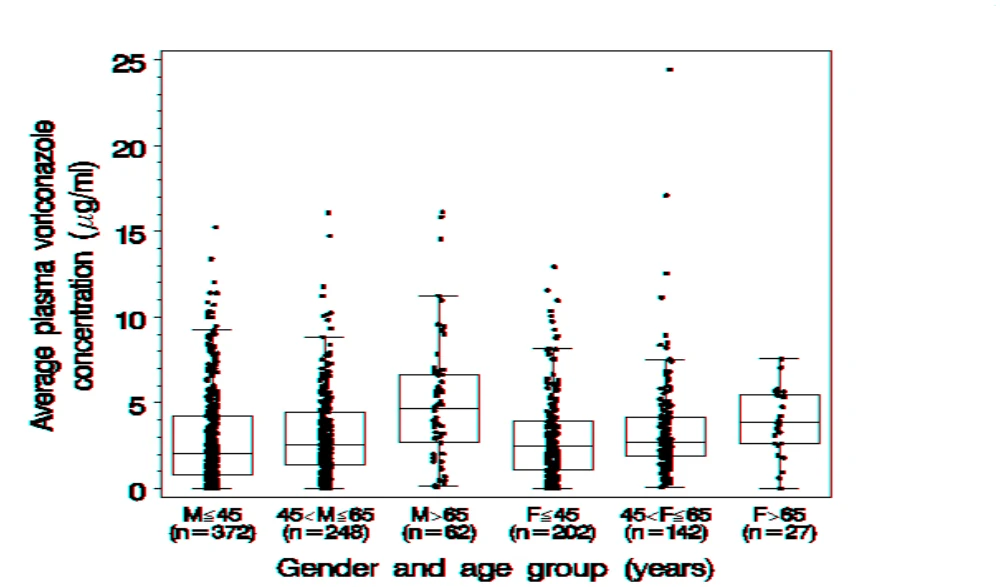
The Phase 1 study indicates that there appears to be a significant effect of age and gender on the exposure of voriconazole with increased levels in elderly versus young and female versus males; however, the Phase 2/3 database indicates the differences in voriconazole pharmacokinetics observed in the Phase 1 study are to a large extent negated for gender and there is a reduced effect of age.
Pediatric
Preliminary pharmacokinetic data were obtained from eight immunocompromised children (aged 2 to 11 years) in a single intravenous dose study and 18 patients (fourteen aged 2 to 11 years and four aged 12 to 15 years) in the compassionate use program. Plasma concentrations in these children were similar to those in adults following administration of similar intravenous doses of voriconazole on a weight-corrected basis (3 or 4 mg/kg).
Renal Impairment
In a single oral dose (200 mg) study in 24 subjects with normal renal function and mild to severe renal impairment, systemic exposure (AUC) and peak plasma concentration (Cmax) of voriconazole were not significantly affected by renal impairment. Therefore, no dosage adjustment appears necessary for oral dosing in patients with mild to severe renal impairment.
A pharmacokinetic study in 6 subjects with renal failure undergoing hemodialysis showed that voriconazole is dialyzed with clearance of 121 mL/min. The mean amount of voriconazole removed during 4 hour hemodialysis session (8%, range 1 to 16%) is not enough to warrant dose adjustment.
Hepatic Impairment
Voriconazole should not be used in severe hepatic insufficiency. Hepatic impairment is likely to result in increased voriconazole plasma levels in patients with mild to moderate hepatic cirrhosis (Child-Pugh A and B), It is recommended that the standard loading dose regimens be used but that the maintenance dose be halved in patients with mild to moderate hepatic cirrhosis (Child- Pugh A and B) receiving voriconazole (see 7 WARNINGS AND PRECAUTIONS, 4 DOSAGE AND ADMINISTRATION).
Due to the small number of subjects studied, close clinical monitoring is advised.
After an oral single dose (200 mg), AUC was 233% higher in subjects with mild to moderate hepatic cirrhosis (Child-Pugh A and B) compared with subjects with normal hepatic function. Protein binding of voriconazole was not affected by impaired hepatic function.
In an oral multiple dose study, AUC was similar in subjects with moderate hepatic impairment (Child-Pugh B) given a lower maintenance dose of 100 mg BID and subjects with normal hepatic function given 200 mg BID. No pharmacokinetic data are available for patients with severe hepatic cirrhosis (Child-Pugh C).
The results of the study are outlined in the table below.
Table 12 - Summary of pharmacokinetic parameters for normal and cirrhotic subjects
| Parameter | Means | Ratio or Difference between the meansc | 95% CIs | |
|---|---|---|---|---|
Cirrhotic subjects 100 mg BID | Normal subjects 200 mg BID | |||
| Voriconazole | ||||
| Cmax (ng/mL) a | 3413.2 | 4273.4 | 79.9% | (44.8%, 142.4%) |
| AUCt (ng.h/mL) a | 28120.1 | 28946.4 | 97.1% | (53.6%, 176.1%) |
| CL/F (L/h) a | 3.55 | 6.93 | 51.3% | (28.3%, 92.8%) |
| Tmax (h)b | 1.42 | 1.17 | 0.25 | (- 0.47, 0.97) |
| Voriconazole N-oxide | ||||
| Cmax (ng/mL) a | 1820.2 | 3910.6 | 46.5% | (32.8%, 66.0%) |
| AUCt (ng.h/mL) a | 18307.5 | 39203.6 | 46.7% | (39.3%, 55.4%) |
| Tmax (h)b | 4.25 | 2.67 | 1.58 | (- 4.00, 7.17) |
a Geometric means. b Arithmetic mean. c Cirrhotic/Normal ratios (%) are presented for AUCt, Cmax and CL/F, Cirrhotic-Normal differences are presented for Tmax.
11 STORAGE, STABILITY AND DISPOSAL
Store at controlled room temperature between 15°C to 30°C. Keep out of the reach and sight of children.
12 SPECIAL HANDLING INSTRUCTIONS
None
PART II: SCIENTIFIC INFORMATION
13 PHARMACEUTICAL INFORMATION
| Drug Substance | |
|---|---|
| Proper name: | Voriconazole |
Chemical name: Molecular formula and molecular mass: | (2R, 3S)-2-(2, 4-Difluorophenyl)-3-(5-fluoropyrimidin-4-yl)-1-(1, 2, 4-triazol-1-yl)butan-2-ol. (αR-βS)- α-(2,4-Difluorophenyl)-5-fluoro-β-methyl-α-(1H-1,2,4-triazol-1-ylmethyl)-4-pyrimideethanol. 2R, 3S-2-(2, 4-Difluorophenyl)-3-(5-fluoropyrimidin-4-yl)-1-(1H-1, 2, 4-triazol-1-yl)butan-2-ol C16H14F3N5O, 349.31 g/mol |
| Structural formula: | 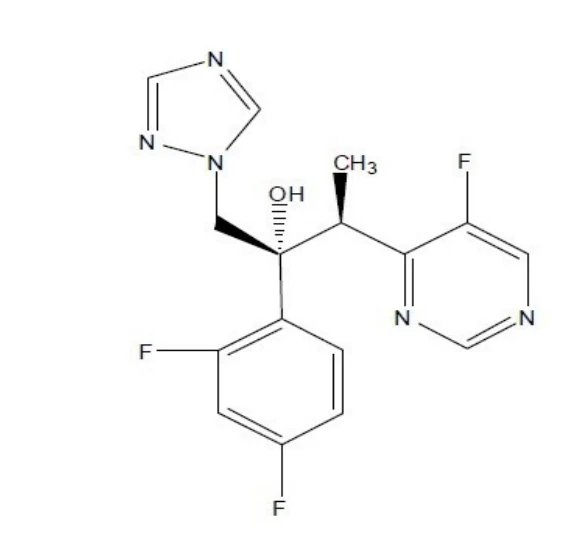 |
Physicochemical properties: Description: Solubility: Isomerism: | Voriconazole is white to off-white powder. Voriconazole is highly soluble in Ethyl Acetate. Voriconazole has two chiral centers i.e (2R, 3S) isomer and (2S, 3R) isomer. |
14 CLINICAL TRIALS
14.1 Clinical Trials by Indication
Invasive Aspergillosis
The efficacy of voriconazole compared to amphotericin B in the primary treatment of acute invasive aspergillosis was demonstrated in 277 patients treated for 12 weeks in Study 307/602. The majority of study patients had underlying hematologic malignancies, including bone marrow transplantation. The study also included patients with solid organ transplantation, solid tumors, and AIDS. The patients were mainly treated for definite or probable invasive aspergillosis of the lungs. Other aspergillosis infections included disseminated disease, CNS infections and sinus infections. Diagnosis of definite or probable invasive aspergillosis was made according to criteria modified from those established by National Institute of Allergy and Infectious Diseases Mycoses Study Group / European Organisation for Research and Treatment of Cancer (NIAID MSG/EORTC).
Voriconazole was administered intravenously with a loading dose of 6 mg/kg every 12 hours for the first 24 hours followed by a maintenance dose of 4 mg/kg every 12 hours for a minimum of seven days. Therapy could then be switched to the oral formulation at a dose of 200 mg BID. Median duration of IV voriconazole therapy was 10 days (range 2 to 85 days). After IV voriconazole therapy, the median duration of PO voriconazole therapy was 76 days (range 2 to 232 days).
Patients in the comparator group received conventional amphotericin B as a slow infusion at a daily dose of 1 to 1.5 mg/kg/day. Median duration of IV amphotericin therapy was 12 days (range 1 to 85 days). Treatment was then continued with other licensed antifungal therapy (OLAT), including itraconazole and lipid amphotericin B formulations. Although initial therapy with conventional amphotericin B was to be continued for at least two weeks, actual duration of therapy was at the discretion of the investigator. Patients who discontinued initial randomized therapy due to toxicity or lack of efficacy were eligible to continue in the study with OLAT.
A satisfactory global response at 12 weeks (complete or partial resolution of all attributable symptoms, signs, radiographic/bronchoscopic abnormalities present at baseline) was seen in 53% of voriconazole treated patients compared to 32% of amphotericin B treated patients (Table 13). A benefit of voriconazole compared to amphotericin B on patient survival at Day 84 was seen with a 71% survival rate on voriconazole compared to 58% on amphotericin B (Table 13). Table 13 also summarizes the response (success) based on mycological confirmation and species.
Table 13 - Overall Efficacy and Success by Species in the Primary Treatment of Acute Invasive Aspergillosis Study 307/602
a Assessed by independent Data Review Committee (DRC)
b Proportion of subjects alive
c Amphotericin B followed by other licensed antifungal therapy
d Difference and corresponding 95% confidence interval are stratified by protocol
e Not all mycologically confirmed specimens were speciated
f Some patients had more than one species isolated at baseline
The results of this comparative trial (Study 307/602) confirmed the results of an earlier non- comparative trial in the primary and salvage treatment of patients with acute invasive aspergillosis (Study 304).
Candidemia
Voriconazole was compared to the regimen of amphotericin B followed by fluconazole in Study 608, an open label, comparative study in non-neutropenic patients with candidemia associated with clinical signs of infection. Patients were randomized in a 2:1 ratio to receive either voriconazole (n=283) or the regimen of amphotericin B followed by fluconazole (n=139). Patients were treated with randomized study drug for a median of 15 days. Most of the candidemia in patients evaluated for efficacy was caused by C. albicans (46%), followed by C. tropicalis (19%), C. parapsilosis (17%), C. glabrata (15%), and C. krusei (1%).
An independent Data Review Committee (DRC), blinded to study treatment, reviewed the
| Voriconazole | Ampho BC | Stratified Difference (95% CI)d | ||||||||||||
|---|---|---|---|---|---|---|---|---|---|---|---|---|---|---|
| n/N (%) | n/N (%) | |||||||||||||
| Efficacy as Primary Therapy | ||||||||||||||
| Satisfactory Global Responsea | 76/144 (53) | 42/133 (32) | 21.8% (10.5%, 33.0%) p < 0.0001 | |||||||||||
| Survival at Day 84b | 102/144 (71) | 77/133 (58) | 13.1% (2.1%, 24.2%) | |||||||||||
| Success by Species | ||||||||||||||
| Success n/N (%) | ||||||||||||||
| Overall success | 76/144 (53) | 42/133 (32) | ||||||||||||
| Mycologically confirmede | 37/84 (44) | 16/67 (24) | ||||||||||||
| Aspergillus spp.f | ||||||||||||||
| A. fumigatus | 28/63 (44) | 12/47 (26) | ||||||||||||
| A. flavus | 3/6 | 4/9 | ||||||||||||
| A. terreus | 2/3 | 0/3 | ||||||||||||
| A. niger | 1/4 | 0/9 | ||||||||||||
| A. nidulans | 1/1 | 0/0 | ||||||||||||
clinical and mycological data from this study, and generated one assessment of response for each patient. A successful response required all of the following: resolution or improvement in all clinical signs and symptoms of infection, blood cultures negative for Candida, infected deep tissue sites negative for Candida or resolution of all local signs of infection, and no systemic antifungal therapy other than study drug.
The primary analysis, which counted DRC-assessed successes at the fixed time point (12 weeks after End of therapy [EOT]), demonstrated that voriconazole was comparable to the regimen of amphotericin B followed by fluconazole (response rates of 40.72% and 40.70%, respectively) in the treatment of candidemia. In a secondary analysis, which counted DRC-assessed successes at any time point (EOT, or 2, 6, or 12 weeks after EOT), the response rates were 65.48% for voriconazole and 71.33% for the regimen of amphotericin B followed by fluconazole.
In Studies 608 and 309/604 (non-comparative study in patients with invasive fungal infections who were refractory to, or intolerant of, other antifungal agents), voriconazole was evaluated in 35 patients with invasive candidiasis. A favorable response was seen in 4 of 7 patients with intraabdominal infections, 5 of 6 patients with kidney and bladder wall infections, 3 of 3 patients with deep tissue abscess or wound infection, 2 of 2 patients with pneumonia/pleural space infections, 2 of 4 patients with skin lesions, 1 of 1 patients with mixed intraabdominal and pulmonary infection, 1 of 2 patients with suppurative phlebitis, 1 of 3 patients with hepatosplenic infection, 1 of 5 patients with osteomyelitis, 0 of 1 with liver infection, and 0 of 1 with cervical lymph node infection.
Other Serious Fungal Pathogens
Scedosporium spp. and Fusarium spp.
Voriconazole clinical program included a total of 38 patients with Scedosporium spp. and 21 patients with Fusarium spp. This limited clinical data suggests that voriconazole may be effective against these rare pathogens in patients intolerant of or refractory to other therapies.
Pediatric Use
Therapeutic trials included five patients aged 12 to 15 years. The remaining 56 patients received voriconazole in the compassionate use programs. Thus sixty-one (61) pediatric patients aged 9 months up to 15 years who had definite or probable invasive fungal infections, were treated with voriconazole. The majority (57/61) had failed previous antifungal therapies. Underlying diseases in these patients included hematologic malignancies and aplastic anemia (27 patients) and chronic granulomatous disease (14 patients). The most commonly treated fungal infection was aspergillosis (43/61; 70%).
Table 14 - Clinical Outcome by Age in Pediatric Patients with Aspergillosis Infection
| Age | Success/Treated |
|---|---|
| <2 yrs | 3/6 |
| 2 - <12 yrs | 11/23 |
| 12 - 15 yrs | 3/14 |
14.2 Comparative Bioavailability Studies
A randomized, two-way, single-dose, crossover comparative bioavailability study of APO-VORICONAZOLE 200 mg tablets (Apotex Inc.) and PrVFEND® 200 mg tablets (Pfizer Canada Inc.) was conducted in healthy, adult, male subjects under fasting conditions. Comparative bioavailability data from the 23 subjects that were included in the statistical analysis are presented in the following table.
SUMMARY TABLE OF THE COMPARATIVE BIOVAILABILITY DATA
Voriconazole (1 x 200 mg) Geometric Mean Arithmetic Mean (CV %) | ||||
| Parameter | Test1 | Reference2 | % Ratio of Geometric Means | 90% Confidence Interval |
AUCT (ng·h/mL) | 5486.45 6061.99 (48.15) | 5659.98 6256.93 (47.33) | 97.0 | 90.6 – 103.8 |
AUCI (ng·h/mL) | 5608.30 6193.26 (48.63) | 5761.35 6373.47 (48.18) | 97.4 | 91.3 – 103.9 |
Cmax (ng/mL) | 1319.95 1445.00 (45.30) | 1468.28 1644.13 (50.58) | 89.9 | 76.0 – 106.3 |
Tmax3 (h) | 1.00 (0.67 – 4.00) | 1.52 (0.50 – 3.00) | ||
T½4 (h) | 6.97 (25.27) | 6.65 (24.02) | ||
1 APO-VORICONAZOLE (voriconazole) tablets, 200 mg (Apotex Inc.) 2 PrVFEND® (voriconazole) tablets, 200 mg (Pfizer Canada Inc.) 3 Expressed as the median (range) only 4 Expressed as the arithmetic mean (CV %) only | ||||
15 MICROBIOLOGY
Activity in vitro and in vivo
Voriconazole demonstrated in vitro activity against Aspergillus species (A. fumigatus, A. flavus, A. niger and A. terreus) and Candida species (C. albicans, C. glabrata, C. krusei, C. parapsilosis and C. tropicalis). Variable in vitro activity has also been demonstrated against a variety of fungal pathogens. The in vitro susceptible organisms and Minimum Inhibitory Concentration (MIC90) values are summarized in Table 16.
Standardized techniques for susceptibility testing of antifungal agents have only been established for yeasts. Standardized testing for the filamentous fungi are ongoing. Results of such studies do not necessarily correlate with clinical outcome.
Table 16 - In vitro Voriconazole-Susceptible Organisms
| PATHOGEN | MIC90 a rangeb (mcg/mL) | PATHOGEN | MIC90 a rangeb (mcg/mL) | |||||
|---|---|---|---|---|---|---|---|---|
| Acremonium spp | 0.25 | Cladophialophora spp | ≤ 0.03-1.0 | |||||
| Alternaria | 1.25 | Cladosporium spp | 0.06-1.0 | |||||
| Aspergillus spp | Coccidioides immitis | 0.25 | ||||||
| A. flavus | 0.5-2.0 | Conidiobolus coronatus | 2.0 > 32.0 | |||||
| A. fumigatus | 0.25-1.0 | Crytococcus neoformans | 0.06-0.25 | |||||
| A. terreus | 0.25-1.0 | Curvularia spp | 0.06-1.0 | |||||
| A. niger | 0.5-1.0 | Exserohilum rostratum | 0.17 | |||||
| A. nidulans | 0.5 | Exophiala spp | 0.06-2.0 | |||||
| Bipolaris spp | Fonsecaea spp | ≤ 0.03-1.0 | ||||||
| B. australiensis | 0.2 | Fusarium spp | ||||||
| B. hawaiiensis | 0.15-0.5 | F. oxysporum | 0.25-8.0 | |||||
| B. spicifera | 0.29-2.0 | F. proliferatum | 1.0-2.0 | |||||
| Blastomyces dermatitidis | 0.25 | F. solani | 2.0 > 8.0 | |||||
| Blastoschizomyces capitatus | 0.12 | Hansenula anomala | 0.25 | |||||
| Candida spp | Histoplasma capsulatum | ≤ 0.03-2.0 | ||||||
| C. albicans | 0.06-1.56 | Madurella mycetomatis | 0.05 | |||||
| C. dubliniensis | 0.03-0.5 | Paecilomyces lilacinus | 0.12-0.5 | |||||
| C. ciferrii | 0.25 | Paracoccidioides brasiliensis | < 0.03-2.0 | |||||
| C. famata | ≤0.03 | Penicillium marneffei | < 0.03 | |||||
| C. glabrata | 0.25-8.0 | Phialophora spp | 0.125-2.0 | |||||
| C. guillierrmondii | 0.03-8.0 | Saccromyces cerevisiae | 0.06-0.25 | |||||
| C. kefyr | < 0.03 | Scopulariopsis brevicaulis | 4.0 | |||||
| C. krusei | 0.5-2.0 | Trichospron spp | 0.25 | |||||
| C. lambica | < 0.03 | T. beigelii | < 0.03 | |||||
| C. lipolytica | 0.06 | Scedosporium spp | ||||||
| C. lusitaniae | 0.06-0.5 | S. apiospermum | 0.5 | |||||
| C. parapsilosis | 0.12-0.25 | S. prolificans | 0.5 - > 8 | |||||
| C. rugosa | 0.06 | Wangiella dermatitidis | 0.12-0.25 | |||||
| PATHOGEN | MIC90 a rangeb (mcg/mL) | PATHOGEN | MIC90 a rangeb (mcg/mL) |
|---|---|---|---|
| C. stellatoidea | 0.125 | ||
| C. tropicalis | 0.26 - > 16.0 |
a minimal inhibitory concentration at which 90% of the strains tested are inhibited from growth
b range is reported when >1 study is conducted to detect the MIC90. MIC90 used alone means that only one study was conducted or if >1 study, the MIC90 values are the same.
Voriconazole is active in vivo in guinea pig models of fungal infection including various systemic infections with Aspergillus species (including itraconazole-resistant Aspergillus) in either immune normal or immune compromised animals. In addition, voriconazole exhibits fungicidal activity against Aspergillus as evidenced by 100% cures at a dose of 10 mg/kg/p.o. BID for 4 days.
Clinical and Laboratory Standards Institute (CLSI) Breakpoints
Breakpoint criteria established by CLSI
Susceptibility Testing Methods
Aspergillus species and other filamentous fungi: No interpretive criteria have been established for Aspergillus species and other filamentous fungi.
Candida species: The interpretive standards for voriconazole against Candida species are applicable only to tests performed using Clinical and Laboratory Standards Institute (CLSI) microbroth dilution reference method M27 for MIC read at 48 hours or disk diffusion reference method M44 for zone diameter read at 24 hours.
Broth Dilution Techniques: Quantitative methods are used to determine antifungal MICs. These MICs provide estimates of the susceptibility of Candida species to antifungal agents. MICs should be determined using a standardized procedure at 48 hours. Standardized procedures are based on a dilution method (broth) with standardized inoculums concentrations and standardized concentrations of voriconazole powder. The MIC values should be interpreted according to the criteria provided in the table below.
Diffusion Techniques: Qualitative methods that require measurement of zone diameters also provide reproducible estimates of the susceptibility of Candida species to an antifungal agent. One such standardized procedure requires the use of standardized inoculum concentrations. This procedure uses paper discs impregnated with 1 microgram of voriconazole to test the susceptibility of yeasts to voriconazole. Disc diffusion interpretive criteria are also provided in the table below.
Table 17 - Susceptibility Interpretive Criteria for Voriconazole
Broth Dilution at 48 hours (MIC in mcg/mL) | Disk Diffusion at 24 hours (Zone diameters in mm) | |||||||||||||
|---|---|---|---|---|---|---|---|---|---|---|---|---|---|---|
| Susceptible (S) | Susceptible-dose dependent (S-DD) | Resistant (R) | Susceptible (S) | Susceptible-dose dependent (S-DD) | Resistant (R) | |||||||||
| Voriconazole | ≤ 1.0 | 2.0 | ≥ 4.0 | ≥ 17 | 14-16 | ≤13 | ||||||||
Note 1: Shown are the breakpoints (mcg/mL) for voriconazole against Candida species. If MICs are measured using a scale that yields results falling between categories, the next higher category is implied. Thus, an isolate with a voriconazole MIC of 1.5 mcg/mL would be placed in the S-DD category.
The susceptible category implies that isolates are inhibited by the usually achievable concentrations of antifungal agent tested when the recommended dosage is used for the site of infection. The susceptible-dose dependent category implies that an infection due to the isolate may be appropriately treated in body sites where the drugs are physiologically concentrated or when a high dosage of drug is used. The resistant category implies that isolates are not inhibited by the usually achievable concentrations of the agent with normal dosage schedules and clinical efficacy of the agent against the isolate has not been reliably shown in treatment studies.
Quality Control
Standardized susceptibility test procedures require the use of quality control organisms to control the technical aspects of the test procedures. Standard voriconazole powder and 1 mcg discs should provide the following range of values noted in the table below.
NOTE: Quality control microorganisms are specific strains of organisms with intrinsic biological properties relating to resistance mechanisms and their genetic expression within fungi; the specific strains used for microbiological control are not clinically significant.
Table 18 - Acceptable Quality Control Ranges for Voriconazole to be used in Validation of Susceptibility Test Results
| Broth Dilution (MIC in mcg/mL) | Disk Diffusion (Zone diameter in mm) at 24 hours | ||||||||
|---|---|---|---|---|---|---|---|---|---|
| @24-hour | @48-hour | ||||||||
| QC Strain | |||||||||
Candida parapsilosis ATCC 22019 | 0.016-0.12 | 0.03-0.25 | 28-37 | ||||||
| Candida krusei | 0.06-0.5 | 0.12-1.0 | 16-25 | ||||||
| Broth Dilution (MIC in mcg/mL) | Disk Diffusion (Zone diameter in mm) at 24 hours | |||||||
|---|---|---|---|---|---|---|---|---|
| @24-hour | @48-hour | |||||||
| ATCC 6258 | ||||||||
Candida albicans ATCC 90028 | * | * | 31-42 | |||||
* Quality control ranges have not been established for this strain/antifungal agent combination due to their extensive interlaboratory variation during initial quality control studies.
ATCC is a registered trademark of the American Type Culture Collection.
16 NON-CLINICAL TOXICOLOGY
Voriconazole
General Toxicity
In a rat symptomatology study, voriconazole was lethal following an oral dose of 300 mg/kg. A lower dose (100 mg/kg) caused a small increase in body temperature, a decrease in food intake and body weight gain, whereas 30 mg/kg was devoid of untoward effects. The minimum lethal IV dose was greater than 100 mg/kg for both mice and rats. Clinical signs observed included mydriasis, titubation (loss of balance while moving), depressed behavior, prostration, partially closed eyes, and dyspnea.
Toxicokinetic data from long term (6-month) toxicology studies performed in both rat and dogs indicate that voriconazole exposure is below and comparable to the approximate human exposure at the recommended clinical doses.
Repeat-dose oral studies in rats have shown the liver to be the target organ, with a range of adaptive and functional changes, slight increases in plasma enzyme, and at 80 mg/kg (AUC24h=127.7 mcg.h.mL) (7 times the human exposure based on AUC comparisons), evidence of toxicity (small foci of coagulative necrosis). There was no evidence of hepatotoxicity at 50 mg/kg (AUC24h=23.3 mcg.h.mL) in the 6-month study. Thyroid follicular cell hypertrophy in rats was shown to be secondary to the liver adaptive responses. Intravenous studies in rats up to doses of 20 mg/kg (AUC24h=24.5 mcg.h.mL) did not demonstrate target organ toxicity. Hepatotoxicity occurred at plasma exposures similar to those obtained at therapeutic doses in humans.
Repeat-dose studies in dogs produced a similar spectrum of adaptive, functional and plasma enzymes changes in the liver as seen in rodents. Voriconazole administered for up to 1 month had no effect on transaminase activities, except at the toxic dose of 24 mg/kg (AUC24h=171.1 mcg.h.mL) (28 times the human exposure based on AUC comparisons), where increases in AST and ALT accompanied systemic toxicity. Longer exposure to voriconazole in the 6- and 12-month studies at the high dose of 12 mg/kg (AUC24h=56.8 and 64.1 mcg.h.mL, respectively) (3 times the human exposure based on AUC comparisons) produced evidence of hepatotoxicity (single cell necrosis, increases in plasma ALT and alkaline phosphatase) but this was not seen at 8 mg/kg (AUC24h=34.6 and 35.2 mcg.h.mL, respectively). Intravenous administration of voriconazole to dogs resulted in transient severe clinical signs at 10 mg/kg (AUC24h=50.6 mcg.h.mL), but not at 6 mg/kg (AUC24h=31.3 mcg.h.mL).
Carcinogenicity
Voriconazole
Two-year carcinogenicity studies have been performed in mice and rats at doses of 10, 30 or 100 mg/kg/day, and 6, 18 or 50 mg/kg/day, respectively. A statistically significant increase in the incidence of hepatocellular adenomas was observed in high-dose female rats; the incidence of hepatocellular carcinomas in male rats (6 and 50 mg/kg, 0.2 and 1.6 times human exposure based on body surface area comparisons) was slightly higher than both controls although the difference was not statistically significant. In mice, a spectrum of hepatic neoplastic (adenomas and carcinomas) and non-neoplastic changes (foci of cellular alteration) were observed. The incidence of hepatocellular adenomas was statistically significantly different compared to controls in male and female mice at the dose of 100 mg/kg (1.4x human exposure based on body surface area comparisons); the incidence of hepatocellular carcinomas was significantly increased in high-dose male mice (1.4x human exposure).
Genotoxicity
Voriconazole
Voriconazole was subjected to a complete battery of mutagenicity tests.
Voriconazole did not display mutagenic activity in bacterial or mammalian cells in vitro, or clastogenic activity in vivo, although it demonstrated clastogenic activity in human lymphocyte cultures in vitro.
Reproductive and Developmental Toxicology
Voriconazole
Reproduction toxicology studies indicate that voriconazole produces adverse effects on parturition and is teratogenic in the rat.
Voriconazole prolonged the duration of gestation and labour, and produced dystocia in pregnant rats at 10 mg/kg (AUC24h=15.4 mcg.h.mL) (0.3 times the human exposure based on body surface area comparisons). These parturition disorders led to maternal mortality and a decrease in perinatal survival of pups. Similar effects (though without maternal mortality) were seen at 3 mg/kg (AUC24h=7.8 mcg.h.mL) (0.1 times the human exposure based on body surface area comparisons). There was no perinatal mortality at 1 mg/kg.
A probable mechanism for the effects on parturition in rats is the fall in maternal plasma oestradiol induced by voriconazole.
In rats, voriconazole was teratogenic (cleft palate, hydronephrosis/hydroureter) from 10 mg/kg (0.3 times the human exposure based on body surface area comparisons) and above. Other effects included reduced ossification of sacral and caudal vertebrae, skull pubic end hyoid bone, anomalies of the sternebrae and dilatation of the ureter/renal pelvis. Voriconazole treatment in rats produced increased gestational length and dystocia. These parturition disorders led to maternal mortality and a decrease in perinatal survival of pups. In rabbits, voriconazole increased embryolethality, reduced fetal weight and increased incidences of skeletal variations cervical ribs and extra sternebral ossification sites.
Possible mechanisms for the teratogenic responses to voriconazole are a reduction in maternal plasma estradiol and a direct effect on neural crest cells of the developing.
Voriconazole administration induced no impairment of male or female fertility in rats at exposures similar to those obtained in humans at therapeutic doses.
Special Toxicology
Cardiovascular Activity of Voriconazole
The preclinical development of voriconazole involved three general pharmacology studies in anaesthetised dogs over a range of intravenous doses. Arrhythmias occurred in a single anaesthetised dog at very high free plasma voriconazole concentrations (42 mcg/mL; approximately 7 times the highest clinical concentration of around 5 mcg/mL) in one of the escalating-dose studies. There were no predisposing factors identified in this animal. Arrhythmias were not seen in the other two studies.
From all available preclinical studies it can be concluded that intravenous doses of voriconazole that are tolerated in conscious dog at the maximum tolerated dose of 6 mg/kg had no effects on the ECG, either in anaesthetised or conscious dogs. Higher intravenous doses, yielding free exposure levels of up to 4.7 mcg/mL (13.3 mcM) in anaesthetised dogs, caused minor inconsistent changes in QTc interval of the ECG which were not detected in the toxicology program. Plasma concentrations increased with dose, as expected. Furthermore, voriconazole had no effect in in vitro assays which may be predictive of effects on cardiac repolarisation.
Effects on Electroretinogram in the Anaesthetised Dog
In order to understand the mechanism of visual disturbances seen in patients, we investigated the effect of intravenously administered voriconazole on the electroretinogram (ERG) of anaesthetized dogs. Voriconazole had an effect on the a-wave amplitude at a free steady state plasma concentration of 2.2 mcg/mL (the lowest dose examined), and an effect on the b-wave amplitude at 4.6 mcg/mL. These results confirm that the site of action of voriconazole is the retina.
Ophthalmological examinations have revealed no unusual findings in rats, mice or dogs treated in toxicology studies up to 24, 24 or 12 months respectively. The histopathological examination in these studies involved all the major structures and no histopathological evidence of toxicity to the visual pathways was observed. The peak plasma concentrations of free voriconazole in dogs used in toxicology studies (5 to 7 mcg/mL) exceed the exposure range expected in man (0.6 to 2.4 mcg/mL).
Thus, the effects on the ERG seen in humans have also been shown in dogs at similar plasma exposures of voriconazole. Despite exposure to plasma concentrations causing an effect on the ERG of the dog, the clinical, ophthalmoscopic, morphologic and morphometric data indicate that chronic treatment of rats and dogs with voriconazole was without detectable functional or anatomical changes to the retina.
Oral absorption of voriconazole is high (>75%) in all species. The drug has a non-linear elimination profile in all species (including human), and consequently plasma clearance and volume of distribution data are of limited utility. However, apparent volume of distribution values greater than total body water indicate that voriconazole has some tissue affinity, in keeping with its moderately lipophilic nature. In addition, significant concentrations of voriconazole are obtained in CSF and CNS of guinea pigs. Clearance of voriconazole is predominantly by hepatic metabolism resulting in several oxidised and further conjugated metabolites. The major circulating metabolite in human, rat and dog is the N-oxide, UK-121,265, which has negligible therapeutic activity. The majority of dosed voriconazole was excreted over 48h, with both urine and faeces being important routes of elimination. Multiple administration of voriconazole leads to auto-induction of metabolism in most animal species, but this effect is not observed in human. A sex difference in clearance was observed in rodents only. Voriconazole metabolism in humans is mediated by CYP2C9, CYP2C19 and CYP3A4 and it has been shown to competitively inhibit the same isoenzymes. Therefore, voriconazole has the potential for clinical interactions with co-administered drugs that are substrates for CYP2C9, CYP2C19 and CYP3A4. Since CYP2C19 exhibits genetic polymorphism, it is likely that poor metabolisers will be exposed to higher concentrations of voriconazole. Toxicokinetic data for voriconazole indicate that clinical exposure at the therapeutic maintenance doses is similar to or slightly lower than that seen in both rat and dog at doses without adverse effect in the 6-month toxicology studies.
17 SUPPORTING PRODUCT MONOGRAPHS
- 1. PrVFEND® (Tablets 50 mg and 200 mg, Lyophilized powder for reconstitution: 200 mg/Vial, 10 mg/mL reconstituted Powder for Oral Suspension 3 g/bottle (40 mg/mL when reconstituted) submission control 272725, Product Monograph, Pfizer Canada ULC (JUL 05, 2023)