


Product Monograph - Mitoxantrone Injection USP
SUMMARY PRODUCT INFORMATION
| Route of Administration | Dosage Form / Strength | Clinically Relevant Nonmedicinal Ingredients |
| Intravenous injection | Solution for Injection/ 2 mg/mL mitoxantrone (20 mg/ 10 mL, 25 mg/12.5 mL & 30 mg/15 mL) | Sodium metabisulfite is used during production, but does not appear in the Finished Product. For a complete listing see Dosage Forms, Composition and Packaging section. |
INDICATIONS AND CLINICAL USE
Mitoxantrone Injection USP is indicated for chemotherapy in patients with:
- metastatic carcinoma of the breast
- relapsed adult leukemia
- lymphoma, and
- hepatoma.
In combination with other drug(s), Mitoxantrone Injection USP is indicated:
- in the initial therapy of acute non-lymphocytic leukemia (ANLL) in adults, including myelogenous, promyelocytic, monocytic and erythroid acute leukemias.
Mitoxantrone Injection USP is a potent drug and should be administered under the supervision of a qualified health care professional, who is experienced in the use of cancer chemotherapeutic drugs and in the management of carcinoma of the breast, relapsed adult leukemia, lymphoma, hepatoma, and acute non-lymphocytic leukemia (ANLL) in adults. Appropriate management therapy and complications is only possible when adequate diagnostic and treatment facilities for regular monitoring of clinical, hematological and biochemical parameters during and after treatment are readily available.
Blood counts should be taken at frequent intervals prior, during and post-therapy. Cardiac monitoring is advised in those patients who have received prior anthracyclines, prior mediastinal radiotherapy or with pre-existing cardiac disease.
NOT INDICATED FOR INTRATHECAL ADMINISTRATION.
Geriatrics & Pediatrics: No data is available.
CONTRAINDICATIONS
- NOT INDICATED FOR INTRATHECAL ADMINISTRATION. There have been reports of neuropathy, including paralysis and bowel and bladder dysfunction following intrathecal injection.
Mitoxantrone Injection USP is contraindicated in patients:
- who have hypersensitivity to Mitoxantrone hydrochloride or any of its components
- who have demonstrated prior hypersensitivity to anthracyclines.
- who have received prior substantial anthracycline exposure if cardiac function is abnormal prior to the initiation of therapy (see WARNINGS AND PRECAUTIONS).
- who have not recovered from severe myelosuppression due to previous treatment with other cytotoxic agents or radiotherapy.
- with severe hepatic impairment.
WARNINGS AND PRECAUTIONS
Serious Warnings and Precautions Mitoxantrone Injection USP should never be given:
|
|
General
Mitoxantrone is an active cytotoxic drug which should be used by clinicians familiar with the use of antineoplastic agents, and having the facilities for regular monitoring of clinical, hematological and biochemical parameters during and after treatment.
Mitoxantrone should be given slowly into a freely flowing intravenous infusion.
Mitoxantrone may impart a blue-green coloration to the urine for 24 hours after administration, and patients should be advised to expect this during active therapy. A reversible blue coloration in the sclerae has been reported in two cases.
It is recommended that Mitoxantrone Injection USP not be mixed in the same infusion with other drugs. Mitoxantrone Injection USP should not be mixed in the same infusion with heparin since a precipitate may form (see DOSAGE AND ADMINISTRATION).
Animal data suggest that if used in combination with other antineoplastic agents, additive myelosuppression may be expected. This has been supported by available clinical data on combination regimens. When used in combination regimens, the initial dose of Mitoxantrone Injection USP should be reduced by 2-4 mg/m2 below the dose recommended for single agent usage (see DOSAGE AND ADMINISTRATION).
Mitoxantrone has not been approved for the treatment of multiple sclerosis. However, patients being treated with mitoxantrone and who also have multiple sclerosis as a comorbid condition should undergo quantitative LVEF evaluation at baseline, prior to each dose and, yearly after stopping mitoxantrone to monitor for late occurring cardiotoxicity. Patients should be monitored for evidence of cardiac toxicity prior to each dose. Ordinarily, patients with multiple sclerosis should not receive a cumulative dose greater than 100 mg/m2. Active or dormant cardiovascular disease, prior or concomitant radiotherapy to the mediastinal/pericardial area, previous therapy with other anthracyclines or anthracenediones, or concomitant use of other cardiotoxic drugs may increase the risk of cardiac toxicity. Sudden death has been reported in the multiple sclerosis patient population. The causal relationship to mitoxantrone administration cannot be ruled out.
Mitoxantrone should not ordinarily be administered to multiple sclerosis patients who have received a cumulative lifetime dose of >100 mg/m2 or those with either LVEF of <50% or a clinically-significant reduction in LVEF.
Functional cardiac changes may occur in patients with multiple sclerosis treated with mitoxantrone.
Carcinogenesis and Mutagenesis: No data is available.
Cardiovascular
Cases of functional cardiac changes, including congestive heart failure (CHF) and decreases in left ventricular ejection fraction (LVEF), have been reported during and also, for months to years after, Mitoxantrone therapy. The risk of cardiotoxicity increases with cumulative doses.
Evaluation of the left-ventricular ejection fraction (LVEF) (by echocardiogram or MUGA) is recommended prior to administration of the initial dose of Mitoxantrone. Subsequent LVEF evaluations are recommended if signs or symptoms of congestive heart failure develop, and prior to all doses administered to patients who have received a cumulative dose of >100 mg/m2.
In cancer patients, symptomatic CHF is known to occur in 2.6% of patients receiving up to a cumulative dose of 140 mg/m2. In comparative oncology trials, the overall cumulative probability rate of moderate or severe decreases in LVEF at this dose was 13%. These cardiac events may be more common in patients who have had prior treatment with anthracyclines or anthracenediones, concomitant use of other cardiotoxoic drugs, prior or concomitant radiotherapy to the mediastinal/pericardial area, or with active or dormant cardiovascular heart disease, indicating a possible increased risk of cardiotoxicity in such patients. Because of the possible danger of cardiac effects in patients previously treated with daunorubicin or doxorubicin, the benefit-to-risk ratio of Mitoxantrone therapy in such patients should be determined before starting therapy.
It is therefore recommended that patients should be monitored for evidence of cardiac toxicity and questioned about symptoms of heart failure prior to initiation of therapy. In addition, it is recommended that regular cardiac monitoring be carried out in these patients taking into account the extent to which individual patients have been exposed to these cardiac risk factors. A small proportion of endomyocardial biopsy reports have demonstrated changes consistent with anthracycline toxicity in patients treated with Mitoxantrone, who had not received prior anthracyclines.
Cardiac toxicity with mitoxantrone may occur at lower cumulative doses whether or not cardiac risk factors are present.
Acute, congestive heart failure may occasionally occur in patients treated with mitoxantrone for ANLL (acute non-lymphocytic leukemia).
Fertility
Women treated with Mitoxantrone Injection USP have an increased risk of transitory or persistent amenorrhea.
In men, no data are available; however, tubular atrophy of the testes and reduced sperm counts were observed in animals.
Therefore, preservation of gametes should be considered prior to therapy with mitoxantrone.
Hematologic
When Mitoxantrone is used in high doses (>14 mg/m2 x 3 days), severe myelosuppression will occur. Since Mitoxantrone at any dose can produce myelosuppression (see ADVERSE REACTIONS), it should be used with caution in patients in poor general condition or with pre-existing myelosuppression due to any cause. Except for the treatment of acute nonlymphocytic leukemia, Mitoxantrone should not be given to patients with baseline neutrophil counts of less than 1,500 cells/mm3. Blood and blood products must be available to support patients during the expected period of medullary hypoplasia and severe myelosuppression. Particular care should be given to assuring full hematologic recovery before undertaking consolidation therapy (if treatment is used) and patients should be monitored closely during this phase.
There is a high incidence of bone marrow depression, primarily of leukocytes, requiring careful hematological monitoring. Following recommended doses of Mitoxantrone, leukopenia is usually transient, reaching its nadir at about 10 days after dosing, with recovery usually occurring by the 21st day. White blood cell counts as low as 1,500 mm3 may be expected following therapy, but white blood cell counts rarely fall below 1,000 mm3 at the recommended dosage. In order to monitor the occurrence of bone marrow suppression, primarily neutropenia, which may be severe and result in infection, it is recommended that frequent peripheral blood cell counts be performed on all patients receiving Mitoxantrone. Red blood cells and platelets should also be monitored since depression of these elements may also occur. Hematological toxicity may require reduction of dose or suspension or delay of Mitoxantrone therapy.
Patients should be advised of the signs and symptoms of myelosuppression.
Topoisomerase II inhibitors, including Mitoxantrone, when used concomitantly with other antineoplastic agents and/or radiotherapy, have recently been associated with the development of Acute Myeloid Leukemia (AML) and Myelodysplastic Syndrome (MDS).
Secondary acute myelogenous leukemia (AML) has been reported in cancer patients treated with anthracyclines. Mitoxantrone is an anthracenedione, a related drug. The occurrence of refactory secondary leukemia is more common when anthracyclines are given in combination with DNA-damaging antineoplastic agents, when patients have been heavily pretreated with cytotoxic drugs, or when doses of anthracyclines have been escalated. The cumulative risk of developing drugs, or when doses of anthracyclines have been escalated. The cumulative risk of developing treatment-related AML, in 1774 patients with breast cancer who received Mitoxantrone concomitantly with other cytotoxic agents and radiotherapy, was estimated as 1.1% and 1.6% at 5 and 10 years, respectively.
There have been post-marketing reports of acute leukemia, some resulting in death, following mitoxantrone hydrochloride treatment in patients with multiple sclerosis.
Hepatic/Biliary/Pancreatic
The safety of Mitoxantrone in patients with hepatic insufficiency is not established. Mitoxantrone therapy in patients with abnormal liver function tests is not recommended because Mitoxantrone clearance is reduced by hepatic impairment and no laboratory measurement can predict drug clearance and dose adjustments.
Mitoxantrone should not be used in patients with severe hepatic dysfunction (see CONTRAINDICATIONS) and poor performance status. If performance status is favourable, Mitoxantrone in reduced dosage may be used, with careful supervision. Mitoxantrone clearance is reduced by hepatic impairment. Patients with severe dysfunction (bilirubin >3.4 mg/dL) have an AUC more than three times greater than that of patients with normal hepatic function receiving the same dose. Careful supervision is recommended when treating patients with hepatic insufficiency.
Immune
Sulfites can cause allergic-type reactions including anaphylactic symptoms and bronchospasm in susceptible people, especially those with a history of asthma or allergy.
Immunization may be ineffective when given during Mitoxantrone therapy. Immunization with live virus vaccines are generally not recommended. If patients are treated with immunosuppressive agents and receive a vaccine concomitantly, it has been shown that patients have minimal antibody response after vaccination. Vaccination with live virus may result in severe reactions such as vaccinia gangrenosa, generalized vaccinia, or death.
Patients who receive immunosuppressive agents have a reduced immunological response to infection. Systemic infections should be treated concomitantly with or just prior to commencing therapy with Mitoxantrone Injection USP.
Genitoruinary
Hyperuricaemia may occur as a result of rapid lysis of tumor cells by
Mitoxantrone. Serum uric acid levels should be monitored and hypouricaemic therapy instituted prior to the initiation of antileukaemic therapy.
Dependence/Tolerance, Ear/Nose/Throat, Endocrine & Metabolism, Gastrointestinal, Neurologic, Ophthalmologic, Peri-Operative Considerations, Psychiatric, Renal, Respiratory, Sensitivity/Resistance, Sexual Function/Reproduction, Skin: No data available.
Special Populations
Pregnant Women:
There are no adequate and well-controlled studies in pregnant women. If the drug is used during pregnancy, or if the patient becomes pregnant while taking this drug, the patient should be apprised of the potential hazard to the fetus. Women of child-bearing potential should be advised to avoid becoming pregnant. Women who are biologically capable of becoming pregnant should have a pregnancy test prior to each dose, and the results should be known prior to administration of the drug.
Mitoxantrone may cause fetal harm when administered to a pregnant woman. In treated rats, at doses of ≥ 0.1 mg/kg (0.05 times the recommended human doses on a mg/m2 basis), low fetal birth weight and retarded development of the fetal kidney were seen in greater frequency. In treated rabbits, an increased incidence of premature delivery was observed at doses of ≥ 0.01 mg/kg (0.01 times the recommended human dose on a mg/m2 basis). Mitoxantrone was not teratogenic in rabbits.
Nursing Women:
Mitoxantrone is excreted in human milk and significant concentrations (18.0 ng/mL) have been reported for 28 days after the last administration. Because of the potential for serious adverse reactions in infants from
Mitoxantrone, breast feeding should be discontinued before starting treatment.
Pediatrics & Geriatrics: No data available.
Monitoring and Laboratory Tests
*Full blood count, including platelets, should be undertaken serially during a course of treatment and in the event that signs and symptoms of injection develop. Dosage adjustments may be necessary based on these counts (see DOSAGE AND ADMINISTRATION).
*Liver function tests should also be performed prior to each course of therapy. Mitoxantrone therapy in patients with abnormal liver function tests is not recommended because Mitoxantrone clearance is reduced by hepatic impairment and no laboratory measurement can predict drug clearance and dose adjustments.
* Serum uric acid levels should be monitored and hypouricaemic therapy instituted prior to the initiation of antileukaemic therapy.
ADVERSE REACTIONS
Adverse Drug Reaction Overview
Serious or Life-Threatening Reactions
Sudden death has been reported in the multiple sclerosis patient population.
Hematological:
Some degree of leukopenia is to be expected following recommended doses of mitoxantrone. With dosing every 21 days, suppression of WBC count below 1,000/mm3 is infrequent; leukopenia is usually transient reaching its nadir at about 10 days after dosing with recovery usually occurring by the 21st day. Secondary AML/MDS have been reported following chemotherapy with various DNA topoisomerase II inhibitors, including Mitoxantrone. Features of the AML include a latency period of < 3 years, short pre-leukemic phase and non-specific cytogenic alterations including chromosome abnormalities.
Thrombocytopenia can occur and anemia occurs less frequently. Myelosuppression may be more severe and prolonged in patients having had extensive prior chemotherapy or radiotherapy or in debilitated patients.
The most commonly encountered side effects are nausea and vomiting, although in the majority of cases these are mild (WHO Grade 1) and transient. Alopecia may occur, but is most frequently of minimal severity and reversible on cessation of therapy.
Other side effects which have occasionally been reported include allergic reactions-anaphylaxis/anaphylactoid reactions (including shock), abdominal pain, amenorrhea, constipation, anorexia, diarrhea, dyspnea, interstitial pneumonitis, fatigue, weakness, fever, weight changes, edema, gastrointestinal bleeding, stomatitis/mucositis, infection, urinary tract infection, upper respiratory tract infection, pneumonia, marrow hypoplasia, granulocytopenia, neutropenia, hemmorhage/bruise, bleeding, abnormal white blood count, hepatic toxicity, renal toxicity, blue-green discoloration of the urine and nonspecific neurological side effects including drowsiness, confusion, headache, anxiety and paresthesia. Tissue necrosis following extravasation has been reported rarely.
Changes in laboratory test values have been observed infrequently, e.g., increased liver enzyme levels, elevated serum creatinine and blood urea nitrogen levels (with occasional reports of severe impairment of hepatic function in patients with leukemia).
Cardiovascular:
Cardiovascular effects, which have only occasionally been of clinical significance, include decreased left ventricular ejection fraction (determined by ECHO or MUGA scan), cardiomyopathy, EKG changes and acute arrhythmia. Congestive heart failure has been reported. Such cases have generally responded well to treatment with digitalis and/or diuretics. In patients with leukemia there is an increase in the frequency of cardiac events, the direct role of Mitoxantrone in these cases is difficult to assess, since most patients had received prior therapy with anthracyclines and since their course is frequently complicated by anemia, fever, sepsis, and i.v. fluid therapy. Sinus bradycardia, myocardial infarction and hypotension have been occasionally reported.
In leukemia patients treated with a single course of 12 mg/m2 intravenous daily for 5 days, the following drug related toxicities occurred: moderate or severe jaundice or hepatitis in 8%, moderate nausea or vomiting in 8%, moderate or severe stomatitis/mucositis in 9 - 29%, diarrhea in 9-13% and moderate or severe alopecia in 11%.
Dermatologic effects include extravasation at the infusion site, which may result in erythema, swelling, pain, burning, rash, and/or blue discoloration of the skin. Extravasation can result in tissue necrosis with resultant need for debridement and skin grafting. Phlebitis has also been reported at the site of infusion.
Less common reactions include: tumor lysis syndrome (characterized by hyperuricemia, hyperkalemia, hyperphosphatemia and hypocalcemia) which has been observed rarely during single-agent chemotherapy with Mitoxantrone, as well as during combination chemotherapy; nail pigmentation and onycholysis; and reversible blue coloration of sclerae has been reported.
Clinical Trial Adverse Drug Reactions
Because clinical trials are conducted under very specific conditions the adverse reaction rates observed in the clinical trials may not reflect the rates observed in practice and should not be compared to the rates in the clinical trials of another drug. Adverse drug reaction information from clinical trials is useful for identifying drug-related adverse events and for approximating rates.
Clinical trials experience has established the dosage range, efficacy and safety profile of Mitoxantrone Injection USP.
A single dose can be given intermittently every 3 or 4 weeks. The recommended initial treatment dose in good risk patients is 14 mg/m2.
The following efficacy and safety results were generated from analyses.
Efficacy
Breast Cancer: Efficacy data are available on 349 patients with locally advanced or metastatic breast carcinoma. Results are dependent on many predisposing factors including prior chemotherapy and/or radiotherapy, the health of the patients, sites of metastases and dose of the agent employed. In a European multi-center, first-line, single-agent trial using an initial dose of 14 mg/m2, the overall response rate was 39%, which compared favorably to doxorubicin therapy at a dose of 60 - 75 mg/m2 when given to patients with similar stage disease. In a study of a direct comparison with doxorubicin, given as second-line therapy to breast cancer patients who failed a standard first-line combination, response rates are 27% for Mitoxantrone and 23% for doxorubicin. The mean duration of response observed after Mitoxantrone was greater than those reported after doxorubicin. Responses have been seen in all major sites of metastases including lymph nodes, lung, bone, skin and viscera, in patients both with and without prior hormonal therapy. Available data suggest that Mitoxantrone is comparable in efficacy with doxorubicin in the treatment of advanced breast cancer. Myelosuppression with 21-day treatment intervals is comparable with that observed with doxorubicin. Multiple courses of single-agent Mitoxantrone therapy, in some cases for longer than 12 cycles, have been administered with excellent tolerance and a good response. Mitoxantrone showed incomplete cross-resistance with doxorubicin since responses have been observed in patients in whom doxorubicin had failed or who relapsed after response to that drug. A continuing large-scale clinical trials program with combination therapy also demonstrated early positive results for efficacy and safety. In seven studies, over 100 cycles of combination therapy have been given to 77 patients.
Additional Indications
A total of 966 patients have been treated with Mitoxantrone for 3 other indications of which 259 patients had non-Hodgkin’s lymphoma (NHL), 546 had leukemia, and 161 had hepatocellular carcinoma (HCC). The following summarizes the accrual of these 966 patients.
Accrual of Patients
| Indication | Lederle – Sponsored Studies (No. Treated) | Independent Studies Reported in the Literature (No. Treated) |
NHL Leukemia (including pediatric cases) HCC | 186 282 75 | 73 264 86 |
| Totals | 543 | 423 |
Non-Hodgkin’s Lymphoma: Three key studies evaluated single agent Mitoxantrone in 148 patients with relapsed or refractory advanced NHL at a dose of 14 mg/m2 intravenous every 3 weeks. Of 127 patients evaluable for response in two trials, there were 10 complete responses (CR) and 42 partial responses (PR), producing an overall therapeutic response rate of 41%. The median duration of responses in the multi-center study (122 evaluable patients) was 195 days. Many patients’ responses lasted in excess of one year. Responses were seen in all histological subtypes of NHL. Response to Mitoxantrone was independent of prior chemotherapy and independent of whether the patient received prior doxorubicin. This demonstrated a lack of complete cross-resistance between Mitoxantrone and other drugs including anthracyclines.
Mitoxantrone was evaluated in combination with other agents for the treatment of NHL. A total of 28 patients were treated with different regimens. A first-line comparative trial of the combination of intermediate dose Methotrexate with Leucovorin rescue + bleomycin + doxorubicin + cyclophosphamide + vincristine + dexamethasone (m-BACOD) versus the same combination with 10 mg/m2 Mitoxantrone replacing doxorubicin (m-BNCOD) has shown activity: 4 PRs in 6 evaluable patients with m-BNCOD and 3 PRs in 6 with m-BACOD. The combination of Mitoxantrone at 10 mg/m2 daily for 3 days + vincristine + dexamethasone (NOD) produced 3 PRs in 5 evaluable patients. A first-line comparative trial of the combination of cyclophosphamide + vincristine + prednisone + doxorubicin (CHOP) versus the same combinations with 10 mg/m2 Mitoxantrone replacing doxorubicin (CNOP) has only recently begun.
Mitoxantrone at 5 mg/m2 daily for 3 days every 3 weeks, produced one CR and 2 PRs in 8 evaluable patients with NHL; 10 patients were enrolled. Several other studies reported in the literature and not sponsored by Lederle support the activity of Mitoxantrone in the treatment of NHL.
Leukemia: Four key studies sponsored by Lederle evaluated single agent Mitoxantrone in 181 adult patients with refractory or relapsed acute non-lymphocytic leukemia (ANLL) or chronic myelogenous leukemia in blast crisis (B-CML) at doses ranging from 8 to 12 mg/m2 intravenous daily for 5 days, every 3 weeks. A dose response effect was evident. Optimal activity was seen at a dose of 12 mg/m2 daily for 5 days. At this dose level, there were 19 CRs in 49 evaluable adult patients with ANLL in relapse producing an overall response rate of 39%. The median duration of complete response in the largest (121 patients) single agent study was 98 days. Several patients had remissions lasting in excess of one year.
There were four studies comprising 63 patients in which Mitoxantrone was evaluated in combination with other agents in the treatment of leukemia. The highest complete remission rate of 49% (11 CRs in 23 evaluable patients with ANLL) was obtained when Mitoxantrone at 10 to 12 mg/m2 daily for 3 days was combined with cytosine arabinoside at 100 mg/m2 daily for 7 days. When Mitoxantrone at 10 mg/m2 daily for 5 days was combined with the same dose of cytosine arabinoside, it produced 2 CRs in 8 evaluable patients. Treatment of patients with acute lymphoblastic leukemia using 10 mg/m2 Mitoxantrone daily for 3 days + vincristine + prednisone produced 10 responses in 16 evaluable patients, for a response rate of 62.5%.
Activity was also seen in B-CML. Since no standard therapy exists for this disease and bone marrow is never truly normal in this disorder, both CRs and PRs were considered evidence of efficacy. The optimal dose of Mitoxantrone was 12 mg/m2 daily for 5 days, producing 6 responses in 17 evaluable patients.
Experience in pediatric leukemia patients is limited. Twenty-four patients were treated with 6 - 8 mg/m2 Mitoxantrone daily for 5 days. There were 3 responses in 24 evaluable children.
Fourteen adult leukemia patients received 20 - 37 mg/m2 Mitoxantrone once every 2 weeks. No therapeutic responses were observed using this schedule.
Several other studies reported in the literature support the activity of Mitoxantrone in the treatment of ANLL and B-CML.
Hepatocellular Carcinoma: Three clinical trials sponsored by Lederle have been conducted using Mitoxantrone in the therapy of HCC. Mitoxantrone was administered to 65 patients intravenously at 12 mg/m2 every 3 weeks in two studies, and in one study with 10 patients at 6 - 10 mg/m2/day by continuous hepatic artery infusion for 3 consecutive days, every 3 weeks. Considering the short life span of patients presenting with HCC, a response of stable disease was included along with PRs and CRs in assessing efficacy. In these three studies, the overall therapeutic response rate was 46.7% (11 CRs and PRs + 10 stable disease in 45 evaluable patients). Activity was confirmed in other studies not sponsored by Lederle. Duration of response was variable among these studies and ranged between 3 and 52 weeks.
Safety
| Table 1 – Drug Safety of Mitoxantrone in 989 Patients Compared to Anthracyclines | ||||
Mitoxantrone n= Not available (%) | Anthracyclines (Doxorubicin) n= Not available (%) | |||
Common Acute Effects: Nausea and/or vomiting Stomatitis/mucositis Alopecia | 3.5% severe or very severe 0.3% severe or very severe 0.9% severe or very severe 15% overall | 10-15% Not available 85% severe or very severe 100% overall | ||
Data on the overall safety profile of Mitoxantrone (based on 989 patients) demonstrated advantages of Mitoxantrone compared to the anthracyclines with respect to both the quality of life and the long-term safety of patients. The majority of side effects with Mitoxantrone are mild in nature. Removal of patients from Mitoxantrone treatment for reasons of toxicity has been rare in clinical studies. A number of patients have reported no side effects at all. In addition, the relatively low risk of serious side effects has permitted treatment of patients on an out-patient basis. The most common acute effects were nausea and/or vomiting (only 3.5% severe or very severe with Mitoxantrone, compared to 10 to 15% reported with doxorubicin), stomatitis/mucositis (only 0.3% severe or very severe with Mitoxantrone) and alopecia (only 0.9% severe or very severe, and 15% overall with Mitoxantrone compared with 85% severe or very severe and 100% overall reported with doxorubicin). Serious local reactions have been reported rarely following extravasation of Mitoxantrone at the infusion site.
With respect to myelosuppression, initial Mitoxantrone doses of 14 mg/m2 every 3 weeks are well-tolerated in good-risk patients. Severe degrees of myelosuppression have been rare. The median white cell nadir in a European second-line study was 2.5 x 10³; in a European first-line study only 4.8% (2/42) of patients experienced a nadir of less than 1,000. The nadir usually occurs around day 10 or 11 and returns to normal baseline value by day 21, in time for the next course of treatment. After multiple courses of Mitoxantrone, white blood cell and platelet nadirs show no further decrease beyond those observed in the first few cycles, indicating no cumulative or permanent effects of Mitoxantrone on marrow reserves.
Mitoxantrone had an exceptional safety profile and was well tolerated by patients treated for NHL, leukemia and hepatoma, as well as for breast cancer. However, due to the pathophysiology of leukemia and the higher doses of Mitoxantrone employed, the safety profile differed from that seen in NHL and in hepatoma (see ADVERSE REACTIONS). The most severe and life-threatening events, i.e. bleeding and infection, are well described morbid complications of acute leukemia. Many of the episodes of hepatic dysfunction were probably related to the increased bilirubin load and increased exposure to hepatitis viruses as a result of the multiple transfusions of blood products necessary in the proper treatment of this disorder.
Cardiotoxicity: In investigational trials of intermittent single doses, patients who received up to the cumulative dose of 140 mg/m2 had a cumulative 2.6% probability of clinical congestive heart failure. The overall cumulative probability rate of moderate or serious decreases in LVEF at this dose was 13% in comparative trials. In contrast, doxorubicin has been reported to produce chronic cardiomyopathy and irreversible congestive heart failure in up to 11% of patients given 9 or more courses of that drug at the usual dose schedule (60 mg/m2 every 3 weeks).
Hepatic Impairment: Mitoxantrone clearance is reduced by hepatic impairment. Patients with severe hepatic dysfunction (bilirubin greater than 3.4 mg/dL) have an AUC more than 3 times greater than that of patients with normal hepatic function receiving the same dose. Patients with hepatic impairment should be treated with caution and dosage adjustment may be required. Mitoxantrone should not be used in patients with severe hepatic dysfunction (see CONTRAINDICATIONS).
Abnormal Hematologic and Clinical Chemistry Findings
See ADVERSE DRUG REACTIONS and WARNINGS AND PRECAUTIONS.
Sudden death has been reported in the multiple sclerosis patient population. The causal relationship to mitoxantrone administration is unknown.
Post-Market Adverse Drug Reactions
Development of AML or MDS following concomitant or single treatment with
mitoxantrone (see WARNINGS AND PRECAUTIONS, Hematologic).
DRUG INTERACTIONS
Overview
Little data on the interactions of Mitoxantrone with other drugs, food, herbs, laboratory and lifestyle are available.
Drug-Drug
Mitoxantrone should not be mixed in the same infusion as heparin since a precipitate may form. Because specific compatibility data are not available, it is recommended that Mitoxantrone not be mixed in the same infusion with other drugs.
Congestive heart failure (CHF) may be more common in patients who have had prior treatment with anthracyclines or anthracenediones, concomitant use of other cardiotoxic drugs, prior or concomitant radiotherapy to the mediastinal/pericardial area, or with active or dormant cardiovascular heart disease, indicating a possible increased risk of cardiotoxicity in such patients.
Because of the possible danger of cardiac effects in patients previously treated with daunorubicin or doxorubicin, the benefit-to-risk ratio of mitoxantrone therapy in such patients should be determined before starting therapy.
Topoisomerase II inhibitors, including mitoxantrone, when used concomitantly with other antineoplastic agents and/or radiotherapy, have been associated with the development of Acute Myeloid Leukemia (AML) and Myelodysplastic Syndrome (MDS). (See WARNINGS AND PRECAUTIONS, Hematologic)
Drug-Food, Drug-Herb, Drug-Laboratory & Drug Lifestyle Interactions : No data available.
DOSAGE AND ADMINISTRATION
Mitoxantrone Injection is a potent drug and should be administered under the supervision of a qualified health care professional, who is experienced in the use of cancer chemotherapeutic drugs and in the management of carcinoma of the breast, relapsed adult leukemia, lymphoma, hepatoma, and acute non-lymphocytic leukemia (ANLL) in adults. Appropriate management therapy and complications is only possible when adequate diagnostic and treatment facilities for regular monitoring of clinical, hematological and biochemical parameters during and after treatment are readily available.
Blood counts should be taken at frequent intervals prior, during and post-therapy. Cardiac monitoring is advised in those patients who have received prior anthracyclines, prior mediastinal radiotherapy or with pre-existing cardiac disease.
Dosing Considerations
Breast Cancer, Lymphoma, Hepatoma
The recommended initial dosage for use of Mitoxantrone as a single agent is 14 mg/m2 of body surface area, given as a single intravenous dose, which may be repeated at 21-day intervals. A lower initial dose (12 mg/m2 or less) is recommended in patients with inadequate marrow reserves due to prior therapy or poor general condition.
Dosage modification and timing of subsequent dosing should be determined by clinical judgment depending on the degree and duration of myelosuppression. If 21-day white blood cell and platelet counts have returned to adequate levels, prior doses can usually be repeated. The following table indicates a guide to dosing based on myelosuppression.
Guide to Dosing Based on Myelosuppression
| WBC and Platelet Nadir | Time to Recovery | Subsequent Dosing |
|---|---|---|
If WBC Nadir > 1,500 and Platelet Nadir > 50,000 | Recovery ≤ 21 days | Repeat prior dose or increase by 2 mg/m2 if myelosuppression not considered adequate |
If WBC Nadir > 1,500 and Platelet Nadir > 50,000 | Recovery > 21 days | Withhold until recovery then repeat prior dose |
| WBC and Platelet Nadir | Time to Recovery | Subsequent Dosing |
If WBC Nadir < 1,500 or Platelet Nadir < 50,000 | Any duration | Decrease by 2 mg/m2 from prior dose after recovery |
If WBC Nadir < 1,000 or Platelet Nadir < 25,000 | Any duration | Decrease by 4 mg/m2 from prior dose after recovery |
Combination Therapy for Breast Cancer, Lymphoma
Mitoxantrone has been given in various combination regimens with the following cytotoxic agents for the treatment of breast cancer and lymphomas: cyclophosphamide, fluorouracil, vincristine, vinblastine, bleomycin, Methotrexate (standard dose or 200 mg/m2 with Leucovorin rescue) and glucocorticoids.
As a guide, the initial dose of Mitoxantrone, when used with other myelosuppressive agents, should be reduced by 2 - 4 mg/m2 below the doses recommended for single agent usage; subsequent dosing depends on the degree and duration of myelosuppression.
Dosage for Patients With Acute Leukemia in Relapse
The recommended dosage for induction is 12 mg/m2 of body surface area, given as a single intravenous dose daily for 5 consecutive days (total of 60 mg/m2).
In clinical studies, with a dosage of 12 mg/m2 daily for 5 days, patients who achieved a complete remission did so as a result of the first induction course.
Re-induction upon relapse may be attempted with Mitoxantrone and again the recommended dosage is 12 mg/m2 daily for 5 days.
Combination Initial Therapy for Acute Non-Lymphocytic Leukemia (ANLL)
Mitoxantrone, together with cytosine arabinoside, has been used successfully for the treatment of both first line and second line patients with acute non-lymphocytic leukemia.
For induction, the recommended dosage is 10 - 12 mg/m2 of Mitoxantrone for 3 days (Days 1-3) and 100 mg/m2 of cytosine arabinoside for 7 days (the latter given as a continuous 24-hour infusion, Days 1-7).
If a second course is indicated, then the second course is recommended with the same combination at the same daily dosage levels but with Mitoxantrone given for only 2 days and cytosine arabinoside for only 5 days.
If severe or life-threatening non-hematological toxicity is observed during the first induction course, the second induction course should be withheld until the toxicity clears (see WARNINGS AND PRECAUTIONS).
Consolidation therapy, which was used in two large randomized multicenter trials, consists of Mitoxantrone, 12 mg/m2 given by intravenous infusion daily for 2 days (Days 1 and 2), and cytarabine, 100 mg/m2 for 5 days given as a continuous 24-hour infusion on Days 1-5. The first course was given approximately 6 weeks after the final induction course; the second was generally administered 4 weeks after the first. Severe myelosuppression occurred (see WARNINGS AND PRECAUTIONS section for information prior to dosing).
Recommended Dose and Dosage Adjustment
Safety and efficacy in pediatric patients have not been established. Experience in pediatric patients is limited, however, complete remissions have been observed with Mitoxantrone as single agent therapy at a dosage of 8 mg/m2 daily for 5 days.
For patients with hepatic impairment, there are insufficient data that allows for dose adjustment recommendations.
Administration
Mitoxantrone solution should be diluted to at least 50 mL with either 0.9% Sodium Chloride Injection, USP or 5% Dextrose Injection, USP. This solution should be introduced slowly into the tubing of a freely running intravenous infusion of 0.9% Sodium Chloride Injection, USP or 5% Dextrose Injection, USP administered over not less than 3 - 5 minutes intravenously. The tubing should be inserted preferably into a large vein. If possible, avoid veins over joints or in extremities with compromised venous or lymphatic drainage. If extravasation occurs, the administration should be stopped immediately and re-started in another vein. The non-vessicant properties of Mitoxantrone minimize the possibility of severe reactions following extravasation, however, tissue necrosis has been reported rarely.
Mitoxantrone should be administered by individuals experienced in the use of antineoplastic therapy.
A 20 gauge or smaller needle size is recommended as the optimal needle size. Doses should be removed using slightly negative pressure.
Caution in the handling and preparation of Mitoxantrone solutions must be exercised and the use of protective eyeglasses, gloves and other protective clothing is recommended (see SPECIAL HANDLING INSTRUCTIONS: GUIDELINES FOR SAFE USE BY HOSPITAL PERSONNEL section).
Intraperitoneal Administration:
Mitoxantrone has been given by intraperitoneal administration for malignant ascites in advanced breast and gynecologic pelvic cancer.
Preparation and Administration Precautions:
Mitoxantrone Hydrochloride must never be given subcutaneously, intramuscularly, or intra-arterially.
There have been reports of local/regional neuropathy, some irreversible, following intra- arterial injection. Severe local tissue damage may occur if there is extravasation during administration (See ADVERSE REACTIONS and WARNlNGS AND PRECAUTIONS).
Mitoxantrone must not be given by intrathecal injection.
Severe injury with permanent sequelae can result from intrathecal administration. There have been reports of neuropathy and neurotoxicity, both central and peripheral, following intrathecal injection. These reports have included seizures leading to coma and severe neurologic sequelae, and paralysis with bowel and bladder dysfunction (See WARNINGS AND PRECAUTIONS ).
Care should be taken during administration to avoid extravasation.
Care should be taken to avoid extravasation at the infusion site and to avoid contact of Mitoxantrone with the skin, mucous membranes, or eyes. If any signs or symptoms of extravasation have occurred, including burning, pain, pruritus, erythema, swelling, blue discolouration, or ulceration, the injection or infusion should be immediately terminated and restarted in another vein above the previous vein or in the contra lateral arm.
During intravenous administration of Mitoxantrone, extravasation may occur with or without an accompanying stinging or burning sensation even if blood returns well on aspiration of the infusion needle. If it is known or suspected that subcutaneous extravasation has occurred, it is recommended that intermittent ice packs be placed over the area of extravasation and that the affected extremity be elevated. Because of the progressive nature of extravasation reactions, the area of injection should be frequently examined and surgery consultation obtained early if there is any sign of a local reaction. The extravasation site should be carefully monitored for signs of necrosis and/or phlebitis that may require further medical attention.
- Mitoxantrone should not be mixed in the same infusion as heparin since a precipitate may form. Because specific compatibility data are not available, it is recommended that Mitoxantrone not be mixed in the same infusion with other drugs.
Reconstitution:
Parenteral Products:
| Vial Size | Preparation of Infusion Solutions (Volume & Diluent) | Nominal Concentration per mL |
| 10 mL, 12.5 mL or 15 mL | Mitoxantrone Injection USP may be diluted with at least 50 mL of the following:
| (2 mg/mL per vial) Solutions diluted to: 0.2 - 0.6 mg/mL |
Preparation of Infusion Solutions
Once Mitoxantrone Injection USP is diluted, the solutions are stable for 24 hours at 15-25 °C in or for 72 hours at 2-8°C, protected from light.
Single use vial. Unused portion of the diluted solution should be discarded.
As with all parenteral drug products, intravenous admixtures should be inspected visually for clarity, particulate matter, precipitate, discoloration and leakage prior to administration, whenever solution and container permit. Solutions showing haziness, particulate matter, precipitate, discoloration or leakage should not be used.
Following preparation of the infusion, the diluted solution should be stored at room temperature and used within 24 hours.
NOTE: LIKE THE ORIGINAL SOLUTIONS, THE DILUTIONS SHOULD ALSO NOT BE FROZEN.
OVERDOSAGE
There is no known specific antidote for Mitoxantrone Injection USP (Mitoxantrone hydrochloride). Accidental overdosages have been reported. Some patients receiving 140-180 mg/m2 as a single bolus injection died as a result of severe leukopenia with infection. Hematologic support and antimicrobial therapy may be required during prolonged periods of medullary
hypoplasia. Although patients with severe renal failure have not been studied, Mitoxantrone is extensively tissue bound and it is unlikely that the therapeutic effect or toxicity would be mitigated by peritoneal dialysis or hemodialysis (see sections WARNINGS AND PRECAUTIONS and ADVERSE REACTIONS).
For management of a suspected drug overdose, contact your regional Poison Control Centre.
ACTION AND CLINICAL PHARMACOLOGY
Although its mechanism of action has not been determined, Mitoxantrone is a DNA-reactive agent. It induces nuclear aberrations with chromosome scattering in cell cultures (human colon carcinoma line) and is a potent inhibitor of RNA and DNA synthesis. Compared on an equimolar basis, Mitoxantrone is seven times more potent than doxorubicin in inhibiting the uptake of 3H-uridine and four times more potent in inhibiting the uptake of 3H-thymidine by mouse lymphoma L5178Y cells in vitro.
Mitoxantrone inhibits DNA-topoisomerase II, an essential nuclear enzyme modulating DNA topology during multiple cellular processes such as DNA replication and chromosome segregation.
Mechanism of Action
Antitumoral activity
Mitoxantrone increases the life span and number of long-term survivors among mice with leukemias P388 and L1210 leukemias or with B16 melanoma or colon carcinoma 26 solid neoplasma. It is active by the intraperitoneal, subcutaneous and intravenous routes in mice, but oral activity has not been demonstrated.
The therapeutic index of Mitoxantrone was shown to be 8 - 15 times greater than that of doxorubicin against intraperitoneally implanted leukemias.
Increasing amounts of Mitoxantrone produce a progressive reduction in the mouse bone marrow cellularity. A cytocidal effect in both actively proliferating and non-proliferating human cell cultures has been shown. These results indicate that Mitoxantrone is not cell cycle phase-specific.
Pharmacokinetics
Synopsis
Mitoxantrone, a synthetic anthracenedione, is a potent antineoplastic agent. It has a cytocidal effect on both proliferating and non-proliferating cultured human cells. Mitoxantrone is from 4 - 7 times more potent than doxorubicin in inhibiting nucleic acid synthesis. In experimental tumour systems in mice, the therapeutic index is 8 - 15 times higher than that of doxorubicin.
Mitoxantrone demonstrates rapid plasma clearance, a long elimination half-life and extensive tissue distribution in both animals and humans. It is excreted primarily in the bile. There is little uptake by the brain, spinal cord and cerebrospinal fluid, indicating that Mitoxantrone does not cross the blood-brain barrier to any appreciable extent.
Absorption, Distribution & Excretion
In all pharmacokinetic studies, the evidence suggests that rats, dogs, and monkeys are similar to humans relative to absorption, elimination and tissue distribution. In clinical trials, studies in patients following intravenous administration of 12 mg/m2 (0.35 mg/kg) 14C-Mitoxantrone also demonstrate a rapid plasma clearance, a long elimination half-life and persistent tissue concentrations. Published clinical results also indicate that Mitoxantrone is taken up rapidly by tissue and released slowly.
Metabolism
Studies to determine the extent of metabolism and identity of metabolites of Mitoxantrone are ongoing.
Special Populations and Conditions
No data is available for the following populations and conditions: Pediatrics, Geriatrics, Gender, Race, Hepatic Insufficiency, Renal Insufficiency, Genetic Polymorphism.
STORAGE AND STABILITY
Store unopened vials of Mitoxantrone Injection USP (2 mg/mL) between 15 °C and 25 °C. Protect from light and freezing. Keep out of reach of children.
For diluted Mitoxantrone Injection USP solutions store for 24 hours at 15-25 °C or for 72 hours at 2-8°C, protected from light.
SPECIAL HANDLING INSTRUCTIONS: GUIDELINES FOR SAFE USE BY HOSPITAL PERSONNEL
Individuals who have contact with anti-cancer drugs or work in areas where these drugs are used may be exposed to these agents in air or through direct contact with contaminated objects. Potential health effects may be reduced by adherence to institutional procedures, published guidelines and local regulations for preparation, administration, transportation and disposal of hazardous drugs. There is no general agreement that all of the procedures recommended in the guidelines are necessary or appropriate.
Handling
- 1. Preparation of antineoplastic solutions should be done in a vertical laminar flow hood (Biological Safety Cabinet – Class II).
- 2. Personnel preparing Mitoxantrone solutions should wear PVC gloves, safety glasses and protective clothing such as disposable gowns and masks.
- 3. Personnel regularly involved in the preparation and handling of antineoplastics should have bi-annual blood examinations.
Disposal
- 1. Avoid contact with skin and inhalation of airborne particles by use of PVC gloves and disposable gowns and masks.
- 2. All needles, syringes, vials, ampoules and other materials which have come in contact with Mitoxantrone should be segregated in plastic bags, sealed and marked as hazardous waste. Incinerate at 1000˚C or higher. Sealed containers may explode if a tight seal exists.
- 3. If incineration is not available, Mitoxantrone hydrochloride may be detoxified by adding 5.5 parts by weight of calcium hypochlorite to each one part by weight of Mitoxantrone hydrochloride in 13 parts by weight of water. The calcium hypochlorite should be added gradually and the procedure carried out with adequate ventilation since chlorine gas is liberated.
Vials
Prepare an adequate quantity of calcium hypochlorite solution (i.e. add 43.5g calcium hypochlorite to 100 mL of water*). Withdraw any Mitoxantrone remaining in the vial with the aid of a hypodermic syringe. Add to the prepared calcium hypochlorite solution slowly, preferably in chemical fume hood or biological safety cabinet – Class II. Add an appropriate quantity of the calcium hypochlorite solution to the vial to detoxify any remaining drug.
*Appropriate safety equipment such as goggles and gloves should be worn while working with calcium hypochlorite solution since it is corrosive.
Withdraw the solution and discard in the sewer system with running water. Dispose of the detoxified vials in a safe manner.
Needles, Syringes, Disposable and Non-disposable Equipment
Rinse equipment with an appropriate quantity of calcium hypochlorite solution (43.5 g/100 mL of water*). Discard the solution in the sewer system with running water and discard disposable equipment in a safe manner. Thoroughly wash non-disposable equipment with soap and water.
*Appropriate safety equipment such as goggles and gloves should be worn while working with calcium hypochlorite solution since it is corrosive.
Spillage/Contamination
Wear gloves, mask, protective clothing. Place spilled material in an appropriate container (i.e., cardboard for broken glass) and then in a polyethylene bag; absorb remains with gauze pads or towels; wash area with water and absorb with gauze or towels again and place in bag; seal, double bag and mark as a hazardous waste. Dispose of waste by incineration or by other methods approved for hazardous materials. Personnel involved in cleanup should wash with soap and water.
DOSAGE FORMS, COMPOSITION AND PACKAGING
Mitoxantrone Injection USP (2 mg/mL) is available in single use clear glass ONCO-TAIN® vials of 20 mg /10 mL, 25 mg/ 12.5 mL and 30 mg/15 mL; single packs.
Mitoxantrone is a clear, dark blue sterile aqueous solution containing Mitoxantrone hydrochloride equivalent to 2 mg/mL Mitoxantrone free base, with sodium chloride (8 mg/mL), sodium acetate (0.05 mg/mL) and acetic acid (0.46 mg/mL) as inactive ingredients. Sodium metabisulfite is used during production to prevent oxidization, but does not appear in the final product. The product does not contain antibacterial preservatives.
PART II: SCIENTIFIC INFORMATION
PHARMACEUTICAL INFORMATION
Drug Substance
Proper name: Mitoxantrone hydrochloride
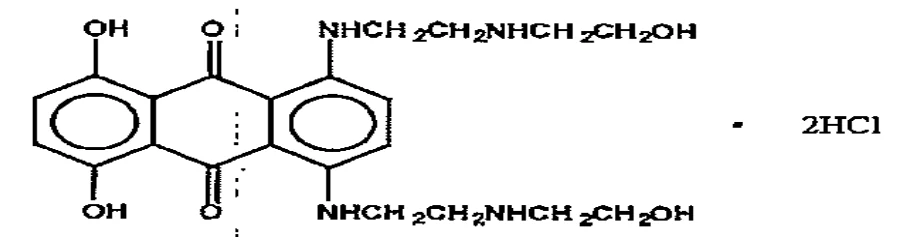
Chemical name: 1,4-Dihydroxy-5,8-bis[[(2-[(2-hydroxyethyl)amino]ethyl]amino] anthraquinone dihydrochloride
Molecular formula and molecular mass: C22H28N4O6 . 2 HCl, 517.41
Structural formula:
Physicochemical properties:
Description: Mitoxantrone hydrochloride, a synthetic anthracenedione, is a potent antineoplastic agent. It is a hygroscopic dark blue powder that is moderately soluble in water.
pH: pH values of a 1.0% w/v solution in water range between 3.0 - 4.5
Melting Point: 203 - 205°C
Solubility: Sparingly soluble in water and slightly soluble in methanol. Practically insoluble in acetonitrile, chloroform and acetone.
Composition: Mitoxantrone is supplied in 10 mL, 12.5 mL and 15 mL vials as a clear, dark blue sterile aqueous solution containing Mitoxantrone hydrochloride equivalent to 2 mg/mL Mitoxantrone free base, with sodium chloride (8 mg/mL), sodium acetate (0.05 mg/mL) and acetic acid (0.46 mg/mL) as inactive ingredients. Sodium metabisulfite is used during production to prevent oxidization, but does not appear in the final product. The product does not contain antibacterial preservatives.
DETAILED PHARMACOLOGY
Pharmacokinetics
Plasma and Whole Body Elimination
In rats, dogs, and monkeys given intravenous doses of 0.25 - 0.75, 0.37 and 1.0 mg/kg 14C-Mitoxantrone respectively, radioactivity concentrations disappear rapidly from both plasma and whole blood during the first 2 hours after dosing; thereafter, concentrations decreased slowly. In all three species, Mitoxantrone is concentrated in red cells during early sampling times. Prolonged, though low (< 5 ng/mL), plasma levels were seen in dogs and monkeys through at least 58 and 35 days, respectively.
Total radioactivity has linear, sex-independent, and dose-independent characteristics. Pharmacokinetic parameters of Mitoxantrone, studied most extensively in the rat, reveal an elimination half-life of 12 days, a final volume of distribution of 392 L/kg and clearance values for total plasma, renal and non-renal compartments of 15.8, 1.7, and 14.1 mL/min/kg respectively.
In rats, dogs and monkeys, 10 days after a single intravenous dose of 14C-Mitoxantrone, 65 - 85 % of the administered radioactivity is accounted for in the excreta; 80 - 90 % of the recovered radioactivity being excreted in the feces and 10-20 % excreted in urine. While excretion is prolonged, only slightly detectable amounts are still being excreted daily 2 - 4 months after dosing.
Bile is the major excretory route in rats; within 6 hours of dosing, 22 % of the radioactivity was excreted in the bile of bile-cannulated rats given 0.5 mg/kg radiolabeled Mitoxantrone intravenously. Little radioactivity was found in the bile of the rats given radiolabeled Mitoxantrone orally, confirming the poor absorption of the drug.
Tissue Distribution and Metabolism
Mitoxantrone is rapidly and extensively distributed into the organs of rats, dogs and monkeys; distribution is independent of dose. One or two days after dosing, radioactivity was highest in bile, gallbladder (except rats), liver, spleen, and kidney. In all three species, tissue concentrations are greater than respective plasma levels; radioactivity levels decrease with time. Little or no radioactivity is detected in brain, spinal cord, and cerebrospinal fluid indicating poor penetration of Mitoxantrone through the blood-brain barrier. Amounts found in testes are also relatively low.
In pregnant rats, fetal uptake is negligible and amniotic fluid contains no appreciable amount of drug; these findings along with results showing appreciable uptake of radioactivity by the placenta indicate that the placenta is an effective barrier.
Studies to determine the extent of metabolism and identity of metabolites of Mitoxantrone are ongoing.
Antitumoral activity
Mitoxantrone increases the life span and number of long-term survivors among mice with leukemias P388 and L1210 leukemias or with B16 melanoma or colon carcinoma 26 solid neoplasma. It is active by the intraperitoneal, subcutaneous and intravenous routes in mice, but oral activity has not been demonstrated. In conventional mouse tests systems, mitoxantrone shows improved antineoplastic activity over that of doxorubicin, cyclophosphamide, 5-Fluorouracil, methotrexate, cytosine arabinoside and vincristine against intraperitoneally implanted tumors; data are presented in the table below.
Mitoxantrone Activity Compared to Other Antineoplastic Agents
Increase in the life span (%)a of mice with:
| Drug | P388 leukemia | L1210 leukemia | B16 Melanoma | Colon 26 carcinoma |
| Mitoxantrone | >200 | >226 | >300 | >224 |
| Doxorubicin | 159 | >118 | >224 | >155 |
| Cyclophosphamide | 112 | 89 | 98 | 77 |
| 5-Fluorouracil | 117 | 100 | 73 | 136 |
| Methotrexate | 149 | 96 | <25 | <25 |
| Cytosine arabinoside | > 90 | 85 | -- | -- |
| Vincristine | 132 | 65 | 91 | 27 |
aPercent increase in life span over untreated controls on day 30.
Similar results have been reported by other investigators in comparative studies with antitumor antibiotics in mice with P388 or L1210 leukemia or B16 melanoma implanted intraperitoneally, or with subcutaneously implanted Lewis lung carcinoma; data are presented in the following table.
Mitoxantrone Activity Compared With Antitumoral Antibioticsa
| Drug | P388 | L1210 | B16 | Lewis lung |
| Mitoxantrone | 4+* | 3+ | 4+ | 1+ |
| Doxorubicin | 3+ | 1+ | 4+ | 1+ |
| Daunomycin | 3+ | 3+ | 1+ | -- |
| Aclarubicin | 2+ | 1+ | -- | -- |
| Mitomycin-C | 4+ | 1+ | 2+ | -- |
| Bleomycin | – | -- | – | -- |
| Neocarzinostatin | 2+ | 2+ | 1+ | -- |
| Chromomycin A3 | 3+ | 1+ | -- | -- |
aModified according to Fujimoto and Ogawa 1982
*Criteria is equivalent to “curable” rating.
The therapeutic index of mitoxantrone was shown to be 8 - 15 times greater than that of doxorubicin against intraperitoneally implanted leukemias.
Increasing amounts of mitoxantrone produce a progressive reduction in the mouse bone marrow cellularity. A cytocidal effect in both actively proliferating and non-proliferating human cell cultures has been shown. These results indicate that mitoxantrone is not cell cycle phase-specific.
TOXICOLOGY
Synopsis
Mitoxantrone has an exceptionally favorable toxicity profile relative to other antineoplastic agents, including doxorubicin. Most importantly, the chronic toxicity of Mitoxantrone does not include the dose-limiting progressive cardiomyopathy that is characteristic of chronic intravenous administration of anthracyclines in animals and humans. Moreover, compared to other antineoplastic agents, the severity of gastrointestinal effects of Mitoxantrone is less, atrophy of hair follicles is not produced, and no irritation occurs when accidentally extravasated. Mitoxantrone is also not teratogenic in rats or rabbits, a finding which is probably attributable to an effective placental barrier in these species. The reversibility of clastogenic effects of Mitoxantrone in rats given tolerated doses every 3 weeks and the absence of a dominant lethal effect may suggest that with clinical use dosing, there may be little mutagenic risk to humans receiving Mitoxantrone.
In rats, dogs and monkeys, Mitoxantrone produces myelosuppression typical of other antineoplastic agents. Since myelosuppression is the sole dose-limiting effect of Mitoxantrone, the degree of leukopenia is indicative of the maximum tolerated dose (MTD) in both animals and humans. In all three animal species, doses above the single or multiple MTD produce life-threatening myelosuppression. For this reason, the degree of leukopenia should be carefully monitored in the clinical use of Mitoxantrone.
Single Dose (Acute) Toxicity Studies
The acute lethality of Mitoxantrone following single intravenous doses in mice and rats is shown below.
Acute Lethality in Mice and Rats Given Mitoxantrone Intravenously
| Species | Sex | LD10 (mg/kg) | LD50 (mg/kg) |
Mouse Rat | M F M F | 7.8 7.1 3.5 3.6 | 11.3 9.7 4.8 5.2 |
Similar LD50's were determined for mice and rats dosed intraperitoneally. Signs of toxicity for mice and rats via IV or IP routes included salivation, paleness, rough fur, decreased body weight gain and weight loss, abdominal distension, diarrhea, epistaxis, chromodacryorrhea, swelling of the nasal region, lacrimation, and hematuria.
In dogs and monkeys, the lethal single intravenous dose of Mitoxantrone was 0.5 mg/kg for dogs and ≥ 1 mg/kg for monkeys. In contrast, the single lethal intravenous dose of doxorubicin has been reported to be 2.5 mg/kg for dogs and 4.2 mg/kg for monkeys. For Mitoxantrone, signs of acute toxicity are related primarily to effects on the gastrointestinal tract and include emesis and diarrhea (dogs) and decreased food consumption and body weight (both species). Erythropenia and leukopenia are accompanied by bone marrow hypocellularity and lymphocytic depletion of lymphoid organs.
Multiple Dose Studies
Multiple dose intravenous studies in rats, dogs, and monkeys were designed to investigate the chronic toxicity of Mitoxantrone with careful attention being paid to the presence or absence of cardiomyopathy characteristic of anthracyclines. Repeated administration of doxorubicin in animals or man is associated with progressive cardiomyopathy leading to congestive heart failure.
In rats, both daily and intermittent (once every 3 weeks) multiple dose studies were conducted. In the daily study, rats were given doses ranging from 0.003 - 0.3 mg/kg once daily for 1 month. In the intermittent study, rats were given doses of 0.03, 0.3, 0.6 and 0.9 mg/kg intravenously once every 3 weeks for 18 dosing cycles. In both studies, sub-lethal and lethal doses of Mitoxantrone did not produce progressive anthracycline-like cardiomyopathy. Sub-chronic and chronic toxicity was limited to effects on the kidneys and the hematopoietic system, effects similar to those reported for doxorubicin in rats. Ongoing studies in rats to investigate carcinogenicity of Mitoxantrone have also revealed no evidence of progressive anthracycline-like cardiomyopathy after 21 dosing cycles (once/3 weeks) at intravenous doses of 0.01, 0.03 and 0.10 mg/kg.
In dogs and monkey studies, doxorubicin was studied simultaneously as a model for anthracycline-induced cardiomyopathy. Mitoxantrone was given intravenously to dogs and monkeys once every 3 weeks at dose levels of 0.125 and 0.25 mg/kg: doxorubicin was administered at a single dose level of 1.64 mg/kg similarly. Doses selected for these studies approximated one-half the single lethal intravenous dose of each compound in dogs and monkeys. From range-finding studies, these doses were also those which would produce degrees of leukopenia generally tolerated without producing life-threatening myelosuppression in either species and were therefore considered to be maximum tolerated doses (MTD’s) in dogs and monkeys.
The results of these dog and monkey multiple dose studies revealed that Mitoxantrone produced a generally comparable (at the low dose) or greater (at the high dose) degree of leukopenia than doxorubicin. Therefore, Mitoxantrone was evaluated for chronic toxicity under conditions more severe than doxorubicin. Only doxorubicin displayed treatment-limiting toxicity, i.e., progressive cardiomyopathy in both dogs and monkeys necessitating sacrifice of animals before the intended completion of the studies. Mitoxantrone animals received 10 (dog) or 12 (monkey) dosing cycles while doxorubicin animals received 8-9 (dog) or 9-10 (monkey) dosing cycles.
Findings relative to effects on the heart of dogs and monkeys receiving Mitoxantrone intravenously were not representative of anthracycline toxicity. Neither irreversible cellular damage nor functional signs of cardiotoxicity were seen in dogs or monkeys receiving Mitoxantrone. In contrast, dogs given doxorubicin showed evidence of progressive cardiomyopathy following the fourth dose. The myocyte changes progressed in severity with time and cumulative dose to irreversible cardiomyopathy characteristic of anthracyclines. Clinical signs of congestive heart failure in doxorubicin-treated dogs were also evident. In monkeys given doxorubicin, similar irreversible cardiac changes and clinical signs of cardiotoxicity, the latter characterized by progressive decreases in mean blood pressure and ECG changes, were also detected. Therefore, these chronic studies in dogs and monkeys clearly show that, in spite of myelosuppression which was at least as great with Mitoxantrone as with doxorubicin, chronic progressive cardiomyopathy was not present for Mitoxantrone. However, typical anthracycline-induced cardiomyopathy was present for doxorubicin.
Additional studies in dogs and rabbits have been sponsored by the National Cancer Institute. From these studies, descriptions of acute toxic response to Mitoxantrone include effects on the heart. Because doses in these particular studies were lethal doses in which death resulted from renal, hepatic, and hematopoietic immune failure, the cardiac effects (thrombosis, myocarditis, necrosis and fibrosis) were secondary to generalized organ toxicity involving the kidney, liver and bone marrow. The cardiac effects from these studies are neither predictive nor typical of progressive anthracycline-like cardiomyopathy.
Mutagenicity and Cytogenetic Studies
In microbial mutagenicity tests, Mitoxantrone causes frame-shift mutations. In primary rat hepatocyte cultures assayed for unscheduled DNA synthesis (DNA repair), Mitoxantrone causes DNA damage. Mitoxantrone does not cause a dominant lethal effect in rats. The spectrum of genetic activity seen with Mitoxantrone is similar to other antineoplastic drugs and is consistent with its activity as a DNA-reactive agent.
When an in vivo cytogenetic study was conducted using intraperitoneal doses of 0.5 - 2.0 mg/kg once daily for 5 consecutive days, Mitoxantrone caused chromosomal aberrations. However, when the study was repeated using a dosing regimen that more closely resembled a clinically used regime (single 0.3 mg/kg intravenous doses at 21-day intervals), chromosomal damage, noted one day after the first dose, did not accumulate or persist. The incidence of chromosome damage, 21 days after one or two doses, resembled that noted in controls. Thus, at a dose approximating clinical use levels, the clastogenic effect is reversible.
Reproductive Toxicology and Teratology
In these studies at the highest tolerated daily doses allowing evaluation of reproduction and teratology, Mitoxantrone had no effect on reproductive performance, fertility, or gestation in rats. Slight dose-related decreases in epididymal weights were noted in the F0 generation. However, F1 and F2 generations were not affected by dosing of the F0 generation.
Mitoxantrone, given intravenous to pregnant rats and rabbits, was not teratogenic in either species. Decreased fetal body weight in high-dose rats was attributed to maternal toxicity although an increased incidence of premature delivery was noted in rabbits. In contrast, doxorubicin is known to be embryotoxic and teratogenic in rats and embryotoxic and abortifacient in rabbits.
Rational for Expression of Mitoxantrone Doses in mg/kg
Throughout our studies with Mitoxantrone, doses have been expressed on a body weight basis rather than on a body surface area basis. Although clinical oncologists generally use body surface area as the basis for determining doses in man, the use of body weight in comparing doses between animals and man is considered more appropriate in the case of Mitoxantrone and doxorubicin.
Based on the use of body surface area, an apparently wide discrepancy between MTD’s in animals and man exists for both compounds. For example, when body surface area is used to compare doses for Mitoxantrone in dogs, monkeys and man, the MTD’s are 5, 3, and 12-14 mg/m2, respectively; for doxorubicin, the values for dogs, monkeys and man are 34, 19.7 and 65 mg/m2, respectively. However, on a body weight basis, the MTD’s for dogs, monkeys and man for Mitoxantrone are 0.25, 0.25 and 0.35-0.41 mg/kg, respectively; likewise, the MTD’s for doxorubicin are respectively 1.6, 1.6 and 1.9 mg/kg. Essentially no difference exists between animals and man relative to the MTD’s when doses are expressed on a mg/kg basis. Therefore, the use of body weight is a more direct and accurate way to compare Mitoxantrone doses between animals and humans.
REFERENCES
- 1. Durr, F.E. and Wallace, R.E.: Comparison of the Antitumor Activity of CL 232,315, a Novel Aminoanthraquinone, with Standard Anticancer Agents. Proceedings of the 11th ICC and the 10th ICAAC, Am. Soc. Microbiology: 1598-1596, 1980.
- 2. Fujimoto, S and Ogawa, M.: Antitumor Activity of Mitoxantrone Against Murine Experimental Tumours: Comparative Analysis Against Various Antitumor Antibiotics. Cancer Chemother. Pharmacol. 8: 157-162, 1982.
- 3. Wallace, R.E., Murdock, K.C., Angier, R.B., and Durr, F.E.: Activity of a Novel Anthracenedione, 1,4-dihydroxy-5,8-bis[[[2-[[2-hydroxyethyl)amino]ethyl]amino]]-9,10-anthracenedione dihydrochloride, Against Experimental Tumours in Mice. Cancer Res. 39: 1570-1574, 1979.
- 4. Savaraj, N., Lu, K., Manuel, V., and Loo, L.T.: Pharmacology of Mitoxantrone in Cancer Patients. Cancer Chemother. Pharmacol. 8: 113-117, 1982.
- 5. Gralla, E.J., Fleischman, R.W., Luthra, Y.K. and Stadnicki, S.W.: The Dosing Schedule Dependent Toxicities of Adriamycin in Beagle Dogs and Rhesus Monkeys. Toxicology 13: 263-273, 1979.
- 6. Philips F.S, Gilladoga, A., Marquardt, H., Sternberg, S.S. and Vidal, P.M.: Some Observations on the Toxicity of Adriamycin (NSC - 123127). Cancer Chemother. Rep. Part 3. 6: 177-181, 1975.
- 7. Hamlin, R.L., Pipers, F.S., Mihalko, P., Miller, T.J, and Frick, M.S.: Acute Cardiovascular Effects of Anthracenedione Dihydroxy (NSC-279836) Following Continuous Infusion to Anesthetized Beagle Hounds. Columbus, Ohio: Ohio State University for National Cancer Institute, Laboratory of Toxicology, Bethesda, Maryland. (Report No OSU-RHF-279836-25), December 1, 1978.
- 8. Hamlin, R.L., F.S., Mihaldo, P., Miller, T.J., Frick, M.S., Gram, T., Guarino, A.M., and Daviss, R.D.: Acute Cardiovascular Effects of Anthracenedione Dihydroxy-Diacetate (NSC 299195) Following Continuous Intravenous Infusion to Anesthetized Beagle Hounds. Columbus, Ohio: Ohio State University for National Cancer Institute, Laboratory of Toxicology, Bethesda, Maryland (Report No OSU-RHFP-299195-26), January 25, 1979.
- 9. Will, J., Splitter, G., Lalich, J., Dennis, J., Dennis, W., Gram, T., Guarino, A., Davis, R., Miller, T., and Fagan, M.A.: Adriamycin Cardiotoxicity: A Comparison with Anthracenedione, dihydroxy-diacetate (NSC-299195). Raltech Scientific Services, Inc., Madison, Wisconsin, for National Cancer Institute, Laboratory of Toxicology, Bethesda, Maryland. (Rapport no. RSS-199195-1979-12), August 20, 1979.
- 10. Physicians Desk Reference, 37th Edition, 1983, page 565, Jack E. Angel, publisher. Medical Economics Company, Inc., Oradell, N.J.
- 11. Link K, Roitman M, Holtappels M, et al. Intraperitoneal chemotherapy with mitoxantrone in malignant ascites. Surg Oncol Clin N Am 2003; 12(3):865-72.
- 12. Myerburg RJ, Castellanos A. Cardiovascular Collapse, Cardiac Arrest, and Sudden Cardiac Death. In: Braunwald E, Fauci AS, Kasper;DL, et al, eds. Harrison's Principles of Internal Medicine. Vol I. 15th cd. New York, McGraw-Hill; 2001: 228-230.
- 13. Keefe DL. Cardiovascular emergencies in the cancer patient. Seminars in Oncology. June 2000;27 (3) : 244-255.
- 14. Schimmel KJM, Richel DJ, van den Brink RBA, et al. Cardiotoxicity of cytotoxic drugs. Cancer Treatment Reviews. 2004; 30: 181-191.
- 15. Brestescher C, Pautier P, and Fargo D. Chemotherapy and cardiotoxicity. Annales de Cardiologie et d’Antgeiologie 1995 October; 44 (8): 443-47.
- 16. Stiff PJ, Bayer R, Kreger C, et al. High-dose chemotherapy with autologous transplantation for persistent/relapsed ovarian cancer: A multivariate analysisi of survival for 100 consecutively treated patients. Journal of Clinical Oncology. April 1997; 15 (4): 1309-1317.
- 17. Cavazzini G, Pagani M, Casarini MB, et al. Phase II study of 5-fluorouracil and high-dose follinic acid in combination with cyclophosphamide and mitoxantrone in advanced breast cancer. Annals of Oncology. 1998; supp 4 to volume 9 (abstract): 27-28.
- 18. Harrington W, Hurley J, Cabral L, et al. Phase II trial comparing chemotherapy with and without antiretroviral therapy in the treatment of AIDS associated large cell lymphoma. Proceedings of the American Society Clinical Oncology 2000; 19 (21a): 36 meet.
- 19. Lee M, Hagen J, Brundage D, et al. A pilot study of mitoxantrone, estramustine, paclitaxel and hydrocortisone *METH) in patients with hormone refractory prostate cancer. Proceedings of the Annual Meeting of the American Society of Clinical Oncology 2000 May; 19 (370A, Abstr: 1462).
- 20. Sternberg DW, Aird W, Neuberg D, et al. Treatment of patients with recurrent and primary refractory acute myelogenous leukemia using mitoxantrone and intermediate-dose cytarabine: A pharmacologically based regimen. Cancer 2000 May 1; 88 (9): 2037- 2041.
- 21. Krischer JP, Epstein S, Cuthbertson DD, et al. ,Clinical cardiotoxicity following anthracycline treatment for childhood cancer: The Pediatric Oncology Group Experience. Journal of Clinical Oncology 1997 April; 1~ (4): 1544-1552.
- 22. Rodriguez MA, Van Besien K, Swan F, et al. MINE-ESHAP-BEAC: An inductionconsolidation program for relapsed intermediate grade lymphoma (IGL). Proceedings of the American Society Clinical Oncology 1995 March; 14 (31 Meet): 397.
- 23. Stewart DJ, Maroun JA, Verma S, et al. Phase I study of weekly intravenous administration of Menogaril to adults with solid tumors. American Journal of Clinical Oncology 1989; 12 (6); 511-518.
- 24. Hiddemann W, Kreutzmann H, Straif K, et al. Phase I/II trial of high-dose cytosine arabinoside and mitoxantrone in adult refractory acute myeloid leukemia. Hematology and Blood Transfusion 1987; 30: 336-338.
- 25. NIOSH. Preventing occupational exposure to antineoplastic and other hazardous drugs in health care settings. DHHS (NIOSH) Publication Number 2004-165, September 2004. Available at http://www.cdc.gov/niosh/docs/2004-165/. Accessed September 24, 2004.
- 26. OSHA. Controlling occupational exposure to hazardous drugs. OSHA Technical Manual. Section VI, Chapter 2, 1999.
- 27. Power LA, Anderson RW, Cortopassi R, et al. Update on safe handling of hazardous drugs: The advice of experts. AM J Hosp Pharm 1990; 47:1050-60.
- 28. BC Cancer Agency. Cytotoxic Agents, Safe Handling Standards. Available at http://www.bccancer.bc.ca/nr/bcca/asp/PrintPreview.asp?GUIDS={FEDC47B5-9A7C-4FC1-AF07-CBBB670DACFA}. Accessed March 22, 2005.
- 29. Gonsette RE. Motoxantrone immunotherapy in multiple sclerosis. Multi Scler 1996;1(6):329-32.
- 30. Millefiorini E, Gasperini C, Pozzilli C, et al. Randomized placebo-controlled trial of mitoxantrone in relapsing-remitting multiple sclerosis : 24-month clinical and MRI outcome. J Neurol 1997;244(3):153-9.
- 31. van de Wyngaert FA, Beguin C, D’Hooghe MB, et al. A double-blind clinical trial of motoxantrone versus methylprednisolone in relapsing, secondary progressive multiple sclerosis. Acta Neurol Belg 2001;101(4):210-6.
- 32. Posner LE, Dukart G, Goldberg J, et al. Mitoxantrone : an overview of safety and toxicity. Invest New Drugs 1985;3(2):123-32.
- 33. Foster BJ, Lev L, Bergemann C, et al. Cardiac events in phase II trials with mitoxantrone. Cancer Treat Symp 1984;3:43-6.
- 34. Edan G, Morrissey S, Le Page E. Rationale for the use of mitoxantrone in multiple sclerosis. J neurological Sciences 2004;223:35-9.
- 35. Ghalie RG, Edan G, Laurent M, et al. Cardiac adverse effects associated with mitoxantrone (Novantrone) therapy in patients with MS. Neurology 2002;59:909-13.
- 36. PrNovantrone® (mitoxantrone for injection concentrate USP) Product Monograph. Wyeth Canada; Date of Revision June 14, 2005.
- 37. Matsukawa Y, Takeuchi J, Aiso M, et.al. Interstitial pneumonitis possibly due to mitoxantrone. Acta Haematol 1993;90(3):155-8.
- 38. Tomlinson J, Tighe M, Johnson S, et.al. Interstitial pneumonitis following mitozantrone, chlorambucil and prednisolone (MCP) chemotherapy. Clin Oncol (R Coll Radiol) 1999;11(3):184-6.
- 39. Cocco E, Sardu C, Gallo P, et al. FEMIMS Group. Frequency and risk factors of mitoxantrone-induced amenorrhea in multiple sclerosis: the FEMIMS study. Mult Scler 2008;14(9):1225-33.
- 40. Rivera VM, Jeffery DR, Weinstock-Guttman B, et al. Results from the 5-year, phase IV RENEW (Registry to Evaluate Novantrone Effects in Worsening Multiple Sclerosis) study. BMC Neurol 2013; 13:80.
- 41. Le Page E, Leray E, Edan G. French Mitoxantrone Safety Group. Long term safety profile of mitoxantrone in a French cohort of 802 multiple sclerosis patients: a 5-year prospective study. Mult Scler 2011;17(7):867 75.
- 42. Lee SJ, Schover LR, Partridge AH, et al. American Society of Clinical Oncology. American Society of Clinical Oncology recommendations on fertility preservation in cancer patients. J Clin Oncol 2006;24(18):2917-31.
- 43. Hall C, Gordon G. A 44 Week Comparative Toxicity Study of Mitoxantrone (CL 232,315) and Doxorubicin (Adriamycin, CL 115,751) Given Intravenously to Cynomolgus Monkeys Once Every 21 Days. Postmortem Findings. Report # MIRACL-15891, 1982.
- 44. Sparano BM, Gordon G, Hall C, et al. Safety assessment of new anticancer compound, mitoxantrone, in beagle dogs: comparison with doxorubicin. II. Histologic and ultrastructural pathology. Cancer Treat Rep 1982;66(5):1145-58.