


Product Monograph - Myfembree
RECENT MAJOR LABEL CHANGES
Not applicable.
TABLE OF CONTENTS
Sections or subsections that are not applicable at the time of authorization are not listed.
RECENT MAJOR LABEL CHANGES ........................................................................................... 2
TABLE OF CONTENTS ............................................................................................................. 2
PART I: HEALTH PROFESSIONAL INFORMATION ..................................................................... 4
- 1
INDICATIONS ............................................................................................................. 4
- 1.1 Pediatrics .................................................................................................................. 4
- 1.2 Geriatrics .................................................................................................................. 4
- 2 CONTRAINDICATIONS ................................................................................................ 4
- 3 SERIOUS WARNINGS AND PRECAUTIONS BOX............................................................ 5
- 4
DOSAGE AND ADMINISTRATION ................................................................................ 5
- 4.1 Dosing Considerations .............................................................................................. 5
- 4.2 Recommended Dose and Dosage Adjustment ......................................................... 5
- 4.4 Administration .......................................................................................................... 5
- 4.5 Missed Dose ............................................................................................................. 6
- 5 OVERDOSAGE ............................................................................................................ 6
- 6 DOSAGE FORMS, STRENGTHS, COMPOSITION AND PACKAGING ................................. 6
- 7
WARNINGS AND PRECAUTIONS ................................................................................. 6
- 7.1 Special Populations ................................................................................................ 10
- 7.1.1 Pregnant Women ............................................................................................. 10
- 7.1.2 Breast-feeding .................................................................................................. 10
- 7.1.3 Pediatrics .......................................................................................................... 10
- 7.1.4 Geriatrics .......................................................................................................... 10
- 8
ADVERSE REACTIONS ............................................................................................... 10
- 8.1 Adverse Reaction Overview ................................................................................... 10
- 8.2 Clinical Trial Adverse Reactions .............................................................................. 11
- 8.3 Less Common Clinical Trial Adverse Reactions ...................................................... 14
8.5 Post-Market Adverse Reactions ............................................................................. 18
- 9
DRUG INTERACTIONS ............................................................................................... 18
- 9.2 Drug Interactions Overview ................................................................................... 18
- 9.4 Drug-Drug Interactions ........................................................................................... 18
- 9.5 Drug-Food Interactions .......................................................................................... 19
- 9.6 Drug-Herb Interactions ........................................................................................... 19
- 9.7 Drug-Laboratory Test Interactions ......................................................................... 19
- 10
CLINICAL PHARMACOLOGY ...................................................................................... 19
- 10.1 Mechanism of Action ....................................................................................... 19
- 10.2 Pharmacodynamics .......................................................................................... 20
- 10.3 Pharmacokinetics ............................................................................................. 21
- 11 STORAGE, STABILITY AND DISPOSAL ........................................................................ 23
- 12 SPECIAL HANDLING INSTRUCTIONS .......................................................................... 23
PART II: SCIENTIFIC INFORMATION ...................................................................................... 24
- 13 PHARMACEUTICAL INFORMATION ........................................................................... 24
- 14
CLINICAL TRIALS ...................................................................................................... 25
- 14.1 Pivotal Trial Design and Study Demographics .................................................. 25
- 14.2 Pivotal Trial Results .......................................................................................... 27
- 14.3 Recurrence of Heavy Menstrual Bleeding After Discontinuation of MYFEMBREE ..................................................................................................................... 34
- 15 MICROBIOLOGY ....................................................................................................... 34
- 16 NON-CLINICAL TOXICOLOGY .................................................................................... 34
PATIENT MEDICATION INFORMATION ................................................................................. 37
PART I: HEALTH PROFESSIONAL INFORMATION
1 INDICATIONS
MYFEMBREE (relugolix, estradiol, and norethindrone acetate tablets) is indicated in premenopausal women for the management of heavy menstrual bleeding associated with uterine fibroids and for the management of moderate to severe pain associated with endometriosis.
1.1 Pediatrics
Pediatrics (<18 years): No data are available to Health Canada; therefore, Health Canada has not authorized an indication for pediatric use.
1.2 Geriatrics
Geriatrics: MYFEMBREE is not indicated in postmenopausal women and has not been studied in women over 50 years of age.
2 CONTRAINDICATIONS
MYFEMBREE is contraindicated in patients who:
- have venous thromboembolic disorder, past or present (e.g. deep venous thrombosis, pulmonary embolism) (see 7 WARNINGS AND PRECAUTIONS).
- have arterial thromboembolic cardiovascular disease, past or present (e.g. myocardial infarction, stroke, coronary heart disease, cerebrovascular accident, ischemic heart disease).
- have inherited or acquired hypercoagulopathies.
- have uncontrolled hypertension.
- have headaches with focal neurological symptoms or migraine headaches with aura if over 35 years of age.
- smoke if over 35 years of age.
- are pregnant or suspected to be pregnant or who are breastfeeding (see 7.1 Special Populations, 7.1.1 Pregnant Women).
- use hormonal contraceptives concomitantly.
- are known to have osteoporosis.
- have known, suspected, or history of breast cancer or other hormone-sensitive endometrial cancer), or with increased risk for hormone-sensitive malignancies (see 7 WARNINGS AND PRECAUTIONS).
- have presence or history of liver tumours (benign or malignant), liver dysfunction, or liver disease as long as liver function values have not returned to normal (see 7 WARNINGS AND PRECAUTIONS).
- have genital bleeding of unknown aetiology.
- partial or complete loss of vision from ophthalmic vascular disease.
- endometrial hyperplasia.
- are hypersensitive to this drug or to any ingredient in the formulation, including any non-medicinal ingredient, or component of the container. For a complete listing (see 6 DOSAGE FORMS, STRENGTHS, COMPOSITION AND PACKAGING).
3 SERIOUS WARNINGS AND PRECAUTIONS BOX
4 DOSAGE AND ADMINISTRATION
4.1 Dosing Considerations
- Pregnancy must be ruled out and hormonal contraceptives should be discontinued prior to initiating treatment with MYFEMBREE (see 7.1 Special Populations, 7.1.1 Pregnant Women and 2 CONTRAINDICATIONS).
- Limitations of Use: Use of MYFEMBREE should be limited to 24 months due to the risk of continued bone loss which may not be reversible (see 7 WARNINGS AND PRECAUTIONS).
- Concomitant medications: Avoid concomitant use of MYFEMBREE with oral P-gp inhibitors. If concomitant use is unavoidable, take MYFEMBREE first and separate dosing by at least 6 hours (see 9.4 Drug-Drug Interactions).
4.2 Recommended Dose and Dosage Adjustment
- One tablet of MYFEMBREE is to be taken orally once daily (see 10.3 Pharmacokinetics).
- It is recommended that the administration of MYFEMBREE be initiated as early as possible after the onset of menses but no later than 5 days after menses has started. If MYFEMBREE is initiated later in the menstrual cycle, irregular and/or heavy bleeding may initially occur.
Dose Modification for Pediatrics (< 18 years of age)
Health Canada has not authorized an indication for pediatric use (see 1.1 Pediatrics). Dose Modification for Geriatrics
MYFEMBREE is not indicated in postmenopausal women and has not been studied in women over 50 years of age (see 1.2 Geriatrics).
4.4 Administration
MYFEMBREE is to be taken at approximately the same time each day, with or without food. Tablets should be taken with some liquid as needed (see 10.3 Pharmacokinetics).
Serious Warnings and Precautions
- Estrogen and progestin combination products, including MYFEMBREE, increase the risk of thrombotic or thromboembolic disorders including pulmonary embolism (PE), deep vein thrombosis (DVT), stroke and myocardial infarction (MI), especially in women at increased risk for these events (see 7 WARNINGS AND PRECAUTIONS).
- MYFEMBREE is contraindicated in women with current or a history of thrombotic or thromboembolic disorders and in women at increased risk for these events, including women over 35 years of age who smoke or women with uncontrolled hypertension (see 2 CONTRAINDICATIONS).
4.5 Missed Dose
If a dose is missed, treatment must be taken as soon as possible the same day and then continue the next day at the usual time.
5 OVERDOSAGE
Overdosage of estrogen plus progestin may cause nausea, vomiting, breast tenderness, abdominal pain, drowsiness, fatigue, and withdrawal bleeding.
Supportive care is recommended if an overdose occurs. The amount of relugolix, estradiol, or norethindrone removed by hemodialysis is unknown.
6 DOSAGE FORMS, STRENGTHS, COMPOSITION AND PACKAGING
Table 1– Dosage Forms, Strengths, Composition and Packaging
| Route of Administration | Dosage Form / Strength/Composition | Non-medicinal Ingredients |
|---|---|---|
| Oral | Tablet 40 mg relugolix / 1 mg estradiol/ 0.5 mg norethindrone acetate | hydroxypropyl cellulose (E463), hypromellose type 2910 (E464), iron oxide yellow (E172), lactose monohydrate, mannitol (E421), magnesium stearate (E572), sodium starch glycolate, titanium dioxide (E171), and triacetin (E1518) |
MYFEMBREE is available as 28-count HDPE bottles and 7-count HDPE bottles with desiccant.
Tablets: Each tablet of MYFEMBREE contains a fixed-dose combination of relugolix 40 mg, estradiol (E2) 1 mg, and norethindrone acetate (NETA) 0.5 mg. The tablets are light yellow to yellow, round, film- coated, and debossed with “MVT” on one side and “415” on the other side.
7 WARNINGS AND PRECAUTIONS
General
MYFEMBREE must only be prescribed after careful diagnosis. Medical examination/consultation prior to the initiation or reinstitution of MYFEMBREE, a complete medical history (including family history) must be taken. Blood pressure must be measured and a physical examination must be performed guided by the contraindications (see 2 CONTRAINDICATIONS) and warnings for use (see 7 WARNINGS AND PRECAUTIONS). During treatment, periodic check-ups must be carried out according to standard clinical practice. Advise women to use effective non-hormonal contraception. Pregnancy must be ruled out prior to administering or re-initiation of MYFEMBREE (see subsection Reproductive Health: Female and Male Potential below).
Alopecia
Consider discontinuing MYFEMBREE if hair loss becomes a concern (see 8 ADVERSE REACTIONS).
In Phase 3 placebo-controlled clinical trials in women with heavy menstrual bleeding associated with uterine fibroids, more women experienced mild to moderate alopecia, hair loss, and hair thinning with MYFEMBREE compared to placebo. For one MYFEMBREE-treated woman in the extension trials,
For management of a suspected drug overdose, contact your regional poison control centre.
alopecia was a reason for discontinuing treatment. The majority of affected women completed the study with reported hair loss ongoing. Whether the hair loss is reversible is unknown.
There was no increase in alopecia, hair loss, and hair thinning observed among women with endometriosis-associated pain treated with MYFEMBREE as compared to placebo in the Phase 3 placebo-controlled clinical trials. However, for three MYFEMBREE-treated women in the extension trial of endometriosis, alopecia was a reason for discontinuing treatment.
Carbohydrate and Lipid Metabolism
MYFEMBREE may decrease glucose tolerance and result in increased blood glucose concentrations. More frequent monitoring in MYFEMBREE-treated women with prediabetes and diabetes may be necessary.
Use of MYFEMBREE is associated with increases in total cholesterol and low-density lipoprotein cholesterol (LDL-C) [see 8 Adverse Reactions]. Monitor lipid levels and consider discontinuing MYFEMBREE if hypercholesterolemia or hypertriglyceridemia worsens. In women with pre-existing hypertriglyceridemia, estrogen therapy may be associated with elevations in triglycerides levels leading to pancreatitis.
Carcinogenesis
MYFEMBREE is contraindicated in women with current or a history of hormone-sensitive malignancies (e.g., breast cancer and endometrial cancer) and in women at increased risk for hormone-sensitive malignancies (see 2 CONTRAINDICATIONS). Discontinue MYFEMBREE if a hormone-sensitive malignancy is diagnosed.
Surveillance measures in accordance with standard of care, such as breast examinations and mammography are recommended. The use of estrogen alone or estrogen plus progestin has been reported to result in an increase in abnormal mammograms requiring further evaluation.
Cardiovascular
Thromboembolic Disorders and Vascular Events
MYFEMBREE is contraindicated in women with current or history of thrombotic or thromboembolic disorders and in women at increased risk for these events (see 2 CONTRAINDICATIONS).
Discontinue MYFEMBREE immediately if an arterial or venous thrombotic, cardiovascular, or cerebrovascular event occurs or is suspected. Discontinue MYFEMBREE at least 4 to 6 weeks before surgery of the type associated with an increased risk of thromboembolism, or during periods of prolonged immobilization, if feasible.
Discontinue MYFEMBREE immediately if there is sudden unexplained partial or complete loss of vision, proptosis, diplopia, papilledema, or retinal vascular lesions and evaluate for retinal vein thrombosis as these have been reported in patients receiving estrogens and progestins.
Estrogen and progestin combinations, including the estradiol/norethindrone acetate component of MYFEMBREE, increase the risk of thrombotic or thromboembolic disorders, including pulmonary embolism, deep vein thrombosis, stroke, and myocardial infarction, especially in women at high risk for these events.
The risk of venous thromboembolic complications in women using a product with an estrogen and progestogen may increase substantially in a woman with additional risk factors, particularly if there are multiple risk factors. Generally recognized risk factors for thrombotic/thromboembolic events include older age (> 35 years), smoking, obesity, hypertension, personal history or family history, and other medical conditions associated with adverse vascular events (eg, diabetes mellitus, systemic lupus erythematosus, valvular heart disease and atrial fibrillation, dyslipidemia) and should be managed appropriately.
Two thromboembolic events (DVT and PE) occurred in one woman treated for 38 days with MYFEMBREE for moderate to severe pain associated with endometriosis.
Genitourinary
Uterine Fibroid Prolapse or Expulsion
Advise women with known or suspected submucosal uterine fibroids about the possibility of uterine fibroid prolapse or expulsion and instruct them to contact their physician if severe bleeding and/or cramping occurs while being treated with MYFEMBREE. In Phase 3 placebo-controlled clinical trials for uterine fibroids, uterine fibroid prolapse and uterine fibroid expulsion were reported in women treated with MYFEMBREE (see 8 ADVERSE REACTIONS).
Hepatic/Biliary/Pancreatic
Liver Disease
MYFEMBREE is contraindicated in women with liver tumors, benign or malignant, or liver disease as long as liver function values have not returned to normal (see 2 CONTRAINDICATIONS). Discontinue MYFEMBREE and seek medical attention if signs of liver injury, such as jaundice or right upper abdominal pain, develops.
In clinical trials, asymptomatic transient elevations of serum alanine aminotransferase (ALT) or aspartate aminotransferase (AST) at least 3 times the upper limit of the reference range occurred in < 1% of participants treated with MYFEMBREE, respectively. Acute liver test abnormalities may necessitate the discontinuation of MYFEMBREE use until the liver test results return to normal and MYFEMBREE causation has been excluded.
Gallbladder Disease
Conditions such as gallbladder disease, cholelithiasis, and cholecystitis have been reported to occur or worsen in women treated with estrogen and progestogen use in general, including MYFEMBREE. Discontinue MYFEMBREE if signs or symptoms of gallbladder disease or jaundice occur. For women with a history of cholestatic jaundice associated with past estrogen use or with pregnancy, assess the risk-benefit of continuing therapy.
Hypertension
MYFEMBREE is contraindicated in women with uncontrolled hypertension (see 2 CONTRAINDICATIONS). For women with well-controlled hypertension, continue to monitor blood pressure and stop MYFEMBREE if blood pressure rises significantly.
In one of the two Phase 3 clinical trials for uterine fibroids, more women experienced the adverse reaction of new or worsening hypertension with MYFEMBREE as compared to placebo (7.0% vs. 0.8%).
Monitoring and Laboratory Tests
The use of estrogens and progestogens may influence the results of certain laboratory tests, including biochemical parameters of liver, thyroid, adrenal and renal function; plasma levels of (carrier) proteins, eg, corticosteroid binding globulin and lipid/lipoprotein fractions; parameters of carbohydrate metabolism; and parameters of coagulation and fibrinolysis.
Musculoskeletal
Bone Loss
MYFEMBREE is contraindicated in women with known osteoporosis (see 2 CONTRAINDICATIONS). Consider the benefits and risks of MYFEMBREE treatment in patients with a history of a low trauma fracture or risk factors for osteoporosis or bone loss, including taking medications that may decrease BMD (e.g., systemic or chronic inhaled corticosteroids, anticonvulsants, or chronic use of proton pump inhibitors. MYFEMBREE may cause a decrease in BMD in some patients. In some women treated with MYFEMBREE who had normal bone mineral density (BMD) at start of treatment, bone loss varying from
> 3% to 8% was reported. BMD loss may be greater with increasing duration of use and may not be completely reversible after stopping treatment. The impact of BMD decreases on long-term bone health and future fracture risk in premenopausal women is unknown.
Assessment of BMD by dual-energy X-ray absorptiometry (DXA) is recommended at baseline. In women with heavy menstrual bleeding associated with uterine fibroids, periodic DXA during treatment with MYFEMBREE is recommended. In women with moderate to severe pain associated with endometriosis, annual DXA is recommended while taking MYFEMBREE. Consider discontinuing MYFEMBREE if the risk associated with bone loss exceeds the potential benefit of treatment.
Although the effect of supplementation with calcium and vitamin D was not studied, such supplementation for patients with inadequate dietary intake may be beneficial.
Psychiatric
Depression
Gonadotropin-releasing hormone receptor antagonists, including MYFEMBREE, have been associated with mood disorders (including depression) and suicidal ideation.
In the pivotal clinical trials for women with heavy menstrual bleeding with uterine fibroids, a greater proportion of women treated with MYFEMBREE compared with placebo reported depression (including depression, mood swings, and depressed mood) (2.4% vs. 0.8%), irritability (2.4% vs. 0%), and anxiety (1.2% vs. 0.8%).
In the pivotal clinical trials for women with moderate to severe pain associated with endometriosis, a greater proportion of women treated with MYFEMBREE as compared to placebo reported mood disorders (including depression) (9.1% vs. 7.2%). In addition, cases of suicidal ideation were reported with MYFEMBREE use. All women who reported suicidal ideation had a history of depression and/or anxiety.
Evaluate patients with a history of suicidal ideation, depression, and mood disorders prior to initiating treatment. Monitor patients for mood changes and depressive symptoms including shortly after initiating treatment, to determine whether the risks of continuing therapy with MYFEMBREE outweigh the benefits. Patients with new or worsening depression, anxiety, or other mood changes should be referred to a mental health professional, as appropriate. Advise patients to seek immediate medical attention for suicidal ideation and behavior. Re-evaluate the benefits and risks of continuing MYFEMBREE if such events occur.
Reproductive Health: Female and Male Potential Fertility
MYFEMBREE inhibits ovulation and often causes amenorrhea. Ovulation and menstrual bleeding will return rapidly after discontinuing treatment.
Change in Menstrual Bleeding Pattern and Reduced Ability to Recognize Pregnancy
Women who take MYFEMBREE commonly experience amenorrhea or a reduction in the amount, intensity, or duration of menstrual bleeding, which may reduce the ability to recognize the occurrence of a pregnancy in a timely manner. Perform pregnancy testing if pregnancy is suspected and discontinue MYFEMBREE if pregnancy is confirmed.
Contraception
Advise women of reproductive potential to use effective non-hormonal contraception during treatment with MYFEMBREE and for 1 week following discontinuation. Avoid concomitant use of hormonal contraceptives with MYFEMBREE. The use of estrogen-containing hormonal contraceptives may increase the risk of estrogen-associated adverse events and is expected to decrease the efficacy of MYFEMBREE.
7.1 Special Populations
7.1.1 Pregnant Women
MYFEMBREE is contraindicated during pregnancy (see 2 CONTRAINDICATIONS). Exclude pregnancy before initiating MYFEMBREE. Discontinue use of treatment if pregnancy occurs.
There is a limited amount of data from the use of relugolix in pregnant women. Based on findings from animal studies and its mechanism of action, MYFEMBREE can cause early pregnancy loss (see 16 NON- CLINICAL TOXICOLOGY). The increased risk of VTE during the postpartum period must be considered when re-starting MYFEMBREE.
7.1.2 Breast-feeding
Results from nonclinical studies indicate that relugolix is excreted into the milk of lactating rats. No data are available regarding the presence of relugolix or its metabolites in human milk or its effect on the breastfed infant. Detectable amounts of estrogen and progestogens have been identified in the breast milk of women receiving estrogen plus progestogen therapy. An effect on breastfeeding newborns/infants cannot be excluded.
Breastfeeding is contraindicated during the use of MYFEMBREE (see 2 CONTRAINDICATIONS) and for 2 weeks following discontinuation of MYFEMBREE.
7.1.3 Pediatrics
No data are available to Health Canada; therefore, Health Canada has not authorized an indication for pediatric use.
7.1.4 Geriatrics
There is no relevant use of MYFEMBREE in the elderly population in the indication.
8 ADVERSE REACTIONS
8.1 Adverse Reaction Overview
The following clinically significant adverse effects may be associated with the treatment of MYFEMBREE (see 7 WARNINGS AND PRECAUTIONS):
- Thromboembolic Disorders and Vascular Events
- Bone Loss
- Suicidal Ideation and Mood Disorders (Including Depression)
- Hepatic Impairment and Transaminase Elevations
- Gallbladder disorders
- Elevated Blood Pressure
- Change in Menstrual Bleeding Pattern (including metrorrhagia)
- Uterine Fibroid Prolapse or Expulsion
- Alopecia
- Effects on Carbohydrate and Lipid Metabolism
- Hypersensitivity Reactions
8.2 Clinical Trial Adverse Reactions
Clinical trials are conducted under very specific conditions. The adverse reaction rates observed in the clinical trials therefore, may not reflect the rates observed in practice and should not be compared to the rates in the clinical trials of another drug. Adverse reaction information from clinical trials may be useful in identifying and approximating rates of adverse drug reactions in real-world use.
Heavy Menstrual Bleeding Associated with Uterine Leiomyomas
The safety of MYFEMBREE was evaluated in two placebo-controlled clinical trials, Study L1 and Study L2, in women with heavy menstrual bleeding associated with uterine fibroids. In the Phase 3 studies, women who had a history or current osteoporosis, other metabolic bone disease, or BMD z-score less than -2.0; women who had any contraindication to treat with low-dose E2/NETA (such as breast cancer, deep vein thrombosis, pulmonary embolism, stroke, myocardial infarction); and women who had other clinically significant cardiovascular disease, jaundice or active liver disease including clinical laboratory abnormalities, were excluded. The mean age at study entry was 42 years (range 19 to 51 years old).
Across the two studies, 254 women received MYFEMBREE once daily for 24 weeks. Additionally, 256 women received placebo for 24 weeks, and 258 women received relugolix 40 mg monotherapy once daily for 12 weeks followed by MYFEMBREE for 12 weeks (see 14 CLINICAL TRIALS). Of these, 476 women were treated with MYFEMBREE in a 28-week extension trial, Study L3 (Extension), for a total treatment duration of up to 12 months.
Of the women who completed Study L3 and were responders, 228 women were enrolled into an additional 52-week randomized withdrawal study (Study L4) where they were re-randomized to receive either MYFEMBREE or placebo.
In the two placebo-controlled trials, Study L1 and Study L2, serious adverse reactions were reported in 3.1% of MYFEMBREE-treated women compared with 2.3% of placebo-treated women. In MYFEMBREE- treated women, serious adverse drug reactions included uterine myoma expulsion and menorrhagia experienced by one woman, uterine leiomyoma (prolapse), cholecystitis, and pelvic pain reported for one woman each. About 3.9% of women treated with MYFEMBREE discontinued therapy due to adverse reactions, compared with 4.3% receiving placebo. The most common adverse reaction leading to discontinuation of MYFEMBREE was uterine bleeding (1.2%) with onset usually reported within the first 3 months of therapy.
Adverse reactions reported in at least 3% of patients in the 2 placebo-controlled studies treated with MYFEMBREE and at a greater frequency than placebo is presented in Table 2.
Table 2 – Treatment-emergent Adverse Reactions Reported in at Least 3% of Patients treated with MYFEMBREE and Greater Than Placebo (Study L1 and L2)
| MYFEMBREE (%) n = 254 | Placebo (%) n = 256 | |
|---|---|---|
General disorders Vasomotor symptoms1 | 10.6 | 6.6 |
Psychiatric disorders Libido decreased2 | 3.1 | 0.4 |
Reproductive system and breast disorders Abnormal uterine bleeding3 | 6.3 | 1.2 |
Skin and subcutaneous tissue disorders Alopecia | 3.5 | 0.8 |
1 Includes hot flush, hyperhidrosis, and night sweats
2 Includes libido decreased and loss of libido
3 Includes menorrhagia, metrorrhagia, vaginal haemorrhage, polymenorrhoea, and menstruation irregular.
In Study L1, more women experienced the adverse reaction of new or worsening hypertension with MYFEMBREE as compared to placebo (7.0% vs. 0.8%).
The adverse reactions most commonly reported in the extension trial (Study L3) and the randomized withdrawal study (Study L4) were similar to those in the placebo-controlled trials (Study L1 and L2).
Moderate to Severe Pain Associated with Endometriosis
The safety of MYFEMBREE was evaluated in two placebo-controlled clinical trials, Study S1 (NCT03204318) and Study S2 (NCT03204331), in women aged 18 to 50 with moderate to severe pain associated with endometriosis. In the Phase 3 studies, women who had a history or current osteoporosis, other metabolic bone disease, or BMD z-score less than -2.0; women who had any contraindication to treat with low-dose E2/NETA such as breast cancer, deep vein thrombosis, pulmonary embolism, stroke, myocardial infarction; and women who had other clinically significant cardiovascular disease, jaundice or active liver disease including clinical laboratory abnormalities, were excluded.
In Studies S1 and S2, 418 women received MYFEMBREE once daily for 24 weeks. Additionally, 416 women received placebo for 24 weeks, and 417 women received relugolix 40 mg monotherapy once daily for 12 weeks followed by MYFEMBREE for 12 weeks (see 14 CLINICAL TRIALS). Upon completion of the 24-week studies S1 and S2, eligible participants enrolled in an 80-week, open-label, single-arm (MYFEMBREE) extension study (S3). A total of 799 women were treated with MYFEMBREE in a 80- week extension trial, among them, 163 women were treated for a total treatment duration of 104 weeks.
In Studies S1 and S2, serious adverse reactions were reported in 2.9% of MYFEMBREE-treated women as compared to 2.2% of placebo-treated women. In MYFEMBREE-treated women, serious adverse reactions included uterine hemorrhage, suicidal ideation, cholelithiasis, and cholecystitis. About 4.5% of MYFEMBREE-treated women discontinued therapy due to adverse reactions as compared to 2.9% of placebo-treated women. The most common adverse reaction (1.7%) leading to discontinuation in MYFEMBREE-treated women was mood-related disorders (including depression, mood swings, altered mood, affect lability, and suicidal ideation).The most common adverse reactions reported in at least 3% of women treated with MYFEMBREE for moderate to severe pain associated with endometriosis and with an incidence greater than placebo during Studies S1 and S2 are summarized below in Table 3.
Table 3 – Treatment-emergent Adverse Reactions Reported in at Least 3% of Patients treated with MYFEMBREE and Greater Than Placebo (Study S1 and S2)
MYFEMBREE (n = 418) % | Placebo (n = 416) % | |||
|---|---|---|---|---|
| General disorders | ||||
| Vasomotor symptoms 1 | 13.2 | 7.2 | ||
| Toothache | 5.5 | 2.4 | ||
| Fatigue | 3.1 | 2.4 | ||
| Dizziness | 3.1 | 1.2 | ||
| Psychiatric disorders | ||||
| Mood disorders2 | 9.1 | 7.2 | ||
| Decreased sexual desire and arousal3 | 4.3 | 1.2 | ||
| Musculoskeletal and Connective Tissue | ||||
| Disorders | ||||
| Back Pain | 4.8 | 2.9 | ||
| Arthralgia | 3.6 | 2.9 | ||
Gastrointestinal Disorders Nausea | 6.0 | 4.1 | ||
Nervous System Disorders Headache | 33.0 | 26.4 | ||
Reproductive System and Breast Disorders Abnormal uterine bleeding4 | 6.7 | 4.6 | ||
1 Includes hot flush, hyperhidrosis, night sweats, and flushing. 2 Includes affect lability, affective disorder, anxiety, depressed mood, depression, emotional distress, generalized anxiety disorder, irritability, mixed anxiety and depressive disorder, mood altered, mood swings, and suicidal ideation. 3 Includes libido decreased and libido disorder, and female sexual arousal disorder. 4 Includes menorrhagia, metrorrhagia, vaginal haemorrhage, polymenorrhoea, and menstruation irregular. | ||||
The adverse reactions most commonly reported in the open-label extension trial (Study S3) were similar to those in the pivotal trials (Study S1 and S2).
8.3 Less Common Clinical Trial Adverse Reactions
Heavy Menstrual Bleeding Associated with Uterine Leiomyomas
Adverse reactions reported in at least 2% and less than 3% of women in the MYFEMBREE group and greater incidence than placebo included:
Gastrointestinal Disorders: dyspepsia
Psychiatric disorders: irritability
Reproductive system and breast disorders: breast cyst
Other important adverse reactions reported in women treated with MYFEMBREE included one serious reaction each of uterine myoma expulsion (0.4%) and uterine leiomyoma (prolapse) (0.4%).
Safety Parameters of Clinical Interests
Bone Loss at 24 weeks, 52 weeks, and 104 weeks
The effect of MYFEMBREE on BMD was assessed by DXA. The least squares mean percent changes from baseline in lumbar spine BMD at Month 6 for women with uterine fibroids in Studies L1 and L2 are presented in Error! Reference source not found..
Table 4 – Mean Percent Change (On-Treatment) from Baseline in Lumbar Spine BMD in Women with Uterine Fibroids in Studies L1 and L2
Uterine Fibroids Studies L1 and L2 Treatment Month 6 | ||||||
|---|---|---|---|---|---|---|
| MYFEMBREE | Placebo | |||||
| Number of subjects | 254 | 256 | ||||
Percent change from baseline (95% CI) | −0.23 (−0.64, 0.18) | −0.18 (−0.21, 0.58) | ||||
| Treatment difference, % | −0.42 | |||||
Abbreviations: BMD = bone mineral density; CI = confidence interval.
In women with uterine fibroids, a decline in lumbar spine BMD of > 3% was observed in 15.9% (31 of 195) of women following 6 months of MYFEMBREE treatment compared to 9.1% (18 of 197) of women treated with placebo. No women in the MYFEMBREE or placebo group had losses > 8%.
In the open-label extension Study L3 in women with uterine fibroids, continued bone loss was observed with 12 months of continuous treatment with MYFEMBREE. The least-squares mean percent change from baseline in lumbar spine BMD at Month 6 and Month 12 for women with uterine fibroids treated with MYFEMBREE in Studies L1 or L2 and then continued on MYFEMBREE for an additional 28 weeks in Study L3 are presented in Table 5.
Table 5 – Mean Percent Change (On-Treatment) from Baseline in Lumbar Spine BMD at Month 6 in Studies L1 and L2 and Month 12 in Study L3 in Women with Uterine Fibroids Treated with MYFEMBREE
Uterine Fibroids Study L3 (N = 163) | |||||
|---|---|---|---|---|---|
| Month 61 | Month 12 | ||||
Percent change from baseline1 (95% CI) | -0.23 (-0.69, 0.24) | -0.80 (-1.36, -0.25) | |||
Abbreviations: BMD = bone mineral density; CI = confidence interval.
Error! Reference source not found. Baseline and Month 6 assessments include only those participants from Studies L1 and L2 who participated in Study L3.
A separate concurrent prospective observational study (natural history study) enrolled 262 women with uterine fibroids who were age-matched to participants of Studies L1 and L2. These women did not receive treatment for uterine fibroids and underwent DXA scans at Month 6 and Month 12 to monitor for changes in BMD. Mean percent change from baseline (95% CI) in BMD at the lumbar spine at Month 6 and Month 12 in the uterine fibroid’s cohort was 0.00 (-0.32, 0.31) and -0.41 (‑0.77, ‑0.05), respectively.
In women with uterine fibroids, a decline in lumbar spine BMD of > 3% from pre-treatment baseline was observed in 23% (30 of 132) of women who had a DXA scan following 12 months of MYFEMBREE treatment in Study L3 and in 17.4% (37 of 213) of untreated women in the Observational Uterine Fibroids Cohort. A decline of > 8% was seen in 0.8% (1 of 132) of women treated with MYFEMBREE in Study L3 who completed a DXA scan at Month 12 and in 0.9% (2 of 213) of untreated women in the Observational Uterine Fibroids Cohort.
Among those who received MYFEMBREE in the pivotal study (Study L1 or L2), completed the open label extension study (L3) and randomized to MYFEMBREE in Study L4, 32 women completed an additional 52 weeks of continuous treatment with MYFEMBREE; the mean percent change in BMD at the lumbar spine from the pivotal study baseline to Week 104 was 0.04 % (95% CI: -0.94, 1.02).
In Studies L1, L2, and L3, 0.6% (4 of 634) women treated with MYFEMBREE experienced low trauma fractures (defined as a fall from standing height or less). Two women, one from Study L1 and one from Study L2, fractured after 117 and 166 days of treatment with MYFEMBREE. Two women in Study L3, both treated with relugolix monotherapy for 12 weeks prior to MYFEMBREE therapy, fractured after 149 and 164 days of treatment with MYFEMBREE.
Mood Disorders
In Studies L1 and L2, MYFEMBREE was associated with adverse mood changes. A greater proportion of women treated with MYFEMBREE compared with placebo reported depression (including depression, mood swings, and depressed mood) (2.4% vs. 0.8%), irritability (2.4% vs. 0%), and anxiety (1.2% vs.
0.8%).
Increases in Lipids
Lipid levels were assessed at baseline and Week 24/End of Treatment in Studies L1 and L2. Among women with normal total cholesterol (< 200 mg/dL) at baseline, increases to ≥ 200 to < 240 mg/dL were seen in 9.4% (24/254) of MYFEMBREE- treated women as compared to 5.1% (13/256) of placebo treated women, and increases to ≥ 240 mg/dL were seen in 1.2% (3/254) of MYFEMBREE-treated women as compared to 0.4% (1/256) of placebo-treated women. For women with LDL < 130 mg/dL at baseline, increases to 130 to < 160 mg/dL, 160 to < 190 mg/dL and ≥ 190 mg/dL were seen in 7.5%, 1.2%, and 0.4% of MYFEMBREE-treated women as compared to 5.1%, 0.4% and 0% of placebo-treated women.
Moderate to Severe Pain Associated with Endometriosis
Adverse reactions reported in at least 2% and less than 3% of women in the MYFEMBREE group and greater incidence than placebo included:
Reproductive system and breast disorders: vulvovaginal dryness (2.2%)
Gastrointestinal Disorders: diarrhea (2.4%)
Skin and Subcutaneous Tissue disorders: peripheral edema (2.2%)
Safety Parameters of Clinical Interests
Bone Loss at 24 weeks, 52 weeks, and 104 weeks
The effect of MYFEMBREE on BMD was assessed by DXA. The least squares mean percent changes from baseline in lumbar spine BMD at Month 6 (24 weeks) and for women with moderate to severe pain associated with endometriosis in Studies S1 and S2 are presented in Table 6.
Table 6 – Mean Percent Change (On-Treatment) from Baseline in Lumbar Spine BMD in Women with Moderate to Severe Pain Associated with Endometriosis at Month 6 in Studies S1 and S2
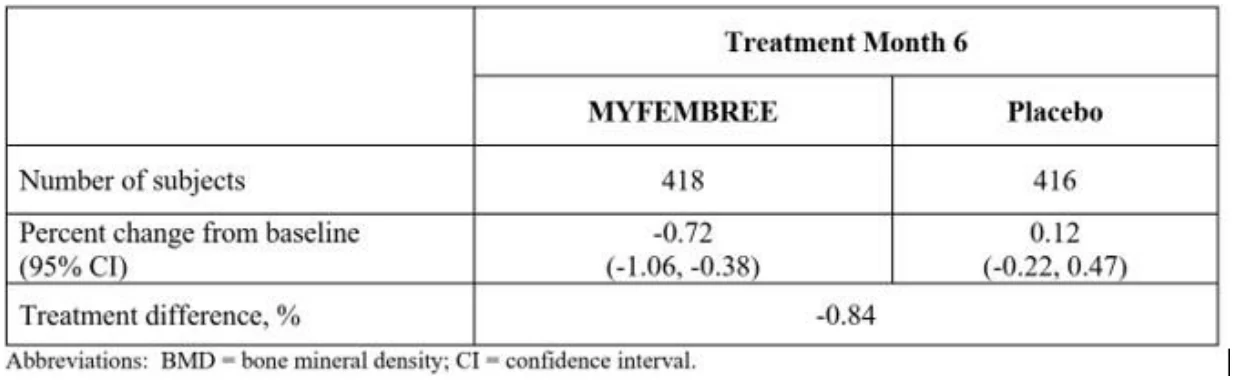
In women with endometriosis, a decline in lumbar spine BMD of > 3% was observed in 17.1% (57/333) of women following 6 months of MYFEMBREE treatment compared with 8.8% (28/319) of women treated with placebo. One patient in the MYFEMBREE and no patients in placebo group had losses > 8%.
In the open-label extension, Study S3, women received an additional 80 weeks of MYFEMBREE for a total of up to 104 weeks of treatment. The least squares mean percent changes from baseline in lumbar spine BMD at Week 24, Week 52 and Week 104 for women treated with MYFEMBREE in Studies S1 and S2 and then continued MYFEMBREE for an additional 80 weeks in Study S3 are presented below in Table 7.
Table 7 – Mean Percent Change (On-Treatment) from Baseline* in Lumbar Spine BMD at Week 24, Week 52, and Week 104 for Women with Moderate to Severe Pain Associated with Endometriosis Treated with MYFEMBREE in Study S3
MYFEMBREE (N = 277) | |
|---|---|
| Week 24 | |
| n | 264 |
| Percent change (95% CI) | -0.92 (-1.31, -0.54) |
| Week 52 | |
| n | 233 |
| Percent change (95% CI) | -0.69 (-1.16, -0.21) |
| Week 104 | |
| N | 163 |
| Percent change (95% CI) | -0.45 (-1.03, 0.13) |
A separate concurrent prospective observational study enrolled 452 women with moderate to severe pain associated with endometriosis who were age-matched to participants of Studies S1 and S2. While these women were not randomized to receive treatment for moderate to severe pain associated with endometriosis, women were permitted to receive treatment from their provider for this indication. Women underwent DXA scans at baseline and Months 6 and 12 to monitor for changes in BMD. The mean percent changes from baseline (95% CI) in lumbar spine BMD at Months 6 and 12 were 0.35 (0.13, 0.57) and 0.53 (0.24, 0.83), respectively.
In Study S3, women with moderate to severe pain associated with endometriosis, a decline in lumbar spine BMD of > 3% from pre-treatment baseline was observed in 19.7% (45/228) of women who had a DXA scan following 12 months of MYFEMBREE treatment, and in 9.1% (29/320) of untreated women in the Observational Endometriosis Cohort.
Suicidal Ideation and Mood Disorders (Including Depression)
In Studies S1 and S2, a greater proportion of women treated with MYFEMBREE compared with placebo reported mood disorders (including depression). Cases of suicidal ideation were reported in S2 Study as well as the safety extension trial, Study S3.
Increases in Lipids
Lipid levels were assessed at baseline and Week 24/End of Treatment in Studies S1 and S2. Among women with normal total cholesterol (< 200 mg/dL) at baseline, increases to ≥ 200 to < 240 mg/dL were seen in 13.6% (41/302) of MYFEMBREE- treated women as compared to 9.3% (27/289) of placebo treated women, and increases to ≥ 240 mg/dL were seen in 0.7% (2/302) of MYFEMBREE-treated women as compared to 1.0% (3/289) of placebo-treated women. For women with LDL < 130 mg/dL at baseline, increases to 130 to < 160 mg/dL, 160 to < 190 mg/dL and ≥ 190 mg/dL were seen in 8.0%, 0.3%, and 0% of MYFEMBREE-treated women as compared to 7.6%, 0% and 0% of placebo-treated women.
8.5 Post-Market Adverse Reactions
The following adverse reactions have been identified during post-approval use of MYFEMBREE, as well as post-approval use of relugolix monotherapy.
Immune system disorders: anaphylactoid reaction
Skin and subcutaneous tissue disorders: drug eruption, angioedema, urticaria
Neoplasms (benign, malignant, and unspecified): uterine leiomyoma degeneration
Because these reactions are reported voluntarily from a population of uncertain size, it is not always possible to reliably estimate their frequency or establish a causal relationship to drug exposure.
9 DRUG INTERACTIONS
9.2 Drug Interactions Overview
Oral P-gp Inhibitors
Co-administration of MYFEMBREE with erythromycin, an oral P-gp inhibitor, increased the AUC and maximum concentration (Cmax) of relugolix (see 10 CLINICAL PHARMACOLOGY) and may increase the risk of adverse reactions associated with MYFEMBREE. Avoid use of MYFEMBREE with oral P-gp inhibitors.
If concomitant use is unavoidable, take MYFEMBREE first, separate dosing by at least 6 hours, and monitor patients for adverse reactions (see 4 DOSAGE AND ADMINISTRATION).
Combined P-gp and Strong CYP3A Inducers
Use of MYFEMBREE with combined P-gp and strong CYP3A inducers decreases the AUC and Cmax of relugolix, estradiol, and/or norethindrone (see 10 CLINICAL PHARMACOLOGY) and may decrease the therapeutic effects of MYFEMBREE. Avoid use of MYFEMBREE with combined P-gp and strong CYP3A inducers.
9.4 Drug-Drug Interactions
The drugs listed in Table 8 are based on either drug interaction case reports or studies, or potential interactions due to the expected magnitude and seriousness of the interaction (i.e., those identified as contraindicated).
Table 8 – Established or Potential Drug-Drug Interactions
| [Proper/Common name] | Source of Evidence | Effect | Clinical comment |
|---|---|---|---|
| Combined P-gp and Moderate CYP3A Inhibitor | CT | Co-administration with erythromycin (P-gp and moderate CYP3A inhibitor) increased the AUC and Cmax of relugolix by 4.1- and 3.8- fold, respectively. No clinically meaningful differences in the pharmacokinetics of unconjugated estradiol, total estrone, unconjugated estrone, and norethindrone were observed. | Avoid concomitant use of MYFEMBREE with oral P-gp inhibitors. If concomitant use is unavoidable, take MYFEMBREE first and separate dosing by at least 6 hours (see 10 CLINICAL PHARMACOLOGY). |
| Combined P-gp and Strong CYP3A Inducer | CT | Co-administration with rifampin (P-gp and strong CYP3A inducer) decreased the AUC and Cmax of relugolix by 55% and 23%, respectively | Avoid use of MYFEMBREE with combined P-gp and strong CYP3A inducers (see 10 CLINICAL PHARMACOLOGY). |
| Legend: CT = Clinical Trial | |||
No clinically significant differences in the pharmacokinetics of relugolix were observed upon co- administration with voriconazole (strong CYP3A inhibitor), fluconazole (moderate CYP3A inhibitor), or atorvastatin (weak CYP3A inhibitor). No clinically significant differences in the pharmacokinetics of midazolam (sensitive CYP3A substrate), rosuvastatin (BCRP substrate) or dabigatran etexilate (P-gp substrate) were observed upon co-administration with relugolix.
9.5 Drug-Food Interactions
Administration following a high-fat, high-calorie meal reduced the AUC and Cmax of relugolix by 38% and 55%, respectively, and increased the AUC of norethindrone by 32% relative to fasted conditions; however, the decrease in exposure to relugolix and the increase in exposure to norethindrone are not considered to be clinically meaningful. No clinically meaningful effects of food on the exposure to estradiol, estrogenic metabolites were observed.
9.6 Drug-Herb Interactions
Interactions with herbal products have not been established.
9.7 Drug-Laboratory Test Interactions
See 7 WARNING AND PRECAUTIONS, Monitoring and Laboratory Tests
10 CLINICAL PHARMACOLOGY
10.1 Mechanism of Action
MYFEMBREE is a combination of relugolix, estradiol (E2), and norethindrone acetate (NETA).
Relugolix is a non-peptide GnRH receptor antagonist that competitively binds to GnRH receptors in the anterior pituitary gland reducing the secretion of luteinizing hormone (LH) and follicle-stimulating hormone (FSH). The reduction of FSH and LH concentrations limits the production of estrogen and progesterone, respectively, lowering the bleeding associated with uterine fibroids and pain associated with endometriosis.
Estradiol is an agonist of nuclear estrogen receptor (ER) subtypes with organ-specific effects. Exogenously administered estradiol in MYFEMBREE may alleviate symptoms, such as bone mineral density loss and vasomotor symptoms that can occur due to a decrease in circulating estrogen concentrations from relugolix alone.
Norethindrone acetate is a synthetic progestin that acts as an agonist of progesterone receptors and reduces the estrogen-induced risk of endometrial hyperplasia.
10.2 Pharmacodynamics
Effects on Pituitary and Ovarian Hormones
After administration of relugolix, rapid (within hours), dose-dependent decreases in circulating concentrations of LH, FSH, and estradiol are observed, with near-maximum decreases in estradiol concentrations associated with a 40-mg dose. Across clinical studies, estradiol concentrations were at least 10 pg/mL higher with MYFEMBREE compared with relugolix alone. In the phase 3 clinical studies with MYFEMBREE median estradiol predose concentrations after 24 weeks were approximately 33 pg/mL corresponding to the early follicular phase of the menstrual cycle. Progesterone levels were also reduced and maintained at < 3.0 ng/mL with MYFEMBREE indicating a lack of luteal activity.
Effects on Ovulatory Function
In an open-label, non-randomized (single treatment group) study in 67 healthy premenopausal women, administration of MYFEMBREE once daily for 84 days substantially suppressed follicular growth throughout the treatment period (mean dominant follicle size of approximately 6 mm) and ovulation was inhibited in 100% of women, as assessed by the Hoogland-Skouby score. After discontinuation of MYFEMBREE, all women assessed (66 of 67) returned to ovulation within 43 days (mean 23.5 days).
Effects on the Endometrium
In the ovulation inhibition study, endometrial thickness assessed by transvaginal ultrasound was markedly reduced during MYFEMBREE (mean endometrial thickness consistently between 4 and 5 mm) compared with mean values prior to and after study treatment (7.8 and 6.2 mm, respectively). In the pivotal studies, no cases of endometrial hyperplasia or endometrial carcinoma assessed by biopsy were observed in women treated with MYFEMBREE for up to 52 weeks.
Cardiac Electrophysiology
In a randomized, double-blind, placebo- and positive-controlled, parallel-group ECG assessment study in healthy subjects (N=70 per treatment arm, 51% male/49% female) receiving single supratherapeutic doses of relugolix 60 mg or 360 mg, no pharmacodynamic effect was observed on the QTc interval. The potential effects of multiple-dose relugolix treatment were not assessed in this study and are expected to be different in males and females.
The potential effects of estradiol and norethindrone acetate (two of the components of MYFEMBREE) on the QTc interval have not been studied.
10.3 Pharmacokinetics
The pharmacokinetic parameters of relugolix, unconjugated estradiol, and norethindrone after administration of a single dose of MYFEMBREE to healthy postmenopausal women under fasted conditions are summarized in Table 9.
Table 9 – Pharmacokinetic Parameters of Relugolix, Unconjugated Estradiol, and Norethindrone (Norethisterone) after Single Dose Administration of MYFEMBREE
| Relugolix | Unconjugated Estradiol | Norethindrone | |
|---|---|---|---|
AUC0- inf ∞ (ng*hr/mL or pg*hr/mL); mean (SD) | 198.1 (111.6) | 818.7 (334.4) | 17.5 (8.5) |
| Cmax(ng/mL or pg/mL), mean (SD) | 26.0 (18.2) | 28.0 (19.2) | 3.6 (1.4) |
| Tmax (hr), median (min, max) | 2.00 (0.25, 5.00) | 7.00 (0.25, 24.00) | 1.00 (0.50, 4.00) |
Abbreviations: AUC = area under the concentration-time curve; AUC0-inf = AUC from time 0 extrapolated to infinity; Cmax = maximum observed concentration; E2 = estradiol; NET = norethindrone; Tmax = time to maximum observed concentration.
Notes: AUC0-inf is presented in ng·hr/mL for relugolix, NET and in pg·hr/mL for unconjugated E2. Cmax is presented in ng/mL for relugolix, NET and in pg/mL for unconjugated E2.
Linearity/Non-Linearity
Relugolix exhibits greater than a dose proportional increase in exposure at doses ranging from 1 to 80 mg, (0.025 to 2 times the approved recommended dose) and approximately dose-proportional exposures at doses ranging from 80 mg to 360 mg (2 to 9 times the approved recommended dose).
Relugolix concentrations reach steady-state within 12 days, and the accumulation is approximately 2- fold, upon once daily administration.
Estradiol and norethindrone concentrations reach steady-state within 2 weeks, with an accumulation of approximately 1.3- to 1.5-fold, upon once-daily administration.
Absorption
The absorption of relugolix after oral administration is primarily mediated by the P-gp efflux transporter, for which relugolix is a substrate. After oral administration, relugolix is rapidly absorbed, reaching an initial peak by 0.25 hours postdose followed by one or more subsequent absorption peaks through up to 12 hours postdose. The absolute bioavailability of relugolix is 11.6%.
After administration of MYFEMBREE in the fasted state, unconjugated estradiol concentrations increased slowly, with mean peak concentrations achieved at 7 hours postdose and norethindrone concentrations increasing rapidly, with mean peak concentrations achieved at 1-hour postdose.
Food effects
The AUC0-inf and Cmax of relugolix decreased by 38% and 55%, respectively, after administration of MYFEMBREE following consumption of a high-fat, high-calorie meal (i.e., 800-1000 calorie meal in which 50% of calories are derived from fat) compared with the fasted state, whereas the AUC of norethindrone increased by 32% relative to fasted conditions; however, the decrease in exposure to relugolix and the increase in exposure to norethindrone are not considered to be clinically meaningful. No clinically meaningful effects of food on the exposure to estradiol were observed.
Distribution:
Plasma protein binding of relugolix is 68% to 71%, primarily to albumin and to a lesser extent to α1-acid glycoprotein. The mean blood-to-plasma ratio is 0.78. Estradiol circulates in the blood bound to sex hormone-binding globulin (SHBG) (36% to 37%) and to albumin (61%), while only approximately 1% to 2% is unbound. Norethindrone also binds to a similar extent to SHBG (36%) and to albumin (61%).
Metabolism:
Relugolix is metabolized primarily by CYP3A and to a lesser extent by CYP2C8 in vitro.
The metabolism of exogenous and endogenous estradiol is similar. Estradiol is converted reversibly to estrone, and both can be converted to estriol, which is a major urinary metabolite. Estrogens also undergo enterohepatic recirculation due to sulfate and glucuronide conjugation in the liver, biliary secretion of conjugates into the intestine, and hydrolysis in the intestine followed by reabsorption.
Norethindrone undergoes extensive biotransformation, primarily by reduction, in addition to sulfation, glucuronidation, and oxidation, respectively, by sulfotransferases (SULTs), glucuronosyltransferases (UGTs), and CYP enzymes, including CYP3A4. The majority of metabolites in the circulation are sulfates, with glucuronides accounting for most of the urinary metabolites.
Elimination
After administration of a single dose of MYFEMBREE, the mean (SD) terminal phase elimination half-life (t1/2) of relugolix, estradiol, and norethindrone are 61.5 (13.2) hours, 16.6 (7.7) hours, and 10.9 (3.1) hours, respectively.
Excretion
After oral administration of a single 80 mg radiolabeled dose of relugolix, approximately 81% of the radioactivity was recovered in feces (4.2% as unchanged) and 4.1% in urine (2.2% as unchanged).
Estradiol is excreted in the urine as glucuronide and sulfate conjugates. Norethindrone is primarily excreted in urine as various polar metabolites.
Special Populations and Conditions
- Ethnic Origin: No clinically meaningful effect of race or ethnicity on relugolix exposure were identified in cross-study analysis and PopPK analysis. (Asian [49%], White [24%], Black/African American [24%])
- Geriatrics: The pharmacokinetics of MYFEMBREE have not been investigated in women older than 65 years of age.
- Hepatic Insufficiency: No clinically significant differences in the pharmacokinetics of relugolix were observed based on mild or moderate hepatic impairment (Child-Pugh A or B). The effects of severe hepatic impairment (Child-Pugh C) on the pharmacokinetics of relugolix have not been studied. The effects of hepatic impairment on the pharmacokinetics of estradiol or norethindrone have not been studied. However, estradiol blood concentrations are expected to be increased in patients with hepatic impairment compared to patients with normal hepatic function.
- Obesity: No clinically significant differences in the pharmacokinetics of relugolix were observed based on body weight (38 to 144 kg).
Pediatrics: The pharmacokinetics of MYFEMBREE have not been investigated in women less
than 18 years of age.
- Pregnancy and Breast-feeding: Relugolix is contraindicated in pregnancy or suspected pregnancy and breastfeeding (see 2 CONTRAINDICATIONS).
- Renal Insufficiency: No clinically significant differences in the pharmacokinetics of relugolix were observed based on mild to severe renal impairment (creatinine clearance [CLcr] 15 to 89 mL/min, as estimated by the Cockcroft-Gault equation). The effects of end-stage renal disease with or without hemodialysis on the pharmacokinetics of relugolix have not been studied. The effects of renal impairment on the pharmacokinetics of estradiol or norethindrone have not been studied.
11 STORAGE, STABILITY AND DISPOSAL
Store between 15oC to 30oC.
The in-use period for the 28-count 60 cc HDPE bottles with desiccant is 28 days.
12 SPECIAL HANDLING INSTRUCTIONS
MYFEMBREE tablets no longer required must not be disposed via wastewater or household waste. The hormonal active compounds in the tablet may have harmful effects if reaching the aquatic environment. The tablets must be returned to the pharmacy or disposed of in another safe way according to local requirements. These measures will help protect the environment.
PART II: SCIENTIFIC INFORMATION
13 PHARMACEUTICAL INFORMATION
Drug Substance
Proper/Common name:
Relugolix
Chemical name:
N-(4-{1-[(2,6-difluorophenyl)methyl]-5-[(dimethylamino)methyl]-3- (6-methoxypyridazin-3-yl)-2,4-dioxo-1,2,3,4-tetrahydrothieno[2,3- d]pyrimidin-6-yl}phenyl)-N’-methoxyurea
Molecular formula and molecular mass:
C29H27F2N7O5S and a molecular weight of 623.63
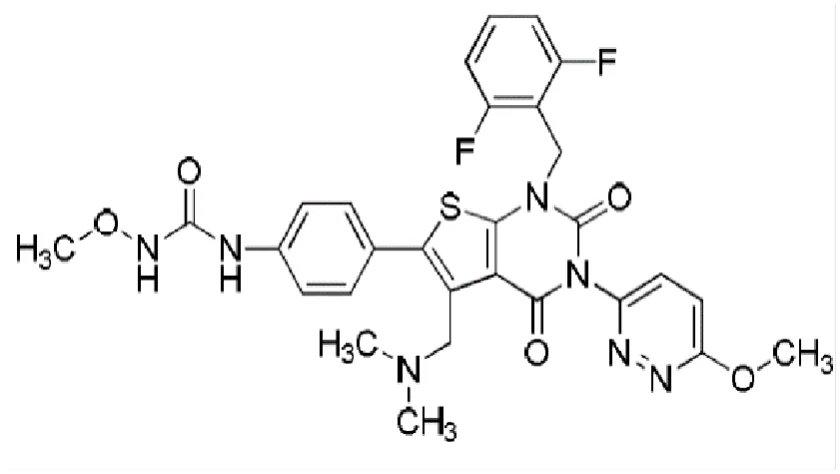
Structural formula:
Physicochemical properties:
Relugolix is a white to off-white to slightly yellow solid. It is slightly hygroscopic and requires no special protection from humidity during handling, shipping, or storage. The melting point could not be determined, because decomposition of relugolix occurred prior to melting. The solubility of relugolix in aqueous buffer solutions of various pH values at 37°C and in water/non-aqueous solvents of various pH values at 25°C was investigated.
Solubility of Relugolix in physiological pH ranges:
pH 1.2 1.10 mg/mL
pH 4.5 9.62 mg/mL
pH 6.8 0.062 mg/mL
pKa:
8.63
Drug Substance
Proper name:
Estradiol (E2).
Estradiol is present as the hemihydrate (C18H24O2•½H2O) which is a white or almost white crystalline powder.
Chemical name:
Estra-1, 3, 5 (10)-triene-3, 17β-diol
Molecular formula and molecular mass:
C18H24O2 and a molecular weight of 272.4.
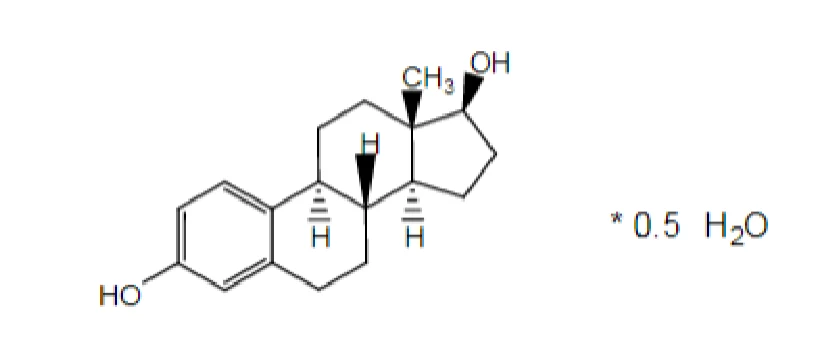
Structural formula:
Physicochemical properties:
White or almost white crystalline powder. Practically insoluble in water, very slightly soluble in ethanol, soluble in acetone, insoluble in dichloromethane and diethylether. Ionization Constant (pKa): pKa (predicted): 10.27 ± 0.60 at a condition of the most acidic temperature of 25°.
Drug Substance
Proper name:
Norethindrone acetate (NETA)
Chemical name:
17-Hydroxy-19-nor-17α-pregn-4-en-20-yn-3-one acetate
Molecular formula and molecular mass:
C22H28O3 and a molecular weight of 340.5
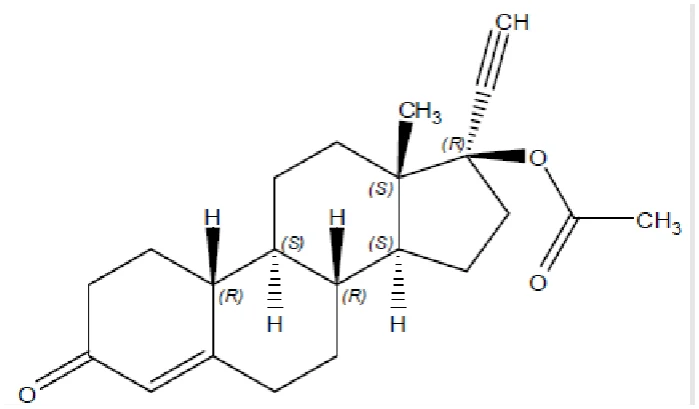
Structural formula:
Physicochemical properties:
White or yellowish-white, crystalline powder. Practically insoluble in water and in heptane, freely soluble in methlyene chloride and in acetone, soluble in alcohol.
14 CLINICAL TRIALS
14.1 Pivotal Trial Design and Study Demographics
Heavy Menstrual Bleeding Associated with Uterine Leiomyomas
The efficacy and safety of MYFEMBREE was assessed in two replicate, 24-week, multinational, randomized, double-blind, placebo-controlled studies in a total of 768 premenopausal women with heavy menstrual bleeding associated with uterine fibroids in Study L1 and Study L2.
For study inclusion, women had to have uterine fibroids confirmed by ultrasound examination in which at least one fibroid met at least one of the following criteria:
- Subserosal, intramural, or < 50% intracavitary submucosal fibroid with a diameter ≥ 2 cm, or
- Multiple small fibroids with a total uterine volume of ≥ 130cm3.
Women also had to have menstrual blood loss (MBL) volume of ≥ 80 mL per cycle for two menstrual cycles or ≥ 160 mL during one cycle quantified by the alkaline hematin method from menstrual products collected during baseline menstrual cycles to be included in the studies. Women with hemoglobin < 8.0 g/dL were excluded from the study. Iron therapy was required for women with hemoglobin ≥ 8 g/dL and ≤ 10 g/dL.
Women were randomized 1:1:1 to receive once daily MYFEMBREE (administered in the phase 3 clinical studies as a tablet of relugolix 40 mg and an over encapsulated tablet of estradiol 1 mg and norethindrone acetate 0.5 mg) for 24 weeks, placebo for 24 weeks, or relugolix 40 mg monotherapy for 12 weeks followed by MYFEMBREE for 12 weeks. Treatment was initiated within the first seven days after the onset of menses.
A total of 768 patients were randomized and treated in Study L1 (N = 387) or Study L2 (N = 381). Of these, 254 women received MYFEMBREE once daily for 24 weeks. Overall, demographic characteristics were generally similar between studies.
The median age of women was 42 years (19-51), and mean body mass index was 31.7 kg/m2. Approximately 49.4% of study participants were Black, 44.7% were White, and 5.9% were of other races. Women were allowed but not required to take calcium and vitamin D. Across studies at baseline, mean (± standard deviation) MBL volume at baseline was 229 mL (± 154).
The primary endpoint was the percent of responders, defined as women with MBL volume of < 80 mL and at least a 50% reduction from baseline in MBL volume over the last 35 days of treatment as assessed from menstrual products collected during menstrual cycles and quantified by the alkaline hematin method. Key secondary endpoints included MBL volume, amenorrhea, change in hemoglobin, uterine volume and uterine fibroid volume.
Moderate to Severe Pain Associated with Endometriosis
The efficacy of once daily MYFEMBREE was assessed in two replicate, 24-week, multinational, randomized, double-blind, placebo-controlled phase 3 studies in women with moderate to severe pain associated with endometriosis in Study S1 (NCT03204318) and Study S2 (NCT03204331) (see Table 10).
Table 10 – Summary of patient demographics for clinical trials in endometriosis
| Study # | Study design | Dosage, route of administration and duration | Study subjects (n)* | Mean age (Range) | Sex |
|---|---|---|---|---|---|
| Study S1 (NCT03204318) | Phase 3, multinational, randomized, double-blind, placebo- controlled | 1:1:1 MYFEMBREE, Oral, 24 weeks OR Placebo, Oral, 24 weeks OR Relugolix 40 mg, Oral, 12 weeks followed by MYFEMBREE, Oral, 12 weeks | 635 | 34.2 (18 - 49) | F |
| Study S2 (NCT03204331) | Phase 3, multinational, randomized, double-blind, placebo- controlled | 1:1:1 MYFEMBREE, Oral, 24 weeks OR Placebo, Oral, 24 weeks OR Relugolix 40 mg, Oral, 12 weeks followed by MYFEMBREE, Oral, 12 weeks | 610 | 33.7 (18 - 50) | F |
|---|---|---|---|---|---|
| * Study subjects who were analyzed | |||||
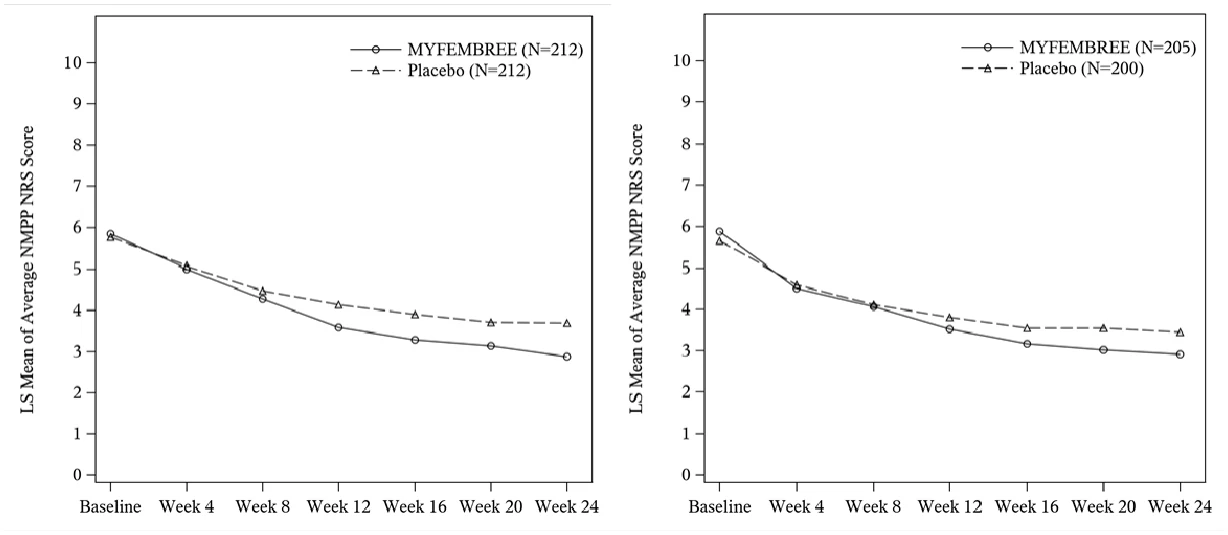
For study inclusion, women had to have endometriosis confirmed by direct visualization during surgery and/or histological confirmation. Women also had to have moderate to severe pain associated with endometriosis during a placebo run-in period. Dysmenorrhea (DYS) and non-menstrual pelvic pain (NMPP) were evaluated daily using an 11-point numerical rating scale (NRS) that asked women to rate their pain severity during the prior 24 hours as a score of 0 (no pain) to 10 (worst pain ever).
Studies S1 and S2 had two co-primary endpoints. The first co-primary endpoint was the proportion of women (i.e. dysmenorrhea responder) comparing the MYFEMBREE group with placebo group, who achieved a reduction from baseline in dysmenorrhea NRS of at least 2.8 points over the last 35 days of treatment, without an increase in analgesic use (nonsteroidal anti-inflammatory drug or opioid) for endometriosis-associated pain. The second co-primary endpoint was the proportion of women (i.e. non-menstrual pelvic pain responder), comparing the MYFEMBREE group with the placebo group, who achieved a reduction from baseline in non-menstrual pelvic pain (NMPP) NRS score of at least 2.1 points over the last 35 days of treatment, without an increase in analgesic use (nonsteroidal anti- inflammatory drug or opioid) for endometriosis-associated pain.
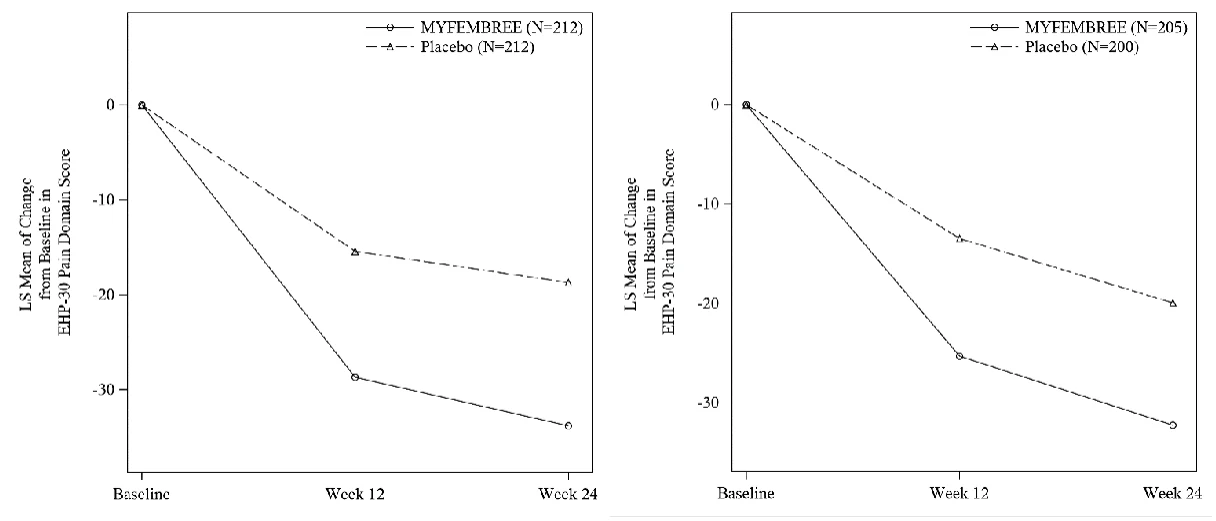
Key secondary endpoints included changes from baseline in the Endometriosis Health Profile-30 (EHP- 30) pain domain scores (normalized from five-point response Likert-type scale into a 0 to 100 score), dysmenorrhea NRS scores, NMPP NRS scores, dyspareunia NRS scores, and opioid use.
A total of 834 women were randomized and treated with either MYFEMBREE or Placebo in Studies S1 and S2 (829 women in the efficacy population used for these studies). Of these, 417 women were randomized to treatment with MYFEMBREE (212 in Study S1 and 205 in Study S2). The median age of women was 34 years, and mean body mass index was 26 kg/m2. Approximately 91% of study participants were White, 6% were Black, and 3% were of other races. At baseline in Studies S1 and S2, 29.1% and 48.4% of women, respectively, used an opioid rescue analgesic for pain associated with endometriosis. Baseline NRS scores for dysmenorrhea (range from 7.0 to 7.2), NMPP (range from 5.5 to 5.9), and dyspareunia (range from 5.3 to 5.7) and baseline scores for EHP-30 pain domain scores (range from 54.9 to 58.3) in Studies S1 and S2 are comparable.
14.2 Pivotal Trial Results
Heavy Menstrual Bleeding Associated with Uterine Leiomyomas
Effect on Heavy Menstrual Bleeding
Responder Analysis
In both studies, a statistically higher proportion of women treated with MYFEMBREE achieved a response, defined in the studies as having both an MBL volume of < 80 mL and at least a 50% reduction from baseline in MBL volume over the last 35 days of treatment compared with placebo Table 11).
Table 11 – Proportion of Responders in Study L1 and Study L2
| Study L1 | Study L2 | |||||||||
|---|---|---|---|---|---|---|---|---|---|---|
| MYFEMBREE (N = 128) | Placebo (N = 127) | MYFEMBREE (N = 125) | Placebo (N = 129) | |||||||
| Number (%) of responders | 94 (73.4%) | 24 (18.9%) | 89 (71.2%) | 19 (14.7%) | ||||||
Difference from placebo (95% CI) p-value | 54.5% (44.3%, 64.8%) < 0.0001 | 56.5% (46.5%, 66.5%) < 0.0001 | ||||||||
Amenorrhea
Of women treated with MYFEMBREE, 52.3% and 50.4% achieved amenorrhea compared with 5.5% and 3.1% treated with placebo (p < 0.0001) in Studies L1 and L2, respectively.
Percent Change in MBL Volume
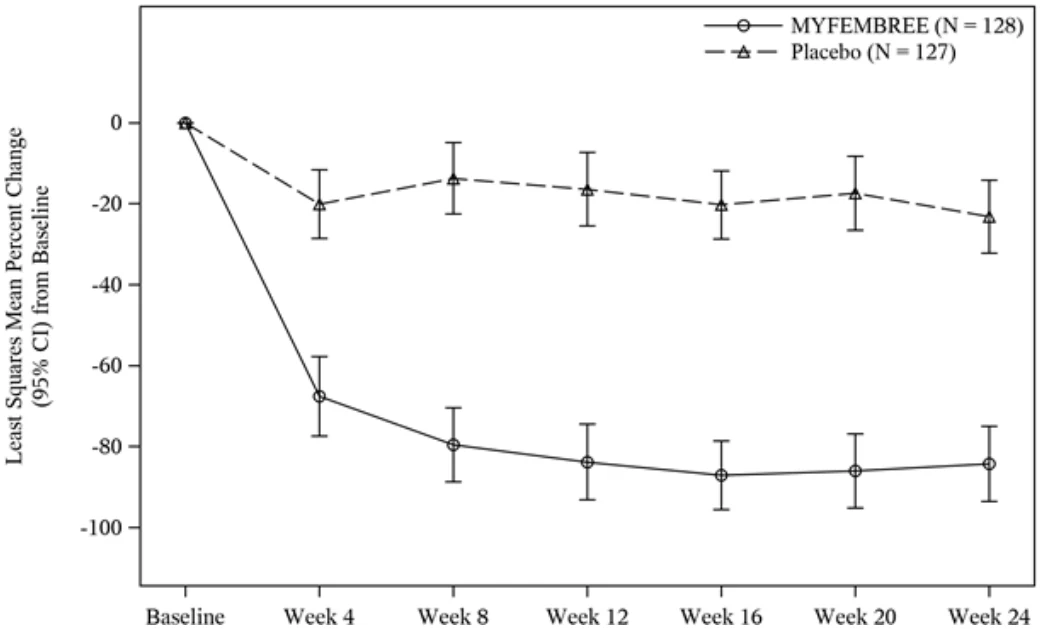
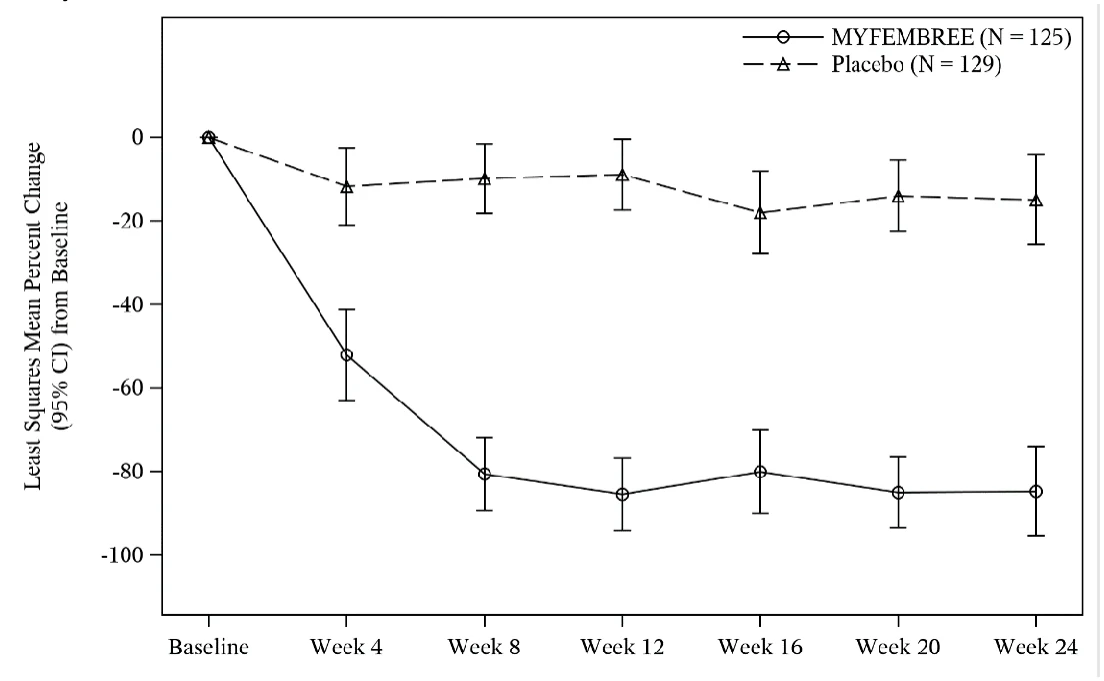
The mean MBL volumes in Studies L1 and L2 at baseline were 243.8 mL and 246.7 mL in the MYFEMBREE, group, respectively, and 223.2 mL and 211.8 mL in the placebo group, respectively. The mean reduction in MBL volume from baseline to Week 24 in the MYFEMBREE group was 84.3% in both studies, which was significantly greater than placebo (23.2% and 15.1%, respectively) (p < 0.0001).
Reductions in MBL volume were seen as early as the first assessment (Week 4) and maintained for up to 24 weeks (Error! Reference source not found.).
Figure 1: Percent Change from Baseline in Menstrual Blood Loss over Time Study L1
Study L2
Effect on Hemoglobin Levels
For efficacy, a hemoglobin response was defined as a hemoglobin increase of > 2 g/dL from baseline to Week 24 in the subgroup of women with anemia at baseline (hemoglobin ≤ 10.5 g/dL). A statistically higher proportion of women treated with MYFEMBREE compared with placebo had a > 2 g/dL improvement in hemoglobin levels (Table 12).
Table 12 – Proportion of women with a hemoglobin level ≤ 10.5 g/dL at Baseline who achieve an increase of > 2 g/dL from Baseline at Week 24 (Studies L1 and L2)
| Primary Endpoints | Study L1 | Study L2 | ||
|---|---|---|---|---|
MYFEMBREE n= 30 (N = 128) | Placebo n=23 (N = 127) | MYFEMBREE n=31 (N = 125) | Placebo n=37 (N = 129) | |
| % at Week 24 | 50.0% | 21.7% | 61.3% | 5.4% |
Difference from placebo, % 95% CI* p-value | 28.3% (3.7%, 52.8%) 0.0377 | 55.9% (37.3%, 74.5%) < 0.0001 | ||
CI = confidence interval; Hgb = hemoglobin n = number of patients who had Hgb ≤ 10.5 g/dL at baseline and had a Hgb value at Week 24 N = number of patients in each treatment group | ||||
Uterine and Fibroid Volume
Uterine volume was statistically significantly reduced from baseline to Week 24 in women treated with MYFEMBREE compared with placebo (Table 13). No significant reduction in uterine fibroid volume was observed from baseline to Week 24 in women treated with MYFEMBREE compared to placebo.
Table 13 – Summary of Percent Change from Baseline in Uterine Volume at Week 24
| Study L1 | Study L2 | |||||||
|---|---|---|---|---|---|---|---|---|
MYFEMBREE (N = 128) | Placebo (N = 127) | MYFEMBREE N = 125) | Placebo (N = 129) | |||||
| LS Mean (SE) | −12.9 (3.08) | 2.2 (3.01) | −13.8 (3.39) | −1.5 (3.37) | ||||
| Difference of LS Means (SE) [1] | −15.1 (3.98) | −12.2 (4.57) | ||||||
| 95% CI | (−23.0, −7.3) | (−21.3, −3.2) | ||||||
| p-value | 0.0002 | 0.0078 | ||||||
CI = confidence interval; LS = least squares; N = number of patients; SE = standard error.
[1] LS means and p-value for test of difference is MYFEMBREE minus placebo based on mixed-effect model with treatment, visit, region, baseline MBL and treatment by visit interaction included as fixed effects. The multiple visits for each patient were the repeated measures as random effect within each patient and an unstructured covariance.
Moderate to Severe Pain Associated with Endometriosis
Dysmenorrhea and Non-Menstrual Pelvic Pain
In Studies S1 and S2, a statistically higher proportions of women treated with MYFEMBREE achieved each of the co-primary endpoints of meeting dysmenorrhea and NMPP responder definition over the last 35 days of treatment compared with placebo (see Table 14).
Table 14 – Proportions of Dysmenorrhea and Non-Menstrual Pelvic Pain Responders Over the Last 35 Days of Treatment in Women with Endometriosis-associated Pain (Studies S1 and S2)
| Study S1 | Study S2 | ||||
|---|---|---|---|---|---|
MYFEMBREE (N = 212) | Placebo (N = 212) | MYFEMBREE (N = 205) | Placebo (N = 200) | ||
| Dysmenorrhea responders | 74.5% | 26.9% | 75.1% | 30.5% | |
Difference from placebo, % 95% CI p-value | 47.6% (39.3%, 56.0%) < 0.0001 | 44.6% (35.9%, 53.3%) < 0.0001 | |||
| Non-menstrual pelvic pain responders | 58.5% | 39.6% | 65.9% | 42.5% | |
Difference from placebo, % 95% CI p-value | 18.9% (9.5%, 28.2%) < 0.0001 | 23.4% (13.9%, 32.8%) < 0.0001 | |||
Abbreviations: CI = confidence interval.
Responders are women with a reduction from baseline of at least 2.8 points on the NRS for dysmenorrhea or at least 2.1 points on the NRS for non-menstrual pelvic pain and no increase in analgesic use over the last 35 days of treatment.
Reduction in Dysmenorrhea and NMPP NRS Scroes
Women taking MYFEMBREE reported a statistically (p < 0.0001) significant reduction from baseline in dysmenorrhea NRS scores compared to placebo at Week 24 in both Studies S1 and S2 (Study S1 and S2, respectively: LS mean change -5.1 points for MYFEMBREE; -1.8 and -2.0 points for placebo). Women taking MYFEMBREE reported a statistically significant (p = 0.0002 and p = 0.0017) reduction from baseline in NMPP NRS scores compared to placebo at Week 24 in both Studies S1 and S2 (Study S1 and S2, respectively: LS mean change -2.9 and -2.7 points for MYFEMBREE; both -2.0 for placebo). Least squares mean dysmenorrhea and NMPP scores over time are shown in Figure 2 and Figure 3, respectively.
Figure 2 – Mean Dysmenorrhea NRS Scores in Study S1 and Study S2 over 24 Weeks Study S1 Study S2
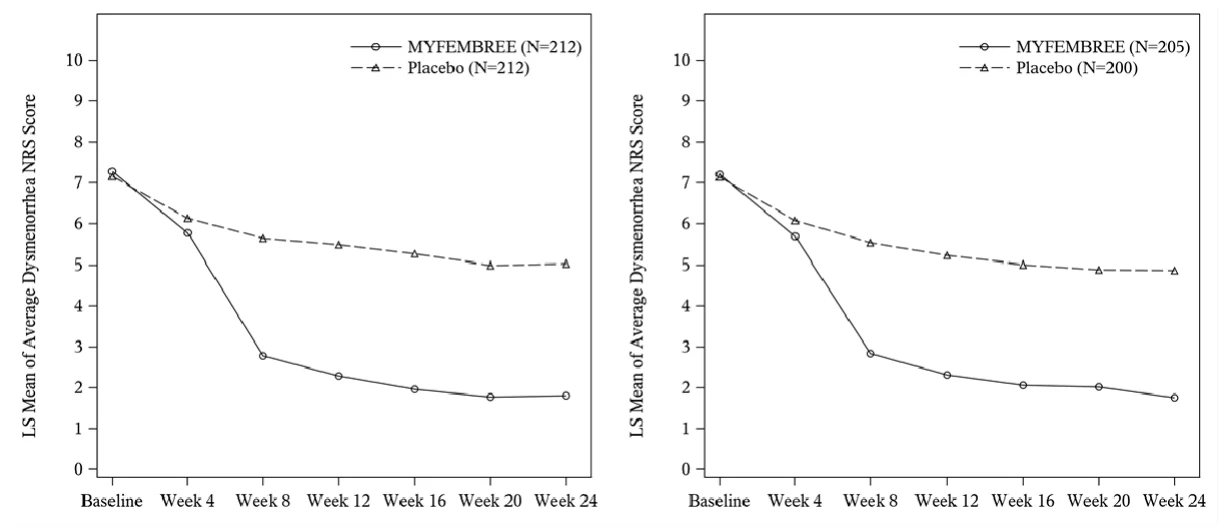
Figure 3 – Mean NMPP NRS Scores in Study S1 and Study S2 over 24 Wes Study S1 Study S2
Reduction in EHP-30 Pain Domain Scores
The functional impact of pain due to endometriosis was measured using the EHP-30 pain domain. The EHP-30 pain domain consists of 11 items, which ask patients how often they have been able/unable to do certain functional activities during the last 4 weeks (e.g., unable to attend a social event, unable to do jobs around the house, difficulty in sitting, standing, walking, exercising/leisure activities) because of their pain associated with endometriosis.
Women taking MYFEMBREE reported a statistically significant (p < 0.0001) improvement from baseline in EHP-30 pain domain score compared to placebo at Week 24 in both Studies S1 and S2 (Study S1 -33.8 points vs. -18.7 points and Study S2: -32.2 points vs. -20.0 points in the MYFEMBREE group vs. placebo). Least squares mean changes in EHP-30 pain domain scores over time are shown in Figure 4.
Figure 4 – Mean Change in EHP-30 Pain Domain Scores in Studies S1 and S2 over 24 Weeks
Study S1 Study S2
Reduction in Dyspareunia
Dyspareunia associated with endometriosis was evaluated in a subgroup of women who engaged in sexual activity with vaginal intercourse at baseline and during treatment (68% of enrolled women). Dyspareunia (pain during sexual intercourse) was assessed daily using an 11-point NRS ranging from 0 (“no pain”) to 10 (“pain as bad as you can imagine”). In Studies S1 and S2, women treated with MYFEMBREE had a greater reduction in dyspareunia from baseline to Week 24 compared with placebo [LS mean change in Study S1: -2.4 vs. -1.7, with a treatment difference of -0.7 (95% CI: -1.3, -0.1); in Study S2: -2.4 vs. -1.9, with a treatment difference of -0.5 (95% CI: -1.0, 0.0)].
Use of Opioids and Analgesics
The opioid rescue analgesics used at baseline were predominantly opioids in combination with acetaminophen. In both Studies S1 and S2, the proportion of women not using opioids at Week 24 was statistically significantly higher in women treated with MYFEMBREE compared to placebo (see Table 15).
Table 15 – Opioid Rescue Analgesic Use in Studies S1 and S2
| Study S1 | Study S2 | ||||||||||||
|---|---|---|---|---|---|---|---|---|---|---|---|---|---|
MYFEMBREE (N = 212) | Placebo (N = 212) | MYFEMBREE (N = 205) | Placebo (N = 200) | ||||||||||
| Proportion of women opioids free at Baseline | 69.8% | 73.6% | 51.2% | 53.0% | |||||||||
| Proportion of women opioids free at end of treatment | 85.8% | 76.4% | 82.0% | 66.0% | |||||||||
Difference from placebo 95% CI p-value | 9.4% (2.0%, 16.8%) 0.0005 | 16.0% (7.5%, 24.4%) < 0.0001 | |||||||||||
| Proportion of women not on any dose of opioids at baseline who were on opioid at end of treatment | 3.4% (n = 148) | 7.7% (n = 156) | 1.9% (n = 105) | 11.3% (n = 106) |
|---|---|---|---|---|
| Proportion of women on any dose of opioids at baseline who were opioid-free at end of treatment | 60.9% (n = 64) | 32.1% (n = 56) | 65.0% (n = 100) | 40.4% (n = 94) |
p-value is based on Cochran-Mantel-Haenszel test stratified by baseline opioid use (yes, no), time since initial surgical diagnosis of endometriosis (< 5 years, ≥ 5 years), and geographic region (North America, Rest of World).
Upon completion of the 24-week studies S1 and S2, eligible participants could enroll in an 80-week, open-label, single-arm extension study (S3). For women originally randomized to MYFEMBREE in studies S1 and S2, the reduction in dysmenorrhea and NMPP NRS scores were maintained for up to 104 weeks whereas for women who were originally randomized to placebo, a reduction in their endometriosis-associated pain was observed after receiving MYFEMBREE during Study S3.
14.3 Recurrence of Heavy Menstrual Bleeding After Discontinuation of MYFEMBREE
In a randomized withdrawal study (L4), 229 women from the open label extension Study L3 were re-randomized to either continue blinded treatment with MYFEMBREE or withdrawal of therapy (placebo) for an additional 52 weeks.
The median time to return to heavy menstrual bleeding among women randomized to placebo (treatment withdrawal) was 6 weeks.
15 MICROBIOLOGY
No microbiological information is required for this drug product.
16 NON-CLINICAL TOXICOLOGY
General Toxicology
Toxicology studies were performed with relugolix and include single-dose toxicity studies in rats and monkeys as well as repeat-dose toxicity studies in mice (up to 13 weeks duration), rats (up to 26 weeks duration), and monkeys (up to 39 weeks duration). Non-clinical studies have not been conducted with relugolix in combination with estradiol and norethindrone acetate. Non-clinical data reveal no special hazard for humans based on conventional studies of safety pharmacology, repeated dose toxicity, genotoxicity, carcinogenic potential.
Single-Dose Toxicity
Relugolix was administered at doses of 200, 600, or 2000 mg/kg to mice, rats, and monkeys. The maximum tolerated dose (MTD) was 2000 mg/kg in all species.
Repeat-Dose Toxicity Mice
In a 13-week oral toxicity study in mice (n = 10/sex/group) administered 0, 200, 600, or 2000 mg/kg/day doses of relugolix, the no-observed-adverse-effect-level (NOAEL) was 600 mg/kg/day (~1000 fold the human exposure (AUC) at the 40 mg daily dose) in both sexes. The NOAEL in male mice was based on decreased red blood cells, hemogloblin, and hematocrit as well as decreased kidney weights observed at 2000 mg/kg/day. Inflammatory cell infiltration and hyperplasia of mucosal epithelium in the female cecum and in the colon of male and female mice were observed at 2000 mg/kg/day.
Rats
In a 26-week oral gavage toxicity study, rats (15/sex/group) were administered relugolix at doses of 0, 10, 30, 100, or 300 mg/kg/day. Phospholipidosis (PLD) associated histological observations were noted at doses > 30 mg/kg/day (~15 fold the human exposure (AUC) at the 40 mg daily dose) in males based on foamy cell infiltration in the testicular interstitium at doses ≥ 100 mg/kg/day but was not associated with organ toxicity, adverse clinical signs, or mortality. The NOAEL was 300 mg/kg/day in both sexes with a mean AUC value for relugolix of 30,514 ng.h/mL which is ~283-times the exposure in human females at the MRHD of 40 mg daily, based on AUC.
Monkeys
In a 39-week oral toxicity study, male and female cynomolgus monkeys (4/sex/group) were administered relugolix at doses of 0, 1.5, 5, 15, or 50 mg/kg/day followed by a 13-week recovery period levels to assess the reversibility of any effects. Relugolix was generally well-tolerated. Observations attributable to the pharmacological effects of relugolix were noted, including decreased frequency of menses (at 50 mg/kg/day) and decreased ovary weights (at doses ≥ 5 mg/kg/day). Findings associated with liver toxicity (increased ALT and AST levels and histological changes) were observed at 50 mg/kg/day in both sexes, which demonstrated evidence of reversibility following the 13-week recovery period. Findings suggestive of generalized PLD were observed in both sexes at relugolix doses > 1.5 mg/kg/day (~2 fold the human exposure (AUC) at the 40 mg daily dose) but was not associated with organ toxicity, adverse clinical signs, or mortality, and demonstrated evidence of reversibility after cessation of treatment. The NOAEL was 15 mg/kg/day in both sexes based on liver toxicity with a mean AUC value for relugolix of 5198 ng.h/mL which is ~48-times the exposure in human females at the maximum recommended human dose (MRHD) of 40 mg daily, based on AUC. The significance of the generalized PLD finding in humans is unknown.
Carcinogenicity:
Relugolix
Two-year carcinogenicity studies were conducted in mice at oral relugolix doses up to 100 mg/kg/day and in rats at doses up to 600 mg/kg/day. Relugolix was not carcinogenic in mice or rats at exposures up to approximately 260 or 776 times, respectively, the exposure in human females at the MRHD of 40 mg daily, based on AUC.
E2/NETA
Long-term continuous administration of natural and synthetic estrogens in certain animal species increases the frequency of carcinomas of the breast, uterus, cervix, vagina, testis, and liver.
Genotoxicity:
Relugolix
Relugolix was not mutagenic in the in vitro bacterial reverse mutation (Ames) assay or clastogenic in the in vitro chromosomal aberration assay in Chinese hamster lung cells or the in vivo rat bone marrow micronucleus assay.
Reproductive and Developmental Toxicology:
Relugolix
In a fertility study in rats, no effect on female fertility was observed at up to 1000 mg/kg/day (approximately 700 times the maximum recommended human dose (MRHD) of 40 mg daily in women). In rats, the binding affinity of relugolix for GnRH receptors is greater than 1000-fold less than in humans, and this study represents an assessment of non-pharmacological targets of relugolix.
In human GnRH-receptor knock-in mice, administration of relugolix at oral doses of 100 mg/kg and above twice daily to female mice induced a constant diestrous phase and decreased ovarian and uterine weights, effects which were reversible following cessation of treatment. In male knock-in mice, oral administration of relugolix decreased prostate and seminal vesicle weights at doses 3 mg/kg and above twice daily for 28 days, effects which were reversible, except for testis weight, which did not fully recover within 28 days after drug withdrawal.
In a 39-week toxicology study in monkeys, a decrease in the frequency of menses was observed in female monkeys at 50 mg/kg/day (179 times the MRHD of 40 mg daily in women, based on AUC), which was partially reversed following a 13-week recovery period. There were no significant effects on male reproductive organs at oral relugolix doses up to 50 mg/kg/day.
In an embryo-fetal development study, oral administration of relugolix to pregnant rats (Days 6 to 17 of gestation) did not affect pregnancy status or fetal endpoints at doses up to 1000 mg/kg/day, a dose at which maternal toxicity (decreased body weight gain and food consumption) was observed. A no observed adverse effect level (NOAEL) for maternal toxicity was 200 mg/kg/day. No treatment related malformations were observed up to 1000 mg/kg/day. In rats, the binding affinity of relugolix for GnRH receptors is more than 1000-fold lower than that in humans.
In a similar embryo-fetal development study, oral administration of relugolix to pregnant rabbits (Days 6 to 18 of gestation) resulted in abortion, total litter loss, or decreased number of live fetuses at a dose of 9 mg/kg/day (AUC= 106 ng*h/mL on gestation day 18), which is ~1 fold the total human exposure at the MRHD of 40 mg daily. No treatment related malformations were observed in surviving fetuses. No treatment related effects were observed at 3 mg/kg/day (associated with exposure about 0.23-fold those at the MRHD) or lower. The binding affinity of relugolix for rabbit GnRH receptors is unknown.
In a pre- and postnatal developmental study in pregnant and lactating rats, oral administration of relugolix to rats during late pregnancy and lactation (Day 6 of gestation to Day 20 of lactation) had no effects on pre- and postnatal development at doses up to 1000 mg/kg/day, a dose in which maternal toxicity was observed (effects on body weight gain). A NOAEL for maternal toxicity was 100 mg/kg/day.”