


Product Monograph - Orilissa
RECENT MAJOR LABEL CHANGES
| Section | Date |
|---|---|
| Not applicable |
TABLE OF CONTENTS
Sections or subsections that are not applicable at the time of authorization are not listed.
RECENT MAJOR LABEL CHANGES ............................................................................................. 2
TABLE OF CONTENTS ................................................................................................................ 2
PART I: HEALTH PROFESSIONAL INFORMATION ....................................................................... 4
1 INDICATIONS ................................................................................................................ 4
1.1 Pediatrics ............................................................................................................... 4
1.2 Geriatrics ............................................................................................................... 4
2 CONTRAINDICATIONS ................................................................................................... 4
4 DOSAGE AND ADMINISTRATION .................................................................................. 4
4.1 Dosing Considerations ........................................................................................... 4
4.2 Recommended Dose and Dosage Adjustment ....................................................... 5
4.3 Reconstitution ....................................................................................................... 5
4.4 Administration ....................................................................................................... 5
4.5 Missed Dose ........................................................................................................... 5
5 OVERDOSAGE ............................................................................................................... 5
6 DOSAGE FORMS, STRENGTHS, COMPOSITION AND PACKAGING .................................. 6
7 WARNINGS AND PRECAUTIONS .................................................................................... 6
7.1 Special Populations ................................................................................................ 9
7.1.1 Pregnant Women .................................................................................................. 9
7.1.2 Breast-feeding ...................................................................................................... 9
7.1.3 Pediatrics ............................................................................................................ 10
7.1.4 Geriatrics ............................................................................................................ 10
8 ADVERSE REACTIONS .................................................................................................. 10
8.1 Adverse Reaction Overview ................................................................................. 10
8.2 Clinical Trial Adverse Reactions............................................................................ 10
8.3 Less Common Clinical Trial Adverse Reactions..................................................... 12
8.4 Abnormal Laboratory Findings: Hematologic, Clinical Chemistry and Other Quantitative Data ............................................................................................................ 13
8.5 Post-Market Adverse Reactions ........................................................................... 14
9 DRUG INTERACTIONS ................................................................................................. 14
9.2 Drug Interactions Overview ................................................................................. 14
9.3 Drug-Behavioural Interactions ............................................................................. 15
9.4 Drug-Drug Interactions ........................................................................................ 15
9.5 Drug-Food Interactions ........................................................................................ 19
9.6 Drug-Herb Interactions ........................................................................................ 19
9.7 Drug-Laboratory Test Interactions ....................................................................... 19
10 CLINICAL PHARMACOLOGY ......................................................................................... 19
10.1 Mechanism of Action ........................................................................................... 19
10.2 Pharmacodynamics .............................................................................................. 20
10.3 Pharmacokinetics ................................................................................................. 20
11 STORAGE, STABILITY AND DISPOSAL .......................................................................... 22
12 SPECIAL HANDLING INSTRUCTIONS ............................................................................ 22
PART II: SCIENTIFIC INFORMATION ........................................................................................ 23
13 PHARMACEUTICAL INFORMATION ............................................................................. 23
14 CLINICAL TRIALS ......................................................................................................... 24
14.1 Trial Design and Study Demographics .................................................................. 24
14.2 Study Results ....................................................................................................... 25
15 MICROBIOLOGY .......................................................................................................... 29
16 NON-CLINICAL TOXICOLOGY ....................................................................................... 29
PATIENT MEDICATION INFORMATION ................................................................................... 33
PART I: HEALTH PROFESSIONAL INFORMATION
1 INDICATIONS
ORILISSA (elagolix) is indicated for the treatment of moderate to severe pain associated with endometriosis.
1.1 Pediatrics
Pediatrics (< 18 years of age): Safety and effectiveness of ORILISSA in patients less than 18 years of age has not been established; therefore, Health Canada has not authorized an indication for pediatric use.
1.2 Geriatrics
Geriatrics (> 65 years of age): ORILISSA is not indicated in postmenopausal women and has not been studied in women over 65 years of age.
2 CONTRAINDICATIONS
ORILISSA is contraindicated in:
- Patients who are hypersensitive to this drug or to any ingredient in the formulation, including any non-medicinal ingredient, or component of the container. Reactions have included anaphylaxis and angioedema (see 8 ADVERSE REACTIONS). For a complete listing of ingredients, see 6 DOSAGE FORMS, STRENGTHS, COMPOSITION AND PACKAGING.
- Women who are, suspected to be, or may become pregnant during the course of therapy.
- Women with undiagnosed vaginal bleeding.
- Women with known osteoporosis, due to the risk of further bone loss.
- Women with severe hepatic impairment (Child-Pugh C) (see 4.2 Recommended Dose and Dosage Adjustment).
- Concomitant use of ORILISSA and strong organic anion transporting polypeptide (OATP)1B1 inhibitors (e.g., cyclosporine and gemfibrozil), due to the risks of increased ORILISSA plasma concentrations.
4 DOSAGE AND ADMINISTRATION
4.1 Dosing Considerations
- Women should use effective methods of contraception not containing estrogen while on treatment with ORILISSA.
- Treatment with ORILISSA should be initiated at the time of the menstrual flow to decrease the risk of an undiagnosed pregnancy. Pregnancy should be excluded before starting treatment with ORILISSA.
- Clinical studies with ORILISSA have been limited to a 12-month exposure to the drug and therefore the safety and efficacy of ORILISSA beyond 12 months have not been established. Because of the dose-dependent loss of bone mineral density (BMD) associated with ORILISSA treatment, the use of ORILISSA 200 mg twice daily should be limited to 6 months duration.
4.2 Recommended Dose and Dosage Adjustment
ORILISSA is available as either 150 mg tablets (once daily) or 200 mg tablets (twice daily), to be taken orally.
Based on the severity of symptoms and treatment objectives, use the lowest effective dose (see 14 CLINICAL TRIALS). Administration of ORILISSA results in dose-dependent suppression of luteinizing hormone (LH) and follicle-stimulating hormone (FSH) levels, leading to decreased blood levels of the ovarian sex hormones, estradiol, and progesterone. LH and FSH suppression begins within hours of administration and is readily reversible upon discontinuation of ORILISSA (see 10.1 Mechanism of Action).
Safety and effectiveness of ORILISSA in patients less than 18 years of age has not been established.
No dose adjustment of ORILISSA is required in women with mild hepatic impairment (Child-Pugh A). ORILISSA 150 mg once daily is the recommended dose in women with moderate hepatic impairment (Child-Pugh B), with treatment duration limited to 6 months; the 200 mg twice daily dose is not recommended. ORILISSA is contraindicated in women with severe hepatic impairment (Child-Pugh C). See 2 CONTRAINDICATIONS and 10.3 Pharmacokinetics.
No dose adjustment of ORILISSA is required in women with any degree of renal impairment or end-stage renal disease (including women on dialysis). See 10.3 Pharmacokinetics.
Dose Modification for Pediatrics (< 18 years of age)
Health Canada has not authorized an indication for pediatric use (see 1.1 Pediatrics).
Dose Modifications for Geriatrics (> 65 years of age)
ORILISSA is not indicated in postmenopausal women and has not been studied in women over 65 years of age.
4.3 Reconstitution
Not applicable.
4.4 Administration
ORILISSA should be taken at approximately the same time each day, with or without food.
4.5 Missed Dose
If a woman misses a dose of ORILISSA she should be instructed to take it as soon as she remembers as long as it is on the same day. She should then resume the regular dosing schedule.
- 150 mg once a day: no more than 1 tablet each day should be taken.
- 200 mg twice a day: no more than 2 tablets each day should be taken.
5 OVERDOSAGE
In case of overdose, monitor the patient for any signs or symptoms of adverse reactions and initiate appropriate symptomatic treatment immediately.
| For management of a suspected drug overdose, contact your regional poison control centre. |
|---|
6 DOSAGE FORMS, STRENGTHS, COMPOSITION AND PACKAGING
Table 1 - Dosage Forms, Strengths, Composition and Packaging
| Route of Administration | Dosage Form / Strength/Composition | Non-medicinal Ingredients | |||
| oral | 150 mg tablet (equivalent to 155.2 mg of elagolix sodium) | carmine high tint, magnesium stearate, mannitol, polyethylene glycol, polyvinyl alcohol, povidone, pregelatinized starch, sodium carbonate monohydrate, talc, and titanium dioxide | |||
200 mg tablet (equivalent to 207.0 mg of elagolix sodium) | iron oxide red, magnesium stearate, mannitol, polyethylene glycol, polyvinyl alcohol, povidone, pregelatinized starch, sodium carbonate monohydrate, talc, and titanium dioxide | ||||
ORILISSA is available as 150 mg and 200 mg film-coated tablets.
ORILISSA 150 mg tablets are light pink, oblong, debossed with EL 150 on one side and available as weekly blisters containing 7 tablets for 1 week of treatment. Four weekly blisters may be packaged in a carton for a total of 28 tablets.
ORILISSA 200 mg tablets are light orange, oblong, debossed with EL 200 on one side and available as weekly blisters containing 14 tablets for 1 week of treatment. Four weekly blisters may be packaged in a carton for a total of 56 tablets.
7 WARNINGS AND PRECAUTIONS
General
ORILISSA is not a contraceptive drug. Therefore, women should use an effective method of contraception not containing an estrogen while being treated with ORILISSA. In case of a suspected pregnancy, treatment with ORILISSA should be interrupted until the diagnosis of pregnancy has been excluded (see subsection Reproductive Health: Female and Male Potential, Reproduction).
Endocrine and Metabolism
Decrease in Bone Mineral Density
ORILISSA causes a dose-dependent decrease in bone mineral density (BMD). BMD loss is greater with increasing duration of use and may not be completely reversible after stopping treatment. The impact of these BMD decreases on long-term bone health and future fracture risk are unknown. Consider assessment of BMD in patients with a history of a low-trauma fracture or other risk factors for osteoporosis or bone loss, and do not use in women with known osteoporosis. Limit the duration of use to reduce the extent of bone loss. See 8.3 Less Common Clinical Trial Adverse Reactions.
Clinical trials evaluating the effect of ORILISSA on bone mineral density beyond 12 months are not available. If use of ORILISSA continues for longer than 12 months, it is recommended that BMD be assessed by dual energy X-ray absorptiometry (DXA). Discontinue ORILISSA if BMD Z-score is lower than –2.0. The loss of BMD in premenopausal women should be considered in the benefit/risk assessment for women receiving ORILISSA.
Consider assessment of BMD sooner than at 12 months in patients who are at greater risk of low BMD. Risk factors include patients taking ORILISSA 200 mg twice daily, prior use of gonadotropin-releasing hormone (GnRH) agonists, metabolic bone disease, chronic alcohol and/or tobacco use, anorexia nervosa, strong family history of osteoporosis, or chronic use of drugs that can reduce bone mass such as anticonvulsants or corticosteroids.
Although there were no studies addressing whether calcium and vitamin D may lessen BMD loss in women using ORILISSA, all patients should have adequate calcium and vitamin D intake.
Hepatic/Biliary/Pancreatic
Hepatic Transaminase Elevations
In clinical trials, dose-dependent elevations of serum alanine aminotransferase (ALT) at least 3 times the upper limit of the reference range occurred with ORILISSA.
Use the lowest effective dose of ORILISSA and instruct patients to promptly seek medical attention in case of symptoms or signs that may reflect liver injury, such as jaundice. Promptly evaluate patients with elevations in liver tests to determine whether the benefits of continued therapy outweigh the risks (see 8.4 Abnormal Laboratory Findings: Hematologic, Clinical Chemistry and Other Quantitative Data).
Monitoring and Laboratory Tests
See subsections Endocrine and Metabolism, Decrease in Bone Mineral Density and Hepatic/Biliary/Pancreatic, Hepatic Transaminase Elevations.
Psychiatric
Suicidal Ideation, Suicidal Behavior, and Exacerbation of Mood Disorders
Suicidal ideation and behavior, including one completed suicide, occurred in patients treated with ORILISSA in the endometriosis clinical trials. ORILISSA patients had a higher incidence of depression and mood changes compared to placebo, and ORILISSA patients with a history of suicidality or depression had a higher incidence of depression compared to patients without such a history (see 8.3 Less Common Clinical Trial Adverse Drug Reactions). Promptly evaluate patients with depressive symptoms to determine whether the risks of continued therapy outweigh the benefits.
Renal
No dose adjustment of ORILISSA is required in women with any degree of renal impairment or end-stage renal disease (including women on dialysis) (see 10.3 Pharmacokinetics).
Reproductive Health: Female and Male Potential
Fertility
There are no data available in humans for effects of elagolix on male or female fertility. In a 3-month healthy female volunteer study, ORILISSA did not affect anti-Mullerian hormone (AMH), a biomarker used to estimate ovarian reserve; the effect of ORILISSA on antral follicle count is unknown.
In a 3-month folliculogenesis study in young women who received multiple doses of elagolix, the median number of days from last dose of elagolix to return of light bleeding (menses) was 16 and 21 days for the 150 mg once daily and 200 mg twice daily groups, respectively.
No effect on fertility was observed in the rat fertility study; however, the results from this study are limited, due to relatively low binding affinity of elagolix to rat GnRH receptors (see 16 NON-CLINICAL TOXICOLOGY).
- Menstrual Bleeding Pattern
Women who take ORILISSA may experience changes in their normal menstrual bleeding pattern, most often a decreased amount of menstrual flow or amenorrhea, which may reduce the ability to recognize the occurrence of pregnancy (see 14.2 Study Results). Women should be counseled regarding the bleeding pattern changes they may experience.
Upon stopping ORILISSA therapy, the majority of women reported a menstrual period within 1 month.
Reproduction
Exclude pregnancy before initiating treatment with ORILISSA. Perform pregnancy testing if pregnancy is suspected, and discontinue ORILISSA if pregnancy is confirmed (see 2 CONTRAINDICATIONS). Exposure to ORILISSA during pregnancy may increase the risk of early pregnancy loss. ORILISSA is not a contraceptive and women on ORILISSA may ovulate and may become pregnant (see 10.2 Pharmacodynamics). Women should use effective methods of contraception.
Effect on ORILISSA
Based on the mechanism of action of ORILISSA, estrogen containing contraceptives are expected to reduce the efficacy of ORILISSA. Therefore, consideration should be given to non-hormonal methods or progestin only containing contraceptives e.g. implants, progestin-coated intrauterine device (IUD), or progestin-only pill (POP) (e.g. norethindrone acetate). The effect of progestin-only contraceptives on the efficacy of ORILISSA is unknown. Contraception should be continued for 1 week after ORILISSA discontinuation. Advise women to notify their healthcare provider and discontinue treatment if they suspect they may be pregnant. Inform the patient of potential risk to the fetus (see 7.1.1 Pregnant Women).
Effect on Contraceptive
ORILISSA 200 mg twice daily co-administered with a combined oral contraceptive (COC) containing 20 mcg ethinyl estradiol (EE)/0.1 mg levonorgestrel increases the exposures of EE by 2.2-fold. If co-administration with EE cannot be avoided, limit the dose of EE to no more than 20 mcg as higher doses may lead to increased risk of EE-associated adverse events including thromboembolic disorders and vascular events.
Co-administration of ORILISSA 200 mg twice daily and a COC containing 0.1 mg levonorgestrel decreases the plasma concentrations of levonorgestrel by 27%, potentially affecting contraceptive efficacy. Co-administration of ORILISSA with COCs containing norethindrone acetate did not show reduction in plasma concentrations of norethindrone (see 9 DRUG INTERACTIONS and 10 CLINICAL PHARMACOLOGY).
Co-administration of ORILISSA with progestin-containing intrauterine contraceptive systems has not been studied.
7.1 Special Populations
7.1.1 Pregnant Women
ORILISSA is contraindicated in women who are, suspect that they are, or may become pregnant during the course of therapy. Discontinue ORILISSA if pregnancy occurs during treatment.
Based on mechanism of action of GnRH receptor antagonists in humans, there is a risk that ORILISSA may cause a decrease in luteal progesterone production in early pregnancy and may be associated with potential increased risk of pregnancy complications, such as early pregnancy loss.
In animal studies where pregnant rats and rabbits were dosed with elagolix during the period of organogenesis, there was no evidence of fetal malformations even at the highest, maternally toxic doses. A single total litter loss and 3 abortions (out of 20 pregnancies) were observed at the maternally toxic dose in rabbits; a single total litter loss was observed at a non-maternally toxic dose. Post-implantation loss and increased incidence of visceral and skeletal variations were observed in rats at maternally toxic doses. The relevance of these findings to humans is uncertain (see 16 NON-CLINICAL TOXICOLOGY).
In a rat pre- and post-natal development study, there were no fetal malformations (only external evaluated) at either tested dose where maternal plasma concentrations were less than at the MRHD.
There are no adequate and well-controlled studies related to use of elagolix in pregnant women.
In clinical studies of more than 3500 women (of which more than 2000 women had endometriosis) treated with ORILISSA for up to 12 months, there were 49 pregnancies reported. These 49 women became pregnant while receiving ORILISSA treatment or within 30 days after stopping ORILISSA treatment. Among these 49 pregnancies, 2 major congenital malformations were reported. In one case of infant cleft palate, the mother was treated with ORILISSA 150 mg once daily and the estimated fetal exposure to ORILISSA was the first 30 days of pregnancy. In one case of infant tracheoesophageal fistula accompanied by patent ductus arteriosus, tricuspid valve incompetence, pneumothorax, and atelectasis, the mother was treated with ORILISSA 150 mg once daily and the estimated fetal exposure to ORILISSA was the first 15 days of pregnancy. A causality assessment of these malformations suggests that both cases were unlikely related to ORILISSA based on timing of exposure relative to organogenesis, lack of a clustering pattern, and lack of mechanism of action based findings. However, whether there is a true relationship remains unknown.
In addition, among these 49 pregnancies, there were 5 cases of spontaneous abortion (miscarriage) compared to 5 cases among the 20 pregnancies that occurred in more than 1100 women treated with placebo. Although the duration of fetal exposure was limited in ORILISSA clinical trials, there were no apparent decreases in birth weights associated with ORILISSA treatment in comparison to placebo.
7.1.2 Breast-feeding
It is not known whether ORILISSA and its metabolites are present in human breast milk, affect human milk production or have effects on the breastfed infant. Because many drugs are secreted into human milk, a decision should be made to discontinue nursing or delay initiation of ORILISSA until the mother is no longer breastfeeding.
Low amounts of elagolix have been detected in rat pups from maternal exposure (see 16 NON-CLINICAL TOXICOLOGY).
The developmental and health benefits of breastfeeding should be considered along with the mother’s clinical need for ORILISSA and any potential adverse effects on the breastfed child from ORILISSA.
7.1.3 Pediatrics
Pediatrics (< 18 years of age): Safety and effectiveness of ORILISSA in patients less than 18 years of age has not been established; therefore, Health Canada has not authorized an indication for pediatric use.
7.1.4 Geriatrics
Geriatrics (> 65 years of age): ORILISSA is not indicated in postmenopausal women and has not been studied in women over 65 years of age.
8 ADVERSE REACTIONS
8.1 Adverse Reaction Overview
The most frequent (≥ 10%) adverse reactions reported in clinical trials with ORILISSA were hot flush, headache, and nausea.
In the 2 controlled studies (ELARIS EM-I and ELARIS EM-II), serious adverse reactions were reported in 2.7% patients treated with ORILISSA and 3.3% patients treated with placebo.
In the 2 controlled studies, 5.5% of patients treated with ORILISSA 150 mg once daily and 9.6% of patients treated with 200 mg twice daily discontinued therapy due to adverse reactions. Discontinuations for both dosage forms (150 mg once daily and 200 mg twice daily) were most commonly due to hot flush (0.8 and 2.5%, respectively) and nausea (0.8 and 1.5%, respectively). The majority of discontinuation due to hot flushes and nausea occurred within the first 2 months of therapy. No woman discontinued ORILISSA 150 mg once daily for hot flushes during the extension study after receiving it for 6 months in the controlled study.
8.2 Clinical Trial Adverse Reactions
Clinical trials are conducted under very specific conditions. The adverse reaction rates observed in the clinical trials; therefore, may not reflect the rates observed in practice and should not be compared to the rates in the clinical trials of another drug. Adverse reaction information from clinical trials may be useful in identifying and approximating rates of adverse drug reactions in real-world use.
The safety of ORILISSA was evaluated in two 6-month placebo-controlled clinical studies (ELARIS EM-I and ELARIS EM-II) in which a total of 952 women were treated with 150 mg once daily or with 200 mg twice daily. The population age range was 18 to 49 years old. Women who completed 6 months of treatment and met eligibility criteria would have treatment continue in 2 blinded 6-month extension studies for a total treatment duration of up to 12 months.
Adverse reactions reported in ≥ 5% of women in the 2 placebo-controlled studies in either ORILISSA dose group and at a greater frequency than placebo are described in Table 2.
Table 2 - Percentage of Patients in Studies ELARIS EM-I and ELARIS EM-II with Treatment-Emergent Adverse Reactions Occurring in at Least 5% of Patients (either ORILISSA Dose Group) and Greater than Placeboa
ORILISSA 150 mg once daily n = 475 (%) | ORILISSA 200 mg twice daily n = 477 (%) | Placebo n = 734 (%) | ||||
| Gastrointestinal Disorders | ||||||
| Nausea | 11 | 16 | 13 | |||
| Infections and Infestations | ||||||
| Nasopharyngitis | 6 | 6 | 4 | |||
| Sinusitis | 5 | 6 | 4 | |||
| Upper Respiratory Tract Infection | 6 | 4 | 5 | |||
| Musculoskeletal and Connective Tissue Disorder | ||||||
| Arthralgia | 3 | 5 | 3 | |||
| Nervous System Disorders | ||||||
| Headache | 17 | 20 | 12 | |||
| Psychiatric Disorders | ||||||
| Anxiety | 3 | 5 | 3 | |||
| Insomnia | 6 | 9 | 3 | |||
| Reproductive System and Breast Disorders | ||||||
| Amenorrhoeab | 4 | 7 | < 1 | |||
| Vascular Disorders | ||||||
| Hot Flush | 23 | 45 | 9 | |||
| ||||||
Events of hot flushes were dose-dependent and the majority were assessed as mild to moderate. All other adverse events were comparable between both doses of ORILISSA.
The adverse reaction profile in the extension studies was similar to those noted in placebo-controlled studies (Table 2) and no additional treatment-emergent adverse reactions were reported.
8.3 Less Common Clinical Trial Adverse Reactions
In Studies ELARIS EM-I and ELARIS EM-II, adverse reactions reported in ≥ 3 and < 5% in either ORILISSA dose group and greater than placebo included:
Gastrointestinal Disorders: diarrhoea, abdominal pain, constipation
Investigations: weight increased
Nervous System Disorders: dizziness
Psychiatric Disorders: depression, irritability, libido decreased, mood swings
Skin and Subcutaneous Tissue Disorders: night sweats
Decrease in Bone Mineral Density
The effect of ORILISSA on BMD was assessed by dual-energy X-ray absorptiometry (DXA).
In the placebo-controlled Phase 3 studies there was a dose-dependent decrease in BMD in ORILISSA-treated patients compared to an increase in placebo-treated patients.
In Study ELARIS EM-I, compared to placebo, the mean change from baseline in lumbar spine BMD at 6 months was –0.9% (95% CI: –1.3, –0.4) with ORILISSA 150 mg once daily and –3.1% (95% CI: –3.6, –2.6) with ORILISSA 200 mg twice daily (Table 3). The percentage of patients with greater than 8% BMD decrease in the lumbar spine, total hip or femoral neck at any time point during the placebo-controlled treatment period was 2% with ORILISSA 150 mg once daily, 7% with ORILISSA 200 mg twice daily and < 1% with placebo. In the blinded extension, continued bone loss was observed with 12 months of continuous treatment with ORILISSA. The percentage of patients with greater than 8% BMD decrease in the lumbar spine, total hip or femoral neck at any time point during the extension treatment period was 8% with continuous ORILISSA 150 mg once daily and 21% with continuous ORILISSA 200 mg twice daily.
In Study ELARIS EM-II, compared to placebo, the mean change from baseline in lumbar spine BMD at 6 months was –1.3% (95% CI: –1.8, –0.8) with ORILISSA 150 mg once daily and –3.0% (95% CI: –3.5, –2.6) with ORILISSA 200 mg twice daily (Table 3). The percentage of patients with greater than 8% BMD decrease in the lumbar spine, total hip or femoral neck at any time point during the placebo-controlled treatment period was < 1% with ORILISSA 150 mg once daily, 6% with ORILISSA 200 mg twice daily and 0% with placebo. In the blinded extension, continued bone loss was observed with 12 months of continuous treatment with ORILISSA. The percentage of patients with greater than 8% BMD decrease in the lumbar spine, total hip or femoral neck at any time point during the extension treatment period was 2% with continuous ORILISSA 150 mg once daily and 21% with continuous ORILISSA 200 mg twice daily.
Table 3 - Percent Change from Baseline in Lumbar Spine BMD at Month 6
| ORILISSA 150 mg once daily | ORILISSA 200 mg twice daily | Placebo | ||||
| Study ELARIS EM-I | ||||||
| n | 183 | 180 | 277 | |||
| Percent Change from Baseline | –0.3 | –2.6 | 0.5 | |||
| Treatment Difference, % (95% CI) | –0.9 (–1.3, –0.4) | –3.1 (–3.6, –2.6) | ||||
| ORILISSA 150 mg once daily | ORILISSA 200 mg twice daily | Placebo | ||||
| Study ELARIS EM-II | ||||||
| n | 174 | 183 | 271 | |||
| Percent Change from Baseline | –0.7 | –2.5 | 0.6 | |||
| Treatment Difference, % (95% CI) | –1.3 (–1.8, –0.8) | –3.0 (–3.5, –2.6) | ||||
To assess for recovery of BMD loss, the change in lumbar spine BMD over time was analyzed for patients who received continuous treatment with ORILISSA 150 mg once daily or ORILISSA 200 mg twice daily for up to 12 months and who were then followed after cessation of therapy for an additional 6 months. Partial recovery of BMD was seen in these patients.
Suicidal Ideation, Suicidal Behavior, and Exacerbation of Mood Disorders
In the placebo-controlled trials, reports of adverse mood changes (depressed mood, depression, depressive symptoms and/or tearfulness) were numerically more frequent in patients receiving ORILISSA, particularly in those with a history of depression.
Among the 2090 patients exposed to ORILISSA during the Phase 2 and Phase 3 studies, there were 4 reports of suicidal ideation. In 3 cases, there was a history of depression. Two patients discontinued ORILISSA and 2 completed the clinical trial treatment periods. A 44 year old woman committed suicide 2 days after discontinuation of ORILISSA 150 mg once daily, taken for 31 days. She had no relevant past medical history, but was experiencing life stressors.
Endometrial Safety
Endometrial biopsies were performed in patients in Study ELARIS EM-I and its extension (ELARIS EM-III) at Month 6 and Month 12. The results indicate a dose-dependent decrease in proliferative and secretory biopsy patterns and an increase in quiescent/minimally stimulated biopsy patterns. There were no abnormal biopsy findings post-baseline, such as endometrial hyperplasia or cancer.
Based on transvaginal ultrasound, during the course of a 3-menstrual cycle study in healthy women, ORILISSA 150 mg once daily and 200 mg twice daily resulted in a dose-dependent decrease in the mean endometrial thickness compared to the pre-treatment values.
8.4 Abnormal Laboratory Findings: Hematologic, Clinical Chemistry and Other Quantitative Data
Clinical Trial Findings
Hepatic Transaminase Elevations
In the placebo-controlled clinical trials, dose-dependent asymptomatic elevations of serum ALT to at least 3 times the upper limit of the reference range occurred during treatment with ORILISSA (150 mg once daily –1/450 [0.2%]; 200 mg twice daily –5/443 [1.1%]; placebo –1/696 [0.1%]). Similar increases were seen in the extension clinical trials.
Lipids
Dose-dependent increases in total cholesterol, low density lipoprotein cholesterol (LDL-C), high density lipoprotein cholesterol (HDL-C), and triglycerides were noted during ORILISSA treatment.
Lipid increases typically occurred within 1 to 2 months after the start of ORILISSA therapy and remained stable thereafter over 12 months. Elevated levels of lipids returned to baseline 1 month after stopping treatment.
The mean increase from pre-treatment baseline in LDL-C was 0.136 mmol/L for 150 mg once daily and 0.339 mmol/L for 200 mg twice daily. The mean increase from pre-treatment baseline in HDL-C was 0.058 mmol/L for 150 mg once daily and 0.108 mmol/L for 200 mg twice daily. The mean increase from pre-treatment baseline in triglycerides was 0.005 mmol/L for 150 mg once daily and 0.125 mmol/L for 200 mg twice daily following 6-month treatment of ORILISSA. Among patients with mildly elevated lipid levels at baseline, further increases in lipid levels occurred more frequently in patients receiving ORILISSA than those in patients receiving placebo.
Changes in lipid ratios were minimal due to increases in both LDL-C and HDL-C.
Lipid profiles should be assessed and managed according to current clinical practice guidelines.
8.5 Post-Market Adverse Reactions
The following adverse reactions have been identified during post-approval use of ORILISSA. Because these reactions are reported voluntarily from a population of uncertain size, it is not always possible to reliably estimate their frequency or establish a causal relationship to drug exposure.
Immune system disorders: hypersensitivity reactions, some of which were considered serious (including anaphylaxis, angioedema, and urticaria)
9 DRUG INTERACTIONS
9.2 Drug Interactions Overview
Elagolix is a weak to moderate inducer of cytochrome P450 (CYP) 3A enzyme. Co-administration with ORILISSA may decrease plasma concentration of drugs that are substrates of CYP3A.
Elagolix is an inhibitor of the efflux transporter P-glycoprotein (P-gp). Co-administration with ORILISSA may increase plasma concentrations of drugs that are substrates of P-gp.
Elagolix is a weak inhibitor of CYP 2C19. Co-administration with ORILISSA may increase plasma concentrations of drugs that are substrates of CYP2C19.
Elagolix is a substrate of CYP3A, P-gp, and organic anion transporting polypeptide (OATP)1B1.
Co-administration of ORILISSA with drugs that induce CYP3A may decrease elagolix plasma concentrations. Strong CYP3A inducers are not recommended with ORILISSA.
Co-administration of elagolix with CYP3A inhibitors may increase elagolix plasma concentrations. Concomitant use of ORILISSA 200 mg twice daily and strong CYP3A inhibitors for more than 1 month is not recommended. Limit concomitant use of ORILISSA 150 mg once daily and strong CYP3A inhibitors to 6 months.
The effect of concomitant use of P-gp inhibitors or inducers on the pharmacokinetics of ORILISSA is unknown.
Co-administration of ORILISSA with drugs that inhibit OATP1B1 may increase elagolix plasma concentrations. Use of potent OATP1B1 inhibitors is contraindicated with ORILISSA.
9.3 Drug-Behavioural Interactions
Driving and Operating Machinery
ORILISSA is unlikely to affect the ability to drive and use machines as it is not distributed in the central nervous system.
9.4 Drug-Drug Interactions
Pharmacokinetic Interactions
Effects of Other Co-administered Drugs on Elagolix
Elagolix is a substrate for CYP3A; co-administration of elagolix with CYP3A inhibitors, such as ketoconazole, may increase elagolix plasma concentrations (see The drugs listed in this table are based on either drug interaction case reports or studies, or potential interactions due to the expected magnitude and seriousness of the interaction (i.e., those identified as contraindicated).
Table 4). Concomitant use of ORILISSA 200 mg twice daily and strong CYP3A inhibitors for more than 1 month is not recommended. Limit concomitant use of ORILISSA 150 mg once daily and strong CYP3A inhibitors to 6 months.
Co-administration of ORILISSA with drugs that induce CYP3A may decrease elagolix plasma concentrations. Strong CYP3A inducers are not recommended with ORILISSA.
Elagolix is a substrate for P-glycoprotein (P-gp). The effect of concomitant use of P-gp inhibitors or inducers on the pharmacokinetics of ORILISSA is unknown.
Elagolix is a substrate of organic anion transporting polypeptide (OATP)1B1. Co-administration of ORILISSA with drugs that inhibit OATP1B1 may increase elagolix plasma concentrations. Use of potent OATP1B1 inhibitors is contraindicated with ORILISSA (see 2 CONTRAINDICATIONS).
Elagolix pharmacokinetics was not significantly affected with the co-administration of rosuvastatin (20 mg once daily), sertraline (25 mg once daily), and fluconazole (200 mg single dose) in healthy subjects.
The drugs listed in this table are based on either drug interaction case reports or studies, or potential interactions due to the expected magnitude and seriousness of the interaction (i.e., those identified as contraindicated).
Table 4 - Effects of Other Drugs on the Pharmacokinetics of Elagolix
| Co-administered drug | Dose of co-administered drug | Dose of Elagolix | Central Value Ratioa (ratio with/without co-administered drug); No effect = 1.00 | Clinical comment | ||||
| Cmax | AUC | |||||||
| ANTIFUNGAL | ||||||||
| ketoconazole | 400 mg QD, 4 days | 150 mg, single dose | 1.77 | 2.20 | Concomitant use of ORILISSA 200 mg twice daily and strong CYP3A inhibitors for more than 1 month is not recommended. Limit concomitant use of ORILISSA 150 mg once daily and strong CYP3A inhibitors to 6 months. | |||
| ANTIMYCOBACTERIAL | ||||||||
| rifampinb | 600 mg, single dose | 150 mg, single dose | 4.37 | 5.58 | Concomitant use of elagolix 200 mg twice daily and rifampin should be avoided. Limit concomitant use of ORILISSA 150 mg once daily and rifampin to 6 months. | |||
| 600 mg QD, 10 days | 2.00 | 1.65 | ||||||
AUC = area under the plasma concentration-time curve; Cmax = peak concentration; QD = once daily | ||||||||
Effects of Elagolix on Other Co-administered Drugs
Elagolix is a weak to moderate inducer of CYP3A enzyme. ORILISSA may decrease plasma concentration of drugs that are substrates of CYP3A (e.g. midazolam, see Table 5).
Elagolix is a weak inhibitor of CYP2C19. Co-administration with ORILISSA may increase plasma concentrations of drugs that are substrates of CYP2C19 (e.g., omeprazole).
Elagolix is an inhibitor of efflux transporter P-gp. ORILISSA may increase plasma concentration of drugs that are substrates of P-gp. Co-administration of elagolix with single dose of digoxin (sensitive P-gp substrate) resulted in approximately 70% increase in digoxin Cmax, relative to digoxin administered alone (see Table 5).
In vitro studies suggest that elagolix may inhibit the hepatic uptake transporters OATP1B1 and OAT1B3. However, co-administration of elagolix with multiple doses of rosuvastatin (OATP substrate) resulted in approximately 40% decrease in rosuvastatin AUC, relative to rosuvastatin administered alone.
Elagolix had no clinically relevant effect on the pharmacokinetics of bupropion (150 mg single dose), sertraline (25 mg once daily), and fluconazole (200 mg single dose) when co-administered in healthy subjects.
Table 5 - Effects of Elagolix on the Pharmacokinetics of Other Drugs
| Co-administered drug | Dose of co-administered drug | Dose of Elagolix | Geometric mean ratioa (ratio with/without co-administered drug); No effect = 1.00 | Clinical comment | |
| Cmax | AUC | ||||
| ANTIARRHYTHMICS | |||||
| digoxin | 0.5 mg, single dose | 200 mg BID, 1 day | 1.73 | 1.32 | Clinical monitoring is recommended for digoxin when co-administered with ORILISSA. |
| 200 mg BID, 10 days | 1.71 | 1.26 | |||
| STATINS | |||||
| rosuvastatin | 20 mg QD, 8 days | 300 mg BID, 1 day | 1.67 | 0.88 | Consider increasing the dose of rosuvastatin. |
| 300 mg BID, 7 days | 0.99 | 0.60 | |||
| BENZODIAZEPINES | |||||
| midazolam | 2 mg, single dose | 150 mg QD, 13 days | 0.81 | 0.65 | Consider increasing the dose of midazolam and individualize therapy based on patient’s response. |
| 300 mg BID, 10 days | 0.56 | 0.46 | |||
| Co-administered drug | |
| Dose of co-administered drug | |
| Dose of Elagolix | |
Geometric mean ratioa (ratio with/without co-administered drug); No effect = 1.00 | Clinical comment |
| Cmax | AUC |
| ORAL CONTRACEPTIVES | |
| norethindrone | |
| 0.35 mg QD, 4x 28 days | |
| 150 mg QD, 2x 28 days | |
| ↔ | 0.88 |
| No dosage adjustment needed. | |
| triphasic oral contraceptive | |
| ethinyl estradiol 0.035 mg and triphasic norgestimate 0.18/0.215/0.25 mg QD, 3x 28 days | |
| 150 mg QD, 2x 28 days | |
| ethinyl estradiol | Although the contraceptive effects of ethinyl estradiol are unlikely to be impacted, the efficacy of ORILISSA may be reduced. See 7 WARNINGS AND PRECAUTIONS. |
| 1.15 | 1.30 |
| norelgestrominb | |
| 0.87 | 0.85 |
| norgestrelb | |
| ↔ | ↔ |
| combined hormonal contraceptives | |
| ethinyl estradiol 20 mcg and levonorgestrel 0.1 mg single dose | |
200 mg BID x 15 days | |
| ethinyl estradiol | Advise women to use effective non-hormonal contraception during treatment with ORILISSA and for 7 days after discontinuing ORILISSA. |
| 1.36 | 2.18 |
| levonorgestrel | |
| 0.97 | 0.73 |
| PROTON PUMP INHIBITORS | |
| omeprazole | |
| 40 mg single dose | |
| 300 mg BID, 9 days | |
| 1.95 | 1.78 |
| No dose adjustments are needed for omeprazole at doses of 40 mg once daily or lower. When ORILISSA is used concomitantly with higher doses of omeprazole, e.g. in patients with Zollinger-Ellison syndrome, consider dosage reduction of omeprazole. | |
| Co-administered drug | Dose of co-administered drug | Dose of Elagolix | Geometric mean ratioa (ratio with/without co-administered drug); No effect = 1.00 | Clinical comment |
| Cmax | AUC | |||
↔ = No change (central value ratio 90% confidence interval 0.80 to 1.25) AUC = area under the plasma concentration-time curve; BID = twice daily; Cmax = peak concentration; QD = once daily | ||||
9.5 Drug-Food Interactions
The administration of elagolix with food (high-fat meal) reduced the elagolix area under the plasma concentration-time curve from time 0 to infinity (AUCinf) by 24%, reduced the peak plasma concentration (Cmax) by 36%, and delayed the time to Cmax (Tmax) from 1 to 2 hours compared to administration under fasted conditions which is not expected to impact efficacy. ORILISSA may be administered with or without food (see 4.4 Administration and 10.3 Pharmacokinetics).
9.6 Drug-Herb Interactions
Interactions with herbal products have not been established.
9.7 Drug-Laboratory Test Interactions
Interactions with laboratory tests have not been established.
10 CLINICAL PHARMACOLOGY
10.1 Mechanism of Action
ORILISSA is a novel, orally administered, highly potent, short-acting, selective, non-peptide small molecule GnRH receptor antagonist that blocks endogenous GnRH signaling by binding competitively to GnRH receptors in the pituitary gland. Administration of ORILISSA results in dose-dependent suppression of luteinizing hormone (LH) and follicle-stimulation hormone (FSH) levels, leading to decreased blood levels of the ovarian sex hormones, estradiol and progesterone. LH and FSH suppression begin within hours of administration and is readily reversible upon discontinuation of ORILISSA.
10.2 Pharmacodynamics
Effect on Ovulation and Estradiol
During the course of a 3-menstrual cycle study in healthy women, ORILISSA 150 mg once daily and 200 mg twice daily resulted in ovulation rate of approximately 50 and 32%, respectively. In the Phase 3 studies in women with endometriosis, partial suppression of estradiol to approximately 50 pg/mL (183.55 pmol/L) was observed for treatment with ORILISSA 150 mg once daily, whereas nearly full suppression of estradiol to approximately 12 pg/mL (44.05 pmol/L) was observed following treatment with ORILISSA 200 mg twice daily.
Effect of ORILISSA on QT Interval
The effect of elagolix on the QTc interval was evaluated in a randomized, placebo- and positive-controlled, open-label, single-dose, crossover thorough QTc study in 48 healthy adult premenopausal women. Elagolix concentrations in subjects given a single dose of 1200 mg were 17 times higher than the concentration in subjects given elagolix 200 mg twice daily. There was no clinically relevant prolongation of the QTc interval.
10.3 Pharmacokinetics
The steady state pharmacokinetic parameters of ORILISSA in healthy subjects are provided in Table 6.
Table 6 - Summary of Elagolix Steady State Pharmacokinetic Parameters
| Dosage | Cmaxa (ng/mL) | AUCτa (ng•hr/mL) | t½ (h) | CL/Fa,b (L/h) | Vβ/Fa,b (L) |
| 150 mg QD | 574 (29) | 1292 (31) | ~ 6 | 123 (21) | 1674 (94) |
| 200 mg BID | 774 (68) | 1725 (57) | ~ 4 | 144 (43) | 881 (38) |
AUCτ = area under the plasma concentration-time curve during the dosing interval (τ) i.e., 12 hours for twice daily (BID), 24 hours for once daily (QD); Cmax = peak concentration; CL/F = apparent clearance; Vβ/F = apparent volume of distribution at the terminal phase; CV = Coefficient of variation; t1/2 = terminal phase elimination half-life | |||||
Absorption
In healthy premenopausal women, oral administration of elagolix resulted in a rapid absorption with median time to maximum concentration in plasma (Tmax) values of approximately 1 hour. The administration of elagolix with a high-fat meal reduced the elagolix area under the plasma concentration-time curve from time 0 to infinity (AUCinf) by 24%, reduced the peak plasma concentration (Cmax) by 36%, and delayed the time to Cmax (Tmax) from 1 to 2 hours compared to administration under fasted conditions (see 9.5 Drug-Food Interactions)
Distribution
Elagolix is approximately 80% bound to human plasma proteins. The mean blood-to-plasma ratio was 0.6.
Metabolism
Elagolix is primarily metabolized by CYP3A with minor contributions from CYP2D6, CYP2C8, and uridine glucuronosyltransferases (UGTs). Unchanged elagolix is the major drug-derived material in human plasma (> 90%).
Elimination
The major route of elimination is by hepatic metabolism with 90 and < 3% of the dose excreted in feces and urine, respectively. O-demethyl metabolite and unchanged elagolix were the major components in the feces (37.6 and 26.3%, respectively). The terminal phase elimination half-life (t½) is 4 to 6 hours.
Special Populations and Conditions
Pediatrics
The pharmacokinetics of ORILISSA have not been investigated in women less than 18 years of age.
Geriatrics
The pharmacokinetics of ORILISSA have not been investigated in women older than 65 years.
Genetic Polymorphism
Disposition of elagolix involves the OATP1B1 transporter protein. Plasma concentrations of elagolix in patients who have 2 reduced function alleles of the gene that encodes OATP1B1 (SLCO1B1 521T>C) are expected to be 78% higher than in patients without this genotype. The frequency of this SLCO1B1 521 C/C genotype is generally less than 5% in most racial/ethnic groups. No dose adjustment of ORILISSA is required based on OATP1B1 genotype status.
Ethnic origin
No clinically meaningful difference in the pharmacokinetics of ORILISSA between White and Black subjects or between Hispanic and other subjects was observed. There is no clinically meaningful difference in the pharmacokinetics of ORILISSA between Japanese and Han Chinese subjects. No dose adjustment of ORILISSA is required based on race or ethnicity.
Hepatic Insufficiency
Elagolix exposures (Cmax and AUC) are similar between women with normal hepatic function and women with mild hepatic impairment. Elagolix exposures in women with moderate and severe hepatic impairment are approximately 3- and 7-fold, respectively, higher than exposures from women with normal hepatic function (see 4.2 Recommended Dose and Dosage Adjustment).
Renal Insufficiency
Elagolix exposures (Cmax and AUC) are not altered by renal impairment. The mean exposures are similar for women with moderate to severe or end-stage renal disease (including women on dialysis) compared to women with normal renal function (see 4.2 Recommended Dose and Dosage Adjustment).
Obesity
No dose adjustment of ORILISSA is required based on body weight or body mass index.
11 STORAGE, STABILITY AND DISPOSAL
Temperature:
Store between 2 and 30°C.
Others:
Keep out of reach and sight of children.
12 SPECIAL HANDLING INSTRUCTIONS
There are no special handling instructions.
PART II: SCIENTIFIC INFORMATION
13 PHARMACEUTICAL INFORMATION
Drug Substance
Proper name: elagolix (INN)
elagolix sodium (USAN)
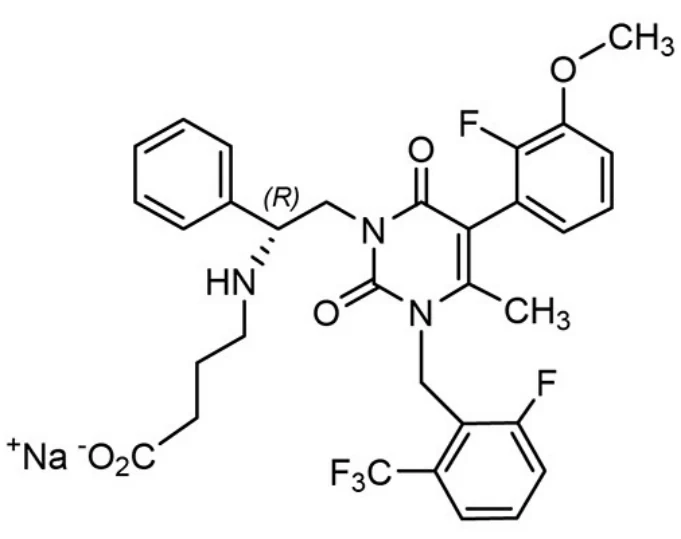
Chemical name: Sodium 4-({(1R)-2-[5-(2-fluoro-3-methoxyphenyl)-3-{[2-fluoro-6-(trifluoromethyl)phenyl]methyl}-4-methyl-2,6-dioxo-3,6-dihydropyrimidin-1(2H)-yl]-1-phenylethyl}amino)butanoate
Molecular formula and molecular mass: C32H29F5N3O5 • Na
653.58 g/mol (salt); 631.60 g/mol (free form)
Structural formula:
Physicochemical properties: White to off white to light yellow powder and is freely soluble in water
14 CLINICAL TRIALS
14.1 Trial Design and Study Demographics
The efficacy and safety of ORILISSA (elagolix) 150 mg once daily and 200 mg twice daily in the management of moderate to severe pain associated with endometriosis was demonstrated in 2 double-blind, randomized, placebo-controlled, multicentre, Phase 3 studies (Study ELARIS EM-I [M12-665] and ELARIS EM-II [M12-671]) and 2 uncontrolled, blinded extension studies (ELARIS EM-III [Study M12-667] and ELARIS EM-IV [M12-821]).
Premenopausal women 18 to 49 years of age with endometriosis were eligible for enrollment if they reported 2 or more days of dysmenorrhea (DYS) and non-menstrual pelvic pain (NMPP) scores ≥ 2, a mean daily NMPP score of at least 0.5, and either a mean daily NMPP score of at least 1.0 or at least 4 days of moderate or severe NMPP in the last 35 days of the Screening period.
Each placebo-controlled study assessed the reduction in endometriosis-associated pain over 6 months of treatment. More than 75% of women who completed Study ELARIS EM-I and ELARIS EM-II enrolled in the extension studies for an additional 6-month treatment period. Patients were followed up for up to 12 months after they completed their treatment.
A total of 872 patients in Study ELARIS EM-I and 817 patients in Study ELARIS EM-II were randomized to placebo or 1 of the 2 elagolix doses. At Baseline, the majority of the patients were in their 30s and were white in both studies. The majority of patients used NSAIDs and/or opioids for pain management at baseline. There were no significant differences between treatment groups among baseline demographic characteristics in each study (Table 7).
Table 7 - Summary of Patient Demographic and Baseline Characteristics from Studies ELARIS EM-I (M12 665) and ELARIS EM-II (M12-671)
| ELARIS EM-I (M12-665) | ELARIS EM-II (M12-671) | |||||||||||||||||||||||
| ORILISSA | ORILISSA | |||||||||||||||||||||||
| Placebo | 150 mg QD | 200 mg BID | Placebo | 150 mg QD | 200 mg BID | |||||||||||||||||||
| Characteristics | n = 374 | n = 249 | n = 248 | n = 360 | n = 226 | n = 229 | ||||||||||||||||||
| Median age (Min – Max), y | 31 (18-48) | 32 (19-48) | 31 (18-47) | 33 (18-49) | 33 (20-49) | 34 (18-47) | ||||||||||||||||||
| Race, % | ||||||||||||||||||||||||
| White | 86.4 | 88.8 | 86.7 | 89.4 | 87.6 | 90.4 | ||||||||||||||||||
| 8.8 | 7.6 | 9.7 | 8.1 | 11.1 | 7.9 | |||||||||||||||||||
| Other | 4.8 | 3.6 | 3.6 | 2.5 | 1.3 | 1.7 | ||||||||||||||||||
| BMI, kg/m2, mean (SD)a | 28 (6) | 28 (6) | 28 (6) | 27 (6) | 27 (7) | 27 (7) | ||||||||||||||||||
| Months since surgical diagnosis, mean (SD) | 45 (30) | 41 (29) | 40 (27) | 46 (39) | 42 (36) | 52 (41) | ||||||||||||||||||
| DYS, mean score (SD)b | 2.2 (0.5) | 2.2 (0.5) | 2.2 (0.5) | 2.2 (0.5) | 2.2 (0.5) | 2.1 (0.5) | ||||||||||||||||||
| ELARIS EM-I (M12-665) | ELARIS EM-II (M12-671) | |||||||||||||||||
| ORILISSA | ORILISSA | |||||||||||||||||
| Placebo | 150 mg QD | 200 mg BID | Placebo | 150 mg QD | 200 mg BID | |||||||||||||
| Characteristics | n = 374 | n = 249 | n = 248 | n = 360 | n = 226 | n = 229 | ||||||||||||
| NMPP, mean score (SD)b | 1.6 (0.5) | 1.6 (0.5) | 1.6 (0.5) | 1.6 (0.5) | 1.7 (0.5) | 1.6 (0.5) | ||||||||||||
| DYSP, mean score (SD)b | 1.5 (0.8) | 1.5 (0.8) | 1.6 (0.9) | 1.5 (0.8) | 1.5 (0.9) | 1.4 (0.9) | ||||||||||||
| NRS, mean score (SD)c | 5.6 (1.6) | 5.7 (1.7) | 5.5 (1.6) | 5.6 (1.8) | 5.7 (1.8) | 5.3 (1.8) | ||||||||||||
| BMD, lumbar spine, mean Z-score | 0.46 | 0.49 | 0.48 | 0.46 | 0.26 | 0.41 | ||||||||||||
| BMD, total hip, mean Z-score | 0.34 | 0.44 | 0.36 | 0.36 | 0.23 | 0.28 | ||||||||||||
| BMD, femoral neck, mean Z-score | 0.23 | 0.37 | 0.26 | 0.37 | 0.25 | 0.33 | ||||||||||||
| Analgesic Use, %d | ||||||||||||||||||
| None | 7.2 | 13.7 | 6.0 | 9.4 | 9.3 | 10.0 | ||||||||||||
| NSAID only | 36.4 | 26.1 | 32.3 | 28.1 | 34.1 | 30.1 | ||||||||||||
| Opioid | 19.0 | 18.1 | 21.4 | 15.6 | 14.6 | 12.2 | ||||||||||||
| NSAID and opioid | 37.4 | 42.2 | 40.3 | 46.9 | 42.0 | 47.6 | ||||||||||||
ANOVA = analysis of variance; BID = twice daily; BMI = body mass index; BMD = bone mineral density; DYS = dysmenorrhea; DYSP = dyspareunia; NMPP = non-menstrual pelvic pain; NRS = numeric rating scale; NSAID = anti-inflammatory drug; QD = once daily; SD = standard deviation.
| ||||||||||||||||||
14.2 Study Results
Reduction in Pain
The co-primary efficacy endpoints were the proportion of responders for dysmenorrhea and pelvic pain not related to menses (also known as non-menstrual pelvic pain [NMPP]) at Month 3 compared to placebo. Women used an electronic diary to report daily pain assessments, protocol-specified rescue analgesic use, and uterine bleeding. The portion of the diary assessing dysmenorrhea, non-menstrual pelvic pain, and dyspareunia make up the Endometriosis Daily Pain Impact Diary. The primary analysis independently evaluated these endpoints using the daily diary that asked patients to assess their pain and its impact on their daily activities, over the previous 24 hours. The Daily Endometriosis Pain Impact Scale, consisted of patient reported pain levels of None, Mild, Moderate, or Severe (correlating with score of 0 to 3, respectively) and included a functional component for each score.
Women were responders if they experienced clinically meaningful reduction in dysmenorrhea and/or NMPP with no increased analgesic use for endometriosis associated pain. These clinically meaningful reductions corresponded to patients’ assessment of pain as “much improved”, or “very much improved”.
A higher proportion of women treated with ORILISSA 150 mg once daily or 200 mg twice daily were responders for dysmenorrhea and NMPP versus placebo in a dose-dependent manner at Month 3. The persistence of efficacy was observed through Month 6 (Table 8).
Dyspareunia was evaluated as a secondary endpoint using the Daily Endometriosis Pain Impact Scale.
A higher proportion of women treated with ORILISSA 200 mg twice daily reported clinically meaningful reduction in dyspareunia versus placebo at Month 3 through Month 6.
Table 8 - Proportion and Number of Respondersa for Dysmenorrhea, Non-Menstrual Pelvic Pain and Dyspareunia at Month 3 and Month 6 in Studies ELARIS EM-I and ELARIS EM-II, using the Daily Endometriosis Pain Impact Scale
| ELARIS EM-I | ELARIS EM-II | ||||||||||||
| ORILISSA | Placebo | ORILISSA | Placebo | ||||||||||
| 150 mg once daily % (n/N) | 200 mg twice daily % (n/N) | % (n/N) | 150 mg once daily % (n/N) | 200 mg twice daily % (n/N) | % (n/N) | ||||||||
| Dysmenorrheaa (Month 3) | 46.4c (115/248) | 75.8c (185/244) | 19.6 (73/373) | 43.4c (96/221) | 72.4c (163/225) | 22.7 (80/353) | |||||||
| Dysmenorrhea (Month 6)b | 42.1c (104/247) | 75.3c (183/243) | 23.1 (86/372) | 46.2c (102/221) | 76.9c (173/225) | 25.4 (90/355) | |||||||
| Non-Menstrual Pelvic Pain (Month 3) | 50.4c (125/248) | 54.5c (133/244) | 36.5 (136/373) | 49.8d (110/221) | 57.8c (130/225) | 36.5 (129/353) | |||||||
| Non-Menstrual Pelvic Pain (Month 6)b | 45.7d (113/247) | 62.1c (151/243) | 34.9 (130/372) | 51.6d (114/221) | 62.2c (140/225) | 40.6 (144/355) | |||||||
| Dyspareuniab (Month 3) | 39.6 (74/187) | 47.1c (81/172) | 31.9 (90/282) | 44.0 (70/159) | 53.7d (87/162) | 39.5 (101/256) | |||||||
| Dyspareuniab (Month 6) | 39.6 (74/187) | 50.3c (81/161) | 33.3 (90/270) | 39.9 (65/163) | 55.8c (92/165) | 39.4 (100/254) | |||||||
| |||||||||||||
| ELARIS EM-I | ELARIS EM-II | ||||||||
| ORILISSA | Placebo | ORILISSA | Placebo | ||||||
| 150 mg once daily % (n/N) | 200 mg twice daily % (n/N) | % (n/N) | 150 mg once daily % (n/N) | 200 mg twice daily % (n/N) | % (n/N) | ||||
| |||||||||
Both ORILISSA treatment groups showed mean decreases from Baseline in dysmenorrhea scores that were statistically significantly greater than placebo beginning at Month 1 and persisted through Month 6.
Women in these studies also provided a daily self-assessment of their endometriosis pain using the Numeric Rating Scale (NRS), on a scale ranging from 0 (no pain) to 10 (worst pain ever). Women taking ORILISSA 150 mg once daily and 200 mg twice daily reported a highly statistically (p < 0.001) significant reduction in NRS scores compared to placebo at Month 3 and Month 6.
In the 2 blinded extension studies ELARIS EM-III and ELARIS EM-IV, where the patients who were originally on ORILISSA in the controlled studies ELARIS EM-I and ELARIS EM-II were maintained on their dose, the durability of improvement in dysmenorrhea, NMPP and dyspareunia was demonstrated for a total of 12 months (see Figure 1, Figure 2 and Figure 3). In study ELARIS EM-IV, efficacy was maintained when ORILISSA was taken with and without food.
Figure 1 - Mean Change from Baseline in Mean Dysmenorrhea Pain Scores in Study ELARIS EM-I and Maintenance of Response in its Extension Study ELARIS EM-III over 12 Months
ELARIS EM-I
ELARIS EM-III
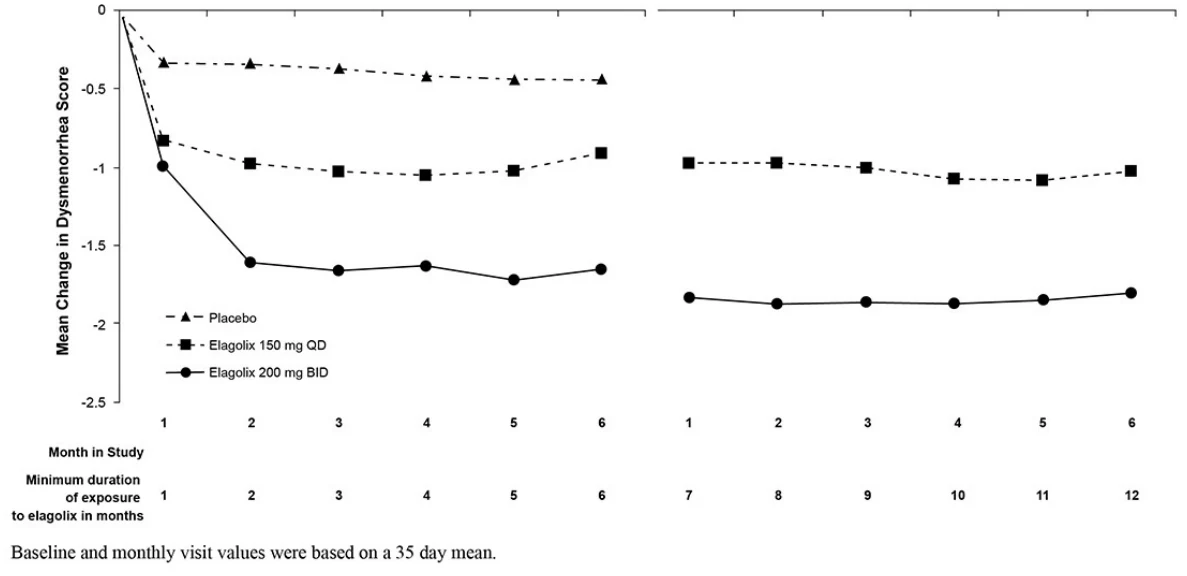
Figure 2 - Mean Change from Baseline in Mean NMPP Scores in Study ELARIS EM-I and Maintenance of Response in its Extension Study ELARIS EM-III over 12 Months
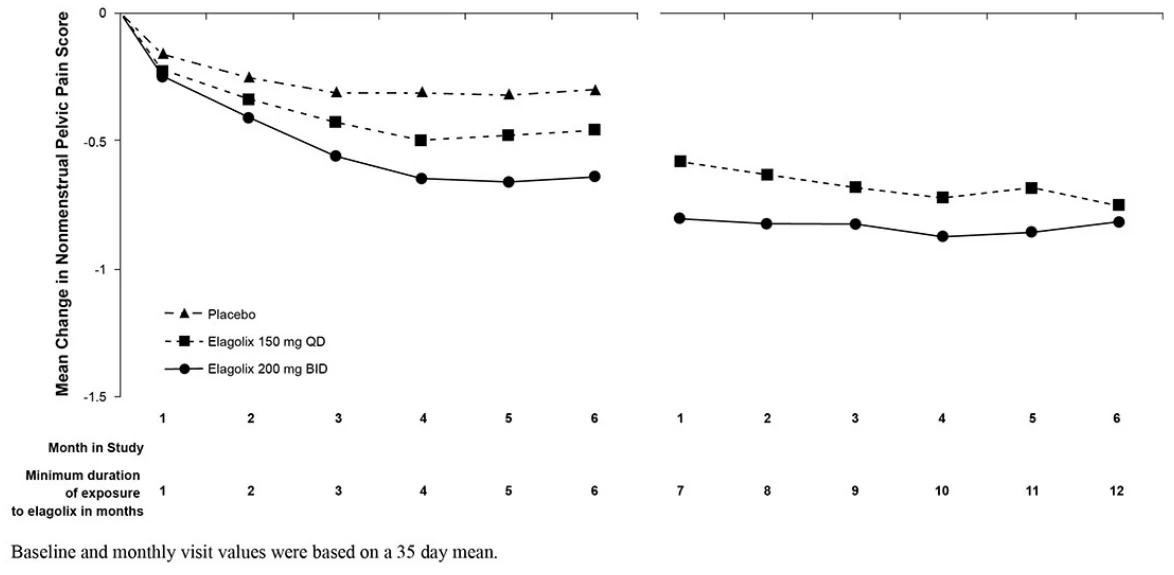
Figure 3 - Mean Change from Baseline in Mean Dyspareunia Pain Scores in Study ELARIS EM-I and Maintenance of Response in its Extension Study ELARIS EM-III over 12 Months
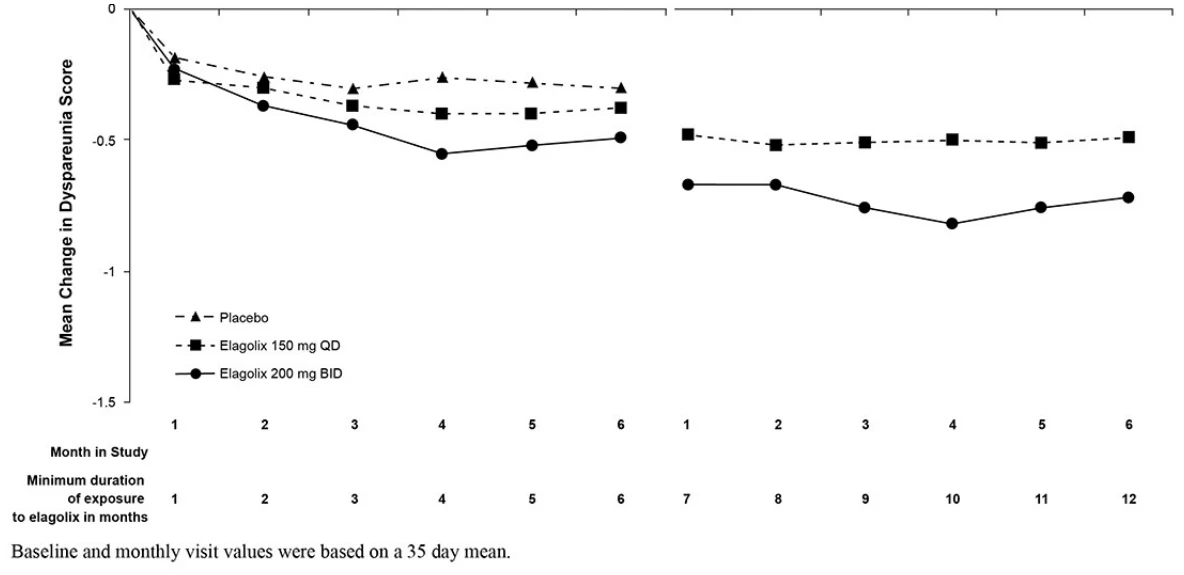
Results on efficacy endpoints from Study ELARIS EM-II were consistent with those observed in Study ELARIS EM-I.
ELARIS EM-I
ELARIS EM-III
ELARIS EM-I
ELARIS EM-III
Reduction in pain medication use
In these studies, women taking ORILISSA 200 mg twice daily reduced the amount of opioid or NSAID rescue medication used to treat their endometriosis-associated pain compared to the amount required at baseline. In addition, there was a significant reduction in the percentage of days per month of the opioid or NSAID rescue medication use for women taking ORILISSA 200 mg twice daily compared to women taking placebo. These findings were all statistically significant at both Month 3 and Month 6 (p < 0.001). These effects were less consistently observed for women taking ORILISSA 150 mg once daily.
Effects on Bleeding Patterns
The effects of ORILISSA on uterine bleeding were evaluated using electronic daily diaries for up to 12 months. ORILISSA was associated with altered menstrual bleeding patterns compared to placebo. ORILISSA led to a dose-dependent reduction in mean number of days of bleeding and spotting, bleeding intensity, and bleeding duration in those patients who reported uterine bleeding.
ORILISSA also demonstrated a dose-dependent increase in the percentage of women with amenorrhea (defined as no bleeding or spotting in a 56-day interval) over the treatment period. The amenorrhea rate ranged from 14 to 32% for 150 mg once daily and 18 to 67% for 200 mg twice daily during the first 6 months of treatment. During the second 6 months of treatment, the amenorrhea rate ranged from 11 to 15% for 150 mg once daily and 46 to 57% for 200 mg twice daily.
Upon stopping ORILISSA therapy, the majority of women reported a menstrual period within 1 month. By Post-treatment Month 2, more than 85% patients had reported at least 1 post-treatment menses in both ORILISSA dose groups.
Quality of Life
Quality of life was assessed with the 30-item Endometriosis Health Profile (EHP-30) conducted at Month 1, 3, and 6 study visits. ORILISSA treatment resulted in a better quality of life than did placebo on the basis of the mean change from baseline to 3 months and 6 months on the EHP-30. The results differed significantly from those with placebo at 3 months and 6 months in all 6 dimensions (pain, control and powerlessness, emotional well-being, social support, self-image, and sexual intercourse) in the 200 mg twice daily dose group in both ELARIS EM-I and ELARIS EM-II. Each dimension was statistically significant (p < 0.001) at Month 3 and Month 6 for 200 mg twice daily.
15 MICROBIOLOGY
No microbiological information is required for this drug product.
16 NON-CLINICAL TOXICOLOGY
General Toxicology
Single-Dose Studies
Rat
Elagolix sodium (doses: 0, 300, 600, 1200, or 2000 mg/kg) was administered as a single oral dose by gavage to male and female rats (3/sex/group). The maximum tolerated dose (MTD) was the highest dose of 2000 mg/kg.
Monkey
Elagolix sodium (doses: 0, 300, 600, 1200, or 2000 mg/kg) was administered as a single oral dose by gavage to male and female cynomolgus monkeys (2/sex/group). The MTD was 300 mg/kg. Changes in clinical chemistry parameters (such as, ALT, AST, total bilirubin, blood urea nitrogen, creatinine, glucose) were observed at higher doses.
Repeat-Dose Studies
Mouse
A 15-week dietary study in mice (10 to 15/sex/group) was conducted using elagolix sodium mixed in diet to achieved doses of 0, 30, 500, or 1700 mg/kg/day. A no-observed adverse-effect-level (NOAEL) of 500 mg/kg/day was based on the combination of a decrease in body weight and observation of clinical pathology (up to 3-fold elevation in ALT) and microscopic changes (centrilobular hepatocellular) at the 1700 mg/kg/day dose.
Rat
Elagolix sodium was given in the diet of SD rats (20/sex/group) for 28-weeks to achieved doses of 0, 600, or 800 mg/kg/day. Elagolix was generally well tolerated.
Findings that were considered off-target effects included increase in liver and thyroid gland weights that was associated with microscopic observation of hypertrophy in these tissues that had previously been observed in several repeat-dose toxicity studies in rats. These changes were considered non-adverse and as a consequence of induction of hepatic metabolizing enzymes and increased metabolism and clearance of thyroid hormones. These findings and the mechanism by which they occurred in rat is not relevant to humans. Moderate focal epithelial degeneration/necrosis, edema, and erosion were observed in the non-glandular stomach at the limiting ridge. While these findings were adverse for rats, the observation was not considered of significance for humans due to anatomical differences in the stomach.
A NOAEL in the 28-week dietary study in rat was not identified due to the finding of gastric irritation that does not translate to human. At the highest dose of 800 mg/kg/day, an AUC of 29.9 mcg·hr/mL provided a safety margin of 8.5-fold for the maximum recommended human dose (MRHD).
Monkey
Elagolix findings in monkey were observed only in the 6-week study and not in the study of longest duration (13 weeks) most likely due to substantial decline in plasma concentrations due to induction of enzymes responsible for elagolix metabolism. In the 6-week study, cynomolgus monkeys (3 to 5/sex/group) were administered elagolix sodium (doses: 0, 75, 150, 300, or 600 mg/kg/day) by oral gavage. Notable findings included atrophy of the female reproductive organs; of uterus at doses ≥ 150 mg/kg/day and of cervix and vagina at all doses. These effects were considered pharmacologically mediated effects and were reversible after a recovery period of 4 weeks. Because a marked body weight loss and reduced food intake were observed at the 600 mg/kg/day dose, the NOAEL was 300 mg/kg/day. The AUC of 24.8 mcg·h/mL at the NOAEL resulted in a safety margin of approximately 7.1-fold with respect to the AUC at the MRHD.
Dog
Elagolix (as powder in capsule) was administered orally at doses of 0, 10, 30, or 150 mg/kg/day to beagle dogs (6/sex/group) for 39 weeks. The NOAEL was 30 mg/kg/day based on clinical chemistry and gallbladder changes (granulomatous inflammation in the lamina propria of the mucosa) observed at the highest dose of 150 mg/kg/day. The AUC of 26 mcg·hr/mL at the NOAEL resulted in a safety margin of approximately 7.4-fold with respect to the AUC at the MRHD.
Carcinogenicity
The 2-year carcinogenicity studies (conducted in mice and rats) revealed no increase in tumors in mouse at any dose, but an increase in thyroid (male and female) and liver (males only) tumors occurred in rat at the high dose (13-fold margin of safety with respect to 200 mg twice daily in women). The rat tumors were identified as being species-specific and of negligible relevance to humans. This conclusion is based on a follow-on investigative study that demonstrated that tumor formation was related to induction of hepatic drug metabolizing enzymes at the high dose and that the specific mechanism of induction is not relevant for humans.
Genotoxicity
Mutagenicity studies have been performed with elagolix using in vitro and in vivo test systems. These studies provided no evidence of a mutagenic or clastogenic potential.
Reproductive and Developmental Toxicology
In rats there was no effect in the fertility study at doses up to 300 mg/kg/day in males and females (11.9- and 4.6-fold the MRHD based on AUC, respectively), however, it must be noted that the lack of effects on reproduction may be due to the low affinity of elagolix for the rat gonadotropin releasing hormone (GnRH) receptors. The affinity of elagolix for the rat GnRH receptor is 650-fold lower than for the human GnRH receptor. In a 6-week monkey repeat-dose study (doses: 0, 75, 150, 300, and 600 mg/kg/day), a reversible atrophy of reproductive organs (cervix, uterus, and vagina) was observed at all doses, which is approximately 1-fold the MRHD based on AUC.
Elagolix was administered by oral gavage to pregnant rats (25 animals) at doses of 0, 300, 600, and 1200 mg/kg/day and to rabbits (20 animals) at doses of 0, 100, 150, and 200 mg/kg/day, during the period of organogenesis. No fetal malformations were present at any dose level tested in either species. Maternal toxicity in rats due to treatment with elagolix included 6 deaths and decreases in body weight gain and food consumption. Increased post-implantation losses and visceral and skeletal variations were present at maternally toxic doses. In rabbits, 3 abortions and a single total litter loss were observed at a maternal toxic dose of 200 mg/kg/day. A single total litter loss at a lower non-maternally toxic dose of 150 mg/kg/day was attributed to the pharmacologic mechanism of elagolix. The exposure of elagolix in the rat embryo-fetal development (EFD) study at the NOAEL of 300 mg/kg/day was 15.8-fold MRHD based on AUC. The affinity of elagolix for the rat GnRH receptor is 650-fold lower than for the human GnRH receptor. The exposure of elagolix in the rabbit EFD study at the NOAEL of 150 mg/kg/day was 6.6-fold MRHD based on AUC. The affinity of elagolix for the rabbit GnRH receptor is 3.8-fold lower than for the human GnRH receptor.
In a pre- and post-natal study in rats, elagolix was given in the diet to achieve doses of 0, 100, and 300 mg/kg/day from gestation Day 6 to lactation Day 20. There was no evidence of maternal toxicity. Pup survival was decreased from birth to post-natal Day 4. Pups had lower birth weights and lower body weight gains were observed throughout the pre-weaning period only at 300 mg/kg/day. Smaller body size and effect on startle response were associated with lower pup weights at 300 mg/kg/day. Post-weaning growth, development and behavioral end-points were unaffected by elagolix treatment.
Maternal plasma concentrations on lactation Day 21 at 100 and 300 mg/kg/day (47.2 and 125 ng/mL) were 0.06- and 0.16-fold the human Cmax at the MRHD.
No measurement of elagolix was conducted in the milk of lactating rats. In the range-finding pre- and post-natal study, pregnant rats were given diet containing elagolix throughout the gestation and lactation periods to achieve a daily elagolix dose of 400 mg/kg. During nursing, the dams and litters were divided into restricted feeding and non-restricted groups to determine whether elagolix was secreted in the mother’s milk. At post-natal Day 10 and 20, elagolix plasma concentrations in pups of the restricted feeding litters were not measurable. In pups of the non-restricted feeding group, elagolix plasma concentrations were measurable and approximately 1% of the mother’s plasma concentrations. Using plasma concentrations in pups as a surrogate of exposure via lactation, elagolix is considered to be minimally secreted in milk.