


Product Monograph - Mylan-Clindamycin
SUMMARY PRODUCT INFORMATION
Route of Administration | Dosage Form / Strength | All Nonmedicinal Ingredients |
| oral | Capsules 150 mg, 300 mg | Maize Starch, Lactose Hydrous 100, Talc and Magnesium Stearate. 150 mg capsule shell: Acid Red 27, FD&C Blue#1, Titanium Dioxide, Gelatin and FD&C Red #3. 300 mg capsule shell: FD&C Blue#1, Titanium Dioxide and Gelatin. Printing Ink: Opacode White S-1-7085 (Pharmaceutical glaze modified, titanium dioxide, isopropyl alcohol, ammonium hydroxide, propylene glycol, n-butyl alcohol, and dimethylpolysiloxane). |
INDICATIONS AND CLINICAL USE
MYLAN-CLINDAMYCIN (clindamycin hydrochloride) is indicated in the treatment of serious infections due to sensitive anaerobic bacteria, such as Bacteroides species, Peptostreptococcus, anaerobic streptococci, Clostridium species and microaerophilic streptococci.
MYLAN-CLINDAMYCIN is also indicated in serious infections due to sensitive gram-positive aerobic organisms (staphylococci, including penicillinase-producing staphylococci, streptococci and pneumococci) when the patient is intolerant of, or the organism is resistant to other appropriate antibiotics.
MYLAN-CLINDAMYCIN is indicated for the treatment of the Pneumocystis jiroveci pneumonia in patients with AIDS. Clindamycin in combination with primaquine may be used in patients who are intolerant to, or fail to respond to conventional therapy.
MYLAN-CLINDAMYCIN is indicated for prophylaxis against alpha-hemolytic (viridans group) streptococci before dental, oral and upper respiratory tract surgery.
- a) The prophylaxis of bacterial endocarditis in patients allergic to penicillin with any of the following conditions: congenital cardiac malformations, rheumatic and other acquired valvular dysfunction, prosthetic heart valves, previous history of bacterial endocarditis, hypertrophic cardiomyopathy, surgically constructed systemic-pulmonary shunts, mitral valve prolapse with valvular regurgitation or mitral valve prolapse without regurgitation but associated with thickening and/or redundancy of the valve leaflets.
- b) Patients taking oral penicillin for prevention or recurrence of rheumatic fever should be given another agent such as clindamycin, for prevention of bacterial endocarditis.
Geriatrics (> 65 years of age):
Clinical studies of clindamycin did not include sufficient numbers of patients age 65 and over to determine whether they respond differently from younger patients.
Pediatrics (for children more or equal to 40 pounds and able to swallow): It is not known if use of clindamycin in pediatric patients is associated with differences in safety or effectiveness compared with adult patients.
To reduce the development of drug-resistant bacteria and maintain the effectiveness of MYLAN-CLINDAMYCIN and other antibacterial drugs, MYLAN-CLINDAMYCIN should be used only to treat or prevent infections that are proven or strongly suspected to be caused by susceptible bacteria. When culture and susceptibility information are available, they should be considered in selecting or modifying antibacterial therapy. In the absence of such data, local epidemiology and susceptibility patterns may contribute to the empiric selection of therapy.
CONTRAINDICATIONS
MYLAN-CLINDAMYCIN (clindamycin hydrochloride) is contraindicated in patients with a known hypersensitivity to clindamycin or lincomycin or to any ingredient in the formulation or component of the container.
Until further clinical experience is obtained Clindamycin is not indicated in the newborn (infant below 30 days of age). For a complete listing, see DOSAGE FORMS, COMPOSITION AND PACKAGING).
WARNINGS AND PRECAUTIONS
General
In patients with G-6-PD deficiency, the combination of clindamycin with primaquine may cause hemolytic reactions. Routine blood examinations should be done during therapy with primaquine to monitor potential hematologic toxicities. Reference should also be made to the primaquine product monograph for other possible risk groups for other hematologic reactions (see ADVERSE REACTIONS).
If patients should develop serious hematologic adverse effects, reducing the dosage regimen of primaquine and/or MYLAN-CLINDAMYCIN capsule should be considered (see DOSAGE and ADMINSTRATION).
MYLAN-CLINDAMYCIN (clindamycin hydrochloride) should be prescribed with caution in atopic individuals.
MYLAN-CLINDAMYCIN does not diffuse adequately into cerebrospinal fluid and thus should not be used in the treatment of meningitis.
The use of antibiotics occasionally results in overgrowth of non-susceptible organisms - particularly yeasts. Should super-infections occur, appropriate measures should be taken as dictated by the clinical situation.
Care should be exercised when treating patients with multiple medications (see DRUG INTERACTIONS).
Gastrointestinal
MYLAN-CLINDAMYCIN should be prescribed with caution in patients with a history of gastrointestinal disease, particularly colitis, inflammatory bowel disease (including regional enteritis and ulcerative colitis), or a history of antibiotic-associated colitis (including pseudomembranous colitis).
Clostridium difficile-associated disease (CDAD)
Clostridium difficile-associated disease (CDAD) has been reported with use of many antibacterial agents, including clindamycin hydrochloride capsules. CDAD may range in severity from mild diarrhea to fatal colitis. It is important to consider this diagnosis in patients who present with diarrhea, or symptoms of colitis, pseudomembranous colitis, toxic megacolon, or perforation of colon subsequent to the administration of any antibacterial agent. CDAD has been reported to occur over 2 months after the administration of antibacterial agents.
Treatment with antibacterial agents may alter the normal flora of the colon and may permit overgrowth of Clostridium difficile. C. difficile produces toxins A and B, which contribute to the development of CDAD. CDAD may cause significant morbidity and mortality. CDAD can be refractory to antimicrobial therapy.
If the diagnosis of CDAD is suspected or confirmed, appropriate therapeutic measures should be initiated. Mild cases of CDAD usually respond to discontinuation of antibacterial agents not directed against Clostridium difficile. In moderate to severe cases, consideration should be given to management with fluids and electrolytes, protein supplementation, and treatment with an antibacterial agent clinically effective against Clostridium difficile. Surgical evaluation should be instituted as clinically indicated; as surgical intervention may be required in certain severe cases (see ADVERSE REACTIONS).
Hepatic/Biliary/Pancreatic
In patients with moderate to severe liver disease, prolongation of the half-life of clindamycin has been found. However, it was postulated from studies that when given every eight hours, accumulation of clindamycin should rarely occur. Therefore, dosage reduction in liver disease is not generally considered necessary. Periodic liver enzyme determinations should be made when treating patients with severe liver disease.
Immune
Serious hypersensitivity reactions, including anaphylactoid reactions, severe skin reactions such as drug reaction with eosinophilia and systemic symptoms (DRESS), and dermatological reactions including Stevens-Johnson syndrome (SJS), toxic epidermal necrolysis (TEN) and acute generalized exanthematous pustulosis (AGEP) have been reported in patients on clindamycin therapy. If a hypersensitivity reaction occurs clindamycin should be discontinued and appropriate therapy should be initiated (see CONTRAINDICATIONS, ADVERSE REACTIONS).
Renal
MYLAN-CLINDAMYCIN dose modification may not be necessary in patients with renal disease. The serum half-life of clindamycin is increased slightly in patients with markedly reduced renal function.
Susceptibility/Resistance
Prescribing MYLAN-CLINDAMYCIN in the absence of a proven or strongly suspected bacterial infection is unlikely to provide benefit to the patient and risks the development of drug-resistant bacteria.
Special Populations
Pregnant Women: There are no adequate and well-controlled studies in pregnant women. Safety for use in pregnancy has not been established.
Clindamycin should not be used in pregnancy unless clearly needed and unless the expected benefits to the mother outweigh any potential risks to the fetus.
Clindamycin crosses the placenta in humans. After multiple doses, amniotic fluid concentrations were approximately 30% of maternal blood concentrations. Clindamycin was widely distributed in fetal tissues with the highest concentration found in liver.
Reproduction studies have been performed in rats and mice using subcutaneous and oral doses of clindamycin ranging from 20 to 600 mg/kg/day and have revealed no evidence of impaired fertility or harm to the fetus due to clindamycin except at doses that caused maternal toxicity. In one mouse strain, cleft palates were observed in treated fetuses; this response was not produced in other mouse strains or in other species, and therefore may be a strain specific effect. Oral and subcutaneous reproductive toxicity studies in rats and rabbits revealed no evidence of impaired fertility or harm to the fetus due to clindamycin, except at doses that caused maternal toxicity. Animal reproduction studies are not always predictive of human response.
Nursing Women:
Clindamycin has been reported to appear in human breast milk in the range of 0.7 to 3.8 mcg/mL at doses of 150 mg orally to 600 mg intravenously. Because of the potential for serious adverse reactions in nursing infants, MYLAN-CLINDAMYCIN should not be taken by nursing mothers.
Geriatrics (> 60 years of age): Experience has demonstrated that antibiotic-associated colitis may occur more frequently and with increased severity among elderly and debilitated patients. These patients should be carefully monitored for the development of diarrhea.
Pediatrics
Pediatric patients should be assessed for their ability to swallow MYLAN-CLINDAMYCIN capsule. If a child is unable to reliably swallow a capsule, MYLAN-CLINDAMYCIN capsule should not be used and a suitable dosage formulation should be used.
Monitoring and Laboratory Tests
Routine blood examinations should be done during concomitant therapy with primaquine to monitor potential hematologic toxicities.
Periodic liver and kidney function tests and blood counts should be performed during prolonged therapy when treating patients with severe liver disease.
As with all antibiotics, perform culture and sensitivity studies in conjunction with drug therapy.
ADVERSE REACTIONS
Clinical Trial Adverse Drug Reactions
Because clinical trials are conducted under very specific conditions the adverse reaction rates observed in the clinical trials may not reflect the rates observed in practice and should not be compared to the rates in the clinical trials of another drug. Adverse drug reaction information from clinical trials is useful for identifying drug-related adverse events and for approximating rates.
Adverse drug reaction frequencies for the three clindamycin formulations (clindamycin capsules, clindamycin granules for oral solution and clindamycin injection) are based on the clinical data sources from the original drug submission and on the total number of patients enrolled in the clinical trials (N=1787).
Adverse drug reactions that were considered causally related to clindamycin and observed in ≥ 1% of patients are presented below in Table 1. They are listed according to MedDRA system organ class.
Table 1. Adverse Drug Reactions Occurring in ≥ 1% of Patients treated with clindamycin within the Original Clinical Trials
Adverse Reaction System Organ Class / Preferred Term | clindamycin Total N=17871 n (%) |
Gastrointestinal disorders Diarrhea Investigations Liver function test abnormal Skin and subcutaneous tissue disorders Rash maculopapular | 26 (1.45) 66 (3.7) 21 (1.18) |
1clindamycin hydrochloride capsules N=851; clindamycin granules for oral solution N=340; clindamycin phosphate injection N=596
Less common adverse drug reactions that were considered causally related to clindamycin and observed in < 1% of patients are listed below
Blood and lymphatic system disorders: Eosinophilia
Gastrointestinal disorders: Nausea, abdominal pain and vomiting.
General disorders and administration site conditions: Local irritation, pain, abscess formation have been seen with IM injection.
Nervous system disorders: Dysgeusia
Skin and subcutaneous tissue disorders: Urticaria, erythema multiforme and pruritus.
Post-Market Adverse Drug Reactions
Additional adverse events which have been reported in temporal association with MYLAN-CLINDAMYCIN formulations (clindamycin capsules, clindamycin granules for oral solution and clindamycin injection) since market introduction are listed below. Because they are reported voluntarily from a population of unknown size, estimates of frequency cannot be established.
Blood and lymphatic system disorders: Agranulocytosis, leucopenia, neutropenia and thrombocytopenia. In clindamycin/primaquine combination studies, serious hematologic toxicities (grade III, grade IV neutropenia or anemia, platelet counts < 50 x 109/L, or methemoglobin levels of 15% or greater) have been observed.
Cardiac disorders: Cardio-respiratory arrest and hypotension have been seen with rapid intravenous administration.
Gastrointestinal disorders: Colitis and pseudomembranous colitis. Clostridium difficile-associated disease (CDAD) has been observed and may manifest as a range of symptoms varying from watery diarrhea to fatal colitis, the onset of which may occur during or after antibacterial treatment (see WARNINGS and PRECAUTIONS). Esophagitis and esophageal ulcer have been reported with the oral formulations.
General disorders and administration site conditions: Injection site irritation and thrombophlebitis. These reactions can be minimized by deep IM injection and avoidance of indwelling intravenous catheters.
Hepatobiliary disorders: Jaundice
Immune system disorders: Generalized mild to moderate morbilliform-like skin rashes, anaphylactic shock, anaphylactoid reactions, anaphylactic reaction, hypersensitivity, and drug reaction with eosinophilia and systemic symptoms (DRESS).
Infections and infestations: Clostridium difficile colitis
Musculoskeletal: Polyarthritis
Renal and urinary disorders: Renal dysfunction as evidenced by azotemia, oliguria and/or proteinuria
Skin and subcutaneous tissue disorders: Toxic epidermal necrolysis (TEN), Stevens-Johnson syndrome (SJS), erythema multiforme, dermatitis exfoliative, dermatitis bullous, dermatitis vesiculobullous, rash morbilliform, vaginal infection, vaginitis, acute generalized exanthematous pustulosis (AGEP), angioedema.
Vascular disorders: Thrombophlebitis has been seen with rapid intravenous administration.
DRUG INTERACTIONS
Overview
Clindamycin is metabolized predominantly by CYP3A4, and to a lesser extent CYP3A5, to the major metabolite clindamycin sulfoxide and minor metabolite, N-desmethylclindamycin. Therefore inhibitors of CYP3A4 and CYP3A5 may reduce clindamycin clearance and inducers of these isoenzymes may increase clindamycin clearance. In the presence of strong CYP3A4 inducers such as rifampin, monitor for loss of effectiveness.
In vitro studies indicate that clindamycin does not inhibit CYP1A2, CYP2C9, CYP2C19, CYP2E1, or CYP2D6 and only moderately inhibits CYP3A4. Therefore, clinically important interactions between clindamycin and coadministered drugs metabolized by these CYP enzymes are unlikely.
Clindamycin has been shown to have neuromuscular blocking properties and potential antagonism with erythromycin and aminoglycosides (see Table 2).
In a clindamycin/primaquine combination study, serious hematologic toxicities have been observed, but the contribution of clindamycin, if any, is unknown (see ADVERSE REACTIONS).
Drug-Drug Interactions
The drugs listed in this table are based on either drug interaction case reports or studies, or potential interactions due to the expected magnitude and seriousness of the interaction.
Table 2 - Established or Potential Drug-Drug Interactions
| Proper name | Ref | Effect | Clinical comment |
Neuromuscular blocking agents Examples include: atracurium, doxacurium, pancuronium, vecuronium | CS | Clindamycin has been shown to have neuromuscular blocking properties that may enhance the action of other neuromuscular blocking agents | Use with caution in patients receiving these agents concurrently. |
| Aminoglycosides | T | Clindamycin is reported to antagonize bactericidal activity of aminoglycosides in vitro. In vivo antagonism has not been deomonstrated. | |
| Erythromycin | T | Antagonism has been demonstrated between clindamycin and | Due to possible clinical significance the two drugs should not be |
| erythromycin in vitro. Clindamycin and erythromycin may compete for the same protein binding site in bacteria. | administered concurrently. | ||
| Inhibitors of CYP3A4, CYP3A5 | T | Clearance of clindamycin may be reduced. | |
| Inducers of CYP3A4, CYP3A5 | T | Clearance of clindamycin may be increased. | Monitor for loss of effectiveness. |
| Strong inducers of CYP3A4 such as rifampin | CS and CT | Rifampin appears to dramatically decrease the serum clindamycin concentration. | Serum clindamycin levels and effectiveness should be carefully monitored. A clinically relevant effect of clindamycin on rifampin concentrations is not expected. |
Legend: CS = Case Study; CT = Clinical Trial; T = Theoretical
Drug-Food Interactions
Interactions with food have not been established.
Drug-Herb Interactions
Efficacy of clindamycin should be closely monitored in patients using concomitant St. John’s wort, a CYP3A4 inducer.
Drug-Laboratory Interactions
Interactions with laboratory tests have not been established.
DOSAGE AND ADMINISTRATION
Dosing Considerations
MYLAN-CLINDAMYCIN dose modification may not be necessary in patients with renal disease. MYLAN-CLINDAMYCIN dosage modification is not necessary in patients with hepatic insufficiency. Dosage adjustments are not necessary in the elderly with normal hepatic function and normal (age-adjusted) renal function.
Recommended Dose and Dosage Adjustment
Adults: 150 mg every 6 hours.
Moderately severe infections: 300 mg every 6 hours.
Severe infections: 450 mg every 6 hours.
Children (for children weighing ≥ 40 pounds (18.2 Kg) and able to swallow capsules): One of the following three dosage ranges should be selected depending on the severity of the infection:
- 1. 8-12 mg/kg/day (4-6 mg/lb/day).
- 2. 13-16 mg/kg/day (6.5-8.0 mg/lb/day).
- 3. 17-25 mg/kg/day (8.5-12.5 mg/lb/day).
| Severity of the Infection | Mild | Moderate | Severe |
| Weight in pounds (weight in Kg) | 4-6 mg/lb/day (8-12 mg/kg/day) | 6.5-8.0 mg/lb/day (13-16 mg/kg/day) | 8.5-12.5 mg/lb/day (17-25 mg/kg/day) |
| 22-40 (10-18.2 Kg) | * | * | * |
| >40-55 (> 18.2-25 Kg) | * | * | 150 mg q. 8h |
| >55-75 (>25-34 Kg) | * | 150 mg q. 8h | 150 mg q. 6h. |
| >75-100 (>34-45.5 Kg) | 150 mg q. 8h | 150 mg q. 6h. | 300 mg q. 8h |
| >100 (>45.5 Kg) use adult dosage | 150 mg q. 6h. | 300 mg q. 6h | 450 mg q. 6h |
*other appropriate dosage form may be used
MYLAN-CLINDAMYCIN capsules are not suitable for children who are unable to swallow them whole. The capsules do not provide exact mg/kg doses therefore it may be necessary to use a suitable dosage formulation in some cases.
Pneumocystis jiroveci pneumonia in patients with AIDS
MYLAN-CLINDAMYCIN (clindamycin hydrochloride) 300-450 mg may be given orally every 6 hours in combination with 15-30 mg of primaquine for 21 days. Alternatively, CLINDAMYCIN INJECTION, USP (clindamycin phosphate) 600-900 mg (IV) may be given every 6 hours or 900 mg (IV) every 8 hours in combination with oral daily dose of 15-30 mg of primaquine. If patients should develop serious hematologic adverse effects, reducing the dosage regimen of primaquine and/or MYLAN-CLINDAMYCIN capsule should be considered.
For prevention of endocarditis
Adults: 300 mg orally 1 hour before procedure; then 150 mg 6 hours after initial dose. Children: Refer to other dosage form, because the capsules may not be suitable. Use of the appropriate dosage form may be necessary.
Note: With β-hemolytic streptococcal infections, treatment should continue for at least 10 days to diminish the likelihood of subsequent rheumatic fever or glomerulonephritis.
Missed Dose
If a dose is missed, it should be taken as soon as remembered unless it is almost time for the next dose. The dose should not be doubled to make up for a missed dose.
Administration
Absorption of MYLAN-CLINDAMYCIN (clindamycin hydrochloride) is not appreciably modified by ingestion of food and the capsules may be taken with meals.
To avoid the possibility of esophageal irritation, MYLAN-CLINDAMYCIN capsules should be taken with a full glass of water.
OVERDOSAGE
Activated charcoal may be administered to aid in the removal of unabsorbed drug. General supportive measures are recommended.
No cases of overdosage have been reported. It would be expected however, that should overdosage occur, gastrointestinal side effects including abdominal pain, nausea, vomiting and diarrhea might be seen. During clinical trials one 3-year old child was given 100 mg/kg of MYLAN-CLINDAMYCIN (clindamycin hydrochloride) for five days and showed mild abdominal pain and diarrhea. One 13-year old patient was given 75 mg/kg for five days with no side effects. In both cases laboratory values remained normal.
Hemodialysis and peritoneal dialysis are not effective means of removing the compound from the blood. No specific antidote is known.
The average biological half-life of clindamycin is 2.4 hours.
For management of a suspected drug overdose, contact your regional Poison Control Centre.
ACTION AND CLINICAL PHARMACOLOGY
Mechanism of Action
Clindamycin exerts its antibacterial effect by causing cessation of protein synthesis and also causing a reduction in the rate of synthesis of nucleic acids.
The mechanism of action of clindamycin in combination with primaquine on Pneumocystis jiroveci is not known.
Pharmacodynamics
(see MICROBIOLOGY)
Pharmacokinetics
Absorption:
Clindamycin is rapidly and almost completely (90%) absorbed from the gastrointestinal tract in man and peak serum levels are seen in about 45 minutes. The average peak serum level following a single 150 mg dose in adults is 2.74 mcg/mL. Therapeutically effective average levels of 0.73 mcg/mL are found at 6 hours after a 150 mg dose.
The absorption of clindamycin is not appreciably affected by food intake. Peak serum levels following a single 250 mg oral dose of clindamycin with the patient in the fasting state were 3.1 mcg/mL at 45 minutes whereas the same dose administered with food gave a peak level of 2.4 mcg/mL. A 250 mg dose administered one hour after food gave a peak level of 2.8 mcg/mL but this peak did not occur until two hours after administration of the medication. A 250 mg dose with the patient in a fasting state and with food administered one hour after the medication resulted in peak levels of 3.1 mcg/mL at 12 hours.
Distribution:
Clindamycin binds primarily to alpha-1-acid glycoprotein. Protein binding is concentration dependent, ranging from 60% to 94% at therapeutic serum concentrations.
In three patients following the administration of 150 mg of clindamycin serum levels reached 2.25 mcg/mL in 2 hours and declined to 1.5 mcg/mL at 4 hours. During this period antibiotic synovial fluid levels were 1 mcg/mL at 2 hours and remained unchanged for the next and last 2 hours of observation.
Clindamycin is widely distributed in body fluids and tissues. Serum levels are rapidly attained as noted above. Tissue levels of clindamycin have been determined in various tissues in adult patients undergoing surgical procedures as noted in Table 3.
Clindamycin does not cross the blood-brain-barrier even in the presence of inflamed meninges.
Table 3
| Specimen | No. of Specimens | Average Serum Level | Average Fluid Level mcg/mL | Tissue Level mcg/gm |
| Pancreatic fluid (C6-264) | 4 | 1.15 | 45.1 | |
| Bile (C6-264) | 19 | 3.35 | 52.45 | |
| Gall Bladder (C6-24) | 16 | 0.81 | 4.33 | |
| Liver (C6-265) | 1 | 42.35 | 3.80 | |
| Kidney (C6-265) | 1 | 1.50 | 9.07 | |
| Bone (C4-390) | 2 | 2.44 | 9.91 |
Metabolism:
In vitro studies in human liver and intestinal microsomes indicated clindamycin is predominantly oxidized by CYP3A4, with minor contribution from CYP3A5, to form clindamycin sulfoxide and a minor metabolite, N-desmethylclindamycin.
Excretion:
The average elimination half-life is 2.4 hours. After oral administration of clindamycin hydrochloride, elimination half-life is increased to approximately 4.0 hours (range 3.4 –5.1 h) in the elderly compared to 3.2 hours (range 2.1 - 4.2 h) in younger adults.
The 48 hour urinary excretion of clindamycin in adults following a single dose of 150 mg represented 10.9% of the administered dose (range 4.8% to 12.8%). These measurements were made by bio-assay and both the percent recovered and the urinary concentration are quite variable. The urinary concentration following a single 50 mg dose of clindamycin in the first 24 hours ranged from 8 to 25 mcg/mL of urine.
Fecal excretion of clindamycin has also been determined. Patients on a three week study when administered 1 gram of clindamycin per day had an average of 283 mcg/gm of stool. Patients on lincomycin 2 grams per day under the same conditions showed 3980 mcg/gm of stool. In single dose studies following administration of 250 mg of clindamycin, only 2.7% of the dose was excreted in the feces in 48-96 hours.
Special Populations and Conditions
Geriatrics: Pharmacokinetic studies with clindamycin have shown no clinically important differences between young and elderly subjects with normal hepatic function and normal (age-adjusted) renal function after oral or intravenous administration.
STORAGE AND STABILITY
Store at controlled room temperature (15-30°C).
SPECIAL HANDLING INSTRUCTIONS
There are no special handling instructions.
DOSAGE FORMS, COMPOSITION AND PACKAGING
MYLAN-CLINDAMYCIN 150 mg: Capsule with purple opaque body and deep scarlet opaque cap. The body has “CLIN 150" and the cap has “CLIN 150" both printed in white.
MYLAN-CLINDAMYCIN 300 mg: Capsule with light blue opaque body and light blue opaque cap. The body has “CLIN 300" and the cap has “CLIN 300" both printed in white.
Each 150 mg capsule contains 150 mg clindamycin (as clindamycin hydrochloride). Each 300 mg capsule contains 300 mg clindamycin (as clindamycin hydrochloride). Non-medicinal ingredients include maize starch, lactose hydrous 100, talc, and magnesium stearate. Composition of the 150 mg capsule: Capsule Purple OP Body, Scarlet OP Cap Size 1 (Body composition: Acid Red 27, FD&C Blue#1, Titanium Dioxide, Gelatin. Cap composition: FD&C Blue #1, FD&C Red #3, Titanium Dioxide, Gelatin). Composition of the 300 mg capsule: Capsule Light Blue OP Body, Light Blue OP Cap Size 0 (Body & Cap Composition: FD&C Blue#1, Titanium Dioxide, Gelatin). Printing Ink is composed of Opacode White S-1-7085 (Pharmaceutical glaze modified, titanium dioxide, isopropyl alcohol, ammonium hydroxide, propylene glycol, n-butyl alcohol, and dimethylpolysiloxane).
Each MYLAN-CLINDAMYCIN capsule contains clindamycin hydrochloride equivalent to 150 mg or 300 mg clindamycin base. Supplied in bottles of 100 capsules.
PART II: SCIENTIFIC INFORMATION
PHARMACEUTICAL INFORMATION
Drug Substance
Proper name: Clindamycin Hydrochloride USP
Chemical name:
- 1. L-threo-α-D-galacto-Octopyranoside, methyl 7-chloro-6,7,8-trideoxy-6-[[(1-methyl 4- propyl-2-pyrrolidinyl)carbonyl]amino]-1-thio-,(2S-trans)monohydrochloride
- 2. Methyl 7-chloro-6,7,8-trideoxy-6-(1-methyl-trans-4-propyl-L-2- pyrrolidinecarboxamino)-1-thio-L-threo-D-galacto-octopyranoside monohydrochloride
Molecular formula: C18H33ClN2O5S. HCl (anhydrous)
Molecular weight: 461.44 g/mol (anhydrous), 479.46 g/mol (monohydrate)
Structural Formula:
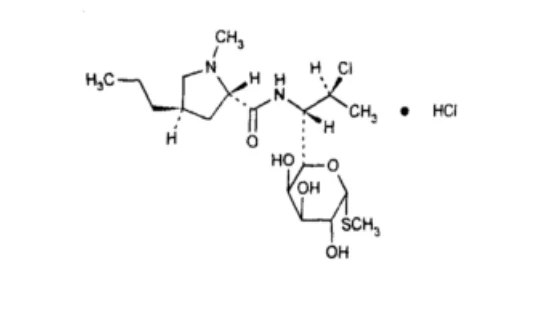
Description:
Clindamycin hydrochloride is the hydrated hydrochloride salt of clindamycin, a substance produced by the chlorination of lincomycin and is a yellow, amorphous solid. It is soluble in water, pyridine, ethanol and DMF (N,N-dimethylformamide).
pH : 4.4
pKa : 7.6
Partition coefficient: 185
Melting Point: 141-143°C
CLINICAL TRIALS
Comparative Bioavailability Studies
A comparative, randomized, single-dose, crossover, bioequivalence study of MYLAN-CLINDAMYCIN 300 mg capsules (Mylan Pharmaceuticals ULC) and Dalacin® 300 mg (clindamycin hydrochloride) capsules (Pfizer Canada Inc.) was performed in normal healthy male subjects (n=24) was performed under fasting conditions. A summary of the results is presented in the following table.
TABLE 4: SUMMARY TABLE OF THE COMPARATIVE BIOAVAILABILITY DATA
Clindamycin (1 x 300 mg capsule) From measured and log transformed data Geometric LS Mean Arithmetic Mean (CV %) | ||||
| PARAMETER | Test1 | Reference2 | % RATIO OF GEOMETRIC LS MEANS | 90 % CONFIDENCE INTERVAL |
AUCT (ng.h/mL) | 11842.0 13050.7 (47.0) | 12000.4 13167.7 (46.5) | 98.68 | 90.34 - 107.79 |
AUC∞ (ng.h/mL) | 12494.2 13937.4 (51.6) | 12589.8 13943.4 (50.3) | 99.24 | 90.85 - 108.41 |
CMAX (ng/mL) | 3215.0 3349.2 (29.4) | 3173.9 3313.9 (29.4) | 101.30 | 94.03 - 109.13 |
| TMAX* (h) | 0.67 (0.33-1.33) | 0.67 (0.33-1.33) | -- | -- |
T½† (h) | 3.32 (35.4) | 3.03 (53.0) | -- | -- |
1 MYLAN-CLINDAMYCIN 300 mg Capsules are manufactured by Mylan Pharmaceuticals ULC. 2 Dalacin® C 300 mg Capsules are manufactured by Pharmacia & Upjohn Inc. * expressed as median (range) only.
† expressed as arithmetic mean (CV%) only.
DETAILED PHARMACOLOGY
Three large multiple dose tolerance studies were conducted in normal volunteers.
One group of 216 volunteers took 1 gram per day or 2 grams per day of clindamycin for 4 weeks. The most frequent side effect noted was diarrhea in some volunteers, particularly at the 2 gram per day dose which is more than 3 times the recommended daily dose. With the exception of one patient who developed infectious hepatitis during the study, laboratory tests showed no significant aberrations considered drug related. Occasional patients developed elevated serum transaminase and serum alkaline phosphatase.
A second group of 150 volunteers was similarly treated and laboratory determinations were essentially normal. Audiograms were performed before, during and up to 90 days after treatment and showed no drug related changes.
A third group of 172 volunteers was evaluated in a comparison of lincomycin 500 mg q.i.d., ampicillin 250 mg q.i.d., clindamycin 150 mg q.i.d., and placebo. Subjects receiving ampicillin showed a peak incidence of moderate to mild diarrhea second only to lincomycin and greater than clindamycin during the first week of therapy, then demonstrated a drop in the incidence to placebo levels or below during the second and third week. Meanwhile, the incidence of diarrhea in both the lincomycin and the clindamycin groups remained slightly above that reported for the placebo group during the second and third weeks of therapy. One patient on lincomycin and one on clindamycin developed a rash. No drug related laboratory test abnormalities were noted.
Five volunteers were evaluated before and after treatment with clindamycin 500 mg q.i.d., for 10 days with reference to true or pseudo-cholinesterase levels. No abnormalities in these levels were noted.
MICROBIOLOGY
In order to assess the significance of in vitro antibiotic activity against bacterial species, it is necessary to compare the organism’s minimum inhibitory concentration (MIC) to the defined susceptibility interpretive breakpoints for the antibiotic. Table 5 identifies the currently-accepted MIC interpretative breakpoints for clindamycin.
The in vitro activity of clindamycin in combination with primaquine has not been determined.
Table 5: Susceptibility Interpretive Criteria for Clindamycin
| Pathogen | Susceptibility Interpretive Criteria | |||||
Minimal Inhibitory Concentrations (MIC in mcg/mL) | Disk Diffusion (Zone Diameters in mm) | |||||
| Staphylococcus spp. | S ≤ 0.5 | I 1–2 | R ≥4 | S ≥21 | I 15–20 | R ≤14 |
Streptococcus pneumoniae and other Streptococcus spp. | ≤0.25 | 0.5 | ≥1 | ≥19 | 16–18 | ≤15 |
| Anaerobic Bacteria | ≤2 | 4 | ≥8 | NA | NA | NA |
N/A = Not Applicable
The reported clindamycin MIC90 value (i.e., the concentration of clindamycin that inhibits 90% of test isolates) was utilized as the most descriptive measure of clindamycin activity. Where the data from more than one study are summarized, the weighted average MIC90 value was calculated to account for differences in the number of strains in each study.
The in vitro susceptibility of clinical isolates to clindamycin is presented in Table 6 (gram-positive aerobic bacteria), Table 7 (gram-negative aerobic bacteria), Table 8 (gram-positive anaerobic bacteria), Table 9 (gram-negative anaerobic bacteria) and Table 10 (Chlamydia spp and Mycoplasma spp).
| Table 6: In vitro activity of clindamycin against gram-positive aerobic bacteria a | |||
| Organism | N b | MIC90 Range c | MIC90 d |
| Bacillus cereus | 46 | 1 | 1 |
| Corynebacterium diphtheriae | 192 | 0.1 | 0.1 |
| Listeria monocytogenes | 218 | 1-8 | 2.22 |
| Staphylococcus aureus (methicillin-susceptible) | 286 | 0.12-2 | 0.50 |
| Staphylococcus saprophyticus | 57 | 0.12-0.25 | 0.16 |
| Streptococcus agalactia | 59 | ≤ 0.06-0.50 | 0.15 |
| Streptococcus bovis | 22 | 0.04 | 0.04 |
| Streptococcus pneumonia (penicillin-susceptible) | 660 | 0.03-0.25 | 0.23 |
| Streptococcus pyogenes | 141 | 0.13-0.25 | 0.08 |
| Streptococcus spp, Group B | 38 | ≤ 0.12-0.25 | 0.15 |
| Streptococcus spp, Group C | 30 | ≤ 0.12-0.50 | 0.22 |
| Streptococcus spp, Group G | 34 | 0.06-0.50 | 0.31 |
Streptococcus spp, viridans Group (penicillin-susceptible) | 67 | ≤ 0.06-1.6 | 0.53 |
a clinical efficacy has not been established for some of these species b N, total number of isolates
c Range of reported MIC90 values
d MIC90 for single study or weighted average MIC90 for two or more studies
| Table 7: In vitro activity of clindamycin against gram-negative aerobic bacteria a | |||
| Organism | N b | MIC90 Range c | MIC90 d |
| Campylobacter jejuni | 449 | 0.39-8 | 1.7 |
| Campylobacter fetus | 41 | 1-1.6 | 1.2 |
| Campylobacter coli | 31 | 0.50 | 0.50 |
| Gardnerella vaginalis | 156 | ≤ 0.06-0.39 | 0.3 |
| Helicobacter pylori | 47 | 2-3.1 | 2.6 |
| Neisseria gonorrhoeae (β-lactamase-negative) | 77 | 4 | 4 |
| Neisseria gonorrhoeae (β -lactamase-positive) | 54 | 2 | 2 |
a clinical efficacy has not been established for some of these species b N, total number of isolates
c Range of reported MIC90 values
d MIC90 for single study or weighted average MIC90 for two or more studies
| Table 8: In vitro activity of clindamycin against gram-positive anaerobic bacteria a | |||
| Organism | N b | MIC90 Range c | MIC90 d |
| Actinomyces israelii | 46 | 0.12 | 0.12 |
| Actinomyces spp | 38 | 0.50-1 | 0.8 |
| Clostridium botulinum | 224 | 4 | 4 |
| Clostridium difficile | 191 | 4 - >256 | 57.7 |
| Clostridium novyi | 18 | 2 | 2 |
| Clostridium perfringens | 386 | 0.25-8 | 3.4 |
| Clostridium ramosum | 98 | 4-12.5 | 8.3 |
| Eubacterium spp | 45 | 0.4-2 | 1.1 |
| Lactobacillus spp | 88 | 0.50-1 | 0.8 |
| Peptostreptococcus anaerobes | 283 | 0.25-0.50 | 0.4 |
| Peptostreptococcus asaccharolyticus | 268 | 0.25-2 | 1.5 |
| Peptostreptococcus magnus | 90 | 2 | 2 |
| Peptostreptococcus prevotii | 87 | 0.12-4 | 2.9 |
| Peptostreptococcus tetradius | 28 | 0.5 | 0.5 |
| Anaerobic gram-positive cocci | 247 | 0.5-1 | 0.9 |
| Propionibacterium acnes | 267 | 0.10-0.25 | 0.2 |
| Propionibacterium spp | 71 | 0.12-0.20 | 0.16 |
a clinical efficacy has not been established for some of these species b N, total number of isolates
c Range of reported MIC90 values
d MIC90 for single study or weighted average MIC90 for two or more studies
| Table 9: In vitro activity of clindamycin against gram-negative anaerobic bacteria a | |||
| Organism | N b | MIC90 Range c | MIC90 d |
| Bacteroides fragilis group | 4,284 | 0.5-8 | 2.45 |
| Bacteroides fragilis | 2,002 | ≤ 0.20-4 | 2.22 |
| Bacteroides melaninogenicus | 224 | ≤ 0.03-0.50 | 0.07 |
| Bacteroides spp | 141 | ≤ 0.06-0.50 | 0.31 |
| Bacteroides bivius | 155 | ≤ 0.03-≤0.05 | ≤ 0.11 |
| Bacteroides disiens | 33 | ≤ 0.03-≤0.06 | ≤ 0.05 |
| Fusobacterium spp | 330 | ≤ 0.10-2 | 0.85 |
| Mobiluncus mulieris | 10 | 0.06 | 0.06 |
| Mobiluncus curtisii | 12 | 0.12 | 0.12 |
| Veillonella spp | 38 | 0.06-0.25 | 0.20 |
a clinical efficacy has not been established for some of these species
b N, total number of isolates
c Range of reported MIC90 values
d MIC90 for single study or weighted average MIC90 for two or more studies
Clindamycin has demonstrated in vitro activity against Chlamydia trachomatis and Mycoplasma spp (see Table 10). For Chlamydia trachomatis, the MIC90 for clindamycin is reached at 2.3 mcg/mL; in vitro synergism with gentamicin has also been demonstrated.
| Table 10: In vitro activity of clindamycin against Chlamydia spp and Mycoplasma spp a | |||
| Organism | N b | MIC90 Range c | MIC90 d |
| Chlamydia trachomatis | 84 | 0.5-5.9 | 2.3 |
| Mycoplasma hominis | 106 | 0.25-0.8 | 0.58 |
| Mycoplasma pneumoniae | 9 | 4 | 4 |
a clinical efficacy has not been established for some of these species
b N, total number of isolates
c Range of reported MIC90 values
d MIC90 for single study or weighted average MIC90 for two or more studies
Development of resistance to clindamycin by staphylococci is slow and stepwise rather than rapid and streptomycin-like. Clindamycin, like lincomycin, participates in the dissociated cross-resistance phenomenon with erythromycin. Clindamycin is not cross-resistant with penicillin, ampicillin, tetracycline or streptomycin. It is, however, cross-resistant with lincomycin.
Resistance to clindamycin may occur by one of several mechanisms. Resistance does not appear to be caused by reduced drug uptake but rather is generally due to alterations in the bacterial target site (50S ribosomal subunit). Resistance can result from either changes in a ribosomal protein at the receptor site or a change in the 23S ribosomal RNA by methylation of adenine. Rare isolates of staphylococci and some veterinary isolates of streptococci may enzymatically inactivate clindamycin by adenylation. Plasmid-mediated transferable resistance to clindamycin (and erythromycin) in B. fragilis was reported in 1979.
Despite the existence of multiple resistance mechanisms, the reported incidence of clindamycin resistance in the B.fragilis group has remained relatively low (averaging 5.3% from 1970-1987 in
over 7,600 isolates). Susceptibility of isolates to clindamycin should be assessed by individual MIC determinations.
TOXICOLOGY
Animal
The results of acute toxicity studies are shown in Table 11:
Table 11
| Animal LD50 Results | ||
| Species | Route | LD50 (mg/kg) |
| Adult mouse | IP | 262 |
| Adult mouse | IV | 143 |
| Adult rat | Oral | 2714 |
| Adult rat | SC | 2618 |
| Newborn rat | SC | 245 |
The following subacute and chronic animal toxicology was performed:
5 Day Oral Tolerance Study in Rats
500 mg/kg was administered to rats with no drug related toxicity noted except that all rats developed diarrhea at this dose level.
5 Day Oral Tolerance Study in the Dog
Doses of 113 mg/kg and 500 mg/kg were administered. The higher dose was vomited 1-2 hours after administration but otherwise no abnormalities of a drug related nature were noted.
6 Month Subacute Oral Toxicity in the Rat
Clindamycin, at doses of 30, 100 and 300 mg/kg, was given to groups of 20 rats daily for 6 months. Data obtained after one month were normal. Similarly, data at the end of 6 months showed no drug related effects. A fourth group of 20 rats received a dose of 600 mg/kg for 3 months and also showed the drug to be well tolerated by male and female rats without any drug related effects.
1 Month Subacute Oral Toxicity in the Dog
Clindamycin, at doses of 30, 100 and 300 mg/kg, was given to 3 groups of 6 dogs with a comparable group of 6 dogs as a control. All dogs were healthy and all dose levels well tolerated.
Fluctuations in the serum glutamic pyruvic transaminase values were seen in the 300 mg/kg group after 2 weeks therapy. Less fluctuation was seen in the SGOT levels and other tests of hepatic function did not reflect the adaptive metabolic change which these elevated transaminase
values are believed to show. Two dogs in each group were sacrificed and no drug related lesions were found upon complete necropsy and microscopic observations on these dogs.
1 Year Chronic Oral Toxicity in the Rat
Doses of 0, 30, 100 and 300 mg/kg were administered daily to rats for one year and 600 mg/kg for 6 months. As expected, mortality did occur due to coincidental disease and the group at 600 mg/kg had a higher mortality rate although no definitive drug related findings were noted.
1 Year Chronic Oral Toxicity in the Dog
Dogs were administered clindamycin at doses of 0, 30, 100 and 300 mg/kg for 1 year. Some dose related elevations of serum glutamic pyruvic transaminase values were seen during the 7th to 9th month of this study, but periodic liver biopsies examined by light and electron microscopy did not disclose any hepatic cell damage. All other data noted no drug related changes.
Teratogenic and Reproductive Studies in the Rat and Rabbit
Teratology evaluation of 20-day rat foetuses was made and no evidence of teratogenic effect was noted. Treated rat dams gave birth to normal litters and no evidence was obtained that clindamycin affected the fecundity of the dam or the development of the offspring. Oral and subcutaneous reproductive toxicity studies in rats and rabbits revealed no evidence of impaired fertility or harm to the fetus due to clindamycin, except at doses that caused maternal toxicity.
In oral embryo fetal development studies in rats and subcutaneous embryo fetal development studies in rats and rabbits, no developmental toxicity was observed except at doses that produced maternal toxicity.
Teratogenic and Reproductive Studies in the Mouse
Clindamycin, in doses of 20, 50 and 200 mg/kg, was administered to pregnant mice from day 6 through day 15 of gestation. At the 200 mg/kg level there was pronounced expected toxicity associated with a 40% mortality. Similarly, at this toxic level there was increased foetal loss. Litter size, litter weight and mean pup weight were significantly reduced. At the 200 mg/kg level there was an increased incidence of major malformations which is thought to be due to malnutrition of the dam as a result of this toxic dose of the drug.
Carcinogenesis
Long term studies in animals have not been performed with clindamycin to evaluate carcinogenic potential.
Mutagenesis
Genotoxicity tests performed included a rat micronucleus test and an Ames Salmonella reversion test. Both tests were negative.
REFERENCES
- 1. Argoudelis AD, Coats JH, Mason DJ, Sebek OK. Microbial transformations of lincomycin, clindamycin and related antibiotics. Antimicrob Agents Chemother 1968.
- 2.
Bartlett JG, Onderdonk AB, Cisneros RL. Clindamycin-associated colitis in hamsters:
protection with vancomycin. Gastroenterology 1977;73:772-6.
- 3. Bartlett JG, Chang T, Onderdonk AB. Comparison of five regimens for treatment of experimental clindamycin-associated colitis. J Infect Dis 1978;138:81-6.
- 4.
Bartlet JG, Chang T, Taylor NS, Onderdonk AB. Colitis induced by Clostridium difficile.
Rev Infect Dis 1979;1:370-8.
- 5. Black JR, Feinberg J, Murphy RL, Fass RJ, Finkelstein D, Akil B, et al. Clindamycin and primaquine therapy for mild-to-moderate episodes of Pneumocystis carinii pneumonia in patients with AIDS: AIDS Clinical Trials Group 044. Clin Inf Dis 1994;18:905-13.
- 6. Brodasky TF et al. The characterization and thin-layer chromatographic quantitation of the human metabolite of 7-deoxy-7 (S) chlorolincomycin (U-21,251F). The Journal of Antibiotics 1968;21(5):327-33.
- 7. Browne RA, Fekety R, Silva J, Boyd DI, Work CO, Abrams GD. The protective effect of vancomycin on clindamycin-induced colitis in hamsters. John Hopkins Med J 1977;141:183-92.
- 8.
Burdon DW, Brown JD, George RH, Arabi Y, Alexander-Williams J, Keighley MRB.
Pseudomembranous colitis caused by Clostridia. N Engl J Med 1978;299:48.
- 9.
Burdon DW, Brown JD, Young DJ, Arabi Y, Shinagawa N, Alexander-Williams J,
Keighley MRB. Antibiotic susceptibility of Clostridium difficile. J Antimicrob Chemother 1979;5:307-10.
- 10.
Fekety R. Prevention and treatment of antibiotic-associated colitis. Microbiology
1979:276-9.
- 11.
Garrison DW, DeHaan RM, Lawson JB. Comparison of in vitro antibacterial activities of
7-chloro-7deoxylincomycin, lincomycin and erythromycin. Antimicrob Agents Chemother 1967: 168-71.
- 12.
George WL, Kirby BD, Sutter VL, Finegold SM. Antimicrobial susceptibility of
Clostridium difficile. Microbiology 1979:267-71.
- 13. Gordon RC, Regamey C, Kirby WMM. Serum protein binding of erythromycin, lincomycin and clindamycin. Journal of Pharmaceutical Sciences 1973;62:1074-1076.
- 14. Hogan LB, Holloway WJ. An evaluation of 7-chlorolincomycin antimicrobial agents and chemotherapy 1968.
- 15. Humphrey CD, Condon CW, Cantey JR, Pittman FE. Partial purification of a toxin found in hamsters with antibiotic-associated colitis: reversible binding of the toxin by cholestyramine. Gastroenterology 1979; 76: 468-76.
- 16.
Katz L, LaMont JT, Trier JS, Sonnenblick EB, Rothman SW, Broitman SA, Rieth S.
Experimental clindamycin-associated colitis in rabbits: evidence for toxin-mediated mucosal damage. Gastroenterology 1978; 74: 246-52.
- 17. Kay R, Dubois RE. Clindamycin/primaquine therapy and secondary prophylaxis against pneumocystis carinii pneumonia in patients with AIDS. South Med J 1990; 3 (4): 403-4.
- 18. Kay MB, White RL, Gatti G, Gambertoglio, JG. Ex vivo protein binding of clindamycin in sera with normal and elevated α1-acid glycoprotein concentrations. Pharmacotherapy 1992;12(1):50-55.
19.. Keighley MRB, Burdon DW, Arabi Y, Alexander-Williams J, Thompson H, Young D,
Johnson M, Bentley S, George RH, Mogg GAG. Randomized controlled trial of vancomycin for pseudomembranous colitis and postoperative diarrhea. Br Med J 1978;2:1667-9.
- 20. LaMont JT, Sonnenblick EB, Rothman S. Role of clostridial toxin in the pathogenesis of clindamycin colitis in rabbits. Gastroenterology 1979;76:356-61.
- 21.
Lattanzi WE, Krosnick MY, Hurwitz S, Goldstein P, Krassner L. The treatment of β-hemolytic streptococcal throat infections with clindamycin. Int Med Digest 1969; 4: 29-
31.
- 22.
Lewis C. Antiplasmodial activity of 7-halogenated lincomycins. J Parasitol 1968;
54:169-70.
- 23. Lewis C. The antiplasmodial activity of halogenated lincomycin analogs in plasmodium berghi infected mice. Antimicrob Agents Chemother 1967:537-42.
- 24. Lewis C. Stern KF, Mason DJ. Antibacterial and pharmacological properties of clinimycin, a new semi-synthetic antibiotic. Antimicrob Agents Chemother 1968
- 25.
Magerlein BJ, Birkenmeyer RO, Kagan F. Chemical modification of lincomycin.
Antimicrob Agents Chemother 1966; 727-36.
- 26. McGehee RJ, Barrett FF, Finland M. Resistance of Staphylococcus Aureus to lincomycin, clinimycin and erythromycin. Antimicrob Agents Chemother 1968: 392-97.
- 27.
Roeser J. Inhibition of resistance factor transfer by clinimycin and its analogues.
Antimicrob Agents Chemother 1968:41-7
- 28. Safrin S, Finkelstein DM, Feinberg J, Frame P, Simpson G, Wu A, et al. Comparison of three regimens for treatment of mild to moderate Pneumocystis carinii pneumonia in patients with AIDS. Ann Intern Med 1996; 124(9): 792-802.
- 29. Santos RJ, Romansky MJ, Evantash HM. 7-chlorolincomycin, laboratory and clinical studies. Antimicrob Agents Chemother 1968
- 30. Tedesco F, Markham R, Gurwith M, Christie D, Bartlett JG. Oral vancomycin for antibiotic-associated pseudomembranous colitis. Lancet 1978;2:226-8.
- 31.
Toma E. Clindamycin/primaquine for treatment of pneumocystis carninii pneumonia in
AIDS. Eur J Clin Microbiol Infect Dis 1991; 10:210-3.
- 32.
Toma E, Fournier S, Dumont M, Bolduc P, Deschamps H. Clindamycin/primaquine versus trimethoprim-sulfamethoxazole as primary therapy for Pneumocystis carinii pneumonia in AIDS: A randomized, double-blind pilot trial. Clin Inf Dis 1993; 17:178-
84.
- 33. Wagner JG, Novak E, Patel NC, Chidester CG, Lummis WL. Absorption, excretion and half-life of clinimycin in normal adult males. Am J Med Sci 1968;1:25-37.
- 34. Wynalda MA, Hutzler MJ, Koets MD, Podoll T, Wienkers LC. In vitro metabolism of clindamycin in human liver and intestinal microsomes. Drug Metabolism and Disposition 2003;31(7):878-887.
- 35. Pfizer Canada Inc. Dalacin* C Product Monograph, May 30, 2017. Control No.202619.