


Product Monograph - Mylan-Efavirenz
SUMMARY PRODUCT INFORMATION
| Route of Administration | Dosage Form / Strength | All Nonmedicinal Ingredients |
| Oral | Tablets / 600 mg | Croscarmellose sodium, hydroxypropyl cellulose, hypromellose, iron oxide red, iron oxide yellow, lactose monohydrate, magnesium stearate, microcrystalline cellulose, polyethylene glycol, sodium lauryl sulphate and titanium dioxide. |
INDICATIONS AND CLINICAL USE
Mylan-Efavirenz (efavirenz) is indicated for the treatment of HIV-1 infection in combination with other antiretroviral agents.
CONTRAINDICATIONS
Mylan-Efavirenz (efavirenz) is contraindicated in patients with clinically significant hypersensitivity to any of its components. For a complete listing, see the DOSAGE FORMS, COMPOSITION AND PACKAGING section of the Product Monograph.
Mylan-Efavirenz must not be administered concurrently with cisapride1, midazolam, triazolam, pimozide or ergot derivatives because competition for CYP3A4 by efavirenz could result in inhibition of metabolism of these drugs and create the potential for serious and/or life-threatening adverse events (e.g., cardiac arrhythmias, prolonged sedation or respiratory depression). (See Table 1).
Coadministration of efavirenz with elbasvir, grazoprevir, or voriconazole is contraindicated, due to the potential for significant decreases in plasma concentrations of elbasvir, grazoprevir, or voriconazole. This effect is due to an induction of CYP3A4 by efavirenz, and may result in loss of therapeutic effect.
Herbal preparations containing St. John’s wort (Hypericum perforatum) must not be used while taking Mylan-Efavirenz due to the risk of decreased plasma concentrations and reduced clinical effects of efavirenz.
1 Cisapride is not marketed in Canada.
Table 1
| Drugs That Are Contraindicated With Mylan-Efavirenz | ||
| Drug Class | Drugs Within Class Contraindicated With Mylan-Efavirenz | Clinical Comment |
| Benzodiazepines | midazolam, triazolam | Potential for serious and/or life-threatening reactions such as prolonged or increased sedation or respiratory depression. |
| GI Motility Agents | cisapride* | Potential for serious and/or life-threatening reactions such as cardiac arrhythmias. |
| Anti-Migraine | ergot derivatives (dihydroergotamine, ergonovine, ergotamine) | Potential for serious and/or life-threatening reactions such as acute ergot toxicity characterized by peripheral vasospasm and ischemia of the extremities and other tissues. |
| Neuroleptic | pimozide | Potential for serious and/or life-threatening reactions such as cardiac arrhythmias. |
Hepatitis C antiviral agents | elbasvir/grazoprevir | May lead to loss of therapeutic effect of elbasvir/grazoprevir. |
| Herbal Products | St. John’s wort (Hypericum perforatum) | May lead to loss of virologic response and possible resistance to Mylan-Efavirenz or to the class of non-nucleoside reverse transcriptase inhibitors (NNRTIs). |
| Antifungal agents | Voriconazole | May lead to loss of therapeutic effect of voriconazole and may increase the risk of efavirenz-associated side effects. |
*not marketed in Canada
WARNINGS AND PRECAUTIONS
General
Coadministration of Mylan-Efavirenz with ATRIPLA, a fixed-dose combination tablet containing efavirenz, emtricitabine and tenofovir disoproxil fumarate, is not recommended.
Effects on Ability to Drive and To Use Machines:
Mylan-Efavirenz may cause dizziness, impaired concentration, and/or drowsiness. Patients should be instructed that, if they experience these symptoms, they should avoid potentially hazardous tasks such as driving or operating machinery (see Neurologic).
Carcinogenesis, Mutagenesis and Impairment of Fertility (see Part II: TOXICOLOGY)
Cardiovascular
QTc prolongation has been observed with the use of efavirenz (see DRUG INTERACTIONS and ACTION AND CLINICAL PHARMACOLOGY). Consider alternatives to Mylan-Efavirenz when coadministered with a drug with a known risk of Torsade de Pointes or when administered to patients at higher risk of Torsade de Pointes.
Endocrine and Metabolism
Serum Lipids and Blood Glucose:
Serum lipid and blood glucose levels may increase during antiretroviral therapy (ART). Disease control and lifestyle changes may also be contributing factors. Consideration should be given to the measurement of serum lipids and blood glucose. Lipid disorders and blood glucose elevations should be managed as clinically appropriate.
Hepatic/Biliary/Pancreatic
Postmarketing reports of hepatic failure have occurred including some cases in patients without pre-existing hepatic disease or other identifiable risk factors (see Monitoring and Laboratory Tests; Liver Enzymes).
In controlled clinical studies the rate of clinical pancreatitis was similar in patients receiving
1/1008 (0.1%) and not receiving efavirenz 2/635 (0.3%).
Asymptomatic increases in serum amylase levels were observed in a significantly higher number of patients treated with efavirenz 600 mg than in control patients (see ADVERSE REACTIONS; Abnormal Hematologic and Clinical Chemistry Findings).
Elevated triglycerides have been reported in patients receiving efavirenz, in some cases to levels which can predispose a patient to pancreatitis. Among patients with elevated triglycerides, there have been no cases of pancreatitis. Because these triglyceride levels were not obtained in a fasting state, the exact clinical relevance of these measurements is not known.
Hypersensitivity Reactions
In clinical trials, hypersensitivity reactions were uncommon (<1%) in patients treated with efavirenz.
Immune
Immune Reconstitution Inflammatory Syndrome has been reported in patients treated with combination antiretroviral therapy, including efavirenz. During the initial phase of treatment, patients responding to antiretroviral therapy may develop an inflammatory response to indolent or residual opportunistic infections (such as Mycobacterium avium infection, cytomegalovirus, Pneumocystis jirovecii pneumonia (PCP), or tuberculosis), which may necessitate further evaluation and treatment.
Autoimmune disorders (such as Graves’ disease, polymyositis and Guillain-Barre syndrome and autoimmune hepatitis) have also been reported to occur in the setting of immune reconstitution; however, the time to onset is more variable, and can occur many months after initiation of treatment.
Neurologic
Nervous System Symptoms:
Fifty-three percent of patients receiving efavirenz in controlled clinical trials reported central nervous system symptoms compared to 25% of patients receiving control regimens. These symptoms included, but were not limited to, dizziness (28.1%), insomnia (16.3%), impaired concentration (8.3%), somnolence (7.0%), abnormal dreams (6.2%), and hallucinations (1.2%). In controlled trials, these symptoms were severe in 2.0% of patients receiving efavirenz 600 mg daily and in 1.3% of patients receiving control regimens. In clinical trials, 2.1% of efavirenz - treated patients discontinued therapy because of nervous system symptoms. These symptoms usually begin during the first or second day of therapy and generally resolve after the first 2-4 weeks. After 4 weeks of therapy the prevalence of nervous system symptoms of at least moderate severity ranged from 5-9% in patients treated with regimens containing efavirenz and from 3-5% in patients treated with a control regimen. Patients should be informed that these common nervous system symptoms are likely to improve with continued therapy. Dosing at bedtime improves tolerability of these symptoms (see ADVERSE REACTIONS and DOSAGE AND ADMINISTRATION).
Analysis of long-term data from Study AI266-006 (median follow-up 180 weeks, 102 weeks, and 76 weeks for patients treated with efavirenz + zidovudine + lamivudine, efavirenz + indinavir, and indinavir + zidovudine + lamivudine, respectively) showed that, beyond 24 weeks of therapy, the incidences of new-onset nervous system symptoms among efavirenz-treated patients were generally similar to those in the indinavir-containing control arm.
Patients receiving Mylan-Efavirenz should be alerted to the potential for additive central nervous system effects when Mylan-Efavirenz is used concomitantly with alcohol or psychoactive drugs.
Seizures:
Caution should be taken in any patient with a history of seizures. Convulsions have been observed infrequently in patients receiving efavirenz, generally in the presence of known medical history of seizures. Overall, the rate of seizure in controlled clinical trials has been 0.89% in efavirenz treated patients and 0.63% in the control patients. Patients who are receiving concomitant anticonvulsant medications primarily metabolized by the liver such as phenytoin, carbamazepine, and phenobarbital, may require periodic monitoring of plasma levels (see DRUG INTERACTIONS).
Psychiatric:
Serious psychiatric adverse experiences have been reported in patients treated with efavirenz. In controlled trials of 1008 patients treated with regimens containing efavirenz for an average of 2.1 years and 635 patients treated with control regimens for an average of 1.5 years, the frequency of specific serious psychiatric events among patients who received efavirenz or control regimens respectively, were: severe depression (2.4%, 0.9%), suicidal ideation (0.7%, 0.3%), non-fatal suicide attempts (0.5%, 0%), aggressive behavior (0.4%, 0.5%), paranoid reactions (0.4%, 0.3%), and manic reactions (0.2%, 0.3%). When psychiatric symptoms similar to those noted above were combined and evaluated as a group in a multifactorial analysis of data from Study AI266-006, treatment with efavirenz was associated with an increase in the occurrence of these selected psychiatric symptoms. Other factors associated with an increase in the occurrence of these psychiatric symptoms were history of injection drug use, psychiatric history, and receipt of psychiatric medication at study entry; similar associations were observed in both the efavirenz and control treatment groups. In Study AI266-006, onset of new serious psychiatric symptoms occurred throughout the study for both efavirenz-treated and control-treated patients. One percent of efavirenz-treated patients discontinued or interrupted treatment because of one or more of these selected psychiatric symptoms. There have also been occasional post marketing reports of death by suicide, delusions, psychosis – like behavior and catatonia, although a causal relationship to the use of efavirenz cannot be determined from these reports. Patients with serious psychiatric adverse experiences should seek immediate medical evaluation to assess the probability that the symptoms may be related to the use of Mylan-Efavirenz, and if so, to determine whether the risks of continued therapy outweigh the benefits (see ADVERSE REACTIONS).
Sensitivity/Resistance:
Mylan-Efavirenz (efavirenz) must not be used as a single agent to treat HIV or added on as a sole agent to a failing regimen. As with all other non-nucleoside reverse transcriptase inhibitors, resistant virus emerges rapidly when efavirenz is administered as monotherapy. The choice of new antiretroviral agents to be used in combination with efavirenz should take into consideration the potential for viral cross-resistance. (Please refer to the most recent antiretroviral guidelines for further information).
Resistance:
Clinical isolates with reduced susceptibility in cell culture to efavirenz have been obtained. The most frequently observed amino acid substitution in clinical studies with efavirenz is K103N (54%). One or more RT substitutions at amino acid positions 98, 100, 101, 103, 106, 108, 188, 190, 225, 227, and 230 were observed in patients failing treatment with efavirenz in combination with other antiretrovirals. Other resistance mutations observed to emerge commonly included L100I (7%), K101E/Q/R (14%), V108I (11%), G190S/T/A (7%), P225H (18%), and M230I/L (11%) (see VIROLOGY).
Cross-Resistance:
Cross-resistance has been recognized among NNRTIs. Clinical isolates previously characterized as efavirenz-resistant were also phenotypically resistant in cell culture to delavirdine and nevirapine compared to baseline. Delavirdine- and/or nevirapine-resistant clinical viral isolates with NNRTI resistance-associated substitutions (A98G, L100I, K101E/P, K103N/S, V106A, Y181X, Y188X, G190X, P225H, F227L, or M230L) showed reduced susceptibility to efavirenz in cell culture (see VIROLOGY).
Skin:
Efavirenz is not recommended for patients who have had a life-threatening cutaneous reaction (eg, Stevens-Johnson syndrome). Mylan-Efavirenz should be discontinued in patients developing severe rash associated with blistering, desquamation, mucosal involvement or fever.
In controlled clinical trials, 26% (266/1008) of patients treated with 600 mg efavirenz experienced new onset skin rash compared with 17% (111/635) of patients treated in control groups. Rash associated with blistering, moist desquamation or ulceration occurred in 0.9% (9/1008) of patients treated with efavirenz. The median time to onset of rash in adults was 11 days and the median duration, 16 days. The discontinuation rate for rash in clinical trials was 6.4% (17/266) among patients with rash and 1.7% (17/1008) overall.
In clinical trials, grade 4 rash (including Stevens-Johnson syndrome, erythema multiforme, toxic epidermal necrolysis and exfoliative dermatitis) was uncommon (<1%) in patients treated with efavirenz.
Rash was reported in 26 of 57 pediatric patients (46%) treated with efavirenz capsules. One pediatric patient experienced Grade 3 rash (confluent rash with fever), and two patients had Grade 4 rash (erythema multiforme). The median time to onset of rash in children was eight days. Prophylaxis with appropriate antihistamines prior to initiating therapy with Mylan-Efavirenz in children may be considered (see ADVERSE REACTIONS).
Special Populations
Pregnant Women:
Efavirenz may cause fetal harm when administered during the first trimester to a pregnant woman. Pregnancy should be avoided in women receiving Mylan-Efavirenz and for 12 weeks after discontinuation. Barrier contraception must always be used in combination with other methods of contraception (e.g., oral or other hormonal contraceptives) (see DRUG INTERACTIONS and TOXICOLOGY). Because of the long half-life of efavirenz, use of adequate contraceptive measures for 12 weeks after discontinuation of Mylan-Efavirenz is recommended. Women of childbearing potential should undergo pregnancy testing prior to initiation of Mylan-Efavirenz.
There are no adequate and well-controlled studies in pregnant women. Mylan-Efavirenz should be used during pregnancy only if the potential benefit justifies the potential risk to the fetus, such as in pregnant women without other therapeutic options.
Antiretroviral Pregnancy Registry
To monitor fetal outcomes of pregnant women exposed to efavirenz, an Antiretroviral Pregnancy Registry has been established. Physicians are encouraged to register patients, http://www.apregistry.com
Telephone: (800) 258-4263
Fax: (800) 800-1052
As of July 2013, the Antiretroviral Pregnancy Registry has received prospective reports of 1067 pregnancies exposed to efavirenz-containing regimens, 904 of which were first-trimester exposures. Birth defects occurred in 18 of 766 live births (first-trimester exposure) and 3 of 160 live births (second-/third-trimester exposure). One of these prospectively reported defects with first-trimester exposure was a neural tube defect. A single case of anophthalmia with first trimester exposure to efavirenz has also been prospectively reported; however, this case included severe oblique facial clefts and amniotic banding, a known association with anophthalmia.
There have been seven reports during post-marketing use of findings consistent with neural tube defects, including meningomyelocele, all in mothers exposed to efavirenz containing regimens (excluding any efavirenz-containing fixed-dose combination tablets) in the first trimester. Although a causal relationship of these events to the use of efavirenz cannot be established, similar defects have been observed in nonclinical studies of efavirenz (see TOXICOLOGY, Reproduction and Teratology).
Nursing Women:
It is recommended that women living with HIV do not breast-feed their infants in order to avoid transmission of HIV. Efavirenz has been shown to be excreted in human milk. There is insufficient information on the effects of efavirenz in newborns/infants. Risk to the infant cannot be excluded. Breast-feeding should be discontinued during treatment with Mylan-Efavirenz. .
Pediatrics:
ACTG 382 is an ongoing open-label uncontrolled 48-week study in 57 NRTI-experienced pediatric patients to characterize the safety, pharmacokinetics, and antiviral activity of efavirenz in combination with nelfinavir (20-30 mg/kg TID) and NRTIs. Mean age was 8 years (range 3-16). Efavirenz has not been studied in pediatric patients below 3 years of age or who weigh less than 13 kg. At 48 weeks, the type and frequency of adverse experiences was generally similar to that of adult patients with the exception of a higher incidence of rash which was reported in 46% (26/57) of pediatric patients compared to 26% of adults, and a higher frequency of Grade 3 or 4 rash reported in 5% (3/57) of pediatric patients compared to 0.9% of adults (see ADVERSE REACTIONS).
The starting dose of efavirenz was 600 mg daily adjusted to body size, based on weight, targeting AUC levels in the range of 190-380 μM•h. The pharmacokinetics of efavirenz in pediatric patients were similar to adults. In 48 pediatric patients receiving the equivalent of a 600 mg dose of efavirenz, steady-state Cmax was 14.2 ± 5.8 μM (mean ± SD), steady-state Cmin was 5.6 ± 4.1 μM, and AUC was 218 ± 104 μM•h (see also DETAILED PHARMACOLOGY).
Geriatrics:
Clinical studies of efavirenz did not include sufficient numbers of subjects aged 65 and over to determine whether they respond differently from younger subjects. In general, dose selection for an elderly patient should be cautious, reflecting the greater frequency of decreased hepatic, renal, or cardiac function and of concomitant disease or other therapy.
Hepatic Impairment:
The pharmacokinetics of efavirenz have not been adequately studied in patients with hepatic impairment and its use is not recommended in patients with moderate or severe hepatic impairment (Child-Pugh Class B or C) because of insufficient data. Because of the extensive cytochrome P450-mediated metabolism of efavirenz and limited clinical experience in patients with mild hepatic impairment, caution should be exercised in administering Mylan-Efavirenz to these patients (see Monitoring and Laboratory Tests; Liver Enzymes, ADVERSE REACTIONS; Abnormal Hematologic and Clinical Chemistry Findings, DOSAGE AND ADMINISTRATION and ACTION AND CLINICAL PHARMACOLOGY; Pharmacokinetics; Special Populations).
Renal Impairment:
The pharmacokinetics of efavirenz have not been studied in patients with renal insufficiency. However, less than 1% of efavirenz is excreted unchanged in the urine; consequently, the impact of renal impairment on efavirenz elimination should be minimal. There is no experience in patients with severe renal failure and close safety monitoring is recommended in this population (see DOSAGE AND ADMINISTRATION).
Monitoring and Laboratory Tests
Lipids:
Monitoring of cholesterol and triglycerides should be considered in patients treated with efavirenz (see ADVERSE REACTIONS; Abnormal Hematologic and Clinical Chemistry Findings).
Liver Enzymes:
In patients with underlying liver disease including Hepatitis B or C infection and in patients treated with other medications associated with liver toxicity, monitoring of liver enzymes is recommended. Postmarketing reports of hepatic failure have occurred including some cases in patients with no pre-existing hepatic disease or other identifiable risk factors (see Post-Market Adverse Drug Reactions). Liver enzyme monitoring should also be considered for patients without pre-existing hepatic dysfunction or other risk factors. In patients with persistent elevations of serum transaminases to greater than five times the upper limit of the normal range, the benefit of continued therapy with Mylan-Efavirenz needs to be weighed against the potential risks of significant liver toxicity (see ADVERSE REACTIONS; Abnormal Hematologic and Clinical Chemistry Findings).
ADVERSE REACTIONS
Adverse Drug Reaction Overview
Efavirenz has been studied in 9200 patients. The most significant adverse events observed in patients treated with efavirenz are nervous system symptoms, psychiatric symptoms, and rash.
The long-term safety profile of efavirenz-containing regimens was evaluated in a controlled trial, in which patients received efavirenz + zidovudine + lamivudine (n = 412, median duration 180 weeks), efavirenz + indinavir (n = 415, median duration 102 weeks), or indinavir + zidovudine + lamivudine (n = 401, median duration 76 weeks). Long-term use of efavirenz in this study was not associated with any new safety concerns.
Clinical Trial Adverse Drug Reactions
Because clinical trials are conducted under very specific conditions the adverse drug reaction rates observed in the clinical trials may not reflect the rates observed in practice and should not be compared to the rates in the clinical trials of another drug. Adverse drug reaction information from clinical trials is useful for identifying drug-related adverse events and for approximating rates.
Nervous System Symptoms
Fifty-three percent of patients receiving efavirenz reported central nervous system symptoms (see WARNINGS AND PRECAUTIONS; Neurologic). Table 2 lists the frequency of the symptoms of different degrees of severity, and gives the discontinuation rates in clinical trials for one or more of the following nervous system symptoms: dizziness, insomnia, impaired concentration, somnolence, abnormal dreaming, euphoria, confusion, agitation, amnesia, hallucinations, stupor, abnormal thinking, and depersonalization. The frequencies of specific central and peripheral nervous system symptoms are provided in Table 2.
Table 2 Percent of Patients with One or More Selected Nervous System Symptoms1,2
| Percent of Patients with: | Efavirenz 600 mg daily (N=1008) | Control Groups (N= 635) |
| % | % | |
| Mild Symptoms3 | 33.3 | 15.6 |
| Moderate Symptoms4 | 17.4 | 7.7 |
| Severe Symptoms5 | 2 | 1.3 |
| Symptoms of Any Severity | 52.7 | 24.6 |
| Treatment discontinuation as a result of symptoms | 2.1 | 1.1 |
1 Includes events reported regardless of causality.
2 Data from Studies 006, 020 and two Phase II studies.
3 "Mild" = Symptoms which do not interfere with patient's daily activities.
4 "Moderate" = Symptoms which may interfere with daily activities.
5 "Severe" = Symptoms which interrupt patient's usual daily activities.
Analysis of long-term data (median treatment duration 180 weeks, 102 weeks, and 76 weeks for patients treated with efavirenz + zidovudine + lamivudine, efavirenz + indinavir, and indinavir + zidovudine + lamivudine, respectively) showed that, beyond 24 weeks of therapy, the incidences of new-onset nervous system symptoms among efavirenz-treated patients were generally similar to those in the control arm.
Psychiatric Symptoms
Serious psychiatric adverse experiences have been reported in patients treated with efavirenz. In controlled trials the frequency of specific serious psychiatric symptoms among patients who received efavirenz or control regimens, respectively, were: severe depression (2.4%, 0.9%), suicidal ideation (0.7%, 0.3%), non-fatal suicide attempts (0.5%, 0%), aggressive behavior (0.4%, 0.5%), paranoid reactions (0.4%, 0.3%) and manic reactions (0.2%, 0.3%) (see WARNINGS AND PRECAUTIONS; Psychiatric). Additional psychiatric symptoms observed at a frequency of >2% among patients treated with efavirenz or control regimens respectively, in controlled clinical trials were depression (19%, 16%), anxiety (13%, 9%) and nervousness (7%, 2%).
Skin Rash
Rashes are usually mild-to-moderate maculopapular skin eruptions that occur within the first two weeks of initiating therapy with efavirenz. In most patients rash resolves with continuing efavirenz therapy within one month. Mylan-Efavirenz can be reinitiated in patients interrupting therapy because of Grades 1 and 2 rash. Mylan-Efavirenz should be discontinued in patients developing severe rash associated with blistering, desquamation, mucosal involvement or fever. The frequency of rash by NCI grade and the discontinuation rates as a result of rash are provided in Table 3.
Table 3
Percent of Patients with Treatment-Emergent Rash1,2
| Percent of Patients with: | Description of Rash Grade3 | Efavirenz 600 mg once daily Adults (N= 1008) % | Efavirenz Pediatric Patients (N=57) % | Control Groups Adults (N= 635) % |
| Grade 1 Rash | Erythema, pruritus | 10.7 | 8.8 | 9.8 |
| Grade 2 Rash | Diffuse maculopapular rash, dry desquamation | 14.7 | 31.6 | 7.4 |
| Grade 3 Rash | Vesiculation, moist desquamation, ulceration | 0.8 | 1.8 | 0.3 |
| Grade 4 Rash | Erythema multiforme, Stevens- Johnson Syndrome, toxic epidermal necrolysis, necrosis requiring surgery, exfoliative dermatitis | 0.1 | 3.5 | 0 |
| Rash of Any Grade | — | 26.3 | 45.6 | 17.5 |
| Treatment discontinuation as a result of rash | — | 1.7 | 8.8 | 0.3 |
1 Includes events reported regardless of causality.
2 Data from Studies 006, 020, and two Phase II studies.
3 NCI (National Cancer Institute) Grading System.
As seen in Table 3, rash is more common in children and more often of higher grade (i.e., more severe) (see WARNINGS AND PRECAUTIONS; Skin).
Experience with efavirenz in patients who discontinued other antiretroviral agents of the NNRTI class is limited. Nineteen patients who discontinued nevirapine because of rash have been treated with efavirenz. Nine of these patients developed mild-to-moderate rash while receiving therapy with efavirenz, and two of these patients discontinued because of rash.
Selected clinical adverse experiences of moderate or severe intensity observed in ≥2% of efavirenz-treated patients in three controlled clinical trials are presented in Table 4.
Table 4 Selected Treatment-Emergent1 Adverse Events of Moderate or Severe Intensity Reported in ≥2% of Efavirenz-Treated Patients in Studies DMP 266-006, ACTG 364 and DMP 266-020
Adverse Events
| Study DMP 266-006 3TC, NNRTI and Protease Inhibitor- Naive Patients | Study ACTG 364 NRTI-experienced NNRTI and Protease Inhibitor-Naive Patients | Study DMP 266-020 NRTI-experienced NNRTI and Protease Inhibitor-Naive Patients | |||||||||||||||||||||
| Efaviren z2 + ZDV/3T C (N = 412) 180 weeks3 | Efavirenz 2 + Indinavir (N =415) 102 weeks3 | Indinav ir + ZDV/3 TC (N = 401) 76 weeks3 | Efavirenz2 + Nelfinavir + NRTIs (N = 64) | Efavirenz2 + NRTIs (N = 65) | Nelfinavir + NRTIs (N = 66) | Efavirenz2 + Indinavir + NRTIs (N = 154) | Indinavir + NRTIs (N = 168) | ||||||||||||||||
| % | % | % | % | % | % | % | % | ||||||||||||||||
| Body as a Whole | |||||||||||||||||||||||
| Fatigue | 8 | 5 | 9 | 0 | 2 | 3 | 5 | 1 | |||||||||||||||
| Pain | 1 | 2 | 8 | 13 | 6 | 17 | 4 | 3 | |||||||||||||||
| Central and Peripheral Nervous System | |||||||||||||||||||||||
| Dizziness | 9 | 9 | 2 | 2 | 6 | 6 | 7 | 1 | |||||||||||||||
| Headache | 8 | 5 | 3 | 5 | 2 | 3 | 5 | 4 | |||||||||||||||
| Gastrointestinal | |||||||||||||||||||||||
| Nausea | 10 | 6 | 24 | 3 | 2 | 2 | 10 | 10 | |||||||||||||||
| Vomiting | 6 | 3 | 14 | - | - | - | 6 | 5 | |||||||||||||||
| Diarrhea | 3 | 5 | 6 | 14 | 3 | 9 | 11 | 3 | |||||||||||||||
| Dyspepsia | 4 | 4 | 6 | 0 | 0 | 2 | 3 | 1 | |||||||||||||||
| Abdominal Pain | 2 | 2 | 5 | 3 | 3 | 3 | 3 | 1 | |||||||||||||||
| Psychiatric | |||||||||||||||||||||||
| Concentration Impaired | 5 | 3 | <1 | 0 | 0 | 0 | 3 | 1 | |||||||||||||||
| Insomnia | 7 | 7 | 2 | 0 | 0 | 2 | 3 | 1 | |||||||||||||||
| Anxiety | 2 | 4 | <1 | - | - | - | 2 | 1 | |||||||||||||||
| Abnormal Dreams | 3 | 1 | 0 | - | - | - | 2 | 1 | |||||||||||||||
| Somnolence | 2 | 2 | <1 | 0 | 0 | 0 | 2 | 2 | |||||||||||||||
| Depression | 5 | 4 | <1 | 3 | 0 | 5 | 2 | 0 | |||||||||||||||
| Anorexia | 1 | <1 | <1 | 0 | 2 | 2 | 5 | 1 | |||||||||||||||
| Nervousness | 2 | 2 | 0 | 2 | 0 | 2 | 1 | 0 | |||||||||||||||
| Skin & Appendages | |||||||||||||||||||||||
| Rash | 11 | 16 | 5 | 9 | 5 | 9 | 10 | 6 | |||||||||||||||
| Pruritus | <1 | 1 | 1 | 9 | 5 | 9 | 2 | 1 | |||||||||||||||
1 Includes those adverse events at least possibly related to study drug or of unknown relationship for Studies 006 and 020. Includes all adverse events regardless of relationship to study drug for Study ACTG 364.
2 Efavirenz provided as 600 mg once daily.
3 Median duration of treatment
- Not Specified
ZDV = zidovudine, 3TC = lamivudine
Lipodystrophy (any severity, regardless of relationship to study regimen) was reported in 3%, 4%, and 5% of patients treated with efavirenz + zidovudine + lamivudine, efavirenz + indinavir, and indinavir + zidovudine + lamivudine, respectively. The frequencies of other adverse event terms that may be associated with lipodystrophy (abdomen enlarged, breast enlargement, cachexia, gynecomastia, lipidosis, lipoma, and obesity) ranged from <1% to 3% and were similar among the treatment groups.
Clinical adverse experiences observed in ≥ 10% of 57 pediatric patients aged 3 to 16 years who received efavirenz capsules, nelfinavir, and one or more NRTIs were: rash (46%), diarrhea/loose stools (39%), fever (21%), cough (16%), dizziness/lightheaded/fainting (16%), ache/pain/discomfort (14%), nausea/vomiting (12%), and headache (11%). The incidence of nervous system symptoms was 18% (10/57). One patient experienced Grade 3 rash, two patients had Grade 4 rash, and five patients (9%) discontinued because of rash (see WARNINGS AND PRECAUTIONS; Special Populations, Pediatrics).
Adverse clinical experiences of moderate to severe intensity observed in less than 2% of patients receiving efavirenz in all Phase II/III studies, including the North American expanded access program as well as post-marketing spontaneous reports, and considered at least possibly related or of unknown relationship to treatment are listed below by body system:
Body as a Whole: alcohol intolerance, allergic reaction, asthenia, fever, hot flushes, influenza-like symptoms, malaise, pain, peripheral edema, syncope, dysregulated body temperature, flank pain, hypersensitivity reaction. Redistribution/accumulation of body fat (see WARNINGS AND PRECAUTIONS, Endocrine and Metabolism).
Cardiovascular: arrhythmia, flushing, palpitations, tachycardia, thrombophlebitis, hypertension, congestive heart failure, chest pain
Central and Peripheral Nervous System: ataxia, confusion, convulsions, impaired coordination, migraine headaches, neuralgia, paresthesia, hypoesthesia, peripheral neuropathy, speech disorder, stupor, tremor, neuromuscular paresis, paranoid reaction
Gastrointestinal: dry mouth, pancreatitis, constipation, malabsorption
Liver and Biliary System: hepatic enzymes increased (including ALT, AST and GGT), hepatitis, jaundice, hepatomegaly (see Post-Market Adverse Drug Reactions)
Metabolic and Nutritional: hypercholesterolemia, hypertriglyceridemia
Miscellaneous: thrombocytopenia, proteinuria, anemia, pancytopenia, increased sweating
Musculoskeletal: arthralgia, myalgia, myopathy, involuntary muscle contraction, muscle weakness, polyarthritis
Psychiatric: aggressive reactions, abnormal thinking, aggravated depression, agitation, delusions, amnesia, anxiety, apathy, delirium, depersonalization, emotional lability, euphoria, hallucination, manic reaction, psychosis, neurosis, paranoia, suicide, catatonia
Respiratory: asthma, apnea, dyspnea
Skin and Appendages: acne, alopecia, eczema, folliculitis, skin exfoliation, urticaria, erythema nodosum, erythema multiforme, Stevens-Johnson syndrome, verruca, nail disorders, skin disorders, photosensitivity reaction
Special Senses: abnormal vision, diplopia, glaucoma, iritis, parosmia, taste perversion, tinnitus
Urinary System: polyuria
Abnormal Hematologic and Clinical Chemistry Findings
Table 5 summarizes clinically important laboratory abnormalities reported in Study 006 and ACTG 364.
Table 5 Selected Grade 3-4 Laboratory Abnormalities Reported in ≥2% of Efavirenz-Treated Patients in Studies 006 and ACTG 364
| Study 006 3TC-, NNRTI-, and Protease Inhibitor-Naive Patients | Study ACTG 364 NRTI-experienced, NNRTI- and Protease Inhibitor-Naive Patients | ||||||||||||||||||||
| Variable | Limit | Efavirenza + ZDV/3TC (n=412) 180 weeksb | Efavirenza + Indinavir (n=415) 102 weeksb | Indinavir + ZDV/3TC (n=401) 76 weeksb | Efavirenza + Nelfinavir + NRTIs (n=64) 71.1 weeksb | Efavirenza + NRTIs (n=65) 70.9 weeksb | Nelfinavir + NRTIs (n=66) 62.7 weeksb | ||||||||||||||
| Chemistry | |||||||||||||||||||||
| ALT | >5 x ULN | 5% | 8% | 5% | 2% | 6% | 3% | ||||||||||||||
| AST | >5 x ULN | 5% | 6% | 5% | 6% | 8% | 8% | ||||||||||||||
| GGTc | >5 x ULN | 8% | 7% | 3% | 5% | 0 | 5% | ||||||||||||||
| Amylase | >2 x ULN | 4% | 4% | 1% | 0 | 6% | 2% | ||||||||||||||
| Glucose | >250 mg/dL | 3% | 3% | 3% | 5% | 2% | 3% | ||||||||||||||
| Triglyceridesd | ≥751 mg/dL | 9% | 6% | 6% | 11% | 8% | 17% | ||||||||||||||
| Hematology | |||||||||||||||||||||
| Neutrophils | <750/mm3 | 10% | 3% | 5% | 2% | 3% | 2% | ||||||||||||||
a Efavirenz provided as 600 mg once daily.
b Median duration of treatment.
c Isolated elevations of GGT in patients receiving efavirenz may reflect enzyme induction not associated with liver toxicity.
d Nonfasting.
ZDV = zidovudine, 3TC = lamivudine, ULN = Upper limit of normal, ALT = alanine aminotransferase, AST = aspartate aminotransferase, GGT = gamma-glutamyltransferase.
Liver Enzymes: Liver function should be monitored in patients with a prior history of Hepatitis B and/or C (see WARNINGS AND PRECAUTIONS; Monitoring and Laboratory Tests).
In the long-term data set from Study 006, 137 patients treated with efavirenz-containing regimens (median duration of therapy, 68 weeks) and 84 treated with a control regimen (median duration, 56 weeks) were seropositive at screening for hepatitis B (surface antigen positive) and/or C (hepatitis C antibody positive). Among these co-infected patients, elevations in AST to greater than five times ULN developed in 13% of patients in the efavirenz arms and 7% of those in the control arm, and elevations in ALT to greater than five times ULN developed in 20% of patients in the efavirenz arms and 7% of patients in the control arm. Among co-infected patients, 3% of those treated with efavirenz-containing regimens and 2% in the control arm discontinued from the study because of liver or biliary system disorders.
Lipids: Increases in total cholesterol of 10-20% have been observed in some uninfected volunteers receiving efavirenz. In patients treated with efavirenz + ZDV + 3TC, increases in non-fasting total cholesterol and HDL of approximately 20% and 25%, respectively, were observed. In patients treated with efavirenz + IDV, increases in non-fasting cholesterol and HDL of approximately 40% and 35%, respectively, were observed. Nonfasting total cholesterol levels ≥ 6.2 mmol/L and ≥ 7.8 mmol/L were reported in 34% and 9%, respectively, of patients treated with efavirenz + ZDV + 3TC; 54% and 20%, respectively, of patients treated with efavirenz + indinavir; and 28% and 4%, respectively, of patients treated with indinavir + ZDV + 3TC. The effects of efavirenz on triglycerides and LDL were not well-characterized since samples were taken from non-fasting patients. The clinical significance of these findings is unknown (see WARNINGS AND PRECAUTIONS; Monitoring and Laboratory Tests).
Serum Amylase: Asymptomatic elevations in serum amylase greater than 1.5 times the upper limit of normal were seen in 10% of patients treated with efavirenz and in 6% of patients treated with control regimens. The clinical significance of asymptomatic increases in serum amylase is unknown (see WARNINGS AND PRECAUTIONS; Hepatic/Biliary/Pancreatic).
Post-Market Adverse Drug Reactions
Additional undesirable effects reported in postmarketing surveillance include neurosis, gynecomastia, rhabdomyolysis, increased CPK, blurred vision, photoallergic dermatitis, immune reconstitution inflammatory syndrome, cerebellar coordination and balance disturbances and vertigo.
Hepatic failure has been reported postmarketing, including some cases in patients with no pre-existing hepatic disease or other identifiable risk factors and also some cases characterized by a fulminant course, sometimes progressing to transplantation or death.
Additional cases of pancreatitis have been reported in postmarketing surveillance. Please see WARNINGS AND PRECAUTIONS: Hepatic/Biliary/Pancreatic.
DRUG INTERACTIONS
Overview
Efavirenz has been shown in vivo to induce CYP3A4 and CYP2B6. Other compounds that are substrates of CYP3A4 or CYP2B6 may have decreased plasma concentrations when coadministered with Mylan-Efavirenz. In vitro studies have demonstrated that efavirenz inhibits 2C9, 2C19 and 3A4 isozymes in the range of observed efavirenz plasma concentrations. Coadministration of efavirenz with drugs primarily metabolized by these isozymes may result in altered plasma concentrations of the coadministered drug. Therefore, appropriate dose adjustments may be necessary for these drugs.
Drug-Drug Interactions
Drugs which induce CYP3A4 activity (e.g., phenobarbital, rifampin, rifabutin) would be expected to increase the clearance of efavirenz resulting in lowered plasma concentrations. Drug interactions with efavirenz are summarized in Tables 1, 6 and 7 (see also Pharmacokinetics; Drug-Drug Interactions and CONTRAINDICATIONS).
There is limited information available on the potential for a pharmacodynamic interaction between efavirenz and drugs that prolong the QTc interval. QTc prolongation has been observed with the use of efavirenz (see ACTION AND CLINICAL PHARMACOLOGY). Consider alternatives to Mylan-Efavirenz when coadministered with a drug with a known risk of Torsade de Pointes.
The drugs listed in these tables are based on either drug interaction case reports or studies, or potential interactions due to the expected magnitude and seriousness of the interaction.
Table 6
| Established Drug Interactions | ||
| Concomitant Drug Class: Drug Name | Effect on Concentration | Clinical Comment |
| Antiretroviral agents | ||
| Protease inhibitor: Atazanavir | ↓ atazanavir a | Efavirenz decreases atazanavir exposure (see Table 8, ACTION AND CLINICAL PHARMACOLOGY, Drug-Drug Interactions). For treatment-naive patients: If atazanavir is combined with Mylan-Efavirenz, atazanavir 400 mg with ritonavir 100 mg should be administered once daily all as a single dose with food, and Mylan-Efavirenz should be administered on an empty stomach, preferably at bedtime. For treatment-experienced patients: Do not coadminister atazanavir with Mylan-Efavirenz in treatment- experienced patients due to decreased atazanavir exposure. |
Protease inhibitor: Fosamprenavir calcium | ↓ amprenavir | For coadministration with fosamprenavir and ritonavir, the complete prescribing information for fosamprenavir calcium should be consulted. |
| Protease inhibitor: Indinavir | ↓ indinavir a | The optimal dose of indinavir, when given in combination with efavirenz, is not known. Increasing the indinavir dose to 1000 mg every 8 hours does not compensate for the increased indinavir metabolism due to efavirenz. When indinavir at an increased dose (1000 mg every 8 hours) was given with efavirenz (600 mg once daily), the indinavir AUC and Cmin were decreased on average by 33%-46% and 39-57%, respectively, compared to when indinavir (800 mg every 8 hours) was given alone. |
| Established Drug Interactions | ||
| Concomitant Drug Class: Drug Name | Effect on Concentration | Clinical Comment |
| Protease inhibitor: Lopinavir/ritonavir | ↓ lopinavir a | For lopinavir/ritonavir capsules or oral solution, a dose increase to 533/133 mg (4 capsules or 6.5 mL) twice daily taken with food is recommended when used in combination with Mylan-Efavirenz in patients for whom reduced susceptibility to lopinavir is clinically suspected (by treatment history or laboratory evidence). Lopinavir/ritonavir tablets should not be administered once- daily in combination with Mylan-Efavirenz. In antiretroviral-naive patients, lopinavir/ritonavir tablets can be used twice daily in combination with Mylan-Efavirenz with no dose adjustment. A dose increase of lopinavir/ritonavir tablets to 600/150 mg (3 tablets) twice daily may be considered when used in combination with Mylan-Efavirenz in treatment-experienced patients where decreased susceptibility to lopinavir is clinically suspected (by treatment history or laboratory evidence). |
CCR5 co-receptor antagonist: Maraviroc | ↓ maraviroc a | Refer to the full prescribing information for maraviroc for guidance on coadministration with efavirenz. |
Integrase strand transfer inhibitor: Raltegravir | ↓ raltegravir a | Efavirenz did not have a clinically meaningful effect on the pharmacokinetics of raltegravir. |
| Protease inhibitor: Ritonavir | ↑ ritonavir a ↑ efavirenz a | When ritonavir 500 mg q12h was coadministered with efavirenz 600 mg once daily, the combination was associated with a higher frequency of adverse clinical experiences (e.g., dizziness, nausea, paresthesia) and laboratory abnormalities (elevated liver enzymes). Monitoring of liver enzymes is recommended when Mylan-Efavirenz is used in combination with ritonavir. |
| Protease inhibitor: Saquinavir | ↓ saquinavir a | Should not be used as sole protease inhibitor in combination with Mylan-Efavirenz. |
| Hepatitis C antiviral agents | ||
NS5B polymerase inhibitor /NS5A inhibitor: Sofosbuvir/ velpatasvir | ↔ sofosbuvir ↓ velpatasvir ↔ efavirenz | Coadministration of sofosbuvir/velpatasvir with efavirenz is not recommended. Concomitant administration of sofosbuvir/velpatasvir with efavirenz resulted in a reduction (approximately 50%) in the systemic exposure of velpatasvir. The mechanism of the effect on velpatasvir is induction of CYP3A and CYP2B6 by efavirenz. Refer to the prescribing information for sofosbuvir/velpatasvir for more information. |
Velpatasvir/ sofosbuvir/ voxilaprevir | ↓ velpatasvir ↓ voxilaprevir | Concomitant administration of velpatasvir/sofosbuvir/ voxilaprevir with efavirenz is not recommended, as it may decrease concentrations of velpatasvir and voxilaprevir. Refer to the prescribing information for velpatasvir/ sofosbuvir/ voxilaprevir for more information. |
| Elbasvir/ grazoprevir | ↓ elbasvir ↓ grazoprevir ↔ efavirenz | Concomitant administration of efavirenz with elbasvir/grazoprevir is contraindicated because it may lead to loss of virologic response to elbasvir/grazoprevir. This loss is due to significant decreases in elbasvir and grazoprevir plasma concentrations caused by CYP3A4 induction. Refer to the prescribing information for elbasvir/grazoprevir for more information. |
Protease inhibitor: Glecaprevir/ pibrentasvir | ↓ glecaprevir ↓ pibrentasvir ↔ efavirenz | Concomitant administration of glecaprevir/pibrentasvir with efavirenz may significantly decrease plasma concentrations of glecaprevir and pibrentasvir, leading to reduced therapeutic effect. Coadministration of glecaprevir/pibrentasvir with Mylan-Efavirenz is not |
| Established Drug Interactions | ||
| Concomitant Drug Class: Drug Name | Effect on Concentration | Clinical Comment |
| recommended. Refer to the prescribing information for glecaprevir/pibrentasvir for more information. | ||
| Other agents | ||
| Anticonvulsants: Carbamazepine | ↓ carbamazepine a ↓ efavirenz a | Plasma concentrations of carbamazepine and efavirenz decreased. Periodic monitoring of carbamazepine plasma levels should be conducted. There are insufficient data to make a dose recommendation. Alternative anticonvulsant treatment should be considered. |
Antidepressants: Bupropion Sertraline | ↓ bupropion a ↓ sertraline a | The effect of efavirenz on bupropion exposure is thought to be due to the induction of bupropion metabolism. Bupropion dose adjustments should be guided by clinical response, but the maximum recommended dose of bupropion should not be exceeded. Since efavirenz reduces sertraline levels, it may be necessary to retitrate the sertraline dose in order to achieve the desired clinical effect. In a drug interaction study in healthy subjects, an increased incidence of impaired concentration was seen in subjects receiving sertraline concomitantly with efavirenz. |
| Antifungal: Itraconazole | ↓ itraconazole a ↓ hydroxyitraconazole a | Since no dose recommendation for itraconazole can be made, alternative antifungal treatment should be considered. |
| Antifungal: Posaconazole | ↓ posaconazole a | Avoid concomitant use of posaconazole and efavirenz unless the benefit to the patient outweighs the risk. |
| Antifungal: Voriconazole | ↓ voriconazole a ↑ efavirenz a | Coadministration of Mylan-Efavirenz 600 mg tablets and voriconazole is contraindicated because efavirenz significantly decreases voriconazole plasma concentrations and coadministration may decrease the therapeutic effectiveness of voriconazole. Also, voriconazole significantly increases efavirenz plasma concentrations, which may increase the risk of efavirenz-associated side effects (see CONTRAINDICATIONS). |
Anthelmintic: Praziquantel | ↓ praziquantel | Coadministration with efavirenz is not recommended due to significant decrease in plasma concentrations of praziquantel, with risk of treatment failure due to increased hepatic metabolism by efavirenz. In case the combination is needed, an increased dose of praziquantel could be considered. |
| Anti-infective: Clarithromycin | ↓ clarithromycin a ↑ 14-OH metabolite a | Consider alternatives to macrolide antibiotics because of the risk of QT interval prolongation. Plasma concentrations decreased by efavirenz; clinical significance unknown. In uninfected volunteers, 46% developed rash while receiving efavirenz and clarithromycin. Alternatives to clarithromycin, such as azithromycin, should be considered (see section on “Other Drugs”, below Table 7). Not all macrolide antibiotics have been studied in combination with efavirenz. |
Antimalarial: Artemether/ lumefantrineb: | ↓ artemether a ↓ dihydroartemisinin a ↓ lumefantrine a | Consider alternatives to artemether/lumefantrine because of the risk of QT interval prolongation. Coadministration of efavirenz with artemether /lumefantrine resulted in a decrease in exposures to artemether, dihydroartemisinin (active metabolite of artemether), and lumefantrine. Exposure to efavirenz was not significantly affected. Since decreased concentrations |
| Established Drug Interactions | ||
| Concomitant Drug Class: Drug Name | Effect on Concentration | Clinical Comment |
| of artemether, dihydroartemisinin, or lumefantrine may result in a decrease of antimalarial efficacy, caution is recommended when Mylan-Efavirenz and artemether/lumefantrine tablets are coadministered. | ||
Antimalarial: Atovaquone Proguanil | ↓ atovaquone ↓ proguanil | Coadministration of efavirenz with atovaquone/ proguanil resulted in a decrease in exposures to atovaquone and proguanil. Since decreased concentrations of atovaquone and proguanil may result in a decrease of antimalarial efficacy, concomitant administration should be avoided whenever possible. |
| Antimycobacterial: Rifabutin | ↓ rifabutin a | Consider an increase of the daily dose of rifabutin by 50%. Consider doubling the rifabutin dose in regimens where rifabutin is given 2 or 3 times a week. |
| Antimycobacterial: Rifampin | ↓ efavirenz a | Coadministration of efavirenz with rifampin is not recommended due to the potential of rifampin to decrease serum concentration of efavirenz. |
Calcium channel blocker: Diltiazem | ↓ diltiazem a ↓ desacetyl diltiazem a ↓ N-monodesmethyl diltiazem a | Diltiazem levels are markedly decreased when coadministered with efavirenz. Efavirenz levels increased to a lesser extent (see Tables 8 and 9). Patients should be closely monitored for possible decreased diltiazem effects and increased adverse events and laboratory abnormalities associated with Mylan-Efavirenz. Refer to the prescribing information for diltiazem for guidance on dose adjustment. |
HMG-CoA Reductase Inhibitors: Atorvastatin Pravastatin Simvastatin | ↓ atorvastatin a ↓ pravastatin a ↓ simvastatin a | Plasma concentrations of atorvastatin and pravastatin decreased. Consult the complete prescribing information for the HMG-CoA reductase inhibitor for guidance on individualizing the dose. A marked decrease in simvastatin plasma concentrations was seen when co-administered with efavirenz (see Table 8). Alternative statins should be considered. |
Hormonal contraceptive: Oral: Ethinyl estradiol/ Norgestimate Implant: Etonogestrel | ↓ active metabolites of norgestimate a ↓ etonogestrel | A reliable method of barrier contraception must be used in addition to hormonal contraceptives. Efavirenz had no effect on ethinyl estradiol concentrations, but progestin levels (norelgestromin and levonorgestrel) were markedly decreased. The clinical significance of these effects is not known. No effect of ethinyl estradiol/norgestimate on efavirenz plasma concentrations was observed. Decreased exposure of etonogestrel may be expected (CYP3A4 induction), and there have been post-marketing reports of contraceptive failure with etonogestrel in efavirenz-exposed patients. |
| Narcotic analgesic: Methadone | ↓ methadone a | Coadministration in HIV-infected individuals with a history of injection drug use resulted in decreased plasma levels of methadone and signs of opiate withdrawal. Patients should be monitored for signs of withdrawal and their methadone dose increased as required to alleviate withdrawal symptoms. |
a For magnitude of interactions, see Tables 8 and 9.
b Not marketed in Canada
Table 7
| Other Potentially Clinically Significant Drug Interactions With Efavirenz a | |
Anticoagulants: Warfarin Acenocoumarol | Plasma concentrations and effects potentially increased or decreased by efavirenz. It is recommended that INR be monitored. |
Anticonvulsants: Phenytoin Phenobarbital | Potential for reduction in anticonvulsant and/or efavirenz plasma levels; periodic monitoring of anticonvulsant plasma levels should be conducted (see WARNINGS AND PRECAUTIONS). |
Antifungals: Ketoconazole | See CONTRAINDICATIONS for other antifungals. Drug interaction studies with efavirenz and ketoconazole have not been conducted. Efavirenz has the potential to decrease plasma concentrations of ketoconazole. |
Anti-HIV protease inhibitors: Saquinavir/ritonavir combination | No pharmacokinetic data are available. (See Table 6). |
Calcium channel blockers: felodipine, nifedipine, verapamil | No data are available on the potential interactions of efavirenz with calcium channel blockers that are substrates of the CYP3A4 enzyme, other than diltiazem (see Table 6). The potential exists for reduction in plasma concentrations of the calcium channel blocker. Dose adjustments should be guided by clinical response (refer to the prescribing information for the calcium channel blocker). |
Immunosuppressants: cyclosporine, tacrolimus, sirolimus | When an immunosuppressant metabolized by CYP3A4 is administered with efavirenz, decreased exposure of the immunosuppressant may be expected due to CYP3A4 induction. Dose adjustments of the immunosuppressant may be required. Close monitoring of immunosuppressant concentrations for at least 2 weeks (until stable concentrations are reached) is recommended when starting or stopping treatment with Mylan-Efavirenz. |
| Non-nucleoside reverse transcriptase inhibitors | No studies have been performed with other NNRTIs. |
a This table is not all inclusive.
Other Drugs: Based on the results of drug interaction studies with efavirenz, no dosage adjustment of the following coadministered drugs is recommended: aluminum/magnesium hydroxide antacids, azithromycin, cetirizine, famotidine, fluconazole, lamivudine, nelfinavir, paroxetine, zidovudine and tenofovir disoproxil fumarate (see ACTION AND CLINICAL PHARMACOLOGY; Pharmacokinetics, Tables 8 and 9).
No dosage adjustment for lorazepam is recommended when coadministered with Mylan-Efavirenz.
Specific drug interaction studies have not been performed with efavirenz and NRTIs other than lamivudine and zidovudine. Clinically significant interactions would not be expected since the NRTIs are metabolized via a different route than efavirenz and would be unlikely to compete for the same metabolic enzymes and elimination pathways.
Drug-Food Interactions
Food increases the concentrations of efavirenz which may lead to an increase in frequency of adverse events. Therefore, it is recommended that Mylan-Efavirenz be taken on an empty stomach (see DOSAGE AND ADMINISTRATION; Recommended Dose and Dosage Adjustment and ACTION AND CLINICAL PHARMACOLOGY; Pharmacokinetics, Effect of Food on Oral Absorption).
Drug-Herb Interactions
St. John’s Wort: Concomitant use of St. John’s wort (Hypericum perforatum) or St. John’s wort-containing products with efavirenz is contraindicated. Coadministration of non- nucleoside reverse transcriptase inhibitors (NNRTIs), including Mylan-Efavirenz, with St. John’s wort is expected to substantially decrease NNRTI concentrations. Decreased concentrations may result in suboptimal levels of efavirenz and lead to loss of virologic response and possible resistance to efavirenz or to the class of NNRTIs.
Drug-Laboratory Test Interactions
Cannabinoid Test Interaction: Efavirenz does not bind to cannabinoid receptors. False-positive urine cannabinoid test results have been reported with some screening assays in uninfected and HIV-infected subjects receiving efavirenz. Confirmation of positive screening tests for cannabinoids by a more specific method such as gas chromatography/mass spectrometry is recommended.
DOSAGE AND ADMINISTRATION
Dosing Considerations
Mylan-Efavirenz must be given in combination with other antiretroviral medications.
Recommended Dose and Dosage Adjustment
Adults
The recommended dosage of Mylan-Efavirenz tablets in combination with other antiretroviral agents is 600 mg orally, once daily. It is recommended that Mylan-Efavirenz be taken on an empty stomach, preferably at bedtime. The increased efavirenz concentrations observed following administration of Mylan-Efavirenz with food may lead to an increase in frequency of adverse events (see ACTIONS AND CLINICAL PHARMACOLOGY; Effect of Food on Oral Absorption). Dosing at bedtime may improve the tolerability of nervous system symptoms (see WARNINGS AND PRECAUTIONS; Neurologic and ADVERSE REACTIONS).
Pediatric Patients and Adolescents
It is recommended that Mylan-Efavirenz be taken on an empty stomach, preferably at bedtime. The recommended dosage of Mylan-Efavirenz for pediatric patients weighing greater than 40 kg is 600 mg, once daily. Mylan-Efavirenz tablets are not recommended for children weighing less than 40 kg because no appropriate dose adjustment can be made.
Information is based on one study, ACTG 382. Patients were administered efavirenz in combination with nelfinavir and NRTIs.
Renal Impairment
See WARNINGS AND PRECAUTIONS; Special Populations, Renal Impairment.
Hepatic Impairment
Mylan-Efavirenz is not recommended in patients with moderate or severe hepatic impairment (Child-Pugh Class B or C) because of insufficient data to determine appropriate dosing. Caution should be exercised in administering Mylan-Efavirenz to patients with mild hepatic impairment because of the extensive cytochrome P450-mediated metabolism of efavirenz and limited clinical experience. See WARNINGS AND PRECAUTIONS; Special Populations, Hepatic Impairment, Monitoring and Laboratory Tests, Liver enzymes and ACTION AND CLINICAL PHARMACOLOGY; Pharmacokinetics; Special Populations.
Missed Dose
If a dose of Mylan-Efavirenz is missed, patients should take the dose as soon as possible and then return to their normal schedule. However, if a dose is skipped, the patient should not double the next dose.
OVERDOSAGE
For management of a suspected drug overdose, please contact your regional Poison Control Center.
Treatment of overdose with Mylan-Efavirenz (efavirenz) should consist of general supportive measures, including monitoring of vital signs and observation of the patient’s clinical status. Administration of activated charcoal should be used to aid removal of unabsorbed drug, as recommended in American College of Emergency Physicians guidelines. There is no specific antidote for overdose with Mylan-Efavirenz. Since efavirenz is highly protein bound, dialysis is unlikely to significantly remove the drug from blood.
Some patients accidentally taking 600 mg twice daily have reported increased nervous system symptoms. One patient experienced involuntary muscle contractions and a second patient experienced vomiting after taking twice the recommended dose.
ACTION AND CLINICAL PHARMACOLOGY
Mechanism of Action
Efavirenz is a selective non-nucleoside reverse transcriptase (RT) inhibitor of human immunodeficiency virus type 1 (HIV-1). Efavirenz is predominantly a non-competitive inhibitor of HIV-1 RT. HIV-2 RT and human cellular DNA polymerases α, β, γ and δ are not inhibited by concentrations of efavirenz well in excess of those achieved clinically (see VIROLOGY).
Pharmacodynamics
Cardiac Electrophysiology: The effect of efavirenz on the QTc interval was evaluated in an open-label, positive and placebo controlled, fixed single sequence 3-period, 3-treatment crossover QT study in 58 healthy subjects enriched for CYP2B6 polymorphisms. The mean Cmax of efavirenz in subjects with CYP2B6 *6/*6 genotype following the administration of 600 mg daily dose for 14 days was 2.25-fold the mean Cmax observed in subjects with CYP2B6*1/*1 genotype. A positive relationship between efavirenz concentration and QTc prolongation was observed. Based on the concentration-QTc relationship, the mean QTc prolongation and its upper bound 90% confidence interval are 8.7 ms and 11.3 ms in subjects with CYP2B6*6/*6 genotype following the administration of 600 mg daily dose for 14 days (see WARNINGS AND PRECAUTIONS).
Pharmacokinetics
Absorption
Peak efavirenz plasma concentrations were attained within 5 hours following single oral doses of 100 mg to 1600 mg administered to uninfected volunteers. Dose-related increases in Cmax and AUC were seen for doses up to 1600 mg.
In HIV-infected patients at steady-state, mean Cmax, mean Cmin, and mean AUC were dose proportional.
Effect of Food on Oral Absorption
Administration of a single 600 mg dose of efavirenz tablet with a high fat/high caloric meal (approximately 1000 kcal, 500-600 kcal from fat) was associated with a 28% increase in mean AUC of efavirenz and a 79% increase in mean Cmax of efavirenz relative to the exposures achieved under fasted conditions (see DOSAGE AND ADMINISTRATION; Recommended Dose and Dosage Adjustment).
Distribution
Efavirenz is highly bound (approximately 99.5-99.75%) to human plasma proteins, predominantly albumin. In HIV-1 infected patients (N=9), efavirenz cerebrospinal fluid concentrations ranged from 0.26 to 1.19% (mean 0.69%) of the corresponding plasma concentration; approximately 3-fold higher than the non-protein-bound (free) fraction of efavirenz in plasma.
Metabolism
In vivo and in vitro studies demonstrated that efavirenz is principally metabolized by the cytochrome P450 system to hydroxylated metabolites with subsequent glucuronidation of these hydroxylated metabolites. These metabolites are essentially inactive against HIV-1.
Efavirenz has been shown to induce P450 enzymes, resulting in the induction of its own metabolism.
Elimination
Efavirenz has a long terminal half-life of 52-76 hours after single doses and 40-55 hours after multiple doses. Approximately 14-34% of the radiolabel was recovered in the urine and 16-61% was recovered in the feces. Nearly all of the urinary excretion of the radiolabelled drug was in the form of metabolites. Efavirenz accounted for the majority of the total radioactivity measured in feces (see PHARMACOLOGY; Pharmacokinetics for more detail).
Special Populations
Hepatic Impairment
In a multiple-dose efavirenz PK study (600 mg daily), the mean Cmax and mean AUC of efavirenz in patients with mild hepatic impairment (Child-Pugh Class A, n=6) were 20.3 ± 15.5 µM (mean ± SD) and 351 ± 336.9 µM•h (mean ± SD), respectively, compared with those in controls (n=6; Cmax=28.4 ± 27.35 µM, AUC=506 ± 581 µM•h). There were insufficient data to determine whether moderate or severe hepatic impairment (Child-Pugh Class B or C) affects efavirenz pharmacokinetics (see WARNINGS AND PRECAUTIONS and DOSAGE AND ADMINISTRATION).
Drug-Drug Interactions
Tables 8 and 9 show drug-drug interactions of efavirenz with various co-administrated drugs and their pharmacokinetic profiles (see DRUG INTERACTIONS).
Table 8
Effect of Efavirenz on Coadministered Drug Plasma Cmax , AUC and Cmin
| Coadministered Drug Class: Drug Name | Dose | Efavirenz Dose | Coadministered Drug (Mean % change) | ||
|---|---|---|---|---|---|
| Cmax | AUC | Cmin | |||
| Antiretroviral agents | |||||
| Protease inhibitor: | |||||
| Atazanavir | 400 mg daily x 20 days | 600 mg d 7-20 | ↓ 59% | ↓ 74% | ↓ 93% |
| Atazanavir/ritonavir | 400 mg daily d 1-6, then 300 mg daily d 7-20 with ritonavir 100 mg daily and a light meal | 600 mg daily 2 h after atazanavir and ritonavir d 7-20 | ↑ 14%a | ↑ 39%a | ↑ 48%a |
300 mg qd/ritonavir 100 mg qd d 1-10 (pm), then 400 mg qd/ritonavir 100 mg qd d 11-24 (pm) | 600 mg d 11-24 (pm) | ↑ 17% | ↔ | ↓ 42% | |
| Coadministered Drug Class: Drug Name | Dose | Efavirenz Dose | Coadministered Drug (Mean % change) | ||
|---|---|---|---|---|---|
| Cmax | AUC | Cmin | |||
| (simultaneous with efavirenz) | |||||
| Protease inhibitor: | |||||
| Indinavir | 1000 mg q8h x 10 days | 600 mg x 10 days | |||
after morning dose after afternoon dose after evening dose | ↔b | ↓ 33%b | ↓ 39%b | ||
| ↔b | ↓ 37%b | ↓ 52%b | |||
| ↓ 29%b | ↓ 46%b | ↓ 57%b | |||
| Protease inhibitor: | |||||
| Indinavir / ritonavir | Indinavir 800 mg + ritonavir 100 mg q12h d 1-29 | 600 mg d 15-29 | ↓ 17%e | ↓ 25%e | ↓ 50%e |
| Protease inhibitor: | |||||
| Lopinavir/ritonavir | 400/100 mg capsule q12h x 9 days | 600 mg x 9 days | ↔c | ↓ 19%c | ↓ 39%c |
600/150 mg tablet q12h x 10 days with efavirenz compared to 400/100 mg q12h alone | 600 mg x 9 days | ↑ 36% | ↑ 36% | ↑ 32% | |
CCR5 co-receptor antagonist: Maraviroc | 100 mg bid | 600 mg | ↓ 51% | ↓ 45% | ↓ 45% |
Integrase strand transfer inhibitor: Raltegravir | 400 mg single dose | 600 mg | ↓ 36% | ↓ 36% | ↓ 21% |
Protease inhibitor: Nelfinavir Metabolite AG-1402 | 750 mg q8h x 7 days | 600 mg x 7 days | ↑ 21% ↓ 40% | ↑ 20% ↓ 37% | ↔ ↓ 43% |
Protease inhibitor: Ritonavir | 500 mg q12h x 8 days after AM dose after PM dose | 600 mg x 10 days | ↑ 24% ↔ | ↑ 18% ↔ | ↑ 42% ↑ 24% |
| Protease inhibitor: Saquinavir (SGC) g | 1200 mg q8h x 10 days | 600 mg x 10 days | ↓ 50% | ↓ 62% | ↓ 56% |
| Nucleoside reverse transcriptase inhibitor: Lamivudine | 150 mg q12h x 14 days | 600 mg x 14 days | ↔ | ↔ | ↑ 265% |
| Nucleoside reverse transcriptase inhibitor: Zidovudine | 300 mg q12h x 14 days | 600 mg x 14 days | ↔ | ↔ | ↑ 225% |
| Coadministered Drug Class: Drug Name | Dose | Efavirenz Dose | Coadministered Drug (Mean % change) | ||
|---|---|---|---|---|---|
| Cmax | AUC | Cmin | |||
| Nucleotide reverse transcriptase inhibitor: Tenofovir disoproxil fumarate | 300 mg daily | 600 mg x 14 days | ↔ | ↔ | ↔ |
| Hepatitis C antiviral agents | |||||
NS5B polymerase inhibitor /NS5A inhibitor: Sofosbuvir/ velpatasviri | 400 mg once daily / 100 mg once daily | 600 mg once daily | ↑ 38% / ↓ 47% | ↔/ ↓ 53% | NA/ ↓ 57% |
| Other agents | |||||
Anticonvulsant: Carbamazepine Epoxide metabolite | 200 mg daily x 3 days, 200 mg bid x 3 days, then 400 mg daily x 29 days | 600 mg x 14 days | ↓ 20% ↔ | ↓ 27% ↔ | ↓ 35% ↓ 13% |
Antidepressant: Bupropion Hydroxybupropion | 150 mg single dose (sustained-release) | 600 mg x 14 days | ↓ 34% ↑ 50% | ↓ 55% ↔ | NA NA |
Antidepressant: Paroxetine | 20 mg daily x 14 days | 600 mg x 14 days | ↔ | ↔ | ↔ |
Antidepressant: Sertraline N desmethylsertraline | 50 mg daily x 14 days | 600 mg x 14 days | ↓ 29% ↓ 17% | ↓ 39% ↓ 20% | ↓ 46% ↓ 20% |
Antifungal: Fluconazole | 200 mg x 7 days | 400 mg x 7 days | ↔ | ↔ | ↔ |
Antifungal: Itraconazole Hydroxyitraconazole | 200 mg q12h x 28 days | 600 mg x 14 days | ↓ 37% ↓ 35% | ↓ 39% ↓ 37% | ↓ 44% ↓ 43% |
Antifungal: Posaconazole | 400 mg (oral suspension) bid x 10 and 20 days | 400 mg x 10 and 20 days | ↓ 45% | ↓ 50% | NA |
Antifungal: Voriconazole | 400 mg q12h d -1 200 mg q12h d 2-9 300 mg po q12h d 2-7 400 mg po q12h d 2-7 | 400 mg x 9 days 300 mg x 7 days 300 mg x 7 days | ↓ 61% ↓ 36% f ↑ 23% f | ↓ 77% ↓ 55% f ↔ f | NA NA NA |
Anti-infective: Azithromycin | 600 mg single dose | 400 mg x 7 days | ↑ 22% | ↔ | NA |
Anti-infective: Clarithromycin 14-OH metabolite | 500 mg q12h x 7 days | 400 mg x 7 days | ↓ 26% ↑ 49% | ↓ 39% ↑ 34% | ↓ 53% ↑ 26% |
| Coadministered Drug Class: Drug Name | Dose | Efavirenz Dose | Coadministered Drug (Mean % change) | ||
|---|---|---|---|---|---|
| Cmax | AUC | Cmin | |||
Antimalarial: Artemether h dihydroartemisinin (active metabolite of artemether)h lumefantrineh | 80/480 mg bid x 3 days before and during efavirenz coadministration | 600 mg x 26 days | ↓ 21% ↓ 38% ↔ | ↓ 51% ↓ 46% ↓ 21% | NA NA NA |
Antimycobacterial: Rifabutin 25-0-desacetylrifabutin | 300 mg daily x 14 days | 600 mg x 14 days | ↓ 32% ↓ 49%d | ↓ 38% ↓ 74%d | ↓ 45% NA |
Anxiolytic: Lorazepam | 2 mg single dose | 600 mg x 10 days | ↑ 16% | ↔ | NA |
Calcium channel blocker: Diltiazem Desacetyl diltiazem N-monodesmethyl diltiazem | 240 mg x 21 days | 600 mg x 14 days | ↓ 60% ↓ 64% ↓ 28% | ↓ 69% ↓ 75% ↓ 37% | ↓ 63% ↓ 62% ↓ 37% |
H1 receptor antagonist: Cetirizine | 10 mg single dose | 600 mg x 10 days | ↓ 24% | ↔ | NA |
HMG-CoA reductase inhibitor: Atorvastatin Total active (including metabolites) | 10 mg daily x 4 days | 600 mg x 15 days | ↓ 14% ↓ 15% | ↓ 43% ↓ 32% | ↓ 69% ↓ 48% |
HMG-CoA reductase inhibitor: Pravastatin | 40 mg daily x 4 days | 600 mg x 15 days | ↓ 32% | ↓ 44% | ↓ 19% |
HMG-CoA reductase inhibitor: Simvastatin Total active (including metabolites) | 40 mg daily x 4 days | 600 mg x 15 days | ↓ 72% ↓ 68% | ↓ 68% ↓ 60% | ↓ 45% NA |
| Narcotic analgesic: Methadone | Stable maintenance 35-100 mg daily | 600 mg x 14-21 days | ↓ 45% | ↓ 52% | NA |
Oral contraceptive: Ethinyl estradiol/ Norgestimate Ethinyl estradiol Norelgestromin Levonorgestrel | 0.035 mg/ 0.25 mg x 14 days | 600 mg x 14 days | ↔ ↓ 46% ↓ 80% | ↔ ↓ 64% ↓ 83% | ↔ ↓ 82% ↓ 86% |
↑ Indicates increase ↓ Indicates decrease ↔ Indicates no change or a mean increase or decrease of <10%
a Compared with atazanavir 400 mg daily alone.
b Comparator dose of indinavir was 800 mg q8h x 10 days.
c Values are for lopinavir. Cmin of lopinavir was significantly decreased by 39%. Cmax and AUC of lopinavir were decreased by 3% and 19% respectively (not significant). The pharmacokinetics of ritonavir 100 mg q12h are unaffected by concurrent efavirenz.
d Based on arithmetic mean values.
e Compared to indinavir 800 twice daily given with ritonavir 100 mg twice daily without efavirenz. The geometric Cmin for indinavir (0.33 mg/L) when given with ritonavir and efavirenz was higher than the mean historical Cmin (0.15 mg/L) when indinavir was given alone at 800 mg every 8 hours. When efavirenz 600 mg once daily was given with indinavir/ritonavir 800/100 mg twice daily in HIV-1-infected patients (n=6), the pharmacokinetics of indinavir and efavirenz were generally comparable to these data from uninfected volunteers.
f Relative to steady-state administration of voriconazole (400 mg for 1 day, then 200 mg po q12h for 2 days).
g SGC Soft Gelatin Capsule
h Not marketed in Canada
i Administered as ATRIPLA (efavirenz, emtricitabine and tenofovir DF fixed-dose combination)
Table 9 Effect of Coadministered Drug on Efavirenz Plasma Cmax, AUC and Cmin
| Coadministered Drug Class: Drug Name | Dose | Efavirenz Dose | Efavirenz (Mean % change) | ||
| Cmax | AUC | Cmin | |||
| Antiretroviral agents | |||||
Protease inhibitor: Atazanavir | 400 mg daily x 20 days | 600 mg d 7-20 | ↔ | ↔ | NA |
Protease inhibitor: Indinavir | 800 mg q8h x 14 days | 200 mg x 14 days | ↔ | ↔ | ↔ |
Protease inhibitor: Lopinavir/ritonavir | 400/100 mg q12h x 9 days | 600 mg x 9 days | ↔ | ↓ 16% | ↓ 16% |
Protease inhibitor: Nelfinavir | 750 mg q8h x 7 days | 600 mg x 7 days | ↓ 12% | ↓ 12% | ↓ 21% |
Protease inhibitor: Ritonavir | 500 mg q12h x 8 days | 600 mg x 10 days | ↑ 14% | ↑ 21% | ↑ 25% |
| Protease inhibitor: Saquinavir (SGC) b | 1200 mg q8h x 10 days | 600 mg x 10 days | ↓ 13% | ↓ 12% | ↓ 14% |
Nucleotide reverse transcriptase inhibitor: Tenofovir disoproxil fumarate | 300 mg daily | 600 mg x 14 days | ↔ | ↔ | ↔ |
| Hepatitis C antiviral agents | |||||
NS5B polymerase inhibitor /NS5A inhibitor: Sofosbuvir/velpatasvird | 400 mg/100 mg daily | 600 mg daily | ↔ | ↔ | ↔ |
| Other agents | |||||
Antacid: Aluminum hydroxide 400 mg Magnesium hydroxide 400 mg, + simethicone 30 mg | 30 mL single dose | 400 mg single dose | ↔ | ↔ | NA |
| Anticonvulsant: Carbamazepine | 200 mg daily x 3 days, 200 mg bid x 3 days, then 400 mg daily x 15 days | 600 mg x 35 days | ↓ 21% | ↓ 36% | ↓ 47% |
Antidepressant: Paroxetine | 20 mg daily x 14 days | 600 mg x 14 days | ↔ | ↔ | ↔ |
Antidepressant: Sertraline | 50 mg daily x 14 days | 600 mg x 14 days | ↑ 11% | ↔ | ↔ |
| Coadministered Drug Class: Drug Name | Dose | Efavirenz Dose | Efavirenz (Mean % change) | ||
| Cmax | AUC | Cmin | |||
Antifungal: Fluconazole | 200 mg x 7 days | 400 mg x 7 days | ↔ | ↑ 16% | ↑ 22% |
Antifungal: Itraconazole | 200 mg q12h x 14 days | 600 mg x 28 days | ↔ | ↔ | ↔ |
Antifungal: Voriconazole | 400 mg q12h d-1 200 mg q12h d 2-9 300 mg po q12h d 2-7 400 mg po q12h d 2-7 | 400 mg x 9 days 300 mg x 7 days 300 mg x 7 days | ↑ 38% ↓ 14% a ↔a | ↑ 44% ↔a ↑ 17% a | NA NA NA |
Anti-infective: Azithromycin | 600 mg single dose | 400 mg x 7 days | ↔ | ↔ | ↔ |
Anti-infective: Clarithromycin | 500 mg q12h x 7 days | 400 mg x 7 days | ↑ 11 % | ↔ | ↔ |
Antimycobacterial: Rifabutin | 300 mg daily x 14 days | 600 mg x 14 days | ↔ | ↔ | ↓ 12% |
Antimycobacterial: Rifampin | 600 mg x 7 days | 600 mg x 7 days | ↓ 20% | ↓ 26% | ↓ 32% |
Calcium channel blocker: Diltiazem | 240 mg x 14 days | 600 mg x 28 days | ↑ 16 % | ↑ 11% | ↑ 13% |
H1 receptor antagonist: Cetirizine | 10 mg single dose | 600 mg x 10 days | ↔ | ↔ | ↔ |
H2 receptor antagonist: Famotidine | 40 mg single dose | 400 mg single dose | ↔ | ↔ | NA |
| HMG-CoA reductase inhibitor: Atorvastatin | 10 mg daily x 4 days | 600 mg x 15 days | ↔ | ↔ | ↔ |
| HMG-CoA reductase inhibitor: Pravastatin | 40 mg daily x 4 days | 600 mg x 15 days | ↔ | ↔ | ↔ |
| HMG-CoA reductase inhibitor: Simvastatin | 40 mg daily x 4 days | 600 mg x 15 days | ↓ 12% | ↔ | ↓ 12% |
↑ Indicates increase ↓ Indicates decrease ↔ Indicates no change or a mean increase or decrease of <10% a Relative to steady-state administration of efavirenz (600 mg once daily for 9 days).
b SGC Soft Gelatin Capsule
c Not marketed in Canada
d Administered as ATRIPLA (efavirenz, emtricitabine and tenofovir DF fixed-dose combination)
STORAGE AND STABILITY
Mylan-Efavirenz (efavirenz tablets) should be stored between 15°C and 30°C.
DOSAGE FORMS, COMPOSITION AND PACKAGING
Dosage Forms
Mylan-Efavirenz (efavirenz) is available as tablets for oral administration. Mylan-Efavirenz tablets should not be broken.
Composition and Packaging
Tablets 600 mg are yellow, film coated, capsule shaped, biconvex tablets, debossed with “M” on one side of the tablet and “EZ6” on the other side. Available in bottles containing 30 tablets and 100 tablets.
Tablets contain 600 mg of efavirenz and the following inactive ingredients: croscarmellose sodium, microcrystalline cellulose, sodium lauryl sulfate, hydroxypropyl cellulose, lactose monohydrate, and magnesium stearate. The film coating contains hypromellose, iron oxide red, iron oxide yellow, polyethylene glycol and titanium dioxide.
PART II: SCIENTIFIC INFORMATION
PHARMACEUTICAL INFORMATION
Drug Substance
Proper Name: Efavirenz
Chemical Name: (S) -6- chloro-4-(cyclopropylethynyl)-1,4-dihydro-4-
(trifluoromethyl)-2H-3,1-benzoxazin-2-one.
Molecular Formula: C14H9ClF3NO2
Molecular Mass: 315.68 g/mol
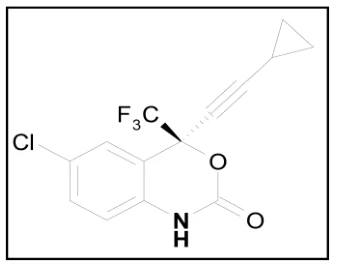
Structural Formula:
Physicochemical Properties
Description: Efavirenz is a white to slightly pink crystalline powder.
Solubility: Efavirenz is practically insoluble in water at a concentration of <10 µg/mL.
Partition coefficient: The (octanol/water) partition coefficient is determined to be P=5.4.
Melting point: The melting point is 137.2 ± 1.4°C.
pKa: The pKa is 10.2.
CLINICAL TRIALS
Comparative Bioavailability Studies
A pivotal, double blind, balanced, randomized, single oral dose, two-treatment, two-period, two-sequence, two way crossover bioequivalence study of Mylan-Efavirenz 600 mg tablets (Mylan Pharmaceuticals ULC) and SUSTIVA® 600 mg tablets (Bristol-Myers Squibb Canada) was performed in 30 healthy, adult, Asian male subjects under fasting conditions. The results of the bioequivalence study are tabulated below.
SUMMARY TABLE OF THE COMPARATIVE BIOAVAILABILITY DATA
Efavirenz (1 × 600 mg) Geometric Mean Arithmetic Mean (CV %) | ||||
| Parameter | Test1 | Reference2 | % Ratio of Geometric Means | 90 % Confidence Interval |
AUC0-72 (mcg·h/mL) | 69.27 71.20 (24.98) | 60.84 64.00 (33.96) | 113.9 | 104.0 - 124.7 |
| Cmax (mcg/mL) | 3.48 3.58 (26.45) | 3.00 3.11 (27.27) | 115.8 | 102.3 - 131.0 |
Tmax3 (h) | 4.50 (1.50-5.50) | 3.75 (1.00-7.00) | ||
T½4 (h) | 57.30 (81.49) | 52.68 (41.82) | ||
1 Mylan-Efavirenz (efavirenz) Tablets, 600 mg (Mylan Pharmaceuticals ULC).
2 PrSUSTIVA®(efavirenz) Tablets, 600mg (Bristol-Myers Squibb Canada).
3 Expressed as the median (range) only.
4 Expressed as the arithmetic mean (CV%) only.
Clinical Studies
The principal efficacy analyses compared the durability of virologic suppression by assessing the proportion of subjects responding to treatment with HIV RNA less than the assay limit. Plasma HIV RNA levels were quantified using the AMPLICOR HIV-1 MONITOR assay. The standard assay with a limit of 500 copies/mL was used in study 364. In studies 006 and 020, standard assay with a limit of 400 copies/mL and ultrasensitive assay with a limit of 50 copies/mL were used. During study 006, version 1.5 of the AMPLICOR assay was introduced in Europe to enhance detection of non-clade B virus.
The secondary analyses compared the magnitude and durability of the change in plasma HIV-RNA levels and CD4 cell counts from baseline.
In the analysis, patients who terminated the study early for any reason or who had a missing HIV-RNA measurement that was either preceded or followed by a measurement above the limit of assay quantification were considered to have HIV-RNA above 400 copies/mL, or above 50 copies/mL in the case of the Ultrasensitive assay, at the missing time points.
Study 006: Efavirenz + indinavir or efavirenz + zidovudine + lamivudine versus indinavir + zidovudine + lamivudine in antiretroviral-naive or NRTI-experienced (lamivudine-naive) patients:
Study 006 is a randomized open label trial to evaluate the plasma HIV-RNA suppression achieved by efavirenz in combination with either indinavir (IDV) or with zidovudine (ZDV) + lamivudine (3TC) compared to indinavir plus zidovudine + lamivudine in HIV-infected patients naive to lamivudine, protease inhibitors and NNRTIs. Study 006 was designed as an equivalency trial. Patients were randomized to one of three treatment regimens: efavirenz (600 mg daily) + indinavir (1000 mg q8h) or efavirenz (600 mg daily) + zidovudine (300 mg q12h) + lamivudine (150 mg q12h) versus indinavir (800 mg q8h) + zidovudine (300 mg q12h) + lamivudine (150 mg q12h). The 1266 patients enrolled in the study had a mean age of 36.5 years (range 18-81); 60% were caucasian and 83% were male. The mean baseline CD4 count was 341 cells/mm3, mean HIV RNA plasma level was 4.8 log10 copies/mL. Forty-eight and 168 week data are presented in Table 10. Through 48 and 168 weeks of therapy, increases in CD4 cell counts were not significantly different between treatment arms.
Table 10 Study 006 - Summary of Key Efficacy Results - Week 48 and Week 168
| Treatment Regimen | Efavirenz + IDV | Efavirenz + ZDV + 3TC | IDV + ZDV + 3TC | |||
| Total N Randomized | N = 429 | N = 422 | N = 415 | |||
| Patients with Plasma HIV-RNA <400 copies/mL - Amplicor Assay | ||||||
| Responder / Evaluable (%) | ||||||
| Week 48 | Week 168 | Week 48 | Week 168 | Week 48 | Week 168 | |
| TLOVRa | 246 / 429 (57) | 171 / 429 (40) | 293 / 422 (69) | 203 / 422 (48) | 206 / 415 (50) | 123 / 415 (30) |
| TTFb | 234 / 429 (55) | 161 / 429 (38) | 270 / 422 (64) | 190 / 422 (45) | 186 / 415 (45) | 114 / 415 (27) |
| VR-OC | 249 / 294 (85) | 172 / 181 (95) | 300 / 317 (95) | 216 / 228 (95) | 216 / 253 (85) | 127 / 140 (91) |
| Difference Estimate (97.5% CI) at Week 168 | ||||||
| Treatment Regimen | efavirenz+IDV - IDV+ZDV+3TC | efavirenz+ZDV+3TC - IDV+ZDV+3TC | ||||
| TLOVRa | 10.2 (2.9, 17.6) p = 0.0018 c | 18.5 (10.9, 26.0) p < 0.0001 d | ||||
| TTFb | 10.1 (2.8, 17.3) p = 0.0018 c | 17.6 (10.1, 25.0) p < 0.0001 d | ||||
| VR-OC | 4.3 (-2.1, 10.7) p = 0.1293 c | 4.0 (-2.0, 10.1) p = 0.1365 d | ||||
| Patients with Plasma HIV-RNA <50 copies/mL - Ultrasensitive Assay | ||||||
| Responder / Evaluable (%) | ||||||
| Week 48 | Week 168 | Week 48 | Week 168 | Week 48 | Week 168 | |
| TLOVRa | 209 / 429 (49) | 134 / 429 (31) | 268 / 422 (64) | 180 / 422 (43) | 177 / 415 (43) | 96 / 415 (23) |
| TTFb | 204 / 429 (48) | 128 / 429 (30) | 255 / 422 (60) | 169 / 422 (40) | 166 / 415 (40) | 89 / 415 (21) |
| VR-OC | 214 / 294 (73) | 158 / 181 (87) | 273 / 317 (86) | 207 / 228 (91) | 189 / 253 (75) | 113 / 140 (81) |
| Difference Estimate (97.5% CI) at Week 168 | ||||||
| Treatment Regimen | efavirenz+IDV - IDV+ZDV+3TC | efavirenz+ZDV+3TC - IDV+ZDV+3TC | ||||
| TLOVRa | 8.1 (1.2, 15.0) p = 0.0082 c | 19.5 (12.2, 26.8) p < 0.0001 d | ||||
| TTFb | 8.4 (1.6, 15.1) p = 0.0053 c | 18.6 (11.4, 25.8) p < 0.0001 d | ||||
| VR-OC | 6.6 (-2.6, 15.7) p = 0.1070 c | 10.1 (2.0, 18.2) p = 0.0053 d | ||||
| Change from Baseline - HIV RNA level (log10 c/mL) | ||||||
| Week 48 | Week 168 | Week 48 | Week 168 | Week 48 | Week 168 | |
N Mean (se) Median | 289 -2.65 (0.055) -2.84 | 165 -2.98 (0.058) -3.08 | 310 -2.91 (0.041) -2.94 | 210 -3.07 (0.047) -3.09 | 251 -2.65 (0.059) -2.82 | 133 -2.88 (0.068) -2.96 |
| Change from Baseline - CD4 Cell Counts (cells/mm3) | ||||||
| Week 48 | Week 168 | Week 48 | Week 168 | Week 48 | Week 168 | |
N Mean (se) Median | 256 191 (9.4) 170 | 158 319 (14.9) 300 | 279 190 (10.1) 179 | 205 329 (14.4) 292 | 228 180 (11.6) 157 | 129 329 (21.1) 292 |
TLOVR = Time to Loss of Virologic Response
A minimum of two consecutive HIV RNA measurements < LOQ maintained through end of study without intervening confirmed rebounds or treatment discontinuations. If the last measurement on-study was > LOQ, the subject was considered a failure for that visit. Deaths, loss to follow-up, and changes in antiretroviral therapy also counted as failure in the TLOVR algorithm.
TTF = Time to Treatment Failure
Loss of HIV RNA suppression (confirmed RNA ≥ 400 copies/mL), development of a CDC Class C AIDS-defining event, treatment discontinuation or start of alternative HIV treatment after having two consecutive HIV RNA determinations < LOQ, or failure to virologically suppress or failure to receive study medication after randomization up to the reported visit week.
VR-OC = Virologic Response - Observed Cases
Classified subjects who remained on treatment according to a single HIV RNA measurement, either < LOQ or ≥ LOQ closest to the scheduled visit and within a predefined visit window. Only those subjects who remained on treatment at the time of their visit week were included. Subjects with HIV RNA ≥ LOQ were considered failures. Subjects who remained on treatment and were missing a measurement were classified as responders only if their immediately previous and subsequent viral loads met the VR-OC criteria for response.
a Proportion responding using the TLOVR definition of response
b Proportion responding using the TTF definition of response
c Statistical difference between efavirenz + IDV and IDV + ZDV + 3TC, at Week 168
d Statistical difference between efavirenz + ZDV + 3TC and IDV +ZDV + 3TC, at Week 168
HIV-RNA status and the reasons for discontinuations of randomized treatment are summarized (Table 11).
Table 11
Outcomes of Randomized Treatment Through 48 and 168 Weeks, Study 006
| Outcome | Efavirenz + IDV n = 429 | Efavirenz + ZDV + 3TC n=422 | IDV + ZDV + 3TC n = 415 | |||
| Week 48 | Week 168 | Week 48 | Week 168 | Week 48 | Week 168 | |
| Respondera | 57% | 40% | 69% | 48% | 50% | 30% |
| Virologic failureb | 15% | 19% | 6% | 12% | 13% | 17% |
| Discontinued for adverse events | 5% | 8% | 7% | 8% | 15% | 20% |
| Discontinued for other reasonsc | 23% | 32% | 17% | 31% | 22% | 32% |
CD4 + cell count (cells/mm3) Observed subjects (n) Mean change from baseline | 256 191 | 158 319 | 279 190 | 205 329 | 228 180 | 129 329 |
a Patients achieved and maintained confirmed HIV-1 RNA <400 copies/mL through Week 48 or Week 168.
b Includes patients who rebounded, patients who were on study at Week 48 and failed to achieve confirmed HIV-1 RNA <400 copies/mL at time of discontinuation, and patients who discontinued due to lack of efficacy.
c Includes consent withdrawn, lost to follow-up, noncompliance, never treated, missing data, protocol violation, death, and other reasons. Patients with HIV-1 RNA levels <400 copies/mL who chose not to continue in the voluntary extension phases of the study were censored at date of last dose of study medication.
A Kaplan-Meier analysis of time to loss of virologic response (HIV RNA <400 copies/mL) suggests that both the trends of virologic response and differences in response continue through 4 years.
Study ACTG 364: Efavirenz in combination with nelfinavir (NFV) in NRTI-experienced patients:
ACTG 364 is a randomized, double-blind, placebo-controlled 48-week study in NRTI-experienced patients who had completed two prior ACTG studies. One-hundred and ninety-five HIV-infected patients (mean age 41 years [range 18-76], 74% Caucasian, 88% male) received NRTIs in combination with efavirenz (600 mg daily), or nelfinavir (750 mg TID), or efavirenz (600 mg daily) plus nelfinavir in a randomized double-blinded manner. Upon entry into the study, all patients were assigned a new open label NRTIS regimen, which was dependent on their previous NRTIS treatment experience. Through 48 weeks of therapy, there was no significant difference in the mean CD4 cell count between the treatment arms. Overall efficacy results are summarized in Table 12.
Table 12 ACTG 364- Summary of Key Efficacy Results -Week 48
| NFV + 2NRTIs | Efavirenz + 2NRTIs | NFV + Efavirenz + 2NRTIs | |||||||||||
| Total N Randomized | 66 | 65 | 65 | ||||||||||
| Patients with Plasma HIV-RNA <500 copies/mL (95% Cl) - Amplicor Assay | |||||||||||||
| LOCF | 23/66 (34.8%) (23.4, 46.3) | 39/65 (60.0%) ‡ (48.1, 71.9) | 49/65 (75.4%)* # ¶ (64.9, 85.9) | ||||||||||
| NC=F | 19/63 (30.2%) (18.8, 41.5) | 36/62 (58.1%) (45.8, 70.3) | 45/64 (70.3%)* ‡ ¶ (59.1, 81.5) | ||||||||||
| Mean Change from Baseline - Log10 Transformed Plasma HIV-RNA (SEM) | |||||||||||||
| Amplicor (LOCF) | -0.45 (0.09)† N = 66 | -0.72 (0.09)† N = 65 | -0.87 (0.10)† N = 62 | ||||||||||
| Mean Change from Baseline - CD4 Counts (SEM) | |||||||||||||
| LOCF | 93.8 (13.6)† N = 66 | 113.8 (21.0)† N = 65 | 107.4 (17.9)† N = 63 | ||||||||||
* Statistically significant difference between NFV+2NRTIs and NFV+efavirenz+2NRTIs (p ≤0.05)
# Statistically significant difference between efavirenz+2NRTIs and NFV+efavirenz+2NRTIs (p≤ 0.05)
† Statistically significant change from baseline (p ≤ 0.05)
‡ Statistically significant difference between NFV+2 NRTIs and efavirenz+2NRTIs (p ≤ 0.05).
¶ Statistically significant difference among treatment groups.
LOCF: This analysis is based on the last obtained plasma HIV-RNA or CD4 cell count measurement for each patient randomized into the study (Intent-to-Treat: Last Observation Carried Forward analysis). NC=F: Noncompleter = Failure. In this analysis, any patient with viral load above quantifiable levels using a specified assay, or whose viral load data are missing at some time point of the analysis, is considered to be a virologic failure (i.e., HIV-RNA ≥500 copies/mL using the Roche AmplicorTM assay), unless the patient’s viral load measurements both before and after the missing data point are below the assay limit of quantification.
CI: Confidence Interval
HIV-RNA status and the reasons for discontinuations of randomized treatment are summarized (Table 13).
Table 13 Study ACTG 364 - Outcomes of Randomized Treatment Through 48 Weeks
| Outcome | Efavirenz + NFV + NRTIs N=65 | Efavirenz + NRTIs N=65 | NFV + NRTIs N=66 |
| HIV-RNA <500 copies/mL1 | 70% | 58% | 30% |
| HIV-RNA ≥500 copies/mL2,3 | 13% | 27% | 60% |
| Discontinuations for Adverse Events3 | 3% | 3% | 5% |
| Discontinuations for Other Reasons3 | 9% | 2% | 0% |
| On Treatment with Missing HIV-RNA Value3 | 5% | 10% | 5% |
| Total | 100% | 100% | 100% |
1 Corresponds to rates at 48 weeks in Table 12
2 Includes discontinuation due to virologic failure at or before 48 weeks
3 Treatment Failure in the Analysis
Study 020: Protease Inhibitor + Two NRTIs with/without efavirenz in NRTI-experienced patients:
Study 020 was a randomized, double-blind, placebo-controlled 24-week study in NRTI--experienced, protease inhibitor and NNRTI-naive patients designed to compare quadruple therapy consisting of efavirenz + indinavir + 2 nucleoside analogue reverse transcriptase inhibitors versus triple therapy consisting of indinavir + 2 NRTIs at 24 weeks of treatment. Patients were randomized to receive either efavirenz (600 mg daily) + indinavir (1000 mg q8h) + 2 NRTIs or indinavir (800 mg q8h) + 2 NRTIs. Sixty-seven percent of the 327 patients (mean age 38.5 years [range 20-69], 52% Caucasian, 83% male) changed their NRTI regimen at study initiation. Mean baseline CD4 count was 328 cells/mm3, and mean HIV-RNA plasma level was 4.41 log10 copies/mL. Through 24 weeks of therapy, there was no significant difference in the mean CD4 cell count between the treatment arms. Mean increases in CD4 cell count at 24 weeks were 104 cells/mm3 for patients treated with efavirenz+IDV+NRTIs, and 77 cells/mm3 for patients treated with IDV+NRTIs. The Noncompleter=Failure analysis at 24 weeks showed no difference between the treatment groups using a cutoff of 400 copies/mL and a significant difference between treatment groups using a cutoff of 50 copies/mL. Efficacy results are summarized in Table 14.
Table 14 Study 020 - Summary of Key Efficacy Results - Week 24
| Efavirenz + NRTIs | IDV + NRTIs | ||||||||||
| Total N Randomized | 157 | 170 | |||||||||
| Patients with Plasma HIV-RNA <400 copies/mL (95% Cl) - Amplicor Assay | |||||||||||
| LOCF | 107/157 (68.2%)* | 89/170 (52.4%) | |||||||||
| (60.5, 75.8) | (44.6, 60.2) | ||||||||||
| NC=F | 93/156 (59.6%) | 86/169 (50.9%) | |||||||||
| (51.6, 67.6) | (43.1, 58.7) | ||||||||||
| Observed | 93/112 (83.0%)* | 86/132 (65.2%) | |||||||||
| (75.6, 90.4) | (56.6, 73.7) | ||||||||||
| Efavirenz + NRTIs | IDV + NRTIs | |||||||||||||||
| Total N Randomized | 157 | 170 | ||||||||||||||
| Patients with Plasma HIV-RNA <50 copies/mL (95% Cl) - Ultrasensitive Assay | ||||||||||||||||
| LOCF | 79/156 (50.6%)* | 65/168 (38.7%) | ||||||||||||||
| (42.5, 58.8) | (31.0, 46.4) | |||||||||||||||
| NC+F | 77/156 (49.4%)* | 63/168 (37.5%) | ||||||||||||||
| (41.2, 57.5) | (29.9, 45.1) | |||||||||||||||
| Observed | 77/112 (68.8%)* | 63/132 (47.7%) | ||||||||||||||
| (59.7, 77.8) | (38.8, 56.6) | |||||||||||||||
| Mean Change from Baseline - Log10 Transformed Plasma HIV-RNA (SEM) | ||||||||||||||||
| Amplicor (LOCF) | -1.45 (0.08)* † | -1.12 (0.08)† | ||||||||||||||
| N = 147 | N = 158 | |||||||||||||||
| Ultrasensitive** (LOCF) | 2.25 (0.10)* † | -1.72 (0.11)† | ||||||||||||||
| N = 120 | ||||||||||||||||
| Mean Change from Baseline -CD4 Counts (SEM) | ||||||||||||||||
| LOCF | 104.4 (9.1)* † | 76.9 (9.9)† | ||||||||||||||
| N = 151 | N = 158 | |||||||||||||||
* Statistically significant difference between treatments (p≤0.05)
† Statistically significant change from baseline (p≤0.05)
** Ultrasensitive Assay is an unvalidated experimental method.
LOCF: This analysis is based on the last obtained plasma HIV-RNA or CD4 cell count measurement for each patient randomized into the study (Intent-to-Treat: Last Observation Carried Forward analysis).
NC=F: Noncompleter = Failure. In this analysis, any patient with viral load above quantifiable levels using a specified assay, or whose viral load data are missing at some time point of the analysis, is considered to be a virologic failure (i.e., HIV-RNA ≥400 copies/mL using the Roche AmplicorTM assay), unless the patient’s viral load measurements both before and after the missing data point are below the assay limit of quantification.
Observed: Analysis is based on all data available at the specified time point (on-treatment analysis). Missing data is not accounted for in this analysis.
CI: Confidence Interval
HIV-RNA status and the reasons for discontinuations of randomized treatment are summarized (Table 15).
Table 15
Study 020 - Outcomes of Randomized Treatment Through 24 Weeks
| Outcome | Efavirenz + IDV + NRTIs N = 157 | IDV + NRTIs N = 170 |
| HIV-RNA <400 copies/mL [<50 copies/mL] | 60% [51%] | 51% [39%] |
| HIV-RNA ≥400 copies/mL [≥50 copies/mL]1,2 | 11% [20%] | 26% [38%] |
| Discontinuations for Adverse Events2 | 11% | 5% |
| Discontinuations for Other Reasons2 | 18% | 16% |
| On Treatment with Missing HIV-RNA Value2 | 0% | 2% |
| Total | 100% | 100% |
1 Includes discontinuation due to virologic failure at or before 48 weeks
2 Treatment Failure in the Analysis
DETAILED PHARMACOLOGY
Pharmacokinetics
Absorption
Peak efavirenz plasma concentrations of 1.6-9.1 µM were attained by 5 hours following single oral doses of 100 mg to 1600 mg administered to uninfected volunteers. Dose-related increases in Cmax and AUC were seen for doses up to 1600 mg; the increases were less than proportional suggesting diminished absorption at higher doses. Time to peak plasma concentrations (3-5 hours) did not change following multiple dosing and steady-state plasma concentrations were reached in 6-10 days.
In HIV-infected patients at steady-state, mean Cmax, mean Cmin, and mean AUC were dose proportional following 200 mg, 400 mg, and 600 mg daily doses. In 35 patients receiving efavirenz 600 mg daily, mean steady-state Cmax was 12.9 µM, mean steady state Cmin was 5.6 µM, and mean AUC was 184 µM/h.
Effect of Food on Oral Absorption
Administration of a single 600 mg dose of efavirenz tablet with a high fat/high caloric meal (approximately 1000 kcal, 500-600 kcal from fat) was associated with a 28% increase in mean AUC of efavirenz and a 79% increase in mean Cmax of efavirenz relative to the exposures achieved under fasted conditions (see DOSAGE AND ADMINISTRATION).
Distribution
Efavirenz is highly bound (approximately 99.5-99.75%) to human plasma proteins, predominantly albumin. In HIV-1 infected patients (N=9) who received efavirenz 200 to 600 mg once daily for at least one month, cerebrospinal fluid concentrations ranged from 0.26 to 1.19% (mean 0.69%) of the corresponding plasma concentration. This proportion is approximately 3-fold higher than the non-protein-bound (free) fraction of efavirenz in plasma.
Metabolism
Studies in humans and in vitro studies using human liver microsomes have demonstrated that efavirenz is principally metabolized by the cytochrome P450 system to hydroxylated metabolites with subsequent glucuronidation of these hydroxylated metabolites. These metabolites are essentially inactive against HIV-1. The in vitro studies suggest that CYP3A4 and CYP2B6 are the major isozymes responsible for efavirenz metabolism. In vitro studies have shown that efavirenz inhibited P450 isozymes 2C9, 2C19, and 3A4 with Ki values (8.5-17.0 µM) in the range of observed efavirenz plasma concentrations. In in vitro studies efavirenz did not inhibit CYP2E1 and inhibited CYP2D6 and CYP1A2 (Ki values 82-160 µM) only at concentrations well above those achieved clinically.
Efavirenz plasma exposure may be increased in patients with the homozygous G516T genetic variant of the CYP2B6 isozyme. The clinical implications of such an association are unknown; however, the potential for an increased frequency and severity of efavirenz-associated adverse events cannot be excluded.
Efavirenz has been shown to induce P450 enzymes, resulting in the induction of its own metabolism. Multiple doses of 200-400 mg per day for 10 days resulted in a lower than predicted extent of accumulation (22-42% lower) and a shorter terminal half-life of 40-55 hours (single dose half-life 52-76 hours). The degree of CYP3A4 induction is expected to be similar between a 400 mg and 600 mg dose of efavirenz based on pharmacokinetic interaction studies in which daily 400 mg or 600 mg efavirenz doses in combination with indinavir did not appear to cause any further reduction of indinavir AUC compared to a 200 mg dose of efavirenz.
Elimination
Efavirenz has a long terminal half-life of 52-76 hours after single doses and 40-55 hours after multiple doses. A one-month mass balance/excretion study was conducted using 400 mg per day with a 14C-labelled dose administered on Day 8. Approximately 14-34% of the radiolabel was recovered in the urine and 16-61% was recovered in the feces. Nearly all of the urinary excretion of the radiolabelled drug was in the form of metabolites. Efavirenz accounted for the majority of the total radioactivity measured in feces.
Demographics
The pharmacokinetics of efavirenz in patients appear to be similar between men and women and among the ethnic groups studied.
Hepatic Enzyme Induction
Efavirenz has been shown in vivo to cause hepatic enzyme induction, thus increasing the biotransformation of some drugs metabolized by CYP3A4 and CYP2B6. In vitro studies have demonstrated that efavirenz inhibits 2C9, 2C19 and 3A4 isozymes with Ki values (8.5-17 µM) in the range of observed efavirenz plasma concentrations. In in vitro studies, efavirenz did not inhibit CYP2E1 and inhibited CYP2D6 and CYP1A2 (Ki values 82-160 µM) only at concentrations well above those achieved clinically. The effects on CYP3A4 activity are expected to be similar between 200 mg, 400 mg and 600 mg doses of efavirenz. Coadministration of efavirenz with drugs primarily metabolized by 2C9, 2C19 and 3A4 isozymes may result in altered plasma concentrations of the coadministered drug. Drugs which induce CYP3A4 activity would be expected to increase the clearance of efavirenz resulting in lowered plasma concentrations.
VIROLOGY
Efavirenz is a selective non-nucleoside reverse transcriptase inhibitor (NNRTI) of human immunodeficiency virus type 1 (HIV-1). Efavirenz is predominantly a non-competitive inhibitor of HIV-1 reverse transcriptase (RT). HIV-2 RT and human cellular DNA polymerases α, β, γ and δ are not inhibited by concentrations of efavirenz well in excess of those achieved clinically.
In vitro HIV Susceptibility: The clinical significance of in vitro susceptibility of HIV-1 to efavirenz has not been established. The in vitro antiviral activity of efavirenz was assessed in lymphoblastoid cell lines, peripheral blood mononuclear cells (PBMCs) and macrophage/monocyte cultures enriched from PBMCs. The 90-95% inhibitory concentration (IC90-95) of efavirenz for wild type laboratory adapted strains and clinical isolates ranged from 1.7 to ≤ 25nM. EFV demonstrated antiviral activity against most non-clade B isolates (subtypes A, AE, AG, C, D, F, G, J, N), but had reduced antiviral activity against group O viruses. EFV demonstrated additive antiviral activity without cytotoxicity against HIV-1 in cell culture when combined with the NNRTIs delavirdine (DLV) and nevirapine (NVP), NRTIs (abacavir, didanosine, emtricitabine, lamivudine [LAM], stavudine, tenofovir, zalcitabine, zidovudine [ZDV]), PIs (amprenavir, indinavir [IDV], lopinavir, nelfinavir, ritonavir, saquinavir), and the fusion inhibitor enfuvirtide. EFV demonstrated additive to antagonistic antiviral activity in vitro with atazanavir. EFV was not antagonistic with adefovir, used for the treatment of hepatitis B virus infection, or ribavirin, used in combination with interferon for the treatment of hepatitis C virus infection.
Resistance: HIV-1 isolates with reduced susceptibility to efavirenz (>380-fold increase in IC90) compared to baseline can emerge rapidly in cell culture in the presence of drug. Genotypic characterization of these viruses identified mutations resulting in single amino acid substitutions L100I or V179D, double substitutions L100I/V108I, and triple substitutions L100I/V179D/Y181C in RT. Phenotypic (N=26) changes in evaluable HIV-1 isolates and genotypic (N=104) changes in plasma virus from selected patients treated with efavirenz in combination with IDV, or with ZDV plus lamivudine were monitored. Clinical isolates with reduced susceptibility in cell culture to efavirenz have been obtained. One or more RT mutations at amino acid positions 98, 100, 101, 103, 106, 108, 188, 190 and 225, and 227 were observed in all 102 of 104 patients with a frequency of at least 9% compared to baseline. The mutation at RT amino acid position 103 (lysine to asparagine) was the most frequently observed (≥90%). A mean loss in susceptibility (IC90) to efavirenz of 47-fold was observed in 26 clinical isolates. Five clinical isolates were evaluated for both genotypic and phenotypic changes from baseline. Decreases in efavirenz susceptibility (range from 9 to >312-fold increase in IC90) were observed for these isolates in cell culture compared to baseline. All 5 isolates possessed at least one of the efavirenz-associated RT mutations. The clinical relevance of phenotypic and genotypic changes associated with efavirenz therapy has not been established. Long-term resistance surveillance (average 52 weeks, range 4-106 weeks) analyzed 28 matching baseline and virologic failure isolates. Sixty-one percent (17/28) of these failure isolates had decreased EFV susceptibility in cell culture with a median 88-fold change in EFV susceptibility (IC50 value) from reference. The most frequent NNRTI mutation to develop in these patient isolates was K103N (54%). Other NNRTI mutations that developed included L100I (7%), K101E/Q/R (14%), V108I (11%), G190S/T/A (7%), P225H (18%), and M230I/L (11%).
Cross-Resistance: Rapid emergence of HIV-1 strains that are cross-resistant to non-nucleoside RT inhibitors has been observed in cell culture. Thirteen clinical isolates previously characterized as efavirenz-resistant were also phenotypically resistant to nevirapine and delavirdine in cell culture compared to baseline. DLV- and/or NVP-resistant clinical viral isolates with NNRTI resistance-associated substitutions (A98G, L100I, K101E/P, K103N/S, V106A, Y181X, Y188X, G190X, P225H, F227L, or M230L) showed reduced susceptibility to EFV in cell culture. Clinically derived ZDV-resistant HIV-1 isolates tested in cell culture retained susceptibility to efavirenz. Cross-resistance between efavirenz and HIV protease inhibitors is unlikely because of the different enzyme targets involved.
TOXICOLOGY
Acute Toxicity
The oral Minimum Lethal Dose (MLD) of efavirenz in female rats ranged from 250 mg/kg to 500 mg/kg, whereas the oral MLD of efavirenz in male rats was 1000 mg/kg. The most prominent clinical signs attributed to efavirenz treatment in rats were ataxia and decreased motor activity, and were observed, in general, at doses ≥250 mg/kg. The MLD in female and male rats given intraperitoneal injections of efavirenz was 250 mg/kg and 500 mg/kg, respectively. The MLD in mice given intraperitoneal injections of efavirenz was similar to that in rats (250 mg/kg in both male and female mice).
Efavirenz Toxicokinetics in Preclinical Studies
Plasma efavirenz concentrations achieved at maximally tolerated doses in rats were lower than those achieved in humans given efavirenz (in rats given 250 mg/kg bid of efavirenz the AUC was 38 µM•h in males and 84 µM•h in females). This was due, in part, to the autoinduction caused by efavirenz in rats. The resulting plasma half-life of efavirenz in rats is ≈ 0.8 to 1.9 hours, compared to a half-life of >40 hours in humans. Due to the low plasma efavirenz concentrations attained in rats, rats were a poor model in which to assess the toxicity of the parent drug. However, plasma concentrations of the primary efavirenz metabolite (the 8-OH--glucuronide conjugate) were 50- to 75-fold higher in rats given 250 mg/kg bid than in humans given therapeutic doses of efavirenz (the 8-OH-glucuronide conjugate was present at millimolar concentrations in the plasma of rats).
Chronic toxicity studies were conducted in cynomolgus monkeys in which the plasma efavirenz AUC values were higher than those attained in humans. AUC values achieved in cynomolgus monkeys given 45 mg/kg bid and 75 mg/kg bid during subchronic and chronic studies were ≈1.5- and 5-fold higher, respectively, than those achieved in humans given 600 mg/day (AUC values of 283 µM•h and 907 µM•h, respectively). In addition, the metabolic disposition of efavirenz in cynomolgus monkeys is similar to that in humans, although efavirenz is more extensively metabolized in cynomolgus monkeys than in humans.
Long-term Toxicity
The toxicity and toxicokinetics of efavirenz were evaluated in rats (duration of study ≤6 months), in rhesus monkeys (duration of study 1 month) and in cynomolgus monkeys (duration of study ≤1 year). In addition, a 5 week oral toxicity study was conducted in newborn rhesus monkeys.
From the subacute/chronic toxicological studies the following adverse effects have been noted following treatment with efavirenz.
Nephrotoxicity
The most prominent toxicologic finding in rats given efavirenz was nephrotoxicity. Rats treated with ≥250 mg/kg bid efavirenz in the 3-month oral toxicity study showed mild to moderate renal cortical epithelial cell necrosis, associated with intraluminal casts, proteinaceous debris, and tubular dilatation. In addition, late-stage renal changes (occasionally leading to renal failure) occurred secondary to tubular obstruction and were characterized by cystic tubular dilatation and degeneration. Treatment of rats with doses ≥500 mg/kg bid occasionally resulted in death due to acute tubular necrosis. Renal lesions elicited by 1 month of dosing with 250 mg/kg bid of efavirenz were shown to be fully reversible following 1-month recovery period. The incidence of and severity of renal lesions was greater in male than female rats given equivalent efavirenz doses. The no effect dose for renal toxicity after ≥3 months of dosing was 100 mg/kg bid in female rats and 30 mg/kg bid in male rats.
Nephrotoxicity did not occur in cynomolgus monkeys given 75 mg/kg bid (AUC=907 µM•h) for 3 months to 1 year or in rhesus monkeys given 100 mg/kg/day for 1 month (AUC=212 µM•h). Average plasma efavirenz concentrations in monkeys in these studies exceeded those in rats given nephrotoxic doses of efavirenz.
Special toxicity studies implicated the formation of an efavirenz glutathione conjugate in the nephrotoxicity caused by efavirenz in rats. In these studies, interventions to decrease the formation and/or the catabolic products of glutathione conjugates resulted in decreased efavirenz-induced nephrotoxicity. Glutathione conjugates of efavirenz are not found in cynomolgus monkeys or in humans given efavirenz. Therefore, the nephrotoxicity elicited by efavirenz in rats is considered to be species specific.
Changes in the Biliary System
- a) Biliary Fibrosis in Rats: An increased incidence of biliary fibrosis occurred in the liver of rats after oral gavage or dietary administration of doses ≥500 mg/kg/day. The severity of the change was minimal to mild and was sparsely distributed involving relatively few isolated bile ducts. In rats given efavirenz in the diet for 3 months the lesions were sometimes accompanied by multifocal biliary hyperplasia (a possible consequence of increased biliary pressure in the drainage areas where fibrosis had occurred). Biliary lesions were not observed in rats given 100 mg/kg bid by oral gavage for 6 months or 100 mg/kg/day in the diet for 3 months.
- b) Biliary Hyperplasia in Cynomolgus Monkeys: Minimal biliary hyperplasia (increase in the number of small caliber bile ducts) was observed in the liver of two of four male and two of four female monkeys in the high dose (75 mg/kg bid; AUC=907 µM•h) cynomolgus monkeys given efavirenz for 1 year. (Biliary hyperplasia was not seen in monkeys given this dose for 6 months or less.) There was no serum biochemical or histologic evidence of cholestasis and the change was not accompanied by fibrosis or histologic evidence of adjacent hepatocellular injury. In monkeys given the dose of 75 mg/kg bid, the mean plasma efavirenz AUC was approximately 5-fold greater than the AUC in humans given 600 mg/day of efavirenz (AUC=186 µM•h). The no effect level for biliary hyperplasia (45 mg/kg bid for ≤1 year efavirenz (AUC=283 µM•h) was approximately 1.5-fold greater than in humans given 600 mg/day of efavirenz.
In a subsequent 2 year study total daily doses of ≥ 60 mg/kg/day resulted in minimal to moderate biliary hyperplasia in almost all of the animals. Plasma efavirenz exposure levels (120 mg/kg/day, AUC 1871 µM•h at 99 weeks) were higher in this study than in the 1 year study (see Table 16).
Table 16
| Total Daily Dose | Cmax range | AUC range | |
| 1 year study (T95-10-4) | 150 mg/kg/day | 32 - 72 µM | 489 - 1262 µM•h |
| 2 year study (T97-11-1) | 150 mg/kg/day | 42 - 159 µM | 745 - 3173 µM•h |
The biliary hyperplasia was not associated with any fibrotic or degenerative changes. The cause of biliary hyperplasia in cynomolgus monkeys following treatment with efavirenz remains unknown.
Minimal Thyroid Follicular Cell Hypertrophy
Minimal thyroid follicular hypertrophy was observed in cynomolgus monkeys given ≥45 mg/kg bid (AUC=283 µM•h) for 1 year but not in monkeys given 15 mg/kg bid (AUC=65 µM•h) for 1 year, or 100 mg/kg bid of efavirenz for ≤6 months or in rats. In a 2-year study in cynomolgus monkeys minimal-to-slight hypertrophy of thyroid follicular cells, was observed in the thyroid lobes of 1/11, 4/10, 8/10, and 1/5 monkeys given 0, 60, 150, or 150/80 mg/kg/day of DMP 266, respectively. In this study, thyroid follicular cell hypertrophy was not observed at the end of the 26-week recovery period. An increased clearance of 125l-thyroxine and elevations in serum thyroid stimulating hormone (TSH) were observed in cynomolgus monkeys given 75 mg/kg bid of efavirenz for 1 month. The thyroid follicular cell hypertrophy may be due to the induction of UDP-glucuronyl tranferase in this species (a rate limiting Phase II enzyme involved in the clearance of thyroxine).
ALT Elevations
Slight increases in serum ALT but not AST activity were observed in individual cynomolgus monkeys given ≥45 mg/kg bid (AUC ≥ 283 µM•h). The greatest individual ALT elevation was approximately 3-fold above the highest concurrent control, with the majority of the ALT elevations being mild (no more than approximately 1.5-fold above the highest concurrent control value). There was no evidence of hepatocellular injury after a year of dosing. No drug-related elevations of ALT were noted in rats or rhesus monkeys treated with efavirenz.
APTT and PT Prolongations
Slight increases in prothrombin time (PT) and activated partial thromboplastin time (APTT) were observed in some male rats given ≥50 mg/kg bid for 6 months. These prolongations were not associated with any gross or microscopic evidence of bleeding. No drug-related changes were found in the PT and APTT of female rats, nor were any prolongations observed in PT or APTT of male or female rats in studies of ≤3 months duration. The cause of these prolongations in male rats is unknown.
In cynomolgus monkeys, slightly prolonged APTT (up to approximately 10 seconds above the upper limit of the reference range) were observed in some monkeys given 45 mg/kg bid (AUC=283 µM•h) or 75 mg/kg bid (AUC=907 µM•h) of efavirenz for > 6 months. The incidence and magnitude of the APTT prolongations increased with dose and the prolongations remained relatively constant over the course of the studies. Further investigation revealed a slight decrease in the activities of Factor XII in affected monkeys, and a slight decrease in the activity of Factor XI in the monkeys with the longest APTT. The decreased factor activity was not attributed to the presence of drug-induced inhibitor. Apart from decreased coagulation factor activities, no alteration in coagulation parameters, fibrinogen concentration, prothrombin time, or platelet count were noted. There was no evidence of gross or microscopic bleeding upon postmortem examination. The cause of decreased activities of Factor XII and/or XI is unknown.
Mutagenicity
Efavirenz was negative in a battery of in vitro and in vivo genotoxicity assays. This included assays in four in vitro assay systems: 1) bacterial mutation assays in Salmonella typhimurium and Escherichia coli, 2) a Chinese hamster ovary (CHO) cell/hypoxanthine-guanine phosphoribosyl-transferase (HGPRT) forward mutation assays, 3) a chromosome aberration assay in human peripheral lymphocytes, and 4) a chromosome aberration assay in CHO cells, and in one in vivo system (mouse micronucleus assay). All assays were conducted employing maximally soluble or minimally toxic doses/concentrations of efavirenz.
Reproduction and Teratology
Malformations were observed in 3 of 20 fetuses/infants from efavirenz-treated cynomolgus monkeys (versus 0 of 20 concomitant controls) in an ongoing developmental toxicity study. The pregnant monkeys were dosed throughout pregnancy (post-coital days 20-150) with efavirenz 60 mg/kg daily, a dose which resulted in plasma drug concentrations similar to those in humans given 600 mg/day. Anencephaly and unilateral anophthalmia were observed in one fetus, microphthalmia was observed in another fetus, and cleft palate was observed in a third fetus.
No malformations were observed in fetuses from efavirenz-treated rats; however, an increase in fetal resorptions and a slight increase in pup mortality was observed in rats at doses that produced peak plasma concentrations and AUC values in pregnant female rats similar to or lower than those achieved in humans at the recommended clinical dose. Efavirenz was not teratogenic or embryotoxic when given to pregnant rabbits.
Peri/Postnatal Toxicity
A 5-8% decrease in mean rat pup weights versus control mean rat pup weights, and a slight increase in rat pup mortality was observed at doses of 50 and 100 mg/kg bid in a study in which efavirenz was given to pregnant rats during gestation and through lactation until weaning (the 100 mg/kg bid dose produced peak plasma concentrations and AUC values in pregnant female rats similar to or lower than those achieved in humans at the recommended clinical dose). No efavirenz-related effects were observed on the fertility, mating behavior, sexual maturation, learning, or behavior of the F1 generation derived from female rats given 100 mg/kg bid.
Maternal/Fetal Efavirenz Exposure
Fetal exposure to efavirenz was documented in pregnant rats, rabbits and cynomolgus monkeys. Maternal and fetal blood concentrations were equivalent in pregnant rabbits and cynomolgus monkeys and fetal blood concentrations were approximately 25% to 49% lower than the corresponding maternal concentrations in pregnant rats. Results of these studies indicated that efavirenz crossed the placenta in all species tested.
Efavirenz Concentration in Milk
The excretion of efavirenz into rat milk was demonstrated. Efavirenz milk concentrations in rats were approximately 8-fold higher than corresponding maternal efavirenz plasma concentrations.
Male/Female Fertility Assessment
No efavirenz-related effects were observed on the fertility or reproductive performance of female rats given 100 mg/kg bid, or on the reproductive performance or sperm motility and morphology of male rats given 200 mg/kg bid.
Assessment of Toxicity in Infant and Neonatal Non-Human Primates
In a five-week oral infant rhesus toxicity study, (dosing initiated on Day 2 of life at 30 and 45 mg/kg bid), infant rhesus monkeys given 30 mg/kg bid exhibited a slight, transitory decrease in body weight gain in females and slight decreases in food intake in females. Doses of 45 mg/kg bid produced adverse clinical signs in infant rhesus monkeys (vomiting, lethargy, dehydration, poor appetite, and/or weakness) and slight decreases in the average amount of body weight gain. No efavirenz-related hematology, serum biochemical, or histologic changes occurred at either dose.
Carcinogenesis
In a 2-year carcinogenicity study, mice were given daily oral dosages of 25, 75, 150 or 300 mg/kg/day of efavirenz. Because efavirenz is rapidly cleared in mice, plasma drug exposure (as measured by AUC) at dosages ≤150 mg/kg/day was lower than that in humans given 600 mg/day of efavirenz. In mice given 300 mg/kg/day of efavirenz, plasma drug exposure (AUC) was approximately 1.7-fold the AUC in humans given 600 mg/day of efavirenz. In female mice, a statistically significant, dose-related increase in the incidence of hepatic tumors occurred at dosages ≥75 mg/kg/day and a statistically significant, non dose-related increase in pulmonary tumors occurred at dosages ≥25 mg/kg/day of efavirenz. Efavirenz did not increase the incidence of any tumor type in male mice. Given the lack of genotoxic activity of efavirenz, the relevance to humans of hepatocellular tumors in efavirenz-treated mice is not known.
In a 2-year carcinogenicity study, rats were given daily oral dosages of 25, 50 or 100 mg/kg/day of efavirenz. Plasma drug exposures (as measured by AUC) in rats given all dosages of efavirenz were substantially below those achieved in humans given 600 mg/day of efavirenz, and therefore may not reflect the carcinogenic potential of efavirenz in humans. The low plasma drug exposures attained in rats are a consequence of the extremely rapid metabolic clearance of efavirenz in this species. However, virtually all of the efavirenz metabolites formed in rats are also formed in humans and the levels of these metabolites attained in the rat carcinogenicity study were likely substantially higher than those achieved in humans. Therefore, the results of this carcinogenicity study do provide meaningful information on the potential carcinogenicity of these efavirenz metabolites even at relatively low multiples of the parent drug exposure. Efavirenz did not increase the incidence of any tumor type in rats.
Long-term carcinogenicity studies in mice and rats were carried out with efavirenz. Mice were dosed with 0, 25, 75, 150, or 300 mg/kg/day for 2 years. Incidences of hepatocellular adenomas and carcinomas and pulmonary alveolar/bronchiolar adenomas were increased above background in females. No increases in tumor incidence above background were seen in males. In studies in which rats were administered efavirenz at doses of 0, 25, 50, or 100 mg/kg/day for 2 years, no increases in tumor incidence above background were observed. The systemic exposure (based on AUCs) in mice was approximately 1.7-fold that in human receiving the 600 mg/day dose. The exposure in rats was lower than that in humans.
The findings from the completed efavirenz mouse carcinogenicity study may not represent a significant risk to patients based upon the following: An increase in the incidence of hepatic tumors in efavirenz-treated mice was not unexpected as efavirenz is known to induce hepatic drug-metabolizing enzyme activity and enzyme inducers are known to increase the incidence of hepatic tumors in rodents, but not in humans. While the cause of the increased incidence of pulmonary tumors is not known, this finding also may not constitute a significant risk for patients given efavirenz because: (1) efavirenz is not genotoxic, (2) the strain of mice used in these studies is documented to have a high spontaneous background incidence of this tumor type, and (3) a decrease in the incidence of pulmonary tumors was observed in efavirenz-treated male mice. In male mice, plasma efavirenz concentrations were equal to or greater than in female mice.
REFERENCES
- 1. SUSTIVA® (Capsules; 50 mg and 200 mg), submission control 273530, Product Monograph, Bristol-Myers Squibb Canada. (August 16, 2023)