


Product Monograph - Mylan-Nitro Sublingual Spray
SUMMARY PRODUCT INFORMATION
| Route of Administration | Dosage Form / Strength | All Nonmedicinal Ingredients |
| oral (sublingual) | spray, 0.4 mg per metered dose | ethanol, peppermint oil, propellant HFA 134a (1,1,1,2-tetrafluroethane) |
INDICATIONS AND CLINICAL USE
MYLAN-NITRO SUBLINGUAL SPRAY (nitroglycerin) is indicated for:
- The management and treatment of acute attacks of angina pectoris.
CONTRAINDICATIONS
MYLAN-NITRO SUBLINGUAL SPRAY (nitroglycerin) is contraindicated in:
- Patients with known hypersensitivity to nitroglycerin or any of the excipients, or with previous idiosyncratic reaction to organic nitrates. For a complete listing, see the Dosage Forms, Composition and Packaging section of the product monograph.
- Patients with severe anemia;
- Patients with closed angle glaucoma;
- Patients with increased intracranial pressure;
- Patients with myocardial infarction;
- Patients with acute circulatory failure (cardiogenic shock, severe hypovolemia or severe hypotension);
- Patients with heart failure (aortic or mitral stenosis, constrictive pericarditis or hypertrophic obstructive cardiomyopathy).
Concomitant use of MYLAN-NITRO SUBLINGUAL SPRAY (nitroglycerin) either regularly and/or intermittently, with phosphodiesterase type 5 (PDE5) inhibitors such as sildenafil, tadalafil and vardenafil is absolutely contraindicated, because PDE5 inhibitors amplify the vasodilatory effects of MYLAN-NITRO SUBLINGUAL SPRAY (nitroglycerin) which can lead to severe hypotension.
Concomitant use of MYLAN-NITRO SUBLINGUAL SPRAY (nitroglycerin) with other drugs affecting the nitric oxide-soluble guanylate cyclase-cyclic guanosine monophosphate (NO-sGC-cGMP) pathway, including riociguat, is contraindicated, due to the risk of developing potentially life-threatening episodes of hypotension or syncope.
WARNINGS AND PRECAUTIONS
General
Headaches or symptoms of hypotension, such as weakness or dizziness, particularly when arising suddenly from a recumbent position, may be due to overdosage. When they occur, the dose or frequency of application of MYLAN-NITRO SUBLINGUAL SPRAY (nitroglycerin) should be reduced.
In cases where cyanosis should develop during high-dose treatment, work-up must include search for methemoglobinemia.
Cardiovascular
Nitroglycerin is a potent vasodilator and causes a slight decrease in mean blood pressure (approximately 10-15 mmHg) in some patients when used in therapeutic dosages. Caution should be exercised in using the drug in patients who are prone to, or who might be affected by hypotension.
Hypotension and reflex tachycardia or bradycardia may occur post MYLAN-NITRO SUBLINGUAL SPRAY administration (see ADVERSE REACTIONS). These conditions may lead to fatal cardiac arrhythmias such as ventricular fibrillation or asystole, mainly in patients with acute inferior myocardial infarction particularly with right ventricular involvement.
Dependence/Tolerance
Tolerance to this drug and cross-tolerance to other nitrates or nitrites may occur. Physical dependence has also been described. With the chronic use of nitrates, there have been reports of anginal attacks being more easily provoked as well as reports of rebound in hemodynamic effects, occurring soon after nitrate withdrawal. Sudden discontinuation of treatment should be avoided.
Driving a Vehicle or Performing on Hazardous Tasks
Especially during treatment start, nitroglycerin may induce symptoms related to orthostatic hypotension such as dizziness, which can possibly impact the ability to drive or use machines (see ADVERSE REACTIONS).
Special Populations
Pregnant Women
Animal reproduction studies have not been conducted with nitroglycerin. It is not known whether nitroglycerin can cause fetal harm when administered to a pregnant woman. Therefore use MYLAN-NITRO SUBLINGUAL SPRAY only if the potential benefit justifies the risk to the fetus.
Nursing Women
It is not known whether nitroglycerin is excreted into breast milk. Safety in breast-feeding women has not been established. Breast-feeding is therefore inadvisable for the duration of treatment. Benefits to the mother must be weighed against the risks to the child.
Pediatrics
The safety and effectiveness of nitroglycerin in children have not been established.
Geriatrics
The safety and effectiveness of nitroglycerin in the elderly population have not been established.
Monitoring and Laboratory Tests
The use of nitroglycerin in patients with congestive heart failure requires careful clinical and/or hemodynamic monitoring.
ADVERSE REACTIONS
Adverse Drug Reactions Overview
Adverse reactions to nitroglycerin spray are generally dose-related. In a clinical trial studying patients with chronic stable angina, the following adverse events were reported during the use of nitroglycerin spray: headache, dizziness, paresthesia and dyspnea. All adverse events were mild to moderate.
Clinical Trial Adverse Drug Reactions
Because clinical trials are conducted under very specific conditions the adverse reactions rates observed in the clinical trials may not reflect the rates observed in practice and should not be compared to the rates in the clinical trials of another drug. Adverse drug reaction information from clinical trials is useful for identifying drug-related adverse events and for approximating rates.
The safety of nitroglycerin spray was assessed in a double-blind, randomized, single-dose, 5-period crossover study involving patients with chronic, stable angina pectoris, who were known to be acutely responsive to sublingual nitroglycerin. The effects of varying doses (0.2 mg, 0.4 mg 0.8 mg and 1.6 mg) were assessed. The following adverse effects have been observed: headache, which may be severe and persistent, is the most commonly reported side effect of nitroglycerin. Occasionally, an individual may exhibit marked sensitivity to the hypotensive effects of nitrates and severe responses (nausea, vomiting, weakness, restlessness, pallor, retrosternal discomfort, perspiration and collapse) may occur even with therapeutic doses (see Less Common Clinical Trial Adverse Drug Reactions).
Common adverse events considered related to the drug are shown in the table below.
Table 1 – Common Adverse Drug Reactions to Nitroglycerin Spray in Patients with Angina
| System Organ Class Adverse Event | Frequency | ||||||
Nitroglycerin Spray 0.4 - 1.6 mg n=51 | Placebo n=49 | ||||||
| Gastrointestinal disorders | |||||||
| Abdominal Pain | 2 % | 0 % | |||||
| Stomatitis | 0 % | 2 % | |||||
| General disorders and Administration Site Conditions | |||||||
| Asthenia | 2 % | 0 % | |||||
| Peripheral Edema | 2 % | 0 % | |||||
| Infections and Infestations | |||||||
| Pharyngitis | 4 % | 0 % | |||||
| Rhinitis | 2 % | 2 % | |||||
| Nervous System disorders | |||||||
| Headache | 16 % | 0 % | |||||
| Dizziness | 6 % | 2 % | |||||
| Paresthesia | 4 % | 0 % | |||||
Respiratory, Thoracic and Mediastinal disorders Dyspnea | 4 % | 0 % | |||||
Vascular disorders Vasodilatation | 2% | 0 % | |||||
Less Common Clinical Trial Adverse Drug Reactions
Blood and Lymphatic System disorders:
- Clinically significant methemoglobinemia is rare at conventional doses, but may occur, especially in patients with genetic hemoglobin abnormalities.
Cardiac disorders:
- Tachycardia
Gastrointestinal disorders:
- Nausea
- Vomiting
General disorders and administration site conditions:
- Retrosternal discomfort
- Weakness
Psychiatric disorders:
- Restlessness
Skin and Subcutaneous Tissue disorders:
- Exfoliative dermatitis
- Perspiration
- Rash
Vascular disorders:
- Collapse
- Flushing
- Pallor
- Postural hypotension
Post-Market Adverse Drug Reactions
- allergic reactions: anaphylactic reactions, angioedema (swelling of the face, lips, and/or tongue), oedema of larynx, uvula, and bronchus, skin hives and dermatitis around the mouth area have been reported.
- hypotension, sometimes severe, including orthostatic (postural) hypotension, possibly associated with reflex tachycardia or paradoxical reflex bradycardia. The paradoxical reflex bradycardia may range in severity from simple sinus bradycardia to atrioventricular block, asystole and syncope.
DRUG INTERACTIONS
Serious Drug Interactions PDE5 Inhibitors: Concomitant use of MYLAN-NITRO SUBLINGUAL SPRAY and sildenafil, tadalafil, vardenafil or any other cGMP-specific phosphodiesterase Type 5 (PDE5) inhibitor could result in life-threatening hypotension with syncope or myocardial infarction and death. |
Overview
MYLAN-NITRO SUBLINGUAL SPRAY should be used with care in combination with other medicinal products with blood-pressure lowering effect including antihypertensive, diuretics, tricyclic antidepressants, neuroleptics, alcohol, sapropterin, as it may enhance sensitivity to the hypotensive effects of nitrates.
Drug-Drug Interactions
The drugs listed in this table are based on either drug interaction case reports or studies, or potential interactions due to the unexpected magnitude and seriousness of the interaction (i.e., those identified as contraindicated).
Table 2 – Established or Potential Drug-Drug Interactions
| Proper Name | Ref | Effect | Clinical comment |
|---|---|---|---|
cGMP-specific Phosphodiesteras e Type 5 (PDE5) Inhibitors: Sildenafil citrate / Tadalafil / Vardenafil | CT | Severe Hypotension (with syncope or MI) death | The hypotensive effects of nitrates or nitric oxide donors are potentiated by PDE5 inhibitors. Concomitant use with MYLAN-NITRO SUBLINGUAL SPRAY could result in life-threatening hypotension with syncope or myocardial infarction and death. Concomitant administration of MYLAN-NITRO SUBLINGUAL SPRAY with PDE5 inhibitors is absolutely contraindicated (see CONTRAINDICATIONS section). If a patient treated with any PDE5 inhibitor needs a rapidly effective nitrate (e.g. in case of an acute angina pectoris attack), the patient must be hospitalized immediately. |
| Neuroleptics | C+T | Severe Hypotension, dizziness, syncope, orthostasis or tachycardia | A pharmacokinetic interaction between nitrate derivatives and neuroleptics is possible, whereby NO liberated from nitrate derivatives could down-regulate CYP enzyme expression, decreasing metabolic clearance, thus increasing exposure to neuroleptics, in particular benzamide and second generation neuroleptics. A pharmacodynamic interaction is also possible, as nitrate derivatives are vasodilators and neuroleptics bind to certain receptors leading to a vasodilatory effect. Combined treatment may lead to augmentation of the hypotensive effect of nitrate derivatives. Caution is advised in case of concomitant use. If concomitant administration cannot be avoided, dose adjustment and safety monitoring are required. |
| Tricyclic antidepressants | C+T | Severe Hypotension | A frequent and potentially serious side effect of TCA treatment is orthostatic hypotension. Therefore, a pharmacodynamic mechanism of a drug interaction is possible, as combined treatment may lead to augmentation of the hypotensive effect of nitrate derivatives. MYLAN-NITRO SUBLINGUAL SPRAY should be used with care in combination with tricyclic antidepressants as it may enhance sensitivity to the hypotensive effects of nitrates. If concomitant administration cannot be avoided, dose adjustment and safety monitoring are required. |
| Diuretics | T | Severe Hypotension | MYLAN-NITRO SUBLINGUAL SPRAY should be used with care in combination with diuretics as it may enhance sensitivity to the hypotensive effects of nitrates. If concomitant administration cannot be avoided, dose adjustment and safety monitoring are required. |
| Antihypertensives | T | Severe Hypotension | MYLAN-NITRO SUBLINGUAL SPRAY should be used with care in combination with antihypertensives as it may enhance sensitivity to the hypotensive effects of nitrates. |
| Proper Name | Ref | Effect | Clinical comment |
|---|---|---|---|
| If concomitant administration cannot be avoided, dose adjustment and safety monitoring are required. | |||
Calcium Channel Blockers | T | Severe Hypotension | MYLAN-NITRO SUBLINGUAL SPRAY should be used with care in combination with calcium channel blockers as it may enhance sensitivity to the hypotensive effects of nitrates. If concomitant administration cannot be avoided, dose adjustment and safety monitoring are required. |
Prilocaine / Lidocaine | T | Formation of methemoglobin (MetHb) | Prilocaine, accentuates the formation of methemoglobin (MetHb) by a mechanism involving metabolism of prilocaine to o-toluidine and subsequent oxidation of hemoglobin to MetHb. Patients treated concomitantly with prilocaine/lidocaine and nitroglycerin may present overt clinical signs of methemoglobinemia. Caution is advised. |
α2-adrenergic agonists like Tizanidine | T | Severe Hypotension | MYLAN-NITRO SUBLINGUAL SPRAY should be used with care in combination with α2-adrenergic agonists as it may enhance sensitivity to the hypotensive effects of nitrates. If concomitant administration cannot be avoided, dose adjustment and safety monitoring are required. |
| Guanylate cyclase stimulators | T | Severe Hypotension | Concomitant use of MYLAN-NITRO SUBLINGUAL SPRAY with soluble guanylate cyclase stimulators such as riociguat is contraindicated (see CONTRAINDICATIONS). |
| Dihydroergotamin e | T | Hypertensive effect | Concomitant use of MYLAN-NITRO SUBLINGUAL SPRAY with dihydroergotamine may increase the DHE level and consequently enhance its hypertensive effect. |
C = Case Study; CT = Clinical trial, T = Theoretical
Interactions with other drugs have not been established.
Drug-Food Interactions
Interaction with alcohol has been reported, namely an enhanced hypotensive effect. Avoid concomitant use of nitroglycerin and alcohol.
Drug-Herb Interactions
Interactions with herbal products have not been established.
Drug-Laboratory Interactions
Interactions with laboratory tests have not been established.
Drug-Lifestyle Interactions
Interactions with lifestyle have not been established.
DOSAGE AND ADMINISTRATION
Dosing Considerations
- The spray should not be inhaled.
- The spray should be kept away from eyes.
- This spray formulation is intended to be applied and absorbed on or under the tongue.
Recommended Dose and Dosage Adjustment
Upon initiating therapy with MYLAN-NITRO SUBLINGUAL SPRAY (nitroglycerin), especially when changing from another form of nitroglycerin administration, patients should be followed closely by their physicians in order to determine the minimal effective dose for each patient.
Each metered dose contains 0.4 mg nitroglycerin. With the onset of an acute attack of angina pectoris, 1 or 2 metered doses (0.4 or 0.8 mg of nitroglycerin), as determined by experience, may be administered onto or under the tongue, without inhaling. The optimal dose may be repeated twice at 5-10 minute intervals. Dosage must be individualized and should be sufficient to provide relief without producing untoward reactions.
Administration
During administration the patient should be at rest, ideally in the sitting position, and the container kept vertical with the nozzle head up. The opening in the nozzle head should be kept as close to the mouth as possible. Patients should familiarize themselves with the position of the spray orifice, identified by the finger rest on top of the valve, in order to facilitate administration at night.
OVERDOSAGE
Symptoms: Symptoms of overdosage are primarily related to vasodilation, which could lead to severe hypotension and possible reflex tachycardia. These include cutaneous flushing, headache, nausea, dizziness, and hypotension. Methemoglobinemia has been reported in association with high dose of glyceryl nitrate therapy. This may possibly be clinically significant, especially in the context of hemoglobin reductase deficiencies or in congenital methemoglobin variants.
Treatment: No specific antidote is available. Treatment should be symptomatic and supportive.
| For management of a suspected drug overdose, contact your regional Poison Control Centre Immediately. |
ACTION AND CLINICAL PHARMACOLOGY
Mechanism of Action
The principal action of MYLAN-NITRO SUBLINGUAL SPRAY (nitroglycerin) is that of all nitrates, namely, relaxation of vascular smooth muscle. Nitrates act primarily by reducing myocardial oxygen demand rather than increasing its oxygen supply. This effect is thought to be brought about predominantly by peripheral action. Although venous effects predominate, nitroglycerin produces, in a dose-related manner, dilation of both arterial and venous beds. Dilation of the post capillary vessels, including large veins, promotes peripheral pooling of blood and decreases venous return to the heart, reducing left ventricular end-diastolic pressure (preload). Arteriolar relaxation reduces systemic vascular resistance and arterial pressure (after-load). Left ventricular end-diastolic pressure and volume are decreased, resulting in reduction of ventricular size and wall tension. The reduction in ventricular wall tension results in a net decrease in myocardial oxygen consumption and a favorable net balance between myocardial oxygen supply and demand.
Pharmacodynamics
No data available.
Pharmacokinetics
Absorption
In a pharmacokinetic study when a single 0.8 mg dose of nitroglycerin spray was administered to 24 healthy volunteers, the mean Cmax and Tmax were 1.04 ng/mL and 7.5 min, respectively. Additionally, in these subjects the mean AUC was 12.8 ng.min/mL.
Distribution
Nitroglycerin and its major metabolites are approximately 60% protein bound.
Metabolism
Nitroglycerin is rapidly metabolized in the liver by hepatic enzymes. The two active major metabolites are the hydrolysis products, 1,3- and 1,2-dinitro-glycerols. There are also two inactive minor metabolites, the 1- and 2- mononitroglycerols, which are considered biologically inactive.
Excretion
Nitroglycerin is excreted by the renal route primarily as the two dinitro-metabolites, which have an excretion half-life of approximately 3-4 hours.
STORAGE AND STABILITY
MYLAN-NITRO SUBLINGUAL SPRAY (nitroglycerin) should be stored at room temperature: 15°C to 30°C.
SPECIAL HANDLING INSTRUCTIONS
Do not place MYLAN-NITRO SUBLINGUAL SPRAY in hot water or near radiators, stoves or other sources of heat. Do not open forcefully or incinerate container or expose to temperature over 40°C.
DOSAGE FORMS, COMPOSITION AND PACKAGING
Availability
MYLAN-NITRO SUBLINGUAL SPRAY (nitroglycerin) is supplied in aerosol bottles delivering 200 metered doses of 0.4 mg of nitroglycerin each.
Composition
Each MYLAN-NITRO SUBLINGUAL SPRAY contains 0.4 mg nitroglycerin per metered dose and the following non-medicinal ingredients: ethanol, peppermint oil, propellant HFA 134a (1,1,1,2-tetrafluroethane).
PART II: SCIENTIFIC INFORMATION
PHARMACEUTICAL INFORMATION
Drug Substance
Proper name: Nitroglycerin
Chemical name: 1,2,3-propanetriol, trinitrate, glyceryl trinitrate
Molecular formula: C3H5N3O9
Molecular mass: 227.09 g/mol
Structural formula:
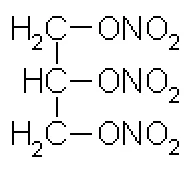
Physicochemical properties: A colorless, slightly volatile odorless oily liquid, with a sweet burning taste. It is soluble in alcohol, acetone, chloroform, ether and glacial acetic acid and sparingly soluble in glycerol and liquid petrolatum.
CLINICAL TRIALS
Pharmacodynamics:
A double blind randomized three-way, crossover study was conducted in 16 subjects with stable angina to assess the anti-anginal efficacy of MYLAN-NITRO SUBLINGUAL SPRAY 0.4 mg per metered dose and compare it with the reference brand Nitrolingual® Spray (nitroglycerin) 0.4 mg per metered dose and placebo.
A summary of the results is presented in the following table:
Time to onset of angina and time to moderate angina during exercise tolerance test following sublingual administration of nitroglycerin spray 0.4 mg or placebo.
Arithmetic Mean (CV%) [Least-Squares Means] | ||||
|---|---|---|---|---|
| Parameter | Test* | Reference† | Placebo Control | 90% Confidence Interval Mean Ratios (Test/Reference) |
| Time to onset of angina (seconds) | 264.1 (36.5%) [261.2] | 263.0 (34.9%) [261.5] | 187.8 (37.3%) [187.1] | 88.5 – 111.3 % |
| Time to moderate angina (seconds) | 313.4 (31.5%) [308.4] | 307.4 (29.1%) [307.3] | 224.4 (28.7%) [225.7] | 91.8 – 108.9 % |
* MYLAN-NITRO SUBLINGUAL SPRAY 0.4 mg per metered dose
† Nitrolingual® Spray (nitroglycerin) 0.4 mg per metered dose
Pharmacokinetics:
In one study of healthy males (n=13), nitroglycerin was shown to have an apparent volume of distribution of approximately 250 litres. No statistically significant differences were demonstrated between the mean values of maximum plasma concentration (Cmax) and time to achieve Cmax (Tmax) with equal doses (0.8 mg) of nitroglycerin spray and sublingual nitroglycerin tablets.
Cmax after 0.8 mg of nitroglycerin by spray administration occurred on average within 5 minutes and the apparent plasma elimination half-life was approximately 5 minutes.
DETAILED PHARMACOLOGY
In both animals and humans, the primary pharmacological effect of nitroglycerin is its smooth muscle relaxant effect. Its therapeutic effectiveness depends on its actions on vascular smooth muscle. The effect on venous system is stronger than that on arterial circulation.
In coronary occluded dogs, nitroglycerin given intravenously (200-300 μg/min. for 8 hours) decreased S-T segment elevations accompanying myocardial ischemia. Coronary blood flow in the sub-endocardium of ischemic areas increased by 45% but prolonged i.v. administration of nitroglycerin did not decrease infarct size.
TOXICOLOGY
Acute Toxicity
The intravenous lethal dose of nitroglycerin was found to be 83.5 mg/kg in the guinea pig, while the intravenous LD50 was 43 mg/kg in the rabbit. The lethal dose following intramuscular administration to rabbits, guinea pigs, rats and cats varied between 150 and 500 mg/kg. Orally, doses of 80 to 100 mg/kg were found to be lethal in the guinea pig and rat.
The signs and symptoms of nitroglycerin toxicity in these animals were usually circulatory collapse, convulsions and methemoglobinemia.
Subacute Toxicity
Subcutaneous administration of nitroglycerin at a low dose of 0.1 mg/kg daily to cats for a period of 40 days produced anemia and fatty degeneration of the liver. Daily doses as high as 7.5 or 15 mg/kg given subcutaneously for a period of 50 days were given to cats. Two died after 10 to 20 doses, respectively. The surviving animals showed jaundice and albuminuria, and hemorrhages of the cerebellum, heart, liver and spleen were seen at post-mortem.
REFERENCES
- 1. Chevigne M, Renier J, Rigo P, Demoulin JC, Collignon P, Kulbertus HE. Efficacite de la nitroglycerine en nebuliseur. [French] Effectiveness of nitroglycerin spray. Ref Med Intern 1980;1(2):265-72.
- 2. Chevigne M, Collignon P, Kulbertus HE. Hemodynamic response to glyceryl trinitrate in a spray at rest and during exercise in a sitting position. Cardiology 1982;69(2):84-90.
- 3. Lee G, Low R, Price J, Nguyen T, Mason DT. Efficacy of nitroglycerin oral spray - hemodynamic comparison with sublingual nitroglycerin showing more rapid and sustained benefit with less hypotensive response in coronary patients. Clin Res 1980;28(2):A191.
- 4. Kimchi A, Lee G, Kozina JA, Amsterdam EA, Joye JA, Mason DT. Antianginal efficacy of nitroglycerin oral spray: new and rapid therapeutic mode demonstrated by exercise treadmill testing in coronary-disease patients. Circulation 1980;62(4):126.
- 5.
Lee G, Kimchi A, Hedden L, Joye JA, Low RI Mason DT. Rapid improvements in abnormal ischemic-induced contractility, compliance and pump function provided by
nitroglycerin oral spray in coronary-disease with angina. Clin Res 1981;29(2):A217.
- 6. Kimchi A, Lee G, Amsterdam E, Fujii K, Krieg P, Mason DT. Increased exercise tolerance after nitroglycerin oral spray: a new and effective therapeutic modality in angina pectoris. Circulation Vol 67, 124-127.
- 7. Kimchi A, Lee G, Amsterdam EA, Fujii K, Krieg P, Mason DT. Prophylactic use of nitroglycerin oral spray - new and rapid therapeutic mode demonstrated in patients with stable myocardial ischemic pain. Clin Res 1982;30(1):A83.
- 8. de Mey C, Erb K, Zimmermann T, Mutschler H, Blume H, Belz GG. Clinical pharmacological equivalence of a novel FCH-free GTN spray with low ethanol content vs a FCH-containing GTN spray. Eur J Clin Pharmacol 1994;47(5): 437-443.
- 9. Parker JO, Farrell B, Vankoughnett KA. Nitroglycerin lingual spray in angina. Circulation 1985;72(4):430.
- 10. PrNITROLINGUAL® PUMPSPRAY, Sanofi-aventis Canada Inc., Product Monograph dated: June 15, 2017, Control No.: 203587.