


Product Monograph - Navane
RECENT MAJOR LABEL CHANGES
| 2 CONTRAINDICATIONS | 05/2023 |
|---|---|
| 3 SERIOUS WARNINGS AND PRECAUTIONS BOX | 05/2023 |
| 4 DOSAGE AND ADMINISTRATION, Dosing Considerations in Special Populations | 05/2023 |
| 7 WARNINGS AND PRECAUTIONS, Cardiovascular | 05/2023 |
| 7 WARNINGS AND PRECAUTIONS, Peri-Operative Considerations | 05/2023 |
| 7 WARNINGS AND PRECAUTIONS, Renal | 05/2023 |
| 7 WARNINGS AND PRECAUTIONS, 7.1.2 Breast-feeding | 05/2023 |
| 7 WARNINGS AND PRECAUTIONS, 7.1.4 Geriatrics | 05/2023 |
TABLE OF CONTENTS
Sections or subsections that are not applicable at the time of authorization are not listed.
RECENT MAJOR LABEL CHANGES ............................................................................................ 2
TABLE OF CONTENTS .............................................................................................................. 2
PART I: HEALTH PROFESSIONAL INFORMATION ...................................................................... 4
1 INDICATIONS ............................................................................................................... 4
1.1 Pediatrics ................................................................................................................ 4
1.2 Geriatrics ................................................................................................................ 4
2 CONTRAINDICATIONS ................................................................................................. 4
3 SERIOUS WARNINGS AND PRECAUTIONS BOX ............................................................ 5
4 DOSAGE AND ADMINISTRATION ................................................................................. 5
4.1 Dosing Considerations ............................................................................................ 5
4.2 Recommended Dose and Dosage Adjustment ....................................................... 5
4.5 Missed Dose ........................................................................................................... 6
5 OVERDOSAGE .............................................................................................................. 6
6 DOSAGE FORMS, STRENGTHS, COMPOSITION AND PACKAGING ................................. 7
7 WARNINGS AND PRECAUTIONS .................................................................................. 7
7.1 Special Populations............................................................................................... 11
7.1.1 Pregnant Women ........................................................................................... 11
7.1.2 Breast-feeding ................................................................................................ 12
7.1.3 Pediatrics ........................................................................................................ 12
7.1.4 Geriatrics ........................................................................................................ 12
8 ADVERSE REACTIONS ................................................................................................ 12
8.1 Adverse Reaction Overview .................................................................................. 12
8.5 Post-Market Adverse Reactions ........................................................................... 12
9 DRUG INTERACTIONS ................................................................................................ 15
9.2 Drug Interactions Overview .................................................................................. 15
9.3 Drug-Behavioural Interactions .............................................................................. 15
9.4 Drug-Drug Interactions ......................................................................................... 15
9.5 Drug-Food Interactions ......................................................................................... 16
9.6 Drug-Herb Interactions ......................................................................................... 16
9.7 Drug-Laboratory Test Interactions ........................................................................ 16
10 CLINICAL PHARMACOLOGY ....................................................................................... 16
10.1 Mechanism of Action ...................................................................................... 16
10.2 Pharmacodynamics ........................................................................................ 16
10.3 Pharmacokinetics ........................................................................................... 17
11 STORAGE, STABILITY AND DISPOSAL ......................................................................... 17
12 SPECIAL HANDLING INSTRUCTIONS ........................................................................... 17
PART II: SCIENTIFIC INFORMATION ....................................................................................... 18
13 PHARMACEUTICAL INFORMATION ............................................................................ 18
14 CLINICAL TRIALS ........................................................................................................ 18
15 MICROBIOLOGY ........................................................................................................ 18
16 NON-CLINICAL TOXICOLOGY ..................................................................................... 18
PATIENT MEDICATION INFORMATION .................................................................................. 20
PART I: HEALTH PROFESSIONAL INFORMATION
1 INDICATIONS
NAVANE (thiothixene capsules) is indicated for:
- The management of schizophrenia and other psychotic disorders.
As with other antipsychotic agents, some patients resistant to previous medication have responded favorably to NAVANE. It may also be of value in the management of withdrawn, apathetic schizophrenic patients.
NAVANE is not recommended for the treatment of non-psychotic mental and emotional disorders.
1.1 Pediatrics
Pediatrics (< 18 years of age): No data are available to Health Canada; therefore, Health Canada has not authorized an indication for pediatric use.
1.2 Geriatrics
Geriatrics (≥ 65 years of age): NAVANE is not indicated for patients with dementia (see 3 SERIOUS WARNINGS AND PRECAUTIONS BOX). Evidence from clinical studies and experience suggests that use in the geriatric population is associated with differences in safety or effectiveness. Caution should be used when treating geriatric patients.
2 CONTRAINDICATIONS
NAVANE is contraindicated in children under 12 years of age.
NAVANE is contraindicated in patients with:
- Hypersensitivity to NAVANE or to any ingredient in the formulation, including any non-medicinal ingredient, or component of the container. For a complete listing, see 6 DOSAGE FORMS, STRENGTHS, COMPOSITION AND PACKAGING
- Allergy to phenothiazine derivatives (cross sensitivity between thioxanthenes and phenothiazine derivatives is not fully established).
- Circulatory collapse, hypotension, severe heart or blood vessel disorder
- Blood dyscrasias (such as anemia, low white blood cells, or low platelet counts)
- Liver damage
- Severe kidney disease
- Brain damage
- Central nervous system depression or comatose states due to alcohol or certain medications (see 9.4 Drug-Drug Interactions)
- Regional or spinal anesthesia
- Pheochromocytoma
3 SERIOUS WARNINGS AND PRECAUTIONS BOX
Serious Warnings and Precautions
|
|---|
4 DOSAGE AND ADMINISTRATION
4.1 Dosing Considerations
The use of NAVANE in children under 18 years of age is not recommended, as safety and efficacy data for its use have not yet been accumulated in sufficient quantities.
Patients should have baseline and periodic monitoring of blood glucose and body weight.
When prescribing NAVANE all potential risk factors for venous thromboembolism (VTE) should be identified and preventive measures undertaken.
Neutropenia, granulocytopenia and agranulocytosis have been reported with antipsychotic use. Therefore, it is recommended that patients have their complete blood count (CBC) tested prior to starting NAVANE and then periodically throughout treatment.
To lessen the likelihood of adverse reactions related to drug accumulation, patients on long-term therapy, particularly on high doses, should be evaluated periodically to decide whether the maintenance dosage could be lowered, or drug therapy discontinued. Periodic blood counts and liver function tests should be performed. Sudden onset of severe central nervous system or vasomotor symptoms should be kept in mind.
4.2 Recommended Dose and Dosage Adjustment
The usual optimal dosage of NAVANE is in the range of 15 to 30 mg daily. In most conditions, the initial dosage should be 5-10 mg daily. The dosage should be gradually increased to the optimally effective level based on patient response. An increase to 60 mg/day may be necessary; however, exceeding a total daily dosage of 60 mg/day rarely increases beneficial response.
The dosage should be reduced to the lowest possible maintenance level as soon as possible.
Maintenance Dose
Patients on the average therapeutic dosage may be maintained on once-a-day therapy. Higher dosage can be given in two or three equally divided doses.
Dosing Considerations in Special Populations
Pediatrics (≤ 18 years of age): Health Canada has not authorized an indication for pediatric use (see 1.1 Pediatrics).
Hepatic Impairment: Patients with hepatic impairment should be treated with caution, NAVANE is contraindicated in patients with liver damage (see 2 CONTRAINDICATIONS).
Renal Impairment: Treatment with NAVANE is contraindicated in patients with severe kidney disease (see 2 CONTRAINDICATIONS).
4.5 Missed Dose
If the patient misses a dose, instruct the patient to take the dose as soon as they remember. If it is almost time for the next dose, inform the patient to skip the missed dose and continue with the regular dosing schedule. Doses should not be doubled.
5 OVERDOSAGE
Symptoms: Manifestations include muscular twitching, drowsiness, dizziness, extrapyramidal symptoms, convulsions, QT prolongation, Torsade de pointe, cardiac arrest, ventricular arrhythmias, and shock or hyper-or hypothermia. Symptoms of gross overdosage may include CNS depression, rigidity, weakness, torticollis, tremor, salivation, dysphagia, hypotension, disturbances of gait, or coma.
Treatment: Essentially symptomatic and supportive. Early gastric lavage may be helpful. Keep patient under careful observation and maintain an open airway, since involvement of the extrapyramidal system may produce dysphagia and respiratory difficulty in severe overdosage. If hypotension occurs, the standard measures for managing circulatory shock should be used (I.V. fluids and/or vasoconstrictors).
If a vasoconstrictor is needed, levarterenol and phenylephrine are the most suitable drugs. Other pressor agents, including epinephrine, are not recommended, since phenothiazine derivatives may reverse the usual pressor elevating action of these agents and cause further lowering of blood pressure (see 9.4 Drug-Drug Interactions).
If CNS depression is present, recommended stimulants include caffeine and sodium benzoate. Picrotoxin or pentylenetetrazol should be avoided (see 9.4 Drug-Drug Interactions). Extrapyramidal symptoms may be treated with antiparkinson drugs.
There are no data on the use of peritoneal or hemodialysis, but they are known to be of little value in phenothiazine intoxication.
| For management of a suspected drug overdose, contact your regional poison control centre. |
|---|
6 DOSAGE FORMS, STRENGTHS, COMPOSITION AND PACKAGING
Table 1 - Dosage Forms, Strengths, Composition and Packaging
NAVANE capsules containing 5 mg: orange body and white cap, imprinted “5 mg”, available in bottles of 100 capsules.
7 WARNINGS AND PRECAUTIONS
Please see 3 SERIOUS WARNINGS AND PRECAUTIONS BOX.
General
As in the case of other CNS-acting drugs, patients receiving NAVANE should be cautioned about the possible additive effects (which may include hypotension) with CNS depressants and with alcohol. Potentiation of central nervous system depressants (sedatives, tranquilizers, narcotic analgesics, antihistamines, anaesthetics, and alcohol), atropine and organophosphorus insecticides, and reversal of epinephrine effect, have been observed with related drugs (see 2 CONTRAINDICATIONS, and 9.4 Drug-Drug Interactions).
Use with caution in patients exposed to extreme heat.
An antiemetic effect observed in animal studies with thiothixene may also occur in human; therefore, it is possible that NAVANE may mask signs of overdosage of toxic drugs and it may obscure conditions such as intestinal obstruction and brain tumor.
Cardiovascular
Production or aggravation of electrocardiogram (ECG) changes has occurred with thiothixene and therefore caution should be observed when there is increased risk to the patient (see 8 ADVERSE REACTIONS).
Cardiotoxicity: As with other drugs belonging to the therapeutic class of antipsychotics, NAVANE may cause QT prolongation. Persistently prolonged QT intervals may increase the risk of malignant arrhythmias. Therefore, NAVANE should be used with caution in susceptible individuals (with hypokalemia, hypomagnesemia, or genetic predisposition) and in patients with a history of cardiovascular disorders, e.g., QT prolongation, significant bradycardia (≤50 beats per minute), a recent acute myocardial infarction, uncompensated heart failure, or cardiac arrhythmia. Concomitant treatment with other antipsychotics should be avoided.
| Route of Administration | Dosage Form / Strength / Composition | Non-medicinal Ingredients |
| Oral | Capsule, 5mg thiothixene | Corn starch, FD&C red # 3, FD&C yellow #6, gelatin (bovine), lactose, magnesium stearate, silicon dioxide, sodium lauryl sulphate, titanium dioxide. |
Increases in the QT interval related to antipsychotic treatment may be exacerbated by the co-administration of other drugs known to significantly increase the QT interval. Co-administration of such drugs should be avoided (see 9.4 Drug-Drug Interactions).
Cardiovascular Disease: Caution should be used when using NAVANE in patients with severe arteriosclerosis or in those who may have a propensity for development of defects in cardiac conduction.
Vascular disease: NAVANE should be used with caution in patients with risk factors for stroke or with a history of stroke.
Venous thromboembolism (VTE): VTE, including fatal pulmonary embolism, has been reported with antipsychotic drugs, including NAVANE, in case reports and/or observational studies. When prescribing NAVANE all potential risk factors for VTE should be identified and preventive measures undertaken.
Driving and Operating Machinery
As is true with many CNS drugs, NAVANE may impair the mental and/or physical abilities required for the performance of potentially hazardous tasks such as driving a car or operating machinery, especially during the first few days of therapy. Therefore, the patient should be cautioned accordingly.
Endocrine and Metabolism
Hyperglycemia: Diabetic ketoacidosis (DKA) has occurred in patients with no reported history of hyperglycemia. Patients should have baseline and periodic monitoring of blood glucose and body weight.
Hyperprolactinemia: Neuroleptic drugs, including NAVANE, may elevate prolactin levels in humans; the elevation persists during chronic administration. Tissue culture experiments indicate that approximately one third of human breast cancers are prolactin dependent in vitro, a factor of importance if the prescription of these drugs is contemplated in a patient with a previously detected breast cancer. Although disturbances such as galactorrhea, amenorrhea, gynecomastia, and impotence have been reported, the clinical significance of elevated serum prolactin levels is unknown for most patients.
Long-standing hyperprolactinemia when associated with hypogonadism may lead to decreased bone mineral density in both female and male subjects.
Gastrointestinal
Patients should be advised of the risk of severe constipation during NAVANE treatment, and that they should tell their doctor if constipation occurs or worsens, as they may need laxatives.
Hematologic
Neutropenia, leukopenia, granulocytopenia and agranulocytosis have been reported during antipsychotic use. Therefore, it is recommended that patients have their complete blood count (CBC) and white blood cell count (WBC) tested prior to starting NAVANE and then periodically throughout treatment.
Blood dyscrasias (agranulocytosis, pancytopenia, thrombocytopenic purpura) have been reported with related drugs.
Hepatic/Biliary/Pancreatic
Liver damage (jaundice, biliary stasis) has been reported with related drugs.
Monitoring and Laboratory tests
- Blood glucose and body weight at baseline and periodically throughout treatment.
- Complete blood count (CBC) at baseline and periodically throughout treatment.
- WBC and differential counts and liver function tests periodically during therapy.
- Sore throat, fever, and weakness in patients on prolonged therapy may indicate agranulocytosis. If these symptoms appear, discontinue the medication and perform liver function tests.
- Renal function of patients on prolonged therapy. If abnormal values are observed, discontinue the medication.
- Blood pressure.
Neurologic
Cerebrovascular Accident: An approximately 3-fold increased risk of cerebrovascular adverse event has been seen in randomized placebo-controlled trials in the dementia population with some atypical antipsychotics. The mechanism for this increased risk is not known. An increased risk cannot be excluded for other patient populations. NAVANE is not indicated for patients with dementia.
Neuroleptic Malignant Syndrome (NMS): Neuroleptic malignant syndrome is a potentially fatal symptom complex that has been reported in association with antipsychotic drugs, including NAVANE. The clinical manifestations of NMS are hyperpyrexia, muscle rigidity, altered mental status (including catatonic signs) and evidence of autonomic instability (irregular pulse or blood pressure, tachycardia, diaphoresis, and cardiac dysrhythmias).
Additional signs may include elevated creatine phosphokinase, myoglobinuria (rhabdomyolysis), and acute renal failure.
The diagnostic evaluation of patients with this syndrome is complicated. In arriving at a diagnosis, it is important to identify cases where the clinical presentation includes both serious medical illness (e.g., pneumonia, systemic infection, etc.) and untreated or inadequately treated extrapyramidal signs and symptoms (EPS). Other important considerations in the differential diagnosis include central anticholinergic toxicity, heat stroke, drug fever and primary central nervous system (CNS) pathology.
The management of NMS should include 1) immediate discontinuation of antipsychotic drugs and other drugs not essential to concurrent therapy, 2) intensive symptomatic treatment and medical monitoring, and 3) treatment of any concomitant serious medical problems for which specific treatments are available. There is no general agreement about specific pharmacological treatment regimens for uncomplicated NMS.
If a patient required antipsychotic drug treatment after recovery from NMS, the potential reintroduction of drug therapy should be carefully considered. The patient should be carefully monitored, since recurrences of NMS have been reported (see 8.1 Adverse Reaction Overview).
Tardive Dyskinesia: Tardive dyskinesia, a syndrome consisting of potentially irreversible, involuntary, dyskinetic movements may develop in patients treated with antipsychotic drugs, including NAVANE. Although the prevalence of the syndrome appears to be highest among the elderly, especially elderly women, it is impossible to predict, at the beginning of treatment, which patients are likely to develop the syndrome. Whether neuroleptic drug products differ in their potential to cause tardive dyskinesia is unknown.
Both the risk of developing the syndrome and the likelihood that it will become irreversible are believed to increase as the duration of treatment and the total cumulative dose of antipsychotic administered increase. However, the syndrome can develop, although much less commonly, after relatively brief treatment periods at low doses.
There is no known treatment for established cases of tardive dyskinesia, although the syndrome may remit, partially or completely, if antipsychotic treatment is withdrawn. Antipsychotic treatment itself, however, may suppress (or partially suppress) the signs and symptoms of the syndrome. What effect suppression has upon the long-term course of the syndrome is unknown.
Given this consideration, NAVANE should be prescribed in a manner that is most likely to minimize the risk of the occurrence of tardive dyskinesia. As with any antipsychotic drug, chronic NAVANE use should be reserved for patients who appear to be obtaining substantial benefit from the drug. In such patients, the smallest dose and the shortest duration of treatment should be sought. The need for continued treatment should be reassessed periodically. If signs and symptoms of tardive dyskinesia appear in a patient on NAVANE, drug discontinuation should be considered. However, some patients may require treatment with NAVANE despite the presence of the syndrome (see 8.5 Post-Market Adverse Reactions).
Seizures: In consideration of the known capability of NAVANE and certain other antipsychotic drugs to precipitate convulsions, extreme caution should be used in patients with a history of convulsive disorders or those in a state of alcohol withdrawal, since it may lower the convulsive threshold. Although NAVANE potentiates the actions of the barbiturates, the dosage of the anticonvulsant therapy should not be reduced when NAVANE is administered concurrently.
Patients with Parkinson’s disease: NAVANE should be used with caution in patients with Parkinsonism, as it is known that dopamine antagonists such as NAVANE, can cause a deterioration of the disease.
Ophthalmologic
Though exhibiting rather weak anticholinergic properties, NAVANE should be used with caution in patients who are known or are suspected to have narrow angle glaucoma.
Careful observation should be made for pigmentary retinopathy, lenticular edema and corneal deposits (fine lenticular pigmentation have been reported in a small number of patients treated with NAVANE for prolonged periods).
Peri-Operative Considerations
Patients on large doses of NAVANE who are undergoing surgery should be watched carefully for possible hypotensive phenomena. Moreover, it should be remembered that reduced amounts of anesthetics or CNS depressants may be required (see 2 CONTRAINDICATIONS).
Renal
This medication is contraindicated in patients with severe kidney disease (see 2 CONTRAINDICATIONS). Renal function of patients on prolonged therapy. If abnormal values are observed, discontinue the medication.
Reproductive Health: Female and Male Potential
See 7.1.1 Pregnant Women
- Fertility
No data are available.
- Function
Rare cases of priapism have been reported with antipsychotic use, such as NAVANE. This adverse reaction, as with other psychotropic drugs, did not appear to be dose- dependent and did not correlate with the duration of treatment. Caution should be advised in patients with prostatic hypertrophy.
- Teratogenic Risk
Non-Teratogenic Effect: Neonates exposed to antipsychotic drugs (including NAVANE) during the third trimester of pregnancy are at risk for extrapyramidal and/or withdrawal symptoms following delivery. There have been reports of agitation, hypertonia, hypotonia, tremor, somnolence, respiratory distress and feeding disorder in these neonates. These complications have varied in severity, while in some cases symptoms have been self- limited, in other cases neonates have required intensive care unit support and prolonged hospitalization.
Skin
Photosensitive reactions have been reported in patients on NAVANE. Undue exposure to sunlight should be avoided.
7.1 Special Populations
7.1.1 Pregnant Women
Safe use of NAVANE in pregnancy has not been established. NAVANE should not be used in women of child-bearing potential or during pregnancy unless the expected benefits to the mother markedly outweigh the potential risks to the fetus (see WARNINGS AND PRECAUTIONS, Reproductive Health: Female and Male Potential).
7.1.2 Breast-feeding
It is unknown if NAVANE (thiothixene) is excreted in human milk but medications from the same class have been detected in milk. Breast-feeding is not recommended during treatment with NAVANE.
7.1.3 Pediatrics
Pediatrics (< 18 years of age): No data are available to Health Canada; therefore, Health Canada has not authorized an indication for pediatric use.
7.1.4 Geriatrics
Studies with various medicines of the group to which NAVANE belongs, when used in the elderly patients with dementia, have been associated with an increased rate of death.
Use in Geriatric with Dementia
Overall Mortality
NAVANE is not indicated for the treatment of elderly patients with dementia.
In a meta-analysis of 13 controlled clinical trials, elderly patients with dementia treated with atypical antipsychotic drugs had an increased risk of mortality compared to placebo. Observational studies suggest that, similar to atypical antipsychotic drugs, treatment with conventional antipsychotic drugs may increase mortality. The extent to which the findings of increased mortality in observational studies may be attributed to the antipsychotic drug as opposed to some characteristic(s) of the patients is not clear (see 2 CONTRAINDICATIONS, 3 SERIOUS WARNINGS AND PRECAUTIONS BOX).
8 ADVERSE REACTIONS
8.1 Adverse Reaction Overview
Since NAVANE (thiothixene) has pharmacologic properties similar to those of the phenothiazine, all the known adverse reactions of that class of drugs should be borne in mind when NAVANE is used.
Adverse effects with different phenothiazines vary in type, frequency, and mechanism of occurrence, i.e., some are dose-related, while others involve individual patient sensitivity. Some adverse effects may be more likely to occur, or occur with greater intensity, in patients with special medical problems, e.g., patients with mitral insufficiency or pheochromocytoma have experienced severe hypotension following recommended doses of certain phenothiazines.
8.5 Post-Market Adverse Reactions
- Behavioral Reactions: The most common side-effects are initial and transient drowsiness, restlessness and agitation, and insomnia. (The incidence of sedation appears to be similar to
- that of the piperazine group of phenothiazine, but less than that of certain aliphatic phenothiazine).
- Other adverse reactions reported less frequently are weakness or fatigue, excitement, depression and headache.
- Hyperactivity, both psychic and motor, should be considered a pharmacologic effect of the drug which may be desirable, except in the patient who is already agitated and excited. Activation of psychotic symptomatology has been observed, but it usually responds to reduction of dosage or temporary discontinuation of the drug. Toxic confusional states may occur on rare occasions.
- CNS Effects: The incidence and nature of extrapyramidal symptoms, including akathisia, pseudo-Parkinsonism and dystonic reactions (prolonged abnormal contraction of group muscles including spasm of the neck muscles, sometimes progressing to tightness of the throat, swallowing difficulty, difficulty breathing, and/or protrusion of the tongue), are similar to those encountered with the piperazine phenothiazine, but thiothixene is more likely to produce akathisia. They are usually controlled by reduction of dosage and/or administration of antiparkinson drugs depending on the type and severity of symptoms. Cerebral seizures have been reported (see 7 WARNINGS AND PRECAUTIONS, Neurologic). Phenothiazine derivatives have been associated with cerebral edema and cerebrospinal fluid abnormalities.
- Hyperreflexia has been reported in infants delivered from mothers having received structurally related drugs.
- Persistent Tardive Dyskinesias: As with all antipsychotic agents, tardive dyskinesia may appear in some patients on long-term therapy with thiothixene or may occur after drug therapy has been discontinued. The syndrome is characterized by rhythmical involuntary movements of the tongue, face, mouth or jaw (e.g. protrusion of tongue, puffing of cheeks, puckering of mouth, chewing movements). Sometimes these may be accompanied by involuntary movements of extremities. Since early detection of tardive dyskinesia is important, patients should be monitored on an ongoing basis. It has been reported that fine vermicular movement of the tongue may be an early sign of the syndrome. If this or any other presentation of the syndrome is observed, the clinician should consider discontinuation of antipsychotic medication (see 7 WARNINGS AND PRECAUTIONS, Neurologic).
- Neuroleptic Malignant Syndrome (NMS): see 7 WARNINGS AND PRECAUTIONS, Neurologic.
- Autonomic Nervous System: Dry mouth, blurred vision, nasal congestion, constipation, increased sweating, increased salivation, and impotence have occurred infrequently with NAVANE therapy. Phenothiazines have been associated with miosis, mydriasis, and adynamic ileus.
- Cardiovascular: Tachycardia, hypotension, light-headedness, and syncope. In the event hypotension occurs, epinephrine should not be used as a pressor agent since, a paradoxical further lowering of blood pressure may result. Nonspecific EKG changes have been observed in some patients receiving thiothixene. These changes are usually reversible and frequently disappear on continued thiothixene therapy. The clinical significance of these changes is not
- known. Cardiac arrhythmias, including A-V block, paroxysmal tachycardia and ventricular fibrillation have been observed with some phenothiazines (see WARNINGS AND PRECAUTIONS, Cardiology).
- Endocrine Effects: Hyperprolactinemia, lactation, menstrual irregularities, moderate breast enlargement and amenorrhea have occurred in a small percentage of females receiving thiothixene. If persistent, this may necessitate a reduction in dosage or the discontinuation of therapy. Phenothiazines have been associated with false positive pregnancy tests, gynecomastia, hypoglycemia, hyperglycemia, and glycosuria.
- Allergic Reactions: Rash, pruritus, urticaria, photosensitivity and rare cases of anaphylaxis have been reported with thiothixene. Although not experienced with NAVANE, exfoliative dermatitis, contact dermatitis (in nursing personnel), have been reported with certain phenothiazines.
- Hematologic: As is true with certain other antipsychotic drugs, leukopenia and leucocytosis, which are usually transient, can occur occasionally with thiothixene. Other antipsychotic drugs have been associated with agranulocytosis, eosinophilia, hemolytic anemia, thrombocytopenia and pancytopenia.
- Hepatotoxicity: Elevations of serum transaminase and alkaline phosphatase, usually transient, have been infrequently observed in some patients. Cases of jaundice attributable to related drugs have been reported.
- Ophthalmologic Fine lenticular pigmentation has been noted after prolonged therapy (see WARNINGS AND PRECAUTIONS, Ophthalmology).
- Miscellaneous: Sudden unexpected and unexplained deaths have been reported in hospitalized psychotic patients receiving phenothiazines. In some cases, the cause of death was apparently cardiac arrest or asphyxia due to failure of the cough reflex. In others, the cause could not be determined, nor could it be established that death was due to phenothiazine administration. Previous brain damage or seizures may be predisposing factors; high doses should be avoided in known seizure patients. Several patients have shown flare-ups of psychotic behavior patterns shortly before death. Autopsy findings have usually revealed acute fulminating pneumonia or pneumonitis, aspiration of gastric contents or intramyocardial lesions. The physician should therefore be alert to the possible development of "silent pneumonias".
The following have also occurred with the phenothiazines: systemic lupus erythematosus like syndrome, altered CSF proteins, cerebral edema.
Hyperpyrexia, anorexia, nausea, vomiting, diarrhea, increase in appetite and weight, weakness or fatigue, polydipsia and peripheral edema. Although not reported with thiothixene, evidence indicates there is a relationship between phenothiazine therapy and the occurrence of a systemic lupus erythematosus-like syndrome.
9 DRUG INTERACTIONS
9.2 Drug Interactions Overview
Caution as well as careful adjustment of the dosages is indicated when NAVANE is used in conjunction with other CNS depressants (alcohol, barbiturates, analgesics, narcotics and antihistaminic).
9.3 Drug-Behavioural Interactions
- As in the case of other CNS-acting drugs, patients receiving NAVANE should be cautioned about the possible additive effects (which may include hypotension) with CNS depressants and with alcohol.
Potentiation of central nervous system depressants and organophosphorus insecticides have been observed with related drugs.
9.4 Drug-Drug Interactions
The drugs listed in this table are based on either drug interaction case reports or studies, or potential interactions due to the expected magnitude and seriousness of the interaction (i.e., those identified as contraindicated).
Table 2 - Established or Potential Drug-Drug Interactions
| Drug name / class | Source of Evidence | Effect | Clinical comment |
| CNS depressants, e.g. sedatives, tranquilizers, narcotic analgesics, antihistamines, anaesthetics, alcohol | C, T | Potentiation of central nervous system depressants | Caution as well as careful adjustment of the dosages is indicated when NAVANE is used in conjunction with other CNS depressants. |
| Atropine | C, T | Potentiation of central nervous system depressants | Caution is warranted. |
| Epinephrine | C, T | Reversal of epinephrine effect | Paradoxical further lowering of blood pressure may result. Caution is warranted. |
| Hepatic microsomal enzyme inducing agents, e.g. carbamazepine | C | Significantly increase the clearance of thiothixene | Patients receiving these drugs should be observed for signs of reduced effectiveness of NAVANE. |
| Drug name / class | Source of Evidence | Effect | Clinical comment |
| Hypotensive agents | T | Possible additive effect | Patients receiving these drugs should be observed closely for signs of excessive hypotension when thiothixene is added to their drug regimen. |
Legend: C = Case Study; CT = Clinical Trial; T = Theoretical
9.5 Drug-Food Interactions
Interactions with food have not been established.
9.6 Drug-Herb Interactions
Interactions with herbal products have not been established.
9.7 Drug-Laboratory Test Interactions
Interactions with laboratory tests have not been established.
10 CLINICAL PHARMACOLOGY
10.1 Mechanism of Action
NAVANE (thiothixene) is an antipsychotic agent of the thioxanthene series. NAVANE possesses certain chemical and pharmacologic similarities to the piperazine phenothiazines and differences from the aliphatic group of phenothiazines. The mode of action of NAVANE has not been clearly established.
10.2 Pharmacodynamics
Psychopharmacologic studies of thiothixene in animals reveal that it exerts several actions generally considered characteristic of antipsychotic drugs. It blocks conditioned avoidance behavior in rats and monkeys, various central stimulant actions of amphetamine in mice and rats, and apomorphine-induced emesis in dogs.
Thiothixene suppresses conditioned avoidance behavior in rats at intraperitoneal doses of about 3.2 mg/kg. Escape behavior, however, is virtually unimpaired, even at 32 mg/kg. Similarly, thiothixene blocks the motor stimulation, mortality and characteristic stereotypy produced by amphetamine. Thermoregulation is virtually unaffected.
Like many phenothiazine derivatives thiothixene induces catalepsy in rats and both catalepsy and tremors in dogs and monkeys. Thiothixene does not cause loss of righting reflex at sublethal doses, nor does it induce skeletal muscle flaccidity. The hypnotic potentiating effect of thiothixene is relatively low.
Thiothixene causes only a slight hypotensive effect in unanesthetized dogs, even after 10 mg/kg orally. In anesthetized dogs, even after intravenous doses of 4 mg/kg, thiothixene also exerts only a mild hypotensive effect. At this same dose thiothixene reduces the pressor effects of epinephrine, norepinephrine and histamine without affecting the response of acetylcholine or angiotensin.
Thiothixene is essentially ineffective as an anticonvulsant, analgesic or diuretic. Its smooth-muscle spasmolytic effects against contractions elicited by acetylcholine, serotonin and especially histamine are relatively weak. The cortical evoked response of cats to thiothixene was similar to their response to other psychotropic drugs.
The overall pattern of effects produced by thiothixene in experimental animals appears to resemble closely that of thioproperazine.
10.3 Pharmacokinetics
Animal pharmacokinetics
Studies on excreta and bile in animals indicate that thiothixene is rapidly metabolized to a wide variety of compounds. Very little unchanged drug is recovered. It must therefore be noted that, from a time soon after absorption, the compounds being measured are primarily the metabolites of thiothixene rather than the parent drug. Thiothixene, like other tricyclic psychotherapeutic agents, appears to be well absorbed orally. Accordingly, although a number of metabolites are seen, very little unchanged drug is found in the feces after oral dosing and 65% of the orally administered radioactivity is recovered in the bile of a rat carrying a bile fistula. Thus, the liver plays a dominant role in the disposal of the drug.
The high initial drug levels in the stomach of rats after oral administration of thiothixene are reminiscent of results obtained with chlorpromazine in mice. The high drug concentrations in the lung reported for chlorpromazine, thioridazine, perphenazine and prochlorperazine, however were not found with thiothixene. Brain tissue also contained relatively little S35 thiothixene. Low levels of drug in the brain have also been noted with trifluoperazine, chlorpromazine and thioridazine. Thiothixene and its metabolites are rapidly cleared from all tissues with the exception of the liver. Low peak serum concentrations are reached shortly after thiothixene administration and decline rapidly, but detectable amounts are still present 5 days after administration. The absorption, distribution, and metabolism of thiothixene administered orally or parenterally are not significantly different.
11 STORAGE, STABILITY AND DISPOSAL
Store at room temperature between 15 and 30 °C away from heat and light. Do not store in the bathroom.
Keep out of the reach and sight of children.
12 SPECIAL HANDLING INSTRUCTIONS
N/A
PART II: SCIENTIFIC INFORMATION
13 PHARMACEUTICAL INFORMATION
Drug Substance
Proper name: Thiothixene
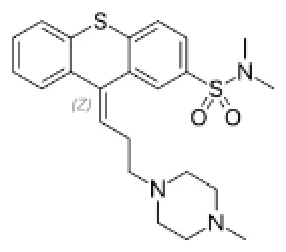
Chemical name: Cis isomer of N,N- dimethyl-9-[3-(4-methyl-1-piperazinyl)-propylidene]thioxanthene-2-sulfonamide
Molecular formula and molecular mass: C23H29N3O2S2, 443.6 g/mol
Structural formula:
Physicochemical properties: white to off-white crystalline powder, practically insoluble in water
14 CLINICAL TRIALS
The clinical trial data on which the original indications were authorized is not available.
15 MICROBIOLOGY
No microbiological information is required for this drug product.
16 NON-CLINICAL TOXICOLOGY
General Toxicology:
Animal toxicologic studies of NAVANE (thiothixene) have been completed. The LD50’s (mg/kg) were: Oral, mice, male 820, female 2090; rats, male 1300, female 1980; dogs 500; IP, mice 530, rats 900. The LD50 (mg/kg) of NAVANE Oral Concentrate was: Oral, mice, male 203. Death could not be produced in male rats at maximally tolerated fluid volumes of 20 ml/kg (equivalent to 100 mg/kg thiothixene base). The intravenous LD50 of NAVANE Intramuscular Solution in male mice and rats was 25.4 and approximately 28 mg/kg respectively. Transient anemia and/or leukopenia have occurred in dogs at doses of 12.5 mg/kg and greater. This was not seen in rats and monkeys. Daily doses of 12.5 mg/kg or more over a prolonged period in the dog have produced elevations of alkaline phosphatase and transaminases and microscopic changes in the liver. Similar microscopic changes in the liver were also seen in rats after prolonged dosage of 50 mg/kg. There were no effects on liver function tests and no microscopic changes in the liver in monkeys. All these effects occurred at dosages 25 to 100 times higher than the usual optimal clinical dose. No ocular toxicity was noted in any of the animal studies with NAVANE even after administration of the drug at doses up to 100 mg/kg/day for periods up to 18 months. Lactation was noted in the rat (in males and females at doses of 5 mg/kg/day and above), the dog (one female at 6 mg/kg/day), and the monkey (one female at 25 mg/kg/day). These effects have been described with other psychotherapeutic agents.
Two dogs receiving intravenous injections of 15 mg/kg/day for 12 days showed severe venous and local irritation, making further injections impossible. Histopathologically, focal areas of acute hepatocellular necrosis were observed in both dogs, and suppression of spermatogenesis was seen in the male. In another study, 15 mg/kg/day i.v. could only be given for 6 days due to the appearance of venous irritation and thrombus formation. Lower doses of 0.5 and 2 mg/kg/day for 30 days produced, with less frequency, similar, but less severe changes.
A vehicle control group showed minimal local irritation. In two additional studies in dogs, intravenous doses of 0.5-5 mg/kg/day for 15 days also produced some local irritation, including thrombus formation. Tremors, decreased activity and respiration, circling, biting, ataxia and prostration were noted following the injection of 5 mg/kg in one of the studies. These effects, however, were reversible and completely regressed within 30 minutes.
In rats, intramuscular injection of thiothixene parenteral solution, given at doses of 50, 25 or 5 mg/kg/day for five days, is irritating, producing muscle necrosis with localized swelling. Intramuscular injections for more than 5 days were not feasible because of irritation greatly magnified because of the large volumes involved.
Genotoxicity
No long-term animal studies have been performed to evaluate mutagenic potential.
Carcinogenicity
No long-term animal studies have been performed to evaluate carcinogenic potential.
Reproductive and Developmental Toxicology:
In the animal reproductive studies with NAVANE, there was some decrease in conception rate, litter size, and the resorption rate in rats and rabbits which has been commonly reported with other psychotherapeutic agents. After repeated oral administration of NAVANE to rats (5 to 15, mg/kg/day), rabbits (3 to 50 mg/kg/day), and monkeys (1 to 3 mg/kg/day) before and during gestation, no teratogenic effects were seen.