


Product Monograph - Octreotide Injection (Mont-Pharma)
RECENT MAJOR LABEL CHANGES
| 4 DOSAGE AND ADMINISTRATION, 4.2 Recommended Dose and Dosage adjustment, Carcinoid Tumors | 03/2023 |
|---|---|
| 4 DOSAGE AND ADMINISTRATION, 4.3 Recommended Dose and Dosage Adjustment, Reconstitution, Parenteral Products | 03/2023 |
| 7 WARNING AND PRECAUTIONS, Hepatic/ Biliary / Pancreatic | 03/2023 |
| 7 WARNING AND PRECAUTIONS, Monitoring and Laboratory Tests | 03/2023 |
| 7 WARNING AND PRECAUTIONS, Fertility | 03/2023 |
| 7 WARNING AND PRECAUTIONS, Teratogenic Risk | 03/2023 |
| 7 WARNING AND PRECAUTIONS, 7.1.4 Geriatrics | 03/2023 |
TABLE OF CONTENTS
Sections or subsections that are not applicable at the time of authorization are not listed.
RECENT MAJOR LABEL CHANGES ............................................................................................. 2
TABLE OF CONTENTS ...................................................................................................................... 2
PART I: HEALTH PROFESSIONAL INFORMATION ................................................................. 4
- 1.
INDICATIONS ............................................................................................................................. 4
1.1 Pediatrics .................................................................................................................................... 5
1.2 Geriatrics .................................................................................................................................... 5
- 2. CONTRAINDICATIONS ............................................................................................................ 5
- 4.
DOSAGE AND ADMINISTRATION ........................................................................................ 5
4.1 Dosing Considerations ............................................................................................................... 5
4.2 Recommended Dose and Dosage Adjustment ........................................................................... 5
4.3 Reconstitution: ........................................................................................................................... 7
4.5 Missed Dose ............................................................................................................................... 7
- 5. OVERDOSAGE ............................................................................................................................ 7
- 6. DOSAGE FORMS, STRENGTHS, COMPOSITION AND PACKAGING ........................... 8
- 7.
WARNINGS AND PRECAUTIONS .......................................................................................... 8
7.1 Special Populations .................................................................................................................. 12
7.1.1. Pregnant Women ............................................................................................................. 12
7.1.2. Breast-feeding .................................................................................................................. 12
7.1.3. Pediatrics ......................................................................................................................... 12
7.1.4. Geriatrics ......................................................................................................................... 13
- 8.
ADVERSE REACTIONS .......................................................................................................... 13
8.1 Adverse Reaction Overview ..................................................................................................... 13
8.2 Clinical Trial Adverse Drug Reactions .................................................................................... 13
8.3 Less Common Clinical Trial Adverse Reactions ..................................................................... 18
8.5 Post-Market Adverse Reactions ............................................................................................... 18
- 9.
DRUG INTERACTIONS ........................................................................................................... 19
9.2. Drug interactions overview ................................................................................................. 19
9.4 Drug-Drug Interactions ............................................................................................................ 19
9.5 drug-Food Interactions ............................................................................................................. 20
9.6 Drug-Herb Interactions............................................................................................................. 20
9.7 Drug-Laboratory Test Interactions ........................................................................................... 20
- 10.
CLINICAL PHARMACOLOGY ......................................................................................... 20
10.1 Mechanism of Action ........................................................................................................... 20
10.2 Pharmacodynamics .............................................................................................................. 20
10.3 Pharmacokinetics ................................................................................................................. 21
- 11. STORAGE, STABILITY AND DISPOSAL ........................................................................ 21
- 12. SPECIAL HANDLING INSTRUCTIONS .......................................................................... 21
- 13. PHARMACEUTICAL INFORMATION ............................................................................ 22
- 14.
CLINICAL TRIALS .............................................................................................................. 23
14.1 Trial Design and Study Demographics ................................................................................ 23
- 15. MICROBIOLOGY ................................................................................................................. 23
- 16. NON-CLINICAL TOXICOLOGY ....................................................................................... 23
- 17. SUPPORTING PRODUCT MONOGRAPHS ..................................................................... 28
PATIENT MEDICATION INFORMATION ................................................................................... 29
PART I: HEALTH PROFESSIONAL INFORMATION
1. INDICATIONS
OCTREOTIDE INJECTION (Solution for Injection or Infusion)
General
OCTREOTIDE INJECTION (octreotide acetate) therapy is indicated for control of symptoms in patients with metastatic carcinoid and vasoactive intestinal peptide-secreting tumors (VIPomas) as well as in patients with acromegaly.
Data are insufficient to determine whether OCTREOTIDE INJECTION decreases the size, rate of growth, or development of metastases in patients with these tumors.
OCTREOTIDE INJECTION is also indicated for the prevention of complications following pancreatic surgery in patients undergoing high risk procedures.
OCTREOTIDE INJECTION is also indicated for the emergency management of bleeding gastrooesophageal varices in patients with cirrhosis and as protection from rebleeding. OCTREOTIDE INJECTION is used in association with specific intervention such as endoscopic sclerotherapy.
Carcinoid Tumors
OCTREOTIDE INJECTION is indicated for the symptomatic treatment of metastatic carcinoid tumors where it suppresses or inhibits the severe diarrhea and flushing episodes associated with the disease.
Vasoactive Intestinal Peptide Tumors (VIPomas)
OCTREOTIDE INJECTION is indicated for the treatment of the profuse watery diarrhea associated with VIP-secreting tumors. Significant improvement has been noted in the overall condition of these otherwise therapeutically unresponsive patients. Therapy with OCTREOTIDE INJECTION results in improvement in electrolyte abnormalities, e.g., hypokalemia, often enabling reduction of fluid and electrolyte support.
Acromegaly
OCTREOTIDE INJECTION is indicated to reduce blood levels of growth hormone and IGF-1 (somatomedin C) including acromegalic patients who have had inadequate response to, or cannot be treated with surgical resection, pituitary irradiation and/or bromocriptine mesylate at maximally tolerated doses.
Since the effects of pituitary irradiation may not become maximal for several years, adjunctive therapy with OCTREOTIDE INJECTION to reduce blood levels of GH and IGF-1 offers potential benefit before the effects of irradiation are manifested.
A clinically relevant growth hormone (GH) reduction (by 50% or more) occurs in almost all patients, and normalisation (plasma GH < 5 mcg/L) can be achieved in about half of the cases.
In most patients, OCTREOTIDE INJECTION markedly reduces the clinical symptoms of the disease such as headache, skin and soft tissue swelling, hyperhydrosis, arthralgia, paresthesia. In patients with a large pituitary adenoma, OCTREOTIDE INJECTION treatment may result in some shrinkage of the tumour mass.
Prevention of Complications following Pancreatic Surgery
OCTREOTIDE INJECTION inhibits basal and stimulated exocrine pancreatic secretion and when administered peri- and post-operatively in patients undergoing high risk pancreatic surgery, reduces the incidence and severity of typical post-operative complications (e.g. pancreatic fistula, abscess and subsequent sepsis and post-operative acute pancreatitis).
Bleeding Gastro-oesophageal Varices
In patients presenting with bleeding gastro-oesophageal varices due to underlying cirrhosis,
OCTREOTIDE INJECTION (octreotide acetate) administration in combination with specific intervention (e.g. sclerotherapy) provides better control of bleeding and early rebleeding, reduces transfusion requirements and improves 5-day survival).
1.1 Pediatrics
Paediatrics (between birth and 18 years of age): No data are available to Health Canada; therefore, Health Canada has not authorized an indication for paediatric use (see WARNINGS AND PRECAUTIONS, 7.1.3. Pediatrics).
1.2 Geriatrics
Information specific to the geriatric population is not available for this drug product.
2. CONTRAINDICATIONS
OCTREOTIDE INJECTION (octreotide acetate) is contraindicated in patients who are hypersensitive to this drug or to any ingredient in the formulation, including any non-medicinal ingredient, or component of the container. For a complete listing, see 6 DOSAGE FORMS, STRENGTHS, COMPOSITION AND PACKAGING.
4. DOSAGE AND ADMINISTRATION
4.1 Dosing Considerations
Parenteral drug products should be inspected visually for particulate matter and discoloration prior to administration. Do not use if particulates and/or discoloration are observed.
4.2 Recommended Dose and Dosage Adjustment
OCTREOTIDE INJECTION (Solution for Injection or Infusion)
Subcutaneous injection is the recommended route of administration of OCTREOTIDE INJECTION (octreotide acetate) for control of symptoms in most instances. Intravenous bolus injections have been used under emergency conditions. Multiple injections at the same site within short periods of time should be avoided. The initial dosage is 50 mcg, administered subcutaneously, once or twice daily. Thereafter, the number of injections and dosage may be increased gradually based on patient tolerability, clinical response and effects on levels of tumour-produced hormones (in cases of carcinoid tumours on the urinary excretion of 5-hydroxyindole-acetic acid). Dosage information for patients with specific tumors is listed below. The drug is usually given in a b.i.d or t.i.d schedule.
- Carcinoid Tumors
The suggested daily dosage of OCTREOTIDE INJECTION during the first two weeks of therapy ranges from 100 to 600 mcg per day in two to four divided doses (mean daily dosage is 300 mcg). In the clinical studies, the median daily maintenance dosage was approximately 450 mcg, but clinical and biochemical benefits were obtained in some patients with as little as 50 mcg, while others required doses up to 1500 mcg per day. However, experience with doses above 750 mcg per day is limited. In the event of no beneficial response to OCTREOTIDE INJECTION treatment, continuation of therapy beyond one week is not recommended.
- VIPomas
Daily dosages of 200 to 300 mcg in two to four divided doses are recommended during the initial 2 weeks of therapy (range 150 to 750 mcg) to control symptoms of the disease. On an individual basis, dosage may be adjusted to achieve a therapeutic response, but usually doses above 450 mcg per day are not required.
- Acromegaly
Daily dosages of 100 mcg to 300 mcg b.i.d. or t.i.d. are recommended at the beginning of treatment. Dosage adjustment should be based on monthly assessment of GH levels insulin-like growth factor 1 (IGF 1) / somatomedin C concentrations and clinical symptoms, and on tolerability. In most patients, the optimal daily dose will be 200 to 300 mcg per day. A maximum dose of 1500 mcg should not be exceeded.
If no relevant reduction of GH levels and IGF 1 levels and no improvement of clinical symptoms have been achieved within 3 months of starting treatment with OCTREOTIDE INJECTION , therapy should be discontinued (see 7 WARNINGS AND PRECAUTIONS, Monitoring and Laboratory Tests).
- Prevention of Complications following Pancreatic Surgery
Daily dosage of 100 mcg t.i.d., administered subcutaneously, for 7 consecutive days starting on the day of the operation at least one hour before laparatomy.
- Bleeding Gastro-oesophageal Varices in patients with cirrhosis
The recommended dose of OCTREOTIDE INJECTION is 25 mcg/hour by continuous i.v. infusion for 48 hours. In patients with high risk of re-bleeding, infusion should be maintained up to a maximum of 5 days.
Immediately prior to use, the contents of the single-use or multidose vial should be diluted in physiological saline. The volume of dilution will depend on the infusion system used and should be adjusted to ensure a continuous infusion of OCTREOTIDE INJECTION at the recommended rate. Once diluted, the solution should be used within 24 hours. Discard unused portion.
As with all parenteral drugs, i.v. admixtures should be inspected visually for clarity, particulate matter, precipitation, discoloration and leakage prior to administration, whenever solution and container permit.
4.3 Reconstitution:
Parenteral Products:
Solution for continuous i.v. infusion: Immediately prior to use, the contents of the single-use vial or multidose vial should be diluted in physiological saline. The volume of dilution will depend on the infusion system used and should be adjusted to ensure a continuous infusion of OCTREOTIDE INJECTION at a rate of 25 mcg/hour. The following are examples of dilutions which may be used:
| OCTREOTIDE INJECTION | Volume of physiological saline | Approximate available volume mL | Nominal Concentration µg/mL | Infusion rate mL/h (µg/h) | ||
|---|---|---|---|---|---|---|
Concentration µg/mL | mL | Volume mL | ||||
| 500 | 1 | 1 | 49 | 50 | 10 | 2.5 (25) |
| 200 | 5 | 2.5 | 47.5 | 50 | 10 | 2.5 (25) |
| 200 | 5 | 3 | 93 | 96 | 6.25 | 4 (25) |
As with all parenteral drugs, i.v. admixtures should be inspected visually for clarity, particulate matter, precipitation, discoloration and leakage prior to administration, whenever solution and container permit.
OCTREOTIDE INJECTION diluted in physiological saline is stable for 24 hours when stored at room temperature. Discard unused portion.
Octreotide acetate is not stable in Total Parenteral Nutrition (TPN) solutions. It is generally not recommended to mix other medicinal products with octreotide in the same infusion bag or in the same cannula. Physical incompatibilities have been reported (e.g. with pantoprazole).
4.5 Missed Dose
OCTREOTIDE INJECTION Solution for injection or Infusion
If an injection is missed, the dose should not be doubled at the next injection.
5. OVERDOSAGE
OCTREOTIDE INJECTION (Solution for Injection or Infusion)
A limited number of accidental overdoses of Octreotide Acetate Injection in adults and children have been reported. In adults, the doses ranged from 2,400-6,000 mcg/day administered by continuous infusion (100-250 mcg/hour) or subcutaneously (1,500 mcg t.i.d.). The adverse events reported were arrhythmia, hypotension, cardiac arrest, brain hypoxia, pancreatitis, hepatitis steatosis, diarrhoea, weakness, lethargy, weight loss, hepatomegaly, and lactic acidosis. Atrioventricular blocks (including complete atrioventricular block) were reported in patients receiving higher doses of continuous infusion (100 mcg/hr) and/or bolus of OCTREOTIDE INJECTION intravenously (50 mcg bolus) followed by 50 mcg/hr continuous infusion.
In children, the doses ranged from 50 -3,000 mcg/day administered by continuous infusion (2.1-500 mcg/hour) or subcutaneously (50-100 mcg). The only adverse event reported was mild hyperglycaemia.
No unexpected adverse events have been reported in cancer patients receiving Octreotide Acetate Injection at doses of 3,000-30,000 mcg/day in divided doses subcutaneously.
The management of overdosage is symptomatic.
6. DOSAGE FORMS, STRENGTHS, COMPOSITION AND PACKAGING
| Route of Administration | Dosage Form / Strength / Composition | Non-medicinal Ingredients | ||
|---|---|---|---|---|
| Subcutaneous injection or intravenous infusion | Single dose vial (1 mL) | |||
Solution / 50 mcg/mL, 100 mcg/mL, 500 mcg/mL octreotide (free peptide) (present as octreotide acetate) | Glacial acetic acid: 2000 mcg/mL Sodium acetate trihydrate: 2000 mcg/mL Sodium chloride: 7000 mcg/mL water for injection: q.s. 1.0 mL | |||
| Multidose vial (5 mL) | ||||
200 mcg/mL octreotide (free peptide) (present as octreotide acetate) | Glacial acetic acid: 2000 mcg/mL Sodium acetate trihydrate: 2000 mcg/mL Sodium chloride: 7000 mcg/mL Phenol: 5000 mcg/mL water for injection: q.s. 1.0 mL | |||
| Sodium acetate trihydrate or Glacial acetic acid is added to provide a buffered solution pH 4.2 ± 0.2 | ||||
OCTREOTIDE INJECTION - Single dose and Multidose Vials
OCTREOTIDE INJECTION (octreotide acetate) single dose is supplied in 2-mL vials, each containing 50, 100 or 500 mcg in 1-mL of octreotide as acetate. OCTREOTIDE INJECTION is available in boxes of 5 vials.
OCTREOTIDE INJECTION is also available in 5 mL multidose vials. Each vial contains 1000 mcg of octreotide as acetate (200 mcg/mL). OCTREOTIDE INJECTION is available in boxes of 1 vial.
7. WARNINGS AND PRECAUTIONS
General
Sudden escape from symptomatic control by OCTREOTIDE INJECTION (octreotide acetate) may occur infrequently, with rapid recurrence of severe symptoms. Dosage adjustment therefore may be required.
As GH-secreting pituitary tumours may sometimes expand, causing serious complications (e.g. visual field defects), it is essential that all patients treated with OCTREOTIDE INJECTION s.c. be carefully monitored. If evidence of tumour expansion appears, alternative procedures may be advisable.
For management of a suspected drug overdose, contact your regional poison control centre.
Octreotide alters the balance between the counter-regulatory hormones, insulin, glucagon and growth hormone, which may result in hypoglycemia or hyperglycemia. Octreotide also suppresses secretion of thyroid stimulating hormone, which may result in hypothyroidism. Cardiac conduction abnormalities have also occurred during treatment with octreotide.
Careful instruction in sterile subcutaneous and intramuscular injection techniques should be given to the patients and to other persons who may administer OCTREOTIDE INJECTION (see PATIENT MEDICATION INFORMATION).
Patients with carcinoid tumours and VIPomas should be advised to adhere closely to their scheduled return visits for reinjection in order to minimize exacerbation of symptoms.
Patients with acromegaly should also be urged to adhere to their return visit schedule to help assure steady control of GH and IGF-1 levels.
Carcinogenesis and Mutagenesis
Studies in laboratory animals have demonstrated no mutagenic potential of octreotide acetate.
Cardiovascular
In both acromegalic and carcinoid syndrome patients, bradycardia, arrhythmias and conduction abnormalities have been reported during octreotide therapy. Dose adjustments of drugs such as beta-blockers, calcium channel blockers, or agents to control fluid and electrolyte balance, may be necessary. Other EKG changes were observed such as QT prolongation, axis shifts, early repolarization, low voltage, R/S transition, early R wave progression, and non-specific ST-T wave changes. The relationship of these events to octreotide acetate is not established because many of these patients have underlying cardiac disease. In one acromegalic patient with severe congestive heart failure, initiation of OCTREOTIDE INJECTION therapy resulted in worsening of CHF with improvement when drug was discontinued. Confirmation of a drug effect was obtained with a positive re-challenge (see 8 ADVERSE REACTIONS).
Endocrine and Metabolism
- Glucose Metabolism
OCTREOTIDE INJECTION therapy is occasionally associated with mild transient hypo- or hyperglycemia but may also result in overt diabetes due to alterations in the balance between the counter-regulatory hormones, insulin, glucagon and growth hormone. Patients should be closely observed on introduction of OCTREOTIDE INJECTION therapy and at each change of dosage for symptomatic evidence of hyper- and hypoglycemia. Insulin requirement of patients with type I diabetes mellitus may be reduced by administration of OCTREOTIDE INJECTION . In non-diabetics and type II diabetics with partially intact insulin reserves, OCTREOTIDE INJECTION administration can result in prandial increases in glycemia. Severe hyperglycemia, subsequent pneumonia, and death following initiation of OCTREOTIDE INJECTION therapy was reported in one patient with no history of hyperglycemia.
Predicting the effect of OCTREOTIDE INJECTION on glucose tolerance in any given patients is not possible at this time. It is recommended that all acromegalic patients have their serum glucose carefully monitored during initiation and titration of therapy with OCTREOTIDE INJECTION s.c.
Since following bleeding episodes from esophageal varices, there is an increased risk for the development of insulin-dependent diabetes or for changes in insulin requirement in patients with pre-existing diabetes, an appropriate monitoring of blood glucose is required.
It is therefore recommended that glucose tolerance and antidiabetic treatment be periodically monitored during therapy with OCTREOTIDE INJECTION s.c.
- Thyroid function
Data on the effect of chronic therapy with Octreotide Acetate Injection on hypothalamic/pituitary function have not been obtained. A progressive drop in T4 levels has been reported, culminating in clinical and biochemical hypothyroidism after 19 months of therapy in one clinical trial patient (carcinoid) receiving 1500 mcg of Octreotide Acetate Injection s.c. daily. Minimal impairment of thyroid function was recorded in some acromegalic patient following treatment with Octreotide acetate long-acting release. Therefore, baseline and periodic assessment of thyroid function (TSH, total and/or free T4) should be monitored during chronic therapy with octreotide acetate.
Gastrointestinal
- Nutrition
There is evidence that Octreotide Acetate Injection therapy may alter absorption of dietary fats in some patients. It is suggested that periodic quantitative 72-hour fecal fat and serum carotene determinations be performed to aid in the assessment of possible drug-induced aggravation of fat malabsorption.
Depressed vitamin B12 levels and abnormal Schilling’s tests have been observed in some patients receiving octreotide therapy.
Octreotide has been investigated for the reduction of excessive fluid loss from the G.I. tract in patients with conditions producing such a loss. If such patients are receiving total parenteral nutrition (TPN), serum zinc may rise excessively when the fluid loss is reversed. Patients on TPN and octreotide should have periodic monitoring of zinc levels.
Hepatic/Biliary/Pancreatic
- Gallbladder and Related Events
Single doses of Octreotide Acetate Injection have been shown to inhibit gallbladder contractility and decrease bile secretion in normal volunteers. In clinical trials with Octreotide Acetate Injection (primarily patients with acromegaly or psoriasis) in patients who had not previously received octreotide, the incidence of biliary tract abnormalities was 63% (27% gallstones, 24% sludge without stones, 12% biliary duct dilatation). The incidence of stones or sludge in patients who received Octreotide Acetate Injection for 12 months or longer was 52%. The incidence of gallbladder abnormalities did not appear to be related to age, sex or dose but was related to duration of exposure.
Across all trials, a few patients developed acute cholecystitis, ascending cholangitis, biliary obstruction, cholestatic hepatitis, or pancreatitis during octreotide therapy or following its withdrawal. One patient developed ascending cholangitis during Octreotide Acetate Injection therapy and died. Despite the high incidence of new gallstones in patients receiving octreotide, 1% of patients developed acute symptoms requiring cholecystectomy. Additionally, there have been post-marketing reports of cholelithiasis (gallstones) resulting in complications including cholecystitis, cholangitis, pancreatitis, and requiring cholecystectomy in patients taking Octreotide Acetate Injection.
It is recommended that patients on extended therapy with Octreotide Acetate Injection.be evaluated at baseline and periodically (at about 6-month intervals) to assess the presence of gallstones using ultrasound evaluations of the gallbladder and bile ducts (see 7 WARNINGS AND PRECAUTIONS, Monitoring and Laboratory Tests). If complications of cholelithiasis are suspected, discontinue OCTREOTIDE INJECTION and treat appropriately.
- Liver Impairment
In patients with liver cirrhosis, the half-life of the drug may be increased, necessitating adjustment of the maintenance dosage.
Monitoring and Laboratory Tests
Laboratory tests that may be helpful as biochemical markers in determining and following patient response depend on the specific tumor. Based on diagnosis, measurement of the following substances may be useful in monitoring the progress of therapy:
Carcinoid: 5-HIAA (urinary 5-hydroxyindole acetic acid), plasma serotonin, plasma
Substance P
VIPoma: VIP (plasma vasoactive intestinal peptide)
Acromegaly: Growth hormone - IGF-1 (somatomedin C).
Responsiveness to octreotide may be evaluated by determining growth hormone levels at 1-4 hour intervals for 8-12 hours after subcutaneous injection of OCTREOTIDE INJECTION . Alternatively, a single measurement of IGF-1 (somatomedin C) level may be made two weeks after initiation of OCTREOTIDE INJECTION Injection or dosage change.
In patients with acromegaly, if no relevant reduction of GH and IGF 1 levels and no improvement of clinical symptoms have been achieved within 3 months of starting treatment with OCTREOTIDE INJECTION , therapy should be discontinued.
Patients should undergo a baseline ultrasound examination of the gallbladder and bile ducts prior to commencing OCTREOTIDE INJECTION treatment. Periodic ultrasound examination of the gallbladder should be performed, at about 6-month intervals, throughout OCTREOTIDE INJECTION treatment (see WARNINGS AND PRECAUTIONS, Hepatic/Biliary/Pancreatic, Gallbladder and Related Events).Baseline and periodic (at about 6 to 12-month intervals) ultrasonography is recommended during therapy with OCTREOTIDE INJECTION to assess the presence of gallstones If stones are already present before the start of therapy, the potential benefit of OCTREOTIDE INJECTION should be assessed against the potential risks associated with the gallstones. In case of asymptomatic gallstone, OCTREOTIDE INJECTION may be continued, depending on re-assessment of the benefit/risk ratio with increased frequency of monitoring. If gallstones do occur, they are usually asymptomatic. Symptomatic gallstones should receive medical attention and be treated.
Baseline and periodic total and/or free T4 measurements should be performed during chronic therapy (see, Endocrine and Metabolism, Thyroid function).
Renal
- Renal Impairment
In patients with severe renal failure requiring dialysis, the half-life of the drug may be increased, necessitating adjustment of the maintenance dosage.
Reproductive Health: Female and Male Potential
- Fertility
The therapeutic benefits of a reduction in growth hormone (GH) levels and normalization of insulin-like growth factor 1 (IGF-1) concentration in female acromegalic patients could potentially restore fertility. Pregnancy in acromegalic patients may increase the risk of gestational diabetes, hypertension and exacerbation of the underlying cardiac disease, therefore female patients of childbearing potential should be advised to use adequate contraception during treatment with octreotide.
Animal studies in rats and rabbits did not adversely affect reproduction performance following treatment with octreotide injection at doses up to 1 mg/kg/day (see section 16 NON-CLINICAL TOXICOLOGY, Reproductive and Developmental Toxicology).
Teratogenic Risk
There is no direct indication of a teratogenic potential following octreotide injection treatment in animal studies (see section 16 NON-CLINICAL TOXICOLOGY, Reproductive and Developmental Toxicology).
7.1 Special Populations
7.1.1. Pregnant Women
There are no adequate and well-controlled studies in pregnant women. In the post-marketing experience, data on a limited number of pregnancies have been reported in patients on octreotide therapy.
7.1.2. Breast-feeding
It is not known whether octreotide is excreted in human breast milk. Animal studies have shown excretion of octreotide in breast milk. Patients should not breast-feed during OCTREOTIDE INJECTION treatment.
7.1.3. Pediatrics
Experience with octreotide injection s.c. in the pediatric population is limited.
Octreotide injection has been primarily used in patients with congenital hyperinsulinism (also called nesidioblastosis). The youngest patient to receive the drug was 1 month old. At doses of 1-40 mcg/kg body weight/day, the majority of side effects observed were gastrointestinal- steatorrhea, diarrhea, vomiting and abdominal distension. Poor growth has been reported in several patients treated with octreotide injection for more than 1 year; catch-up growth occurred after octreotide injection was discontinued. A 16-month-old male with enterocutaneous fistula developed sudden abdominal pain and increased nasogastric drainage and died 8 hours after receiving a single 100 mcg subcutaneous dose of octreotide injection.
7.1.4. Geriatrics
Clinical studies of octreotide injection did not include sufficient numbers of patients age 65 years and over to determine whether they respond differently from younger patients. Other reported clinical experience has not identified differences in responses between the elderly and younger patients. In general, dose selection for an elderly patient should be cautious, usually starting at the low end of the dosing range, reflecting the greater frequency of decreased hepatic, renal, or cardiac function, and of concomitant disease or other drug therapy.
8. ADVERSE REACTIONS
8.1 Adverse Reaction Overview
The most frequent adverse reactions reported with octreotide injection include gastrointestinal disorders, nervous system disorders, hepatobiliary disorders, and metabolism and nutritional disorders.
8.2 Clinical Trial Adverse Drug Reactions
Clinical trials are conducted under very specific conditions. The adverse reaction rates observed in the clinical trials, therefore, may not reflect the rates observed in practice and should not be compared to the rates in the clinical trials of another drug. Adverse drug reaction information from clinical trials may be useful in identifying and approximating rates of adverse drug reactions in real-world use.
OCTREOTIDE ACETATE (Solution for Injection or Infusion) in GEP and Acromegaly:
| Table 1 - Composite Listing of Adverse Reactions in 196 GEP Endocrine Tumor Patients and 114 Acromegalic Patients Treated with octreotide injection | |||||
|---|---|---|---|---|---|
Adverse Reaction Profile According to Body System | GEP Endocrine Tumor Patients (n=196) % | Acromegalic Patients (n=114) % | |||
Gastrointestinal S. Diarrhea Abdominal discomfort Stools Loose Nausea Flatulence Constipation Abdominal distention Stools abnormal Cholelithiasis Rectal gas Vomiting Fatty stools GI bleeding Rectal disorders Hemorrhoids Cholecystitis Eructations | 6.6 4.1 3.1 8.7 0.5 1.0 - 0.5 <1.0 - 2.6 3.6 0.5 0.5 - - - | 57.9 43.9 36.0 29.8 13.2 8.8 7.9 6.1 4.4 4.4 4.4 - - - 1.8 1.8 1.8 | |||
Integumentary Pain at injection site Acne Bruise Pruritus Alopecia/Baldness/Hair loss | 8.2 - 0.5 - 1.0 | 9.6 4.4 4.4 4.4 3.5 | |||
| Musculoskeletal | |||||
| Table 1 - Composite Listing of Adverse Reactions in 196 GEP Endocrine Tumor Patients and 114 Acromegalic Patients Treated with octreotide injection | ||||||
|---|---|---|---|---|---|---|
Adverse Reaction Profile According to Body System | GEP Endocrine Tumor Patients (n=196) % | Acromegalic Patients (n=114) % | ||||
Backache/pain Joint pain Arthritis Arm/leg heavy - tired Leg ache/pain Osteoarthritis Vertebral disk disorder Twitching | 0.5 - - - - - - - | 4.4 4.4 2.6 2.6 2.6 1.8 1.8 1.8 | ||||
Respiratory Throat pain Flu symptoms Cold symptoms Sinusitis Nasal congestion | 0.5 - - - - | 2.6 6.1 6.1 3.5 1.8 | ||||
Cardiovascular Leg cramps Dyspnea Epistaxis Chest pain Edema Ischemic Attack Hypertension Thrombophlebitis Cramps | - - - 0.5 1.0 0.5 0.5 0.5 - | 3.5 1.8 1.8 - 2.6 - - - 2.6 | ||||
Autonomic Visual disturbances Mouth dry/furry/xerostomia Flushing Numbness Hot flash | 0.5 0.5 0.5 - - | 2.6 1.8 1.8 1.8 1.8 | ||||
Central Nervous Headache Dizziness Fatigue Anxiety/Nervousness Asthenia Bell's palsy Seizure Depression Sleepiness/insomnia Weakness Moody Appetite loss Irritability Tinnitus | 1.5 1.5 1.0 0.5 0.5 0.5 0.5 0.5 0.5 1.0 - - - - | 18.4 14.9 9.6 2.6 - - - 2.6 1.8 - 2.6 1.8 1.8 1.8 | ||||
Urogenital Urinary tract infection Pollakiuria Vagina infection | - - - | 6.1 3.5 2.6 | ||||
| Table 1 - Composite Listing of Adverse Reactions in 196 GEP Endocrine Tumor Patients and 114 Acromegalic Patients Treated with octreotide injection | |||||
|---|---|---|---|---|---|
Adverse Reaction Profile According to Body System | GEP Endocrine Tumor Patients (n=196) % | Acromegalic Patients (n=114) % | |||
Vagina itch Breast lump Dysuria Kidneys, pain in Polyuria Prostatitis Tumor breast | - - - - - - - | 1.8 1.8 1.8 1.8 1.8 1.8 1.8 | |||
Hematologic Hematoma, injection site | - | 9.6 | |||
Endocrine Hypoadrenalism Hypothyroidism Hypogonadism Hypoglycemia | - - - - | 2.6 1.8 1.8 1.8 | |||
Miscellaneous Foot pain Fever Otitis Weight gain | - - - - | 1.8 1.8 1.8 1.8 | |||
Local reactions after s.c. administration of octreotide injection include pain and sensations of stinging, tingling or burning at the site of injection, with redness and swelling. These rarely last more than fifteen minutes. Local discomfort may be reduced by allowing the solution to reach room temperature before injection and by slowly injecting octreotide injection.
In clinical trials, acromegalic patients had a higher incidence of diarrhea, abdominal pain/discomfort, nausea and loose stools than patients treated with octreotide injection s.c. for other indications. It is believed that the primary reason for this observation is that patients who received octreotide injection s.c. for carcinoid syndrome, VIPoma and other gastroenteropancreatic tumors had these gastrointestinal symptoms at baseline and would only report them as adverse events if they became more frequent or severe during octreotide injection treatment.
The adverse event rate for octreotide injection during study B301 is presented in comparison to placebo. This comparison more accurately reflects the difference in adverse event rates between octreotide injection and placebo.
| Table 2 - Number % Patients in US Studies B301, B302, B303 with Adverse Events by Treatment and by Body System. Events occurring in ≥ 3% | ||||||
|---|---|---|---|---|---|---|
| Specific Adverse Event by Body System | Placebo B301 (n=55)% | Octreotide Acetate Injection B301 (n=60)% | Octreotide Acetate Injection B301, B302 & B303 (n=114)% | |||
Skin Pain at injection site Acne Bruise Pruritus Alopecia/Baldness/Hair loss | 2 (3.6) -- 1 (1.1) -- -- | 5 (8.3) 2 (3.3) 2 (3.3) -- -- | 11 (9.6) 5 (4.4) 5 (4.4) 5 (4.4) 4 (3.5) | |||
| Table 2 - Number % Patients in US Studies B301, B302, B303 with Adverse Events by Treatment and by Body System. Events occurring in ≥ 3% | ||||||||||
|---|---|---|---|---|---|---|---|---|---|---|
| Specific Adverse Event by Body System | Placebo B301 (n=55)% | Octreotide Acetate Injection B301 (n=60)% | Octreotide Acetate Injection B301, B302 & B303 (n=114)% | |||||||
Musculoskeletal Back ache/pain Joint pain | -- 2 (3.6) | -- 1 (1.7) | 5 (4.4) 5 (4.4) | |||||||
Respiratory Flu symptoms Cold symptoms Sinusitis | -- -- -- | 2 (3.3) 2 (3.3) -- | 7 (6.1) 7 (6.1) 4 (3.5) | |||||||
Cardiovascular Leg cramps | -- | -- | 4 (3.5) | |||||||
Hematologic Hematoma, injection site | 6 (10.9) | 1 (1.7) | 11 (9.6) | |||||||
Gastrointestinal Diarrhea Abdominal discomfort Stools Loose Nausea Flatulence Constipation Abdominal distention Stools abnormal Cholelithiasis Rectal gas Vomiting | 6 (10.9) 7 (12.7) 8 (14.5) 6 (10.9) 2 (3.6) -- -- -- -- -- 1 (1.8) | 32 (53.3) 14 (23.3) 16 (26.7) 17 (28.3) 6 (10.0) 1 (1.7) 2 (3.3) 3 (5.0) -- -- 3 (5.0) | 66 (57.9) 50 (43.9) 41 (36.0) 34 (29.8) 15 (13.2) 10 (8.8) 9 (7.9) 7 (6.1) 5 (4.4) 5 (4.4) 5 (4.4) | |||||||
Urogenital Urinary tract infection Pollakiuria | -- 2 (3.6) | 3 (5.0) 1 (1.7) | 7 (6.1) 4 (3.5) | |||||||
Central Nervous Headache Dizziness Fatigue | 6 (10.9) 6 (10.9) 2 (3.6) | 8 (13.3) 5 (8.3) 3 (5.0) | 21 (18.4) 17 (14.9) 11 (9.6) | |||||||
Gastrointestinal side effects include anorexia, nausea, vomiting, crampy abdominal pain, abdominal bloating, flatulence, loose stools, diarrhea and steatorrhea. Although measured fecal fat excretion may increase, there is no evidence to date that long-term treatment with octreotide injection s.c. has led to nutritional deficiency due to malabsorption. In rare instances, gastrointestinal side effects may resemble acute intestinal obstruction with progressive abdominal distention, severe epigastric pain, abdominal tenderness and guarding. Occurrence of gastrointestinal side effects may be reduced by avoiding meals around the time of octreotide injection s.c. administration, that is, by timing injections between meals or at bedtime.
Octreotide Acetate Injection Solution for Injection or Infusion in the Prevention of Complications Following Pancreatic surgery
Local reactions at the site of injection were the most frequently reported side effects in 247 patients undergoing pancreatic surgery treated with octreotide injection s.c. for 7 consecutive days starting on the day of the operation, at least 1 hour before laparatomy. Pruritus, exanthema, vomiting, biliary sludge and fever were each reported in 0.4 % of patients and flushes and rash occurred in 0.8% of patients.
Octreotide Acetate Injection Solution for Injection of Infusion in Bleeding Gastro-oesophageal Varices
Raised blood glucose levels were reported in 23 of 98 cirrhotic patients treated with octreotide injection 25 mcg/hour administered by i.v. infusion over 5 days for the emergency management of bleeding oesophageal varices. Diarrhea occurred in 5% of patients.
Descriptions of Selected Adverse Reactions
Liver and Biliary
Octreotide acetate injection and other somatostatin analogues have been shown to inhibit gallbladder contractility and decrease bile secretion, which can lead to gallbladder abnormalities or sludge. Prolonged use of OCTREOTIDE INJECTION s.c. may result in gallstone formation (see section 7 WARNINGS AND PRECAUTIONS). Pancreatitis may develop in patients on long-term treatment with OCTREOTIDE INJECTION who develop cholelithiasis.
There have been isolated reports of hepatic dysfunctions associated with octreotide injection s.c. administration. These consist of the following:
- acute hepatitis without cholestasis and normalization of transaminase values on withdrawal of octreotide injection s.c. has occurred;
- the slow development of hyperbilirubinemia in association with elevation of alkaline phosphatase, gamma glutamyl transferase and, to a lesser extent, transaminases.
Endocrine
Because of its inhibitory action on growth hormone, glucagon and insulin, OCTREOTIDE INJECTION s.c. may impair glucose regulation. Postprandial glucose tolerance may be impaired and in some instances, with chronic administration, a state of persistent hyperglycemia may be induced. Hypoglycemia has also been observed.
Pancreatitis
Acute pancreatitis has been reported in rare instances. Generally, this effect is seen within the first hours or days of OCTREOTIDE INJECTION s.c. treatment and resolves on withdrawal of the drug.
Hypersensitivity and anaphylactic reactions
Hypersensitivity reactions have been reported; most hypersensitivity and allergic reactions affect the skin and rarely affect the mouth and airways.
Isolated reports of anaphylactic reaction have been reported. OCTREOTIDE INJECTION administered s.c. and to a much lesser degree by i.v. infusion, can lead to hypersensitivity reaction that may range from generalized pruritus to cardiovascular shock or bronchospasm, with one case of death having been reported.
Cardiac disorder
Cases of bradycardia have been reported (frequency: common). In patients who are predisposed by having relatively low pre-treatment heart rates or whose cardiovascular system is already compromised, as in cirrhotic patients with bleeding esophageal varices, it is of importance that physicians be alerted to the possible undesirable effect of bradycardia. Tachycardia has also been observed (frequency: uncommon).
Other
Rarely, hair loss has been reported in patients receiving octreotide injection s.c. treatment. Rarely, dehydration has been reported.
8.3 Less Common Clinical Trial Adverse Reactions
Other adverse events (regardless of relationship) occurring at a 1% ≥ incidence < 2% reported in the major studies in acromegaly (all doses combined):
Body As a Whole: Oedema peripheral, syncope
Cardiovascular: Hypertension aggravated
Central and Peripheral Nervous Systems: Cramps, vertigo, neuralgia, cramps legs, neuropathy, hyperkinesia
Endocrine: Growth hormone overproduction, hypothyroidism, goiter
Gastro-intestinal System: Gastritis, haemorrhoids, gastroenteritis, haemorrhage rectum, hernia, eructation, gastro-intestinal disorder, stomatitis ulcerative
Hearing and Vestibular: Deafness, ear discharge
Heart Rate and Rhythm: Tachycardia
Liver and Biliary: Hepatitis, liver fatty
Metabolic and Nutritional: Weight increase, hypoglycaemia
Musculo-skeletal System: Arthrosis, surgery, bone fracture, osteonecrosis
Platelet, Bleeding and Clotting Epistaxis
Psychiatric: Amnesia, sleep disorder
Red Blood Cell: Anaemia hypochromic
Reproductive Disorders: Female: Breast pain female, intermenstrual bleeding, lactation non purperal. Male: prostate disorder
Resistance Mechanism: Moniliasis, otitis media, pharyngitis, tonsilitis, herpes simplex, herpes zoster
Respiratory System: Dyspnoea, pneumonia
Skin and Appendages: Skin disorder, skin dry, acne, nail disorder
Urinary System: Urinary tract infection, cystitis, dysuria, micturition frequency
Vascular (Extracardiac): Phlebitis, cerebrovascular, vein varicose
Local injection site reactions to OCTREOTIDE INJECTION s.c. may occur and are usually mild and of short duration. These reactions include pain, and rarely swelling and rash.
8.5 Post-Market Adverse Reactions
Spontaneously reported adverse drug reactions are presented below. Because these events are reported voluntarily from a population of uncertain size, it is not always possible to reliably estimate their frequency or clearly establish a causal relationship to octreotide injection exposure.
| Cardiac disorders | Arrhythmias |
|---|---|
| Blood and lymphatic system disorders | Thrombocytopenia* |
| Gastrointestinal motility disorder | Ileus, intestinal obstruction |
| Hepato-biliary disorders | Acute pancreatitis, acute hepatitis without cholestasis, cholestatic hepatitis, cholestasis, jaundice, cholestatic jaundice, cholelithiasis, cholecystitis, cholangitis, and pancreatitis, which have sometimes required cholecystectomy |
| Hypersensitivity | Anaphylaxis, allergy/hypersensitivity reactions |
| Investigations | Increased alkaline phosphatase levels, increased gamma |
| glutamyl transferase level | |
| Skin and subcutaneous tissue disorders | Urticaria. |
|---|---|
*Most reports of thrombocytopenia were in patients with liver cirrhosis treated with octreotide injection (i.v,). This was reversible.
9. DRUG INTERACTIONS
9.2. Drug interactions overview
Many patients with carcinoid syndrome or VIPomas being treated with octreotide injection s.c. have also been, or are being, treated with many other drugs to control the symptomatology or progression of the disease, generally without serious drug interaction. Included are chemotherapeutic agents, H2 antagonists, antimotility agents, drugs affecting glycemic states, solutions for electrolyte and fluid support or hyperalimentation, antihypertensive diuretics and anti-diarrheal agents.
Where symptoms are severe and OCTREOTIDE INJECTION therapy is added to other therapies used to control glycemic states, such as sulfonylureas, insulin and diazoxide, to beta blockers, calcium channel blockers or to agents for the control of fluid and electrolyte balance, patients must be monitored closely and adjustment made in the other therapies as the symptoms of the disease are controlled. Evidence currently available suggests these imbalances in fluid and electrolytes or glycemic states are secondary to correction of pre-existing abnormalities and not to a direct metabolic action of octreotide injection . Adjustment of the dosage of drugs, such as insulin, affecting glucose metabolism may be required following initiation of OCTREOTIDE INJECTION therapy in patients with diabetes.
9.4 Drug-Drug Interactions
Since octreotide injection has been associated with alterations in nutrient absorption, its effect on absorption of any orally administered drugs should be carefully considered. A single case of transplant rejection episode (renal/whole pancreas) in a patient immunosuppressed with cyclosporine has been reported. Octreotide injection treatment to reduce exocrine secretion and close a fistula in this patient resulted in decreases in blood levels of cyclosporine and may have contributed to the rejection episode. Octreotide injection has also been found to delay the intestinal absorption of cyclosporine or cimetidine.
Concomitant administration of octreotide and bromocriptine increases the bioavailability of bromocriptine.
Limited published data indicate that somatostatin analogs might decrease the metabolic clearance of compounds known to be metabolized by cytochrome P450 enzymes, which may be due to the suppression of growth hormone. Since it cannot be excluded that octreotide may have this effect, other drugs mainly metabolized by the CYP 3A4 and which have a low therapeutic index should therefore be used with caution (e.g. cyclosporine).
Concomitant use with radioactive somatostatin analogues
Somatostatin and its analogues, such as octreotide, competitively bind to octreotide acetate receptors and may interfere with the efficacy of radioactive somatostatin analogues.
The administration of OCTREOTIDE INJECTION should be discontinued 24 hours prior to the administration of lutetium (177Lu) oxodotreotide (LUTATHERATM), a radiopharmaceutical binding to somatostatin receptors.
After administration of lutetium (177Lu) oxodotreotide, OCTREOTIDE INJECTION may be given for symptomatic management during lutetium (177Lu) oxodotreotide treatment but should be discontinued again 24 hours prior to the next administration of lutetium (177Lu) oxodotreotide.
9.5 Drug-Food Interactions
Interactions with food have not been established.
9.6 Drug-Herb Interactions
Interactions with herbal products have not been established.
9.7 Drug-Laboratory Test Interactions
No known interference exists with clinical laboratory tests, including amine or peptide determinations.
10. CLINICAL PHARMACOLOGY
10.1 Mechanism of Action
General
Octreotide acetate is a synthetic octapeptide analogue of naturally occurring somatostatin with similar pharmacological effects, but with a prolonged duration of action. It inhibits pathologically increased secretion of growth hormone (GH) and of peptides and serotonin produced within the gastro-entero-pancreatic (GEP) endocrine system.
In normal healthy subjects, octreotide acetate has been shown to inhibit:
- Release of growth hormone (GH) stimulated by arginine infusion, exercise and insulin-induced hypoglycemia.
- Postprandial release of insulin, glucagon, gastrin, other peptides of the GEP endocrine system, and arginine-stimulated release of insulin and glucagon.
- Thyrotropin releasing hormone (TRH) stimulated release of thyroid stimulating hormone (TSH). The precise mode of action of octreotide acetate on portal hypertension is still unclear. It is thought to reduce splanchnic blood flow primarily by inhibiting vasoactive gastro-intestinal hormone secretion and exerting a direct vasomotor effect on splanchnic vessels, thus reducing portal blood flow. Using human sephanous veins, it has been shown that vasoconstriction is mediated by type 2 somatostatin receptors.
10.2 Pharmacodynamics
The pharmacological activities of octreotide acetate in man include inhibition of stimulated GH secretion, stimulated TSH levels, insulin and glucagon release, gut hormone secretion, and decreased portal hypertension. This spectrum of activity resembles that obtained with administration of somatostatin in man.
The actions of somatostatin are mediated by receptors. Five somatostatin receptor subtypes have been identified. Octreotide displays a high affinity for type 2 receptors, a moderate affinity for type 3 and 5 receptors and a very low affinity for type 1 and 4 receptors.
10.3 Pharmacokinetics
OCTREOTIDE INJECTION (Solution for Injection or Infusion)
In man, octreotide acetate is rapidly and completely absorbed after s.c. injection. Peak plasma concentrations reached after s.c. administration are about half of those obtained after intravenous (i.v.) administration of the same dose. Plasma protein binding is about 65%. The uptake in red blood cells is negligible. After i.v. administration there are two disposition half-lives, a short one of about 10 minutes and a longer one of about 1.5 hours. After s.c. administration to healthy volunteers, the final disposition half-life is about 1.5 hours, the volume of distribution is 6 L and the total body clearance is about 160 mL/min. The absolute bioavailability of octreotide acetate calculated after s.c. administration was rather variable, with values of about 100% for 100 mcg and about 130% for 50 mcg and 200 mcg. There is no significant accumulation under conditions of repeated s.c. administration.
11. STORAGE, STABILITY AND DISPOSAL
OCTREOTIDE INJECTION (Solution for Injection or infusion)
Single-use Vials:
For prolonged storage, OCTREOTIDE INJECTION single-use vials must be stored at 2 to 8ºC. Keep container in the outer carton in order to protect from light. Do not freeze.
For day-to-day use, the single-use vials may be stored at room temperature for up to 2 weeks; they must be protected from light. The single-use vials should be opened just prior to administration and any unused portion discarded.
Keep in a safe place out of reach and sight of children and pets.
Multidose Vials:
For prolonged storage, OCTREOTIDE INJECTION multidose vials must be stored at 2 to 8 ºC. Keep container in the outer carton in order to protect from light. Do not freeze.
For day-to-day use, the multidose vials (OCTREOTIDE INJECTION 200 mcg/mL) may be stored at room temperature for up to 2 weeks prior to initial puncture; they must be protected from light. After initial puncture, OCTREOTIDE INJECTION 200 mcg/mL multidose vials should be stored at temperatures of 2 to 8ºC and should be used within 15 days.
Keep in a safe place out of reach and sight of children and pets.
12. SPECIAL HANDLING INSTRUCTIONS
Not applicable
PART II: SCIENTIFIC INFORMATION
13. PHARMACEUTICAL INFORMATION
Drug Substance
Proper name: octreotide acetate
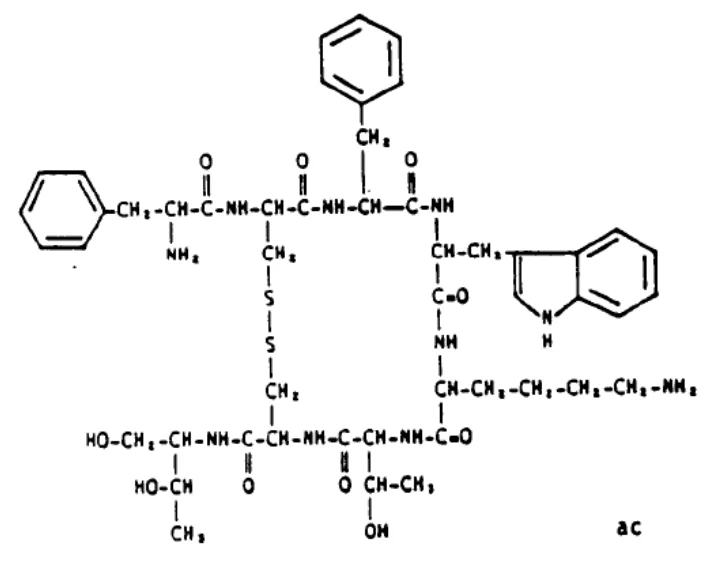
Chemical name: D-Phenylalanyl-L-hemicystyl-L-phenylalanyl-D-tryptophyl-L-lysyl-
L-threonyl-L-hemicystyl-L-threoninol cyclic(2→7) disulfide acetate
Molecular formula and molecular mass: C49H66N10O10S2, x CH3COOH, 1019.3 g/mol x 60.05 g/mol
Structural formula:
Physicochemical properties:
Octreotide acetate is a bridged octapeptide analogue of somatostatin. It is a white to off-white amorphous lyophilisate, which melts with decomposition; it is very hygroscopic.
The values for pka (I) and pka (II) in water are 7.00 and 10.15 respectively. At 25°C, the solubility of octreotide acetate is >10 mg/mL in water; >10 mg/mL in glacial acetic acid and >10 mg/mL in methanol.
14. CLINICAL TRIALS
14.1 Trial Design and Study Demographics
As a consequence of market experience, clinical trial data for octreotide acetate injection is not provided.
15. MICROBIOLOGY
No microbiological information is required for this drug product.
16. NON-CLINICAL TOXICOLOGY
General Toxicology
Single intravenous injections of Octreotide Acetate Injection (octreotide acetate) were administered to mice and rats. Animals were observed until death occurred or for a period of seven days following administration.
| Species | LD50, mg/kg |
|---|---|
| Mouse | 72 (64 - 82) |
| Rat | 18 (15 - 21) |
Octreotide acetate caused no unusual effects. Immediately after administration the following signs were observed: numbness, strained and sometimes slower breathing, jumping and roll and stretch cramps. The animals which died did so within one hour, the survivors were without signs after two days.
Subchronic and Chronic Toxicity
| Species | Duration | Route | Dose (mg/kg/d) | Observations |
|---|---|---|---|---|
| Rats | 4 weeks | i.p. | 1.0, 4.0, 16.0 | Low dose: Slightly↓ feed intake, slight ↑ in serum alkaline phosphatase (SAP) values Mid-dose: ↓ weight gain & feed intake, slight ↑ in urine volume & SAP, ↓ serum albumin High Dose: Moderate↓ in weight gain and feed intake, ↓ serum albumin, with slight ↑ in α2-globulin, slight ↓ in serum glucose, slight ↑ in SGOT and SAP values, unilateral, small, soft testes in 2 M, inhibited spermiogenesis with atrophy of germinal epithelium of seminiferous tubules in 3M. NOAEL: 4mg/kg/day |
| Dogs | 4 weeks | i.v. | 0.2, 0.8, 3.2 | Low dose: Sporadic diarrhea, occasional prolapse of nictitating membrane, hypersalivation Mid dose: Diarrhea, occasional prolapse of nictitating membrane, howling on injection, hyperemia of the skin of the head. High dose: Frequent diarrhea, occasional prolapse of nictitating membrane, hypersalivation, hyperemia of the skin of the head, slight weight loss, slight↑ in urine specific gravity NOAEL: 0.2 mg/kg/day |
| Rats | 26 weeks | i.p. | 0.02, 0.1, 1.0 | Low dose: No significant findings Mid dose: No significant findings High dose: ↓ feed intake & urine volume ↑ specific gravity of urine in F. NOAEL: 1 mg/kg/day |
| Dogs | 26 weeks + 4 week recovery | i.v. | 0.01, 0.05, 0.5 | Low dose: Sporadic diarrhea, sporadic emesis. Scattered single cell necrosis of acidophils, pituitary gland in one F. Mid dose: Frequent diarrhea, sporadic emesis. Pituitary findings as above in 1 F High dose: Sporadic emesis. Pituitary findings as above in 1 F and 1M All groups: Additional investigation concentrating on determining the nature of the affected pituitary cell showed that octreotide acetate-treated recovery dogs stained positively for prolactin and negatively for growth hormone. Furthermore, plasma levels of prolactin, growth hormone and 17β estradiol were unaffected by octreotide acetate treatment. |
| Dogs | 52 weeks | s.c. | 0.24, 0.80, 1.25 | Low and mid doses: ↓ lactate dehydrogenase (M) High dose: ↓ lactate dehydrogenase (M & F). 4 M died due to large tissue masses at the injection sites. All available information at present indicates that the findings are species-specific and have no significance to the use of Octreotide acetate in humans. All groups: ↓ body weight and body weight gain. Local irritation at the injection site (alopecia, encrustation and thickening/swelling of the skin). ↓ creatinine kinase and aspartate amino transferase. ↑alkaline phosphatases (F) and glucose; ↓ sodium levels; total protein, albumin and αglobulin; bilirubin and calcium (F). Urinalysis: ↓ specific gravity and osmolarity; ↑ volume and pH in F only. |
| Species | Duration | Route | Dose (mg/kg/d) | Observations |
|---|---|---|---|---|
| Microscopically: ↑ incidence of inflammation and hemorrhage of the cutis/subcutis and skin - Abscesses. Sarcomas at the injection sites noted only at 1.25 mg/kg/day. This lesion is considered to be treatment-related. Since the development of sarcomas in sites after repeated injection over long periods of time in rats is a well known effect, these sarcomas are considered to be expression of a chronic irritant effect of the test article at the high dose level, rather than a direct oncogenic effect. | ||||
| Dogs | 52 weeks | s.c. | 0.05, 0.15, 0.30 | Low dose: Transient ↓ in food intake in M at start of treatment. Mid dose: Transient ↓ in food intake in M at the start of treatment and↓ mean body weight gain in M & F; slight but persistent↓ in total protein levels (F at week 52). High dose: Transient ↓ in food intake in M at start of the treatment and ↓ mean body weight gain in M & F; slight but persistent ↓ in total protein levels (F); high incidence of diarrhea in one F (relationship with treatment not clearly established); ↓ in pancreas weight in M (relationship with the treatment unclear). Mid & high doses: ↓ in βphase elimination half-life noted after prolonged administration. Finding may be related to the formation of antibodies to octreotide acetate. No such observations noted in single dose experiments. |
| Rat | 104 weeks | s.c. | 0.25, 0.80, 1.25 | Control: Microscopically observed sarcomas of the skin/subcutis not as severe as treatment groups Low dose: ↓ body weight gain from week 7 in F. Microscopically observed sarcomas of the skin/subcutis not as severe high dose group. Mid dose: ↓ body weight & body weight gain and ↑relative food consumption in M. Microscopically observed sarcomas of the skin/subcutis not as severe high dose group. High dose: ↓ body weight & body weight gain throughout study and ↑ relative food consumption (more severe in M than F). Microscopically observed sarcomas of the skin/subcutis. All groups (including control): Signs of local irritation at injection site including alopecia, encrustations, scabs and thickening/swelling of skin. Microscopically observed ↑incidence of inflammation, fibrosis, necrosis and hemorrhage associated with s.c. masses. |
| Additional Toxicity Studies | ||||
|---|---|---|---|---|
| Species | Duration | Route | Dose (mg/kg/d) | Observations |
| Dogs | 3 weeks | i.v. | 0.1 (0.05 b.i.d.) | Treatment: Moderate to severe diarrhea, ↓ body weight & feed intake. Little variation in basal levels of prolactin or growth hormone. Recovery (staggered recovery periods from 1 to 35 days): Sections of the pituitary revealed development of proliferation foci and heaped nuclei reaching a maximum at 7 days recovery, no longer apparent at day 35 of recovery. Scattered degenerated cells apparent only on days 21 and 35 of recovery. |
Monkey (Rhesus)- 6F | 3 weeks | i.v. | 1.0 (0.5 b.i.d) | Treatment & Recovery periods: No clinical findings attributable to treatment. No diarrhea, no alterations in basal values of plasma GH, PRL or glucose. Pituitary gland showed no morphological alterations. No treatment related findings in other organs. Electron microscopy revealed no treatment-related alterations in the pituitary. |
| Dogs | 26 weeks | i.v. | 0.5 | Treatment: Diarrhea Recovery period (staggered from 6 hours to 12 weeks with 2 animals per period): Focal proliferation and single cell necrosis of pituitary gland. Pituitary function test (dogs treated with an injection of pituitary releasing factor during 1, 8 and 16 weeks of recovery): significant inhibition of stimulated GH release from pituitary up to 8th recovery week; by 14th week, GH response similar to control values. |
Carcinogenicity
The results of the oncogenicity studies in rats and mice do not indicate a direct carcinogenic effect of octreotide acetate and are not considered an impediment for human use.
| Species | Duration | Route | N/dose | Dose (mg/kg/d) | Observations |
|---|---|---|---|---|---|
Rats (KFM- han Wistar) | 116 weeks | s.c. | 60M 60F | Placebo, NaCl 0.9%, 0.24, 0.80, 1.25 | Mid & high dose: Marginal but statistically significant ↑ in the relative proportion of lymphocytes by 10 to 8% on average in M of mid & high dose groups, and by 16% on average in F of high group, when compared with the controls. Dose-related ↓in body weight gain in F All groups: No treatment-related differences in intercurrent mortality and food intake. Except for the ↑incidence of injection site nodule (high dose M in particular) and reproductive tract masses/nodules (high dose F), the macroscopic lesions findings did not distinguish treated from control rats. Fast-growing masses at injection sites, particularly in neck region of M. At 1.25 mg/kg/day and 0.24 mg/kg/day, these masses were recorded earlier and at a higher frequency than in other groups of M. They were identified as subcutaneous sarcomata. Alopecia, crusts, sore spots and (scabbed) wounds at the injection sites of both sexes with a higher incidence in the mid & high dose groups. Dose related ↑ in incidence of ovarian sections without corpora lutea. Within the uterus: dose related ↑ in glandular dilatation and ↑ incidence of luminal dilatation (particularly high dose group) when compared to controls. Endometritis observed in all of the treated groups (particularly high dose), but not the controls. |
| Mice (KFM-han NMRI) | 85/86 weeks (F) 98/99 weeks (M) | s.c. | 60M 60F | Placebo, NaCl 0.9%, 0.1, 0.4, 1.2, 2.0 | 0.4, 1.2 & 2 mg/kg/d: ↑ incidence of duodenal mucosal hyperplasia (F) frequently associated with inflammation and duodenal dilatation. All treated-groups: No effect in intercurrent mortality, on clinical signs or nodules and masses, food consumption and body weight development. No change in differential blood count. No treatment related change in macroscopical findings. Non neoplastic lesions at the injection sites identical to those observed in control groups. Neoplastic lesions at the injection sites identical to these observed in control groups. |
Genotoxicity
In vitro mutagenicity was tested in Salmonella typhimurium strains TA1535, TA1537, TA1538, TA98 and TA100 in the presence and absence of a rat liver S9 homogenate (Ames test). No mutagenic effect was found.
In vivo mutagenicity was investigated by means of the micronucleus test using adult CD mice (Charles River). Octreotide acetate was administered intravenously twice within 24 hours. Doses were 5, 16 or 50 mg/kg for each treatment. Controls received the vehicle only. Micronuclei were evaluated in bone marrow preparations made 48 or 72 hours after the first administration. Octreotide acetate was not mutagenic in this test system.
In a second in vivo mutagenicity test, damage to germ cell DNA was evaluated using the unscheduled DNA systhesis (UDS) technique. Male CD mice were injected intravenously with single doses of either 25 or 50 mg/kg. One hour after the administration of octreotide acetate, the mice received an intra-testicular injection of radioactive marked thymidine. Sperm were taken from the cauda epididymis at various time intervals, counted, and tested for radioactivity in a scintillation counter. In this test system octreotide acetate had no effect on the DNA of germ cells.
Reproductive and Developmental Toxicology
Rats and rabbits were treated intravenously with Octreotide Acetate Injection (octreotide acetate) 0.01, 0.1 or 1 mg/kg/day from day 6 to 15 or 6 to 18 post coitum. Dams and their fetuses were sacrificed at term and examined. In rats and rabbits the 0.01 mg/kg/day dose was well tolerated by the dams but the mid and high doses caused slight dose-dependent weight gain inhibition. No adverse effect on the reproduction data or fetal and placental weight was observed. Morphological findings in fetuses of both species gave no indication of a teratogenic potential of the drug.
In a peri- and post-natal study in rats treated subcutaneously with doses of 0.02, 0.1 or 1.0 mg/kg/day from day 15 post coitum until autopsy on day 21 post-partum, octreotide acetate was well tolerated by the F0 females of all treatment groups, although slightly lower weight gain during pregnancy was noted in the high dose group. The reduced growth observed in rat pups was most likely a direct consequence of the drug's main pharmacological action, i.e. growth hormone inhibition.
In a fertility and general reproduction performance study in female rats treated subcutaneously, once daily, with doses of 0.02, 0.1 or 1 mg/kg/day, octreotide acetate was well tolerated by the F0 dams of the lower and mid dose group. In the high dose group, body weight gain was slightly reduced during the 2 weeks preceding mating and there was localized hair loss at the site of injection. Reproduction performance was normal at all dose levels. Prenatal and post-natal development of F1 offspring was not affected except for some growth retardation. The reproduction performance of F1 animals as well as the development of the F2 offspring were also normal.
Animal studies do not indicate direct or indirect harmful effects with respect to pregnancy, embryonal/foetal development, parturition or postnatal development apart from some transient retardation of physiological growth.
17. SUPPORTING PRODUCT MONOGRAPHS
- 1. PrSANDOSTATIN 50 mcg / mL, 100 mcg / mL, 200 mcg / mL, submission control # 247160 Product Monograph, Novartis Pharmaceuticals Canada Inc. , April 19, 2021
- 2. PrOCTREOTIDE ACETATE OMEGA 50 mcg / mL, 100 mcg / mL, 200 mcg / mL, submission control # 252366 Product Monograph, Omega Laboratories Limited Canada , January , 2022