


Product Monograph - Oczyesa XR
Recent Major Label Changes
Not applicable
Table of Contents
Recent Major Label Changes ................................................................................................... 2
Table of Contents ................................................................................................................... 2
Part 1: Healthcare Professional Information ........................................................................... 4
- 1.
Indications ....................................................................................................................... 4
1.1. Pediatrics .................................................................................................................. 4
1.2. Geriatrics .................................................................................................................. 4
- 2. Contraindications ............................................................................................................ 4
- 4.
Dosage and Administration ............................................................................................. 4
4.1. Dosing Considerations .............................................................................................. 4
4.2. Recommended Dose and Dosage Adjustment ......................................................... 4
4.4. Administration .......................................................................................................... 5
4.5. Missed Dose ............................................................................................................. 5
- 5. Overdose ......................................................................................................................... 5
- 6. Dosage Forms, Strengths, Composition, and Packaging ................................................... 5
- 7.
Warnings and Precautions ............................................................................................... 6
Cardiovascular ...................................................................................................................... 6
Endocrine and Metabolism ................................................................................................... 6
Gastrointestinal .................................................................................................................... 6
Hepatic/Biliary/Pancreatic .................................................................................................... 7
Monitoring and Laboratory Tests ......................................................................................... 7
Renal ..................................................................................................................................... 7
Reproductive Health ............................................................................................................. 8
7.1. Special Populations .................................................................................................. 8
7.1.1. Pregnancy ........................................................................................................ 8
7.1.2. Breastfeeding .................................................................................................. 8
7.1.3. Pediatrics ......................................................................................................... 8
7.1.4. Geriatrics ......................................................................................................... 8
- 8.
Adverse Reactions ........................................................................................................... 9
8.1. Adverse Reaction Overview ...................................................................................... 9
8.2. Clinical Trial Adverse Reactions ................................................................................ 9
8.3. Less Common Clinical Trial Adverse Reactions ....................................................... 11
8.4. Abnormal Laboratory Findings: Hematologic, Clinical Chemistry, and Other Quantitative Data ............................................................................................................... 12
8.5. Post-Market Adverse Reactions ............................................................................. 13
- 9.
Drug Interactions ........................................................................................................... 13
9.2. Drug Interactions Overview .................................................................................... 13
9.3. Drug-Behavior Interactions .................................................................................... 13
9.4. Drug-Drug Interactions ........................................................................................... 13
9.5. Drug-Food Interactions........................................................................................... 14
9.6. Drug-Herb Interactions ........................................................................................... 14
9.7. Drug-Laboratory Test Interactions ......................................................................... 14
- 10.
Clinical Pharmacology ................................................................................................... 14
10.1. Mechanism of Action .............................................................................................. 14
10.2. Pharmacodynamics ................................................................................................ 15
10.3. Pharmacokinetics ................................................................................................... 15
10.4. Immunogenicity ...................................................................................................... 17
- 11. Storage, Stability, and Disposal ...................................................................................... 17
Part 2: Scientific Information ................................................................................................ 18
- 13. Pharmaceutical Information .......................................................................................... 18
- 14.
Clinical Trials .................................................................................................................. 19
14.1. Clinical Trials by Indication ..................................................................................... 19
- 16. Non-Clinical Toxicology .................................................................................................. 23
Patient Medication Information ........................................................................................... 25
INSTRUCTIONS FOR USE ....................................................................................................... 31
Part 1: Healthcare Professional Information
1. Indications
OCZYESA XR (octreotide extended-release injectable solution) is indicated for:
- Maintenance treatment in adult patients with acromegaly who have responded to and tolerated treatment with somatostatin analogues.
1.1. Pediatrics
Pediatrics (< 18 years of age): No data are available to Health Canada; therefore, Health Canada has not authorized an indication for pediatric use.
1.2. Geriatrics
Geriatrics (≥65 years of age): Of the 146 acromegaly patients who received OCZYESA XR in the Phase 3 clinical trials, 25 (17.1%) were 65 years of age or older. No clinically meaningful difference in efficacy was observed between patients ≥65 years of age and those younger than 65 years of age. Safety analyses suggest a higher incidence of severe adverse reactions in those ≥65 years of age compared to younger patients (See 7.1.4 Geriatrics). Caution should be exercised when prescribing OCZYESA to geriatric patients.
2. Contraindications
OCZYESA XR is contraindicated in patients who are hypersensitive to this drug or to any ingredient in the formulation, including any non-medicinal ingredient, or component of the container. For a complete listing, see 6 Dosage Forms, Strengths, Composition, and Packaging.
4. Dosage and Administration
4.1. Dosing Considerations
For subcutaneous injection only (inject directly into fatty layer under the skin). Do not inject intravascularly or intramuscularly.
4.2. Recommended Dose and Dosage Adjustment
The recommended dose of OCZYESA XR is 20 mg injected subcutaneously every 4 weeks. OCZYESA XR may be administered up to 1 week before and 1 week after the scheduled 4-week dose in exceptional circumstances (e.g. missed dose).
The safety and efficacy of alternative doses have not been established. Therefore, there are no data to support alternative dosing regimens.
Patients transitioning from octreotide or lanreotide should be instructed to take their first dose of OCZYESA XR at the end of the daily or monthly dosing interval of the previous treatment.
Monitor insulin-like growth factor-1 (IGF-1) levels and assess symptoms of acromegaly periodically, as per the clinician’s discretion. If IGF‑1 levels are not maintained after treatment with OCZYESA 20 mg once monthly for 3-6 months, or if OCZYESA XR is not tolerated, consider discontinuing treatment and switching the patient to another somatostatin analogue.
Health Canada has not authorized an indication for pediatric use.
4.4. Administration
OCZYESA XR is intended for self-administration following appropriate training. Alternatively the injection may be given by a trained caregiver or by a healthcare provider as per below:
- Before initiating self-administration of OCZYESA XR, train patients on the proper injection technique. Refer to the Instructions for Use for complete administration instructions with illustrations.
- Inject OCZYESA XR subcutaneously in the abdomen, thigh or buttock.
- Alternate the injection site within or between injection areas.
- OCZYESA XR is provided in a ready-to-use, sterile, pre-filled pen. No reconstitution is required. Each OCZYESA XR pre-filled pen is intended for single use.
4.5. Missed Dose
If a dose is missed, administer the next dose of OCZYESA XR as soon as possible.
5. Overdose
A limited number of accidental overdoses of injectable short-acting-octreotide acetate in adults has been reported. The doses ranged from 2.4 mg/day to 6 mg/day administered by continuous infusion (100-250 micrograms/hour) or subcutaneously (1.0 mg three times a day). The adverse reactions reported in some patients included arrhythmia, hypotension, cardiac arrest, brain hypoxia, pancreatitis, hepatic steatosis, hepatomegaly, lactic acidosis, diarrhea, lethargy, weakness, and weight loss.
A limited number of accidental overdoses of injectable long-acting-octreotide acetate have been reported. The doses ranged from 100 mg to 163 mg/month. The only adverse event reported was hot flushes.
The management of overdosage is symptomatic.
| For the most recent information in the management of a suspected drug overdose, contact your regional poison control centre or Health Canada’s toll-free number, 1-844 POISON-X (1-844-764-7669). |
|---|
- 6. Dosage Forms, Strengths, Composition, and Packaging
Table 1 – Dosage Forms, Strengths, and Composition
Description
OCZYESA XR is provided in a single-dose pre-filled pen with white housing, turquoise cover sleeve, containing 1 mL long clear glass syringe filled with a yellowish to yellow clear liquid. The syringe has a
| Route of Administration | Dosage Form/ Strength/Composition | Non-Medicinal Ingredients |
| Subcutaneous | Extended-release solution / 20 mg/mL octreotide (as octreotide hydrochloride) | Edetic acid; Ethanol, anhydrous; Ethanolamine; Glycerol dioleate; Propylene glycol; Soybean phosphatidylcholine |
grey plunger stopper and a non-visible 22G needle with rubber needle shield.
The pre-filled pen is packed in a protective aluminum pouch together with an oxygen absorber.
7. Warnings and Precautions
As growth hormone (GH)-secreting pituitary tumors may sometimes expand, causing serious complications (e.g. visual field defects), it is essential that all patients treated with OCZYESA XR be carefully monitored. If evidence of tumor expansion appears, alternative procedures may be advisable.
Provide patients and any caregivers who may administer OCZYESA XR instructions on proper aseptic subcutaneous injection techniques (see PATIENT MEDICATION INFORMATION).
Patients with acromegaly should be advised to adhere to their recommended follow-up schedule to help ensure sustained control of GH and IGF-1 levels.
Cardiovascular
Cases of bradycardia, arrhythmias and conduction abnormalities have been reported in acromegalic patients treated with octreotide. Dose adjustment of medicinal products such as beta blockers, calcium channel blockers, or agents to control fluid and electrolyte balance, may be necessary (9.3 Drug-Drug Interactions). ECG changes such as QT prolongation, axis shifts, early repolarization, low voltage, R/S transition, early R wave progression, and non‑specific ST‑T wave changes have been observed with octreotide. A causal relationship between these events and octreotide has not been established, as many of these patients have underlying cardiac diseases.
Endocrine and Metabolism
- Glucose metabolism
Octreotide alters the balance between the counter-regulatory hormones, insulin, glucagon, and growth hormone, which may result in hypoglycemia, hyperglycemia, or overt diabetes.
Administration of octreotide may reduce insulin requirements in patients with type 1 diabetes mellitus. In non-diabetic patients and in patients with type 2 diabetes mellitus with partially intact insulin reserves, octreotide administration may result in prandial increases in glycemia.
Blood glucose levels and HbA1c should be monitored periodically during octreotide treatment. Antidiabetic treatment should be adjusted accordingly (see Monitoring and Laboratory Tests).
- Thyroid Function
Slight impairment in thyroid function has been reported during treatment with octreotide. Therefore, thyroid function (TSH, total and/or free T4) should be monitored periodically in patients receiving prolonged treatment with octreotide (see Monitoring and Laboratory Tests).
Gastrointestinal
- Nutrition
Octreotide may alter absorption of dietary fats. Although fecal fat excretion may increase, there is no evidence to date that long-term treatment with octreotide acetate has resulted in nutritional deficiencies due to malabsorption.
Depressed vitamin B12 levels and abnormal Schilling tests have been observed in some patients receiving octreotide therapy. Monitoring of vitamin B12 levels is recommended during therapy with OCZYESA XR in patients who have a history of vitamin B12 deprivation.
Hepatic/Biliary/Pancreatic
- Gallbladder and Related Events
Octreotide has been shown to inhibit gallbladder contractility and decrease bile secretion, which may lead to gallbladder abnormalities.
Cholelithiasis has been reported during treatment with octreotide and may be associated with other biliary tract abnormalities, such as cholecystitis and biliary duct dilatation. Additionally, cases of cholangitis, cholecystitis, and pancreatitis have been reported as complications of cholelithiasis in patients receiving octreotide injections in the post-marketing setting. The incidence of gallbladder abnormalities did not appear to be related to age, sex or dose but was related to duration of exposure.
It is recommended that patients on extended therapy with OCZYESA XR be evaluated at baseline and periodically (at about 6- to 12- month intervals) to assess the presence of gallstones using ultrasound evaluations (see Monitoring and Laboratory Tests).
If stones are already present before the start of therapy, the potential benefit of OCZYESA XR should be assessed against the risks associated with the gallstones. In case of asymptomatic gallstone, OCSYESA XR may be continued, depending on re-assessment of the benefit/risk ratio with increased frequency of monitoring. Symptomatic gallstones should receive medical attention and be treated. If complications of cholelithiasis are suspected, discontinue OCZYESA XR and treat appropriately.
- Hepatic Impairment
OCZYESA XR has not been evaluated in patients with moderate or severe hepatic impairment (see 10.3 Pharmacokinetics). In patients with liver cirrhosis, the half-life of the drug may be increased.
Routine monitoring of liver function in these patients is recommended.
Monitoring and Laboratory Tests
Clinical response and tolerability to OCZYESA XR should be assessed regularly. Measurement of GH and IGF-1 are useful to monitor patient response to the therapy. GH and IGF-1 determinations should be made after 3 monthly injections of OCZYESA XR, once steady-state serum levels of octreotide are reached. Consider discontinue OCZYESA XR and switch patient to another somatostatin analogue if IGF-1 levels are not maintained after 3-6 months of OCZYESA XR (20 mg) or the treatment is not tolerated.
Patients receiving octreotide therapy require monitoring of relevant clinical parameters at baseline and at regular intervals, for prevention and early detection of potential adverse effects. Such monitoring should include, but is not limited to, assessment of blood glucose and HbA1c levels, cardiac function, thyroid function testing; and measurement of plasma vitamin B12 levels.
Octreotide may reduce gallbladder motility and lead to gallstone formation. Ultrasound examination of the gallbladder and bile ducts before and at about 6- to 12-month intervals during OCZYESA XR treatment is advised.
Renal
OCZYESA XR can be used in patients with mild renal impairment. OCZYESA XR has not been evaluated in patients with moderate or severe renal impairment and End Stage Renal Disease (ESRD)
(see 10.3 Pharmacokinetics). In patients with severe renal failure requiring dialysis, the half-life of octreotide may be increased and the use of OCZYESA XR should be avoided.
Reproductive Health
- Fertility
Reductions in growth hormone (GH) levels and normalization of IGF‑1 concentrations in premenopausal women with acromegaly treated with octreotide may restore or improve fertility. Pregnancy in patients with acromegaly may increase the risk of gestational diabetes, hypertension and worsening of underlying cardiac disease. Therefore female patients of childbearing potential should be advised to use effective contraception, if necessary, during treatment with octreotide (See 7.1.1 Pregnancy, 10.3 Pharmacokinetics).
In animal studies, treatment with octreotide acetate at doses up to 1 mg/kg/day did not adversely affect reproductive performance in rats or rabbits (See 16 Non-Clinical Toxicology).
7.1. Special Populations
7.1.1. Pregnancy
There are limited data (fewer than 300 pregnancy outcomes) regarding the use of octreotide in pregnant women, and in approximately one third of the cases the pregnancy outcomes are unknown. Most reports were received during post‑marketing use of octreotide and more than 50% of exposed pregnancies were reported in patients with acromegaly. Most women were exposed to octreotide during the first trimester of pregnancy at doses ranging from 100 - 1 200 micrograms/day of subcutaneous short-acting octreotide or 10 - 40 mg/month of intramuscular long-acting octreotide. Congenital anomalies were reported in approximately 4% of pregnancies with known outcome. No causal relationship between octreotide exposure and these anomalies has been established.
Animal studies do not indicate direct or indirect harmful effects with respect to reproductive toxicity (See 16 Non-Clinical Toxicology).
As a precautionary measure, it is advised to avoid the use of OCZYESA XR during pregnancy.
7.1.2. Breastfeeding
It is unknown whether octreotide is excreted in human breast milk. Animal studies have shown excretion of octreotide in breast milk. Patients should not breast-feed during OCZYESA XR treatment.
7.1.3. Pediatrics
Pediatrics (< 18 years of age): No data are available to Health Canada; therefore, Health Canada has not authorized an indication for pediatric use.
7.1.4. Geriatrics
Geriatrics (≥65 years): No clinically meaningful differences in efficacy were observed between patients ≥65 years and those younger than 65 years of age.
Exploratory analyses of OCZYESA XR safety data showed a higher incidence of Grade 3 and serious adverse events in patients 65 years of age or older compared with younger patients (24.0% versus 9.9% and 24.0% versus 7.4%, respectively). Therefore, OCZYESA XR should be used with caution in elderly patients due to increased risk of serious and/or severe adverse reaction.
8. Adverse Reactions
8.1. Adverse Reaction Overview
The safety of OCZYESA XR was evaluated in 146 patients with acromegaly across two Phase 3 trials, ACROINNOVA 1 (Trial 1) and ACROINNOVA 2 (Trial 2). In these trials, patients received 20 mg OCZYESA XR every 4 weeks via subcutaneous injection.
In the pooled safety population, the median duration of exposure was 55.6 weeks (range: 7.6-57.7 weeks). A total of 136 (93.2%) patients completed ≥ 6 months of treatment, and 109 (74.7%) of patients completed ≥ 12 months of treatment.
The most common adverse drug (≥10% of patients) reported in the pooled safety population were injection site reactions (45.2%), including injection site erythema (28.1%), injection site mass (19.9%), injection site swelling (17.8%), injection site pain (10.3%), and injection site pruritus (10.3%), as well as headache (15.1%) and arthralgia (11.6%). Adverse reactions frequently reported in clinical studies with other formulations of octreotide, such as diarrhea, abdominal pain, fatigue, cholecystitis and hyperglycemia were experienced by less than 10% of the patients in Trial 1 and Trial 2.
Serious adverse events (irrespective of causality) occurred in 10.3% of patients receiving OCZYESA XR. The only serious adverse event experienced by more than one patient was COVID-19. One patient experienced a serious adverse reaction of cholelithiasis.
Treatment discontinuation due to adverse reactions occurred in 6 patients (4.1%). The most common adverse reaction leading to treatment discontinuation was injection site reaction.
8.2. Clinical Trial Adverse Reactions
Clinical trials are conducted under very specific conditions. Therefore, the frequencies of adverse reactions observed in the clinical trials may not reflect frequencies observed in clinical practice and should not be compared to frequencies reported in clinical trials of another drug.
The adverse drug reactions that occurred in at least 3% of patients treated with OCZYESA XR across Phase 3 Trials, ACROINNOVA 1 (Trial 1) and ACROINNOVA 2 (Trial 2), are listed in Table 2. Those adverse drug reactions reported with higher frequency in the OCZYESA XR arm than in the placebo control arm in Trial 1 are marked with an asterisk (*).
Trial 1 was a 24-week, randomized, double-blind, placebo-controlled, multicenter trial that included 72 biochemically controlled patients (IGF-1 ≤ 1xULN): 47 treated with OCZYESA XR and 24 treated with placebo; 1 patient in the OCZYESA XR arm withdrew before receiving treatment. Trial 2 was a 52-week open-label, long-term safety and efficacy trial. Trial 2 included 36 OCZYESA XR roll-over patients and 18 placebo roll-over patients from Trial 1, and 81 new patients who were enrolled directly in the trial. Placebo roll-over patients started treatment with OCZYESA XR in Trial 2 at week 24.
Table 2 – Adverse Drug Reactions Occurring in ≥3% of Patients with Acromegaly Receiving OCZYESA XR
| System Organ Class/Pooled Preferred Term | OCZYESA XR (N=146) n (%) |
|---|
| Gastrointestinal disorders |
|---|
| Abdominal pain a | 13 (8.9)* |
|---|---|
| Diarrhea b | 13 (8.9)* |
| Nausea c | 5 (3.4)* |
| General disorders and administration site conditions |
|---|
| Injection site erythema | 41 (28.1)* |
|---|---|
| Injection site mass d | 29 (19.9) |
| Injection site swelling e | 26 (17.8)* |
| Injection site pain f | 15 (10.3)* |
| Injection site pruritus g | 15 (10.3)* |
| Fatigue h | 11 (7.5)* |
| Injection site hemorrhage i | 7 (4.8) |
| Hepatobiliary disorders | |
| Cholelithiasis j | 9 (6.2) |
| Metabolism and nutrition disorders | |
| Hyperglycemia k | 8 (5.5) |
| Musculoskeletal and connective tissue disorders |
|---|
| Arthralgia | 17 (11.6) |
|---|---|
| Nervous system disorders | |
| Headache l | 22 (15.1)* |
| Skin and subcutaneous tissue disorders | |
| Skin hypersensitivity m | 5 (3.4)* |
a Abdominal pain includes Abdominal distension, Abdominal pain, Abdominal pain upper
b Diarrhea includes Diarrhea, Feces soft
c Nausea includes Nausea, Vomiting d Injection site mass includes Injection site hypertrophy, Injection site induration, Injection site mass, Injection site nodule e Injection site swelling includes Injection site inflammation, Injection site edema, Injection site swelling f Injection site pain includes Injection site discomfort, Injection site pain, Injection site paresthesia g Injection site pruritus includes Injection site dermatitis, Injection site pruritus
h Fatigue includes Asthenia, Fatigue i Injection site hemorrhage includes Injection site bruising, Injection site hematoma, Injection site hemorrhage j Cholelithiasis includes Cholecystitis, Cholecystitis chronic, Cholelithiasis
k Hyperglycemia includes Diabetes mellitus, Diabetes mellitus inadequate control, Glucose tolerance impaired, Hyperglycemia l Headache includes Headache, Migraine m Skin hypersensitivity includes Erythema, Pruritus
Description of selected adverse reactions
- Cardiac disorders
Bradycardia (frequency: common) and tachycardia (frequency: uncommon) have been reported as adverse reactions with somatostatin analogues. In the Phase 3 clinical trials of OCZYESA XR, cardiac disorders were experienced by 8 patients. Most events were single occurrences; with the exception of sinus tachycardia and palpitations, which were reported in 2 patients each. One occurrence of sinus tachycardia was assessed as treatment related by the investigator. One patient experienced acute myocardial infarction which was assessed as a serious event not related to OCZYESA XR.
- Hypersensitivity and anaphylactic reactions:
Hypersensitivity and allergic reactions have been reported during post-marketing experience with octreotide in patients not previously exposed to octreotide. When these reactions occur, they most commonly affect the skin, rarely the mouth and airways. Hypersensitivity reactions may range from generalized pruritus to cardiovascular shock or bronchospasm. Isolated cases of anaphylactic shock and one case of death have been documented.
- Injection site reactions
All injection site reactions (ISR) reported in clinical trials were mild or moderate. The average of ISRs per patient was 3.6. The median duration of injection site reactions in the Phase 3 clinical trials was 23 days (range: 1-211 days) and the median time to onset was 1.0 day (range: 1-29 days) from the last injection prior to the events.
Generally, the frequency of new injection site reactions decreased with repeated injections.
- Gallbladder-related adverse reactions
Octreotide has been shown to inhibit gallbladder contractility and decrease bile secretion, which may lead to gallbladder abnormalities. If gallstones do occur, they are usually asymptomatic. In Phase 3 Trials with OCZYESA XR, gallbladder abnormalities were mild to moderate. One serious event of cholelithiasis was assessed as treatment-related.
Across the Phase 3 trials cholelithiasis was reported by 7 patients, while chronic cholecystitis and cholecystitis were reported by 1 patient each.
- Gastrointestinal adverse reactions
Gastrointestinal disorders such as diarrhea, nausea and abdominal pain are frequently reported in patients treated with octreotide. In rare instances, gastrointestinal side effects may resemble acute intestinal obstruction, with progressive abdominal distension, severe epigastric pain, abdominal tenderness and guarding.
The frequency of gastrointestinal adverse reactions is known to decrease over time with continued treatment with octreotide.
8.3. Less Common Clinical Trial Adverse Reactions
The adverse reactions listed below occurred in less than 3% of patients treated with OCZYESA XR in Trial 1 and Trial 2.
Cardiac disorders: Palpitations, sinus tachycardia
Ear and labyrinth disorders: Vertigo
Gastrointestinal disorders: Aerophagia, feces discolored, flatulence, gastritis, steatorrhea
General disorders and administration site conditions: Chest discomfort, chest pain, injection site extravasation, injection site reaction, swelling face
Hepatobiliary disorders: Hepatic cyst, pancreatitis acute
Infections and infestations: Furuncle
Investigations: Amylase increased, blood sodium increased, high density lipoprotein decreased, low density lipoprotein increased, electrocardiogram T wave inversion, glycosylated hemoglobin increased, gamma glutamyl transferase level increased, thyroid function abnormalities, weight decreased
Metabolism and nutrition disorders: Hyperlipidemia, hypercholesterolemia, hypomagnesemia, vitamin B12 deficiency
Musculoskeletal and connective tissue disorders: Joint swelling
Nervous system disorders: Dizziness, encephalopathy
Neoplasms benign, malignant and unspecified: Hemangioma of liver
Psychiatric disorders: Depression, insomnia, procedural anxiety
Reproductive system and breast disorders: Abnormal uterine bleeding, breast mass, postmenopausal hemorrhage
Respiratory, thoracic and mediastinal disorders: Dyspnea
Skin and subcutaneous tissue disorders: Erythema annulare, hyperhidrosis
Vascular disorders: Hematoma, hypotension
8.4. Abnormal Laboratory Findings: Hematologic, Clinical Chemistry, and Other Quantitative Data
Clinical Trial Findings
Overall, there were no clinically meaningful trends in mean values over time or changes in clinical laboratory evaluations in Trial 1 or Trial 2.
8.5. Post-Market Adverse Reactions
Spontaneously reported adverse drug reactions for products containing octreotide are presented below. Because these events are reported voluntarily from a population of uncertain size, it is not always possible to reliably estimate their frequency or clearly establish a causal relationship to octreotide exposure.
Blood and lymphatic system disorders: Thrombocytopenia. Most reports of thrombocytopenia were in patients with liver cirrhosis treated with intravenous octreotide acetate and some reports were with octreotide acetate long-acting repeatable. This was reversible.
Cardiac disorders: Bradycardia
Endocrine disorders: Hypothyroidism
Gastrointestinal motility disorder: Constipation, ileus, intestinal obstruction, dyspepsia
Hepato-biliary disorders: Acute hepatitis without cholestasis, cholestatic hepatitis, cholestasis, jaundice, cholestatic jaundice and cholangitis, which have sometimes required cholecystectomy.
Hypersensitivity: Anaphylaxis, allergy/hypersensitivity reactions
Investigations: Increased alkaline phosphatase levels, transaminases increased, hyperbilirubinemia, hypoglycemia, vitamin B12 absorption test abnormal, vitamin B12 decreased, weight increase
Metabolism and nutrition disorders: Anorexia, dehydration
Skin and subcutaneous tissue disorders: Alopecia, urticaria
9. Drug Interactions
9.2. Drug Interactions Overview
In vitro data
Based on in vitro results, octreotide is not expected to inhibit the metabolic clearance of co-medications metabolized by CYP1A2, CYP2A6, CYP2B6, CYP2C8, CYP2C9, CYP2C19, CYP2D6, CYP2E1, and CYP3A4.
9.3. Drug-Behavior Interactions
The interaction of OCZYESA XR with individual behavioral risks (e.g. cigarette smoking, cannabis use, and/or alcohol consumption) has not been studied.
9.4. Drug-Drug Interactions
No clinical Drug-Drug Interaction studies have been performed with OCZYESA XR.
Cardiovascular medicinal products
Dose adjustment of medicinal products that have bradycardic effects, such as beta blockers, calcium channel blockers, or agents to control fluid and electrolyte balance, may be necessary when octreotide is administered concomitantly (see 7 Cardiovascular).
Insulin and antidiabetic medicinal products
Dose adjustments of insulin and antidiabetic medicinal products may be required when octreotide is administered concomitantly (see 7 Endocrine and Metabolism).
Bromocriptine
Concomitant administration of octreotide and bromocriptine increases the bioavailability of bromocriptine.
Cyclosporine and Cimetidine
Octreotide injections have been found to reduce the intestinal absorption of cyclosporine and to delay that of cimetidine.
Thyroid hormones replacement therapy
Octreotide may affect thyroid function. Therefore, regular monitoring of thyroid function and clinical monitoring is recommended during concomitant treatment with thyroid hormone replacement therapy as this may lead to thyroid imbalance.
Effects on metabolism of other medicinal products
Limited published data indicate that somatostatin analogues might decrease the metabolic clearance of compounds known to be metabolized by cytochrome P450 enzymes, which may be due to the suppression of GH. Since it cannot be excluded that octreotide may have this effect, other medicinal products mainly metabolized by CYP3A4 and which have a low therapeutic index should therefore be used with caution (e.g. quinidine, terfenadine).
9.5. Drug-Food Interactions
Interactions with food have not been established.
9.6. Drug-Herb Interactions
Interactions with herbal products have not been established.
9.7. Drug-Laboratory Test Interactions
Interactions with laboratory tests have not been established.
10. Clinical Pharmacology
10.1. Mechanism of Action
Octreotide is a synthetic octapeptide analogue of naturally occurring somatostatin with similar pharmacological effects, but with a considerably prolonged duration of action. It inhibits the pathologically increased secretion of GH and of peptides and serotonin produced within the gastro-entero-pancreatic (GEP) endocrine system.
In animals, octreotide is a more potent inhibitor of GH, glucagon and insulin release than somatostatin and demonstrated greater selectivity for GH and glucagon suppression.
In healthy subjects, octreotide has been shown to inhibit:
- Release of GH stimulated by arginine, exercise- and insulin-induced hypoglycemia,
- Post-prandial release of insulin, glucagon, gastrin, other peptides of the GEP endocrine system, and arginine-stimulated release of insulin and glucagon,
- Thyrotropin-releasing hormone (TRH)-stimulated release of thyroid-stimulating hormone (TSH).
Unlike somatostatin, octreotide preferentially inhibits GH secretion over insulin, and its administration is not followed by rebound hypersecretion of hormones (i.e., GH in patients with acromegaly).
10.2. Pharmacodynamics
Octreotide substantially reduces and, in many cases, normalizes IGF-1 and GH levels in patients with acromegaly.
Single doses of octreotide given subcutaneously have been shown to inhibit gallbladder contractility and to decrease bile secretion in healthy volunteers. In clinical studies, the incidence of gallstone or biliary sludge formation was markedly increased (see 7 Warnings and Precautions).
Octreotide may cause clinically significant suppression of TSH.
Cardiac Electrophysiology
A thorough QT study has not been conducted with OCZYESA XR, but events of QT prolongation have been reported in patients treated with octreotide (see 7 Cardiovascular).
10.3. Pharmacokinetics
The pharmacokinetics of octreotide are comparable between healthy subjects and in acromegaly patients (Table 4). Octreotide Cmax and AUC for OCZYESA XR increased in proportion with dose in the interval from 10 mg (0.5 times the recommended dosage) to 30 mg (1.5 times the recommended dosage).
Table 4 – Summary of OCZYESA XR pharmacokinetic parameters in healthy volunteers and acromegaly patients after subcutaneous administration a
| Single Dose Mean | Cmax (ng/mL) | Tmax (h) | t½ (h) | AUCb (h*ng/ml) |
| Healthy Volunteers, 20 mg Q4W | 9.74 | 3.83 | 278.7 | 2130 |
| Acromegaly patients, 20 mg Q4W | 11.1 | 2.05 | - | 1853 |
Abbreviations: Cmax = maximum observed drug concentration; Tmax= time to reach maximum observed drug concentration, t1/2 = terminal elimination half-life; AUCinf, AUCτ = area under the concentration-time curve during one dosing interval
a Pharmacokinetic parameters determined by non-compartmental analysis, b AUCinf for healthy volunteers and AUCτ for acromegaly patients
Absorption
Bioavailability of octreotide for OCZYESA XR was 92–98% of that for subcutaneous short-acting octreotide, and 4-5 times higher than for intramuscular long-acting octreotide, without any initial lag-phase.
Maximum concentration of octreotide was reached in approximately 4 hours post dose. Thereafter, the octreotide concentration slowly decreased with a half-life of 9 to 12 days.
Comparable exposure was achieved with OCZYESA XR injected subcutaneously in the abdomen, thigh, or buttock.
Steady-state pharmacokinetics were achieved by the third injection of OCZYESA XR given every 4 weeks and very low accumulation was observed at the steady state. Based on population pharmacokinetic modelling, the average octreotide concentration at steady state was 3.1 ng/mL, similar to subcutaneous short-acting octreotide given at a 0.25 mg dose injected 3 times daily (3.2 ng/mL), but with less daily variation.
Distribution
The total volume of distribution of octreotide at steady state following subcutaneous administration of OCZYESA XR was estimated to be 22 L.
In blood, the distribution into the erythrocytes was found to be negligible and the plasma protein binding was 65%. Binding was mainly to lipoprotein and, to a lesser extent, to albumin.
Metabolism
OCZYESA XR by-passes the liver and the first-pass effect during absorption given the SC route. The hepatic extraction ratio of octreotide is between 30% and 40% in healthy subjects. Biliary excretion and proteolysis have been identified as important elimination pathways in pre-clinical studies.
Elimination
According to data obtained with subcutaneous short-acting octreotide, most of the peptide is eliminated in the feces, while approximately 32% of the administered dose is excreted unchanged in the urine.
In healthy volunteers and patients with acromegaly, the total body clearance was 10 L/hour.
OCZYESA XR exhibits absorption rate limited elimination of octreotide, with an apparent terminal half-life of 217 to 279 hours (9 to 12 days).
Special populations and conditions
- Pediatrics: No data are available; therefore, Health Canada has not authorized an indication for pediatric use (see 7.1.3 Pediatrics).
- Geriatrics: No significant effect of age (ranging from 18-83 years) on octreotide pharmacokinetics was found with OCZYESA XR including geriatrics population (see 7.1.4 Geriatrics).
- Sex: Sex had no clinically relevant effect on the pharmacokinetics of octreotide based on the population pharmacokinetic analysis.
- Pregnancy and Breastfeeding: See 7.1.1 Pregnancy and 7.1.2 Breastfeeding.
- Hepatic Insufficiency The elimination capacity may be reduced in patients with liver cirrhosis, but not in patients with fatty liver disease. The effect of moderate and severe hepatic impairment on the pharmacokinetics of OCZYESA XR have not been evaluated (see 7 Hepatic/Biliary/Pancreatic).
Renal Insufficiency No significant effect of creatinine clearance (CLCR) on clearance of octreotide with OCZYESA XR was found analyzing 191 study participants with normal renal
- function (CLCR ≥90 mL/min), 24 with mild renal impairment (CLCR 60-89 mL/min), and 1 subject with moderate renal impairment (CLCR 30-59 mL/min). The effect of moderate and severe renal impairment and End stage renal disease (ESRD) on the pharmacokinetics of OCZYESA XR have not been evaluated (see 7 Renal). In patients with severe renal failure requiring dialysis, the half-life of octreotide may be increased and the use of OCZYESA XR should generally be avoided.
- Obesity: Bodyweight had no clinically relevant effect on the pharmacokinetics of octreotide based on the population pharmacokinetic analysis. The AUCτ,ss increased by 20% for patients with body weight of 60 kg and decreased by 19% for patients with body weight of 100 kg compared to patients with body weight of 75 kg.
10.4. Immunogenicity
The observed incidence of anti-drug antibodies is highly dependent on the sensitivity and specificity of the assay. Differences in assay methods preclude meaningful comparisons of the incidence of anti-drug antibodies in the studies described below with the incidence of anti-drug antibodies in other studies, including those of other octreotide products.
No antibodies to the octreotide peptide were detected following 24 weeks (131 patients) or 52 weeks (109 patients) of treatment with OCZYESA XR (20 mg) every 4 weeks in patients with acromegaly.
- 11. Storage, Stability, and Disposal
Store at room temperature (15°C to 30°C). OCZYESA XR should be protected from oxygen and light and be stored in the original package. Do not refrigerate.
Any unused medicinal product or waste material should be disposed of in accordance with local requirements.
Part 2: Scientific Information
13. Pharmaceutical Information
Drug Substance
Non-proprietary name of the drug substance(s): octreotide hydrochloride
Chemical name:
D-Phenylalanyl-L-cysteinyl-L-phenylalanyl-D-tryptophyl-L-lysyl-L-threonyl-L-cysteinyl-L-threoninol cyclic (2 →7)-disulfide hydrochloride salt
D-Phenylalanyl-L-cysteinyl-L-phenylalanyl-D-tryptophyl-L-lysyl-L-threonyl-N-[(1R,2R)-2-hydroxy-1-(hydroxymethyl)propyl]-L-cysteinamide cyclic (2 →7)-disulfide hydrochloride salt
Molecular formula and molecular mass:
C49H66N10O10S2 free peptide
C49H66N10O10S2 (HCl)n (hydrochloride salt)
Average molecular mass (free peptide): 1019.3 u
Monoisotopic mass (free peptide) 1018.4 u
Structure (for biologics)/Structural formula:
Physicochemical properties: White to off-white powder
14. Clinical Trials
14.1. Clinical Trials by Indication
Acromegaly
The efficacy and safety of OCZYESA XR were evaluated in two Phase 3 clinical trials in patients with acromegaly: ACROINNOVA 1 (Trial 1, a 24-week, randomized, double-blind, placebo-controlled, multicentre trial) and ACROINNOVA 2 (Trial 2, a 52-week open-label, multi-center trial). Patients who completed Trial 1 were eligible to roll over to Trial 2. Trial 2 also included additional patients who had not previously received OCZYESA XR. Patients in both studies were on stable standard of care treatment with long-acting injectable octreotide or lanreotide at time of enrolment, except for placebo roll-over patients from Trial 1.
Table 5 – Summary of Patient Demographics for Clinical Trials in Acromegaly
| Trial # | Trial design | Dosage, route of administration and duration | Trial subjects (n) | Mean age (range) | Sex |
| Trial # | Trial design | Dosage, route of administration and duration | Trial subjects (n) | Mean age (range) | Sex |
| Trial 1 | Phase 3, randomized, double-blind, placebo-controlled, multi-center trial assessing the efficacy and safety of OCZYESA XR in patients with acromegaly treated with long-acting octreotide or lanreotide at enrollment. | OCZYESA XR: 6 once monthly injections of OCZYESA XR 20 mg with a pre-filled syringe, subcutaneously in the abdomen or thigh. Placebo: 6 once monthly injections of placebo with a pre-filled syringe, subcutaneously in the abdomen or thigh. | OCZYESA XR: 48 patients Placebo: 24 patients | OCZYESA XR: 57.0 years (29–79 years) Placebo: 52.0 years (20–82 years) | OCZYESA XR: Female: 28 (58.3%) Male: 20 (41.7%) Placebo: Female: 12 (50.0%) Male: 12 (50.0%) |
| Trial 2 | Phase 3, open-label, single-arm, multi-center trial assessing the long-term safety and efficacy of OCZYESA XR in patients with acromegaly treated with long-acting octreotide or lanreotide at enrollment. No control. | New patients: 13 once monthly injections of 20 mg (or 10 mg in case of down-titration) with a pre-filled syringe or a pre-filled pen, subcutaneously in the abdomen, thigh, or buttock. Roll-over patients from Trial 1: 7 once monthly injections of 20 mg (or 10 mg in case of down-titration) with a pre-filled syringe or a pre-filled pen, subcutaneously in the abdomen, thigh, or buttock (starting at Week 24). | 135 patients | 52.9 years (20–82 years) | Female: 76 (56.3%) Male: 59 (43.7%) |
Trial 1
Seventy two (72) patients on stable standard of care treatment with long-acting injectable octreotide or lanreotide were randomized 2:1 to receive either OCZYESA XR or placebo for 24 weeks via subcutaneous injection. A total of 42 patients (87.5%) in the OCZYESA XR arm and 22 patients (91.7%) in the placebo arm completed the treatment.
At screening, patients were biochemically controlled with IGF-1 levels below or equal to the upper limit of normal (ULN). The mean age of patients was 55.3 years (range 20–82 years), 55.6% were women, and 95.8% were White. The percentage of patients with prior pituitary surgery was 87.5% and the mean time since acromegaly diagnosis was 11.4 years.
The primary endpoint of the trial was the proportion of responders, i.e., patients with IGF-1 levels below or equal to 1×ULN at the end of the randomized, double-blind period (mean of the measurements at week 22 and week 24). Patients who discontinued treatment or were switched to rescue medication were regarded as non-responders in the analysis.
Trial 1 met the primary endpoint of statistical superiority for octreotide over placebo (Table 6). Key secondary endpoints were also met, including the proportion of patients that were responders for both mean IGF-1 below or equal to 1×ULN and mean GH below 2.5 µg/L.
Table 6 Primary and key secondary efficacy endpoint outcomes – Trial 1
OCZYESA XR responders (N= 48) | Placebo responders (N=24) | Difference in response rate for OCZYESA XR–placebo (95% CI)1 | p-value | |
|---|---|---|---|---|
Primary efficacy endpoint Proportion of patients with mean IGF-1 ≤1×ULN at Week 22/24 | 72.2% | 37.5% | 34.6% (11.3% – 57.9%) | 0.0018 |
First key secondary efficacy endpoint Proportion of patients with mean IGF-1 ≤1×ULN at Week 22/24, including patients with dose reduction2 | 72.2% | 37.5% | 34.6% (11.3% – 57.9%) | 0.0018 |
Second key secondary efficacy endpoint Proportion of patients with mean IGF-1 ≤1×ULN at Week 22/24 and mean GH <2.5 µg/L at Week 24 | 70.0% | 37.5% | 32.3% (8.8% – 55.7%) | 0.0035 |
1 Mantel-Haenszel estimate of the common risk difference accounting previous treatment (long-acting octreotide or lanreotide) with 95% confidence intervals (CI) and upper-tail p-values.
2 No patients required dose reduction in the trial
Mean IGF-1 levels remained stable below the ULN in patients treated with OCZYESA XR and increased above the ULN in the placebo arm (Figure 1).
Figure 1 Mean IGF-1/1×ULN over time based on observed data – Trial 1
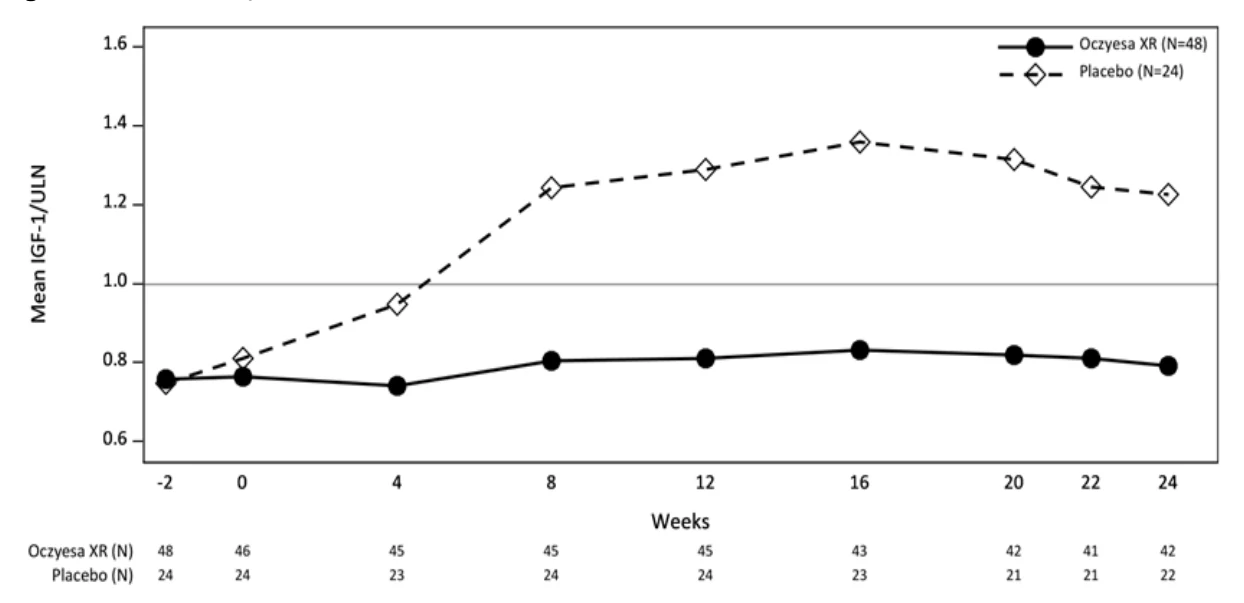
N=number of patients with evaluable data at the certain visit.
Grey line represents the 1xULN responder limit. Data from retrieved dropouts (i.e., following intercurrent events) (CAM2029, N=4; Placebo, N=2) were set to missing.
Trial 2
Long-term safety and efficacy of OCZYESA XR were assessed in 135 patients with acromegaly enrolled in Trial 2. Fifty-four (54) patients were roll-over patients from Trial 1 (36 randomized to OCZYESA XR and 18 to placebo) and 81 patients (“new patients”) were directly enrolled in Trial 2.
The new patients were on stable standard of care treatment with long-acting injectable octreotide or lanreotide at the time of enrollment. At screening, new patients had IGF-1 levels below or equal to 2×ULN. The mean age of all patients (across the treatment groups) was 52.9 years (range 20–82 years), 56.3% were women, and 95.6% were White. The percentage of patients with prior pituitary surgery was 88.1% and the mean time since acromegaly diagnosis was 11.1 years.
In Trial 2, new patients received OCZYESA XR for 52 weeks, whereas roll-over patients started OCZYESA XR at week 24 and received treatment for 28 weeks.
For roll-over patients who received OCZYESA XR in both Trial 1 and Trial 2, mean IGF-1 values remained stable and below 1xULN during the 52 weeks of treatment. For roll-over patients who received placebo in Trial 1, IGF-1 values returned to normal after switching to treatment with OCZYESA XR in Trial 2 (Figure 2). For new patients enrolled in Trial 2, the proportion of responders with IGF-1 ≤ULN increased from 14.8% at baseline to 36.5% at the end of the 52-week treatment period.
Figure 2 Mean IGF-1/ULN during long-term treatment by patient group – Trial 2
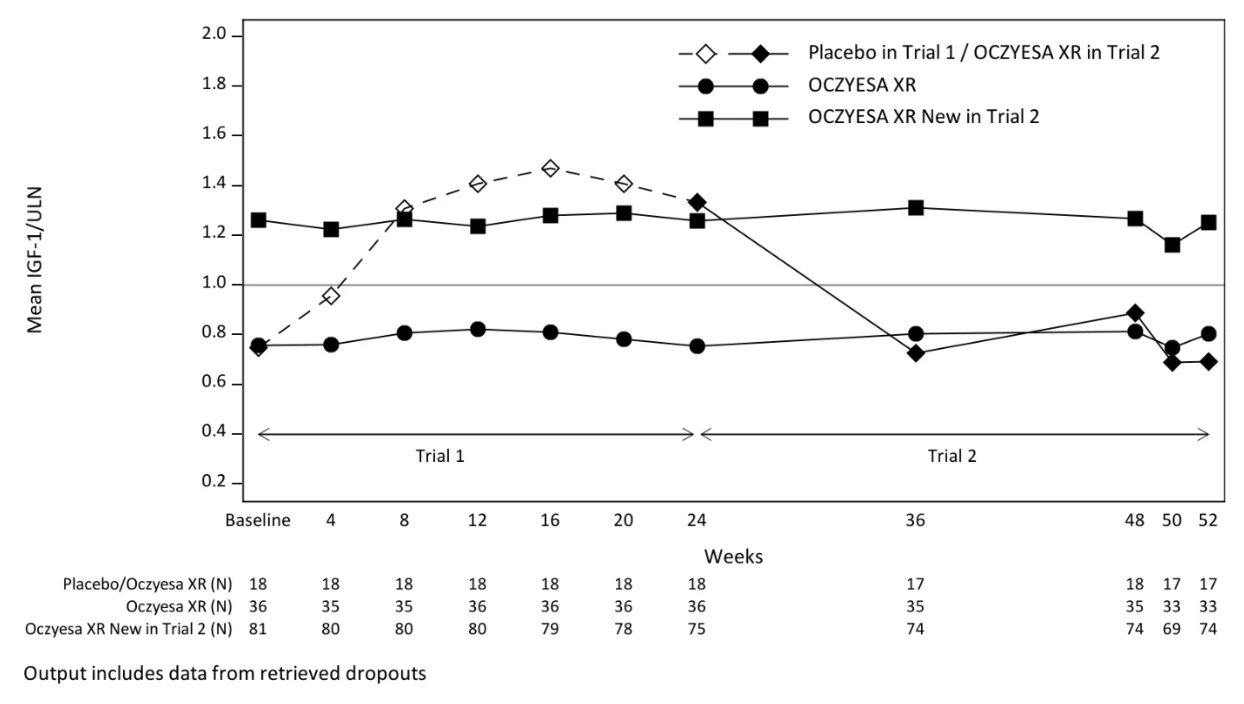
N=number of patients with evaluable data at the certain visit.
Grey line represents the 1xULN responder limit.
16. Non-Clinical Toxicology
General toxicology
Safety pharmacology effects, including cardiovascular, respiratory, and central nervous system effects were not evaluated in stand-alone safety pharmacology studies with OCZYESA XR.
In a 13-week repeated-dose toxicity study, dogs were dosed subcutaneously with 30, 45 and 60 mg/month of octreotide in OCZYESA XR. Most of the animals had soft feces on one or more days and a small number of animals vomited on a few occasions. This was considered treatment-related and consistent with the known pharmacological effects of octreotide. There were swellings at injection sites, indicative of the presence of the depot matrix in the subcutaneous tissue in all dose groups. The dose of 60 mg resulted in Cmax and AUC values of 9.8 and 3.1-fold the human Cmax and AUC values at the clinical dose of 20 mg monthly.
In a 16-week repeated-dose toxicity study, dogs were dosed subcutaneously with 12 or 20 mg/month of octreotide in OCZYESA XR formulations.
All in-life findings (liquid feces, difficulty in standing, quiet behavior, thin appearance, transient body weight loss and reduced food consumption) were considered to be related to the pharmacological effects of octreotide and evidence of recovery from these findings was clear after each dosing occasion. Other clinical signs were limited to injection site swellings, due to physical presence of the depot matrix in the tissue. The necropsy findings were limited to injection sites with no differences in local tolerance shown for different formulations of OCZYESA XR.
Carcinogenicity
No carcinogenicity studies have been conducted with octreotide hydrochloride. In rats receiving octreotide acetate at daily doses up to 1.25 mg/kg body weight, fibrosarcomas were observed, predominantly in a number of male animals, at the subcutaneous injection site after 52, 104 and 113/116 weeks. Local tumors also occurred in the control rats; however, development of these tumors was attributed to disordered fibroplasia produced by sustained irritant effects at the injection sites, enhanced by the acidic lactic acid/mannitol vehicle. This non-specific tissue reaction appeared to be particular to rats. Neoplastic lesions were not observed either in mice receiving daily subcutaneous injections of octreotide at doses up to 2 mg/kg for 98 weeks (14 times the clinical dose of OCZYESA XR 20 mg every 4 weeks [based on body surface area]), or in dogs treated with daily subcutaneous doses of the drug for 52 weeks.
Genotoxicity
Two in vitro mutagenicity tests (bacterial reverse mutation test, in vitro mouse lymphoma mutation test) were performed with octreotide hydrochloride and revealed no mutagenicity.
Reproductive and Developmental Toxicity
No reproductive toxicity studies were conducted with OCZYESA XR.
Rats and rabbits were treated intravenously with octreotide acetate 0.01, 0.1 or 1 mg/kg/day from day 6 to 15 or day 6 to 18 post coitum. In rats and rabbits the 0.01 mg/kg/day dose was well tolerated by the dams, but the mid and high doses caused slight dose-dependent weight gain inhibition. No adverse effect on the reproduction data or fetal and placental weight was observed. Morphological findings in fetuses of both species gave no indication of a teratogenic potential of the drug.
In a peri- and post-natal study in rats treated subcutaneously with doses of 0.02, 0.1 or 1.0 mg/kg/day from day 15 post coitum until autopsy on day 21 post-partum, octreotide acetate was well tolerated by the F0 females of all treatment groups, although slightly lower weight gain during pregnancy was noted in the high dose group. The reduced growth observed in rat pups was most likely a direct consequence of the drug's main pharmacological action, i.e., GH inhibition.
In a fertility and reproductive performance study in female rats treated subcutaneously with once daily doses of 0.02, 0.1 or 1 mg/kg/day, octreotide acetate was well tolerated by the F0 dams in the lower and mid dose group. In the high dose group, body weight gain was slightly reduced during the 2 weeks preceding mating and there was localized hair loss at the site of injection. Reproduction performance was normal at all dose levels. Prenatal and post-natal development of F1 offspring was not affected except for some growth retardation. The reproduction performance of F1 animals as well as the development of the F2 offspring were also normal.
Animal studies do not indicate direct or indirect harmful effects with respect to pregnancy, embryonal/fetal development, parturition or postnatal development apart from some transient retardation of physiological growth.