


Product Monograph - Olumiant
RECENT MAJOR LABEL CHANGES
| 1 INDICATIONS | 06/2022 |
|---|---|
| 2 CONTRAINDICATIONS | 01/2024 |
| 3 SERIOUS WARNINGS AND PRECAUTIONS BOX, MALIGNANCIES | 06/2022 |
| 3 SERIOUS WARNINGS AND PRECAUTIONS BOX, MAJOR ADVERSE CARDIOVASCULAR EVENTS | 06/2022 |
| 3 SERIOUS WARNINGS AND PRECAUTIONS BOX, THROMBOSIS | 06/2022 |
| 4 DOSAGE AND ADMINSTRATION, 4.1 Dosing Considerations | 06/2022 |
| 4 DOSAGE AND ADMINISTRATION, 4.2 Recommended Dose and Dosage Adjustment | 01/2024 |
| 7 WARNINGS AND PRECAUTIONS, Malignancies | 06/2022 |
| 7 WARNINGS AND PRECAUTIONS, Major Adverse Cardiovascular Events | 06/2022 |
| 7 WARNINGS AND PRECAUTIONS, Thrombosis | 06/2022 |
| 7 WARNINGS AND PRECAUTIONS, Laboratory Parameters, Creatine phosphokinase | 01/2024 |
| 7 WARNINGS AND PRECAUTIONS, Monitoring and Laboratory Tests, Renal | 01/2024 |
TABLE OF CONTENTS
Sections or subsections that are not applicable at the time of authorization are not listed.
RECENT MAJOR LABEL CHANGES ........................................................................................2
TABLE OF CONTENTS ..............................................................................................................2
PART I: HEALTH PROFESSIONAL INFORMATION .................................................................4
1 INDICATIONS ..................................................................................................................4
1.1 Pediatrics ...................................................................................................................4
1.2 Geriatrics ....................................................................................................................4
2 CONTRAINDICATIONS ..................................................................................................4
3 SERIOUS WARNINGS AND PRECAUTIONS BOX .......................................................4
4 DOSAGE AND ADMINISTRATION .................................................................................6
4.1 Dosing Considerations ...............................................................................................6
4.2 Recommended Dose and Dosage Adjustment ..........................................................7
4.4 Administration ............................................................................................................8
4.5 Missed Dose ..............................................................................................................8
5 OVERDOSAGE ...............................................................................................................8
6 DOSAGE FORMS, STRENGTHS, COMPOSITION AND PACKAGING ........................8
7 WARNINGS AND PRECAUTIONS .................................................................................9
7.1 Special Populations ..................................................................................................14
7.1.1 Pregnant Women ..................................................................................................14
7.1.2 Breast-feeding .......................................................................................................14
7.1.3 Pediatrics ..............................................................................................................15
7.1.4 Geriatrics ...............................................................................................................15
8 ADVERSE REACTIONS ................................................................................................15
8.1 Adverse Reaction Overview .....................................................................................15
8.2 Clinical Trial Adverse Reactions ..............................................................................16
8.3 Less Common Clinical Trial Adverse Reactions ......................................................21
8.4 Abnormal Laboratory Findings: Hematologic, Clinical Chemistry and Other Quantitative Data ...........................................................................................................22
8.5 Post-Market Adverse Reactions ...............................................................................25
9 DRUG INTERACTIONS .................................................................................................25
9.2 Drug Interactions Overview ......................................................................................25
9.4 Drug-Drug Interactions .............................................................................................25
9.5 Drug-Food Interactions ............................................................................................30
9.6 Drug-Herb Interactions .............................................................................................31
9.7 Drug-Laboratory Test Interactions ...........................................................................31
10 CLINICAL PHARMACOLOGY ......................................................................................31
10.1 Mechanism of Action ..............................................................................................31
10.2 Pharmacodynamics ................................................................................................31
10.3 Pharmacokinetics ...................................................................................................32
11 STORAGE, STABILITY AND DISPOSAL .....................................................................35
12 SPECIAL HANDLING INSTRUCTIONS ........................................................................36
PART II: SCIENTIFIC INFORMATION ......................................................................................36
13 PHARMACEUTICAL INFORMATION ...........................................................................36
14 CLINICAL TRIALS ........................................................................................................36
14.1 Clinical Trials by Indication .....................................................................................36
15 MICROBIOLOGY ...........................................................................................................45
16 NON-CLINICAL TOXICOLOGY ....................................................................................46
PATIENT MEDICATION INFORMATION .................................................................................48
PART I: HEALTH PROFESSIONAL INFORMATION
1 INDICATIONS
OLUMIANT (baricitinib tablets) is indicated for:
Rheumatoid Arthritis (RA)
- In combination with methotrexate (MTX), for reducing the signs and symptoms of moderate to severe rheumatoid arthritis (RA) in adult patients who have responded inadequately to one or more disease-modifying anti-rheumatic drugs (DMARDs).
OLUMIANT may be used as monotherapy in cases of intolerance to MTX.
Limitations of Use: Use of OLUMIANT in combination with other JAK inhibitors, biologic DMARDs, or with potent immunosuppressants such as azathioprine and cyclosporine is not recommended (see 7 WARNINGS AND PRECAUTIONS, Immune).
Alopecia Areata (AA)
OLUMIANT is indicated for the treatment of adult patients with severe alopecia areata.
Limitations of Use: Use of OLUMIANT in combination with other JAK inhibitors, biologic immunomodulators, or with potent immunosuppressants such as azathioprine and cyclosporine is not recommended (see 7 WARNINGS AND PRECAUTIONS, Immune).
1.1 Pediatrics
Pediatrics (<18 years of age): No data are available to Health Canada; therefore, Health Canada has not authorized an indication for pediatric use.
1.2 Geriatrics
Geriatrics (≥ 65 years of age): Caution should be used when treating geriatric patients with OLUMIANT. The incidence of fatal serious adverse events (SAEs), hospitalization due to SAEs, life-threatening SAEs, and AEs leading to study medication discontinuation was highest in the 75 to 84 year old subgroup, compared to the younger subgroups (see 7.1.4 Geriatrics).
2 CONTRAINDICATIONS
Baricitinib is contraindicated in patients who are hypersensitive to this drug or to any ingredient in the formulation, including any non-medicinal ingredient, or component of the container. For a complete listing, see 6 DOSAGE FORMS, STRENGTHS, COMPOSITION AND PACKAGING.
OLUMIANT is contraindicated in pregnant women (see 7.1.1 Pregnant Women).
3 SERIOUS WARNINGS AND PRECAUTIONS BOX
Serious Warnings and Precautions
SERIOUS INFECTIONS Patients treated with OLUMIANT (baricitinib) are at risk for developing serious infections that may lead to hospitalization or death (see 7 WARNINGS AND PRECAUTIONS, Infections and 8 ADVERSE REACTIONS). Most patients who developed these infections were taking concomitant immunosuppressants such as methotrexate or corticosteroids. |
|---|
If a serious infection develops, interrupt OLUMIANT until the infection is controlled. Reported infections include:
Treatment with OLUMIANT should not be initiated in patients with active infections including chronic or localized infection. The risks and benefits of treatment with OLUMIANT should be carefully considered prior to initiating therapy in patients with chronic or recurrent infection. Patients should be closely monitored for the development of signs and symptoms of infection during and after treatment with OLUMIANT, including the possible development of tuberculosis in patients who tested negative for latent tuberculosis infection prior to initiating therapy (see 7 WARNINGS AND PRECAUTIONS, Infections). MALIGNANCIES Lymphoma and other malignancies have been reported in patients receiving OLUMIANT. An increase in malignancies, including lung cancer, were observed in rheumatoid arthritis (RA) patients 50 years and older with at least one additional cardiovascular (CV) risk factor who were treated with another Janus kinase (JAK) inhibitor compared to tumour necrosis factor (TNF) inhibitors. Caution should be applied when using OLUMIANT in geriatric patients, patients who are current or past smokers, and patients with other malignancy risk factors (see 7 WARNINGS AND PRECAUTIONS, Malignancies). MAJOR ADVERSE CARDIOVASCULAR EVENTS In a retrospective observational study of OLUMIANT in RA patients, a higher rate of major adverse cardiovascular events was observed in OLUMIANT treated patients compared to patients treated with TNF inhibitors. In a clinical trial with another JAK inhibitor compared to TNF inhibitors, major adverse cardiovascular events, including non-fatal myocardial infarction, were observed more frequently in RA patients who were 50 years and older with at least one additional CV risk factor. Caution should be applied when using OLUMIANT in geriatric patients, patients who are current or past smokers, and patients with other CV risk factors (see 7 WARNINGS AND PRECAUTIONS, Major Adverse Cardiovascular Events). THROMBOSIS Thrombosis, including deep venous thrombosis and pulmonary embolism, has been observed at an increased incidence in patients treated with OLUMIANT compared to placebo. In addition, there were cases of arterial thrombosis. Many of these adverse events were serious and some resulted in death. In a retrospective observational study of OLUMIANT in RA patients, a higher rate of venous thrombosis was observed when compared with TNF inhibitors. RA patients with at least one CV risk factor had a higher rate of all-cause mortality and thrombosis, including pulmonary embolism, deep venous thrombosis, and arterial thrombosis in a clinical trial with another JAK inhibitor compared to TNF inhibitors. Consider the risks and benefits prior to treating patients who may be at increased risk. Discontinue OLUMIANT and promptly evaluate patients with symptoms of thrombosis (see 7 WARNINGS |
|---|
| AND PRECAUTIONS, Thrombosis). |
|---|
4 DOSAGE AND ADMINISTRATION
4.1 Dosing Considerations
- Concomitant use of OLUMIANT with potent immunosuppressants, other JAK inhibitors, or biologic immunomodulators has not been studied and is not recommended (see Immune and 9.4 Drug-Drug Interactions).
- Monitor complete blood counts during treatment and modify dosage as recommended (see Hematology).
- OLUMIANT should not be initiated in patients with an absolute lymphocyte count (ALC) less than 0.5 x 10⁹ cells/L, absolute neutrophil count (ANC) less than 1 x 10⁹ cells/L, or hemoglobin levels less than 80 g/L (see Hematology and 8 ADVERSE REACTIONS).
- OLUMIANT should not be initiated in patients with active serious infection, including localized infections. OLUMIANT should be interrupted if a patient develops a serious infection, an opportunistic infection, or sepsis (see Infections).
- The use of OLUMIANT with live vaccines is not recommended (see Immunization).
- Treatment for latent tuberculosis infection should be initiated prior to OLUMIANT use (see Infections).
- Prior to initiating OLUMIANT, screening for viral hepatitis is recommended (see Infections).
- Prior to initiating OLUMIANT, consider the risks and benefits of therapy in geriatric patients, patients who are current or past smokers, patients with other CV risk factors, patients with a known malignancy, or patients at increased risk of thrombosis, and when considering continuing OLUMIANT in patients who develop a malignancy, major CV events, or thrombosis (see Malignancies, Major Adverse Cardiovascular Events, and Thrombosis). Discontinue OLUMIANT and promptly evaluate patients with symptoms of thrombosis (see Thrombosis).
- OLUMIANT should not be used during pregnancy and is not recommended for use in breastfeeding women (see 7.1.1 Pregnant Women and 7.1.2 Breast-feeding).
- Caution should be used when using OLUMIANT in patients 65 years of age or older. It may be useful to closely monitor renal function in the geriatric population (see 7.1.4 Geriatrics).
- OLUMIANT is not recommended for use in patients with severe hepatic impairment (see Special Populations and Conditions). Liver enzymes should be evaluated before initiating OLUMIANT. If increases in liver enzymes are observed during therapy and drug induced liver injury (DILI) is suspected, interrupt OLUMIANT treatment until the diagnosis of DILI is excluded (see Hepatic/Biliary/Pancreatic and Monitoring and Laboratory Tests).
- Dose modifications are recommended in patients with renal impairments using OLUMIANT (see Renal and Special Populations and Conditions).
- Dose modifications are recommended in patients taking OAT3 inhibitors with a strong inhibition potential, such as probenecid, using OLUMIANT (see 9.4 Drug-Drug Interactions).
4.2 Recommended Dose and Dosage Adjustment
Rheumatoid Arthritis
The recommended oral dose of OLUMIANT is 2 mg once daily in combination with methotrexate.
Monotherapy may be considered in cases of intolerance to methotrexate.
Alopecia Areata
The recommended oral dose of OLUMIANT is 2 mg once daily. Consider increasing to 4 mg once daily if the response to treatment is not adequate.
For patients with nearly complete or complete scalp hair loss, and/or substantial eyelash or eyebrow hair loss, consider starting with 4 mg once daily.
Once patients achieve an adequate response to treatment with 4 mg, consider decreasing the dosage to 2 mg once daily. When clinically advisable, the lowest effective dose should be used to minimize adverse effects.
Consideration should be given to discontinuing treatment in patients who show no evidence of therapeutic benefit after 36 weeks of treatment.
Dosing in Special Populations
Pediatrics (<18 years of age): Health Canada has not authorized an indication for pediatric use (see 1.1 Pediatrics).
Geriatrics (≥65 years of age): No dosage adjustment is required in patients aged 65 years and older (see 7.1.4 Geriatrics and Special Populations and Conditions).
Renal Impairment:
Rheumatoid Arthritis:
- No dose adjustment is necessary in patients with mild renal impairment (estimated GFR (eGFR) higher than 60 mL/min/1.73 m2, see Renal and Special Populations and Conditions).
- OLUMIANT is not recommended for adult patients with eGFR < 60 mL/min/1.73 m2, including patients with end stage renal disease (ESRD).
Alopecia Areata:
- No dose adjustment is necessary in patients with mild renal impairment (eGFR higher than 60 mL/min/1.73 m2, see Renal and Special Populations and Conditions).
- For adult patients with eGFR between 30 and 60 mL/min/1.73 m2, if the recommended dose of baricitinib is 4 mg once daily, the OLUMIANT dose should be reduced to 2 mg once daily. If the recommended dose is 2 mg once daily, OLUMIANT is not recommended.
- OLUMIANT is not recommended for adult patients with eGFR < 30 mL/min/1.73 m2, including patients with ESRD.
Hepatic Impairment: No dose adjustment is necessary in patients with mild or moderate hepatic impairment OLUMIANT is not recommended in patients with severe hepatic impairment (see Hepatic/Biliary/Pancreatic and Special Populations and Conditions).
Dose Modification due to Drug Interactions:
For adult patients with alopecia areata taking 4 mg OLUMIANT once daily, the OLUMIANT dose should be reduced to 2 mg once daily when co-administered with an OAT3 inhibitor with strong inhibition potential, such as probenecid. For patients taking OLUMIANT 2 mg once daily, co-administration with OAT3 inhibitors with strong inhibition potential is not recommended.
4.4 Administration
OLUMIANT may be given with or without regard to food (see Absorption).
4.5 Missed Dose
If a scheduled dose of OLUMIANT is missed, it should be taken as soon as possible. Patients should not take more than 1 tablet per day.
5 OVERDOSAGE
Single doses up to 40 mg and multiple doses of up to 20 mg daily for 10 days have been administered in clinical trials without dose-limiting toxicity. Pharmacokinetic data of a single dose of 40 mg in healthy volunteers indicate that more than 90% of the administered dose is expected to be eliminated within 24 hours.
In case of an overdose, it is recommended that the patient should be monitored for signs and symptoms of adverse reactions. Patients who develop adverse reactions should receive appropriate treatment.
| For management of a suspected drug overdose, contact your regional poison control centre. |
|---|
6 DOSAGE FORMS, STRENGTHS, COMPOSITION AND PACKAGING
Table 1 – Dosage Forms, Strengths, Composition and Packaging
OLUMIANT is available as bottles containing 30 or 90 tablets and in blister packages of 14 (1x14) or 28 (2x14).
Not all pack sizes and presentations may be marketed.
| Route of Administration | Dosage Form / Strength/Composition | Non-medicinal Ingredients |
| oral | Baricitinib tablets / 2 mg / 4 mg Each tablet contains a recessed area on each face of the tablet surface and is available for oral administration as debossed, film-coated, immediate-release tablets. The 2 mg tablet is light pink, oblong, debossed with “Lilly” on one side and “2” on the other. The 4 mg tablet is medium pink, round, debossed with “Lilly” on one side and “4’ on the other. | croscarmellose sodium, magnesium stearate, mannitol, and microcrystalline cellulose. The colour coatings contain ferric oxide, lecithin (soya), polyethylene glycol, polyvinyl alcohol, talc, and titanium dioxide. |
7 WARNINGS AND PRECAUTIONS
Please see 3 SERIOUS WARNINGS AND PRECAUTIONS BOX at the beginning of PART I: HEALTH PROFESSIONAL INFORMATION.
Carcinogenesis and Mutagenesis
Malignancies
Lymphoma and other malignancies, including non-melanoma skin cancers (NMSCs) have been reported in patients treated with OLUMIANT (see 8.2 Clinical Trial Adverse Reactions, Specific Adverse Events). Periodic skin examination is recommended for patients who are at increased risk for skin cancer.
In a large randomized active-controlled study in RA patients 50 years and older with at least one additional CV risk factor, an increased incidence of malignancy, (excluding NMSC), particularly lung cancer and lymphoma, was observed with another JAK inhibitor compared to TNF inhibitors.
Consider the risks and benefits of OLUMIANT treatment prior to initiating therapy in geriatric patients, patients who are current or past smokers, patients with a known malignancy other than a successfully treated NMSC, or when considering continuing OLUMIANT in patients who develop a malignancy.
Cardiovascular
Major Adverse Cardiovascular Events
In a large randomized active-controlled study in RA patients 50 years and older with at least one additional CV risk factor, an increased incidence of major adverse cardiovascular events (MACE; non-fatal myocardial infarction (MI), nonfatal stroke, and CV deaths excluding pulmonary embolism) was observed with another JAK inhibitor compared to TNF inhibitors. This increase in MACE was primarily due to an increased incidence of non-fatal MI. In a retrospective observational study of OLUMIANT in RA patients, a higher incidence rate of MACE (MI and stroke) was observed compared to patients treated with TNF inhibitors. OLUMIANT should be used with caution in patients with risk factors for MACE.
Consider the risks and benefits of OLUMIANT treatment prior to initiating therapy in geriatric patients, patients who are current or past smokers, and patients with other CV risk factors, or when considering continuing OLUMIANT in patients who develop MACE.
Thrombosis
Thrombosis, including deep venous thrombosis (DVT) and pulmonary embolism (PE) have been reported in patients receiving OLUMIANT in clinical trials and in the post-market setting. Arterial thrombosis events in the extremities have also been reported in clinical studies with OLUMIANT. Many of these adverse events were serious and some resulted in death (see 8.2 Clinical Trial Adverse Reactions, Specific Adverse Events).
In a large, randomized, active-controlled study in RA patients 50 years of age and older with at least one additional CV risk factor, a dose dependent increased incidence of venous thromboembolic events (VTE) was observed with another JAK inhibitor compared to TNF inhibitors. In a retrospective observational study of OLUMIANT in RA patients, a higher rate of VTE was observed compared to patients treated with TNF inhibitors. Recurrent events of venous thrombosis have been reported in some patients recommencing treatment with OLUMIANT.
Consider the risks and benefits of OLUMIANT treatment prior to treating patients who may be at increased risk of thrombosis. Risk factors that should be considered in determining the patient’s risk for DVT/PE include older age, current or history of smoking, obesity, a medical history of DVT/PE, prothrombotic disorder, use of combined hormonal contraceptives or hormone replacement therapy, patients undergoing major surgery, or prolonged immobilization.
If clinical features of DVT/PE or arterial thrombosis occur, OLUMIANT treatment should be discontinued, and patients should be evaluated promptly and treated appropriately.
Gastrointestinal
Gastrointestinal Perforations: Events of gastrointestinal perforation have been reported in clinical trials with OLUMIANT (see 8 ADVERSE REACTIONS), although the role of JAK inhibition in these events is not known. OLUMIANT should be used with caution in patients who may be at increased risk for gastrointestinal perforation (e.g., use of concomitant NSAIDs and/or corticosteroids, patients with a history of diverticulitis). Patients presenting with new onset abdominal symptoms should be evaluated promptly for early identification of gastrointestinal perforation.
Hepatic/Biliary/Pancreatic
Treatment with OLUMIANT was associated with an increased incidence of liver enzyme elevation compared to placebo. Increases to ≥5x and 10x upper limit of normal (ULN) were observed for both ALT and AST in patients treated with OLUMIANT in clinical trials. Unconfirmed drug induced liver injury (DILI) was observed in four patients receiving baricitinib 4 mg in RA clinical trials. Baricitinib was discontinued in 2 cases, temporarily interrupted and resumed in 1 case, and continued without interruption in 1 case.
Evaluate liver enzymes before initiating OLUMIANT and thereafter according to routine patient management. Prompt investigation of the cause of liver enzyme elevation is recommended to identify potential cases of DILI. If increases in ALT or AST are observed and DILI is suspected, interrupt OLUMIANT until the diagnosis is excluded (see Liver Enzymes, Monitoring and Laboratory Tests, and 8 ADVERSE REACTIONS).
The use of baricitinib has not been studied in patients with severe hepatic impairment and is therefore not recommended (see Special Populations and Conditions).
Hypersensitivity
In post-marketing experience, cases of drug hypersensitivity associated with OLUMIANT administration including swelling of face and urticaria have been reported. Some of these events were serious. If any serious hypersensitivity reaction occurs, OLUMIANT should be discontinued immediately (see 2 CONTRAINDICATIONS and 8.5 POST-MARKET ADVERSE REACTIONS).
Immune
OLUMIANT can increase the risk of infections and immunosuppression when coadministered with potent immunosuppressants such as cyclosporine, azathioprine, or tacrolimus. Combined use of OLUMIANT with potent immunosuppressive drugs has not been studied and is not recommended (see 9.4 Drug-Drug Interactions).
Immunizations
The use of OLUMIANT with live vaccines is not recommended. Update immunizations in agreement with current immunization guidelines prior to initiating OLUMIANT therapy. The interval between live vaccinations and initiation of OLUMIANT therapy should be in accordance with current vaccination guidelines regarding immunosuppressive agents.
Infections
Serious and sometimes fatal infections due to bacterial, mycobacterial, invasive fungal, viral, or other opportunistic pathogens have been reported in patients receiving immunosuppressive agents, including biologic DMARDs and OLUMIANT. The most common serious infections reported with OLUMIANT included pneumonia, herpes zoster, and urinary tract infections (see 8 ADVERSE REACTIONS). Among opportunistic infections, tuberculosis, multidermatomal herpes zoster, esophageal candidiasis, pneumocystosis, acute histoplasmosis, cryptococcosis, cytomegalovirus, and BK virus were reported with OLUMIANT. Some patients have presented with disseminated rather than localized disease, and were often taking concomitant immunosuppressants such as methotrexate or corticosteroids.
Avoid use of OLUMIANT in patients with an active infection, including localized infections. The risks and benefits of treatment should be considered prior to initiating OLUMIANT in patients:
- With chronic or recurrent infections
- Who have been exposed to tuberculosis
- With a history of a serious or an opportunistic infection
- Who have resided or travelled in areas of endemic tuberculosis or endemic mycoses; or
- With underlying conditions that may predispose them to infection
Closely monitor patients for the development of signs and symptoms of infection during and after treatment with OLUMIANT. Interrupt OLUMIANT if a patient develops a serious infection, an opportunistic infection, or sepsis. A patient who develops a new infection during treatment with OLUMIANT should undergo prompt and complete diagnostic testing appropriate for an immunocompromised patient; appropriate antimicrobial therapy should be initiated, the patient should be closely monitored, and OLUMIANT should be interrupted if the patient is not responding to therapy. Do not resume OLUMIANT until the infection is controlled.
As there is a higher incidence of infections in the elderly and in the diabetic populations in general, caution should be used when using OLUMIANT in these populations (see 7.1.4 Geriatrics). Caution is also recommended in patients with a history of chronic lung disease, as they may be more prone to infections. Events of interstitial lung disease have been reported in patients treated with OLUMIANT in clinical trials (see Respiratory).
Risk of infection may be higher with increasing degrees of lymphopenia and consideration should be given to lymphocyte counts when assessing individual patient risk of infection. For discontinuation and monitoring criteria for lymphopenia (see Hematology and Monitoring and Laboratory Tests).
Tuberculosis (TB): Evaluate and test patients for latent or active infection prior to administration of OLUMIANT. OLUMIANT should not be given to patients with active TB.
Consider anti-TB therapy prior to initiation of OLUMIANT in patients with previously untreated latent TB. Consultation with a physician with expertise in the treatment of TB is recommended to aid in the decision about whether initiating anti-TB therapy is appropriate for an individual patient.
Monitor patients for the development of signs and symptoms of TB, including patients who tested negative for latent TB infection prior to initiating therapy.
Viral Reactivation: Viral reactivation, including cases of herpes virus reactivation (e.g., herpes zoster), were observed in clinical studies with OLUMIANT. If a patient develops herpes zoster, OLUMIANT treatment should be interrupted until the episode resolves. The impact of OLUMIANT on chronic viral hepatitis reactivation is unknown.
Patients with evidence of active hepatitis B or C infection were excluded from clinical trials.
Patients who were positive for hepatitis C antibody but negative for hepatitis C virus RNA were permitted to enroll. Patients with positive hepatitis B surface antibody and hepatitis B core antibody, without hepatitis B surface antigen, were permitted to enroll; such patients should be monitored for expression of hepatitis B virus (HBV) DNA. Should HBV DNA be detected, consult with a hepatologist. Perform screening for viral hepatitis in accordance with clinical guidelines before starting therapy with OLUMIANT.
Laboratory Parameters
Creatine phosphokinase (CPK): In controlled RA clinical trials, OLUMIANT treatment was associated with dose-dependent increases in CPK within one week of starting OLUMIANT and plateauing after 8 to 12 weeks. In RA clinical studies, at 16 weeks, the mean change in CPK for OLUMIANT 2 mg and OLUMIANT 4 mg was 37 U/L and 52 U/L, respectively.
In AA clinical trials, dose-dependant increases in CPK were also noted. At 16 weeks, the mean change in CPK for OLUMIANT 2 mg and OLUMIANT 4 mg was 49 U/L and 65 U/L, respectively. At 36 weeks, the mean change in CPK for OLUMIANT 2 mg and OLUMIANT 4 mg was 29 U/L and 109 U/L, respectively. Increases in CPK >5x ULN were reported in 2.2% and 5.1% of patients treated with OLUMIANT 2 mg and OLUMIANT 4 mg, respectively (see 8.4 Abnormal Laboratory Findings: Hematologic, Clinical Chemistry and Other Quantitative Data).
CPK levels should be checked in patients with symptoms of muscle weakness and/or muscle pain to evaluate for evidence of rhabdomyolysis (see Musculoskeletal and 8 ADVERSE REACTIONS).
Hematology
Hemoglobin: Dose-dependent decreases in hemoglobin levels to <80 g/L were reported with OLUMIANT treatment in clinical trials. Avoid initiation or interrupt OLUMIANT treatment in patients with hemoglobin <80 g/L. Evaluate hemoglobin prior to initiation of OLUMIANT and thereafter according to routine patient management (see Monitoring and Laboratory Tests and 4.1 Dosing Considerations).
Lymphopenia: Dose-dependent absolute decreases in Lymphocyte Count (ALC) <0.5 x 10⁹ cells/L were reported in OLUMIANT clinical trials. Lymphocyte counts less than the lower limit of normal were associated with infection in patients treated with OLUMIANT, but not placebo. Avoid initiation or interrupt OLUMIANT treatment in patients with an ALC <0.5 x 10⁹ cells/L. Evaluate lymphocytes prior to initiation of OLUMIANT and thereafter according to routine patient management (see Monitoring and Laboratory Tests, 4.1 Dosing Considerations, and 8 ADVERSE REACTIONS).
The risk of lymphocytosis is increased in elderly patients with rheumatoid arthritis. Rare cases of lymphoproliferative disorders have been reported.
Neutropenia: Treatment with OLUMIANT was associated with a dose-dependent increased incidence of neutropenia (ANC <1 x 10⁹ cells/L) compared to placebo. Avoid initiation or interrupt OLUMIANT treatment in patients with an ANC <1 x 10⁹ cells/L. Evaluate neutrophils prior to initiating OLUMIANT and thereafter according to routine patient management (see Monitoring and Laboratory Tests, 4.1 Dosing Considerations, and 8 ADVERSE REACTIONS).
Pancytopenia: Events of pancytopenia have been reported in patients with rheumatoid arthritis taking OLUMIANT in clinical trials. In all cases, pancytopenia occurred in patients who reported potential confounding factors (concurrent events or recent medication changes) that may have contributed to the observed pancytopenia (see Monitoring and Laboratory Tests).
Platelets and thrombocytosis: In controlled studies, dose-dependent, treatment-emergent increases in platelet counts were seen in patients treated with OLUMIANT compared to placebo. The clinical significance of this finding is not known. There was no clear association between increased platelet counts and the adverse events of a thrombotic nature that were reported in the clinical trials (see Thrombosis and 8 ADVERSE REACTIONS).
Lipids
Dose-dependent increases in lipid parameters (LDL cholesterol and triglycerides) were very common in patients treated with OLUMIANT compared to placebo in clinical trials (see 8 ADVERSE REACTIONS). Assessment of lipid parameters should be performed approximately 12 weeks following initiation of OLUMIANT and as needed thereafter. The effect of these lipid parameter elevations on cardiovascular morbidity and mortality has not been determined.
Manage patients according to clinical guidelines (e.g., Canadian Cardiovascular Society [CCS]) for the management of hyperlipidemia. Elevations in LDL cholesterol decreased to pre-treatment levels in response to statin therapy for patients receiving OLUMIANT (see Monitoring and Laboratory Tests, and 8 ADVERSE REACTIONS).
Liver Enzymes
Increases to ≥5 and ≥10 X upper limit of normal (ULN) were observed for both ALT and AST in patients treated with OLUMIANT in clinical trials. See Hepatic/Biliary/Pancreatic, Monitoring and Laboratory Tests, and 8 ADVERSE REACTIONS.
Renal Function
Dose-dependent increases in creatinine and urea nitrogen and decreases in eGFR and creatinine clearance were observed in clinical trials with OLUMIANT. See Renal, 8 ADVERSE REACTIONS, 4.1 Dosing Considerations, and Special Populations and Conditions.
Monitoring and Laboratory Tests
Hematology: Lymphocyte counts, neutrophil counts, and hemoglobin should be tested at baseline, approximately 4-8 weeks after initiation with OLUMIANT and periodically thereafter.
Hepatic tests: Liver enzyme tests are recommended. If drug-induced liver injury is suspected, the administration of OLUMIANT should be interrupted until this diagnosis has been excluded.
Lipid tests: Assessment of lipid parameters should be performed prior to starting OLUMIANT, approximately 12 weeks after initiation of treatment and periodically thereafter.
Renal tests: Assessment of renal function is recommended prior to initiation of OLUMIANT, approximately 4-8 weeks after initiation with OLUMIANT and periodically thereafter.
Musculoskeletal
Treatment with OLUMIANT was associated with dose-dependent increases in creatine phosphokinase (CPK). CPK levels should be checked in patients with symptoms of muscle weakness and/or muscle pain to evaluate for evidence of rhabdomyolysis (see 8 ADVERSE REACTIONS).
Renal
In RA, OLUMIANT is not recommended for use in patients with an estimated GFR of less than 60 mL/min/1.73 m2 (moderate and severe renal impairment including ESRD patients).
In AA, dosage adjustment of OLUMIANT is recommended in patients with moderate renal impairment (eGFR between 30 and 60 mL/min/1.73 m2, see 4.2 Recommended Dose and Dosage Adjustment and 10.3 Pharmacokinetics). Baricitinib is not recommended for use in AA patients with eGFR < 30 mL/min/1.73 m2 (including ESRD patients).
Renal function was found to significantly affect baricitinib exposure. OLUMIANT is known to be substantially excreted by the kidney, and the risk of adverse reactions to this drug may be greater in patients with impaired renal function. Dose-dependent increases in creatinine and urea nitrogen, and decreases in eGFR and creatinine clearance were observed in clinical trials with OLUMIANT (see 4.1 Dosing Considerations and Special Populations and Conditions).
Reproductive Health: Female and Male Potential
Olumiant is contraindicated in pregnant women. See 2 CONTRAINDICATIONS
Women of reproductive potential should be advised to use effective contraception during treatment with OLUMIANT and for at least 1 week after the final treatment. If the patient becomes pregnant while taking OLUMIANT, the patient should be advised of the potential risk to a fetus (7.1.1 Pregnant Women).
- Fertility
No human fertility studies have been conducted. OLUMIANT has been shown to have effects in rats on female fertility, parturition, and peri/postnatal development (see 16 NON-CLINICAL TOXICOLOGY).
- Teratogenic Risk
Based on findings in animal studies, OLUMIANT may cause fetal harm when administered to a pregnant woman. OLUMIANT has been shown to be teratogenic in rats and rabbits (see 16 NON-CLINICAL TOXICOLOGY). Pregnant women should be advised of the potential risk to a fetus.
Respiratory
Interstitial Lung Disease (ILD): Events of ILD have been reported in clinical trials and post-market with OLUMIANT in rheumatoid arthritis patients. Although the role of JAK inhibition in these events is not known, the events of ILD were considered possibly related to OLUMIANT treatment in some cases. Most patients who developed ILD were taking concomitant methotrexate, which has been associated with ILD. OLUMIANT should be used with caution in patients with risk factors for, or a history of, ILD.
7.1 Special Populations
7.1.1 Pregnant Women
OLUMIANT should not be used during pregnancy. See 2 CONTRAINDICATIONS. There are no adequate and well-controlled studies to assess the use of OLUMIANT in pregnant women. OLUMIANT has been shown to be teratogenic in rats and rabbits and have effects in rats on female fertility, parturition, and peri/postnatal development (see 16 NON-CLINICAL TOXICOLOGY).
Women of reproductive potential should be advised to take appropriate precautions to avoid becoming pregnant during treatment with OLUMIANT and for at least 1 week after the final treatment. If the patient becomes pregnant while taking OLUMIANT, inform the patient of the potential for hazard to a fetus.
7.1.2 Breast-feeding
Breastfeeding is not recommended during OLUMIANT treatment. Lactation studies have not been conducted to assess the presence of baricitinib in human milk, the effects on the breastfed infant, or the effects on milk production. Baricitinib was secreted in the milk of lactating rats and absorbed by suckling pups (see 16 NON-CLINICAL TOXICOLOGY).
7.1.3 Pediatrics
Pediatrics (<18 years of age): No data are available to Health Canada; therefore, Health Canada has not authorized an indication for pediatric use.
7.1.4 Geriatrics
Caution should be used when treating the elderly with OLUMIANT as the greater sensitivity of some older individuals cannot be ruled out. The incidence of fatal serious adverse events (SAEs), hospitalization due to SAEs, life-threatening SAEs, and AEs leading to study medication discontinuation was highest in the 75 to 84 year old subgroup, compared to the younger subgroups. OLUMIANT is known to be substantially excreted by the kidney, and the risk of adverse reactions to this drug may be greater in patients with impaired renal function. Because elderly patients are more likely to have decreased renal function, it may be useful to closely monitor renal function in this population (see 4.1 Dosing Considerations and Special Populations and Conditions).
8 ADVERSE REACTIONS
8.1 Adverse Reaction Overview
The following clinically significant adverse reactions may occur with OLUMIANT.
- Serious Infections
- Malignancies
- Major Adverse Cardiovascular Events
- Thrombosis
- Gastrointestinal Perforations
- Hypersensitivity
- Laboratory Abnormalities
Please see the relevant sections in “3 SERIOUS WARNINGS AND PRECAUTIONS BOX” and “7 WARNINGS AND PRECAUTIONS”
Rheumatoid Arthritis
A total of 3492 rheumatoid arthritis patients were treated with OLUMIANT in clinical studies representing 7860 patient-years of exposure. Of these, 2723 were exposed to OLUMIANT for at least one year. The mean age was 53 years, 79% were female, 66% were white, 3% were black, 26% were Asian, and 5% were other race. Six placebo-controlled studies were integrated (479 patients on OLUMIANT 2 mg once daily, 997 patients on baricitinib 4 mg once daily and 1070 patients on placebo) to evaluate the adverse drug reaction (ADR) profile of OLUMIANT for up to 16 weeks (placebo-controlled) plus extension periods (mean 2.3 years).
During the placebo-controlled period of the studies, treatment emergent adverse events were observed in 57% of patients treated with placebo, 61% of patients treated with OLUMIANT 2 mg, and 64% of patients treated with 4 mg baricitinib. The most common adverse events in the OLUMIANT (baricitinib)-exposed patients up to 16 weeks, reported by >2% of patients and at a higher incidence versus placebo, were as follows: Blood CPK increased, hypercholesterolaemia, pharyngitis, nausea, urinary tract infection, hypertension, upper respiratory tract infection, headache, nasopharyngitis, and bronchitis.
The overall incidence rate of SAEs including in a long-term extension study, was higher for the baricitinib 4 mg dose [12.9 per 100 patient-years] than the OLUMIANT 2 mg dose [10.1 per 100 patient-years]. In the baricitinib clinical program, the most common SAEs were as follows (frequency of ≥0.5%, in order of most to least frequent): Pneumonia, osteoarthritis, herpes zoster, urinary tract infection, fall, rheumatoid arthritis, and pulmonary embolism.
During the 16-week placebo-controlled treatment period, adverse events leading to discontinuation of treatment were reported in 3% of patients treated with placebo, 4% of patients treated with OLUMIANT 2 mg, and 5% of patients treated with baricitinib 4 mg. The overall incidence rate of adverse events leading to discontinuation of treatment including in a long-term extension study was higher with the baricitinib 4 mg dose (7.3 per 100 patient-years) than in the OLUMIANT 2 mg dose (5.0 per 100 patient-years). In the baricitinib clinical program, the most common adverse events leading to discontinuation from treatment were infections. The most common infections (frequency of ≥0.2%) resulting in discontinuation of treatment were herpes zoster, pneumonia, and urinary tract infection.
Alopecia Areata
A total of 1244 alopecia areata patients were treated with OLUMIANT in clinical studies representing 1362 patient-years of exposure. Of these, 845 were exposed to OLUMIANT for at least one year. The mean age was 38 years, 62% were female, 54% were white, 8% were black, 35% were Asian, and 3% were other race. Two placebo-controlled studies were integrated (365 patients on OLUMIANT 2 mg once daily, 540 patients on OLUMIANT 4 mg once daily and 371 patients on placebo) to evaluate the adverse drug reaction (ADR) profile of OLUMIANT for up to 36 weeks (placebo-controlled) plus extension periods (mean 1.1 years).
During the placebo-controlled period of the studies, treatment emergent adverse events were observed in 57% of patients treated with placebo, 60% of patients treated with OLUMIANT 2 mg, and 63% of patients treated with OLUMIANT 4 mg. The most common adverse events in the OLUMIANT-exposed patients up to 36 weeks, reported by >2% of patients and at a higher incidence versus placebo, were as follows: Upper respiratory tract infection, nasopharyngitis, headache, acne, blood CPK increased, urinary tract infection, hypertension, pruritus, fatigue and folliculitis. The incidence rate of SAEs including in the long-term extension, was higher for the OLUMIANT 4 mg dose [3.6 per 100 patient-years] than the OLUMIANT 2 mg dose [2.3 per 100 patient-years].
During the 36-week placebo-controlled treatment period, adverse events leading to discontinuation of treatment were reported in 1.6% of patients treated with placebo, 1.9% of those with OLUMIANT 2 mg, and 1.8% of those with OLUMIANT 4 mg. The overall incidence rate of adverse events leading to discontinuation of treatment including in the long-term extension was 2.5 per 100 patient-years with the OLUMIANT 4 mg dose and 2.3 per 100 patient-years with the OLUMIANT 2 mg dose.
There was a tendency for higher rates of adverse events, serious adverse events, infections, and hyperlipidemia in patients over 65 years of age, as compared to patients under 65 years of age.
8.2 Clinical Trial Adverse Reactions
Clinical trials are conducted under very specific conditions. The adverse reaction rates observed in the clinical trials; therefore, may not reflect the rates observed in practice and should not be compared to the rates in the clinical trials of another drug. Adverse reaction information from clinical trials may be useful in identifying and approximating rates of adverse drug reactions in real-world use.
Adverse Events in Patients with Rheumatoid Arthritis
Table 2 below lists the adverse events (regardless of causality) occurring in ≥1% of patients treated with OLUMIANT and reported at a higher frequency versus placebo during the double-blind, placebo-controlled portion of the rheumatoid arthritis studies.
Table 2 – Adverse Events Occurring in ≥1% of OLUMIANT-Treated RA Patients and Reported at a Higher Frequency Versus Placebo in Integrated Placebo-Controlled Trials up to 16 Weeks (All Causalities)
| System Organ Class/ |
|---|
Adverse Events
| Placebo N=1070 n (%) | OLUMIANT 2 mg N=479 n (%) | Baricitinib 4 mg N=997 n (%) | ||||
|---|---|---|---|---|---|---|
| Gastrointestinal Disorders | ||||||
| Nausea | 17 (1.6) | 13 (2.7) | 28 (2.8) | |||
| Vomiting | 6 (0.6) | 11 (2.3) | 13 (1.3) | |||
| Abdominal pain upper | 5 (0.5) | 10 (2.1) | 14 (1.4) | |||
| Constipation | 15 (1.4) | 8 (1.7) | 11 (1.1) | |||
| Abdominal pain | 9 (0.8) | 8 (1.7) | 8 (0.8) | |||
| General Disorders and Administration Site Conditions | ||||||
| Fatigue | 14 (1.3) | 7 (1.5) | 11 (1.1) | |||
| Pyrexia | 8 (0.7) | 6 (1.3) | 8 (0.8) | |||
| Hepatobiliary Disorders | ||||||
| Hepatic Function Abnormal | 1 (0.1) | 5 (1.0) | 8 (0.8) | |||
| Infections and Infestations | ||||||
| URTI | 39 (3.6) | 27 (5.6) | 46 (4.6) | |||
| UTI | 29 (2.7) | 17 (3.5) | 34 (3.4) | |||
| Nasopharyngitis | 51 (4.8) | 16 (3.3) | 53 (5.3) | |||
| Bronchitis | 30 (2.8) | 12 (2.5) | 31 (3.1) | |||
| Pharyngitis | 14 (1.3) | 10 (2.1) | 23 (2.3) | |||
| Sinusitis | 12 (1.1) | 10 (2.1) | 10 (1.0) | |||
| Gastroenteritis | 9 (0.8) | 7 (1.5) | 16 (1.6) | |||
| Cystitis | 9 (0.8) | 7 (1.5) | 5 (0.5) | |||
| Influenza | 10 (0.9) | 6 (1.3) | 18 (1.8) | |||
| Rhinitis | 3 (0.3) | 6 (1.3) | 2 (0.2) | |||
| Herpes zoster | 4 (0.4) | 5 (1.0) | 14 (1.4) | |||
| Investigations | ||||||
| Blood CPK increased | 6 (0.6) | 11 (2.3) | 35 (3.5) | |||
| ALT Increased ≥3 x ULN | 10 (0.9) | 5 (1.0) | 15 (1.5) | |||
| Metabolism and Nutrition Disorders | ||||||
| Hypercholesterolemia | 14 (1.3) | 7 (1.5) | 28 (2.8) | |||
| Dyslipidemia | 5 (0.5) | 6 (1.3) | 10 (1.0) | |||
| Hyperlipidemia | 8 (0.7) | 5 (1.0) | 19 (1.9) | |||
| Musculoskeletal and Connective Tissue Disorders | ||||||
| Arthralgia | 17 (1.6) | 8 (1.7) | 17 (1.7) | |||
| Muscle Spasms | 6 (0.6) | 6 (1.3) | 8 (0.8) | |||
| Nervous System Disorders | |||
|---|---|---|---|
| Headache | 32 (3.0) | 30 (6.3) | 38 (3.8) |
| Dizziness | 8 (0.7) | 7 (1.5) | 14 (1.4) |
| Psychiatric Disorders | |||
| Insomnia | 8 (0.7) | 5 (1.0) | 5 (0.5) |
| Respiratory, Thoracic, and Mediastinal Disorders | |||
| Cough | 17 (1.6) | 9 (1.9) | 19 (1.9) |
| Oropharyngeal pain | 5 (0.5) | 9 (1.9) | 12 (1.2) |
| Skin and Subcutaneous Tissue Disorders | |||
| Rash | 8 (0.7) | 7 (1.5) | 9 (0.9) |
| Vascular Disorders | |||
| Hypertension | 17 (1.6) | 16 (3.3) | 21 (2.1) |
Specific Adverse Events in Rheumatoid Arthritis
Overall Infections: During the 16-week treatment period, infections were reported by 253 patients (82.1 per 100 patient-years) treated with placebo, 139 patients (99.1 per 100 patient-years) treated with OLUMIANT 2 mg, and 298 patients (100.1 per 100 patient-years) treated with baricitinib 4 mg. During 0 to 52 week exposure, infections were reported by 200 patients (59.6 per 100 patients-years) treated with OLUMIANT 2 mg, and 500 patients (55.3 per 100 patient-years) treated with baricitinib 4 mg. In the 0 to 52 week exposure population, the most commonly reported infections with OLUMIANT were viral upper respiratory tract infection, upper respiratory tract infection, urinary tract infection, and bronchitis.
Serious Infections: During the 16-week treatment period, serious infections were reported in 13 patients (4.2 per 100 patient-years) treated with placebo, 5 patients (3.6 per 100 patient-years) treated with OLUMIANT 2 mg, and 11 patients (3.7 per 100 patient-years) treated with baricitinib 4 mg. During 0 to 52 week exposure, serious infections were reported in 14 patients (4.2 per 100 patient-years) treated with OLUMIANT 2 mg and 32 patients (3.5 per 100 patient-years) treated with baricitinib 4 mg. In the 0 to 52 week exposure population, the most commonly reported serious infections with OLUMIANT were pneumonia, herpes zoster, and urinary tract infection (see Infections).
Tuberculosis: During 0 to 52 week exposure, events of tuberculosis were reported in 0 patients treated with OLUMIANT 2 mg and 1 patient (0.1 per 100 patient-years) treated with baricitinib 4 mg. Cases of disseminated tuberculosis were also reported.
Opportunistic Infections: During the 16-week treatment period, opportunistic infections were reported in 2 patients (0.6 per 100 patient-years) treated with placebo, 0 patients treated with OLUMIANT 2 mg and 2 patients (0.7 per 100 patient-years) treated with baricitinib 4 mg. During 0 to 52 week exposure, opportunistic infections were reported in 1 patient (0.3 per 100 patient-years) treated with OLUMIANT 2 mg and 5 patients (0.6 per 100 patient-years) treated with baricitinib 4 mg (see Infections).
Malignancy: During the 16-week treatment period, malignancies excluding non-melanoma skin cancers (NMSC) were reported in 0 patients treated with placebo, 1 patient (0.7 per 100 patient-years) treated with OLUMIANT 2 mg, and 1 patient (0.3 per 100 patient-years) treated with baricitinib 4 mg. During the 0 to 52 week treatment period, malignancies excluding NMSC were reported in 2 patients (0.6 per 100 patient-years) treated with OLUMIANT 2 mg and 6 patients (0.7 per 100 patient-years) treated with baricitinib 4 mg. In the baricitinib clinical trial program, the most common types of malignancies (excluding NMSC) in patients treated with baricitinib were breast, lung, lymphoma, colorectal, prostate, and renal (see Malignancies).
Venous Thrombosis: During the 16-week treatment period, venous thromboses (deep vein thrombosis or pulmonary embolism) were reported in 0 patients treated with placebo, 0 patients treated with OLUMIANT 2 mg, and 5 patients (1.7 per 100 patient-years) treated with baricitinib 4 mg. During the 0 to 52 week treatment period, venous thromboses were reported in 2 patients (0.6 per 100 patient-years) treated with OLUMIANT 2 mg and 7 patients (0.8 per 100 patient-years) treated with baricitinib 4 mg (see Thrombosis).
Arterial Thrombosis: During the 16-week treatment period, arterial thromboses were reported in 1 patient treated with placebo (0.3 per 100 patient-years), 2 patients (1.4 per 100 patient-years) treated with OLUMIANT 2 mg, and 2 patients (0.7 per 100 patient-years) treated with baricitinib 4 mg. During the 0 to 52 week treatment period, arterial thromboses were reported in 3 patients (0.9 per 100 patient-years) treated with OLUMIANT 2 mg and 3 patients (0.3 per 100 patient-years) treated with baricitinib 4 mg (see Thrombosis).
Adverse Reactions in Patients with Alopecia Areata
The safety of OLUMIANT was evaluated in two placebo-controlled studies in patients with severe alopecia areata (one phase 2/3 study, and one phase 3 study). Patients were randomized to placebo (371 patients), OLUMIANT 2 mg (365 patients), or OLUMIANT 4 mg (540 patients). Of these, a total of 845 patients were treated with OLUMIANT for at least one year.
Table 3 summarizes adverse reactions that occurred at a frequency of at least 1% in patients treated with OLUMIANT 2 mg once daily or OLUMIANT 4 mg once daily during the 36-week placebo-controlled period of the alopecia areata clinical trials.
Table 3 – Adverse Reactions That Occurred in ≥1% of Patients Treated with OLUMIANT 2 mg or OLUMIANT 4 mg in Alopecia Areata Trials up to 36 Weeks
System Organ Class/ Adverse Reaction | Placebo N=371 n (%)a | OLUMIANT 2 mg N=365 n (%)a | OLUMIANT 4 mg N=540 n (%)a |
|---|---|---|---|
| Patients with ≥1 adverse reaction | 116 (31.3) | 149 (40.8) | 235 (43.5) |
| Blood and lymphatic system disorders | |||
| Anemia | 1 (0.3) | 1 (0.3) | 7 (1.3) |
| Gastrointestinal disorders | |||
| Nausea | 6 (1.6) | 10 (2.7) | 11 (2.0) |
| Abdominal painb | 8 (2.2) | 14 (3.8) | 5 (0.9) |
| General Disorders and Administration Site Conditions | |||
| Fatigue | 4 (1.1) | 3 (0.8) | 12 (2.2) |
| Infections and infestations | |||
| Upper respiratory tract infectionsc (URTI) | 74 (19.9) | 67 (18.4) | 115 (21.3) |
| Urinary tract infections (UTI)d | 8 (2.2) | 14 (3.8) | 20 (3.7) |
| Lower respiratory tract infections (LRTI)e | 3 (0.8) | 8 (2.2) | 11 (2.0) |
| Genital Candida infectionsf | 1 (0.3) | 8 (2.2) | 7 (1.3) | |
|---|---|---|---|---|
| Herpes zoster | 2 (0.5) | 5 (1.4) | 5 (0.9) | |
| Investigations | ||||
| Weight increased | 1 (0.3) | 6 (1.6) | 5 (0.9) | |
| Nervous system disorders | ||||
| Headache | 20 (5.4) | 20 (5.5) | 36 (6.6) | |
| Skin and subcutaneous tissue disorders | ||||
| Acneg | 8 (2.2) | 21 (5.8) | 32 (5.9) | |
| Folliculitish | 3 (0.8) | 5 (1.4) | 12 (2.2) | |
| Laboratory Parameters | ||||
| Hyperlipidemiai | 11 (3.0) | 13 (3.6) | 32 (5.9) | |
| Blood creatine phosphokinase increased | 5 (1.3) | 3 (0.8) | 23 (4.3) | |
| Liver enzyme elevationsj | 9 (2.4) | 4 (1.1) | 16 (3.0) | |
| Neutropeniak | 3 (0.8) | 1 (0.3) | 7 (1.3) | |
a %-study size adjusted percentages.
b Abdominal pain includes: abdominal pain, abdominal pain lower, abdominal pain upper, and abdominal discomfort.
c URTI includes: acute sinusitis, influenza, laryngitis, nasopharyngitis, oropharyngeal pain, pharyngitis, pharyngotonsillitis, rhinitis, sinusitis, tonsillitis, upper respiratory tract infection, viral upper respiratory tract infection, viral sinusitis, viral pharyngitis, respiratory tract infection viral, rhinovirus infection and adenoiditis.
d UTI includes: cystitis, urinary tract infection, white blood cells urine positive, urinary tract infection bacterial, and pyelonephritis.
e LRTI includes: bronchitis, bronchiolitis, lower respiratory tract infection, pneumonia, COVID-19 pneumonia, and respiratory tract infection.
f Genital Candida infections includes: vulvovaginal candidiasis, vulvovaginal mycotic infection, and genital infection fungal.
g Acne includes: acne and dermatitis acneiform.
h Folliculitis was most commonly localized in the scalp region associated with hair regrowth i Hyperlipidemia includes: hyperlipidemia, hypercholesterolemia, hypertriglyceridemia, dyslipidemia, lipids increased, low density lipoprotein increased, blood cholesterol increased, and blood triglycerides increased.
j Liver enzyme elevations includes: transaminases increased, aspartate aminotransferase increased, alanine aminotransferase increased, hepatic enzyme increased, gamma-glutamyl transferase increased, and hepatic function abnormal.
k Neutropenia includes: neutropenia and neutrophil count decreased.
In patients treated with any dose of baricitinib, adverse reactions that occurred in fewer than 1% of patients include arterial thrombosis, B cell lymphoma, lymphopenia, and fungal skin infections. Additional adverse reactions observed after Week 52 of treatment of patients with alopecia areata included venous thromboembolic events (VTE), including deep venous thrombosis (DVT) and pulmonary embolism (PE), and malignancy including non-melanoma skin cancer.
Overall, the safety profile observed in patients with alopecia areata treated with OLUMIANT was consistent with the safety profile in patients with rheumatoid arthritis for specific adverse reactions including overall infections, malignancy, nonmelanoma skin cancer, and arterial thrombosis.
In patients with alopecia areata, OLUMIANT treatment was associated with increases in lipid parameters including total cholesterol, LDL cholesterol and HDL cholesterol. Elevations were observed at 12 weeks and mean total and LDL cholesterol continued to increase through Week 52.
Specific Adverse Events in Alopecia Areata
Overall Infections: During the 36-week treatment period, infections were reported by 108 patients (55.6 per 100 patient-years) treated with placebo, 118 patients (63.5 per 100 patient-years) treated with OLUMIANT 2 mg, and 165 patients (57.3 per 100 patient-years) treated with OLUMIANT 4 mg. During 0-to-52-week exposure, infections were reported by 140 patients (56.5 per 100 patients-years) treated with OLUMIANT 2 mg, and 202 patients (52.4 per 100 patient-years) treated with OLUMIANT 4 mg. In the 0-to-52-week exposure population, the most commonly reported infections with OLUMIANT were upper respiratory tract infections and urinary tract infections.
Serious Infections: During the 36-week treatment period, serious infections were reported by 0 patients treated with placebo, 2 patients (0.8 per 100 patient-years) treated with OLUMIANT 2 mg, and 1 patient (0.3 per 100 patient-years) treated with OLUMIANT 4 mg. During 0-to-52-week exposure, serious infections were reported by 2 patients (0.6 per 100 patient-years) treated with OLUMIANT 2 mg and 3 patients (0.6 per 100 patient years) treated with OLUMIANT 4 mg.
Tuberculosis: During the 36-week treatment period and the 0-to-52-week exposure period, no events of tuberculosis were reported.
Opportunistic Infections (excluding tuberculosis): During the 36-week treatment period and the 0-to-52-week exposure period, no opportunistic infections were reported.
Malignancy: During the 36-week treatment period, malignancies excluding non-melanoma skin cancers (NMSC) were reported by 1 patient (0.4 per 100 patient-years) treated with placebo, 0 patients treated with OLUMIANT 2 mg, and 1 patient (0.3 per 100 patient-years) treated with OLUMIANT 4 mg (B cell lymphoma). During the 0-to-52-week treatment period, malignancies excluding NMSC were reported by 0 patients treated with OLUMIANT 2 mg and 2 patients (0.4 per 100 patient-years) treated with OLUMIANT 4 mg (1 breast cancer in addition to the B cell lymphoma that occurred in the 36-week treatment period).
Venous Thrombosis: During the 36-week treatment period, and the 0-to-52-week exposure period, no venous thromboses (deep vein thrombosis or pulmonary embolism) were reported.
Arterial Thrombosis: During the 36-week treatment period, arterial thromboses were reported by 0 patients treated with placebo, 1 patient (non-fatal myocardial infarction) treated with OLUMIANT 2 mg (0.4 per 100 patient years) and 0 patients treated with OLUMIANT 4 mg. During the 0-to-52-week treatment period, no further cases of arterial thromboses were reported.
8.3 Less Common Clinical Trial Adverse Reactions
The following less common (<1%)* adverse events were observed in rheumatoid arthritis clinical trials.
Blood and Lymphatic System Disorders: neutropenia <1 x 10⁹ cells/L, increased platelet count, low hemoglobin, low hematocrit, low erythrocyte count, MCV high, MCH high, lymphocytes high, high total iron, high ferritin, high transferrin saturation
Ear and Labyrinth Disorders: ear pain
Hepatobiliary Disorders: increased AST ≥3 x ULN, total bilirubin low
Infections and Infestations: oral herpes, pertussis, vulvovaginal candidiasis, tinea pedis
Investigations: increased CPK >5 x ULN, increased albumin
Metabolism and Nutrition Disorders: increased triglycerides ≥5.65 mmol/L, weight increased, decreased blood glucose
Renal and Urinary Disorders: increased creatinine, decreased eGFR
Skin and Subcutaneous Tissue Disorders: acne
Vascular Disorders: deep vein thrombosis, pulmonary embolism
* including adverse events with significant imbalance and/or biologic plausibility
The following less common (<1%) adverse events were observed in alopecia areata clinical trials.
Clinical Chemistry: triglycerides ≥5.65 mmol/L
Hematology: neutropenia <1 x 10⁹ cells/L and thrombocytosis >600 x 109 cells/L
8.4 Abnormal Laboratory Findings: Hematologic, Clinical Chemistry and Other Quantitative Data
Rheumatoid Arthritis
Creatine Phosphokinase (CPK): In controlled RA clinical trials, OLUMIANT treatment was associated with increases in CPK within one week of starting OLUMIANT and plateauing after 8 to 12 weeks. At 16 weeks, the mean change in CPK for OLUMIANT 2 mg and baricitinib 4 mg was 37 U/L and 52 U/L, respectively. Two cases of rhabdomyolysis were reported in rheumatoid arthritis patients in the OLUMIANT clinical trials. In both cases, there were confounding variables, which may have contributed to the rhabdomyolysis.
Lipid Elevations: In controlled RA studies, dose-dependent, treatment-emergent increases in lipid parameters, including total cholesterol, triglycerides, LDL cholesterol, and HDL cholesterol were seen in patients treated with OLUMIANT compared to placebo. Elevations were observed at 12 weeks and remained stable thereafter. Up to 16 weeks, the following rates were observed for OLUMIANT 2 mg versus placebo:
- Increased total cholesterol ≥5.17 mmol/L: 34.7% vs.17.8 %, respectively
- Increased LDL cholesterol ≥3.36 mmol/L: 20.2% vs. 11.6 %, respectively
- Increased HDL cholesterol ≥1.55 mmol/L: 32.9% vs. 12.7 %, respectively
- Increased triglycerides ≥5.65 mmol/L: 0.9% vs. 0.8 %, respectively
In studies which included both doses, a dose-relationship was observed with increased total cholesterol ≥5.17 mmol/L reported in 17.8%, 34.7%, and 48.8% of patients up to 16 weeks in the placebo, OLUMIANT 2 mg, and baricitinib 4 mg groups, respectively. The mean LDL/HDL ratio remained stable. Elevations in LDL cholesterol decreased to pre-treatment levels in response to statin therapy (see Lipids).
Liver Enzyme Elevations: Events of increases in liver enzymes ≥3 x ULN were observed in patients treated with OLUMIANT in controlled RA studies (see Hepatic/Biliary/Pancreatic).
- During the 16-week treatment period, ALT elevations ≥3 x ULN occurred in 1.0% of patients treated with placebo, 1.7% of patients treated with OLUMIANT 2 mg, and 1.4% of patients treated with baricitinib 4 mg.
- During the 16-week treatment period, AST elevations ≥3 x ULN occurred in 0.8% of patients treated with placebo, 1.3% of patients treated with OLUMIANT 2 mg, and 0.8% of patients treated with baricitinib 4 mg.
Neutrophils: During the 16-week treatment period in controlled RA studies, neutrophil counts below 1 x 10⁹ cells/L occurred in 0 patients treated with placebo, 0.6% of patients treated with OLUMIANT 2 mg, and 0.3% of patients treated with baricitinib 4 mg. There were no neutrophil counts below 0.5 x 10⁹ cells/L observed in any treatment group (see Hematology).
Platelets and Thrombocytosis: In controlled RA studies, dose-dependent, treatment-emergent increases in platelet counts were seen in patients treated with OLUMIANT compared to placebo. Up to 16 weeks, increases in platelet counts above 600 x 109 cells/L occurred in 2.0% of patients treated with baricitinib 4 mg and 1.1% of patients treated with placebo. In a different dataset which included both doses of baricitinib, increases in platelet counts above 600 x 109 cells/L occurred in 2.3% of patients treated with baricitinib 4 mg vs. 1.1% of patients treated with OLUMIANT 2 mg daily (see Hematology).
Renal Tests: In controlled RA clinical trials, dose-related increases in serum creatinine (mean change of 4.1 µmol/L through week 16 with OLUMIANT 2 mg) and urea nitrogen, and decreases in eGFR and creatinine clearance were observed in clinical trials with OLUMIANT (see Renal and 4.1 Dosing Considerations).
Alopecia Areata
Creatine phosphokinase (CPK): In controlled AA clinical trials, OLUMIANT treatment was associated with increases in CPK within 4 weeks of starting OLUMIANT and remained elevated thereafter. At 16 weeks, the mean change in CPK for OLUMIANT 2 mg and OLUMIANT 4 mg was 49 U/L and 65 U/L, respectively.
At 36 weeks, the mean change in CPK for OLUMIANT 2 mg and OLUMIANT 4 mg was 29 U/L and 109 U/L, respectively.
Increases in CPK >5x ULN were reported in 2.2% and 5.1% of patients treated with OLUMIANT 2 mg and OLUMIANT 4 mg, respectively. No cases of rhabdomyolysis were reported in baricitinib-treated patients in the pivotal clinical trials for AA.
Lipid Elevations: In controlled clinical trials in patients with severe AA, OLUMIANT treatment was associated with increases in lipid parameters including total cholesterol, LDL cholesterol, and HDL cholesterol. Elevations were observed at 12 weeks and mean total and LDL cholesterol continued to increase through 52 weeks.
During the 36-week placebo-controlled treatment period, changes in lipid parameters are summarized below:
Mean LDL cholesterol increased by 0.16 mmol/L in patients treated with OLUMIANT 2 mg and by 0.23 mmol/L in patients treated with baricitinib 4 mg.
Mean HDL cholesterol increased by 0.09 mmol/L in patients treated with OLUMIANT 2 mg and by 0.16 mmol/L in patients treated with baricitinib 4 mg.
The mean LDL/HDL ratio remained stable.
Mean triglycerides increased by 0.11 mmol/L in patients treated with OLUMIANT 2 mg and by 0.10 mmol/L in patients treated with baricitinib 4 mg.
The following proportions of patients experienced lipids elevations after 52 weeks of treatment with OLUMIANT 2 mg, versus OLUMIANT 4 mg:
- Increased total cholesterol ≥6.21 mmol/L: 17.9% vs. 25.2 %, respectively
- Increased LDL cholesterol ≥3.36 mmol/L: 24.3% vs. 35.1%, respectively
- Increased HDL cholesterol ≥1.55 mmol/L: 40.6% vs. 47.7%, respectively
- Increased triglycerides ≥5.65 mmol/L: 0.3% vs. 1.0 %, respectively
Liver Enzyme Elevations: Liver enzymes elevations ≥ 3 times ULN were observed in patients treated with OLUMIANT.
During the 16-week treatment period, ALT elevations ≥3 times the ULN occurred in 1.6% of patients treated with placebo, 1.4% of patients treated with OLUMIANT 2 mg, and 0.7% of patients treated with OLUMIANT 4 mg.
During the 36-week treatment period, ALT elevations ≥3 times the ULN occurred in 2.7% of patients treated with placebo, 1.9% of patients treated with OLUMIANT 2 mg, and 1.3% of patients treated with OLUMIANT 4 mg.
During the 16-week treatment period, AST elevations ≥3 times the ULN occurred in 1.6% of patients treated with placebo, 1.1% of patients treated with OLUMIANT 2 mg, and 0.7% of patients treated with OLUMIANT 4 mg.
During the 36-week treatment period, AST elevations ≥3 times the ULN occurred in 2.2% of patients treated with placebo, 1.1% of patients treated with OLUMIANT 2 mg, and 1.1% of patients treated with OLUMIANT 4 mg.
Neutrophils: During the initial 16-week treatment period, neutrophil counts below 1 x 10⁹ cells/L occurred in 0 patients treated with placebo, 0.6% of patients treated with OLUMIANT 2 mg, and 0.6% of patients treated with OLUMIANT 4 mg. Neutrophil counts below 0.5 x 10⁹ cells/L occurred in 0 patients treated with placebo, 0.3% of patients treated with OLUMIANT 2 mg, and 0.2% of patients treated with OLUMIANT 4 mg.
During the 36-week treatment period, neutrophil counts below 1 x 10⁹ cells/L occurred in 0 patients treated with placebo, 0.6% of patients treated with OLUMIANT 2 mg, and 0.9% of patients treated with OLUMIANT 4 mg. Neutrophil counts below 0.5 x 10⁹ cells/L occurred in 0 patients treated with placebo, 0.3% of patients treated with OLUMIANT 2 mg, and 0.2% of patients treated with OLUMIANT 4 mg.
Platelets and Thrombocytosis: During the initial 16-week treatment period, increases in platelet counts above 600 x 109 cells/L occurred in 0 patients treated with placebo, 0.3% of patients treated with OLUMIANT 2 mg, and 0.4% of patients treated with OLUMIANT 4 mg. Mean platelet count decreased by 1 x 10⁹ cells/L at 16 weeks in patients treated with placebo, increased by 21 x 109 cells/L at 16 weeks in patients treated with OLUMIANT 2 mg and by 39 x 109 cells/L in patients treated with OLUMIANT 4 mg.
During the 36-week treatment period, increases in platelet counts above 600 x 109 cells/L occurred in 0 patients treated with placebo, 0.3% of patients treated with OLUMIANT 2 mg, and 0.4% of patients treated with OLUMIANT 4 mg. Mean platelet count increased by 1 x 10⁹ cells/L at 36 weeks in patients treated with placebo, increased by 22 x 109 cells/L at 36 weeks in patients treated with OLUMIANT 2 mg and by 40 x 109 cells/L in patients treated with OLUMIANT 4 mg.
Renal Tests: In controlled AA clinical trials, increases in serum creatinine were observed with OLUMIANT treatment. At 16 weeks the mean increase in serum creatine was 2.65 µmol/L with OLUMIANT 2 mg and 4.42 µmol/L with OLUMIANT 4 mg. At 36 weeks the mean increase in serum creatine was 3.54 µmol/L with OLUMIANT 2 mg and 5.30 µmol/L with OLUMIANT 4 mg. At 52 weeks, the mean increase in serum creatinine was 6.19 µmol/L with OLUMIANT 2 mg and 7.96 µmol/L with OLUMIANT 4 mg.
8.5 Post-Market Adverse Reactions
Hypersensitivity: Drug hypersensitivity reactions including swelling of the face and urticaria (see 2 CONTRAINDICATIONS and Hypersensitivity) were observed with OLUMIANT.
9 DRUG INTERACTIONS
9.2 Drug Interactions Overview
In vitro assessment of interactions
The metabolism of baricitinib is primarily mediated by CYP3A4. In vitro, baricitinib is a cytochrome P450 enzyme (CYP)3A4 substrate. In vitro, baricitinib did not significantly inhibit nor induce the activity of cytochrome P450 enzymes (CYPs 3A, 1A2, 2B6, 2C8, 2C9, 2C19, and 2D6).
In vitro studies suggest that baricitinib is not an inhibitor of the transporters, P-glycoprotein (Pgp) or organic anion transporting polypeptide (OATP) 1B1. In vitro data indicate baricitinib does inhibit organic anionic transporter (OAT) 1, OAT2, OAT3, organic cationic transporter (OCT) 1, OCT2, OATP1B3, breast cancer resistance protein (BCRP) and multidrug and toxic extrusion protein (MATE) 1 and MATE2-K, but clinically meaningful changes in the pharmacokinetics of drugs that are substrates for these transporters are unlikely.
In vitro studies suggest that baricitinib is a substrate for OAT3, Pgp, BCRP and MATE2-K.
Clinical drug-drug interaction potential exists with strong OAT3 inhibitors and immunosuppressants, other JAK Inhibitors or biologic DMARDs (see 4.1 Dosing Considerations).
9.4 Drug-Drug Interactions
Effect of baricitinib on the pharmacokinetics of other drugs
Cytochrome P450 enzymes: In clinical pharmacology studies, there were no clinically meaningful changes in the pharmacokinetics (PK) of simvastatin, ethinyl estradiol, or levonorgestrel (CYP3A substrates) when co-administered with baricitinib.
Transporters: In clinical pharmacology studies, there were no clinically meaningful effects on the pharmacokinetics of digoxin (Pgp substrate) or methotrexate (substrate of several transporters) when co-administered with baricitinib.
The drugs listed in Table 4 and Figure 1 (forest plot) are based on either drug interaction case reports or studies, or potential interactions due to the expected magnitude and seriousness of the interaction (i.e., those identified as contraindicated).
Table 4 – Established or Potential Drug-Drug Interactions – Effect of Baricitinib on the pharmacokinetics of other drugs
| Co-administered Drug | Dose of Co-administered Drug | Dose of Baricitinib | Referencea | Effect Geometric Mean ratio (Ratio with/without co-administered drug) – No effect = 1.0 | Clinical Comment | ||
|---|---|---|---|---|---|---|---|
AUC (90% CI) | Cmax (90% CI) | ||||||
| Methotrexate | 7.5 mg to 25 mg weekly, multiple dose, RA patients | 10 mg, multiple dose | CT | 1.03b (0.94 - 1.13) | 0.95 (0.86 - 1.05) | No dosage adjustment of methotrexate is required when co-administered with OLUMIANT. | |
Simvastatin Simvastatin acid (metabolite) | 40 mg, single dose, healthy subjects | 10 mg, multiple dose | CT | 0.85b (0.76 - 0.96) 0.84b (0.75 - 0.94) | 0.71 (0.63 - 0.80) 0.88 (0.79 – 0.98) | No dosage adjustment of simvastatin is required when co-administered with OLUMIANT. | |
Microgynon (Ethinyl estradiol and levonorgestrel) | 30 μg, single dose (ethinyl estradiol) and 150 μg, single dose (levonorgestr el), healthy subjects | 10 mg, multiple dose | CT | 1.00b (0.96 - 1.04) 0.87b (0.77 - 0.98) | 0.94 (0.89 - 0.99) 1.00 (0.91 – 1.09) | No dosage adjustment of ethinyl estradiol and levonorgestrel is required when co-administered with OLUMIANT. | |
| Digoxin | 0.5 mg BID (loading dose on Day 1), then 0.25 mg QD, healthy subjects | 10 mg, multiple dose | CT | 0.90c (0.87 - 0.94) | 0.88 (0.82 - 0.95) | No dosage adjustment of digoxin is required when co-administered with OLUMIANT. | |
a CT = Clinical Trial; b AUC = AUC0-∞; c AUC0-τ
Figure 1: Impact of Baricitinib on the Pharmacokinetics of Other Drugsa
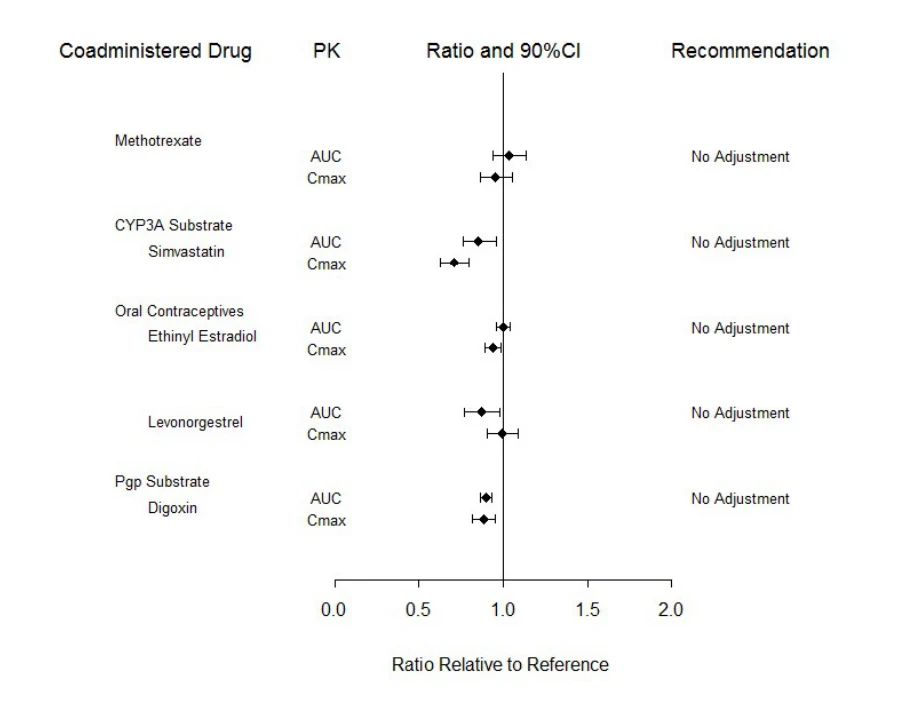
a Reference group is administration of concomitant drug alone.
Effect of other drugs on the pharmacokinetics of baricitinib
Strong OAT3 Inhibitors: In a clinical pharmacology study, probenecid administration (strong OAT3 inhibitor) resulted in an approximately 2-fold increase in baricitinib AUC0-∞ and a ~70% decrease in renal clearance of baricitinib with no effect on Cmax and tmax. In RA, OLUMIANT is not recommended in patients taking OAT3 inhibitors with a strong inhibition potential, such as probenecid.
In patients with AA and taking OAT3 inhibitors with a strong inhibition potential, if the recommended OLUMIANT dose is 4 mg once daily, the OLUMIANT dose should be reduced to 2 mg once daily. Co-administration of OAT3 inhibitor with strong inhibition potential is not recommended for patients with AA taking OLUMIANT 2 mg once daily (see 4.2 Recommended Dose and Dosage Adjustment).
Immunosuppressants, Other JAK Inhibitors or Biologic DMARDs: Combined use of OLUMIANT with other JAK inhibitors or biologic DMARDs has not been studied and is not recommended (see 4.1 Dosing Considerations).
In clinical pharmacology studies, there was no clinically meaningful effect on the PK of baricitinib when co-administered with cyclosporine (Pgp and BCRP inhibitor). However, there is a risk of added immunosuppression when OLUMIANT is co-administered with potent immunosuppressive drugs (e.g., tacrolimus, cyclosporine, azathioprine). The combined use with these potent immunosuppressives has not been studied and is not recommended (see 4.1 Dosing Considerations).
Cytochrome P450 enzymes: In clinical pharmacology studies, there was no clinically meaningful effect on the PK of baricitinib when co-administered with ketoconazole (CYP3A inhibitor). There were no clinically meaningful changes in the PK of baricitinib when co-administered with fluconazole (CYP3A/CYP2C19/CYP2C9 inhibitor) or rifampicin (CYP3A inducer).
Transporters: Co-administration with methotrexate (substrate of several transporters) did not have a clinically meaningful effect on the PK of baricitinib. Simulations with diclofenac and ibuprofen (OAT3 inhibitors with less inhibition potential) predicted minimal effect on baricitinib exposure.
The drugs listed in Table 5 and Figure 2 (forest plot) are based on either drug interaction case reports or studies, or potential interactions due to the expected magnitude and seriousness of the interaction (i.e., those identified as contraindicated).
Table 5 – Established or Potential Drug-Drug Interactions – Effect of Co-administered Drugs on the Pharmacokinetics of Baricitinib
| Co-administered Drug | Dose of Co-administered Drug | Dose of Baricitinib | Refe-rencea | Effect Geometric Mean ratio (Ratio with/without co-administered drug) - No effect =1.0 | Clinical Comment | |||
AUC (90% CI) | Cmax (90% CI) | |||||||
| Probenecid | 1000 mg twice daily, multiple dose, healthy subjects | 4 mg, single dose | CT | 2.03b (1.91 - 2.16) | 1.03 (0.94 - 1.13) | In RA, OLUMIANT is not recommended in patients taking OAT3 inhibitors with a strong inhibition potential, such as probenecid. In AA, patients taking OLUMIANT 4 mg once daily, the OLUMIANT dose should be reduced to 2 mg when co-administered with OAT3 inhibitors with a strong inhibition potential, such as probenecid. In AA patients taking OLUMIANT 2 mg once daily, co-administration with OAT3 inhibitors with a strong inhibition potential is not recommended. | ||
| Cyclosporine | 600 mg, single dose, healthy subjects | 4 mg, single dose | CT | 1.29b (1.23 - 1.36) | 0.99 (0.91 - 1.07) | There is a risk of added immunosuppression when OLUMIANT is co-administered with potent immunosuppressive drugs (e.g., tacrolimus, cyclosporine, azathioprine). The combined use with these potent immunosuppressives has not been studied and is not recommended. |
| Ketoconazole | 400 mg, multiple dose, healthy subjects | 10 mg, single dose | CT | 1.21b (1.17 - 1.24) | 1.08 (1.01 - 1.17) | No dosage adjustment of OLUMIANT is required when co-administered with ketoconazole. |
| Fluconazole | 200 mg, multiple dose, healthy subjects | 10 mg, single dose | CT | 1.23b (1.18 - 1.29) | 1.05 (0.95 - 1.15) | No dosage adjustment of OLUMIANT is required when co-administered with fluconazole. |
| Rifampicin | 600 mg, multiple dose, healthy subjects | 10 mg, single dose | CT | 0.66b (0.62 - 0.69) | 1.05 (0.95 - 1.16) | No dosage adjustment of OLUMIANT is required when co-administered with rifampicin. |
| Simulated Ibuprofen | 400 mg and 800 mg, multiple dose, healthy subjects | 4 mg, multiple dose | T | 1.24b (1.22 - 1.26) | 1.07 (1.06 - 1.08) | No dosage adjustment of OLUMIANT is required when co-administered with ibuprofen. |
| Simulated Diclofenac | 50 mg and 100 mg, multiple dose, healthy subjects | 4 mg, multiple dose | T | 1.00b (1.00 - 1.00) | 1.00 (1.00 - 1.00) | No dosage adjustment of OLUMIANT is required when co-administered with diclofenac. |
| Methotrexate | 7.5 mg to 25 mg weekly, multiple dose, RA patients | 10 mg, multiple dose | CT | 0.98c (0.93 - 1.03) | 1.01 (0.92 - 1.11) | No dosage adjustment of OLUMIANT is required when co-administered with methotrexate. |
| Omeprazole | 40 mg, multiple dose, healthy subjects | 10 mg, single dose | CT | 1.07b (1.05 - 1.10) | 0.77 (0.72 - 0.83) | No dosage adjustment of OLUMIANT is required when co-administered with omeprazole. |
a CT = Clinical Trial; T = Theoretical (based on simulations); b AUC = AUC0-∞; c AUC0-τ
Figure 2: Impact of Other Drugs on the Pharmacokinetics of Baricitinibb
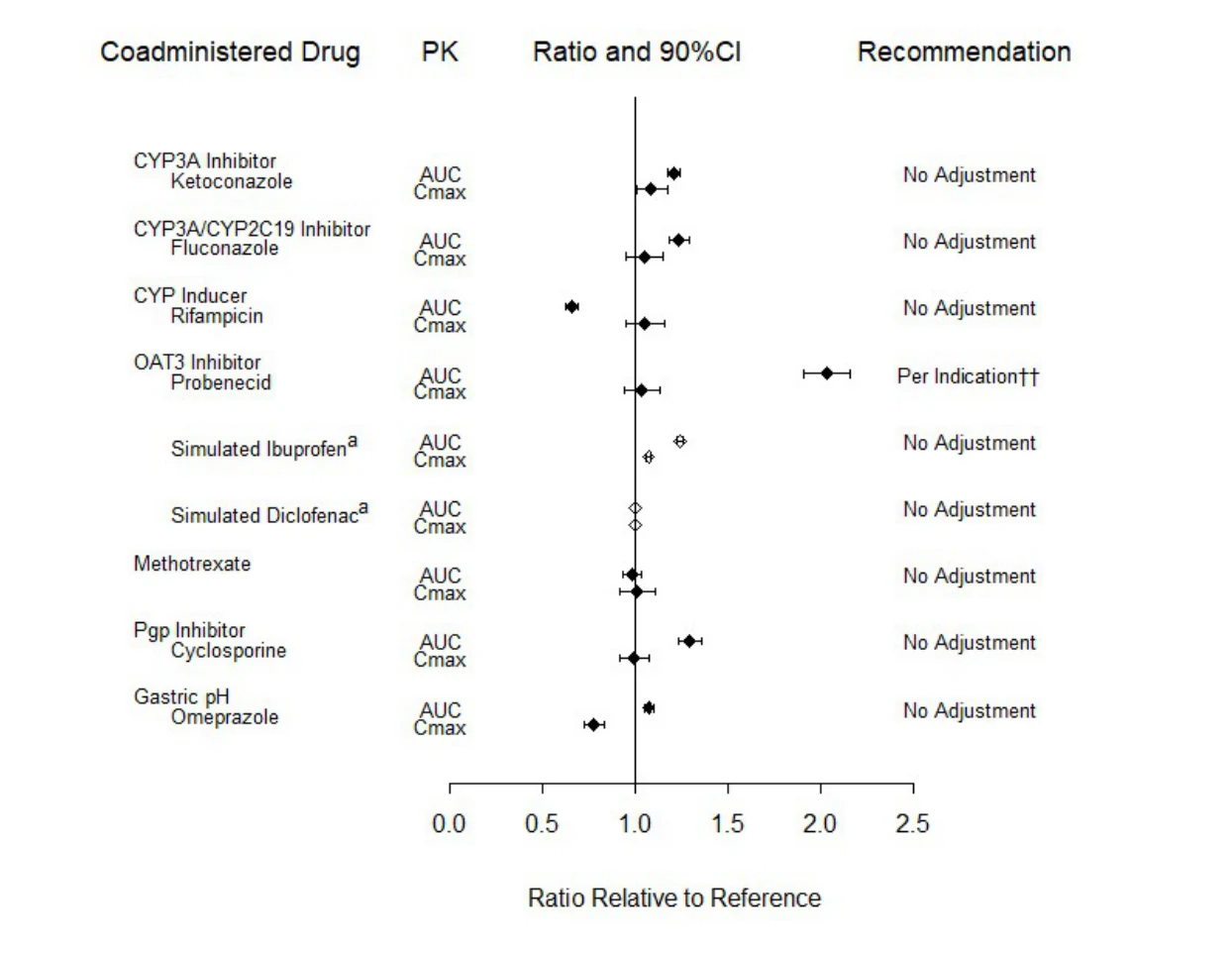
a Values are based on simulated studies.
b Reference group is administration of baricitinib alone.
†† In patients with AA, if the recommended OLUMIANT dose is 4 mg once daily, the OLUMIANT dose should be reduced to 2 mg once daily when co-administered with OAT3 inhibitors with a strong inhibition potential, such as probenecid. In patients with RA and in patients with AA taking OLUMIANT 2 mg once daily, co-administration of OLUMIANT with OAT3 inhibitors with a strong inhibition potential, such as probenecid is not recommended.
9.5 Drug-Food Interactions
Interactions with food have not been established.
9.6 Drug-Herb Interactions
Interactions with herbal products have not been established.
9.7 Drug-Laboratory Test Interactions
Interactions with laboratory tests have not been established.
10 CLINICAL PHARMACOLOGY
10.1 Mechanism of Action
Janus kinases (JAKs) are enzymes that transduce intracellular signals from cell surface receptors for a number of cytokines and growth factors involved in hematopoiesis, inflammation, and immune function. Within the intracellular signaling pathway, JAKs phosphorylate and activate signal transducers and activators of transcription (STATs), which modulate intracellular activity including gene expression. Baricitinib modulates these signaling pathways by inhibiting JAK, thereby reducing the phosphorylation and activation of STATs. JAK enzymes transmit cytokine signaling through pairing of JAKs (e.g., JAK1/JAK3, JAK1/JAK2, JAK1/TYK2, JAK2/JAK2).
Baricitinib is a selective and reversible inhibitor of JAK over other kinases in the human genome. In isolated enzyme assays, baricitinib had greater inhibitory potency at JAK1, JAK2, and TYK2 relative to JAK3 with IC50 values of 5.9, 5.7, 53 and >400 nM, respectively for JAK1, JAK2, TYK2 and JAK3. In cellular assays, baricitinib inhibited JAK1/JAK2 and JAK1/TYK2 signaling by pro-inflammatory cytokines IL-6 and IL-23 at IC50 values of approximately 40 to 50 nM but also inhibited JAK1/JAK3 signaling by IL-2 in the nanomolar range. The effects of baricitinib in vitro are consistent with attenuation of pro-inflammatory response as well as modulation of lymphocyte activation, proliferation, and cytokine production.
10.2 Pharmacodynamics
Baricitinib inhibition of IL-6 induced STAT3 phosphorylation: Baricitinib administration resulted in a dose dependent inhibition of IL-6 induced STAT3 phosphorylation in whole blood from healthy subjects with maximal inhibition observed approximately 1 to 2 hours after dosing, which returned to near baseline by 24 hours. Similar levels of inhibition were observed using either IL-6 or TPO as the stimulus.
Immunoglobulins: Mean serum IgG, IgM, and IgA values decreased by 12 weeks after starting treatment with OLUMIANT, and remained stable through at least 52 weeks. For most patients, changes in immunoglobulins occurred within the normal reference range.
Lymphocytes: Mean absolute lymphocyte count increased by 1 week after starting treatment with OLUMIANT, returned to baseline by week 24, and then remained stable through at least 104 weeks. For most patients, changes in lymphocyte count occurred within the normal reference range.
Natural killer cells: Treatment with baricitinib 4mg was associated with an initial increase in natural killer cell counts at Week 4 followed by a decrease to below baseline at Week 12, which gradually returned to near baseline levels.
C-reactive protein: In patients with rheumatoid arthritis, decreases in serum C-reactive protein (CRP) were observed as early as one week after starting treatment with OLUMIANT and were maintained throughout dosing.
Cardiac Electrophysiology
In a randomised, placebo- and positive-controlled, 3-period crossover ECG assessment study in healthy subjects (N=53), a single supratherapeutic 40 mg dose of baricitinib was not associated with any treatment-related pattern of effects on the QTc interval, the QRS duration, or the PR interval.
10.3 Pharmacokinetics
Following oral administration of baricitinib 1 mg to 20 mg in healthy volunteers, peak plasma concentrations (Tmax) are reached approximately at 1 hour. Steady-state concentrations are achieved in 2 to 3 days with minimal accumulation (11% and 15% based on Cmax and AUC, respectively) after once-daily administration. Elimination half-life in patients with RA is approximately 13 hours. Elimination half-life in patients with AA is approximately 16 hours. A dose-proportional increase in systemic exposure was observed in the dose range of 1 mg to 30 mg (single daily dose) and 2 mg to 20 mg (multiple daily dose). Ratios (90% CI) for dose normalized Cmax and AUC0-∞ were 1.02 (0.89, 1.18), and 1.13 (1.07, 1.20), respectively. The pharmacokinetics of baricitinib do not change over time.
At steady state after multiple 2-mg once-daily dosing in patients with RA, the Cmax of baricitinib was 24.4 ng/mL, and the mean area under the concentration-time curve at a dosing interval at steady state was 228.4 ng*hr/mL based on the Phase 3 clinical study RA-BEACON. At steady state after multiple 4 mg once-daily dosing in patients with AA, the Cmax of baricitinib was 47.5 ng/mL, and the mean area under the concentration-time curve at a dosing interval at steady state was 435 ng*hr/mL based on the Phase 2b/3 clinical study BRAVE-AA1.
The CL/F in patients with RA is approximately 50% lower than that in healthy subjects. The population pharmacokinetic parameters estimates from Study RA-BEACON are similar to those from the other Phase 2 and Phase 3 clinical studies.
The pharmacokinetic properties of baricitinib are provided in Table 6.
Table 6 – Summary of Baricitinib Pharmacokinetic Parameters in Humansa
Dose (mg) | Cmax, ss (ng/mL) | t½ (h) | AUCτ, ss (ng*hr/mL) | Clearance (L/h) | Volume of distribution (L) | |||||||||
| Healthy Volunteersb | 2 | 17.2 | 8.5 | 118.1 | 17.6 | 216 | ||||||||
| Rheumatoid Arthritis Patientsc | 2 | 24.4 | 12.5 | 228.4 | 9.0 | 131.3 | ||||||||
| Alopecia Areata Patientsd | 2 | 23.7 | 15.8 | 217 | 11.0 | 127 | ||||||||
| 4 | 47.5 | 15.8 | 435 | 11.0 | 127 | |||||||||
a Cmax, ss = maximum observed drug concentration; t1/2 = terminal elimination half-life; AUCτ, ss = area under the concentration-time curve during one dosing interval at steady state.
b Study JADE.
c The t1/2 estimate is from population PK analysis based on combined phase 2 and phase 3 studies; other values are from population PK analysis based on Study RA-BEACON.
d The values are from the population PK analysis based on the Phase 2b/3 study BRAVE-AA1.
Absorption
The absolute bioavailability of baricitinib is approximately 80%. An assessment of food effects in healthy subjects showed that a high-fat meal decreased the mean AUC and Cmax of baricitinib by approximately 11% and 18%, respectively, and delayed the tmax by 0.5 hours. Administration with meals is not associated with a clinically relevant effect on exposure. In clinical studies, OLUMIANT was administered without regard to meals.
Distribution
After intravenous administration, the volume of distribution is 76 L, indicating distribution of baricitinib into tissues. Baricitinib is approximately 50% bound to plasma proteins and 45% bound to serum proteins. Baricitinib is a substrate of the Pgp, BCRP, OAT3 and MATE2-K transporters, which play roles in drug distribution.
Metabolism
Approximately 6% of the orally administered baricitinib dose is identified as oxidative metabolites (three from urine and one from feces), with CYP3A4 identified as the main metabolizing enzyme. No metabolites of baricitinib were quantifiable in plasma.
Elimination
In a clinical pharmacology study, approximately 75% of the administered dose was eliminated in the urine, while about 20% of the dose was eliminated in the feces. Baricitinib was excreted predominately as unchanged drug in urine (69%) and feces (15%) with identified metabolites in urine and feces accounting for approximately 6%. Renal elimination is the principal mechanism for baricitinib’s clearance through filtration and active secretion via OAT3, Pgp, BCRP and MATE2-K from in vitro studies.
Special Populations and Conditions
- Pediatrics: The safety and efficacy of OLUMIANT in the pediatric population have not been established. Health Canada has not authorized an indication for pediatric use.
- Geriatrics: No dose adjustment is required for patients aged ≥65 years (see 4.2 Recommended Dose and Dosage Adjustment and Figure 3). Age did not have a clinically relevant effect on the PK (AUC and Cmax) of baricitinib. However, clinical experience in patients ≥75 years is very limited and caution should be used when treating the elderly with OLUMIANT as the greater sensitivity of some older individuals cannot be ruled out (see 7.1.4 Geriatrics).
- Sex: No dose adjustment is necessary based on gender (see Figure 3). Based on population pharmacokinetic analysis in RA patients, women were estimated to have 7% and 16% difference in AUC and Cmax, respectively, compared to men after accounting for differences in renal function. These values of mean effects of AUC and Cmax were generally within the inter-subject PK variability (approximately 41% for AUC and 22% for Cmax) of baricitinib and are not considered to be clinically relevant.
- Genetic Polymorphism: No studies have been conducted specifically to evaluate the effects of genetic polymorphism on the pharmacokinetics of baricitinib.
Ethnic Origin: No dose adjustment is necessary based on race (see Figure 3). Based on population pharmacokinetic analysis in RA patients, Blacks, Hispanics, and Asians were estimated to have 16%, 10%, and 10% difference in AUC, and 9%, 1%, and 15% in Cmax, respectively, compared to Caucasians. These values of mean effects of AUC and Cmax
- -subject PK variability (approximately 41% for AUC and 22% for Cmax) of baricitinib and are not considered to be clinically relevant.
Hepatic Insufficiency: No dose adjustment is necessary in patients with mild or moderate hepatic impairment. The use of OLUMIANT has not been studied in patients with severe hepatic impairment and is therefore not recommended (see 4 DOSAGE AND ADMINISTRATION and Figure 3).
In a Phase I, open-label study conducted in subjects with moderate hepatic impairment, baricitinib systemic exposure (AUC0-∞) and Cmax increased by 1.19- and 1.08-fold respectively in subjects with moderate hepatic impairment (Child-Pugh B classification), compared to subjects with normal hepatic function.
Renal Insufficiency: Renal function was found to significantly affect baricitinib exposure (see Figure 3).
In RA, OLUMIANT is not recommended for use in patients with moderate renal impairment, severe renal impairment or ESRD (estimated GFR of less than 60 mL/min/1.73 m2).
In AA patients with eGFR between 30 and 60 mL/min/1.73 m2, if the recommended dose of OLUMIANT is 4 mg once daily, the OLUMIANT dose should be reduced to 2 mg once daily. If the recommended dose is 2 mg once daily, OLUMIANT is not recommended. OLUMIANT is not recommended for adult patients with eGFR <30 mL/min/1.73 m2, including patients with ESRD.
In RA and AA, no dose adjustment is necessary in patients with mild renal impairment (see Renal, 4.2 Recommended Dose and Dosage Adjustment, and Figure 3).
- Obesity: No dose adjustment is necessary based on body weight (see Figure 3). Based on population PK analysis in RA patients, patients at the extremes of the body weight of 50 and 100 kg were estimated to have less than 14% and 20% difference in the AUC and Cmax, respectively, relative to those at the median weight of 70 kg, after accounting for differences in renal function. These values of mean effects of AUC and Cmax were generally within the inter-subject PK variability (approximately 41% for AUC and 22% for Cmax) of baricitinib and are not considered to be clinically relevant.
The impact of intrinsic factors on the pharmacokinetics of baricitinib and the dosing recommendations are summarized in Figure 3.
Figure 3: Impact of Intrinsic Factors on Baricitinib Pharmacokineticsa, b
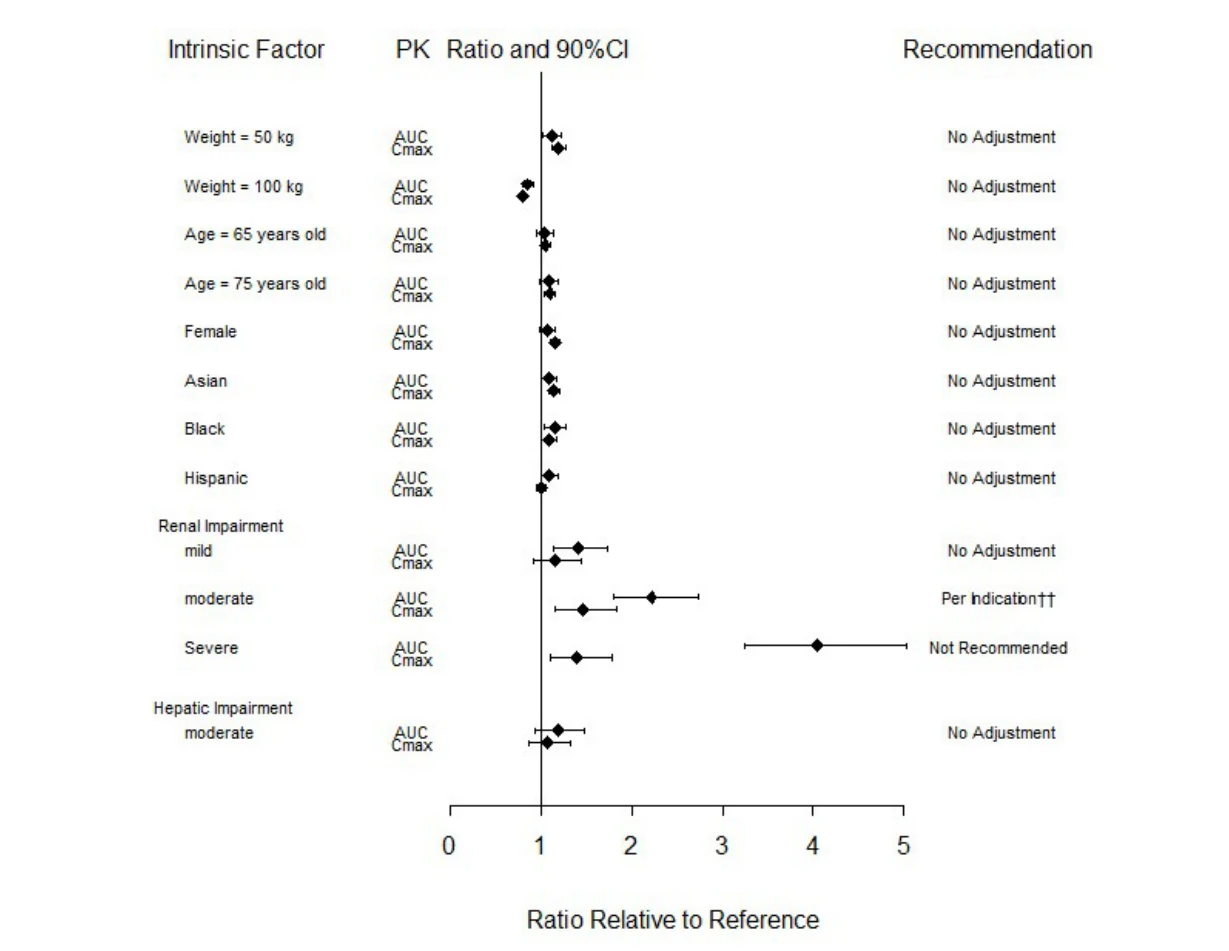
a Reference values for weight, age, gender, and race comparisons are 70 kg, 54 years, male, and white, respectively; reference groups for renal and hepatic impairment are subjects with normal renal and hepatic function, respectively.
b Effects of renal and hepatic impairment on baricitinib exposure were summarized from dedicated renal and hepatic impairment studies, respectively. Effects of other intrinsic factors on baricitinib exposure were summarized from population PK analysis in RA patients.
†† In RA, OLUMIANT is not recommended in adult patients with moderate to severe renal impairment.
In adult AA patients with estimated GFR between 30 and 60 mL/min/1.73 m2, if the recommended dose of OLUMIANT is 4 mg once daily, OLUMIANT dose should be reduced to 2 mg once daily. If the recommended dose is 2 mg once daily, OLUMIANT is not recommended. OLUMIANT is not recommended for adult patients with eGFR <30 mL/min/1.73 m2, including patients with ESRD.
11 STORAGE, STABILITY AND DISPOSAL
Store at room temperature between 15°C and 30°C.
Keep out of reach and sight of children.
Medicines should not be disposed of via wastewater or household waste. Return all unused medications to a pharmacy for proper disposal.
12 SPECIAL HANDLING INSTRUCTIONS
Not applicable.
PART II: SCIENTIFIC INFORMATION
13 PHARMACEUTICAL INFORMATION
Drug Substance
Proper/Common name: baricitinib
Chemical name: {1-(ethylsulfonyl)-3-[4-(7H-pyrrolo[2,3-d]pyrimidin-4-yl)-1H-pyrazol-1-yl]azetidin-3-yl}acetonitrile
Molecular formula and molecular mass: C16H17N7O2S and a molecular weight of 371.42.
Structural formula:
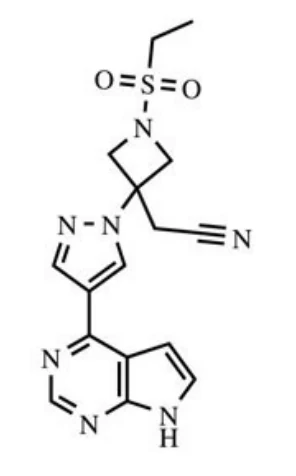
Crystal Form: Anhydrous crystalline, Form I
Physicochemical properties: Baricitinib is a white to practically white to light pink powder. It is practically insoluble in water, pH 4.1 USP acetate buffer, pH 6.0 USP phosphate buffer, and pH 7.6 USP phosphate buffer. It is slightly soluble in 0.1 N HCl and 0.01 N HCl.
14 CLINICAL TRIALS
14.1 Clinical Trials by Indication
Rheumatoid Arthritis
The efficacy and safety of OLUMIANT (baricitinib) were assessed in four confirmatory Phase 3 trials in patients ≥18 years with active rheumatoid arthritis diagnosed according to American College of Rheumatology (ACR) criteria. Two of the four Phase 3 confirmatory studies assessed the efficacy and safety of OLUMIANT 2 mg once daily. Although other doses have been studied, the recommended dose of OLUMIANT is 2 mg once daily.
OLUMIANT has been studied in patients with moderately to severely active rheumatoid arthritis who had an inadequate response or intolerance to conventional DMARDs (cDMARDs-IR;
Study III, RA-BUILD) and in patients who had an inadequate response or intolerance to one or more TNF inhibitor therapies with or without other biologic DMARDs (TNFi-IR; Study IV, RA-BEACON). Patients received OLUMIANT 2 mg or baricitinib 4 mg once daily or placebo added to existing background cDMARD treatment. From Week 16, non-responding patients could be rescued to receive baricitinib 4 mg once daily. The primary endpoint was the proportion of patients who achieved an ACR20 response at Week 12.
Table 7 – Summary of patient demographics for clinical trials in Rheumatoid Arthritis
| Study # | Trial design | Dosage, route of administration and duration | Study subjects (n) | Mean age (Range) | Sex (% M/F)a | Mean disease duration in years (Range)b | |
|---|---|---|---|---|---|---|---|
| cDMARD-IRa | |||||||
| RA-BUILD (Study III) | Baricitinib 2 mg or 4 mg vs. placebo Tablets, orally, once daily Main treatment period: 24 weeks | Baricitinib 2 mg: 229 Baricitinib 4 mg: 227 Placebo: 228 | 51.8 (20-82) | 18.1/81.9 | 6.3 (0.07-52.8) | ||
| TNFi-IRa | |||||||
| RA-BEACON (Study IV) | Baricitinib 2 mg or 4 mg vs. placebo Tablets, orally, once daily Main treatment period: 24 weeks | Baricitinib 2 mg: 174 Baricitinib 4 mg: 177 Placebo: 176 | 55.7 (21-82) | 18.2/81.8 | 12.5 (0.62-50.7) | ||
a Abbreviations: cDMARD-IR = conventional disease-modifying anti-rheumatic drugs-inadequate response; TNFi-IR = tumor necrosis factor-alpha inhibitors-inadequate response; M = male; F = female.
b Years since diagnosis.
Study Results
Both studies demonstrated statistically significant effects of OLUMIANT 2 mg compared to placebo for the proportion of patients exhibiting a positive ACR20 response, as well as a statistically significant improvement across several efficacy measures. Results at Week 24 were similar to those at Week 12.
The percentages of OLUMIANT-treated patients achieving ACR20, ACR50, and ACR70 responses, clinical remission as measured by Simplified Disease Activity Index (SDAI) ≤3.3 and Disease Activity Score (DAS28-hsCRP) <2.6 in Studies III (RA-BUILD) and IV (RA-BEACON) are shown in Tables 8 and 9.
In RA-BUILD and RA-BEACON, patients treated with OLUMIANT 2 mg once daily had statistically significantly higher ACR20, ACR50, and ACR70 response rates at 12 weeks compared to placebo-treated patients (Table 8).
In both studies, higher ACR20 response rates (Figures 4 and 5) were observed as early as one week with OLUMIANT 2 mg versus placebo.
Patients treated with OLUMIANT 2 mg had higher rates of clinical remission and DAS28-hsCRP<2.6 versus placebo-treated patients at Week 12 (Table 9).
Table 8 – Proportion of Patients with an ACR Response
| Percent of Patients | |||||||||||||||
|---|---|---|---|---|---|---|---|---|---|---|---|---|---|---|---|
| cDMARD-IR | TNFi-IR | ||||||||||||||
| Study III (RA-BUILD) | Study IV (RA-BEACON) | ||||||||||||||
| Placebo + cDMARDs | OLUMIANT 2 mg/day + cDMARDs (95% CI)a | Placebo + cDMARDs | OLUMIANT 2 mg/day + cDMARDs (95% CI)a | ||||||||||||
| N | 228 | 229 | 176 | 174 | |||||||||||
| ACR 20 | |||||||||||||||
| Week 12 | 39% | 66%b,c (17.6, 35.3) | 27% | 49%b,d (11.7, 31.5) | |||||||||||
| Week 24d | 42% | 61%b (10.0, 28.0) | 27% | 45%b (7.7, 27.4) | |||||||||||
| ACR 50d | |||||||||||||||
| Week 12 | 13% | 34%b (13.4, 28.4) | 8% | 20%b (5.0, 19.3) | |||||||||||
| Week 24 | 21% | 41%b (11.7, 28.3) | 13% | 23%b (1.9, 17.9) | |||||||||||
| ACR 70d | |||||||||||||||
| Week 12 | 3% | 18%b (9.4, 20.3) | 2% | 13%b (5.0, 15.8) | |||||||||||
| Week 24 | 8% | 25%b (10.8, 24.1) | 3% | 13%b (4.1, 15.5) | |||||||||||
Proportions of responders at each time point based on those initially randomized to treatment (N). Patients who discontinued or received rescue therapy were considered as non-responders.
a 95% confidence interval for the difference in response rate between OLUMIANT treatment and placebo.
b p≤0.05 for the comparison between OLUMIANT treatment and placebo.
c Type I error controlled.
d Type I error not controlled.
Figures 4 and 5: Percent of Patients Achieving ACR20
Table 9 – Clinical Remission (SDAI ≤3.3) and DAS28-hsCRP <2.6
| Percent of Patients | ||||||||||||||||
|---|---|---|---|---|---|---|---|---|---|---|---|---|---|---|---|---|
| cDMARD-IR | TNFi-IR | |||||||||||||||
| Study III (RA-BUILD) | Study IV (RA-BEACON) | |||||||||||||||
| Placebo + cDMARDs | OLUMIANT 2 mg/day + cDMARDs (95% CI)a | Placebo + cDMARDs | OLUMIANT 2 mg/day + cDMARDs (95% CI)a | |||||||||||||
| N | 228 | 229 | 176 | 174 | ||||||||||||
| SDAI ≤3.3b | ||||||||||||||||
| Week 12 | 1% | 9%c, d, f (4.4, 12.2) | 2% | 2%d, g (-2.3, 3.5) | ||||||||||||
| Week 24g | 4% | 17% c, d (7.2, 18.1) | 2% | 5%d (-1.5, 6.1) | ||||||||||||
| DAS28-hsCRP <2.6e, g | ||||||||||||||||
| Week 12 | 9% | 26%c, d (10.2, 23.7) | 4% | 11%c,d (1.5, 12.4) | ||||||||||||
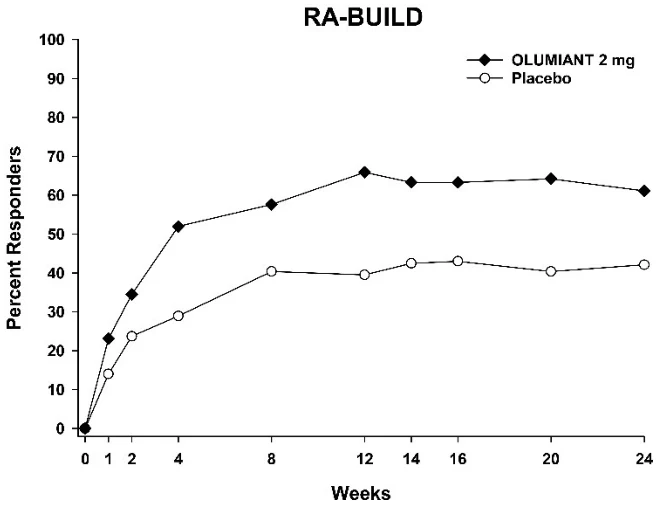 | 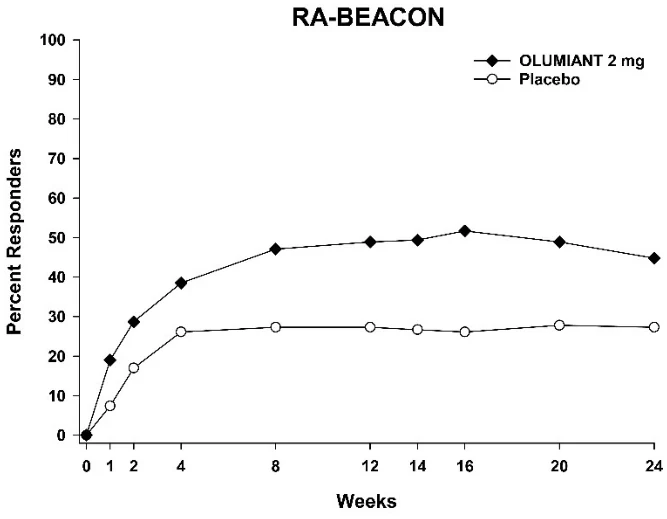 |
|---|
| Week 24 | 11% | 31%c, d (12.9, 27.2) | 6% | 11%d (-1.2, 10.5) |
|---|
a 95% confidence interval for the difference in response rate between OLUMIANT treatment and placebo.
b Simplified Disease Activity Index.
c p≤0.05 for the comparison between OLUMIANT treatment and placebo.
d p≤0.05 for the comparison of mean changes from baseline in the index score between OLUMIANT treatment and placebo.
e Disease Activity Score 28-high sensitivity C-reactive protein.
f Type I error controlled.
g Type I error not controlled.
The effect of OLUMIANT treatment on the components of the ACR response criteria for RA-BUILD and RA-BEACON are shown in Table 10.
Table 10 – Components of ACR Response at Weeks 12 and 24a
| cDMARD-IR | TNFi-IR | ||||||||||||||||
|---|---|---|---|---|---|---|---|---|---|---|---|---|---|---|---|---|---|
| Study III (RA-BUILD) | Study IV (RA-BEACON) | ||||||||||||||||
Placebo + cDMARDs n (%) | OLUMIANT 2 mg/day + cDMARDs n (%) | Placebo + cDMARDs n (%) | OLUMIANT 2 mg/day + cDMARDs n (%) | ||||||||||||||
| N | 228 | 229 | 176 | 174 | |||||||||||||
| Number of Tender Joints (0-68) | |||||||||||||||||
| Baseline | 24 (15) | 24 (14) | 28 (16) | 31 (16) | |||||||||||||
| Week 12 | 15 (14) | 11 (13) | 20 (16) | 19 (18) | |||||||||||||
| Week 24 | 14 (15) | 10 (12) | 19 (17) | 19 (19) | |||||||||||||
| Number of Swollen Joints (0-66) | |||||||||||||||||
| Baseline | 13 (7) | 14 (9) | 17 (11) | 19 (12) | |||||||||||||
| Week 12 | 8 (8) | 5 (6) | 12 (10) | 10 (12) | |||||||||||||
| Week 24 | 8 (8) | 5 (7) | 12 (11) | 11 (12) | |||||||||||||
| Painb | |||||||||||||||||
| Baseline | 57 (23) | 60 (21) | 65 (19) | 62 (22) | |||||||||||||
| Week 12 | 43 (24) | 34 (25) | 55 (25) | 46 (28) | |||||||||||||
| Week 24 | 39 (24) | 32 (25) | 54 (26) | 43 (28) | |||||||||||||
| Patient Global Assessmentb | |||||||||||||||||
| Baseline | 60 (21) | 62 (20) | 66 (19) | 67 (19) | |||||||||||||
| Week 12 | 44 (23) | 36 (25) | 56 (25) | 46 (26) | |||||||||||||
| Week 24 | 42 (23) | 34 (24) | 56 (25) | 45 (27) | |||||||||||||
| Physician Global Assessmentb | |||||||||||||||||
| Baseline | 62 (17) | 64 (17) | 67 (19) | 67 (17) | |||||||||||||
| Week 12 | 41 (24) | 33 (22) | 50 (26) | 36 (24) | |||||||||||||
| Week 24 | 37 (26) | 28 (23) | 46 (29) | 37 (27) |
|---|---|---|---|---|
| Disability Index (HAQ-DI)c | ||||
| Baseline | 1.50 (0.60) | 1.51 (0.62) | 1.78 (0.57) | 1.71 (0.55) |
| Week 12 | 1.17 (0.62) | 0.96 (0.69) | 1.59 (0.68) | 1.31 (0.72) |
| Week 24 | 1.14 (0.66) | 0.90 (0.69) | 1.59 (0.67) | 1.29 (0.74) |
| hsCRP (mg/L) | ||||
| Baseline | 17.7 (20.4) | 18.2 (21.5) | 20.6 (25.3) | 19.9 (22.5) |
| Week 12 | 17.2 (19.3) | 8.6 (14.6) | 19.9 (23.0) | 13.5 (20.1) |
| Week 24 | 15.2 (19.3) | 8.4 (15.5) | 21.7 (28.7) | 13.4 (19.7) |
a Data shown are mean (standard deviation).
b Visual analog scale: 0 = best, 100 = worst.
c Health Assessment Questionnaire–Disability Index: 0 = best, 3 = worst; 20 questions; 8 categories: dressing and grooming, arising, eating, walking, hygiene, reach, grip, and activities.
Physical Function Response and Health-Related Outcomes
Improvement in physical function was measured by the Health Assessment Questionnaire-Disability Index (HAQ-DI). Patients receiving OLUMIANT 2 mg demonstrated greater improvement from baseline in physical function compared to placebo at Week 24. The mean difference (95% CI) from placebo in HAQ-DI change from baseline at Week 24 is shown in Table 11.
Table 11 – Mean Change from Baseline in HAQ-DI at Week 24
Study III RA-BUILD | Study IV RA-BEACON | |||||||||||||||
|---|---|---|---|---|---|---|---|---|---|---|---|---|---|---|---|---|
Placebo + cDMARDs | OLUMIANT 2 mg/ day + cDMARDs | Placebo + cDMARDs | OLUMIANT 2 mg/ day + cDMARDs | |||||||||||||
| N | 228 | 229 | 176 | 174 | ||||||||||||
| HAQ-DI | ||||||||||||||||
| LS Mean | -0.38 | -0.62 | -0.15 | -0.38 | ||||||||||||
| Difference from placebo (95% CI) | - | -0.24a, b (-0.35, -0.14) | - | -0.23a, c (-0.35, -0.12) | ||||||||||||
| HAQ-DI responder ratesd | 37.3% | 58.1% | 23.9% | 41.4% | ||||||||||||
a p≤0.05 for the comparison between OLUMIANT treatment and placebo.
b Type I error controlled.
c Type I error not controlled.
d Percentage of patients with an improvement from baseline ≥0.30.
General health status was assessed by the Short Form health survey (SF-36). In RA-BUILD and RA-BEACON, compared to placebo, patients treated with OLUMIANT 2 mg demonstrated greater improvement from baseline in the physical component summary (PCS) score and the physical function, role physical, bodily pain, vitality, and general health domains at Week 12, with no consistent improvements in the mental component summary (MCS) scores or the role emotional, mental health, and social functioning domains.
Alopecia Areata
Two randomized, double-blind, placebo-controlled trials [Trials BRAVE-AA1 and BRAVE-AA2] enrolled a total of 1200 patients, with patchy alopecia areata (AA), who had at least 50% scalp hair loss as measured by the Severity of Alopecia Tool (SALT) for more than 6 months. The eligible patients were males 18 to 60 years of age and females 18 to 70 years of age. Patients with a history of VTE or considered at high risk for VTE were excluded from the trial.
Overall, 61% were female, 2% were 65 years of age or older, and 52% were White, 36% were Asian, and 8% were Black. At baseline, 53% of patients had at least 95% scalp hair loss, 34% had their current AA episode lasting at least 4 years, 69% had significant gaps in eyebrow hair or no notable eyebrow hair, and 58% had significant gaps in eyelashes or no notable eyelashes.
In the Phase 3 portion of BRAVE-AA1 and in BRAVE-AA2, patients received OLUMIANT 2 mg, OLUMIANT 4 mg, or placebo once daily for 36 weeks.
Both trials assessed the proportion of patients who achieved at least 80% scalp hair coverage (SALT score of ≤20) at Week 36 as the primary endpoint. Other outcomes at Week 36 included the proportion of patients who achieved at least 90% scalp hair coverage (SALT score of ≤10), patients with Scalp Hair Assessment Patient-Reported Outcome (PRO)™ score of 0 or 1 with at least 2-point reduction on the 5-point scale, and assessments of eyebrow and eyelash hair loss.
Table 12 – Summary of patient demographics for clinical trials in Alopecia Areata (AA)
| Study # | Trial design | Dosage, route of administration and duration | Study subjects (n) | Mean age in years (Range) | Sex (% M/F)a | Mean disease duration in years (Range)b |
|---|---|---|---|---|---|---|
| BRAVE-AA1c | Seamlessly adaptive, Phase 2b/3 multicenter, randomized, double-blind, placebo-controlled | Baricitinib 2 mg or 4 mg vs placebo Tablets, orally, once daily Main treatment period 36 weeks | Baricitinib 2 mg: 184 Baricitinib 4 mg: 281 Placebo: 189 | 37.1 (17-70) | 41.4/ 58.6% | 12.1 (0.5-58.1) |
| BRAVE-AA2 | Phase 3 multicenter, randomized, double-blind, placebo-controlled | Baricitinib 2 mg or 4 mg vs placebo Tablets, orally, once daily Main treatment period 36 weeks | Baricitinib 2 mg: 156 Baricitinib 4 mg: 234 Placebo: 156 | 38.0 (17-70) | 36.8/ 63.2% | 12.2 (0.5-52.1) |
|---|
a M= Male F= Female
b Years since AA onset
c Phase 3 data
Study Results
The results of the OLUMIANT trials (BRAVE-AA1 and BRAVE-AA2) are provided in Table 13 and Figures 6 and 7.
Both BRAVE-AA1 and BRAVE-AA2 demonstrated statistically significant effects of OLUMIANT 4 mg and 2 mg compared to placebo for the proportion of patients achieving a SALT score ≤20 at Week 36. Improvement was also demonstrated in other key secondary endpoints presented below.
Table 13 – Clinical Response at Week 36 in Studies with Severe AA
| BRAVE-AA1 | BRAVE-AA2 | ||||||||||||||||
|---|---|---|---|---|---|---|---|---|---|---|---|---|---|---|---|---|---|
| Placebo | OLUMIANT 2 mg/day | OLUMIANT 4 mg/day | Placebo | OLUMIANT 2 mg/day | OLUMIANT 4 mg/day | ||||||||||||
| Number of subjects with at least 50% scalp hair loss at baseline | |||||||||||||||||
| N | 189 | 184 | 281 | 156 | 156 | 234 | |||||||||||
| Primary endpoint | |||||||||||||||||
SALT ≤20 Difference from Placebo (95% CI)a | 5.3% | 21.7% b 16.4% (10, 23) | 35.2%b 29.9% (23, 36) | 2.6% | 17.3%b 14.7% (8, 22) | 32.5%b 29.9% (23, 36) | |||||||||||
| Key secondary endpoints | |||||||||||||||||
SALT ≤10 Difference from Placebo (95% CI)a | 3.7% | 12.5%b 8.8% (3, 15) | 26.0%b 22.3% (16, 28) | 0.6% | 10.9% 10.3% (5, 16) | 23.5%b 22.9% (17, 29) | |||||||||||
| Number of subjects reporting Scalp Hair Assessment PRO™ score ≥3 at baseline | |||||||||||||||||
| N | 181 | 175 | 275 | 151 | 149 | 215 | |||||||||||
| PRO scalp hair score 0 or 1 with ≥2-point improvement from baseline c | 5.0% | 16.0% b | 33.1%b | 4.0% | 16.1%b | 34.4%b | |||||||||||
Difference from Placebo (95% CI)a | 11.0% (5, 18) | 28.1% (21, 34) | 12.1% (5, 19) | 30.4% (23, 37) | |||||||||
|---|---|---|---|---|---|---|---|---|---|---|---|---|---|
| Number of subjects with ClinRO Measure for Eyebrow Hair Loss™ score of ≥2 at baseline | |||||||||||||
| N | 124 | 136 | 188 | 112 | 104 | 161 | |||||||
Eyebrow hair score of 0 or 1 with ≥2-point improvement from baselined Difference from Placebo (95% CI)a | 3.2% | 19.1%b 15.9% (8, 24) | 31.4%b 28.2% (20, 35) | 4.5% | 11.5% 7.0% (0, 15) | 34.8%b 30.3% (21, 38) | |||||||
| Number of subjects with ClinRO Measure for Eyelash Hair Loss™ score of ≥2 at baseline | |||||||||||||
| N | 96 | 111 | 167 | 90 | 89 | 140 | |||||||
Eyelash hair score of 0 or 1 with ≥2-point improvement from baselinee Difference from Placebo (95% CI)a | 3.1% | 13.5% 10.4% (3, 18) | 33.5% b 30.4% (22, 38) | 5.6% | 10.1% 4.5% (-4, 13) | 34.3%b 28.7% (19, 38) | |||||||
Abbreviations: AA = alopecia areata; ClinRO = clinician-reported outcome; PRO = patient-reported outcome; SALT = Severity of Alopecia Tool.
a 95% confidence interval for the difference in response rate between OLUMIANT treatment and placebo.
b Statistically significant with adjustment for multiplicity
c Patients evaluated scalp hair coverage on a 5-point scale where 0 = No missing hair (0% of scalp hair missing; full head of hair), 1 = A limited area of scalp hair loss (1% to 20%), 2 = moderate scalp hair loss (21% to 49%), 3 = a large area of scalp hair loss (50% to 94%), and 4 = nearly all or all scalp hair loss (95% to 100%).
d Patients were evaluated on a 4-point scale where 0 = Eyebrows have full coverage and no areas of hair loss, 1 = There are minimal gaps in eyebrow hair and distribution is even, 2 = significant gaps in eyebrow hair or distribution is not even, and 3 = no notable eyebrow hair.
e Patients were evaluated on 4-point scale where 0 = Eyelashes form a continuous line along the eyelids on both eyes, 1 = There are minimal gaps and the eyelashes are evenly spaced along the eyelids on both eyes, 2 = significant gaps along the eyelids or the eyelashes are not evenly spaced along the eyelids and 3 = no notable eyelashes.
A statistically significant response versus placebo could be achieved with OLUMIANT 4 mg as early as Week 16 in BRAVE-AA1 and Week 24 in BRAVE-AA2.
Figures 6 and 7: Percent of Patients Achieving SALT ≤20
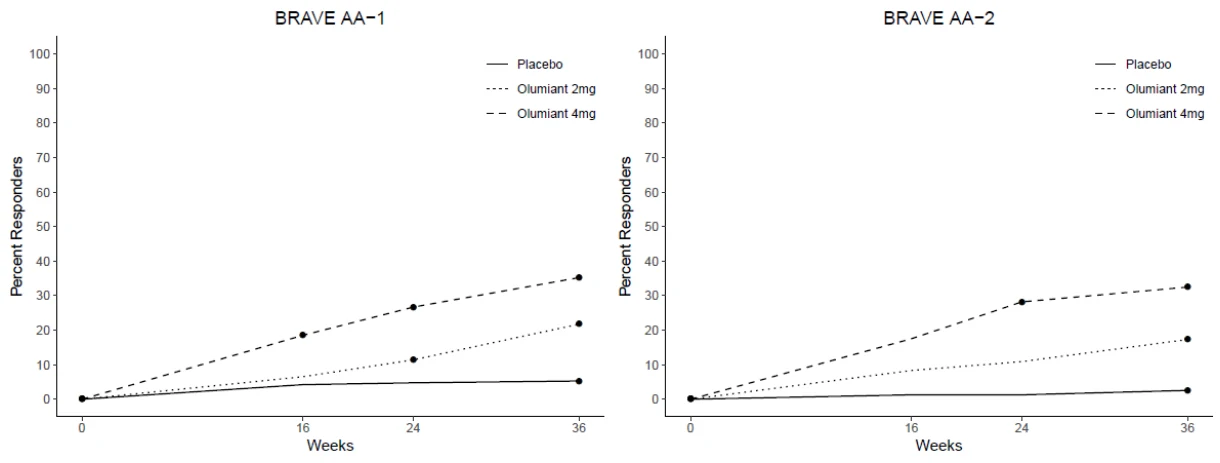
Subgroup analyses by categories of age, gender, race, and body weight did not identify significant differences in response to 36 weeks of treatment with OLUMIANT among these subgroups.
SALT ≤20 response rates tended to be higher in all dose groups in patients with baseline SALT 50 to 94 compared to those with more severe hair loss (SALT 95 to 100). See Table 14.
Table 14 – SALT ≤20 at Week 36 by Baseline SALT Severity in AA
| Trials BRAVE-AA1 and BRAVE-AA2 | |||||||||
|---|---|---|---|---|---|---|---|---|---|
| Placebo | OLUMIANT 2 mg/day | OLUMIANT 4 mg/day | |||||||
| 50 % to 94% Scalp Hair Loss | |||||||||
| N | 166 | 147 | 248 | ||||||
| SALT ≤20 | 8% | 33% | 48% | ||||||
| 95 % to 100% Scalp Hair Loss | |||||||||
| N | 178 | 193 | 267 | ||||||
| SALT ≤20 | 1% | 10% | 21% | ||||||
Abbreviations: AA = alopecia areata; SALT = Severity of Alopecia Tool.
The proportion of patients who achieved SALT ≤20 at 52 weeks of treatment was 22.6% (77/340) among those treated with the OLUMIANT 2 mg once daily dose, and 39% (201/515) among those treated with the OLUMIANT 4 mg once daily dose.
In the BRAVE-AA2 study, the data suggests that after one year of treatment with OLUMIANT 4 mg, most responders maintained clinically meaningful scalp hair coverage (SALT ≤20) after down-titration from OLUMIANT 4 mg once daily to OLUMIANT 2 mg once daily.
15 MICROBIOLOGY
No microbiological information is required for this drug product.
16 NON-CLINICAL TOXICOLOGY
General Toxicology (single and repeat-dose studies): The single-dose oral toxicity of baricitinib was evaluated in CD-1 mice, Sprague Dawley rats, and beagle dogs. In general, baricitinib has low single-dose oral toxicity. No mortality was observed at the maximum doses tested in mice (1200 mg/kg), rats (600 mg/kg), and dogs (40 mg/kg). Clinical findings of emesis and decreased activity were observed in individual dogs given ≥5 mg/kg baricitinib.
The toxicologic and toxicokinetic profiles of baricitinib were characterized in oral studies of up to 3 months in mice, 6 months in rats, and 9 months in dogs. The pivotal rat and dog studies included a recovery phase to assess reversibility of any adverse effects. Overall, the major cell types affected by JAK inhibition in the nonclinical safety studies were decreases in lymphocytes, leukocytes, T cells, eosinophils, erythrocytes, and reticulocytes. Associated with these changes were generalized lymphoid depletion and bone marrow hypocellularity with rats more affected than dogs. In mice, rats, and dogs, baricitinib exposures generally increased with increasing dose, but were not consistently dose proportional.
Other potentially treatment-related findings in the 39-week dog study consisted of liver toxicity, prostate atrophy, and reduced prostate weight at 3 and 6/9 mg/kg/day, without any effect on the testes, and gliosis and perivascular mononuclear infiltrates in the neuropil at all dose levels; however, similar findings were not seen in the preceding studies in dogs, including one of 6 month duration. Decreases in lymphocytes and eosinophils in dogs were associated with clinical manifestations of immunosuppression including demodectic mange and bacterial, protozoal, and/or yeast infections at all dose levels in the 39-week study. The immunosuppressive effects generally resolved by end of the recovery phases, with the exception being dogs in which immunosuppression-induced mange became established during treatment. The NOAEL for the 9 month dog study is <0.25 mg/kg/day (0.6 times the maximum recommended human dose (MRHD) on an AUC basis).
In addition to immunosuppression, other potentially treatment-related findings in the 26-week rat study consisted of renal tubular toxicity due to crystal formation, exacerbation of cardiomyopathy with secondary hepatocellular necrosis, and liver inflammation at high doses (100/60 mg/kg/day) of baricitinib. The NOAEL for the 6 month rat study is 5 mg/kg/day (3.5 times the MRHD on an AUC basis).
Carcinogenicity: Baricitinib was not carcinogenic in the 6-month Tg.rasH2 transgenic mouse model at systemic exposures up to 81 times (in females) and 58 times (in males) the MRHD. Baricitinib was not carcinogenic in the 2-year carcinogenicity study in rats at systemic exposures up to 28 times (in females) and 6 times (in males) the MRHD.
Genotoxicity: Baricitinib was not mutagenic in the in vitro bacterial mutagenicity assay (Ames assay), or clastogenic in the in vitro chromosome aberration assay, or the in vivo micronucleus assay in rats.
Reproductive and Developmental Toxicology: In a combined male/female rat fertility study, baricitinib was administered to male rats prior to and throughout mating and to female rats prior to mating and up to implantation (Gestation Day 6). Decreased male mating performance (fertility and copulation indices) occurred at baricitinib exposure levels approximately 59 times the MRHD (on an AUC basis at oral doses of 50 mg/kg/day). In female rats, decreased fertility and conception indices, decreased numbers of corpora lutea and implantation sites, increased pre-implantation loss, and/or adverse effects on intrauterine survival of the embryos were observed at baricitinib exposure levels ≥24 times the MRHD (on an AUC basis at oral doses of 25 and 100 mg/kg/day). There was no impairment of female rat fertility at baricitinib exposure levels approximately 4 times the MRHD (on an AUC basis at oral doses of 5 mg/kg/day).
Baricitinib exposure levels approximately 12 times the MRHD (on an AUC basis at oral doses of 15 mg/kg/day) had no effect on male fertility, sperm motility, or sperm concentration. Since there were no effects on spermatogenesis (as assessed by histopathology) or semen/sperm endpoints in male rats, the decreased overall mating performance was likely the result of these female effects.
Baricitinib has been shown to reduce fetal growth/weight and produce skeletal malformations in rats and rabbits when given during the period of organogenesis at systemic exposures 8-10 times and 22-44 times, respectively, those in patients at the MRHD.
In a rat embryo fetal developmental study, baricitinib was teratogenic at systemic exposure levels 10 and 57 times the MRHD (on an AUC basis at oral doses of 10 and 40 mg/kg/day, respectively). Teratogenic effects consisted of skeletal malformations [bent limb bone(s) and rib anomaly] and skeletal developmental variations [bent ribs and 7th cervical rib(s)]. In addition, baricitinib treatment was associated with a reduction in mean fetal weights at exposures 57 times the MRHD. No fetal developmental toxicity was observed in rats at exposure levels approximately 2.4 times the MRHD (on an AUC basis at oral doses of 2 mg/kg/day).
In the rabbit embryo fetal developmental study, baricitinib reduced fetal survival and growth (body weight), and resulted in effects on skeletal development (increased mean litter proportions of rib anomaly and vertebral anomaly without associated rib anomaly) were observed at exposures approximately 22 and 44 times the MRHD (on gestation days 7 and 20, respectively, based on AUC at the high oral dose of 30 mg/kg/day). A higher postimplantation loss (both early and late resorptions) with a corresponding decreased litter proportion of viable fetuses was also observed at the same dose/exposures and resulted in a lower gravid uterine weight. These embryofetal findings may have been due, at least in part, to maternal toxicity. No fetal developmental toxicity was observed in rabbits at exposure levels approximately 7 times the MRHD (on an AUC basis at oral doses of 10 mg/kg/day).
In the pre- and post-natal development study in rats, dams were dosed with baricitinib from implantation through lactation at doses up to 25 mg/kg/day. Lower postnatal survival and mean F1 pup body weights and/or body weight gains were observed at the high dose. Decreased pre-weaning pup body weights and body weight gains were observed at 5 mg/kg/day. A higher incidence of malrotated forelimbs in the 25 mg/kg/day group F1 pups (17 pups from 8 litters) compared to the vehicle control group (1 pup affected) that was noted beginning on PND 4 and, with the exception of 5 pups, had ameliorated by PND 21. Mean forelimb and hindlimb grip strength were reduced on PND 20 and 60. No developmental toxicity in the F1 pups was observed at exposure levels less than 2 times the MRHD (on an AUC basis at oral doses of 2 mg/kg/day), and no maternal, F1 behavioural, reproductive, or immunological toxicity was observed at exposure levels 22 times the MRHD (on an AUC basis at doses of 25 mg/kg/day). Plasma baricitinib concentrations in the F1 pups were similar to those in the dams by 8 hours post-dose on postnatal day 4.