


Product Monograph - Litfulo
RECENT MAJOR LABEL CHANGES
| Not applicable | Not applicable |
|---|
TABLE OF CONTENTS
Sections or subsections that are not applicable at the time of authorization are not listed .
RECENT MAJOR LABEL CHANGES............................................................................................ 2
TABLE OF CONTENTS .............................................................................................................. 2
PART I: HEALTH PROFESSIONAL INFORMATION ..................................................................... 4
1 INDICATIONS .............................................................................................................. 4
1.1 Pediatrics .......................................................................................................... 4
1.2 Geriatrics........................................................................................................... 4
2 CONTRAINDICATIONS ................................................................................................. 4
3 SERIOUS WARNINGS AND PRECAUTIONS BOX ............................................................ 4
4 DOSAGE AND ADMINISTRATION................................................................................. 5
4.1 Dosing Considerations ....................................................................................... 5
4.2 Recommended Dose and Dosage Adjustment..................................................... 6
4.4 Administration................................................................................................... 7
4.5 Missed Dose ...................................................................................................... 7
5 OVERDOSAGE ............................................................................................................. 7
6 DOSAGE FORMS, STRENGTHS, COMPOSITION AND PACKAGING ................................. 7
7 WARNINGS AND PRECAUTIONS .................................................................................. 8
7.1 Special Populations .......................................................................................... 11
7.1.1 Pregnant Women ....................................................................................... 11
7.1.2 Breast-feeding............................................................................................ 11
7.1.3 Pediatrics ................................................................................................... 11
7.1.4 Geriatrics ................................................................................................... 11
8 ADVERSE REACTIONS ................................................................................................ 11
8.1 Adverse Reaction Overview.............................................................................. 11
8.2 Clinical Trial Adverse Reactions ........................................................................ 11
8.2.1 Clinical Trial Adverse Reactions – Pediatrics ................................................ 13
8.3 Less Common Clinical Trial Adverse Reactions .................................................. 14
8.4 Abnormal Laboratory Findings: Hematologic, Clinical Chemistry and Other
Quantitative Data ...................................................................................................... 14
8.5 Post-Market Adverse Reactions........................................................................ 14
9 DRUG INTERACTIONS................................................................................................ 14
9.2 Drug Interactions Overview.............................................................................. 14
9.3 Drug-Behavioural Interactions.......................................................................... 14
9.4 Drug-Drug Interactions .................................................................................... 14
9.5 Drug-Food Interactions .................................................................................... 16
9.6 Drug-Herb Interactions .................................................................................... 16
9.7 Drug-Laboratory Test Interactions .................................................................... 16
10 CLINICAL PHARMACOLOGY ....................................................................................... 16
10.1 Mechanism of Action.................................................................................. 16
10.2 Pharmacodynamics .................................................................................... 16
10.3 Pharmacokinetics ....................................................................................... 17
11 STORAGE, STABILITY AND DISPOSAL ......................................................................... 19
12 SPECIAL HANDLING INSTRUCTIONS........................................................................... 19
PART II: SCIENTIFIC INFORMATION ...................................................................................... 20
13 PHARMACEUTICAL INFORMATION............................................................................ 20
14 CLINICAL TRIALS........................................................................................................ 20
14.1 Trial Design and Study Demographics ......................................................... 20
14.2 Study Results ............................................................................................. 21
16 NON-CLINICAL TOXICOLOGY ..................................................................................... 24
PATIENT MEDICATION INFORMATION ................................................................................. 26
PART I: HEALTH PROFESSIONAL INFORMATION
1 INDICATIONS
LITFULO (ritlecitinib) is indicated for:
- the treatment of adults and adolescents 12 years and older with severe alopecia areata.
Limitations of Use: Not recommended for use in combination with JAK inhibitors, biologic immunomodulators, cyclosporine or other potent immunosuppressants.
1.1 Pediatrics
12-17 years of age: Based on the data submitted and reviewed by Health Canada, the safety and efficacy of LITFULO in pediatric patients 12-17 years of age has been established for severe alopecia areata.
Under 12 years of age: No data are available to Health Canada; therefore, Health Canada has not authorized an indication for pediatric use in patients under 12 years of age.
1.2 Geriatrics
There are limited data in patients ≥ 65 years of age. As there is a higher incidence of infections in the geriatric population in general, caution should be used when treating geriatric patients [see 4.2 Recommended Dose and Dosage Adjustment; 7.1.4 Geriatrics.
2 CONTRAINDICATIONS
- LITFULO is contraindicated in patients who are hypersensitive to this drug or to any ingredient in the formulation, including any non-medicinal ingredient or component of the container. For a complete listing, see 6 DOSAGE FORMS, STRENGTHS, COMPOSITION AND PACKAGING.
- LITFULO is contraindicated in pregnant and lactating/breastfeeding women [see 7.1.1 Pregnant Women and 7.1.2 Breast-feeding].
- LITFULO is contraindicated in severe hepatic impairment [see 10.3 Pharmacokinetics, Special Populations and Conditions].
3 SERIOUS WARNINGS AND PRECAUTIONS BOX
Serious Warnings and Precautions
Serious Infections Patients treated with LITFULO may be at increased risk for developing serious infections that may lead to hospitalization or death [see 7 WARNINGS AND PRECAUTIONS; 8 ADVERSE REACTIONS]. Reported infections from Janus kinase (JAK) inhibitors used to treat inflammatory conditions:
|
|---|
Treatment with LITFULO should be avoided in patients with an active, serious infection. If a serious or opportunistic infection develops during treatment, interrupt LITFULO until the infection is controlled. The risks and benefits of treatment with LITFULO should be carefully considered prior to initiating therapy in patients with chronic or recurrent infections. Patients should be closely monitored for the development of signs and symptoms of infection during and after treatment with LITFULO [see 7 WARNINGS AND PRECAUTIONS]. Malignancies Malignancies were reported in patients treated with LITFULO [see 7 WARNINGS AND PRECAUTIONS]. |
|---|
4 DOSAGE AND ADMINISTRATION
4.1 Dosing Considerations
Treatment should be initiated and supervised by a healthcare professional experienced in the diagnosis and treatment of alopecia areata. The benefit-risk of treatment should be re-assessed at regular intervals on an individual basis.
Consideration should be given to discontinuing patients who show no evidence of therapeutic benefit after 36 weeks of treatment.
Recommended Evaluations and Immunizations Prior to Treatment Initiation
Perform the following evaluations prior to LITFULO initiation:
- Patients should be screened for tuberculosis (TB) before starting therapy. LITFULO should not be given to patients with active TB. Anti-TB therapy should be started prior to initiating therapy with LITFULO in patients with a new diagnosis of latent TB or previously untreated latent TB. In patients with a negative latent TB test, consider anti-TB therapy before initiating treatment with LITFULO in those at high risk [see 7 WARNINGS AND PRECAUTIONS].
- Viral hepatitis screening in accordance with clinical guidelines: LITFULO initiation is not recommended in patients with hepatitis B or hepatitis C [see 7 WARNINGS AND PRECAUTIONS].
- Treatment with LITFULO should not be initiated in patients with an absolute lymphocyte count (ALC) <500/mm3 or a platelet count <100,000/mm3 [see 7 WARNINGS AND PRECAUTIONS].
- Blood work for liver enzymes should be drawn at baseline and thereafter according to routine patient management. Prompt investigation of the cause of liver enzyme elevation is recommended to identify potential cases of drug-induced liver injury. If increases in ALT or AST are observed and drug-induced liver injury is suspected, interrupt LITFULO [see 8 ADVERSE REACTIONS].
- Update immunizations according to current immunization guidelines [see 7 WARNINGS AND PRECAUTIONS].
- Skin examination for malignancy is recommended before treatment initiation and periodically thereafter, especially for patients who are at increased risk for skin cancer [see 7 WARNINGS AND PRECAUTIONS].
4.2 Recommended Dose and Dosage Adjustment
- The recommended dosage of LITFULO is 50 mg orally once daily.
Geriatric population
No dose adjustment is required for patients ≥65 years of age [see 10.3 Pharmacokinetics, Special Populations and Conditions].
Pediatric population
No dose adjustment is required for patients 12 to <18 years of age [see 10.3 Pharmacokinetics, Special Populations and Conditions].
Under 12 years of age: No data are available to Health Canada; therefore, Health Canada has not authorized an indication for pediatric use.
Hepatic Impairment
No dose adjustment is required in patients with mild (Child Pugh A) or moderate (Child Pugh B) hepatic impairment [see 10.3 Pharmacokinetics, Special Populations and Conditions]. LITFULO is contraindicated in patients with severe hepatic impairment (Child Pugh C) [see 2 CONTRAINDICATIONS].
Renal impairment
No dose adjustment is required in patients with mild, moderate, or severe renal impairment [see 10.3 Pharmacokinetics, Special Populations and Conditions].
LITFULO has not been studied in patients with end-stage renal disease (ESRD) or in patients with renal transplants and is therefore not recommended for use in these patients.
Treatment Interruption or Discontinuation
There is variability in time to response to treatment. Consideration should be given to discontinuing patients who show no evidence of therapeutic benefit after 36 weeks of treatment. The benefit-risk of treatment should be re-assessed at regular intervals on an individual basis.
If treatment interruption is indicated, a temporary treatment interruption for less than 6 weeks is not expected to result in significant loss of regrown scalp hair.
Infections
If a patient develops serious infection or an opportunistic infection, LITFULO should be interrupted until the infection is controlled [see 7 WARNINGS AND PRECAUTIONS].
Hematologic abnormalities
Recommendations for LITFULO treatment interruption or discontinuation for hematologic abnormalities are summarized in Table 1.
Monitoring during Treatment
Consider screening patients at high risk for TB during treatment with LITFULO.
Table 1: Laboratory Measures and Monitoring Guidance
| Laboratory Measure | Monitoring guidance | Recommendation | ||
|---|---|---|---|---|
| Platelet Count | Before treatment initiation and 4 weeks after initiation, and thereafter according to routine patient management. [see 7 WARNINGS AND PRECAUTIONS] | Treatment should be discontinued if platelet count is <50,000/mm3 | ||
| Lymphocytes | Treatment should be interrupted if ALC is <500/mm3 and may be restarted once ALC returns above this value. | |||
ALC = absolute lymphocyte count
Effects of LITFULO on CYP3A Substrates
Caution should be exercised with concomitant use of LITFULO with CYP3A substrates where small concentration changes may lead to serious adverse reactions, and dose adjustment recommendations for the CYP3A substrate in accordance with approved product labeling should be considered [see 10.3 Pharmacokinetics].
Effects of LITFULO on CYP1A2 Substrates
Caution should be exercised with concomitant use of LITFULO with CYP1A2 substrates where small concentration changes may lead to serious adverse reactions, and dose adjustment recommendations for the CYP1A2 substrate in accordance with approved product labeling should be considered [see 10.3 Pharmacokinetics].
4.4 Administration
LITFULO is to be taken orally once daily with or without food [see 10.3 Pharmacokinetics]. Capsules should be swallowed whole and should not be crushed, split, or chewed.
4.5 Missed Dose
If a dose is missed, patients should be advised to take the dose as soon as possible unless it is less than 8 hours before the next dose, in which case the patient should not take the missed dose. Thereafter, dosing should be resumed at the regular scheduled time.
5 OVERDOSAGE
There is no specific antidote for overdose with LITFULO. Treatment should be symptomatic and supportive, and patients should be monitored for signs and symptoms of adverse reactions [see 8 ADVERSE REACTIONS].
| For management of a suspected drug overdose, contact your regional poison control centre. |
|---|
6 DOSAGE FORMS, STRENGTHS, COMPOSITION AND PACKAGING
Table 2: Route of Administration, Dosage Forms, Strengths and Composition
| Route of Administration | Dosage Form / Strength/Composition | Non-medicinal Ingredients |
| Oral use | Capsule / 50 mg / | Crospovidone, FD&C BLUE NO. 1, ferric oxide yellow, glyceryl dibehenate, hypromellose, |
The 50 mg capsule is opaque with a yellow body and blue cap. The body is printed with “RCB 50” and the cap is printed with “Pfizer” in black.
Packaging
LITFULO is packaged in blister or bottle. Each blister pack contains 30 capsules (10 capsules x 3 blister cards), and each bottle contains 28 capsules.
7 WARNINGS AND PRECAUTIONS
Please see 3 SERIOUS WARNINGS AND PRECAUTIONS BOX.
Carcinogenesis and Mutagenesis
Malignancy (including non melanoma skin cancer)
Malignancies, including non melanoma skin cancer (NMSC) have been reported in patients receiving ritlecitinib.
It is not known whether selective JAK3 inhibition may be associated with adverse reactions of Janus Kinase (JAK) inhibition predominantly involving JAK1 and JAK2. In a large randomised active controlled study of tofacitinib (another JAK inhibitor) in rheumatoid arthritis (RA) patients 50 years and older with at least one additional cardiovascular risk factor, a higher rate of malignancies, particularly lung cancer, lymphoma and NMSC, was observed with tofacitinib compared to tumour necrosis factor (TNF) inhibitors.
Limited clinical data are available to assess the potential relationship of exposure to ritlecitinib and the development of malignancies. Long-term safety evaluations are ongoing. Patients should be informed that LITFULO may increase their risk of certain cancers, including skin cancers and be instructed to notify their healthcare professional if they have ever had any type of cancer. The risks and benefits of ritlecitinib treatment should be considered prior to initiating or continuing therapy in patients with a known malignancy other than a successfully treated NMSC or cervical cancer.
Periodic skin examination is recommended for patients who are at increased risk for skin cancer.
Cardiovascular
Major Adverse Cardiovascular Events (MACE), Deep Venous Thrombosis (DVT) and Pulmonary Embolism (PE)
Events of venous and arterial thromboembolism, including MACE, have been reported in patients receiving ritlecitinib.
It is not known whether selective JAK3 inhibition may be associated with adverse reactions of JAK inhibition predominantly involving JAK1 and JAK2. In a large randomised active-controlled study of tofacitinib (another JAK inhibitor) in RA patients 50 years and older with at least one additional cardiovascular risk factor, a higher rate of MACE, defined as cardiovascular death, non-fatal myocardial
| Route of Administration | Dosage Form / Strength/Composition | Non-medicinal Ingredients | ||
| ritlecitinib (80.128 mg ritlecitinib tosylate) | lactose monohydrate, microcrystalline cellulose, titanium dioxide | |||
infarction and non-fatal stroke, and a higher rate of venous thromboembolism including DVT and PE were observed with tofacitinib compared to TNF inhibitors.
Long-term safety evaluations for ritlecitinib are ongoing. Ritlecitinib should be used with caution in patients with known risk factors for thromboembolism. In patients with a suspected thromboembolic event, discontinuation of ritlecitinib and prompt reevaluation is recommended. The risks and benefits of ritlecitinib treatment should be considered prior to initiating therapy in patients.
Driving and Operating Machinery
LITFULO has no known influence on the ability to drive and use machines.
Hematologic
Treatment with LITFULO was associated with decreases in lymphocytes and platelets [see 8 ADVERSE REACTIONS]. Prior to initiating treatment with LITFULO, ALC and platelet counts should be performed. Treatment with LITFULO should not be initiated in patients with an ALC <500/mm3 or with a platelet count <100,000/mm3. ALC and platelet counts are recommended to be performed 4 weeks after initiation of therapy with ritlecitinib, and thereafter according to routine patient management. After initiating treatment with LITFULO, treatment interruption or discontinuation are recommended based on ALC and platelet count abnormalities [see 4.2 Recommended Dose and Dosage Adjustment].
Infections
Serious Infections
Serious infections have been reported in patients receiving LITFULO. The most frequent serious infections have been appendicitis, COVID-19 infection (including pneumonia), and sepsis [see 8 ADVERSE REACTIONS]. Among opportunistic infections, multi-dermatomal herpes zoster was reported with LITFULO. Treatment with LITFULO should be avoided in patients with an active, serious infection.
The risks and benefits of treatment should be considered in patients:
- with chronic or recurrent infection
- who have been exposed to tuberculosis
- with a history of serious infection or an opportunistic infection
- who have resided or traveled in areas of endemic tuberculosis or mycoses, or
- with underlying conditions that may predispose them to infection
Patients should be closely monitored for the development of signs and symptoms of infection during and after treatment with LITFULO. Treatment should be interrupted if a patient develops a serious or opportunistic infection. A patient who develops a new infection during treatment with LITFULO should undergo prompt and complete diagnostic testing appropriate for an immunocompromised patient, appropriate antimicrobial therapy should be initiated, and the patient should be closely monitored. Prescribers should evaluate whether interrupting treatment with LITFULO for alopecia areata is the best course of action for an individual patient. If interrupted, LITFULO may be resumed once the infection is controlled.
As there is a higher incidence of infections in the geriatric and diabetic populations in general, caution should be exercised when treating geriatric patients and patients with diabetes, and particular attention should be paid with respect to occurrence of infections.
Tuberculosis
Patients should be screened for tuberculosis (TB) before starting therapy. LITFULO should not be given to patients with active TB. Anti-TB therapy should be started prior to initiating therapy with LITFULO in patients with a new diagnosis of latent TB or previously untreated latent TB. In patients with a negative latent TB test, consider anti-TB therapy before initiating treatment with LITFULO in those at high risk and consider screening patients at high risk for TB during treatment with LITFULO.
Viral Reactivation
Viral reactivation, including cases of herpes virus reactivation (e.g., herpes zoster), was reported in clinical studies [see 8 ADVERSE REACTIONS]. If a patient develops herpes zoster, consider interrupting treatment until the episode resolves.
Screening for viral hepatitis should be performed in accordance with clinical guidelines before starting therapy with LITFULO. Patients with evidence of hepatitis B or C infection were excluded from clinical studies. Monitoring for reactivation of viral hepatitis according to clinical guidelines is recommended during ritlecitinib treatment. If there is evidence of reactivation, a liver specialist should be consulted.
Immune
Atopic dermatitis
Flares of atopic dermatitis were seen in clinical trials with LITFULO. Healthcare professionals should monitor for relevant symptoms.
Hypersensitivity
Reactions such as urticaria, rash, and anaphylactic reaction that may reflect drug hypersensitivity, including serious reactions, have been observed in patients receiving LITFULO in clinical trials. If a clinically significant hypersensitivity reaction occurs, discontinue LITFULO and institute appropriate therapy [see 8 ADVERSE REACTIONS].
Vaccinations
No data are available on the response to vaccination in patients receiving LITFULO. Use of live attenuated vaccines should be avoided during or shortly prior to initiating treatment. Prior to initiating LITFULO, it is recommended that patients be brought up to date with all immunizations, including prophylactic herpes zoster vaccinations, in agreement with current immunization guidelines.
Monitoring and Laboratory Tests
Recommendations for LITFULO treatment interruption or discontinuation for hematologic abnormalities are summarized in Table 1.
Neurologic
Ritlecitinib-related axonal dystrophy has been observed in chronic beagle dog toxicity studies [see 16 NON-CLINICAL TOXICOLOGY]. Treatment with ritlecitinib should be discontinued if unexplained neurological symptoms occur.
Reproductive Health: Female and Male Potential
Persons of childbearing potential should be advised to use effective contraception during treatment and for 1 month following the final dose of LITFULO. Consider pregnancy planning and prevention for persons of childbearing potential. Patients should be instructed to discontinue LITFULO if they become pregnant as the use of LITFULO is contraindicated in pregnancy [see 2 CONTRAINDICATIONS].
- Fertility
There were no effects on male or female rat fertility at clinically relevant exposures [see 16 NON-CLINICAL TOXICOLOGY].
7.1 Special Populations
7.1.1 Pregnant Women
There are limited data from the use of ritlecitinib in human pregnancy. Studies in animals have shown developmental toxicity with no effects at clinically relevant exposures [see 16 NON-CLINICAL TOXICOLOGY]. LITFULO must not be used during pregnancy [see 2 CONTRAINDICATIONS].
7.1.2 Breast-feeding
There are no data on the presence of ritlecitinib in human milk, the effects on the breastfed infant, or the effects on milk production. Ritlecitinib was excreted in milk of lactating rats. A risk to newborns/infants cannot be excluded and LITFULO must not be used during breastfeeding [see 2 CONTRAINDICATIONS].
7.1.3 Pediatrics
A total of 181 pediatric patients ages 12 to <18 years were enrolled in alopecia areata clinical trials, with 105 pediatric patients ages 12 to <18 years with alopecia areata randomized in a pivotal, double-blind, placebo-controlled trial (Trial AA-I). The safety profile in the adolescent population was generally similar to adults.
LITFULO has not been investigated in pediatric patients under 12 years of age. Therefore, Health Canada has not authorized an indication for pediatric use in patients under 12 years of age.
7.1.4 Geriatrics
≥65 years of age: A total of 28 patients enrolled in alopecia areata studies were 65 years of age and older, and none were 75 years of age and older. Clinical trials of LITFULO did not include sufficient numbers of patients 65 years of age and older to determine whether they respond differently from younger adult patients.
As there is a higher incidence of infections in the geriatric population in general, caution should be used when treating geriatric patients. Age appeared to be a risk factor for lower ALC in patients ≥ 65 years of age.
8 ADVERSE REACTIONS
8.1 Adverse Reaction Overview
The most commonly reported adverse drug reactions (ADRs) occurring in ≥2% of patients treated with LITFULO in placebo-controlled studies were diarrhea (9.2%), acne (6.2%), upper respiratory tract infections (6.2%), urticaria (4.6%), rash (3.8%), folliculitis (3.1%) and dizziness (2.3%).
8.2 Clinical Trial Adverse Reactions
Clinical trials are conducted under very specific conditions. The adverse reaction rates observed in the clinical trials therefore may not reflect the rates observed in practice and should not be compared to the rates in the clinical trials of another drug. Adverse reaction information from clinical trials may be useful in identifying and approximating rates of adverse drug reactions in real-world use.
The safety of LITFULO was evaluated in three randomized, placebo-controlled clinical trials and one long-term trial in patients with alopecia areata, including alopecia totalis and alopecia universalis, who were 12 years of age and older. A total of 1628 patients were treated with ritlecitinib, representing 2085 patient-years of exposure. There were 1011 patients with at least 1 year of exposure to ritlecitinib. In the placebo-controlled period of clinical trials in alopecia areata, a total of 668 patients were exposed to ritlecitinib, with 130 receiving 50 mg once daily for up to 24 weeks. The median age of patients was 33 years, 105 (11.9%) patients were 12 to <18 years old and 22 (2.5%) patients were 65 years of age or older. The majority of patients were White (70.7%) and female (63.6%).
Dose-related adverse drugs reactions (ADRs) from these studies are presented by Preferred Term (PT) in Table 3.
Table 3: Adverse Reactions Reported in ≥1% of Patients in Clinical Trials of LITFULO for the Treatment of Alopecia Areataa up to 24 weeks
LITFULO 50 mg N=130 n (%) | Placebo N=213 n (%) | ||||
| Gastrointestinal disorders | |||||
| Diarrhea | 12 (9.2) | 8 (3.8) | |||
| Infections and infestations | |||||
| Upper respiratory tract infection | 8 (6.2) | 16 (7.5) | |||
| Folliculitis | 4 (3.1) | 4 (1.9) | |||
| Herpes zoster | 2 (1.5) | 0 | |||
| Investigations | |||||
| Blood creatine phosphokinase increased | 2 (1.5) | 0 | |||
| Nervous system disorders | |||||
| Dizziness | 3 (2.3) | 3 (1.4) | |||
| Skin and subcutaneous tissue disorders | |||||
| Acne | 8 (6.2) | 10 (4.7) | |||
| Urticaria | 6 (4.6) | 3 (1.4) | |||
| Rash | 5 (3.8) | 2 (0.9) | |||
| |||||
Specific Adverse Reactions
Exposure adjusted incidence rates were adjusted by clinical trial size for all adverse reactions reported in this section.
Overall Infections
In the placebo-controlled trials, for up to 24 weeks, overall infections were reported in 66 patients (80.35 per 100 patient-years) treated with placebo and 43 patients (74.53 per 100 patient-years) treated with LITFULO 50 mg. In all 5 clinical trials, including the long-term trial, overall infections were reported in 645 patients (50.71 per 100 patient-years) treated with LITFULO 50 mg or higher.
Serious Infections
In the placebo-controlled trials, for up to 24 weeks, no serious infections were reported in patients treated with placebo or LITFULO 50 mg. In the ritlecitinib 200/50 mg group (200 mg once daily for 4 weeks followed by 50 mg once daily), 2 patients (2.66 per 100 patient-years) reported serious infections. In all 5 clinical trials, serious infection was reported in 12 patients (0.66 per 100 patient-years) treated with LITFULO 50 mg or higher. The most common serious infections were appendicitis, COVID-19 infection (including pneumonia), and sepsis.
Herpes Zoster
In the placebo-controlled trials, for up to 24 weeks, herpes zoster was reported in 2 patients (2.74 per 100 patient-years) treated with LITFULO 50 mg and 0 patients treated with placebo. In all 5 clinical trials, including the long-term trial, herpes zoster was reported in 21 patients (1.17 per 100 patient years) treated with LITFULO 50 mg or higher. Opportunistic infections of multi-dermatomal herpes zoster were reported in 1 patient (0.50 per 100 patient-years) treated with 200/50 mg ritlecitinib in the placebo-controlled trials and 2 patients (0.1 per 100 patient-years) treated with LITFULO 50 mg or higher in all clinical trials.
Elevated Liver Enzymes
In the placebo-controlled studies, for up to 24 weeks, events of increases in ALT and AST values (>3 × ULN) were reported in 3 patients (0.9%) and 2 patients (0.6%) treated with LITFULO 50 mg or higher, respectively. Most elevations were transient, and none led to discontinuation.
Urticaria
In the placebo-controlled trials, for up to 24 weeks, urticaria was reported in 28 treated patients in all ritlecitinib doses studied and 3 patients treated with placebo. The rate of urticaria was 8.23 per 100 patient-years in patients treated with ritlecitinib 50 mg and 4.03 per 100 patient-years in patients treated with placebo. Across clinical trials, including the long-term trial, urticaria was reported in 76 patients treated with LITFULO 50 mg or higher. Among all patients treated with ritlecitinib 50 mg or higher in the integrated safety analysis, the rate of urticaria was 4.10 per 100 patient-years. The median time to onset of an initial event was 8 weeks; median duration of urticaria was 7 days. Most of the cases were mild to moderate in severity.
8.2.1 Clinical Trial Adverse Reactions – Pediatrics
A total of 181 pediatric patients ages 12 to <18 years were enrolled in alopecia areata clinical trials, with 105 pediatric patients ages 12 to <18 years with alopecia areata randomized in a pivotal, double-blind, placebo-controlled trial (Trial AA-I). The adverse reaction profile in these adolescent patients was generally similar to adults. The frequency of acne and upper respiratory tract infections (URTIs) was higher in pediatric patients than in adults.
8.3 Less Common Clinical Trial Adverse Reactions
Immune system disorders: Hypersensitivity, anaphylactic reaction
Investigations: Platelet count decreased, lymphocyte count decreased
8.4 Abnormal Laboratory Findings: Hematologic, Clinical Chemistry and Other Quantitative Data
Clinical Trial Findings
Creatine Phosphokinase Elevations (CPK)
In the placebo-controlled trials, for up to 24 weeks, events of blood CPK increased were reported in 5 (2.5%) patients treated with LITFULO 50 mg and 2 (0.7%) patients treated with placebo. 2 (0.4%) patients treated with LITFULO 50 mg or higher and 1 (0.4%) patient treated with placebo were discontinued due to AEs of blood CPK increased. In all 5 clinical trials, including the long-term trial, events of blood CPK increased were reported in 46 (3.0%) patients treated with LITFULO 50 mg or higher. 4 (0.3%) patients were discontinued due to AEs of blood CPK increased. There were no reports of myopathy or rhabdomyolysis.
Decreased Lymphocyte Counts
In all 5 clinical trials, including the long-term trial, confirmed ALC <500/mm3 occurred in 1 patient (<0.1%) treated with LITFULO 50 mg. Age appeared to be a risk factor for lower ALC in patients ≥65 years of age.
Decreased Platelet Count
In the placebo-controlled trials, for up to 24 weeks, treatment with LITFULO was associated with a decrease in platelet count. Maximum effects on platelets were observed within 4 weeks, after which platelet count remained stable at a lower level with continued therapy. In all 5 clinical trials, including the long-term trial, 1 patient (<0.1%) had a confirmed platelet count <100,000/mm3. No patient had a confirmed platelet count <75,000/mm3.
8.5 Post-Market Adverse Reactions
Not applicable
9 DRUG INTERACTIONS
9.2 Drug Interactions Overview
CYP3A inducers decrease plasma concentrations of LITFULO, and LITFULO increases the plasma concentration of CYP3A substrates and CYP1A2 substrates.
9.3 Drug-Behavioural Interactions
Drug-behavioural interactions have not been established.
9.4 Drug-Drug Interactions
The drugs listed in table 4 and table 5 are based on drug interaction studies.
Table 4: Established or Potential Drug-Drug Interactions – Effect of Co-administered Drugs on Pharmacokinetics of Ritlecitinib
| Proper/Common Name | Source of Evidence | Effect | Clinical Comment |
|---|---|---|---|
| Rifampin | CT | Co-administration of multiple 600 mg doses of rifampin (a potent inducer of CYP3A4, CYP2C19, CYP2C9 and CYP2B6) decreased AUC of ritlecitinib at 50 mg by approximately ~44% and Cmax by ~25%. | Coadministration with strong CYP3A inducers is not recommended. |
Legend: C = Case Study; CT = Clinical Trial; T = Theoretical
Effect of Ritlecitinib on Pharmacokinetics of Co-administered Drugs
Table 5: Established or Potential Drug-Drug Interactions – Effect of Ritlecitinib on Pharmacokinetics of Co-administered Drugs
| Proper/Common Name | Source of Evidence | Effect | Clinical Comment |
|---|---|---|---|
| Caffeine | CT | Multiple doses of 200 mg once daily ritlecitinib increased the AUC and Cmax of caffeine, a substrate for CYP1A2 at 100 mg by approximately 265% and 109%, respectively. | Caution should be exercised with concomitant use of LITFULO with CYP1A2 substrates where small concentration changes may lead to serious adverse reactions, and dose adjustment recommendations for the CYP3A substrate should be considered. |
| Midazolam | CT | Ritlecitinib at doses of 200 mg QD increased the midazolam (a CYP3A4 and CYP3A5 substrate) AUC and Cmax ~2.7- and 1.8-fold, respectively. | Caution should be exercised with concomitant use of LITFULO with CYP3A substrates where small concentration changes may lead to serious adverse reactions, and dose adjustment recommendations for the CYP3A substrate should be considered. |
| Proper/Common Name | Source of Evidence | Effect | Clinical Comment |
|---|---|---|---|
| Sumatriptan | CT | Single 400 mg dose of ritlecitinib increased sumatriptan (a substrate of OCT1) at 25 mg, AUC 130% and Cmax 87%. | Caution should be exercised with concomitant use of ritlecitinib with OCT1 substrates where small concentration changes may lead to serious adverse reactions. |
Legend: C = Case Study; CT = Clinical Trial; T = Theoretical
9.5 Drug-Food Interactions
LITFULO may be administered regardless of food intake.
9.6 Drug-Herb Interactions
Interactions with herbal products have not been studied.
9.7 Drug-Laboratory Test Interactions
Interactions with laboratory tests have not been evaluated.
10 CLINICAL PHARMACOLOGY
10.1 Mechanism of Action
Ritlecitinib irreversibly and selectively inhibits Janus kinase (JAK) 3 and the tyrosine kinase expressed in hepatocellular carcinoma (TEC) family by blocking the adenosine triphosphate (ATP) binding site. In cellular settings, ritlecitinib specifically inhibits γ-common cytokines (IL-2, IL-4, IL-7, IL-15 and IL-21) signalling through JAK3-dependent common-γ chain receptors. Additionally, ritlecitinib inhibits TEC family of kinases, resulting in reduced cytolytic activity of NK cells and CD8+ T cells. JAK3 and TEC family mediated signalling pathways are both involved in alopecia areata pathogenesis, although complete pathophysiology is still not understood.
10.2 Pharmacodynamics
Lymphocyte subsets
In patients with alopecia areata, treatment with ritlecitinib was associated with dose-dependent early decreases in absolute lymphocyte levels, T lymphocytes (CD3) and T lymphocyte subsets (CD4 and CD8). For the 50 mg QD dose, there was an initial decrease in median lymphocyte levels which remained consistent up to Week 48. There was no change observed in B lymphocyte (CD19) in any treatment group. There was a dose-dependent early decrease in NK cells (CD16/56), which remained stable at the lower level up to Week 48.
Immunoglobulins
In patients with alopecia areata, treatment with ritlecitinib was not associated with clinically meaningful changes in IgG, IgM or IgA up to Week 48, indicating a lack of systemic humoral immunosuppression.
Cardiac electrophysiology
At 12 times the mean maximum exposure of the 50 mg once daily dose in patients with alopecia areata, there was no clinically relevant effect on the QTc interval.
10.3 Pharmacokinetics
Table 6: Summary of Ritlecitinib Non-compartmental Pharmacokinetics in Healthy Participants and Alopecia Areata (AA) Patients
| Ritlecitinib 50 mg QD at Steady-statea | |||||
|---|---|---|---|---|---|
| Healthy Partipants | AA Participants | ||||
| Cmax (ng/mL) | 315.2 (38) | 397.6 (44) | |||
| AUCt (ng•hr/mL) | 540.1 (38) | 1411 (47) | |||
- a. Geometric Mean (Geometric %CV) for all
Abbreviations: Cmax = Maximum plasma concentration; ng = nanogram; mL = milliliter; hr = hour(s); AUCt = Area under the concentration-time profile from time zero to time tau (τ), the dosing interval, where tau = 24 hours for QD dosing and 12 hours for BID dosing; QD = once daily
Absorption
Ritlecitinib is well absorbed to the extent of ~89% (fa) after the oral administration with the absolute oral bioavailability of ~64%. Peak plasma concentrations are reached within 1 hour. Steady state can be reached approximately by Day 4.
Effect of food
Administration of the 100 mg ritlecitinib tosylate capsule with a high-fat, high-calorie meal delayed absorption by 2 hours (median Tmax of 3 hours), decreased the Cmax by 32%, and increased AUCinf by 11%. LITFULO was administered without regard to meals in clinical studies and may be taken without regard to food.
Distribution:
After intravenous administration, the volume of distribution of ritlecitinib is about 74 L. Approximately 14% of circulating ritlecitinib is bound to plasma proteins. The blood/plasma distribution ratio of ritlecitinib is 1.62.
Metabolism:
The metabolism of ritlecitinib is mediated by multiple isoforms of glutathione S-transferase (GST) (cytosolic GST A1/3, M1/3/5, P1, S1, T2, Z1, and microsomal membrane associated proteins involved in eicosanoid and glutathione metabolism (MAPEG)1/2/3 and CYP enzymes (CYP3A, CYP2C8, CYP1A2, and CYP2C9), with no single clearance route contributing more than 25%. Hence, drugs inhibiting a selective metabolic pathway are unlikely to impact the systemic exposures of ritlecitinib. Specific inhibitors of transporters are unlikely to result in clinically relevant changes in the bioavailability of ritlecitinib. In a human radiolabeled study, ritlecitinib was the most prevalent circulating species (30.4% of circulating radioactivity) after intravenous administration, with a major cysteine conjugate metabolite M2 (16.5%), which is pharmacologically inactive.
Elimination
Ritlecitinib is eliminated primarily by metabolic clearance mechanisms, with approximately 4% of the dose excreted as unchanged drug in urine. The metabolites of ritlecitinib are excreted in urine (66% of recovered radioactivity) and feces (20%). Following multiple oral doses, steady state was reached approximately by Day 4 due to non-stationary PK. The steady state PK parameters of AUCtau and Cmax appeared to increase in an approximately dose-proportional manner with the mean terminal half-life ranging from 1.3 to 2.3 hours.
Special Populations and Conditions
- Pediatrics
Adolescents (12 to <18 years)
Based on population PK analysis, there was no clinically relevant difference in ritlecitinib exposures in adolescent patients compared to adults.
Pediatric (<12 years)
The pharmacokinetics of ritlecitinib in pediatric patients under 12 years of age have not been established.
- Geriatrics
PopPK analysis including 65-74 years old group did not identify age as a clinically meaningful factor on ritlecitinib exposure.
- Sex
Sex did not have a clinically meaningful effect on ritlecitinib exposure.
- Pregnancy and Breastfeeding
There are limited data from the use of ritlecitinib in human pregnancy. Studies in animals have shown developmental toxicity with no effects at clinically relevant exposures [see 16 NON-CLINICAL TOXICOLOGY]. LITFULO is contraindicated during pregnancy.
There are no data on the presence of ritlecitinib in human milk, the effects on the breastfed infant, or the effects on milk production. Ritlecitinib was secreted in milk of lactating rats. A risk to newborns/infants cannot be excluded and LITFULO is contraindicated during pregnancy and breastfeeding [see 2 CONTRAINDICATIONS].
- Genetic Polymorphism
GST P1, M1 and T1 genotype did not have a clinically meaningful effect on ritlecitinib exposure.
- Ethnic Origin
Ethnic origin did not have a clinically meaningful effect on ritlecitinib exposure.
- Hepatic Insufficiency
Patients with moderate (Child Pugh B) hepatic impairment had an 18.5% increase in ritlecitinib AUC24 compared to participants with normal hepatic function. Based on the above considerations, no dose adjustment is required in patients with mild or moderate hepatic impairment [see 4.2 Recommended Dose and Dosage Adjustment]. Ritlecitinib has not been studied in patients with severe (Child Pugh C) hepatic impairment and is contraindicated for use in these patients [see 2 CONTRAINDICATIONS]
- Renal Insufficiency
The AUC24 observed in patients with severe renal impairment (eGFR <30 mL/min) was 55.2% higher compared with the AUC24 in matched participants with normal renal functions. Ritlecitinib has not been studied in patients with mild (eGFR 60 to <90 mL/min) or moderate (eGFR 30 to <60 mL/min) renal impairment, as a clinically relevant increase in ritlecitinib exposure is not expected in these patients. The eGFR and classification of renal function status of patients was done using the Modification of Diet in Renal Disease (MDRD) formula. Ritlecitinib has not been studied in patients with ESRD or in renal transplant recipients.
- Body Weight
Body weight did not have a clinically meaningful effect on ritlecitinib exposure.
- Age
Age did not have a clinically meaningful effect on ritlecitinib exposure.
11 STORAGE, STABILITY AND DISPOSAL
Store LITFULO at room temperature (15°C to 30°C). Keep in original package.
Any unused LITFULO should be disposed of in accordance with local requirements.
12 SPECIAL HANDLING INSTRUCTIONS
None
PART II: SCIENTIFIC INFORMATION
13 PHARMACEUTICAL INFORMATION
Drug Substance
Proper/Common name: ritlecitinib tosylate
Chemical name: 1-{(2S,5R)-2-Methyl-5-[(7H-pyrrolo[2,3-d]pyrimidin-4-yl)amino]piperidin-1-yl}prop-2-en-1-one 4-methylbenzene-1-sulfonic acid
Molecular formula and molecular mass: C22H27N5O4S and 457.55 Daltons (Da.)
Structural formula:
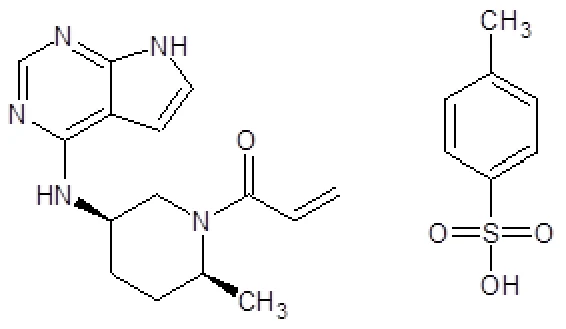
Physicochemical properties:
LITFULO (ritlecitinib) capsules are formulated with ritlecitinib tosylate (a salt of ritlecitinib).
Ritlecitinib tosylate is a white to off white to pale pink solid which is freely soluble in water.
14 CLINICAL TRIALS
14.1 Trial Design and Study Demographics
The efficacy and safety of ritlecitinib was evaluated in a pivotal, randomized, double-blind, placebo-controlled study Study AA-I (B7981015) in alopecia areata patients 12 years of age and older with ≥50% scalp hair loss, including Alopecia Totalis (AT) and Alopecia Universalis (AU). The study treatment period consisted of a placebo-controlled 24-week period and a 24-week extension period. Study AA-I evaluated a total of 718 patients who were randomized for a total of 7 treatment sequences in a 2:2:2:2:1:1:1 manner to blinded ritlecitinib and matching placebo to one of the following treatment regimens for 48 weeks: 1) 200 mg once daily for 4 weeks followed by 50 mg once daily for 44 weeks; 2) 200 mg once daily for 4 weeks followed by 30 mg once daily for 44 weeks; 3) 50 mg once daily for 48 weeks; 4) 30 mg once daily for 48 weeks; 5) 10 mg once daily for 48 weeks; 6) placebo for 24 weeks followed by 200 mg once daily for 4 weeks and 50 mg once daily for 20 weeks; or 7) placebo for 24 weeks followed by 50 mg for 24 weeks. Patients who completed the pivotal study were eligible to enroll in an open-label long-term study AA-II (B7981032).
Table 7: Summary of patient demographics for clinical trial in alopecia areata
| Study # | Study design | Dosage, route of administration and duration | Study subjects (n) | Mean age (Range) | Sex n |
AA-I B7981015 | A Phase 2b/3 Randomized, Double-Blind, Placebo-Controlled, Dose-Ranging Study to Investigate the Efficacy and Safety of Ritlecitinib in Adult and Adolescent Alopecia Areata (AA) Participants With 50% or Greater Scalp Hair Loss | Groups Treated with ritlecitinib: A: 200 mg/50 mg once daily (QD) B: 200 mg/30 mg QD C: 50 mg/50 mg QD D: 30 mg/30 mg QD E: 10 mg/10 mg QD F: Placebo for 24 weeks followed by 200 mg/50 mg QD G: Placebo for 24 weeks followed by 50 mg QD | Total = 718 132 130 130 132 63 65 66 | Mean 33.7 Min, Max (12, 73) years Adults: 613 Adolescents: 105 | Male: 272 Female: 446 |
Abbreviation: QD = once daily
The recommended dose of ritlecitinib is 50 mg once daily and the results for this dose are discussed below.
Across all treatment groups 62.1% of patients were female, 68.0% were White, 25.9% were Asian, and 3.8% were Black or African American. The majority of patients (85.4%) were adults (≥18 years of age) with a mean age of 33.7 years. A total of 105 (14.6%) patients 12 to <18 years of age and 20 (2.8%) patients 65 years of age and older were enrolled. The mean baseline Severity of Alopecia Tool (SALT) score ranged from 88.3 to 93.0 across treatment groups; among patients without AT/AU at baseline, the mean SALT score ranged from 78.3 to 87.0. The majority of patients had abnormal eyebrows (83.0%) and eyelashes (74.7%) at baseline across treatment groups. The median duration since alopecia areata diagnosis was 6.9 years and the median duration of the current alopecia areata episode was 2.5 years. Randomization was stratified by AT/AU status with 46% of patients classified as AT/AU based upon a baseline SALT score of 100.
14.2 Study Results
This study assessed as primary outcome the proportion of patients who achieved a SALT (Severity of Alopecia Tool) score of ≤20 (80% or more scalp hair coverage) at Week 24. Additionally, this study assessed as secondary outcomes, SALT score of ≤10 (90% or more scalp hair coverage) at Week 24, change from baseline in SALT scores over time, and improvements in regrowth of eyebrows and/or eyelashes at Week 24. Patient’s Global Impression of Change (PGI-C) response is a patient-reported outcome measure that asks the patient if there has been a global improvement or worsening in their disease status compared to the start of the study. PGI-C response (defined as a score of “moderately improved” or “greatly improved” based upon a 7 –point Likert scale from “greatly improved” to “greatly worsened) at Week 24 was assessed to evaluate treatment benefit from the patient's perspective and demonstrate value.
Assessment of scalp hair loss was based on the Severity of Alopecia Tool (SALT) score. At Week 24, a significantly greater proportion of patients had a SALT ≤20 response (20% or less of scalp hair loss) with LITFULO 50 mg compared to placebo (Table 8). The SALT ≤20 response rate for LITFULO increased further after Week 24 through Week 48. The percentage of patients achieving SALT ≤20 response by visit is shown in Figure 1. Statistical separation from placebo in SALT ≤20 response first occurred at Week 18 for LITFULO.
A significantly greater proportion of patients had a SALT ≤10 response (10% or less of scalp hair loss) with LITFULO 50 mg compared to placebo at Week 24 (Table 8). The SALT ≤10 response rate increased further at Week 48.
Significant improvement in the Patient’s Global Impression of Change (PGI-C) for LITFULO 50 mg compared to placebo was seen at Week 24 with response rates continuing to increase through Week 48 (Figure 2).
Patients receiving LITFULO 50 mg experienced greater improvement in SALT scores over time, as measured by SALT score change from baseline, compared to placebo at Week 24 with further increases through Week 48 (Figure 1).
Treatment effects in subgroups (age at baseline, sex, ethnic origin, region, weight, disease duration since diagnosis, duration of current episode, prior pharmacologic treatment) were consistent with the results in the overall trial population. Treatment effects in the AT/AU subgroup were lower compared to the non-AT/AU subgroup.
Improvements in regrowth of eyebrows and/or eyelashes were seen at Week 24 with LITFULO 50 mg among patients with abnormal eyebrows and/or eyelashes at baseline, with further increases seen at Week 48.
Table 8: Efficacy results of LITFULO at Week 24
LITFULO 50 mg QD (N = 130) % Responders | Placebo (N = 131) % Responders | Difference from placebo (95% CI) | |||||
|---|---|---|---|---|---|---|---|
| Week 24 | SALT ≤20 responsea,b | 23.0 | 1.6 | 21.4 (13.4, 29.5) | |||
| SALT ≤10 responseb,c | 13.4 | 1.5 | 11.9 (5.4, 18.3) | ||||
| PGI-C responsed | 49.2 | 9.2 | 40.0 (28.8, 51.1) | ||||
| EBA responsee | 29.0 | 4.7 | 24.3 (14.8, 34.5) | ||||
| ELA responsef | 28.9 | 5.2 | 23.7 (13.6, 34.5) | ||||
Abbreviations: EBA = eyebrow assessment; ELA = eyelash assessment; CI = confidence interval; N = total number of patients; PGI-C = patient’s global impression of change; QD = once daily; SALT = severity of alopecia tool.
- a. SALT ≤20 responders were patients with scalp hair loss of ≤20%. SALT scores range from 0 to 100 with 0 = no scalp hair loss and 100 = total scalp hair loss.
- b. Statistically significant with adjustment for multiplicity.
- c. SALT ≤10 responders were patients with scalp hair loss of ≤10%.
- d. PGI-C responders were patients with a score of “moderately improved” or “greatly improved” based upon a 7-point scale from “greatly improved” to “greatly worsened.”
- e. EBA response is defined as at least a 2-grade improvement from baseline or normal EBA score in patients with abnormal eyebrows at baseline.
- f.
ELA response is defined as at least a 2-grade improvement from baseline or normal ELA score in patients with abnormal eyelashes at baseline.
Figure 1: SALT ≤20 Response and Change from Baseline in SALT Score through Week 48
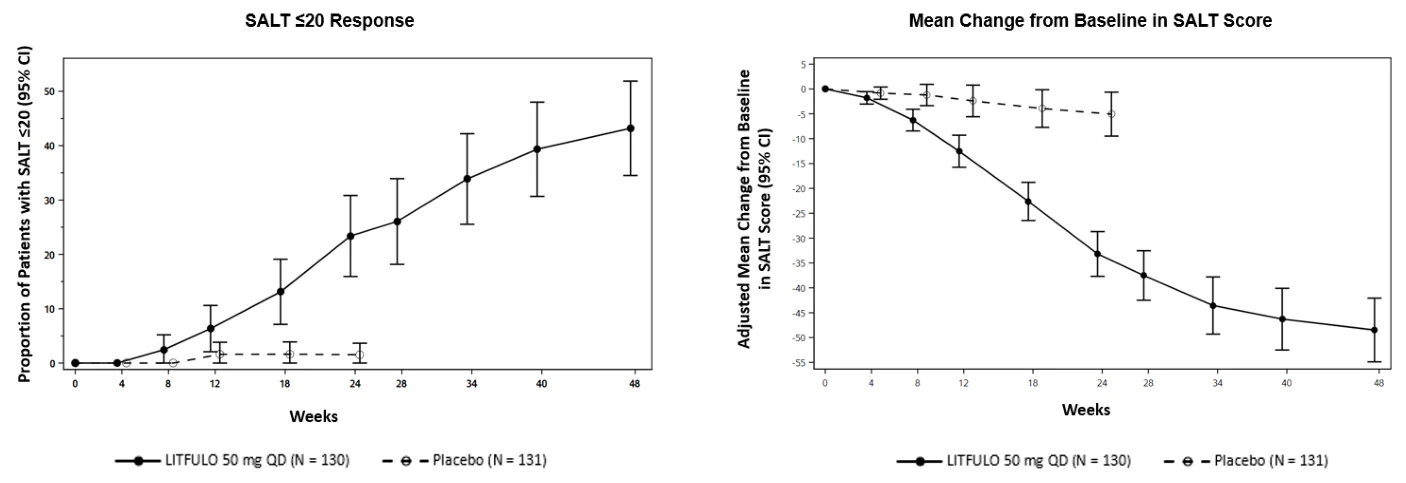
Abbreviations: CI = confidence interval; N = total number of patients; QD = once daily; SALT = Severity of Alopecia Tool.
Figure 2: PGI-C response through Week 48
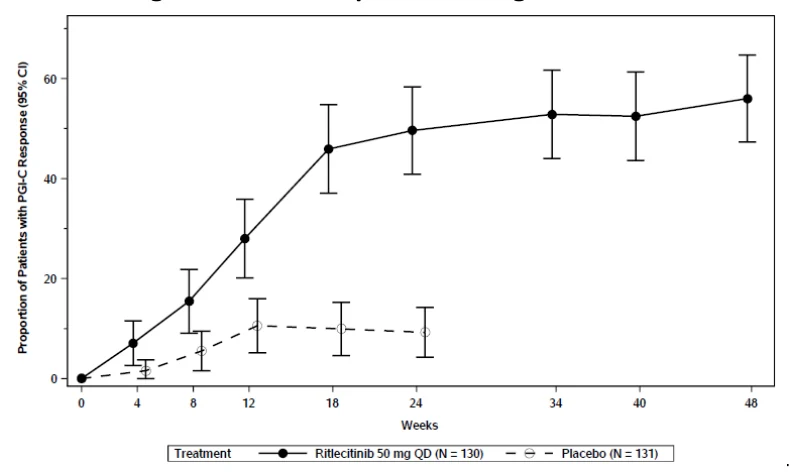
Abbreviations: CI = confidence interval; N = total number of patients; PGI-C = patient’s global impression of change; QD = once daily.
Pediatric patient population
The efficacy was evaluated in Study AA-I which included 105 patients who were 12 to ˂18 years of age. In this study, the efficacy results in patients 12 to ˂18 years are presented in Table 9 and were consistent with the results in the overall study population.
Table 9: Efficacy results of LITFULO for patients 12 to <18 years of age at Week 24
LITFULO 50 mg QD (N = 16) % Responders | Placebo (N = 19) % Responders | Difference from placebo (95% CI) | |
|---|---|---|---|
| SALT ≤20 responsea | 25.0 | 0 | 25.0 (5.5, 49.9) |
| SALT ≤10 responseb | 12.5 | 0 | 12.5 (-5.9, 36.4) |
Abbreviations: CI = confidence interval; N = total number of patients; QD = once daily; SALT = severity of alopecia tool.
- a. SALT ≤20 responders were patients with scalp hair loss of ≤20%. SALT scores range from 0 to 100 with 0 = no scalp hair loss and 100 = total scalp hair loss.
- b. SALT ≤10 responders were patients with scalp hair loss of ≤10%. SALT scores range from 0 to 100 with 0 = no scalp hair loss and 100 = total scalp hair loss.
16 NON-CLINICAL TOXICOLOGY
General Toxicology: Decreased lymphocyte counts and decreased lymphoid cellularity of organs and tissues of the immune and hematolymphopoietic systems were observed in nonclinical toxicity studies and were attributed to the pharmacological properties (JAK3/TEC inhibition) of ritlecitinib. In chronic toxicity studies in dogs, there was evidence of reversible opportunistic infection secondary to immunosuppression at ≥14 times the MRHD.
Carcinogenicity: No evidence of tumorigenicity was observed in the 6-month Tg.rasH2 mice administered ritlecitinib at exposures equal to 11 times the MRHD on an unbound AUC basis. In a 2-year rat carcinogenicity study, a higher incidence of combined benign and malignant thymomas in female rats, and thyroid follicular adenomas and combined follicular adenomas and carcinomas in male rats was noted following ritlecitinib administration at exposures equal to 29 times the MRHD on an unbound AUC basis. No ritlecitinib-related thymomas or thyroid follicular adenomas were observed at exposures equal to 6.3 times the MRHD on an unbound AUC basis.
Genotoxicity: Ritlecitinib is not mutagenic in the bacterial mutagenicity assay (Ames assay). Ritlecitinib is aneugenic in vitro but not aneugenic or clastogenic at exposures equal to 130 times the MRHD on an unbound AUC basis based on the results of the in vivo rat bone marrow micronucleus assay. Ritlecitinib does not present a clinically relevant genotoxic risk.
Reproductive and Developmental Toxicology: Ritlecitinib had no effects on female rat fertility at exposures equal to 55 times the MRHD on an unbound AUC basis. Effects on male rat fertility were noted (higher preimplantation loss resulting in lower number of implantation sites and corresponding lower litter size in naïve females mated with ritlecitinib dosed males) at exposure equal to 55 times the MRHD on an unbound AUC basis. No effects on male fertility were noted at exposures equal to 14 times the MRHD on an unbound AUC basis. No effects on spermatogenesis (sperm counts, sperm production rate, motility, and morphology) were noted at any dose.
In an embryo-fetal development study in pregnant rats, oral administration of ritlecitinib from gestation days 6 to 17 resulted in fetal skeletal malformations and variations and lower fetal body weights at exposures greater than or equal to 49 times the unbound AUC at the MRHD. There were no effects on embryo-fetal development at exposures equal to 16 times the unbound AUC at the MRHD.
In an embryo-fetal development study in pregnant rabbits, oral administration of ritlecitinib from gestation days 7 to 19 resulted in lower mean fetal body weights and higher incidences of post-implantation loss, visceral malformations, skeletal malformations, and skeletal variations at exposures equal to 55 times the unbound AUC at the MRHD. There were no effects on embryo-fetal development at exposures equal to 12 times the unbound AUC at the MRHD.
In a rat pre- and postnatal development study, oral administration of ritlecitinib from gestation day 6 through lactation day 20 resulted in developmental toxicity that included lower postnatal survival, lower offspring body weights, and secondary developmental delays (eg, delay in vaginal patency) at exposure equal to 41 times the unbound AUC at the MRHD. Bred females in the F1 generation exhibited lower mean numbers of corpora lutea and secondary lower number of implantation sites at exposures equal to 41 times the unbound AUC at the MRHD. There were no effects on pre- and postnatal development exposures equal to 14 times the unbound AUC at the MRHD.
In a juvenile rat toxicity study, ritlecitinib was administered by gavage to rats on postnatal days 10 to 60 (comparable to infant through adolescent human age). Lower body weights and body weight gains with secondary effects on balanopreputial separation attainment and shorter femur lengths were observed in males at exposures equal to 19 times the MRHD on an unbound AUC basis. No ritlecitinib related effects on vaginal patency, central nervous system or skeletal system were observed.
Lactation: Following administration of ritlecitinib to lactating rats, concentrations of ritlecitinib in milk over time were higher than those in plasma, where the mean milk to plasma AUC ratio was determined to be 2.2.
Nervous System Toxicity: In 9-month repeat-dose toxicity studies in dogs, reversible axonal dystrophy was noted in the CNS and PNS at doses ≥20 mg/kg/day (≥14 times the MRHD based on AUC comparison). At 40 mg/kg/day (33 times the MRHD based on AUC comparison), ritlecitinib-related axonal dystrophy caused reversible hearing loss and waveform deficits in brainstem auditory evoked potential (BAEP) testing. Additional mechanistic studies provided preliminary evidence that ritlecitinib-related axonal dystrophy may be due to off-target binding but did not identify the underlying mechanism of axonal dystrophy in dogs. While these findings proved to reverse after dosing cessation of ritlecitinib in dogs, a risk to patients at a chronic dosing regimen cannot be fully excluded [see 7 WARNINGS AND PRECAUTIONS, Neurologic].