


Product Monograph - Taro-Tofacitinib
Recent Major Label Changes
1 Indications
01/2025
1.1 Indications, Pediatrics
01/2025
4 Dosage and Adminstration, 4.2 Recommended Dose and Dosage Adjustment
01/2025
7 Warnings and Precautions, Cardiovascular
01/2025
7 Warnings and Precautions, Endocrine and Metabolism
01/2025
7 Warnings and Precautions, Hepatic/Biliary/Pancreatic
01/2025
7 Warnings and Precautions, 7.1.2 Breastfeeding
06/2026
7 Warnings and Precautions, 7.1.3 Pediatrics
01/2025
Table of Contents
Certain sections or subsections that are not applicable at the time of the preparation of the most recent authorized product monograph are not listed.
Recent Major Label Changes.......................................................................................................2
Table of Contents .......................................................................................................................... 2
Part 1: Healthcare Professional Information ............................................................................. 5
1 Indications .................................................................................................................................. 5
1.1 Pediatrics ............................................................................................................................... 5
1.2 Geriatrics ............................................................................................................................... 5
2 Contraindications ....................................................................................................................... 6
3 Serious Warnings and Precautions Box ................................................................................... 6
4 Dosage and Administration ....................................................................................................... 7
4.1 Dosing Considerations .......................................................................................................... 7
4.2 Recommended Dose and Dosage Adjustment ...................................................................... 8
4.4 Administration..................................................................................................................... 11
4.5 Missed Dose ........................................................................................................................ 11
5 Overdose ................................................................................................................................... 11
6 Dosage Forms, Strengths, Composition, and Packaging ...................................................... 12
7 Warnings and Precautions ...................................................................................................... 13
General ...................................................................................................................................... 13
Carcinogenesis and Genotoxicity .............................................................................................. 13
Cardiovascular........................................................................................................................... 14
Driving and Operating Machinery ............................................................................................ 15
Endocrine and Metabolism ....................................................................................................... 15
Gastrointestinal ......................................................................................................................... 16
Hematologic .............................................................................................................................. 16
Hepatic/Biliary/Pancreatic ........................................................................................................ 17
Immune ..................................................................................................................................... 18
Monitoring and Laboratory Tests.............................................................................................. 21
Musculoskeletal......................................................................................................................... 21
Renal ......................................................................................................................................... 21
Reproductive Health.................................................................................................................. 22
Respiratory ................................................................................................................................ 22
7.1. Special Populations .......................................................................................................... 22
7.1.1 Pregnancy .................................................................................................................. 22
7.1.2 Breastfeeding ............................................................................................................. 22
7.1.3 Pediatrics ................................................................................................................... 22
7.1.4 Geriatrics ................................................................................................................... 23
7.1.5 Asian Patients ............................................................................................................ 23
8 Adverse Reactions .................................................................................................................... 23
8.1 Adverse Reaction Overview ............................................................................................... 23
8.2 Clinical Trial Adverse Reactions ........................................................................................ 24
Rheumatoid Arthritis ........................................................................................................... 24
Psoriatic Arthritis................................................................................................................. 32
Ankylosing Spondylitis ....................................................................................................... 32
Active Juvenile Idiopathic Arthritis .................................................................................... 33
Ulcerative Colitis ................................................................................................................. 33
8.3 Less Common Clinical Trial Adverse Reactions ................................................................ 36
8.4 Abnormal Laboratory Findings: Hematologic, Clinical Chemistry, and Other Quantitative Data ........................................................................................................................................... 38
8.5 Post-Market Adverse Reactions .......................................................................................... 41
9 Drug Interactions ..................................................................................................................... 41
9.2 Drug Interactions Overview ................................................................................................ 42
9.4 Drug-Drug Interactions ....................................................................................................... 42
9.5 Drug-Food Interactions ....................................................................................................... 46
9.6 Drug-Herb Interactions ....................................................................................................... 47
9.7 Drug-Laboratory Test Interactions ...................................................................................... 47
10 Clinical Pharmacology........................................................................................................... 47
10.1 Mechanism of Action ........................................................................................................ 47
10.2 Pharmacodynamics ........................................................................................................... 47
10.3 Pharmacokinetics .............................................................................................................. 48
11 Storage, Stability, and Disposal ............................................................................................ 53
Part 2: Scientific Information .................................................................................................... 54
13 Pharmaceutical Information ................................................................................................. 54
14 Clinical Trials ......................................................................................................................... 54
14.1 Clinical Trials by Indication.............................................................................................. 54
Rheumatoid Arthritis ......................................................................................................... 54
Psoriatic Arthritis ............................................................................................................... 63
Ankylosing Spondylitis ..................................................................................................... 68
Ulcerative Colitis ............................................................................................................... 70
Active Juvenile Idiopathic Arthritis ................................................................................... 75
14.2 Comparative Bioavailability Studies................................................................................. 76
16 Non-Clinical Toxicology ........................................................................................................ 78
17 Supporting Product Monographs ......................................................................................... 90
Patient Medication Information ................................................................................................ 91
Part 1: Healthcare Professional Information
1 Indications
Rheumatoid Arthritis
TARO-TOFACITINIB/TARO-TOFACITINIB XR (tofacitinib), in combination with methotrexate (MTX), is indicated for reducing the signs and symptoms of rheumatoid arthritis (RA) in adult patients with moderately to severely active RA who have had an inadequate response to MTX and to one or more disease-modifying anti-rheumatic drugs (DMARDs).
In cases of intolerance to MTX and other DMARDs, physicians may consider the use of TARO-TOFACITINIB/TARO-TOFACITINIB XR as monotherapy.
Psoriatic Arthritis
TARO-TOFACITINIB, in combination with methotrexate (MTX) or another conventional synthetic disease-modifying antirheumatic drug (DMARD), is indicated for reducing the signs and symptoms of psoriatic arthritis (PsA) in adult patients with active PsA when the response to previous DMARD therapy has been inadequate.
Ankylosing Spondylitis
TARO-TOFACITINIB is indicated for the treatment of adult patients with active ankylosing spondylitis (AS) who have responded inadequately to a biologic DMARD or when use of those therapies is inadvisable.
Ulcerative Colitis
TARO-TOFACITINIB is indicated for the treatment of adult patients with moderately to severely active ulcerative colitis (UC) with an inadequate response, loss of response or intolerance to either conventional UC therapy or a TNFα inhibitor.
Active Juvenile Idiopathic Arthritis (JIA)
TARO-TOFACITINIB is indicated for the treatment of active polyarticular juvenile idiopathic arthritis (pJIA; rheumatoid factor positive [RF+] or negative [RF-] polyarthritis, extended oligoarthritis, and systemic JIA without systemic manifestations), and juvenile psoriatic arthritis (jPsA) in children weighing ≥40 kg, who have responded inadequately or are intolerant to tumour necrosis factor (TNF) inhibitors or when use of those therapies is inadvisable.
Limitations of Use
TARO-TOFACITINIB/TARO-TOFACITINIB XR should not be used in combination other Janus kinase (JAK) inhibitors, immunomodulating biologics (e.g., biologic DMARDs), or with potent immunosuppressants such as azathioprine and cyclosporine.
1.1 Pediatrics
Pediatrics (<18 years of age): Based on the data submitted and reviewed, Health Canada has authorized TARO-TOFACITINIB 5 mg tablet formulation in pJIA and jPsA patients weighing ≥40 kg; however, Health Canada has not authorized an indication for pediatric patients weighing <40 kg. TARO-TOFACITINIB XR should not be used in any pediatric patients.
1.2 Geriatrics
Geriatrics (>65 years of age): Evidence from clinical studies and experience suggests that use in the geriatric population is associated with differences in safety or effectiveness. The frequency of adverse events including serious infections, all-cause mortality, cardiovascular events, malignancies, non-melanoma skin cancer, gastrointestinal perforations, interstitial lung disease, venous thromboembolism, and arterial thromboembolism in tofacitinib-treated subjects 65 years of age and older was higher than among those under the age of 65. Therefore, caution should be used when treating geriatric patients with TARO-TOFACITINIB/TARO-TOFACITINIB XR (see 7 Warnings and Precautions, 4 Dosage and Administration and 10 Clinical Pharmacology).
2 Contraindications
TARO-TOFACITINIB/TARO-TOFACITINIB XR is contraindicated:
- In patients with known hypersensitivity to tofacitinib or ingredient in the formulation, including any non-medicinal ingredient, or component of the container. For a complete listing, see 6 Dosage forms, Strengths, Composition and Packaging.
- In patients with severe hepatic impairment (see 7 Warnings and Precautions).
- During pregnancy and breastfeeding (see 7.1.1 Pregnancy and 7.1.2 Breast-feeding).
3 Serious Warnings and Precautions Box
SERIOUS INFECTIONS
Patients treated with TARO-TOFACITINIB/TARO-TOFACITINIB XR are at increased risk for developing serious infections that may lead to hospitalization or death (see 7 Warnings and Precautions and 8.2 Clinical Trial Adverse Reactions). Most patients who developed these infections were taking concomitant immunosuppressants such as methotrexate or corticosteroids.
If a serious infection develops, interrupt TARO-TOFACITINIB/TARO-TOFACITINIB XR until the infection is controlled.
Reported infections include:
- Active tuberculosis, which may present with pulmonary or extrapulmonary disease. Patients should be tested for latent tuberculosis before TARO-TOFACITINIB/TARO-TOFACITINIB XR use and during therapy. Treatment for latent infection should be initiated prior to TARO-TOFACITINIB/TARO-TOFACITINIB XR use.
- Invasive fungal infections, including cryptococcosis and pneumocystosis. Patients with invasive fungal infections may present with disseminated, rather than localized disease.
- Bacterial, viral, and other infections due to opportunistic pathogens.
Treatment with TARO-TOFACITINIB/TARO-TOFACITINIB XR should not be initiated in patients with active infections including chronic or localized infection.
Patients should be closely monitored for the development of signs and symptoms of infection during and after treatment with TARO-TOFACITINIB/TARO-TOFACITINIB XR, including the possible development of tuberculosis in patients who tested negative for latent tuberculosis infection prior to initiating therapy (see 8 Adverse Reactions).
MALIGNANCIES
Lymphoma and other malignancies have been observed in patients treated with tofacitinib. Epstein Barr Virus-associated post-transplant lymphoproliferative disorder has been observed at an increased rate in renal transplant patients treated with tofacitinib and concomitant immunosuppressive medications. An increase in malignancies, including lung cancer, were observed in rheumatoid arthritis patients 50 years or older with at least one additional cardiovascular (CV) risk factor who were taking tofacitinib compared with TNF inhibitors (see 8.2 Clinical Trial Adverse Reactions). Caution should be applied when using TARO-TOFACITINIB/TARO-TOFACITINIB XR in geriatric patients, patients who are current or past smokers, and patients with other malignancy risk factors (see 7 Warnings and Precautions).
THROMBOSIS
Rheumatoid arthritis patients with at least one CV risk factor had a higher rate of all-cause mortality and thrombosis, including pulmonary embolism, deep venous thrombosis, and arterial thrombosis, with tofacitinib 10 mg twice daily (BID) compared to those treated with 5 mg BID or TNF blockers. Many of these adverse events were serious and some resulted in death. Avoid TARO-TOFACITINIB/TARO-TOFACITINIB XR in patients at risk of thrombosis. Discontinue TARO-TOFACITINIB/TARO-TOFACITINIB XR and promptly evaluate patients with symptoms of thrombosis (see 7 Warnings and Precautions).
For patients with ulcerative colitis (UC), use TARO-TOFACITINIB at the lowest effective dose and for the shortest duration needed to achieve/maintain therapeutic response (see 4 Dosage and Administration).
MAJOR ADVERSE CARDIOVASCULAR EVENTS
Major adverse cardiovascular events, including non-fatal myocardial infarction, were observed more frequently with tofacitinib compared to TNF inhibitors in rheumatoid arthritis patients who were 50 years or older with at least one additional CV risk factor (see 8.2 Clinical Trial Adverse Reactions). Caution should be applied when using TARO-TOFACITINIB/TARO-TOFACITINIB XR in geriatric patients, patients who are current or past smokers, and patients with other CV risk factors (see 7 Warnings and Precautions).
4 Dosage and Administration
4.1 Dosing Considerations
- Use of TARO-TOFACITINIB/TARO-TOFACITINIB XR with other potent systemic immunosuppressants should be avoided. Combined use of TARO-TOFACITINIB/TARO-TOFACITINIB XR with potent immunosuppressants or biologic DMARDS (tumor necrosis factor (TNF) antagonists, interleukin 1 receptor (IL-1R) antagonists, IL-6R antagonists, anti-CD20 monoclonal antibodies, IL-17 antagonists, IL-12/IL-23 antagonists and selective co-stimulation modulators) has not been studied in RA, PsA, JIA, and UC patients. There is a risk of added immunosuppression when TARO-TOFACITINIB/TARO-TOFACITINIB XR is coadministered with potent immunosuppressive drugs (e.g. azathioprine, tacrolimus, cyclosporine).
- TARO-TOFACITINIB/TARO-TOFACITINIB XR should not be initiated in patients with an absolute neutrophil count (ANC) less than 1 x 10⁹ cells/L, hemoglobin (Hgb) levels <90 g/L, or with a lymphocyte count less than 0.5 x 10⁹ cells/L (see 7 Warnings and Precautions).
- TARO-TOFACITINIB/TARO-TOFACITINIB XR is contraindicated in patients with severe hepatic impairment; TARO-TOFACITINIB XR should not be used in patients with moderate hepatic impairment.
4.2 Recommended Dose and Dosage Adjustment
Rheumatoid Arthritis
TARO-TOFACITINIB/TARO-TOFACITINIB XR is to be used in combination with methotrexate.
TARO-TOFACITINIB/TARO-TOFACITINIB XR, monotherapy may be considered in cases of intolerance to methotrexate and to one or more DMARDs.
The recommended dose of TARO-TOFACITINIB is 5 mg administered twice daily (BID). The recommended dose of TARO-TOFACITINIB XR is 11 mg once daily.
A dosage of TARO-TOFACITINIB 10 mg BID is not recommended for the treatment of rheumatoid arthritis (see 7 Warnings and Precautions).
Switching between TARO-TOFACITINIB Tablets and TARO-TOFACITINIB XR Tablets: Where appropriate, patients treated with TARO-TOFACITINIB 5 mg BID may be switched to TARO-TOFACITINIB XR 11 mg once daily the day following the last dose of TARO-TOFACITINIB 5 mg.
Where appropriate, patients treated with TARO-TOFACITINIB XR 11 mg once daily may be switched to TARO-TOFACITINIB 5 mg BID 24 hours following the last dose of TARO-TOFACITINIB XR 11 mg.
Patients treated with TARO-TOFACITINIB XR 11 mg once daily who require a dose reduction due to renal or hepatic impairment or drug interactions may be switched to TARO-TOFACITINIB 5 mg once daily, 24 hours following the last dose of TARO-TOFACITINIB XR 11 mg once daily (see 7 Warnings and Precautions and 9 Drug Interactions).
Psoriatic Arthritis
The recommended dose of TARO-TOFACITINIB is 5 mg administered BID in combination with MTX or another csDMARD.
A dosage of TARO-TOFACITINIB 10 mg BID is not recommended for the treatment of psoriatic arthritis (see 7 Warnings and Precautions, Thrombosis).
Ankylosing Spondylitis
The recommended dose of TARO-TOFACITINIB is 5 mg administered BID.
A dosage of TARO-TOFACITINIB 10 mg BID is not recommended for the treatment of ankylosing spondylitis (see 7 Warnings and Precautions, Thrombosis).
Ulcerative Colitis
The recommended dose is 10 mg given orally BID for induction for at least 8 weeks and 5 mg given BID for maintenance.
Depending on therapeutic response; 10 mg BID may also be used for maintenance in some patients. However, the lowest effective dose possible should be used for maintenance therapy to minimize adverse effects (see 7 Warnings and Precautions).
TARO-TOFACITINIB induction therapy should be discontinued in patients who show no evidence of adequate therapeutic benefit by Week 16.
In patients who have responded to treatment with TARO-TOFACITINIB, corticosteroids may be cautiously reduced and/or discontinued in accordance with standard of care.
Active Juvenile Idiopathic Arthritis (JIA)
TARO-TOFACITINIB may be used as monotherapy or in combination with MTX.
The recommended dose in children ≥ 40 kg is one TARO-TOFACITINIB 5 mg tablet administered BID. An oral solution formulation that was used in the JIA clinical trials for patients weighing <40 kg is not marketed in Canada.
Dosage of TARO-TOFACITINIB 10 mg BID or TARO-TOFACITINIB XR 11 mg once daily are not recommended for the treatment of JIA (see 7 Warnings and Precautions).
Dose Interruption or Discontinuation due to Serious Infections and Cytopenias
- Avoid use of TARO-TOFACITINIB/TARO-TOFACITINIB XR if a patient develops a serious infection until the infection is controlled.
- Dose interruption is recommended for management of anemia, lymphopenia, and neutropenia as described in Table 1 (see 7 Warnings and Precautions and 8 Adverse Reactions).
Table 1: Laboratory measures and dose adjustment recommendations
Laboratory Measure | Lab Value | Recommendation |
|---|---|---|
Laboratory Measure | Lab Value | Recommendation |
| Hemoglobin | <20 g/L decrease and ≥90 g/L | Maintain dose |
| ≥20 g/L decrease or <80 g/L (Confirmed by repeat testing) | Interrupt the administration of TARO-TOFACITINIB/TARO-TOFACITINIB XR until hemoglobin values have normalized (above 80 g/L) | |
| Absolute Neutrophil Count (ANC) | >1 x 10⁹ cells/L | Maintain dose |
| 0.5-1 x 10⁹ cells/L | For persistent decreases in this range, interrupt or reduce administration with TARO-TOFACITINIB/TARO-TOFACITINIB XR until ANC is >1x 10⁹ cells/L
RA patients:
UC patients:
| |
<0.5 x 10⁹ cells/L (Confirmed by repeat testing) | Discontinue treatment with TARO-TOFACITINIB/TARO-TOFACITINIB XR | |
Absolute Lymphocyte Count | ≥ 0.5 x 10⁹ cells/L | Maintain dose |
< 0.5 x 10⁹cells/L (Confirmed by repeat testing) | Discontinue TARO-TOFACITINIB/TARO-TOFACITINIB XR |
Dose Modification in Patients with Renal or Hepatic Impairment, or Due to Drug Interactions
Use TARO-TOFACITINIB with caution in patients with moderate (CLcr ≥30 and <60 mL/min) or severe (CLcr ≥15 and <30 mL/min) renal insufficiency (including patients with ESRD but not limited to those undergoing hemodialysis). Modified dosing is indicated in Table 2.
- For patients undergoing hemodialysis, dose should be administered after the dialysis session on dialysis days. If a dose was taken before the dialysis procedure, supplemental doses are not recommended in patients after dialysis.
- Patients with severe renal insufficiency should remain on a reduced dose even after hemodialysis.
- Use TARO-TOFACITINIB with caution in patients with moderate hepatic impairment. Modified dosing is indicated in Table 2.
- TARO-TOFACITINIB XR is not recommended in patients with moderate hepatic impairment or moderate to severe renal insufficiency; TARO-TOFACITINIB 5 mg once daily may be considered.
- Modified dosing of TARO-TOFACITINIB/TARO-TOFACITINIB XR is recommended with concomitant CYP inhibitors as indicated in Table 3.
- Coadministration of potent inducers of CYP3A4 with TARO-TOFACITINIB/TARO-TOFACITINIB XR is not recommended. Coadministration of potent inducers of CYP3A4 (e.g. rifampin) with TARO-TOFACITINIB/TARO-TOFACITINIB XR may result in loss of efficacy or reduced clinical response to TARO-TOFACITINIB/TARO-TOFACITINIB XR (see 9.4 Drug-Drug Interactions).
Table 2: Recommended dose adjustment of TARO-TOFACITINIB/TARO-TOFACITINIB XR in patients with renal insufficiency or hepatic impairment
| TARO-TOFACITINIB | TARO-TOFACITINIB XR | ||||||||||
Indicated dose (in normal renal/hepatic function) | 5 mg BID | 10 mg BID | 11 mg once daily | ||||||||
| Modified dosing | Moderate Renal insufficiency (CrCl ≥30 and <60 mL/min) | 5 mg once daily | 5 mg BID | Not recommended (Consider TARO-TOFACITINIB 5 mg once daily) | |||||||
Severe Renal insufficiency (CrCl ≥15 and <30 mL/min) | |||||||||||
| Moderate hepatic impairment | |||||||||||
| Severe hepatic impairment | Contraindicated | Contraindicated | Contraindicated | ||||||||
Table 3: Recommended dose adjustment of TARO-TOFACITINIB/TARO-TOFACITINIB XR in patients with CYP modifiers
| TARO-TOFACITINIB | TARO-TOFACITINIB XR | |||||||||
| Indicated dose | 5 mg BID | 10 mg BID | 11 mg once daily | |||||||
| Modified dosing | Patients receiving:
(e.g. ketoconazole), or
| 5 mg once daily | 5 mg BID | Not recommended (Consider TARO-TOFACITINIB 5 mg once daily) | ||||||
Patients receiving:
| Not recommended | Not recommended | Not recommended | |||||||
Special Populations
Geriatrics (>65 years): No dosage adjustment is required in patients aged 65 years and older (see 7.1.4 Geriatrics and 10 Clinical Pharmacology).
Pediatrics (<18 years of age): TARO-TOFACITINIB 5 mg tablet BID was evaluated in clinical trials for JIA patients weighing ≥ 40 kg; an oral solution formulation used in the JIA clinical trials for patients weighing <40 kg is not marketed in Canada (see 1.1 Pediatrics, 7.1.3 Pediatrics and 10 Clinical Pharmacology). No data are available regarding the safety and efficacy of TARO-TOFACITINIB XR in children aged from neonates to less than 18 years of age. Therefore, TARO-TOFACITINIB XR should not be used in this patient population.
4.4 Administration
TARO-TOFACITINIB/TARO-TOFACITINIB XR is to be taken orally with or without food.
Swallow TARO-TOFACITINIB XR tablets whole and intact. Do not crush, split, or chew.
4.5 Missed Dose
For a missed dose, resume at the next scheduled dose.
5 Overdose
There is no experience with overdose of tofacitinib. There is no specific antidote for overdose with tofacitinib. Treatment should be symptomatic and supportive. In case of an overdose, it is recommended that the patient be monitored for signs and symptoms of adverse reactions. Patients who develop adverse reactions should receive appropriate treatment.
Pharmacokinetic data up to and including a single dose of 100 mg in healthy volunteers indicates that more than 95% of the administered dose is expected to be eliminated within 24 hours.
For the most recent information in the management of a suspected drug overdose, contact your regional poison control centre or Health Canada’s toll-free number, 1-844 POISON-X (1-844-764-7669).
6 Dosage Forms, Strengths, Composition and Packaging
Table 4 – Dosage Forms, Strengths, Composition and Packaging
| Route of Administration | Dosage Form / Strength/ Composition | Non-medicinal Ingredients | |
|---|---|---|---|
| Oral | Tofacitinib tablets / 5 mg and 10 mg tofacitinib (as tofacitinib citrate) | Croscarmellose sodium, FD&C Blue#1 (in 10 mg tablets only), FD&C Blue#2 (in 10 mg tablets only), hypromellose, lactose monohydrate, magnesium stearate, microcrystalline cellulose, polyethylene glycol, titanium dioxide and triacetin. | |
| Tofacitinib extended-release tablets / 11 mg tofacitinib (as tofacitinib citrate) | Colloidal silicon dioxide, ferric oxide red, fumaric acid, hypromellose, lactose monohydrate, magnesium stearate, methacrylic acid and ethyl acrylate copolymer, povidone, talc, titanium dioxide, triethyl citrate. Imprinting Ink contains: ferrosoferric oxide black, propylene glycol, shellac glaze, ammonium hydroxide, N-Butyl alcohol. | ||
TARO-TOFACITINIB
Tablet: 5 mg tofacitinib (as tofacitinib citrate) -
White to off white, round, film coated tablets, debossed with “RX 13” on one side and plain on the other side.
HDPE bottles with child-resistant caps containing 60 and 180 film-coated tablets. Blister pack of 10’s (1 blister of 10’s count); Pack of 60’s blisters (6 blisters of 10 tablets in one box).
Tablet: 10 mg tofacitinib (as tofacitinib citrate) -
Blue, round, film-coated tablets, debossed with “RX 21” on one side, plain on the other side.
HDPE bottles with child-resistant caps containing 60 and 180 film-coated tablets.
Blister pack of 10’s (1 blister of 10’s count); Pack of 60’s blisters (6 blisters of 10 tablets in one box).
TARO-TOFACITINIB XR
Tablet: 11 mg tofacitinib (as tofacitinib citrate) –
Pink colored, oval shaped tablets imprinted with “S11” on one side and plain on the other side.
HDPE bottles with child-resistant caps containing 14 and 30 tablets.
7 Warnings and Precautions
See 3 Serious Warnings and Precautions Box.
General
Specific to TARO-TOFACINITIB XR: As with any other non-deformable material, caution should be used when administering TARO-TOFACINITIB XR to patients with pre-existing severe gastrointestinal narrowing (pathologic or iatrogenic). There have been rare reports of obstructive symptoms in patients with known strictures in association with the ingestion of other drugs utilizing a non-deformable extended-release formulation.
Carcinogenesis and Genotoxicity
In patients treated with tofacitinib, malignancies were observed in clinical studies and the post-marketing setting including but not limited to: lymphomas, lung cancer, breast cancer, colorectal cancer, gastric cancer, melanoma, prostate cancer, pancreatic cancer, thyroid cancer and renal cell carcinoma (see 3 Serious Warnings and Precautions Box and 8.2 Clinical Trial Adverse Reactions).
An increase in malignancies (excluding NMSC) was observed in patients treated with tofacitinib compared with TNF inhibitors in a post-authorization safety study (see 8.2 Clinical Trial Adverse Reactions). Malignancies (excluding NMSC) were more common in geriatric patients and in patients who were current or past smokers.
Lung cancers were observed in patients treated with tofacitinib and an increased rate was observed in patients treated with tofacitinib 10 mg BID compared with TNF inhibitors in a post-authorization safety study. Patients with rheumatoid arthritis and taking tofacitinib may be at higher risk than the general population for the development of lung cancer.
Lymphomas were also observed in patients treated with tofacitinib in a post-authorization safety study (see 8.2 Clinical Trial Adverse Reactions).
Caution should be used in treating geriatric patients, patients who are current or past smokers, and patients with other malignancy risk factors.
Consider the risks and benefits of TARO-TOFACITINIB/TARO-TOFACITINIB XR treatment prior to initiating therapy in patients with current or a history of malignancy other than a successfully treated non-melanoma skin cancer (NMSC) or when considering continuing TARO-TOFACITINIB/TARO-TOFACITINIB XR in patients who develop a malignancy. Recommendations for NMSC are presented below.
Rheumatoid Arthritis
In the 5 controlled clinical studies, 5 malignancies (excluding NMSC) were diagnosed in patients receiving tofacitinib 5 mg BID, and 8 malignancies (excluding NMSC) were diagnosed in patients receiving tofacitinib 10 mg BID, compared to 0 malignancies (excluding NMSC) in patients in the placebo/placebo plus DMARD group during the first 12 months. Lymphomas and solid cancers have also been observed in the long-term extension study in patients treated with tofacitinib (see 8.2 Clinical Trial Adverse Reactions). Patients with RA particularly those with highly active disease, may be at a higher risk (several fold) than the general population for the development of lymphoma.
In Phase 2B, controlled dose-ranging trials in de-novo renal transplant patients, all of whom received induction therapy with basiliximab, high dose corticosteroids, and mycophenolic acid products, Epstein Barr Virus-associated post-transplant lymphoproliferative disorder was observed in 5 out of 218 patients treated with tofacitinib (2.3%) compared to 0 out of 111 patients treated with cyclosporine.
Psoriatic Arthritis
In the 2 controlled PsA clinical trials, there were 3 malignancies (excluding NMSC) in 474 patients receiving tofacitinib plus csDMARD (6 to 12 months exposure) compared with 0 malignancies in 236 patients in the placebo plus csDMARD group (3 months exposure) and 0 malignancies in 106 patients in the adalimumab plus DMARD group (12 months exposure). Malignancies have also been observed in the long-term extension study in PsA patients treated with tofacitinib.
Ulcerative Colitis
In the 4 controlled clinical studies for ulcerative colitis (up to 52-week treatment), no malignancies (excluding NMSC) were reported with tofacitinib. In the long-term extension open-label study, malignancies (excluding NMSC) have been observed in patients treated with tofacitinib 10 mg BID, including solid cancers and lymphoma.
Non-Melanoma Skin Cancer: Non-melanoma skin cancers (NMSCs) have been reported in patients treated with tofacitinib. NMSC is a dose related adverse reaction, with a greater risk in patients treated with 10 mg BID of tofacitinib than in patients treated with 5 mg BID. An increase in overall NMSCs, including cutaneous squamous cell carcinomas was observed in patients treated with tofacitnib compared to TNF inhibitors in a post-authorization safety study (see 8.2 Clinical Trial Adverse Reactions). Caution should be used when treating geriatric patients and patients with a prior history of NMSC, where a higher incident of NMSC was observed. Periodic skin examination is recommended.
In the UC 52-week maintenance study, NMSC was reported in 3 patients (1.5%) treated with 10 mg BID, as compared with no reported events in patients treated with 5 mg BID and 1 patient (0.5%) treated with placebo. In the long-term open label extension study, NMSC was reported in 6 patients in the 10 mg BID group and 2 patients in the 5 mg BID group.
Cardiovascular
Heart Rate Decrease and PR Interval Prolongation: Tofacitinib caused a decrease in heart rate and a prolongation of the PR interval (see 7 Warnings and Precautions, Monitoring and Laboratory Tests and 8 Adverse Reactions). Caution should be observed in patients with a low heart rate at baseline (<60 beats per minute), a history of syncope or arrhythmia, sick sinus syndrome, sinoatrial block, atrioventricular (AV) block, ischemic heart disease, or congestive heart failure. Concomitant medications that result in a decrease in heart rate and/or PR interval prolongation should be avoided to the extent possible during treatment with TARO-TOFACITINIB/TARO-TOFACITINIB XR (see 9 Drug Interactions).
Thrombosis: Thrombosis, including pulmonary embolism, deep venous thrombosis, and arterial thrombosis, was observed at an increased incidence in patients treated with tofacitinib in a post-authorization safety study. In this post-authorization safety study, patients treated with tofacitinib 10 mg BID had a higher rate of all- cause mortality, including sudden CV death, and thrombosis compared to those treated with tofacitinib 5 mg given BID or TNF inhibitors. Many of these events were serious and some resulted in death (see 3 Serious Warnings and Precautions Box).
In a long-term extension study in patients with ulcerative colitis (UC), four cases of pulmonary embolism were reported in patients taking tofacitinib 10 mg BID, including one death in a patient with advanced cancer.
A dosage of TARO-TOFACITINIB 10 mg BID or TARO-TOFACITINIB XR 22 mg once daily is not recommended for the treatment of RA or PsA (see 4 Dosage and Administration).
For the treatment of UC, use TARO-TOFACITINIB at the lowest effective dose and for the shortest duration needed to achieve/maintain therapeutic response (see 4 Dosage and Administration).
Avoid TARO-TOFACITINIB/TARO-TOFACITINIB XR in patients that may be at increased risk of thrombosis. Discontinue TARO-TOFACITINIB/TARO-TOFACITINIB XR and promptly evaluate patients with symptoms of thrombosis.
Major Adverse Cardiovascular Events (including Myocardial Infarction): Major adverse cardiovascular events (MACE), including events of myocardial infarction, were observed in patients were treated with tofacitinib 5 mg BID, tofacitinib 10 mg BID or TNF inhibitors in a post-authorization safety study. An increase in non-fatal myocardial infarctions was observed in patients treated with tofacitinib compared to TNF inhibitor (see 8.2 Clinical Trial Adverse Reactions). MACE, including events of myocardial infarction, were more common in geriatric patients and in patients who were current or past smokers (see 3 Serious Warnings and Precautions). Caution should be used in treating geriatric patients, patients who are current or past smokers, and patients with other CV risk factors.
Retinal venous thrombosis: Retinal venous thrombosis (RVT) has been reported in patients treated with tofacitinib (see 8.2 Clinical Trial Adverse Reactions, Thromboembolism, Table 11 and 14.1 Clinical Trials by Indication, Rheumatoid Arthritis, Study RA-VI). Patients should be advised to promptly seek medical care if they experience symptoms suggestive of RVT.
Driving and Operating Machinery
No formal studies have been conducted on the effects on the ability to drive and use machines.
Endocrine and Metabolism
Hypoglycaemia in patients treated for diabetes:
There have been reports of hypoglycaemia following initiation of tofacitinib in patients receiving medication for diabetes. Dose adjustment of anti-diabetic medication may be necessary in the event that hypoglycaemia occurs.
Fractures
Fractures of multiple types, including osteoporotic fractures, have been observed in patients treated with tofacitinib in clinical studies and the postmarketing setting (see 8.2 Clinical Trial Adverse Reactions).
Caution should be applied when using TARO-TOFACITINIB/TARO-TOFACITINIB XR in patients with known risk factors for fractures such as geriatric patients, female patients, and patients using corticosteroids.
Gastrointestinal
Events of gastrointestinal perforation have been reported with tofacitinib in RA patients, in clinical trials and in the post-market setting. The role of JAK inhibition in these events is not known. Many patients who developed gastrointestinal perforations were taking concomitant nonsteroidal anti-inflammatory drugs (NSAIDs) and/or corticosteroids. The relative contribution of these concomitant medications versus tofacitinib to the development of gastrointestinal perforations is not known.
There was no discernable difference in frequency of gastrointestinal perforation between the placebo and the tofacitinib arms in clinical trials of patients with UC, and many of them were receiving background corticosteroids.
TARO-TOFACITINIB/TARO-TOFACITINIB XR should be used with caution in patients who may be at increased risk for gastrointestinal perforation (e.g., use of concomitant NSAIDs and/or corticosteroids, patients with a history of diverticulitis). Patients presenting with new onset abdominal symptoms should be evaluated promptly for early identification of gastrointestinal perforation (see 8 Adverse Reactions).
Hematologic
Anemia: Treatment with tofacitinib has been associated with decreases in hemoglobin levels. Evaluate hemoglobin prior to initiation of TARO-TOFACITINIB/TARO-TOFACITINIB XR (see 7 Warnings and Precautions, Monitoring and Laboratory Tests and 4.2 Recommended Dose and Dosage Adjustment). Avoid initiation of TARO-TOFACITINIB/TARO-TOFACITINIB XR treatment in patients with low hemoglobin values (i.e., <90 g/L). Treatment with TARO-TOFACITINIB/TARO-TOFACITINIB XR should be interrupted in patients who develop hemoglobin levels <80 g/L or whose hemoglobin level drops >20 g/L on treatment.
For recommended monitoring and dose modification based on hemoglobin results, see 7 Warnings and Precautions, Monitoring and Laboratory Tests and 4.2 Recommended Dose and Dosage Adjustment.
Lymphopenia: Treatment with tofacitinib was associated with initial lymphocytosis at one month of exposure followed by a gradual decrease in mean lymphocyte counts below the baseline of approximately 10% during 12 months of therapy. Lymphocyte counts less than 0.5x10⁹ cells/L were associated with an increased incidence of treated and serious infections. Evaluate lymphocyte count prior to initiation of TARO-TOFACITINIB/TARO-TOFACITINIB XR approximately 4-8 weeks after initiation with TARO-TOFACITINIB/TARO-TOFACITINIB XR treatment, and every 3 months thereafter.
Avoid initiation of TARO-TOFACITINIB/TARO-TOFACITINIB XR treatment in patients with a low lymphocyte count (i.e., less than 0.5x10⁹ cells/L). In patients who develop a confirmed absolute lymphocyte count less than 0.5x10⁹ cells/L, TARO-TOFACITINIB/TARO-TOFACITINIB XR should be discontinued.
For recommended monitoring and dose modifications based on lymphocyte counts see 7 Warnings and Precautions, Monitoring and Laboratory Tests and 4.2 Recommended Dose and Dosage Adjustment.
Neutropenia: Treatment with tofacitinib was associated with an increased incidence of neutropenia (<2x10⁹ cells/L) compared to placebo. Evaluate neutrophil count prior to initiation of TARO-TOFACITINIB/TARO-TOFACITINIB XR approximately 4-8 weeks after initiation with TARO-TOFACITINIB/TARO-TOFACITINIB XR treatment, and every 3 months thereafter.
Avoid initiation of TARO-TOFACITINIB/TARO-TOFACITINIB XR treatment in patients with a low neutrophil count (i.e., ANC (absolute neutrophil count) <1 x10⁹ cells/L). For patients who develop a persistent ANC of 0.5 to 1 x10⁹ cells/L, interrupt dosing until ANC is >1 x10⁹ cells/L. In patients who develop an absolute neutrophil count <0.5 x10⁹ cells/L, discontinue treatment.
For recommended monitoring and dose modification based on ANC, see 7 Warnings and Precautions, Monitoring and Laboratory Tests and 4.2 Recommended Dose and Dosage Adjustment.
Lipid Elevations: Treatment with tofacitinib was associated with increases in lipid parameters including total cholesterol, low-density lipoprotein (LDL) cholesterol, and high-density lipoprotein (HDL) cholesterol (see 8 Adverse Reactions).
Maximum effects were generally observed within 6 weeks. The effect of these lipid parameter elevations on cardiovascular morbidity and mortality has not been determined.
Assessment of lipid parameters should be performed at baseline and approximately 4-8 weeks following initiation of TARO-TOFACITINIB/TARO-TOFACITINIB XR therapy, and every 6 months thereafter (see 7 Warnings and Precautions, Monitoring and Laboratory Tests). Patients should be managed according to local clinical guidelines for the management of hyperlipidemia.
Hepatic/Biliary/Pancreatic
TARO-TOFACITINIB/TARO-TOFACITINIB XR is contraindicated in patients with severe hepatic impairment.
Treatment with tofacitinib was associated with an increased incidence of liver enzyme elevation compared to placebo (see 8 Adverse Reactions).
Evaluate liver enzymes before initiating TARO-TOFACITINIB and thereafter according to routine patient management (see 7 Warnings and Precautions, Monitoring and Laboratory Tests). Prompt investigation of the causes of liver enzyme elevations is recommended to identify potential cases of drug-induced liver injury (DILI). If increases in ALT (alanine transaminase) or AST (aspartate transaminase) are observed and DILI is suspected, the administration of TARO-TOFACITINIB/TARO-TOFACITINIB XR should be interrupted until the diagnosis is excluded.
Most of the liver enzyme abnormalities in RA and PsA patients occurred in studies with background DMARD (primarily methotrexate) therapy.
One case of DILI was reported in a RA patient treated with tofacitinib 10 mg BID for approximately 2.5 months. The patient developed symptomatic elevations of AST and ALT with values greater than 3x ULN associated concurrently with total bilirubin value greater than 2x ULN, which required hospitalization and a liver biopsy.
In UC patients, tofacitinib treatment with 5 and 10 mg BID was also associated with an increased incidence of liver enzyme elevation compared to placebo, with a trend for higher incidence with the 10 mg BID as compared to the 5 mg BID (see 8 Adverse Reactions).
One patient treated with tofacitinib 10 mg BID in the maintenance UC study experienced an increase in liver enzymes which decreased upon discontinuation of treatment. The case was adjudicated as possible DILI, while noting ultrasound findings of fatty liver.
There were three pediatric patients in Study JIA-1 receiving 5 mg tofacitinib BID who experienced elevated hepatic enzymes that decreased upon discontinuation and were adjudicated as possible or probable DILI.
The impact of tofacitinib on chronic viral hepatitis reactivation is unknown. Tofacitinib has not been studied in patients with positive hepatitis B virus or hepatitis C virus serology and should therefore not be used in these populations.
Tofacitinib has not been studied in patients with severe hepatic impairment and should not be used in these patients. TARO-TOFACITINIB XR should not be used in patients with moderate to severe hepatic impairment. Dose adjustment of TARO-TOFACITINIB is recommended for patients with moderate hepatic impairment (see 4 Dosage and Administration and 10 Clinical Pharmacology).
Immune
Hypersensitivity Reactions: Reactions such as angioedema and urticaria that may reflect drug hypersensitivity have been observed in patients treated with tofacitinib. Some events were serious. If a hypersensitivity reaction is suspected, promptly discontinue tofacitinib while evaluating the potential cause or causes of the reaction (see 2 Contraindications and 8 Adverse Reactions).
Immunocompromised Patients: TARO-TOFACITINIB/TARO-TOFACITINIB XR can increase the risk of infections and immunosuppression when co-administered with potent immunosuppressants such as cyclosporine, azathioprine and tacrolimus. Combined use of tofacitinib with potent immunosuppressive drugs has not been studied and is not recommended (see 9.4 Drug-Drug Interactions).
Immunizations: No data are available on the secondary transmission of infection by live vaccines to patients receiving tofacitinib. It is recommended that all patients be brought up to date with all immunizations in agreement with current immunization guidelines prior to initiating TARO-TOFACITINIB/TARO-TOFACITINIB XR therapy and that live vaccines not be given concurrently with TARO-TOFACITINIB/TARO-TOFACITINIB XR. The interval between live vaccinations and initiation of tofacitinib therapy should be in accordance with current vaccination guidelines regarding immunomodulatory agents.
In patients being considered for TARO-TOFACITINIB/TARO-TOFACITINIB XR therapy, live zoster vaccine should only be administered to patients with a known history of chickenpox or those that are seropositive for varicella zoster virus. Vaccination should occur at least 2 weeks but preferably 4 weeks before initiating immunomodulatory agents such as TARO-TOFACITINIB/TARO-TOFACITINIB XR.
In a clinical trial, a varicella naïve patient treated with tofacitinib and methotrexate developed disseminated infection with the vaccine strain of the varicella zoster virus 16 days after vaccination. A satisfactory immune response to the vaccine was developed 6 weeks post- vaccination.
Antibody levels after vaccination may be lower in patients treated with TARO-TOFACITINIB (see 10.2 Pharmacodynamics).
Infections: Serious and sometimes fatal infections due to bacterial, mycobacterial, invasive fungal, viral, or other opportunistic pathogens have been reported in RA patients receiving immunomodulatory agents, including tofacitinib. The most common serious infections reported with tofacitinib included pneumonia, urinary tract infection, cellulitis, herpes zoster, bronchitis, septic shock, diverticulitis, gastroenteritis, appendicitis and sepsis. Among opportunistic infections, tuberculosis and other mycobacterial infections, cryptococcus, histoplasmosis, esophageal candidiasis, pneumocystosis, multidermatomal herpes zoster, cytomegalovirus infections, BK virus infections, listeriosis and aspergillosis were reported with tofacitinib (see 8 Adverse Reactions). Some patients have presented with disseminated rather than localized disease and were often taking concomitant immunomodulating agents such as methotrexate or corticosteroids. Other serious infections that were not reported in clinical studies may also occur (e.g., coccidioidomycosis).
A dose dependent increase in serious infections was observed in patients treated with tofacitinib compared to TNF inhibitors in a post-authorization safety study (see 8 Adverse Reactions). Some of these serious infections resulted in death. Opportunistic infections were also reported in the study.
Patients treated with tofacitinib 10 mg BID are at higher risk of serious infections, and herpes zoster infections compared to those treated with 5 mg BID. The incidence rate per 100 person- years (PYs) for herpes zoster opportunistic infections in the UC 52-week maintenance study was higher in patients treated with tofacitinib 10 mg BID (6.64) as compared to tofacitinib 5 mg BID (2.05) or placebo (0.97) (see 8 Adverse Reactions).
TARO-TOFACITINIB/TARO-TOFACITINIB XR should not be administered in patients with an active infection, including localized infections. The risks and benefits of treatment should be considered prior to initiating TARO-TOFACITINIB/TARO-TOFACITINIB XR in patients:
|
Patients should be closely monitored for the development of signs and symptoms of infection during and after treatment with TARO-TOFACITINIB/TARO-TOFACITINIB XR. TARO-TOFACITINIB/TARO-TOFACITINIB XR should be interrupted if a patient develops a serious infection, an opportunistic infection, or sepsis. A patient who develops a new infection during treatment with TARO-TOFACITINIB/TARO-TOFACITINIB XR should undergo prompt and complete diagnostic testing appropriate for an immunocompromised patient, appropriate antimicrobial therapy should be initiated, and the patient should be closely monitored.
As there is a higher incidence of infections in the geriatric and in the diabetic populations in general, caution should be used when treating geriatric patients and patients with diabetes. Caution is also recommended in patients with a history of chronic lung disease as they may be more prone to infections. Events of interstitial lung disease (some of which had a fatal outcome) have been reported in RA patients treated with tofacitinib in clinical trials and in the post-marketing setting.
Risk of infection may be higher with increasing degrees of lymphopenia and consideration should be given to lymphocyte counts when assessing individual patient risk of infection (see 7 Warnings and Precautions, Monitoring and Laboratory Tests).
Treatment with tofacitinib was associated with increased rates of infections in Asian patients compared to other races (see 7.1.5 Asian Patients and 8 Adverse Reactions). TARO-TOFACITINIB/TARO-TOFACITINIB XR should be used with caution in this population.
Tuberculosis
Patients should be evaluated and tested for latent or active tuberculosis (TB) infection prior to administration of TARO-TOFACITINIB/TARO-TOFACITINIB XR and periodically (e.g., annually) while taking TARO-TOFACITINIB.
TARO-TOFACITINIB/TARO-TOFACITINIB XR should not be given to patients with active TB.
Antituberculosis therapy should also be considered prior to administration of TARO-TOFACITINIB/TARO-TOFACITINIB XR in patients with a past history of latent or active tuberculosis in whom an adequate course of treatment cannot be confirmed, and for patients with a negative test for latent tuberculosis but have risk factors for tuberculosis infection.
Patients with latent tuberculosis should be treated with standard antimycobacterial therapy before administering TARO-TOFACITINIB/TARO-TOFACITINIB XR.
Patients should be closely monitored for the development of signs and symptoms of tuberculosis, including patients who tested negative for latent tuberculosis infection prior to initiating therapy.
Viral Reactivation
Viral reactivation, including cases of herpes virus reactivation (e.g., herpes zoster) were observed in clinical studies with tofacitinib. An increase in herpes zoster events was observed in patients treated with tofacitinib compared to TNF inhibitors in a post-authorization safety study (see 8 Adverse Reactions). Post-marketing cases of hepatitis B reactivation have been reported in patients treated with tofacitinib (see 8 Adverse Reactions). The impact of tofacitinib on chronic viral hepatitis reactivation is unknown. Patients who screened positive for hepatitis B or C were excluded from clinical trials. Screening for viral hepatitis should be performed in accordance with clinical guidelines before starting therapy with TARO-TOFACITINIB/TARO-TOFACITINIB XR.
Monitoring and Laboratory Tests
Lipid tests should be performed at baseline, approximately 4-8 weeks after initiation with TARO-TOFACITINIB/TARO-TOFACITINIB XR and every 6 months thereafter. Patients should be managed according to clinical guidelines for the management of hyperlipidemia (see 4.2 Recommended Dose and Dosage Adjustment and 7 Warnings and Precautions).
Liver enzyme tests are recommended before initiating TARO-TOFACITINIB/TARO-TOFACITINIB XR treatment and thereafter according to routine patient management. If increases in ALT or AST are observed during routine patient management and DILI is suspected, the administration of TARO-TOFACITINIB/TARO-TOFACITINIB XR should be interrupted until this diagnosis has been excluded (see 4.2 Recommended Dose and Dosage Adjustment and 7 Warnings and Precautions).
Assessment of renal function is recommended prior to initiation of TARO-TOFACITINIB/TARO-TOFACITINIB XR (see 4.2 Recommended Dose and Dosage Adjustment and 7 Warnings and Precautions).
Lymphocyte, neutrophil and hemoglobin tests should be performed at baseline, approximately 4-8 weeks after initiation with TARO-TOFACITINIB/TARO-TOFACITINIB XR treatment, and every 3 months thereafter (see 4.2 Recommended Dose and Dosage Adjustment and 7 Warnings and Precautions).
Vital signs: Patients should be monitored for pulse rate and blood pressure at baseline and periodically during treatment with TARO-TOFACITINIB/TARO-TOFACITINIB XR (see 7 Warnings And Precautions, Cardiovascular, 8 Adverse Reactions, and 9.4 Drug-Drug Interactions ).
Musculoskeletal
Treatment with tofacitinib was associated with increases in creatine kinase (CK). Maximum effects were generally observed within 6 months. Rhabdomyolysis was reported in one patient treated with tofacitinib. Creatine kinase levels should be checked in patients with symptoms of muscle weakness and/or muscle pain to evaluate for evidence of rhabdomyolysis. Increases in CK were reported more frequently in patients treated with tofacitinib 10 mg as compared to those treated with 5 mg BID (see 8 Adverse Reactions).
Renal
TARO-TOFACITINIB XR is not recommended in patients with moderate (CLcr ≥30 and <60 mL/min), or severe renal insufficiency (CLcr ≥15 and <30 mL/min), including patients with end-stage renal disease (ESRD) but not limited to those undergoing hemodialysis.
Dosage adjustment of TARO-TOFACITINIB is recommended in patients with moderate and severe renal impairment (see 4.2 Recommended Dose and Dosage Adjustment, and 10 Clinical Pharmacology). In clinical trials, tofacitinib was not evaluated in patients with baseline creatinine clearance values (estimated by the Cockcroft-Gault equation) less than 40 mL/min.
Reproductive Health
- Fertility: Based on findings in animal studies, TARO-TOFACITINIB/TARO-TOFACITINIB XR may cause decreased fertility when administered to females (see 16 Non-Clinical Toxicology).
- Teratogenic Risk: Based on findings in animal studies, TARO-TOFACITINIB/TARO-TOFACITINIB XR may cause fetal harm when administered to a pregnant woman (see 2 Contraindications). Administration of tofacitinib to rats and rabbits during organogenesis caused increases in fetal malformations (see 16 Non-Clinical Toxicology). Pregnant women should be advised of the potential risk to a fetus. Females of reproductive potential should be advised to use effective contraception during treatment with TARO-TOFACITINIB/TARO-TOFACITINIB XR and for 4 to 6 weeks following completion of therapy (see 7.1.1 Pregnant Women).
Respiratory
Interstitial Lung Disease: Events of interstitial lung disease (ILD) have been reported in RA clinical trials with tofacitinib, although the role of JAK inhibition in these events is not known. All patients who developed ILD were taking concomitant methotrexate, corticosteroids and/or sulfasalazine, which have been associated with ILD. Asian patients had an increased risk of ILD (see 7.1.5 Asian Patients).
TARO-TOFACITINIB/TARO-TOFACITINIB XR should be used with caution in patients with a risk or history of ILD.
7.1 Special Populations
7.1.1 Pregnancy
TARO-TOFACITINIB/TARO-TOFACITINIB XR is contraindicated during pregnancy (see 2 Contraindications). There are no adequate and well-controlled studies on the use of tofacitinib in pregnant women. Tofacitinib was teratogenic in rats and rabbits, and had effects on female fertility, parturition, and peri/postnatal development in rats (see 16 Non-Clinical Toxicology).
Women of reproductive potential should be advised to use effective contraception during TARO-TOFACITINIB/TARO-TOFACITINIB XR treatment and for 4 to 6 weeks after the last dose.
7.1.2 Breastfeeding
TARO-TOFACITINIB/TARO-TOFACITINIB XR is contraindicated in women who breastfeed (see 2 Contraindications). Based on non-clinical data, tofacitinib was excreted in the milk of lactating rats. Based on published literature and post-marketing data, tofacitinib is excreted in human milk. Because the available data are very limited, the risk of adverse events of tofacitinib in the breastfed infant is unknown.
7.1.3 Pediatrics
Pediatrics (<18 years of age): The TARO-TOFACITINIB 5 mg tablet BID was evaluated in clinical trials for JIA patients weighing ≥40 kg; an oral solution formulation used in the JIA clinical trials for patients weighing <40 kg is not marketed in Canada. Safety and efficacy of TARO-TOFACITINIB in pediatric patients for indications other than JIA have not been established.
The safety and efficacy of TARO-TOFACITINIB XR in children <18 years of age has not yet been established.
7.1.4 Geriatrics
Geriatrics (>65 years of age): The frequency of adverse events including serious infections, all-cause mortality, cardiovascular events, malignancies, non-melanoma skin cancer, gastrointestinal perforations, interstitial lung disease, venous thromboembolism, and arterial thromboembolism among tofacitinib treated subjects 65 years of age and older was higher than among those under the age of 65. Caution should be used when treating geriatric patients with TARO-TOFACITINIB/TARO-TOFACITINIB XR (see 4 Dosage and Administration and 10 Clinical Pharmacology).
7.1.5 Asian Patients
Asian patients have an increased risk of herpes zoster and opportunistic infections. Asian patients with RA also have an increased risk of ILD. An increased incidence of some adverse events such as elevated transaminases (ALT, AST) and decreased white blood cells (WBCs) were also observed. Therefore, TARO-TOFACITINIB/TARO-TOFACITINIB XR should be used with caution in Asian patients (see 8 Adverse Reactions).
8 Adverse Reactions
8.1 Adverse Reaction Overview
Rheumatoid Arthritis, Psoriatic Arthritis, Ankylosing Spondylitis
The most common serious adverse reactions (SAEs) in rheumatoid arthritis clinical trials were osteoarthritis and serious infections, including pneumonia, cellulitis, herpes zoster, and urinary tract infection.
The most commonly reported adverse reactions during the first 3 months in controlled clinical trials in rheumatoid arthritis clinical trials (occurring in ≥2% of patients treated with tofacitinib monotherapy or in combination with DMARDs) were upper respiratory tract infections, headache, nasopharyngitis, and diarrhea. Additionally, bronchitis, urinary tract infection, herpes zoster, RA, back pain and hypertension were also reported in the 5 mg BID tofacitinib group in the long-term extension trial.
The most common adverse reactions in rheumatoid arthritis clinical trials that resulted in discontinuation of tofacitinib were infections. Pneumonia was the most common adverse reactions leading to discontinuation of therapy, followed by blood creatinine increased and herpes zoster.
Asian patients had higher rates of herpes zoster, opportunistic infections, elevated transaminases (ALT, AST) and decreased WBCs. Asian patients with RA also have an increased risk of ILD (see 7.1.5 Asian Patients). Therefore, TARO-TOFACITINIB/TARO-TOFACITINIB XR should be used with caution in Asian patients.
Ulcerative Colitis
In the induction studies, the most common categories of serious adverse events were gastrointestinal disorders and infections. The most common serious adverse events (excluding events reported as UC) were abdominal pain, anal abscess, and drug hypersensitivity. The most common adverse events (≥5%) were headache and nasopharyngitis.
In the maintenance study, the most common categories of serious adverse events were gastrointestinal disorders, infections, injuries, and nervous system disorders. All serious adverse events were single reports (excluding events reported as UC). The most common adverse events (≥5%) (excluding events reported as UC) in patients treated with 5 mg BID were nasopharyngitis, arthralgia, headache, and upper respiratory tract infection. In patients treated with 10 mg BID, the most common adverse events were nasopharyngitis, arthralgia, blood creatine phosphokinase increased, upper respiratory tract infection, rash, hypercholesterolemia, and herpes zoster.
In induction studies, adverse events were reported in 515 subjects (54.9%) treated with 10 mg BID and 155 subjects (55.0%) treated with placebo. In the maintenance study, adverse events were reported in 143 subjects (72.2%) treated with 5 mg BID, 156 subjects (79.6%) treated with 10 mg BID, and 149 subjects (75.3%) treated with placebo.
In induction and maintenance studies, the most frequent reason for study discontinuation was worsening of UC. Excluding discontinuations due to worsening of UC, the proportion of patients who discontinued due to adverse reactions was less than 5% in any of the tofacitinib or placebo treatment groups in these studies.
Four cases of pulmonary embolism were reported in patients taking tofacitinib 10 mg BID.
Overall, the safety profile observed in UC patients treated with tofacitinib was consistent with the safety profile of tofacitinib across indications. Dose-dependent risks seen in patients treated with tofacitinib 10 mg BID in comparison with 5 mg BID include the following: herpes zoster infections, serious infections, and NMSC.
Active Juvenile Idiopathic Arthritis (JIA)
In the pivotal Phase 3 Study JIA-I (A3921104), the most common category of serious adverse events in patients taking tofacitinib were infections. The most commonly reported adverse reactions occurring in ≥5% of patients treated with tofacitinib dosed at 5 mg twice daily or weight-based equivalent twice daily were upper respiratory tract infections, headache, nasopharyngitis, pyrexia, nausea and vomiting. The most frequent reason for study discontinuation was due to worsening of arthritis. The safety profile observed in JIA patients treated with tofacitinib was comparable with the safety profile of tofacitinib across indications.
8.2 Clinical Trial Adverse Reactions
Clinical trials are conducted under very specific conditions. Therefore, the frequencies of adverse reactions observed in the clinical trials may not reflect frequencies observed in clinical practice and should not be compared to frequencies reported in clinical trials of another drug.
Rheumatoid Arthritis
During controlled clinical trials, 8.0% (11.0 events/100 patient-years) of patients in the 5 mg BID in the tofacitinib group were hospitalized due to serious adverse reactions compared to 7.8% (9.1 events/100 patient-years) and 3.8% (13.0 events/100 patient-years) of patients in the adalimumab and placebo group, respectively.
During the first 3 months of Phase 3 studies, serious infections (those requiring parenteral antibiotics or hospitalization) were reported in 0.7% (2.8 events/100 patient-years) and 0.2% (0.6 events/100 patient-years) of patients treated with tofacitinib or placebo, respectively. From 0-12 months, serious infections were reported in 2.4% (3.2 events/100 patient-years) of tofacitinib treated patients (see 7 Warnings and Precautions). In a post-authorization safety study, the frequency of pulmonary embolism was increased in patients treated with 10 mg BID tofacitinib (1.65%) compared to the TNF inhibitor (0.21%) and 5 mg BID tofacitinib (0.62%).
Deaths occurred in 0.4% (0.6 events/100 patient-years) of patients in the 5 mg BID tofacitinib group, compared to 0.5% (0.6 events/100 patient-years) and 0.2% (0.5 events/100 patient-years) of patients in the adalimumab and placebo groups, respectively. In a post-authorization safety study, all cause mortality was increased in patients treated with 10 mg BID tofacitinib (2.7%) compared to the TNF inhibitor (1.2%) and 5 mg BID tofacitinib treatment arms (1.8%).
The proportion of patients who discontinued treatment due to any adverse reactions during the first 3 months in double-blind placebo-controlled studies was 7.8% for patients taking 5 mg BID of tofacitinib and 3.7% for placebo-treated patients. In the long-term extension trial, the proportion of patients who discontinued treatment due to any adverse reaction was 24.8% (6.78 events/100 patient-years) for all patients, 27.9% (6.67 events/100 patient-years) for patients taking 5 mg BID of tofacitinib, and 23.8% (6.83 events/100 patient-years) for patients taking 10 mg BID of tofacitinib.
Following completion of the Phase 2/3, open-label, uncontrolled, long-term extension follow-up trial (up to 114 months) from the Phase 2 studies and Phase 3 clinical program, there were 4040 subjects with 16113 patient-years of exposure to tofacitinib. The design of the long-term safety studies allowed for modification of tofacitinib doses according to clinical judgment. This limits the interpretation of the long-term safety data with respect to dose. Tofacitinib 10 mg BID is not recommended in RA patients. Overall, the safety profile of tofacitinib 5 mg BID in the long-term extension study was comparable to what was seen in the controlled clinical trials.
Table 5 below lists the adverse events (regardless of causality) occurring in ≥1% of patients treated with tofacitinib during the double-blind, placebo-controlled portion of the phase 3 RA studies.
Table 5: Summary of Adverse Events Reported by ≥1% of RA Patients Treated with Tofacitinib (All Causalities) - All Phase 3 Studies (up to 3 months)
| Body System/Adverse Event | Tofacitinib 5mg BID N=1216 (%) | Placebo N=681 (%) | Adalimumab 40 mg SC q2w N=204 (%) | ||||
|---|---|---|---|---|---|---|---|
| Body System/Adverse Event | Tofacitinib 5mg BID N=1216 (%) | Placebo N=681 (%) | Adalimumab 40 mg SC q2w N=204 (%) | ||||
| Blood and lymphatic system disorders | |||||||
| Anemia | 15 (1.2) | 8 (1.2) | 0 | ||||
| Gastrointestinal disorders | |||||||
| Diarrhoea | 45 (3.7) | 16 (2.3) | 2 (1.0) | ||||
| Nausea | 32 (2.6) | 18 (2.6) | 3 (1.5) | ||||
| Dyspepsia | 19 (1.6) | 11 (1.6) | 3 (1.5) | ||||
| Abdominal pain upper | 23 (1.9) | 5 (0.7) | 3 (1.5) | ||||
| Vomiting | 21 (1.7) | 10 (1.5) | 0 | ||||
| Constipation | 16 (1.3) | 6 (0.9) | 2 (1.0) | ||||
| Gastritis | 12 (1.0) | 7 (1.0) | 0 | ||||
| Gastroenteritis | 12 (1.0) | 5 (0.7) | 0 | ||||
| General disorders and administration site conditions | |||||||
| Oedema peripheral | 17 (1.4) | 16 (2.3) | 3 (1.5) | ||||
| Pyrexia | 13 (1.1) | 5 (0.7) | 1 (0.5) | ||||
| Infections and infestations | |||||||
| Upper respiratory tract infection | 53 (4.4) | 23 (3.4) | 7 (3.4) | ||||
| Nasopharyngitis | 48 (3.9) | 19 (2.8) | 7 (3.4) | ||||
| Urinary tract infection | 25 (2.1) | 12 (1.8) | 7 (3.4) | ||||
| Bronchitis | 14 (1.2) | 10 (1.5) | 4 (2.0) | ||||
| Investigations | |||||||
Alanine aminotransferase increased | 14 (1.2) | 7 (1.0) | 1 (0.5) | ||||
| Metabolism and nutrition disorders | |||||||
| Hypercholesterolaemia | 12 (1.0) | 3 (0.4) | 1 (0.5) | ||||
| Musculoskeletal and connective tissue disorders | |||||||
| Rheumatoid arthritis | 17 (1.4) | 17 (2.5) | 1 (0.5) | ||||
| Back pain | 18 (1.5) | 5 (0.7) | 1 (0.5) | ||||
| Arthralgia | 13 (1.1) | 16 (2.3) | 4 (2.0) | ||||
| Nervous system disorders | |||||||
| Headache | 54 (4.4) | 15 (2.2) | 5 (2.5) | ||||
| Dizziness | 13 (1.1) | 8 (1.2) | 3 (1.5) | ||||
| Vascular disorders | |||||||
| Hypertension | 20 (1.6) | 7 (1.0) | 0 | ||||
Overall Infections
In the five controlled trials, during 0 to 3 months exposure, the overall frequency of infections was 20% in the 5 mg BID tofacitinib group, and 18% in the placebo group.
In the long-term extension trial, overall frequency of infections was 67.7% (39.63 events/100 patient-years) in all tofacitinib group; 65.5% of patients (33.22 events/100 patient-years) and 68.4% of patients (42.24 events/100 patient-years) in the 5 mg and 10 BID of tofacitinib, respectively.
Infections were also reported in a post-authorization safety study in RA patients who were 50 years or older with at least one additional cardiovascular risk factor.
The most commonly reported infections were upper respiratory tract infections, nasopharyngitis, bronchitis, herpes zoster, and urinary tract infections.
Serious Infections
In the five controlled trials, during the 0 to 3 months exposure, serious infections were reported in 1 patient (0.6 events/100 patient-years) who received placebo and 8 patients (2.8 events/100 patient-years) who received 5 mg BID of tofacitinib.
During 0 to 12 months exposure, the overall frequencies of serious infections were 2.4% (3.2 events/100 patient-years) for the 5 mg BID tofacitinib group.
In the long-term extension trial, the most common serious infections reported with tofacitinib included pneumonia, cellulitis, appendicitis, diverticulitis, gastroenteritis, urinary tract infection, and herpes zoster (see 7 Warnings and Precautions).
Serious infections were more frequently reported in subjects taking tofacitinib compared to TNF inhibitors (TNFi), and in patients treated with tofacitinib 10 mg BID compared to those treated with tofacitinib 5 mg BID in a post-authorization safety study (Study RA-VI), as shown in Table 6.
Table 6. Serious Infections in Study RA-VI
Tofacitinib 5 mg BID N = 1455 | Tofacitinib 10 mg BID* N = 1456 | All Tofacitinib N=2911 | TNFi N = 1451 | |
| n (%) | 141 (9.69) | 169 (11.61) | 310 (10.65) | 119 (8.20) |
| IR per 100 PY (95% CI) | 2.86 (2.41, 3.37) | 3.64 (3.11, 4.23) | 3.24 (2.89, 3.62) | 2.44 (2.02, 2.92) |
| Tofacitinib vs TNFi HR (95% CI) | 1.17 (0.92, 1.50) | 1.48 (1.17, 1.87) | 1.32 (1.07, 1.63) | -- |
* The tofacitinib 10 mg BID treatment group consists of data from patients that were switched from tofacitinib 10 mg BID to tofacitinib 5 mg BID during the trial as a result of a study modification following a recommendation by the Data and Safety Monitoring Board in February 2019.
Abbreviations: IR=incidence rate, CI=confidence interval, PY=patient years, HR=hazard ratio
Tuberculosis
Cases of tuberculosis have been reported with treatment with tofacitinib.
In the five controlled Phase 3 trials, during 0 to 3 months exposure, no cases of tuberculosis were reported in patients who received placebo or 5 mg BID of tofacitinib.
During 0 to 12 months of exposure, tuberculosis was reported in 0 patients who received 5 mg BID of tofacitinib.
In the long-term extension trial, adjudicated tuberculosis events were reported in 0.6% patients (0.15 events/100 patient-years) who received tofacitinib; 0.4% of patients (0.10 events/100 patient-years) and 0.6% of patients (0.17 events/100 patient-years) in the 5 mg and 10 mg BID of tofacitinib, respectively.
Cases of disseminated tuberculosis were also reported. The median tofacitinib exposure prior to diagnosis of tuberculosis was 10 months (range from 152 to 960 days) (see 7 Warnings and Precautions).
Opportunistic Infections (excluding tuberculosis)
In the five controlled Phase 3 trials, during 0 to 3 months exposure, opportunistic infections were reported in 0 patients who received placebo and 2 (0.2%) patients (0.7 events/100 patient-years) who received 5 mg BID of tofacitinib.
During 0 to 12 months of exposure, opportunistic infections were reported in 3 (0.3%) patients (0.3 events/100 patient-years) who received 5 mg BID of tofacitinib.
The median tofacitinib exposure prior to diagnosis of an opportunistic infection was 8 months (range from 41 to 698 days).
The similar frequency of opportunistic infections was observed in the long-term extension trial with tofacitinib treatment up to 114 months.
Malignancy (excluding non-melanoma skin cancer)
In the five Phase 3 controlled trials, during 0 to 3 months exposure, malignancies (excluding non-melanoma skin cancer) were reported in 0 patients who received placebo and 2 (0.2%) patients (0.7 events/100 patient-years) who received 5 mg BID of tofacitinib.
During 0 to 12 months of exposure, malignancies (excluding non-melanoma skin cancer) were reported in 5 (0.4%) patients (0.6 events/100 patient-years) who received 5 mg BID of tofacitinib.
In the long-term extension trial, overall frequency of malignancies (excluding non-melanoma skin cancer) was 3.1% (0.83 events/100 patient-years) in all tofacitinib-treated patients; 3.4% of patients (0.8 events/100 patient-years) and 3% of patients (0.84 events/100 patient-years) in the 5 mg and 10 mg BID of tofacitinib, respectively.
The most common types of malignancy (excluding non-melanoma skin cancer), including malignancies observed during the long-term extension, were lung and breast cancer, followed by gastric, colorectal, renal cell, prostate cancer, lymphoma and malignant melanoma (see 7 Warnings and Precautions).
In a post-authorization safety study (Study RA-VI), malignancies (excluding NMSC) were observed more frequently in patients taking tofacitinib compared with patients taking TNFi (Table 7). Frequency of lung cancer was higher in patients taking tofacitinib 10 mg BID compared with patients taking tofacitinib 5 mg BID. Thyroid cancer was observed in 5, 2, and 0 subjects taking tofacitinib 5 mg BID, taking tofacitinib 10 mg BID, and TNFi, respectively.
Table 7: Malignancies (Excluding NMSC), Lymphoma, and Lung Cancer in Study RA-VI
| Tofacitinib 5 mg BID N = 1455 | Tofacitinib 10 mg BID* N = 1456 | All Tofacitinib N=2911 | TNFi N = 1451 | ||||||
| Malignancies excluding NMSC | |||||||||
| n (%) | 62 (4.26) | 60 (4.12) | 122 (4.19) | 42 (2.89) | |||||
| IR (95% CI) per 100 PY | 1.13 (0.87, 1.45) | 1.13 (0.86, 1.45) | 1.13 (0.94, 1.35) | 0.77 (0.55, 1.04) | |||||
| Tofacitinib vs TNFi HR (95% CI) | 1.47 (1.00, 2.18) | 1.48 (1.00, 2.19) | 1.48 (1.04, 2.09)ǂ | -- | |||||
| Lymphoma | |||||||||
| n (%) | 4 (0.27) | 6 (0.41) | 10 (0.34) | 1 (0.07) | |||||
| IR (95% CI ) per 100 PY | 0.07 (0.02, 0.18) | 0.11 (0.04, 0.24) | 0.09 (0.04, 0.17) | 0.02 (0.00, 0.10) | |||||
| Tofacitinib vs TNFi HR (95% CI ) | 3.99 (0.45, 35.70) | 6.24 (0.75, 51.86) | 5.09 (0.65, 39.78) | -- | |||||
| Lung Cancer | |||||||||
| n (%) | 13 (0.89) | 17 (1.17) | 30 (1.03) | 7 (0.48) | |||||
| IR (95% CI ) per 100 PY | 0.23 (0.12, 0.40) | 0.32 (0.18, 0.51) | 0.28 (0.19, 0.39) | 0.13 (0.05, 0.26) | |||||
| Tofacitinib vs TNFi HR (95% CI ) | 1.84 (0.74, 4.62) | 2.50 (1.04, 6.02) | 2.17 (0.95, 4.93) | -- | |||||
* The Tofacitinib 10 mg BID treatment group consists of data from patients that were switched from Tofacitinib 10 mg BID to tofacitinib 5 mg BID during the trial as a result of a study modification following a recommendation by the Data and Safety Monitoring Board in February 2019.
ǂ The non-inferiority criterion was not met for the primary comparison of the combined tofacitinib doses to TNFi since the upper limit of the 95% CI exceeded the pre-specified non-inferiority criterion of 1.8.
Abbreviations: IR=incidence rate, CI=confidence interval, PY=patient years, HR=hazard ratio
Non-Melanoma Skin Cancer
NMSC is a dose related adverse reaction, with a greater risk in patients treated with 10 mg BID of tofacitinib than in patients treated with 5 mg BID.
In the five Phase 3 controlled trials, during the 0 to 3 months exposure, NMSC was reported in 1 (0.2%) patient (0.6 events/100 patient-years) who received placebo and 2 (0.2%) patients (0.7 events/100 patient-years) who received 5 mg BID of tofacitinib.
During 0 to 12 months exposure, NMSC was reported in 3 (0.3%) patients (0.3 events/100 patient-years) who received 5 mg BID of tofacitinib.
In the long-term extension trial, overall frequency of NMSC was 2.6% (0.71 events/100 patient-years) in all tofacitinib-treated patients; 2.5% of patients (0.6 events/100 patient-years) and 2.6% of patients (0.75 events/100 patient-years) in the 5 mg and 10 mg BID of tofacitinib, respectively.
In a post-authorization safety study (Study RA-VI), NMSC, including cutaneous squamous cell carcinoma, was more frequently observed in patients taking tofacitinib compared with patients taking TNFi (Table 8).
Table 8: NMSC in Study RA-VI
Tofacitinib 5 mg BID N = 1455 | Tofacitinib 10 mg BID* N = 1456 | All Tofacitinib N=2911 | TNFi N = 1451 | |||||||||
| Non-melanoma Skin Cancer (NMSC) | ||||||||||||
| n (%) | 31 (2.13) | 33 (2.27) | 64 (2.20) | 16 (1.10) | ||||||||
| IR (95% CI) per 100 PY | 0.61 (0.41, 0.86) | 0.69 (0.47, 0.96) | 0.64 (0.50, 0.82) | 0.32 (0.18, 0.52) | ||||||||
| Tofacitinib vs TNFi HR (95% CI) | 1.90 (1.04, 3.47) | 2.16 (1.19, 3.92) | 2.02 (1.17, 3.50) | -- | ||||||||
| Basal Cell Carcinoma | ||||||||||||
| n (%) | 19 (1.31) | 16 (1.10) | 35 (1.20) | 13 (0.90) | ||||||||
| IR (95% CI ) per 100 PY | 0.37 (0.22, 0.58) | 0.33 (0.19, 0.54) | 0.35 (0.24, 0.49) | 0.26 (0.14, 0.44) | ||||||||
| Tofacitinib vs TNFi HR (95% CI) | 1.43 (0.71, 2.90) | 1.28 (0.61, 2.66) | 1.36 (0.72, 2.56) | -- | ||||||||
| Cutaneous Squamous Cell Carcinoma | ||||||||||||
| n (%) | 15 (1.03) | 22 (1.51) | 37 (1.27) | 8 (0.55) | ||||||||
| IR (95% CI ) per 100 PY | 0.29 (0.16, 0.48) | 0.45 (0.29, 0.69) | 0.37 (0.26, 0.51) | 0.16 (0.07, 0.31) | ||||||||
| Tofacitinib vs TNFi HR (95% CI) | 1.82 (0.77, 4.30) | 2.86 (1.27, 6.43) | 2.32 (1.08, 4.99) | -- | ||||||||
* The Tofacitinib 10 mg BID treatment group consists of data from patients that were switched from Tofacitinib 10 mg BID to Tofacitinib 5 mg BID during the trial as a result of a study modification following a recommendation by the Data and Safety Monitoring Board in February 2019. Abbreviations: IR=incidence rate, CI=confidence interval, PY=patient years, HR=hazard ratio
Mortality
In a post-authorization safety study (Study RA-VI), all-cause mortality was observed more frequently for patients taking tofacitinib (n=65/2911; 2.2%) compared with patients taking TNFi (n=17/1451; 1.2%). Related study data is presented in Table 9.
Table 9. Mortality in Study RA-VI
| Parameter | Tofacitinib 5mg BID N=1455 | Tofacitinib 10mg BID* N=1456 | All Tofa N=2911 | TNFi N=1451 | |||||||||||||||
| Deaths - Total | |||||||||||||||||||
| n (%) | 26 (1.79) | 39 (2.68) | 65 (2.23) | 17 (1.17) | |||||||||||||||
| IR (95% CI ) per 100 PY | 0.50 (0.33, 0.74) | 0.80 (0.57, 1.09) | 0.65 (0.50, 0.82) | 0.34 (0.20, 0.54) | |||||||||||||||
| Tofacitinib vs TNFi HR (95% CI) | 1.49 (0.81, 2.74) | 2.37 (1.34, 4.18) | 1.91 (1.12, 3.27) | ||||||||||||||||
| Deaths - Infections | |||||||||||||||||||
| n (%) | 4 (0.27) | 9 (0.62) | 13 (0.45) | 3 (0.21) | |||||||||||||||
| IR (95% CI) per 100 PY | 0.08 (0.02, 0.20) | 0.18 (0.08, 0.35) | 0.13 (0.0, 0.22) | 0.06 (0.01, 0.17) | |||||||||||||||
| Tofacitinib vs TNFi HR (95% CI ) | 1.30 (0.29, 5.79) | 3.10 (0.84, 11.45) | 2.17 (0.62, 7.62) | ||||||||||||||||
| Deaths - Cardiovascular Events | |||||||||||||||||||
| n (%) | 13 (0.89) | 20 (1.37) | 33 (1.13) | 10 (0.69) | |||||||||||||||
| IR (95% CI) per 100 PY | 0.25 (0.13, 0.43) | 0.41 (0.25, 0.63) | 0.33 (0.23, 0.46) | 0.20 (0.10, 0.36) | |||||||||||||||
| Tofacitinib vs TNFi HR (95% CI) | 1.26 (0.55, 2.88) | 2.05 (0.96, 4.39) | 1.65 (0.81, 3.34) | ||||||||||||||||
| Deaths - Malignancies | |||||||||||||||||||
| n (%) | 5 (0.34) | 0 | 5 (0.17) | 1 (0.07) | |||||||||||||||
| IR (95% CI) per 100 PY | 0.10 (0.03, 0.23) | 0.00 (0.00, 0.08) | 0.05 (0.02, 0.12) | 0.02 (0.00, 0.11) | |||||||||||||||
| Tofacitinib vs TNFi HR (95% CI) | 4.88 (0.57, 41.74) | 0 (0.00, Inf) | 2.53 (0.30, 21.64) | ||||||||||||||||
| Deaths - Other Causes | |||||||||||||||||||
| n (%) | 4 (0.27) | 10 (0.69) | 14 (0.48) | 3 (0.21) | |||||||||||||||
| IR (95% CI ) per 100 PY | 0.08 (0.02, 0.20) | 0.21 (0.10, 0.38) | 0.14 (0.08, 0.23) | 0.06 (0.01, 0.17) | |||||||||||||||
| Tofacitinib vs TNFi HR (95% CI) | 1.30 (0.29, 5.81) | 3.45 (0.95, 12.54) | 2.34 (0.67, 8.16) | ||||||||||||||||
* The tofacitinib 10 mg BID treatment group consists of data from patients that were switched from tofacitinib 10 mg BID to tofacitinib 5 mg BID during the trial as a result of a study modification following a recommendation by the Data and Safety Monitoring Board in February 2019.
Thromboembolism
Venous thromboembolism, including pulmonary embolism, were observed more frequently in a post-authorization safety study (Study RA-VI), as shown in Table 10. Pulmonary embolism was observed more frequently with tofacitinib 10 mg BID than tofacitinib 5 mg BID. Deep vein thrombosis, and arterial thromboembolism were also observed in the study.
Table 10: Thromboembolism Adverse Reactions in Study RA-VI
Tofacitinib 5 mg BID N = 1455 | Tofacitinib 10 mg BID* N = 1456 | All Tofacitinib N = 2911 | TNFi N = 1451 | |||||||||||
Tofacitinib 5 mg BID N = 1455 | Tofacitinib 10 mg BID* N = 1456 | All Tofacitinib N = 2911 | TNFi N = 1451 | |||||||||||
| Venous Thromboembolism** | ||||||||||||||
| n(%) | 17 (1.17) | 34 (2.34) | 51 (1.75) | 10 (0.69) | ||||||||||
| IR (95% CI ) per 100 PY | 0.33 (0.19, 0.53) | 0.70 (0.49, 0.99) | 0.51 (0.38, 0.67) | 0.20 (0.10, 0.37) | ||||||||||
| Tofacitinib vs TNFi HR (95% CI) | 1.66 (0.76, 3.63) | 3.52 (1.74, 7.12) | 2.56 (1.30, 5.05) | -- | ||||||||||
| Pulmonary Embolism | ||||||||||||||
| n (%) | 9 (0.62) | 24 (1.65) | 33 (1.13) | 3 (0.21) | ||||||||||
| IR (95% CI ) per 100 PY | 0.17 (0.08, 0.33) | 0.50 (0.32, 0.74) | 0.33 (0.23, 0.46) | 0.06 (0.01, 0.17) | ||||||||||
| Tofacitinib vs TNFi HR (95% CI) | 2.93 (0.79, 10.83) | 8.26 (2.49, 27.43) | 5.53 (1.70, 18.02) | -- | ||||||||||
| Deep Vein Thrombosis | ||||||||||||||
| n(%) | 11 (0.76) | 15 (1.03) | 26 (0.89) | 7 (0.48) | ||||||||||
| IR (95% CI ) per 100 PY | 0.21 (0.11, 0.38) | 0.31 (0.17, 0.51) | 0.26 (0.17, 0.38) | 0.14 (0.06, 0.29) | ||||||||||
| Tofacitinib vs TNFi HR (95% CI) | 1.54 (0.60, 3.97) | 2.21 (0.90, 5.43) | 1.87 (0.81, 4.30) | -- | ||||||||||
| Arterial Thromboembolism | ||||||||||||||
| n(%) | 47 (3.23) | 45 (3.09) | 92 (3.16) | 41 (2.83) | ||||||||||
| IR (95% CI) per 100 PY | 0.92 (0.68, 1.22) | 0.94 (0.68, 1.25) | 0.93 (0.75, 1.14) | 0.82 (0.59, 1.12) | ||||||||||
| Tofacitinib vs TNFi HR (95% CI ) | 1.12 (0.74, 1.70) | 1.14 (0.75, 1.74) | 1.13 (0.78, 1.63) | -- | ||||||||||
* The tofacitinib 10 mg BID treatment group consists of data from patients that were switched from tofacitinib 10 mg BID to tofacitinib 5 mg BID during the trial as a result of a study modification following a recommendation by the Data and Safety Monitoring Board in February 2019. Abbreviations: IR=incidence rate, CI=confidence interval, PY=patient years, HR=hazard ratio
** Venous thromboembolism (e.g., pulmonary embolism, deep vein thrombosis, retinal venous thrombosis).
Major Adverse Cardiovascular Events (MACE), Including Myocardial Infarction
In a post-authorization study (Study RA-VI) the risk of MACE, including non-fatal myocardial infarction, was higher in patients treated with tofacitinib, compared to patients treated with TNFi (Table 11). In the tofacitinib 5 mg BID, tofacitinib 10 mg BID, All tofacitinib, and TNFi treatment arms, there were a total of 19, 19, 38, and 11 patients with MI events, respectively. Of these totals, the number of patients with fatal MI events was 0, 3, 3, and 3, respectively, whereas the number of patients with non-fatal MI events was 19, 16, 35, and 8, respectively.
Table 11: MACE (Including Myocardial Infarction) in Study RA-VI
Tofacitinib 5 mg BID N = 1455 | Tofacitinib 10 mg BID* N = 1456 | All Tofacitinib N=2911 | TNFi N = 1451 | ||||||
| Major Adverse Cardiovascular Events (MACE)α | |||||||||
| n (%) | 47 (3.23) | 51 (3.50) | 98 (3.37) | 37 (2.55) | |||||
| IR (95% CI) per 100 PY | 0.91 (0.67, 1.21) | 1.05 (0.78, 1.38) | 0.98 (0.79, 1.19) | 0.73 (0.52, 1.01) | |||||
| Tofacitinib vs TNFi HR (95% CI) | 1.24 (0.81, 1.91) | 1.43 (0.94, 2.18) | 1.33 (0.91, 1.94)ǂ | -- | |||||
| Non-fatal Myocardial Infarction | |||||||||
| n (%) | 19 (1.31) | 16 (1.10) | 35 (1.20) | 8 (0.55) | |||||
| IR (95% CI) per 100 PY | 0.37 (0.22, 0.57) | 0.33 (0.19, 0.53) | 0.35 (0.24, 0.48) | 0.16 (0.07, 0.31) | |||||
| Tofacitinib vs TNFi HR (95% CI) | 2.32 (1.02, 5.30) | 2.08 (0.89, 4.86) | 2.20 (1.02, 4.75) | -- | |||||
* The Tofacitinib 10 mg BID treatment group consists of data from patients that were switched from tofacitinib 10 mg BID to Tofacitinib 5 mg BID during the trial as a result of a study modification following a recommendation by the Data and Safety Monitoring Board in February 2019.
ǂ The non-inferiority criterion was not met for the primary comparison of the combined tofacitinib doses to TNFi since the upper limit of the 95% CI exceeded the pre-specified non-inferiority criterion of 1.8.
α MACE includes nonfatal myocardial infarction, nonfatal stroke, and cardiovascular deaths excluding pulmonary embolism. Abbreviations: IR=incidence rate, CI=confidence interval, PY=patient years, HR=hazard ratio
Gastrointestinal Perforations
In a post-authorization study (Study RA-VI), gastrointestinal perforations were observed in subjects treated with tofacitinib 5 mg BID, tofacitinib 10 mg BID, and TNF inhibitors (Table 12).
Table 12: Gastrointestinal Perforations in Study RA-VI
| Tofacitinib 5 mg BID N = 1455 | Tofacitinib 10 mg BID* N = 1456 | All Tofacitinib N=2911 | TNFi N = 1451 | |
| n(%) | 9 (0.62) | 5 (0.34) | 14 (0.48) | 4 (0.28) |
| IR (95% CI ) per 100 PY | 0.17 (0.08, 0.33) | 0.10 (0.03, 0.24) | 0.14 (0.08, 0.23) | 0.08 (0.02, 0.20) |
| Tofacitinib vs TNFi HR (95% CI) | 2.20 (0.68, 7.15) | 1.29 (0.35, 4.80) | 1.76 (0.58, 5.34) | -- |
* The tofacitinib 10 mg BID treatment group consists of data from patients that were switched from tofacitinib 10 mg BID to tofacitinib 5 mg BID during the trial as a result of a study modification following a recommendation by the Data and Safety Monitoring Board in February 2019. Abbreviations: IR=incidence rate, CI=confidence interval, PY=patient years, HR=hazard ratio
Fractures
In a post-authorization study (Study RA-VI) the incidence rate (IR) (95% CI) for fractures was 2.79 (95%CI: 2.34-3.30) for tofacitinib 5 mg BID, and 2.87 (95% CI: 2.40-3.40) for tofacitinib 10 mg BID, compared to 2.27 (95% CI: 1.87-2.74) for TNF inhibitors.
Psoriatic Arthritis
A total of 783 patients were treated with any dose of tofacitinib in PsA clinical studies resulting in 1238 patient-years of exposure. Of these, 635 patients were exposed to tofacitinib for at least one year.
The most common serious adverse reactions were serious infections. The most commonly reported adverse reactions (≥2%) in patients treated with tofacitinib 5 mg BID during the first 3 months in placebo-controlled clinical studies were bronchitis, diarrhea, dyspepsia, headache, nasopharyingitis, nausea.
The proportion of patients who discontinued treatment due to any adverse reactions during the first 3-months of the double-blind placebo-controlled studies was 3.2% for tofacitinib-treated patients and 2.5% for placebo-treated patients.
Overall, the safety profile observed in patients with active PsA treated with tofacitinib was consistent with the safety profile observed in patients with RA treated with tofacitinib. Incidence rates and types of adverse drug reactions, overall infections, serious infections, opportunistic infections in the two controlled Phase 3 PsA clinical studies were generally similar to those reported in RA Phase 3 clinical studies. The incidence rates of tuberculosis, malignancies (excluding NMSC), and NMSC in the two controlled Phase 3 PsA clinical studies were generally similar to those reported in RA Phase 3 clinical studies.
Ankylosing Spondylitis
In the safety population of the combined Phase 2 and the Phase 3 clinical trials, a total of 420 patients were treated with study-specified dose tofacitinib corresponding to 233 patient-years of experience. Of these, 108 patients received tofacitinib 5 mg twice daily for 12 months or longer. Concomitant treatment with stable doses of cDMARDs, NSAIDs, or corticosteroids (≤10 mg/day) was permitted. The study population treated with tofacitinib included 13 (3.1%) patients aged 65 years or older and 18 (4.3%) patients with diabetes at baseline. The safety profile observed in patients with AS treated with tofacitinib was consistent with the safety profile observed in RA and PsA patients. The incidence rates and types of adverse drug reactions, overall infections, and serious infections reported in the controlled Phase 3 AS clinical study were similar to those reported in RA Phase 3 clinical studies. During the 16-week placebo-controlled period in study AS-I, the frequency of increased transaminases was 4.3% with tofacitinib 5 mg and 1.07% with placebo.
Active Juvenile Idiopathic Arthritis
The integrated safety population of the Phase 2, Phase 3, and long-term extension clinical trials included a total of 251 JIA patients from 2 years to 17 years of age who were treated with tofacitinib 5 mg twice daily or weight-based equivalent twice daily. The total patient exposure (defined as patients who received at least one dose of tofacitinib) was 351 patient-years. The types of adverse drug reactions reported in the JIA clinical program were generally similar to those reported in RA Phase 3 clinical studies.
In the double-blind portion of the pivotal Phase 3 Study JIA-I, infection was the most commonly reported adverse reaction with 44.3% of patients treated with tofacitinib as compared with 30.6% of patients on placebo. The infections were generally mild to moderate in severity.
In the integrated safety data set, nine serious infections were reported (3.6%) during treatment with tofacitinib: pneumonia, epidural empyema (with sinusitis and subperiosteal abscess), pilonidal cyst, abscess limb, influenza, acute pyelonephritis, urinary tract infection, appendicitis, and herpes zoster.
There were 2 additional herpes zoster events reported, one each of mild and moderate in severity. There were 2 participants with ALT elevations ≥ 3 times the ULN at two consecutive visits.
Ulcerative Colitis
Table 13 below lists adverse drug reactions reported by ≥1% of patients treated with tofacitinib–UC Phase 2 and Phase 3 Induction Studies
Table 13: Summary of Adverse Drug Reactions (adverse events for which there is evidence of causality) Reported by ≥1% of Patients Treated with Tofacitinib – UC Phase 2 and Phase 3 Induction Studies (up to 8 weeks)
| Body System±/Adverse Drug Reaction | Tofacitinib 10 mg BID N=938 (%) | Placebo N=282 (%) |
|---|---|---|
| Body System±/Adverse Drug Reaction | Tofacitinib 10 mg BID N=938 (%) | Placebo N=282 (%) |
| Subjects with one or more ADR | 494 (52.7) | 130 (46.1) |
| Blood and lymphatic system disorders | 26 (2.8) | 10 (3.5) |
| Anemia | 22 (2.3) | 9 (3.2) |
| Gastrointestinal disorders | 82 (8.7) | 26 (9.2) |
| Nausea | 28 (3.0) | 11 (3.9) |
| Abdominal pain | 25 (2.7) | 11 (3.9) |
| Vomiting | 9 (1.0) | 3 (1.1) |
| Dyspepsia | 12 (1.3) | 1(0.4) |
| General disorders and administration site conditions | 48 (5.1) | 13 (4.6) |
| Fatigue | 17 (1.8) | 5 (1.8) |
| Pyrexia | 24 (2.6) | 4 (1.4) |
| Infections and infestations | 111 (11.8) | 24 (8.5) |
| Nasopharyngitis | 56 (6.0) | 14 (5.0) |
| Influenza | 9 (1.0) | 3 (1.1) |
| Urinary tract infection | 11 (1.2) | 1 (0.4) |
| Pharyngitis | 10 (1.1) | 1 (0.4) |
| Investigations | 65 (6.9) | 4 (1.4) |
| Blood creatine phosphokinase increased | 25 (2.7) | 3 (1.1) |
| Elevated cholesterol levels* | 31 (3.3) | 0 |
| Musculoskeletal and connective tissue disorders | 33 (3.5) | 12 (4.3) |
| Arthralgia | 27 (2.9) | 12 (4.3) |
| Nervous system disorders | 77 (8.2) | 20 (7.1) |
| Headache | 73 (7.8) | 19 (6.7) |
| Respiratory | 14 (1.5) | 8 (2.8) |
| Cough | 13 (1.4) | 7 (2.5) |
| Skin and Subcutaneous Tissue Disorders | 18 (1.9) | 9 (3.2) |
| Rash | 12 (1.3) | 2 (0.7) |
| Vascular disorders | 9 (1.0) | 1 (0.4) |
| Hypertension | 9 (1.0) | 1 (0.4) |
- includes: hypercholesterolemia, hyperlipidemia, blood cholesterol increased, dyslipidemia, blood triglycerides increased, low density lipoprotein increased, low density lipoprotein abnormal, or lipids increased.
± the total number of subjects with adverse reactions and the total number of subjects with adverse reactions for each body system include all adverse drug reactions (those reported by ≥1% of subjects treated with tofacitinib and those reported by <1% of subjects treated with tofacitinib); the total also includes some subjects who reported more than one adverse drug reaction (which inflates the percentage).
Table 14: Summary of Adverse Drug Reactions (adverse events for which there is evidence of causality) Reported by ≥1% of Patients Treated with Tofacitinib – UC Phase 3 Maintenance Study (up to 12 months)
Body System±/Adverse Drug Reaction | Tofacitinib 5mg BID N=198 (%) | Tofacitinib 10mg BID N=196 (%) | Placebo N=198 (%) |
|---|---|---|---|
Body System±/Adverse Drug Reaction | Tofacitinib 5mg BID N=198 (%) | Tofacitinib 10mg BID N=196 (%) | Placebo N=198 (%) |
| Subjects with one or more ADR (%) | 166 (83.8) | 207 (100) | 153 (77.3) |
| Blood and lymphatic system disorders | 9 (4.5) | 5 (2.6) | 3 (1.5) |
| Anemia | 8(4.0) | 4 (2.0) | 3 (1.5) |
| Gastrointestinal disorders | 16 (8.1) | 32 (16.3) | 26 (13.1) |
| Diarrhea | 3 (1.5) | 9 (4.6) | 5 (2.5) |
| Nausea | 1 (0.5) | 8 (4.1) | 5 (2.5) |
| Abdominal pain | 5 (2.5) | 7 (3.6) | 11 (5.6) |
| Vomiting | 3 (1.5) | 6 (3.1) | 2 (1.0) |
| Dyspepsia | 4 (2.0) | 1 (0.5) | 2 (1.0) |
| General disorders and administration site conditions | 12 (6.1) | 11 (5.6) | 17 (8.6) |
| Fatigue | 8 (4.0) | 4 (2.0) | 11 (5.6) |
| Pyrexia | 3 (1.5) | 6 (3.1) | 5 (2.5) |
| Infections and infestations | 51 (25.8) | 65 (33.2) | 37 (18.7) |
| Nasopharyngitis | 19 (9.6) | 27 (13. 8) | 11 (5.6) |
| Herpes zoster | 3 (1.5) | 10 (5.1) | 1 (0.5) |
| Influenza | 4 (2.0) | 7 (3.6) | 7 (3.5) |
| Urinary tract infection | 5 (2.5) | 6 (3.1) | 4 (2.0) |
| Bronchitis | 5 (2.5) | 6 (3.1) | 3 (1.5) |
| Sinusitis | 6 (3.0) | 2 (1.0) | 2 (1.0) |
| Pharyngitis | 6 (3.0) | 1 (0.5) | 3 (1.5) |
| Gastroenteritis viral | 0 | 3 (1.5) | 2 (1.0) |
| Viral infection | 2 (1.0) | 1 (0.5) | 1 (0.5) |
| Injury, poisoning and procedural complications | 2 (1.0) | 2 (1.0) | 0 |
| Ligament sprain | 1 (0.5) | 2 (1.0) | 0 |
| Investigations | 19 (9.6) | 38 (19.4) | 7 (3.5) |
| Elevated cholesterol levels* | 9 (4.5) | 18 (9.2) | 3 (1.5) |
| Blood creatine phosphokinase increased | 6 (3.0) | 13 (6.6) | 4 (2.0) |
| Weight increased | 3 (1.5) | 4 (2.0) | 0 |
| Gamma glutamyltransferase increased, | 1 (0.5) | 3 (1.5) | 0 |
| Musculoskeletal and connective tissue disorders | 19 (9.6) | 19 (9.7) | 25 (12.6) |
| Arthralgia | 17 (8.6) | 17 (8.7) | 19 (9.6) |
| Musculoskeletal pain | 1 (0.5) | 2 (1.0) | 5 (2.5) |
| Neoplasms benign, malignant and unspecified (including cysts and polyps) | 0 | 2 (1.0) | 1 (0.5) |
| Non-melanoma skin cancers | 0 | 2 (1.0) | 1 (0.5) |
| Nervous system disorders | 18 (9.1) | 7 (3.6) | 12 (6.1) |
| Headache | 17 (8.6) | 6 (3.1) | 12 (6.1) |
| Psychiatric | 3 (1.5) | 1 (0.5) | 1 (0.5) |
| Insomnia | 3 (1.5) | 1 (0.5) | 1 (0.5) |
| Respiratory | 6 (3.0) | 8 (4.1) | 6 (3.0) |
| Cough | 6 (3.0) | 5 (2.6) | 5 (2.5) |
| Dyspnea | 0 | 2 (1.0) | 1 (0.5) |
| Skin and Subcutaneous Tissue Disorders | 7 (3.5) | 12 (6.1) | 17 (8.6) |
| Rash | 6 (3.0) | 11 (5.6) | 8 (4.0) |
| Vascular disorders | 4 (2.0) | 4 (2.0) | 1 (0.5) |
| Hypertension | 4 (2.0) | 4 (2.0) | 1 (0.5) |
- includes: hypercholesterolemia, hyperlipidemia, blood cholesterol increased, dyslipidemia, blood triglycerides increased, low density lipoprotein increased, low density lipoprotein abnormal, or lipids increased.
± The total number of subjects with adverse reactions and the total number of subjects with adverse reactions for each body system include all adverse drug reactions (those reported by ≥1% of subjects treated with tofacitinib and those reported by <1% of subjects treated with tofacitinib); the total also includes some subjects who reported more than one adverse drug reaction (which inflates the percentage).
Overall Infections
In the randomised 8-week Phase 2/3 induction studies, the proportions of patients with infections were 21.1% (198 patients) in the tofacitinib 10 mg BID group compared to 15.2% (43 patients) in the placebo group. In the randomised 52-week Phase 3 maintenance study, the proportion of patients with infections were 35.9% (71 patients) in the 5 mg BID and 39.8% (78 patients) in the 10 mg BID tofacitinib groups, compared to 24.2% (48 patients) in the placebo group.
In the maintenance study, results suggested that the risk of opportunistic infection was possibly dose related: tofacitinib 10 mg BID (2.0%), tofacitinib 5 mg BID (1.0%), and placebo (0.5%). All opportunistic infections were herpes zoster infections. Herpes zoster was reported more frequently with tofacitinib 10 mg BID (5.1%), as compared to tofacitinib 5 mg BID (1.5%), or placebo (0.5%), indicating that the risk of herpes zoster is dose related.
In the entire treatment experience with tofacitinib, the most commonly reported infection was nasopharyngitis, occurring in 18.2% of patients (211 patients).
Serious Infections
The incidence rates and types of serious infections in the UC clinical trials were generally similar to those reported in RA Phase 3 clinical trials with tofacitinib.
Patients treated with tofacitinib 10 mg BID had a higher rate of serious infections compared to those treated with 5 mg BID.
Opportunistic infections (excluding tuberculosis)
In the maintenance study, herpes zoster was reported more frequently with tofacitinib 10 mg BID (5.1%), as compared to tofacitinib 5 mg BID (1.5%), or placebo (0.5%), indicating that the risk of herpes zoster is dose related.
Also, opportunistic herpes zoster infections (including serious cases, such as, disseminated, meningoencephalitis, ophthalmologic) were reported in patients treated with tofacitinib 10 mg BID.
Malignancies (excluding NMSC)
In the controlled clinical studies (up to 52-week treatment), no malignancies (excluding NMSC) were reported with tofacitinib.
In the long-term extension open-label study, malignancies (excluding NMSC) have been observed in patients treated with tofacitinib 10 mg BID, including solid cancers and lymphoma.
8.3 Less Common Clinical Trial Adverse Reactions
Rheumatoid Arthritis, Psoriatic Arthritis, Ankylosing Spondylitis, Active Juvenile Idiopathic Arthritis
Blood and Lymphatic System Disorders: leukopenia, lymphopenia, neutropenia
Cardiovascular: congestive heart failure, myocardial infarction
Gastrointestinal Disorders: abdominal pain, appendicitis, gastrointestinal perforation
General Disorders and Administration Site Conditions: influenza
Hepatobiliary Disorders: hepatic steatosis
Infections and Infestations: atypical mycobacterial infection, arthritis bacterial, bacteraemia, cellulitis, cytomegalovirus infection, disseminated tuberculosis, diverticulitis, encephalitis, gastroenteritis viral, herpes simplex, herpes zoster, meningitis cryptococcal, mycobacterium avium complex infection, necrotising fasciitis, pneumonia bacterial, pneumonia pneumococcal, pneumocystis jiroveci pneumonia, pyelonephritis, sepsis, staphylococcal bacteraemia, tuberculosis, tuberculosis of central nervous system, urosepsis, viral infection.
Injury, Poisoning and Procedural Complications: muscle strain, fall
Investigations: blood cholesterol increased, blood creatinine increased, blood creatine phosphokinase increased, gamma glutamyltransferase increased, hepatic enzyme increased, liver function test abnormal, low density lipoprotein increased, transaminases increased, weight increased
Metabolism and Nutrition Disorders: dehydration, dyslipidemia, hyperlipidemia
Musculoskeletal and Connective Tissue Disorders: joint swelling, ligament sprain, musculoskeletal pain, tendonitis
Neoplasm Benign, Malignant and Unspecified (Including Cysts and Polyps): lymphoma, non-melanoma skin cancers, solid tumours
Nervous System Disorders: paraesthesia
Psychiatric Disorders: insomnia
Respiratory, Thoracic and Mediastinal Disorders: cough, dyspnoea, sinus congestion
Skin and Subcutaneous Tissue Disorders: erythema, pruritus
Vascular disorders: arterial thrombosis, deep vein thrombosis, pulmonary embolism.
Ulcerative Colitis
Blood and Lymphatic System Disorders: neutropenia, lymphopenia, leukopenia
Gastrointestinal Disorders: gastritis
General Disorders and Administration Site Conditions: oedema peripheral
Hepatobiliary Disorders: hepatic steatosis
Infections and Infestations: pneumonia, pyelonephritis, cellulitis, herpes simplex, tuberculosis, arthritis bacterial, cytomegalovirus infection, diverticulitis
Injury, Poisoning and Procedural Complications: muscle strain
Investigations: hepatic enzyme increased, transaminases increased, blood creatinine increased, liver function test abnormal, low density lipoprotein increased
Metabolism and Nutrition Disorders: dehydration
Musculoskeletal and Connective Tissue Disorders: tendonitis, joint swelling
Neoplasm Benign, Malignant and Unspecified (Including Cysts and Polyps): non-melanoma skin cancers, solid cancers, lymphomas
Nervous System Disorders: paraesthesia
Respiratory, Thoracic and Mediastinal Disorders: sinus congestion
Skin and Subcutaneous Tissue Disorders: erythema, pruritus
8.4 Abnormal Laboratory Findings: Hematologic, Clinical Chemistry, and Other Quantitative Data
Clinical Trial Findings
Laboratory Tests – Rheumatoid Arthritis and Ulcerative Colitis
Creatine Kinase
Treatment with tofacitinib was associated with increases in creatine kinase (CK). Maximum effects were generally observed within 6 months. Rhabdomyolysis was reported in one patient treated with tofacitinib.
CK levels should be checked in patients with symptoms of muscle weakness and/or muscle pain to evaluate for evidence of rhabdomyolysis (see 7 Warnings and Precautions).
ECG Findings
In placebo-controlled Phase 2 clinical trials, steady-state treatment with 5-10 mg BID tofacitinib was associated with statistically significant 4-7 bpm decreases in heart rate and 4-10 ms increases in the PR interval compared with placebo (see 7 Warnings and Precautions and 9 Drug Interactions).
Lipids
Treatment with tofacitinib was associated with dose related increases in lipid parameters.
Elevations in lipid parameters (total cholesterol, LDL cholesterol, HDL cholesterol, triglycerides) generally reached maximal effects at 6 weeks following initiation of tofacitinib in the controlled RA double-blind clinical trials. Changes in lipid parameters from baseline through the end of the study (6-12 months) in the controlled clinical studies in RA are summarized below:
- Mean LDL cholesterol increased by 14% in the tofacitinib 5 mg BID arm.
- Mean HDL cholesterol increased by 16% in the tofacitinib 5 mg BID arm.
- Mean LDL/HDL ratios were essentially unchanged in tofacitinib-treated patients.
In the five controlled RA clinical trials, 4.4% of patients treated with 5 mg BID, initiated lipid- lowering medication while on study.
In the RA long-term safety population, elevations in the lipid parameters remained consistent with what was seen in the controlled clinical studies.
Increases of total cholesterol, LDL cholesterol, and HDL cholesterol were also reported in a post-authorization safety (Study RA-VI; Table 15).
Table 15: Mean percent increase of cholesterol (Study RA-VI)
| Tofacitinib 5 mg BID | Tofacitinib 10 mg BID* | TNFi | ||||
| LDL, mean percent increase | 12 months | 13.80 | 17.04 | 5.50 | ||
| 24 months | 12.71 | 18.14 | 3.64 | |||
| HDL, mean percent increase | 12 months | 11.71 | 13.63 | 2.82 | ||
| 24 months | 11.58 | 13.54 | 1.42 | |||
* The Tofacitinib 10 mg BID treatment group consists of data from patients that were switched from tofacitinib 10 mg BID to tofacitinib 5 mg BID during the trial as a result of a study modification following a recommendation by the Data and Safety Monitoring Board in February 2019.
Liver Enzyme Tests
Confirmed increases in liver enzymes >3x upper limit of normal (ULN) were uncommonly observed. In those patients experiencing liver enzyme elevation, modification of treatment regimen, such as reduction in the dose of concomitant DMARD, interruption of tofacitinib, or reduction in tofacitinib dose, resulted in decrease or normalization of liver enzymes.
In the controlled portion of the RA Phase 3 monotherapy study (0-3 months), ALT elevations >3x ULN were observed in 1.65% and 0.41% of patients receiving placebo and 5 mg BID, respectively. In this study, AST elevations >3x ULN were observed in 1.65%, and 0.41% of patients receiving placebo and 5 mg BID, respectively.
In the controlled portion of the RA Phase 3 studies on background DMARDs (0-3 months), ALT elevations >3x ULN were observed in 0.9% and 1.24% of patients receiving placebo and 5 mg BID, respectively. In these studies, AST elevations >3x ULN were observed in 0.72% and 0.52% of patients receiving placebo and 5 mg BID, respectively.
In the RA long-term extension trial, ALT and AST elevations greater than 3x ULN were observed in 2.2% and 1.1% of all tofacitinib-treated patients, respectively. Overall, total bilirubin elevations greater than 2x ULN were observed in 3 (0.1%) patients. Increases to ≥5x and ≥10x ULN were observed for both ALT (0.5% and 0.2% of patients, respectively) and AST (0.3% and 0.1% of patients, respectively) in all patients treated with tofacitinib.
In RA patients taking 5 mg BID of tofacitinib, the ALT and AST elevations greater than 3x ULN were observed in 2.4% and 1.3% of patients, respectively. There was no subject who had the total bilirubin elevations greater than 2x ULN. Increases to ≥5 and ≥10x ULN were observed for both ALT (0.4% and 0.1% of patients, respectively) and AST (0.2% and 0% of patients, respectively).
In RA patients taking 10 mg BID of tofacitinib, the ALT and AST elevations greater than 3x ULN were observed in 2.1% and 1.1% of patients, respectively. The total bilirubin elevations greater than 2x ULN were observed in 3 (0.1%) patients. Increases to ≥5 and ≥10x ULN were observed for both ALT (0.5% and 0.2% of patients, respectively) and AST (0.3% and 0.1% of patients, respectively).
Two patients treated with 10 mg BID of tofacitinib in the RA long-term extension trial were assessed as probable DILI by the adjudication committee. One of the two patients had other possible causes of alcohol intake and methotrexate.
Elevations of ALT and AST were reported more frequently in patients taking tofacitinib compared with patients taking TNFi in a post-authorization safety study (Study RA-VI; Table 16).
Table 16: Percentage of patients with at least one post-baseline elevation of liver enzymes (Study RA-VI)
| Tofacitinib 5 mg BID | Tofacitinib 10 mg BID* | All Tofacitinib | TNFi | ||||||
ALT elevation, percentage of | > 1 x ULN | 52.83 | 54.46 | 53.64 | 43.33 | ||||
| patients | > 5 x ULN | 1.68 | 1.97 | 1.82 | 1.12 | ||||
| > 3 x ULN | 6.01 | 6.51 | 6.27 | 3.77 | |||||
| AST elevation, percentage of patients | > 1 x ULN | 45.84 | 51.58 | 48.70 | 37.18 | ||||
| > 3 x ULN | 3.21 | 4.57 | 3.89 | 2.38 | |||||
| > 5 x ULN | 0.98 | 1.62 | 1.30 | 0.70 | |||||
* The Tofacitinib 10 mg BID treatment group consists of data from patients that were switched from tofacitinib 10 mg BID to tofacitinib 5 mg BID during the trial as a result of a study modification following a recommendation by the Data and Safety Monitoring Board in February 2019.
In the clinical studies in UC, changes in liver enzyme tests observed with tofacitinib 5 mg BID treatment were similar to the changes observed in clinical studies in RA.
In UC patients, tofacitinib treatment with 5 and 10 mg BID was also associated with an increased incidence of liver enzyme elevation compared to placebo, with a trend for higher incidence with the 10 mg BID as compared to the 5 mg BID dose.
One patient with tofacitinib 10 mg BID in the maintenance UC study experienced an increase in liver enzymes which decreased upon discontinuation of treatment. The case was adjudicated as possible DILI, while noting ultrasound findings of fatty liver.
Lymphocytes
In the five controlled RA clinical trials, confirmed decreases in absolute lymphocyte counts below 0.5 x10⁹ cells/L occurred in 0.2% of patients for the 5 mg BID tofacitinib group during 12 months of exposure.
Confirmed lymphocyte counts less than 0.5 x10⁹ cells/L were associated with an increased incidence of treated and serious infections (see 7 Warnings and Precautions).
In the RA long-term extension trial, cases of lymphopenia have been reported in 181 (4.0%) patients (1.11 events/100 patient-years) treated with tofacitinib; 4.5% of patients (1.07 events/100 patient-years) and 3.9% of patients (1.12 events/100 patient-years) in the 5 mg and 10 mg BID of tofacitinib, respectively. Confirmed decreased in absolute lymphocyte counts below 0.5 x10⁹ cells/L occurred in 1.3% of all tofacitinib-treated patients; 1.1% of patients for the 5 mg BID tofacitinib group, and 1.4% of patients for the 10 mg BID tofacitinib group.
In a post-authorization safety study (Study RA-VI) the median decrease in lymphocyte counts were greater in patients taking tofacitinib (-0.21) compared with patients taking TNFi (0.37).
In the 52-week maintenance study in UC, a single absolute lymphocyte count below 0.5 x10⁹ cells/L was reported in 2.6% (n=5) of patients treated with 10 mg BID, and was not reported in patients treated with 5 mg BID or placebo. No patients in any treatment group had confirmation of a lymphocyte count below 0.5 x10⁹ cells/L based on two sequential tests.
Neutrophils
In the controlled RA clinical studies, confirmed decreases in ANC below 1 x10⁹ cells/L occurred in 0.08% of patients in the 5 mg BID tofacitinib group during 12 months of exposure. There were no confirmed decreases in ANC below 0.5 x10⁹ cells/L observed in any treatment group.
There was no clear relationship between neutropenia and the occurrence of serious infections.
In the long-term extension trial, cases of neutropenia have been reported in 86 (1.9%) patients (0.52 events/100 patient-years) treated with tofacitinib; 4.0% of patients (0.97 events/100 patient-years) and 1.2% of patients (0.35 events/100 patient-years) in the 5 mg and 10 mg BID of tofacitinib, respectively. Confirmed decreased in ANC below 1x10⁹ cells/L occurred in 0.2% in all tofacitinib-treated patients; 0.4% of patients for the 5 mg BID tofacitinib group, and 0.1% of patients for the 10 mg BID tofacitinib group.
In the clinical studies in UC, changes in neutrophils observed with tofacitinib treatment were similar to the changes observed in clinical studies in RA.
Serum Creatinine
In the controlled RA clinical trials, dose-related elevations in serum creatinine were observed with tofacitinib treatment. The mean increase in serum creatinine was <0.1 mg/dL in the 12-month pooled safety analysis; however, with increasing duration of exposure in the long-term extension trial, up to 6.9% of patients were discontinued from tofacitinib treatment due to the protocol- specified discontinuation criterion of an increase in creatinine by more than 50% of baseline. The clinical significance of the observed serum creatinine elevations is unknown.
In the UC studies, an increase of more than 50% in serum creatinine was reported in 1.6% of patients predominantly treated with tofacitinib 5 mg BID, and 3.4% of those predominantly treated with tofacitinib 10 mg BID.
Laboratory Tests – Psoriatic Arthritis
In the controlled clinical trials in PsA, changes in hematologic and clinical chemistry findings observed with tofacitinib treatment were similar to the changes observed in Phase 3 clinical trials in RA.
Laboratory Tests - Ankylosing Spondylitis
In the controlled clinical trials in AS, changes in hematologic and clinical chemistry findings observed with tofacitinib treatment were similar to the changes observed in Phase 3 clinical trials in RA.
Laboratory Tests – Active Juvenile Idiopathic Arthritis
In the controlled clinical trials in JIA, changes in hematologic and clinical chemistry findings observed with tofacitinib treatment were similar to the changes observed in Phase 3 clinical trials in RA.
8.5 Post-Market Adverse Reactions
Because these reactions are reported voluntarily from a population of uncertain size, it is generally not possible to reliably estimate their frequency or establish a causal relationship to drug exposure.
Immune system disorders: drug hypersensitivity reactions including angioedema and urticaria (see 2 Contraindications and 7 Warnings and Precautions)
Skin and subcutaneous tissue disorders: acne
Serious infections: viral reactivation (hepatitis B reactivation) (see 7 Warnings and Precautions)
9 Drug Interactions
9.2 Drug Interactions Overview
In vitro studies indicate that tofacitinib does not significantly inhibit the activity of the major human drug metabolizing CYPs (CYP1A2, CYP2B6, CYP2C8, CYP2C9, CYP2C19, CYP2D6, and CYP3A4) at concentrations exceeding 80 times the steady state Cmax of a 5 and 10 mg BID dose in patients treated with tofacitinib. In vitro studies also indicated a low risk of induction of CYP3A4 (2-fold mRNA at 6.25 µM), CYP2B6 (2-fold mRNA at 12.5 µM), and CYP1A2 (no enzyme changes) at clinically relevant concentrations (total Cmax of 0.186 µM).
In vitro, tofacitinib is a substrate for multidrug resistance (MDR) 1, but not for breast cancer resistance protein (BCRP), organic anion transporting polypeptide (OATP) 1B1/1B3, or organic cationic transporter (OCT) 1/2. In vitro data indicate that the potential for tofacitinib to inhibit transporters such as P-glycoprotein, MDR1, organic anion transporter (OAT) P1B1/1B3, OCT2, OAT1/3, cationic transporters or multidrug resistance-associated protein (MRP) at therapeutic concentrations is also low.
Tofacitinib exposure is increased when tofacitinib is coadministered with potent CYP3A4 inhibitors (e.g., ketoconazole) or when administration of one or more concomitant medications results in both moderate inhibition of CYP3A4 and potent inhibition of CYP2C19 (e.g., fluconazole). Tofacitinib exposure is decreased when tofacitinib is coadministered with potent CYP3A4 inducers (e.g., rifampin). Inhibitors of CYP2C19 or P-glycoprotein are unlikely to alter the PK of tofacitinib.
The in vitro results were confirmed by a human drug interaction study showing no changes in the PK of midazolam, a highly sensitive CYP3A4 substrate, when coadministered with tofacitinib.
In vitro studies indicate that tofacitinib does not significantly inhibit the activity of the major human drug-metabolizing uridine 5'-diphospho-glucuronosyltransferases (UGTs) [UGT1A1, UGT1A4, UGT1A6, UGT1A9, and UGT2B7] at concentrations exceeding 250 times the steady state Cmax of a 5 and 10 mg BID dose in RA, PsA and UC patients.
The oral clearance of tofacitinib does not vary with time, indicating that tofacitinib does not normalize CYP enzyme activity in patients. Therefore, coadministration with TARO-TOFACITINIB/TARO-TOFACITINIB XR is not expected to result in clinically relevant increases in the metabolism of CYP substrates.
9.4 Drug-Drug Interactions
Table 17: Summary of Drug-Drug Interactions
| Drug | Reference | Effect | Clinical Comment |
|---|---|---|---|
| Drug | Reference | Effect | Clinical Comment |
| Drug | Reference | Effect | Clinical Comment |
| Methotrexate | CT | Coadministration with methotrexate (15-25 mg MTX once weekly) had no effect on the PK of tofacitinib and decreased methotrexate AUC (area under the curve) and Cmax by 10% and 13% respectively. | No dose adjustment is required for either drug. |
| Ketoconazole | CT | Coadministration of ketoconazole, a strong CYP3A4 inhibitor, with a single dose of tofacitinib increased the AUC and Cmax of tofacitinib by 103% and 16%, respectively | TARO-TOFACITINIB XR is not recommended in patients coadministered with strong inhibitors of CYP3A4. The recommended dose is half the daily dose indicated for patients not receiving strong CYP3A4 inhibitors concomitantly, i.e., in patients already taking: TARO-TOFACITINIB 10 mg BID, reduce the dose to TARO-TOFACITINIB 5 mg BID, or TARO-TOFACITINIB 5 mg BID, reduce the dose to TARO-TOFACITINIB 5 mg once daily. |
| Fluconazole | CT | Coadministration of fluconazole, a moderate inhibitor of CYP3A4 and a strong inhibitor of CYP2C19, increased the AUC and Cmax of tofacitinib by 79% and 27%, respectively | TARO-TOFACITINIB XR is not recommended in patients coadministered with medications that result in moderate inhibition of CYP3A4 and potent inhibition of CYP2C19. The recommended dose is half the daily dose indicated for patients not receiving concomitant medications that result in moderate inhibition of CYP3A4 and potent inhibition of CYP2C19, i.e., in patients already taking: TARO-TOFACITINIB 10 mg BID, reduce the dose to TARO-TOFACITINIB 5 mg BID, or TARO-TOFACITINIB 5 mg BID, reduce the dose to TARO-TOFACITINIB 5 mg once daily. |
| Tacrolimus and Cyclosporine | CT | Coadministration of tacrolimus, a mild inhibitor of CYP3A4, increased the AUC of tofacitinib by 21% and decreased the Cmax of tofacitinib by 9%. Coadministration of cyclosporine, a moderate inhibitor of CYP3A4, increased the AUC of tofacitinib by 73% and decreased Cmax of tofacitinib by 17%. | There is a risk of added immunosuppression when TARO-TOFACITINIB/ TARO-TOFACITINIB XR is co-administered with potent immunosuppressive drugs (e.g: tacrolimus, cyclosporine, azathioprine). The combined use with these potent immunosuppressives has not been studied in patients and is not recommended. |
| Rifampin | CT | Coadministration of rifampin, a strong CYP3A4 inducer, decreased the AUC and Cmax of tofacitinib by 84% and 74%, respectively | Coadministration of TARO-TOFACITINIB/ TARO-TOFACITINIB XR with potent inducers of CYP3A4 may result in loss of or reduced clinical response /efficacy. |
| Midazolam | CT | Coadministration of tofacitinib with midazolam, a highly sensitive CYP3A4 substrate, had no effect on midazolam PK | No dosage adjustment is required for CYP3A4 substrates such as midazolam. |
| Oral contraceptives (Ethinyl Estradiol and Levonorgestrel) | CT | Coadministration of tofacitinib with oral contraceptives had no effect on the PK of either oral contraceptive in healthy females | No dose adjustment is required for either oral contraceptives (ethinyl estradiol and levonorgestrel). |
| Metformin | CT | Coadministration of tofacitinib with metformin, a substrate of Organic Cationic Transporter and Multidrug and Toxic Compound Extrusion, had no effect on the PK of metformin | No dosage adjustment is required for metformin. |
Legend: C = Case Study; CT = Clinical Trial; T = Theoretical
The impact of extrinsic factors on tofacitinib pharmacokinetics is summarized in Figure 1 and 2 with dosage adjustment recommendations.
Figure 1: Impact of Co-administered of drugs on Pharmacokinetics Tofacitinib
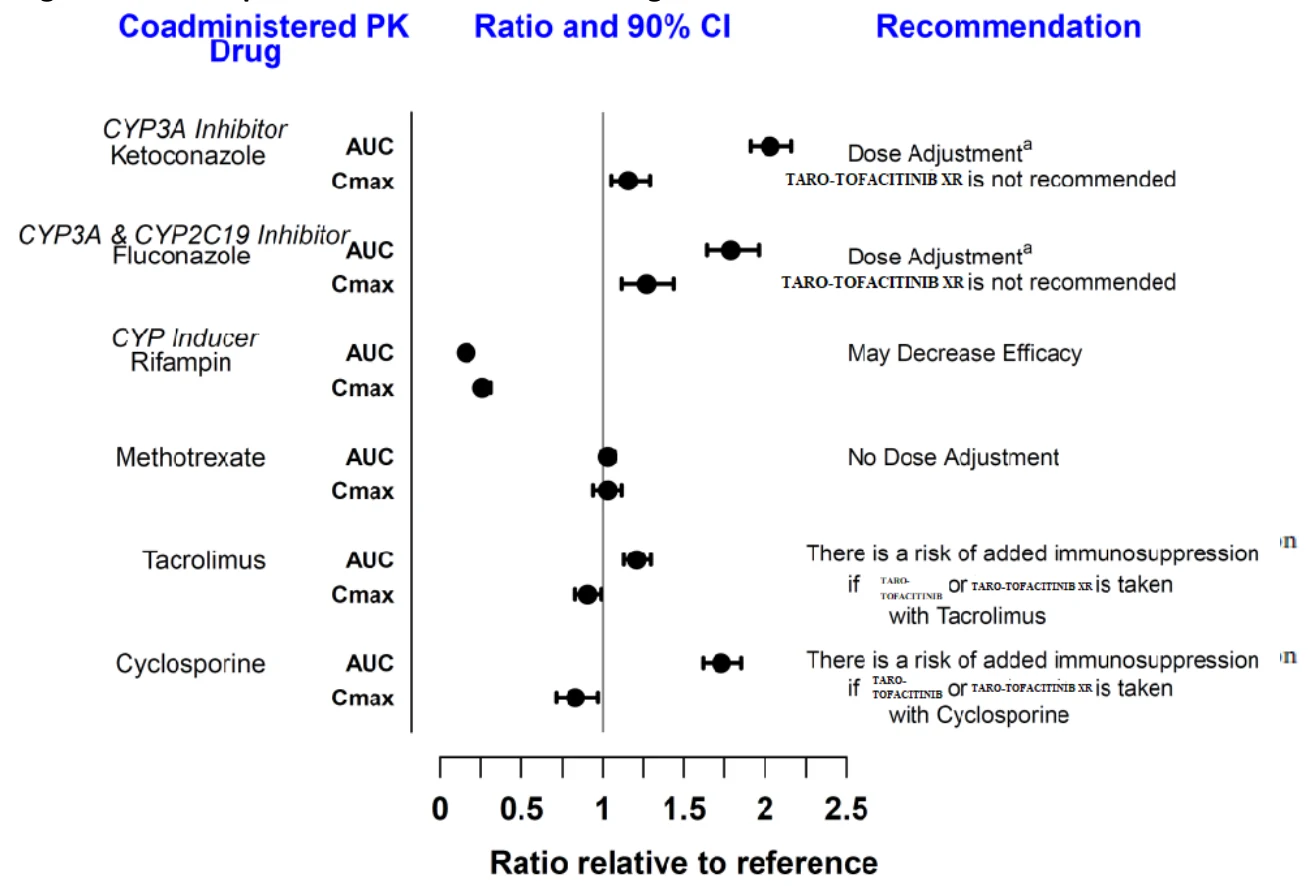
Note: Reference group is administration of tofacitinib alone; PK=Pharmacokinetics; CI=Confidence Interval
a In RA patients the recommended dose is tofacitinib 5 mg once daily. In UC patients receiving 10 mg BID, tofacitinib dosage should be reduced to 5 mg BID, and in UC patients receiving 5 mg BID, tofacitinib dosage should be reduced to 5 mg once daily.
Figure 2: Impact of Tofacitinib on Pharmacokinetics of Co-administered Drugs
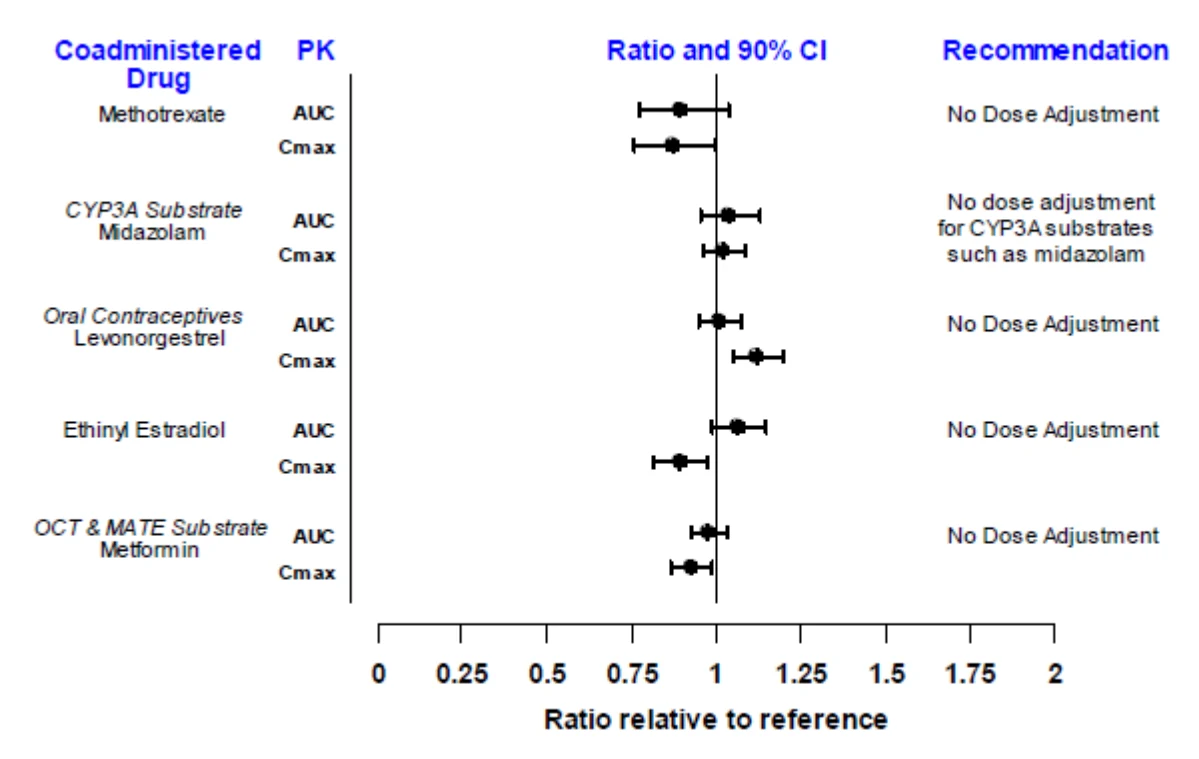
Note: Reference group is administration of concomitant medication alone; OCT = Organic Cationic Transporter; MATE = Multidrug and Toxic Compound Extrusion; PK=Pharmacokinetics; CI=Confidence Interval
Drugs that Decrease Heart Rate and/or Prolong the PR Interval
Tofacitinib resulted in a decrease in heart rate and an increase in the PR interval (see 7 Warnings and Precautions and 8 Adverse Reactions). Caution should be observed if TARO-TOFACITINIB/TARO-TOFACITINIB XR is used concomitantly with other drugs that lower heart rate and/or prolong the PR interval, such as antiarrhythmics, beta blockers, alpha2 adrenoceptor agonists, non-dihydropyridine calcium channel blockers, digitalis glycosides, cholinesterase inhibitors, sphingosine-1 phosphate receptor modulators, and some HIV protease inhibitors.
Combination with other therapies
Tofacitinib has not been studied and is not indicated to be used in combination with biologics such as TNF antagonists, interleukin (IL)-1R antagonists, IL-6R antagonists, IL-17 antagonists, IL-12/IL-23 antagonists, anti-CD20 monoclonal antibodies, anti-integrins, selective co-stimulation modulators, and potent immunosuppressants such as azathioprine, 6-mercaptopurine, cyclosporine, and tacrolimus because of the possibility of increased immunosuppression and increased risk of infection.
The use of tofacitinib in combination with phosphodiesterase 4 inhibitors has not been studied in tofacitinib clinical trials.
9.5 Drug-Food Interactions
Grapefruit juice affects CYP450 3A-mediated metabolism and concomitant administration with TARO-TOFACITINIB/TARO-TOFACITINIB XR should be avoided.
9.6 Drug-Herb Interactions
St John’s Wort is a CYP3A4 inducer and co-administration with TARO-TOFACITINIB/TARO-TOFACITINIB XR may result in loss of or reduced clinical response.
9.7 Drug-Laboratory Test Interactions
Interactions with laboratory tests have not been established.
10 Clinical Pharmacology
10.1 Mechanism of Action
Tofacitinib is a potent, selective inhibitor of the JAK family of kinases with a high degree of selectivity against other kinases in the human genome. In kinase assays, tofacitinib, inhibits JAK1, JAK2, JAK3, and to a lesser extent TyK2. In cellular settings where JAK kinases signal in pairs, tofacitinib preferentially inhibits signaling by heterodimeric receptors associated with JAK3 and/or JAK1 with functional selectivity over receptors that signal via pairs of JAK2. Inhibition of JAK1 and JAK3 by tofacitinib blocks signaling through the common gamma chain-containing receptors for several cytokines, including IL-2, -4,-7,-9, -15, and -21. These cytokines are integral to lymphocyte activation, proliferation, and function and inhibition of their signaling may thus result in modulation of multiple aspects of the immune response. In addition, inhibition of JAK1 will result in attenuation of signaling by additional pro-inflammatory cytokines, such as IL-6 and Type I interferons. At higher exposures, inhibition of erythropoietin signaling could occur via inhibition of JAK2 signaling.
10.2 Pharmacodynamics
In patients with RA, treatment with tofacitinib was associated with dose-dependent reductions of circulating CD16/56+ natural killer cells, with estimated maximum reductions occurring at approximately 8-10 weeks after initiation of therapy. These changes generally resolved within 2-6 weeks after discontinuation of treatment. Treatment with tofacitinib was associated with dose-dependent increases in B cell counts. Changes in circulating T-lymphocyte counts and T-lymphocyte subsets were small and inconsistent. The clinical significance of these changes is unknown.
Changes in total serum IgG, M, and A levels over 6-month dosing of patients with RA were small, not dose-dependent and similar to those seen on placebo.
After treatment with tofacitinib in patients with RA, rapid decreases in serum C-reactive protein (CRP) were observed and maintained throughout dosing. Changes in CRP observed with tofacitinib treatment do not reverse fully within 2 weeks after discontinuation, indicating a longer duration of pharmacodynamic activity compared to the half-life.
In a randomized, double-blind, placebo-controlled study in 200 adult RA patients treated with tofacitinib 10 mg BID or placebo, humoral responses to concomitant pneumococcal and influenza vaccines were assessed. The percentages of patients achieving a satisfactory humoral response to pneumococcal vaccines were lower for the tofacitinib group than the placebo group. This effect was more pronounced for patients receiving background methotrexate. A total of 31.6% tofacitinib-treated subjects and 61.8% placebo-treated subjects who received background methotrexate achieved a ≥2-fold increase in antibody concentrations to ≥6 of 12 pneumococcal antigens.
In the same study, the proportion of patients achieving protective antibody levels to the influenza antigens was lower in the tofacitinib group (64.9%) compared to the placebo group (92.7%) in patients receiving background methotrexate. However, the difference in humoral response to the influenza vaccine was small with 50.9% of patients in the tofacitinib group and 58.2% in the placebo group with background methotrexate achieving a ≥4-fold increase in antibody titers to ≥2 of 3 influenza antigens.
Similar changes in T cells, B cells and serum CRP have been observed in patients with active PsA, although reversibility was not assessed. Total serum immunoglobulins were not assessed in patients with active PsA.
Patients with UC were not studied.
10.3 Pharmacokinetics
Tofacitinib Tablets
Following oral administration of tofacitinib, the PK profile of tofacitinib is characterized by rapid absorption (peak plasma concentrations are reached within 0.5-1 hour), rapid elimination (half-life of ~3 hours) and dose-proportional increases in systemic exposure in the therapeutic dose range. Steady state concentrations are achieved in 24-48 hours with negligible accumulation after BID administration.
A geometric mean accumulation ratio (Rac) of 1.12 following BID dosing indicates little difference between single dose and steady state concentrations as well as the predictability of steady state PK from single dose data. The dose-AUC relationship was adequately described by a linear model fit to log-both sides transformed data while the dose-Cmax relationship were best described by a nonlinear sigmoidal, hyperbolic model fit to log-transformed Cmax data. Although the nonlinear model provided better description of the dose-Cmax relationship relative to a linear model, when compared to 5 mg, the mean model predicted relative changes in dose-normalized Cmax were approximately +7% for 10 mg, +2% for 30 mg, and -10% for 50 mg doses. These small changes from linearity support the conclusion that tofacitinib Cmax is approximately dose proportional at least up to 5 times the 10 mg dose.
Tofacitinib Extended-Release Tablets
Following oral administration of tofacitinib extended-release tablets, peak plasma tofacitinib concentrations are reached at 4 hours and the half-life is ~6 hours. Steady state concentrations are achieved within 48 hours with negligible accumulation (accumulation ratio: 1.12) after once daily (QD) administration. At steady state, Cmin for tofacitinib extended-release tablets 11 mg QD is approximately 29% lower and Ctrough is approximately 26% lower compared to tofacitinib 5 mg BID. Area under the curve (AUC) and Cmax of tofacitinib for tofacitinib extended-release tablets 11 mg administered once daily are equivalent to those of tofacitinib 5 mg administered BID.
Pharmacokinetics in Patients with Moderately to Severely Active UC
Population PK analysis in UC patients indicated that PK characteristics were similar to that of RA patients. There were no clinically relevant differences in tofacitinib exposure (AUC), based on age, weight, gender and race, after accounting for differences in renal function (i.e., creatinine clearance) between patients. The between-subject variability (% coefficient of variation) in AUC of tofacitinib is estimated to be approximately 23% to 25% in UC patients.
Absorption
Tofacitinib Tablets
Tofacitinib is well absorbed, with an absolute oral bioavailability of 74% following administration of tofacitinib. Coadministration of tofacitinib with a high-fat meal resulted in no changes in AUC while Cmax was reduced by 32%. In clinical trials, tofacitinib was administered without regard to meal.
Tofacitinib Extended-Release Tablets
Coadministration of tofacitinib extended-release tablets with a high-fat meal resulted in no changes in AUC while Cmax was increased by 27% and Tmax was extended by approximately 1 hour.
Distribution
After intravenous administration, the volume of distribution is 87 L. The protein binding of tofacitinib is ~40%). Tofacitinib binds predominantly to albumin and does not appear to bind to α1-acid glycoprotein. Tofacitinib distributes equally between red blood cells and plasma.
Metabolism
Clearance mechanisms for tofacitinib are approximately 70% hepatic metabolism and 30% renal excretion of the parent drug. The metabolism of tofacitinib is primarily mediated by CYP3A4 with minor contribution from CYP2C19. In a human radiolabeled study, more than 65% of the total circulating radioactivity was accounted for by unchanged tofacitinib, with the remaining 35% attributed to 8 metabolites, each accounting for less than 8% of total radioactivity. The pharmacologic activity of tofacitinib is attributed to the parent molecule.
Elimination
Approximately 94% of a radioactive dose of tofacitinib was recovered from the urine (80%) and feces (14%), with the majority of excreted radioactivity recovered within 24 hours after dosing.
Table 18: Summary of Tofacitinib Pharmacokinetic Parameters after Repeated Oral Administration of Tofacitinib 10 mg BID or Single IV Administration in Humans
| Oral Administration | IV Administration | |||||||||||
|---|---|---|---|---|---|---|---|---|---|---|---|---|
| Cmax (ng/mL) | t½ (h) | AUC0-12hrs (ng·h/mL) | Clearance (L/h) | Volume of distribution (L) | ||||||||
| Healthy Volunteers | 79.4 | 3.0 | 311 | 25 | 87 | |||||||
| RA Patients | 116 | 3.62 | 507 | N/A (no IV data) | N/A (no IV data) | |||||||
| PsA Patients | 88.9 | 3.74 | 436 | N/A (no IV data) | N/A (no IV data) | |||||||
| UC Patients | 91 | 3.05 | 404 | N/A (no IV data) | N/A (no IV data) | |||||||
N/A = Not available; Cmax = maximum plasma concentration; t½ = terminal elimination half-life; AUC0-12 = area under the plasma concentration-time curve from time 0 to 12 hours post dose; CL = total systemic clearance; Vss = volume of distribution at steady state.
Table 19: Summary of Tofacitinib Pharmacokinetic Parameters after Repeated Oral Administration of Tofacitinib XR 11 mg QD in Humans
| Cmax (ng/mL) | Tmax (h) | t½ (h) | AUC0-24hrs (ng·h/mL) | |
|---|---|---|---|---|
| Healthy Volunteers | 38.23 | 4.0 | 5.89 | 269 |
Cmax = maximum plasma concentration; t½ = terminal elimination half-life; AUC0-24 = area under the plasma concentration-time curve from time 0 to 24 hours post dose.
Special populations and conditions
Rheumatoid Arthritis, Ulcerative Colitis
- Pediatrics (<18 years of age): The pharmacokinetics, safety and effectiveness of tofacitinib in pediatric UC patients have not been established; therefore, TARO-TOFACITINIB/ TARO-TOFACITINIB XR should not be used in this patient population.
- Geriatrics (>65 years of age): Population PK analysis in RA patients indicated that geriatric patients 80 years of age were estimated to have <5% higher tofacitinib AUC relative to the mean age of 55 years. Of the 3315 patients who enrolled in studies I to V, a total of 505 (15%) RA patients were 65 years of age and older, including 71 (2%) patients 75 years and older. The frequency of serious infection and other events among tofacitinib treated subjects 65 years of age and older was higher than those under the age of 65.
Of the 4362 patients enrolled in Study RA-VI, 1353 patients were 65 years of age and older (891 patients were treated with tofacitinib and 462 patients were treated with TNFi), including 183 patients over 70 years of age (115 patients treated with tofacitinib and 68 patients treated with TNFi). The frequency of adverse events (including serious infections, all-cause mortality, cardiovascular events, malignancies, non-melanoma skin cancer, gastrointestinal perforations, interstitial lung disease, venous thromboembolism, and arterial thromboembolism) in patients 65 years of age and older was higher than among those under the age of 65.
There were not enough geriatric patients treated with tofacitinib (n=77) in the UC program to adequately study the effects of tofacitinib in this population. As there is a higher incidence of infections in the geriatric population in general, caution should be used when treating the geriatric (see 7 Warnings and Precautions).
- Sex: Based on population PK analysis, female RA patients were estimated to have 7% lower tofacitinib AUC compared to male RA patients. Female UC patients were estimated to have 15.2% higher tofacitinib AUC compared to male UC patients.
Ethnic origin: In RA patients, no major differences (<5%) were estimated in tofacitinib AUC between White, Black and Asian RA patients by population PK analysis. In UC patients, population PK analysis indicated that Asian patients had 7.3% higher tofacitinib AUC compared to non-Asian patients. There was a higher incidence of adverse events in Asian patients. Therefore, TARO-TOFACITINIB/TARO-TOFACITINIB XR should be used with caution
- in Asian patients (see 7 Warnings and Precautions).
- Body Weight: Population PK analysis in RA patients indicated that systemic exposure (AUC) of tofacitinib in the extremes of body weight (40 kg, 140 kg) were similar to that of a 70 kg patient. An approximately linear relationship between body weight and volume of distribution was observed, resulting in higher peak (Cmax) and lower trough (Cmin) concentrations in lighter patients. However, this difference is not considered to be clinically relevant. The between-subject variability (% coefficient of variation) in AUC of tofacitinib is estimated to be approximately 27%. Population PK analysis in UC patients also indicated that tofacitinib AUC did not significantly change with patient body weight.
Hepatic Insufficiency: TARO-TOFACITINIB/TARO-TOFACITINIB XR is contraindicated in patients with severe hepatic impairment (see 2 Contraindications). Subjects with mild and moderate hepatic impairment had 3%, and 65% higher tofacitinib AUC, respectively, compared with healthy subjects.
No dose adjustment of TARO-TOFACITINIB/TARO-TOFACITINIB XR is required in patients with mild hepatic impairment. Tofacitinib extended-release tablets has not been studied in patients with moderate and severe hepatic impairment. Therefore, TARO-TOFACITINIB XR should not be used in patients with moderate hepatic impairment.
The recommended total daily dose in patients with moderate hepatic impairment is half the total daily dose recommended for patients with normal hepatic function. The recommended dose is TARO-TOFACITINIB 5 mg BID when the indicated dose in the presence of normal hepatic function is TARO-TOFACITINIB 10 mg BID; the recommended dose is TARO-TOFACITINIB 5 mg once daily when the indicated dose in the presence of normal hepatic function is TARO-TOFACITINIB 5 mg BID (see 4 Dosage and Administration).
Tofacitinib has not been studied in patients with severe hepatic impairment or in patients with positive hepatitis B virus or hepatitis C virus serology and should not be used in these populations.
Renal Insufficiency: Subjects with mild, moderate, and severe renal impairment had 37%, 43% and 123% higher tofacitinib AUC, respectively, compared with healthy subjects. In subjects with ESRD undergoing hemodialysis, the contribution of dialysis to the total clearance of tofacitinib was relatively small.
In subjects with ESRD undergoing hemodialysis, mean AUC was approximately 40% higher compared with historical healthy subject data, consistent with approximately 30% contribution of renal clearance to the total clearance of tofacitinib. Dose adjustment is recommended in ESRD patients undergoing hemodialysis (see 4 Dosage and Administration).
No dose adjustment of TARO-TOFACITINIB/TARO-TOFACITINIB XR is required in patients with mild renal impairment. Tofacitinib extended-release tablets has not been studied in patients with moderate and severe renal impairment. Therefore, TARO-TOFACITINIB XR is not recommended in patients with moderate and severe renal impairment, including patients with ESRD undergoing hemodialysis.
The recommended total daily dose in patients with moderate or severe renal impairment, including patients with ESRD but not limited to those undergoing hemodialysis, is half the total daily dose recommended for patients with normal renal function. The recommended dose is TARO-TOFACITINIB 5 mg BID when the indicated dose in the presence of normal renal function is TARO-TOFACITINIB 10 mg BID; the recommended dose is TARO-TOFACITINIB 5 mg once daily when the indicated dose in the presence of normal renal function is TARO-TOFACITINIB 5 mg BID (see 4 Dosage and Administration).
In clinical trials, tofacitinib was not evaluated in patients with baseline creatinine clearance values (estimated by the Cockcroft-Gault equation) less than 40 mL/min.
Genetic Polymorphism: Mean Cmax and AUC0-∞ values of tofacitinib following administration of tofacitinib in poor metabolizers of CYP2C19 (carriers of CYP2C19*2/*2, CYP2C19*2/*3 or CYP2C19*3/*3 alleles) were approximately 15% and 17% greater, respectively, than those in normal metabolizers, indicating that CYP2C19 is a minor contributor of tofacitinib clearance.
The impact of intrinsic factors on tofacitinib following administration of tofacitinib pharmacokinetics is summarized in Figure 3 with dosage adjustment recommendations.
Figure 3: Impact of Intrinsic Factors on Tofacitinib Pharmacokinetics
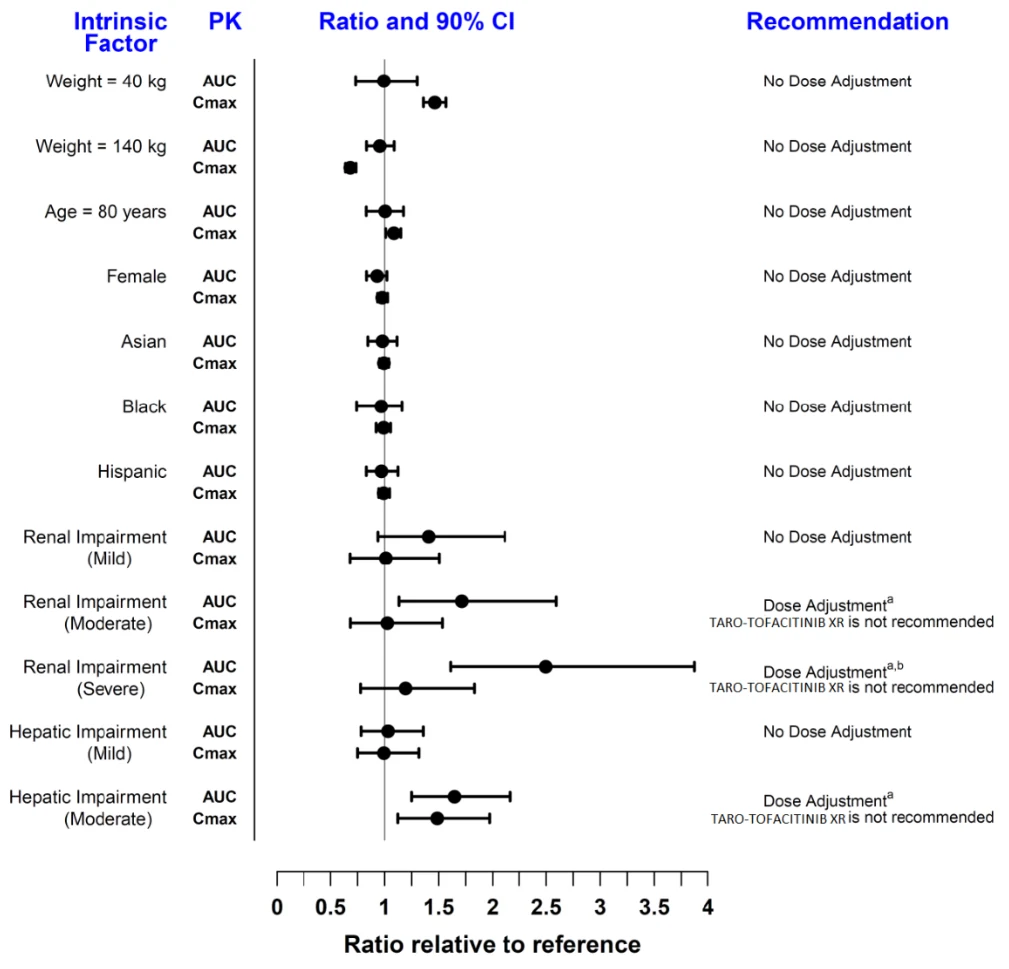
PK=Pharmacokinetics; CI=Confidence Interval
Note: Reference values for weight, age, gender, and race comparisons are 70 kg, 55 years, male, and white, respectively; reference groups for renal and hepatic impairment data are subjects with normal renal and hepatic function.
a In RA patients the recommended dose is TARO-TOFACITINIB 5 mg once daily. In UC patients the recommended dose is half the total daily dose indicated for patients with normal renal and hepatic function, i.e., the recommended dose is TARO-TOFACITINIB 5 mg BID when the indicated dose in the presence of normal renal and hepatic function is TARO-TOFACITINIB 10 mg BID, and the recommended dose is TARO-TOFACITINIB 5 mg once daily when the indicated dose in the presence of normal renal and hepatic function is TARO-TOFACITINIB 5 mg BID.
b Supplemental doses are not necessary in patients after dialysis.
Psoriatic Arthritis
Results from population PK analysis in patients with active PsA were consistent with those in patients with RA.
Ankylosing Spondylitis
Results from population PK analysis in patients with active AS were consistent with those in patients with RA.
Active Juvenile Idiopathic Arthritis
The pharmacokinetics (PK) of tofacitinib was studied in children with active JIA (n = 246; age 2 to < 18 years, body weight range = 11 to 122 kg). Population PK analysis indicated that tofacitinib clearance (CL/F) and volume of distribution (V/F) both decreased with decreasing body weight in JIA patients. The allometric model was used to describe the effect of body weight on CL and V/F, with estimated allometric exponents of 0.310 and 0.537, respectively. Over the range of 11 to 122 kg, CL changed from 0.61-fold to 1.45-fold, and V/F changed from 0.56-fold to 1.33-fold relative to a reference patient with median weight of 46.3 kg. Based on the population PK modeling, following twice daily weight-based doses of 3.2 mg for 10 to ≤ 20 kg, 4 mg for 20 to ≤ 30 kg, and 5 mg for ≥ 40 kg, there were no clinically relevant differences in tofacitinib exposure (AUC) based on age or weight within the pediatric population. While the Cmax was higher and Cmin was lower with decreased weight and age, the differences are not expected to be clinically relevant. The AUC and Cmin were lower following weight based dosing in JIA patients when compared to RA adult patients receiving tofacitinib 5 mg film-coated tablets BID.
11 Storage, Stability, and Disposal
Store between 15°C and 30°C. Protect from moisture. Store in original container.
Part 2: Scientific Information
13 Pharmaceutical Information
Drug Substance
Non-proprietary name of the drug substance(s): tofacitinib, CP-690,550 is the citrate salt.
Chemical name: (3R,4R)- 4-methyl-3-(methyl-7H-pyrrolo[2,3-d]pyrimidin-4-ylamino)-ß-oxo-1-piperidinepropanenitrile, 2-hydroxy-1,2,3-propanetricarboxylate (1:1) .
Molecular formula and molecular mass: C16H20N6O•C6H8O7, 504.5 g/mol
Structural formula:
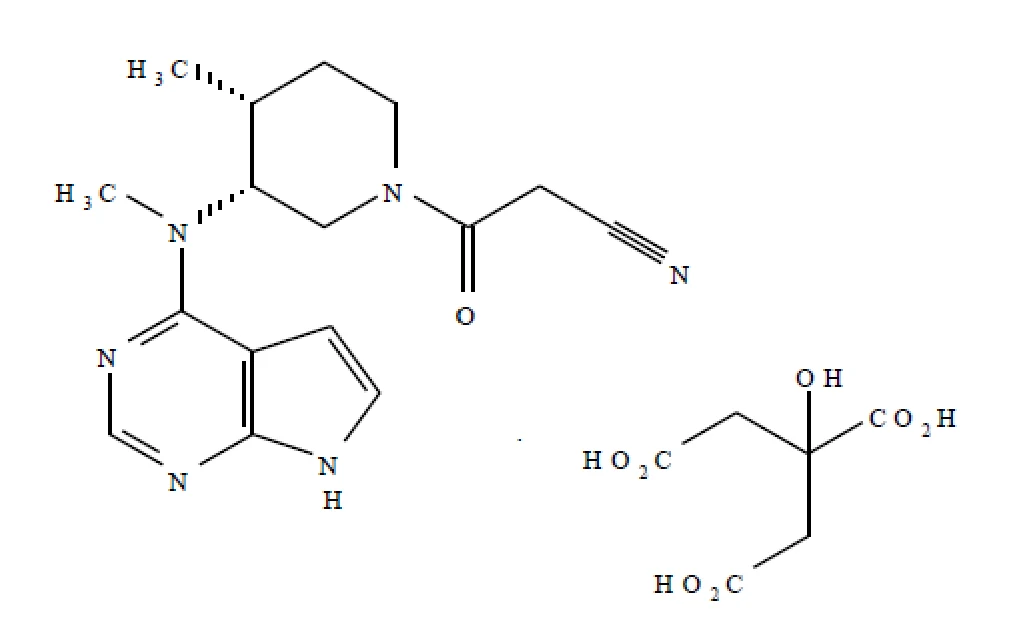
Physicochemical properties: Tofacitinib Citrate is a white to off-white powder. The solubility of tofacitinib citrate in water is 2.38 mg/mL.
14 Clinical Trials
14.1 Clinical Trials by Indication
Rheumatoid Arthritis
Description of Clinical Studies
The efficacy and safety of tofacitinib were assessed in five randomized, double-blind, multicenter studies in patients ≥18 years with active RA diagnosed according to American College of Rheumatology (ACR) criteria. Patients had ≥6 tender and ≥6 swollen joints at randomization (≥4 swollen and ≥4 tender joints for Study II). Tofacitinib, 5 or 10 mg BID, was given as monotherapy (Study I) and in combination with nonbiologic DMARDs (Study II) in patients with an inadequate response to DMARDs (nonbiologic or biologic). Tofacitinib, 5 or 10 mg BID, was given in combination with methotrexate in patients with either an inadequate response to MTX (Studies III and Study IV) or inadequate efficacy or lack of tolerance to at least one approved TNF-inhibiting biologic agent (Study V).
The primary endpoints for Studies I and V were the proportion of patients who achieved an
ACR20 response, mean change from baseline in HAQ-DI and proportion of patients who achieved DAS28- 4(ESR) less than 2.6 at Month 3. The primary endpoints for Studies II, III, and IV were the proportion of patients who achieved an ACR20 response at Month 6, mean change from baseline in HAQ-DI at Month 3 and proportion of patients who achieved DAS28-4(ESR) less than 2.6 at Month 6. Baseline demographics were generally similar among the treatment groups in each study and comparable between the studies. The mean age ranged from 50 to 56 years. Most (80 to 87%) of the patients were female. With the exception of Study A3921044 (46%), the majority (55% to 86%) of the patients in each study were white. The baseline demographics in each study are shown in Table 20.
Study RA-VI (A3921133) was a randomized, open-label (blinded endpoint), 3-arm parallel-group, multicenter, non-inferiority, safety endpoint study in patients with a diagnosis of moderate to severe active RA and on a stable dose of methotrexate. This study included 4,362 treated RA patients who were aged ≥50 years with at least one additional cardiovascular risk factor beyond RA. CV risk factors defined as: current cigarette smoker, diagnosis of hypertension, diabetes mellitus, family history of premature coronary heart disease, history of coronary artery disease including a history of revascularization procedure, coronary artery bypass grafting, myocardial infarction, cardiac arrest, unstable angina, acute coronary syndrome, and presence of extra -articular disease associated with RA, e.g., nodules, Sjögren’s syndrome, anemia of chronic disease, pulmonary manifestations.
Patients were randomized 1:1:1 to tofacitnib 5 mg BID, tofacitinib 10 mg BID or TNFi (adalimumab 40 mg SC every 2 weeks in North America or etanercept 50 mg SC every 1 week in the rest of the world). Notably, following a recommendation by the Data and Safety Monitoring Board in February 2019 , the dose of tofacitinib in the 10 mg BID arm of the study was reduced to 5 mg BID after it was determined that the frequency of pulmonary embolism was increased in the tofacitinib 10 mg BID treatment arm versus the TNF inhibitor arm. Additionally, all-cause mortality was increased in the tofacitinib 10 mg BID treatment arm versus the TNF inhibitor and tofacitinib 5 mg BID treatment arms. In the final study data, patients in the tofacitinib 10 mg BID treatment arm were analyzed in their originally randomized treatment group. The co-primary endpoints were adjudicated MACE and adjudicated malignancies (excluding NMSC) and the primary analysis for both co-primary endpoints was non-inferiority testing between the two tofacitinib doses combined relative to the TNF inhibitor control. Results showed that the prespecified non-inferiority criteria for these co-primary endpoints were not met for the primary comparison of the combined tofacitinib doses to TNFi. (see 8 Adverse Reactions).
Study demographics and trial design
Table 20: Summary of patient demographics for clinical trials in RA
| Study # | Trial design | Dosage, route of administration and duration | Study subjects (n) | Age (yrs) Mean (Range) | Female (%) | Mean Disease Duration (yrs) |
|---|---|---|---|---|---|---|
| Study # | Trial design | Dosage, route of administration and duration | Study subjects (n) | Age (yrs) Mean (Range) | Female (%) | Mean Disease Duration (yrs) |
| Background DMARD Studies* | ||||||
A3921046 Study II Sync | MC, DB, PG, PC, R, Background DMARD 12 Months | Tofacitinib: 5 mg BID, 10 mg BID Placebo → 5 mg Placebo → 10 mg NR advance to next period at 3 months, All advance to next period at 6 months | 792 | 52.3 (18-86) | 81.4 | 8.1-10.2 |
A3921064 Study III Standard | MC, DB, PG, PC, R, Background MTX 12 Months | Tofacitinib: 5 mg BID, 10 mg BID Placebo → 5 mg Placebo →10 mg Adalimumab 40 mg sc QOW NR advance to next period at 3 months, All advance to next period at 6 months. | 717 | 52.9 (18-83) | 81.7 | 6.9-9.0 |
A3921044 (1-Year Analysis) Study IV Scan | MC, DB, PG, PC, R, Background MTX 24 Months | Tofacitinib: 5 mg BID, 10 mg BID Placebo → 5 mg Placebo →10 mg NR advance to next period at 3 months, All advance to next period at 6 months | 797 | [52.0-53.7]**(18-82) | 85.2 | 8.8-9.5 |
A3921032 Study V Step | MC, DB, PG, PC, R, Background MTX 6 Months | Tofacitinib: 5 mg BID, 10 mg BID Placebo → Tofacitinib 5 mg BID at 3 months Placebo → Tofacitinib 10 mg BID at 3 months | 399 | 55.0 (20-84) | 84.0 | 11.2-13.0 |
| Monotherapy Studies | ||||||
| A3921045( Study I) Solo | MC, DB, PG, PC, R 6 Months | Tofacitinib 5 mg BID, 10 mg BID Placebo →5 mg Tofacitinib at 3 months, Placebo → 10 mg BID Tofacitinib at 3 months | 610 | 51.8 (21-81) | 86.6 | 7.3-8.6 |
| Post-authorization safety study | ||||||
A3921133 (Study RA-VI) Surveillance | MC, PG, R, OL ~5 Years | Tofacitinib 5 mg BID, 10 mg BID*** Adalimumab 40 mg sc QOW (NA) Etanercept 50 mg sc QW (ROW) | 4362 | 61.15 (50-88) | 78.2 | 10.2-10.4 |
*In addition to their randomized treatment, all patients in background DMARD studies also received methotrexate (specified in Studies 1032, 1044, and 1064, permitted in Study 1046) or other DMARDs, mostly methotrexate (Study 1046).
** Range of mean across treatment groups.
*** The tofacitinib 10 mg BID treatment group consists of data from patients that were switched from tofacitinib 10 mg BID to tofacitinib 5 mg BID during the trial as a result of a study modification following a recommendation by the Data and Safety Monitoring Board in February 2019.
N = number of patients randomized, MC = multicenter, DB = double blind, PG = parallel group, PC = placebo controlled, R = randomized, NR = nonresponder (patient who failed to improve at Month 3 by at least 20% from baseline in the number of swollen and tender/painful joint count), MTX = methotrexate, DMARD = disease-modifying antirheumatic drug, sc = subcutaneous, QW = every week, QOW = every other week, LT = long term, OL = open label, NA = North America, ROW = Rest of world.
Study Results
Clinical Response:
In Studies I and V, patients treated with 5 mg BID tofacitinib had statistically superior ACR20, ACR50, and ACR70 response rates at month 3 vs. placebo-treated patients. In Studies II, III and IV, patients treated with 5 mg BID tofacitinib had statistically superior ACR20, ACR50, and ACR70 response rates at month 3 and 6 vs placebo-treated patients (Table 21). In Studies I, II and V, improvement in ACR20 response rate vs. placebo was observed within 2 weeks. In studies II, III, and IV, ACR response rates were maintained to 12 months in tofacitinib treated patients.
The percent of ACR20 responders by visit for study IV is shown in Figure 4. Similar responses were observed in Studies I, II, III and V.
The proportion of patients with DAS28-4(ESR) less than 2.6 for each study is summarized in Table 22.
Physical Function Response:
Improvement in physical functioning was measured by the HAQ-DI. Patients receiving tofacitinib 5 mg BID demonstrated significantly greater improvement from baseline in physical functioning compared to placebo at month 3 (Studies I, II, III, and V). Tofacitinib 5 mg BID treated patients exhibited significantly greater improved physical functioning compared to placebo as early as week 2 in Studies I and II. In Study III, mean HAQ-DI improvements were maintained to 12 months in tofacitinib -treated patients. At month 3, patients in the tofacitinib 5 mg BID had decreases from baseline in HAQ-DI values (Table 23) which were not less than those of adalimumab-treated patients.
Table 21: Proportion of Patients with an ACR Response
| Percent of Patients | |||||||||||||||||||||||||||||
|---|---|---|---|---|---|---|---|---|---|---|---|---|---|---|---|---|---|---|---|---|---|---|---|---|---|---|---|---|---|
| Monotherapy | DMARD Inadequate Responders | MTX Inadequate Responders | MTX Inadequate Responders | TNF Inhibitor Inadequate Responders | |||||||||||||||||||||||||
| Study I (SOLO) | Study II (SYNC) | Study III (Standard) | Study IV (SCAN) | Study V (STEP) | |||||||||||||||||||||||||
| Response Rate | PBO N=120 | Tofacitinib 5 mg BID N=241 | PBO+ DMARD N=157 | Tofacitinib 5 mg BID + DMARD N=311 | PBO+ MTX N=106 | Tofacitinib 5 mg BID + MTX N=196 | ADA 40mg QW + MTX N=199 | PBO + MTX N=154 | Tofacitinib 5 mg BID + MTX N=309 | PBO N=131 | Tofacitinib 5 mg BID + MTX N=132 | ||||||||||||||||||
ACR20† Month 3 Month 6 | 27% NA | 60%*** 69% | 27% 31% | 56%*** 53%*** | 26% 28% | 61%*** 52%*** | 56%*** 47%** | 27% 25% | 56%*** 51%*** | 24% NA | 42%* 52% | ||||||||||||||||||
ACR50†† Month 3 Month 6 | 13% NA | 31%*** 42% | 10% 13% | 27%*** 34%*** | 7% 12% | 34%*** 37%*** | 24%*** 28%** | 8% 8% | 29%*** 32%*** | 8% NA | 27%*** 37% | ||||||||||||||||||
ACR70†† Month 3 Month 6 | 6% NA | 15%* 22% | 2% 3% | 8%** 13%*** | 2% 2% | 12%** 20%*** | 9%* 9%* | 3% 1% | 11%** 15%*** | 2% NA | 14%** 16% | ||||||||||||||||||
* p<0.05, tofacitinib vs. placebo + MTX/DMARD
** p<0.001, tofacitinib vs. placebo + MTX/DMARD
*** p<0.0001, tofacitinib vs. placebo + MTX/DMARD
† Primary endpoint, Type I error controlled
†† Secondary Endpoint, Type I error not controlled
Figure 4: Percentage of ACR20 Responders by Visit for Study IV
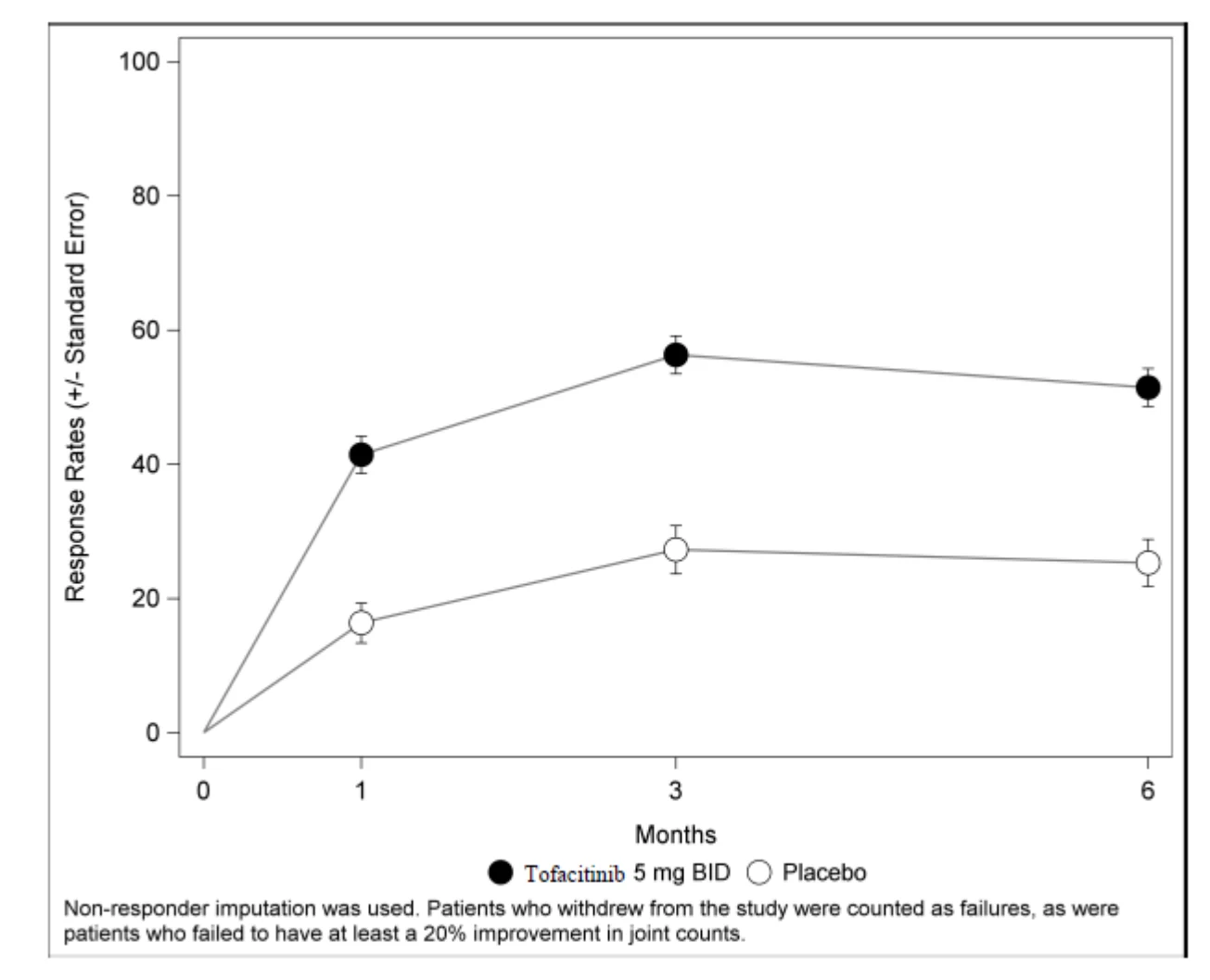
Table 22: Proportion of Patients with DAS28-4(ESR) Less Than 2.6
| DAS28-4 (ESR) Less Than 2.6 | Monotherapy | DMARD Inadequate Responders | MTX Inadequate Responders | MTX Inadequate Responders | TNF Inhibitor Inadequate Responders | ||||||||||
|---|---|---|---|---|---|---|---|---|---|---|---|---|---|---|---|
| Study I (SOLO) | Study II (SYNC) | Study III (Standard) | Study IV (SCAN) | Study V (STEP) | |||||||||||
PBO N=122 | Tofacitinib 5 mg BID N=243 | PBO + DMARD N=159 | Tofacitinib 5 mg BID + DMARD N=315 | PBO + MTX N=108 | Tofacitinib 5 mg BID + MTX N=204 | ADA 40mg QW + MTX N=204 | PBO + MTX N=160 | Tofacitinib 5 mg BID + MTX N=321 | PBO N=132 | Tofacitinib 5 mg BID + MTX N=133 | |||||
| Proportion of responders at Month 3 (n) | 4% (5) | 5% (13) | NA | NA | NA | NA | NA | NA | NA | 2% (2) | 6% (8) | ||||
| Proportion of Responders at Month 6 (n) | NA | NA | 3% (4) | 8%* (24) | 1% (1) | 5% (11) | 6%* (12) | 1% (2) | 6%†(19) | NA | NA | ||||
*Statistically significant (p<0.05)
†Statistical significance could not be declared in Study IV due to Step-down procedure
BID = BID, DAS = Disease Activity Score, ESR = erythrocyte sedimentation rate, N =number of patients, n = number of patients meeting pre-specified criteria
Table 23: Mean Change from Baseline in HAQ-DI
| Monotherapy | DMARD Inadequate Responders | MTX Inadequate Responders | MTX Inadequate Responders | TNF Inhibitor Inadequate Responders | ||||||||||||
|---|---|---|---|---|---|---|---|---|---|---|---|---|---|---|---|---|
| Study I (SOLO) | Study II (SYNC) | Study III (Standard) | Study IV (SCAN) | Study V (STEP) | ||||||||||||
| LS Mean Change in HAQ-DI | PBO N=109 | Tofacitinib 5 mg BID N=237 | PBO + DMARD N=147 | Tofacitinib 5 mg BID + DMARD N=292 | PBO + MTX N=98 | Tofacitinib 5 mg BID + MTX N=188 | ADA 40mg QW + MTX N=190 | PBO + MTX N=146 | Tofacitinib 5 mg BID + MTX N=294 | PBO N=118 | Tofacitinib 5 mg BID + MTX N=117 | |||||
| Month 3* | -0.22 | -0.51*** | -0.21 | -0.47*** | -0.25 | -0.56*** -0.56*** | -0.51*** | -0.15 | -0.4† | -0.18 | -0.43** | |||||
* Primary efficacy time point
** p<0.001, tofacitinib vs. placebo + MTX/DMARD
*** p<0.0001, tofacitinib vs. placebo + MTX/DMARD
† Statistical significance could not be declared in Study IV due to Step-down procedure
BID = BID, CI = confidence interval, FAS = full analysis set, LS = least squares, N = number of patients.
Results are obtained from a longitudinal linear model with change from baseline as a dependent variable and treatment, baseline, visit, region as fixed effects and patient as random effect.
Psoriatic Arthritis
Description of Clinical Studies
The efficacy and safety of tofacitinib were assessed in 2 multicenter, randomized, double-blind, placebo-controlled trials in 816 patients 18 years of age and older with active psoriatic arthritis. All patients had active psoriatic arthritis for at least 6 months based upon the Classification Criteria for Psoriatic Arthritis (CASPAR), at least 3 tender/painful joints and at least 3 swollen joints at screening and baseline, and active plaque psoriasis at screening. Patients with different psoriatic arthritis subtypes (not mutually exclusive) were enrolled across the 2 clinical trials, including <5 joints or asymmetric involvement (21%), ≥5 joints involved (90%), distal interphalangeal (DIP) joint involvement (61%), arthritis mutilans (8%), enthesitis (80%), dactylitis (53%), total psoriatic body surface area (BSA) >3% (69%), and spondylitis (19%). Patients in these clinical trials had a diagnosis of psoriatic arthritis for a median of 5.5 years (median range 3.0-6.0 years). Of the study population randomized in the double-blind, controlled clinical studies, 54.2% were female and 94.6% were white. The mean age was 48.9 years; 77 (9.4%) patients were 65 years of age or older. All patients were required to receive treatment with a stable dose of a conventional synthetic DMARD (csDMARD; 78% received methotrexate, 13% received sulfasalazine, 7% received leflunomide, 1% received other csDMARDs) and were allowed to receive a stable low dose of oral corticosteroids (21% received equivalent to ≤10 mg/day of prednisone) and/or nonsteroidal anti-inflammatory drugs (NSAIDs; 57% received). In both clinical trials, the primary endpoints were the ACR20 response and the change in HAQ-DI at Month 3.
Study PsA-I (A3921091) was a 12-month clinical trial in 422 patients who had an inadequate response to a csDMARD (67% and 33% were inadequate responders to 1 csDMARD and ≥2 csDMARDs, respectively) and who were naïve to treatment with a TNF-inhibitor biologic DMARD (TNFi). Patients were randomized in a 2:2:2:1:1 ratio to receive tofacitinib 5 mg BID, tofacitinib 10 mg BID, adalimumab 40 mg subcutaneously once every 2 weeks, placebo to tofacitinib 5 mg BID treatment sequence, or placebo to tofacitinib 10 mg BID treatment sequence, respectively; study drug was added to background csDMARD treatment. At the Month 3 visit, all patients randomized to placebo treatment were advanced in a blinded fashion to a predetermined tofacitinib dose of 5 mg or 10 mg BID. Study PsA-I was not designed to demonstrate non-inferiority or superiority to adalimumab.
Study PsA-II (A3921125) was a 6-month clinical trial in 394 patients who had an inadequate response to at least 1 approved TNFi (66%, 19% and 15% were inadequate responders to 1 TNFi, 2 TNFi, and ≥3 TNFi, respectively). Patients were randomized in a 2:2:1:1 ratio to receive tofacitinib 5 mg BID, tofacitinib 10 mg BID, placebo to tofacitinib 5 mg BID treatment sequence, or placebo to tofacitinib 10 mg BID treatment sequence, respectively; study drug was added to background csDMARD treatment. At the Month 3 visit, placebo patients were advanced in a blinded fashion to a predetermined tofacitinib dose of 5 mg or 10 mg BID as in Study PsA-I.
Clinical Response:
Signs and symptoms
At Month 3, patients treated with tofacitinib 5 mg BID had higher (p≤0.05) response rates versus placebo for ACR20, ACR50, and ACR70 in Study PsA-I and for ACR20 and ACR50 in Study PsA-II; ACR70 response rate was also higher for tofacitinib 5 mg BID versus placebo in Study PsA-II, although the difference versus placebo was not statistically significant (p>0.05) (Table 24).
Table 24: Proportion (%) of PsA Patients Who Achieved Clinical Response and Mean Change from Baseline in PsA-I and PsA-II Studies
| Conventional Synthetic DMARD Inadequate Respondersa (TNFi-Naïve) | TNFi Inadequate Respondersb | ||||||||||||||
|---|---|---|---|---|---|---|---|---|---|---|---|---|---|---|---|
| Study PsA-I | Study PsA-II c | ||||||||||||||
| Treatment Group | Placebo | Tofacitinib 5 mg BID | Adalimumab 40 mg SC q2Wf | Placebo | Tofacitinib 5 mg BID | ||||||||||
| N | 105 | 107 | 106 | 131 | 131 | ||||||||||
| ACR20 | 33% | 50%* | 52% | 24% | 50%*** | ||||||||||
| Month 3 | |||||||||||||||
| Month 6 | NA | 59% | 64% | NA | 60% | ||||||||||
| Month 12 | NA | 68% | 60% | - | - | ||||||||||
| ACR50 | 10% | 28%** | 33% | 15% | 30%* | ||||||||||
| Month 3 | |||||||||||||||
| Month 6 | NA | 38% | 42% | NA | 38% | ||||||||||
| Month 12 | NA | 45% | 41% | - | - | ||||||||||
| ACR70 | 5% | 17%* | 19% | 10% | 17% | ||||||||||
| Month 3 | |||||||||||||||
| Month 6 | NA | 18% | 30% | NA | 21% | ||||||||||
| Month 12 | NA | 23% | 29% | - | - | ||||||||||
| ∆LEId | -0.4 | -0.8 | -1.1 | -0.5 | -1.3 | ||||||||||
| Month 3 | |||||||||||||||
| Month 6 | NA | -1.3 | -1.3 | NA | -1.5 | ||||||||||
| Month 12 | NA | -1.7 | -1.6 | - | - | ||||||||||
| ∆DSSd | -2.0 | -3.5 | -4.0 | -1.9 | -5.2 | ||||||||||
| Month 3 | |||||||||||||||
| Month 6 | NA | -5.2 | -5.4 | NA | -6.0 | ||||||||||
| Month 12 | NA | -7.4 | -6.1 | - | - | ||||||||||
| PASI75e | 15% | 43%*** | 39% | 14% | 21% | ||||||||||
| Month 3 | |||||||||||||||
| Month 6 | NA | 46% | 55% | NA | 34% | ||||||||||
| Month 12 | NA | 56% | 56% | - | - | ||||||||||
* p≤0.05; ** p<0.001; *** p<0.0001 for active treatment versus placebo at Month 3 achieved statistical significance; with the correction for type 1 error.
Abbreviations: BSA=body surface area; ∆LEI=change from baseline in Leeds Enthesitis Index; ∆DSS=change from baseline in Dactylitis Severity Score; ACR20/50/70=American College of Rheumatology ≥20%, 50%, 70% improvement; csDMARD=conventional synthetic disease-modifying antirheumatic drug; N=number of randomised and treated patients; NA=Not applicable, as data for placebo treatment is not available beyond Month 3 due to placebo advanced to tofacitinib 5 mg BID or tofacitinib 10 mg BID; SC q2w=subcutaneously once every 2 weeks; PASI=Psoriasis Area and Severity index; PASI75= ≥75% improvement in PASI.
- a Inadequate response to at least 1 csDMARD due to lack of efficacy and/or intolerability.
- b Inadequate response to a least 1 TNFi due to lack of efficacy and/or intolerability.
- c Study PsA-II had a duration of 6 months.
- d Statistical significance cannot be claimed for these endpoints based on step-down testing procedure. Baseline score was >0 in these patients.
- e For patients with Baseline BSA ≥3% and PASI >0.
- f Arm is not controlled for type 1 error.
As with the ACR responses, in patients treated with tofacitinib 5 mg BID in Studies PsA-I and PsA-II, each of the components of the ACR response was consistently improved from baseline at Month 3 including tender/painful and swollen joint counts, patient assessment of arthritis pain, patient and physician’s global assessment of arthritis, HAQ-DI, and CRP compared to patients receiving placebo (Table 25).
Table 25: Components of ACR Response at Baseline and Month 3 in Studies PsA-I and PsA-II
Conventional Synthetic DMARD Inadequate Responders (TNFi-Naïve) | TNFi Inadequate Responders | |||||||||||||
|---|---|---|---|---|---|---|---|---|---|---|---|---|---|---|
Conventional Synthetic DMARD Inadequate Responders (TNFi-Naïve) | TNFi Inadequate Responders | |||||||||||||
| Study PsA-I | Study PsA-II | |||||||||||||
| Study PsA-I | Study PsA-II | |||||||||||||
| Treatment Group | Placebo | Tofacitinib 5 mg BID | Adalimumab 40 mg SC q2W | Placebo | Tofacitinib 5 mg BID | |||||||||
| N at Baseline | 105 | 107 | 106 | 131 | 131 | |||||||||
| ACR Componenta | ||||||||||||||
| Number of tender/painful | 20.6 | 20.5 | 17.1 | 19.8 | 20.5 | |||||||||
| joints (0-68) | ||||||||||||||
| Baseline | ||||||||||||||
| Month 3 | 14.6 | 12.2 | 10.8 | 15.1 | 11.5 | |||||||||
| Number of swollen joints | 11.5 | 12.9 | 9.8 | 10.5 | 12.1 | |||||||||
| (0-66) | ||||||||||||||
| Baseline | ||||||||||||||
| Month 3 | 7.1 | 6.3 | 4.0 | 7.7 | 4.8 | |||||||||
| Patient assessment of | 53.2 | 55.7 | 50.7 | 54.9 | 56.4 | |||||||||
| arthritis painb | ||||||||||||||
| Baseline | ||||||||||||||
| Month 3 | 44.7 | 34.7 | 32.5 | 48.0 | 36.1 | |||||||||
| Patient global assessment | 53.9 | 54.7 | 50.6 | 55.8 | 57.4 | |||||||||
| of arthritisb | ||||||||||||||
| Baseline | ||||||||||||||
| Month 3 | 44.4 | 35.5 | 32.9 | 49.2 | 36.9 | |||||||||
| HAQ-DIc | 1.11 | 1.16 | 1.10 | 1.25 | 1.26 | |||||||||
| Baseline | ||||||||||||||
| Month 3 | 0.95 | 0.81 | 0.75 | 1.09 | 0.88 | |||||||||
| Physician’s Global | 53.8 | 54.6 | 50.5 | 53.7 | 53.5 | |||||||||
| Assessment of Arthritisb | ||||||||||||||
| Baseline | ||||||||||||||
| Month 3 | 35.4 | 29.5 | 26.3 | 36.4 | 27.0 | |||||||||
| CRP (mg/L) | 10.4 | 10.5 | 14.3 | 12.1 | 13.8 | |||||||||
| Baseline | ||||||||||||||
| Month 3 | 8.60 | 4.02 | 3.10 | 11.44 | 7.72 | |||||||||
a Data shown are mean value at baseline and at Month 3
b Visual analog scale (VAS): 0 = best, 100 = worst
c HAQ-DI = Health Assessment Questionnaire – Disability Index: 0 = best, 3 = worst; 20 questions; categories: dressing and grooming, arising, eating, walking, hygiene, reach, grip, and activities
The percentage of ACR20 responders by visit for Studies PsA-I and PsA-II is shown in Figure 5. In tofacitinib -treated patients in both Studies PsA-I and PsA-II, significantly higher ACR20 response rates were observed within 2 weeks compared to placebo (Figure 5).
Figure 5: Percentage of ACR20 Responders by Visit
- a) Through Month 12 in Study PsA-I
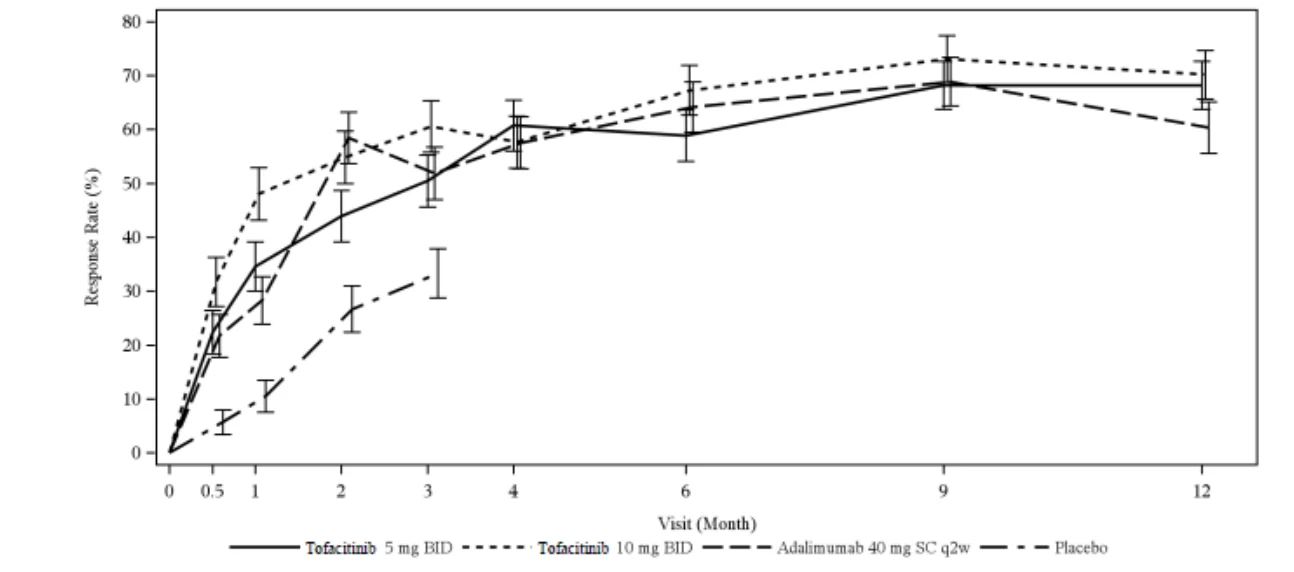
- b)
Through Month 6 in Study PsA-IIa
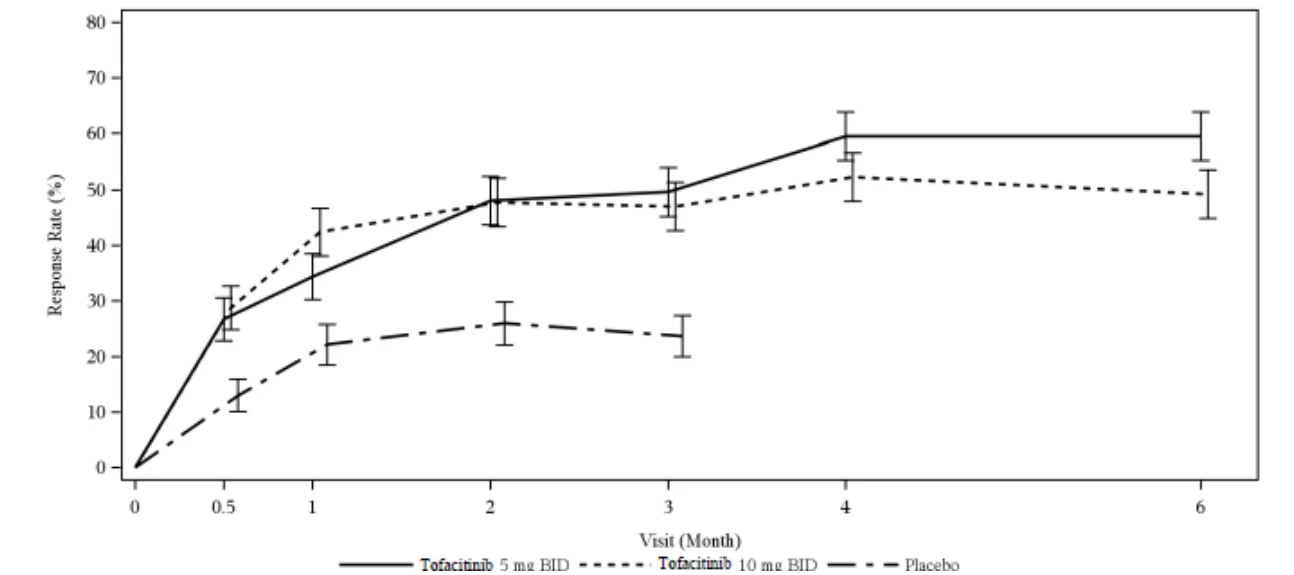
In Studies PsA-I and PsA-II, the comparison of tofacitinib 5 mg BID, tofacitinib 10 mg BID, and adalimumab (Study PsA-I only) to placebo was significant (p-value ≤0.05) at Months 0.5, 1, 2, and 3.
BID = twice daily; SC q2w = subcutaneously once every 2 weeks.
Patients randomized to placebo treatment were advanced to either tofacitinib 5 mg or 10 mg BID in a blinded manner at Month 3; results for the tofacitinib portion of the placebo→ tofacitinib treatment sequence (i.e., post-Month 3) are not included in the figure to improve readability.
a Study PsA-II had a duration of 6 months.
Physical Function:
Improvement in physical functioning was measured by the HAQ-DI. Patients receiving tofacitinib 5 mg BID demonstrated greater improvement (p≤0.05) from baseline in physical functioning compared to placebo at Month 3 (Table 26).
Table 26: Change from Baseline in HAQ-DI in Studies PsA-I and PsA-II
| Least Squares Mean Change From Baseline in HAQ-DI | ||||||||||||||
|---|---|---|---|---|---|---|---|---|---|---|---|---|---|---|
Conventional Synthetic DMARD Inadequate Respondersa (TNFi-Naïve) | TNFi Inadequate Respondersb | |||||||||||||
| Study PsA-I | Study PsA-II | |||||||||||||
| Treatment Group | Placebo | Tofacitinib 5 mg BID | Adalimumab 40 mg SC q2Wc | Placebo | Tofacitinib 5 mg BID | |||||||||
| N | 104 | 107 | 106 | 131 | 129 | |||||||||
| Month 3 | -0.18 | -0.35* | -0.38 | -0.14 | -0.39*** | |||||||||
| Month 6 | NA | -0.45 | -0.43 | NA | -0.44 | |||||||||
| Month 12 | NA | -0.54 | -0.45 | NA | NA | |||||||||
* p≤0.05; *** p<0.0001 for active treatment versus placebo at Month 3 achieved statistical significance; with the correction for type 1 error.
Abbreviations: DMARD=disease-modifying antirheumatic drug; HAQ-DI=Health Assessment Questionnaire Disability Index; N=total number of patients in the statistical analysis; SC q2w=subcutaneously once every 2 weeks; NA=Not applicable, as data for placebo treatment is not available beyond Month 3 due to placebo advanced to tofacitinib 5 mg BID or tofacitinib 10 mg BID.
- a Inadequate response to at least one conventional synthetic DMARD (csDMARD) due to lack of efficacy and/or intolerability.
- b Inadequate response to a least one TNF inhibitor (TNFi) due to lack of efficacy and/or intolerability.
- c Arm is not controlled for type 1 error
The HAQ-DI responder rate (response defined as having decrease from baseline of ≥0.35) at Month 3 in Studies PsA-I and PsA-II was 53% and 50% , respectively in patients receiving tofacitinib 5 mg BID, 31% and 28%, respectively in patients receiving placebo, and 53% in patients receiving adalimumab 40 mg subcutaneously once every 2 weeks (Study PsA-I only).
Ankylosing Spondylitis
The tofacitinib clinical development program to assess the efficacy and safety included one placebo- controlled confirmatory trial (Study AS-I). Patients had active disease as defined by both Bath Ankylosing Spondylitis Disease Activity Index (BASDAI) and back pain score (BASDAI question 2) of greater or equal to 4 despite non-steroidal anti-inflammatory drug (NSAID), corticosteroid or DMARD therapy.
Study AS-I was a randomized, double-blind, placebo-controlled, 48-week treatment clinical trial in 269 adult patients who had an inadequate response (inadequate clinical response or intolerance) to at least 2 NSAIDs. Patients were randomized and treated with tofacitinib 5 mg BID or placebo for 16 weeks of blinded treatment and then all were advanced to tofacitinib 5 mg BID for an additional 32 weeks. The primary endpoint was the proportion of patients who achieved an ASAS20 response at Week 16.
Approximately 7% and 21% of patients used concomitant methotrexate or sulfasalazine, respectively, from baseline to Week 16. Patients were allowed to receive a stable low dose of oral corticosteroids (8.6% received) and/or NSAIDs (81.8% received) from baseline to Week 48. Twenty-two percent of patients had an inadequate response to 1 or 2 TNFi.
Clinical Response
Patients treated with tofacitinib 5 mg BID achieved greater improvements in ASAS20 and ASAS40, responses compared to placebo at Week 16 (Table 27). The responses were maintained from Week 16 through Week 48 in patients receiving tofacitinib 5 mg BID.
Table 27: ASAS20 and ASAS40 Responses at Week 16, Study AS-I
| Placebo (N=136)† | Tofacitinib 5 mg BID (N=133)‡ | Difference from Placebo (95% CI) | |
|---|---|---|---|
| ASAS20 response*, % | 29 | 56 | 27 (16, 38)** |
| bDMARD-naïve | 33 | 62 | 28 (15, 42) |
| TNFi-IR or bDMARD use (non-IR) | 16 | 39 | 23 (1, 44) |
| ASAS40 response*, % | 13 | 41 | 28 (18, 38)** |
| bDMARD-naïve | 14 | 45 | 31 (19, 43) |
| TNFi-IR or bDMARD use (non-IR) | 7 | 26 | 19 (2, 37) |
†105 bDMARD-naïve and 31 TNFi-IR or bDMARD use
‡102 bDMARD-naïve and 31 TNFi-IR or bDMARD use
* type I error-controlled.
** p < 0.0001.
The improvements in the components of the ASAS response and other measures of disease activity were higher in tofacitinib 5 mg BID compared to placebo at Week 16 as shown in Table 28.
Table 28: ASAS Components and Other Measures of Disease Activity at Week 16, Study AS-I
Placebo (N=136) | Tofacitinib 5 mg BID (N=133) | Difference from Placebo (95% CI) | |||||
|---|---|---|---|---|---|---|---|
| Baseline (mean) | Week 16 (LSM change from Baseline) | Baseline (mean) | Week 16 (LSM change from Baseline) | ||||
| ASAS Components | |||||||
| -Patient Global Assessment of Disease Activitya,* | 7.0 | -0.9 | 6.9 | -2.5 | -1.6 (-2.07, -1.05)** | ||
| -Total spinal pain a,* | 6.9 | -1.0 | 6.9 | -2.6 | -1.6 (-2.10, -1.14)** | ||
| -BASFIb,* | 5.9 | -0.8 | 5.8 | -2.1 | -1.2 ( -1.66, -0.80)** | ||
| -Inflammation c,* | 6.8 | -1.0 | 6.6 | -2.7 | -1.7 ( -2.18, -1.25)** | ||
| hsCRPf,* (mg/dL) | 1.8 | -0.1 | 1.6 | -1.1 | -1.0 ( -1.20, -0.72)** | ||
| ASDAScrpg,* | 3.9 | -0.4 | 3.8 | -1.4 | -1.0 ( -1.16, -0.79)** | ||
* type I error-controlled.
** p < 0.0001.
Estimates are generated based on a mixed model for repeated measures using on-treatment data.
a Measured on a numerical rating scale with 0 = not active or no pain, 10 = very active or most severe pain.
b Bath Ankylosing Spondylitis Functional Index measured on a numerical rating scale with 0 = easy and 10 = impossible.
c Inflammation is the mean of two patient-reported stiffness self-assessments in BASDAI.
f High sensitivity C-reactive protein.
g Ankylosing Spondylitis Disease Activity Score with C-reactive protein.
LSM = least squares mean
Improvement in ASAS20 response was first observed at Week 2. The percentage of patients achieving ASAS20 response by visit is shown in Figure 6.
Figure 6: ASAS20 Response Over Time Up to Week 16, Study AS-I
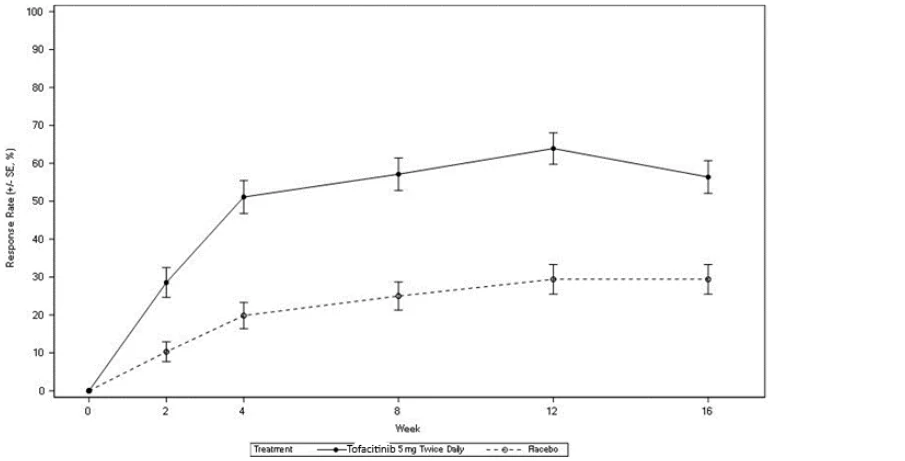
SE=standard error.
Patients with missing data were treated as non-responders.
Other Health-Related Outcomes
Patients treated with tofacitinib 5 mg BID achieved greater improvements from baseline in Ankylosing Spondylitis Quality of Life (ASQoL) (-4.0 vs -2.0) compared to placebo-treated patients at Week 16 (p<0.001).
Ulcerative Colitis
Description of Clinical Studies
The efficacy and safety of tofacitinib for the treatment of adult patients with moderately to severely active UC (Mayo score 6 to 12 with endoscopy subscore ≥2 and rectal bleeding subscore ≥1) were assessed in 3 multicentre, double blind, randomised, placebo controlled studies: 2 identical induction studies OCTAVE Induction 1 and OCTAVE Induction 2 followed by 1 maintenance study OCTAVE Sustain. Enrolled patients had failed at least one conventional therapy, including corticosteroids, immunomodulators, and/or a TNFi. Concomitant stable doses of oral aminosalicylates and corticosteroids (prednisone daily dose up to 25 mg equivalent) were permitted with taper of corticosteroids to discontinuation mandated within 15 weeks of entering the maintenance study. Tofacitinib was administered as monotherapy (i.e., without concomitant use of biologics and immunosuppressants) for UC.
Table 29: Phase 3 Clinical Trials of Tofacitinib 5 and 10 mg BID Doses in Patients with UC
| Studies | OCTAVE Induction 1 (A3921094) | OCTAVE Induction 2 (A3921095) | OCTAVE Sustain (A3921096) |
|---|---|---|---|
| Treatment groups (Randomisation ratio) | Tofacitinib 10 mg BID Placebo (4:1) | Tofacitinib 10 mg BID Placebo (4:1) | Tofacitinib 5 mg BID Tofacitinib 10 mg BID Placebo (1:1:1) |
| Number of patients enrolled | 598 | 541 | 593 |
| Study duration | 8 weeks | 8 weeks | 52 weeks |
| Primary efficacy endpoints | Remission | Remission | Remission |
| Key secondary efficacy endpoints | Improvement of endoscopic appearance of the mucosa | Improvement of endoscopic appearance of the mucosa | Improvement of endoscopic appearance of the mucosa Sustained corticosteroid-free remission among patients in remission at baseline |
| Prior TNFi failure | 51.3% | 52.1% | 44.7% |
| Prior corticosteroid failure | 74.9% | 71.3% | 75.0% |
| Prior immunosuppressant failure | 74.1% | 69.5% | 69.6% |
| Baseline corticosteroid use | 45.5% | 46.8% | 48.7% |
In addition, an open-label long-term extension study (OCTAVE Open) was also performed (see further down for more information)
Induction Efficacy Data (OCTAVE Induction 1 and OCTAVE Induction 2):
The primary endpoint of OCTAVE Induction 1 and OCTAVE Induction 2 was the proportion of patients in remission at Week 8 (i.e., a total Mayo score ≤2 with no individual subscore >1, and rectal bleeding subscore of 0). The key secondary endpoint was the proportion of patients with improvement of endoscopic appearance of the mucosa at Week 8. (i.e., endoscopy subscore of 0 or 1). Central endoscopy readings were used for these endpoints.
A significantly greater proportion of patients treated with tofacitinib 10 mg BID achieved remission and improvement of endoscopic appearance of the mucosa at Week 8 compared to placebo in both studies, as shown in Table 30.
Table 30: Proportion of Patients Meeting Efficacy Endpoints at Week 8 (OCTAVE Induction 1 and OCTAVE Induction 2, Central Endoscopy Read)
| OCTAVE Induction 1 | |||||||
|---|---|---|---|---|---|---|---|
| Endpoint | Placebo | Tofacitinib 10 mg BID | Difference Between Tofacitinib 10 mg BID and Placebo (95% CI) | ||||
| N=122 | N=476 | ||||||
| Remissiona | 8.2% | 18.5% | 10.3 (4.3, 16.3)‡ | ||||
| Improvement of endoscopic appearance of the mucosab | 15.6% | 31.3% | 15.7 (8.1, 23.4)† | ||||
| OCTAVE Induction 2 | |||||||
| Endpoint | Placebo | Tofacitinib 10 mg BID | Difference Between Tofacitinib 10 mg BID and Placebo (95% CI) | ||||
| N=112 | N=429 | ||||||
| Remissiona | 3.6% | 16.6% | 13.0 (8.1, 17.9)† | ||||
| Improvement of endoscopic appearance of the mucosab | 11.6% | 28.4% | 16.8 (9.5, 24.1)† | ||||
† p<0.001; ‡ p <0.05.
N=number of patients in the analysis set.
- a. Primary endpoint: Remission was defined as clinical remission (a Mayo score ≤2 with no individual subscore > 1) and rectal bleeding subscore of 0.
- b. Key secondary endpoint: improvement of endoscopic appearance of the mucosa was defined as Mayo endoscopy subscore of 0 (normal or inactive disease) or 1 (erythema, decreased vascular pattern).
In both subgroups of patients with or without prior TNF inhibitor failure, a greater proportion of patients treated with tofacitinib 10 mg BID achieved remission and improvement of endoscopic appearance of the mucosa at Week 8 as compared to placebo. This treatment difference was consistent between the 2 subgroups (Table 31).
Table 31: Proportion of Patients Meeting Primary and Key Secondary Efficacy Endpoints at Week 8 by TNF Inhibitor Therapy Subgroups (OCTAVE Induction 1 and OCTAVE Induction 2 Central Endoscopy Read)
OCTAVE Induction 1 (A3921094)
Endpoint
Placebo N=122
Tofacitinib
10 mg BID N=476
Remission at Week 8a
With prior TNF inhibitor failure
1.6% (1/64)
11.1% (27/243)
Without prior TNF inhibitor failureb
15.5% (9/58)
26.2% (61/233)
Improvement of endoscopic appearance of the mucosa at Week 8c
With prior TNF inhibitor failure
6.3% (4/64)
22.6% (55/243)
Without prior TNF inhibitor failureb
25.9% (15/58)
40.3% (94/233)
OCTAVE Induction 2 (A3921095)
| Endpoint | Placebo N=112 | Tofacitinib 10 mg BID N=429 | ||
|---|---|---|---|---|
| Remission at Week 8a | ||||
| With prior TNF inhibitor failure d | 0.0% (0/60) | 11.7% (26/222) | ||
| Without prior TNF inhibitor failureb | 7.7% (4/52) | 21.7% (45/207) | ||
| Improvement of endoscopic appearance of the mucosa at Week 8c | ||||
| With prior TNF inhibitor failure d | 6.7% (4/60) | 21.6% (48/222) | ||
| Without prior TNF inhibitor failureb | 17.3% (9/52) | 35.7% (74/207) | ||
N=number of patients in the analysis set.
- a. Remission was defined as clinical remission (a Mayo score ≤2 with no individual subscore >1) and rectal bleeding subscore of 0.
- b. Failed one or more conventional therapies (corticosteroid, azathioprine, 6-mercaptopurine) but did not have history of prior failure of TNF inhibitor therapy.
- c. Improvement of endoscopic appearance of the mucosa was defined as Mayo endoscopy subscore of 0 (normal or inactive disease) or 1 (erythema, decreased vascular pattern).
d Inadequate response, loss of response, or intolerance to TNF inhibitor therapy.
Decreases in rectal bleeding and stool frequency subscores were observed as early as Week 2 in patients treated with tofacitinib.
Clinical response was defined as a decrease from baseline in Mayo score of ≥3 points and ≥30%, with an accompanying decrease in the subscore for rectal bleeding of ≥1 point or absolute subscore for rectal bleeding of 0 or 1. Clinical response was observed in 60% of patients treated with tofacitinib 10 mg BID compared to 33% of placebo patients in Octave Induction 1 and 55% compared to 29% in Octave Induction 2.
Maintenance (OCTAVE Sustain):
A total of 593 patients who completed 8 weeks in one of the induction studies and achieved clinical response were re-randomized into OCTAVE Sustain; 179 out of 593 (30%) patients were in remission at baseline of OCTAVE Sustain.
The primary endpoint was the proportion of patients in remission at Week 52. The 2 key secondary endpoints were the proportion of patients with improvement of endoscopic appearance of the mucosa at Week 52, and the proportion of patients with sustained corticosteroid-free remission at both Week 24 and Week 52 among patients in remission at baseline of OCTAVE Sustain.
A significantly greater proportions of patients in both the tofacitinib 5 mg BID and tofacitinib 10 mg BID treatment groups achieved the primary and two key secondary endpoints, as shown in Table 32.
Table 32: Proportion of Patients Meeting Primary and Key Secondary Efficacy Endpoints at Week 52 (Maintenance OCTAVE Sustain, Central Endoscopy Read)
| Endpoint | Placebo N=198 | Tofacitinib 5 mg BID N=198 | Difference Between Tofacitinib 5 mg BID and Placebo (95% CI) | Tofacitinib 10 mg BID N=197 | Difference Between Tofacitinib 10 mg BID and Placebo (95% CI) |
|---|---|---|---|---|---|
| Remissiona | 11.1% | 34.3% | 23.2 (15.3, 31.2)* | 40.6% | 29.5 (21.4, 37.6)* |
| Improvement of endoscopic appearance of the mucosab | 13.1% | 37.4% | 24.2 (16.0, 32.5)* | 45.7% | 32.6 (24.2, 41.0)* |
Sustained corticosteroid-free remission at both Week 24 and Week 52 among patients in remission at baselinec | N = 59 5.1% | N = 65 35.4% | 30.3 (17.4, 43.2)* | N = 55 47.3% | 42.2 (27.9, 56.5)* |
* p<0.0001
N=number of patients in the analysis set.
- a. Remission was defined as clinical remission (a Mayo score ≤2 with no individual subscore >1) and rectal bleeding subscore of 0.
- b. Improvement of endoscopic appearance of the mucosa was defined as Mayo endoscopy subscore of 0 (normal or inactive disease) or 1 (erythema, decreased vascular pattern).
- c. Sustained corticosteroid-free remission was defined as being in remission and not taking corticosteroids for at least 4 weeks prior to the visit at both Week 24 and Week 52.
Additionally, among the 179 patients in remission at baseline (59 in the placebo group, 65 in the tofacitinib 5 mg BID group, and 55 in the tofacitinib 10 BID group), the rate of patients with remission at week 52 (i.e., maintained remission) was larger with tofacitinib 5 mg BID (46%) and 10 mg BID (56%) as compared to placebo (10%).
In both subgroups of patients with or without prior TNF inhibitor failure, the proportions of patients treated with either tofacitinib 5mg BID or tofacitinib 10 mg BID were numerically larger as compared to placebo for the primary and key secondary endpoints, however, statistical significance was not possible to determine (see Table 33).
Table 33: Proportion of Patients Meeting Primary and Key Secondary Efficacy Endpoints in Maintenance Study OCTAVE Sustain (A3921096) by TNF Inhibitor Therapy Subgroup (Central Endoscopy Read)
| Endpoint | Placebo N=198 | Tofacitinib 5 mg BID N=198 | Tofacitinib 10 mg BID N=197 | ||||||
|---|---|---|---|---|---|---|---|---|---|
| Endpoint | Placebo N=198 | Tofacitinib 5 mg BID N=198 | Tofacitinib 10 mg BID N=197 | ||||||
| Remission at Week 52a | |||||||||
| With prior TNF inhibitor failuree | 10/89 (11.2%) | 20/83 (24.1%) | 34/93 (36.6%) | ||||||
| Without prior TNF inhibitor failureb | 12/109 (11.0%) | 48/115 (41.7%) | 46/104 (44.2%) | ||||||
| Improvement of endoscopic appearance of the mucosa at Week 52c | |||||||||
| With prior TNF inhibitor failuree | 11/89 (12.4%) | 25/83 (30.1%) | 37/93 (39.8%) | ||||||
| Without prior TNF inhibitor failureb | 15/109 (13.8%) | 49/115 (42.6%) | 53/104 (51.0%) | ||||||
Sustained corticosteroid-free remission at both Week 24 and Week 52 among patients in remission at baselined | |||||||||
| With prior TNF inhibitor failuree | 1/21 (4.8%) | 4/18 (22.2%) | 7/18 (38.9%) | ||||||
| Without prior TNF inhibitor failureb | 2/38 (5.3%) | 19/47 (40.4%) | 19/37 (51.4%) | ||||||
N=number of patients in the analysis set.
- a. Remission was defined a Mayo score ≤2 with no individual subscore >1, and rectal bleeding subscore of 0.
- b. Patients who failed ≥1 conventional therapies (corticosteroid, azathioprine, 6-mercaptopurine) but did not have history of prior failure of TNF inhibitor therapy.
- c. Improvement of endoscopic appearance of the mucosa was defined as Mayo endoscopy subscore of 0 (normal or inactive disease) or 1 (erythema, decreased vascular pattern).
- d. Sustained corticosteroid-free remission was defined as being in remission and not taking corticosteroids for at least 4 weeks prior to the visit at both Week 24 and Week 52.
- e. Prior TNF inhibitor failure was defined in this program as inadequate response, loss of response, or intolerance to TNF inhibitor therapy.
Open-label Extension Study (OCTAVE Open):
Patients who did not achieve clinical response in one of the induction studies (Study OCTAVE Induction 1 or OCTAVE Induction 2) after 8 weeks of tofacitinib 10 mg BID, were allowed to enter an open-label extension study (OCTAVE Open). After an additional 8 weeks of tofacitinib 10 mg BID in Study OCTAVE Open, 53% (155/293) patients achieved clinical response and 14% (42/292) patients achieved remission.
Active Juvenile Idiopathic Arthritis
The safety and efficacy of tofacitinib in JIA patients aged 2 years to <18 years was assessed in one completed Phase 3 randomized withdrawal trial (Study JIA-1; A3921104) and one ongoing long-term extension (LTE; Study A3921145). The studies included patients with active rheumatoid factor (RF) positive or negative polyarthritis, extended oligoarthritis, or systemic JIA without systemic symptoms who had an inadequate response or intolerance to at least one DMARD, and patients with juvenile PsA or enthesitis-related arthritis (ERA) who had an inadequate response to NSAIDs.
All eligible patients in Study JIA-I received open-label tofacitinib (5 mg film-coated tablets BID or oral solution weight-based equivalent BID) for 18 weeks (run-in phase); patients who achieved at least a JIA ACR30 response at the end of the open-label phase were randomised (1:1) to either tofacitinib (5 mg film-coated tablets or oral solution) or placebo for 26-weeks (double-blind phase). Thirty four percent of patients had prior exposure to a TNF inhibitor in Study JIA-1. Treatment with stable doses of corticosteroid or MTX were permitted but not required; approximately one-third and two-thirds of patients were receiving corticosteroids and MTX, respectively, during the run-in and double-blind phases. Patients who did not achieve a JIA ACR30 response at the end of the open-label run-in phase or experienced a single episode of disease flare at any time were discontinued from Study JIA-1, but were permitted to enter the LTE. Disease flare was defined as worsening of ≥30% in 3 or more of the 6 JIA core response variables with no more than 1 of the remaining JIA core response variables improving by≥30%.
A total of 225 JIA patients were enrolled in the open-label run-in phase of Study JIA-1. Of these, 173 (76.9%) patients were eligible to be randomised into the double-blind phase to either tofacitinib (n=88) or placebo (n=85). The primary endpoint of Study JIA-1 was the occurrence of disease flare at Week 44 relative to the double-blind phase baseline at Week 18. The efficacy analysis population included the subgroups with either RF+ or RF polyarthritis, extended oligoarthritis or systemic JIA without systemic symptoms. Patients with juvenile PsA were included as separate efficacy subgroup. ERA patients were not included in the efficacy analysis.
Signs and symptoms
Tofacitinib treated patients experienced significantly fewer disease flares at Week 44 compared to placebo-treated patients (29.2% [21/72] vs 52.9% [37/70]; difference from placebo -23.7% [95% CI: - 39%, -8%]; p=0.0031). The occurrence of disease flare by Visit for Study JIA-I is shown in Figure 7.
Figure 7: Occurrence of disease flare by visit in the double-blind phase in Study JIA-I
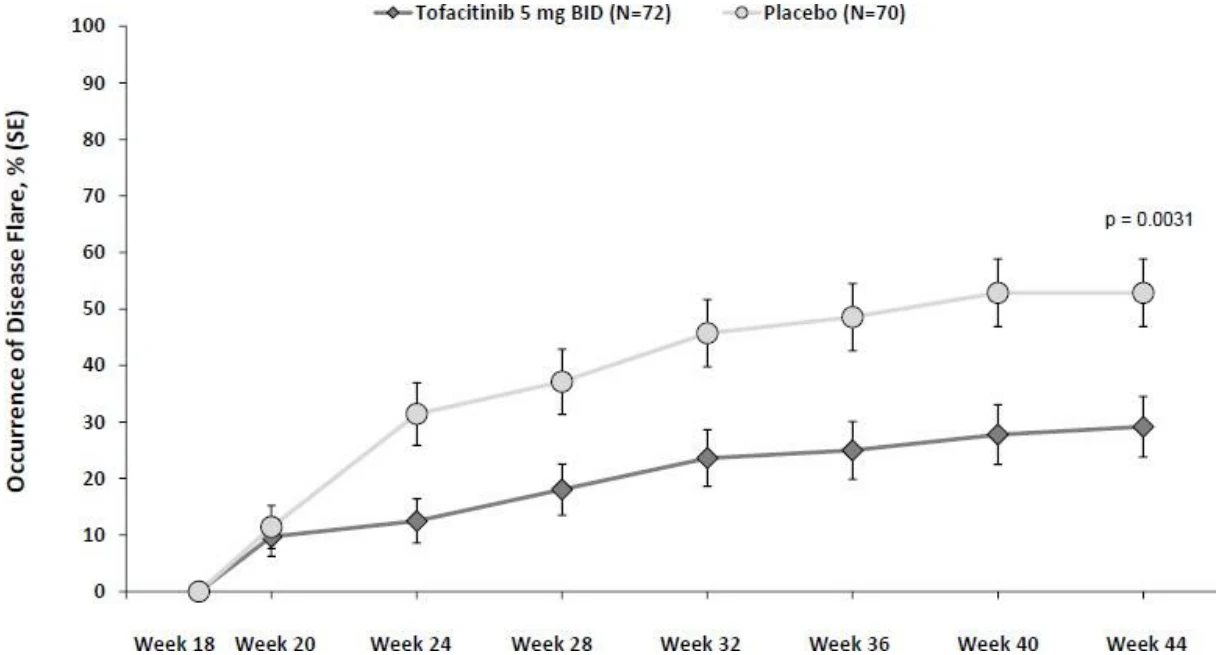
BID = twice daily; SE = standard error. N = total number of patients.
The 26-week double-blind phase is from Week 18 through Week 44 on and after randomisation day.
JIA subtype included: RF+ polyarthritis, RF- polyarthritis, extended oligoarthritis, and systemic JIA without active systemic symptoms.
The occurrence of disease flare was favourable with tofacitinib (28.6%; n=2/7) in comparison to placebo (75.0%, n=6/8) for the jPsA JIA subtype and was consistent with those for the overall study population.
14.2 Comparative Bioavailability Studies
A single-dose (1 x 10 mg), randomized, two-way crossover comparative bioavailability study of
TARO-TOFACITINIB (Taro Pharmaceuticals Inc.) and XELJANZ® (Pfizer Canada Inc.) was performed in healthy male subjects under fasting conditions. A summary of the data from the 26 subjects that were included in the statistical analysis are presented in the table below:
Summary Table of the Comparative Bioavailability Data
Tofacitinib (1 x 10 mg) Geometric Mean Arithmetic Mean (CV %) | ||||
| Parameter | Test1 | Reference2 | % Ratio of Geometric Means | 90% Confidence Interval |
AUCT (ng•h/mL) | 466.41 483.70 (28.56) | 455.49 471.62 (26.68) | 102.4 | 99.1 - 105.8 |
AUCI (ng•h/mL) | 471.36 488.96 (28.78) | 460.65 476.92 (26.68) | 102.3 | 99.1 - 105.6 |
Cmax (ng/mL) | 129.59 132.32 (20.92) | 131.18 133.64 (20.41) | 98.8 | 92.0 - 106.0 |
Tmax3 (h) | 0.67 (0.33-2.00) | 0.50 (0.33-1.33) | ||
T½4 (h) | 3.44 (21.25) | 3.38 (16.36) | ||
1 TARO-TOFACITINIB (tofacitinib as tofacitinib citrate) tablets 10 mg (Taro Pharmaceuticals Inc.)
2 XELJANZ® (tofacitinib as tofacitinib citrate) tablets 10 mg (Pfizer Canada Inc.)
3 Expressed as the median (range) only
4Expressed as the arithmetic mean (CV %) only
A single-dose (1 x 11 mg), randomized, two-way crossover comparative bioavailability study of TARO-TOFACITINIB XR (Taro Pharmaceuticals Inc.) and XELJANZ® XR (Pfizer Canada Inc.) was performed in healthy male subjects under fasting conditions. A summary of the data from the 49 subjects that were included in the statistical analysis are presented in the table below:
Summary Table of the Comparative Bioavailability Data
Tofacitinib (1 x 11 mg) Geometric Mean Arithmetic Mean (CV %) | ||||
|---|---|---|---|---|
Tofacitinib (1 x 11 mg) Geometric Mean Arithmetic Mean (CV %) | ||||
| Parameter | Test1 | Reference2 | % Ratio of Geometric Means | 90% Confidence Interval |
| Parameter | Test1 | Reference2 | % Ratio of Geometric Means | 90% Confidence Interval |
AUCT (ng•h/mL) | 331.85 343.46 (24.87) | 328.96 340.62 (26.46) | 100.7 | 95.4 – 106.4 |
AUCI (ng•h/mL) | 337.17 348.58 (24.51) | 335.57 347.13 (26.06) | 100.3 | 95.1 – 105.8 |
Cmax (ng/mL) | 58.07 62.97 (36.59) | 54.33 56.85 (29.56) | 106.5 | 96.1 – 118.2 |
Tmax3 (h) | 5.00 (3.00- 11.00) | 3.50 (2.00- 5.00) | ||
T½4 (h) | 4.10 (21.13) | 4.45 (28.25) | ||
1 TARO-TOFACITINIB XR (tofacitinib as tofacitinib citrate) extended-release tablets 11 mg (Taro Pharmaceuticals Inc.)
2 XELJANZ® XR (tofacitinib as tofacitinib citrate) extended-release tablets 11 mg (Pfizer Canada Inc.)
3 Expressed as the median (range) only
4Expressed as the arithmetic mean (CV %) only
A single-dose (1 x 11 mg), randomized, two-way crossover comparative bioavailability study of TARO-TOFACITINIB XR (Taro Pharmaceuticals Inc.) and XELJANZ® XR (Pfizer Canada Inc.) was performed in healthy male subjects under high-fat fed conditions. A summary of the data from the 50 subjects that were included in the statistical analysis are presented in the table below:
Summary Table of the Comparative Bioavailability Data
Tofacitinib (1 x 11 mg) Geometric Mean Arithmetic Mean (CV %) | ||||
|---|---|---|---|---|
| Parameter | Test1 | Reference2 | % Ratio of Geometric Means | 90% Confidence Interval |
| AUCT (ng•h/mL) | 389.61 403.42 (27.98) | 383.45 402.90 (33.22) | 101.3 | 98.3 - 104.4 |
| AUCI (ng•h/mL) | 394.84 408.58 (27.71) | 387.72 407.15 (33.08) | 101.5 | 98.5 - 104.6 |
Cmax (ng/mL) | 74.02 76.25 (23.85) | 72.68 75.04 (25.11) | 101.6 | 95.8 - 107.7 |
Tmax3 (h) | 7.02 (3.00 - 24.02) | 4.00 (3.00 - 4.52) | ||
T½4 (h) | 4.13 (23.52) | 4.34 (24.14) | ||
1 TARO-TOFACITINIB XR (tofacitinib as tofacitinib citrate) extended-release tablets 11 mg (Taro Pharmaceuticals Inc.)
2 XELJANZ® XR (tofacitinib as tofacitinib citrate) extended-release tablets 11 mg (Pfizer Canada Inc.)
3 Expressed as the median (range) only
4Expressed as the arithmetic mean (CV %) only]
16 Non- Clinical Toxicology
General toxicology
Single and Repeat-Dose Toxicity
Tofacitinib caused death in rats at single oral doses of ≥500 mg/kg. Single intravenous doses up to 3 mg/kg did not induce local or systemic toxicity in rats. In cynomolgus monkeys emesis and decreased activity were observed at single oral doses of ≥200 mg/kg (divided 3 times daily [TID], ~7 hours apart).
Immune and hematopoietic organ systems were identified as main targets in repeat-dose toxicity studies. Effects on the immune system (including decreased circulating lymphocytes, lymphoid depletion of lymph nodes, spleen, thymus and bone marrow, and bacterial and viral infections) were consistent with inhibition of JAK1/3. Decreases in hemoglobin, hematocrit, erythrocyte numbers and reticulocytes were attributed to JAK2 inhibition. These effects were generally reversible during a 4-week recovery phase in the 4- and 6-week monkey and rat studies, respectively. Repeated oral doses up to 10 mg/kg once daily in rats (up to approximately 15 or 7.6 times human clinical exposure at 5 or 10 mg BID) and 1 mg/kg BID in adult cynomolgus monkeys (approximately 1 or 0.5 times human exposure at 5 or 10 mg BID) were tolerated in studies up to 6 months and 39 weeks duration, respectively. In the 39-week juvenile monkey study, the T-dependent antibody response to antigen immunization was decreased at the high dose of 5 mg/kg BID, approximately 5 or 2.5 times human exposure at 5 or 10 mg BID.
Genotoxicity
Tofacitinib was not mutagenic in the bacterial reverse mutation assay. Reproducible increases in chromosomal abnormalities were observed in a human lymphocyte in vitro cytogenetic assay, at high cytotoxic concentrations with metabolic activation, but no effects were observed without metabolic activation. In follow up studies, tofacitinib was not mutagenic in mammalian cells (in vitro CHO/HGPRT assay) and did not induce primary DNA damage in an in vivo/in vitro rat hepatocyte unscheduled DNA synthesis assay. Tofacitinib was also negative in the in vivo rat micronucleus test.
Carcinogenicity
In the 39-week repeat-dose toxicity study in adult monkeys, lymphomas were observed at the high dose of 5 mg/kg BID (approximately 6 times human exposure at 5 mg BID, or approximately 3 times the 10 mg BID dose), but not at the lower dose of 1 mg/kg BID (approximately 1 times human exposure at 5 mg BID, or approximately 0.5 times the 10 mg BID dose). No treatment-related tumors were observed in a 6-month rasH2 transgenic mouse study up to the high dose of 200 mg/kg/day, approximately 38 or 19 times human exposure at 5 or 10 mg BID.
In a 2-year rat carcinogenicity study, tofacitinib induced benign Leydig cell tumors and malignant hibernomas (tumors of brown adipose tissue) at oral doses of ≥30 mg/kg/day (≥35 times or 17 times human exposure at 5 or 10 mg BID) and benign thymomas at 100/75 mg/kg/day (approximately 187 or 94 times human exposure at 5 or 10 mg BID). No treatment-related tumors were found in rats at 10 mg/kg/day (approximately 16 or 8 times human exposure at 5 or 10 mg BID). The relevance of benign Leydig cell tumors to human risk is unknown.
Reproductive and developmental toxicology
Tofacitinib had no effect on fertility of male rats; however, in treated female rats tofacitinib decreased pregnancy rate, numbers of corpora lutea, implantation sites, and viable fetuses, with an increase in early resorptions at oral doses of ≥10 mg/kg/day (≥15 or 8 times human exposure at 5 or 10 mg BID). The non-observed-adverse-effect-level (NOAEL) for female fertility and early embryonic development was 1 mg/kg/day (approximately 1 or 0.6 times human exposure at 5 or 10 mg BID).
Tofacitinib was teratogenic (external, visceral and skeletal abnormalities) in rabbits and rats at oral doses of 30 and 100 mg/kg/day (approximately 13/6 and 146/73 times human exposure at 5/10 mg BID), respectively. In rabbits, teratogenic effects occurred in the absence of maternal toxicity, consisted of thoracogastroschisis, omphalocele, craniofacial malformations (microstomia, microphthalmia, and cleft lip and palate), membranous ventricular septal defects, gallbladder agenesis, short or absent tail, and skeletal malformations (fused sternebrae and vertebral and/or rib anomalies). In addition, there was an increase in postimplantation loss (early and late resorptions) and consequently, reduced number of viable fetuses. The developmental NOAEL in rabbits was 10 mg/kg/day (approximately 3 or 1.5 times human exposure at 5 or 10 mg BID). In rats, tofacitinib increased postimplantation loss (early and late resorptions), reduced fetal body weights, and increased incidences of fetal malformations at doses that induced maternal toxicity. Malformations suggestive of teratogenicity included anasarca, membranous ventricular septal defects, and skeletal abnormalities (absent cervical arch, bent limb bones, hemicentric thoracic centrum, and rib and sternal anomalies). The developmental NOAEL in rats was 30 mg/kg/day (approximately 58 or 29 times human exposure at 5 or 10 mg BID).
In the peri/postnatal development study in rats, tofacitinib decreased the number of delivered and live born pups, and reduced pup survival at oral doses of 50 mg/kg/day (approximately 73 or 36 times human exposure at 5 or 10 mg BID). There was no effect on sexual maturation, or the ability of these F1 generation rats to learn, mate and produce viable F2 generation fetuses of treatment of the dams at oral doses up to 10 mg/kg/day (up to 15 or 8 times human exposure at 5 or 10 mg BID).
Table 34: Summary of Toxicology Studies
| Study Type | Treatment Duration | Species/ Test system | Animals/ Group | Dose (mg/kg/day)a | Results |
|---|---|---|---|---|---|
| Study Type | Treatment Duration | Species/ Test system | Animals/ Group | Dose (mg/kg/day)a | Results |
| Study Type | Treatment Duration | Species/ Test system | Animals/ Group | Dose (mg/kg/day)a | Results |
| Single-Dose Toxicity | |||||
Single-Dose Oral Toxicity Study in Sprague-Dawley Rats (01-2063-07) | Single Dose | Rat/Sprague-Dawley | 3M, 3F | 0, 500, 1000, 2000 (Oral gavage, 20 mL/kg, 0.5% Methylcellulose/ Suspension) | 500 mg/kg: 1 female died on Day 1; red-stained fur (nose/muzzle); ↓ eosinophils, ↓ fibrinogen, ↑ ALT, ↑ AST, ↑ glucose, ↑ BUN. ≥500 mg/kg: ↓ activity, lethargy, partially closed eyes, labored respiration, salivation; lympho- cytolysis in mesenteric lymph node and decreased numbers of lymphocytes within the minimal zone of the splenic white pulp. 1000 mg/kg: 6/6 animals died by Day 2; necrosis of centrilobular hepatocytes. ≥1000 mg/kg: lacrimation and cold to touch; stomach distension; necrosis of individual hepatocytes; lymphocytolysis within the splenic white pulp. 2000 mg/kg: 6/6 animals died by Day 2; slow respiration and eye staining/nasal discharge. |
| Single-Dose IV Toxicity Study in Rats with a 14-Day Recovery (09GR453) | Single Dose | Rat/Sprague- Dawley | 10M, 10Fb | 0, 0.5, 1, 3 (IV, 0.5-3 mL/kg, 10mM Lactic acid in normal saline) | ≤3 mg/kg: None |
Single-Day Oral Toxicity Study in Cynomolgus Monkeys (00-2063-04) | 1 Day | Monkey/ Cynomolgus | 2M, 2F | 40, 200, 1000c (Oral gavage, 7 mL/kg, 0.5% Methylcellulose/ Suspension | ≥200 mg/kg: Emesis, ↓ activity |
| Repeat-Dose Toxicity | |||||
| Pivotal Studies | |||||
| 6-Week Oral Toxicity Study with 1-Month Recovery in Sprague-Dawley Rats (01-2063-06) | 6 Weeks | Rat/Sprague-Dawley | 10-15/sex/dose | 1, 10, 100 Oral gavage, QD, 10 mL/kg (0.5% Methylcellulose/ Suspension | 1 mg/kg/day (LOEL): ↓ WBC count, ↓ lymphocytes, ↓ eosinophils, ↓ basophils, ↓ RBC count, ↓ HCT, ↓ HGB, lymphoid depletion in bone marrow. 10 mg/kg/day: Same as above, + ↓ reticulocytes, lymphoid depletion in spleen, thymus, and mesenteric lymph node. 100 mg/kg/day: Same as above, + ↑ neutrophils, ↑ AST. 100 mg/kg/day (Recovery): Recovery of reticulocytes and AST, no microscopic findings in lymphoid tissues, partial recovery of WBC count, lymphocytes, RBC parameters, and lymphoid cells in bone marrow. |
| 6-Month Oral Toxicity Study in Rats (77435) | 6 Months | Rat/Sprague-Dawley | 15/sex/dose | 1, 10, 100 (Oral gavage, QD, 10 mL/kg, 0.5% Methylcellulose/ Suspension) | 1 mg/kg/day (LOEL): ↓ WBC, ↓ lymphocytes, ↓ eosinophils, ↓ basophils, ↓ large unstained cells, ↓ RBC count, ↓ HCT, ↓ HGB, ↑ neutrophils (F), ↓ spleen weight, ↓ T lymphocytes, T-cells (CD3+), T-cell subtypes (CD4+, CD8+), B cells (CD45RA+), NK cells (CD161+). 10 mg/kg/day: Same as above, + ↓ reticulocytes; neutrophils, ↑ glucose, ↑ alkaline phosphatase; ↓ triglycerides (F), ↓ spleen weight, lymphoid atrophy (lymph nodes, spleen, thymus) (F), alveolar histiocytosis. 100 mg/kg/day: Same as above, + ↑ neutrophils, ↑ reticulocytes, ↑ globulin; ↓ triglycerides, ↑ liver weight; ↓ thymus weight, lymphoid atrophy (GALT), hepatocellular hypertrophy. |
| 1-Month Oral Toxicity Study with 1-Month Recovery in Cynomolgus Monkeys (01-2063-09) | 4 Weeks | Monkey/Cynomol gus | 3/sex/dose | 10, 50, 100 Oral gavage, TIDd, 5 mL/kg, 0.5% Methylcellulose/ Suspension | 10 mg/kg/day: ↓ lymphocytes, ↓ lymphocyte subsets (helper T cells, cytotoxic/suppressor T cells, and NK cells, ↓ HGB. 50 mg/kg/day: Same as above, + death, body weight loss, decreased activity, ↑ WBC, ↓ RBC count, ↓ HCT, ↓ reticulocytes, ↑ AST, ↑ ALT, ↓ Ca, ↓ neutrophil pool, slight granulocytic depletion in bone marrow, lymphoid depletion in spleen, bacterial and viral infection secondary to immunosuppression in heart, kidney, gastrointestinal tract, buccal cavity, and skin. 100 mg/kg/day: Same as above (except no ↑ WBC count), + RBC depletion in bone marrow, and ↑ immature myeloid cells in bone marrow, lymphoid depletion in mesenteric lymph node. 50 mg/kg/day (Recovery: Complete recovery with the exceptions of partial recovery of ↑ neutrophils, ↑ ALT and ↑ AST, ↓ (CD16+, CD3-), ↓ RBC count; rebound effect in lymphocytes, (CD4+, CD3+), and (CD8+, CD3+), lymphocytes, and reticulocytes. |
| Study Type | Treatment Duration | Species/ Test system | Animals/ Group | Dose (mg/kg/day)a | Results |
|---|---|---|---|---|---|
| Study Type | Treatment Duration | Species/ Test system | Animals/ Group | Dose (mg/kg/day)a | Results |
| Study Type | Treatment Duration | Species/ Test system | Animals/ Group | Dose (mg/kg/day)a | Results |
| Study Type | Treatment Duration | Species/ Test system | Animals/ Group | Dose (mg/kg/day)a | Results |
| Study Type | Treatment Duration | Species/ Test system | Animals/ Group | Dose (mg/kg/day)a | Results |
| Study Type | Treatment Duration | Species/ Test system | Animals/ Group | Dose (mg/kg/day)a | Results |
| 39-Week Oral Toxicity Study in Monkeys (2003-0301) | 39 weeks | Monkey/ Cynomolgus | 4/sex/dose | 0.5, 2, 10e Oral gavage, BID, 10 mL/kg, 0.5% Methylcellulose/ Suspension | 0.5 mg/kg/day (LOEL): ↓ total lymphocytes, ↓ lymphocyte subsets (T-helper, -cytotoxic/suppressor and NK cells); lymphoid hyperplasia (2/4 M). 2 mg/kg/day: Same as above +, ↓ RBC count, ↓ HCT, ↓ HGB, lymphoid hyperplasia (4/4 M) 10 mg/kg/day: Same as above, + death, ↑ reticulocytes; RBC hyperplasia in bone marrow; lymphoid hyperplasia (3/4 M, 1/4 F); lymphoma (1/4 M, 2/4 F; 2 confirmed B-cell origin), mononuclear cell infiltrates in the heart (F). |
| Genotoxicity | |||||
| In Vitro Studies | |||||
Microbial Reverse Bacterial Mutation Assay (AMES) (01-2063-11) | In Vitro | Salmonella typhimurium, Escherichia coli | NA | 0.010-5 mg/plate Plate Incorporation for ~ 48 to 72 hours at 37°C | No genotoxic effect. No cytotoxic effect. |
Mammalian Cell Mutation Assays (01-2063-16) | In Vitro | Chinese Hamster ovary (CHO)- K1-BH4 cells, | NA | 16-5000 µg/mL 5-hour treatment, 6-8 day incubation |
µg/mL with average Day 3 relative cell survivals of 43%, 29%, and 17%, respectively. |
In Vitro Cytogenetics Assay (01-2063-10) | In Vitro | Human Peripheral Lymphocytes | NA | 41.8-2400 µg/mL 3 hours with activation, 3 and 24 hours without activation | Cytotoxic Effects: ~ 50% Mitotic suppression achieved in all treatments. Genotoxic Effects: tofacitinib did not significantly increase structural chromosome aberrations at 3- and 24-hour treatments without metabolic activation. At 3 hours with metabolic activation, tofacitinib increased structural chromosome aberrations at relatively cytotoxic concentrations. |
| In Vivo Studies | |||||
In Vivo/In Vitro Rat Hepatocyte Unscheduled DNA Synthesis Study (01-2063-17) | Single Dose Hepatocytes, 2-4 and 14-16 HPD | Rat/Sprague-Dawley | M | 125, 250, 250 Oral gavage, 10 mL/kg, 0.5% Methylcellulose | Toxic/Cytotoxic Effects: Hypoactivity, labored breathing and/or squinted eyes in the 500 mg/kg group Genotoxic Effects: None |
In Vivo Cytogenetics (Rat Micronucleus) (01-2063-12) | Once daily for 3 days | Rat/Sprague- Dawley | 6M, 6F | 62.5, 125, 250 Oral gavage, QD, 10 mL/kg, 0.5% Methylcellulose | Toxic/Cytotoxic Effects: No mortality or adverse clinical signs attributed to drug treatment was observed. A statistically significant decrease in mean percent body weight gain was evident in the male rats. The males also showed statistically significant treatment-related reduction in mean %PCE, suggestive of bone marrow toxicity. Genotoxic Effects: None. |
| Carcinogenicity | |||||
6-Month Oral Gavage Study in Mice (8200-368) | 6 Months | Mouse/Model 001178-T (hemizygous), CB6F1/Jic- TgrasH2@Tac Mouse/Model 001178-W (homozygous wild-type), CB6F1/Jic- TgrasH2@Tac | 25/sex/dose | 25, 75, 200 Oral gavage, QD, 10 mL/kg, 0.5% (w/v) Methylcellulose/ Solution | ≥25 mg/kg/day: No evidence of treatment-related carcinogenicity. |
2-Year Oral Gavage in Rats (6348-463) | 103 Weeksf | Rat/Sprague- Dawley | 60-70/ sex/dose | 10/10, 30/30, 75/100g Oral gavage, QD, 10 mL/kg, 0.5% Methylcellulose/ Solution | 10 mg/kg/day: Benign angiomas of mesenteric lymph nodes (M). 30 mg/kg/day: Hyperplasia and benign tumors of interstitial cells of testes (M), malignant hibernomas of multiple organs (F). 75 mg/kg/day: Same as above (M). 100/75 mg/kg/day: Benign thymoma in thymus (F). |
| Investigative | |||||
14-Day Oral Investigative Study in Rats (10GR431) | 14 Days | Rat/Sprague- Dawley | 8F with BrdU pumps 5F without BrdU pumps | Oral gavage, QD, 10 mL/kg, 0.5% Methylcellulose/ Solution | Tofacitinib inhibited JAK/STAT signaling in BAT as evidenced by decreased tissue levels of phosphorylated STAT3 (pSTAT3) and pSTAT5 at doses ≥10 mg/kg/day. |
| Investigative Study with Rat Brown Adipocytes (11GR016) | 1 hour pre-incubation with tofacitinib then 20 minutes with oPRL and tofacitinib | Rat/Sprague-Dawley/Primary Leydig cells | In vitro | 150 mM NaCl, 0.03 mM NaHCO3 /Solution (oPRL), 0.1% dimethyl sulphoxide/Solution (tofacitinib ) | Tofacitinib inhibited the prolactin-induced increase in STAT5A/B phosphorylation. |
| Investigative Study with Rat Primary Leydig Cells (11GR015) | 1 hour pre-incubation with tofacitinib then 15 minutes with oPRL and tofacitinib | Rat/Sprague-Dawley/ Differentiated primary brown adipocytes/ pSTAT5A/B protein | In vitro | 150 mM NaCl, 0.03 mM NaHCO3 /Solution (oPRL), 0.1% dimethyl sulphoxide/Solution (tofacitinib ) | Tofacitinib inhibited the prolactin-induced increase in STAT5A/B phosphorylation. |
| Reproductive and Developmental Toxicity | |||||
| Oral Fertility and Embryonic Development Study in Male and Female Rats (05GR051) | (F) Phase 1: 14 Days premating, throughout cohabitation and through GD 7. (M) Phase 2: Minimum of 63 days (beginning 28 days premating) | Rat/Sprague Dawley | 20/sex/dose | 1, 10, 100 Oral Gavage, QD, 10 mL/kg | 1 mg/kg/day: No effect. 10 mg/kg/day: ↑ Postimplantation loss. 100 mg/kg/day: Same as above, + ↓ pregnancy rate, ↓ corpora lutea, ↓implantation sites, ↓ viable fetuses, ↑ early resorptions, ↑ pre-implantation loss. |
| Oral Embryo-FetalDevelopment Study in Rats (04-2063-24) | GD 6-17 | Rat/Sprague Dawley | 20F/dose | 1, 10, 30 Oral gavage, QD, 10 mL/kg | ≥1 mg/kg/day: No effect. |
Oral Embryo-Fetal Development Study in Rats (09GR353) | GD 6-17 | Rat/Sprague Dawley | 20F/dose | 30, 100, 300 Oral gavage, QD, 10 mL/kg | 30 mg/kg/day: No effect. 100 mg/kg/day: ↓ Viable fetuses, ↓ uterine weight, external, visceral and skeletal malformations. 300 mg/kg/day: ↓ Maternal body weight and food consumption, clinical signs of poor toleration, no viable fetuses to examine. |
Oral Embryo-Fetal Development Study in Rabbits (05-2063-25) | GD 7-19 | Rabbit/New Zealand White | 20F/dose | 10, 30, 100 Oral gavage, QD, 2 mL/kg | 10 mg/kg/day: No effect. 30 mg/kg/day: ↓Viable fetuses, ↓uterine weight, external, visceral, and skeletal malformations. 100 mg/kg/day: Same as above, + ↓fetal body weights, ↑visceral variations. |
Oral Developmental Peri/Postnatal Reproduction including Postnatal Behavioral/Functional Evaluation in Rats (LIA00468) | GD 6 - DL 21 (or GD 24 for rats not delivering a litter) | Rat/Sprague- Dawley | 25F/dose | Oral gavage, QD during dosage period; 10 mL/kg | 10 mg/kg/day: No effect 50 mg/kg/day: ↓Delivered pups, ↓liveborn pups, ↓pup survival, ↓pup body weight. |
| Developmental and Reproductive - Juvenile | |||||
Oral Fertility Study in Juvenile Rats (10GR250) | PND 21-70 (M) PND 21-55 (F) | Rat/Sprague- Dawley | 20/sex/dose | 1, 10, 100 Oral gavage, QD, 10 mL/kg 0.5% (w/v) Methylcellulose/ Suspension | 1 mg/kg/day: No effect. 10 mg/kg/day: ↓BW (M), ↓BW gain (M). 100 mg/kg/day: Same as above (M&F). |
Oral Toxicity Study in Juvenile Rats with a 2-Month Recovery (10GR307) | PND 21-49 | Rat/Sprague Dawley | 16/sex/dose | 1, 10, 100 Oral gavage, QD, 10 mL/kg 0.5% (w/v) Methylcellulose/ Suspension | 1 mg/kg/day: Females: ↓WBC, ↓lymphocytes, eosinophils, basophils Males only: ↑vacuolation in brown adipose tissue, ↓T cells, ↓helper T cells, ↓cytotoxic T cells, ↓B cells, ↓NK cells. 10 mg/kg/day: Same as above, ↓T cells, ↓helper T cells, ↓cytotoxic T cells, ↓B cells, ↓NK cells. Males: ↓WBC, ↓lymphocytes, eosinophils, basophils. Females: ↓body weight and body weight gain, ↓reticulocytes, ↓cellularity (thymus) - females, ↓cellularity (spleen), ↓lymphoid cellularity- mesenteric lymph node. |
| 100 mg/kg/day: Same as above, ↓body weight and body weight gain (M), ↓RBC, ↓cellularity: inguino-femoral lymph node, mandibular lymph node. | |||||
| 39-Week Oral Toxicity in Juvenile Monkeys with a 26-Week Recovery (Interim Report) (2501-010) | 39 Weeks | Monkey/ Cynomolgus | 4/sex/dose | 0.5, 2, 10 Oral gavage, BID, 5 mL/kg 0.5% (w/v) Methylcellulose/ Suspension | 0.5 mg/kg/day: No effect. 2 mg/kg/day: ↓total lymphocytes (M), ↓lymphocyte subsets (NK cells, effector CD8+ T cells, CD8+ T cells (M), ↓thymus weight (M), ↓spleen weight (F). 10 mg/kg/day: ↓total lymphocytes (M + F), ↓ RBC count, ↓HCT, ↓HGB, ↓lymphocyte subsets (NK cells, CD4+ and CD8+ T cells, naïve CD4+and CD8+ T cells, central and effector memory CD8+ cells), ↓spleen and thymus weight. |
a Doses are expressed as mg active moiety/kg/day unless otherwise noted.
b Five/sex were necropsied on Day 2 and 5/sex were retained for a 14-day recovery period and necropsied on Day 15.
c 13, 67, 333 mg/kg TID; 7 hours apart.
d 3.33, 16.7, 33.3mg/kg TID; 7 hours apart.
e 0.25, 1, 5, mg/kg BID; 12 hours apart.
f All surviving males in Group 4 were sacrificed on Day 654 (Week 94) of the dosing phase. All surviving males in Group 1 through Group 3 were sacrificed on Day 686 (Week 98) of the dosing phase. All surviving females were sacrificed on Day 715 (Week 103) of the dosing phase.
g Dose was lowered from 100 to 75 mg/kg/day starting on Day 133.
ALT = Alanine aminotransferase; AST = Aspartate aminotransferase; BAT = Brown adipose tissue; BID = Twice daily; BrdU = 5-bromo-2’deoxyuridine; BUN = Blood urea nitrogen; Ca = Calcium; CHO = Chinese hamster ovary; CD = Cluster of differentiation; DL = Day of lactation; F = Female; GALT = Gut associated lymphoid tissue; GGT = Gamma glutamyl transferase; GD = Gestation Day; HGB = Hemoglobin; HCT = Hematocrit; HPD = Hours postdose; IV = Intravenous; JAK = Janus kinase; LOEL = Lowest observed effect level; M = Male; NA = Not applicable; NaCl = Sodium chloride; NaHCO3 = Sodium bicarbonate; NK = Natural killer; oPRL = Ovine prolactin; PND = Postnatal day; PCE = Polychromatic erythrocytes; pSTAT = Phosphorylated signal transducer and activator of transcription; QD = Once daily; RBC = Red blood cells; STAT = Signal transducer and activator of transcription; TID = Three times daily; WBC = White blood cells.
17 Supporting Product Monographs
- 1. Xeljanz® (tofacitinib tablets, 5 mg and 10 mg) and Xeljanz® XR (tofacitinib extended-release tablets, 11 mg), submission control 300057, Product Monograph, Pfizer Canada ULC. (NOV 14, 2025)