


Patient Medication Information: uses, side effects, how to take - Orencia
What is ORENCIA used for?
- Adults with moderate to severe rheumatoid arthritis (RA). RA is a disease that causes pain and joint inflammation (tenderness and swelling). RA can also cause joint damage. Your doctor has decided to treat you with ORENCIA because your disease is still active even though you have tried other treatments.
- Children and adolescents with moderately to severely active juvenile idiopathic arthritis (JIA)/juvenile rheumatoid arthritis (JRA) with polyarticular course after one or more JIA/JRA medicines have been used and not worked.
- Adults with active psoriatic arthritis (PsA) who failed to respond to other PsA treatments. In adults, ORENCIA can be used alone or with other PsA treatments.
- Adults and children 6 years of age and older undergoing hematopoietic stem cell transplantation (HSCT) from a matched or 1 allele-mismatched unrelated-donor for prophylaxis of moderate to severe acute graft versus host disease (aGVHD).
ORENCIA is supplied in vials for intravenous (IV) infusions (given through a needle placed in your arm vein), and in prefilled syringes for subcutaneous (SC) injections [given just under the skin of your abdomen (tummy), arms or legs] with the active ingredient called “abatacept”.
- The ORENCIA SC Injection syringe cannot be used for IV infusion.
Serious Warnings and Precautions
- Serious infections: There have been some cases where patients receiving ORENCIA, or other RA biologic treatment, have developed serious infections, including tuberculosis (TB) and infections caused by viruses, bacteria, or fungi.
Allergic reactions: If you develop a severe rash, chest pain, swollen face or difficulty breathing during or after receiving ORENCIA, call your doctor immediately. The prefilled syringe components do not contain any latex or dry natural rubber.
- The ORENCIA vial for IV Infusion cannot be used for SC injections.
How does ORENCIA work?
ORENCIA is a medicine that keeps the immune system from attacking healthy tissues in the body. The immune system is the body's defense against attack, such as infections by bacteria and viruses. A normal immune system leaves healthy body tissues alone.
In people with RA, PsA, or aGVHD, the immune system attacks normal body tissues. This can cause damage and inflammation especially in the tissues of your joints. PsA may be accompanied by psoriasis. Psoriasis is an inflammatory disease that affects the skin and can cause raised, thick, red and scaly patches (“psoriatic skin lesions”) that can appear anywhere on the body. Psoriatic arthritis is usually seen in patients with psoriasis and affects both the joints and the skin.
Acute graft versus host disease (aGVHD) is a systemic disorder mediated by donor lymphocytes when infused into the recipient, encounter tissue damages exaggerated from the effects of the underlying disease, prior infections, and the transplant conditioning regimen. This immune-medicated cytotoxic response is determined by severity, varying from mild to very severe effecting alone or in combination with the skin, liver or gastrointestinal (GI) tract. aGVHD occurs mainly in patients undergoing allogenic hematopoietic stem cell transplant.
ORENCIA modifies an important step in this attack. By decreasing the immune system's attack on normal tissues, ORENCIA can reduce pain, joint inflammation, and damage to your bones and cartilage. ORENCIA may also help you with your daily activities (such as getting dressed, walking and climbing stairs).
However, ORENCIA also can lower your body's ability to fight infection. ORENCIA treatment can make you more prone to getting infections or make any infection you have worse. It is important to tell your doctor if you think you have any infections, like a cold, flu, infected cuts, etc.
No data for children <6 years of age are available to Health Canada, therefore, Health Canada has not authorized an indication for pediatric use <6 years.
What are the ingredients in ORENCIA?
Medicinal ingredients: abatacept
What the Non-medicinal ingredients are:
- Intravenous formulation: Maltose, sodium chloride and sodium phosphate.
- Subcutaneous formulation: Sucrose, poloxamer 188, monobasic sodium phosphate monohydrate, dibasic sodium phosphate anhydrous, water for injection.
ORENCIA comes in the following dosage forms:
250 mg / vial for IV use and 125 mg / mL single-dose disposable prefilled syringes for SC administration.
Do not use ORENCIA if:
- you have ever had an allergic reaction to ORENCIA
- you have an infection that has spread through your body (sepsis)
To help avoid side effects and ensure proper use, talk to your healthcare professional before you take ORENCIA. Talk about any health conditions or problems you may have, including if you:
- Have any kind of infection including an infection that is in only one place in your body (such as an open cut or sore), or an infection that is in your whole body (such as the flu). Having an infection could put you at risk for serious side effects from ORENCIA. If you are not sure, please ask your doctor.
- For patients undergoing transplant prior to the procedure your healthcare provider may want to know whether you have an inactive infection with cytomegalovirus (CMV) or Epstein-Barr Virus (EBV). Prior infection with CMV or EBV, which is very common, may have an impact on the risk of developing reinfection with either of these viruses. Your healthcare provider may give you antiviral medicines before, during, and after your transplantation to help prevent EBV and CMV infections. If you are experiencing flu-like symptoms i.e. fever, chills, fatigue, muscle aches, decreased appetite, rash or swollen lymph nodes inform your doctor for further examination.
- Have an infection that won't go away or a history of infections that keep coming back.
- Have had tuberculosis (TB), or if you recently have been in close contact with someone who has had TB. If you develop any of the symptoms of TB (a dry cough that doesn't go away, weight loss, fever, night sweats) call your doctor right away. Before you start ORENCIA, your doctor may examine you for TB or perform a skin test.
- Have or have had viral hepatitis. Before you use ORENCIA your doctor may examine you for hepatitis.
- Have diabetes and are using a blood glucose monitor to check your blood glucose levels. ORENCIA for intravenous infusion (given through a needle placed in a vein) contains maltose, which is a type of sugar that can give falsely high blood glucose readings with certain types of blood glucose monitors on the day of ORENCIA infusion. Your doctor may recommend a different method for monitoring your blood glucose levels. ORENCIA for subcutaneous administration (injected under the skin) does not contain maltose; therefore, you do not need to change your glucose monitoring.
- Are scheduled to have surgery.
- Recently received a vaccination or are scheduled for any vaccination. Some vaccines should not be given while you are receiving ORENCIA. If your child is to receive ORENCIA, discuss your child’s vaccination history and plans with your doctor. All vaccines should be brought up-to-date before starting ORENCIA and patients taking ORENCIA should not receive live vaccines.
- Have a history of chronic obstructive pulmonary (lung) disease (COPD).
Are pregnant or are planning to become pregnant. If you took ORENCIA during pregnancy, talk to your doctor before your baby receives any vaccines.
- Are breastfeeding.
If you are not sure or have any questions about any of this information, ask your doctor.
Other warnings you should know about:
Malignancies: During the clinical trials, certain kinds of cancer have been reported in patients treated with ORENCIA, these case reports are regarded as uncommon. Lung cancer and cancer of the lymph glands were reported more often in patients treated with ORENCIA than in patients treated with placebo. The current number of reported cancer cases in the ORENCIA studies appears to be consistent with the expected number of cancer cases reported in the RA population. People with more serious RA that have had the disease for a long time may have a higher than average risk of getting a kind of cancer that affects the lymph system, called lymphoma. If you take ORENCIA or other RA biologic treatment, your risk may increase. The role of ORENCIA in the development of cancer is not known.
There have been reports of certain kinds of skin cancer in patients taking ORENCIA. Some patients receiving ORENCIA have developed types of cancer called non-melanoma skin cancer. If any changes in the healing or the appearance of your skin or growths on your skin occur during or after your treatment with ORENCIA, tell your doctor.
ORENCIA has not been studied in pregnant women or nursing mothers, so we don't know what the effects are on pregnant women or nursing babies. You should tell your doctor if you are pregnant, or are planning to become pregnant. If you took ORENCIA during pregnancy, talk to your doctor before your baby receives any vaccines.
You can take other medicines with ORENCIA if your doctor has prescribed them or has told you it is okay to take them while you are receiving ORENCIA. It is important to tell your doctor if you are taking any other medicines including hormones, over the counter medicines, vitamins, supplements, or herbal products before you are treated with ORENCIA. If you start taking or plan to start taking any new medicine while you are receiving ORENCIA, tell your doctor.
ORENCIA should not be taken with other biologic medications for RA such as Enbrel®, Humira®, Remicade®, or Kineret®.
Tell your healthcare professional about all the medicines you take, including any drugs, vitamins, minerals, natural supplements or alternative medicines.
The following may interact with ORENCIA:
- No special studies were done to look at whether ORENCIA interferes with blood levels of common RA medications; nor were they done to look at whether common RA medications interfere with blood levels of ORENCIA. Information from clinical studies so far have not suggested a problem like this.
- ORENCIA should not be taken with other biologic medications for RA such as Enbrel®, Humira®, Remicade®, or Kineret®.
How to take ORENCIA:
ORENCIA may be administered as an intravenous infusion (IV) or a subcutaneous (SC) injection.
Intravenous Infusion
- ORENCIA will be given to you by a healthcare professional using an IV. This is called an infusion. This means the medicine will be given to you through a needle placed in a vein in your arm. It will take about 30 minutes (60 minutes for aGVHD prophylaxis) to give you the full dose of medicine.
- You will receive your first dose of ORENCIA followed by additional doses at 2 and 4 weeks after the first dose. You will then receive a dose every 4 weeks.
Subcutaneous injection
- ORENCIA, as a subcutaneous injection (injected under the skin), is administered every week.
- If you have rheumatoid arthritis, you may start with one IV dose (see above) then you will get weekly SC injections.
- Your first SC dose should be given by your healthcare provider. If your healthcare provider decides that you or a caregiver may be able to give your injections of ORENCIA at home, you should receive training on the right way to prepare and inject ORENCIA. Do not try to inject ORENCIA yourself until you have been shown the right way to give the injections by your healthcare provider. ORENCIA for subcutaneous injection should be injected one time each week.
- See the detailed Patient/Caregiver Instructions for use instructions about the right way to prepare and administer your ORENCIA subcutaneous injections at home.
Usual dose:
INTRAVENOUS INFUSION
Adults with RA/PsA
Depending on how much you weigh, you will receive 2 - 4 vials of ORENCIA at a time.
| Body Weight of Patient | Dose | Number of Vialsa |
|---|---|---|
| < 60 kg (132 lbs) | 500 mg | 2 |
| 60 to 100 kg (132 - 220 lbs) | 750 mg | 3 |
| > 100 kg (220 lbs) | 1 gram | 4 |
a Each vial provides 250 mg of abatacept for administration.
Children above 6 years of age (JIA/JRA)
The dose for children who weigh less than 75 kg will be determined by the child’s weight. The dose for children weighing 75 kg or more will be determined as outlined above for adults.
Adults and Children above 6 years of age for the prophylaxis of aGVHD
Orencia is administered at a 10 mg/kg dose (maximum dose of 1000 mg) as a 60-minute intravenous infusion. The initial dose should be administered on the day before transplantation (Day -1), followed by a dose on Day 5, 14, and 28 after transplant.
SUBCUTANEOUS ADMINISTRATION
Adults
If your first dose of ORENCIA is given IV (through a needle placed in your arm), it will be administered according to your weight then your next doses will be given as an injection under the skin of your abdomen (tummy), arms or legs.
ORENCIA subcutaneous injection (injected under the skin) is administered one time each week as a 125 mg injection (full amount contained in the syringe) regardless of how much you weigh. (See
“Patient/Caregiver Instructions” for details.)
Overdose:
| If you think you, or a person you are caring for, have taken too much ORENCIA, contact a healthcare professional, hospital emergency department, or regional poison control centre immediately, even if there are no symptoms. |
|---|
Missed Dose:
If you miss your appointment or if you forget to receive your ORENCIA injection, ask your doctor when to schedule your next dose or take your next subcutaneous injection.
What are possible side effects from using ORENCIA?
These are not all the possible side effects you may have when taking ORENCIA. If you experience any side effects not listed here, tell your healthcare professional.
Like all medicines that affect your immune system, ORENCIA can cause side effects, some of which may be serious.
The more common side effects with ORENCIA are headache, upper respiratory tract infection, sore throat, and nausea. Infusion related reactions were infrequent during the clinical studies with ORENCIA.
Serious side effects and what to do about them
| Symptom / effect | Talk to your healthcare professional | Stop taking drug and get immediate medical help | |
|---|---|---|---|
| Only if severe | In all cases | ||
| UNCOMMON [happens to 1 in every 100 to 1000 patients (less than 1%)] | |||
| Pneumonia (lung infection) | √ | ||
| Cellulitis (skin infection) | √ | ||
| Urinary tract infection | √ | ||
| Bronchitis (lung infection) | √ | ||
| Diverticulitis (infection of large intestine) | √ | ||
| Pyelonephritis (kidney infection) | √ | ||
If you have a troublesome symptom or side effect that is not listed here or becomes bad enough to interfere with your daily activities, tell your healthcare professional.
Reporting Side Effects
You can report any suspected side effects associated with the use of health products to Health Canada by:
NOTE: Contact your health professional if you need information about how to manage your side effects. The Canada Vigilance Program does not provide medical advice. |
Storage
Your ORENCIA intravenous vials should be stored under refrigeration (2°C - 8°C) and protected from light. Your healthcare professional will prepare the solution for intravenous (IV) infusion.
Your ORENCIA subcutaneous syringes should be stored under refrigeration (2°C-8°C) and protected from light. Do not allow the prefilled syringe to freeze and do not use beyond the expiration date on the syringe. If frozen, do not use.
If you want more information about ORENCIA:
- Talk to your healthcare professional
- Find the full product monograph that is prepared for healthcare professionals and includes this Patient Medication Information by visiting the Health Canada website: (https://www.canada.ca/en/health-canada/services/drugs-health-products/drug-products/drug-product-database.html; the manufacturer’s website www.bms.com/ca/en, or by calling the sponsor, Bristol-Myers Squibb Canada at 1-866-463-6267.
Last Revised: MAY 19, 2023
ORENCIA is a registered trademark of Bristol-Myers Squibb Company used under licence by Bristol-Myers Squibb Canada.
ClickJect is a trademark of Bristol-Myers Squibb Company used under licence by Bristol-Myers Squibb Canada
All other trademarks are those of their respective owners.
PATIENT/CAREGIVER INSTRUCTIONS FOR USE - ORENCIA ABATACEPT INJECTION PREFILLED SYRINGE WITH BD ULTRASAFE PASSIVETM NEEDLE GUARD WITH FLANGE EXTENDERS
Getting started with ORENCIA therapy
Did you receive self-injection training from a healthcare professional?
Your doctor or nurse should arrange for in-person training to familiarize you and/or your caregiver with the use of your prefilled syringe.
Keep away from children and pets.
Your ORENCIA prefilled syringe with BD UltraSafe PassiveTM Needle Guard with Flange Extenders overview
DO NOT REMOVE THE NEEDLE COVER (THE CAP) UNTIL YOU ARE READY TO INJECT
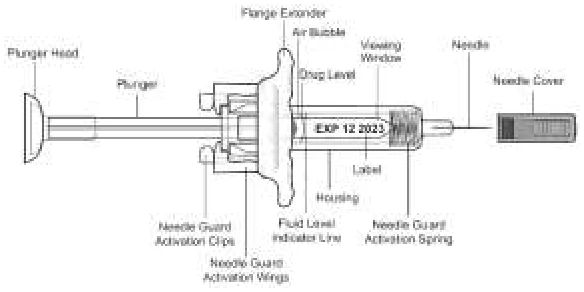
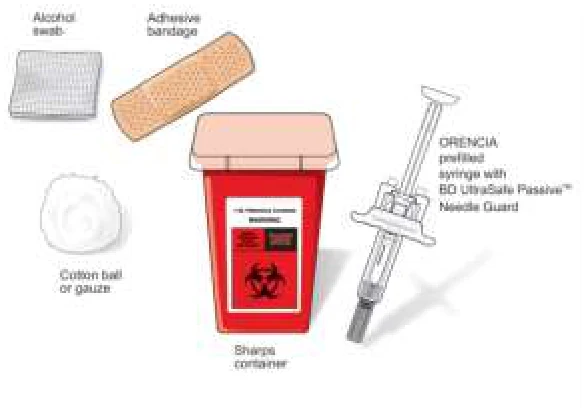
Figure 1
- The ORENCIA prefilled syringe is designed for easy use by you or your caregiver. It has a flange extender that makes it easier to hold the syringe and inject and a needle guard that automatically extends over the needle after the injection is complete (see Figure 1).
- Always handle the syringe carefully, especially when you are around other people, children and animals.
Before you use the ORENCIA prefilled syringe with BD UltraSafe PassiveTM Needle Guard with Flange Extenders
Do
- Always hold the syringe by the body of the syringe.
- Remove the syringe from the refrigerator 30 to 60 minutes prior to injecting.
- Check the expiration date on the carton and syringe (see Figure 1). Do not use if expired.
- Store unused syringes in the refrigerator in the original carton.
Have your additional injection supplies ready prior to injection.
Supplies checklist: Alcohol swab, cotton ball or gauze, adhesive bandage and Sharps container (see Figure 2).
Don’t
- Do not remove the needle cover until you are ready to inject.
- Do not pull back on the plunger at any time.
- Do not shake the ORENCIA syringe, as this may damage the medicine.
DO NOT FREEZE. If product has been frozen, do not use.
Figure 2
STEP 1: Get your syringe ready
A. Check the expiration date
- • The expiration date can be found on the ORENCIA carton and on each syringe.
- • If the expiration date has passed, do not use the prefilled syringe. Please contact your doctor or pharmacist for assistance.
- B. Let it warm up for 30 to 60 minutes
- • Find a comfortable space with a clean, flat working surface.
- • Remove the syringe from the refrigerator. Keep remaining unused syringes in their original carton and keep in refrigerator. DO NOT FREEZE.
- • Inspect the syringe for obvious flaws, but do not remove needle cover.
- • Allow the syringe to rest at room temperature for at least 30 to 60 minutes prior to injection. This may allow for a more comfortable injection experience.
- o Do not speed the warming process in any way, such as using the microwave or placing the syringe in warm water.
- C. Check the liquid in the prefilled syringe
- • Hold your ORENCIA prefilled syringe by the housing with the covered needle pointing down (see Figure 3).
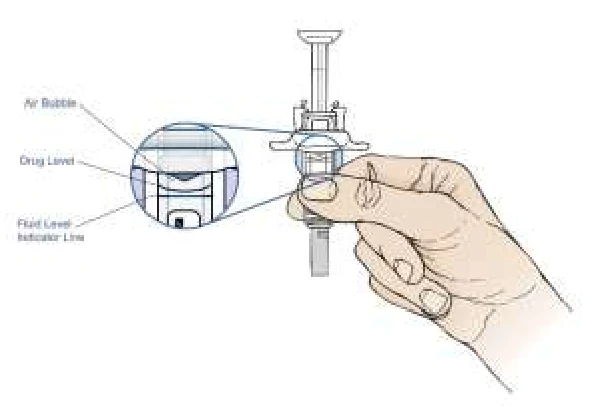
Figure 3
- Look at the liquid through the viewing window of your prefilled syringe. The liquid in your syringe should be clear to pale yellow. Do not inject if the liquid is cloudy, discolored or has large particles.
Confirm the drug level is above the fluid indicator level (see Figure 3). Do not inject
- if the drug level is outside of the fluid level indicator lines. It is normal to see an air bubble and there is no reason to remove it.
- D. Gather your additional supplies and keep them within easy reach.
- E. Wash your hands thoroughly with soap and warm water.
STEP 2: Choose and prepare a section on your body for the injection (injection site)
Have your ORENCIA prefilled syringe with BD UltraSafe PassiveTM Needle Guard with Flange Extenders ready for use immediately after preparing the injection site.
A. Choose your injection site
- • The front of your thigh is a recommended injection area. You may use your abdomen except for the 2-inch area around the navel (see Figure 4).
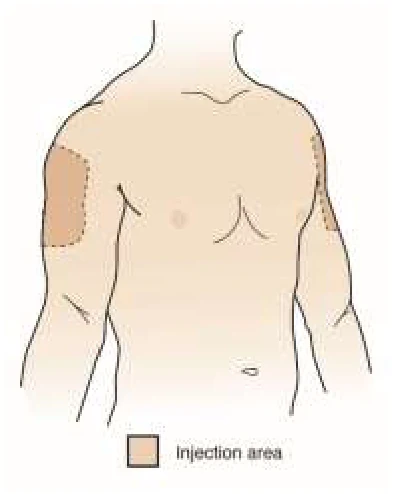
- • The outer area of the upper arms may also be used only if the injection is being given by a caregiver. Do not attempt to use the upper arm area by yourself (see Figure 5).
- • Choose a different injection site for each new injection. You may use the same thigh for weekly injections, as long as each injection is approximately 1 inch apart from the last time you injected yourself in that area.
- • Do not inject into areas where you skin is tender, bruised, red, scaly, or hard. Avoid any areas with scars or stretch marks.
| Areas appropriate for self-injection and caregiver injection |
|---|
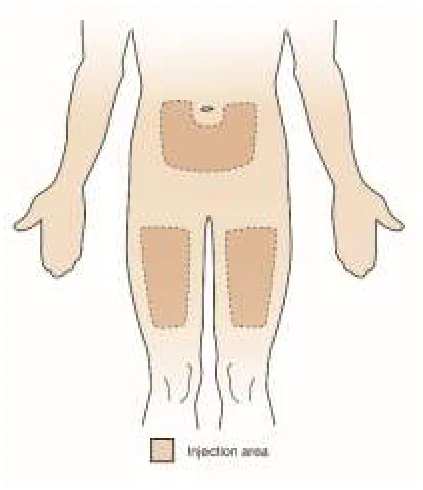
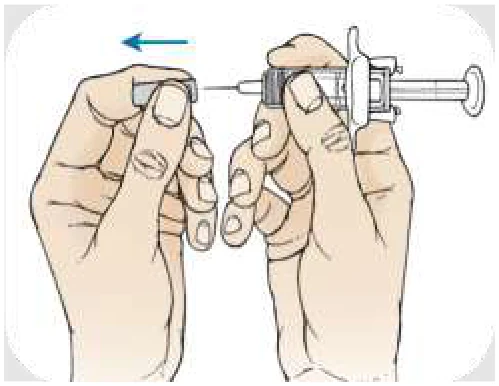
Figure 4
Additional injection area option for caregivers only
| Figure 5 |
|---|
B. Prepare your injection site
- • Wipe the injection site with an alcohol swab in a circular motion.
- • Let your skin dry before injecting. Do not touch the injection site again before giving the injection.
- • Do not fan or blow on the clean area.
STEP 3: Inject ORENCIA
A. Remove the needle cover
- • Do not touch the plunger while you remove the needle cover.
- • Hold the housing of the ORENCIA prefilled syringe with one hand and pull the needle cover straight off with your other hand (see Figure 6). Do not touch the plunger while you remove the needle cover.
- •
Do not remove the needle cover until you are ready to inject ORENCIA. Inject ORENCIA as soon as possible after removing the needle cover.
Figure 6
- • Discard the needle cover in your household trash.
- • There may be a small air bubble in the syringe tube containing the medication. There is no need to remove the air bubble.
- • You may notice a drop of fluid leaving the needle. This is normal and will not affect your dose.
- • Do not touch the needle or let it touch any surfaces.
- • Do not use the prefilled syringe if it is dropped without the needle cover in place.
- B. Position the prefilled syringe and inject ORENCIA
- • Hold the housing of your prefilled syringe in one hand between the thumb and index finger (see Figure 7).
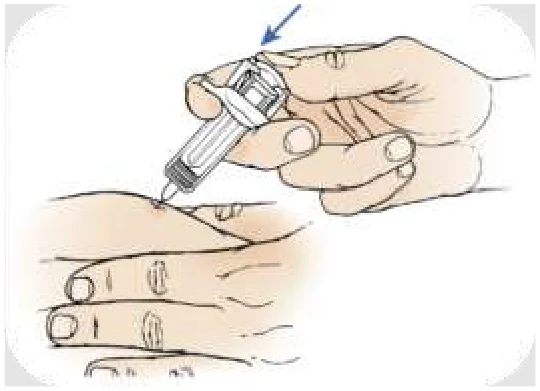
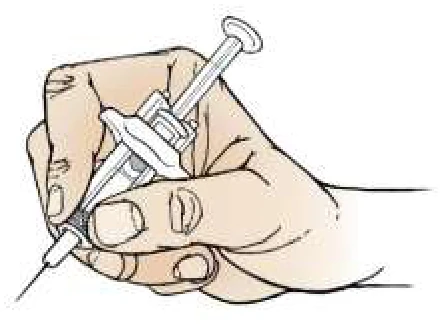
Figure 7
- Do not apply pressure to the plunger head until you are ready to begin your injection.
- Do not pull back on the plunger of the syringe at any time.
- Use your other hand and gently pinch the area of skin you cleansed. Hold firmly.
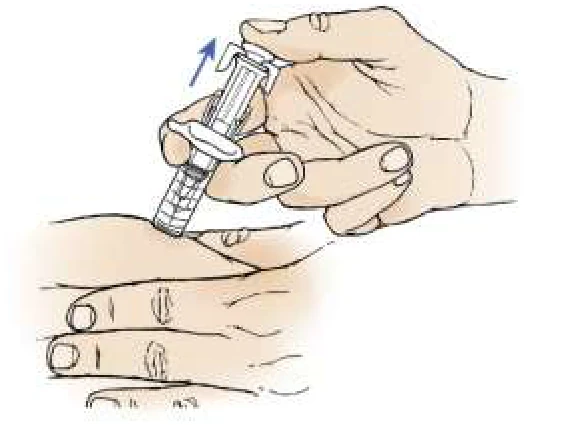
- Use a quick, dart-like motion to insert the needle into the pinched skin at a 45° angle (see Figure 8).
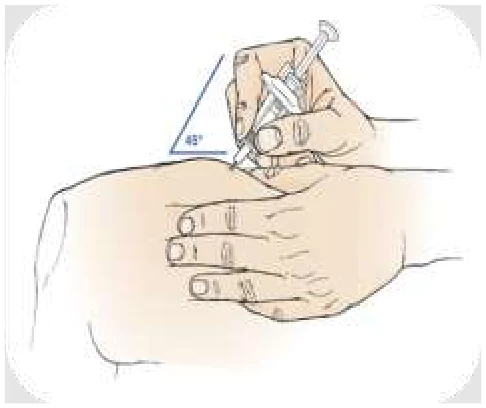
Figure 8
To inject all of the medicine, use your thumb to push the plunger until the plunger head is
completely between the needle guard sides (see Figure 9).
Figure 9
- When the plunger is pushed in as far as it will go, continue to apply pressure to the plunger head (see Figure 9).
- Slowly remove your thumb from the plunger head. This allows the empty syringe to move up until the entire needle is covered by the needle guard (see Figure 10).
Remove the needle from your skin and let go of the surrounding skin.
Figure 10
Press a cotton ball over the injection site and hold for 10 seconds.
- Do not rub the injection site. Slight bleeding is normal.
- If needed, you may apply a small adhesive bandage to the injection site.
STEP 4: Disposal and record keeping
A. Dispose of your used syringe in a Sharps container.
- Sharps containers are special puncture-resistant disposal bins that can be purchased at many pharmacies.
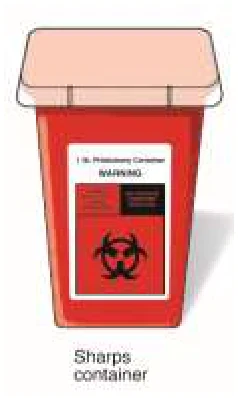
- If you do not have a Sharps container, you may dispose of your used syringe in a puncture-resistant hard plastic or metal container that can be closed with a lid or cap, such as a laundry detergent bottle or coffee can. Do not use glass or clear plastic containers.
- Always keep your Sharps container out of reach of children and animals.
- Ask your doctor, nurse or pharmacist about provincial and local laws regarding the proper disposal of medical products that contain needles.
- Do not throw away your used prefilled syringes in your household trash or recycling bins.
B. Record your injection
- Write down the date, time and specific part of the body where you injected yourself. It may be helpful to write down any questions or concerns about the injection so you can ask your healthcare provider.
If you have questions or concerns about your ORENCIA prefilled syringe with BD UltraSafe PassiveTM Needle Guard with Flange Extenders, please contact a healthcare provider familiar with ORENCIA.
This document plus the full product monograph, prepared for health professionals, can be obtained by contacting the sponsor, Bristol-Myers Squibb Canada at 1-866-463-6267.