


Product Monograph - PDP-Pyrazinamide
Pharmacology
Pyrazinamide is a highly specific agent and is active only against M. tuberculosis. Results of in vitro susceptibility testing with pyrazinamide are affected by the test media, inoculum size, and pH. In vitro, in media with a pH of 5.5, the minimum inhibitory concentration (MIC) of pyrazinamide for M. tuberculosis is generally less than 20 mcg/mL. In one in vitro study in 7H12 liquid media, MICs of the drug reported for M. tuberculosis were 50 mcg/mL at pH 5.5 and 400 mcg/mL at pH 5.95.
Resistance
Natural and acquired resistance to pyrazinamide have been demonstrated in vitro and in vivo in strains of M. tuberculosis. Resistant strains of initially susceptible organisms develop rapidly if pyrazinamide is used alone in the treatment of clinical tuberculosis. When pyrazinamide is combined with other antituberculosis agents in the treatment of the disease, emergence of resistant strains may be delayed or prevented. Although the exact mechanism(s) of resistance to pyrazinamide has not been determined, some strains of pyrazinamide-resistant M. tuberculosis do not appear to produce pyrazinamidase and therefore cannot convert the parent drug to pyrazinoic acid (POA), its microbiologically active metabolite. There is no evidence of cross-resistance between pyrazinamide and other antituberculosis agents currently available on the market.
Pharmacokinetics
Absorption
Pyrazinamide is well absorbed from the GI tract. Following a single 500 mg oral dose in healthy adults, peak plasma concentrations of pyrazinamide ranging from 9 to 12 mcg/mL are attained within 2 hours; plasma concentrations of the drug average 7 mcg/mL at 8 hours and 2 mcg/mL at 24 hours. Plasma concentrations following doses of 20-25 mg/kg reportedly range from 30 to 50 mcg/mL. Plasma concentrations of pyrazinoic acid, the major active metabolite of pyrazinamide, generally are greater than those of the parent drug and peak within 4-8 hours after an oral dose of the drug.
In a single dose study in healthy fasting males, the extent of absorption (as measured by area under the plasma concentration-time curve) of isoniazid, rifampin, or pyrazinamide in dosages of 250, 600, or 1500 mg, respectively, was similar whether the drugs were administered individually as capsules (rifampin) and tablets (isoniazid and pyrazinamide) or as a fixed combination containing isoniazid 50 mg, rifampin 120 mg, and pyrazinamide 300 mg per tablet.
Distribution
Pyrazinamide is widely distributed into body tissues and fluids including the liver, lungs kidneys, and CSF. In a limited number of adults with tuberculous meningitis, mean serum and CSF concentrations of pyrazinamide 2 hours after an oral dose of approximately 41 mg/kg were 52 and 39 mcg/mL, respectively. Within 5 hours after an oral dose, CSF concentrations of pyrazinamide are reported to be approximately equal to concurrent plasma concentrations of the drug. Plasma protein binding of pyrazinamide (determined by ultrafiltration) in a limited number of healthy men averaged approximately 17% at a pyrazinamide concentration of 20 mcg/mL. It is not known if pyrazinamide crosses the placenta or if it is distributed into milk.
Elimination
The plasma half-life of pyrazinamide is 9 to 10 hours in patients with normal renal and hepatic function. The plasma half-life of the drug may be prolonged in patients with impaired renal (approximately 26 hours) or hepatic function.
Pyrazinamide is hydrolyzed in the liver to, pyrazinoic acid, the major active metabolite; some hydrolysis may also occur in the stomach and bladder. Pyrazoic acid is hyroxylated to 5-hydroxypyrazinoic acid, the major excretory product. Within 24 hours, approximately 70% of an oral dose of pyrazinamide is excreted as unchanged drug; the remainder is excreted as metabolites. A single 3 to 4-hour hemodialysis session reduced serum pyrazinamide concentrations by approximately 55% and pyrazinoic acid concentrations by 50 to 60%.
INDICATIONS AND CLINICAL USE
Pyrazinamide is indicated in combination with other antituberculosis agents in the treatment of clinical tuberculosis.
To reduce the development of drug-resistant bacteria and maintain the effectiveness of pyrazinamide, and other antibacterial drugs, pdp-PYRAZINAMIDE should be used only to treat infections that are proven or strongly suspected to be caused by susceptible bacteria. When culture and susceptibility information are available, they should be considered in selecting or modifying antibacterial therapy. In the absence of such data, local epidemiology and susceptibility patterns may contribute to the empiric selection of therapy.
PRECAUTIONS AND CONTRAINDICATIONS
Pyrazinamide should be used only when close observation of the patient is possible. Serum AST (SGOT), ALT (SGPT), and uric acid concentrations should be determined prior to and every 2 to 4 weeks during pyrazinamide therapy. If signs of hepatic damage occur, pyrazinamide should be discontinued.
Pyrazinamide should be used with caution in patients with renal failure or a history of gout. The drug should also be used with caution in diabetics because the management of diabetes mellitus may become more difficult during pyrazinamide therapy. Pyrazinamide is contraindicated inpatients with severe hepatic damage and in patients with known hypersensitivity to the drug.
Patients hypersensitive to ethionamide, isoniazid, niacin (nicotinic acid), or other chemically related medications may be hypersensitive to this medication also.
Pediatric Precautions
Safe use of pyrazinamide in children has not been definitely established. Because of the drug's potential toxicity, the manufacturer recommends that its use in children be avoided unless essential to therapy.
Geriatric Precautions
Appropriate studies on the relationship of age to the effects of pyrazinamide have not been performed in the geriatric population. However, no geriatric-specific problems have been documented to date.
Carcinogenicity
Pyrazinamide was administered in the diet of rats and mice. The estimated daily dose was 2 g/kg, or 40 times the maximum human dose, for the mouse, and 0.5 g/kg, or 10 times the maximum human dose, for the rat. Pyrazinamide was not carcinogenic in rats or male mice. No conclusion was possible for female mice due to insufficient numbers of surviving control mice.
Mutagenicity
Pyrazinamide was not mutagenic in the Ames bacterial test (Salmonella), but it did induce chromosomal aberrations in human lymphocyte cell cultures.
Pregnancy and Lactation
Animal reproduction studies have not been conducted with pyrazinamide. Adequate and well- controlled studies in humans have not been done. The risk for teratogenicity has not been determined. If the organism is drug-susceptible, pregnant women can be safely treated with isoniazid, rifampin, and ethambutol for 9 months. If resistance to any of these medications is probable and susceptibility to pyrazinamide is likely, its use should be considered.
WARNINGS
| Reports from the Centers for Disease Control and Prevention of the US showed high rates of hospitalization and death from liver injury following the combined use of pdp-PYRAZINAMIDE and rifampin for the treatment of latent tuberculosis because of a higher potential hepatotoxicity. |
Hepatic Effects
The most frequent adverse effect of pyrazinamide is hepatotoxicity. Transient increases in serum aminotransaminase concentrations, jaundice, hepatitis, and a syndrome of fever, anorexia, malaise, liver tenderness, hepatomegaly, and splenomegaly have been reported in patients receiving pyrazinamide. Rarely, acute yellow atrophy of the liver and death have occurred. Hepatotoxicity appears to be dose related and may occur at any time during therapy. With a dosage of 3 g daily, hepatotoxicity occurs in approximately 15% of patients, and jaundice occurs in 2-3 %. Recent studies in adults with tuberculosis indicate that the incidence of drug-induced adverse hepatic effects in patients who receive 25-35 mg/kg of pyrazinamide daily in the initial phase (i.e., first 2 months) of isoniazid and rifampin therapy is the same as that in patients who receive isoniazid and rifampin therapy without pyrazinamide.
Other Effects
Pyrazinamide inhibits renal excretion of urates, frequently resulting in hyperuricemia. This effect is usually asymptomatic but acute gout has occurred in some patients.
Non-gouty polyarthralgia, which appears to be related to increased serum uric acid concentrations, reportedly occurs in up to 40% of patients receiving pyrazinamide. Uricosuric agents administered concurrently may reduce pyrazinamide-induced hyperuricemia; however, if hyperuricemia is severe or is accompanied by acute gouty arthritis, pyrazinamide should be discontinued.
Laboratory Value Alterations
Urine ketone determinations
Pyrazinamide may react with sodium nitroprusside tests; both pyrazinamide and pyrazinoic acid produce an interfering ping-brown color reaction with nitroprusside.
Alanine aminotransferase (ALT[SGPT]) and Aspartate aminotransferase (AST[SGOT])
Values may be increased
Serum uric acid
Concentration may be increased.
Susceptibility / Resistance
Development of Drug Resistant Bacteria
Prescribing pdp-PYRAZINAMIDE in the absence of a proven or strongly suspected bacterial infection is unlikely to provide benefit to the patient and risks the development of a drug-resistant bacteria.
Drug Interactions
Interactions between pyrazinamide and the following medications (or combinations containing the following medications) have been reported: allopurinol; colchicine; probenecid; sulfinpyrazone (pyrazinamide may increase serum uric acid concentrations and decrease the efficacy of gout therapy; dosage adjustments of these medications may be necessary to control hyperuricemia and gout when anti-gout medications are used concurrently with pyrazinamide). Cyclosporine (concurrent use with pyrazinamide may decrease the serum concentrations of cyclosporine, possibly leading to inadequate immunosuppression; cyclosporine serum concentrations should be monitored).
ADVERSE REACTIONS
More frequent incidence: arthralgia (pain and swelling of joints, especially big toe, ankle, and knee; tense, hot skin over affected joints); hepatotoxicity (loss of appetite, unusual tiredness or weakness, yellow eyes or skin), mostly related to large doses, i.e., 40-50 mg per kg of body weight per day for prolonged periods of time.
Rare incidence: maculopapular rash, fever, acne, porphyria, dysuria, and photosensitivity with reddish-brown discoloration of exposed skin.
DOSAGE AND ADMINISTRATION
Since bacterial resistance may develop rapidly when pyrazinamide is administered alone in the treatment of tuberculosis, it should only be administered concurrently with other antituberculosis agents.
Usual adult and adolescent dose
Tuberculosis - In combination with other antitubercular drugs: oral, 15 to 30 mg per kg of body weight once a day; or 50 to 70 mg per kg of body weight two or three times a week, depending on the treatment regimen.
Note: the usual dose of pyrazinamide for persons infected with human immunodeficiency virus (HIV) is 20 to 30 mg per kg of body weight per day for the first two months of therapy.
Usual adult prescribing limits
Up to a maximum of 2 grams when taken daily, 3 grams per dose for the three times a week regimen, 4 grams per dose for the two times a week regimen.
Pediatric dose if indicated
30 mg per kg of body weight daily or less.
Note: the usual maximum dose in children is 2 grams when taken daily, 3 grams per dose for the three times a week regimen, 4 grams per dose for the two times a week regimen.
PHARMACEUTICAL INFORMATION
Drug Substance: Pyrazinamide, USP
Chemical Name: Pyrazinecarboxamide Structural Formula:
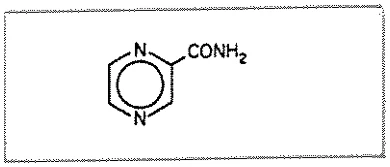
Molecular Formula: C5H5N3O
Molecular Weight: 123.11 g/mol
Description: Pyrazinamide, a derivative of niacinamide, is a synthetic antituberculosis agent. The drug occurs as a white to practically white, odorless or practically odorless, crystalline powder and is sparingly soluble in water and slightly soluble in alcohol. Pyrazinamide has a pKa of 0.5.
Composition: pdp-PYRAZINAMIDE (pyrazinamide) tablets contain: Pyrazinamide, USP
Non-medicinal Ingredients: Pregelatinized Starch, Corn Starch, Microcrystalline Cellulose, Stearic Acid, Colloidal Silicon Dioxide
STABILITY AND STORAGE RECOMMENDATIONS
pdp-PYRAZINAMIDE Tablets should be stored between 15° C and 30°C. Store in a tightly closed container.
AVAILABILITY
Each white, round, biconvex tablet debossed “pms” on one side and scored on the other side, contains: Pyrazinamide, USP 500 mg.
Available in bottles of 100 tablets.