


Product Monograph - Pergoveris
RECENT MAJOR LABEL CHANGES
| 1 Indications | 10/2024 |
|---|
TABLE OF CONTENTS
Sections or subsections that are not applicable at the time of authorization are not listed.
RECENT MAJOR LABEL CHANGES ............................................................................................. 2
TABLE OF CONTENTS ............................................................................................................... 2
PART I: HEALTH PROFESSIONAL INFORMATION ....................................................................... 4
1 INDICATIONS ................................................................................................................ 4
1.1 Pediatrics ............................................................................................................... 4
1.2 Geriatrics ............................................................................................................... 4
2 CONTRAINDICATIONS .................................................................................................. 4
4 DOSAGE AND ADMINISTRATION .................................................................................. 4
4.1 Dosing Considerations ........................................................................................... 4
4.2 Recommended Dose and Dosage Adjustment ...................................................... 5
4.4 Administration ....................................................................................................... 5
4.5 Missed Dose .......................................................................................................... 6
5 OVERDOSAGE ............................................................................................................... 6
6 DOSAGE FORMS, STRENGTHS, COMPOSITION AND PACKAGING .................................. 6
7 WARNINGS AND PRECAUTIONS ................................................................................... 7
7.1 Special Populations ................................................................................................... 10
7.1.1 Pregnant Women ................................................................................................ 10
7.1.2 Breast-feeding ..................................................................................................... 10
7.1.3 Pediatrics ............................................................................................................. 10
7.1.4 Geriatrics ............................................................................................................. 10
8 ADVERSE REACTIONS ................................................................................................. 11
8.1 Adverse Reaction Overview ...................................................................................... 11
8.2 Clinical Trial Adverse Reactions ................................................................................. 11
8.3 Less Common Clinical Trial Adverse Reactions ......................................................... 14
8.4 Abnormal Laboratory Findings: Hematologic, Clinical Chemistry and Other Quantitative Data Clinical Trial Findings .......................................................................... 14
8.5 Post-Market Adverse Reactions ................................................................................ 14
9 DRUG INTERACTIONS ................................................................................................. 14
9.4 Drug-Drug Interactions .............................................................................................. 14
9.5 Drug-Food Interactions ............................................................................................. 14
10 CLINICAL PHARMACOLOGY ........................................................................................ 15
10.1 Mechanism of Action ............................................................................................... 15
10.2 Pharmacodynamics ................................................................................................. 15
10.3 Pharmacokinetics .................................................................................................... 15
11 STORAGE, STABILITY AND DISPOSAL .......................................................................... 18
12 SPECIAL HANDLING INSTRUCTIONS ............................................................................ 19
PART II: SCIENTIFIC INFORMATION ........................................................................................ 20
13 PHARMACEUTICAL INFORMATION ............................................................................. 20
14 CLINICAL TRIALS ......................................................................................................... 22
14.1 Trial Design and Study Demographics ..................................................................... 22
14.2 Study Results ........................................................................................................... 24
14.3 Comparative Bioavailability Studies ........................................................................ 24
16 NON-CLINICAL TOXICOLOGY ...................................................................................... 26
PATIENT MEDICATION INFORMATION ................................................................................... 27
INSTRUCTIONS FOR USE (Powder and Diluent for Solution for Injection)
INSTRUCTIONS FOR USE (Solution for Injection in a Pre-filled Pen)
PART I: HEALTH PROFESSIONAL INFORMATION
1 INDICATIONS
PERGOVERIS (follitropin alfa/lutropin alfa [150 IU:75 IU]) is indicated for:
stimulation of follicular development in women with severe LH and FSH deficiency who are candidates for concurrent therapy with FSH and LH.
1.1 Pediatrics
No data are available to Health Canada; therefore, Health Canada has not authorized an indication for pediatric use.
1.2 Geriatrics
No data are available to Health Canada; therefore, Health Canada has not authorized an indication for geriatric use.
2 CONTRAINDICATIONS
PERGOVERIS (follitropin alfa/lutropin alfa [150 IU:75 IU]) is contraindicated in patients with:
- Hypersensitivity to the active substances follitropin alfa and lutropin alfa or to any of the excipients or component of the container. For a complete listing, see 6 DOSAGE FORMS, STRENGTHS, COMPOSITION AND PACKAGING section of the Product Monograph.
- Primary ovarian failure or anovulation with normal levels of LH and FSH
- Uncontrolled thyroid or adrenal dysfunction
- Tumours of the hypothalamus or pituitary gland
- Ovarian enlargement or cyst of undetermined origin
- Gynecological hemorrhages of undetermined origin
- Sex hormone dependent tumours of the reproductive tract and accessory organs
- Current pregnancy or lactation
4 DOSAGE AND ADMINISTRATION
4.1 Dosing Considerations
Treatment with PERGOVERIS (follitropin alfa/lutropin alfa [150 IU:75 IU]) should be initiated under the supervision of a physician experienced in the treatment of fertility problems.
In clinical trials, lutropin alfa in combination with follitropin alfa has been shown to increase the ovarian sensitivity to gonadotropins.
When using PERGOVERIS powder for injection, the powder should be reconstituted immediately prior to use with the diluent provided.
4.2 Recommended Dose and Dosage Adjustment
PERGOVERIS is intended for subcutaneous administration.
In LH and FSH deficient women, the objective of PERGOVERIS therapy is to promote follicular development followed by final maturation after the administration of human chorionic gonadotropin (hCG). PERGOVERIS should be given as a course of daily injections. If these patients are amenorrheic and have low endogenous estrogen secretion, treatment can commence at any time.
A recommended regimen commences with one dose of PERGOVERIS (containing 150 IU r-hFSH/75 r-hLH) daily. If less than the daily recommended dose is used, the follicular response may be unsatisfactory because the amount of lutropin alfa may be insufficient.
Treatment should be tailored to the individual patient’s response as assessed by measuring follicle size by ultrasound and estrogen response.
If an FSH dose increase is deemed appropriate, dose adaptation should preferably be after 7-14 day intervals and preferably by 37.5-75 IU increments using a licensed follitropin alfa preparation. It may be acceptable to extend the duration of stimulation in any one cycle to up to 5 weeks.
When an optimal response is obtained, a single injection of 250 µg r-hCG or 5,000 IU to 10,000 IU urinary hCG should be administered 24-48 hours after the last PERGOVERIS injection. The patient is recommended to have coitus on the day of, and on the day following, hCG administration. Alternatively, intrauterine insemination (IUI) or another medically assisted reproduction procedure may be performed based on the physician’s judgement of the clinical case.
Luteal phase support may be considered since lack of substances with luteotrophic activity (LH/hCG) after ovulation may lead to premature failure of the corpus luteum.
If an excessive response is obtained, treatment should be stopped and hCG withheld. Treatment should recommence in the next cycle at a dose of FSH lower than that of the previous cycle.
In clinical trials, patients with severe FSH and LH deficiency were defined by an endogenous serum LH level < 1.2 IU/L as measured in a central laboratory. However, it should be taken into account that there are variations between LH measurements performed in different laboratories. In these trials the ovulation rate per cycle was 70-75%.
4.4 Administration
PERGOVERIS is intended for subcutaneous administration. The injection site should be alternated daily. Self-administration of PERGOVERIS should only be performed by patients who have been prescribed the medication by a licensed fertility specialist.
PERGOVERIS powder and diluent for solution for injection
For reconstitution and administration instructions for the powder and diluent for solution for injection, see Patient medication information section.
PERGOVERIS solution for injection in a pre-filled pen
PERGOVERIS solution for injection is available in pre-filled pens that can deliver 2 doses, 3 doses, or 6 doses of 150 IU follitropin alfa and 75 IU lutropin alfa.
For administration and instructions on how to use the pre-filled pen, see Patient medication information section.
4.5 Missed Dose
If a dose is missed, do not take a double dose to make up for the missed dose. In this case, a healthcare professional should be consulted.
5 OVERDOSAGE
The effects of an overdose of PERGOVERIS (follitropin alfa/lutropin alfa [150 IU:75 IU]) are unknown, nevertheless there is a possibility that OHSS may occur, which is further described in 7 WARNINGS AND PRECAUTIONS, Overstimulation of the Ovary section of the Product Monograph.
For management of a suspected drug overdose, contact your regional poison control centre.
6 DOSAGE FORMS, STRENGTHS, COMPOSITION AND PACKAGING
PERGOVERIS powder and diluent for solution for injection
PERGOVERIS (follitropin alfa/lutropin alfa for injection [150 IU:75 IU]) is presented as a powder and diluent for injection. The powder is presented in 3 mL vials (Type I glass) with stopper (bromobutyl rubber), aluminium seal ring and flip-off cap. The diluent for reconstitution is presented in 3 mL vials (Type I glass) with a Teflon-coated rubber stopper (latex-free), an aluminium seal ring and a flip-off cap.
The product is supplied in packs of 1, 3 and 10 vials with the corresponding number of diluent vials. Not all pack sizes may be marketed.
One vial of powder contains 150 IU (equivalent to 11 micrograms) of follitropin alfa and 75 IU (equivalent to 3.0 micrograms) of lutropin alfa.
The reconstituted solution contains 150 IU r-hFSH and 75 IU r-hLH per milliliter.
Table 1 – Dosage Forms, Strengths, Composition and Packaging
PERGOVERIS solution for injection in a pre-filled pen
PERGOVERIS (follitropin alfa/lutropin alfa injection [150 IU:75 IU]) is a clear, colourless to slightly yellow solution with a pH of 6.5-7.5. The solution is presented in 3 mL colourless glass cartridges [type I borosilicate glass, with a grey bromobutyl rubber plunger stopper and a crimp cap made with grey rubber stopper (latex-free) septum and aluminium] pre-assembled in a pre-filled pen.
Each multidose pre-filled pen contains one of either:
- 300 IU (equivalent to 22 micrograms) of follitropin alfa (r-hFSH) and 150 IU (equivalent to 6 micrograms) of lutropin alfa (r-hLH) in 0.48 ml solution and can deliver two doses of PERGOVERIS 150 IU/75 IU;
| Route of Administration | Dosage Form / Strength/Composition | Non-medicinal Ingredients |
| Subcutaneous injection (SC) | Lyophilized powder for reconstitution with 1 mL sterile water for injection / 150 IU of r-hFSH and 75 IU of r-hLH | sucrose, disodium phosphate dihydrate, sodium dihydrogen phosphate monohydrate, methionine, polysorbate 20. |
- 450 IU (equivalent to 33 micrograms) of follitropin alfa (r-hFSH) and 225 IU (equivalent to 9 micrograms) of lutropin alfa (r-hLH) in 0.72 ml and can deliver three doses of PERGOVERIS150 IU/75 IU; or
- 900 IU (equivalent to 66 micrograms) of follitropin alfa (r-hFSH) and 450 IU (equivalent to 18 micrograms) of lutropin alfa (r-hLH) in 1.44 ml and can deliver six doses of PERGOVERIS 150 IU/75 IU.
The product is supplied in packs of:
- 1 PERGOVERIS 300 IU/150 IU pre-filled pen and 5 injection needles.
- 1 PERGOVERIS 450 IU/225 IU pre-filled pen and 7 injection needles.
- 1 PERGOVERIS 900 IU/450 IU pre-filled pen and 14 injection needles.
Table 2 – Dosage Forms, Strengths, Composition and Packaging
7 WARNINGS AND PRECAUTIONS
General
PERGOVERIS (follitropin alfa/lutropin alfa [150 IU:75 IU]) contains potent gonadotropic substances capable of causing mild to severe adverse reactions, and should only be used by physicians who are thoroughly familiar with infertility problems and their management.
Patients undergoing stimulation of follicular growth are at an increased risk of developing hyperstimulation in view of possible excessive estrogen response and multiple follicular development.
Information for Patients:
PERGOVERIS is a combination of GONAL-f and LUVERIS at a fixed dose of 150 IU of FSH and 75 IU LH in a 2:1 ratio. Prior to therapy with PERGOVERIS, patients should be informed of the duration of treatment and need for monitoring. The risks of ovarian hyperstimulation syndrome in women (see Overstimulation of the Ovary) and other possible adverse reactions (see 8 ADVERSE REACTIONS) should be discussed.
| Route of Administration | Dosage Form / Strength/Composition | Non-medicinal Ingredients |
| Subcutaneous injection (SC) | Solution for injection in a pre-filled pen: 300 IU r-hFSH/150 IU r-hLH in 0.48 mL; 450 IU r-hFSH/225 IU r-hLH in 0.72 mL; 900 IU r-hFSH/450 IU r-hLH in 1.44 mL. | arginine monohydrochloride, phenol, disodium phosphate dehydrate, sodium dihydrogen phosphate monohydrate, poloxamer 188, methionine, sodium hydroxide (for pH adjustment), phosphoric acid (for pH adjustment). |
Selection of Patients:
- 1. Before starting PERGOVERIS therapy, a thorough gynecologic and endocrinologic evaluation must be performed. This should include an assessment of pelvic anatomy and exclusion of pregnancy.
- 2. Patients should have severe LH and FSH deficiency as determined by the HCP
- 3. Patients in later reproductive life have a greater predisposition to endometrial carcinoma as well as a higher incidence of anovulatory disorders. A thorough diagnostic evaluation should always be performed in patients who demonstrate abnormal uterine bleeding or other signs of endometrial abnormalities.
Carcinogenesis and Mutagenesis
Long-term studies to evaluate the carcinogenic potential of PERGOVERIS or its constituent drugs LUVERIS and GONAL-f have not been performed. There have been reports of ovarian and other reproductive system neoplasms, both benign and malignant, in women who have undergone multiple drug regimens for infertility treatment. The causality of these neoplasms has not been established.
Respiratory and Cardiovascular
The following paragraph describes serious medical events reported following gonadotropin therapy.
Serious pulmonary conditions (e.g., atelectasis, acute respiratory distress syndrome and exacerbation of asthma) have been reported. In addition, thromboembolic events both in association with, and separate from OHSS have been reported. Intravascular thrombosis and embolism can result in reduced blood flow to critical organs or the extremities. Sequelae of such events have included venous thrombophlebitis, pulmonary embolism, pulmonary infarction, myocardial infarction, cerebral vascular occlusion (ischemic stroke), and arterial occlusion resulting in loss of limb. In rare cases, pulmonary complications and/or thromboembolic events have resulted in death.
In women with recent or ongoing thromboembolic disease or women with generally recognized risk factors for thromboembolic events, such as personal or family history, treatment with gonadotropins may further increase the risk for aggravation or occurrence of such events. In these women, the benefits of gonadotropin administration need to be weighed against the risks. It should be noted however, that pregnancy itself as well as OHSS also carries an increased risk of thrombo-embolic events.
Hematologic
Patients with porphyria or a family history of porphyria should be closely monitored during treatment with PERGOVERIS. Deterioration or a first appearance of this condition may require cessation of treatment.
Multiple Pregnancies
In patients undergoing induction of ovulation, the incidence of a multiple pregnancy is increased compared with natural conception. The majority of multiple conceptions are twins. Multiple pregnancies, especially high order, carry an increased risk of adverse maternal and perinatal outcomes. To minimize the risk of a multiple pregnancy, careful monitoring of ovarian response is recommended.
In patients undergoing ART procedures the risk of a multiple pregnancy are related mainly to the number of embryos transferred, their quality and the patient age.
The patients should be advised of the potential risk of multiple births before starting treatment.
Patients should be informed of options available in the case of over-stimulation (e.g., egg retrieval and embryo transfer through ART, or cycle cancellations) and the need to abstain from unprotected intercourse.
Discontinuation
In cases where more than two follicles are mature before triggering ovulation, treatment discontinuation or conversion to ART should be considered.
Ectopic Pregnancy
Women with a history of tubal disease are at risk of ectopic pregnancy, whether the pregnancy is a product of spontaneous conception or of fertility treatments. The prevalence of ectopic pregnancy after IVF was reported to be 2 to 5%, as compared to 1 to 1.5% in the general population.
There have been reports of ovarian and other reproductive system neoplasms, both benign and malignant, in women who have undergone multiple drug regimens for infertility treatment. It is not yet established whether or not treatment with gonadotropins increases the baseline risk of these tumours in infertile women.
Pregnancy Loss
The incidence of pregnancy loss by miscarriage or abortion is higher in patients undergoing stimulation of follicular growth for ovulation induction than following natural conception.
Overstimulation of the Ovary:
Ovarian Enlargement
Mild to moderate uncomplicated ovarian enlargement which may be accompanied by abdominal distension and/or abdominal pain may occur in patients treated with gonadotropins, such as PERGOVERIS. These conditions generally regress without treatment within two or three weeks. Careful monitoring of ovarian response can minimize the risk of overstimulation.
Ovarian Hyperstimulation Syndrome (OHSS)
OHSS is a medical event distinct from uncomplicated ovarian enlargement. It comprises marked ovarian enlargement, high serum sex steroids, and an increase in vascular permeability which can result in an accumulation of fluid in the peritoneal, pleural and, rarely, in the pericardial cavities. The early warning signs of development of OHSS are severe pelvic pain, nausea, vomiting, and weight gain.
OHSS can manifest itself with increasing degrees of severity. Mild manifestations of OHSS include abdominal pain, abdominal discomfort and distension and enlarged ovaries. Moderate OHSS may additionally present with nausea, vomiting, ultrasound evidence of ascites and marked ovarian enlargement.
Severe OHSS further includes symptoms such as severe ovarian enlargement, weight gain, dyspnea or oliguria. Clinical evaluation may reveal hypovolemia, hemoconcentration, electrolyte imbalances, ascites, pleural effusions, or acute pulmonary distress. Very rarely, severe OHSS may be complicated by ovarian torsion or thromboembolic events, such as pulmonary embolism, ischemic stroke or myocardial infarction (see Respiratory and Cardiovascular). Transient liver function test abnormalities suggestive of hepatic dysfunction have been reported in association with OHSS.
Independent risk factors for developing OHSS include young age, lean body mass, polycystic ovarian syndrome, higher doses of exogenous gonadotropins, high absolute or rapidly rising serum estradiol levels and previous episodes of OHSS, large number of developing ovarian follicles and large number of oocytes retrieved in assisted reproductive technology (ART) cycles.
OHSS may be more severe and more protracted if pregnancy occurs. OHSS develops rapidly; therefore, patients should be followed for at least two weeks after hCG administration. Most often, OHSS occurs after treatment has been discontinued and reaches its maximum severity at seven to ten days following treatment. Usually, OHSS resolves spontaneously with the onset of menses. If there is evidence that OHSS may be developing prior to hCG administration, hCG must be withheld.
If severe OHSS occurs, treatment with gonadotropins must be stopped and the patient should be hospitalized. A physician who is experienced in the management of fluid/electrolyte imbalances and/or OHSS should be consulted.
Patients should be counselled to recognize signs and symptoms of hyperstimulation, as OHSS can quickly progress to become a serious medical event.
In 6 clinical trials, 102 hypogonadotropic hypogonadal patients were initially assigned to receive LH 75IU. Overall, there were a total of 204 treatment cycles with concurrent/co-administration of 150 IU FSH and 75 IU LH for the purpose of follicular development. Moderate or severe OHSS was reported in 6/204 (2.9%) treatment cycles.
Congenital Anomalies
The prevalence of congenital anomalies after the use of ART may be slightly higher than from spontaneous conceptions although it is unclear whether this is related to factors inherent to the couple’s infertility or the ART procedures.
7.1 Special Populations
7.1.1 Pregnant Women
PERGOVERIS should not be used during pregnancy (see 2 CONTRAINDICATIONS).
7.1.2 Breast-feeding
PERGOVERIS should not be used during lactation (see 2 CONTRAINDICATIONS).
7.1.3 Pediatrics
No data are available to Health Canada; therefore, Health Canada has not authorized an indication for pediatric use.
7.1.4 Geriatrics
No data are available to Health Canada; therefore, Health Canada has not authorized an indication for geriatric use.
8 ADVERSE REACTIONS
8.1 Adverse Reaction Overview
The most common adverse events reported were (frequency ≥1%): headache, abdominal pain, nausea, breast pain female, ovarian hyperstimulation, injection site reactions, pain and ovarian cysts. For more detailed information about most serious adverse reactions and those where there have been reports of particularly severe cases, see 7 WARNING AND PRECAUTIONS.
8.2 Clinical Trial Adverse Reactions
Clinical trials are conducted under very specific conditions. The adverse reaction rates observed in the clinical trials; therefore, may not reflect the rates observed in practice and should not be compared to the rates in the clinical trials of another drug. Adverse reaction information from clinical trials may be useful in identifying and approximating rates of adverse drug reactions in real-world use.
The safety of concurrent or combined use in a single injection of follitropin alfa and lutropin alfa was examined in six clinical studies that treated 170 women with hypogonadotropic hypogonadism. Among all these patients, there are 204 treatment cycles with administration of 75 IU LUVERIS and 150 IU GONAL-f. Summary table of adverse drug reactions from controlled trials following concurrent/co-administration of 150 IU FSH and 75 IU LH with incidence rate ≥ 1% is presented in Table 3 below.
Table 3: Adverse Events Reported in ≥1% Patients in All Cycles in All Hypogonadotropic Hypogonadal Patients in Studies 6253, 6905(a), 7798(b), 8297(c), 21008, and 21415
| Study | 6253 | 6905 | 7798 | 8297 | 21008 | 21415 |
|---|---|---|---|---|---|---|
| Trial description | Phase II/III open-label, randomized, dose-finding, comparative, parallel group, multicentre study, n=38 | Phase II/III open-label, randomized, dose-finding, comparative, parallel group, multicentre study, n=40 | Phase III randomized, dose-finding, multicentre study, n=15 | Phase III non-comparative, multicentre study, n=38 | Phase III prospecitve, randomized, controlled, double-blind, multicentre study, n=39 | Phase III open-label, non-comparative, multicentre study, n=31 |
| Number of treatment cycles with r-hLH 75 IU + r-hFSH 150 IU | 16 | 16 | 12 | 80 | 26 | 54 |
| Headache | 3 (18.8%) | 1 (6.3%) | 1 (1.3%) | 4 (15.4%) | 3 (5.6%) | |
| Nausea | 1 (6.3%) | 1 (6.3%) | 1 (1.3%) | 2 (7.7%) | 2 (3.7%) | |
| Ovarian hyperstimulation | 1 (6.3%) | 1 (8.3%) | 3 (3.8%) | 0 | 1 (1.9%) | |
| Breast pain female | 2 (12.5%) | 2 (12.5%) | 2 (3.7%) | |||
| Abdominal pain | 1 (6.3%) | 4 (15.4%) | 2 (3.7%) | |||
| Ovarian cyst | 1 (3.8%) | 1 (1.9%) | ||||
| Flatulence | 0 | 1 (3.8 %) | 5 (9.3%) | |||
| Injection site reaction | 0 | 2 (7.7%) | 2 (3.7%) | |||
| Dysmenorrhea | 2 (12.5%) | |||||
| Ovarian disorder | 1 (6.3%) | 1 (1.9%) | ||||
| Diarrhea | 1 (6.3%) | 0 | 1 (1.9%) | |||
| Constipation | 1 (3.8 %) | 2 (3.7%) | ||||
| Pain | 2 (12.5%) | 0 | 1 (1.9%) | |||
| Fatigue | 1 (6.3%) | 1 (3.8%) | 1 (1.9%) | |||
| Upper respiratory tract infection | 0 | 1 (1.9%) |
8.3 Less Common Clinical Trial Adverse Reactions
The less commonly reported adverse events from clinical trials is as follows:
Infections and Infestations: Upper respiratory tract infection (0.5%)
8.4 Abnormal Laboratory Findings: Hematologic, Clinical Chemistry and Other Quantitative Data Clinical Trial Findings
During the clinical trials or in the post-market setting for the product, no clinically significant changes in laboratory findings or abnormal laboratory findings were identified.
8.5 Post-Market Adverse Reactions
The following adverse reactions have been identified during post-approval of PERGOVERIS powder/solution for injection or concurrent use of GONAL-f and LUVERIS. Because these reactions are reported voluntarily from a population of uncertain size, it is not always possible to reliably estimate their frequency or establish a causal relationship to PERGOVERIS exposure.
Immune system disorders: Mild to severe hypersensitivity reactions including anaphylactic reactions and shock
- Headache
- Thromboembolism may occur very rarely, usually associated with severe OHSS
Respiratory, thoracic and mediastinal disorders: Exacerbation or aggravation of asthma
Gastrointestinal disorders: Abdominal pain, abdominal distension, abdominal discomfort, nausea, vomiting, diarrhea
Reproductive system and breast disorders: Ovarian cysts, breast pain, pelvic pain, complications of severe OHSS. Mild or moderate OHSS has been commonly reported and should be considered as an intrinsic risk of the stimulation procedure. Severe OHSS is uncommon.
- Injection site reactions
9 DRUG INTERACTIONS
9.4 Drug-Drug Interactions
The pharmacokinetics (PK) of lutropin alfa and follitropin alfa were unaffected when lutropin alfa and follitropin alfa were administered together versus each agent dosed alone (see 14.3 Comparative bioavailability studies).
The interaction between PERGOVERIS (follitropin alfa/lutropin alfa [150 IU:75 IU]) and other drugs has not been established.
9.5 Drug-Food Interactions
Interactions with food have not been established.
10 CLINICAL PHARMACOLOGY
10.1 Mechanism of Action
PERGOVERIS (follitropin alfa/lutropin alfa [150 IU:75 IU]) is fixed dose combination product of recombinant human follicle stimulating hormone (FSH) and recombinant human luteinizing hormone (LH). FSH and LH are the primary hormones responsible in folliculogenesis and ovulation. FSH is involved in the initiation of follicular development through its effects on the granulosa cells of the developing ovarian follicle, while LH stimulates theca cells to secrete androgens. Androgens are used by granulosa cell aromatase enzymes to produce estradiol, thus supporting FSH-induced follicular development. Co-administration of FSH with LH is expected to stimulate development of a potential follicle and to indirectly prepare the reproductive tract for implantation and pregnancy in women with LH and FSH deficiency.
10.2 Pharmacodynamics
In the stimulation of follicular development of LH and FSH-deficient women, the primary effect resulting from administration of lutropin alfa is an increase in estradiol secretion by the follicles, the growth of which is stimulated by follitropin alfa.
10.3 Pharmacokinetics
The pharmacokinetics of follitropin alfa and lutropin alfa have been described in studies that were conducted as part of their respective development programs. For individual pharmacokinetic profiles of follitropin alfa and lutropin alfa, refer to Product Monographs for GONAL-f and LUVERIS.
PERGOVERIS reconstituted powder is bioequivalent to 150 IU follitropin alfa plus 75 IU lutropin alfa following single-dose mixed administration in healthy female subjects (N = 42) who had been down-regulated with oral contraceptive pills prior to subcutaneous injection of 900 IU r-hFSH and 450 IU r-hLH (see Figures 1 and 2).
Figure 1: Mean Concentration-Time Profiles of FSH Concentrations (IU/L) in Serum (n=42), Linear Scale
Figure 2: Mean Concentration-Time Profiles of LH Concentrations (IU/L) in Serum (n=44) Linear Scale
An overview of the PK parameters of FSH and LH after SC administration of PERGOVERIS and r-hLH and r-hFSH mixed are shown in Table 4 (Trial EMR200061-004). The 90% confidence intervals of the ratios of the means of Cmax and AUCtlast for the two analytes FSH and LH were within the pre-defined range (0.8-1.25), thus bioequivalence of r-hFSH r-hLH fixed 2:1 monodose combination (PERGOVERIS, test) and GONAL-f and LUVERIS (reference) can be concluded.
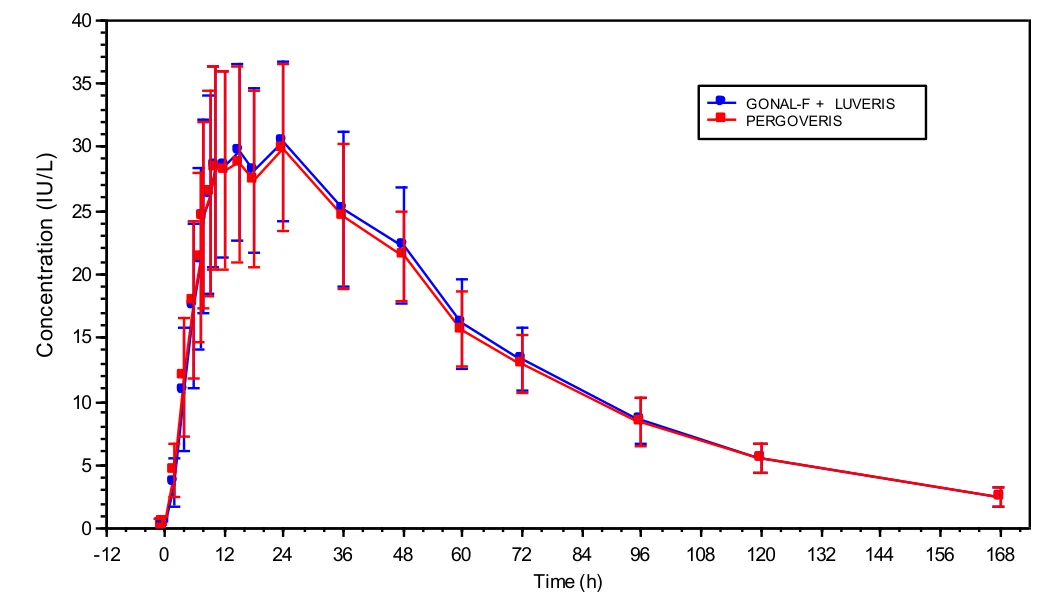
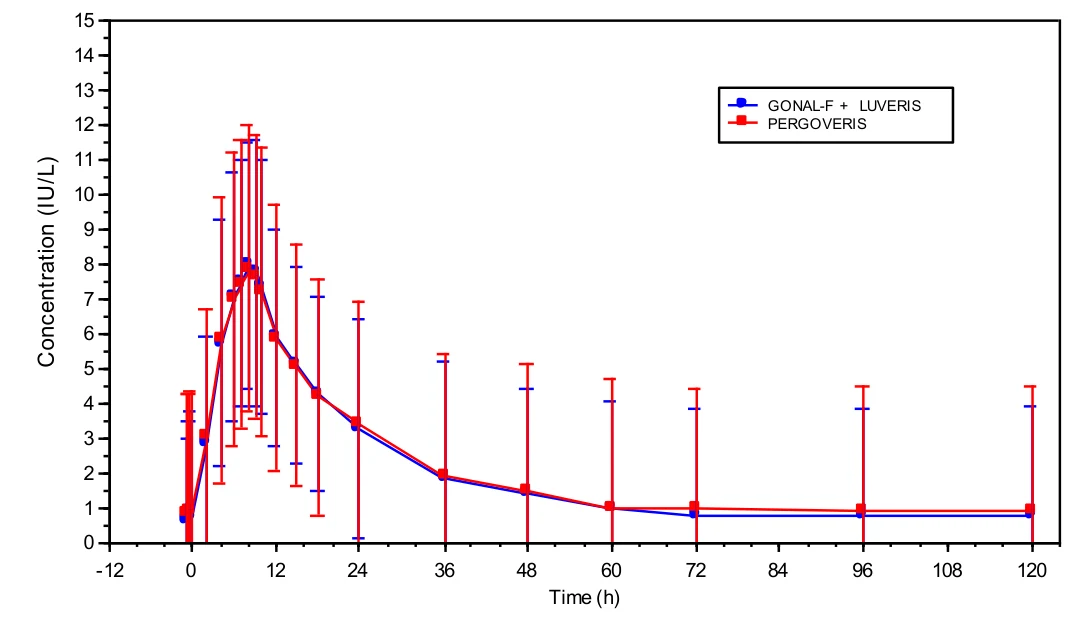
Table 4: Pharmacokinetic parameters of r-hFSH and r-hLH (Geomean, GeoCV% and Range) after single-dose SC administration of PERGOVERIS vs. co-administration of GONAL-f and LUVERIS in pituitary desensitized healthy female subjects
| FSH | LH | ||||||||||||||
| Parameter | GONAL-f + LUVERIS (N = 42) | PERGOVERIS (N = 42) | GONAL-f + LUVERIS (N = 42) | PERGOVERIS (N = 42) | |||||||||||
| _* maxC (IU/L) | 30.69 (22.7) 16.03 – 44.74 | 30.17 (26.8) 15.93 – 51.13 | 7.33 (27.9) 2.82 – 12.26 | 6.85 (32.5) 2.74 – 11.13 | |||||||||||
| _* t-0 AUC (IU/L*h) | 2071 (20.3) 1188 – 2882 | 2051 (19.7) 1249 – 2947 | 137 (35.9) 36 – 418 | 132 (32.3) 56 – 215 | |||||||||||
| maxt 1 (h) | 15.1 7.0 – 36.5 | 23.3 9.0 – 35.7 | 8.0 6.0 – 10.1 | 8.0 6.0 – 10.0 | |||||||||||
| 1/2t (h) | 39.8 (13.9) 33.9 – 69.2 | 39.9 (12.2) 31.3 – 61.4 | 13.9 (40.3) 7.6 – 48.0 | 14.6 (44.9) 8.1 – 38.9 | |||||||||||
| CL/f (L/h) | 0.40 (19.6) 0.28 – 0.67 | 0.40 (20.2) 0.26 – 0.67 | 2.51 (66.9) 0.18 – 7.81 | 2.52 (75.4) 0.15 – 6.82 | |||||||||||
| *Baseline adjusted 1median and range; IU = international units; AUC = area under the curve; CL/f = apparent clearance | |||||||||||||||
PERGOVERIS reconstituted powder and solution for injection formulations show bioequivalence following single-dose administration in healthy female subjects (N=34) who had been down-regulated with oral contraceptive pills prior to subcutaneous injection of PERGOVERIS reconstituted lyophilized powder (LP) or PERGOVERIS solution for injection (liquid, 900 IU r-hFSH/450 IU r-hLH) (Trial EMR200061-006).
Out of the 34 subjects randomized and dosed, 22 were included in the PK analysis set. Four (4) subjects were excluded due to incomplete data, and 8 subjects were excluded because successful downregulation was not confirmed.
An overview of the pharmacokinetic parameters of the PERGOVERIS reconstituted powder after SC administration and PERGOVERIS solution for injection are shown in Table 45 (Trial EMR200061-006). The 90% confidence intervals of the ratios of the means of Cmax and AUC0-t for the two analytes FSH and LH were within the pre-defined range (0.8 – 1.25) and therefore bioequivalence of the two formulations was demonstrated.
Table 5: Pharmacokinetic Parameters of r-hFSH and r-hLH (Geomean, GeoCV% and Range) after single-dose SC administration of PERGOVERIS reconstituted powder vs. PERGOVERIS solution for injection
| FSH | LH | ||||||||||||
| Parameter | PERGOVERIS reconstituted powder (N = 22) | PERGOVERIS solution for injection (N = 22) | PERGOVERIS reconstituted powder (N = 22) | PERGOVERIS solution for injection (N = 22) | |||||||||
| maxC . adj (IU/L) | 42.55 (29.0) 22.6-77.6 | 47.92 (27.3) 27.5 – 88.3 | 9.782 (24.1) 6.38 – 17.78 | 10.126 (31.1) 6.00 – 18.58 | |||||||||
| t-0 AUC , adj (IU/L*h) | 2775.4 (22.0) 1809 – 4242 | 3187.4 (24.3) 1921 - 5200 | 195.2 (22.5) 122 – 287 | 210.4 (25.8) 136 - 333 | |||||||||
| maxt 1 (h) | 16.575 9.00 – 36.12 | 23.983 8.23 – 36.00 | 7.725 3.98 – 10.03 | 8.000 6.03 – 12.00 | |||||||||
| 1/2t (h) | 35.31 (10.0) 30.8 – 45.6 | 36.87 (14.2) 30.2 – 55.3 | 13.608 (25.5) 8.13 – 24.57 | 12.507 (17.1)* 9.27 – 18.92 | |||||||||
| CL/f (L/h) | 0.3091 (22.2) 0.202 – 0.467 | 0.2673 (24.2) 0.166 – 0.440 | 2.238 (21.2) 1.54 – 3.38 | 2.082 (25.2) 1.36 – 3.16 | |||||||||
| 1 = median and range, data were from observed data; * N = 21; IU is international units; AUC is area under the curve; CL/f is apparent clearance. | |||||||||||||
Special Populations and Conditions
Pharmacokinetics of PERGOVERIS in the geriatric or pediatric populations or in patients with renal or hepatic insufficiency have not been established.
11 STORAGE, STABILITY AND DISPOSAL
PERGOVERIS (follitropin alfa/lutropin alfa for injection [150 IU:75 IU]) powder and diluent for solution for injection
For immediate and single use following first opening and reconstitution.
Do not store above 25°C. Avoid freezing. Store in the original package in order to protect from light. Please refer to the expiration date imprinted on the product outer and inner labels.
PERGOVERIS (follitropin alfa/lutropin alfa injection [150 IU:75 IU]) solution for injection in a pre-filled pen
Store in a refrigerator (2°- 8°C). Avoid freezing. Store in the original package in order to protect from light. Please refer to the expiration date imprinted on the product outer and inner labels.
Once opened, the product may be stored for up to 28 days at or below 25°C.
12 SPECIAL HANDLING INSTRUCTIONS
PERGOVERIS (follitropin alfa/lutropin alfa for injection [150 IU:75 IU]) powder and diluent for solution for injection
For single use only. It must not be mixed with other medicinal products except those mentioned below.
PERGOVERIS powder must be reconstituted with the diluent before use.
The reconstituted solution should not be administered if it contains particles or is not clear.
PERGOVERIS must not be administered as a mixture with other medicinal products in the same injection; PERGOVERIS powder for injection may be mixed with follitropin alfa and co-administered as a single injection.
PERGOVERIS (follitropin alfa/lutropin alfa injection [150 IU:75 IU]) solution for injection in a pre-filled pen
Only clear solution without particles should be used.
Needles should not be re-used or used if seal on needle cap has been broken.
PERGOVERIS must not be administered as a mixture with other medicinal products in the same injection. PERGOVERIS solution for injection may be administered concomitantly with follitropin alfa as separate injections.
For detailed instructions on the use of PERGOVERIS, see Patient medication information section.
Any unused product or waste material should be disposed of in accordance with local requirements.
PART II: SCIENTIFIC INFORMATION
13 PHARMACEUTICAL INFORMATION
Drug Substance
Proper name: follitropin alfa (150 IU) and lutropin alfa (75 IU)
Chemical name: recombinant human follicle stimulating hormone (r-hFSH)/recombinant human luteinizing hormone (r-hLH)
Molecular formula and molecular mass:
follitropin alfa
Molecular formula: C975H1515N267O305S26
Molecular Weight: α-subunit: 14 kDa; β-subunit: 17 kDa lutropin alfa
Molecular formula: C1014H1609N287O294S27
Molecular Weight: α -subunit: 14 kDa; β-subunit: 15 kDa
Structural formula: follitropin alfa
Amino acid sequence of the r-hFSH α-subunit
- 1 Ala-Pro-Asp-Val-Gln-Asp-Cys-Pro-Glu-Cys
- 11 Thr-Leu-Gln-Glu-Asn-Pro-Phe-Phe-Ser-Gln
- 21 Pro-Gly-Ala-Pro-Ile-Leu-Gln-Cys-Met-Gly
- 31 Cys-Cys-Phe-Ser-Arg-Ala-Tyr-Pro-Thr-Pro
- 41 Leu-Arg-Ser-Lys-Lys-Thr-Met-Leu-Val-Gln
- 51 Lys-Asn-Val-Thr-Ser-Glu-Ser-Thr-Cys-Cys
- 61 Val-Ala-Lys-Ser-Tyr-Asn-Arg-Val-Thr-Val
- 71 Met-Gly-Gly-Phe-Lys-Val-Glu-Asn-His-Thr
- 81 Ala-Cys-His-Cys-Ser-Thr-Cys-Tyr-Tyr-His
- 91
Lys-Ser
Amino acid sequence of the r-hFSH β-subunit
- 1 Asn-Ser-Cys-Glu-Leu-Thr-Asn-Ile-Thr-Ile
- 11 Ala-Ile-Glu-Lys-Glu-Glu-Cys-Arg-Phe-Cys
- 21 Ile-Ser-Ile-Asn-Thr-Thr-Trp-Cys-Ala-Gly
- 31 Tyr-Cys-Tyr-Thr-Arg-Asp-Leu-Val-Tyr-Lys
- 41 Asp-Pro-Ala-Arg-Pro-Lys-Ile-Gln-Lys-Thr
- 51 Cys-Thr-Phe-Lys-Glu-Leu-Val-Tyr-Glu-Thr
- 61 Val-Arg-Val-Pro-Gly-Cys-Ala-His-His-Ala
- 71 Asp-Ser-Leu-Tyr-Thr-Tyr-Pro-Val-Ala-Thr
- 81 Gln-Cys-His-Cys-Gly-Lys-Cys-Asp-Ser-Asp
- 91 Ser-Thr-Asp-Cys-Thr-Val-Arg-Gly-Leu-Gly
- 101 Pro-Ser-Tyr-Cys-Ser-Phe-Gly-Glu-Met-Lys
- 111
Glu
Asn : N-glycosylation site
lutropin alfa
Amino acid sequence of the r-hLH α-subunit
- 1 Ala-Pro-Asp-Val-Gln-Asp-Cys-Pro-Glu-Cys
- 11 Thr-Leu-Gln-Glu-Asn-Pro-Phe-Phe-Ser-Gln
- 21 Pro-Gly-Ala-Pro-Ile-Leu-Gln-Cys-Met-Gly
- 31 Cys-Cys-Phe-Ser-Arg-Ala-Tyr-Pro-Thr-Pro
- 41 Leu-Arg-Ser-Lys-Lys-Thr-Met-Leu-Val-Gln
- 51 Lys-Asn-Val-Thr-Ser-Glu-Ser-Thr-Cys-Cys
- 61 Val-Ala-Lys-Ser-Tyr-Asn-Arg-Val-Thr-Val
- 71 Met-Gly-Gly-Phe-Lys-Val-Glu-Asn-His-Thr
- 81 Ala-Cys-His-Cys-Ser-Thr-Cys-Tyr-Tyr-His
- 91
Lys-Ser
Amino acid sequence of the r-hLH β-subunit
- 1 Ser-Arg-Glu-Pro-Leu-Arg-Pro-Trp-Cys-His
- 11 Pro-Ile-Asn-Ala-Ile-Leu-Ala-Val-Glu-Lys
- 21 Glu-Gly-Cys-Pro-Val-Cys-Ile-Thr-Val-Asn
- 31 Thr-Thr-Ile-Cys-Ala-Gly-Tyr-Cys-Pro-Thr
- 41 Met-Met-Arg-Val-Leu-Gln-Ala-Val-Leu-Pro
- 51 Pro-Leu-Pro-Gln-Val-Val-Cys-Thr-Tyr-Arg
- 61 Asp-Val-Arg-Phe-Glu-Ser-Ile-Arg-Leu-Pro
- 71 Gly-Cys-Pro-Arg-Gly-Val-Asp-Pro-Val-Val
- 81 Ser-Phe-Pro-Val-Ala-Leu-Ser-Cys-Arg-Cys
- 91 Gly-Pro-Cys-Arg-Arg-Ser-Thr-Ser-Asp-Cys
- 101 Gly-Gly-Pro-Lys-Asp-His-Pro-Leu-Thr-Cys
- 111 Asp-His-Pro-Gln-Leu-Ser-Gly-Leu-Leu-Phe
- 121
Leu
Asn : N-glycosylation site
Physicochemical properties:
follitropin alfa
The r-hFSH drug substance consists of two non-covalently linked, non-identical protein components designated as the α- and β-subunits. The α-subunit is composed of 92 amino acids carrying two carbohydrate moieties linked to Asn-52 and Asn-78. The β-subunit is composed of 111 amino acids carrying two carbohydrate moieties linked to Asn-7 and Asn-24. r-hFSH is derived from a Chinese Hamster Ovary cell line which has been modified by the addition of the human genes encoding the FSH α- and β-chains.
lutropin alfa
The r-hLH drug substance is a heterodimeric glycoprotein consisting of two non-covalently linked, non-identical subunits designated as the α- and β-subunits. The α-subunit is composed of 92 amino acids carrying two N-linked carbohydrate moieties at Asn-52 and Asn-78. The β-subunit is composed of 121 amino acids carrying a single N-linked carbohydrate moiety at Asn-30.
14 CLINICAL TRIALS
14.1 Trial Design and Study Demographics
The clinical efficacy of lutropin alfa (LUVERIS) co-administered with follitropin alfa (GONAL-f) has been demonstrated in six clinical studies in 170 women who underwent 285 ovarian stimulation cycles for efficacy analysis. In all studies, the patients were women with hypogonadotropic hypogonadism (HH). Four of the trials included only HH patients with severe LH deficiency (<1.2 IU/mL) and the remaining 2 included a subset of patients with severe LH deficiency. The patients’ ages ranged from 20-40 years.
Patients received daily subcutaneous doses of lutropin alfa of 25-225 IU, in addition to daily subcutaneous injections of 75-150 IU GONAL-F (follitropin alfa for injection).
All clinical trials had been completed for the purpose of evaluating the component drug lutropin alfa when given to the hypogonadotropic hypogonadism population in conjunction with follitropin alfa for the purpose of ovarian stimulation. Further information regarding individual trials can be found in the Product Monographs for LUVERIS and GONAL-f.
Of the 148 women in the studies that received a non-zero dose of lutropin alfa, 102 received the150 IU r-hFSH:75 IU r-hLH dose level for at least one cycle. In about one half of those cycles, the injections were given as a single mixed injection of both component drugs. Of the 170 women enrolled in a trial (including those that received only r-hFSH), 119 were hypogonadotropic hypogonadism patients with severe LH deficiency.
The details of such studies are presented below in Table 6.
Table 6 - Summary of patient demographics for clinical trials in Women with Hypogonadotropic Hypogonadism
| Study # | Trial design | Dosage, route of administration and duration | Study Subjects (n) | Mean age (range) |
|---|---|---|---|---|
| 62533 | Phase II/III open-label, randomized, dose-finding, comparative, parallel group, multicenter study | Lutropin alfa 0, 25, 75 or 225 IU SC daily, up to 20 days Lutropin alfa 0 IU Lutropin alfa 25 IU Lutropin alfa 75 IU Lutropin alfa 225 IU | 9 8 11 10 | 28.7 (20-35) |
| 69054 | Phase II/III open-label, randomized, dose-finding, comparative, parallel group, multicenter study | Lutropin alfa 0, 25, 75 or 225 IU SC daily, up to 21 days Lutropin alfa 0 IU Lutropin alfa 25 IU Lutropin alfa 75 IU Lutropin alfa 225 IU | 11 9 11 9 | 30.5 (22-40) |
| 7798 | Phase III randomized, dose-finding, multicenter study | Lutropin alfa 75, 150 or 225 IU SC daily, up to 21 days Lutropin alfa 75 IU Lutropin alfa 150 IU Lutropin alfa 225 IU | 5 5 5 | 29 (20-34) |
| 82975 | Phase III non-comparative, multicenter study | Lutropin alfa 75 IU SC daily, up to 21 days | 38 | 30 (25-40) |
| 210086 | Phase III randomized, controlled, double-blind, multicenter study | Lutropin alfa 0 or 75 IU SC daily, up to 14 days | 13 26 | 30 (21-39) |
| 214157 | Phase III open-label, non-comparative, multicenter study | Lutropin alfa 75 IU SC daily, up to 14 days | 31 (11 LH-naïve continued from Study 21008) | 30.5 (21-40) |
In all trials, the primary endpoint was follicular development, which was defined as the following:
- (i) At least 1 follicle with mean diameter ≥17-18 mm,
- (ii) Pre-ovulatory serum E2 ≥109-200 pg/mL, and
- (iii) Mid-luteal phase P4 ≥ 7.9-10 ng/mL (25-30nmol/L)
The ranges cited above represent the entirety of the clinical trial programme; criteria varied within these ranges according to trial protocol. Consult the References cited for further details of individual trials.
In some trials, patients at risk of OHSS were included as having successful follicular development despite having hCG withheld or not meeting all the above criteria. This was pre-specified in some of the trials. All trials included the establishment of a pregnancy as a success regardless of meeting the above criteria.
While the risk of OHSS may indicate either an early adverse reaction or successful follicular development, it is not indicative of successful development for the purposes of establishing a pregnancy since hCG trigger would be withheld and cycle cancelled. Because of the differences in interpretation of “risk of OHSS” the results below include both the follicular development success rates with and without that criterion.
14.2 Study Results
The data from the six studies to the primary efficacy endpoint are shown in Table 7.
Table 7: Primary Endpoint, Follicular Development in Hypogonadotropic Hypogonadism
| Trials 21008, 21415, 6905, 6253, 7798 and 8297 | |||||
|---|---|---|---|---|---|
| Follitropin alfa 150 IU/day plus lutropin alfa daily dose of: | |||||
| 0 IU (placebo) | 25 IU | 75 IU | 150 IU | 225 IU | |
| Patients | 33 | 17 | 102* | 5 | 24 |
| Severely LH deficient patients | 25 | 13 | 57 | 5 | 19 |
| # Cycles** | 32 | 16 | 192 | 14 | 31 |
| Follicular development (OHSS risk excluded) | 7 (21.9%) | 9 (56.2%) | 112 (58.3%) | 4 (28.6%) | 18 (58.1%) |
| Follicular development (OHSS risk included) | 10 (31.2%) | 11 (68.8%) | 143 (74.5%) | 6 (42.9%) | 22 (71.0%) |
*Includes 11 LH-naïve patients from Study 21008 continuing in Study 21415.
**Studies 6905, 6253 primary efficacy endpoint was assessed only for Cycle A. Studies 7798, 8297, 21008 and 21415 included all cycles for assessment of primary efficacy endpoint.
14.3 Comparative Bioavailability Studies
Human Pharmacokinetics
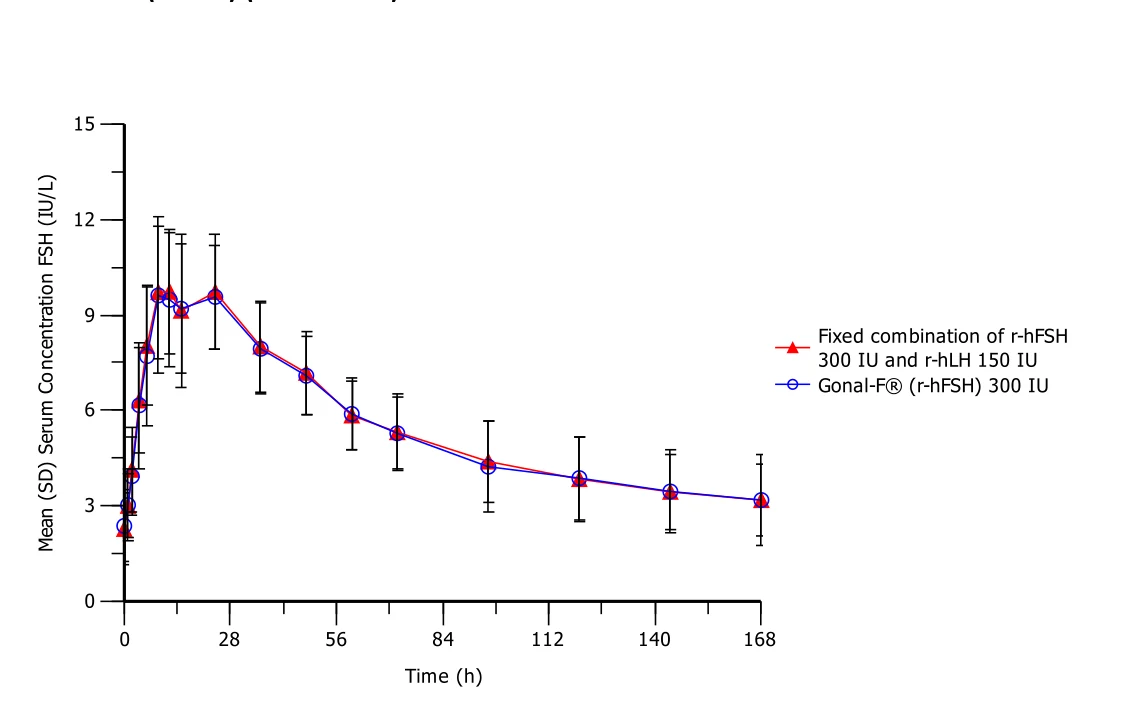
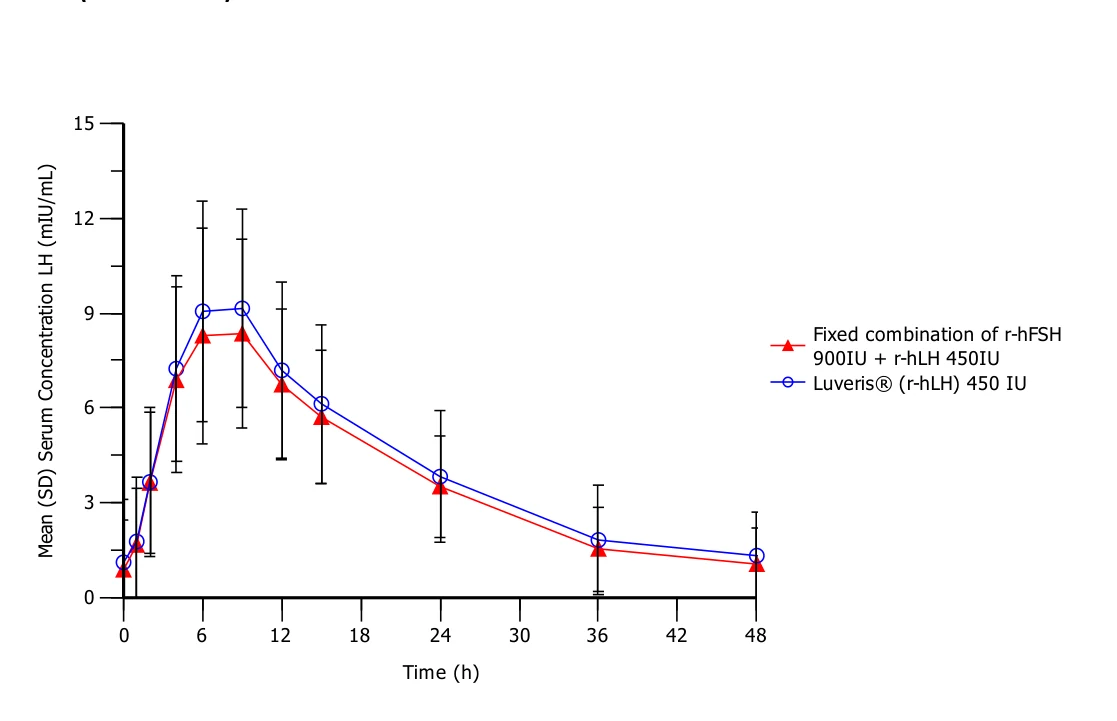
The pharmacokinetic interaction between lutropin alfa and follitropin alfa was evaluated in the healthy subjects downregulated with a GnRH agonist (ZOLADEX) by comparing individually administered FSH or LH to fixed dose combination (at 2:1 ratio of FSH vs. LH) of the two agents. The results demonstrated that the PK parameters of AUC0-last, Cmax, and Tmax are similar between administered alone for FSH (at dose 300 IU, Study 23718) or LH (at dose 450 IU, Study 23722) and co-administration of the two components at 2:1 ratio (FSH/LH) (see Figures 3 and 4).
Figure 3: Study 23718 Mean FSH Serum Concentration Time Profiles after Subcutaneous Administration of 300 IU r-hFSH as GONAL-f (reference) versus r-hFSH in Fixed Combination with 150 IU of r-hLH (n = 35) (linear scale)
Figure 4: Study 23722 Mean LH Serum Concentration-Time Profiles after Subcutaneous Administration of 450 IU r-hLH as LUVERIS (Reference) versus r-hLH in Fixed combination with 900 IU r-hFSH (linear scale)
Study EMR200031-002 study evaluated the pharmacokinetic (PK) dose-proportionality of r-hFSH after single SC administration of PERGOVERIS (follitropin alfa/lutropin alfa for injection [150 IU:75 IU]) at doses of 300, 450, and 900 IU r-hFSH in pituitary down-regulated healthy premenopausal females. Dose proportionality for FSH was demonstrated based on the results of the statistical analysis of the PK parameters Cmax, AUC0-t and AUC0-∞.
For additional information on bioequivalence between PERGOVERIS powder for injection and FSH, LH co-administration, pharmacokinetic profiles for FSH and LH, please see 10 CLINICAL PHARMACOLOGY, Pharmacokinetics, as well as the GONAL-f and LUVERIS prescribing information.
For additional information on bioequivalence between PERGOVERIS powder for injection and PERGOVERIS solution for injection in pre-filled pen, please see 10 CLINICAL PHARMACOLOGY.
16 NON-CLINICAL TOXICOLOGY
General Toxicology:
A local tolerance study in New Zealand White (NZW) rabbits (Study IMP 23595) was performed with PERGOVERIS (follitropin alfa/lutropin alfa for injection [150 IU:75 IU]) powder for injection to assess tolerability after single and repeat dosing at clinically relevant dose/volume and concentration of the combination product (150 IU r-hFSH + 75 IU r-hLH in 1 mL of Water for Injection). There were no notable local reactions seen in the study.
A local tolerance study using the solution for injection formulation of PERGOVERIS (follitropin alfa/lutropin alfa injection [150 IU:75 IU]) was performed in NZW rabbits to assess tolerability after single and repeat dosing at clinically relevant doses/volumes (expected in clinical use or adopted in the bioequivalence study in healthy female volunteers, Study EMR200061-006). PERGOVERIS liquid formulation did not induce test item-related alterations at the injection sites.