


Product Monograph - Phenytoin Sodium Injection USP (Hikma Canada)
INDICATIONS AND CLINICAL USE
Phenytoin Sodium Injection USP is indicated for the control of generalized tonic-clonic status epilepticus, and for the prevention and treatment of seizures occurring during neurosurgery. Phenytoin Sodium Injection USP should be used only when oral phenytoin administration is not possible.
CONTRAINDICATIONS
Phenytoin is contraindicated:
- In patients with a history of hypersensitivity to phenytoin or to other hydantoins.
- In patients who have sinus bradycardia, sino-atrial block, second and third degree AV block, and Adams-Stokes syndrome.
- In conjunction with delavirdine due to potential for loss of virologic response and possible resistance to delavirdine or to the class of non-nucleoside reverse transcriptase inhibitors.
- For intra-arterial administration in view of the high pH of the preparation.
WARNINGS AND PRECAUTIONS
CARDIOVASCULAR RISK ASSOCIATED WITH RAPID INFUSION The rate of intravenous phenytoin sodium injection administration should not exceed 50 mg per minute in adults and 1-3 mg/kg/min (or 50 mg per minute, whichever is slower) in pediatric patients because of the risk of severe hypotension and cardiac arrhythmias. In elderly patients, those who are gravely ill, or those with cardiovascular disease, the drug should be administered at a rate not exceeding 25 mg/minute, and if necessary, at a slow rate of 5 to 10 mg/minute. Careful cardiac monitoring is needed during and after administering intravenous phenytoin sodium injection. Although the risk of cardiovascular toxicity increases with infusion rates above the recommended infusion rate, these events have also been reported at or below the recommended infusion rate. Reduction in rate of administration or discontinuation of dosing may be needed (see WARNINGS AND PRECAUTIONS and DOSAGE AND ADMINISTRATION). |
|---|
As non-emergency therapy, phenytoin should be administered more slowly as either a loading dose or by intermittent infusion. Because of the risks of cardiac and local toxicity associated with intravenous phenytoin, oral phenytoin should be used whenever possible.
Because adverse cardiovascular reactions have occurred during and after infusions, careful cardiac monitoring is needed during and after the administration of intravenous phenytoin. Reduction in rate of administration or discontinuation of dosing may be needed.
Adverse cardiovascular reactions include severe hypotension and cardiac arrhythmias. Cardiac arrhythmias have included bradycardia, heart block, ventricular tachycardia, and ventricular fibrillation which have resulted in asystole, cardiac arrest, and death.
Severe complications are most commonly encountered in critically ill patients, elderly patients, and patients with hypotension and severe myocardial insufficiency. However, cardiac events have also been reported in adults and children without underlying cardiac disease or comorbidities and at recommended doses and infusion rates.
Withdrawal-Precipitated Seizure, Status Epilepticus
Antiepileptic drugs should not be abruptly discontinued because of the possibility of increased seizure frequency, including status epilepticus. When, in the judgment of the clinician, the need for dosage reduction, discontinuation, or substitution of alternative antiepileptic medication arises, this should be done gradually. However, in the event of an allergic or hypersensitivity reaction, rapid substitution of alternative therapy may be necessary. In this case, alternative therapy should be an antiepileptic drug not belonging to the hydantoin chemical class.
Serious Dermatologic Reactions
Serious and sometimes fatal dermatologic reactions, including toxic epidermal necrolysis (TEN) and Stevens-Johnson syndrome (SJS), have been reported with phenytoin treatment. The onset of symptoms is usually within 28 days, but can occur later.
Phenytoin should be discontinued at the first sign of a rash, unless the rash is clearly not drug-related. If signs or symptoms suggest SJS/TEN, use of this drug should not be resumed and alternative therapy should be considered. If a rash occurs, the patient should be evaluated for signs and symptoms of Drug Reaction with Eosinophilia and Systemic Symptoms (see DRESS/Multiorgan hypersensitivity). The patient must be warned to call his/her physician in case of skin rash (see Skin Rash, PRECAUTIONS).
Studies in patients of Chinese ancestry have found a strong association between the risk of developing SJS/TEN and the presence of HLA-B*1502, an inherited allelic variant of the HLA-B gene, in patients using carbamazepine. Limited evidence suggests that HLA-B* l502 may be a risk factor for the development of SJS/TEN in patients of Asian ancestry taking other antiepileptic drugs associated with SJS/TEN, including phenytoin. Consideration should be given to avoiding phenytoin as an alternative for carbamazepine in patients positive for HLA-B*1502.
The use of HLA-B*1502 genotyping has important limitations and must never substitute for appropriate clinical vigilance and patient management. The role of other possible factors in the development of, and morbidity from, SJS/TEN, such as antiepileptic drug (AED) dose, compliance, concomitant medications, comorbidities, and the level of dermatologic monitoring have not been studied.
Drug Reaction with Eosinophilia and Systemic Symptoms (DRESS)/Multiorgan hypersensitivity
Drug Reaction with Eosinophilia and Systemic Symptoms (DRESS), also known as Multiorgan hypersensitivity, has been reported in patients taking antiepileptic drugs, including phenytoin. Some of these events have been fatal or life-threatening. DRESS typically, although not exclusively, presents with fever, rash, and/or lymphadenopathy, in association with other organ system involvement, such as hepatitis, nephritis, hematological abnormalities, myocarditis, or myositis sometimes resembling an acute viral infection. Eosinophilia is often present. Because this disorder is variable in its expression, other organ systems not noted here may be involved. It is important to note that early manifestations of hypersensitivity, such as fever or lymphadenopathy, may be present even though rash is not evident. If such signs or symptoms are present, the patient should be evaluated immediately. Phenytoin should be discontinued if an alternative etiology for the signs or symptoms cannot be established.
Hypersensitivity
Phenytoin and other hydantoins are contraindicated in patients who have experienced phenytoin hypersensitivity (see CONTRAINDICATIONS). Additionally, in these patients, consider alternatives for those anti-convulsant drugs that are structurally similar to phenytoin, such as carboxamides (e.g., carbamazepine), barbiturates, succinimides, and oxazolidinediones (e.g., trimethadione). Similarly, if there is a history of hypersensitivity reactions to these structurally similar drugs in the patient or immediate family members, consider alternatives to phenytoin.
Hepatic Injury
Cases of acute hepatotoxicity, including infrequent cases of acute hepatic failure, have been reported with phenytoin. These events may be part of the spectrum of DRESS or may occur in isolation. Other common manifestations include jaundice, hepatomegaly, elevated serum transaminase levels, leukocytosis, and eosinophilia. The clinical course of acute phenytoin hepatotoxicity ranges from prompt recovery to fatal outcomes. In these patients with acute hepatotoxicity, phenytoin should be immediately discontinued and not re-administered.
Hematopoietic System
Hematopoietic complications, some fatal, have occasionally been reported in association with administration of phenytoin. These have included thrombocytopenia, leukopenia, granulocytopenia, agranulocytosis, and pancytopenia with or without bone marrow suppression. Complete blood counts should be carried out before treatment is instituted and periodically thereafter.
There have been a number of reports suggesting a relationship between phenytoin and the development of lymphadenopathy (local or generalized) including benign lymph node hyperplasia, pseudolymphoma, lymphoma, and Hodgkin’s disease. Although a cause and effect relationship has not been established, the occurrence of lymphadenopathy indicates the need to differentiate such a condition from other types of lymph node pathology. Lymph node involvement may occur with or without symptoms and signs resembling DRESS. In all cases of lymphadenopathy, follow-up observation for an extended period is indicated and every effort should be made to achieve seizure control using alternative antiepileptic drugs.
Local Toxicity (including Purple Glove Syndrome)
Soft tissue irritation and inflammation has occurred at the site of injection with and without extravasation of intravenous phenytoin (See DOSAGE AND ADMINISTRATION for IV administration of Phenytoin Sodium Injection USP.
Edema, discolouration and pain distal to the site of injection (described as “purple glove syndrome”) have also been reported following peripheral intravenous phenytoin injection. Soft tissue irritation may vary from slight tenderness to extensive necrosis, and sloughing. The syndrome may not develop for several days after injection. Although resolution of symptoms may be spontaneous, skin necrosis and limb ischemia have occurred and required such interventions as fasciotomies, skin grafting, and in rare cases, amputation.
Subcutaneous or perivascular administration should be avoided because of the highly alkaline nature of the solution.
Intramuscular phenytoin administration may cause pain, necrosis, and abscess formation at the injection site (see DOSAGE AND ADMINISTRATION).
Alcohol Use
Acute alcohol intoxication may increase phenytoin serum levels while chronic alcoholism may decrease it. Alcohol should be avoided during treatment with phenytoin.
Psychiatric
Suicidal Ideation and Behaviour
Suicidal ideation and behaviour have been reported in patients treated with antiepileptic agents in several indications.
All patients treated with antiepileptic drugs, irrespective of indication, should be monitored for signs of suicidal ideation and behaviour and appropriate treatment should be considered.
Patients (and caregivers of patients) should be advised to seek medical advice should signs of suicidal ideation or behaviour emerge. An FDA meta-analysis of randomized placebo-controlled trials, in which antiepileptic drugs were used for various indications, has shown a small increased risk of suicidal ideation and behaviour in patients treated with these drugs. The mechanism of this risk is not known.
There were 43,892 patients treated in the placebo controlled clinical trials that were included in the meta-analysis. Approximately 75% of patients in these clinical trials were treated for indications other than epilepsy and, for the majority of non-epilepsy indications the treatment (antiepileptic drug or placebo) was administered as monotherapy. Patients with epilepsy represented approximately 25% of the total number of patients treated in the placebo controlled clinical trials and, for the majority of epilepsy patients, treatment (antiepileptic drug or placebo) was administered as adjunct to other antiepileptic agents (i.e., patients in both treatment arms were being treated with one or more antiepileptic drug). Therefore, the small increased risk of suicidal ideation and behaviour reported from the meta-analysis (0.43% for patients on antiepileptic drugs compared to 0.24% for patients on placebo) is based largely on patients that received monotherapy treatment (antiepileptic drug or placebo) for non-epilepsy indications. The study design does not allow an estimation of the risk of suicidal ideation and behaviour for patients with epilepsy that are taking antiepileptic drugs, due both to this population being the minority in the study, and the drug-placebo comparison in this population being confounded by the presence of adjunct antiepileptic drug treatment in both arms.
Exacerbation of Porphyria
In view of isolated reports associating phenytoin with exacerbation of porphyria, caution should be exercised in using this medication in patients suffering from this disease.
General
In patients on long term phenytoin therapy, vitamin D and folic acid are given to prevent side effects respectively affecting bones and hematopoiesis. Long-term use of antiepileptics such as phenytoin, phenobarbital, primidone, carbamazepine, lamotrigine and sodium valproate is associated with a risk of decreased bone mineral density that may lead to weakened or brittle bones.
A small percentage of individuals who have been treated with phenytoin have been shown to metabolize the drug slowly. Slow metabolism may be due to limited enzyme availability and lack of induction; it appears genetically determined.
Hyperglycemia, resulting from the drug’s inhibitory effect on insulin release, has been reported. Phenytoin may also raise the serum glucose level in diabetic patients.
Phenytoin is not indicated for seizures due to hypoglycemic or other metabolic causes. Appropriate diagnostic procedures should be performed as indicated.
Phenytoin is not effective for absence seizures. Therefore, if tonic-clonic and absence seizures are both present, combined drug therapy is needed.
Patients should be aware of the importance of a good dental hygiene in order to prevent gingival hyperplasia.
Serum levels of phenytoin sustained above the optimal range may produce confusional states referred to as “delirium”, “psychosis”, or “encephalopathy” or rarely irreversible cerebellar dysfunction. Accordingly, at the first sign of acute toxicity, determination of phenytoin plasma levels is recommended. Dose reduction of phenytoin therapy is indicated if plasma levels are excessive; if symptoms persist, termination is recommended.
Activities Requiring Mental Alertness: Caution is recommended in patients performing skilled tasks (e.g. driving or operating machinery) as treatment with phenytoin may cause central nervous system adverse effects such as dizziness and drowsiness. Phenytoin in appropriate doses may as such impair driving skills but epilepsy itself dictates the practice of driving. Patients affected by drowsiness should not drive or operate machinery.
Special Populations
Pregnant Women:
An increase in seizure frequency may occur during pregnancy because of altered phenytoin pharmacokinetics. Periodic measurement of plasma phenytoin concentrations may be valuable in the management of pregnant women as a guide to appropriate adjustment of dosage. However, postpartum restoration of the original dosage will probably be indicated.
Risks to the Fetus:
If this drug is used during pregnancy, or if the patient becomes pregnant while taking the drug, the patient should be apprised of the potential harm to the fetus.
Prenatal exposure to phenytoin may increase the risks for congenital malformations and other adverse development outcomes. Increased frequencies of major malformations (such as orofacial clefts and cardiac defects), minor anomalies (dysmorphic facial features, nail and digit hypoplasia), growth abnormalities (including microcephaly), and mental deficiency have been reported among children born to epileptic women who took phenytoin alone or in combination with other antiepileptic drugs during pregnancy. There have also been several reported cases of malignancies, including neuroblastoma, in children whose mothers received phenytoin during pregnancy. The overall incidence of malformations for children of epileptic women treated with antiepileptic drugs (phenytoin and/or others) during pregnancy is about 10%, or two to three fold that in the general population.
However, the relative contribution of antiepileptic drugs and other factors associated with epilepsy to this increased risk are uncertain and in most cases it has not been possible to attribute specific developmental abnormalities to particular antiepileptic drugs.
Patients should consult with their physicians to weigh the risks and benefits of phenytoin during pregnancy.
Pregnancy Registry:
Pregnant patients taking phenytoin should be encouraged to enroll in the North American Antiepileptic Drug (NAAED) Pregnancy Registry. This can be done by calling the toll-free number 1-888-233-2334 and must be done by patients themselves. Information on the registry can also be found at the following website: http://www.aedpregnancyregistry.org/.
Postpartum Period:
A potentially life-threatening bleeding disorder related to decreased levels of vitamin K- dependent clotting factors may occur in newborns exposed to phenytoin in utero. This drug induced condition can be prevented with vitamin K administration to the mother before delivery and to the neonate after birth.
Nursing Women:
Infant breast feeding is not recommended for women taking phenytoin. Phenytoin is secreted into human milk. Limited observations in patients suggest that phenytoin concentration in breast milk is approximately one-third of the corresponding maternal plasma concentration.
Elderly:
Phenytoin clearance is decreased slightly in elderly patients and lower or less frequent dosing may be required.
Hepatic impairment:
The liver is the main site of biotransformation of phenytoin; patients with impaired liver function, elderly patients, or those who are gravely ill may show early toxicity. The drug should be given with caution to these patients (see DOSAGE AND ADMINISTRATION, Dosing Considerations (Special Populations).
Monitoring and Laboratory Tests:
Phenytoin serum level determinations may be necessary to achieve optimal dosage adjustments. Phenytoin doses are usually selected to attain therapeutic plasma total phenytoin concentrations of 10 to 20 µg/mL (unbound phenytoin concentrations of 1 to 2 µg/mL).
ADVERSE REACTIONS
The margin between therapeutic and toxic levels of phenytoin is very narrow. Moreover, there is a considerable variation from patient to patient in relation to blood and tissue concentrations.
Body As a Whole: Allergic reactions in the form of rash and rarely more serious forms (see Skin paragraph below) and DRESS (see WARNINGS AND PRECAUTIONS) have been observed.
Anaphylaxis has also been reported.
There have also been reports of hirsutism (more noticeable in young females), systemic lupus erythematosus, periarteritis nodosa, and immunoglobulin abnormalities.)
Cardiovascular: Severe cardiovascular events and fatalities have been reported with atrial and ventricular conduction depression and ventricular fibrillation. Severe complications are most commonly encountered in elderly or critically ill patients (see WARNINGS AND PRECAUTIONS).
Nervous System: The most common adverse reactions encountered with phenytoin therapy are nervous system reactions and are usually dose-related. Reactions include nystagmus, ataxia, slurred speech, diplopia, decreased coordination, somnolence, and mental confusion. Dizziness, vertigo, insomnia, transient nervousness, motor twitchings, paresthesia, and headaches have also been observed. There have also been rare reports of phenytoin-induced dyskinesias, including chorea, dystonia, tremor and asterixis, similar to those induced by phenothiazine and other neuroleptic drugs.
A predominantly sensory peripheral polyneuropathy has been observed in patients receiving long-term phenytoin therapy.
Musculoskeletal and Connective Tissue: Rickets; osteomalacia; polyarthropathy. Thickening of the skull, coarsening of facial features, or gingival hyperplasia.
Respiratory: Rare reports of pulmonary infiltrates or fibrosis, with symptoms including fever, troubled or quick, shallow breathing, unusual tiredness or weakness, loss of appetite and weight, and chest discomfort have also occurred.
Alterations in respiratory function, respiratory arrest, and Pneumonitis.
Skin: Dermatological manifestations sometimes accompanied by fever have included scarlatiniform or morbilliform rashes. A morbilliform rash (measles-like) is the most common; other types of dermatitis are seen more rarely. Other more serious forms which may be fatal have included bullous, exfoliative or purpuric dermatitis, Stevens-Johnson syndrome, and toxic epidermal necrolysis (see WARNINGS AND PRECAUTIONS section). There have also been reports of hypertrichosis.
Local irritation, inflammation, tenderness, necrosis, and sloughing have been reported with or without extravasation of intravenous phenytoin (see WARNINGS AND PRECAUTIONS).
Gastrointestinal: Nausea, vomiting, constipation, enlargement of the lips.
Hematologic and Lymphatic System: Hematopoietic complications, some fatal, have occasionally been reported in association with administration of phenytoin. These have included thrombocytopenia, leukopenia, granulocytopenia, agranulocytosis, and pancytopenia with or without bone marrow suppression. While macrocytosis and megaloblastic anemia have occurred following prolonged use, these conditions usually respond to folic acid therapy. Lymphadenopathy including benign lymph node hyperplasia, pseudolymphoma, lymphoma, and Hodgkin’s disease have been reported (see WARNINGS AND PRECAUTIONS section).
Hepatobiliary: Hepatitis, acute hepatotoxicity, acute hepatic failure, hepatomegaly (see WARNINGS AND PRECAUTIONS, Hepatic Injury).
Phenytoin Sodium Injection USP contains propylene glycol which may cause alcohol-like symptoms.
Phenytoin Sodium Injection USP contains 10% Alcohol USP. This may be harmful for those suffering from alcoholism and should be taken into account in pregnant or breast-feeding women, and high-risk groups such as patients with liver disease.
Special Senses: Altered taste sensation including metallic taste.
Urogenital: Peyronie’s disease.
Other effects: Hyperglycemia (resulting from phenytoin’s inhibitory effect on insulin release), myasthenia gravis. Anticonvulsants can diminish sexual potency and fertility in young male epileptics. Phlebitis, under IV administration. In some patients, high serum triglycerides and cholesterol levels have been reported (due to the effect of phenytoin on lipid metabolism).
DRUG INTERACTIONS
Phenytoin is extensively bound to serum plasma proteins and is prone to competitive displacement. Phenytoin is metabolized by hepatic cytochrome P450 enzymes CYP2C9 and CYP2C19 and is particularly susceptible to inhibitory drug interactions because it is subject to saturable metabolism. Inhibition of metabolism may produce significant increases in circulating phenytoin concentrations and enhance the risk of drug toxicity. Phenytoin is a potent inducer of hepatic drug-metabolizing enzymes. Serum level determinations for phenytoin are especially helpful when possible drug interactions are suspected.
The most commonly occurring drug interactions are listed below:
Note: The list is not intended to be inclusive or comprehensive. Individual Product Monographs should be consulted.
Drugs that affect phenytoin concentrations:
Drugs that may increase phenytoin serum levels include: acute alcohol intake, amiodarone, antiepileptic agents (ethosuximide, felbamate, oxcarbazepine, methsuximide, topiramate), azoles (fluconazole, ketoconazole, itraconazole, voriconazole), capecitabine, chloramphenicol, chlordiazepoxide, cimetidine, diazepam, disulfiram, estrogens, fluorouracil, fluoxetine, fluvastatin, fluvoxamine, H2-antagonists (e.g. cimetidine), halothane, isoniazid, methylphenidate, omeprazole, phenothiazines, salicylates, sertraline, succinimides, sulfonamides (e.g., sulfamethizole, sulfaphenazole, sulfadiazine, sulfamethoxazole-trimethoprim), ticlopidine, tolbutamide, trazodone, and warfarin.
Co-administration with topiramate reduces serum topiramate levels by 59% and has the potential to increase phenytoin levels by 25% in some patients. The addition of topiramate therapy to phenytoin should be guided by clinical outcome.
Drugs that may decrease phenytoin levels include: anticancer drugs usually in combination (e.g., bleomycin, carboplatin, cisplatin, doxorubicin, methotrexate), carbamazepine, chronic alcohol abuse, diazoxide, folic acid, fosamprenavir, nelfinavir, reserpine, ritonavir, St. John’s Wort, and vigabatrin.
Drugs that may either increase or decrease phenytoin serum levels include: phenobarbital, sodium valproate, and valproic acid. Similarly, the effect of phenytoin on phenobarbital, valproic acid, and sodium valproate serum levels is unpredictable.
The addition or withdrawal of the agents in patients on phenytoin therapy may require an adjustment of the phenytoin dose to achieve optimal clinical outcome.
Drugs affected by phenytoin:
Drugs that should not be co-administered with phenytoin: delavirdine (see CONTRAINDICATIONS).
Drugs whose efficacy is impaired by phenytoin include: azoles (fluconazole, ketoconazole, itraconazole, voriconazole, posaconazole), corticosteroids, doxycycline, estrogens, furosemide, irinotecan, oral contraceptives, paclitaxel, paroxetine, quinidine, rifampin, sertraline, tenisposide, theophylline, and Vitamin D.
Increased and decreased prothrombin time (PT)/International Normalized Ratio (INR) responses have been reported when phenytoin is co-administered with warfarin.
Phenytoin decreases plasma concentrations of certain HIV antivirals (efavirenz, lopinavir/ritonavir, indinavir, nelfinavir, ritonavir, saquinavir), anti-epileptic agents (felbamate, topiramate, oxcarbazepine, quetiapine, lamotrigine), atorvastatin, calcium, cyclosporine, digoxin, fluvastatin, folic acid, mexiletine, nifedipine, nisoldipine, praziquantel, simvastatin, and verapamil.
Co-administration with lamotrigine doubles the plasma clearance and reduces the elimination half-life of lamotrigine by 50%. This clinically important interaction requires dosage adjustment for lamotrigine. There is no significant change in phenytoin plasma levels in the presence of lamotrigine.
Co-administration with topiramate reduces serum topiramate levels by 59% and has the potential to increase phenytoin levels by 25% in some patients. The addition of topiramate therapy to phenytoin should be guided by clinical outcome.
Phenytoin when given with fosamprenavir alone may decrease the concentration of amprenavir, the active metabolite. Phenytoin when given with the combination of fosamprenavir and ritonavir may increase the concentration of amprenavir.
Resistance to the neuromuscular blocking action of the nondepolarizing neuromuscular blocking agents pancuronium, vecuronium, rocuronium, and cisatracurium has occurred in patients chronically administered phenytoin. Whether or not phenytoin has the same effect on other nondepolarizing agents is unknown. Patients should be monitored closely for more rapid recovery from neuromuscular blockade than expected, and infusion rate requirements may be higher.
Use of intravenous phenytoin in patients maintained on dopamine may produce sudden hypotension and bradycardia. This appears to be dose-dependent. If anticonvulsant therapy is necessary during administration of dopamine, an alternative to phenytoin should be considered.
Concurrent use of intravenous phenytoin with lidocaine or beta-blockers may produce additive cardiac depressant effects. Phenytoin may also enhance metabolism of lidocaine.
The addition or withdrawal of phenytoin during concomitant therapy with the above agents may require adjustment of the dose of these agents to achieve optimal clinical outcome.
Drug-Enteral Feeding/Nutritional Preparations Interaction
Literature reports suggest that patients who have received enteral feeding preparations and/or related nutritional supplements have lower than expected phenytoin plasma levels. It is therefore suggested that phenytoin not be administered concomitantly with an enteral feeding preparation. More frequent serum phenytoin level monitoring may be necessary in these patients.
Drug/Laboratory Test Interactions
Phenytoin may decrease serum concentrations of thyroxine (T4). It may also produce lower than normal values for dexamethasone or metyrapone tests. Phenytoin may also cause increased serum levels of glucose, alkaline phosphatase, and gamma glutamyl transpeptidase (GGT).
Care should be taken when using immunoanalytical methods to measure plasma phenytoin concentrations following fosphenytoin administration.
Incompatibility
Phenytoin sodium only remains in solution when the pH is considerably alkaline (about 10 to 12). The mixing of phenytoin sodium injection with other drugs or its addition to infusion solutions is not recommended.
DOSAGE AND ADMINISTRATION
Because of the increased risk of adverse cardiovascular reactions associated with rapid administration, intravenous administration should not exceed 50 mg per minute in adults. In pediatric patients, the drug should never be administered at a rate exceeding 1-3 mg/kg/min or 50 mg per minute, whichever is slower.
As non-emergency therapy, phenytoin should be administered more slowly as either a loading dose or by intermittent infusion. Because of the risks of cardiac and local toxicity associated with intravenous phenytoin, oral phenytoin should be used whenever possible.
Because adverse cardiovascular reactions have occurred during and after infusions, careful cardiac, blood pressure, and respiratory function monitoring is needed during and after the administration of intravenous phenytoin. Reduction in rate of administration or discontinuation of dosing may be needed.
Because of the risk of local toxicity, intravenous phenytoin should be administered directly into a large peripheral or central vein through a large-gauge catheter. Prior to the administration, the patency of the IV catheter should be tested with a flush of sterile saline. Each injection of parenteral phenytoin should then be followed by a flush of sterile saline through the same catheter to avoid local venous irritation due to the alkalinity of the solution.
Phenytoin can be given diluted with normal saline. The addition of parenteral phenytoin to dextrose and dextrose-containing solutions should be avoided due to lack of solubility and resultant precipitation.
*IV route:
- 1. Intravenous administration should be used with caution in patients with hypotension and severe myocardial or respiratory insufficiencies.
- 2. Electrocardiographic and blood pressure monitoring is recommended during intravenous therapy. The patient should be observed for signs of respiratory depression.
- 3. In adults, the rate of administration should not exceed 50 mg/minute and should even be slower (50 mg over 2 or 3 minutes) for the elderly, those who are gravely ill, and those with cardiovascular disease.
- 4. In neonates, the rate of administration should not exceed 1 to 3 mg/kg/minute.
- 5. The IV injection should be done in a large vein through a large gauge needle or IV catheter. The injection of the drug should be followed by administration of isotonic sodium chloride injection through the same needle or IV catheter to avoid local irritation of the vein caused by the alkalinity of the phenytoin sodium solution.
- 6. Phenytoin should not be added to IV infusions (due to lack of solubility and risk of precipitation) nor should it be given as a continuous infusion (risk of phlebitis due to the alkaline pH).
*IM route:
- 1. Due to slow and erratic absorption of phenytoin, the IM route is not recommended for emergency treatment of status epilepticus because the attainment of peak levels may require up to 24 hours. Intramuscular phenytoin may cause pain, necrosis, and abscess formation at the injection site.
- 2.
Passage from oral to intramuscular administration may cause a drop in phenytoin plasma level due to the poor absorption of phenytoin when administered by intramuscular route. Studies established that the best regimen for the transfer of phenytoin by mouth to the IM route was the following: dosage should be increased by 50% in order to maintain a constant concentration of phenytoin in the plasma. Upon returning patients to phenytoin by oral route, a dose equivalent to 50% of the original oral dose should be administered for the
- same period as that during which, the IM route was used to allow for continued absorption of phenytoin from the intramuscular site. However, for periods of treatment greater than one week, blood level monitoring is recommended. When patients cannot take phenytoin orally for more than one week, gastric intubation may be considered.
- 3. The dosage of phenytoin should be adjusted to the needs of each patient to achieve adequate control of seizures and to avoid toxicity (concentrations usually required: 10 to 20 µg/mL).
Usual dosage for parenteral administration:
- 1. Treatment of status epilepticus: 150 to 250 mg of phenytoin sodium administered by slow intravenous injection. An additional 100 to 250 mg may be given 30 minutes later if necessary. Dosage for children is usually determined according to weight in proportion to the dosage for a 68 kg adult. Pediatric dosage may also be calculated on the basis of 250 mg/m2 of body surface.
- 2. Neurosurgery: prophylactic intramuscular administration of 100 to 200 mg of phenytoin every 4 hours during surgery and the post-operative period.
IV Substitution for Oral Phenytoin Therapy
When treatment with oral phenytoin is not possible, IV phenytoin can be substituted for oral phenytoin at the same total daily dose. Phenytoin is 100% bioavailable by the IV route, with oral phenytoin approximately 90% bioavailable. For this reason, plasma phenytoin concentrations may increase modestly when IV phenytoin is substituted for oral phenytoin.
Because there is approximately an 8% increase in drug content with the free acid form over that of the sodium salt, dosage adjustments and serum level monitoring may be necessary when switching from a product formulated with the free acid to a product formulated with the sodium salt and vice versa.
Dosing Considerations (Special Populations)
Patients with Renal or Hepatic Disease: Due to an increased fraction of unbound phenytoin in patients with renal or hepatic disease, or in those with hypoalbuminemia, the interpretation of total phenytoin plasma concentrations should be made with caution. Unbound phenytoin concentrations may be more useful in these patient populations.
Elderly Patients: Phenytoin clearance is decreased slightly in elderly patients and lower or less frequent dosing may be required.
OVERDOSAGE
Early symptoms of overdosage are slurred speech, digestive disturbances (nausea, vomiting), tremor, hyperflexia and lethargy. Other signs are nystagmus, ataxia and dysarthria. The patient may become comatose and hypotensive.
There are marked variations among individuals with respect to phenytoin plasma levels where toxicity may occur. Most patients experience blurred vision and nystagmus at serum phenytoin concentrations of 20 µg/mL, ataxia and unsteady gait at 30 µg/mL and lethargy at more than 40 µg/mL. As high a concentration as 50 µg/mL has been reported without evidence of toxicity. As much as 25 times the therapeutic dose has been taken to result in a serum concentration over 100 µg/mL with complete recovery.
The lethal dose in children is unknown. In adults it is estimated to be in the order of 2 to 5 g. Death is generally due to respiratory and circulatory depression.
Treatment of Overdosage
There is no known antidote; consequently the treatment is not specific. Respiratory and circulatory functions should be carefully monitored and appropriate supportive measures should be employed. The effectiveness of hemodialysis and peritoneal dialysis has been seriously questioned. As phenytoin’s volume of distribution is relatively small, blood transfusion, particularly at high drug concentrations, should contribute significantly to total drug removal.
Total exchange transfusion has been used in the treatment of severe intoxication in children.
In acute overdosage the possibility of other CNS depressants, including alcohol, should be borne in mind.
| For management of a suspected drug overdose, contact your Regional Poison Control Centre. |
|---|
ACTION AND CLINICAL PHARMACOLOGY
Pharmacodynamic properties
Phenytoin sodium inhibits the spread of seizure activity in the motor cortex. It appears that by promoting sodium efflux from neurons, phenytoin sodium tends to stabilise the threshold against hyperexcitability caused by environmental changes or excessive stimulation capable of reducing membrane sodium gradient. This includes the reduction of post tetanic potentiation of synapses. Loss of post tetanic potentiation prevents cortical seizure foci from detonating adjacent cortical areas. Phenytoin thereby reduces the over-activity of brain stem centres responsible for the tonic phase of grand mal seizures.
Phenytoin sodium’s antiarrhythmic action may be attributed to the normalization of influx of sodium and calcium to cardiac Purkinje fibres. Abnormal ventricular automaticity and membrane responsiveness are decreased. It also shortens the refractory period, and therefore shortens the QT interval and the duration of the action potential.
Hydantoins induce production of liver microsomal enzymes, thereby accelerating the metabolism of concomitantly administered drugs.
Pharmacokinetic properties
The onset of action after an intravenous dose is 30 to 60 minutes and the effect persists up to 24 hours. Phenytoin is about 90% protein bound. Protein binding may be lower in neonates and hyperbilirubinemic infants; also altered in patients with hypoalbuminaemia, uraemia or acute trauma, and in pregnancy. Optimum control without clinical signs of toxicity occurs most often with serum levels between 10 and 20 μg/mL. In renal failure or hypoalbuminaemia, 5 to 12 µg/mL or even less may be therapeutic.
Phenytoin is metabolised in the liver, the major inactive metabolite is 5-(p-hydroxyphenyl)-5- phenylhydantoin (HPPH). The rate of metabolism is increased in younger children, pregnant women, in women during menses and in patients with acute trauma. The rate decreases with advancing age. Phenytoin may be metabolised slowly in a small number of individuals due to genetic factors, which may cause limited enzyme availability and lack of induction.
The plasma half-life is normally from 10 to 15 hours. Because phenytoin exhibits saturable or dose-dependent pharmacokinetics, the apparent half-life of phenytoin changes with dose and serum concentration. At therapeutic concentrations of the drug, the enzyme system responsible for metabolising phenytoin becomes saturated. Thus, a constant amount of drug is metabolised, and small increases in dose may cause disproportionately large increases in serum concentrations and apparent half-life, possibly causing unexpected toxicity.
STORAGE AND STABILITY
Store between 15oC and 30oC; freezing should be avoided. A precipitate may form if the injection is refrigerated or frozen; however, this will dissolve after warming to room temperature.
Slightly yellowish discolouration of the injection will not affect potency or efficacy, but the injection should not be used if the solution is not clear or if a precipitate is present.
DOSAGE FORMS, COMPOSITION AND PACKAGING
Phenytoin Sodium Injection USP is a sterile solution of the drug containing 40% propylene glycol, 10% (v/v) ethyl alcohol in water for injection. Sodium hydroxide is added during manufacture of the injection to adjust the pH to 12.
Phenytoin Sodium Injection USP is a clear, colourless solution contained in a clear, type I glass vial with a chlorobutyl rubber stopper and an aluminum seal with a plastic flip-off cap. Each mL of Phenytoin Sodium Injection USP contains 50 mg of phenytoin sodium.
Phenytoin Sodium Injection USP is available in 100 mg/2 mL and 250 mg/5 mL presentations contained within single-use vials. Vials come in boxes of 25.
PHARMACEUTICAL INFORMATION
Proper name: Phenytoin Sodium
Chemical Name: 5,5 - Diphenyl - 2,4 Imidazolidinedione Monosodium Salt,
5,5 - Diphenylhydantoin sodium salt.
Molecular Formula: C15H11N2Na02
Molecular Weight: 274.25 g/mol
Structure:
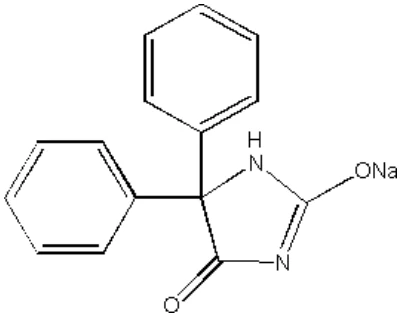
phenytoin sodium
Description: Phenytoin sodium occurs as a white, odourless, hygroscopic powder and is freely soluble in water, soluble in alcohol, and freely soluble in warm propylene glycol. It is insoluble in ether and chloroform.
REFERENCES
- 1. Omega Laboratories Canada Ltd. PrTREMYTOINE Product Monograph. Control no208630. Revision date: May 7, 2018.